Every successful interview starts with knowing what to expect. In this blog, we’ll take you through the top Set Painting interview questions, breaking them down with expert tips to help you deliver impactful answers. Step into your next interview fully prepared and ready to succeed.
Questions Asked in Set Painting Interview
Q 1. Describe your experience with different paint types used in set painting (e.g., latex, acrylic, oil).
My experience encompasses a wide range of paint types, each with its own unique properties and applications in set painting. Latex paints are incredibly versatile, offering a quick drying time, water-based cleanup, and good durability, making them ideal for large areas and less detailed work. I often use latex for base coats and larger scenic elements. Acrylics, on the other hand, provide a vibrant, rich color and excellent adhesion to various surfaces, perfect for detail work and creating textures. I frequently use acrylics for distressing, highlighting, and creating realistic-looking effects. Oil paints offer unparalleled richness and depth of color, allowing for incredible blending and subtle gradations. While slower drying, this characteristic is advantageous for creating smooth transitions and nuanced textures, particularly in period pieces or when mimicking antique surfaces. I typically reserve oil paints for fine detailing and situations where a longer drying time is less of a concern. The choice of paint depends entirely on the project’s requirements, desired finish, and the timeframe.
Q 2. Explain your process for preparing a surface for painting on a film set.
Surface preparation is paramount to a successful paint job on a film set. Neglecting this crucial step can lead to paint failure, uneven application, and ultimately, costly reshoots. My process begins with a thorough cleaning of the surface to remove any dust, debris, grease, or old paint. This often involves using a pressure washer, brushes, and appropriate solvents depending on the material. Next, I assess the surface for any imperfections, such as holes, cracks, or unevenness. These are repaired using fillers, wood putty, or spackle, depending on the material. Once the filler is dry, I sand it down smooth, ensuring a flawless base for painting. Finally, I prime the surface. Primers serve to create a uniform surface, enhancing paint adhesion and ensuring consistent color coverage. The choice of primer depends on the material and the type of paint being used. For instance, an oil-based primer is preferred for surfaces that will be painted with oil paints. This meticulous preparation guarantees a professional finish that stands up under the pressures of a film set.
Q 3. How do you achieve a specific color match on set?
Achieving precise color matching on set is critical for maintaining visual consistency and realism. My approach starts with identifying the target color – this might be a paint chip, a fabric swatch, or a digital color code. I then use a color matching system, either digital or traditional, to find the closest match in my available paints. Digital color matching systems offer speed and accuracy, and provide specific color formulas for replication. With traditional methods, I might start with a base color and then carefully mix tints and shades until I achieve the desired hue. I always test the paint on a small, inconspicuous area first to ensure the color is correct under the set’s lighting conditions. Color matching is an iterative process; often, minor adjustments are needed to perfectly align with the surrounding environment and lighting. Careful attention to lighting, especially the color temperature, is key – a color that looks perfect indoors may appear completely different under outdoor sunlight.
Q 4. What are some common challenges faced when painting on different materials (e.g., wood, plaster, metal)?
Painting on different materials presents unique challenges. Wood, for example, can be porous and require multiple coats of primer to prevent bleed-through. Plaster, while offering a smooth surface, can be prone to cracking, necessitating the use of flexible primers and careful application techniques. Metal surfaces, especially those prone to rust, require thorough preparation to prevent the paint from peeling or flaking. One project involved painting a large wooden structure for a Western film. The porous wood required three coats of primer before the final paint color could be applied. In another project, we painted metal railings, which necessitated a rust-inhibiting primer to prevent future corrosion. Each material requires a tailored approach, informed by experience and a deep understanding of its specific properties.
Q 5. Describe your experience with various painting techniques (e.g., stippling, dry brushing, sponging).
My repertoire of painting techniques is broad, allowing me to create diverse textures and effects. Stippling, using a dabbing motion with a brush, creates a speckled texture; I used this to depict weathered stone walls. Dry brushing, applying paint with a nearly dry brush, leaves behind a textured, highlighted look – ideal for creating the worn appearance of antique furniture. Sponging, using a sponge to apply paint, gives a soft, irregular finish perfect for creating clouds or texturing walls. Beyond these, I’m proficient in techniques like glazing (applying transparent layers of paint to create depth), washes (diluted paint applied for a transparent, stained effect), and impasto (applying thick layers of paint to create texture and dimension). Mastering these techniques allows for a greater degree of creative expression and realism in set painting.
Q 6. How do you manage your time effectively when working on a tight deadline?
Effective time management on a tight deadline requires meticulous planning and execution. Before starting any project, I create a detailed schedule, breaking down the tasks into smaller, manageable units. This allows for efficient progress tracking and identification of potential bottlenecks. I prioritize tasks based on their urgency and importance, focusing first on crucial elements. I always allow for unforeseen delays and unexpected challenges by building in buffer time. Collaboration with other crew members is crucial; maintaining open communication ensures that everyone is on the same page and that any issues are addressed promptly. Furthermore, maintaining a clean and organized workspace facilitates a more efficient workflow. In a recent project with a very tight deadline, meticulous scheduling and prioritizing enabled us to complete the set painting on time, without compromising quality.
Q 7. Explain your understanding of color theory and its application in set painting.
A solid understanding of color theory is fundamental to effective set painting. My knowledge encompasses the color wheel, understanding complementary, analogous, and triadic color schemes. I use this to create harmonious and visually appealing palettes, considering the mood and atmosphere desired for the scene. For example, warm colors like reds and oranges create a feeling of energy and excitement, while cool colors like blues and greens evoke calmness and serenity. I also understand the impact of value (lightness or darkness) and saturation (intensity of color) on the overall effect. In a recent historical drama, we used muted, desaturated colors to create a sense of realism and historical accuracy, while a science fiction set utilized bold, saturated colors to convey a futuristic, otherworldly atmosphere. This application of color theory significantly contributes to the storytelling and visual impact of the set.
Q 8. How do you ensure the safety of yourself and others while working with paints and solvents?
Safety is paramount in set painting. It’s not just about following rules, it’s about developing a safety-first mindset. My approach is multi-faceted.
- Personal Protective Equipment (PPE): I always wear appropriate PPE, including respirators (specifically those rated for the solvents used), safety glasses, gloves (nitrile for most paints and solvents, but specialized gloves for specific chemicals), and protective clothing (coveralls or long sleeves and pants) to prevent skin and respiratory irritation or exposure.
- Ventilation: Adequate ventilation is crucial. This means ensuring proper airflow in the painting area, using fans or opening windows whenever possible. For enclosed spaces, I insist on using respirators and consider bringing in additional ventilation equipment. In some cases, it might even necessitate moving the painting to a better-ventilated location.
- Spill Response: I’m always prepared for spills. We have designated spill kits readily available containing absorbent materials and neutralizing agents for specific solvents. We also have a clear protocol for cleaning up any spills immediately and safely, documenting the incident for future reference.
- Proper Storage: Paints and solvents are stored according to manufacturer’s guidelines and local regulations, far from heat sources and clearly labelled. We employ a strict first-in, first-out (FIFO) system to prevent materials from expiring.
- Training and Awareness: I’m trained in the safe handling of all materials used, and I ensure that my team members also receive adequate training and refresher courses. We actively discuss safety procedures before each painting project.
For example, during a recent period piece set, we were working with lead-based paint simulations. The extra safety measures we took were paramount. We used specialized respirators, had regular air quality testing, and followed strict decontamination procedures after each session.
Q 9. What is your experience with different types of painting tools and equipment?
My experience with painting tools and equipment is extensive. I’m proficient with a wide range of brushes (synthetic and natural hair, various sizes and shapes), rollers (different nap lengths for various textures and surfaces), spray guns (airless and HVLP for different paint types and finishes), and specialized tools like texture brushes, sponges, and palette knives. I also have experience with various types of spray equipment, including airless sprayers, HVLP sprayers, and even specialized spray systems for large-scale application. The choice of tools is always dictated by the project’s requirements.
Beyond the tools themselves, I’m familiar with various air compressors, paint mixing machines, and other supporting equipment like spray booths and paint filtration systems. Understanding the intricacies of each tool ensures optimal performance and finish. For example, using a high-nap roller on a smooth surface would result in an undesirable texture, while using a fine-haired brush for large, even coats would be incredibly time-consuming.
Q 10. Describe your experience working with paint mixing ratios and formulations.
Accurate paint mixing is critical for consistency and achieving the desired colors and finishes. I have extensive experience working with both pre-mixed paints and creating custom mixtures. My knowledge extends to understanding color theory (hue, saturation, value), tinting bases, and the specific properties of different paint types (acrylics, latex, oil-based, etc.).
I use color charts, spectrophotometers, and digital color matching tools, alongside my own experience to create precise formulas. For example, to replicate a specific shade of historical wall paint, I may refer to historical paint analysis techniques, pigment reference books, and historical color palettes.
I meticulously document all my mixing ratios, carefully recording the exact quantities of each component involved to ensure reproducibility if I need to create more of the same paint later. For instance, a typical note might include: ‘Set 2 – Wall Paint – 200ml Base Tint 712 + 15ml Pigment A47 + 5ml Pigment B12‘. This level of detail helps maintain consistency across a large-scale project.
Q 11. How do you handle corrections or mistakes during the painting process?
Mistakes happen, and in set painting, quick and effective corrections are essential. My approach is based on assessing the error’s severity and finding the most efficient solution.
- Minor Corrections: For small imperfections, such as drips or minor brushstrokes, I may use a clean, damp brush or sponge to gently remove or blend the offending areas. A detail brush is invaluable for precise touch-ups.
- Larger Corrections: More significant mistakes might require more intensive work. This could involve carefully scraping off the affected paint, repairing the surface if necessary, and repainting the area. The method will depend on the paint used (acrylic is easier to remove than oil-based). Sometimes, a little creative problem-solving is needed; perhaps a surface texture change can cleverly mask the imperfection.
- Strategic Planning: Preventing mistakes in the first place is crucial. This involves detailed planning including accurate measurements, careful prep work, and using the correct tools for the job. This proactive approach minimizes the need for corrections.
For example, recently on a period drama, I accidentally got some modern gloss paint on an antique-looking door. I didn’t panic. I used a chemical stripper appropriate for the surface and carefully removed the paint, then expertly repaired and repainted the area with the correct antique paint, ensuring a seamless blend.
Q 12. How do you maintain the quality of your work across a large set?
Maintaining quality across a large set requires meticulous planning, organization, and consistent execution. My strategies include:
- Batch Mixing: I prepare large batches of paint to ensure consistency of color and texture throughout the set. This avoids subtle variations that can arise from mixing smaller quantities multiple times.
- Color Charts and Samples: I create detailed color charts and paint samples for approval by the art director. These samples serve as a reference throughout the painting process, ensuring that all areas of the set maintain the same color palette.
- Quality Control Checks: Regular inspections ensure consistency across all areas. I work closely with assistants to establish clear standards and regularly monitor their work to avoid deviations.
- Standardized Procedures: Establishing clear and standardized procedures for all stages of the painting process – from preparation to application and cleanup – ensures that quality control is maintained consistently across the whole team.
For instance, on a recent large-scale western set, we needed to paint numerous identical wooden buildings. The batch mixing process, along with regular color checks, ensured the uniformity of the paint across all the buildings despite the scale of the project.
Q 13. Explain your process for managing paint waste and disposal.
Responsible paint waste management is critical. My process adheres to all relevant environmental regulations and aims to minimize waste. We implement the following strategies:
- Careful Planning and Measuring: Precise measuring and planning help avoid unnecessary excess paint. We only mix what’s required for the task at hand.
- Recycling and Reuse: Leftover paints are carefully stored and labelled for potential reuse on similar projects. Appropriate disposal of paint and containers is always observed.
- Waste Segregation: We segregate paint waste according to type (oil-based, water-based, etc.) and follow the proper disposal procedures for each type, often involving specialized waste disposal companies.
- Solvent Recovery: For solvent-based paints, where possible, we use solvent recovery systems to reclaim and reuse solvents. This reduces environmental impact and saves costs.
- Documentation: All disposal activities are meticulously documented, ensuring compliance with regulations and maintaining records for audits if needed.
We are committed to environmental responsibility and always seek ways to improve our waste management practices, exploring sustainable alternatives whenever possible.
Q 14. How do you collaborate effectively with other members of the art department?
Effective collaboration is key to a successful set painting project. My approach focuses on open communication and mutual respect.
- Clear Communication: I maintain open lines of communication with the art director, set designers, and other members of the art department. Regular meetings and updates ensure everyone is on the same page.
- Teamwork: I foster a collaborative environment where everyone feels comfortable contributing ideas and concerns. I delegate tasks effectively based on individual strengths and experience.
- Shared Vision: I actively participate in the initial design phase of the project, ensuring I have a clear understanding of the artistic vision and contributing my expertise to ensure the paintings can be executed within the budget and time constraints.
- Constructive Feedback: I provide and welcome constructive feedback to improve team performance and the quality of work.
For example, during a large fantasy set, I worked closely with the set designers to ensure that the painted textures and colours complemented the overall design. The collaborative nature of the process resulted in a cohesive and stunning final product. This open communication, from concept art to execution, allowed for flexibility and the best possible outcomes.
Q 15. Describe a time you had to adapt to unexpected changes on set.
Adaptability is crucial in set painting. On one occasion, we were halfway through painting a massive castle backdrop when the art director decided to significantly alter the design – adding a whole new tower section! This meant a complete redesign of our color scheme and application techniques mid-project.
My solution involved immediately gathering the team, explaining the changes clearly and visually using sketches and the updated blueprints. We then prioritized the most immediately impacted areas, focusing on the new tower section to keep the project on schedule. We adapted our color mixing to maintain consistency with the existing work, and I even employed faster drying techniques for specific areas to accelerate the process. Open communication and collaborative problem-solving were key to successfully navigating this unexpected shift.
Career Expert Tips:
- Ace those interviews! Prepare effectively by reviewing the Top 50 Most Common Interview Questions on ResumeGemini.
- Navigate your job search with confidence! Explore a wide range of Career Tips on ResumeGemini. Learn about common challenges and recommendations to overcome them.
- Craft the perfect resume! Master the Art of Resume Writing with ResumeGemini’s guide. Showcase your unique qualifications and achievements effectively.
- Don’t miss out on holiday savings! Build your dream resume with ResumeGemini’s ATS optimized templates.
Q 16. How do you read and interpret set painting instructions or blueprints?
Reading set painting instructions and blueprints requires a keen eye for detail and a thorough understanding of architectural drawings and paint specifications. I start by carefully examining the scale and key, understanding the dimensions of the set and the materials used. The blueprints usually specify the location of each painted surface, along with detailed color codes, paint types, and finish requirements. For example, #FF0000 might indicate a specific red, and a note might specify a satin finish for a particular wall, versus a matte finish for another.
I also look for notes regarding texture, distressing techniques (like faux chipping or cracks), and special effects (like metallic paints). I translate this information into a practical plan, determining the sequence of painting operations, the tools needed, and the team’s workflow.
Q 17. What safety precautions do you take when working at heights or in confined spaces?
Safety is paramount! When working at heights, I always use appropriate fall protection equipment, such as harnesses and safety lines, ensuring they are correctly attached and inspected before commencing work. This includes regular checks to ensure that the equipment is secure and hasn’t been damaged during use. I also ensure the work area is adequately supported and that there’s a clear path for emergency egress.
In confined spaces, ventilation is critical to avoid breathing in hazardous fumes. I always use respirators appropriate for the paints being used, and I make sure there’s sufficient airflow. I also check for potential hazards like unstable structures or electrical wires before entering a confined space. A buddy system, where another team member is present, is crucial for emergency response.
Q 18. How familiar are you with different types of paint finishes (e.g., matte, gloss, satin)?
I’m very familiar with various paint finishes. Matte finishes offer a flat, non-reflective surface, ideal for creating realistic textures and minimizing glare. Gloss finishes provide a high-shine, reflective surface which might be used to create polished surfaces, such as a metallic sheen or a wet-looking floor. Satin finishes offer a balance between gloss and matte, providing a soft sheen with less reflection. The choice of finish dramatically affects the visual appearance and overall mood of the set.
Understanding the properties of each finish helps me to choose the correct paint for specific requirements and how they will interact with lighting and cameras. For instance, a glossy finish might appear unnaturally shiny under studio lights, while a matte finish might absorb too much light, making the scene appear darker.
Q 19. Describe your experience working with textured paints or techniques.
I have extensive experience with textured paints and techniques. This involves using various tools and methods to create specific surface effects. For example, using a sponge to dab on paint creates a stippled texture, while a rag can achieve a more distressed or aged look. Specialized tools, such as texture rollers, can create detailed patterns like stucco or brickwork.
Recently, we needed to create the look of aged, crumbling stone walls for a historical drama. I employed a combination of textured paints and techniques, including dry brushing and layering different shades of brown and grey to create depth and realism. Then, to add to the realism of the stone, I used various tools to create the appearance of cracks and crevices.
Q 20. How do you ensure consistent paint application across large surfaces?
Consistency in paint application across large surfaces is achieved through meticulous planning and execution. This starts with prepping the surface thoroughly – cleaning and priming it to ensure even paint absorption. Next, I use high-quality equipment, such as professional-grade rollers and spray guns, to ensure a smooth and even application.
I also prioritize consistent paint mixing, using a dedicated mixing technique to avoid variations in color and consistency. It’s important to work in sections, making sure to keep a “wet edge” – meaning to blend each section with the adjacent one while the paint is still wet to prevent visible lap marks. Regular color checks throughout the process also help maintain consistency.
Q 21. What is your experience working with special effects paints or techniques?
I’ve worked with a range of special effects paints, including luminescent paints for night scenes, metallic paints for futuristic settings, and paints with specific reflective properties. I also have experience in applying techniques such as faux finishes (like marble or wood graining), and creating realistic weathering effects (like rust or decay) using specific paint combinations and techniques.
For a recent fantasy film, I worked with phosphorescent paints to create glowing mushrooms and plants. This involved understanding the specific properties of the paint, considering factors such as the intensity and duration of the glow, and coordinating the application with the lighting design. These effects require a good grasp of both artistic technique and the technical properties of the materials.
Q 22. How do you stay organized and manage your materials effectively on a busy set?
Organization is paramount on a busy set. Think of it like a well-oiled machine – every part needs to be in its place. My approach involves a multi-pronged strategy: First, I meticulously plan my workflow, creating a detailed schedule that prioritizes tasks based on deadlines and dependencies. This might involve breaking down large projects into smaller, manageable sections. Second, I maintain a highly organized paint storage system – colors are categorized by hue, type, and manufacturer, clearly labeled and easily accessible. I use labeled containers for brushes, rollers, and other tools. Finally, I have a dedicated cleanup routine at the end of each day to ensure the workspace remains safe and efficient for the next day.
For instance, on a recent period drama, we had multiple sets needing different paint finishes simultaneously. I color-coded each set’s paint palettes and assigned specific workstations for each, streamlining the process and preventing any cross-contamination or confusion. This system drastically reduced errors and increased our team’s overall efficiency.
Q 23. Explain your understanding of the importance of color accuracy in set painting.
Color accuracy is the cornerstone of believable set design. Inaccurate colors can completely derail the intended mood and atmosphere, making the scene feel unconvincing or even jarring to the viewer. Imagine a historical drama set in a sun-drenched Tuscan villa – if the walls are painted a shade too gray, the whole scene feels wrong. Maintaining color accuracy involves a detailed understanding of the project’s color palette and careful color matching using various methods like spectrophotometers for precise readings, or carefully comparing physical paint swatches against reference images.
I always use high-quality paints designed for longevity and accurate color reproduction. During production, I routinely check colors under different lighting conditions to ensure consistency. This includes adjusting paint formulations as needed, ensuring the final product aligns perfectly with the director’s vision. Accurate color reproduction often involves experimenting and testing paint mixtures on sample boards before committing to large areas.
Q 24. Describe your experience with different types of surface preparation techniques.
Surface preparation is as crucial as the painting itself; it directly impacts the final look and longevity of the painted surface. I’ve worked extensively with various techniques, including sanding, priming, and sealing. The choice depends on the surface material – wood, plaster, metal, etc. – and the desired final finish. For instance, with wood, I might use a fine-grit sandpaper to achieve a smooth surface before applying a primer that will ensure proper paint adhesion and prevent bleed-through. Plaster surfaces often require a more thorough preparation, potentially involving filling cracks and imperfections with spackle, sanding, and then priming.
I’ve also used specialized primers designed for specific paint types, like oil-based paints on porous surfaces to prevent absorption and ensure a uniform finish, or primers with mildew inhibitors in humid environments. The key is to achieve a perfectly smooth, clean, and evenly primed surface before applying any paint, ensuring the paint adheres properly and the final result looks professional.
Q 25. How do you handle difficult or challenging paint application scenarios?
Challenging paint application scenarios require creative problem-solving. For instance, I once had to paint a highly textured, uneven brick wall for a period piece set. Standard roller techniques wouldn’t work, as it would highlight the imperfections. The solution was to use a stippling technique with a brush, allowing the texture of the wall to show through subtly while maintaining an even color. Another challenging scenario might involve working with delicate materials like old antique furniture that requires a very precise application to avoid damaging the underlying surface.
In such cases, I might utilize different techniques such as dry brushing for a distressed look, or very thin coats of paint to avoid obscuring details. Careful planning, meticulous execution, and a willingness to experiment with different brushes and tools are key to overcoming these hurdles. Sometimes, masking techniques are essential to protect certain areas while painting others, requiring precision and patience.
Q 26. What is your experience working with different types of lighting and its effect on paint application?
Lighting significantly affects paint application and the final appearance of the painted surfaces. Different lighting conditions can alter how colors appear – a color might look accurate under one light but drastically different under another. For instance, incandescent lighting can warm up colors, making them appear richer and more saturated, while fluorescent lighting can make colors appear cooler and less vibrant. Natural light, especially sunlight, is also inconsistent throughout the day.
Therefore, I always try to understand the lighting conditions under which the sets will primarily be filmed. This influences my color choices and application techniques. For instance, if a scene is primarily lit with tungsten lights, I might slightly adjust the paint colors to counteract the warm bias. Consistent color checking under the intended filming lights is crucial. Sometimes, this even involves simulating the final lighting conditions on test samples prior to actual painting.
Q 27. Explain your understanding of the process for maintaining painted surfaces after completion.
Maintaining painted surfaces after completion is crucial for longevity and to ensure the set retains its original visual appeal. This involves several steps: First, allowing sufficient drying time before any further handling or exposure to moisture. Then, regular inspections for any signs of damage, such as scratches or chips. If necessary, minor touch-ups can be done with matching paint.
Depending on the surface material and type of paint used, specific cleaning methods need to be followed. For example, delicate surfaces might only require gentle dusting, while more robust surfaces might withstand more vigorous cleaning. It’s important to avoid harsh chemicals or abrasive cleaners, which could damage the paint finish. Regular maintenance is crucial to ensure the sets look their best throughout the production period.
Q 28. Describe your experience with using various protective coatings or sealants on painted surfaces.
Protective coatings and sealants are often essential to protect painted surfaces from wear and tear, especially in high-traffic areas or those exposed to the elements. The type of sealant used depends on the paint type and the intended environment. For example, a water-based polyurethane sealant is often ideal for interior surfaces, offering a durable protective layer while still allowing the underlying paint colors to show through naturally. For outdoor sets exposed to harsh weather, a more robust acrylic sealant might be preferable, offering better protection against UV degradation, moisture, and mildew.
I have experience using a variety of sealants, including matte, satin, and gloss finishes. The selection is determined by the desired final aesthetic. Gloss finishes provide superior protection but can reflect light more intensely, which may or may not be desirable depending on the scene’s lighting requirements. I always ensure the sealant is compatible with the underlying paint to prevent any adverse reactions that might compromise the paint job’s integrity or appearance.
Key Topics to Learn for Set Painting Interview
- Surface Preparation: Understanding different painting surfaces (wood, plaster, metal), appropriate primers, and techniques for achieving a smooth, even base.
- Paint Application Techniques: Mastering brushwork, roller techniques, spraying, and specialized applications like faux finishing, distressing, and stenciling.
- Color Theory and Mixing: Knowledge of color harmonies, mixing techniques to achieve specific shades and tints, and understanding the impact of lighting on color perception.
- Paint Types and Properties: Familiarity with various paint types (latex, acrylic, oil-based), their properties, drying times, and suitability for different surfaces and applications.
- Health and Safety Regulations: Understanding and adhering to safety protocols related to paint handling, ventilation, personal protective equipment (PPE), and waste disposal.
- Working with Designers and Directors: Understanding the collaborative nature of set painting, effectively interpreting designs, and adapting to changing requirements on set.
- Budgeting and Material Management: Efficiently estimating material costs, managing inventory, and minimizing waste.
- Problem-Solving and Troubleshooting: Diagnosing and resolving common painting issues such as uneven application, color inconsistencies, and surface imperfections.
- Time Management and Efficiency: Prioritizing tasks, meeting deadlines, and working effectively under pressure in a fast-paced environment.
Next Steps
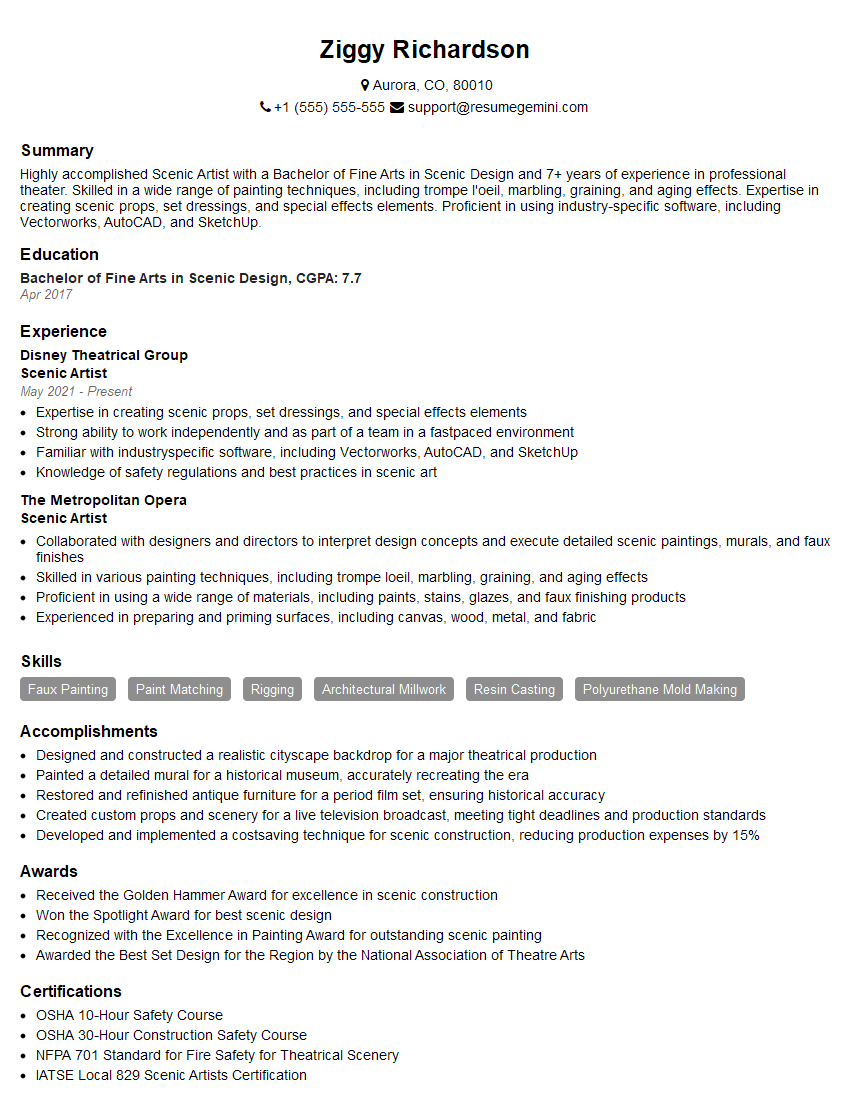
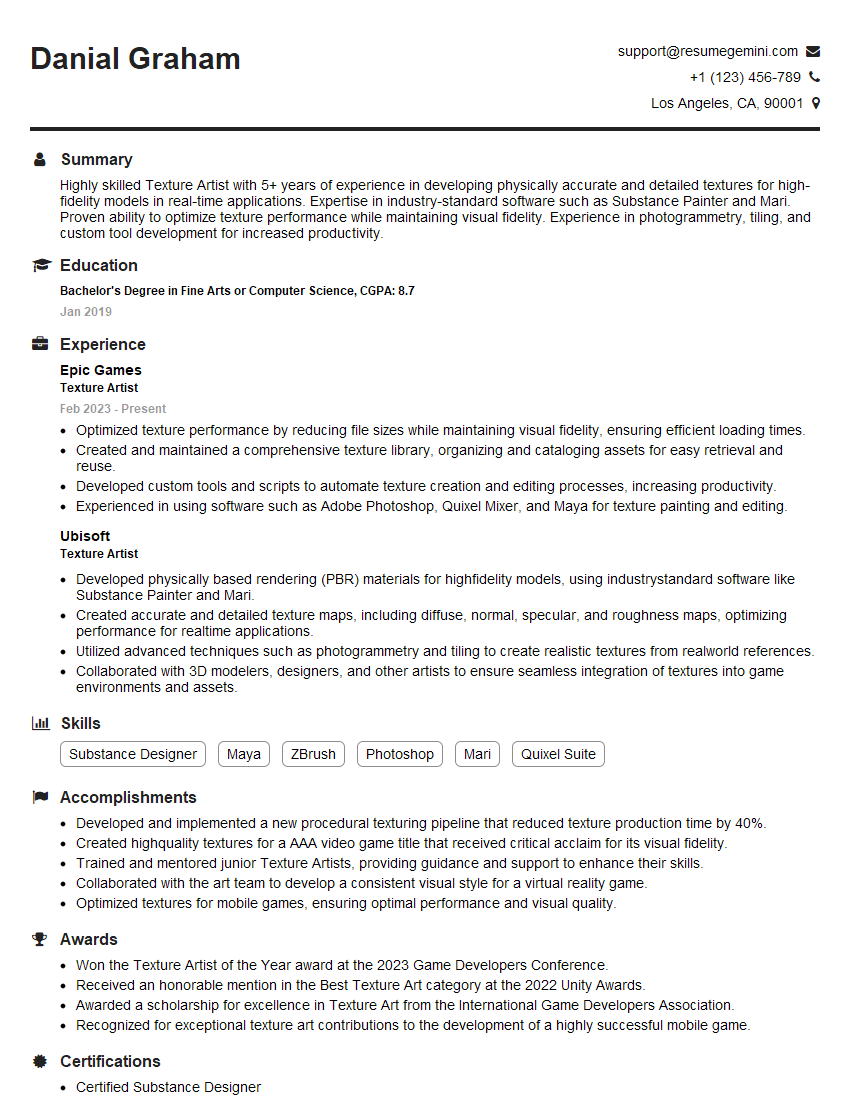
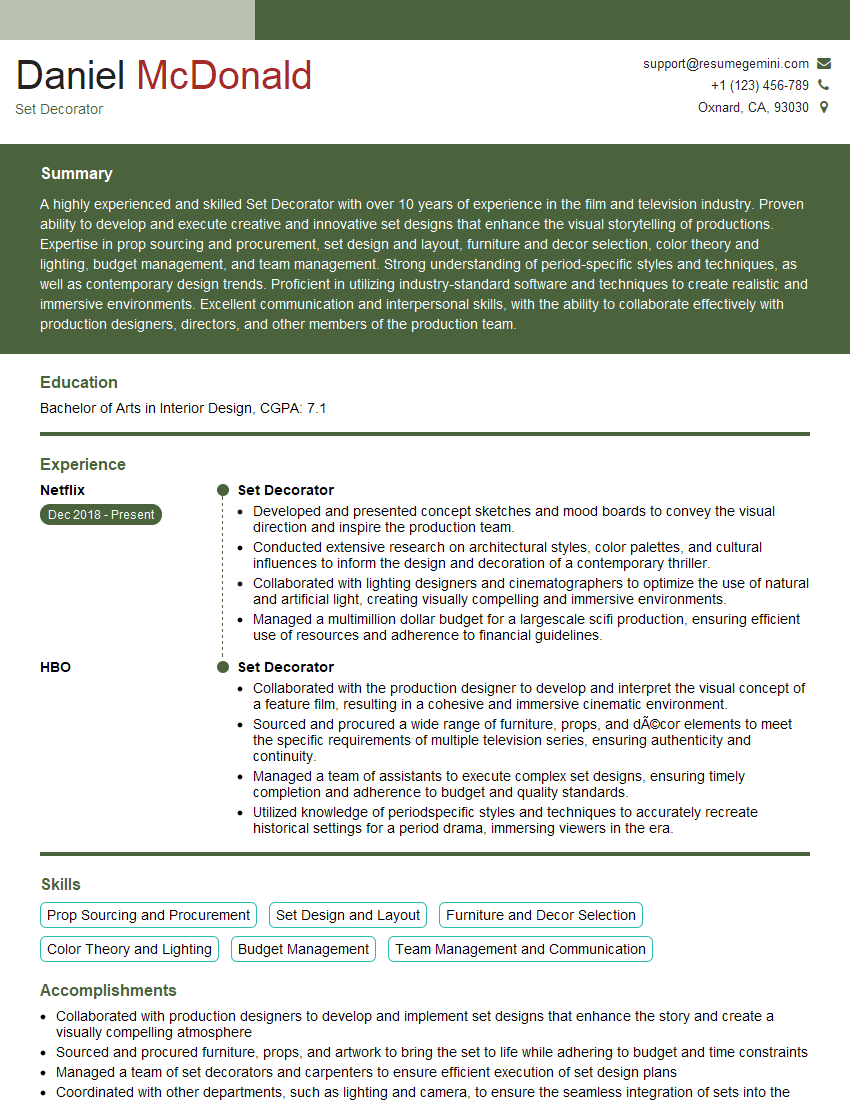
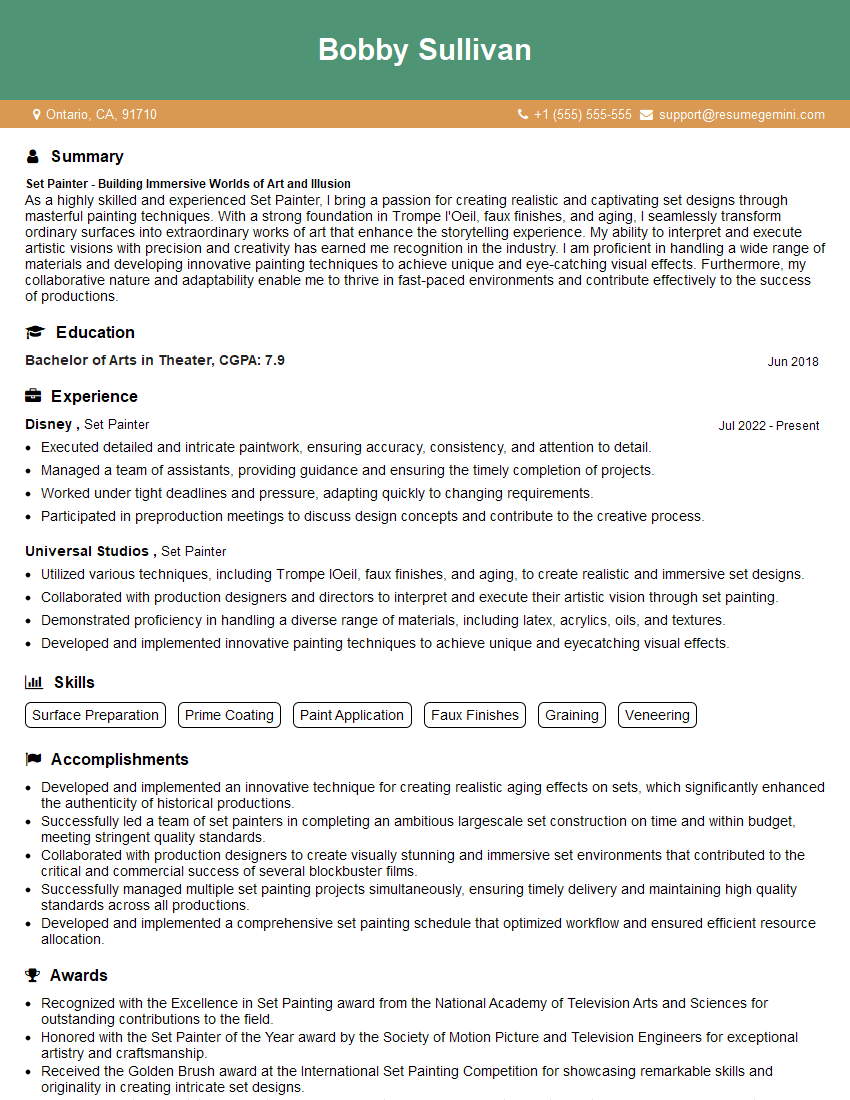
Mastering set painting opens doors to exciting career opportunities in film, television, and theatre, offering a dynamic blend of creativity and technical skill. To maximize your job prospects, creating a strong, ATS-friendly resume is crucial. ResumeGemini is a trusted resource that can help you build a professional resume that highlights your skills and experience effectively. Examples of resumes tailored specifically for Set Painting professionals are available to guide you through the process. Invest the time to craft a compelling resume – it’s your first impression and a key to unlocking your career aspirations.
Explore more articles
Users Rating of Our Blogs
Share Your Experience
We value your feedback! Please rate our content and share your thoughts (optional).
What Readers Say About Our Blog
Very informative content, great job.
good