Interviews are opportunities to demonstrate your expertise, and this guide is here to help you shine. Explore the essential Sewer Line Design interview questions that employers frequently ask, paired with strategies for crafting responses that set you apart from the competition.
Questions Asked in Sewer Line Design Interview
Q 1. Explain the difference between gravity sewers and pressure sewers.
The primary difference between gravity sewers and pressure sewers lies in how wastewater is conveyed. Gravity sewers rely on the force of gravity to move wastewater downhill, requiring a consistent slope to maintain flow. Think of it like a water slide – the steeper the slope, the faster the water moves. Pressure sewers, on the other hand, use pumps to push wastewater through the pipes, often against gravity. This allows for flatter gradients and enables the system to serve areas where gravity flow isn’t feasible, such as low-lying areas or areas with complex topography.
In simpler terms, gravity sewers are ‘passive’ systems while pressure sewers are ‘active’ systems requiring mechanical assistance.
Q 2. Describe the process of sewer line design, including key considerations.
Sewer line design is a multi-faceted process that involves careful planning and calculations. It begins with a thorough site investigation to understand the existing topography, soil conditions, and projected wastewater flow rates. Key considerations include:
- Hydraulic Design: Determining appropriate pipe sizes, slopes, and flow velocities to ensure efficient wastewater transport. This involves complex calculations, often using Manning’s equation (discussed later).
- Material Selection: Choosing materials that are durable, resistant to corrosion, and suitable for the specific soil and environmental conditions.
- Structural Design: Ensuring the sewer lines can withstand external loads from traffic, soil pressure, and groundwater.
- Environmental Considerations: Minimizing environmental impact, particularly regarding groundwater contamination and the discharge of treated effluent.
- Accessibility for Maintenance: Designing manholes and access points for regular inspection and cleaning.
- Future Expansion: Anticipating future growth and designing a system that can accommodate increased wastewater flow.
The process involves various stages, from preliminary design and feasibility studies to detailed engineering drawings, specifications, and construction oversight. It often requires collaboration with various stakeholders, including engineers, contractors, and local authorities.
Q 3. What are the common materials used in sewer line construction?
Common materials used in sewer line construction include:
- Vitrified Clay Pipe (VCP): A durable and corrosion-resistant material, suitable for various soil conditions. It’s relatively brittle, however, and susceptible to breakage during installation.
- Concrete Pipe: Cost-effective and robust, offering good structural strength. Different types of concrete pipe exist, with variations in strength and durability.
- Ductile Iron Pipe (DIP): Highly resistant to corrosion and very strong, making it ideal for high-pressure applications and areas with aggressive soils. It’s also flexible, accommodating ground movement.
- High-Density Polyethylene (HDPE): A lightweight, flexible, and corrosion-resistant plastic pipe that is increasingly popular for its ease of installation and durability.
- Polyvinyl Chloride (PVC): Another plastic option, generally used for smaller diameter pipes and less demanding applications.
The choice of material depends on factors such as project budget, soil conditions, required lifespan, and the nature of the wastewater.
Q 4. How do you determine the appropriate pipe size for a sewer line?
Determining the appropriate pipe size involves careful hydraulic calculations to ensure adequate flow velocity and prevent clogging. Flow velocity needs to be high enough to prevent solids from settling, yet not so high as to cause erosion or damage to the pipes. The Manning’s equation (explained further below) is crucial for these calculations. Also, we consider factors such as:
- Projected Wastewater Flow: This includes peak flows during rainfall events and typical daily flows.
- Inflow and Infiltration (I&I): The amount of unwanted groundwater and surface water entering the sewer system.
- Pipe Slope: The steeper the slope, the smaller the pipe diameter can be.
- Allowable Head Loss: The maximum pressure drop acceptable over a given length of pipe.
Often, software programs and hydraulic modeling are employed to optimize pipe sizing and ensure efficient and reliable system performance. A slightly oversized pipe is usually preferred to account for future growth and to maintain acceptable flow velocities.
Q 5. Explain the concept of sewer flow calculations and Manning’s equation.
Sewer flow calculations are essential for designing efficient and reliable sewer systems. They determine the required pipe sizes and slopes to ensure adequate flow velocity and prevent blockages. Manning’s equation is a fundamental tool for these calculations. It’s an empirical equation that relates flow velocity (V) to pipe diameter (D), slope (S), and the Manning’s roughness coefficient (n) which accounts for the pipe material and internal condition.
The equation is: V = (1/n) * R^(2/3) * S^(1/2)
Where:
V= flow velocity (m/s or ft/s)n= Manning’s roughness coefficient (dimensionless)R= hydraulic radius (cross-sectional area divided by wetted perimeter)S= pipe slope (rise over run)
By combining Manning’s equation with the flow rate (Q), we can determine the required pipe diameter. For example, if we know the design flow rate and the desired velocity, we can iteratively solve for the pipe diameter that satisfies these constraints.
Q 6. What are the design considerations for sewer line slopes and gradients?
Sewer line slopes and gradients are critical for ensuring gravity flow. The slope needs to be sufficient to maintain self-cleansing velocities, preventing the buildup of solids and debris. Too steep a slope can cause erosion, while too flat a slope can lead to blockages. Specific requirements vary depending on the pipe diameter and material, as well as the type of wastewater. Generally:
- Minimum Slope: A minimum slope is necessary to ensure that wastewater flows consistently. This minimum depends on the pipe diameter and the type of wastewater. Insufficient slope can lead to sedimentation and blockages.
- Maximum Slope: Excessive slope can lead to scouring (erosion of the pipe material) and damage to the pipe. This is especially a concern for older, less durable pipes.
- Uniformity of Slope: Maintaining a consistent slope is important to prevent localized areas of low velocity that may promote sedimentation.
Design standards and regulations often specify acceptable slope ranges for different pipe sizes and materials. Careful consideration of the terrain and soil conditions is needed to achieve a design that meets these standards while also being practical and cost-effective.
Q 7. Describe different methods for sewer line inspection and maintenance.
Several methods exist for sewer line inspection and maintenance, ranging from simple visual inspections to sophisticated technological approaches:
- Visual Inspection: Simple inspections using cameras and mirrors in manholes to check for blockages or damage, usually performed during routine maintenance.
- Closed-Circuit Television (CCTV) Inspection: A more advanced method using a camera on a wheeled device inserted into the sewer line to provide a detailed visual inspection. This method allows for detection of cracks, root intrusions, and other defects.
- Robotic Inspection: Specialized robots equipped with cameras and sensors are used to navigate complex sewer systems, providing high-resolution images and data on pipe condition.
- Pipe Cleaning: Regular cleaning is vital to prevent blockages and ensure smooth flow. Methods include high-pressure water jetting, mechanical cleaning tools, and vacuum trucks.
- Pipe Lining: A trenchless rehabilitation technique where a new liner is inserted into the existing pipe to restore its structural integrity and prevent leaks. This is a cost-effective alternative to full pipe replacement.
- Pipe Bursting: Another trenchless method where a new pipe is pulled through the existing pipe, bursting it apart in the process. This method is suitable for replacing severely damaged pipes.
The choice of inspection and maintenance method depends on factors such as the age and condition of the sewer line, the budget available, and the urgency of the issue.
Q 8. How do you address issues of infiltration and inflow in sewer lines?
Infiltration and inflow (I&I) are major problems in sewer systems, representing unwanted water entering the pipes. Infiltration is groundwater leaking into the pipes through cracks or deteriorated joints, while inflow is surface water entering through manholes, illegal connections, or faulty covers. Addressing these issues is crucial for maintaining system capacity and preventing overflows.
We tackle I&I using a multi-pronged approach. First, we conduct thorough system assessments, often using smoke testing or dye testing to pinpoint infiltration points. Smoke testing involves blowing smoke into the sewer line to visualize leaks, while dye testing uses colored dye to trace the path of surface water.
Once infiltration points are identified, we prioritize repairs based on severity and cost-effectiveness. This could involve relining damaged pipes (a trenchless method inserting a new pipe within the old one), spot repairs using epoxy or cement, or complete pipe replacement in severe cases. For inflow, we focus on sealing cracks and repairing or replacing manhole covers and ensuring proper connections. Regular maintenance, including cleaning and inspection of the system, is vital for preventing future issues. We might also implement programs to detect and address illegal connections. Imagine it like fixing a leaky roof – you need to find the leaks (assessment), repair them (remediation), and then prevent future damage (maintenance).
Q 9. What are the common causes of sewer line blockages and how are they addressed?
Sewer line blockages are a common headache, often stemming from a few key culprits. Tree roots are notorious for invading pipes through cracks, creating significant obstructions. Grease buildup, especially from restaurants and improper disposal, also contributes significantly to blockages. Furthermore, debris such as rags, sanitary products (feminine hygiene products, wipes labeled ‘flushable’ but often not truly biodegradable), and construction debris accidentally entering the system can cause clogs.
Addressing blockages involves a combination of preventative measures and reactive solutions. Preventative measures include public education campaigns on proper waste disposal, regular inspections and cleaning of sewer lines, and proactive root control measures (e.g., trenchless root cutting). For existing blockages, we use various methods: Hydro-jetting (high-pressure water jets to clear blockages), auger cleaning (using a rotating auger to break up and remove clogs), and in severe cases, excavation and pipe replacement. It’s like unclogging a drain – sometimes a simple plunger will do, but sometimes a more powerful tool is necessary.
Q 10. Explain the importance of proper ventilation in sewer systems.
Proper ventilation in sewer systems is critical for several reasons. It prevents the buildup of harmful gases like hydrogen sulfide (rotten egg smell), methane (flammable and potentially explosive), and sewer gases containing disease-causing organisms. These gases not only pose health risks to workers and nearby residents but can also cause corrosion in the pipes themselves. Adequate ventilation also maintains appropriate air pressure within the system, preventing siphoning and ensuring proper flow.
Ventilation is typically achieved through a network of vent stacks and cleanouts, strategically placed to ensure adequate airflow. Proper design involves considering factors like pipe size, flow rates, and the presence of potential sources of gases. It’s essential to ensure all vents are properly designed and maintained, as a blockage in a vent stack could negate the entire system’s ventilation.
Q 11. How do you design for sewer line connections to buildings?
Designing sewer line connections to buildings requires careful consideration to ensure proper flow and prevent issues like backups. The design must adhere to local building codes and regulations. Key aspects include the size and slope of the building sewer, ensuring proper connections to the main sewer line, and incorporating appropriate cleanouts for access during maintenance. The building sewer pipe typically connects to the main sewer line at a designated point. The connection should be watertight to prevent infiltration. We frequently use 45-degree wyes for connections to allow for smooth transitions and reduced friction.
The building sewer must have a sufficient slope to ensure gravity flow, usually a minimum of 1/4 inch per foot. Materials commonly used for building sewer connections include PVC or ductile iron. Regular inspections and preventative maintenance of the building sewer are also vital to prevent costly repairs in the future. Think of it as designing a well-organized plumbing system for a house – every pipe and fitting needs to be carefully considered and strategically placed.
Q 12. What are the environmental regulations governing sewer line design?
Environmental regulations governing sewer line design are extensive and vary by location. They aim to protect water quality and public health. Common regulations address:
- Discharge permits: These control the amount and type of pollutants allowed to be discharged into receiving waters.
- Stormwater management: Regulations often require the separation of sanitary sewer lines from stormwater systems to prevent combined sewer overflows (CSOs).
- Water quality standards: Regulations set limits on pollutants in wastewater discharged from treatment plants.
- Erosion and sediment control: During construction, measures must be taken to minimize environmental impact.
- Hazardous waste management: Proper handling and disposal of materials used in sewer construction are crucial.
These regulations often necessitate environmental impact assessments and adherence to specific design criteria to minimize environmental damage and ensure compliance.
Q 13. What software are you proficient in for sewer line design?
I am proficient in several software packages for sewer line design, including:
- AutoCAD Civil 3D: Used for creating detailed 2D and 3D models of sewer systems, including pipe networks, manholes, and other structures.
- Bentley SewerCAD: Specialized software for hydraulic modeling and analysis of sewer systems, enabling the assessment of flow capacity, velocities, and other hydraulic parameters.
- WaterGEMS: A comprehensive water and wastewater modeling software used to simulate and optimize sewer system performance.
My expertise extends beyond individual software packages to encompass the integration of these tools for comprehensive sewer system design and analysis.
Q 14. How do you incorporate sustainability considerations in sewer line design?
Incorporating sustainability into sewer line design is becoming increasingly important. This involves minimizing environmental impact throughout the project lifecycle, from material selection to energy consumption during operation. Key considerations include:
- Material selection: Using recycled materials where possible, opting for durable materials to reduce the need for frequent repairs, and selecting materials with lower embodied carbon.
- Energy efficiency: Designing systems that minimize energy consumption for pumping and treatment. This could involve optimizing pipe sizing and slope to reduce the need for pumping.
- Water conservation: Implementing strategies to minimize infiltration and inflow, thereby reducing the amount of water that needs to be treated.
- Lifecycle assessment: Evaluating the environmental impacts of various design options over their entire lifespan.
- Green infrastructure: Integrating green infrastructure elements, such as permeable pavements and bioswales, to manage stormwater runoff and reduce the load on sewer systems.
Sustainable design practices lead to long-term cost savings, reduced environmental impact, and improved system resilience.
Q 15. Describe your experience with different types of sewer line joints and fittings.
Sewer line joints and fittings are crucial for ensuring the structural integrity and hydraulic performance of the entire system. My experience encompasses a wide range, from traditional methods to modern, high-performance options.
- Bell and Spigot Joints: These are classic, employing a bell-shaped end on one pipe section that receives the spigot end of the next. They’re often sealed with rubber gaskets or cement mortar. While relatively simple, they can be prone to leakage if not properly installed. I’ve worked on numerous projects involving their repair and replacement, often finding that inadequate sealing was the culprit.
- Flanged Joints: These offer greater strength and ease of assembly, particularly in larger diameter pipes. Bolts secure the flanges together, creating a robust seal. I’ve used flanged joints extensively in situations requiring frequent access or in areas with high ground water pressure.
- Mechanical Joints: These utilize compression rings or gaskets to create a watertight seal. They are known for their ease of installation and reduced reliance on skilled labor. I’ve found them particularly useful in projects with tight timelines, and I often specify them for projects where less skilled labor might be involved, assuring quality control.
- Electrofusion Joints: These joints utilize heat-fusion technology to create a permanent, monolithic connection between polyethylene pipes. The process involves applying an electric current to fuse the pipe sections, creating a joint stronger than the pipe itself. I prefer this method for its longevity and reduced risk of leaks in high-pressure applications.
- Butt Fusion Joints: Similar to electrofusion, but uses heat and pressure to melt the pipe ends and fuse them together. This creates a similarly strong and reliable joint, especially suitable for larger diameter pipes and those in high-stress environments.
The selection of the appropriate joint type depends heavily on factors like pipe material, diameter, pressure rating, and the specific project requirements. A thorough understanding of each type’s strengths and weaknesses is crucial for designing a reliable and long-lasting sewer system.
Career Expert Tips:
- Ace those interviews! Prepare effectively by reviewing the Top 50 Most Common Interview Questions on ResumeGemini.
- Navigate your job search with confidence! Explore a wide range of Career Tips on ResumeGemini. Learn about common challenges and recommendations to overcome them.
- Craft the perfect resume! Master the Art of Resume Writing with ResumeGemini’s guide. Showcase your unique qualifications and achievements effectively.
- Don’t miss out on holiday savings! Build your dream resume with ResumeGemini’s ATS optimized templates.
Q 16. Explain your understanding of hydraulic modeling for sewer systems.
Hydraulic modeling is essential for predicting the flow characteristics within a sewer system. It allows us to simulate various scenarios, optimize design, and prevent problems like surcharging and backups. I utilize specialized software packages, such as InfoWorks WS, SWMM (Storm Water Management Model) or similar, to build digital twins of sewer systems.
These models incorporate various factors: pipe geometry, inflow rates (from both sanitary and stormwater sources), elevation profiles, and roughness coefficients. The software then solves the governing equations to predict water levels, velocities, and travel times throughout the network. We can test different design scenarios (e.g., changing pipe sizes, adding storage tanks, or upgrading pump stations) to optimize system performance and ensure adequate capacity under various flow conditions.
For example, a recent project involved designing a new sewer network for a rapidly growing residential area. Using hydraulic modeling, we were able to accurately predict peak flow conditions during heavy rainfall events. This allowed us to avoid potential backups and ensure the system could handle the increased flow without compromising service.
Q 17. How do you assess the structural integrity of an existing sewer line?
Assessing the structural integrity of an existing sewer line often involves a multi-pronged approach. It’s a bit like a detective investigation!
- CCTV Inspection: This non-destructive method provides visual inspection of the pipe’s interior, allowing us to identify defects such as cracks, root intrusions, blockages, and pipe collapses. This is frequently the first step.
- Pipe Condition Assessment (PCA): This involves a more detailed evaluation of the CCTV footage, quantifying the severity of any defects found and assigning them a condition rating based on established standards. This allows for prioritization of repairs.
- Manhole Inspections: The condition of manholes is also crucial for the overall health of the sewer system. I check for cracks, misalignment, structural deterioration, and proper sealing to ensure they are not contributing to failures.
- Ground Penetrating Radar (GPR): In situations where access is limited, GPR can be used to detect anomalies and map the underground sewer network non-destructively. This is particularly useful for locating buried pipes or detecting areas of potential concern.
- Hydrostatic Testing: For more critical situations, sections of pipe may be isolated and hydrostatically tested to determine their ability to withstand internal pressure. This assesses their strength and reveals weaknesses not apparent with visual inspection.
The results of these assessments inform decisions regarding rehabilitation or replacement. It’s not just about fixing immediate problems, but also about ensuring long-term reliability and avoiding future expensive repairs.
Q 18. What are the best practices for sewer line rehabilitation and repair?
Sewer line rehabilitation and repair techniques have advanced significantly. The best practices emphasize minimally invasive methods whenever possible to minimize disruption and cost.
- Cured-in-Place Pipe (CIPP): This technique involves inserting a resin-saturated liner into the existing pipe and curing it in place to create a new, smooth pipe within the old one. It’s effective for addressing cracks, leaks, and other structural defects. It’s my go-to for many applications because it is minimally invasive, quickly installed and cost effective.
- Point Repairs: For localized defects, spot repairs can be performed. This might involve patching cracks, sealing leaks, or using epoxy injections to consolidate damaged areas. These repairs are cost-effective and efficient.
- Pipe Bursting: In some cases, replacing a damaged section of pipe without extensive excavation is possible using pipe bursting. A new pipe is pulled through the existing pipe, breaking it apart as it goes. This minimizes ground disturbance.
- Open Cut Repair/Replacement: As a last resort, open-cut methods may be necessary for extensive damage or when other methods are unsuitable. While more disruptive, it ensures complete replacement or repair of a problematic segment.
Prioritizing preventative maintenance is key. Regular inspections and proactive repair of minor defects can prevent major problems and significantly extend the lifespan of the sewer infrastructure. I always emphasize thorough inspections, proper documentation and adhering to industry standards for materials and installation practices.
Q 19. Describe your experience with sewer line CCTV inspections.
CCTV inspections are indispensable for assessing the condition of sewer lines. I have extensive experience using this technology for both preventative maintenance and troubleshooting. The process involves inserting a small, remotely operated camera into the sewer line and recording footage of the interior.
The footage is then analyzed to identify defects, blockages, root intrusions, and other issues. Modern CCTV systems can provide high-resolution images and even integrate laser measurement tools to accurately assess pipe diameter and defect dimensions. We use specialized software to create detailed reports including location and severity of defects, which is essential for planning repairs and allocating resources effectively.
For instance, I once used CCTV inspection to diagnose recurring backups in a commercial building. The inspection revealed a significant blockage caused by grease buildup. This allowed us to target the repair effectively, saving time and money by avoiding unnecessary excavation.
Q 20. How do you handle unexpected issues or challenges during a sewer line project?
Unexpected issues are inevitable in sewer line projects. My approach centers on proactive planning and a flexible problem-solving methodology.
- Thorough Site Investigation: Before starting any project, we conduct a detailed site investigation, including historical records review, geological surveys, and potentially ground-penetrating radar surveys, to anticipate potential issues.
- Contingency Planning: We always develop contingency plans to address potential delays and unexpected subsurface conditions, such as encountering unforeseen underground utilities or encountering unstable soil.
- Collaboration and Communication: Open communication with clients, contractors, and regulatory agencies is crucial for managing unexpected problems. Regular meetings and reporting help to ensure everyone is on the same page.
- Adaptability: Sewer line projects often present unique challenges. I pride myself on adaptability and the ability to quickly assess the situation, formulate alternative solutions, and make informed decisions to resolve problems.
For example, during a recent project, we encountered unexpected bedrock that was not indicated in the original site surveys. By adapting our plans, using specialized equipment, and communicating openly with the stakeholders, we were able to successfully complete the project without significant delays or cost overruns.
Q 21. Explain your understanding of sewer line capacity and flow management.
Sewer line capacity and flow management are vital for preventing backups and ensuring efficient operation of the entire system. Capacity is determined by the pipe’s diameter, slope, and the roughness of the inner pipe surface (which impacts friction). Flow management involves controlling the inflow and outflow of wastewater to prevent overloading the system.
Designing for adequate capacity involves understanding peak flow rates, which can be significantly higher than average flow rates, especially during rainfall events. Hydraulic modeling is essential for determining the appropriate pipe sizes and slopes to handle these peak flows and prevent surcharging (where wastewater rises above the pipe’s invert). We also account for future growth and expansion when designing to ensure long-term capacity.
Flow management techniques might include implementing flow control structures (like weirs or orifices) to regulate the flow into the system, or installing pump stations to lift wastewater to higher elevations when necessary. Regular maintenance is also crucial, especially cleaning of pipes to prevent blockages which can significantly reduce capacity.
I often utilize software to simulate different scenarios, evaluate the impact of various flow management strategies, and ensure the system is designed to meet regulatory requirements and prevent operational issues.
Q 22. What is your experience with different types of sewer line materials and their suitability for different applications?
Choosing the right sewer line material is crucial for long-term performance and cost-effectiveness. My experience spans a wide range of materials, each with its own strengths and weaknesses. Think of it like choosing the right tool for the job – a screwdriver for screws, a hammer for nails.
- Vitrified Clay Pipe (VCP): A traditional choice, VCP is durable, resistant to corrosion, and has a long lifespan. However, it’s brittle and can be susceptible to breakage during installation, especially in challenging soil conditions. I’ve used VCP extensively in projects with stable soil profiles and minimal risk of ground movement.
- High-Density Polyethylene (HDPE): HDPE is incredibly flexible, making it ideal for navigating tight spaces and complex alignments. It’s also resistant to corrosion and chemicals, and its lightweight nature simplifies installation. I’ve found HDPE particularly useful in projects with difficult terrain or where trenchless installation methods were employed. For example, in a recent project involving a congested urban area, HDPE allowed us to avoid extensive road closures.
- Polyvinyl Chloride (PVC): PVC offers a good balance between strength, flexibility, and cost. It’s relatively easy to install and resistant to corrosion, but its strength can be less than HDPE, especially in larger diameters. I typically specify PVC for less demanding applications where cost is a significant factor.
- Concrete Pipe: Concrete pipes offer excellent strength and durability, making them suitable for high-flow applications and areas prone to heavy loads. However, they are heavier and more difficult to install than plastic pipes, and improper installation can lead to cracking.
The selection process involves a careful evaluation of factors like soil conditions, anticipated flow rates, budget constraints, and the project’s specific requirements. A cost-benefit analysis, considering both initial installation costs and long-term maintenance, is always essential.
Q 23. How do you ensure compliance with relevant codes and standards during sewer line design and construction?
Compliance is paramount in sewer line design and construction. Ignoring codes and standards can lead to costly rework, project delays, and even environmental damage. My approach involves a multi-step process:
- Thorough Code Review: I begin by thoroughly reviewing all applicable local, state, and federal codes and standards, including those from organizations like ASTM International and the American Society of Civil Engineers (ASCE). This includes regulations concerning pipe materials, installation methods, and testing procedures.
- Design Documentation: All design documents meticulously detail the project’s compliance with these standards. This includes detailed drawings, specifications, and calculations. I incorporate check sheets and templates to ensure consistent adherence to regulations throughout the design phase.
- Third-Party Inspections: Regular inspections by qualified third-party inspectors are incorporated into the project timeline. These inspections verify that the construction process adheres to the approved design and meets all regulatory requirements. Any deviations are promptly addressed.
- Record Keeping: Meticulous record-keeping is essential. We maintain comprehensive documentation of all inspections, testing results, and as-built drawings to demonstrate full compliance.
For example, in a recent project, we encountered unexpected bedrock, requiring an adjustment to the trench design. We immediately consulted the relevant codes, obtained necessary approvals, and documented the changes, ensuring full compliance throughout the alteration process.
Q 24. Describe your experience with working on sewer line projects in various soil conditions.
Soil conditions significantly impact sewer line design and installation. Different soil types present unique challenges, requiring tailored approaches to ensure stability and longevity. I’ve worked on projects across diverse soil conditions, including:
- Stable Soils (e.g., clay, well-graded gravel): In these conditions, traditional open-cut trenching methods are often suitable. The focus is on proper bedding and backfilling to provide sufficient support and prevent settlement.
- Expansive Soils (e.g., clay that expands and contracts with moisture): These soils require special attention. We typically use flexible pipe materials like HDPE to accommodate ground movement and minimize the risk of cracking. Furthermore, careful backfilling and potentially specialized compaction techniques are employed.
- Loose or Sandy Soils: These soils can be prone to collapse, so shoring or trench boxes are often necessary to ensure worker safety and prevent trench failure. Careful consideration of the design and backfilling is critical. I remember a project where we used a slurry trench method to support the excavation in very loose sand.
- Rock or Bedrock: This requires specialized equipment and potentially trenchless methods to avoid extensive and potentially dangerous excavation. Directional drilling or other trenchless techniques are frequently employed.
My experience allows me to select the optimal design and installation methods to mitigate risks associated with each soil type. Detailed geotechnical investigations are always included in my project planning to thoroughly understand the ground conditions.
Q 25. How do you incorporate safety measures into sewer line design and construction?
Safety is an absolute priority in sewer line design and construction. My approach is proactive, integrating safety measures throughout the entire project lifecycle.
- Design Phase: The design itself incorporates safety features. This includes designing trenches with sufficient width and shoring where necessary, selecting appropriate pipe materials to reduce the risk of breakage, and incorporating access points for inspection and maintenance.
- Construction Phase: Strict adherence to OSHA standards and best practices is mandatory. This includes:
- Regular Safety Training: All workers receive comprehensive training on proper safety procedures and the use of personal protective equipment (PPE).
- Trench Safety: Regular inspections of trenches to ensure adequate shoring and slope protection. Atmospheric monitoring for potentially hazardous gases.
- Traffic Control: Proper traffic control measures during road crossings or other areas where public access might be affected.
- Emergency Response Plans: Establishment of well-defined emergency response plans to handle accidents or unforeseen events.
- Post-Construction: We create detailed as-built drawings and records that accurately reflect the location of underground utilities to prevent accidental damage during future excavations.
For instance, on a recent project, we employed a trenchless installation method to minimize the risk to workers and the disruption to the public. This not only reduced safety concerns but also shortened the project timeline.
Q 26. Explain your understanding of the different types of sewer line cleaning and maintenance methods.
Sewer line cleaning and maintenance are essential to prevent blockages and ensure long-term functionality. Various methods exist, each with its own applications and limitations.
- Flushing: This involves using high-pressure water jets to clear debris and blockages. It’s effective for removing relatively soft clogs but might not be sufficient for more substantial blockages.
- Mechanical Cleaning: This utilizes specialized equipment such as sewer snakes, cutting tools, or bucket machines to remove debris. This is effective for removing tougher clogs and tree roots.
- Hydro-jetting: A more powerful version of flushing, hydro-jetting uses extremely high-pressure water jets to effectively clear blockages and clean the pipe walls. It’s more effective but potentially more damaging if not used properly.
- CCTV Inspection: Closed-circuit television (CCTV) inspection uses cameras to visually assess the sewer line’s condition, identifying issues such as cracks, root intrusion, or blockages. It is crucial for preventative maintenance and determining the best cleaning method.
- Chemical Cleaning: This involves using specialized chemicals to break down grease, organic matter, or other substances causing blockages. However, careful selection of chemicals is crucial to avoid damage to the pipe materials.
The choice of cleaning method depends on the nature and severity of the problem, as identified through CCTV inspection or other diagnostic techniques. A preventative maintenance schedule involving regular inspections and cleaning can significantly extend the lifespan of the sewer line.
Q 27. What are the key factors to consider for the life-cycle cost analysis of a sewer line project?
Life-cycle cost analysis (LCCA) is critical for making informed decisions about sewer line projects. It considers all costs associated with a project over its entire lifespan, not just the initial investment. This holistic approach helps in selecting the most cost-effective solution.
- Initial Costs: These include design, permitting, materials, labor, and equipment costs.
- Construction Costs: This encompasses excavation, installation, and backfilling.
- Operation and Maintenance Costs: This includes routine cleaning, inspections, repairs, and replacements.
- Replacement Costs: This considers the eventual need to replace the sewer line after its useful lifespan.
- Environmental Costs: This encompasses the environmental impact of the materials, construction, and operation.
A thorough LCCA incorporates estimates for each of these cost components, considering factors like material lifespan, maintenance frequency, and potential risks. It allows for a comparison of different design alternatives, helping select the option with the lowest overall cost over the project’s lifetime. For example, a more expensive material with a longer lifespan might be more cost-effective in the long run than a cheaper material requiring more frequent replacement.
Q 28. Describe your experience with using GIS technology for sewer line design and management.
Geographic Information System (GIS) technology is invaluable for sewer line design and management. It provides a powerful platform for visualizing, analyzing, and managing complex sewer networks.
- Data Management: GIS allows for the efficient storage, retrieval, and management of vast amounts of sewer line data, including pipe locations, diameters, materials, and maintenance history. This detailed information is essential for effective management.
- Spatial Analysis: GIS capabilities enable spatial analysis, identifying patterns, areas prone to failures, and optimal locations for new infrastructure. For example, analyzing pipe break locations can help identify areas requiring preventative maintenance or upgrades.
- Modeling and Simulation: GIS is used to create hydraulic models that simulate the flow of wastewater through the sewer network. This helps to optimize the design of new systems and identify potential bottlenecks or areas of high risk.
- Asset Management: GIS integrates with asset management software, allowing for the tracking of sewer line assets, scheduling maintenance, and predicting future needs. This proactive approach helps to minimize disruptions and reduce costs.
- Public Engagement: GIS enables the creation of interactive maps and dashboards, making complex sewer information accessible to the public and stakeholders. This increases transparency and improves communication.
In a recent project, we used GIS to analyze the existing sewer network, identify areas with high infiltration/inflow (I/I), and design a targeted rehabilitation program that focused on the most problematic sections. This targeted approach significantly improved the efficiency and cost-effectiveness of the project.
Key Topics to Learn for Sewer Line Design Interview
- Hydraulic Design Principles: Understanding flow rates, pressure head, and energy losses in sewer systems. Practical application includes sizing pipes and selecting appropriate pump systems.
- Gravity Sewer Design: Mastering the concepts of pipe slope, minimum velocities, and self-cleansing flow. Practical application includes designing sewer lines with appropriate grades to prevent blockages.
- Force Main Design: Understanding the principles of pressure sewer systems, including pump station design and operation. Practical application involves selecting appropriate pipe materials and pressure ratings.
- Material Selection and Specifications: Knowledge of various pipe materials (PVC, HDPE, concrete) and their suitability for different applications. This includes understanding relevant industry standards and specifications.
- Regulatory Compliance: Familiarity with local, state, and federal regulations pertaining to sewer line design and construction. This includes understanding permit processes and environmental considerations.
- Computational Fluid Dynamics (CFD) Modeling: Understanding the application of CFD software for simulating flow patterns and optimizing sewer system designs. Practical application involves using modeling results to improve system efficiency and prevent issues.
- Manhole and Invert Design: Knowing the principles of manhole placement, sizing, and construction, including proper invert design for smooth flow. Practical application involves designing for accessibility and maintainability.
- Problem-Solving and Troubleshooting: Developing skills in analyzing sewer system issues, identifying potential problems, and proposing effective solutions. This includes understanding troubleshooting techniques for common sewer line problems.
Next Steps
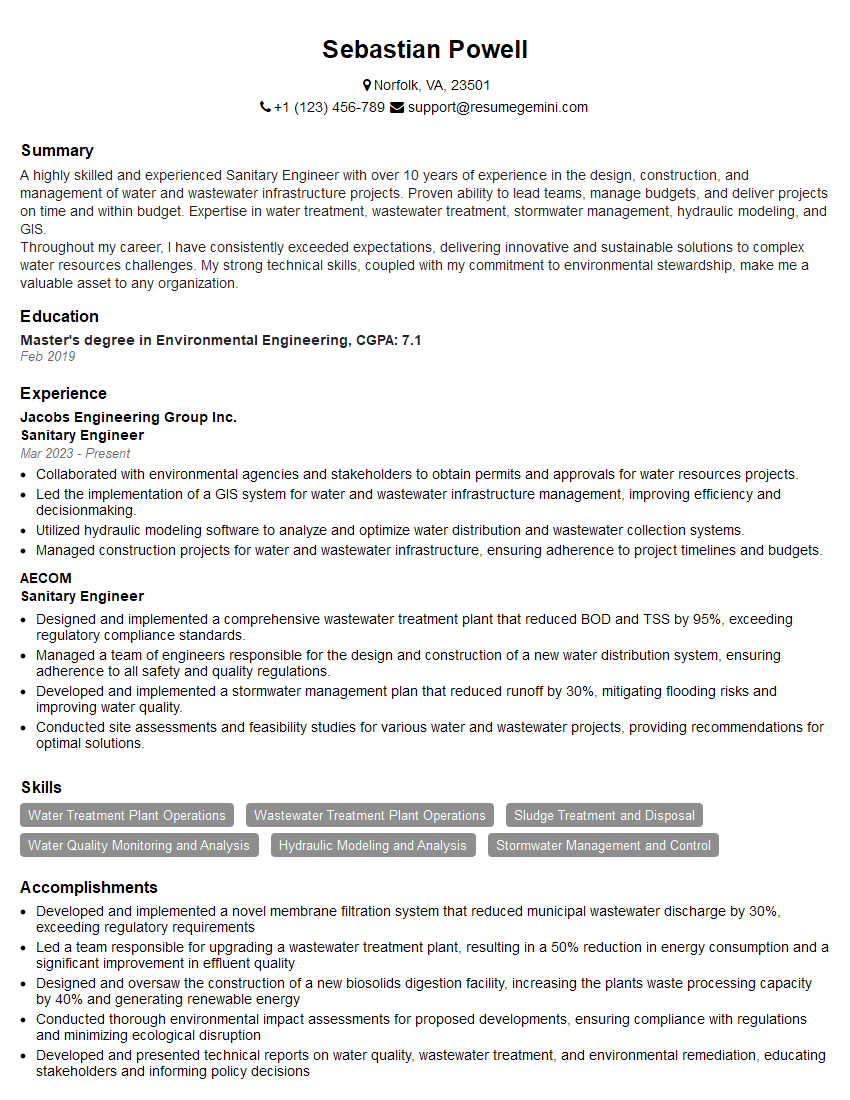
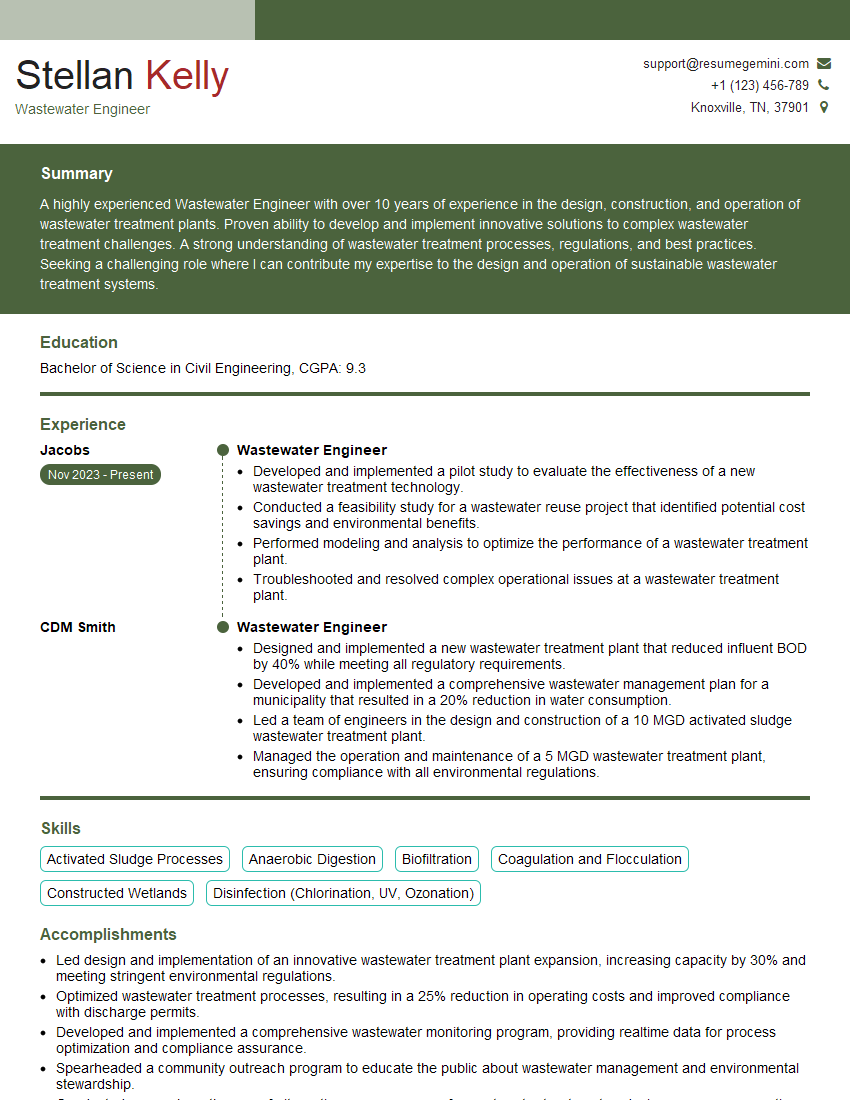
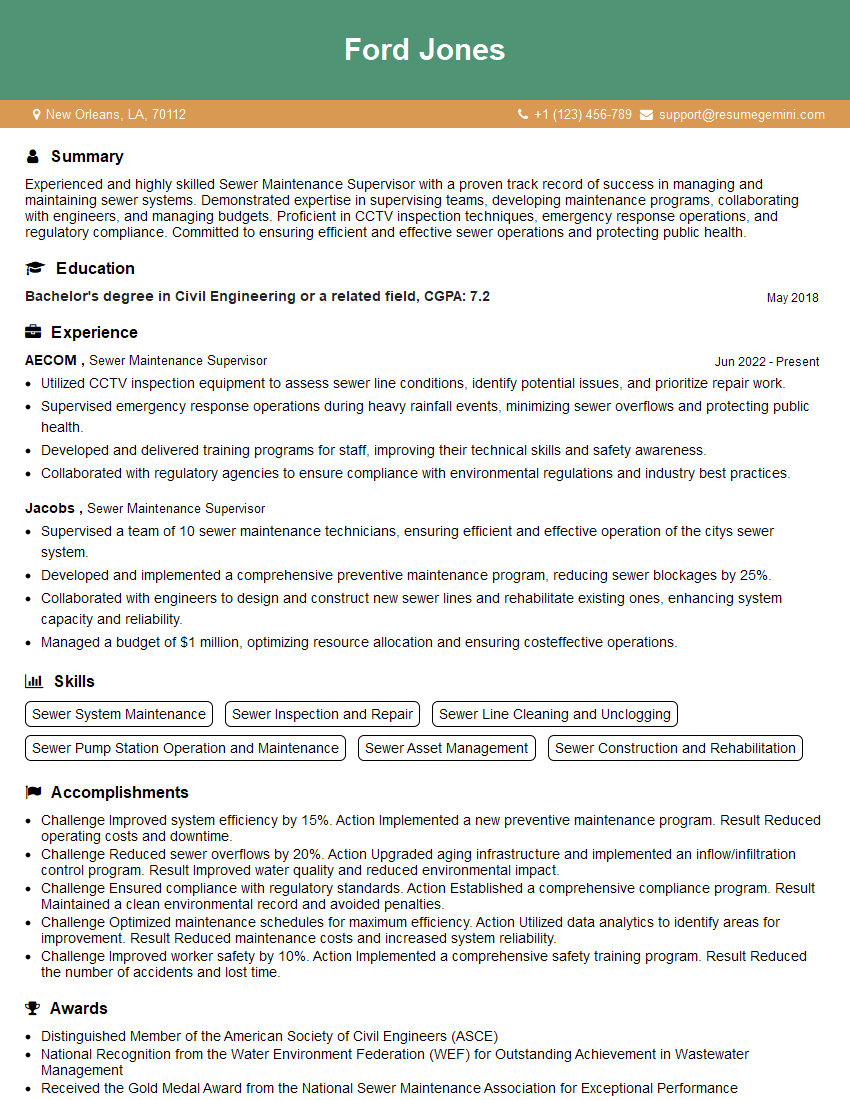
Mastering sewer line design opens doors to exciting career opportunities and advancement in the environmental and civil engineering fields. A strong understanding of these principles is highly valued by employers. To maximize your job prospects, create an ATS-friendly resume that highlights your skills and experience effectively. ResumeGemini is a trusted resource for building professional resumes that stand out. We provide examples of resumes tailored to Sewer Line Design to help you showcase your qualifications. Take the next step towards your dream career – build a compelling resume today!

Explore more articles
Users Rating of Our Blogs
Share Your Experience
We value your feedback! Please rate our content and share your thoughts (optional).
What Readers Say About Our Blog
Very informative content, great job.
good