Interviews are more than just a Q&A session—they’re a chance to prove your worth. This blog dives into essential Sewing and Stitching interview questions and expert tips to help you align your answers with what hiring managers are looking for. Start preparing to shine!
Questions Asked in Sewing and Stitching Interview
Q 1. What types of sewing machines are you proficient with?
My expertise spans a wide range of sewing machines, from basic mechanical models to advanced computerized machines. I’m proficient with both industrial and domestic sewing machines, including those from brands like Singer, Brother, Janome, and Bernina. My experience includes using machines with various functionalities such as straight stitch, zigzag stitch, buttonhole stitching, and decorative stitches. I’m also comfortable working with sergers (overlock machines) for professional-grade finishing.
For instance, I’ve used a Singer Heavy Duty 4423 for years for its durability in tackling tough fabrics, while I’ve employed a computerized Brother machine for intricate embroidery projects. Each machine requires a unique understanding of its mechanics and capabilities, which I’ve honed over my years of experience.
Q 2. Describe your experience with different stitch types and their applications.
Stitch selection is crucial for a successful project. Different stitches offer varying levels of strength, elasticity, and aesthetic appeal. Here are a few examples:
- Straight Stitch: A fundamental stitch used for seams, topstitching, and creating straight lines. The stitch length can be adjusted for different fabrics.
- Zigzag Stitch: Used for finishing raw edges to prevent fraying (overcasting), attaching elastic, and decorative purposes. Its width and length are adjustable.
- Overlock Stitch (Serger): Creates a professional-looking seam finish that prevents fraying and adds durability, crucial for knit fabrics.
- Blind Hem Stitch: Creates an almost invisible hem, perfect for delicate fabrics like chiffon or lining.
- Buttonhole Stitch: Creates a neat and functional buttonhole, with variations for different button sizes and fabric types.
The application of each stitch depends on the fabric type, garment construction, and desired aesthetic. For example, a straight stitch is perfect for a strong seam in a pair of jeans, while a zigzag stitch is ideal for finishing the raw edge of a stretchy knit fabric.
Q 3. Explain the process of creating a basic garment pattern.
Creating a basic garment pattern involves several steps. While draping on a dress form is a method used by professionals, a simpler approach for beginners involves using existing garments and modifying them.
- Choose a garment: Select a well-fitting garment similar to the desired finished product.
- Prepare the garment: Press the garment well to remove wrinkles. If the garment is a knit, it’s crucial to note the way the fabric stretches.
- Pin and Cut: Lay the garment flat and pin along major seams like the center front, center back, shoulders, and side seams. Cut carefully along the seam lines to separate the garment into its major pattern pieces.
- Trace and Transfer: Place the pattern pieces onto pattern paper, trace their outlines using a pen or pencil, and add seam allowances (typically ½ inch to ¾ inch). Label each piece clearly.
- Make Adjustments: Once you’ve added seam allowances, try on the pattern to check the fit. Adjust any areas that need alterations, such as the shoulders, waist, or sleeves, to improve fit for your body shape.
This is a simplified approach; professional pattern making involves more precise measurements and drafting techniques.
Q 4. How do you adjust stitch length and tension for different fabrics?
Adjusting stitch length and tension is essential for achieving quality results. This varies greatly depending on the fabric type.
- Stitch Length: Shorter stitch lengths (around 1.5-2.0) are best for sturdy fabrics like denim and canvas, providing greater durability. Longer stitch lengths (around 3.0-3.5) work well for lighter, more delicate fabrics like silk and chiffon, preventing puckering. Knit fabrics might need a longer stitch length and a slightly looser tension to accommodate stretch.
- Stitch Tension: Tension controls how tightly the upper and lower threads interlock. Too loose, and the stitching will be weak; too tight, and it may cause puckering or breakage. Heavier fabrics generally require a slightly higher tension, while lighter fabrics need lower tension. Experimentation is key. Always test on a scrap of the same fabric before sewing the main project. Most sewing machines have tension adjustment dials, generally numbered 1-9, 1 being the lowest tension.
For example, a denim jacket would use a shorter stitch length and a slightly higher tension, while a silk scarf would benefit from a longer stitch length and lower tension.
Q 5. What are the common issues encountered while using a sewing machine and how do you troubleshoot them?
Common sewing machine issues are often easily resolved with simple troubleshooting steps.
- Skipped Stitches: This often indicates a problem with the needle (bent or dull), thread (knotted or broken), or tension (incorrectly adjusted). Inspect the needle, re-thread the machine, and adjust the tension accordingly.
- Broken Needle: This could be due to hitting a pin or hitting a hard object while sewing, improper needle placement, or incorrect tension settings. Replace the needle and check the tension.
- Thread Jamming: This can be caused by incorrect threading, a dirty bobbin case, or lint buildup. Carefully check your threading and clean the bobbin case and machine.
- Uneven Stitch Length: This could result from incorrect stitch length settings, improper tension, or a worn feed dog. Check your stitch length setting, tension, and clean the feed dog (the mechanism that moves the fabric).
Systematic troubleshooting helps prevent unnecessary repairs. Always check the simple things first before considering more complex mechanical problems.
Q 6. What fabric types are you most familiar with, and what are their unique sewing characteristics?
My experience encompasses a broad range of fabrics, each with its own unique sewing characteristics.
- Cotton: A versatile fabric, easy to sew but can wrinkle easily. Pre-washing is recommended.
- Linen: Strong and breathable, but can be prone to fraying and requires careful handling. It’s also prone to wrinkling.
- Silk: Delicate and luxurious, requires sharp needles and a gentle touch to prevent damage. Lower tension is crucial.
- Wool: Durable and warm, but can be challenging to sew due to its thickness and tendency to stretch. A walking foot might be necessary.
- Knit Fabrics (Jersey, Ribbing): Stretchy and comfortable, require special needles and techniques to prevent skipped stitches or damage to the fabric. A serger is highly beneficial.
Understanding fabric properties helps tailor sewing techniques for better results. For example, using a ballpoint needle prevents snagging with knit fabrics.
Q 7. How do you ensure the accuracy and precision of your stitching?
Precision is paramount in sewing. I ensure accuracy through several methods:
- Accurate Cutting: Using sharp shears and precise cutting techniques eliminates variations in the pattern pieces.
- Proper Pinning: Pinning the fabric together carefully, matching notches and seam lines helps ensure accurate stitching alignment.
- Consistent Seam Allowances: Maintaining consistent seam allowances using seam guides on the sewing machine is crucial for well-fitting garments.
- Regular Maintenance: Ensuring the sewing machine is well-maintained (cleaned, oiled, and needles replaced as needed) results in reliable stitching.
- Test Stitching: Always test stitching on a scrap piece of fabric to ensure correct tension and stitch length before starting the main project.
Attention to detail at every stage ensures a professional finish and minimizes errors which could ruin an otherwise beautiful piece.
Q 8. Explain your process for preparing fabric before sewing.
Preparing fabric before sewing is crucial for a high-quality finished product. It’s like prepping ingredients before cooking – you wouldn’t start baking a cake without measuring and mixing your ingredients, right? Similarly, neglecting fabric preparation leads to uneven seams, puckering, and a less professional outcome.
Pre-washing: Most fabrics, especially natural fibers like cotton and linen, will shrink after washing. Pre-washing prevents shrinkage after the garment is completed. I always pre-wash fabrics in cold water and dry them according to the care instructions.
Pressing: A well-pressed fabric makes a huge difference in the precision of your sewing. Pressing removes wrinkles and ensures that the fabric lies flat, leading to smoother seams and a neater appearance. I use a steam iron and tailor’s ham (a curved, padded form) for curved areas.
Checking for flaws: Before cutting, carefully inspect the fabric for any imperfections like holes, stains, or loose threads. Addressing these issues early saves time and avoids costly mistakes later.
Cutting precisely: Accurate cutting is paramount. I use sharp fabric shears and cutting mats to ensure clean, precise cuts. Using a rotary cutter with a ruler is also helpful for large cuts. Mark your cutting lines clearly with tailor’s chalk or a water-soluble marker.
Notions preparation: Gather all necessary notions (buttons, zippers, interfacing, thread) before starting to avoid interruptions during the sewing process.
Q 9. Describe your experience working with different sewing tools and equipment.
My experience with sewing tools and equipment is extensive, ranging from basic hand tools to advanced industrial machines. I’m proficient with a variety of tools, including:
Sewing machines: From domestic machines like Singers and Berninas to industrial machines like Juki and Brother, I’m comfortable operating various models and adjusting settings for different fabrics and projects.
Hand tools: I’m skilled in using various hand sewing needles, thimbles, seam rippers, measuring tapes, pins, and scissors, including pinking shears for finishing edges.
Specialty tools: I use pattern weights for holding patterns in place, tailor’s chalk for marking, tracing wheels for transferring patterns, and specialty pressing tools like clappers and point pressers for crisp finishes.
Overlock machines (sergers): These machines are crucial for professional-looking seam finishes, and I’m proficient in their operation and maintenance.
My experience extends beyond basic tool usage. I understand the maintenance and troubleshooting of sewing machines. I can clean, oil, and adjust machine tension to ensure smooth and efficient operation.
Q 10. How do you handle complex pattern pieces or intricate designs?
Handling complex pattern pieces and intricate designs requires patience, precision, and a methodical approach. Think of it like assembling a detailed model kit – each step is important for the final result.
Careful pattern study: I begin by thoroughly reviewing the pattern instructions and diagrams. Understanding the construction steps before starting is crucial.
Pattern grading and adjustments: If needed, I adjust the pattern to fit the specific measurements. This may involve grading (size adjustment) or altering the design elements.
Notch and marking accuracy: I accurately transfer all notches and markings from the pattern to the fabric. These markings are essential for aligning fabric pieces correctly.
Step-by-step construction: I follow the pattern instructions meticulously, completing each step before moving to the next. This helps avoid errors and ensures accuracy.
Test fitting: For garments, I conduct frequent test fittings during construction. This allows for adjustments and corrections before the garment is completely finished.
For example, when working with a complex garment involving multiple pattern pieces and different types of fabric, I meticulously prepare the pattern, pre-wash the fabrics, and mark and cut the pieces precisely. I carefully assemble the garment sections and conduct test fittings to make sure the garment fits correctly. The final touches involve pressing and finishing to ensure a well-made garment.
Q 11. What safety precautions do you follow while operating sewing machines?
Safety is paramount when operating sewing machines. Just like driving a car, safe practices are essential to prevent injury.
Proper machine setup: I ensure the machine is properly plugged into a grounded outlet and that all safety guards are in place. This prevents electrical shock and protects fingers from moving parts.
Finger safety: I never place my fingers near the needle or presser foot while the machine is running. Finger guards are used when sewing close to edges.
Needle changes: I always unplug the machine before changing needles to prevent accidental needlesticks.
Loose clothing: I avoid wearing loose clothing or jewelry near the machine which could get caught in the moving parts.
Machine maintenance: Regular cleaning and oiling of the machine helps to prevent accidents caused by malfunctioning parts.
Sharp tools: I use sharp scissors and needles carefully and store them safely when not in use to avoid accidental cuts and punctures.
Q 12. How do you manage your time and workload effectively in a fast-paced production environment?
In a fast-paced environment, efficient time management is key. I use a combination of strategies to handle workloads effectively:
Prioritization: I identify urgent and important tasks and prioritize them accordingly. This ensures that critical projects are completed on time.
Planning and scheduling: I create detailed schedules or to-do lists to break down large projects into smaller, manageable tasks. I utilize tools to schedule my tasks effectively.
Efficient workflows: I streamline my sewing processes to minimize waste and maximize output. I keep my work area organized and readily accessible.
Batch processing: Whenever possible, I batch similar tasks together – for example, cutting all the pieces for multiple garments at once – to increase efficiency.
Time tracking: I monitor my working time to assess my productivity and identify areas for improvement.
I view my time as a valuable resource; every minute saved contributes to overall efficiency and output, ensuring deadlines are met and high-quality work is consistently delivered.
Q 13. Describe your experience with industrial sewing equipment.
My experience with industrial sewing equipment is substantial. I’ve worked with a range of machines designed for high-volume production, including:
High-speed straight stitch machines: These machines are optimized for speed and efficiency in creating straight seams.
Lockstitch machines: These are versatile machines capable of various stitch types, useful for a wider variety of tasks.
Coverstitch machines: These create a professional-looking finish often seen on sportswear or ready-to-wear garments.
Industrial sergers (overlock machines): These offer greater speed and durability than domestic sergers for high-volume production.
I’m familiar with the unique maintenance requirements of industrial machines and can troubleshoot common issues. I understand the importance of regular servicing to maintain their functionality and optimal performance in the fast-paced environment. Working with industrial machines demands precision and quick decision-making, something I excel at.
Q 14. What is your experience with different types of seams and finishing techniques?
My knowledge of seams and finishing techniques is extensive. The choice of seam and finish depends on the fabric, garment type, and desired aesthetic.
Seams: I’m proficient in various seam types, including French seams (for clean, professional finishes), flat-felled seams (durable and used often in men’s wear), and welt seams (used for details and decorative purposes).
Finishing techniques: I utilize various finishing techniques to ensure durability and a professional look. These include serging/overlocking (for preventing fraying and neat edges), zigzag stitching, pinking, bound edges, and bias tape finishes.
Seam allowances: I understand the importance of consistent seam allowances and how different seam allowances impact garment construction.
For example, a delicate silk garment might require French seams for an invisible, high-quality finish, while a sturdy denim jacket might benefit from the strength of flat-felled seams. Understanding these nuances allows me to select the appropriate seam and finishing techniques for each project.
Q 15. How do you identify and correct common sewing errors?
Identifying and correcting sewing errors is crucial for achieving professional results. It starts with careful observation. Look for inconsistencies in stitching – skipped stitches, uneven tension, puckering, or fabric distortion. These often point to problems with machine settings, needle choice, or technique.
Skipped Stitches: Often caused by a dull needle, incorrect thread tension, or improper needle threading. Solution: Replace the needle, adjust thread tension (usually by turning the dial on your machine), and double-check your threading.
Uneven Tension: Results in puckering on one side and loose stitches on the other. This is usually a matter of adjusting the upper and lower tension dials on your sewing machine until even stitching is achieved.
Puckering: Can stem from incorrect fabric handling, tension issues, or using the wrong needle for the fabric. Solution: Use a smaller stitch length, adjust tension, check needle type, or use a walking foot (especially for multiple layers).
Fabric Distortion: Happens when stretching or pulling the fabric unevenly while sewing. Solution: Use fabric shears to ensure straight cuts, pin carefully to prevent shifting, and use a seam guide for consistency.
For instance, I once had a client’s garment with noticeable puckering. By carefully examining the stitches, I identified the issue as incorrect tension. Adjusting the machine settings solved the problem and delivered a beautifully finished garment.
Career Expert Tips:
- Ace those interviews! Prepare effectively by reviewing the Top 50 Most Common Interview Questions on ResumeGemini.
- Navigate your job search with confidence! Explore a wide range of Career Tips on ResumeGemini. Learn about common challenges and recommendations to overcome them.
- Craft the perfect resume! Master the Art of Resume Writing with ResumeGemini’s guide. Showcase your unique qualifications and achievements effectively.
- Don’t miss out on holiday savings! Build your dream resume with ResumeGemini’s ATS optimized templates.
Q 16. Explain your knowledge of different types of needles and their uses.
Different sewing needles are designed for specific fabric types and sewing tasks. Choosing the right needle is fundamental to achieving clean, professional seams. Here are some examples:
Universal Needles: The workhorse of sewing needles. Suitable for most woven fabrics like cotton, linen, and light-weight synthetics. These are a great all-around starting point.
Ballpoint Needles: Designed for knit fabrics to prevent snagging or piercing the fabric. The rounded tip glides between the loops of the knit fabric.
Sharp Needles: Ideal for denim, canvas, and other tightly woven fabrics. The sharp point pierces the material effectively.
Microtex/Sharp Needles (Size 70/10): Excellent for lightweight fabrics such as silk and chiffon because they create small, almost invisible stitches.
Embroidery Needles: Feature a larger eye to accommodate thicker embroidery threads. This gives better control and even stitching during embroidery projects.
Leather Needles: Have a triangular point to pierce thick leather and other heavy materials without causing damage.
Needle sizes are critical. A smaller needle for delicate fabrics prevents damage while a larger needle is needed for heavier fabrics. Understanding the relationship between needle size, fabric weight, and thread size is crucial for success. I always recommend checking the needle size chart recommended by the machine manufacturer and the fabric manufacturer’s guidance.
Q 17. How do you choose the appropriate thread for a specific project?
Thread selection significantly impacts the final look and durability of your project. Consider the following factors:
Fabric Weight: Heavier fabrics require stronger, thicker threads, while lighter fabrics need finer threads. A too-heavy thread on a light fabric will overwhelm the look, while too-light a thread on heavier fabric will weaken the seams.
Fiber Content: Polyester thread is generally stronger and more durable than cotton thread. Cotton is best for natural fabrics, while polyester blends well with synthetics. Natural threads offer a softer hand-feel, but might not hold up as well to repeated washing.
Project Type: Embroidery might call for specialty threads (like metallic or rayon) that create a unique effect. In contrast, garment construction often uses general purpose threads (cotton-polyester blend).
Color Matching: Matching the thread color to the fabric is crucial for a professional look. Sometimes using a contrasting thread can be a design element, but it is always intentional.
For instance, I would choose a sturdy polyester thread for a pair of jeans, and a fine cotton thread for a silk blouse. Always test your thread and needle combination on a scrap of the same fabric before starting the main project, to assess tension and stitching quality.
Q 18. What is your experience with fabric cutting and layout techniques?
Fabric cutting and layout are fundamental to efficient sewing. Precision here avoids wasted fabric and ensures that garment pieces fit together perfectly.
Accurate Cutting: Using sharp fabric shears is crucial for clean, straight cuts. Dull shears can cause fraying and inaccurate measurements.
Layout Planning: Before cutting, carefully plan the placement of pattern pieces on the fabric to minimize waste, and to consider the fabric’s nap (direction of the fibers) or pattern. This stage involves considering the grainlines on your pattern pieces, the fabric’s directionality, and any pattern repeats.
Multiple Layers: Cutting multiple layers of fabric simultaneously (when appropriate) improves efficiency, but requires precise alignment to ensure consistent pieces. A rotary cutter and cutting mat are efficient tools for this, especially with multiple layers of fabric.
Pattern Matching: For fabrics with patterns or stripes, carefully matching pattern pieces ensures a cohesive final product. This can require more fabric and careful planning.
I’ve honed my skills in fabric cutting and layout by working on various projects, from simple garments to complex designs. Efficient layout techniques save time and material, resulting in cost savings and improved workflow.
Q 19. Describe your understanding of different fabric weights and their impact on sewing.
Fabric weight, or drape, significantly impacts sewing techniques and the final garment. Understanding different weights is key to successful sewing.
Lightweight Fabrics: Such as chiffon, silk, and voile, require delicate handling. They tend to drape easily but can be challenging to work with due to their fragility. Use sharp needles, fine threads, and gentle adjustments.
Medium-Weight Fabrics: Cotton broadcloth, linen, and chambray are versatile and easy to sew. They hold their shape well and are suitable for many projects.
Heavyweight Fabrics: Denim, canvas, and upholstery fabrics require stronger needles, heavier threads, and may need a walking foot to handle multiple layers evenly. They resist wrinkles and are durable but can be more difficult to manage.
Sewing a lightweight fabric like chiffon necessitates a different approach than sewing denim. Understanding these differences allows you to adjust your machine settings and techniques, preventing issues like broken needles or skipped stitches. For instance, heavier fabrics may need a longer stitch length for better strength and durability.
Q 20. How do you maintain and clean your sewing equipment?
Regular maintenance of sewing equipment is crucial for its longevity and optimal performance. This involves:
Cleaning: After each sewing session, remove lint and thread scraps from the bobbin case, feed dogs, and around the needle area. Use a small brush or compressed air to remove stubborn debris.
Lubrication: Regularly lubricate the machine’s moving parts as recommended by the manufacturer. This reduces friction and extends the machine’s lifespan.
Needle Care: Replace needles regularly, even if they don’t appear bent or dull. A dull or slightly bent needle can result in skipped stitches, fabric damage, and broken threads. Inspect your needles after every sewing session and replace them as needed.
Storage: Keep your sewing machine covered when not in use to prevent dust accumulation.
I’ve learned through experience that neglecting maintenance leads to costly repairs or machine failure. Regular cleaning and lubrication prevent problems and ensure smoother operation, resulting in higher quality work.
Q 21. What is your experience with serging or overlocking?
Serging, or overlocking, finishes raw edges by encasing them in a stitched overlock seam. This prevents fraying, adds durability, and creates a professional finish. It involves a specialized sewing machine with multiple needles and loops that creates a decorative and protective stitch.
Types of Serging/Overlocking: Several stitch types are possible, including rolled hems and decorative stitches. The choice depends on the fabric type and desired aesthetic.
Stitch Settings: Different fabric weights require adjusting the stitch length and tension. These settings control the stitch appearance and stability.
Differential Feed: Many sergers have a differential feed mechanism that stretches or compresses the fabric as it’s sewn, creating a flatter and more even seam, particularly useful on stretch fabrics. Proper adjustment prevents puckering or stretching of knit materials.
I have extensive experience with serging, often using it to finish seams in knit garments and other projects where a clean, professional edge is necessary. This technique is vital for creating high-quality, durable garments, significantly improving their overall appearance and longevity.
Q 22. How do you ensure the quality of your work throughout the sewing process?
Ensuring quality in sewing is a holistic process, starting from fabric selection and ending with the final press. It’s about meticulous attention to detail at every stage.
Fabric Selection: I always begin by carefully inspecting the fabric for flaws like inconsistencies in weave, weak points, or pre-existing damage. Choosing the right fabric for the project is paramount.
Precise Cutting: Accurate pattern cutting is critical. I use sharp shears and pay close attention to grainlines to prevent distortion and ensure a perfect fit. I always double-check my measurements before cutting.
Consistent Stitching: Maintaining a consistent stitch length and tension is key. I regularly check my machine settings and adjust as needed to avoid puckering or skipped stitches. For hand-sewing, even tension is achieved through practice and attention to the needle’s depth.
Seamless Finishing: Finishing techniques like serging, zigzagging, or using bias tape prevent fraying and enhance the garment’s longevity and professional look. Overlocking seams is a particularly effective method I often employ.
Pressing: Pressing throughout the process is crucial. It helps set seams, remove wrinkles, and achieve a crisp, clean finish. I use the appropriate temperature and pressure for different fabrics.
Quality Control Check: Before the final press, I conduct a thorough quality check, examining each seam, fitting, and detail for any imperfections. This final inspection ensures that the garment meets the highest standards.
Q 23. Describe your experience working with various types of zippers and closures.
I’ve extensive experience with a wide variety of zippers and closures, from the simplest to the most intricate. My experience encompasses:
Invisible Zippers: I’m proficient in installing invisible zippers, requiring precision and a good understanding of fabric manipulation to achieve a nearly seamless finish. This is particularly important for garments where a clean, unnoticeable closure is desired.
Metal and Coil Zippers: I’m comfortable working with both metal and coil zippers of varying sizes and colours. I understand how to select the appropriate zipper type based on the project’s needs and the fabric’s weight.
Separating Zippers: Working with separating zippers, such as those used in jackets or bags, demands careful alignment and a firm understanding of how the zipper mechanism functions.
Hooks and Eyes, Buttons, Snaps: I have experience attaching various closures such as hooks and eyes, buttons (including shank and sewn-on), and snaps, using the appropriate tools and techniques for each type.
Specialty Closures: I’ve also worked with more specialized closures like decorative zippers, magnetic closures, and Velcro, adapting my techniques to meet the unique requirements of each.
My experience ensures that I can select and install the most appropriate closure for any project, considering factors such as durability, aesthetics, and ease of use.
Q 24. What is your experience with hand-sewing techniques?
Hand-sewing is a fundamental skill that I use regularly, complementing my machine sewing capabilities. My experience includes:
Basic Stitches: I’m proficient in various hand stitches including running stitch, backstitch, slip stitch, and blanket stitch. These are essential for tasks such as mending, alterations, and finishing details.
Fine Detail Work: Hand-sewing allows for precision and control, particularly when working with delicate fabrics or intricate details. I frequently use hand-sewing for appliqué, embroidery, and creating fine buttonholes.
Mending and Repairs: I use hand-sewing for repairing tears, patching holes, and reinforcing weak areas in garments. This is invaluable for extending the life of clothing and other textiles.
Specialty Techniques: I also have experience with more advanced hand-sewing techniques, such as French seams and tailored buttonholes, which produce a very high-quality, professional finish.
Hand-sewing, while time-consuming, allows for a level of customization and control unattainable with a machine. It’s a skill I value highly.
Q 25. How do you handle situations where you encounter unexpected problems during a sewing project?
Encountering unexpected problems is part of the sewing process. My approach involves a systematic problem-solving strategy:
Identify the Problem: I carefully examine the issue to understand its nature and root cause. Is it a pattern error, a machine malfunction, a fabric defect, or something else?
Research Solutions: I leverage my experience, consult sewing references, and search online resources for potential solutions. Sometimes, a simple adjustment is all that’s needed.
Experiment and Test: If the solution isn’t immediately apparent, I carefully experiment with different techniques or approaches, making small adjustments and testing them before making large changes. I always work on a sample piece first whenever possible.
Seek Assistance: If I’m unable to resolve the problem independently, I don’t hesitate to seek advice from experienced colleagues or online communities. The sewing community is very supportive.
Document the Solution: Once I’ve solved the problem, I document my process and the solution, adding it to my knowledge base for future reference. Learning from mistakes is crucial.
This systematic approach allows me to tackle unexpected challenges effectively and efficiently, minimizing disruptions to the project.
Q 26. Describe your experience working from technical drawings or patterns.
I have extensive experience interpreting and working from technical drawings and patterns. This involves:
Pattern Understanding: I can accurately read and understand various types of patterns, including those with complex shaping and construction details.
Pattern Alterations: I’m skilled in making necessary adjustments to patterns to achieve the desired fit and style. This includes adjusting for different body types, making design modifications, and grading patterns to different sizes.
Technical Drawing Interpretation: I can interpret technical drawings, which provide detailed information about garment construction, measurements, and specifications. This is particularly useful when working with bespoke or high-end designs.
Accurate Measurements: I carefully measure and check all pattern pieces to ensure accuracy before cutting. I double and triple check to prevent errors.
Adaptability: I can adapt to various pattern styles and formats, whether they’re commercial patterns or bespoke designs. I’m familiar with different notations and conventions used in pattern making.
My proficiency in interpreting technical documents and patterns allows me to create garments accurately and efficiently, ensuring a perfect fit and a high-quality final product.
Q 27. What are your preferred methods for pressing and finishing garments?
Pressing and finishing are critical steps in creating professional-looking garments. My preferred methods involve:
Appropriate Iron and Surface: I always use an iron suitable for the fabric type and a clean, well-padded ironing surface (like a tailor’s ham or sleeve board) to prevent shine and damage. The pressing cloth is also very important to protect the fabric.
Pressing Throughout Construction: I press seams open or to one side after sewing, as appropriate for the garment construction. This helps to set the seams and create a smooth, flat surface.
Specialized Techniques: I’m proficient in using various pressing tools, such as tailor’s ham, point presser, and clapper, to achieve crisp edges, well-defined seams, and sharp creases. These tools are invaluable for creating professional-looking garments.
Finishing Touches: I pay close attention to finishing details such as understitching, edge stitching, and using bias tape or facings to create a clean, professional edge. These details enhance the overall appearance and durability of the garment.
Steam Iron: I frequently use a steam iron to achieve a smooth finish, especially on heavier fabrics. Understanding the appropriate steam settings for various fabrics is crucial to prevent damage.
My meticulous pressing and finishing techniques ensure that my work is not only functional but also aesthetically pleasing and high-quality.
Q 28. How do you stay updated on the latest trends and techniques in sewing and stitching?
Staying updated on the latest trends and techniques is essential in this dynamic field. I utilize several methods to maintain my expertise:
Industry Publications: I regularly read sewing magazines and online publications specializing in sewing and textile design. These sources provide insights into new trends, techniques, and technologies.
Online Courses and Workshops: I actively participate in online courses and workshops offered by renowned sewing instructors and designers. These provide opportunities to learn new skills and refine existing ones.
Professional Associations: Membership in sewing guilds and professional organizations keeps me abreast of industry advancements and allows me to network with other professionals in the field.
Social Media and Blogs: I follow leading designers, sewing enthusiasts, and brands on social media and through blogs. This offers a quick and easy way to observe new trends and gather inspiration.
Experimentation: I actively experiment with new techniques and materials, pushing my boundaries and refining my skills through practical application.
This multifaceted approach ensures that I’m consistently learning and growing, allowing me to offer my clients the most up-to-date and innovative sewing services.
Key Topics to Learn for Your Sewing and Stitching Interview
- Fabric Selection and Properties: Understanding different fabric types (cotton, silk, linen, etc.), their characteristics (drape, weight, texture), and suitability for various projects. Practical application: Explaining why you’d choose a specific fabric for a garment or project.
- Sewing Machine Operation and Maintenance: Proficiency in operating various sewing machines, understanding stitch types (straight stitch, zigzag, overlock), and basic troubleshooting. Practical application: Describing your experience with different machine types and how you maintain them for optimal performance.
- Pattern Making and Alterations: Knowledge of drafting and adapting patterns to different body types and styles. Practical application: Explaining how you’d adjust a pattern to achieve a specific fit or design element.
- Hand Sewing Techniques: Proficiency in various hand stitches (running stitch, backstitch, blind stitch, etc.) and their applications. Practical application: Demonstrating knowledge of appropriate stitches for different seams and finishing techniques.
- Construction Techniques: Understanding different garment construction methods (set-in sleeves, princess seams, darts, etc.) and their implications on fit and durability. Practical application: Explaining the advantages and disadvantages of different construction methods.
- Finishing Techniques: Knowledge of various finishing techniques (hems, facings, bindings, etc.) to create a professional and durable garment. Practical application: Describing your preferred finishing techniques and their impact on garment quality.
- Troubleshooting and Problem-Solving: Identifying and resolving common sewing issues, such as skipped stitches, broken needles, or fabric puckering. Practical application: Describing your approach to diagnosing and fixing sewing problems.
- Industry Knowledge and Trends: Staying updated on current trends in sewing and stitching, new techniques, and industry best practices. Practical application: Discussing current trends in fabric or design.
Next Steps
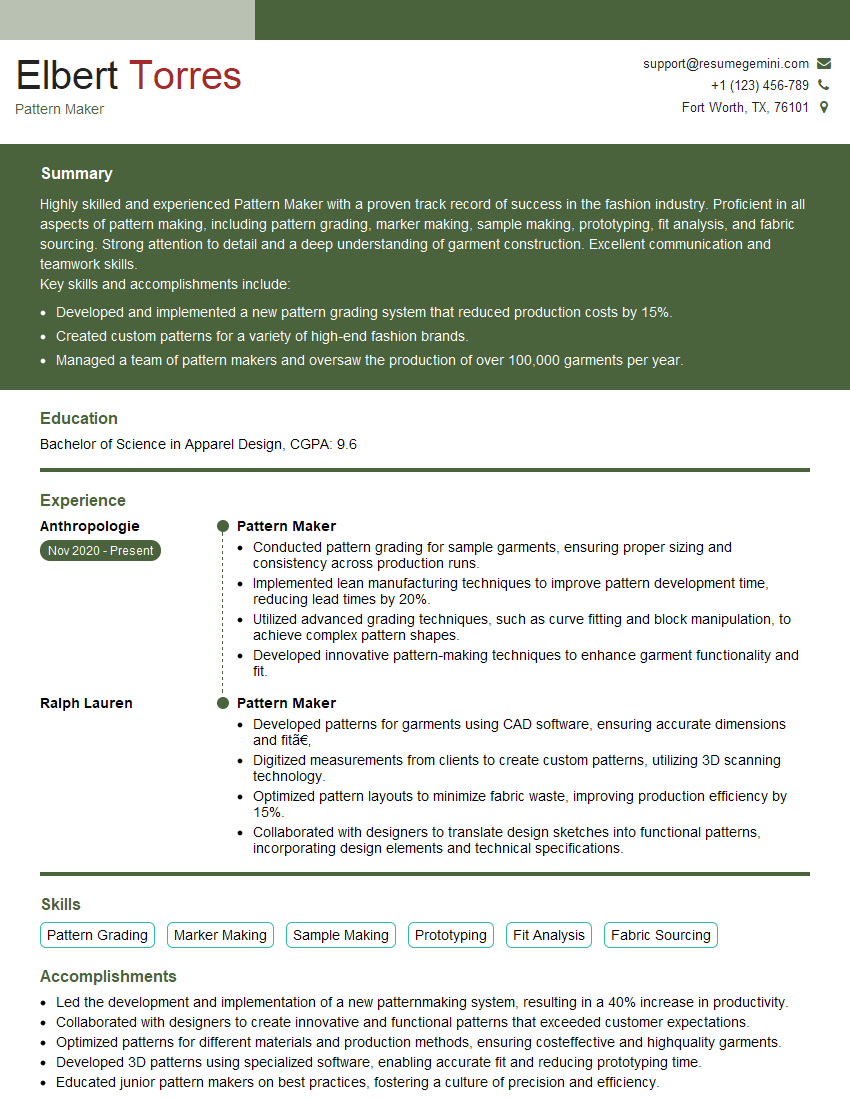
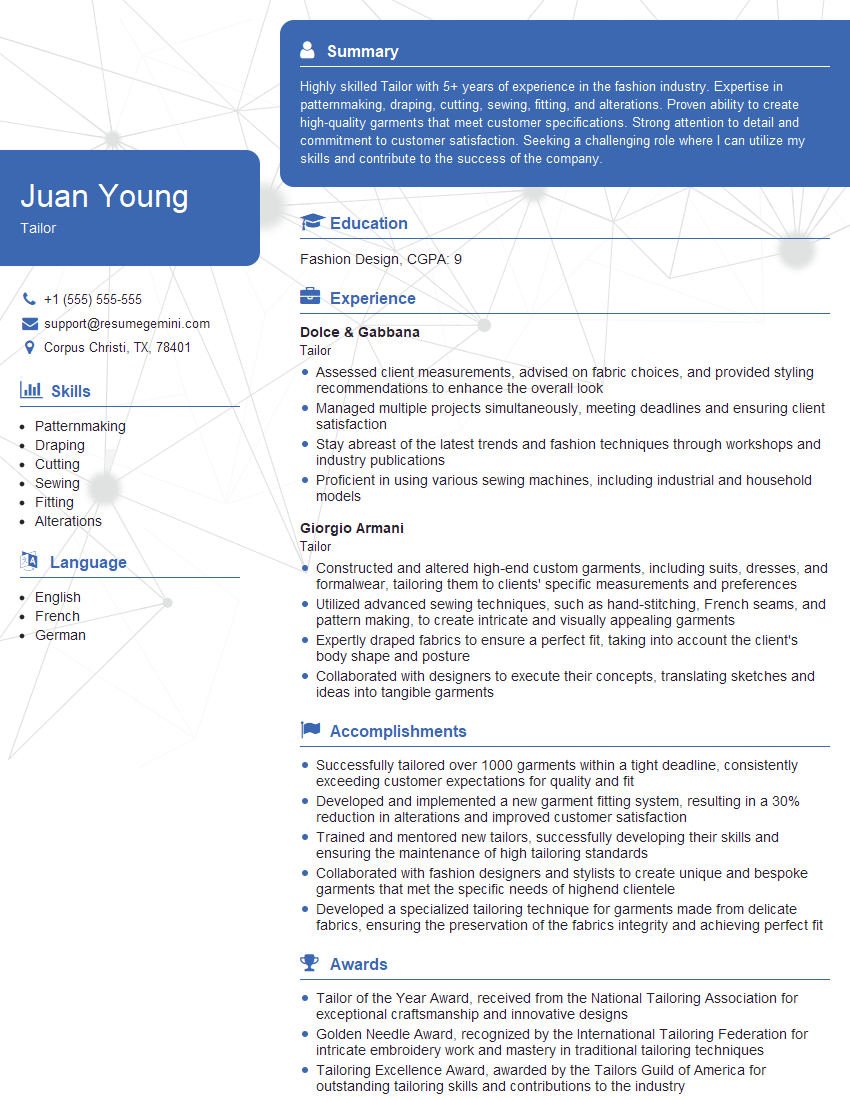
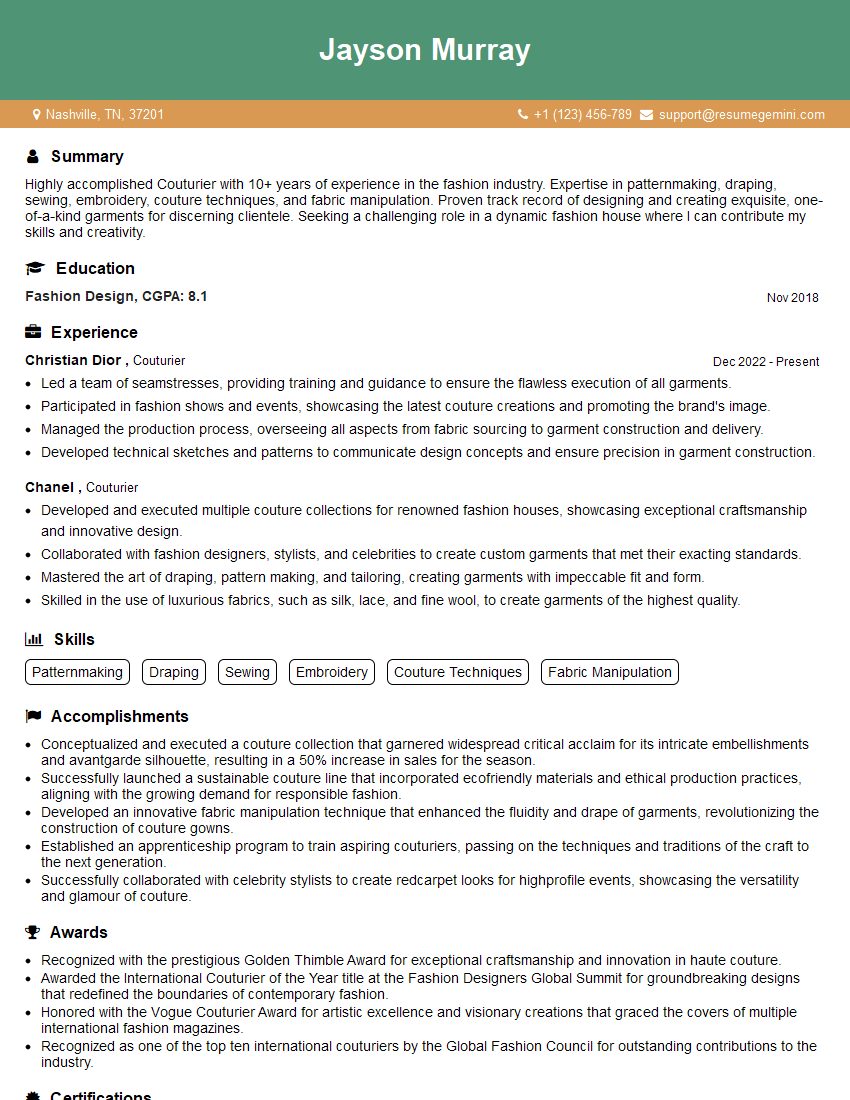
Mastering sewing and stitching opens doors to exciting career opportunities in fashion, design, alterations, and more! To maximize your job prospects, create a compelling and ATS-friendly resume that showcases your skills and experience effectively. ResumeGemini is a trusted resource to help you build a professional resume that stands out. They provide examples of resumes tailored specifically to the sewing and stitching industry to help guide you. Invest the time in crafting a strong resume – it’s your first impression on potential employers.








Explore more articles
Users Rating of Our Blogs
Share Your Experience
We value your feedback! Please rate our content and share your thoughts (optional).
What Readers Say About Our Blog
Very informative content, great job.
good