Are you ready to stand out in your next interview? Understanding and preparing for Shingle Installation interview questions is a game-changer. In this blog, we’ve compiled key questions and expert advice to help you showcase your skills with confidence and precision. Let’s get started on your journey to acing the interview.
Questions Asked in Shingle Installation Interview
Q 1. Describe your experience with different types of asphalt shingles.
My experience encompasses a wide range of asphalt shingles, from the basic 3-tab architectural shingles to the more sophisticated luxury shingles. I’m familiar with the differences in their composition, durability, and aesthetic appeal. For instance, 3-tab shingles are economical and offer decent protection, but they lack the dimensional appearance of architectural shingles. Architectural shingles, on the other hand, offer a more upscale look with thicker construction and enhanced durability, often including features like shadow lines for depth. I’ve also worked extensively with premium shingles that boast enhanced weather resistance, impact resistance, and even algae resistance features for longer-lasting roofs. This breadth of experience allows me to recommend the optimal shingle type based on a client’s budget, aesthetic preferences, and the specific climate conditions of their location.
For example, in a high-wind area, I’d prioritize a shingle with a higher wind resistance rating, perhaps even specifying the use of additional sealant or fasteners. In a climate prone to algae growth, a shingle treated with algae-resistant granules would be a necessary choice. Understanding these nuances is key to selecting the right product for each individual project.
Q 2. Explain the process of properly measuring and calculating shingle quantities for a roof.
Accurately measuring and calculating shingle quantities is critical for avoiding costly material shortages or excessive waste. The process begins with a detailed roof measurement. I typically use a combination of digital measuring tools and on-site observation to account for complex roof shapes and any irregularities. The roof area is broken down into smaller, manageable sections, such as the main roof planes, gables, hips, and valleys. These measurements are then converted into square feet.
Next, I factor in the shingle’s coverage rate, which is typically provided by the manufacturer. This accounts for shingle overlaps and waste. A typical asphalt shingle might cover roughly 33.3 square feet per square (a square is 100 square feet). However, I always add a contingency of 5-10% to account for waste, cuts, and unexpected complexities. This prevents running out of materials mid-project, which can lead to delays and added expenses.
For example, if a roof measures 1500 square feet and the shingle coverage is 33.3 square feet per square, I’d calculate: (1500 sq ft / 100 sq ft/square) * 1.1 (10% contingency) = 16.5 squares. I’d always round up to ensure sufficient materials, ordering 17 squares in this scenario. This methodical approach guarantees an efficient and cost-effective project execution.
Q 3. What are the key safety precautions you follow during shingle installation?
Safety is paramount in shingle installation. My adherence to safety protocols begins with a thorough risk assessment before even commencing work. This includes identifying potential hazards, like uneven surfaces, electrical lines, and possible fall hazards. Appropriate personal protective equipment (PPE) is mandatory and includes hard hats, safety glasses, work gloves, and fall protection harnesses. I always make sure that the harnesses are properly secured using appropriate anchor points, and I regularly inspect the equipment for any signs of damage. The use of ladders and scaffolding is carefully planned and executed following strict safety procedures, ensuring proper stabilization and access points.
Additionally, I maintain a clear communication line with my team, briefing them on safety procedures and potential hazards. A crucial aspect is ensuring a clean and organized work site to prevent tripping hazards. Regular safety briefings and adherence to OSHA guidelines are standard practice to minimize risks and ensure a safe working environment for everyone involved.
For instance, when working near power lines, we always maintain a safe distance and engage a qualified electrician if the lines pose any potential threat. This careful consideration of safety at every stage of the project is what sets us apart.
Q 4. How do you identify and address potential problems with existing roofing underlayment?
Inspecting existing roofing underlayment is a crucial step in any re-roofing project. The underlayment acts as a secondary water barrier, protecting the roof deck in case of shingle failure. I carefully inspect the underlayment for any signs of damage, such as tears, punctures, or water stains. These indicators can suggest compromised waterproofing and may require repairs or full replacement. I also check for proper overlap and secure fastening; an improperly installed underlayment can be just as problematic as a damaged one.
If damage is found, I’ll first assess the extent of the problem. Minor tears can often be repaired with specialized roofing tape. However, if the damage is significant or extensive, replacing sections or the entire underlayment is necessary to prevent leaks and long-term roof damage. The type of underlayment and the extent of the damage will dictate the repair or replacement method employed. I have extensive experience with various underlayment materials, ranging from felt paper to synthetic options, and know how best to address their specific vulnerabilities.
Q 5. What are the common causes of shingle blow-offs and how do you prevent them?
Shingle blow-offs are typically caused by high winds or improper installation. Strong winds can lift improperly secured shingles, especially those on exposed roof edges. Other factors include poor shingle adhesion due to inadequate preparation of the roof deck or using incorrect nails. I always ensure the roof deck is clean, dry, and properly prepared before installation. I utilize roofing cement to improve shingle adhesion, particularly in high-wind areas, and employ appropriate nail patterns to secure each shingle firmly. I also pay attention to the type of nails used. Longer, galvanized nails offer better hold against high winds than shorter, standard nails.
Prevention is key. By carefully selecting shingles appropriate for the wind load in a particular region and using proper installation techniques, the risk of blow-offs can be significantly reduced. A comprehensive inspection after installation, particularly around vulnerable areas, helps identify any potential issues that might be addressed proactively.
Q 6. Describe your experience working with different types of roofing accessories (e.g., vents, flashings).
My experience includes working with a variety of roofing accessories, ensuring proper integration with the shingle system. This includes ridge vents, hip and rake flashings, valley flashings, pipe flashings, and chimney flashings. Each accessory serves a specific purpose, and proper installation is crucial for preventing leaks and ensuring roof longevity. For example, ridge vents facilitate proper attic ventilation, while flashings prevent water penetration around critical areas like chimneys and pipes.
I carefully select the appropriate flashing material based on the application and environmental conditions. Metal flashings are common for their durability and resistance to corrosion. I ensure proper sealing around all flashings to prevent water infiltration and employ techniques that ensure seamless integration with the shingles, to avoid any gaps or vulnerabilities. The proper installation of these accessories is as critical as the shingle installation itself.
Q 7. How do you ensure proper ventilation during shingle installation?
Proper ventilation is critical for preventing moisture buildup in the attic, which can lead to mold growth, structural damage, and premature shingle deterioration. I ensure proper ventilation by installing ridge vents, soffit vents, and gable vents, creating a continuous airflow path that removes trapped moisture. The balance between intake and exhaust ventilation is important and depends on the size of the attic space. Too little ventilation allows moisture to accumulate, while too much can negatively affect energy efficiency.
Before installation, I always check for existing ventilation and assess whether it’s sufficient. If not, I create a ventilation plan, carefully selecting and installing the appropriate vents to achieve optimal airflow. This includes considering the roof’s design, climate, and attic space dimensions. A properly ventilated attic is a key component of a long-lasting, healthy roof.
Q 8. What are the signs of a failing roof, and how do you diagnose them?
Identifying a failing roof requires a keen eye and understanding of common issues. Signs can range from subtle to dramatic. Let’s start with the subtle: missing or curled shingles, especially around valleys or edges, indicate wear and potential leaks. Granules accumulating in gutters point to shingle degradation. Dark streaks or stains on the roof or interior ceilings are strong indicators of water damage. More obvious signs include visible cracks, holes, or significant shingle damage. Sagging or uneven areas of the roof suggest structural problems potentially exacerbating shingle failure.
Diagnosing the problem begins with a thorough visual inspection from the ground and, if safe and possible, from the roof itself. I use binoculars for detailed ground-level assessment. On the roof, I systematically check all areas for missing or damaged shingles, paying close attention to flashings (metal pieces around chimneys and vents), valleys (where two roof slopes meet), and ridges (the highest point of the roof). I’ll also check for signs of moss or algae growth, which can trap moisture and accelerate deterioration. If I suspect underlying structural problems, I recommend a structural engineer’s inspection.
Q 9. Explain the process of installing ridge caps and hip and valley flashings.
Installing ridge caps and hip and valley flashings is crucial for waterproofing and protecting the roof from weather damage. Ridge caps are the finishing pieces that cover the highest point of the roof. Installation involves aligning them precisely with the underlying shingles, securing them with roofing nails, and ensuring a watertight seal. We typically use roofing cement along the edges to prevent water penetration.
Hip and valley flashings are metal pieces that direct water flow around the intersecting points of the roof. For valleys, I install a ‘valley flashing’, usually a sheet of metal that covers the intersection and directs water down to the gutters. For hips, where two sloping sides meet at an angle, we install hip flashing, often in overlapping layers to ensure a secure seal. Proper installation involves careful measurement, cutting the flashing to the correct size, and using appropriate fasteners to secure them, ensuring a tight fit and no gaps.
Think of these flashings like carefully placed rain gutters running along the ridges and valleys – they guide the water to a safe place preventing it from backing up under the shingles.
Q 10. How do you handle difficult roofing conditions, such as steep slopes or complex rooflines?
Steep slopes and complex rooflines present unique challenges, demanding specialized equipment and techniques. For steep slopes, I prioritize safety, using harnesses and safety lines, and ensuring secure footing. We’ll often use scaffolding or elevated platforms to access difficult areas safely. For complex rooflines with many valleys, hips, or dormers, meticulous planning is crucial. Detailed measurements and careful cutting of shingles and flashings are essential to maintain a watertight seal. I work closely with other professionals like structural engineers and architects for guidance on complex designs. In many cases, we may need to use specialized tools like scaffold systems and lift equipment, depending on the height and complexity.
I remember one project where the roof had multiple dormers and a very sharp pitch; the solution was to divide the project into sections, ensuring each was completed perfectly before moving to the next. Using specialized roofing tools and taking more frequent safety checks allowed us to successfully complete the project on time and safely.
Q 11. What are your experience with different types of roofing tools and equipment?
My experience encompasses a wide array of roofing tools and equipment. This includes everything from basic hand tools like hammers, utility knives, and measuring tapes to more specialized power tools such as pneumatic nail guns, roofing nailers, and shingle cutters. I am proficient in using various types of safety equipment such as harnesses, lifelines, and fall protection systems. I’m also familiar with using power washers for cleaning roofs before installation and specialized tools for working with specific shingle types.
Understanding the specific applications of each tool is vital for efficiency and safety. For example, pneumatic nail guns significantly speed up the installation process but require precise control to avoid damaging shingles. Power washers are effective for cleaning, but improper usage can damage roofing materials. The right tool for the right job, used with safety in mind, is key.
Q 12. Explain your understanding of building codes related to shingle installation.
Building codes concerning shingle installation vary by location, but several common themes exist. They primarily focus on safety, weather resistance, and fire protection. These regulations often specify minimum shingle weight and coverage, proper installation techniques, and requirements for flashings and underlayment. Codes also dictate safe working practices on roofs, including the use of fall protection equipment and safety harnesses. I regularly consult local building codes and relevant standards during project planning and execution to ensure compliance.
Keeping abreast of code changes is continuous professional development. I attend workshops and check for updates online to ensure my skills and project implementation always meets the strictest regulatory standards.
Q 13. Describe your experience working on both residential and commercial roofing projects.
My experience spans both residential and commercial roofing projects. Residential projects often involve smaller-scale work, focusing on individual homes or small apartment buildings. These projects demand close attention to detail and a focus on aesthetics as well as functionality. Commercial projects, on the other hand, are often larger and more complex. They may involve intricate designs, specialized materials, and stringent deadlines. The scale of the work requires careful planning, efficient resource allocation, and often the management of larger teams.
In both instances, the quality of workmanship and the adherence to safety protocols remain paramount. I’ve learned to adapt my approach based on project scale, but the core principles of quality, safety, and client satisfaction remain the same.
Q 14. How do you manage a roofing project timeline and budget?
Managing a roofing project’s timeline and budget involves careful planning and execution. Before starting, I conduct a thorough site assessment, create a detailed project scope, and develop a comprehensive work plan. This includes outlining individual tasks, scheduling them appropriately, and assigning responsibilities to the team. I then create a detailed budget, factoring in material costs, labor costs, equipment rentals, and contingency funds. Regular monitoring of both the timeline and budget is crucial throughout the project. I use project management software to track progress, identify potential delays or cost overruns, and make necessary adjustments along the way.
Open communication with the client is paramount. I provide regular updates, discuss any unexpected issues promptly, and work collaboratively to find solutions. By being proactive and transparent, we can avoid costly delays and ensure the project stays within the allocated budget and timeframe.
Q 15. How do you ensure proper shingle alignment and overlap?
Proper shingle alignment and overlap are crucial for a leak-proof roof. Think of it like laying bricks – each one needs to be precisely placed to create a strong, continuous wall. With shingles, we achieve this through careful measurement and consistent application.
- Starting at the eaves: We begin by establishing a straight, even starting line. This often involves using a chalk line or a laser level for large roofs to ensure the first row is perfectly aligned.
- Maintaining consistent overlap: Manufacturers specify a recommended overlap – usually expressed in inches – to ensure sufficient protection. We meticulously measure and maintain this overlap throughout the entire roofing process, using a measuring tape to check regularly. This prevents gaps and ensures water runoff is properly managed.
- Utilizing starter shingles: Starter shingles are designed to provide a strong, straight base for the first course of shingles. They help maintain alignment and prevent problems at the lowest part of the roof.
- Checking alignment frequently: We continuously check alignment using a straight edge and level. This is not a one-time check; it’s a continuous process throughout the installation to catch and correct any deviations immediately. We also look at the overall roof from a distance to assess uniformity.
Ignoring proper alignment and overlap can lead to leaks, premature shingle failure, and ultimately, costly repairs.
Career Expert Tips:
- Ace those interviews! Prepare effectively by reviewing the Top 50 Most Common Interview Questions on ResumeGemini.
- Navigate your job search with confidence! Explore a wide range of Career Tips on ResumeGemini. Learn about common challenges and recommendations to overcome them.
- Craft the perfect resume! Master the Art of Resume Writing with ResumeGemini’s guide. Showcase your unique qualifications and achievements effectively.
- Don’t miss out on holiday savings! Build your dream resume with ResumeGemini’s ATS optimized templates.
Q 16. How do you deal with damaged or defective shingles during installation?
Dealing with damaged or defective shingles is standard practice. We always inspect materials upon delivery, but sometimes defects go unnoticed until installation. Quality control is paramount.
- Immediate replacement: Damaged or defective shingles are immediately replaced with sound ones from the same batch to maintain color and texture consistency. We don’t compromise quality; using substandard materials is a recipe for future problems.
- Documentation: We meticulously document all instances of damaged shingles, noting the quantity, location, and cause if possible. This documentation becomes crucial if we encounter larger issues later.
- Communication with the supplier: If we discover widespread damage or a significant defect in the batch, we contact the supplier to discuss replacements. This protects the client’s interest and our professional reputation.
- Careful handling: Even seemingly sound shingles can be damaged during handling and installation. We handle them with care, avoiding unnecessary dropping or rough treatment.
Ignoring damaged shingles can result in roof leaks, reduced longevity, and even structural problems. Replacing them is essential for building a long-lasting roof.
Q 17. Describe your experience with tear-offs and disposal of old roofing materials.
Tear-offs, the removal of existing roofing materials, are a significant part of many roofing projects. Safety and proper disposal are paramount.
- Safety first: Tear-offs involve working at height, so safety precautions are essential. We use harnesses, safety lines, and scaffolding to ensure our safety and that of the property below. We also block off the area and make sure that there is no danger to the public.
- Careful removal: We carefully remove the old shingles and underlayment to avoid damaging the underlying structure. This involves using specialized tools and techniques to avoid accidental damage.
- Waste disposal: We comply with all local regulations regarding waste disposal. This usually means separating the materials appropriately – shingles, underlayment, and nails – for proper recycling or landfill disposal.
- Cleanup: After the tear-off, we thoroughly clean the roof deck, removing any debris such as nails, old flashing, and leftover materials to provide a clean surface for new installation.
Improper tear-offs can lead to structural damage to the house, injury to workers, and environmental concerns from improper waste disposal. It’s a crucial aspect of the job that requires experience and attention to detail.
Q 18. What are your strategies for working in adverse weather conditions?
Working in adverse weather conditions is a challenge that requires planning and flexibility. Safety is always our top priority.
- Weather monitoring: We closely monitor weather forecasts before and during the job. If conditions become unsafe, we halt work to avoid accidents.
- Appropriate gear: We utilize appropriate safety gear, including rain gear, waterproof gloves, and insulated clothing to protect ourselves from the elements.
- Modified techniques: In high winds, we may need to adapt our techniques to prevent shingles from being blown away. This might include using extra weight or modifying fastening methods.
- Postponement: Sometimes, it’s best to simply postpone work. Attempting to install shingles in heavy rain, snow, or high winds is incredibly dangerous and ineffective.
Continuing work in unsafe weather conditions can lead to accidents, damage to the materials, and subpar workmanship. Prioritizing safety ensures the project is completed correctly and everyone remains unharmed.
Q 19. How do you handle customer complaints or concerns regarding shingle installation?
Customer satisfaction is crucial. Addressing complaints promptly and professionally is key to maintaining a positive reputation.
- Active listening: We listen carefully to the customer’s concerns without interrupting. Understanding their perspective is the first step in resolving the issue.
- Thorough investigation: We conduct a thorough investigation to identify the root cause of the complaint. This often involves a site visit and assessment.
- Transparent communication: We communicate our findings and proposed solutions clearly and honestly with the customer.
- Resolution: We work diligently to resolve the issue, which may include repairs, replacements, or adjustments to the installation.
- Follow-up: We follow up with the customer to ensure they are satisfied with the resolution. Building relationships is key to handling concerns efficiently and effectively.
Ignoring or downplaying customer complaints can damage our reputation and lead to negative reviews and lost business. Prompt and professional responses are essential.
Q 20. Explain your experience working with different types of roofing materials (besides shingles).
While shingles are my primary focus, I have experience working with other roofing materials. This broader experience enhances my problem-solving abilities.
- Tile roofing: I’ve worked with both clay and concrete tiles. This includes understanding the specific requirements for underlayment and proper installation methods to ensure structural integrity and water resistance.
- Metal roofing: My experience with metal roofing involves knowledge of different metal types (e.g., aluminum, steel, copper), fastening techniques, and proper sealing to ensure weather-tightness.
- Built-up roofing (BUR): I understand the process of installing BUR systems, including the application of multiple layers of felt and asphalt, which requires specific techniques and equipment.
This diversity of experience makes me a more versatile and valuable roofing professional, capable of handling a wider range of roofing projects and challenges.
Q 21. What is your understanding of OSHA regulations for roof safety?
OSHA regulations are critical for ensuring a safe work environment. My understanding of these regulations extends beyond simply knowing them; I actively apply them in my daily work.
- Fall protection: We always use appropriate fall protection equipment such as harnesses and anchor points, especially when working at heights.
- Personal protective equipment (PPE): We wear appropriate PPE including hard hats, safety glasses, gloves, and safety footwear to protect ourselves from potential hazards.
- Hazard communication: We are familiar with proper hazard communication procedures and ensure that all team members are aware of potential risks.
- Proper training: All members of our team have received proper training on safe work practices and the use of necessary equipment.
- Regular inspections: We conduct regular inspections of equipment and work areas to ensure they meet OSHA standards and identify potential hazards.
Compliance with OSHA standards protects both workers and the property. Ignoring safety regulations can lead to serious injuries and legal repercussions.
Q 22. Describe your experience with different types of roof underlayment.
Roof underlayment is a crucial component in shingle installation, acting as a waterproof barrier between the roof deck and the shingles. My experience encompasses a range of underlayment types, each with its own strengths and weaknesses.
- Felt Underlayment: This is the traditional, asphalt-saturated felt. It’s relatively inexpensive but less durable and more susceptible to tearing compared to newer options. I’ve used it extensively on simpler, smaller projects where budget is a key factor.
- Synthetic Underlayment: These are typically made from polypropylene or other durable polymers. They offer superior tear resistance, are lighter to handle, and often provide better water shedding capabilities. I prefer using synthetic underlayments on larger, more complex projects, or in areas prone to high winds or heavy rain. Specific brands I’ve worked with include those offering self-adhering features for easier and faster installation.
- Rubberized Asphalt Underlayment: This type combines the benefits of asphalt with improved flexibility and water resistance. It’s a good choice for steep-slope roofs or areas where water penetration is a particular concern. I’ve found it particularly helpful when working on historic structures where preserving the integrity of the roof is paramount.
Choosing the right underlayment depends on the specific project requirements, including the roof’s pitch, climate conditions, and budget. I always take into account these factors when making my recommendations.
Q 23. How do you ensure proper sealant application during shingle installation?
Proper sealant application is paramount to prevent leaks and ensure a long-lasting roof. I always prioritize using high-quality sealant specifically designed for roofing applications. The process involves several key steps:
- Preparation: Ensure all surfaces are clean, dry, and free from debris. Any loose particles can prevent proper adhesion.
- Application: I use a caulking gun for even and consistent bead application, following manufacturer’s instructions regarding bead size and placement. I focus on critical areas such as valleys, hips, ridges, and around chimneys and vents.
- Smoothing: I carefully smooth the sealant to ensure a continuous, waterproof seal. A putty knife or a specialized sealant tool can be very helpful here.
- Curing Time: I always allow sufficient curing time before proceeding to the next stage of the installation. This ensures the sealant is fully adhered and provides the intended protection.
Think of sealant as the roof’s ‘safety net.’ Careful and meticulous application is crucial, and I never skimp on this critical step.
Q 24. How do you measure and cut shingles to fit complex roof areas?
Measuring and cutting shingles to fit complex roof areas requires precision and attention to detail. I typically use a combination of techniques:
- Accurate Measurement: I start by carefully measuring the area requiring a custom cut using a measuring tape and a speed square for accurate angles. This might involve breaking down complex shapes into smaller, more manageable sections.
- Layout and Marking: I then carefully lay out the shingle on a flat surface and mark the cutting lines with a pencil or chalk. This allows for a more precise cut.
- Cutting Tools: I employ different cutting tools depending on the material and the complexity of the cut. Utility knives are suitable for straight cuts, while tin snips or specialized shingle shears are useful for curved or intricate shapes.
- Test Fitting: Before permanently fastening, I always test-fit the cut shingle to ensure it fits perfectly and aligns correctly with the surrounding shingles.
Working on dormers or complex valleys requires significant experience and careful planning. I always visualize the final result before making any cuts, ensuring a clean and professional finish.
Q 25. What is your experience with using roofing nails and fasteners?
My experience with roofing nails and fasteners is extensive. I’m proficient in using various types, including galvanized roofing nails, stainless steel nails, and specialized fasteners for specific applications.
- Nail Selection: The choice of nail depends on the shingle material, roof pitch, and local building codes. For example, longer nails are typically required for steeper roofs.
- Proper Penetration: Consistent and adequate nail penetration is critical. I always ensure the nails are driven straight and deep enough to securely fasten the shingles to the sheathing without causing damage.
- Nail Placement: Precise nail placement is vital for both aesthetics and structural integrity. I carefully follow manufacturers’ recommendations for recommended nail patterns and spacing.
- Nail Guns: I’m skilled in using pneumatic nail guns to expedite the process while maintaining accuracy and consistent nail placement. Safety is paramount, so I always ensure proper safety equipment is used.
Using the wrong type of nail or improper installation can lead to shingle failure, so I pay meticulous attention to every detail.
Q 26. How do you inspect your work for quality control?
Quality control is an integral part of my work process. My inspection involves several steps:
- Visual Inspection: I thoroughly inspect the entire roof after completion for any visible defects like missing shingles, improperly aligned shingles, or damaged areas.
- Sealant Check: I carefully check all sealant applications to ensure they’re continuous, properly adhered, and free from gaps.
- Nail Inspection: I verify that all nails are properly driven, secured, and within manufacturer’s specifications. I check for any loose or protruding nails.
- Water Test (if applicable): Depending on the project and weather conditions, I may conduct a water test to check for any leaks or vulnerabilities.
- Client Walkthrough: I always conduct a final walkthrough with the client to address any concerns and ensure their complete satisfaction.
Quality control isn’t just about aesthetics; it’s about ensuring a durable, long-lasting, and leak-free roof. It’s my commitment to client satisfaction and ensuring the longevity of my work.
Q 27. Describe a time you had to solve a challenging problem during a shingle installation project.
During a recent project, we encountered unexpected challenges due to a severe windstorm just after we had completed the underlayment. High winds had lifted and damaged portions of the felt underlayment before we could install the shingles.
The initial reaction was concern about potential delays and cost overruns. However, instead of panicking, I immediately assessed the damage, identifying the affected areas. I then collaborated with the team to develop a solution: We carefully removed the damaged sections of the underlayment, ensuring we didn’t further compromise the structural integrity of the roof deck. Then, we replaced the affected areas with a more durable, self-adhering synthetic underlayment, which offered better wind resistance. This allowed us to resume the shingle installation swiftly and efficiently, minimizing project delays and additional expenses. The situation highlighted the importance of adaptability and creative problem-solving in challenging conditions. Ultimately, we delivered a high-quality roof despite the setback.
Key Topics to Learn for Shingle Installation Interview
- Roofing Safety Procedures: Understanding and applying OSHA safety regulations, fall protection techniques, and proper use of safety equipment.
- Underlayment Installation: Knowing different types of underlayment (felt, synthetic), their applications, and proper installation techniques to ensure a waterproof barrier.
- Shingle Types and Selection: Familiarity with asphalt, composite, and other shingle types; understanding their properties, durability, and suitability for different climates and roof styles.
- Proper Shingle Measurement and Cutting: Accurate measurement and cutting techniques to minimize waste and ensure a precise, professional finish.
- Flashing and Sealants: Understanding the importance of proper flashing around chimneys, vents, and valleys to prevent leaks; knowledge of various sealants and their applications.
- Start and End Caps/Hip and Ridge Installation: Knowing how to properly install starter courses and end caps, along with hip and ridge shingles for a neat and weatherproof finish.
- Troubleshooting Common Issues: Identifying and resolving common problems like shingle damage, curled edges, and improper alignment during installation.
- Roofing Tools and Equipment: Demonstrating familiarity with various tools used in shingle installation, including their proper use and maintenance.
- Estimating and Job Planning: Ability to accurately estimate materials needed, plan the workflow, and manage time effectively on a roofing project.
- Building Codes and Regulations: Understanding local building codes and regulations related to shingle installation and roofing practices.
Next Steps
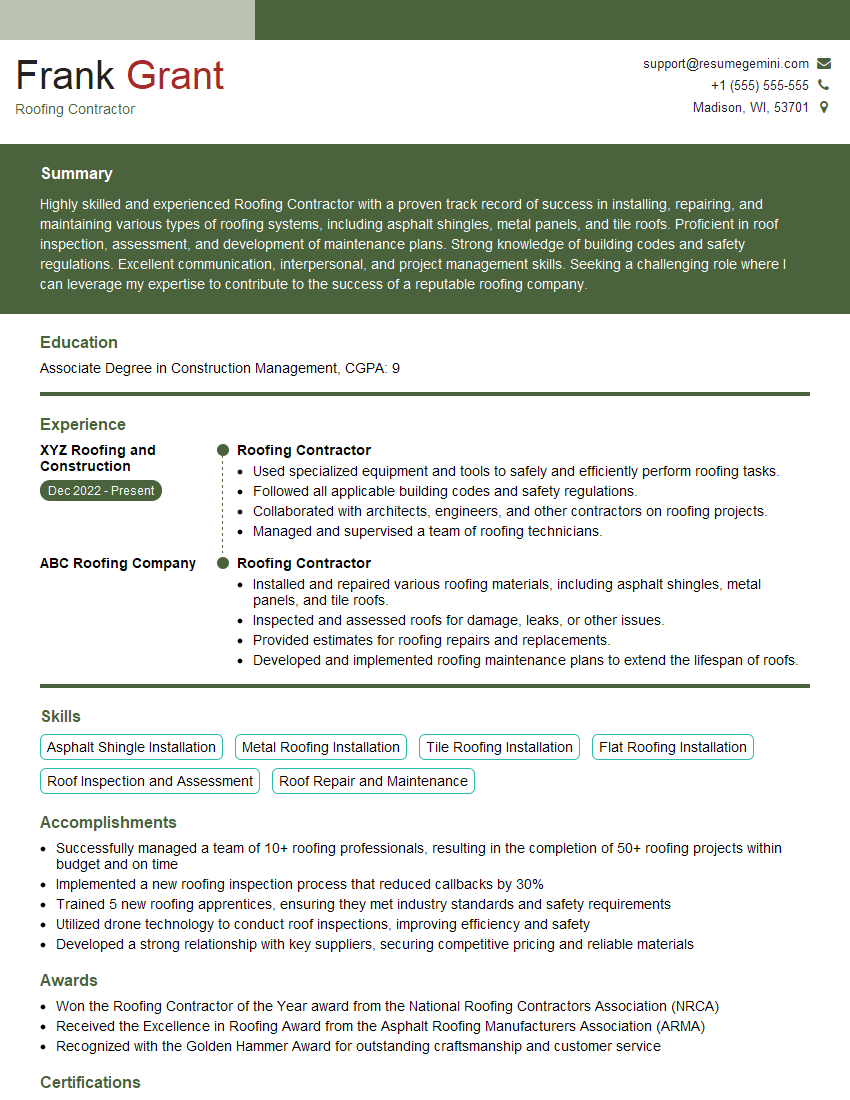
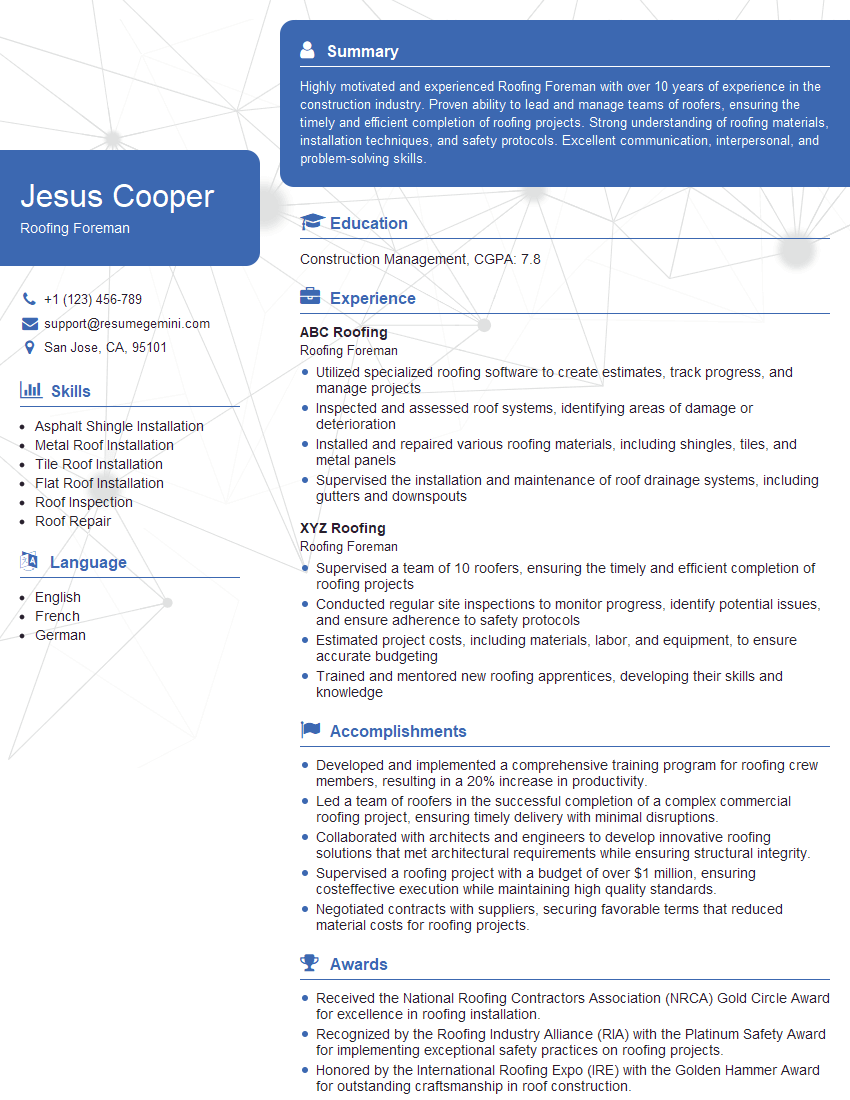
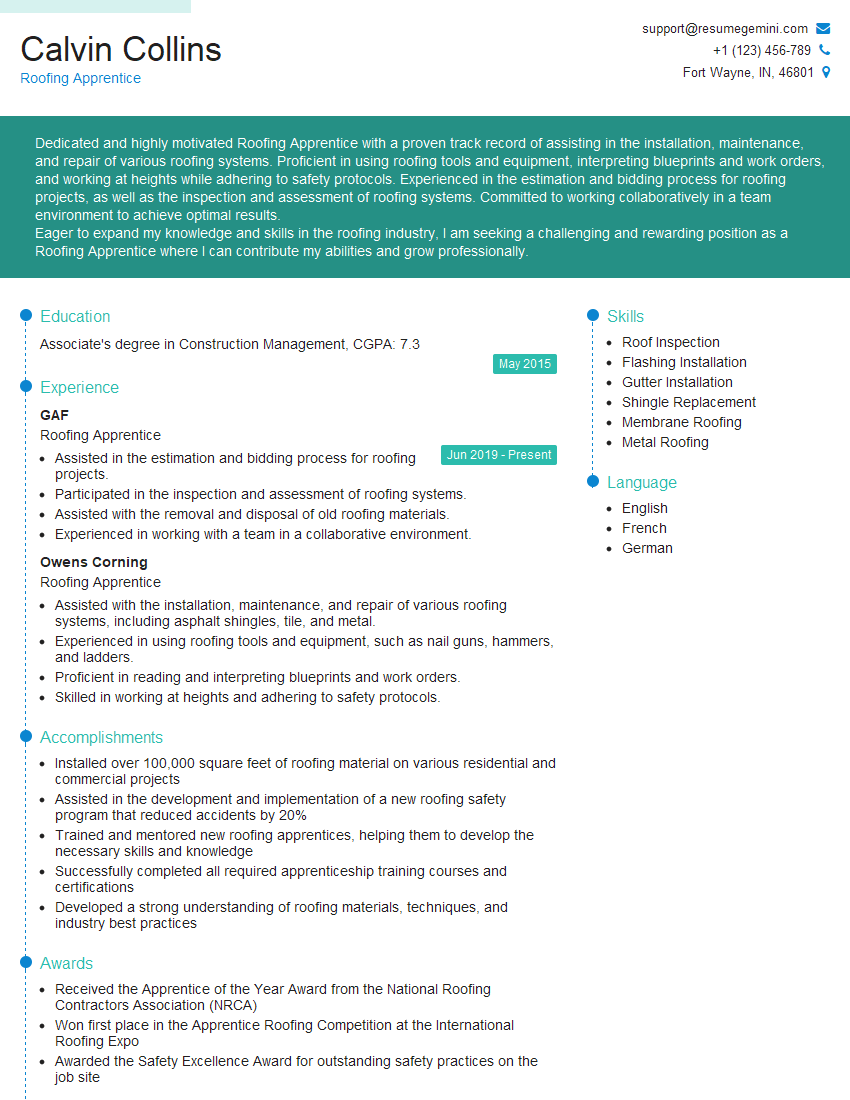
Mastering shingle installation opens doors to a rewarding career with excellent growth potential. A skilled and knowledgeable shingle installer is highly sought after in the construction industry, offering opportunities for advancement and increased earning potential. To maximize your job prospects, create an ATS-friendly resume that highlights your skills and experience effectively. ResumeGemini is a trusted resource to help you build a professional and impactful resume. We provide examples of resumes tailored to shingle installation to guide you in creating a document that showcases your expertise. Take the next step towards your dream career – build your best resume with ResumeGemini today!

Explore more articles
Users Rating of Our Blogs
Share Your Experience
We value your feedback! Please rate our content and share your thoughts (optional).
What Readers Say About Our Blog
Very informative content, great job.
good