Are you ready to stand out in your next interview? Understanding and preparing for Shipboard HVAC Systems interview questions is a game-changer. In this blog, we’ve compiled key questions and expert advice to help you showcase your skills with confidence and precision. Let’s get started on your journey to acing the interview.
Questions Asked in Shipboard HVAC Systems Interview
Q 1. Explain the difference between a centrifugal chiller and a screw chiller.
Both centrifugal and screw chillers are vapor-compression refrigeration systems used for cooling, but they differ significantly in their compressor design and application. Centrifugal chillers use a high-speed impeller to increase refrigerant vapor pressure, making them suitable for large-scale cooling applications like those found in large passenger vessels or industrial ships. They are generally more efficient at higher capacities but might be less efficient at part-load conditions. Think of it like a powerful fan versus a precise screw: one moves large volumes, while the other offers precise control.
Screw chillers, on the other hand, use rotating helical screws to compress the refrigerant. This design offers better part-load efficiency and is often preferred for medium to large-sized installations on cruise ships or cargo vessels where capacity requirements might fluctuate. They’re quieter than centrifugal chillers and offer greater reliability at part load.
- Centrifugal Chiller: High capacity, higher efficiency at full load, typically larger footprint.
- Screw Chiller: Medium to large capacity, good part-load efficiency, relatively compact.
Q 2. Describe the operation of a direct expansion (DX) air conditioning system.
A Direct Expansion (DX) air conditioning system is a simple yet effective system widely used on ships. It’s called ‘direct expansion’ because the refrigerant directly absorbs heat from the space being cooled. There’s no intermediary water loop. Imagine a simple, self-contained unit.
The process works as follows:
- Refrigerant is compressed: A compressor raises the refrigerant’s pressure and temperature.
- Heat is rejected: The high-pressure, high-temperature refrigerant flows through a condenser, typically a heat exchanger, rejecting heat to the outside environment (sea water or air).
- Refrigerant expands: The refrigerant then passes through an expansion valve, causing it to drastically decrease in pressure and temperature.
- Heat is absorbed: The low-pressure, low-temperature refrigerant flows through an evaporator coil located within the air handling unit. Air is blown over the coil, absorbing heat and cooling the air.
- Cooled air is circulated: The now-cooled air is circulated throughout the conditioned space.
DX systems are often chosen for their simplicity, ease of maintenance, and cost-effectiveness, especially for smaller spaces on board a ship. However, they might not be as efficient as larger, centralized chilled-water systems for very large vessels.
Q 3. How do you troubleshoot a malfunctioning refrigeration compressor?
Troubleshooting a malfunctioning refrigeration compressor requires a systematic approach. Safety should always be the top priority—ensure the system is properly isolated before starting any work.
- Check for power: Verify that power is reaching the compressor. Check breakers, fuses, and wiring.
- Listen for unusual sounds: A compressor making unusual noises (knocking, squealing, or unusual humming) indicates a potential problem. This could point to mechanical issues, bearing failure, or electrical problems.
- Check refrigerant pressure: Use gauges to check the high-side and low-side pressures. Deviations from the manufacturer’s specified pressure range point to issues with refrigerant charge, condenser performance, or expansion valve function.
- Inspect motor windings: Using a multimeter, check the motor winding resistance to identify short circuits or open windings. This requires specialized knowledge and safety precautions.
- Check for overheating: Feel the compressor casing for excessive heat. Overheating can be caused by low refrigerant charge, dirty condenser coils, or a faulty fan motor.
- Examine the oil level: Many compressors have an oil sight glass or dipstick. Low oil levels can lead to damage, so checking the oil is critical.
If the problem isn’t immediately obvious, consult the compressor’s technical manual or a qualified refrigeration technician. Attempting to repair a compressor without proper training is unsafe and could worsen the damage.
Q 4. What are the common causes of refrigerant leaks in a shipboard system?
Refrigerant leaks in shipboard systems can stem from several sources. The harsh marine environment contributes significantly to this challenge.
- Corrosion: Seawater and humidity can corrode refrigerant lines and fittings, especially in older systems. This is exacerbated by vibration and the constant movement of the ship.
- Vibration and movement: The constant vibration and movement of the ship can cause fatigue and cracking in lines and connections.
- Mechanical damage: Accidental damage during maintenance, repairs, or cargo handling can lead to leaks.
- Poor workmanship: Improper installation or repair can lead to leaks from poorly sealed connections or damaged components.
- Component failure: Worn or damaged seals, valves, or other components can cause refrigerant leaks.
- Improper brazing: Faulty brazing techniques can create weak points prone to leakage in refrigeration lines.
Regular inspections, vibration dampening, and preventative maintenance are crucial to minimize the risk of refrigerant leaks.
Q 5. Explain the importance of proper refrigerant charging procedures.
Proper refrigerant charging procedures are critical for optimal system performance, efficiency, and safety. Incorrect charging can lead to reduced cooling capacity, compressor damage, and even environmental hazards.
The importance lies in:
- Accurate refrigerant quantity: Too much refrigerant can lead to high-pressure problems, while too little can result in poor cooling and compressor damage. The exact amount is specified by the system’s manufacturer.
- Avoiding contamination: Contamination of the refrigerant with air or moisture can drastically reduce efficiency and cause serious damage to the compressor.
- Ensuring proper system operation: Correct charging ensures all components operate within their designed parameters, leading to optimal performance.
- Environmental compliance: Proper handling and charging minimize the risk of refrigerant leaks, protecting the environment from harmful substances.
Procedures typically involve evacuating the system to remove air and moisture before carefully adding the correct amount of refrigerant, using specialized equipment for accurate measurement and pressure monitoring.
Q 6. How do you maintain optimal humidity levels in shipboard spaces?
Maintaining optimal humidity levels in shipboard spaces is crucial for both comfort and preventing damage to equipment and cargo. High humidity can lead to mold growth, corrosion, and damage to sensitive electronics and materials, while low humidity can be uncomfortable and static-inducing.
Several methods help control humidity:
- Air conditioning systems: Modern air conditioning systems often include features to control humidity, such as dehumidification cycles. These systems remove moisture from the air, thus lowering humidity levels.
- Ventilation: Proper ventilation can help reduce humidity by exchanging moist air for drier air from outside (this is less effective in humid climates).
- Dehumidifiers: Dedicated dehumidifiers can be employed in specific spaces to control humidity independently.
- Moisture barriers: Using moisture-resistant materials in construction and storage can help to minimize the entry of moisture into spaces.
- Regular maintenance: Keeping the air conditioning and ventilation systems clean and well-maintained ensures efficient humidity control.
The optimal humidity level depends on the specific area; for example, cargo holds will have different requirements than passenger cabins. Monitoring humidity levels with sensors helps in effective control.
Q 7. Describe the different types of air handling units used on ships.
Ships use various types of air handling units (AHUs) tailored to their specific needs and the space they serve. The choice depends on factors like capacity requirements, space constraints, and energy efficiency needs.
- Packaged AHUs: These are self-contained units that combine all essential components—fans, filters, coils, and controls—into a single package. They are common in smaller spaces and are easy to install and maintain.
- Split-system AHUs: These units separate the indoor and outdoor components. The indoor unit handles air distribution and conditioning, while the outdoor unit houses the compressor and condenser. They offer flexibility in placement and are commonly used in larger vessels.
- Custom-designed AHUs: For large ships or specific needs, custom-designed AHUs can be built to meet unique space requirements and performance specifications.
- Fan coil units (FCUs): These smaller units are commonly used in individual cabins or smaller spaces, relying on a centralized chilled-water or hot-water system for heating or cooling.
The choice of AHU depends on the vessel’s size, design, and operational requirements. Larger cruise ships might employ a mix of different types of AHUs to efficiently manage climate control across various zones.
Q 8. Explain the function of a cooling tower in a shipboard HVAC system.
A cooling tower is a crucial component of a shipboard HVAC system, primarily responsible for rejecting waste heat from the chilled water system. Think of it as a giant evaporative cooler. Instead of directly cooling the air in the ship’s spaces, it cools the water circulating within the system. This chilled water then travels through coils in air handling units (AHUs), absorbing heat from the air flowing through the AHUs and ultimately cooling the spaces on the ship. The heat absorbed by the water is then dissipated into the atmosphere through evaporation in the cooling tower.
The process works because water evaporates when it’s heated. As the warm water from the HVAC system flows over fill material within the cooling tower, some of it evaporates. This evaporation process absorbs a significant amount of heat, thereby cooling the remaining water. The cooled water is then recirculated back to the chillers and AHUs to continue the cooling cycle. The warm, humid air created by the evaporation is expelled from the tower. Effectively, the cooling tower acts as a heat exchanger, transferring heat from the chilled water loop to the atmosphere.
Q 9. How do you perform a routine maintenance check on a shipboard air conditioning system?
Routine maintenance on a shipboard air conditioning system is critical for optimal performance, reliability, and safety. A comprehensive check includes:
- Visual Inspection: Check for leaks in refrigerant lines, water pipes, and ductwork. Examine belts, pulleys, and motors for wear and tear.
- Refrigerant Levels: Verify refrigerant charge levels using appropriate pressure gauges. Low levels might indicate leaks requiring attention.
- Condenser and Evaporator Cleaning: Clean condenser coils and evaporator coils to remove dirt and debris that can reduce efficiency. Think of it like cleaning the fins on your home air conditioner.
- Pump Operation: Check the operation of all pumps (chilled water, condenser water, etc.) for smooth operation and proper pressure.
- Filter Changes: Replace air filters in AHUs regularly to maintain airflow and prevent the buildup of dust and contaminants.
- Temperature and Pressure Readings: Monitor key temperatures and pressures at various points in the system to ensure they’re within operating specifications. Deviations could indicate problems.
- Logbook Entries: Maintain a detailed logbook of all maintenance activities, including dates, observations, and corrective actions taken.
Regular, preventative maintenance is far cheaper than emergency repairs at sea. The specific checks and their frequency will depend on the system’s design and the manufacturer’s recommendations.
Q 10. Describe the safety precautions involved in working with refrigerants.
Working with refrigerants requires strict adherence to safety protocols due to their potential health hazards and environmental impact. Key precautions include:
- Personal Protective Equipment (PPE): Always wear appropriate PPE, including safety glasses, gloves, and respiratory protection. Some refrigerants can cause frostbite or be harmful if inhaled.
- Ventilation: Ensure adequate ventilation in the work area to prevent the buildup of refrigerant vapors. Refrigerant leaks can displace oxygen and create an asphyxiation hazard.
- Leak Detection: Use appropriate leak detection equipment to quickly identify and repair any refrigerant leaks. Early detection minimizes environmental impact and prevents health risks.
- Proper Handling and Storage: Handle and store refrigerant cylinders according to manufacturer instructions. They should be stored upright and secured to prevent accidental damage or leaks.
- Emergency Procedures: Be familiar with emergency procedures in case of a refrigerant leak or exposure. This might include evacuating the area and calling for emergency medical assistance.
- Training and Certification: Personnel working with refrigerants should undergo proper training and certification to ensure they understand the safety procedures and handle the refrigerants safely.
Remember, negligence can have severe consequences. Following these precautions is not just best practice; it’s essential for the well-being of those working on the system and the environment.
Q 11. What are the common types of shipboard HVAC control systems?
Shipboard HVAC control systems have evolved significantly. Common types include:
- Direct Digital Control (DDC): DDC systems use microprocessors to monitor and control various parameters like temperature, humidity, and airflow. They offer precise control, energy efficiency, and remote monitoring capabilities. Think of it as a sophisticated computer system managing the entire HVAC network.
- Pneumatic Control Systems: Although less common now, pneumatic systems use compressed air to control valves and dampers. They are robust and reliable, but less precise than DDC systems.
- Programmable Logic Controllers (PLCs): PLCs are commonly integrated into larger ship automation systems. They manage complex control sequences and interfacing with other ship systems.
- Building Management Systems (BMS): These integrate various building systems, including HVAC, lighting, and fire detection, into a central management platform. BMS offers comprehensive monitoring and control, including energy optimization strategies.
The choice of control system depends on factors like ship size, complexity of the HVAC system, and budget. Modern ships increasingly rely on DDC and BMS solutions for their advanced capabilities and enhanced energy efficiency.
Q 12. Explain the principles of psychrometrics as they relate to shipboard HVAC.
Psychrometrics is the study of the thermodynamic properties of moist air. It’s fundamental to understanding shipboard HVAC because it helps us determine the air’s condition (temperature, humidity) and how it changes as it’s cooled, heated, or humidified.
Key psychrometric properties relevant to shipboard HVAC include:
- Dry-bulb temperature: The air temperature measured by a standard thermometer.
- Wet-bulb temperature: The temperature air would reach if cooled to saturation by evaporating water into it.
- Relative humidity (RH): The ratio of the amount of water vapor present in the air to the maximum amount of water vapor the air could hold at the same temperature.
- Enthalpy: The total heat content of the air, including both sensible and latent heat.
Understanding these properties allows us to design and operate HVAC systems effectively. For example, by knowing the wet-bulb temperature, we can determine the effectiveness of an evaporative cooler in a specific climate. Psychrometric charts are essential tools for visualizing these relationships and predicting the effects of HVAC processes on air conditions.
Q 13. How do you calculate the cooling load for a shipboard space?
Calculating the cooling load for a shipboard space involves determining the total heat gain that must be removed to maintain a desired indoor temperature. It’s a complex calculation considering many factors.
The process usually involves:
- Sensible Heat Gains: These are heat gains that raise the air temperature, such as solar radiation through windows, heat transfer through walls and ceilings, and heat generated by equipment and occupants.
- Latent Heat Gains: These are heat gains that increase the air’s moisture content, such as moisture from occupants’ respiration and infiltration of humid outside air.
- Infiltration: Air leaking into the space from outside. The rate of infiltration depends on the space’s construction and weather conditions.
- Occupancy: The number of people in the space and the heat they generate.
- Equipment: The heat generated by lights, computers, and other equipment.
- Solar Load: The amount of solar radiation entering through windows and other openings.
Software programs and established calculation methods (ASHRAE handbooks) are used to determine the cooling load by considering all these heat gains. The total cooling load is expressed in BTUs per hour (or kW) and used to size the appropriate air conditioning equipment. Accurate calculation is crucial to avoid under- or over-sizing of the system, impacting efficiency and comfort.
Q 14. Describe the different types of insulation used in shipboard HVAC systems.
Insulation plays a critical role in shipboard HVAC systems by minimizing heat transfer and improving energy efficiency. Several types of insulation are commonly used:
- Fiberglass: A common and cost-effective material, offering good thermal resistance. It’s often used in ductwork and around air handling units.
- Mineral Wool: Another popular choice known for its fire resistance and sound absorption capabilities. It’s suitable for applications requiring high fire safety standards.
- Cellular Glass: Excellent thermal performance, particularly in high-temperature applications. It’s durable and resistant to moisture, making it a good option for marine environments.
- Polyurethane Foam: Offers high R-values (a measure of thermal resistance) and can be sprayed or applied as pre-formed panels. Its versatility makes it suitable for various applications.
- Aerogel: A high-tech insulation material with exceptional thermal performance, but it can be more expensive than other options. It is lightweight and can be used in applications where space is limited.
The choice of insulation depends on factors like the application, temperature requirements, fire safety regulations, and cost considerations. In shipboard applications, fire resistance and moisture resistance are crucial considerations due to the safety-critical nature of the environment.
Q 15. Explain the importance of proper ventilation in shipboard spaces.
Proper ventilation in shipboard spaces is paramount for maintaining a safe and healthy environment for crew and passengers. It’s not just about comfort; it’s about preventing the buildup of hazardous substances and ensuring adequate oxygen levels. Think of it like this: a ship is a confined space, and without proper ventilation, harmful gases from machinery, cooking, or even human respiration can accumulate to dangerous levels.
- Preventing the buildup of harmful gases: Engine exhaust, solvents, and other chemicals released during various ship operations need to be effectively removed to avoid potential health risks like carbon monoxide poisoning or respiratory issues.
- Maintaining adequate oxygen levels: Sufficient fresh air intake is crucial to prevent oxygen deficiency, which can lead to drowsiness, impaired judgment, and even unconsciousness.
- Controlling temperature and humidity: Ventilation systems play a significant role in regulating the temperature and humidity levels within different spaces, enhancing comfort and preventing damage to equipment.
- Removing moisture and preventing condensation: Effective ventilation helps to remove excess moisture, preventing condensation and the growth of mold and mildew which can damage structures and pose health hazards.
For example, a poorly ventilated engine room can quickly become dangerously hot and filled with toxic fumes, posing a serious risk to personnel. Similarly, inadequate ventilation in crew cabins can lead to the buildup of moisture and the growth of mold, impacting crew health and well-being.
Career Expert Tips:
- Ace those interviews! Prepare effectively by reviewing the Top 50 Most Common Interview Questions on ResumeGemini.
- Navigate your job search with confidence! Explore a wide range of Career Tips on ResumeGemini. Learn about common challenges and recommendations to overcome them.
- Craft the perfect resume! Master the Art of Resume Writing with ResumeGemini’s guide. Showcase your unique qualifications and achievements effectively.
- Don’t miss out on holiday savings! Build your dream resume with ResumeGemini’s ATS optimized templates.
Q 16. How do you troubleshoot a malfunctioning air distribution system?
Troubleshooting a malfunctioning air distribution system requires a systematic approach. It’s like diagnosing a patient – you need to gather information, check vital signs, and isolate the problem before applying a solution.
- Identify the symptom: Is there no airflow, weak airflow, uneven distribution, or unusual noise?
- Inspect the system: Check for any visible obstructions in ducts, dampers, or filters. Look for leaks or damage to the ductwork. Listen for unusual sounds like rattling or whistling which can indicate obstructions or leaks.
- Check the fan: Verify that the fan is running at the correct speed and direction. Check for any signs of motor malfunction or bearing wear.
- Test the controls: Make sure the thermostats, dampers, and control panels are functioning correctly. A faulty control system could be the root cause of the malfunction.
- Check air pressure: Measure the static pressure in the ductwork to ensure it’s within the specified range. Low pressure may indicate a blockage or leak. High pressure might point to a fan malfunction or a closed damper.
- Inspect the air handling unit (AHU): Check the coils for cleanliness and ensure proper refrigerant flow (in chilled water systems). Also, inspect the filters for clogging.
- Use diagnostic tools: Utilize tools like pressure gauges, anemometers, and thermal cameras to pinpoint the problem more accurately.
For example, if you find a significant pressure drop in a specific section of the ductwork, it likely indicates a blockage or leak in that area. A high-pitched whistling sound could point to a leak around a connection, while a rattling sound may indicate a loose damper or a component failure.
Q 17. Describe the process of commissioning a new shipboard HVAC system.
Commissioning a new shipboard HVAC system is a crucial process that ensures the system is installed correctly, operates efficiently, and meets the design specifications. It’s a multi-stage process, like building a house – you need to ensure each component works before moving on to the next.
- Pre-commissioning: This involves reviewing the design documentation, inspecting the equipment, and ensuring all components are delivered and stored correctly. This prevents costly mistakes during the later stages.
- System testing: This phase entails thoroughly testing each component of the HVAC system, including fans, pumps, chillers, and air handling units. This involves conducting performance tests, leak checks, and safety checks.
- Integration testing: This phase checks the interaction and compatibility between different parts of the system. For example, we ensure that the chiller can provide sufficient chilled water to the AHUs and that the AHUs can distribute the conditioned air effectively.
- Functional testing: This phase tests the system as a whole to verify that it meets the design requirements, such as temperature, humidity, and airflow rates. This includes testing the system under various operating conditions.
- Commissioning documentation: All test results, inspection reports, and operational manuals need to be thoroughly documented to ensure compliance and provide a reference point for future maintenance and troubleshooting.
Without proper commissioning, you risk poor performance, increased energy consumption, equipment failures, and even safety hazards. It’s a process that requires meticulous attention to detail and adherence to strict guidelines and standards.
Q 18. What are the environmental regulations related to shipboard refrigerants?
Environmental regulations related to shipboard refrigerants are stringent and constantly evolving due to their impact on the ozone layer and global warming. The main focus is on phasing out ozone-depleting substances (ODS) and reducing the use of high global warming potential (GWP) refrigerants.
- Montreal Protocol: This international treaty aims to phase out the production and consumption of ODS, such as CFCs (chlorofluorocarbons) and HCFCs (hydrochlorofluorocarbons), which were commonly used in older HVAC systems. Ships must comply with the protocol’s regulations regarding the use and disposal of these substances.
- Kyoto Protocol and Paris Agreement: These agreements focus on reducing greenhouse gas emissions, including those from refrigerants. This drives the maritime industry toward the adoption of refrigerants with low GWP values.
- MARPOL Annex VI: This International Maritime Organization (IMO) regulation governs air pollution from ships, including emissions from refrigerants. It sets limits on the release of refrigerants and requires ships to have effective refrigerant management plans.
- Specific refrigerant regulations: Many countries and regions have specific regulations on the types of refrigerants allowed onboard ships and requirements for handling and disposal. These regulations often align with international guidelines and aim to minimize environmental impact.
Failure to comply with these regulations can result in significant fines, operational restrictions, and damage to a company’s reputation. Ships must maintain detailed records of their refrigerant usage and ensure proper disposal procedures are followed.
Q 19. How do you address corrosion issues in shipboard HVAC systems?
Corrosion in shipboard HVAC systems is a significant concern due to the harsh marine environment. Saltwater, humidity, and varying temperatures create an ideal breeding ground for corrosion. Think of it like rust on a car – but much more pervasive and potentially damaging.
- Material selection: Using corrosion-resistant materials such as stainless steel, galvanized steel, or coated metals for ductwork, pipes, and other components is crucial in minimizing corrosion.
- Protective coatings: Applying high-quality coatings to metal surfaces provides an additional barrier against corrosion. Regular inspections and recoating are essential to maintain their effectiveness.
- Proper insulation: Adequate insulation prevents condensation, which is a major contributor to corrosion. Moisture buildup accelerates the corrosion process.
- Regular cleaning and maintenance: Regularly cleaning the system and inspecting it for signs of corrosion is crucial for early detection and prevention. Removing accumulated salt deposits and other contaminants slows down the corrosion process.
- Cathodic protection: This electrochemical technique is used to protect metallic structures from corrosion by making them the cathode in an electrochemical cell. This is often employed in critical areas like seawater-cooled condenser systems.
Ignoring corrosion can lead to leaks, reduced efficiency, and ultimately, system failure. Regular maintenance and proactive measures are vital for extending the lifespan of shipboard HVAC systems.
Q 20. Explain the impact of ambient temperature on shipboard HVAC performance.
Ambient temperature significantly impacts the performance of shipboard HVAC systems. It’s like trying to cool down a room on a hot summer day – it requires more energy and effort.
- Increased energy consumption: Higher ambient temperatures increase the load on the HVAC system, requiring the system to work harder to maintain the desired indoor temperature. This leads to increased energy consumption and operational costs.
- Reduced efficiency: The efficiency of many components, such as chillers and air handling units, is affected by ambient temperature. Extreme temperatures can reduce their overall efficiency, requiring more energy input for the same cooling output.
- Potential for equipment failure: Extreme ambient temperatures can stress HVAC components, increasing the risk of equipment failure. For example, high temperatures can lead to compressor overheating and premature failure.
- Impact on refrigerant performance: Refrigerant performance is also temperature-dependent. High ambient temperatures can reduce the effectiveness of the refrigerant in transferring heat.
Ships operating in tropical climates experience significantly higher loads on their HVAC systems compared to those operating in temperate regions. This highlights the importance of designing and sizing the system appropriately for the specific operating conditions and considering the potential impact of ambient temperature fluctuations.
Q 21. Describe the function of a chilled water system in a shipboard environment.
A chilled water system is a central component in many shipboard HVAC systems. It’s like the circulatory system of the ship’s cooling network, efficiently distributing chilled water to various air handling units (AHUs).
- Centralized cooling: The chilled water system provides a centralized cooling solution, allowing for efficient cooling of multiple spaces from a single, centrally located chiller plant. This reduces the number of individual cooling units needed, simplifying maintenance and improving efficiency.
- Efficient heat transfer: Chilled water is an effective medium for transporting large amounts of heat energy over long distances. This makes it ideal for distributing cooling throughout a large vessel.
- Flexibility and control: The chilled water system offers flexibility in controlling the temperature and flow rate to different zones, allowing for individualized climate control in different areas of the ship. This is crucial for accommodating varying needs of different spaces.
- Reduced noise levels: Since the noisy components of the cooling system are centralized, the noise levels in individual spaces are reduced compared to using individual cooling units.
In essence, the chilled water system acts as a central cooling plant that distributes chilled water through a network of pipes to various AHUs which then cool the air supplied to the different spaces onboard the vessel. This offers a more efficient and cost-effective solution compared to using individual cooling units for each area.
Q 22. How do you maintain optimal air quality in passenger areas?
Maintaining optimal air quality in passenger areas on a ship is crucial for passenger comfort and health. It involves a multi-pronged approach focusing on filtration, ventilation, and monitoring.
Firstly, a robust filtration system is paramount. This typically involves multiple stages of filtration, starting with coarse filters to remove larger debris, followed by finer filters, such as HEPA (High-Efficiency Particulate Air) filters, to remove smaller particles like dust, pollen, and even bacteria and viruses. Regular filter changes are essential, following a schedule determined by usage and air quality monitoring. The frequency might need adjustment based on external factors like port location (higher pollution levels require more frequent changes).
Secondly, adequate ventilation is key. This means ensuring sufficient fresh air intake and proper exhaust to remove stale air and pollutants. A properly balanced HVAC system ensures consistent airflow throughout the passenger areas. This often involves strategically placed supply and return vents to minimize dead zones and promote even air distribution. We use Computational Fluid Dynamics (CFD) modeling for optimized design.
Finally, continuous monitoring is critical. Air quality sensors can detect levels of carbon dioxide, particulate matter, and other pollutants, alerting the crew to any issues. This allows for proactive maintenance and prevents problems from escalating. For example, a sudden spike in CO2 levels might indicate a malfunction in the ventilation system, prompting an immediate investigation.
Q 23. Explain the role of a building management system (BMS) in shipboard HVAC.
A Building Management System (BMS) is the central nervous system of a ship’s HVAC system, providing comprehensive control, monitoring, and automation. Think of it as a sophisticated control panel overseeing the entire system.
The BMS collects data from various sensors throughout the HVAC system – temperature, humidity, pressure, airflow, and equipment status. This data is then used to automatically control various components, such as chillers, air handling units (AHUs), and fans, to maintain pre-set parameters. For example, if a zone’s temperature exceeds the setpoint, the BMS will automatically adjust the airflow or chiller capacity to cool it down.
Beyond automation, the BMS provides valuable diagnostic capabilities. It can detect malfunctions early, alerting the crew to potential problems before they escalate into major failures. It can also generate reports on energy consumption, helping to optimize energy efficiency and reduce operational costs. Many modern BMS systems incorporate remote monitoring features, allowing for real-time monitoring and control from shore. This capability is invaluable for troubleshooting and maintenance.
Q 24. How do you handle emergency situations involving shipboard HVAC equipment?
Emergency situations involving shipboard HVAC equipment require a swift and organized response to minimize disruption and ensure passenger safety. Our emergency procedures are well-rehearsed and clearly defined.
The first step involves identifying the nature and location of the emergency. This is often done through the BMS’s alarm system. Then, we isolate the affected equipment to prevent further damage or spread of any potential hazard (e.g., refrigerant leaks). For example, if a chiller fails, we’d switch to backup chillers immediately and isolate the faulty unit to prevent system-wide shutdown.
Next, we initiate emergency procedures, which might include redirecting airflow to maintain critical areas’ climate control or switching to backup power sources. A comprehensive emergency response plan designates specific roles and responsibilities among the engineering crew to ensure a coordinated response. Regular drills help the team respond effectively under pressure.
Finally, after the immediate emergency is addressed, a thorough investigation is conducted to determine the root cause of the failure. This involves analyzing system logs, inspecting equipment, and performing any necessary repairs. Corrective actions are then implemented to prevent similar incidents from happening again.
Q 25. Describe different types of HVAC filters and their applications on a ship.
Ships utilize various HVAC filters depending on the application and desired level of filtration. The selection process considers factors like particle size, air volume, and maintenance convenience.
- Pre-filters: These are coarse filters, often made of fiberglass or synthetic materials, that remove large debris like dust, insects, and fibers. They protect downstream filters from premature clogging and extend their lifespan. They are located at the air intake of AHUs.
- HEPA (High-Efficiency Particulate Air) filters: These filters remove very small particles, including bacteria and viruses, with an efficiency of 99.97% for particles 0.3 microns in size. They are commonly used in critical areas like medical facilities or areas requiring stringent air quality standards.
- ULPA (Ultra-Low Penetration Air) filters: Even more efficient than HEPA filters, ULPA filters remove a higher percentage of smaller particles and are often used in cleanroom applications found on some research or specialized vessels.
- Activated Carbon filters: These filters absorb gases and odors, improving air quality by removing pollutants like volatile organic compounds (VOCs) and smoke. They are useful in removing odors from galleys or areas prone to smoke.
Filter selection involves a careful balance of performance and cost. More efficient filters require more frequent replacements, increasing maintenance costs but ensuring superior air quality.
Q 26. Explain the significance of ductwork design and maintenance in shipboard systems.
Ductwork design and maintenance are crucial for efficient and effective shipboard HVAC systems. The design must consider the unique challenges of a marine environment, including space constraints, vibrations, and movement of the vessel.
Proper ductwork design ensures uniform airflow distribution throughout the vessel. This involves careful selection of duct sizes, shapes, and materials to minimize pressure drops and maximize efficiency. Computational Fluid Dynamics (CFD) modeling is increasingly used to optimize airflow and minimize energy losses. Design must also account for the ship’s movements and vibrations, using flexible connections and robust construction to avoid leaks and damage.
Regular maintenance is equally critical. This includes inspecting the ductwork for leaks, corrosion, and damage. Leaks can reduce airflow efficiency and lead to energy waste; corrosion can compromise the integrity of the ductwork; and damage can disrupt airflow and affect air quality. Regular cleaning is also essential to remove dust and debris buildup, which can restrict airflow and reduce filter efficiency. We typically use specialized equipment like robotic cleaning systems for hard-to-reach areas. A well-maintained ductwork system ensures optimal performance, reduces maintenance costs, and extends the lifespan of the HVAC system.
Q 27. How do you manage energy efficiency in shipboard HVAC operations?
Energy efficiency is a major concern in shipboard HVAC operations, given the high energy consumption of these systems. A multifaceted approach is needed to minimize energy usage without compromising passenger comfort.
Firstly, selecting energy-efficient equipment is vital. This includes using high-efficiency chillers, pumps, and fans. Variable-speed drives (VSDs) are increasingly employed to regulate the speed of fans and pumps according to demand, significantly reducing energy consumption.
Secondly, effective control strategies play a crucial role. The BMS plays a critical part here, optimizing operation based on occupancy and environmental conditions. For example, unoccupied zones can have their cooling/heating reduced or turned off completely to save energy. Smart sensors and predictive modeling can further improve energy savings. Regular maintenance of equipment ensures peak efficiency, reducing energy waste associated with underperformance.
Thirdly, proper insulation of ducts and pipes minimizes energy losses due to heat transfer. Careful design, using appropriate insulation materials, is critical to retaining cooled or heated air within the system.
Finally, regular monitoring and analysis of energy consumption patterns help to identify areas for improvement and fine-tune control strategies. This data-driven approach helps ensure continuous improvement in energy efficiency.
Q 28. Describe your experience with troubleshooting and repairing common faults in marine refrigeration equipment.
My experience with troubleshooting and repairing marine refrigeration equipment spans over 10 years, encompassing various types and manufacturers. I’m proficient in diagnosing and resolving a wide range of faults, from minor issues to major system failures.
A common issue is refrigerant leaks. I’ve used various methods for leak detection, including electronic leak detectors and pressure testing, to pinpoint the location and repair the leak using brazing or other appropriate techniques. Proper handling of refrigerants is crucial for safety and environmental compliance.
Compressor failures are another common problem. I’ve diagnosed various causes, such as faulty electrical components, worn bearings, or internal damage, and I’ve overseen the replacement or repair of compressors, ensuring proper alignment and installation. This requires a deep understanding of the refrigeration cycle to make accurate assessments.
Other frequent issues include faulty expansion valves, condenser fouling, and issues with the control systems. I’ve performed preventative maintenance, addressing these and other common faults before they become major problems. This includes regular cleaning of condensers, inspection of components, and calibration of sensors to ensure optimal performance and extend the lifespan of the equipment. I am proficient in using both diagnostic tools and schematic drawings to analyze system behavior and troubleshoot effectively. Documentation is key throughout this process to maintain accurate records and support future troubleshooting efforts.
Key Topics to Learn for Shipboard HVAC Systems Interview
- Refrigeration Cycles: Understanding vapor-compression cycles, different refrigerants used onboard, and their environmental impact. Practical application: Troubleshooting common refrigeration system malfunctions.
- Air Handling Units (AHUs): Knowledge of AHU components, operation, and maintenance. Practical application: Diagnosing and resolving issues with airflow, temperature control, and filter changes.
- Chilled Water Systems: Understanding chilled water plant operation, including pumps, chillers, and distribution networks. Practical application: Calculating chilled water flow rates and identifying pressure drop issues.
- Ventilation Systems: Knowledge of different ventilation strategies for various shipboard spaces (e.g., engine rooms, accommodation areas). Practical application: Designing and maintaining effective ventilation to ensure crew safety and comfort.
- Safety and Regulations: Familiarity with relevant maritime regulations and safety procedures related to HVAC systems. Practical application: Implementing safety protocols during maintenance and repairs.
- Troubleshooting and Diagnostics: Developing skills in identifying and resolving common HVAC problems using diagnostic tools and techniques. Practical application: Using pressure gauges, temperature sensors, and other instruments for fault finding.
- Energy Efficiency and Sustainability: Understanding methods for improving energy efficiency in shipboard HVAC systems. Practical application: Implementing energy-saving strategies and technologies.
- Control Systems: Knowledge of different control systems used in shipboard HVAC, including PLC’s and BMS. Practical application: Programming and configuring HVAC control systems.
Next Steps
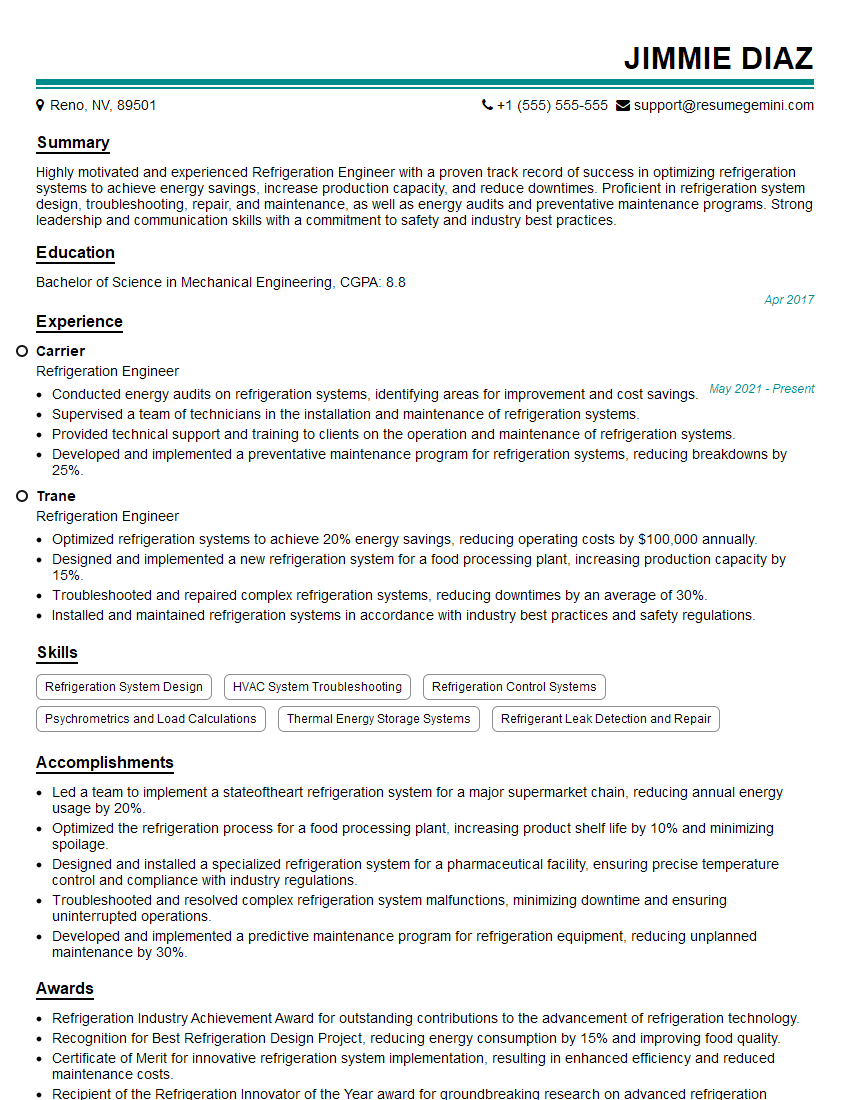
Mastering Shipboard HVAC Systems opens doors to exciting career opportunities within the maritime industry, offering excellent growth potential and rewarding challenges. A strong, ATS-friendly resume is crucial for showcasing your skills and experience to potential employers. To make your application stand out, leverage the power of ResumeGemini to build a professional and effective resume tailored to the specific requirements of the Shipboard HVAC Systems field. ResumeGemini provides examples of resumes specifically designed for this sector, helping you present your qualifications in the best possible light.
Explore more articles
Users Rating of Our Blogs
Share Your Experience
We value your feedback! Please rate our content and share your thoughts (optional).
What Readers Say About Our Blog
Very informative content, great job.
good