The right preparation can turn an interview into an opportunity to showcase your expertise. This guide to Shipper Relationship Management interview questions is your ultimate resource, providing key insights and tips to help you ace your responses and stand out as a top candidate.
Questions Asked in Shipper Relationship Management Interview
Q 1. Explain your experience managing complex shipper relationships.
Managing complex shipper relationships requires a multifaceted approach focusing on communication, understanding their unique needs, and proactively addressing potential issues. My experience involves working with shippers of varying sizes and across diverse industries, each with unique logistical requirements and expectations. This includes coordinating the movement of goods across various modes of transportation, navigating regulatory complexities, and managing potential disruptions to the supply chain. For example, I successfully managed a large-scale project involving the relocation of a major automotive manufacturer’s supply chain, requiring extensive coordination with multiple suppliers, customs brokers, and internal teams across different time zones.
I have experience in:
- Negotiating contracts and service level agreements (SLAs) that meet both the shipper’s and the logistics provider’s needs.
- Developing and implementing customized solutions tailored to specific shipper requirements.
- Managing complex logistical operations, including tracking, tracing, and ensuring timely delivery.
- Proactive communication and reporting to keep shippers informed of shipment status and any potential delays.
- Building strong relationships with key decision-makers within shipper organizations.
Q 2. Describe your process for identifying and resolving shipper issues.
My process for identifying and resolving shipper issues begins with establishing open communication channels. This involves regular check-ins, proactive updates, and readily available contact points. We utilize a ticketing system to track all issues, ensuring each is logged, prioritized, and assigned to a responsible party. When a problem arises, my initial steps focus on:
- Understanding the issue: Through direct communication with the shipper, I gather detailed information about the nature of the problem, its impact, and their desired resolution.
- Investigation and root cause analysis: I thoroughly investigate the issue, leveraging available data and resources to identify the root cause. This may involve reviewing shipment documentation, tracking data, and collaborating with internal teams.
- Developing a solution: Once the root cause is identified, I develop a plan of action to resolve the issue, communicating this plan and expected timeline to the shipper. This might involve rerouting shipments, expediting deliveries, providing compensation, or implementing process improvements.
- Implementation and follow-up: I closely monitor the implementation of the solution to ensure the issue is effectively resolved. I follow up with the shipper to confirm satisfaction and address any remaining concerns.
This systematic approach helps to minimize the impact of disruptions on our shippers and strengthens our relationship through transparency and accountability.
Q 3. How do you prioritize competing demands from multiple shippers?
Prioritizing competing demands from multiple shippers requires a well-defined framework and a proactive approach. I utilize a combination of factors to determine priorities:
- Contractual obligations: SLAs and contractual agreements dictate priority levels for certain services or shipments.
- Urgency and impact: Shippers facing critical time-sensitive shipments or those with significant potential financial implications receive higher priority.
- Relationship value: Long-term, high-value shippers may receive preferential treatment in situations with limited resources.
- Fairness and equity: I strive to ensure fair treatment for all shippers while prioritizing urgent needs.
I maintain a transparent communication process to keep all shippers informed of priorities and timelines. Open communication mitigates frustration and fosters trust, even when some requests may need to be rescheduled.
Q 4. What metrics do you use to measure the success of your shipper relationships?
Measuring the success of shipper relationships goes beyond simply delivering shipments on time. I utilize a combination of qualitative and quantitative metrics:
- On-time delivery rate (OTDR): A key indicator of operational efficiency and reliability.
- Customer satisfaction (CSAT) scores: Gathered through regular surveys and feedback mechanisms, reflecting the overall shipper experience.
- Net Promoter Score (NPS): Measures the likelihood of shippers recommending our services.
- Claims frequency and cost: Indicates the effectiveness of our processes in preventing and resolving issues.
- Retention rate: Tracks the percentage of shippers who continue to utilize our services.
- Average revenue per shipper: A key indicator of the profitability and value of each shipper relationship.
By tracking these metrics, I can identify areas for improvement and implement strategies to enhance the overall quality of our shipper relationships.
Q 5. How do you build rapport and trust with shippers?
Building rapport and trust with shippers is paramount. It’s about more than just fulfilling contractual obligations; it’s about building genuine, long-term relationships. My approach includes:
- Proactive communication: Regularly keeping shippers informed, even about seemingly minor updates, demonstrates transparency and care.
- Active listening: Understanding their business needs and challenges, not just their immediate shipping requirements.
- Responsiveness: Promptly addressing questions and concerns shows respect for their time and business.
- Problem-solving: Proactively identifying and addressing potential issues before they impact the shipper’s operations.
- Building personal connections: Developing professional relationships through regular communication and building trust over time.
- Demonstrating expertise: Showing a deep understanding of their industry, their specific needs, and the challenges they face.
By consistently demonstrating reliability, responsiveness, and a genuine commitment to their success, I cultivate strong, mutually beneficial relationships.
Q 6. Describe a time you had to negotiate a challenging contract with a shipper.
During contract negotiations with a major retail client, we faced a significant impasse regarding liability clauses. They insisted on extremely low liability limits, while our insurance policies and risk assessment required higher levels. The challenge was to find a mutually agreeable solution without jeopardizing either party’s interests.
My approach involved:
- Thorough understanding of their perspective: I spent time understanding their rationale for wanting low liability limits, exploring their concerns and risk tolerance.
- Data-driven negotiation: I presented data on our historical performance, demonstrating our low claim rate and commitment to loss prevention.
- Creative solutions: Instead of solely focusing on liability limits, we explored alternative solutions, such as enhanced insurance coverage, proactive loss prevention strategies, and collaborative incident response plans. This demonstrated our willingness to work together to mitigate risk.
- Transparency and mutual respect: Throughout the negotiation, I maintained open communication, acknowledging their concerns while explaining our constraints. The focus was on creating a win-win scenario rather than a purely adversarial approach.
Ultimately, we reached an agreement that provided acceptable liability limits while implementing additional risk mitigation measures that addressed both parties’ concerns. This outcome demonstrated the value of thoughtful negotiation and collaboration.
Q 7. How do you handle complaints from shippers?
Handling complaints from shippers effectively requires empathy, responsiveness, and a commitment to finding a satisfactory resolution. My approach involves:
- Active listening and empathy: I carefully listen to the shipper’s complaint, acknowledging their frustration and validating their concerns. This demonstrates respect and helps build trust.
- Thorough investigation: I gather all relevant information to understand the root cause of the complaint. This may involve reviewing documentation, contacting involved parties, and conducting a thorough investigation.
- Apologizing sincerely: If a mistake was made, I offer a sincere apology, taking responsibility without making excuses.
- Developing a solution: I work collaboratively with the shipper to develop a solution that addresses their concerns and provides appropriate compensation, if necessary.
- Following up: After resolving the issue, I follow up with the shipper to ensure they are satisfied and to prevent similar issues from occurring in the future. This follow-up strengthens the relationship and demonstrates our commitment to service excellence.
By treating each complaint as an opportunity to improve our processes and strengthen the relationship with the shipper, I ensure ongoing loyalty and collaboration.
Q 8. What strategies do you use to retain key shipper accounts?
Retaining key shipper accounts hinges on building strong, mutually beneficial relationships based on trust and consistent value delivery. It’s not just about transactional relationships; it’s about partnership.
Proactive Communication: Regularly check in with shippers, not just when there’s a problem. Share market updates, industry news, and potential opportunities.
Performance Monitoring and Improvement: Continuously track key performance indicators (KPIs) like on-time delivery, damage rates, and cost-effectiveness. Identify areas for improvement and proactively address any shortcomings. For example, if we notice a consistent delay on a particular route, we investigate the root cause and implement corrective measures, keeping the shipper informed every step of the way.
Personalized Service: Understand each shipper’s unique needs and tailor our services accordingly. This might involve creating customized solutions, offering flexible payment options, or providing dedicated account managers.
Value-Added Services: Explore opportunities to offer additional services that enhance the shipper’s overall experience and efficiency, such as warehousing, inventory management, or customs brokerage.
Open Feedback Loops: Encourage open communication and solicit feedback regularly. This helps us identify areas where we can improve and demonstrate our commitment to their success. We conduct regular satisfaction surveys and actively seek out feedback during our client meetings.
Q 9. How do you stay up-to-date on industry trends and best practices in shipper relationship management?
Staying ahead in shipper relationship management requires a proactive approach to continuous learning. I utilize several strategies:
Industry Publications and Conferences: I subscribe to leading logistics publications and actively participate in industry conferences and webinars to stay abreast of emerging trends and best practices.
Networking: I actively network with other professionals in the field, attending industry events and leveraging online platforms like LinkedIn to share knowledge and gain insights.
Data Analysis: I leverage data analytics to identify industry trends and patterns. Examining shipping volumes, transportation costs, and customer satisfaction metrics provides valuable insights.
Technology Monitoring: I keep a close eye on advancements in logistics technology, such as AI-powered route optimization tools and blockchain solutions for enhanced transparency.
Professional Development: I continuously seek out professional development opportunities, such as certifications and training programs, to enhance my skills and knowledge.
Q 10. Explain your experience with different transportation modes (truck, rail, air, sea).
My experience encompasses all major transportation modes. Understanding the strengths and limitations of each is crucial for optimal shipper solutions:
Truck: Extensive experience in managing less-than-truckload (LTL) and full-truckload (FTL) shipments, including optimizing routes, managing carrier selection, and ensuring timely delivery.
Rail: Experienced in coordinating intermodal shipments, leveraging rail for long-haul transport, and managing the associated complexities of transferring goods between modes. This includes understanding rail capacity constraints and planning for potential delays.
Air: Proficient in managing air freight shipments, including handling customs documentation, selecting appropriate carriers, and ensuring compliance with regulations for time-sensitive goods.
Sea: Experienced in managing ocean freight, including coordinating container shipments, understanding incoterms, and navigating the complexities of international shipping. This includes familiarity with various container types and vessel scheduling.
I can effectively advise shippers on the most cost-effective and efficient mode for their specific needs, considering factors such as shipment size, urgency, and destination.
Q 11. How do you leverage technology to improve communication and collaboration with shippers?
Technology is paramount in improving communication and collaboration. I’ve successfully implemented and utilized several solutions:
Transportation Management Systems (TMS): Experience using TMS platforms to track shipments in real-time, share updates with shippers, and manage carrier communications effectively. This enhances transparency and allows for proactive problem-solving.
Customer Relationship Management (CRM): Leveraging CRM systems to centralize shipper information, manage communication history, and personalize interactions. This ensures consistent service and timely responses.
Collaboration Platforms: Utilizing platforms like Slack or Microsoft Teams for instant messaging, file sharing, and collaborative problem-solving, improving communication efficiency.
Portals and Dashboards: Providing shippers with access to online portals and dashboards to track shipments, view documentation, and access reporting data, empowering them to manage their supply chain effectively.
For instance, using a TMS allowed me to immediately notify a shipper of a potential delay due to unforeseen weather conditions, enabling them to adjust their production schedule accordingly. This proactive communication prevented significant disruptions.
Q 12. Describe your experience with shipper onboarding and training.
Shipper onboarding is a critical process I approach systematically. It involves:
Initial Consultation: Thoroughly understanding the shipper’s business, needs, and shipping requirements. This sets the foundation for a successful partnership.
System Integration: Assisting the shipper in integrating with our systems, including providing necessary training and documentation.
Process Mapping: Collaboratively mapping out the shipping process to identify potential bottlenecks or areas for improvement.
Training and Support: Providing comprehensive training on our systems and procedures, including online tutorials, in-person sessions, and ongoing support. We ensure that the shipper is confident and capable of utilizing our services effectively.
Ongoing Communication: Maintaining regular contact to address any questions or concerns and continuously evaluate the effectiveness of the onboarding process.
For a recent onboarding, we created a personalized training video demonstrating the key features of our online portal. This significantly improved comprehension and reduced the time required for the client to become proficient.
Q 13. How do you handle conflict resolution between shippers and carriers?
Conflict resolution requires a calm, objective approach focusing on collaboration and finding mutually acceptable solutions.
Active Listening: First, I ensure I understand both the shipper’s and the carrier’s perspectives thoroughly. Active listening helps uncover the root cause of the conflict.
Facilitation: I facilitate a discussion between both parties, encouraging open communication and fostering understanding.
Objective Assessment: I objectively assess the situation, identifying areas of responsibility and potential solutions.
Negotiation: I negotiate a mutually acceptable solution, focusing on fairness and collaboration. This might involve adjusting delivery schedules, compensating for damages, or renegotiating contract terms.
Documentation: I document the resolution process and ensure both parties agree to the outcome.
In one instance, a conflict arose due to a delayed shipment. Through collaborative discussion, we discovered an unforeseen road closure was the cause. By working with the carrier to find an alternate route and compensating the shipper for the delay, we successfully resolved the issue while maintaining a strong relationship.
Q 14. What is your experience with contract negotiation and management?
Contract negotiation and management are crucial aspects of my role. I approach this systematically:
Understanding Requirements: I begin by thoroughly understanding the shipper’s needs and requirements, ensuring the contract reflects these needs.
Market Research: I conduct market research to ensure the proposed rates and terms are competitive and fair.
Negotiation: I engage in constructive negotiation, aiming to reach a mutually beneficial agreement that protects both parties’ interests. This includes skillful communication and the ability to find creative solutions.
Contract Drafting: I participate in drafting clear, concise contracts that accurately reflect the agreed-upon terms and conditions. This ensures clarity and reduces potential misunderstandings.
Contract Management: I actively manage the contract throughout its lifecycle, ensuring compliance, addressing any issues, and preparing for renewal or renegotiation.
In a recent negotiation, I secured favorable terms for a key shipper by leveraging my understanding of market dynamics and demonstrating the value of our services. This resulted in a long-term contract that benefited both parties.
Q 15. How do you ensure compliance with regulations and industry standards?
Compliance in Shipper Relationship Management (SRM) is paramount. It involves adhering to a complex web of regulations and industry standards, ensuring ethical and legal operations. This includes understanding and complying with laws related to transportation of goods, such as hazardous materials regulations (e.g., DOT in the US, ADR in Europe), customs regulations (e.g., import/export procedures, tariffs), and data privacy regulations (e.g., GDPR). Industry standards, like those set by organizations such as the International Air Transport Association (IATA) or the International Organization for Standardization (ISO), also dictate best practices in areas such as cargo security and documentation.
My approach involves a multi-pronged strategy: First, I maintain a continuously updated knowledge base of relevant regulations and standards through ongoing professional development and engagement with industry publications. Second, I embed compliance checks throughout our operational processes, from contract negotiation to shipment execution. This might involve using automated systems to validate documentation or conducting regular audits to ensure adherence to protocols. Third, I foster a strong culture of compliance within the team through training and clear communication of expectations. For example, if we’re dealing with hazardous materials, our team undergoes specialized training on proper handling, packaging, and documentation before interacting with such shipments. Finally, regular internal and external audits provide valuable feedback and help identify areas needing improvement.
Career Expert Tips:
- Ace those interviews! Prepare effectively by reviewing the Top 50 Most Common Interview Questions on ResumeGemini.
- Navigate your job search with confidence! Explore a wide range of Career Tips on ResumeGemini. Learn about common challenges and recommendations to overcome them.
- Craft the perfect resume! Master the Art of Resume Writing with ResumeGemini’s guide. Showcase your unique qualifications and achievements effectively.
- Don’t miss out on holiday savings! Build your dream resume with ResumeGemini’s ATS optimized templates.
Q 16. What is your experience with different types of shipping documentation?
My experience encompasses a wide range of shipping documentation, essential for efficient and compliant transportation. This includes Bills of Lading (BOLs), Commercial Invoices, Packing Lists, Certificates of Origin, Cargo Insurance Certificates, and various customs forms. Each document plays a crucial role. For instance, the BOL acts as a contract of carriage, defining the terms of shipment between the shipper and the carrier; the Commercial Invoice details the goods being shipped for customs purposes; and the Packing List provides a detailed breakdown of the contents of each package. I’m proficient in both manual and electronic handling of these documents. In my previous role, I implemented a new TMS which automated the generation and tracking of many of these documents, significantly reducing errors and improving efficiency. I’m also familiar with the specific requirements of different modes of transport (air, sea, land) and global regulations, adapting documentation to meet diverse needs.
I’ve successfully handled situations where missing or incorrect documentation caused shipment delays or customs issues. For instance, a missing Certificate of Origin once led to a shipment being held in customs. By quickly securing the necessary documentation and working directly with the customs authorities, I averted a significant delay and financial penalty. This highlights the importance of meticulous documentation and proactive problem-solving.
Q 17. How do you proactively identify and mitigate potential risks in shipper relationships?
Proactive risk mitigation is critical for maintaining strong shipper relationships. My approach involves a structured process: First, I conduct thorough due diligence on each shipper. This involves reviewing their historical data, assessing their financial stability, and understanding their operational capabilities. Second, I identify potential risks specific to each shipper relationship. This could include factors such as the nature of their goods, their shipping volume, and their location. High-value goods, for example, pose a higher risk of theft or damage. A shipper located in a politically unstable region may face higher transit risks. Third, I develop tailored mitigation strategies. These might include insurance coverage, improved packaging, alternative routes, or enhanced tracking and monitoring. For instance, for high-value goods, I might recommend using specialized couriers with superior security measures. For a high-volume shipper, I may use a robust contract to manage risks and ensure service level agreements are clear.
Regular communication with shippers is key to ongoing risk assessment. Openly discussing potential issues and collaborative problem-solving builds trust and resilience. For example, I’ve successfully mitigated the risk of shipment delays caused by a port congestion issue by actively engaging with the shipper to find alternative transport options and promptly update them on the situation’s progress.
Q 18. Describe your experience with managing shipper expectations.
Managing shipper expectations is a cornerstone of successful SRM. It involves clear, consistent, and proactive communication. This starts with setting realistic expectations during the initial stages of the relationship, clearly outlining service capabilities, limitations, and potential challenges. I use a combination of methods to effectively manage expectations. This includes regular updates on shipment status, proactive notification of potential delays, and clear explanations of any unforeseen circumstances.
Transparency is key. When issues arise, I openly communicate the situation, explain the steps being taken to resolve it, and provide realistic timelines. For example, if a shipment is delayed due to unforeseen weather conditions, I immediately notify the shipper, explaining the situation and outlining the alternative options to minimize the impact. I also actively solicit feedback from shippers to identify areas where we can improve and address any concerns promptly. This collaborative approach helps build trust and strengthens the relationship.
Q 19. How do you measure and report on key performance indicators (KPIs) related to shipper satisfaction?
Measuring and reporting on KPIs related to shipper satisfaction is crucial for demonstrating the effectiveness of SRM efforts. We use a balanced scorecard approach, tracking both quantitative and qualitative metrics. Quantitative KPIs include on-time delivery rates, damage rates, shipment accuracy, and cost efficiency. Qualitative KPIs are based on feedback mechanisms like customer surveys, regular check-ins, and performance reviews. We may use Net Promoter Score (NPS) to gauge overall satisfaction and identify areas for improvement.
The data is collected and analyzed regularly using our TMS and dedicated CRM software. This data is then used to identify trends, pinpoint areas requiring attention, and track the effectiveness of implemented improvements. Regular reports are generated and shared with stakeholders, including senior management and the shippers themselves. This transparency fosters trust and accountability.
Q 20. Explain your experience using various transportation management systems (TMS).
My experience with Transportation Management Systems (TMS) spans several leading platforms, including [mention specific TMS platforms with which you are familiar, e.g., Oracle Transportation Management, SAP Transportation Management, Blue Yonder]. I am proficient in using these systems to manage all aspects of the shipping process, from planning and execution to tracking and reporting. My expertise extends to configuring the system to meet specific shipper needs, integrating it with other enterprise systems, and utilizing its advanced analytical capabilities for performance optimization.
In my previous role, I played a key role in implementing a new TMS, leading to significant improvements in efficiency and visibility. For instance, the automation of shipment tracking allowed us to proactively identify and address potential delays, enhancing both customer service and operational effectiveness. I’m also adept at extracting actionable insights from the data generated by the TMS to inform strategic decisions and improve overall operational performance.
Q 21. How do you develop and implement strategies to improve shipper satisfaction?
Improving shipper satisfaction is an ongoing process driven by continuous improvement and proactive engagement. My strategies include:
- Proactive Communication: Implementing regular communication channels to keep shippers informed of shipment status, potential issues, and any relevant updates.
- Personalized Service: Tailoring service offerings to meet each shipper’s unique needs and preferences.
- Continuous Improvement: Regularly reviewing performance data and customer feedback to identify areas for improvement and implementing changes to address identified weaknesses.
- Technology Optimization: Leveraging technology, including TMS and CRM systems, to enhance efficiency, transparency, and the overall shipping experience.
- Building Relationships: Developing strong, collaborative relationships with shippers based on trust, mutual respect, and open communication.
- Problem-Solving and Resolution: Implementing clear procedures and protocols to promptly and efficiently address and resolve any issues that arise.
For example, in a previous role, I identified a recurring issue with late deliveries for a specific shipper. By analyzing the data, we pinpointed a bottleneck in our warehouse operations and implemented changes which resulted in significantly improved on-time delivery performance for this key account. This highlights the importance of data-driven decision-making and proactive problem solving to build and maintain strong shipper relationships.
Q 22. Describe a time you had to adapt your approach to meet the specific needs of a shipper.
Adapting my approach to meet a shipper’s specific needs is paramount in successful Shipper Relationship Management (SRM). It’s not a ‘one-size-fits-all’ scenario. I begin by truly understanding their unique business challenges, operational nuances, and overall goals. For example, one shipper, a large e-commerce company, was struggling with last-mile delivery delays during peak season. Their primary concern was maintaining customer satisfaction. My initial approach, focused on optimizing our standard transit times, wasn’t sufficient. After detailed discussions, we discovered their bottleneck wasn’t our transit time, but their internal order processing. We adapted by offering a customized solution – integrating our tracking system directly with their warehouse management system, providing real-time visibility and enabling proactive problem-solving. This improved their internal efficiency and, consequently, their customer satisfaction, strengthening our relationship significantly. Another example involves a smaller, family-owned business that valued personalized service above all else. For them, regular check-ins and proactive communication were crucial, surpassing the need for complex reporting dashboards or detailed cost analyses. In short, tailoring our approach involves active listening, thorough needs assessment, and a willingness to move beyond standard operating procedures to deliver bespoke solutions.
Q 23. How do you identify and capitalize on opportunities to expand business with existing shippers?
Identifying and capitalizing on opportunities to expand business with existing shippers requires a proactive and strategic approach. This involves consistently exceeding expectations and building trust. I focus on several key areas:
- Understanding their growth plans: Regular meetings and informal conversations are crucial for understanding their future expansion plans, new product lines, or changing market demands. Knowing their anticipated volume increases allows for proactive capacity planning and potential pricing adjustments.
- Identifying unmet needs: Thorough analysis of their shipping patterns and feedback helps identify potential gaps in their current logistics solution. For example, if a shipper experiences challenges with international shipping, I might propose our specialized international freight services.
- Cross-selling and upselling: This involves offering complementary services like warehousing, customs brokerage, or specialized handling options that they might not be currently using. These expansions build on the existing relationship and demonstrate the value we bring.
- Value-added services: Offering services beyond basic transportation, such as improved tracking and visibility, customized reporting, or supply chain optimization consulting, can significantly increase the value proposition and encourage increased business.
For instance, a long-standing shipper initially only used our ground transportation services. Through consistent communication and demonstrating expertise in their industry, we identified a need for expedited air freight for their high-value products. Offering this supplementary service led to a significant increase in business volume and strengthened our strategic partnership.
Q 24. How do you handle situations where a shipper’s needs conflict with company policies?
Handling situations where a shipper’s needs conflict with company policies requires a balanced approach that prioritizes both customer satisfaction and business viability. It’s a delicate balance, and effective communication is key. My approach involves the following steps:
- Active listening and understanding: Thoroughly understand the shipper’s needs and the rationale behind their request.
- Clearly explaining company policies: Explain the rationale behind the relevant policies in a transparent and non-confrontational manner.
- Exploring alternative solutions: Collaboratively explore potential alternatives that meet the shipper’s needs while adhering to company policy. This might involve seeking exceptions or proposing modified procedures.
- Escalation (if necessary): If a mutually acceptable solution cannot be found, escalate the issue to the appropriate management level for consideration.
- Documentation: Thoroughly document the entire process, including the shipper’s request, the rationale behind the company’s policies, the proposed solutions, and the final outcome.
For instance, a shipper requested a significant price reduction that contradicted our established pricing structure. After explaining our cost structure and the rationale behind our pricing, we offered an alternative – a customized service level agreement (SLA) that offered increased efficiency and visibility in exchange for maintaining the established pricing.
Q 25. Explain your understanding of different pricing models and their impact on shipper relationships.
Understanding different pricing models and their impact on shipper relationships is fundamental in SRM. Various models exist, each impacting relationships differently:
- Cost-plus pricing: This model charges the shipper a base cost plus a markup for profit. It’s transparent but can be less competitive.
- Value-based pricing: This model focuses on the value delivered, not just the cost. It can strengthen relationships but requires clear articulation of value.
- Contractual pricing: This model offers fixed rates over a period, providing stability but requires careful negotiation.
- Market-based pricing: This model adjusts prices based on market fluctuations, potentially impacting long-term relationships unless managed carefully.
The impact on shipper relationships depends on transparency and fairness. Openly communicating the pricing rationale, explaining any adjustments, and demonstrating value for money are essential to maintain trust. For example, during fuel price increases, transparency about how these affect costs can maintain trust, even with price adjustments. However, sudden or unexplained price hikes can damage relationships. Finding a pricing model that aligns with both the business’s needs and the shipper’s expectations is vital for a successful, long-term partnership.
Q 26. How do you measure the return on investment (ROI) of your efforts in shipper relationship management?
Measuring the ROI of SRM efforts requires a multi-faceted approach beyond simple revenue increases. It involves tracking key metrics related to both financial performance and relationship strength:
- Customer retention rate: Higher retention rates indicate stronger relationships and reduced acquisition costs.
- Customer lifetime value (CLTV): This measures the total revenue generated by a shipper over the course of their relationship.
- Shipping volume growth: Increased volume from existing shippers demonstrates successful relationship management.
- Customer satisfaction scores (CSAT): High CSAT indicates strong relationships and customer loyalty.
- Net promoter score (NPS): NPS indicates the likelihood of a shipper recommending your services.
- Reduced operational costs: Efficient SRM can lead to reduced handling costs, disputes, and claims.
By tracking these metrics, I can demonstrate the financial benefits of investing in strong shipper relationships. For example, a 10% increase in customer retention can translate to significant cost savings and revenue growth. Regularly monitoring these metrics and analyzing trends allows for continuous improvement and demonstrates the value of SRM to stakeholders.
Q 27. Describe your experience in developing and maintaining a strong shipper communication plan.
Developing and maintaining a strong shipper communication plan is crucial for successful SRM. This plan should be tailored to each shipper’s preferences and communication styles. My approach involves:
- Identifying key stakeholders: Understanding who needs to be informed and how often.
- Choosing appropriate channels: Utilizing a mix of channels like email, phone, portal access, and regular meetings.
- Establishing communication frequency: Regular updates (weekly, monthly, etc.) based on the shipper’s needs.
- Developing clear messaging: Concise, informative updates that are easily understood.
- Proactive communication: Regularly providing updates, even if there’s no major news, and quickly addressing any issues.
- Feedback mechanisms: Implementing regular surveys or feedback sessions to understand shipper satisfaction and areas for improvement.
For instance, for a time-sensitive shipper, I implement real-time tracking updates and proactive notifications on potential delays. Conversely, for a shipper that prefers less frequent contact, a monthly performance report and scheduled calls suffice. Adaptability is key to effective communication.
Q 28. What is your approach to building a long-term strategic partnership with a shipper?
Building a long-term strategic partnership with a shipper goes beyond transactional relationships. It necessitates a collaborative approach focused on mutual growth and shared success. This involves:
- Understanding their business deeply: Go beyond shipping needs and understand their overall business goals, market position, and challenges.
- Becoming a trusted advisor: Offer proactive advice and insights beyond just logistics, potentially including market trends or supply chain optimization strategies.
- Joint problem-solving: Collaboratively address challenges and work together to find creative solutions.
- Transparency and open communication: Maintain open and honest communication, including sharing relevant information and addressing concerns promptly.
- Mutual value creation: Focus on creating mutual value and demonstrating the long-term benefits of the partnership.
- Flexibility and adaptability: Be willing to adapt and evolve as the shipper’s needs and business environment change.
For example, we partnered with a technology company to implement a customized inventory management system, integrated with our transportation network, significantly streamlining their supply chain and improving their efficiency. This collaboration, exceeding standard logistical services, solidified our long-term strategic partnership.
Key Topics to Learn for Shipper Relationship Management Interview
- Understanding Shipper Needs: Analyze shipper requirements, logistical challenges, and business objectives to tailor solutions.
- Contract Negotiation & Management: Discuss strategies for negotiating favorable contracts, managing contract terms, and ensuring compliance.
- Rate Management & Pricing Strategies: Explain different pricing models and how to develop competitive yet profitable rates for shippers.
- Logistics Optimization & Problem Solving: Describe approaches to identifying and resolving logistical bottlenecks, delays, and cost inefficiencies for shippers.
- Communication & Relationship Building: Highlight effective communication techniques for building strong, long-term relationships with shippers and internal stakeholders.
- Performance Measurement & Reporting: Explain key performance indicators (KPIs) and how to track and report on the effectiveness of Shipper Relationship Management strategies.
- Technology & Software Proficiency: Demonstrate familiarity with relevant software and technology used in logistics and supply chain management (e.g., TMS, CRM).
- Risk Management & Mitigation: Discuss strategies for identifying and mitigating potential risks associated with shipper relationships, such as delays, damages, or compliance issues.
- Industry Knowledge & Best Practices: Showcase awareness of current trends and best practices within the shipping and logistics industry.
Next Steps
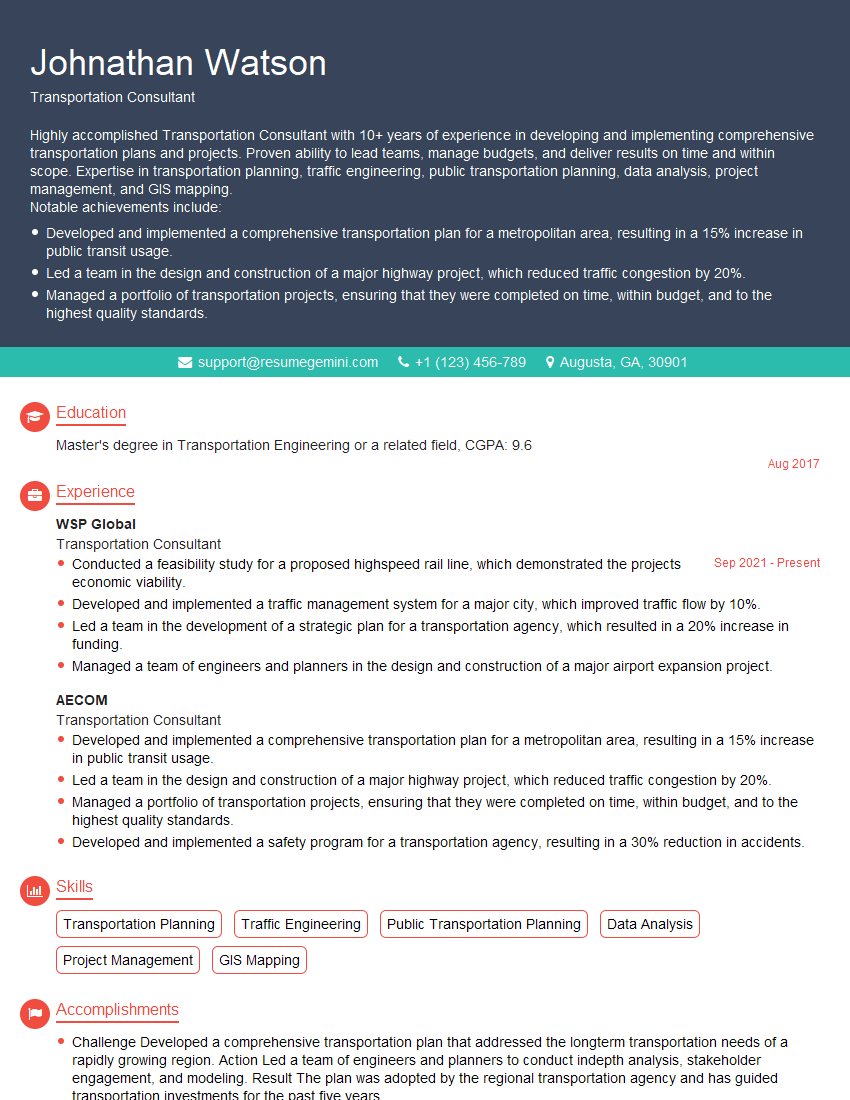
Mastering Shipper Relationship Management opens doors to exciting career opportunities and increased earning potential within the dynamic logistics industry. A strong resume is crucial for showcasing your skills and experience to potential employers. Creating an ATS-friendly resume significantly increases your chances of getting your application noticed. We recommend using ResumeGemini, a trusted resource, to build a professional and effective resume. ResumeGemini provides examples of resumes tailored to Shipper Relationship Management to help guide you. Take advantage of these resources and confidently present yourself as the ideal candidate!
Explore more articles
Users Rating of Our Blogs
Share Your Experience
We value your feedback! Please rate our content and share your thoughts (optional).
What Readers Say About Our Blog
Very informative content, great job.
good