The thought of an interview can be nerve-wracking, but the right preparation can make all the difference. Explore this comprehensive guide to Shipping Documentation and Processing interview questions and gain the confidence you need to showcase your abilities and secure the role.
Questions Asked in Shipping Documentation and Processing Interview
Q 1. Explain the Incoterms 2020 rules and their impact on shipping documentation.
Incoterms® 2020 are a set of internationally standardized trade terms published by the International Chamber of Commerce (ICC). They define the responsibilities of buyers and sellers in international trade transactions, specifically regarding the delivery of goods. These terms significantly impact shipping documentation because they dictate who is responsible for arranging and paying for various aspects of shipping, such as insurance, freight, and customs clearance. Each Incoterm allocates specific tasks and costs, directly influencing the documents needed and the parties involved in their preparation.
- Impact on Documentation: For example, if the Incoterm is FOB (Free On Board), the seller is responsible for delivering the goods to the named port of shipment, and the buyer is responsible for all subsequent costs and risks. This means the seller will need a bill of lading showing the goods have been loaded onto the vessel. The buyer, however, might need to arrange their own insurance and handle import customs documentation. Conversely, under DDP (Delivered Duty Paid), the seller is responsible for everything until the goods reach the buyer’s named place of destination, requiring far more extensive documentation on the seller’s side, including import permits and customs documentation.
- Example: Imagine exporting furniture from the US to the UK. If the Incoterm is CIF (Cost, Insurance and Freight), the seller is responsible for arranging the ocean freight, marine insurance, and delivering the goods to the named port in the UK. This requires a commercial invoice, packing list, certificate of origin, insurance certificate and a clean bill of lading, all prepared by the seller. Under an EXW (Ex Works) term, the buyer handles everything after picking up the goods from the seller’s premises, substantially reducing the seller’s documentation burden.
Understanding Incoterms is crucial for accurate and efficient shipping documentation. Choosing the wrong Incoterm can lead to significant financial and logistical issues.
Q 2. What are the key differences between Bill of Lading and Air Waybill?
Both Bills of Lading (B/Ls) and Air Waybills (AWBs) are transport documents that provide evidence of a contract of carriage between a shipper and a carrier. However, key differences exist:
- Negotiability: A B/L is a negotiable document, meaning it can be transferred to a third party (e.g., a bank) to secure financing or ownership. An AWB is non-negotiable and typically only serves as a receipt for the goods. This key difference greatly impacts how they are handled in trade finance.
- Carrier Liability: A B/L generally offers greater carrier liability for loss or damage to the goods compared to an AWB. This is because the B/L holds more legal weight as a contract of carriage. The exact liability limits vary depending on the carrier and the governing laws.
- Mode of Transport: A B/L is used for sea freight, while an AWB is specifically for air freight. Their format, content, and legal implications are tailored to their respective modes of transport.
- Format and Function: B/Ls typically have a more formal structure with original copies acting as proof of ownership, while AWBs are usually less formal and only have one non-negotiable copy.
Choosing the correct document depends entirely on the mode of transport. Using a B/L for air freight or an AWB for sea freight would be a significant error.
Q 3. Describe the process of creating a commercial invoice.
A commercial invoice is a crucial document that details a transaction between a buyer and a seller. It serves as an invoice for the goods sold and includes vital information for customs clearance and other purposes.
The process of creating a commercial invoice typically involves the following steps:
- Gather necessary information: This includes buyer and seller details (addresses, tax IDs), a detailed description of the goods (quantity, weight, HS code), price, terms of payment (Incoterms), currency, and any relevant charges like insurance and freight.
- Invoice number and date: Assign a unique invoice number and the date of the transaction.
- Fill out the details: Carefully fill out all the information gathered in step one. Accuracy is paramount as any errors can lead to delays or customs problems. Use consistent formatting and units of measurement (e.g., kg, lbs).
- Review and verify: Double-check all information for accuracy before sending it to the buyer and relevant customs authorities.
- Issue and send: Provide the commercial invoice to the buyer, and attach a copy to the shipment documentation.
Example: A commercial invoice for a shipment of 100 widgets at $10 each would clearly list the description as “100 widgets,” the quantity as “100,” the unit price as “$10,” the total price as “$1000,” etc. It would also specify the Incoterms and other relevant financial details of the transaction.
Creating a well-structured commercial invoice is vital for smooth international trade.
Q 4. How do you ensure the accuracy of shipping documentation?
Ensuring the accuracy of shipping documentation is paramount to avoid delays, financial losses, and legal complications. Here’s a multi-faceted approach:
- Data entry checks: Use a data entry system with validation checks to prevent input errors. This might involve automated checks for correct formats, valid codes (e.g., HS codes), and logical data consistency (e.g., weights and quantities).
- Cross-referencing: Always cross-reference information across different documents. The quantity and description of goods should match between the commercial invoice, packing list, and bill of lading. Any discrepancy needs immediate investigation.
- Multiple reviews: Implement a review process where different individuals check the accuracy of the documents before they are finalized. This helps catch errors that might be missed by a single person.
- Use of Templates: Standardized templates ensure consistency and reduce the risk of missing crucial information.
- Regular Training: Staff training ensures everyone involved understands their role in document creation and the potential consequences of errors.
- Document Management System: A reliable document management system can streamline workflow, facilitate collaboration, and provide a centralized repository for all shipping documentation.
Proactive accuracy checks are far more cost-effective than rectifying mistakes later. Building a culture of accuracy is key.
Q 5. What is a packing list and why is it important?
A packing list is a detailed inventory of the goods included in a shipment. It lists the description, quantity, weight, and dimensions of each item, providing a clear overview of the shipment’s contents.
Its importance lies in:
- Customs clearance: Customs authorities often require a packing list to verify the contents of a shipment and assess duties.
- Inventory management: It helps both the shipper and receiver track the goods throughout the shipment process. This is especially important for large or complex shipments.
- Damage claims: In case of damage during transit, a packing list facilitates claims as it clearly indicates what was shipped and in what condition.
- Insurance: It helps determine the value of the shipment for insurance purposes.
Example: A packing list for a shipment of electronics might list “100 laptops, Model X, Weight 2kg each, Dimensions 30x40x5cm each” and “50 power adapters, Weight 0.5kg each, Dimensions 10x10x5cm each”. The detail allows for precise tracking and verification.
A well-prepared packing list is a fundamental component of efficient shipping and ensures smooth delivery.
Q 6. Explain the process of handling discrepancies in shipping documentation.
Discrepancies in shipping documentation can cause significant delays and disputes. Handling them effectively requires a systematic approach:
- Identify and document the discrepancy: Clearly identify the nature and location of the discrepancy. For example, a mismatch between the quantity stated on the commercial invoice and the bill of lading.
- Contact relevant parties: Notify the relevant parties involved, including the buyer, seller, carrier, and customs broker, depending on the nature of the discrepancy.
- Investigate the cause: Determine the root cause of the discrepancy through a thorough investigation, checking original documents and warehouse records if necessary.
- Document resolution: Once the cause is identified, document the resolution process. This might involve issuing corrections, amendments, or supplemental documents.
- Implement corrective actions: To prevent future discrepancies, implement corrective measures to improve data accuracy and document control processes.
Example: If the commercial invoice states 100 units and the Bill of Lading states 98 units, the discrepancy must be resolved. This might involve reviewing warehouse records, checking shipping manifests, and potentially issuing a corrected bill of lading. Effective communication among all parties is crucial.
Proactive measures and robust documentation significantly reduce the chance of disputes arising from discrepancies.
Q 7. How do you manage shipping documentation for both domestic and international shipments?
Managing shipping documentation for both domestic and international shipments shares some similarities but differs significantly in complexity.
- Domestic Shipments: Domestic shipments typically require fewer documents. A commercial invoice, packing slip, and possibly a carrier’s waybill might suffice. The documentation requirements are usually less stringent and simpler because of reduced customs and regulatory complexities.
- International Shipments: International shipments require a more extensive set of documents due to the involvement of multiple parties, customs regulations, and international trade laws. This includes a commercial invoice, packing list, bill of lading or air waybill, certificate of origin, possibly import and export permits, and other documents specific to the goods and destination country. The process is more intricate and requires careful attention to detail to comply with various regulations.
Regardless of domestic or international shipment: A robust document management system and standardized procedures are crucial for efficient handling. Digital documentation and tracking systems provide significant benefits in both scenarios.
The key difference lies in the volume and complexity of documentation and regulatory compliance. Understanding these nuances allows for efficient and accurate documentation management for all shipment types.
Q 8. What are the common errors encountered in shipping documentation and how do you prevent them?
Common errors in shipping documentation stem from inaccurate or incomplete information, leading to delays, penalties, and even shipment loss. These errors can range from simple typos in addresses to more serious discrepancies in HS Codes (Harmonized System Codes used for classifying goods for customs) or weight/volume calculations.
- Incorrect Addresses: A missing apartment number or an outdated postal code can lead to significant delays and rerouting.
- Inaccurate Product Descriptions: Vague descriptions that don’t match the actual contents can lead to customs delays and potential rejection.
- Missing or Incorrect HS Codes: Incorrectly identifying the product’s classification for customs duties is a serious error, often resulting in hefty fines and delays.
- Weight/Dimension Discrepancies: Incorrectly declared weight or dimensions can result in additional charges from carriers.
- Missing or Incorrect Incoterms: Incoterms (International Commercial Terms) define responsibilities between buyer and seller. Errors here can cause confusion and disputes.
Preventing these errors requires a multi-pronged approach. This includes using standardized templates, implementing robust data entry checks and validation processes (perhaps using software with automated checks), and providing thorough training to staff on proper documentation procedures. Regular audits of documentation and the use of checklists are also crucial. Finally, investing in a reliable Transportation Management System (TMS) can help streamline the process and minimize manual errors.
Q 9. Describe your experience with different modes of transportation (sea, air, land).
My experience spans all major modes of transportation – sea, air, and land. I’ve worked extensively with ocean freight, handling everything from containerized shipments to breakbulk cargo, including the associated documentation like Bills of Lading (B/L), packing lists, and commercial invoices. In air freight, I’m familiar with Air Waybills (AWB), dangerous goods declarations, and the specific regulations surrounding air cargo. For land transport, I’ve managed shipments via truck, rail, and even intermodal transport, utilizing documentation like Consignment Notes and Freight Bills. I understand the unique challenges and regulatory considerations for each mode, such as differing customs procedures and transit times.
For example, I once managed a large project involving the transportation of sensitive medical equipment from Europe to Asia. This necessitated air freight due to time constraints and the delicate nature of the cargo. I meticulously ensured all necessary documentation, including the AWB, temperature control certificates, and special handling instructions, was in place to guarantee a smooth and safe delivery. In another instance, I coordinated the sea freight of heavy machinery from the US to South America, which required careful planning and adherence to specific regulations regarding port restrictions and customs processes.
Q 10. How familiar are you with customs regulations and import/export procedures?
I possess a deep understanding of customs regulations and import/export procedures, encompassing various countries and their specific requirements. My knowledge extends to tariff classifications (HS Codes), rules of origin, import duties and taxes, customs declarations, and compliance with trade agreements. I understand the importance of accurately classifying goods to avoid delays and penalties. I’m also familiar with the different types of customs documentation, including Certificates of Origin and licenses, as needed.
For example, I recently handled a shipment of textiles from India to the EU, necessitating careful attention to EU textile regulations and rules of origin. Accurate completion of the customs declarations, including all required supporting documents, ensured timely clearance and avoidance of penalties.
Q 11. How do you handle customs declarations and documentation?
Handling customs declarations involves meticulous attention to detail and a thorough understanding of the specific regulations for each destination country. I ensure accuracy in the declaration of goods, HS Codes, values, and country of origin. I also prepare and submit all necessary supporting documents, such as commercial invoices, packing lists, certificates of origin, and any other documentation required for customs clearance. I am familiar with electronic filing systems used by various customs authorities globally.
My process involves a thorough review of the shipment details, ensuring that all information is accurate and consistent across all documentation. I utilize a systematic approach to data entry, using checklists and cross-referencing information to minimise errors. I also maintain comprehensive records of all customs declarations and related documents for auditing purposes.
Q 12. What software or systems are you proficient in for managing shipping documentation?
I am proficient in several software and systems commonly used in shipping documentation management. This includes Transportation Management Systems (TMS) like Oracle Transportation Management and SAP TM, which provide comprehensive capabilities for managing shipments, tracking, documentation, and reporting. I also have experience with customs brokerage software and Electronic Data Interchange (EDI) platforms that facilitate seamless communication with carriers and customs authorities.
In addition to these specialized systems, I’m adept at using Microsoft Office Suite (Excel, Word) for managing spreadsheets, creating shipping documents and reports, and communicating effectively with clients and partners.
Q 13. Explain your experience with electronic data interchange (EDI).
Electronic Data Interchange (EDI) is a crucial aspect of modern shipping, facilitating electronic exchange of business documents like purchase orders, invoices, and shipping notices. My experience encompasses the implementation and management of EDI systems, ensuring seamless data flow between different stakeholders in the supply chain. I understand various EDI standards, such as ANSI X12 and EDIFACT, and can translate these electronic documents into human-readable formats if necessary.
For instance, I successfully implemented an EDI system for a client, automating their order processing and shipment tracking, which significantly improved efficiency and reduced processing times. This resulted in lower costs and improved customer satisfaction.
Q 14. How do you track shipments and manage delivery exceptions?
Shipment tracking and managing delivery exceptions are critical for ensuring timely delivery and customer satisfaction. I utilize various tracking systems, including carrier websites, TMS platforms, and dedicated tracking software, to monitor the progress of shipments in real-time. When exceptions occur (e.g., delays, damage, or loss), I initiate immediate investigation and follow established procedures to resolve the issue, communicating proactively with all parties involved (shipper, consignee, and carrier).
My approach involves identifying the root cause of the exception, coordinating with the carrier to implement corrective actions, and keeping the relevant parties informed of the situation and progress made towards resolution. This may involve filing claims with the carrier or initiating alternative delivery arrangements, depending on the nature of the exception. I maintain detailed records of all exceptions and their resolution for analysis and future improvement of processes.
Q 15. Describe your experience with dangerous goods shipping regulations.
Dangerous goods, or hazardous materials, require meticulous handling due to their potential risks. My experience encompasses a thorough understanding of regulations set by organizations like the International Maritime Organization (IMO) and the International Air Transport Association (IATA). This includes knowing the specific classifications of dangerous goods (e.g., explosives, flammable liquids, corrosive substances), proper packaging requirements, and the necessary documentation, such as the Dangerous Goods Declaration (DGD).
For instance, I’ve worked extensively with shipments containing lithium-ion batteries, a particularly sensitive category. This involved ensuring each battery met the required UN standards, was packaged appropriately (including appropriate separators and cushioning materials), and that all required labels and markings (UN numbers, hazard class labels, etc.) were present and accurate. I’ve also managed instances where incorrect documentation led to shipment delays and required immediate intervention to ensure compliance and safe transportation. I am proficient in using the relevant regulatory documents and online databases to confirm the correct classification and transport regulations for every hazardous material.
Beyond compliance, I’m experienced in training staff on the safe handling, storage, and transportation of dangerous goods. This ensures that everyone involved understands the inherent risks and their responsibilities in mitigating potential hazards.
Career Expert Tips:
- Ace those interviews! Prepare effectively by reviewing the Top 50 Most Common Interview Questions on ResumeGemini.
- Navigate your job search with confidence! Explore a wide range of Career Tips on ResumeGemini. Learn about common challenges and recommendations to overcome them.
- Craft the perfect resume! Master the Art of Resume Writing with ResumeGemini’s guide. Showcase your unique qualifications and achievements effectively.
- Don’t miss out on holiday savings! Build your dream resume with ResumeGemini’s ATS optimized templates.
Q 16. How do you ensure compliance with international trade regulations?
Ensuring compliance with international trade regulations requires a multifaceted approach. It starts with a thorough understanding of the specific regulations governing the import and export of goods between countries. This involves familiarity with Incoterms (International Commercial Terms), which define the responsibilities of the buyer and seller in a trade transaction. I also utilize resources like the World Trade Organization (WTO) website and national customs agencies’ websites to stay updated on trade policies, tariffs, and sanctions.
For example, I’ve successfully navigated the complexities of exporting goods to the European Union (EU), ensuring compliance with their stringent rules of origin and customs procedures. This involved meticulous preparation of documentation such as Certificates of Origin, commercial invoices, and packing lists, ensuring their accuracy and adherence to EU regulations. In another instance, I had to handle a shipment that was impacted by new sanctions, requiring immediate adjustments to the documentation and shipping route to ensure compliance and avoid potential penalties. This involved working closely with customs brokers and legal experts to find the correct path forward.
Proactive monitoring of changes in regulations through subscriptions to industry news and compliance updates is crucial, as trade regulations can change rapidly.
Q 17. What is your experience with cargo insurance documentation?
My experience with cargo insurance documentation involves the full cycle, from policy procurement to claim management. I understand the different types of cargo insurance coverage (e.g., Institute Cargo Clauses A, B, and C), and I can select the appropriate coverage based on the specific risks and value of the shipment. This requires a clear understanding of the Incoterms and the associated responsibilities of the buyer and seller regarding insurance.
I am proficient in reviewing insurance policies to ensure adequate coverage, and I’ve managed several instances where claims were needed. This involved carefully compiling the necessary documentation, including the original invoice, bill of lading, packing list, and any relevant evidence of loss or damage. Working with the insurance provider to ensure all information is accurate and complete is critical for a smooth claims process. I also know the importance of accurately recording the value of the goods for insurance purposes.
In a recent project, a shipment was damaged during transit, and my careful documentation and prompt response allowed for a successful claim and full compensation for the damage.
Q 18. How do you resolve shipping document-related issues with carriers or customers?
Resolving shipping document-related issues requires clear communication, strong organizational skills, and a problem-solving mindset. I approach these situations systematically. First, I carefully analyze the issue to identify the root cause – incorrect documentation, delays in processing, or discrepancies between the documentation and the physical shipment. Then, I communicate directly with the relevant parties, whether it’s the carrier, the customer, or customs authorities.
For example, I recently resolved an issue where a shipment was delayed due to missing documentation. By working closely with the carrier and the customer, I identified the missing document, expedited its issuance, and ensured that the shipment reached its destination with minimal disruption. Effective communication, including the use of email trails and clear documentation of all communications and resolutions, is critical to avoid future misunderstandings.
A structured approach, with proper documentation of the issue, the steps taken to resolve it, and the outcome, not only helps in immediate resolution but also assists in preventing similar issues in the future. Escalation procedures are also crucial for handling complex or persistent issues.
Q 19. Describe your experience with freight auditing and cost analysis.
Freight auditing and cost analysis are essential for optimizing shipping expenses. My experience includes analyzing freight invoices for accuracy and identifying potential cost-saving opportunities. This involves comparing rates from different carriers, reviewing fuel surcharges, and identifying any discrepancies or errors in billing. I use various tools and spreadsheets to track spending and identify trends.
For example, I conducted an audit of our shipping expenses and discovered that by negotiating better rates with a particular carrier and optimizing our shipping routes, we were able to reduce our annual freight costs by 15%. This involved detailed analysis of historical shipping data, identifying peak shipping seasons, and understanding the various factors that impact shipping costs. Data analysis techniques and the use of freight management software are essential for effective freight auditing.
The goal is to improve efficiency and reduce costs while maintaining service quality and reliability. This involves proactive identification of cost-saving opportunities and working with carriers to negotiate favorable terms.
Q 20. What is your experience with different types of shipping labels?
Different shipping labels serve specific purposes and vary depending on the mode of transport (sea, air, land) and the type of goods being shipped. I have experience with several types, including:
- Shipping labels with barcodes and tracking numbers: These labels allow for easy tracking of shipments throughout the supply chain.
- Hazardous materials labels: These labels adhere to international standards (e.g., IMO, IATA) and clearly identify the hazards associated with the goods.
- Fragile or handle-with-care labels: These labels help to ensure that delicate goods are handled with extra caution.
- Custom labels: These can be designed to meet specific client needs, such as incorporating additional information like special instructions or client logos.
- Address labels: Clearly and accurately displaying the recipient’s address is crucial for accurate delivery.
Understanding the regulations and best practices for each label type is vital for efficient and safe transportation. Incorrect labeling can lead to delays, fines, or even safety hazards.
Q 21. How do you manage and archive shipping documentation?
Effective management and archiving of shipping documentation is crucial for compliance, auditing, and efficient operations. I employ a combination of physical and digital methods. Physically, documents are organized using a clear filing system, ensuring easy retrieval. Digitally, I use a document management system (DMS) to store and access documents electronically. The DMS ensures secure storage and version control and facilitates easy searching and retrieval.
For example, all shipping documents (invoices, bills of lading, packing lists, customs declarations, etc.) are stored in the DMS, categorized by shipment date, client, and destination. Metadata tagging allows for efficient searching and retrieval. Access control measures ensure that only authorized personnel can view sensitive documents. Regular backups are implemented to prevent data loss. Retention policies ensure that documents are archived according to legal and company requirements.
This combination of physical and digital archiving ensures efficient access, data security, and compliance with legal and regulatory requirements. Regular audits of the archiving system ensure its ongoing efficacy.
Q 22. Explain your understanding of Letters of Credit.
A Letter of Credit (LC) is a financial instrument issued by a buyer’s bank, guaranteeing payment to a seller for goods or services once specific conditions are met. Think of it as a secure payment method for international trade, mitigating risk for both parties. The buyer’s bank essentially acts as a guarantor, ensuring the seller receives payment as long as they fulfill their contractual obligations.
Here’s a breakdown:
- Applicant (Buyer): Requests the LC from their bank.
- Issuing Bank: The buyer’s bank that issues the LC.
- Beneficiary (Seller): Receives payment once conditions are met.
- Advising Bank (Optional): Informs the seller of the LC’s issuance.
- Confirming Bank (Optional): Adds their guarantee to the LC, providing extra security to the seller.
- Negotiating Bank (Optional): A bank that pays the seller against the documents.
For example, imagine a US company importing textiles from India. The US company requests an LC from their bank. The Indian supplier ships the goods, presents the required documents (bill of lading, commercial invoice, etc.) to their bank, and receives payment once the bank verifies the documents meet the LC’s conditions. The LC reduces the risk for the US company (ensuring goods are received) and the Indian supplier (guaranteeing payment).
Q 23. How do you prioritize tasks when managing multiple shipments with tight deadlines?
Prioritizing multiple shipments with tight deadlines requires a structured approach. I utilize a combination of techniques, including:
- Urgency Matrix: I categorize shipments based on urgency (high, medium, low) and impact (high, medium, low). This helps me quickly identify the most critical shipments needing immediate attention. High urgency/high impact shipments get top priority.
- Deadline-Driven Scheduling: I create a detailed schedule using project management tools, prioritizing tasks based on shipment deadlines. This might involve creating sub-tasks for each shipment to ensure each step is handled efficiently.
- Communication & Collaboration: Keeping open communication with clients, carriers, and internal teams is crucial. Delays or issues are addressed proactively, minimizing disruption to the schedule. I might use regular status update meetings and email chains to ensure everyone is on the same page.
- Resource Allocation: Optimizing resource allocation (staff, equipment, etc.) to handle the workload is critical, ensuring that the most critical tasks are assigned to the most appropriate personnel.
For example, if a shipment of perishable goods has an imminent deadline, I would prioritize it over a non-perishable shipment even if the latter has a higher monetary value.
Q 24. Describe your problem-solving skills in the context of shipping documentation errors.
My approach to solving shipping documentation errors involves a systematic process:
- Identification: First, I accurately identify the type and location of the error. This often involves carefully reviewing all documentation to pinpoint discrepancies.
- Analysis: Next, I analyze the root cause. Was it a data entry error? A missing document? A misunderstanding of regulations? Understanding the cause helps prevent future errors.
- Solution Development: I then develop a solution. This could involve correcting the error directly, obtaining missing documents, consulting with relevant parties (carriers, customs), or even implementing process changes to prevent the error from recurring.
- Implementation: I implement the solution, ensuring accuracy and compliance. For example, this might involve contacting the carrier to amend the bill of lading or working with the shipper to rectify an incorrect address.
- Verification & Prevention: Finally, I verify the solution’s effectiveness and implement steps to prevent future occurrences. This often involves improved training, updated checklists, or changes to documentation procedures.
For instance, if an incoterm is incorrectly stated in the commercial invoice, I would work with the shipper to issue a corrected invoice, notifying the carrier and customs as needed. Then I would review our internal processes to determine why the incoterm was incorrectly entered initially and implement corrective measures.
Q 25. What are your strategies for maintaining accurate and up-to-date shipping records?
Maintaining accurate and up-to-date shipping records is crucial for efficiency and compliance. My strategies include:
- Centralized Database: Utilizing a central, secure database (either physical or cloud-based) is essential for storing all shipment-related information. This ensures easy access and avoids duplicated efforts.
- Version Control: Employing version control systems means that changes are tracked, allowing us to revert to previous versions if necessary and maintaining an audit trail.
- Automated Data Entry: Automating data entry whenever possible reduces errors and ensures data consistency. This could include integrating various systems (e.g., TMS, ERP) to streamline information flow.
- Regular Audits: Regular internal audits help identify inaccuracies and ensure data integrity. It’s like a health check for your records!
- Data Backup & Recovery: Having a robust data backup and recovery system in place is crucial to safeguard against data loss or corruption.
I also ensure that all documentation is properly filed and easily searchable, using clear labeling conventions. This makes it easy to retrieve information quickly when needed.
Q 26. How do you stay current with changes in shipping regulations and best practices?
Staying current with shipping regulations and best practices is ongoing. My methods include:
- Subscription to Industry Publications: I subscribe to relevant industry journals and publications to keep informed of regulatory changes and new best practices.
- Professional Development Courses: Regular participation in professional development courses and webinars keeps my skills and knowledge up-to-date.
- Networking with Industry Professionals: Attending industry conferences and networking with other professionals offers valuable insights and allows me to learn from others’ experiences.
- Government Agency Websites: Monitoring relevant government agency websites (e.g., the US Customs and Border Protection, International Maritime Organization) ensures I am up to speed on regulatory changes.
- Carrier Notifications: Staying engaged with updates and communications from carriers helps me learn about changes to their services and procedures.
By combining these methods, I ensure that my knowledge remains current and compliant.
Q 27. Describe your experience with carrier selection and negotiation.
Carrier selection and negotiation are critical for cost-effectiveness and efficient shipping. My approach includes:
- Needs Assessment: I start by clearly defining the shipping requirements, considering factors like transit time, cost, reliability, and the type of goods being shipped.
- Carrier Research: I thoroughly research potential carriers, considering their service offerings, reputation, and track record. I look at reviews, industry rankings, and past experiences (if any).
- Request for Proposals (RFP): Issuing RFPs allows me to compare proposals from multiple carriers, obtaining competitive pricing and service options.
- Negotiation: I engage in negotiations with carriers to secure favorable rates and service terms. This involves leveraging volume discounts, negotiating transit times, and clarifying service level agreements (SLAs).
- Contract Management: Once a carrier is selected, I manage the contract effectively, ensuring compliance with agreed-upon terms and proactively addressing any issues.
For example, when selecting a carrier for time-sensitive shipments, I would prioritize speed and reliability over cost, even if it means selecting a more expensive option. Conversely, for non-urgent, high-volume shipments, I would prioritize cost-effectiveness, negotiating for bulk discounts.
Q 28. How would you handle a situation where a shipment is delayed due to missing documentation?
A shipment delayed due to missing documentation requires a swift and organized response. My steps would be:
- Identify Missing Documentation: Precisely identify the missing documents and their urgency. Is it a crucial document like a bill of lading, or a less critical one?
- Contact Shipper/Receiver: Immediately contact the shipper and receiver, explaining the situation and outlining potential solutions. Open communication is key.
- Carrier Liaison: Liaise with the carrier to understand the delay’s impact and explore options for expediting the process. This might involve submitting the missing documents electronically if possible.
- Obtain Missing Documentation: Work with the shipper to obtain the missing documentation as quickly as possible. This may involve expediting document preparation or utilizing digital document transmission.
- Customs Liaison (If Applicable): If customs clearance is involved, promptly contact customs authorities to explain the situation and determine the necessary steps for resolving the issue.
- Proactive Communication: Keep the shipper and receiver regularly updated on the progress. Transparency helps manage expectations.
- Root Cause Analysis: Once the delay is resolved, conduct a root cause analysis to understand why the documentation was missing and implement preventative measures to avoid future incidents.
This proactive and organized approach helps to minimize the impact of the delay and maintain a positive relationship with clients and carriers.
Key Topics to Learn for Your Shipping Documentation and Processing Interview
Ace your interview by mastering these crucial areas of Shipping Documentation and Processing. Understanding both the theory and practical application will significantly boost your confidence and showcase your expertise.
- Incoterms: Understand the various Incoterms (e.g., FOB, CIF, DDP) and their implications for responsibility, risk, and cost allocation throughout the shipping process. Consider practical scenarios where different Incoterms would be most appropriate.
- Bill of Lading (B/L) & Other Essential Documents: Deeply familiarize yourself with the structure and purpose of a Bill of Lading, including its different types (e.g., straight, order). Explore other crucial shipping documents like commercial invoices, packing lists, certificates of origin, and insurance certificates, and how they interact with each other.
- Freight Forwarding & Customs Procedures: Grasp the role of freight forwarders in the shipping process, including their responsibilities in documentation, customs clearance, and logistics. Understand the complexities of import/export regulations and customs procedures, including tariff classifications and documentation requirements.
- Shipping Documentation Software & Systems: Demonstrate familiarity with common software and systems used in shipping documentation processing (mention specific examples if you are familiar with them). Highlight your ability to learn and adapt to new technologies quickly.
- Cargo Security & Risk Management: Understand best practices for securing cargo throughout the shipping process and mitigating potential risks, such as theft, damage, or delays. This demonstrates a proactive and responsible approach.
- Problem-Solving & Process Improvement: Be prepared to discuss situations where you’ve had to solve problems related to shipping documentation or process inefficiencies. Showcase your analytical skills and ability to find solutions.
Next Steps: Set Yourself Up for Success
Mastering Shipping Documentation and Processing opens doors to exciting career opportunities and significant professional growth. A strong understanding of these concepts demonstrates valuable skills to potential employers. To maximize your chances of landing your dream job, focus on creating a compelling, ATS-friendly resume that highlights your expertise. ResumeGemini is a trusted resource for building professional resumes, and they even offer examples tailored to Shipping Documentation and Processing roles. Take advantage of this valuable tool to present yourself in the best possible light.

Operations Manager Resume Sample
Import Coordinator Resume Sample
Supply Chain Manager Resume Sample
Distribution Center Manager Resume Sample
Logistics Manager Resume Sample
Transportation Manager Resume Sample
Warehouse Manager Resume Sample
Shipping Coordinator Resume Sample
Shipping Manager Resume Sample
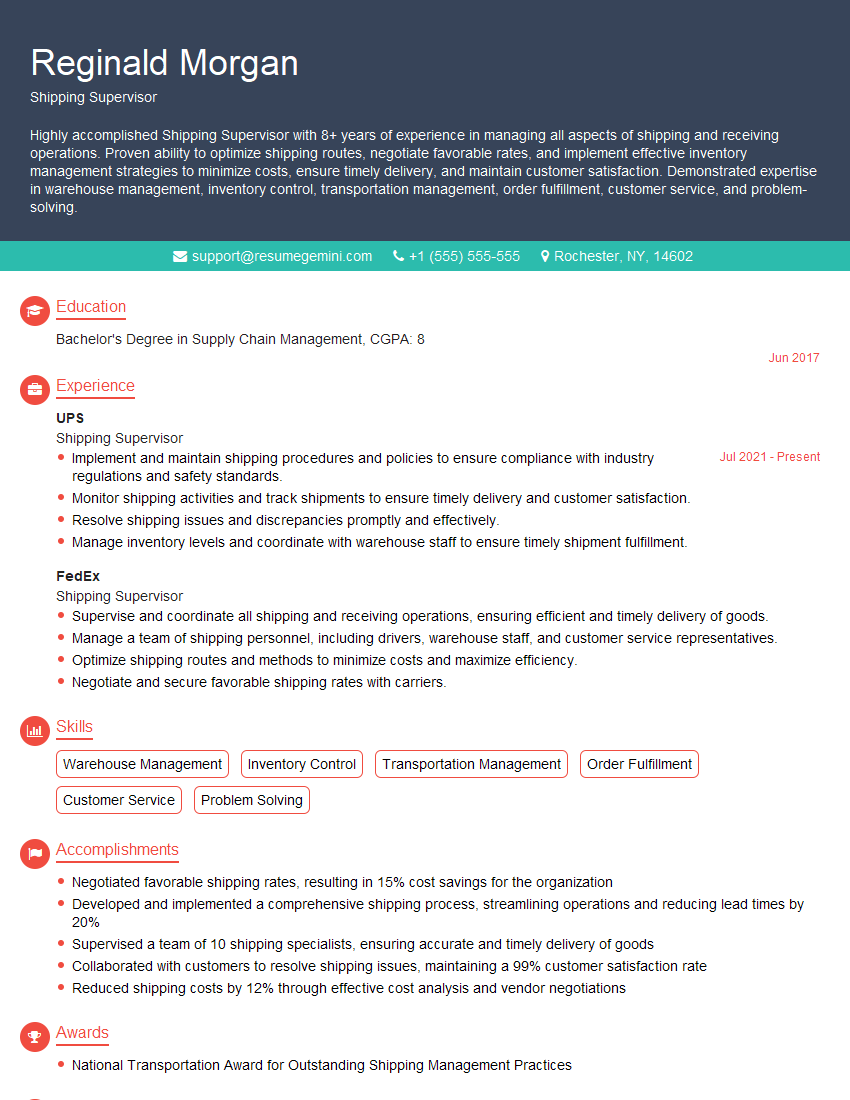
Shipping Supervisor Resume Sample
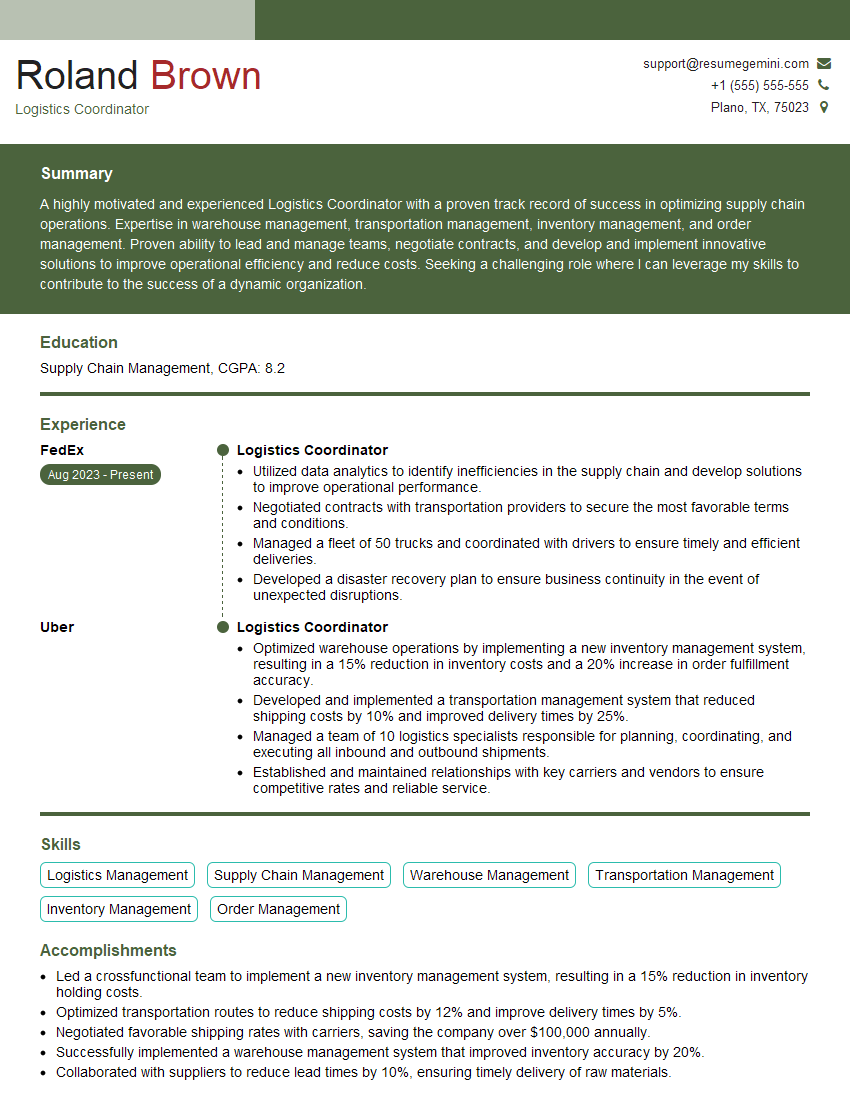
Logistics Coordinator Resume Sample
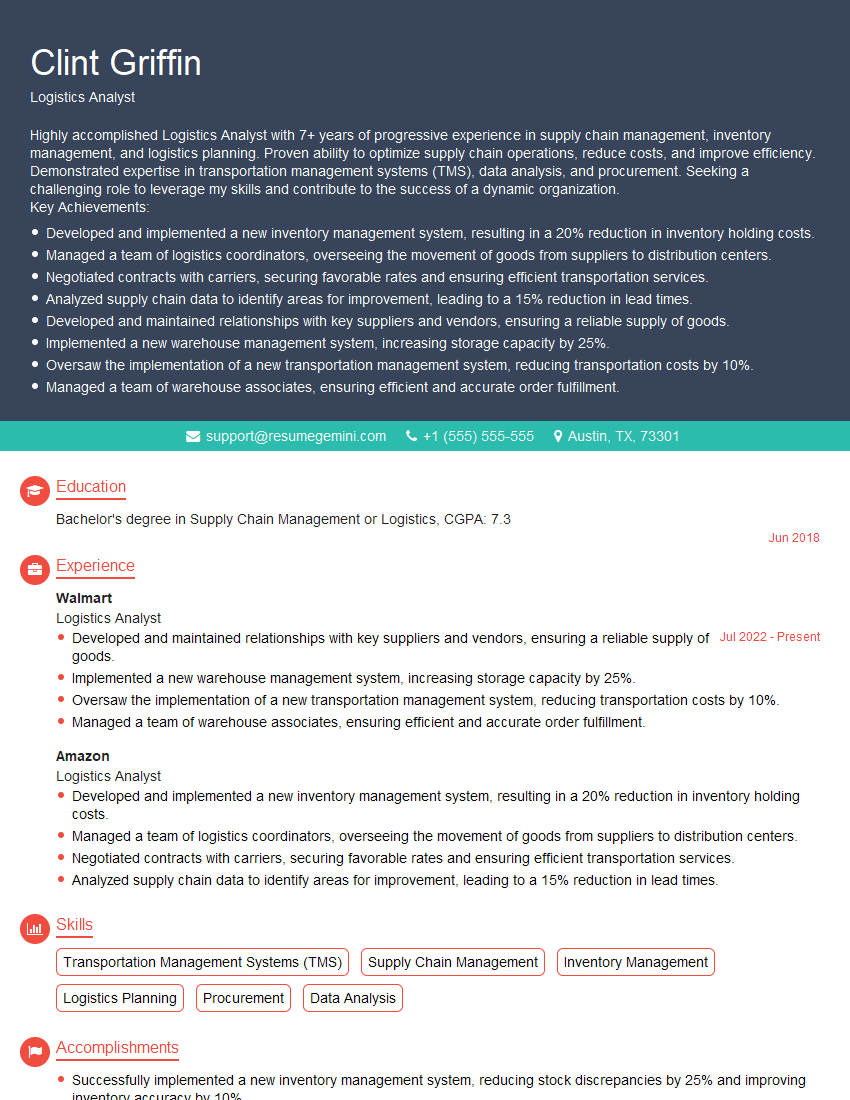
Logistics Analyst Resume Sample
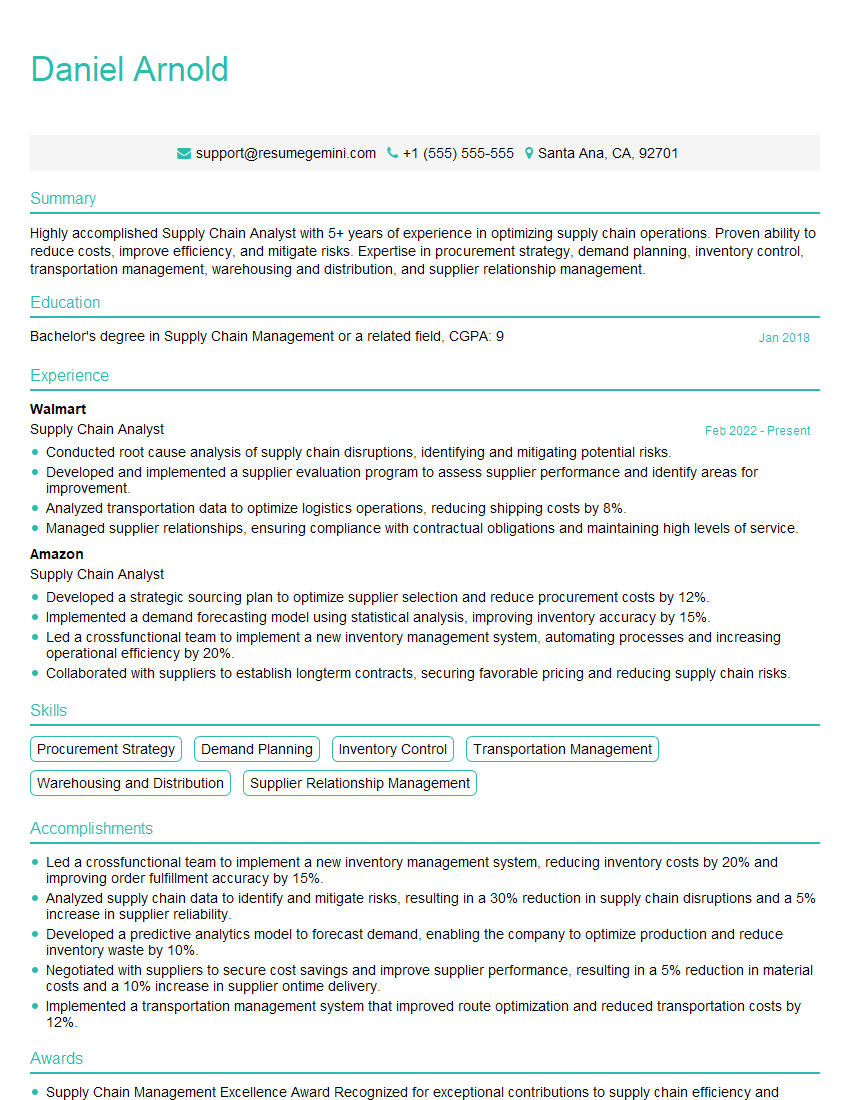
Supply Chain Analyst Resume Sample
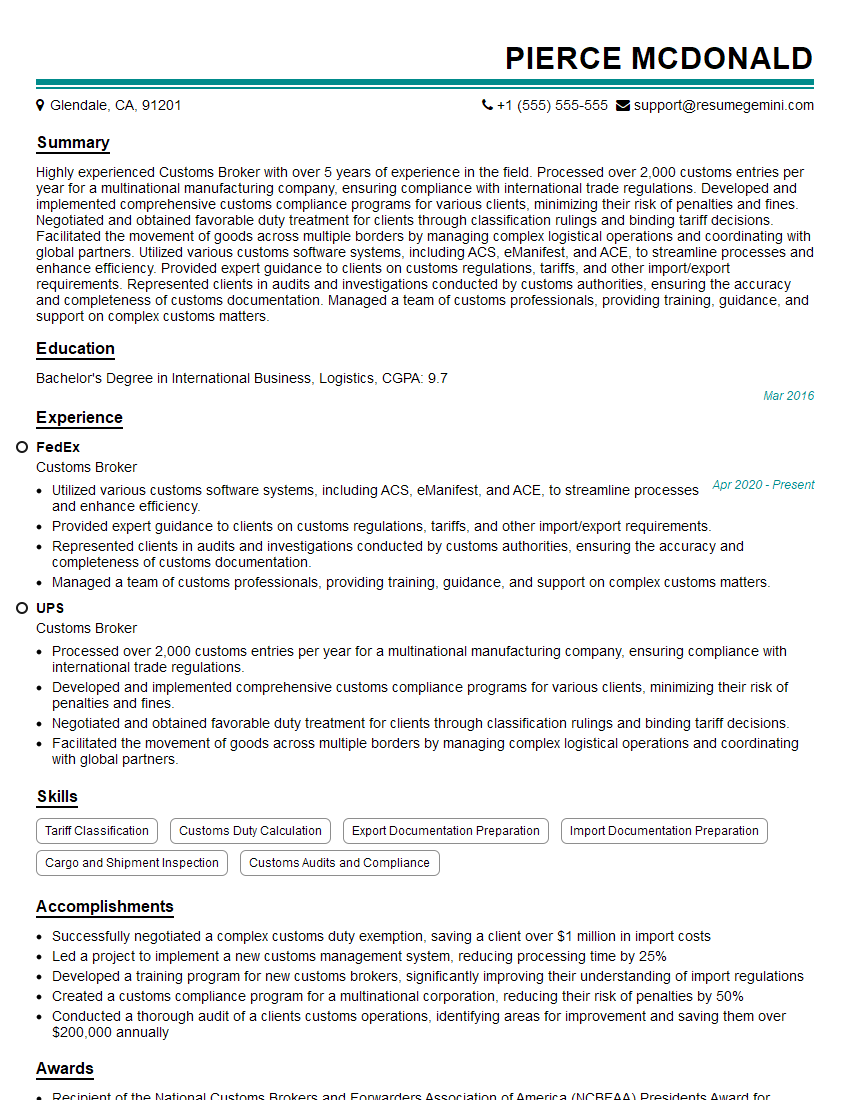
Customs Broker Resume Sample
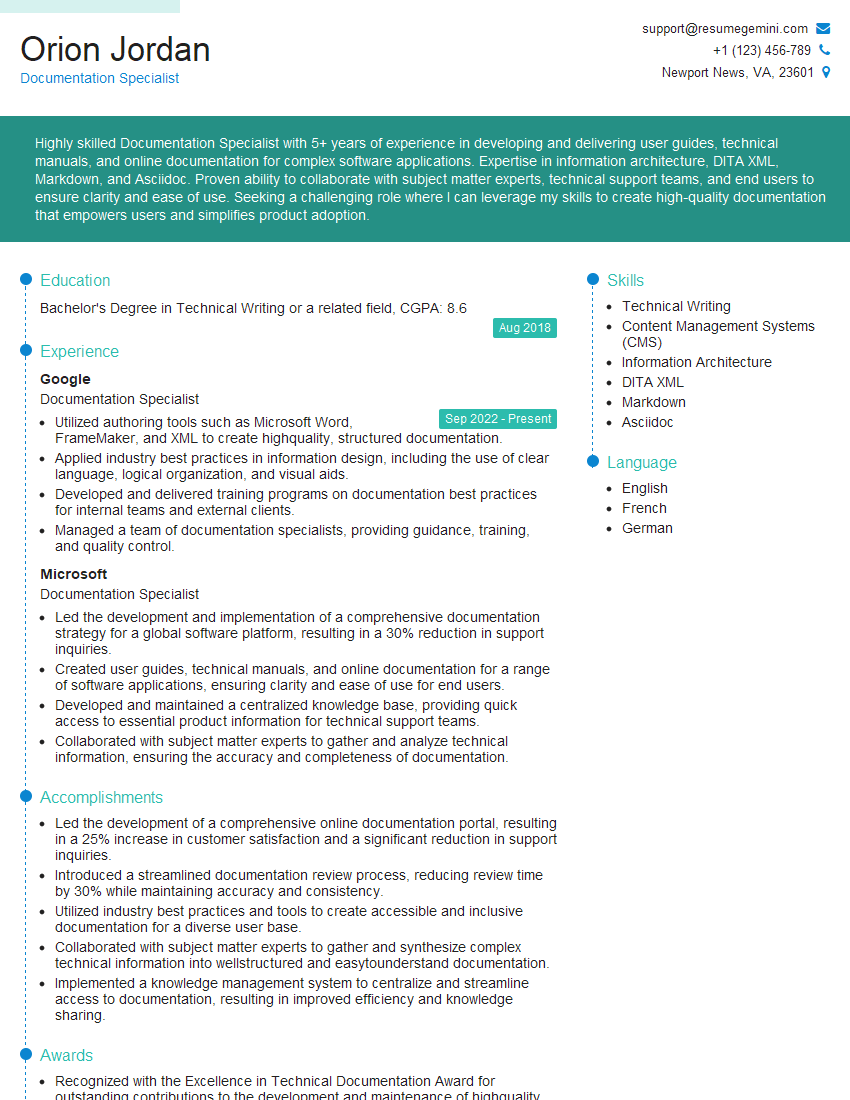
Documentation Specialist Resume Sample
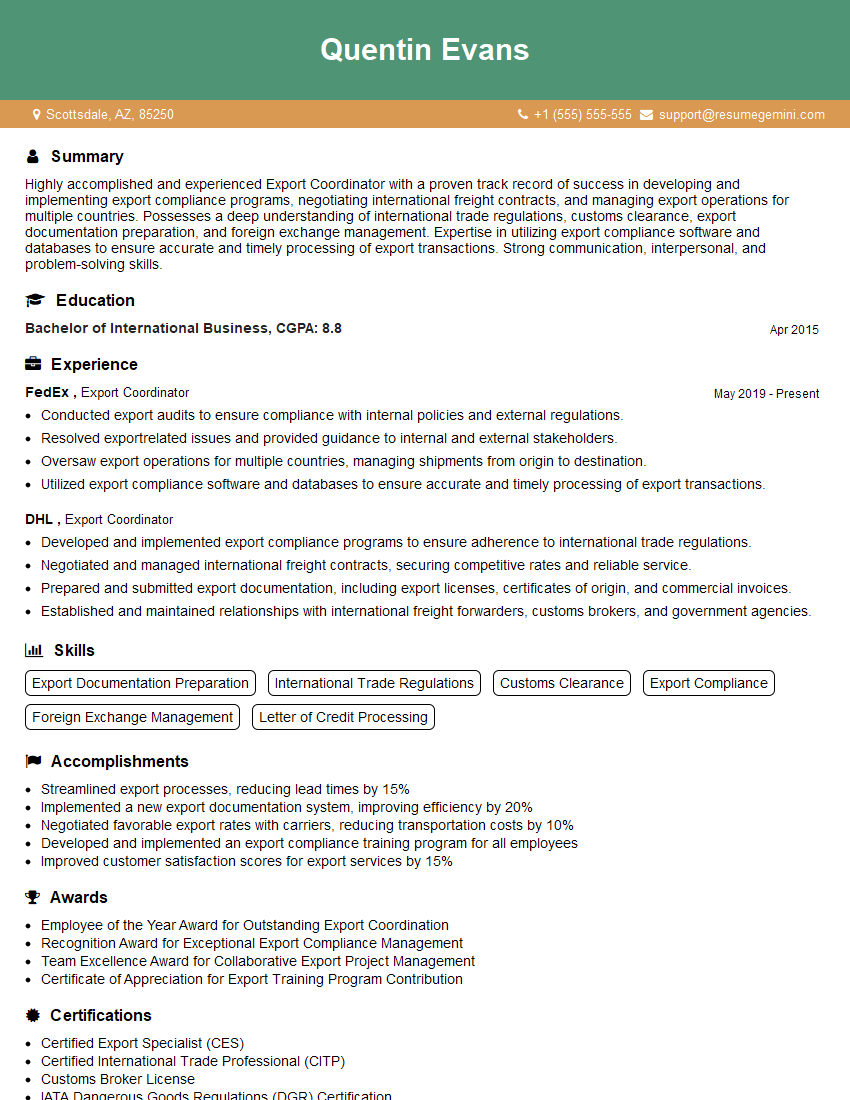
Export Coordinator Resume Sample
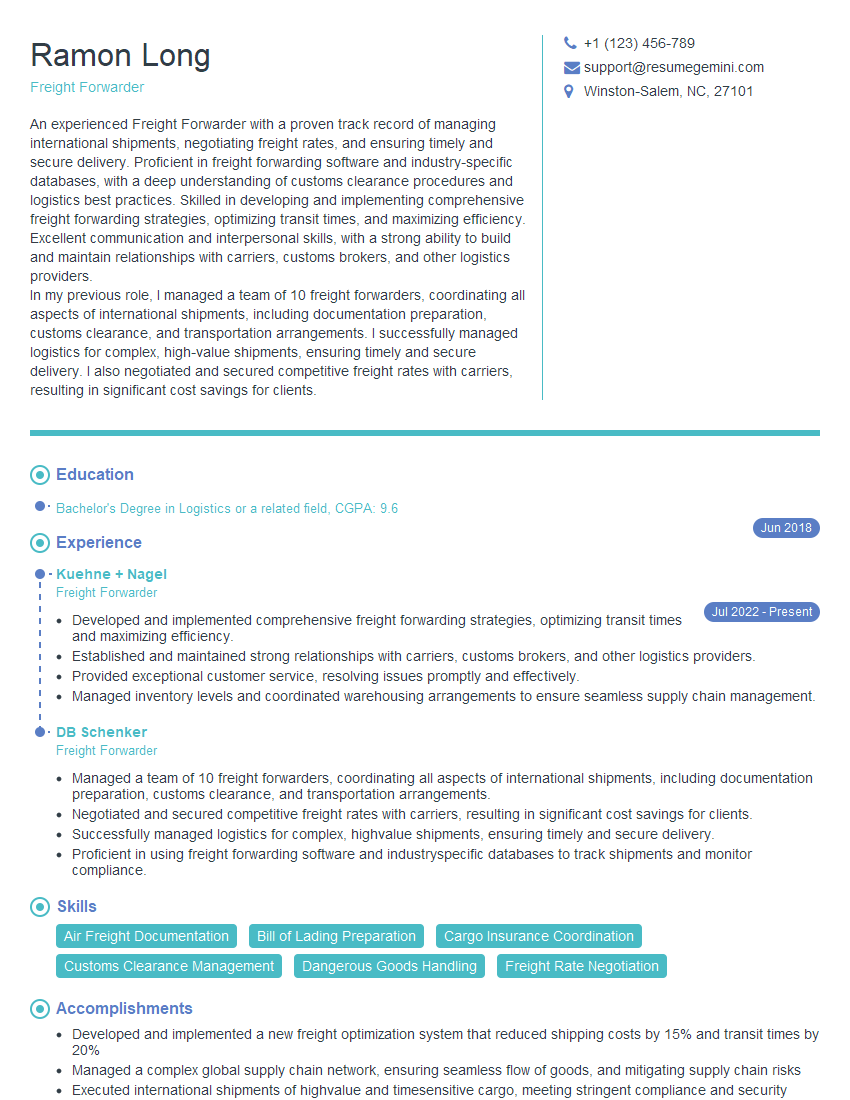
Freight Forwarder Resume Sample
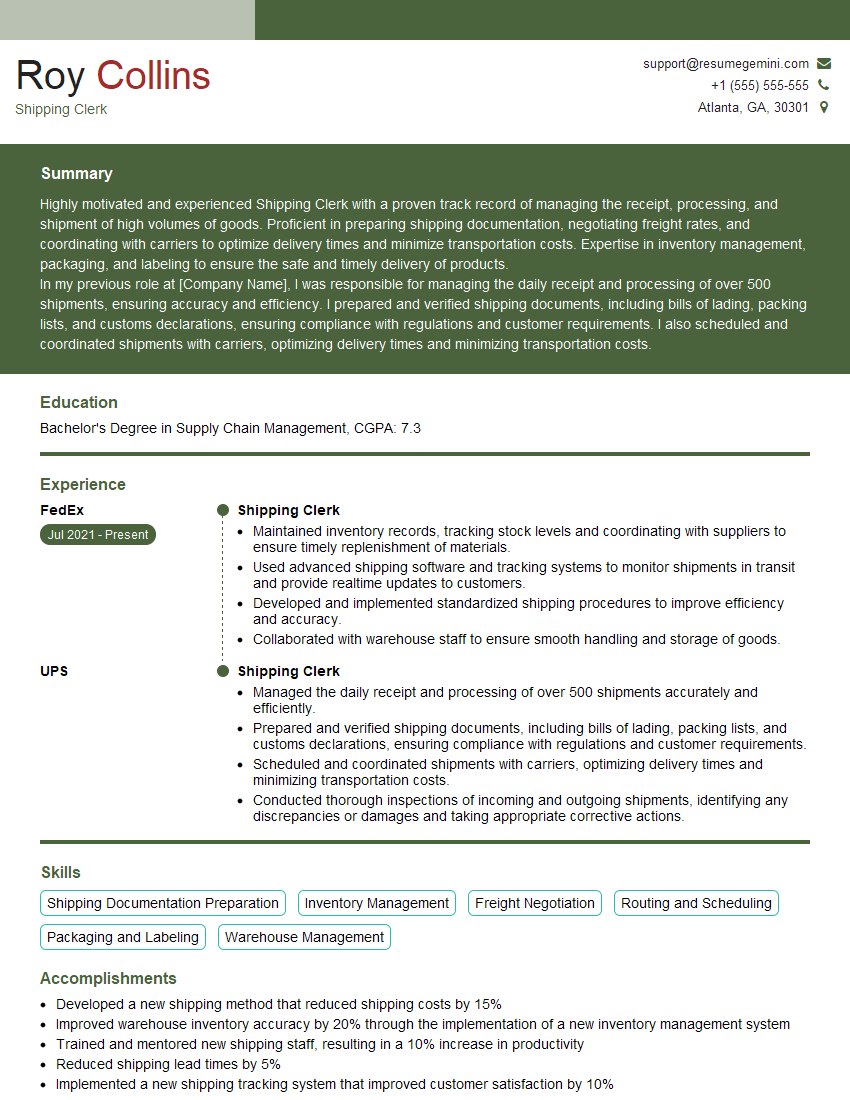
Shipping Clerk Resume Sample
- Operations Manager
- Import Coordinator
- Supply Chain Manager
- Distribution Center Manager
- Logistics Manager
- Transportation Manager
- Warehouse Manager
- Shipping Coordinator
- Shipping Manager
- Shipping Supervisor
- Logistics Coordinator
- Logistics Analyst
- Supply Chain Analyst
- Customs Broker
- Documentation Specialist
- Export Coordinator
- Freight Forwarder
- Shipping Clerk
Explore more articles
Users Rating of Our Blogs
Share Your Experience
We value your feedback! Please rate our content and share your thoughts (optional).
What Readers Say About Our Blog
Hello,
we currently offer a complimentary backlink and URL indexing test for search engine optimization professionals.
You can get complimentary indexing credits to test how link discovery works in practice.
No credit card is required and there is no recurring fee.
You can find details here:
https://wikipedia-backlinks.com/indexing/
Regards
NICE RESPONSE TO Q & A
hi
The aim of this message is regarding an unclaimed deposit of a deceased nationale that bears the same name as you. You are not relate to him as there are millions of people answering the names across around the world. But i will use my position to influence the release of the deposit to you for our mutual benefit.
Respond for full details and how to claim the deposit. This is 100% risk free. Send hello to my email id: [email protected]
Luka Chachibaialuka
Hey interviewgemini.com, just wanted to follow up on my last email.
We just launched Call the Monster, an parenting app that lets you summon friendly ‘monsters’ kids actually listen to.
We’re also running a giveaway for everyone who downloads the app. Since it’s brand new, there aren’t many users yet, which means you’ve got a much better chance of winning some great prizes.
You can check it out here: https://bit.ly/callamonsterapp
Or follow us on Instagram: https://www.instagram.com/callamonsterapp
Thanks,
Ryan
CEO – Call the Monster App
Hey interviewgemini.com, I saw your website and love your approach.
I just want this to look like spam email, but want to share something important to you. We just launched Call the Monster, a parenting app that lets you summon friendly ‘monsters’ kids actually listen to.
Parents are loving it for calming chaos before bedtime. Thought you might want to try it: https://bit.ly/callamonsterapp or just follow our fun monster lore on Instagram: https://www.instagram.com/callamonsterapp
Thanks,
Ryan
CEO – Call A Monster APP
To the interviewgemini.com Owner.
Dear interviewgemini.com Webmaster!
Hi interviewgemini.com Webmaster!
Dear interviewgemini.com Webmaster!
excellent
Hello,
We found issues with your domain’s email setup that may be sending your messages to spam or blocking them completely. InboxShield Mini shows you how to fix it in minutes — no tech skills required.
Scan your domain now for details: https://inboxshield-mini.com/
— Adam @ InboxShield Mini
Reply STOP to unsubscribe
Hi, are you owner of interviewgemini.com? What if I told you I could help you find extra time in your schedule, reconnect with leads you didn’t even realize you missed, and bring in more “I want to work with you” conversations, without increasing your ad spend or hiring a full-time employee?
All with a flexible, budget-friendly service that could easily pay for itself. Sounds good?
Would it be nice to jump on a quick 10-minute call so I can show you exactly how we make this work?
Best,
Hapei
Marketing Director
Hey, I know you’re the owner of interviewgemini.com. I’ll be quick.
Fundraising for your business is tough and time-consuming. We make it easier by guaranteeing two private investor meetings each month, for six months. No demos, no pitch events – just direct introductions to active investors matched to your startup.
If youR17;re raising, this could help you build real momentum. Want me to send more info?
Hi, I represent an SEO company that specialises in getting you AI citations and higher rankings on Google. I’d like to offer you a 100% free SEO audit for your website. Would you be interested?
Hi, I represent an SEO company that specialises in getting you AI citations and higher rankings on Google. I’d like to offer you a 100% free SEO audit for your website. Would you be interested?
good