The thought of an interview can be nerve-wracking, but the right preparation can make all the difference. Explore this comprehensive guide to Show Design and Production Management interview questions and gain the confidence you need to showcase your abilities and secure the role.
Questions Asked in Show Design and Production Management Interview
Q 1. Describe your experience with budgeting for a large-scale production.
Budgeting for large-scale productions is a meticulous process requiring expertise in forecasting, resource allocation, and contingency planning. It’s like building a house – you need a detailed blueprint (budget) before laying the foundation (starting production). My approach begins with a comprehensive breakdown of all anticipated costs, categorized into key areas such as set design and construction, lighting and sound equipment rental, talent fees (actors, crew), marketing and advertising, travel and accommodation, insurance, and permits. I use specialized budgeting software, often incorporating spreadsheet programs like Excel or Google Sheets, to create a dynamic document that can be easily updated as the project evolves.
For example, when budgeting for a recent outdoor music festival, I initially created a preliminary budget based on estimated attendance and potential sponsorship. As the project progressed, we secured more sponsorships, which allowed us to increase the production value. Regular monitoring of expenses against the budget is crucial, requiring weekly or bi-weekly reviews to identify potential cost overruns and implement corrective actions. Contingency funds are vital to accommodate unexpected expenses, perhaps a crucial piece of equipment breaking down, or unforeseen weather-related delays.
The final budget is presented to stakeholders with a clear justification for each line item, ensuring transparency and accountability. Throughout the production, regular financial reports track expenses against the budget, enabling proactive management and preventing financial surprises.
Q 2. Explain your process for creating a show schedule and managing timelines.
Creating a show schedule and managing timelines requires a robust understanding of the production workflow and meticulous planning. Think of it like orchestrating a symphony – every instrument (crew, department) needs to play at the right time to create a harmonious whole. My process starts with a detailed breakdown of all tasks, from initial design concepts to final strike (dismantling the set).
I utilize project management software, such as Microsoft Project or Asana, to create Gantt charts visualizing the timeline and dependencies between tasks. These charts clearly show critical paths – the sequence of tasks that directly impact the project’s completion date – allowing for proactive identification and mitigation of potential delays. Each task is assigned to a specific team or individual, with clear deadlines and milestones. Regular progress meetings with all team leads are essential to track progress, address any roadblocks, and make necessary adjustments to the schedule.
For example, during a recent theatre production, we utilized a daily call sheet that clearly outlined the schedule for each department, including call times, rehearsal schedules, and performance timings. This facilitated seamless collaboration and efficient resource management. Regular updates to the schedule, communicated effectively to all involved, are critical for maintaining momentum and ensuring timely completion of the project.
Q 3. How do you handle conflicting priorities or unexpected technical issues during a production?
Conflicting priorities and unexpected technical issues are inevitable in live productions. Think of it as navigating a storm – you need a calm and strategic approach to manage the chaos effectively. My approach centers around prioritization, clear communication, and problem-solving.
When facing conflicting priorities, a structured approach involves assessing the impact of each priority on the overall production goals. We utilize a prioritization matrix, often ranking priorities based on their impact and urgency. Transparent communication with all stakeholders is essential to reach a mutually acceptable solution. For example, if a scenic element is delayed and clashes with the lighting rehearsal, we might prioritize the lighting rehearsal, adjusting the scenic element installation schedule accordingly.
Unexpected technical issues are handled through a systematic troubleshooting process. We assemble a dedicated team to diagnose the problem, exploring potential solutions collaboratively. If necessary, we implement contingency plans (backup equipment, alternative strategies), minimizing the disruption to the production schedule. Documenting these issues and their resolutions is crucial for future projects, fostering continuous improvement and preventing similar issues from reoccurring.
Q 4. What software are you proficient in for show design and production management?
Proficiency in relevant software is essential for efficient show design and production management. I’m proficient in a range of software, including:
- Vectorworks: For 2D and 3D design of sets, lighting plots, and other technical elements.
- AutoCAD: For detailed technical drawings and drafting.
- Microsoft Project/Asana: For scheduling and project management.
- Excel/Google Sheets: For budgeting, tracking expenses, and data analysis.
- QLab: For cueing and controlling lighting, sound, and video.
My expertise extends to various other industry-standard software and applications, constantly adapting to new technologies to maintain efficiency and leverage innovative design solutions.
Q 5. Describe your experience with risk assessment and safety protocols in a production environment.
Risk assessment and safety protocols are paramount in the entertainment industry, where many activities inherently involve potential hazards. It’s like building a bridge – safety must be the cornerstone of the entire design and construction. My approach to risk assessment follows a systematic process, starting with identifying all potential hazards associated with each stage of the production. This includes electrical hazards, fire hazards, stage collapses, and even slips, trips, and falls.
We use a formal risk assessment matrix, documenting each hazard, its likelihood, and its potential severity. Based on this assessment, we develop and implement control measures to mitigate these risks. This might involve providing appropriate safety training for the crew, using safety equipment such as harnesses and fall protection, and implementing emergency protocols. Regular safety briefings are conducted before each performance, reinforcing safety procedures and ensuring everyone is aware of potential dangers. For example, during a recent event involving pyrotechnics, we employed a certified pyrotechnician, established a clear safety zone, and obtained all necessary permits to ensure a safe and compliant operation.
Compliance with all relevant regulations and guidelines is crucial, consistently striving for a zero-accident environment. Documentation of safety procedures and incident reports are maintained for auditing and continuous improvement.
Q 6. How do you collaborate effectively with designers and technical teams?
Effective collaboration with designers and technical teams is crucial for the success of any show. Think of it as a team sport – every member has a crucial role and communication is key to winning the game. My approach emphasizes open communication, shared vision, and mutual respect.
Regular meetings are held with designers and technicians to discuss design concepts, technical feasibility, and potential challenges. I encourage open dialogue and feedback, facilitating creative brainstorming and problem-solving. Clear communication channels are established, using tools like email, project management software, and regular face-to-face meetings. I strive to create a collaborative environment where every member feels valued and heard.
For example, in a recent theatre production, I established weekly meetings between the set designer, lighting designer, sound designer, and stage manager to coordinate technical elements and ensure seamless integration. This proactive approach resolved potential conflicts early, preventing costly delays and ensuring the production ran smoothly.
Q 7. What is your experience with union regulations and contracts in the entertainment industry?
Understanding and adhering to union regulations and contracts is essential in the entertainment industry. It’s a legal and ethical necessity, ensuring fair treatment and working conditions for all crew members. My experience involves working with various unions, including stagehands, electricians, and actors’ unions.
I’m familiar with the different collective bargaining agreements, understanding wage scales, working hours, and safety regulations. When hiring union labor, I ensure all contracts are correctly drafted and signed, strictly adhering to all relevant provisions. This includes ensuring proper compensation, benefits, and adherence to working conditions specified in the collective bargaining agreements. I also maintain accurate records of all employee hours worked, ensuring compliance with union rules and avoiding potential disputes.
For example, when producing a Broadway show, I meticulously ensured that all crew members were hired through the appropriate union channels, all contracts accurately reflected union stipulations, and all payroll records were meticulously maintained. Thorough understanding of union regulations is not only ethically sound but also protects both the production and the workers from potential legal issues.
Q 8. Explain your approach to managing a diverse team of creative professionals.
Managing a diverse creative team requires fostering a collaborative environment where each individual feels valued and respected. My approach centers around clear communication, established roles and responsibilities, and a focus on shared goals. I begin by holding initial team meetings to define individual roles, project timelines, and expectations. This sets a solid foundation for communication and prevents misunderstandings.
- Open Communication: Regular check-ins, both individual and group, are crucial. I utilize various communication channels, from email for formal updates to instant messaging for quick queries, adapting to each team member’s preferred style.
- Constructive Feedback: I encourage open feedback sessions, focusing on both positive reinforcement and constructive criticism. Feedback is delivered respectfully, always focusing on the work, not the individual.
- Conflict Resolution: Disagreements are inevitable in creative projects. My approach is to facilitate open dialogue, encouraging active listening and finding common ground. Mediation might be required to resolve conflicts fairly.
- Celebrating Successes: Recognizing and celebrating milestones and achievements boosts team morale and reinforces positive work habits.
For example, during a recent musical production, we had a clash between the choreographer and the set designer over stage space. Instead of imposing a solution, I facilitated a brainstorming session, leading to a creative compromise that satisfied both parties and enhanced the show’s overall aesthetic.
Q 9. How do you ensure the quality and consistency of a production across multiple rehearsals and performances?
Maintaining quality and consistency across multiple rehearsals and performances demands meticulous planning, detailed documentation, and a strong emphasis on rehearsal procedures. This includes establishing clear performance standards, consistent use of technical elements, and mechanisms for addressing issues that arise.
- Detailed Rehearsal Schedules: Each rehearsal should have a defined objective and detailed schedule, allowing for focused work and efficient use of time. This schedule must be distributed to the team in advance.
- Documentation and Notes: Keeping a meticulous record of changes, technical cues, and directorial notes is critical. This allows for easy reference and ensures consistency across performances.
- Technical Run-Throughs: Dedicated technical rehearsals ensure the smooth integration of lighting, sound, and other technical elements. These rehearsals are crucial for identifying and resolving potential issues before opening night.
- Performance Tracking: After each performance, feedback is gathered from the technical crew, the director, and even audience members. This feedback helps refine the show for future performances, addressing minor inconsistencies.
- Regular Check-Ins: Regular meetings throughout the rehearsal period help address concerns, manage changes, and maintain momentum.
Think of it like baking a cake. The recipe (the show’s script and design) remains constant, but there are minor variations (e.g., oven temperature, ingredient freshness) that can impact the final product. Consistent procedures and meticulous tracking mitigate these variations and ensure a consistently high-quality ‘cake’ – every single time.
Q 10. Describe a time you had to make a difficult decision under pressure in a production.
During a large-scale outdoor concert, a sudden thunderstorm threatened to halt the show. We had a limited window to make a decision: attempt to continue despite the risk of electrical hazards, or postpone until the weather cleared. Postponement would incur significant costs, disappoint attendees, and disrupt artist schedules. However, continuing presented serious safety risks for the performers and crew.
After a quick assessment involving our stage manager, technicians, and the head of security, we prioritized safety. We elected to temporarily halt the performance and relocate the remaining acts to an indoor venue that was available at short notice. This was a costly and logistically challenging decision, requiring swift coordination and problem-solving. However, it minimized the potential for injury, maintaining the integrity of the show while prioritizing everyone’s well-being. It turned out to be the correct call, as the storm intensified. Though stressful, the decision process solidified the importance of clear communication, risk assessment, and adaptability in high-pressure situations.
Q 11. How do you track and manage production expenses?
Tracking and managing production expenses involves a comprehensive system that balances accuracy and efficiency. I utilize a combination of budgeting software and manual tracking to ensure complete financial control.
- Detailed Budget Creation: The process begins with a detailed budget breakdown that categorizes all anticipated expenses (e.g., venue rental, talent fees, materials, marketing).
- Software and Spreadsheets: I utilize dedicated budgeting software for tracking expenses, which allows for real-time monitoring of spending against the budget. Spreadsheets supplement this software for more granular tracking.
- Regular Financial Reporting: Regular reports are generated for clients, outlining actual vs. budgeted expenditures. These reports offer insights into potential overspending and areas for cost optimization.
- Purchase Orders and Invoices: All purchases and services must be accompanied by official purchase orders and invoices to ensure accurate record-keeping and cost tracking.
- Contingency Planning: A contingency fund should be allocated to cover unexpected costs that may arise.
For instance, budget_software.xlsx might be used to track expenses and compare them against the initial budget outlined in production_budget.pdf. This dual system ensures data accuracy and allows for multiple perspectives.
Q 12. What are your strategies for effective communication and reporting to clients or stakeholders?
Effective communication with clients and stakeholders is paramount. My strategy involves proactive updates, clear reporting, and a commitment to transparency.
- Regular Updates: I provide consistent updates through email newsletters, progress reports, and scheduled meetings. These updates are tailored to the client’s level of detail.
- Clear and Concise Reporting: Reports include progress summaries, financial overviews, and any potential challenges or delays. I use visuals like charts and graphs to enhance readability and understanding.
- Open Communication Channels: I maintain open communication channels, making myself readily available for questions and concerns. This builds trust and fosters a collaborative relationship.
- Meeting Protocols: Client meetings follow a structured format, ensuring all necessary information is covered. Agendas are shared in advance.
- Feedback Mechanisms: I actively solicit feedback from clients, allowing them to voice their opinions and address any issues promptly.
For example, using a project management tool allows for real-time sharing of documents, progress trackers, and communication threads, promoting transparency and collaboration.
Q 13. How familiar are you with different types of stage lighting equipment and techniques?
I possess extensive knowledge of various stage lighting equipment and techniques. My familiarity spans different lighting instruments, control systems, and design principles.
- Lighting Instruments: I am proficient with various types of lighting fixtures, including LED fixtures (
LED PARs,LED washes), moving lights (moving heads,spotlights), and conventional fixtures (fresnels,ellipticals). - Control Systems: I am experienced with lighting control consoles (
ETC Ion,MA Lighting grandMA2) and software (Vectorworks,WYSIWYG), capable of programming and operating complex lighting designs. - Lighting Techniques: My expertise encompasses different lighting techniques, such as ellipsoidal spot lighting for specific highlights, wash lighting for overall ambience, and gobo projections for creating specific patterns and effects.
- Safety Regulations: I am well-versed in safety regulations related to lighting equipment and procedures.
I can leverage these skills to create dynamic and visually stunning lighting schemes that complement and enhance the performance.
Q 14. Explain your understanding of sound reinforcement systems and audio mixing.
Sound reinforcement systems and audio mixing are critical for ensuring clear and engaging audio in any production. My understanding covers system design, equipment selection, and mixing techniques.
- System Components: I am familiar with different system components, including microphones (
dynamic,condenser), mixers (analog,digital), amplifiers, loudspeakers, and signal processors. - System Design: I can design sound systems tailored to specific venues and performance requirements, considering factors such as room acoustics and audience size.
- Audio Mixing: I am proficient in audio mixing, balancing different sound sources to create a clear and well-balanced mix. This includes EQ, compression, and other signal processing techniques.
- Signal Flow: I have a deep understanding of signal flow within a sound system, troubleshooting potential issues, and ensuring optimal audio quality.
- Acoustic Treatment: I also understand acoustic treatment and the importance of sound isolation and proper room acoustics.
For example, I’ve designed and implemented sound systems that seamlessly integrated ambient music with live vocal performances, using techniques such as EQ and dynamic processing to ensure the vocal clarity stood out without losing the ambiance.
Q 15. How do you manage the logistics of transporting and setting up equipment for a production?
Managing the logistics of transporting and setting up equipment for a production is a complex undertaking requiring meticulous planning and coordination. It’s akin to orchestrating a highly intricate dance, where every piece of equipment must arrive on time and in the right place.
My approach begins with a detailed equipment list, specifying each item’s dimensions, weight, and power requirements. This informs the selection of appropriate transport vehicles – from vans for smaller productions to large trucks and specialized trailers for larger-scale shows. We then create a detailed loading plan to ensure efficient packing and prevent damage during transit.
On-site setup is equally crucial. We develop a comprehensive rigging and installation schedule, often utilizing CAD software to visualize the setup and identify potential conflicts. This plan specifies the precise location of each element, the team members responsible for its installation, and the required tools. Regular communication with the venue’s technical team is paramount to ensure compliance with their regulations and safe working practices. For instance, during a recent outdoor theatre production, we used a detailed weather contingency plan alongside our transport and setup schedule to account for potential rain delays and equipment protection.
Throughout the entire process, safety is my top priority. We rigorously adhere to all relevant health and safety regulations, including risk assessments and providing appropriate safety training for crew members. Effective communication and clear instructions are key to a smooth and efficient process.
Career Expert Tips:
- Ace those interviews! Prepare effectively by reviewing the Top 50 Most Common Interview Questions on ResumeGemini.
- Navigate your job search with confidence! Explore a wide range of Career Tips on ResumeGemini. Learn about common challenges and recommendations to overcome them.
- Craft the perfect resume! Master the Art of Resume Writing with ResumeGemini’s guide. Showcase your unique qualifications and achievements effectively.
- Don’t miss out on holiday savings! Build your dream resume with ResumeGemini’s ATS optimized templates.
Q 16. Describe your experience with working in different theatrical venues and settings.
My experience spans a diverse range of theatrical venues and settings, from intimate black-box theatres to grand opera houses and outdoor amphitheatres. Each environment presents unique challenges and opportunities.
Working in a small black-box theatre necessitates a resourceful and flexible approach. Limited space and technical capabilities require creative problem-solving and often involve improvisation. For example, I’ve designed and built custom set pieces from repurposed materials to match the limited budget and intimate scale of the venue.
In contrast, large-scale productions in opera houses or amphitheatres demand precise planning and coordination on an epic scale. This might include managing large crews, working with sophisticated rigging systems, and coordinating with numerous specialists, including lighting designers, sound engineers, and costume designers. During a recent opera production, we leveraged the venue’s existing technical infrastructure while integrating our custom-designed elements to ensure seamless integration.
Outdoor settings introduce additional complexities, such as weather conditions and limitations on power and access. This requires robust contingency planning and the use of weatherproof equipment and materials. For example, we utilized specialized weather-resistant fabrics for sets and lighting during an outdoor Shakespeare festival, ensuring the show could go on even under less-than-ideal conditions.
Q 17. How do you ensure accessibility and inclusivity in your designs and productions?
Accessibility and inclusivity are paramount in my design and production philosophy. It’s about creating an experience that is welcoming and enjoyable for everyone, regardless of their abilities or backgrounds.
This begins with careful consideration of the venue’s accessibility features, ensuring sufficient ramps, accessible restrooms, and clear signage. We collaborate with accessibility consultants to identify and address potential barriers. In my designs, I actively incorporate elements that cater to diverse needs. For instance, this might involve providing audio descriptions for visually impaired audience members, using appropriate lighting levels to avoid sensory overload for individuals with autism, or creating accessible seating arrangements.
Beyond physical accessibility, inclusivity also extends to representation and storytelling. We actively seek out diverse voices and perspectives in our creative teams and strive to portray diverse characters and narratives on stage. This contributes to a richer and more meaningful experience for all audience members.
Furthermore, we provide clear communication in diverse formats, such as providing scripts in Braille or large print formats. Careful consideration is given to captioning or signing for hearing-impaired audience members.
Q 18. What is your understanding of intellectual property rights related to stage productions?
Understanding intellectual property rights (IPR) in stage productions is crucial for avoiding legal issues and ensuring ethical practices. This encompasses various aspects, including copyright, trademarks, and performance rights.
Copyright protects the written works, music, and other creative content used in a production. This means obtaining necessary licenses or permissions from copyright holders before using any copyrighted material. This might involve securing performance rights for scripts, musical scores, or song lyrics.
Trademarks protect brand names and logos. We must ensure that we are not infringing on any trademarks when using branding in our promotional materials or on stage sets. Similarly, we must be careful in the use of any copyrighted images or designs.
Performance rights organizations (PROs) manage the rights for the public performance of musical works. It’s essential to obtain licenses from relevant PROs like ASCAP, BMI, or SESAC for any musical pieces used in the production.
Failing to secure the appropriate permissions can result in significant legal consequences, including expensive lawsuits and damage to reputation. Therefore, thorough research and due diligence are paramount in navigating the complex landscape of IPR in stage productions.
Q 19. How do you handle last-minute changes or revisions during a production?
Handling last-minute changes or revisions during a production requires a calm, decisive, and flexible approach. It’s about adapting quickly while maintaining the quality and integrity of the production. Think of it like conducting an orchestra where you need to adjust the score mid-performance.
My first step is to assess the impact of the changes. This involves understanding the nature of the revision, its implications for other aspects of the production (set, costumes, lighting, sound), and the potential challenges it poses to the schedule and budget.
Then, I work collaboratively with the relevant team members – designers, technicians, and performers – to find efficient solutions. This might involve brainstorming alternative designs, adjusting schedules, or making minor modifications to accommodate the changes. Clear and concise communication is crucial during this process to keep everyone informed and working towards a common goal. Often, this involves clearly defining responsibilities and prioritizing tasks to meet deadlines.
Transparency is also key. I keep all stakeholders updated on the progress, and any potential cost or schedule implications. Documentation is crucial, updating all relevant production documents to reflect the changes.
Q 20. Describe your experience with using CAD or other design software for stage design.
I am proficient in various CAD (Computer-Aided Design) software programs, including Vectorworks, AutoCAD, and SketchUp. These tools are indispensable for creating detailed designs, visualizing the production, and facilitating communication within the team. Think of them as my virtual sketchbook and construction blueprint.
In the design phase, I utilize CAD software to create 2D and 3D models of sets, props, and lighting plots. These models allow me to explore different design options, experiment with scale and proportions, and identify potential conflicts or challenges early on. For example, I might use SketchUp to create a 3D model of a complex set to ensure that all elements fit within the venue’s dimensions.
Beyond visual representation, CAD software allows me to generate detailed technical drawings that are crucial for construction and installation. These drawings specify dimensions, materials, and assembly instructions, ensuring accuracy and consistency in the building process. This minimizes errors and ensures smooth construction and installation.
Furthermore, CAD models can be used to create virtual tours or renderings of the set, enabling clients and stakeholders to visualize the final product before construction begins. This improves communication and allows for early feedback and adjustments, resulting in a more successful production.
Q 21. How do you develop and manage a production’s marketing and publicity strategy?
Developing and managing a production’s marketing and publicity strategy is crucial for attracting audiences and ensuring the show’s success. It’s about crafting a compelling narrative and reaching the right people.
My approach starts with identifying the target audience and understanding their preferences. This involves conducting market research, analyzing demographics, and identifying relevant media channels. Once this is defined, a marketing plan can be created.
Next, we develop a compelling marketing message that captures the essence of the production and highlights its unique selling points. This message is then disseminated through a variety of channels, including social media, website, email marketing, press releases, and advertising. We also leverage partnerships with relevant organizations and media outlets.
Social media plays a significant role in creating buzz and engaging with potential audiences. We create engaging content, run contests, and interact with followers to cultivate a sense of community and anticipation. We track key performance indicators (KPIs) to measure the effectiveness of our marketing efforts and make data-driven adjustments along the way. For example, we might track website traffic, social media engagement, and ticket sales to assess the success of our campaigns.
Finally, strong pre-opening publicity is crucial. This involves working with media outlets to secure reviews, interviews, and features. Pre-opening events and media previews can build anticipation and generate positive press.
Q 22. Explain your process for creating a comprehensive production plan and budget.
Creating a comprehensive production plan and budget is the cornerstone of any successful show. It’s essentially a roadmap that guides the entire production process, from initial concept to final performance. My process starts with a thorough understanding of the show’s concept, target audience, and artistic vision. This informs every subsequent decision.
- Concept & Design Phase: This involves detailed discussions with the director and creative team to solidify the show’s aesthetic, technical requirements (lighting, sound, set design), and overall artistic direction. We create visual representations, like mood boards and preliminary sketches.
- Budget Breakdown: Based on the design, I meticulously itemize all production costs. This includes set construction, costumes, props, lighting and sound equipment rental or purchase, crew fees, marketing, insurance, and contingency funds (crucial for unexpected issues). We use specialized budgeting software to track expenses and manage projections.
- Scheduling & Resource Allocation: A detailed schedule is developed, outlining timelines for each phase of production—pre-production, production, and post-production. This includes rehearsals, technical rehearsals, load-in, strike (dismantling the set), and any necessary post-show activities. Resources, such as personnel and equipment, are carefully allocated to ensure efficient workflow.
- Contingency Planning: A critical aspect is building in a contingency budget to accommodate unforeseen circumstances, like equipment malfunction or sudden illness. This ensures the show can continue despite setbacks.
- Regular Monitoring & Adjustments: Throughout the process, I regularly monitor expenses against the budget and make necessary adjustments. This requires consistent communication with the production team and stakeholders. For example, if we find a more cost-effective vendor for lighting equipment, we update the budget accordingly.
For instance, in a recent musical production, we initially underestimated the cost of custom-made costumes. By proactively identifying this in the early stages, we were able to adjust the budget and explore alternative solutions to stay within our allocated funds, without compromising the overall quality of the show.
Q 23. How familiar are you with various stage rigging techniques and safety procedures?
I’m highly familiar with various stage rigging techniques and safety procedures. Rigging is a critical aspect of show production, and safety is paramount. My understanding encompasses both the practical application of rigging systems and the theoretical knowledge required for safe operation.
- Rigging Systems: I’m proficient in using various types of rigging hardware, including counterweight systems, motorized lifts, and chain hoists. I understand the importance of weight calculations, load distribution, and proper knot tying.
- Safety Procedures: I’m intimately familiar with OSHA (Occupational Safety and Health Administration) regulations and industry best practices for rigging. This includes pre-rigging inspections, regular safety checks during the production, and the use of appropriate safety equipment, such as harnesses and fall protection.
- Risk Assessment & Mitigation: Before any rigging operation, a comprehensive risk assessment is performed to identify potential hazards and develop mitigation strategies. This involves identifying potential points of failure, ensuring proper training for crew members, and establishing clear communication protocols.
- Regular Inspections: Rigging equipment undergoes regular inspections to ensure its continued safe operation. Any damage or wear and tear is promptly addressed.
For example, during a recent theatre production involving complex flying effects, I implemented a rigorous inspection process for all rigging equipment, ensuring all crew members adhered to safety protocols. This resulted in a flawless execution of the flying scenes and a risk-free production.
Q 24. Describe your experience with designing for different audience demographics.
Designing for diverse audience demographics requires a nuanced approach. It goes beyond simply selecting appealing visuals; it involves understanding the cultural background, age range, and interests of your intended viewers.
- Research & Analysis: I begin by conducting thorough research to understand the demographics of the target audience. This might involve surveys, focus groups, or analyzing existing audience data.
- Tailoring the Content: The show’s content, including the storyline, themes, and messaging, are tailored to resonate with the specific audience. A children’s show, for example, will use different storytelling techniques and themes compared to a show targeting adults.
- Adapting the Design: Visual elements, such as set design, costumes, and lighting, are chosen to appeal to the audience’s aesthetic preferences. Younger audiences may respond better to vibrant colors and playful designs, whereas older audiences might appreciate a more sophisticated or minimalist approach.
- Accessibility: Accessibility considerations are crucial, ensuring the show is inclusive of individuals with disabilities. This involves factors such as clear audio, captioned performances, wheelchair accessibility, and sensory-friendly show options.
For example, when designing a show for a younger audience, I’d use bright colors, interactive elements, and a faster pace to maintain their engagement. In contrast, a show designed for adults might feature more sophisticated lighting techniques, deeper thematic content, and a slower, more reflective pace.
Q 25. What are your strategies for ensuring audience safety and comfort during a performance?
Audience safety and comfort are paramount. My strategies focus on proactive measures to mitigate risks and create a positive viewing experience.
- Venue Assessment: I conduct a thorough assessment of the venue to identify potential hazards, such as uneven flooring, inadequate lighting, or insufficient exits. This is done in collaboration with venue management.
- Emergency Procedures: Clear emergency procedures are developed and communicated to the audience and staff. This includes designated evacuation routes, assembly points, and contact information for emergency personnel.
- Seating & Accessibility: Seating arrangements should ensure comfortable viewing angles and accessible options for people with disabilities. Adequate space between rows is crucial for safe entry and exit.
- Crowd Management: Strategies for crowd management, including efficient ticketing and ushering, are implemented to avoid overcrowding and ensure a smooth flow of people.
- Communication: Clear and concise announcements regarding safety protocols, show timings, and other relevant information are communicated to the audience before and during the performance.
For example, in an outdoor event, we’d implement a detailed safety plan to address weather contingencies, including emergency shelters and procedures in case of inclement weather. This would include providing clear instructions and signage guiding the audience to safety zones if necessary.
Q 26. How do you troubleshoot technical problems during a live performance or event?
Troubleshooting technical problems during a live performance requires quick thinking, problem-solving skills, and a calm demeanor. My approach is based on a systematic process.
- Rapid Assessment: Quickly assess the nature and severity of the problem. Is it a minor glitch or a major system failure? This helps prioritize the response.
- Communication: Immediately communicate the issue to the relevant technical team members (lighting, sound, stage management). Clear communication is essential for a coordinated response.
- Problem Isolation: Work systematically to isolate the source of the problem. Is it a faulty cable, a software error, or a hardware malfunction?
- Backup Systems: If possible, utilize backup systems or alternative solutions to minimize downtime. Having redundant systems in place is crucial for disaster recovery.
- Audience Management: If the problem cannot be immediately resolved, inform the audience politely and professionally, managing expectations and maintaining composure.
For instance, if a lighting fixture malfunctions during a performance, I’d instruct the lighting technician to switch to a backup fixture while simultaneously informing the stage manager to address the issue during the next scene change. Clear communication helps maintain the flow of the show.
Q 27. Describe your experience with creating and adhering to a detailed production schedule.
Creating and adhering to a detailed production schedule is vital for successful show production. This involves meticulous planning and regular monitoring.
- Detailed Breakdown: The schedule is broken down into smaller, manageable tasks with assigned deadlines. This includes pre-production tasks (design, budgeting, casting), production tasks (rehearsals, technical rehearsals, set construction), and post-production tasks (strike, accounting).
- Gantt Charts: I frequently use Gantt charts to visually represent tasks, their dependencies, and their timelines. This allows for easy monitoring of progress and identification of potential delays.
- Regular Meetings: Regular meetings with the production team are held to discuss progress, address challenges, and make necessary adjustments to the schedule. This ensures everyone stays on track.
- Contingency Time: It’s crucial to build in buffer time between tasks to account for unexpected delays or unforeseen problems.
- Communication Tools: Utilizing project management software, shared calendars, and communication platforms allows for real-time updates and efficient collaboration.
In a recent theatre production, I utilized a project management software to track the progress of all tasks, enabling proactive identification and resolution of potential scheduling conflicts. This ensured the show premiered on schedule and within budget.
Q 28. How do you incorporate sustainability practices into your production designs and processes?
Incorporating sustainability practices into show production is becoming increasingly important. It’s about minimizing the environmental impact of our work.
- Material Selection: Prioritizing eco-friendly materials for set construction, costumes, and props. This includes using recycled or reclaimed materials whenever possible.
- Energy Efficiency: Utilizing energy-efficient lighting and sound equipment. LED lighting, for example, consumes significantly less energy compared to traditional incandescent bulbs.
- Waste Reduction: Implementing strategies to minimize waste throughout the production process. This includes careful planning to reduce material waste during set construction, and proper recycling and disposal procedures.
- Carbon Footprint Reduction: Exploring ways to reduce the carbon footprint associated with transportation, including using public transport or carpooling whenever feasible.
- Collaboration: Collaborating with vendors and suppliers who share a commitment to sustainable practices.
For example, in a recent outdoor event, we minimized our carbon footprint by using LED lighting and renting local equipment to reduce transportation needs. We also partnered with a local recycling company to ensure responsible waste disposal, contributing to a more environmentally responsible production.
Key Topics to Learn for Show Design and Production Management Interview
- Show Concept & Development: Understanding the initial creative brief, translating client vision into a feasible design, and developing comprehensive show proposals.
- Budgeting & Resource Allocation: Creating realistic budgets, negotiating with vendors, and efficiently managing resources throughout the production lifecycle. Practical application: Developing a detailed budget breakdown for a hypothetical event.
- Technical Design & Specifications: Working with lighting, sound, video, and stage designs; specifying technical requirements for equipment and personnel; understanding technical limitations and creative workarounds.
- Production Scheduling & Logistics: Creating and managing detailed production schedules, coordinating logistics (set construction, transportation, crew management), and problem-solving unexpected issues.
- Team Management & Communication: Leading and motivating a diverse team of designers, technicians, and artists; fostering effective communication and collaboration; conflict resolution.
- Health & Safety Regulations: Demonstrating a thorough understanding of relevant health and safety protocols and risk assessments within a live event environment.
- Post-Production Analysis & Reporting: Evaluating the success of the production, gathering feedback, and preparing comprehensive post-event reports for clients.
- Software Proficiency: Highlighting familiarity with relevant design and production management software (e.g., Vectorworks, AutoCAD, lighting design software).
Next Steps
Mastering Show Design and Production Management opens doors to exciting and rewarding careers in the vibrant world of live events. From large-scale concerts to intimate corporate gatherings, your skills are in high demand. To maximize your job prospects, create a compelling and ATS-friendly resume that showcases your expertise. ResumeGemini is a trusted resource that can help you build a professional and impactful resume, ensuring your application stands out from the competition. Examples of resumes tailored to Show Design and Production Management are available to guide you.
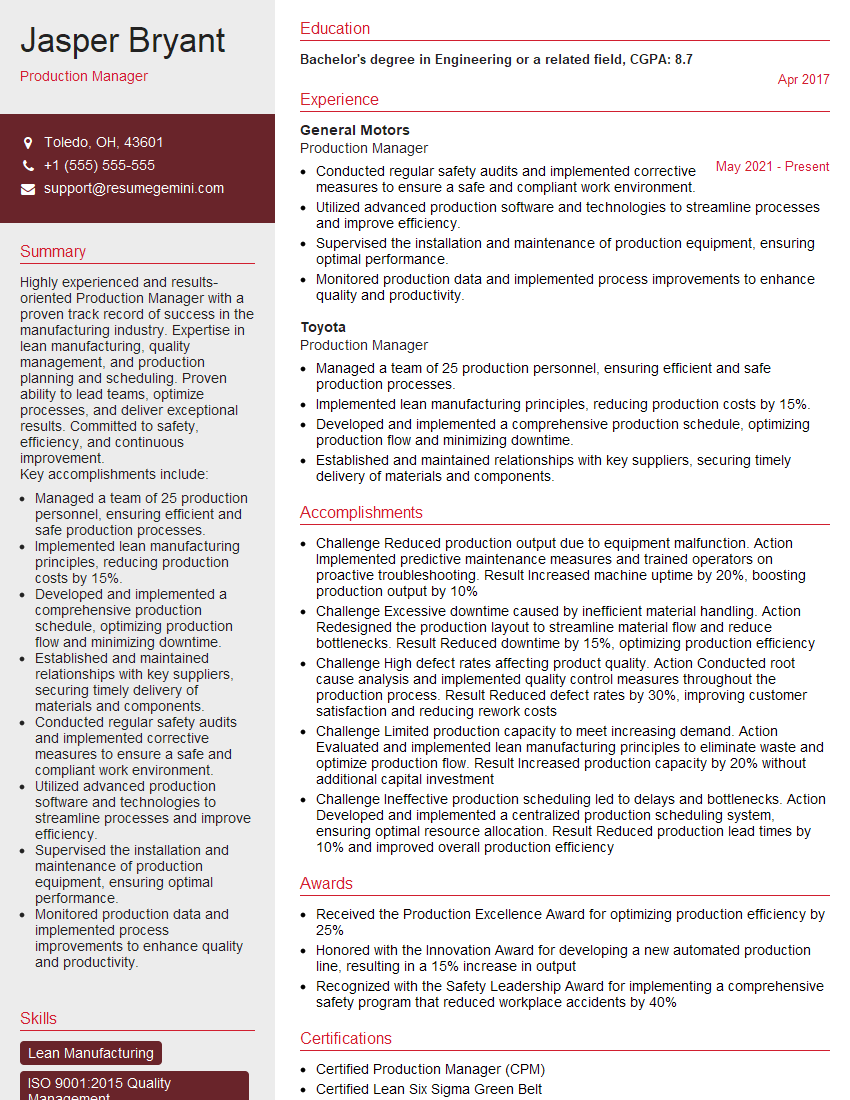
Production Manager Resume Sample
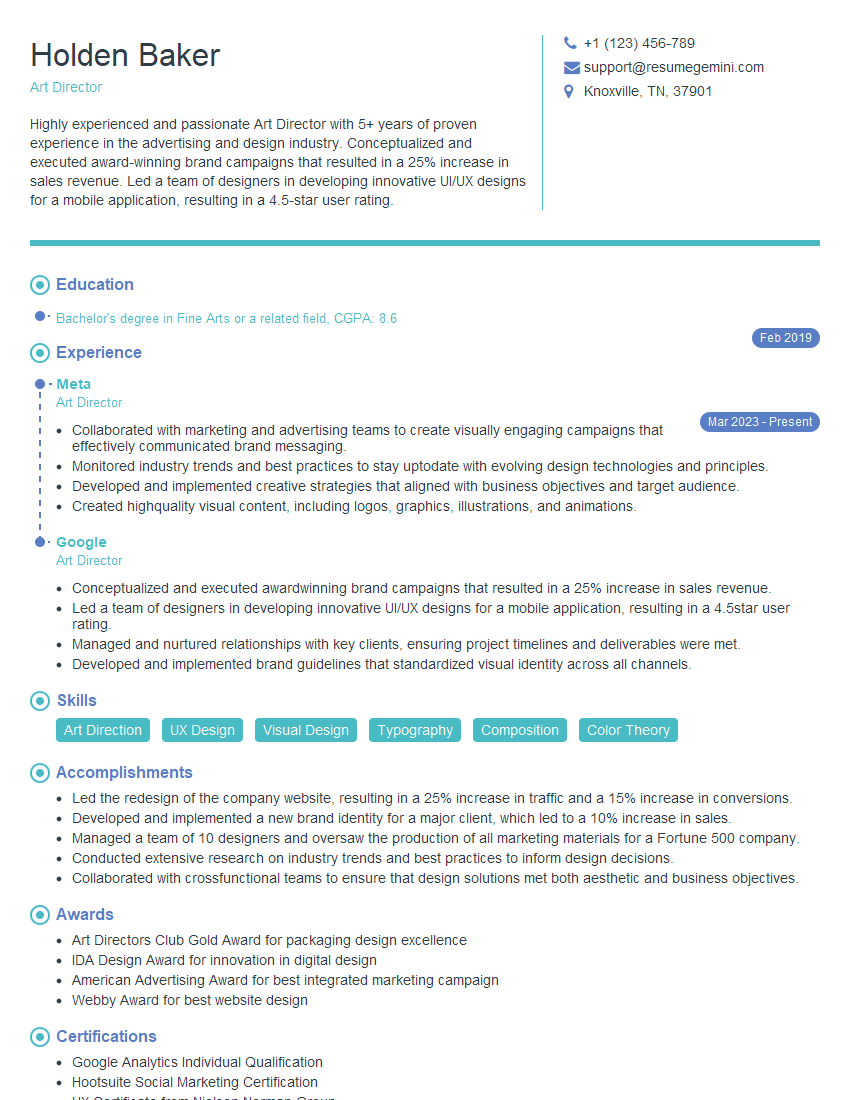
Art Director Resume Sample
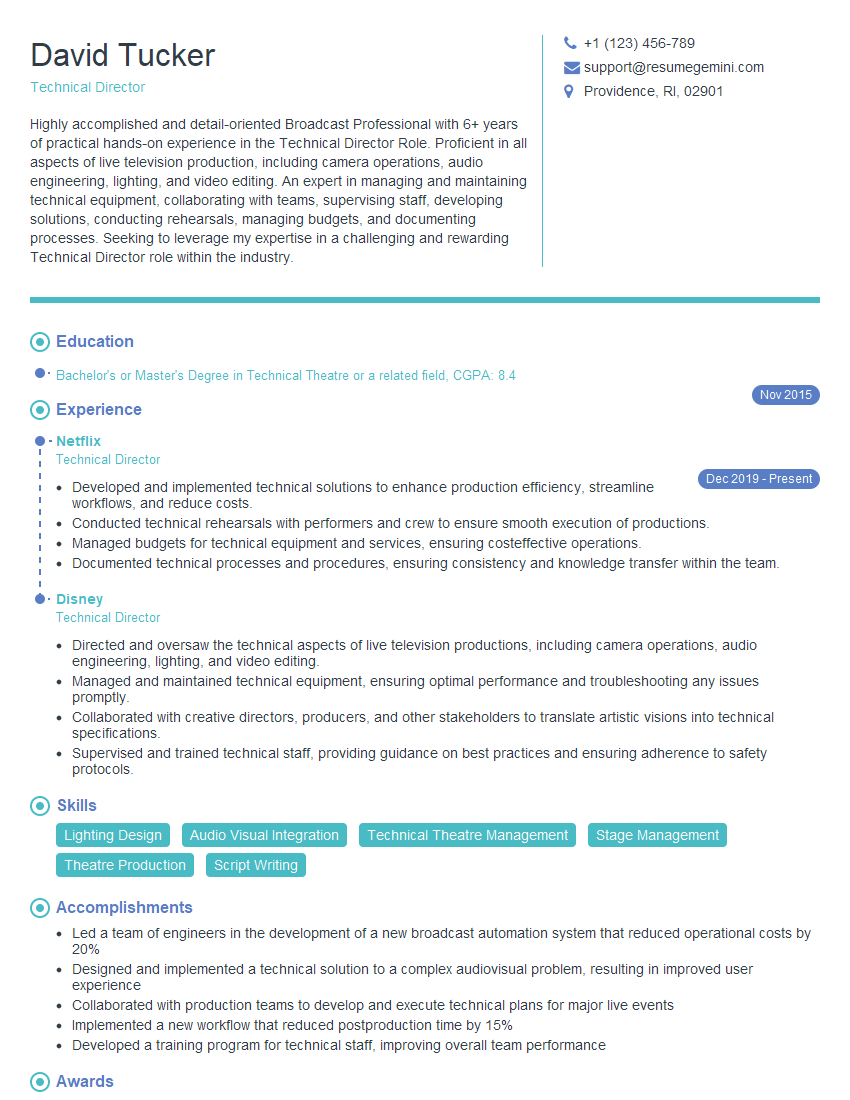
Technical Director Resume Sample

Production Coordinator Resume Sample
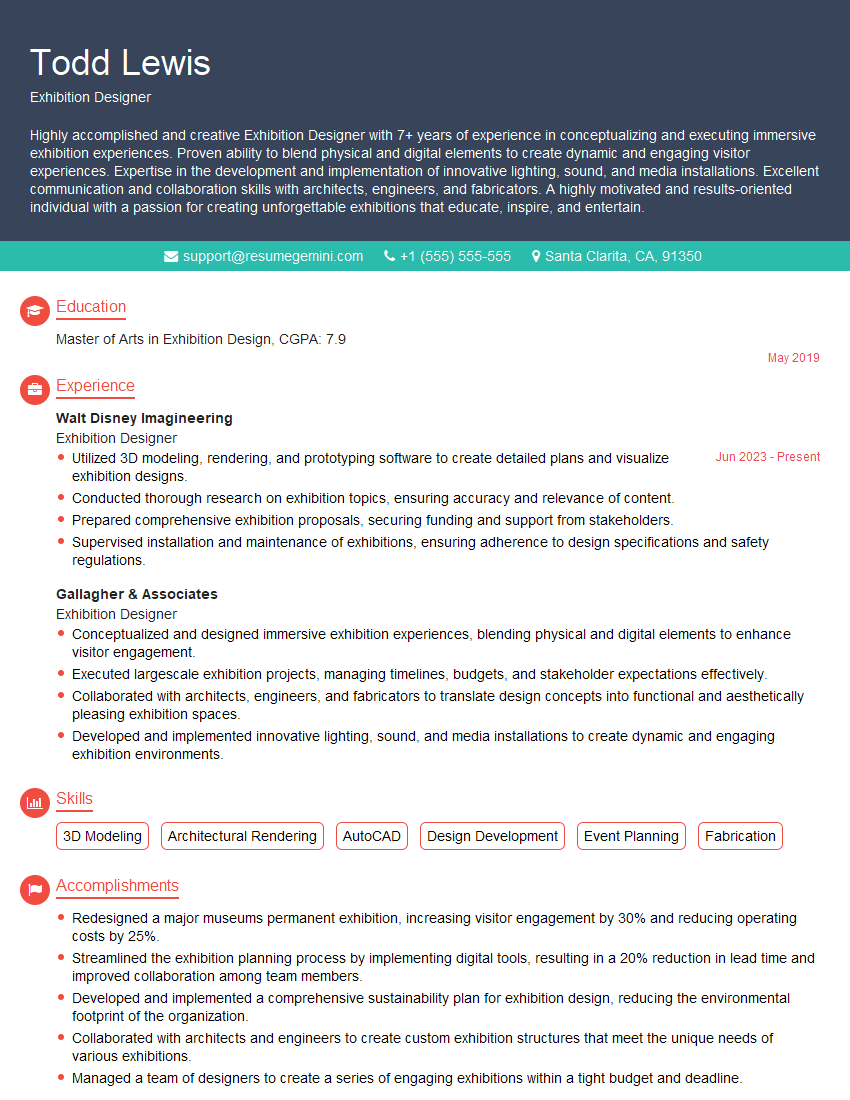
Exhibition Designer Resume Sample
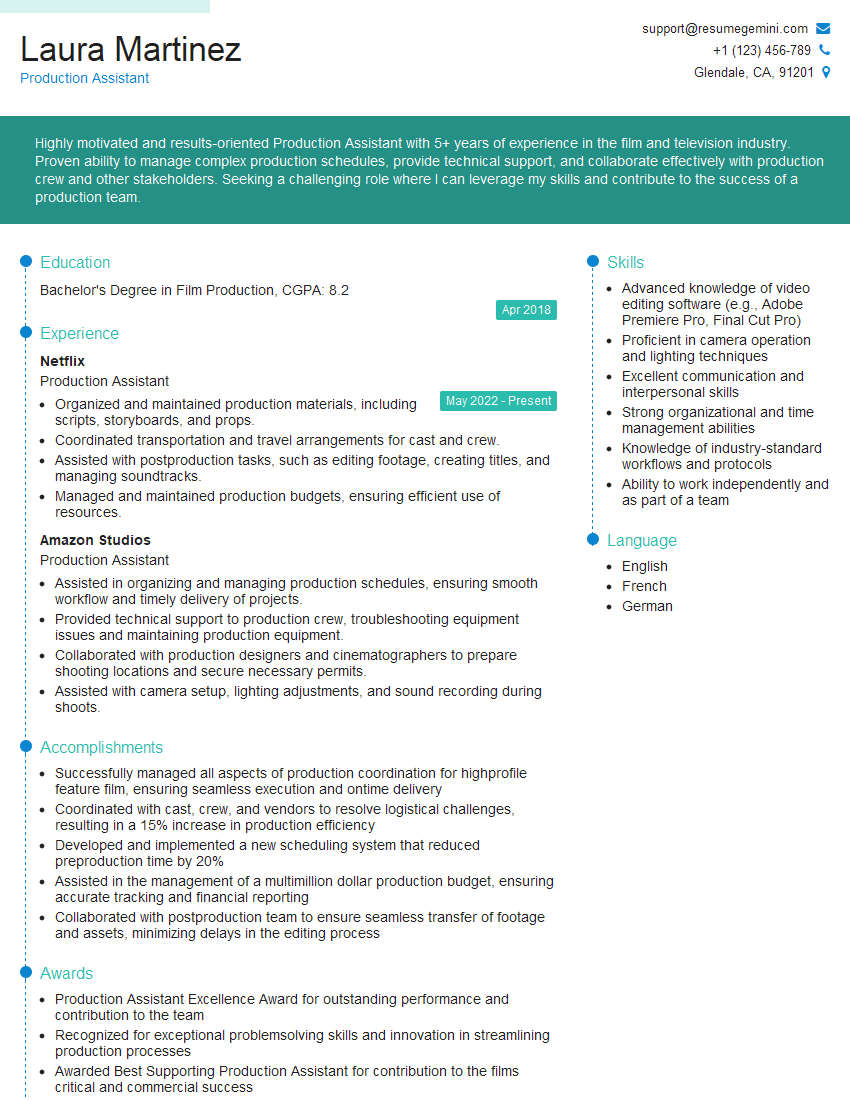
Production Assistant Resume Sample
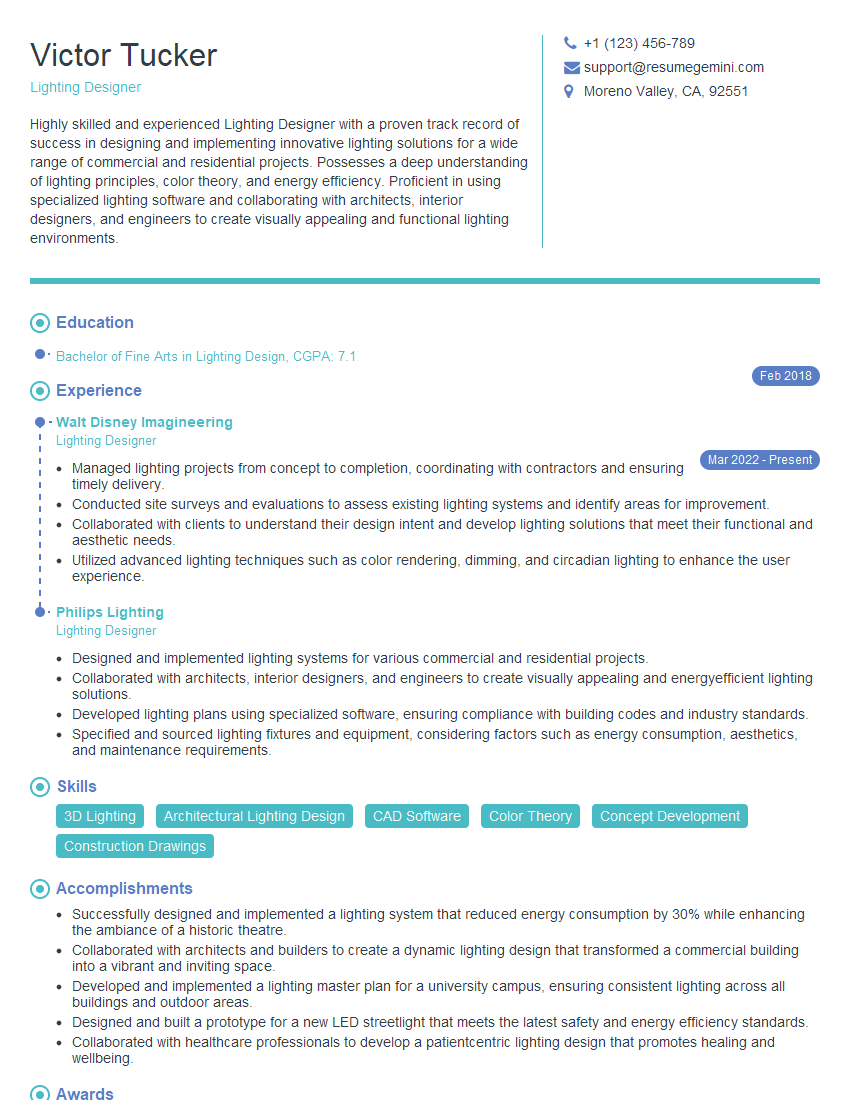
Lighting Designer Resume Sample
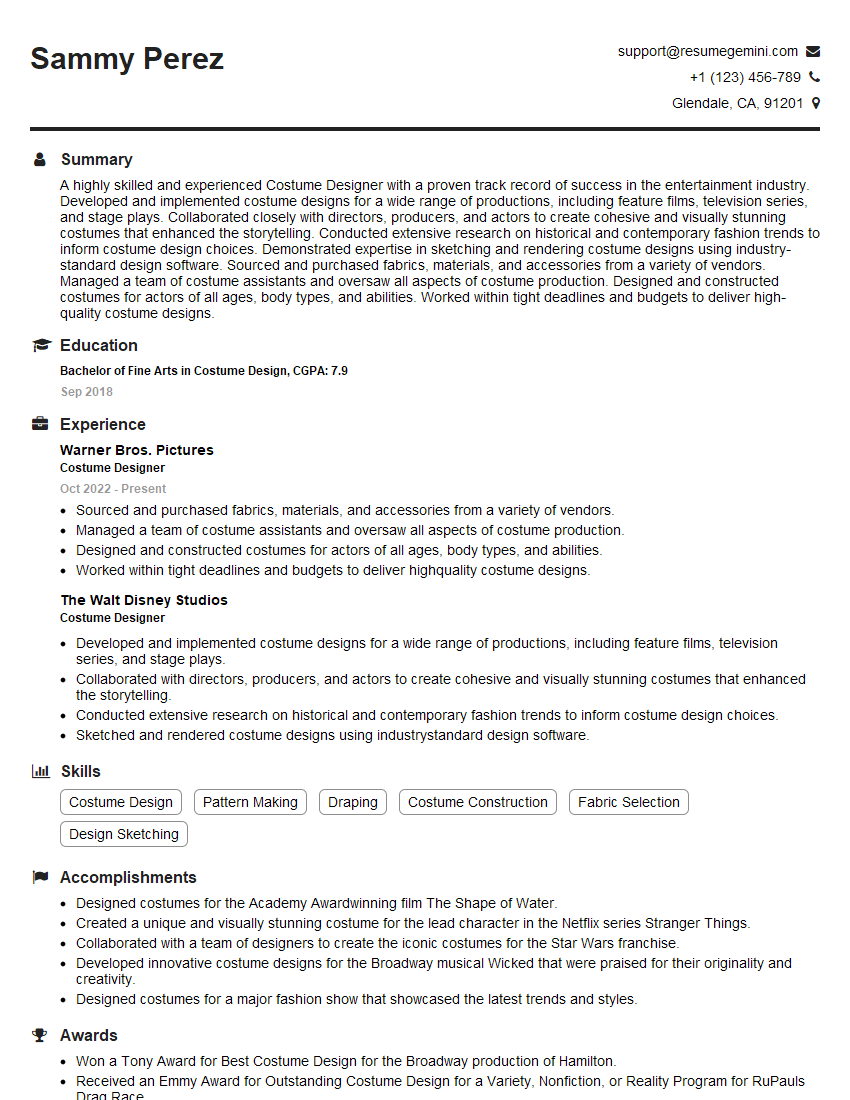
Costume Designer Resume Sample
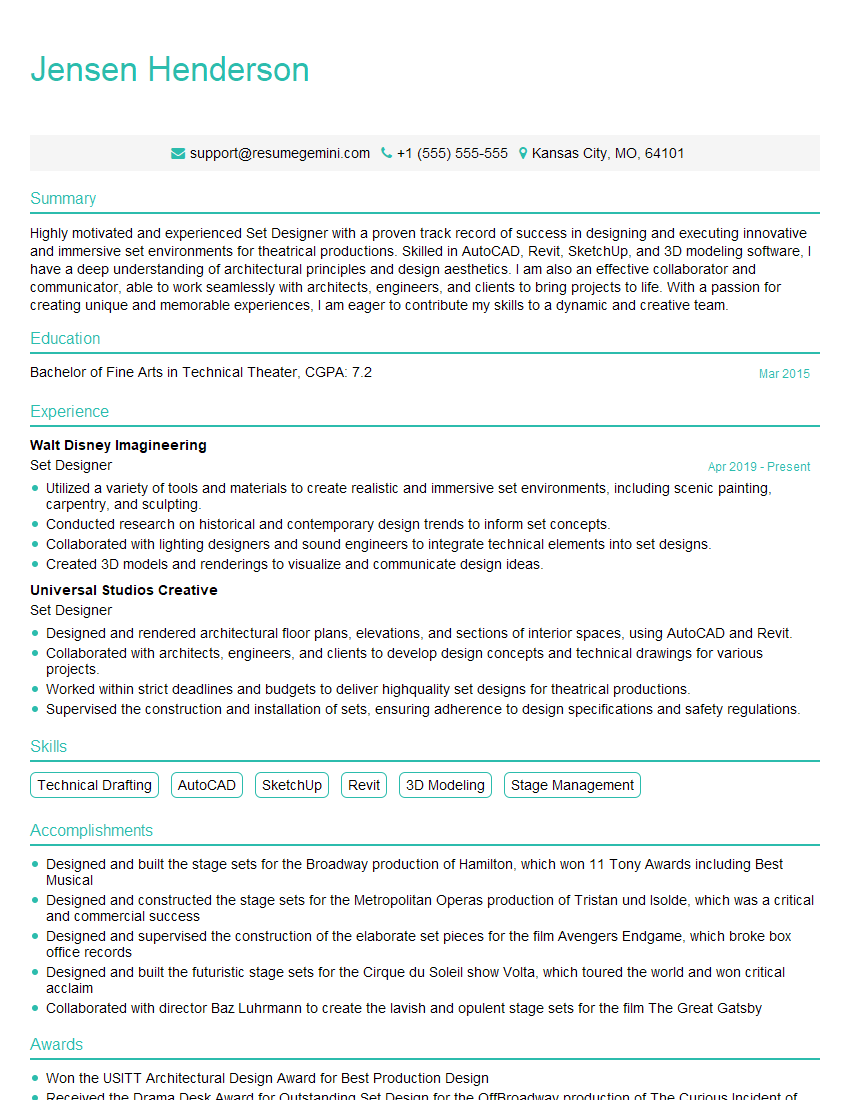
Set Designer Resume Sample
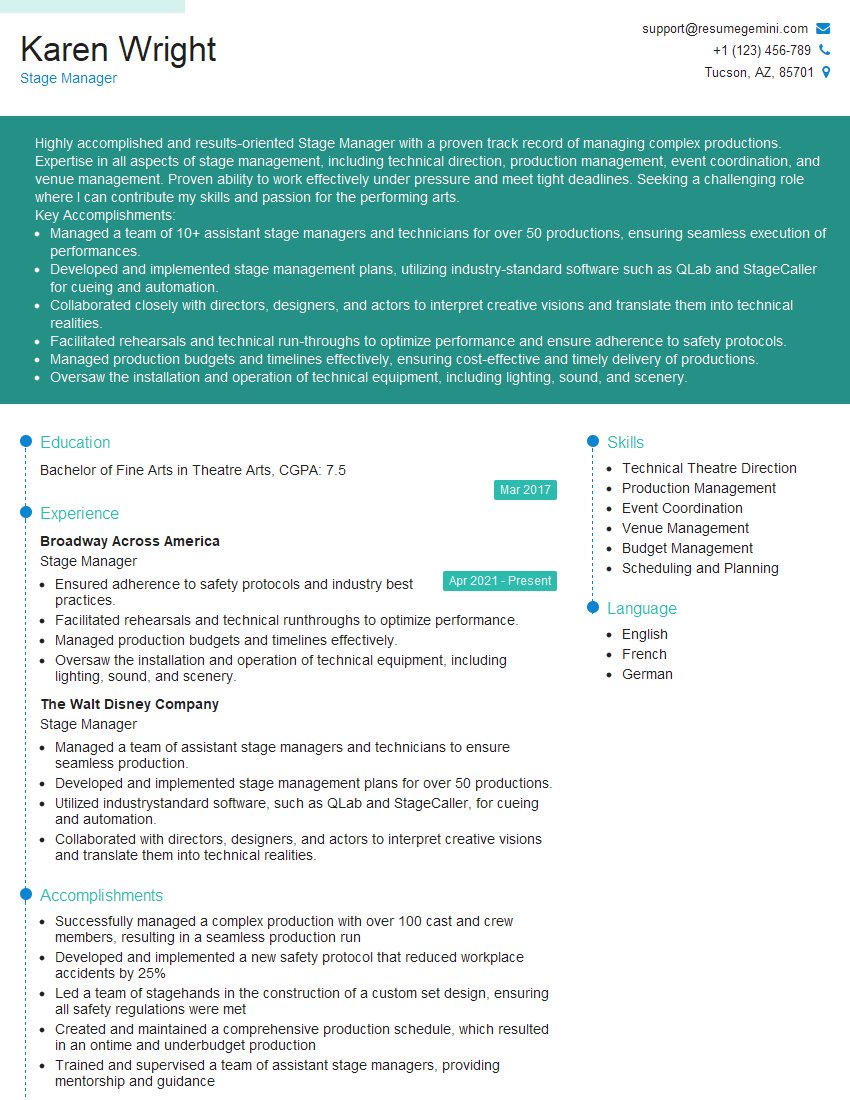
Stage Manager Resume Sample
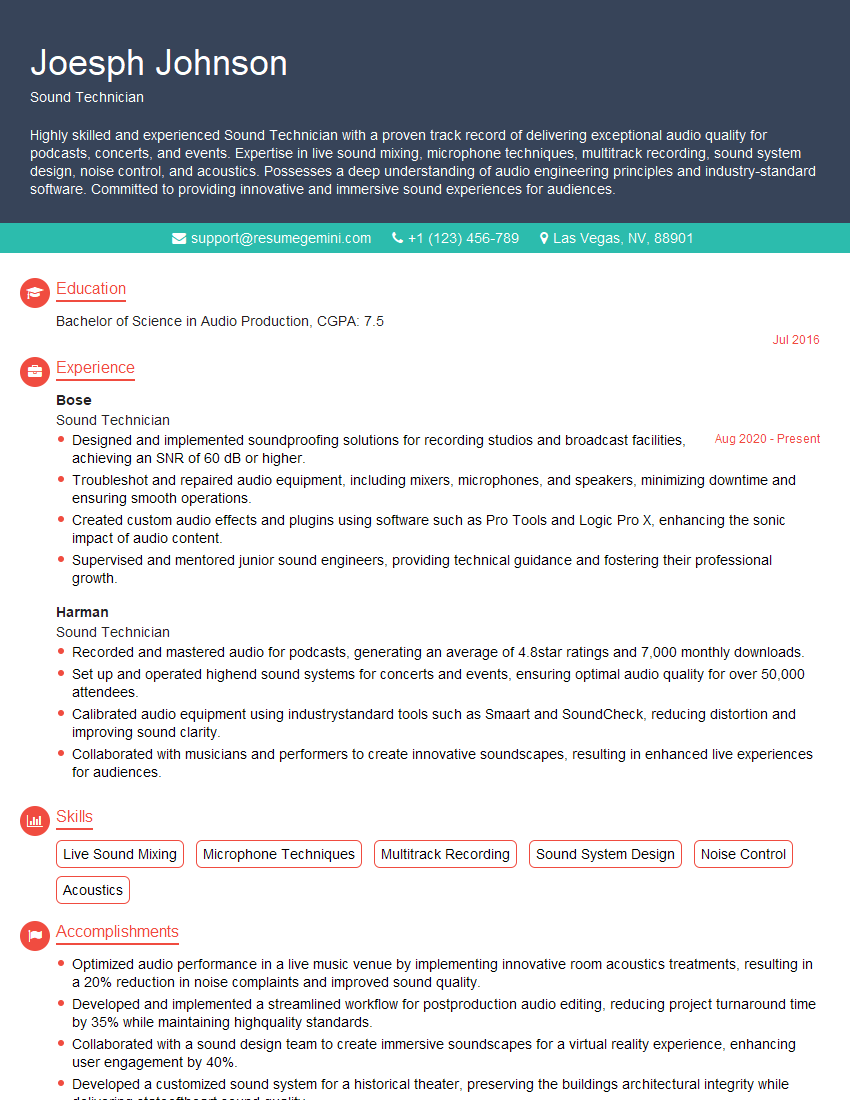
Sound Technician Resume Sample
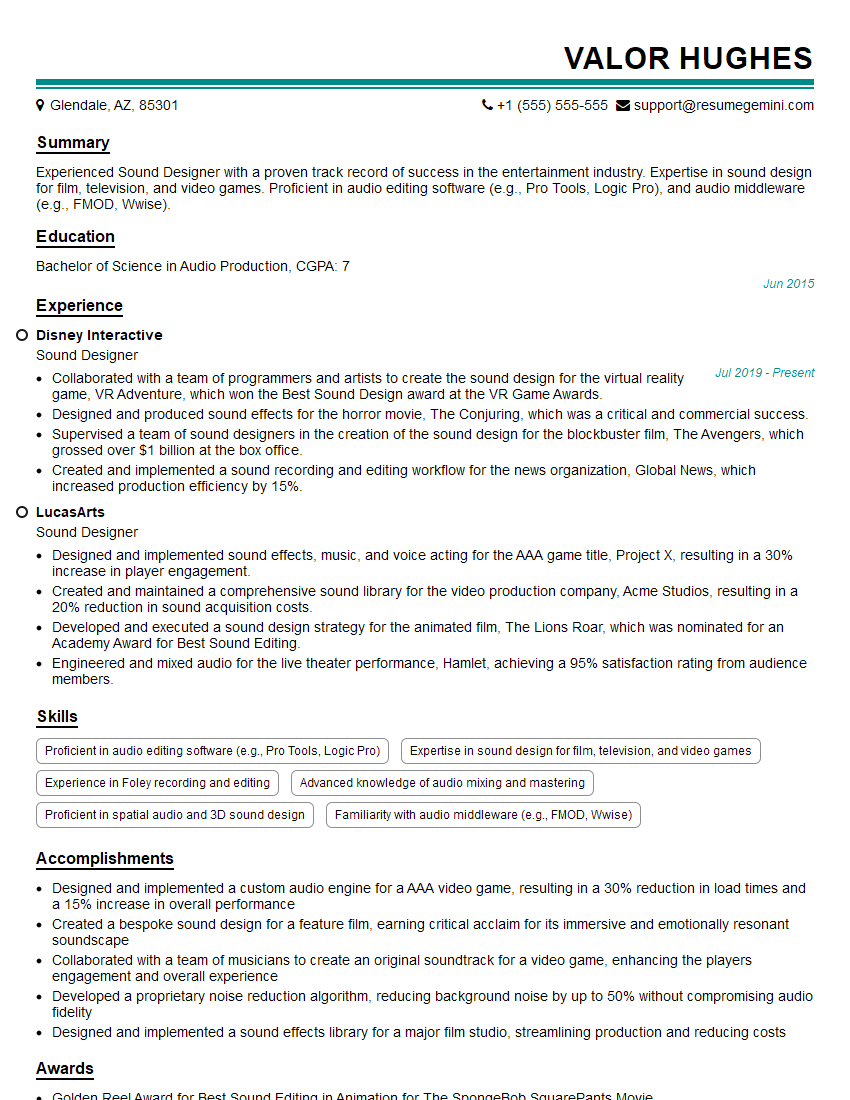
Sound Designer Resume Sample
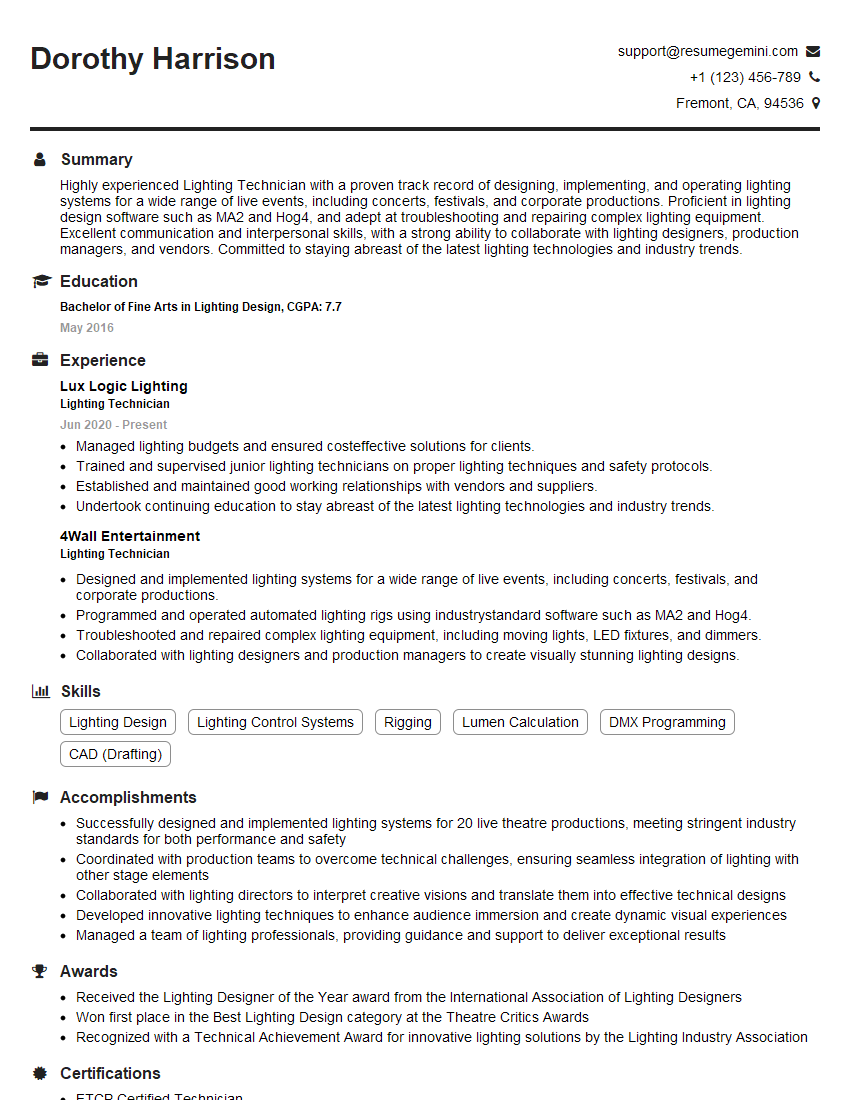
Lighting Technician Resume Sample
Explore more articles
Users Rating of Our Blogs
Share Your Experience
We value your feedback! Please rate our content and share your thoughts (optional).
What Readers Say About Our Blog
Very informative content, great job.
good