The right preparation can turn an interview into an opportunity to showcase your expertise. This guide to Show Design and Production interview questions is your ultimate resource, providing key insights and tips to help you ace your responses and stand out as a top candidate.
Questions Asked in Show Design and Production Interview
Q 1. Describe your experience with various stage lighting techniques.
Stage lighting is a powerful tool for shaping the audience’s experience, and I’m proficient in a variety of techniques. My expertise spans traditional methods like using Fresnel lenses for soft washes and ellipsoidal reflectors for sharp beams, to more advanced techniques leveraging LED technology and moving lights.
- Color Mixing: I understand the principles of additive and subtractive color mixing and can create specific moods and atmospheres using gels, LEDs, and DMX control. For instance, I might use warm amber tones to create a feeling of nostalgia, or cool blues and greens to establish a sense of mystery.
- Light Plotting: I utilize light plotting software to precisely position and control lighting instruments, ensuring effective coverage and minimizing spill. This allows for accurate pre-visualization and smooth execution during rehearsals and performances. I am adept at using programs like Vectorworks Spotlight and Capture.
- Special Effects: I’m experienced in implementing various special effects, such as gobos (pattern projections), moving lights for dynamic sequences, and automated lighting systems to create dramatic shifts and transitions. Think of the dramatic reveal of a character using a sharp spotlight or a slow fade to black highlighting a poignant moment.
- Mood and Atmosphere: Creating the right mood is key. I consider the script or event’s theme when selecting lighting colors, intensity, and movement, ensuring the lighting complements and enhances the narrative or message.
For example, in a recent musical production, I used a combination of moving lights and strategically placed LED strips to create a dynamic and immersive visual experience that synchronized perfectly with the music and choreography.
Q 2. Explain your process for designing a set for a specific play or event.
My set design process is iterative and collaborative. It begins with a deep dive into the script or event’s themes, objectives, and style. I consider the practical aspects of the venue and budget limitations while remaining creatively flexible.
- Concept Development: I start by researching the play’s historical context, themes, and characters to develop a conceptual framework. Sketches and mood boards help visualize initial ideas.
- Space Planning: I then create detailed scale drawings and 3D models of the set, taking into account actor movement, sightlines, and technical requirements. This stage involves carefully considering the flow and functionality of the space.
- Material Selection: I choose materials and finishes that are aesthetically pleasing and functionally appropriate, considering factors such as durability, cost, and availability. I often incorporate sustainable materials whenever possible.
- Collaboration and Refinement: Throughout the process, I collaborate closely with the director, other designers, and technical crew to ensure the set aligns with the overall vision and is technically feasible. The design is iteratively refined based on feedback and technical constraints.
- Construction and Implementation: Once the design is finalized, I oversee the construction and installation of the set, working closely with the construction team and ensuring adherence to safety regulations.
For example, when designing the set for a Shakespearean tragedy, I might opt for a minimalist approach using dark wood and stone elements to convey a sense of somberness and foreboding. In contrast, a children’s show might call for vibrant colors, playful shapes, and interactive elements.
Q 3. How do you manage time constraints and budgets in a production?
Managing time and budget effectively is crucial in show production. My approach involves meticulous planning, proactive communication, and a willingness to adapt.
- Detailed Scheduling: I create comprehensive schedules that outline every phase of the production, from design to strike (dismantling the set), including milestones and deadlines. This provides a roadmap for the team.
- Budget Allocation: I develop a detailed budget, allocating funds to various aspects of the production based on their importance and estimated costs. This involves finding cost-effective solutions without compromising quality. This might include sourcing materials from alternative suppliers or negotiating favorable rates with contractors.
- Prioritization and Contingency Planning: I prioritize tasks based on their urgency and impact, identifying potential bottlenecks and developing contingency plans to address unexpected delays or cost overruns.
- Regular Monitoring and Communication: Throughout the process, I continuously monitor progress, track expenses, and communicate openly with the team to address any challenges promptly. This prevents small problems from escalating into major issues.
For example, in a recent project with a tight deadline, I utilized modular set pieces to streamline construction and reduce setup time. I also explored alternative lighting solutions that were more cost-effective but maintained the required visual impact.
Q 4. What software programs are you proficient in for show design?
Proficiency in design software is essential for efficient and accurate show design. I’m adept at using several industry-standard programs:
- Vectorworks Spotlight: I use this for lighting design, plotting, and visualization. It allows for detailed 3D modeling of the stage and lighting instruments, providing a clear visualization before the show.
- Autodesk 3ds Max: I utilize this for advanced 3D modeling and rendering of sets and environments, providing highly detailed visuals for presentations and client approvals.
- Capture One: for image editing and enhancing photographic documentation of my designs.
- Adobe Photoshop and Illustrator: These are essential for creating graphics, mood boards, and technical drawings.
Q 5. Describe your experience with sound system design and operation.
My experience encompasses the entire sound design and operation process, from initial planning to execution. This includes understanding acoustics, selecting appropriate equipment, and troubleshooting during live events.
- System Design: I design sound systems considering the venue’s acoustics, audience size, and the specific audio requirements of the performance. This involves selecting appropriate microphones, speakers, amplifiers, and mixing consoles.
- Sound Reinforcement: I’m experienced in setting up and operating sound reinforcement systems to ensure clear and balanced audio for actors, musicians, and pre-recorded tracks. This also includes sound equalization and effects processing to create the desired ambiance.
- Sound Effects: I’m proficient in designing and implementing sound effects, using audio editing software and hardware to create realistic and immersive soundscapes. I usually work with programs such as Pro Tools and Ableton Live.
- Monitoring and Mixing: I’m comfortable monitoring and mixing audio signals during live performances, adjusting levels and effects to maintain clarity and quality.
In a recent concert, for instance, I designed a sound system that provided even coverage across the large venue, ensuring all audience members experienced high-quality audio, regardless of their location. I also worked with the sound engineer to fine-tune the equalization, adjusting it for both the band’s sound and the venue’s acoustics.
Q 6. How do you ensure clear communication and collaboration within a production team?
Effective communication and collaboration are vital for a successful production. My approach centers on proactive communication, clear documentation, and fostering a respectful and collaborative work environment.
- Regular Meetings and Briefings: I hold regular meetings and briefings to keep the team informed of progress, address concerns, and solicit feedback. These meetings can be formal or informal, depending on the stage of production.
- Clear Documentation: I maintain clear and concise documentation of all design decisions, technical specifications, and schedules. This minimizes confusion and ensures everyone is working from the same information.
- Open Communication Channels: I encourage open communication through various channels such as email, instant messaging, and regular in-person discussions. I try to establish trust and mutual respect so that people feel comfortable voicing their opinions and concerns.
- Conflict Resolution: I approach conflict resolution proactively, actively listening to all perspectives and working toward solutions that meet the needs of the project and the team members involved. This often involves compromise and finding a win-win solution.
For example, during a recent complex production, I established a dedicated communication platform where team members could easily share updates, ask questions, and resolve issues promptly, fostering an open and efficient working environment.
Q 7. How do you handle unexpected technical issues during a live performance?
Unexpected technical issues are inevitable in live performances. My approach combines preparedness, quick thinking, and a collaborative problem-solving mindset.
- Preemptive Troubleshooting: I conduct thorough technical rehearsals and pre-show checks to identify and address potential issues before the performance. This includes ensuring all equipment is functioning correctly and having backup equipment readily available.
- Rapid Assessment: When issues arise, I perform a rapid assessment to determine the nature and severity of the problem. I also communicate clearly and calmly with the team so we can solve the problem without panicking.
- Collaborative Problem Solving: I work collaboratively with the technical crew to find the quickest and most effective solution. This often involves delegating tasks based on individual expertise and utilizing backup systems or workarounds.
- Audience Management: Depending on the nature and severity of the issue, we may choose to address the problem directly with the audience (e.g. by making a brief announcement), or seamlessly work around it.
For example, during a live musical performance, a lighting fixture unexpectedly malfunctioned. My team and I quickly identified the problem, switched to a backup fixture, and continued the show without any significant disruption to the audience.
Q 8. Explain your understanding of stage safety regulations and protocols.
Stage safety is paramount. It’s not just about complying with regulations; it’s about fostering a culture of safety on every production. My approach begins with a thorough risk assessment, identifying potential hazards from rigging and lighting to pyrotechnics and audience flow. This assessment informs the development of a comprehensive safety plan, outlining specific protocols and responsibilities.
- Pre-Production: This involves reviewing the show design for inherent risks, specifying safe working practices in the production schedule, and ensuring all crew members receive appropriate training and certification for their roles (e.g., working at heights, handling pyrotechnics).
- Production: Daily safety checks are crucial. This includes inspecting rigging points, lighting equipment, power supplies, and stage props. We use a system of checklists and regular briefings to maintain awareness of potential hazards. Designated safety officers are assigned to monitor activities and enforce safety protocols.
- Post-Production: A post-show debrief is essential to review any incidents, identify areas for improvement, and update the safety plan based on lessons learned. This continuous improvement process is crucial for maintaining the highest safety standards.
For example, in a recent outdoor concert, we had to account for potential weather hazards. Our safety plan included contingency plans for sudden rain, strong winds, or lightning strikes, ensuring the audience and crew were moved to safe locations immediately. This proactive approach prevented any accidents despite unexpected weather conditions.
Q 9. Describe your experience with video projection and integration in live events.
Video projection is an integral part of modern show design, adding layers of depth, dynamism, and visual storytelling. My experience spans various projection technologies, from simple front projection to more complex mapping techniques on irregular surfaces. I’ve worked with high-resolution LED screens and projection mapping on architectural structures, creating immersive environments for the audience.
Successful integration requires careful planning. This includes considering the aspect ratio, resolution, and brightness of the projectors, ensuring seamless blending of multiple projectors for large-scale installations, and accounting for ambient light levels. We use specialized software to calibrate the projection system for accurate color and alignment.
For example, in a recent theater production, we used projection mapping to transform a seemingly static set into dynamic landscapes that changed with the story’s mood. The precise synchronization of projections with the actors’ movements and lighting effects created an unforgettable immersive experience for the audience.
Q 10. How do you incorporate audience interaction into your show designs?
Audience interaction is key to creating an engaging and memorable show. It transforms a passive viewing experience into an active participation. I incorporate audience interaction through various methods, tailored to the specific production and target audience.
- Interactive elements within the set design: This might involve touch screens, interactive installations, or augmented reality experiences integrated seamlessly into the performance.
- Live polls and Q&A sessions: Using audience response systems or social media polls to gather immediate feedback and incorporate it into the show’s flow creates a sense of real-time collaboration.
- Games and challenges: Incorporating simple games or challenges, where the audience can participate directly (e.g., through voting, shouting out answers) adds a playful element to the experience.
- Social Media Integration: Encouraging audience members to share their experiences on social media using a dedicated hashtag boosts engagement and enhances the show’s impact.
For instance, in a corporate event, we used a live poll to gauge audience opinion on a product launch, directly influencing the presenter’s subsequent remarks. This dynamic approach made the presentation far more engaging and relevant to the audience.
Q 11. Explain your approach to creating a cohesive visual aesthetic for a production.
Creating a cohesive visual aesthetic is fundamental to a successful production. This involves a holistic approach, starting with the initial concept and extending to every detail of the set, costumes, lighting, and projection.
My process starts with developing a mood board, bringing together color palettes, textures, imagery, and typography to establish the overall visual language. This serves as a guide for all design elements, ensuring consistency and harmony. Close collaboration with the director, costume designer, and lighting designer is critical to maintaining this visual unity throughout the production.
For example, in a recent musical, the visual aesthetic was inspired by Art Deco. This influenced the geometric shapes of the set design, the luxurious textures of the costumes, and the dramatic lighting schemes. This consistent visual theme helped create a powerfully immersive experience for the audience.
Q 12. What is your experience with different types of stage rigging?
My experience with stage rigging encompasses various types, from basic chain hoists to complex counterweight systems and motorized rigging. I am familiar with the safety regulations and best practices associated with each type.
- Counterweight systems: These are crucial for larger-scale productions, allowing for precise and controlled movement of scenery and lighting fixtures.
- Chain hoists: Offer a simpler, more cost-effective solution for smaller productions or specific elements.
- Motorized rigging: Allows for automated and programmed movement of sets and lighting, creating dynamic and impressive visual effects.
- Truss systems: Form the backbone of many stage structures, providing support for lighting, sound, and video equipment.
I always prioritize safety when working with rigging. Rigging plans are meticulously drafted, regularly inspected by qualified riggers, and comply with all relevant safety standards. For instance, in a recent opera, we employed a complex counterweight system to move substantial set pieces smoothly and precisely during scene changes. Safety inspections and rehearsals were essential to ensure flawless operation and the safety of the crew and performers.
Q 13. How do you source and manage props for a production?
Sourcing and managing props is a multifaceted process demanding meticulous planning and organization. I begin by creating a detailed prop list, specifying each item’s function, materials, and source. This list is integrated into the production schedule to ensure timely procurement.
Sourcing can involve various channels including:
- Rental houses: A cost-effective option for readily available items.
- Prop makers: For bespoke or custom-designed props.
- Thrift stores and antique shops: For unique and budget-friendly finds.
- Online marketplaces: For sourcing rare or specific items.
Once sourced, props require careful cataloging, storage, and maintenance. We use a dedicated prop inventory system, maintaining condition reports and tracking location. Throughout the production, a designated prop master is responsible for ensuring their proper placement and handling, and for making any necessary repairs or replacements.
For example, in a historical drama, sourcing period-accurate furniture and household items required extensive research and visits to several antique stores and rental houses. The prop master meticulously documented each item’s location, condition, and handling instructions to prevent damage or loss.
Q 14. Describe your experience with costume design and construction.
While I don’t personally construct costumes, I work closely with costume designers, providing input on design choices to ensure they align with the overall production aesthetic. My role involves collaborating to select fabrics, patterns, and styles that enhance the storytelling and create a unified visual identity.
I understand the importance of costume construction techniques and can communicate effectively with costume makers, providing feedback and ensuring the costumes meet the performance requirements. This involves considering the practicality of the garments for stage movement, quick changes, and the overall visual impact within the lighting and set design.
In a recent Shakespearean play, for instance, I collaborated with the costume designer to create historically accurate garments that were also practical for the actors’ movement and quick changes. We meticulously reviewed sketches and fabric samples to ensure the costumes’ visual impact complemented the play’s mood and setting.
Q 15. How do you work with a director to achieve their vision for a show?
Collaborating with a director is a crucial aspect of show design. It’s a process of open communication and creative problem-solving, aiming to translate their artistic vision into a tangible, functional, and aesthetically pleasing production. I approach this by first thoroughly understanding their concept, including the narrative, intended emotional impact, and target audience. This often involves multiple meetings, reviewing storyboards, discussing potential challenges, and brainstorming innovative solutions.
For example, in a recent musical production, the director envisioned a dreamlike sequence. Instead of relying solely on traditional stage design, we incorporated advanced projection mapping techniques onto custom-designed set pieces, creating a surreal and immersive atmosphere that exactly matched their vision. We also used interactive lighting to enhance the dreamlike quality, adding layers of depth and meaning. This collaborative process often requires compromise, but the goal remains a shared artistic success.
- Active Listening: I prioritize understanding the director’s artistic intentions completely, asking clarifying questions to avoid misinterpretations.
- Visual Communication: I employ sketches, 3D models, and mood boards to visually present design ideas, ensuring everyone is on the same page.
- Iterative Process: The design evolves through feedback and revisions, constantly refining the vision until it’s perfectly realized.
Career Expert Tips:
- Ace those interviews! Prepare effectively by reviewing the Top 50 Most Common Interview Questions on ResumeGemini.
- Navigate your job search with confidence! Explore a wide range of Career Tips on ResumeGemini. Learn about common challenges and recommendations to overcome them.
- Craft the perfect resume! Master the Art of Resume Writing with ResumeGemini’s guide. Showcase your unique qualifications and achievements effectively.
- Don’t miss out on holiday savings! Build your dream resume with ResumeGemini’s ATS optimized templates.
Q 16. What is your experience with creating detailed production schedules?
Creating detailed production schedules is paramount for a smooth and efficient production. My experience involves using specialized software like Microsoft Project or industry-standard scheduling tools to manage tasks, deadlines, and resource allocation. This includes breaking down the entire production process into smaller, manageable tasks, assigning responsibilities, defining dependencies between tasks, and setting realistic timelines. Critical path analysis is a key component – identifying the most time-sensitive tasks that can affect the entire schedule.
For instance, during a large-scale outdoor event, I developed a schedule detailing every aspect, from set construction and equipment delivery to crew assignments and rehearsal times. This included buffer time for unexpected delays, ensuring that even minor setbacks didn’t derail the entire event. The schedule was regularly updated and communicated to the entire team through online collaboration platforms, enhancing transparency and accountability.
- Gantt Charts: Visual representation of tasks and their timelines, highlighting dependencies and critical path.
- Resource Allocation: Careful planning of personnel, equipment, and materials, ensuring availability when needed.
- Contingency Planning: Incorporating buffer time and backup plans to mitigate unforeseen circumstances.
Q 17. How do you manage the logistics of transporting and setting up equipment?
Managing the logistics of transporting and setting up equipment requires meticulous planning and coordination. This involves choosing appropriate transportation based on equipment size and fragility, securing necessary permits, coordinating with loading crews, and creating detailed site plans for efficient equipment placement. Risk assessment is critical – identifying potential hazards during transportation and setup, and implementing safety measures to mitigate them. I always ensure proper insurance coverage and adherence to all relevant safety regulations.
In one project, we transported large and delicate scenic pieces across several states. I coordinated specialized trucking, securing climate-controlled vehicles to protect against damage. We developed a detailed rigging plan to ensure safe and efficient setup on site, minimizing the risk of damage and injury. The plan was reviewed by safety personnel before implementation, and throughout the entire process, all crew members were given thorough safety training.
- Detailed Site Surveys: Conducting thorough inspections to assess access points, load-bearing capacities, and potential obstacles.
- Equipment Inventory: Maintaining an up-to-date inventory of all equipment, tracking its location and condition.
- Safety Protocols: Implementing strict safety procedures during transport and setup to prevent accidents.
Q 18. Describe your experience with creating and managing production budgets.
Creating and managing production budgets is essential for financial control and efficient resource allocation. This involves detailed cost estimations for all aspects of the production, from set design and equipment rental to personnel costs and marketing expenses. I use budgeting software to track expenses, compare actual costs to projected figures, and identify potential areas for cost savings. Regular budget reviews and reports help identify and address discrepancies, keeping the production within allocated funds.
During a theatre production with a tight budget, I utilized creative cost-saving measures. This included sourcing props from local businesses rather than purchasing new ones, negotiating favorable rental rates for equipment, and opting for less expensive but equally effective lighting solutions. By diligently tracking expenses and implementing cost-cutting strategies, we completed the production within the allocated budget without compromising artistic integrity.
- Detailed Cost Breakdown: Categorizing expenses into clear line items for accurate tracking.
- Regular Monitoring: Frequent review of financial statements to catch discrepancies early.
- Contingency Funds: Setting aside a percentage for unexpected expenses.
Q 19. Explain your understanding of intellectual property rights related to show design.
Understanding intellectual property (IP) rights in show design is crucial for avoiding legal issues. This includes respecting copyright laws for music, scripts, designs, and other creative works used in the production. Proper licensing agreements are crucial. I always ensure we have the necessary permissions to use copyrighted materials, and I’m familiar with different licensing models and their implications. Furthermore, designers need to protect their own IP. This might involve registering designs, trademarks, or copyrights for original creative work, depending on the type of IP involved.
For example, before using a specific musical score in a show, we would secure a performance license from the copyright holder. Similarly, if a designer created a unique set piece, they could consider registering its design to protect their ownership and prevent unauthorized reproduction.
- Copyright Law: Understanding the legal framework surrounding copyright and its implications.
- Licensing Agreements: Negotiating and securing appropriate licenses for the use of copyrighted materials.
- IP Protection: Exploring options for protecting original creative work through registration and legal agreements.
Q 20. How do you ensure accessibility for people with disabilities in your designs?
Ensuring accessibility for people with disabilities is a paramount ethical and legal consideration in show design. This involves designing spaces and experiences that are inclusive and cater to a wide range of needs. This encompasses various aspects, including providing wheelchair-accessible seating, clear audio and visual cues for people with hearing or visual impairments, and appropriate lighting levels to minimize sensory overload. Compliance with ADA standards (Americans with Disabilities Act) and equivalent regulations is essential.
During a recent concert, we worked closely with accessibility specialists to ensure the venue and experience were inclusive. This included designing clear signage using both text and braille, providing audio description for visually impaired audience members, and ensuring sufficient space for wheelchair access in the seating area and backstage areas. We also used flashing lights to make sure that the lights were inclusive for those with hearing impairments.
- Accessible Seating: Allocating designated seating areas for wheelchair users and their companions.
- Audio and Visual Cues: Providing alternative means of receiving information for people with hearing or visual impairments.
- Sensory Considerations: Minimizing sensory overload by controlling lighting, sound, and other environmental factors.
Q 21. Describe your experience with different types of audio mixing consoles.
My experience encompasses a variety of audio mixing consoles, from analog to digital, ranging in size and complexity. I’m proficient with both smaller, portable consoles suitable for smaller events and large-format digital consoles used in professional theatres and concerts. I’m familiar with consoles from manufacturers like Yamaha, Soundcraft, Avid, and Allen & Heath. The choice of console depends on the scale and nature of the production. A smaller console might suffice for a corporate presentation, while a larger digital console provides the capability and flexibility for complex sound reinforcement in a large venue.
For instance, I’ve used a Yamaha CL series console for a large-scale concert, appreciating its advanced processing capabilities, extensive input/output options, and intuitive interface. For smaller productions, I’ve utilized a Soundcraft Signature series console, balancing portability with the quality necessary for live sound reinforcement. Each console offers different functionalities, such as equalization, dynamics processing, and routing capabilities, and choosing the right one is vital for achieving optimal audio quality.
- Analog Consoles: Hands-on control, warm sound, but limited processing options.
- Digital Consoles: Extensive processing capabilities, automation, flexibility, but can have a steeper learning curve.
- Console Software: Familiarity with the software interfaces and configurations associated with different consoles.
Q 22. What is your experience with drafting technical specifications for equipment?
Drafting precise technical specifications for equipment is crucial for a successful show. It ensures that the right equipment is sourced, properly integrated, and functions flawlessly. This involves more than just listing the equipment; it’s about detailing the exact models, their technical capabilities (e.g., wattage for lighting, resolution for video), power requirements, control protocols (e.g., DMX for lighting, Art-Net for networking), and any specific interfaces needed. For instance, when specifying moving lights, I’d include details like the lamp type, color temperature, gobo wheel options, and the specific DMX addressing scheme. For audio, I would detail the impedance, sensitivity, and frequency response of microphones and speakers. I also include information on safety certifications and environmental considerations.
I typically use a structured spreadsheet format or a dedicated project management software to compile these specifications. This allows for easy revision, collaboration with vendors, and precise referencing during the production phase. A well-defined spec sheet minimizes miscommunication and significantly reduces the risk of equipment incompatibility or malfunctions on show day.
Q 23. How do you maintain quality control throughout the production process?
Maintaining quality control is a continuous process, starting from the initial design phase and extending through the entire production lifecycle. It’s about proactively identifying and mitigating potential problems before they impact the final product. My approach is multi-faceted:
- Regular Checklists and Inspections: At every stage – lighting plot reviews, equipment testing, rigging inspections, and dress rehearsals – I employ detailed checklists to ensure everything meets the specifications and safety standards.
- Team Communication and Collaboration: Open communication between departments (lighting, sound, stage management, etc.) is paramount. Regular meetings and transparent feedback loops are crucial for identifying potential conflicts or quality issues early on.
- Documentation: Meticulous documentation of all design choices, equipment specifications, and setup procedures is essential. This allows for easy troubleshooting, future reference, and facilitates seamless handovers to others.
- Rigorous Testing: Thorough testing of all equipment and systems is crucial. This includes individual component testing and complete system integration tests to identify any glitches or compatibility issues.
- Contingency Planning: Developing robust contingency plans for potential equipment failures or unforeseen issues is vital. This might include backup equipment, alternative solutions, and well-defined protocols for addressing emergencies.
Think of it like building a house – you wouldn’t just start construction without blueprints and inspections. Quality control in show production is equally essential to delivering a successful and safe event.
Q 24. How do you troubleshoot technical issues with lighting equipment?
Troubleshooting lighting equipment requires a systematic and logical approach. It starts with identifying the problem, and then working through potential causes. My approach involves:
- Identify the symptoms: Is the light not turning on at all? Is it flickering? Is the color wrong? Precisely describing the issue is crucial.
- Check the obvious: Start with the simplest checks – are the power cables connected correctly? Is the circuit breaker tripped? Is the dimmer working properly? Often, the solution lies in the most basic checks.
- Isolating the fault: If the problem isn’t immediately apparent, systematically check each component of the lighting circuit – from the power source to the fixture itself. This may involve using a multimeter to check voltage and current.
- Consult documentation and manuals: Refer to the manufacturer’s specifications and troubleshooting guides for the specific equipment. Often, they provide clues to common issues and solutions.
- Utilize DMX monitoring tools: If the issue is related to DMX control, use DMX monitoring software or hardware to trace the signal path and identify any errors or signal drops.
- Seek expert assistance: If the problem persists, don’t hesitate to seek help from experienced lighting technicians or the equipment vendor. Time is often of the essence, particularly during a show run.
For example, if a moving light isn’t responding to DMX commands, I would first verify the DMX address, check the cable connections, and then check the moving light itself for any error messages or indicators. I might use a DMX analyzer to see if the signal is even reaching the light.
Q 25. How do you address conflicts between different creative departments?
Conflicts between creative departments are inevitable in large-scale productions. The key is proactive communication and a collaborative approach. I address these conflicts by:
- Establishing clear communication channels: Regular meetings involving representatives from all departments are essential to keep everyone informed and aligned on the overall vision.
- Facilitating open dialogue: Creating a safe space for expressing concerns and differing opinions is vital. Encouraging active listening and mutual respect is key to resolving conflicts constructively.
- Defining roles and responsibilities: Clearly outlining the roles and responsibilities of each department helps to prevent overlaps and misunderstandings.
- Finding common ground: Focusing on the shared goal of creating a successful show helps to prioritize collaboration over individual preferences. Compromise is often necessary.
- Mediating and finding solutions: If conflicts arise, I mediate by helping each party understand the other’s perspective and guiding them toward mutually agreeable solutions.
- Prioritizing safety and feasibility: Any creative choice must ultimately align with safety regulations and technical feasibility. This can sometimes necessitate compromises.
For example, a conflict might arise between the lighting designer and the set designer regarding the placement of lighting instruments and set pieces. Through discussion, we might find a compromise that satisfies both creative visions while ensuring safe and effective lighting.
Q 26. Describe your experience with creating renderings and presentations for clients.
Creating compelling renderings and presentations is critical for securing client approval and ensuring that the final product meets their expectations. My process typically involves:
- Gathering client information: I begin by thoroughly understanding the client’s vision, budget, and target audience.
- Developing initial concepts: I create several initial design concepts, often using sketches and mood boards to visualize different approaches.
- Creating 3D renderings: I utilize 3D modeling and rendering software (like Vectorworks, AutoCAD, or Cinema 4D) to create photorealistic visualizations of the proposed design. These renderings showcase the lighting, set design, and overall atmosphere.
- Developing presentations: I present the renderings and concepts in a clear and concise manner, using visuals, animations, and narrative to communicate the design effectively.
- Incorporating client feedback: I actively solicit and incorporate client feedback throughout the process, iterating on the designs until they are satisfied.
For example, when designing a theatrical set, I would create 3D models showing the set from various angles, including lighting plans and material textures. The presentation might also include a virtual tour or animation, providing clients with a dynamic experience of the proposed design.
Q 27. Explain your understanding of different theatrical styles and conventions.
Understanding different theatrical styles and conventions is fundamental to effective show design. This involves appreciating the nuances of various genres and their associated aesthetic approaches. For example:
- Realistic vs. Non-Realistic: Realistic styles aim for a faithful representation of reality, while non-realistic styles employ symbolism, abstraction, and stylized elements.
- Classical vs. Modern: Classical theatre often follows established conventions, such as the use of a proscenium arch and a three-act structure, while modern theatre experiments with unconventional staging and storytelling techniques.
- Brechtian vs. Aristotelian: Brechtian theatre aims to alienate the audience to encourage critical thinking, while Aristotelian theatre seeks to create catharsis and emotional engagement.
- Musical Theatre: This genre combines music, dance, and drama, demanding a unique integration of lighting, sound, and choreography.
- Opera: Opera productions require specific considerations for acoustics, staging, and costuming, often demanding grand and elaborate designs.
My experience spans various theatrical styles. I understand how to adapt design elements—lighting, set, costumes—to effectively communicate the tone, atmosphere, and themes of each production. For example, a naturalistic production might require subtle lighting changes to enhance realism, whereas an absurdist play might call for stark, unconventional lighting designs.
Q 28. How do you adapt your design process to different venue sizes and technical capabilities?
Adapting the design process to different venue sizes and technical capabilities is a critical skill. It requires flexibility and the ability to translate a creative vision into a practical reality within the constraints of the given space and available technology.
Venue Size: A large arena requires vastly different lighting and sound systems than a small theatre. A large space necessitates more powerful lighting instruments with greater throw distance, while a smaller space might benefit from more intimate and focused lighting. Similarly, sound reinforcement systems need to be scaled appropriately. The design must also consider sightlines and audience perspectives – a design that works perfectly in a proscenium theatre may be ineffective in a thrust or in-the-round stage.
Technical Capabilities: Different venues have varying levels of technical capabilities. Some venues may have advanced rigging systems, while others may have limited infrastructure. Some may have state-of-the-art lighting consoles, while others may use simpler systems. The design must be adaptable to the available technology. For instance, if a venue lacks specific automation capabilities, the design might need to incorporate manual operation or simplified lighting cues. I always conduct a thorough site survey to assess the technical capabilities of the venue before finalizing the design.
Essentially, it’s about intelligent design problem-solving. I use a collaborative approach, working closely with the venue’s technical staff to ensure the design is both artistically satisfying and technically feasible within the given limitations.
Key Topics to Learn for Show Design and Production Interview
- Conceptual Design & Storytelling: Understanding the narrative arc of a show and translating that into a visual design. Consider how lighting, set design, and staging contribute to the overall message.
- Technical Specifications & Budgeting: Familiarity with various technical equipment (lighting, sound, video), their capabilities, and limitations. Experience with creating and managing budgets for productions of varying scales.
- Production Workflow & Scheduling: Knowledge of the different phases of production (pre-production, production, post-production), and the ability to manage timelines and resources effectively. Demonstrate understanding of critical path analysis.
- Teamwork & Collaboration: Highlight your experience working with diverse teams (designers, technicians, performers) and your ability to communicate effectively and manage expectations.
- Problem-Solving & Adaptability: Showcase your ability to think on your feet, troubleshoot technical issues, and adapt to unexpected challenges in a fast-paced environment. Provide examples of how you’ve overcome obstacles.
- Safety Regulations & Compliance: Demonstrate awareness of relevant safety regulations and procedures within the show production industry. This includes understanding risk assessment and mitigation strategies.
- Software Proficiency: Mention your expertise in relevant design and production software (e.g., CAD software, lighting design software, video editing software). Quantify your experience where possible.
- Sustainability & Ethical Considerations: Show awareness of sustainable practices within show production, including waste management and energy efficiency.
Next Steps
Mastering Show Design and Production opens doors to exciting and fulfilling careers, offering opportunities for creativity, innovation, and collaboration. To maximize your job prospects, a well-crafted, ATS-friendly resume is crucial. ResumeGemini can help you create a compelling resume that highlights your skills and experience effectively. ResumeGemini provides examples of resumes tailored specifically to Show Design and Production, ensuring your application stands out. Invest time in crafting a strong resume – it’s your first impression on potential employers.
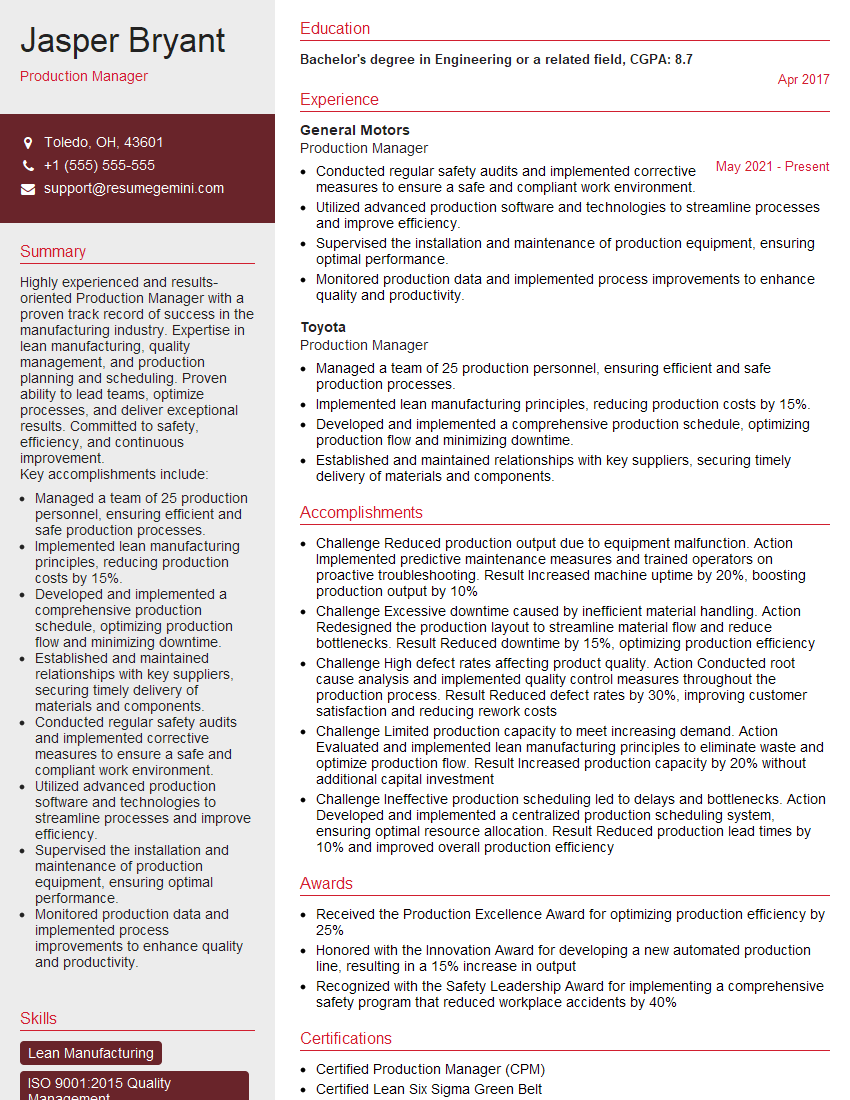
Production Manager Resume Sample
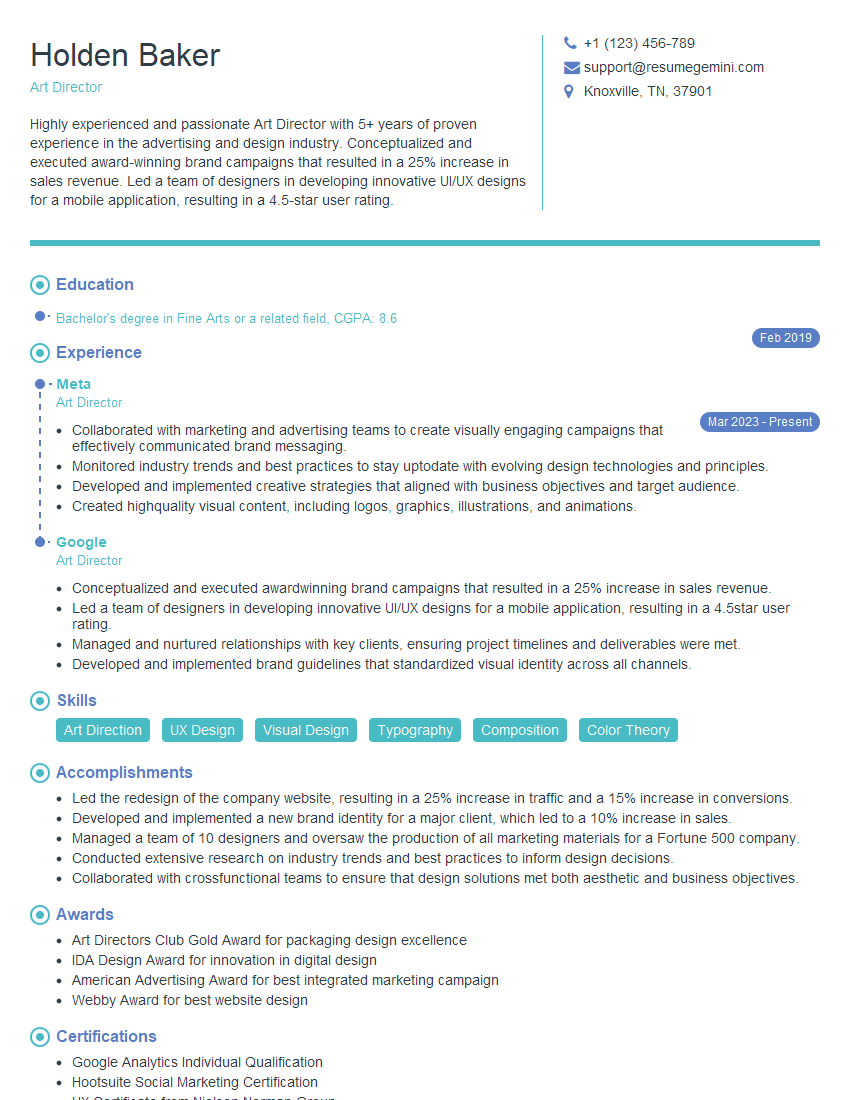
Art Director Resume Sample
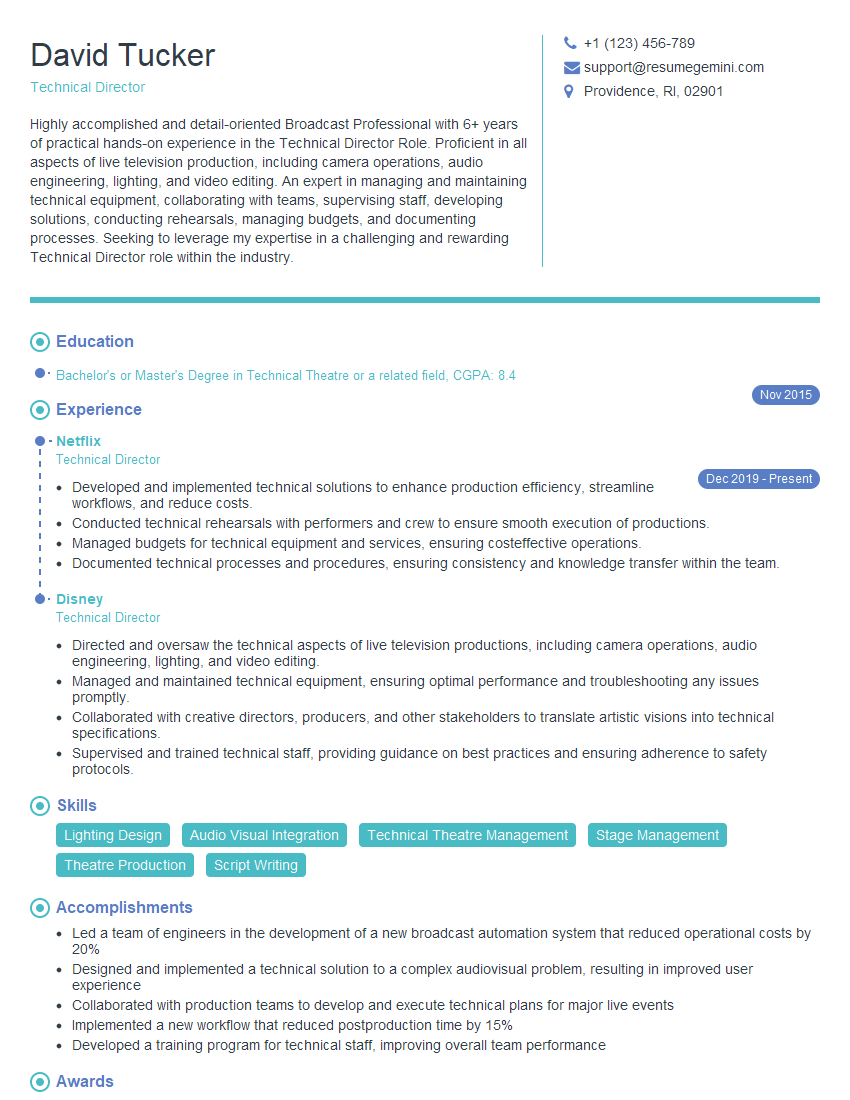
Technical Director Resume Sample

Production Coordinator Resume Sample
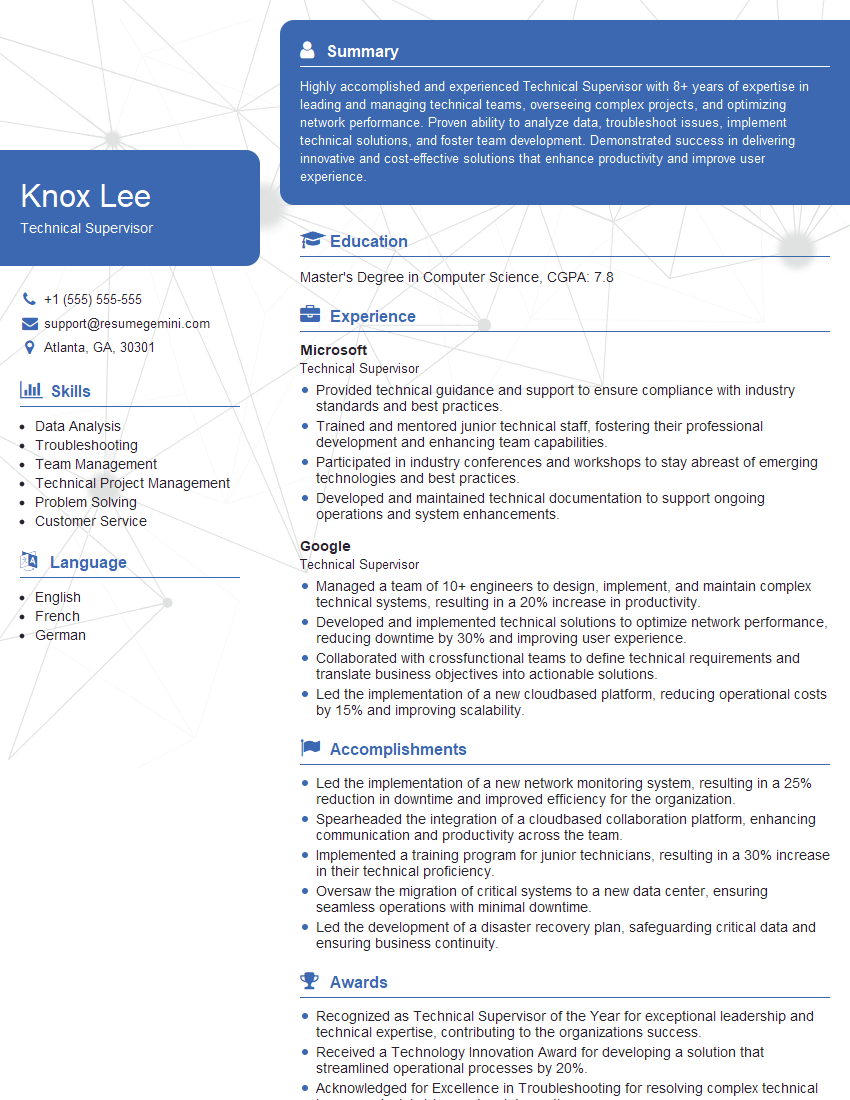
Technical Supervisor Resume Sample
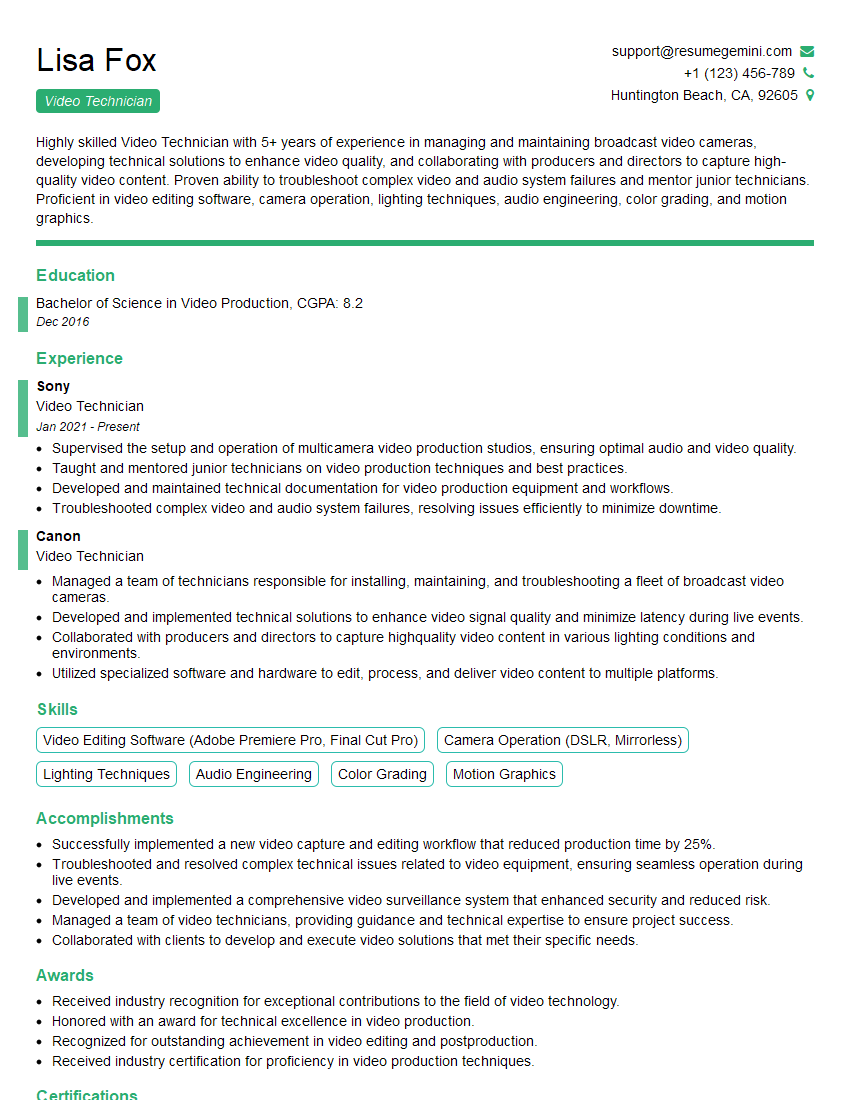
Video Technician Resume Sample
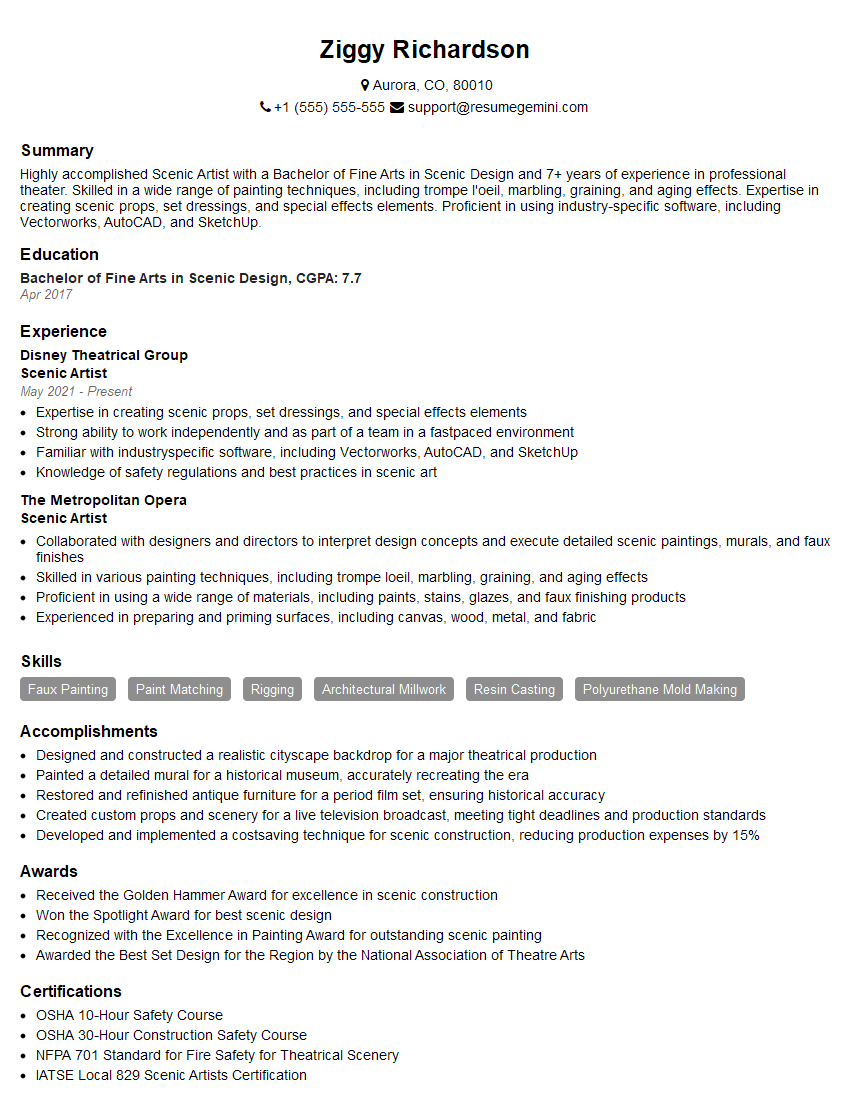
Scenic Artist Resume Sample
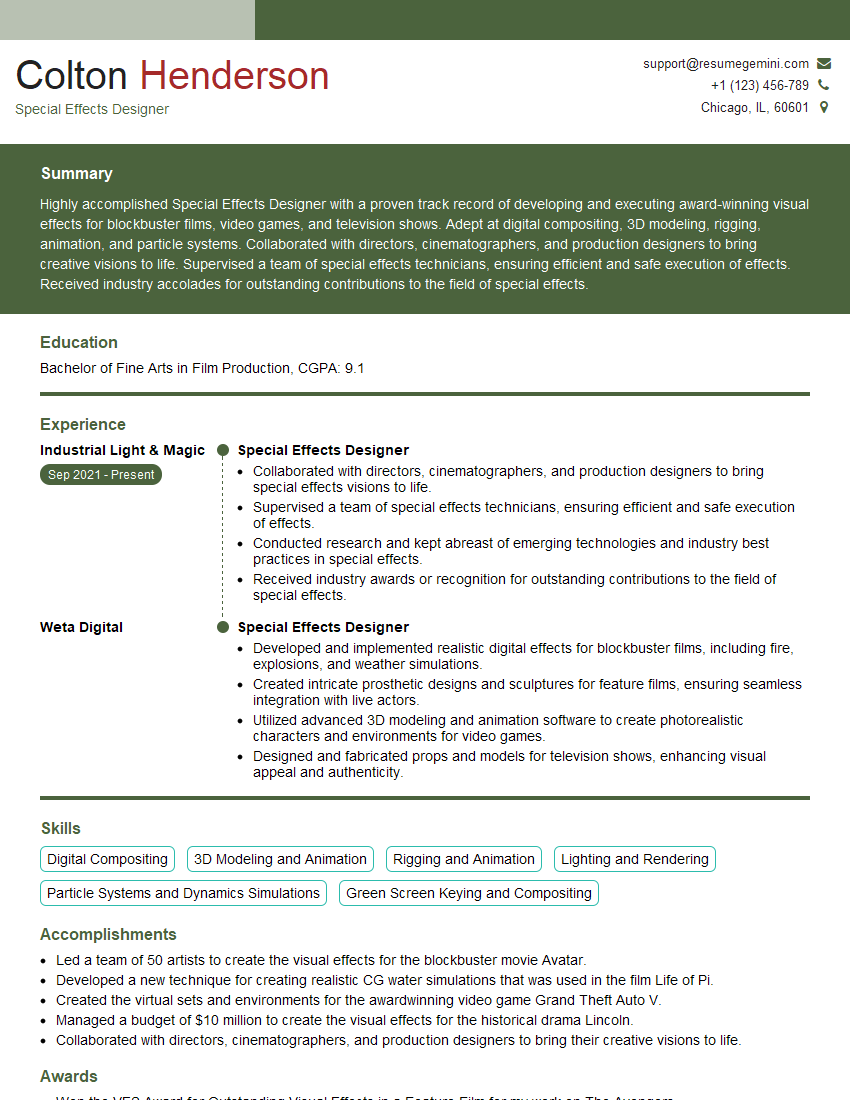
Special Effects Designer Resume Sample
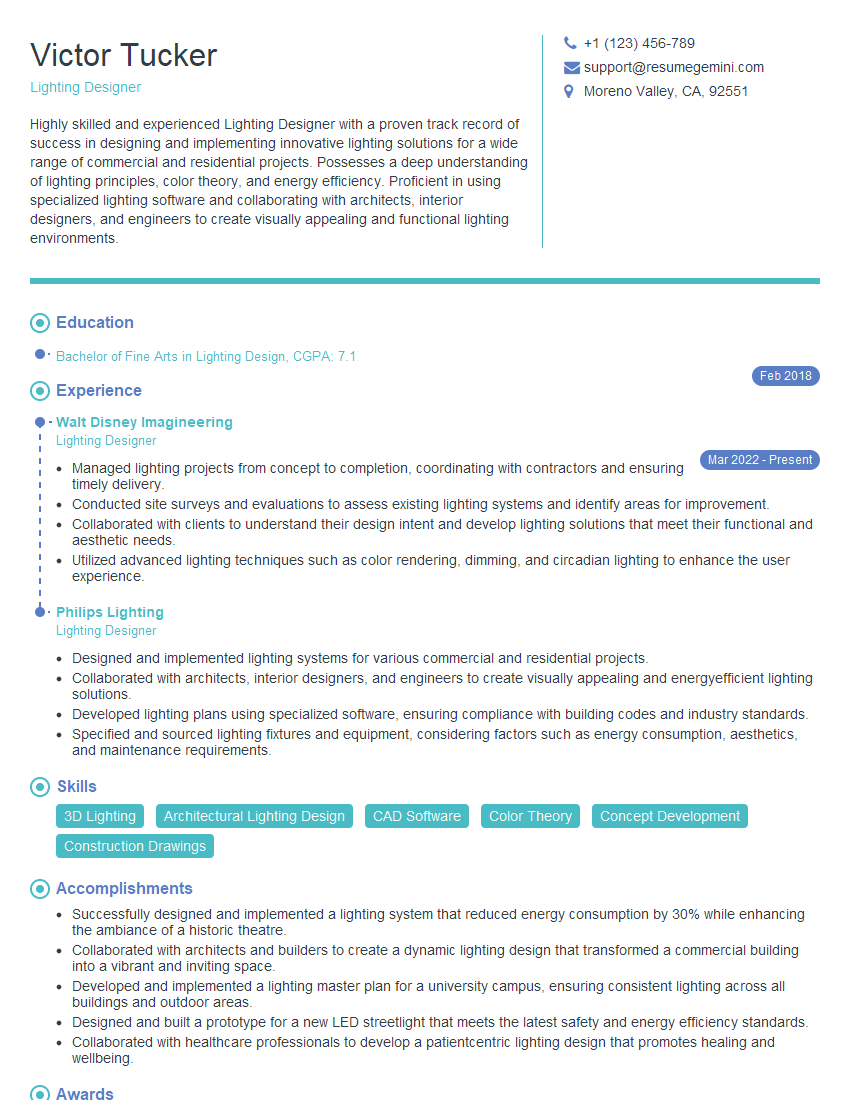
Lighting Designer Resume Sample
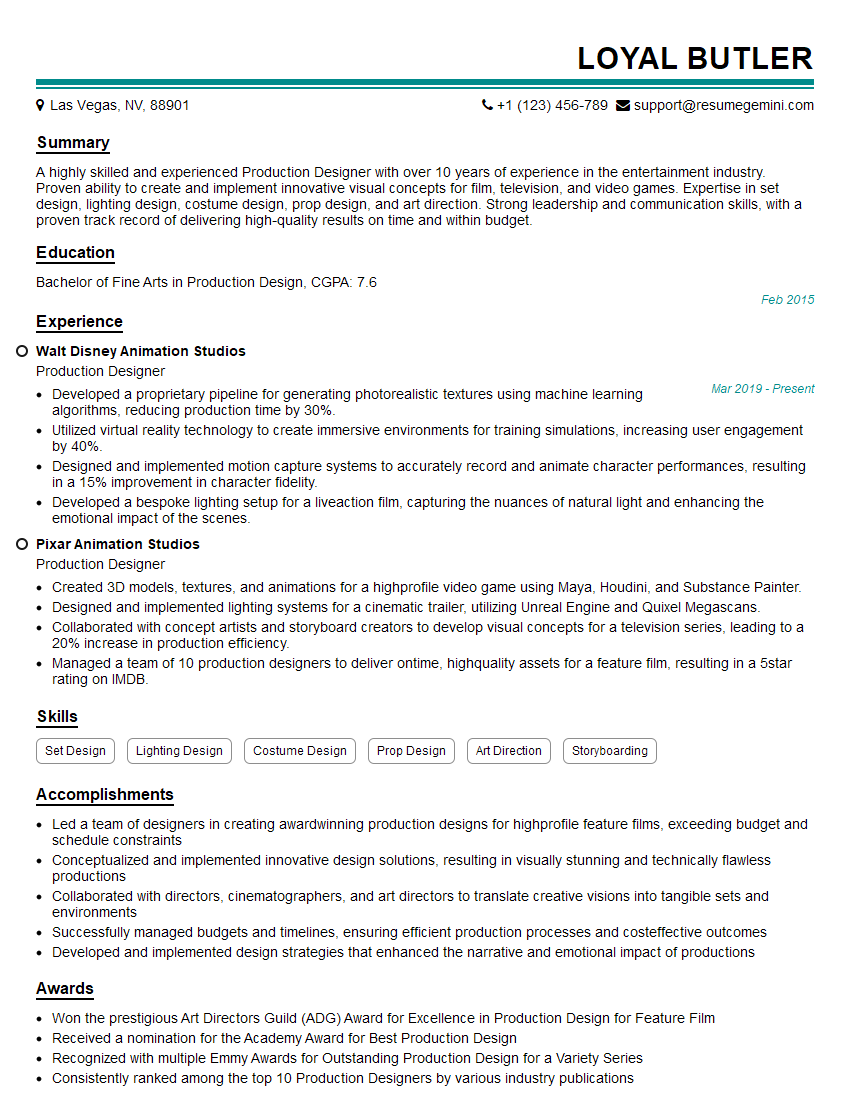
Production Designer Resume Sample
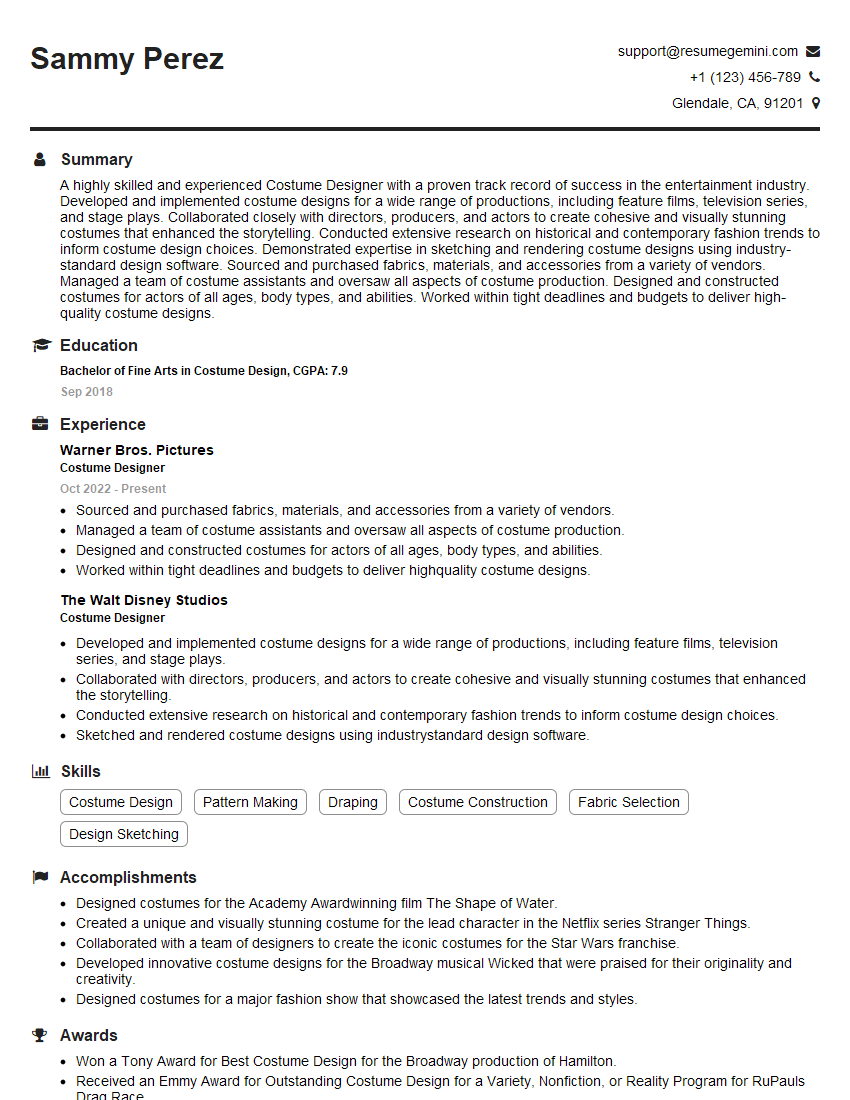
Costume Designer Resume Sample
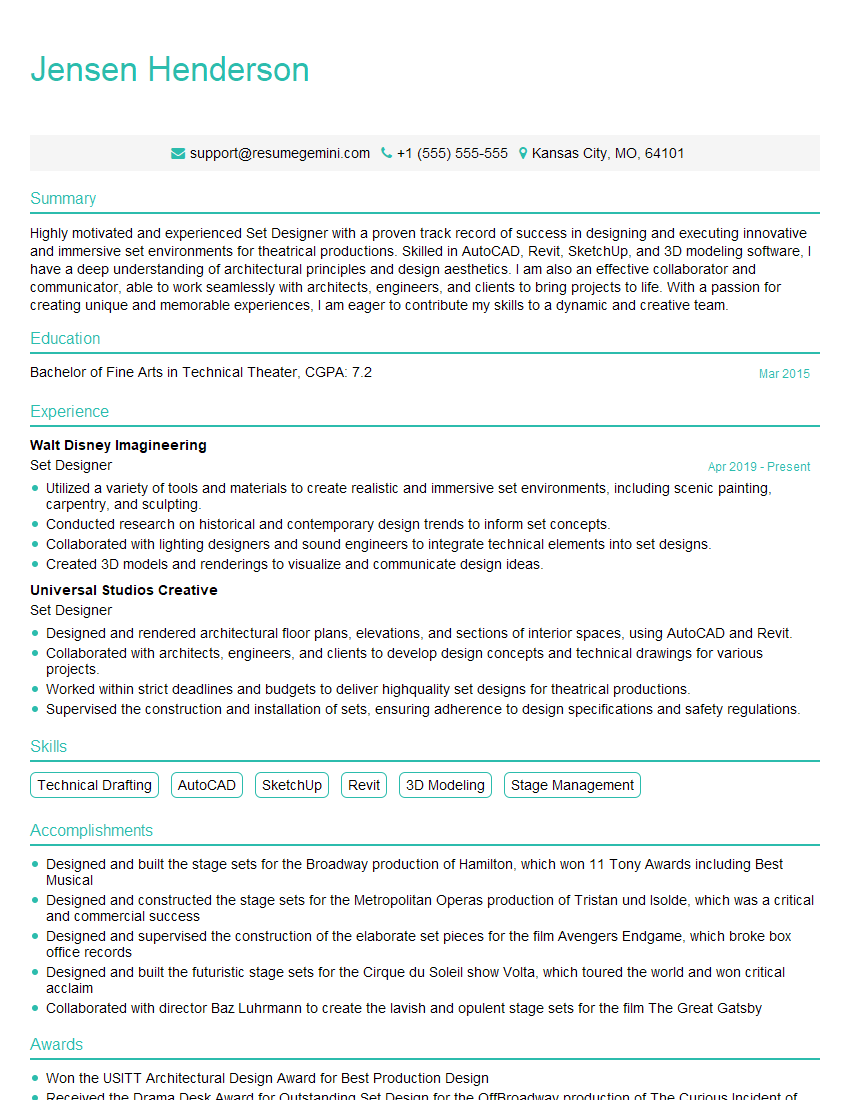
Set Designer Resume Sample
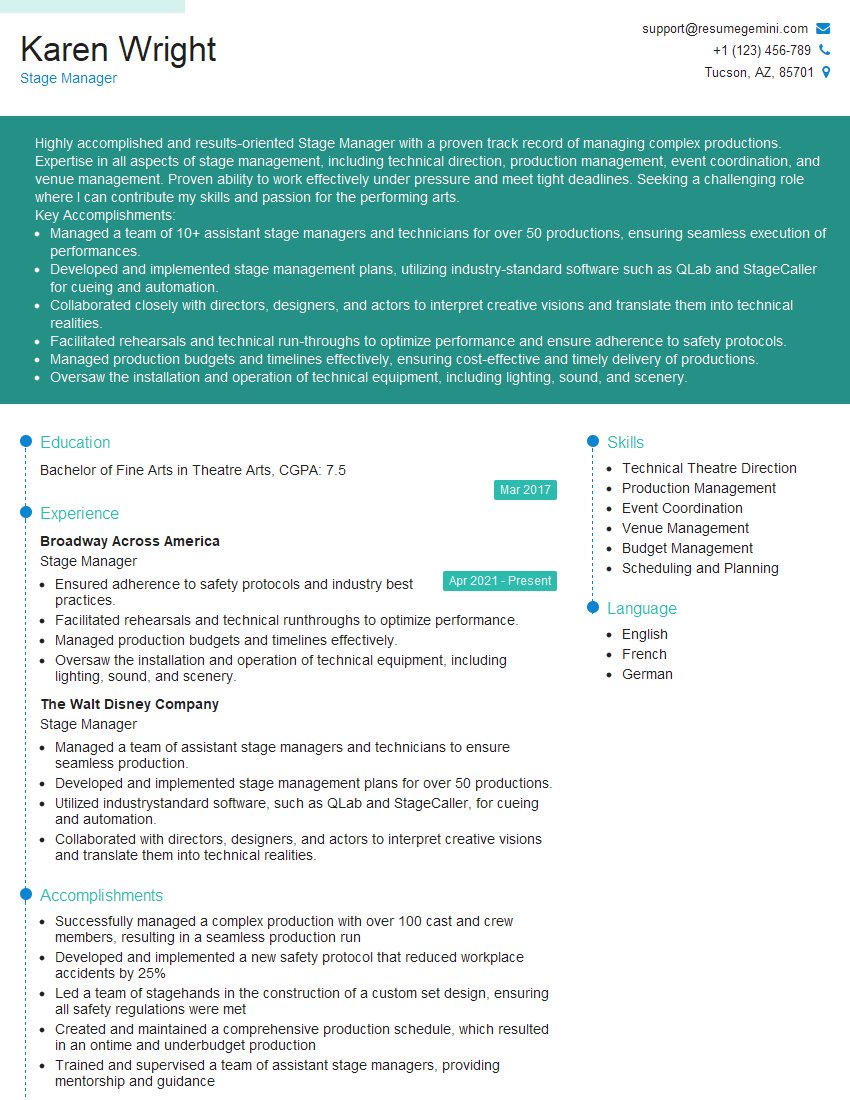
Stage Manager Resume Sample
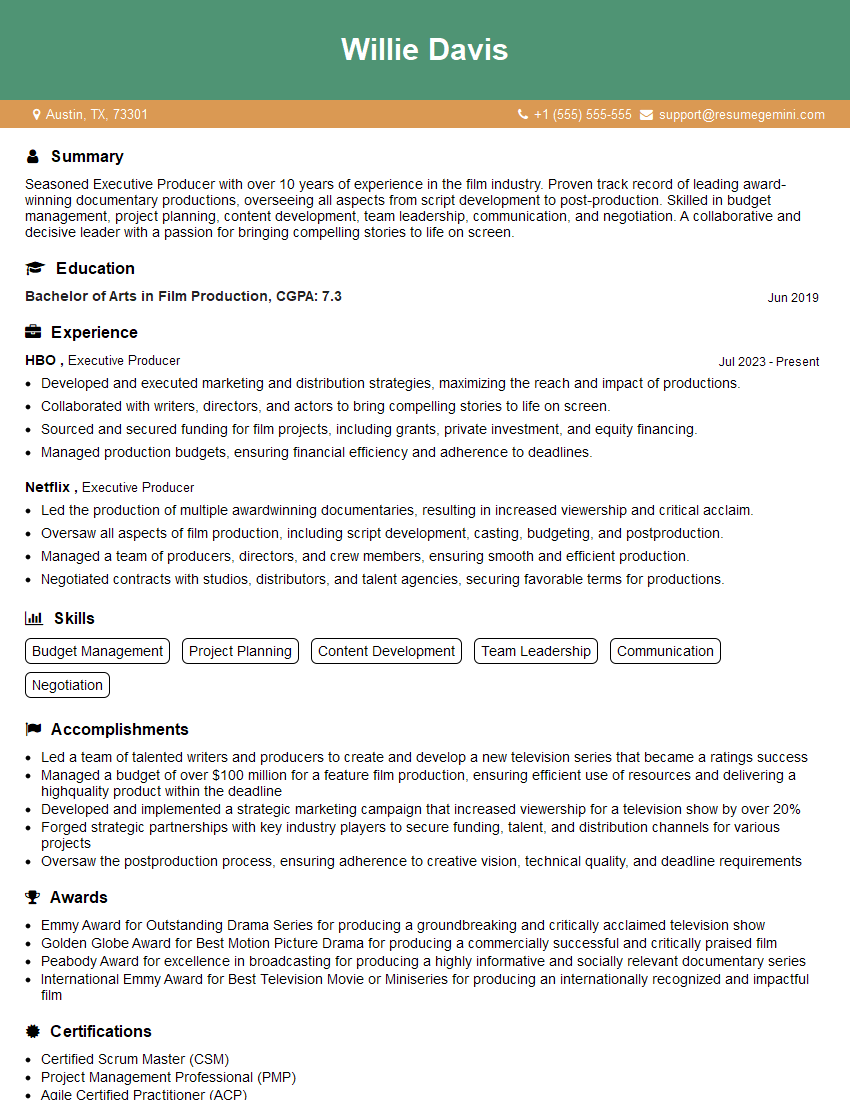
Executive Producer Resume Sample
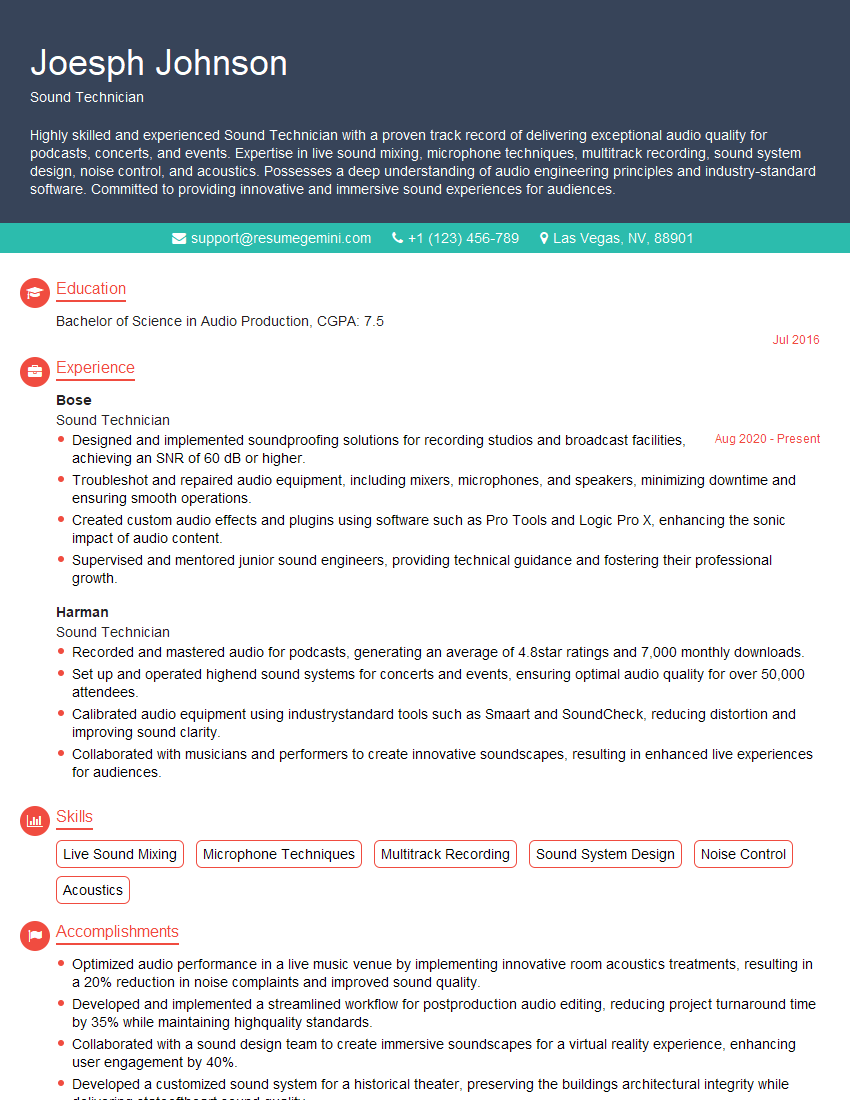
Sound Technician Resume Sample
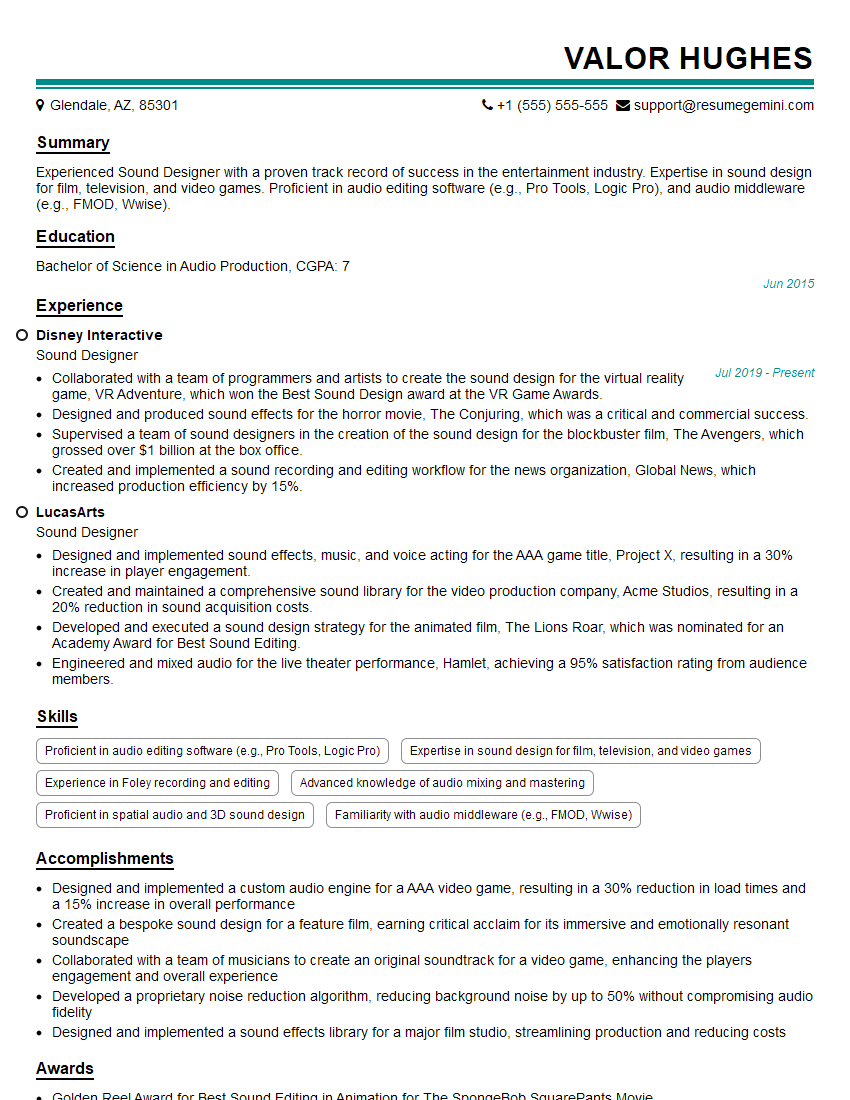
Sound Designer Resume Sample
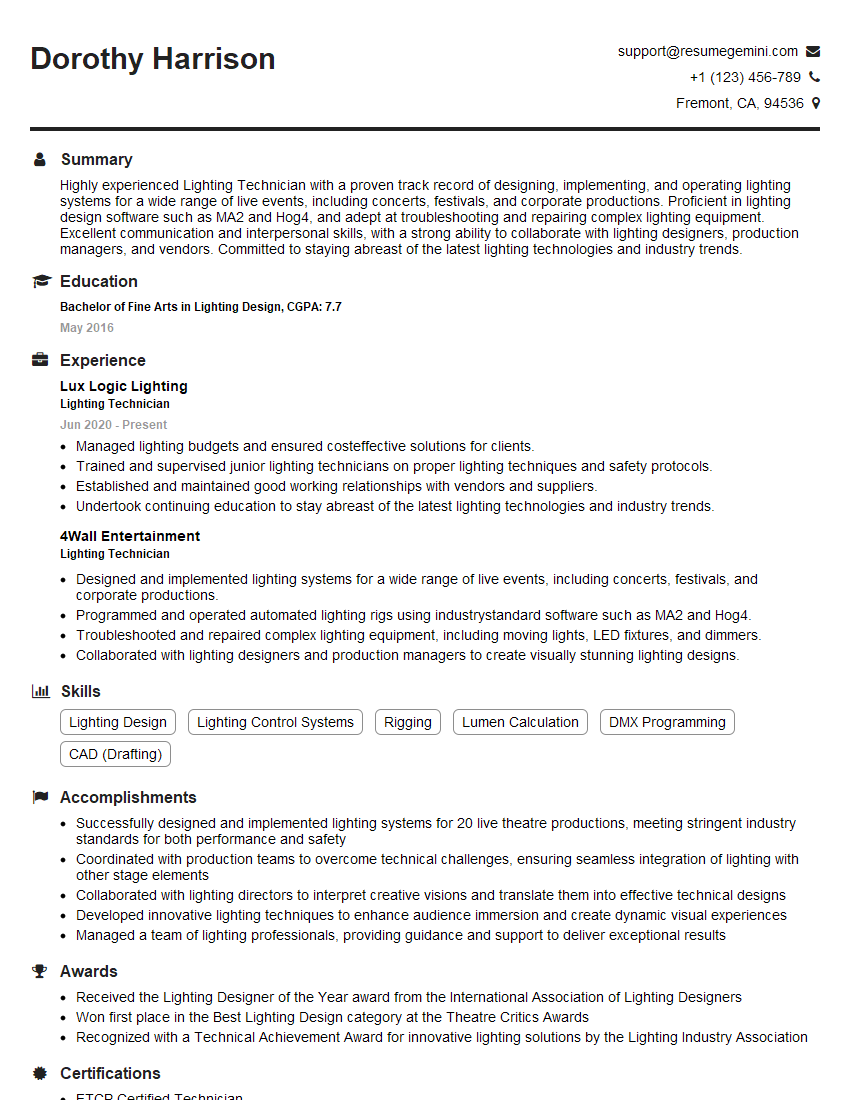
Lighting Technician Resume Sample
- Production Manager
- Art Director
- Technical Director
- Production Coordinator
- Technical Supervisor
- Video Technician
- Scenic Artist
- Special Effects Designer
- Lighting Designer
- Production Designer
- Costume Designer
- Set Designer
- Stage Manager
- Executive Producer
- Sound Technician
- Sound Designer
- Lighting Technician
Explore more articles
Users Rating of Our Blogs
Share Your Experience
We value your feedback! Please rate our content and share your thoughts (optional).
What Readers Say About Our Blog
Very informative content, great job.
good