Are you ready to stand out in your next interview? Understanding and preparing for Show Dog Preparation and Handling interview questions is a game-changer. In this blog, we’ve compiled key questions and expert advice to help you showcase your skills with confidence and precision. Let’s get started on your journey to acing the interview.
Questions Asked in Show Dog Preparation and Handling Interview
Q 1. Describe your experience preparing dogs for conformation shows.
My experience in preparing dogs for conformation shows spans over 15 years, encompassing a wide range of breeds and show levels. I’ve worked with everything from tiny Chihuahuas to giant Great Danes, preparing them for local, regional, and national competitions. My approach is holistic, focusing not just on the superficial grooming aspects, but also on the dog’s overall health, temperament, and ring presence. This involves developing a personalized training plan for each dog, addressing specific needs and challenges. For example, a shy dog requires a different approach compared to a boisterous one. My success is measured not only by wins but also by the confidence and well-being of the dogs under my care. I pride myself on building strong relationships with both the dogs and their owners, fostering a collaborative partnership for optimal results.
Q 2. What grooming techniques do you employ for different dog breeds?
Grooming techniques vary dramatically depending on the breed standard. For instance, a wire-haired fox terrier needs stripping and hand-stripping to maintain its texture and shape, while a Poodle requires meticulous scissoring and shaping to achieve the breed’s characteristic elegance. A long-coated breed like a Shih Tzu demands regular brushing to prevent matting, while short-coated breeds like a Doberman Pinscher need only a thorough bath and careful blow-drying to enhance their sleek coat. I always adhere to the breed standard, ensuring the dog’s coat is presented in the most advantageous way possible. Specific tools, such as specialized brushes, combs, shears, and clippers, are used according to the individual dog’s needs and coat type. I also pay close attention to detail, including nail trimming, ear cleaning, and teeth brushing, all contributing to a polished and healthy appearance.
Q 3. Explain the importance of proper nutrition for show dogs.
Proper nutrition is paramount for a show dog’s health, coat condition, and overall performance. A balanced diet provides the essential nutrients – proteins, fats, carbohydrates, vitamins, and minerals – necessary for healthy skin and coat, muscle development, and energy levels. The diet should be tailored to the dog’s age, breed, activity level, and individual needs. For example, a growing puppy needs a different nutritional profile than a mature adult. High-quality ingredients are crucial, and I often work with veterinary nutritionists to create personalized meal plans. I avoid feeding table scraps and ensure consistent hydration. The visible difference between a well-nourished dog and one with poor nutrition is stark – a show dog on a proper diet has a vibrant coat, ideal body condition, and boundless energy, which are all vital for success in the show ring.
Q 4. How do you handle a dog that is nervous or anxious in the show ring?
Handling a nervous or anxious dog in the show ring requires patience, understanding, and a gentle approach. My strategy begins long before the show itself with desensitization and counter-conditioning exercises. This might involve gradually exposing the dog to loud noises, crowds, and other potential stressors in a controlled environment. In the ring, I use calm, reassuring verbal cues and gentle physical contact to provide comfort and security. I might employ treats or toys as positive reinforcement. If the dog becomes severely anxious, it’s crucial to not force the situation. Sometimes, withdrawing and allowing the dog to settle before attempting again is the best course of action. The focus is on making the experience positive rather than traumatic, prioritizing the dog’s well-being above all else.
Q 5. What are the key aspects of a dog’s conformation that judges look for?
Conformation judges assess a dog’s structure and overall appearance against the breed standard. Key aspects include the dog’s overall balance and proportions, the soundness of its gait (movement), and the structural correctness of its limbs, head, and body. For example, the correct bite, jaw alignment, and skull shape are vital for certain breeds. The coat texture, color, and markings are also meticulously examined. Judges are looking for dogs that exemplify the ideal of their breed, free from any significant faults. This involves a comprehensive evaluation, combining physical assessment with an observation of the dog’s movement and temperament. Understanding and applying breed-specific standards is crucial to successful conformation.
Q 6. How do you maintain a dog’s coat health and condition for a show?
Maintaining a dog’s coat health and condition for a show requires a consistent, proactive approach. Regular brushing, appropriate bathing, and the use of high-quality shampoos and conditioners are essential. The type of shampoo and conditioner depends on the dog’s coat type – some breeds might require specialized products for sensitive skin or to enhance coat texture. A healthy diet also plays a significant role, providing essential fatty acids and nutrients that contribute to a healthy, shiny coat. I also regularly check the dog’s skin for any signs of irritation or infection. In cases of skin problems, I collaborate with veterinarians to address the underlying issues. Protecting the coat from harsh weather conditions, such as sun exposure, is another important consideration. In essence, it’s about maintaining a proactive approach to skincare, with routine maintenance being key.
Q 7. Describe your experience with different types of show dog equipment.
My experience encompasses a wide array of show dog equipment, from basic grooming tools like brushes, combs, and clippers to specialized items such as grooming tables, dryers, and various styling aids. I am proficient in using different types of leads, show halters, and muzzles, selecting the appropriate equipment for each dog and situation. I also have experience with various types of show crates and travel carriers, ensuring the dog’s comfort and safety during transportation. My familiarity with these tools allows me to prepare the dog effectively and ensure a smooth, professional presentation in the show ring. The selection of equipment is guided by the breed’s needs and the individual dog’s characteristics, always prioritizing the dog’s comfort and safety.
Q 8. How do you prepare a dog for travel to a dog show?
Preparing a dog for show travel requires meticulous planning to ensure their comfort and well-being throughout the journey. Think of it like preparing a human for a long trip – you need to consider everything from food and water to potential emergencies.
- Health Certification: Always obtain up-to-date health certificates from your veterinarian, especially if traveling across state lines or internationally. This often includes vaccination records and parasite prevention documentation.
- Travel Crate: A comfortable, well-ventilated, and appropriately sized crate is essential. The dog should be able to stand, turn around, and lie down comfortably. Line the crate with absorbent bedding.
- Food and Water: Pack enough food for the journey, avoiding sudden changes in diet. Bring plenty of fresh water and a travel-friendly water bowl.
- Emergency Kit: Include essentials such as a first-aid kit for dogs, copies of vaccination records, your contact information, and the emergency contact of your veterinarian.
- Grooming Supplies: Depending on the breed and the duration of travel, you may need to pack brushes, combs, towels, and any breed-specific grooming tools. A quick grooming session before the show is always a good idea.
- Travel Day Routine: Keep the travel day routine as calm and predictable as possible to reduce stress for the dog. Avoid overfeeding or over-exercising before travel.
For example, I once traveled with a Great Dane to a national show. We meticulously planned the trip, including several stops for potty breaks and short walks to help avoid motion sickness. The crate was fitted with cooling pads for added comfort. A successful trip starts with careful preparation and consideration for the dog’s needs.
Q 9. What are the common health issues that affect show dogs, and how do you manage them?
Show dogs, like any other breed, are susceptible to various health issues. Early detection and proactive management are crucial. Common problems include:
- Skin Allergies: Many dogs suffer from allergies, leading to itching, redness, and hair loss. Management involves identifying allergens (food, environmental), using hypoallergenic shampoos, and in some cases, medication.
- Joint Issues: Hip and elbow dysplasia are prevalent in some breeds, causing lameness and pain. Management might include weight management, supplements, and in severe cases, surgery.
- Dental Problems: Poor dental hygiene leads to periodontal disease, which can cause pain and systemic infections. Regular brushing and professional dental cleanings are essential.
- Eye Problems: Certain breeds are predisposed to eye conditions like cataracts or glaucoma. Regular eye exams are crucial for early diagnosis and treatment.
- Ear Infections: Especially in breeds with floppy ears, infections can occur easily. Regular cleaning and veterinary attention are needed.
I always ensure that the dogs under my care receive regular veterinary checkups, including dental and eye exams. A healthy dog is a happy dog, and a happy dog performs better in the show ring. For instance, I noticed a slight limp in one of my dogs and immediately scheduled a veterinary appointment, preventing a more significant injury later.
Q 10. Explain your understanding of breed standards and how they apply to your work.
Breed standards are the written descriptions of the ideal physical characteristics and temperament of a particular breed. They act as a blueprint for judging dogs in conformation shows. Understanding and applying breed standards is fundamental to my work.
My work involves meticulously studying the breed standards for each dog I handle. I assess my dog’s physical attributes against these standards, highlighting their strengths and identifying areas needing improvement through training and conditioning. This includes:
- Conformation: Assessing the dog’s structure, including the angles, proportions, and overall balance of the body.
- Coat: Evaluating the texture, color, and condition of the coat, adhering to breed-specific requirements.
- Movement: Observing the dog’s gait, assessing its fluidity and soundness.
- Temperament: Evaluating the dog’s demeanor, ensuring it’s alert, confident, and exhibits the breed-specific temperament.
For example, if I’m handling a German Shepherd, I know that the breed standard emphasizes a strong, muscular build, a specific coat texture, and a confident, alert expression. My training and presentation will focus on showcasing these qualities in the show ring.
Q 11. How do you stay updated on the latest trends and techniques in show dog handling?
Staying updated in the dynamic world of show dog handling is paramount. I employ a multi-pronged approach:
- Professional Organizations: Active membership in organizations like the American Kennel Club (AKC) or similar breed-specific clubs provides access to educational resources, workshops, and seminars.
- Conferences and Seminars: Attending breed-specific and all-breed shows and seminars allows me to observe top handlers and learn new techniques. This is invaluable for networking and staying current with evolving judging preferences.
- Mentorship and Collaboration: Seeking guidance from experienced handlers and exchanging knowledge with peers helps to continuously refine techniques and problem-solve effectively.
- Breed-Specific Publications: Following breed-specific magazines and online resources helps in understanding breed-specific trends and news relevant to conformation and handling.
- Veterinary Updates: Staying abreast of advancements in canine health is crucial, as it affects both training and show preparation.
Recently, I attended a seminar on improving gait in show dogs, which significantly impacted my handling techniques. It’s a continuous learning process; the field is constantly evolving, demanding ongoing dedication to staying ahead.
Q 12. Describe your experience with different types of dog show rings.
My experience encompasses various show ring environments, each presenting unique challenges and opportunities:
- Indoor Rings: Offer controlled environments with consistent flooring, but can sometimes be impacted by lighting and acoustics.
- Outdoor Rings: Present more variable conditions, such as weather (sun, rain, wind), ground surfaces (grass, dirt), and distractions (noise, movement).
- Large vs. Small Rings: The size of the ring significantly affects the dog’s movement and the handler’s strategy. A larger ring requires a more extensive gait, while a smaller ring needs more precise handling.
- Breed-Specific Rings: Rings dedicated to specific breeds are common, and judges focus on aspects detailed in that breed’s standard.
- All-Breed Shows: Present a broader range of breeds, judges, and varying levels of competition.
Adaptability is key. For example, handling a dog in a windy outdoor ring requires different strategies than handling the same dog in a controlled indoor setting. I’ve learned to adjust my handling style and my dog’s preparation to suit the conditions of the ring.
Q 13. What is your strategy for presenting a dog in the show ring?
My strategy for presenting a dog in the show ring focuses on highlighting the dog’s strengths while minimizing weaknesses. It’s a combination of preparation and performance.
- Pre-Show Preparation: This includes proper grooming, ensuring the dog is well-hydrated and rested, and a final conformation check.
- Ring Entrance: A confident and controlled entrance sets the tone. I aim for a relaxed, purposeful gait into the ring.
- Gaiting: This is crucial. I strive for a smooth, rhythmic gait that showcases the dog’s movement and structure. This requires practice and precise handling.
- Stacking: The dog must be presented in a poised and balanced stance, accurately showcasing its conformation. Precise and confident handling is crucial here.
- Judge Interaction: Maintaining eye contact with the judge and responding to their requests are important. Professionalism and courtesy are essential.
- Post-Show Conduct: A calm and controlled exit, regardless of the outcome, is crucial for maintaining a positive image.
I always visualize the ideal presentation before entering the ring. Mentally rehearsing the sequence helps me stay focused and execute the plan flawlessly. For example, I’ll practice the stacking position and gait multiple times before the show, ensuring my dog understands the cues and moves confidently.
Q 14. How do you handle unexpected situations or challenges during a dog show?
Unexpected situations are inevitable in dog shows. My approach involves preparedness and adaptability:
- Equipment Malfunctions: Carrying spare leads, collars, and grooming tools minimizes disruption. Having a backup plan ensures smooth handling.
- Dog Misbehavior: This could range from minor disobedience to significant anxiety. Having a well-established training regimen and understanding the dog’s triggers helps to manage such situations. Positive reinforcement and calming techniques are essential.
- Ringside Distractions: I teach my dogs to ignore distractions through careful training. Maintaining focus on the judge and the presentation is paramount.
- Sudden Weather Changes: Adjustments to grooming and dog handling are needed. Having appropriate protective gear readily available ensures dog comfort and safety.
- Injuries: Having a basic first-aid kit and knowing when to seek immediate veterinary attention are crucial.
For example, once, my dog unexpectedly became overwhelmed by the loud noises at a show. I quickly implemented my calming techniques, providing a sense of security and comfort, enabling a successful completion of the judging process. Experience and preparedness enable smooth handling of unexpected incidents.
Q 15. What is your experience with different types of dog show judging?
My experience encompasses a wide range of dog show judging formats, from conformation shows, which assess a dog’s physical attributes against breed standards, to obedience trials and agility competitions. I’ve worked with judges who prioritize specific aspects, such as movement in conformation, or specific skills in obedience. Understanding these nuances is crucial. For example, a conformation judge might place significant weight on the dog’s gait, while an obedience judge will evaluate things like heelwork, retrieves, and stays. I’ve assisted in shows featuring various breed clubs and all-breed shows, allowing me to observe diverse judging styles and approaches. This broad exposure has shaped my understanding of the subtle differences in evaluating canine excellence across various disciplines.
Career Expert Tips:
- Ace those interviews! Prepare effectively by reviewing the Top 50 Most Common Interview Questions on ResumeGemini.
- Navigate your job search with confidence! Explore a wide range of Career Tips on ResumeGemini. Learn about common challenges and recommendations to overcome them.
- Craft the perfect resume! Master the Art of Resume Writing with ResumeGemini’s guide. Showcase your unique qualifications and achievements effectively.
- Don’t miss out on holiday savings! Build your dream resume with ResumeGemini’s ATS optimized templates.
Q 16. How do you assess a dog’s temperament and suitability for showing?
Assessing a dog’s temperament and show suitability involves a holistic evaluation. We look for several key traits. Firstly, a calm and confident demeanor is crucial. The dog shouldn’t be overly shy or aggressive. We evaluate their response to handling, observing how they react to being touched, groomed, and examined. A suitable show dog should also exhibit a willingness to cooperate. This includes readily accepting commands and displaying a positive attitude in new environments. I remember one particularly nervous young Beagle; despite his beautiful conformation, his excessive shyness hampered his performance. In contrast, a confident Golden Retriever I worked with easily navigated the crowded show ring, showcasing excellent temperament and composure.
We also consider the dog’s overall health and stamina. A dog with persistent health issues or low energy might not handle the rigors of showing. A pre-show vet check-up helps to ensure the dog is physically ready.
Q 17. Describe your experience with different types of dog breeds.
My experience spans a broad spectrum of dog breeds, from toy breeds like Chihuahuas and Pomeranians to larger breeds like Great Danes and German Shepherds. Each breed presents unique challenges and characteristics. For example, preparing a long-haired breed like a Yorkshire Terrier requires meticulous grooming, unlike a short-haired breed like a Boxer. Understanding breed-specific standards is vital; what’s considered a fault in one breed might be an accepted trait in another. I’ve particularly enjoyed working with sporting breeds, whose athleticism and trainability are rewarding to develop, and herding breeds, whose intelligence and instinct are fascinating to work with. Each breed demands a personalized approach to training and handling, tailored to its temperament and conformation.
Q 18. How do you manage multiple dogs during preparation and show time?
Managing multiple dogs effectively requires meticulous organization and a calm, assertive approach. A detailed schedule is essential, outlining grooming, feeding, and exercise routines for each dog. I use a color-coded system to track each dog’s needs and progress. A designated space for each dog, with their individual equipment readily available, prevents confusion and stress. During show time, prioritizing the dogs based on their show times is key to avoiding last-minute rushes. Teamwork is also crucial; if I have assistance, clear roles and responsibilities are defined to ensure smooth operations. One person might focus on grooming while another handles the logistics of getting dogs to the ring at the right time. It’s akin to managing a small team where communication and efficient workflow are paramount.
Q 19. What are the ethical considerations in show dog handling?
Ethical considerations in show dog handling are paramount. The welfare of the dog always comes first. This includes ensuring the dog is healthy, well-fed, and properly exercised. Any training methods must be humane and avoid harsh techniques. Coercion or intimidation are completely unacceptable. We must also be honest and transparent in our representations of the dog’s condition and capabilities. This involves avoiding the use of performance-enhancing drugs or any practices that might compromise the dog’s health for the sake of show performance. Maintaining a positive and enriching environment for the dog throughout the process is crucial. This means fostering a bond of trust and mutual respect. It’s not just about winning; it’s about representing the breed fairly and ethically.
Q 20. Explain your approach to training dogs for the show ring.
My approach to training show dogs centers around positive reinforcement. This means rewarding desired behaviors, such as proper gait and stance, with praise, treats, and positive verbal cues. I use a systematic approach, breaking down complex behaviors into smaller, manageable steps. We start with basic obedience commands, progressing to ring-specific behaviors such as stacking, gaiting, and presenting the dog to the judge. Consistency is key. The dog needs to understand what is expected of them, and repetition helps solidify these behaviors. I always ensure the training sessions are fun and engaging for the dog, creating a positive association with the training process. For instance, with a shy dog, we’d begin training in a quiet environment before gradually introducing more distractions. It’s all about building confidence and positive associations.
Q 21. How do you communicate effectively with dog owners and judges?
Effective communication with both dog owners and judges is crucial. With owners, clear and open dialogue is essential. This involves discussing the dog’s temperament, training progress, and any concerns they might have. Active listening helps ensure I address their needs and concerns appropriately. With judges, I maintain a professional and respectful demeanor. This includes presenting the dog in a calm and organized manner, answering their questions clearly and concisely, and gracefully accepting their decisions. Understanding their perspectives and preferences helps ensure smooth interactions and a positive experience. I always strive to create partnerships based on mutual trust and respect.
Q 22. What software or tools do you use to manage show dogs and schedules?
Managing show dogs and their schedules effectively requires a robust system. I utilize a combination of software and tools tailored to the specific needs of canine show management. At the core, I rely on a dedicated calendar application, integrated with reminder features, to track upcoming shows, grooming appointments, veterinary check-ups, and travel arrangements. This ensures nothing falls through the cracks. I also use a spreadsheet program to maintain detailed records for each dog, including pedigree information, health records, show results, and grooming notes. Finally, I use a dedicated dog show management app which provides features such as breed-specific standards, show entry deadlines, and point tracking. This allows for efficient management of multiple dogs and their various commitments.
For example, my calendar is color-coded; different colors represent shows, training sessions, and veterinary appointments, providing a clear visual overview of the upcoming weeks and months. The spreadsheet is crucial for analyzing performance trends and identifying areas for improvement in each dog’s training and presentation.
Q 23. Describe a time you had to troubleshoot a problem with a dog’s grooming or presentation.
One memorable instance involved a champion Afghan Hound scheduled for a prestigious show. The day before, I noticed a significant knot in his long, luxurious coat, quite near his tail. This was a serious problem as it would severely detract from his overall appearance. Simply cutting it wasn’t an option due to the impact on his coat’s flow and balance. I immediately tried gentle detangling techniques with specialized detangling sprays and brushes, but the knot was stubborn. I spent hours meticulously working on it, using my fingers and small, fine-tooth combs to carefully separate the matted fur. This required patience and a very gentle touch to avoid causing pain or damaging the coat. After hours of careful work, the knot was completely removed, preserving the integrity of his beautiful coat. The next day, he won the show.
Q 24. What are the most important skills for success as a professional show dog handler?
Success as a professional show dog handler hinges on a blend of technical and interpersonal skills. Firstly, a deep understanding of canine conformation standards for various breeds is paramount. You need to be able to critically assess a dog’s structure and identify areas requiring improvement. Secondly, strong communication skills are essential. You must build rapport with the dog and owner, create a calm and focused atmosphere during shows, and effectively convey constructive feedback. Thirdly, exceptional grooming and presentation skills are vital. This means mastering techniques specific to each breed, maintaining pristine coat conditions, and achieving the ideal presentation for the show ring. Finally, the ability to adapt and troubleshoot quickly is important, because unexpected issues frequently arise.
- Breed Knowledge: Understanding breed-specific standards
- Communication: Building trust with dogs and owners
- Grooming Skills: Maintaining coat quality and presentation
- Adaptability: Handling unexpected situations during shows
Q 25. How do you maintain a positive and professional demeanor under pressure?
Maintaining composure under pressure is crucial in this high-stakes environment. I focus on a few key strategies. First, thorough preparation is key. Knowing the show schedule, having all equipment ready, and practicing routines beforehand significantly reduces anxiety. Second, I practice mindfulness techniques such as deep breathing to help center myself when tensions arise. This can turn a stressful situation into a manageable one. Finally, I always remember that my primary role is to ensure the well-being of my canine companions. Their comfort and confidence directly translate to a positive performance. Keeping this perspective helps me stay grounded and professional, regardless of the external pressures.
Q 26. Explain the importance of maintaining accurate records for show dogs.
Maintaining accurate records for show dogs is essential for several reasons. These records serve as a comprehensive history of the dog’s performance, health, and lineage. This information is crucial for making informed breeding decisions, tracking progress, and identifying potential health issues early on. Accurate records also help with tax purposes, when dealing with insurance claims, and are important when tracking veterinary care. I maintain detailed records on a spreadsheet, meticulously documenting show results, health data (vaccinations, medical treatments), dietary information, and grooming notes. This data enables me to analyze performance trends, identify areas for improvement, and make informed decisions regarding the dog’s training and overall care.
Q 27. How do you ensure the safety and well-being of the dogs in your care?
The safety and well-being of the dogs under my care is my top priority. This is achieved through a multifaceted approach. Firstly, a comprehensive vaccination and parasite control program is meticulously maintained. Secondly, I prioritize regular veterinary check-ups to detect and address any potential health concerns promptly. Thirdly, I create a positive and stress-free environment for the dogs, ensuring they receive adequate rest, hydration, and nutritious food. Finally, during shows and travel, their safety is paramount. I use appropriate crates and restraints, providing constant supervision and ensuring they are always comfortable and safe.
Q 28. Describe your experience with show dog photography and videography.
Show dog photography and videography are essential for marketing, documenting progress, and capturing a dog’s best moments. I have hands-on experience with both, utilizing high-quality cameras and professional editing software. I am adept at capturing dynamic shots that showcase the dog’s conformation, movement, and temperament. For photography, I focus on capturing crisp images in well-lit environments, highlighting the dog’s best features. Video is equally important, allowing for a more comprehensive showcase of the dog’s movement and personality. Post-production editing is a vital step, refining the shots to ensure they are visually appealing and effectively communicate the dog’s qualities. The quality of these visuals is key to attracting potential buyers and securing wins.
Key Topics to Learn for Show Dog Preparation and Handling Interview
- Grooming Techniques: Understanding breed-specific grooming standards, coat care (brushing, bathing, drying), and the use of appropriate tools and products. Practical application includes demonstrating knowledge of various grooming styles and their impact on presentation.
- Conformation & Movement: Mastering the principles of canine conformation, recognizing breed-specific characteristics, and understanding how to present a dog to highlight its best features. Practical application includes analyzing dog movement and posture, identifying flaws, and strategizing for optimal presentation in the show ring.
- Show Ring Etiquette & Procedures: Familiarizing yourself with the rules and regulations of various dog show organizations, understanding judging criteria, and demonstrating appropriate handler behavior. Practical application includes describing successful strategies for navigating the show ring and interacting professionally with judges and other handlers.
- Dog Handling & Psychology: Developing effective dog handling skills, understanding canine behavior and body language, and building a positive and trusting relationship with the dog. Practical application involves explaining methods for managing anxious or challenging dogs in the show environment.
- Nutrition & Health: Understanding the nutritional needs of show dogs, recognizing signs of illness or injury, and implementing preventative health measures. Practical application includes discussing the impact of diet and exercise on a dog’s coat, condition, and overall performance.
- Health & Safety: Prioritizing the well-being of the dog, understanding appropriate safety protocols, and recognizing potential hazards in the show environment. Practical application includes explaining procedures for safe transportation, handling, and emergency situations.
Next Steps
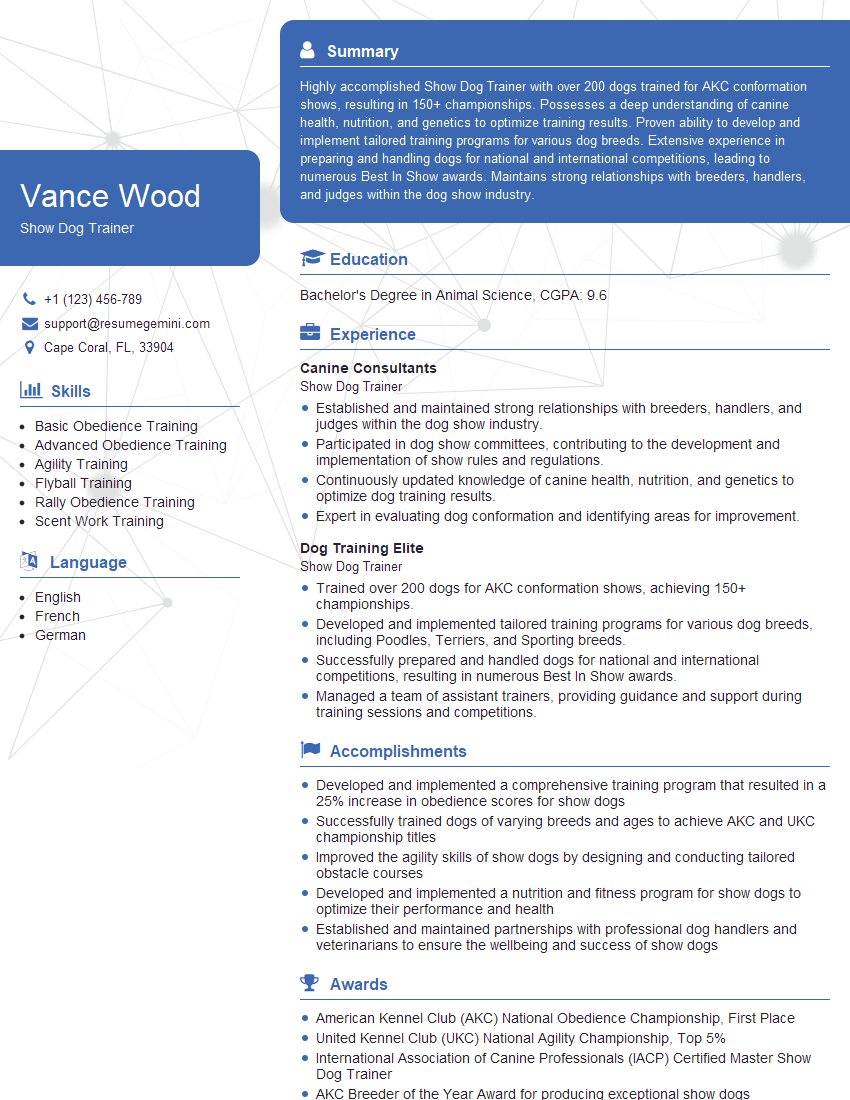
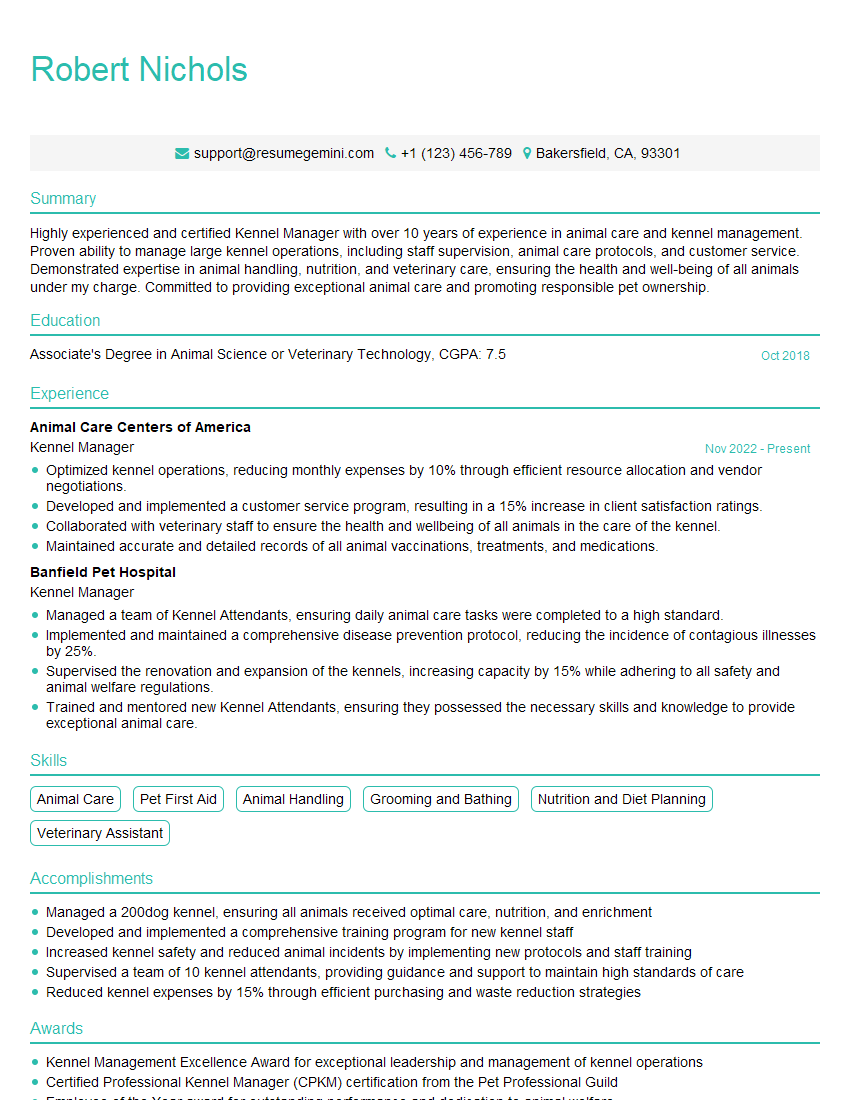
Mastering Show Dog Preparation and Handling opens doors to exciting career opportunities in the competitive canine world, offering a blend of rewarding animal interaction and specialized skill application. To maximize your job prospects, it’s crucial to present your qualifications effectively. Creating an ATS-friendly resume is key to ensuring your application gets noticed by recruiters. We highly recommend using ResumeGemini, a trusted resource, to build a professional and impactful resume. ResumeGemini provides examples of resumes specifically tailored to Show Dog Preparation and Handling to guide you through the process. Take the next step towards your dream career – build a winning resume today!
Explore more articles
Users Rating of Our Blogs
Share Your Experience
We value your feedback! Please rate our content and share your thoughts (optional).
What Readers Say About Our Blog
Very informative content, great job.
good