The thought of an interview can be nerve-wracking, but the right preparation can make all the difference. Explore this comprehensive guide to Shucking and Filleting interview questions and gain the confidence you need to showcase your abilities and secure the role.
Questions Asked in Shucking and Filleting Interview
Q 1. What are the different types of knives used for shucking and filleting?
The right knives are crucial for efficient and safe shucking and filleting. For oysters, a sturdy oyster knife with a short, strong blade is essential. Its thickness prevents bending under pressure. For filleting, you’ll typically use a fillet knife. These have long, thin, flexible blades, ideal for navigating the contours of a fish. Different fish may require different blade lengths and flexibilities; a longer, more flexible blade is useful for larger fish. You might also have a boning knife for removing pin bones, characterized by its slim, rigid blade. Finally, a paring knife can be helpful for trimming and cleaning.
- Oyster Knife: Short, strong, thick blade.
- Fillet Knife: Long, thin, flexible blade; length varies by application.
- Boning Knife: Slim, rigid blade for precise bone removal.
- Paring Knife: Small knife for trimming and detail work.
Q 2. Explain the proper technique for shucking oysters.
Shucking oysters requires precision and a bit of muscle. First, protect your hand with a thick glove or towel. Position the oyster on a stable surface, cup-side up. Insert the oyster knife into the hinge, working the blade gently to loosen it. Once opened a little, twist the blade to widen the gap. Then, run the knife along the top shell, separating the oyster from its shell. Finally, carefully remove the oyster, taking care not to damage the meat. Remember, practice makes perfect! It takes time to develop the right touch and feel for the proper amount of force.
Safety First: Always wear a protective glove or towel to prevent cuts. Never force the knife, as this increases the risk of injury. If you have difficulty opening an oyster, discard it.
Q 3. Describe the steps involved in filleting a salmon.
Filleting a salmon is a straightforward process once you get the hang of it. Begin by placing the salmon on a cutting board, skin-side down. Make an incision just behind the head, cutting down to the backbone. Then, follow the backbone down to the tail, keeping the blade close to the bones. Once you reach the tail, carefully flip the fillet over and remove the skin using the tip of your fillet knife to separate it. Remove any pin bones by using a pair of tweezers or your boning knife. Repeat the process on the other side. Always work in a smooth, continuous motion to ensure clean, even fillets. Remember to keep your knife sharp! A sharp knife is safer and leads to less waste.
Tip: Practice on less expensive fish first before working with higher-quality salmon.
Q 4. How do you ensure food safety when shucking and filleting?
Food safety is paramount. Maintain a clean workspace, and wash your hands thoroughly before and after handling raw seafood. Use separate cutting boards and knives for raw and cooked foods. Oysters should be kept chilled at all times and used as soon as possible. For filleting fish, ensuring the fish is fresh is crucial – inspect for signs of spoilage before you begin. Immediately refrigerate fillets after preparation. Thorough cleaning of tools and surfaces prevents cross-contamination. Always cook seafood to a safe internal temperature.
Remember, even a small lapse in hygiene can have serious consequences. Always prioritize safety!
Q 5. What are the signs of spoilage in shellfish?
Spoiled shellfish can be dangerous. Look for several key indicators: a strong, unpleasant fishy odor is a clear sign. Also inspect the shell: a cracked or broken shell is a major red flag, indicating potential contamination. The flesh should be plump and firm; if it’s soft, mushy, or discolored, discard it. If the oyster or clam is open and doesn’t close when tapped, it’s likely dead and unsafe to consume. Trust your senses; if something looks or smells off, it’s best to err on the side of caution and throw it away.
When in doubt, throw it out!
Q 6. How do you handle different types of fish with varying bone structures?
Fish bone structures vary greatly, requiring adjustments in your technique. For bony fish like sardines or herring, careful attention is needed when filleting, and you may use tweezers to remove the many small bones. Leaner fish like cod or snapper are easier to fillet, with fewer bones to worry about. Fattier fish like salmon often have pin bones that require careful removal with tweezers or a boning knife. Always adapt your approach to the specific fish and its bone structure. A good understanding of fish anatomy is essential for effective and safe filleting.
Knowledge of fish anatomy is your greatest ally!
Q 7. What are the common challenges in shucking oysters, and how do you overcome them?
Shucking oysters presents some challenges. A common problem is breaking the oyster shell while trying to open it; this requires patience and the right technique. Another challenge is cutting yourself; this necessitates always using a protective glove. Some oysters are particularly stubborn and difficult to open, even with proper technique. If you encounter this, discarding that oyster is a prudent safety measure. Finally, there’s the risk of oyster shell shards embedding themselves in the oyster meat; careful inspection and removal of any fragments after shucking are necessary.
Practice, patience and the right tools are key!
Q 8. Describe your experience with different filleting techniques.
Filleting techniques vary depending on the type of fish and desired outcome. I’m proficient in several methods, including the classic ‘butterfly’ fillet, which involves cutting through the fish’s belly to lay it flat before filleting; the ‘pin bone’ method, focusing on precise bone removal; and the ‘tourne’ method, creating uniformly sized fillets for aesthetics and consistent cooking.
For example, a delicate fish like flounder requires a very gentle approach using a flexible fillet knife to avoid tearing the flesh. Conversely, a thicker fish like a tuna allows for more robust cuts. I adapt my technique to the specific fish, ensuring minimal waste and maximum yield of high-quality fillets. My experience extends to various species, including salmon, cod, snapper, and many others, each requiring a slightly nuanced approach.
Q 9. How do you maintain the quality and freshness of seafood during preparation?
Maintaining seafood quality is paramount. My process begins before the knife even touches the fish. I ensure the seafood is sourced from reputable suppliers and stored properly at consistently cold temperatures (ideally below 40°F or 4°C). I work in a very clean environment, using sanitized tools and surfaces. Once filleted, the seafood is immediately placed on ice or in a refrigerated container to prevent bacterial growth and maintain freshness.
Rapid chilling is crucial. Think of it like this: the sooner you slow down the natural decay processes, the better the quality you retain. I often use iced water baths for quicker cooling. Proper handling and temperature control are the cornerstones of preserving the quality and flavor of fresh seafood.
Q 10. What is your preferred method for removing pin bones from fillets?
My preferred method for pin bone removal is using a pair of fine-pointed tweezers or a specialized pin bone tweezer. I visually locate the pin bones, which are usually small and slightly visible, and carefully remove them one by one. This method allows for precision and minimizes damage to the delicate fillet. I find that working with a well-lit area significantly improves my accuracy.
An alternative, though less precise, is using the tip of a very sharp fillet knife to gently lift and pull out each bone. However, this requires practice and dexterity to avoid tearing the flesh.
Q 11. How do you identify different types of shellfish?
Identifying shellfish requires attention to detail and knowledge of their characteristics. I examine factors like shell shape, size, color, texture, and any distinctive markings. For example, oysters have rough, irregular shells, while clams generally have smoother, rounder shells. Mussels have elongated, dark-colored shells that often cluster together. I’m familiar with various types of scallops, clams, mussels, oysters, and shrimp, recognizing variations within each species based on geographic location and maturity.
Beyond visual identification, I consider factors such as the source and any associated documentation to ensure traceability and quality. Safety is also a critical aspect. I am meticulous in checking for signs of spoilage or contamination before handling any shellfish.
Q 12. What safety precautions do you take when using sharp knives?
Safety is my top priority. I always use sharp knives – a dull knife is far more dangerous than a sharp one because it requires more force and can slip more easily. I maintain a proper grip on the knife, keeping my fingers out of the cutting path. I use a cutting board designed for this purpose (never on a glass surface!). I work with a clear and organized workspace, free of obstructions. And of course, I use appropriate cut-resistant gloves whenever handling especially tough or large shellfish.
If I ever feel I’m tired or rushing, I will stop the process and resume later when more alert. It’s crucial to prioritize concentration and focus to minimize any risk.
Q 13. How do you dispose of waste materials properly after shucking and filleting?
Waste disposal is crucial for hygiene and environmental reasons. I separate waste into different categories: organic waste (shells, fish scraps) goes into designated containers for proper composting or disposal according to local regulations. Non-organic waste (packaging, plastic gloves) goes into separate bins. Sharp objects, like broken knife blades or shell fragments, are disposed of in puncture-resistant containers. I always practice meticulous cleaning of my work area, ensuring all waste is removed to prevent contamination and maintain a sanitary environment.
In a professional setting, following restaurant protocols and regulatory compliance are important aspects of this process.
Q 14. What is your experience with different types of cutting boards and their uses?
Different cutting boards serve different purposes. Plastic cutting boards are economical and easy to clean but can harbor bacteria if not properly sanitized. Wood cutting boards are naturally antimicrobial but require more careful maintenance and should be oil-treated periodically. I prefer using high-density polyethylene (HDPE) plastic cutting boards for their durability and ease of sanitation. For delicate fish, I sometimes use a flexible plastic cutting board to better conform to the shape of the fish and minimize waste.
Using the appropriate board prevents cross-contamination, maintains hygiene, and protects the quality of my work. It’s akin to selecting the right tool for a specific task – each board serves its purpose effectively.
Q 15. Explain your knowledge of seafood sanitation and hygiene practices.
Seafood sanitation and hygiene are paramount to preventing foodborne illnesses. It’s a multi-faceted process starting even before the fish arrives. We need to ensure our workspace, equipment, and even our personal hygiene are top-notch.
- Pre-Processing: This involves receiving seafood at the correct temperature, checking for any signs of spoilage (like unusual odor or slimy texture), and immediately chilling it if necessary. We use calibrated thermometers to consistently monitor temperatures.
- Work Surface Sanitation: Our work surfaces are thoroughly cleaned and sanitized before each use, and frequently throughout the process, using food-grade sanitizers and following manufacturer instructions. We pay close attention to crevices and hard-to-reach areas.
- Equipment Cleaning: Knives, cutting boards, and other tools are meticulously cleaned and sanitized between each use and thoroughly at the end of the day. We have a designated cleaning station with different colored cutting boards for different types of seafood to avoid cross-contamination.
- Personal Hygiene: This is crucial. Handwashing is frequent and thorough, using hot water and soap. Gloves are mandatory, and we change them often to prevent contamination. Hair nets or other suitable head coverings are also required.
- Post-Processing: Once filleted and shucked, seafood is immediately chilled to maintain its quality and safety. Proper temperature control is achieved by using refrigerated storage and ice baths where appropriate.
Think of it like this: every step is a chain link in preventing foodborne illness; a single weak link can break the whole chain. We take every precaution to ensure the safety of our final product.
Career Expert Tips:
- Ace those interviews! Prepare effectively by reviewing the Top 50 Most Common Interview Questions on ResumeGemini.
- Navigate your job search with confidence! Explore a wide range of Career Tips on ResumeGemini. Learn about common challenges and recommendations to overcome them.
- Craft the perfect resume! Master the Art of Resume Writing with ResumeGemini’s guide. Showcase your unique qualifications and achievements effectively.
- Don’t miss out on holiday savings! Build your dream resume with ResumeGemini’s ATS optimized templates.
Q 16. How do you maintain the yield of meat when filleting?
Maximizing meat yield when filleting requires skill and precision. It’s about understanding the fish’s anatomy and using efficient techniques. Wasteful cuts are costly, both financially and environmentally.
- Sharp Knives: A dull knife requires more force, leading to ragged cuts and greater loss of meat. We maintain extremely sharp knives using honing steel regularly and sharpening when needed.
- Proper Filleting Technique: Following the natural lines of the fish is key. We use flexible filleting knives to follow the contours of the fish and avoid unnecessary cuts. We understand how to navigate bones efficiently, minimizing waste.
- Using the Whole Fish: We utilize all edible portions. For example, we carefully remove usable meat from the collarbone and rib cage. Even fish scraps can be saved and used for stock.
- Species Knowledge: Different fish species have different bone structures and flesh characteristics. Experience teaches you the best techniques for each type.
For instance, filleting a salmon requires a different approach than filleting a flounder. Experience allows for quicker and cleaner cuts, leading to higher yields.
Q 17. What are the common quality control checks you perform during seafood preparation?
Quality control is an ongoing process, not a single check. We constantly monitor for freshness and quality from the moment the seafood arrives until it’s packaged. Think of it as continuous quality improvement.
- Sensory Evaluation: Visual inspection checks for discoloration, damage, or any signs of spoilage. We also check for unusual odors. Fresh seafood should have a mild, slightly sweet aroma, depending on the species.
- Texture Check: The texture should be firm and elastic, not soft or mushy. This is especially important for shellfish.
- Temperature Monitoring: Seafood should be kept at the correct temperature throughout the entire process. Using calibrated thermometers ensures accuracy and prevents potential spoilage.
- Parasite Check: Depending on the species, we inspect for parasites. Experience helps in identifying potential risks. This is an especially important step in dealing with wild-caught seafood.
- Size and Weight Checks: Depending on customer requirements, we weigh and measure the fillets to ensure uniformity. We frequently check against our product specifications.
A systematic approach, utilizing all senses, ensures consistently high-quality products.
Q 18. How do you ensure uniformity in the size and shape of fillets?
Achieving uniform fillet size and shape demands skill, practice, and the right tools. Consistency is important for both presentation and customer satisfaction. It’s akin to a skilled artisan producing their craft.
- Precise Cutting Techniques: Using a sharp knife and following the natural contours of the fish is crucial. Consistent hand movements are developed through experience and practice.
- Use of Guides: For high-volume processing, we can use filleting guides or templates to ensure uniformity. These templates act as a standardized pattern, especially helpful for restaurants or retailers with specific size requirements.
- Practice and Training: Consistent training and a focus on proper technique are vital for our staff to achieve the desired consistency. Regular quality checks and feedback sessions help maintain standards.
- Careful Handling: Gentle handling avoids damage that can affect size and shape.
Imagine a line of perfectly uniform fillets – that’s our goal, achieved through a combination of technical skill and attention to detail.
Q 19. What is your experience with using different types of seafood equipment?
My experience encompasses a wide range of seafood equipment, from basic hand tools to more sophisticated machinery. Understanding the capabilities and limitations of each tool is vital for efficient and safe operation.
- Knives: I’m proficient with various types of filleting knives, boning knives, and shellfish shucking knives, understanding the importance of blade sharpness and choosing the right tool for the job.
- Cutting Boards: I’m familiar with different materials, from plastic to wood, and understand the importance of using different colored cutting boards for raw and cooked seafood. Hygiene is paramount.
- Shucking Tools: For shellfish, I am experienced using different shucking knives and gloves, understanding safe and efficient shucking techniques.
- Automated Equipment (where applicable): In larger processing facilities, I have experience using automated filleting machines, which require proper training and understanding of safety protocols.
- Scaling Equipment: I’m familiar with manual and automated scaling tools for removing fish scales efficiently.
The choice of equipment depends heavily on the type of seafood being processed, the volume of production, and the desired level of processing.
Q 20. How do you prevent cross-contamination during seafood preparation?
Preventing cross-contamination is a top priority in seafood preparation. It’s about establishing a system of controlled separation to ensure food safety.
- Designated Work Areas: We have separate work areas for raw and cooked seafood, preventing contact between the two.
- Color-Coded Cutting Boards: Different colored cutting boards are used for different types of seafood, and raw vs. cooked products, to avoid accidental contamination.
- Proper Cleaning and Sanitizing: Thorough cleaning and sanitizing of all tools and surfaces between handling different types of seafood is essential. This includes knives, cutting boards, and work surfaces.
- Handwashing: Frequent handwashing with soap and hot water is a non-negotiable requirement, especially between handling raw and ready-to-eat products.
- Gloves: Gloves are worn to minimize the risk of cross-contamination. They are changed frequently.
- Temperature Control: Maintaining appropriate temperatures for raw and cooked seafood prevents bacterial growth and reduces the risk of cross-contamination.
Think of it as protecting the integrity of each batch of seafood. Cross-contamination can ruin an entire batch, and potentially cause illness, so it’s treated with the utmost seriousness.
Q 21. Describe your experience with portioning and packaging of seafood products.
Portioning and packaging seafood accurately and efficiently is the final step in the process. It’s crucial for preserving quality, maintaining freshness, and presenting a professional product to the customer.
- Portioning Techniques: I’m experienced in portioning seafood to different weights and sizes depending on customer specifications, ensuring accuracy and minimizing waste.
- Packaging Materials: I’m familiar with a variety of packaging materials, including vacuum-sealed bags, ice packs, and appropriate containers, selecting the best option to preserve quality and freshness.
- Labeling and Dating: All packaged seafood is clearly labeled with the product name, weight, date, and any relevant storage instructions, ensuring traceability and clarity for customers.
- Temperature Control During Packaging: Maintaining appropriate temperatures during the packaging process is critical to preventing spoilage. This often involves using rapid chilling techniques and ice packs.
- Order Fulfillment: I have experience in handling orders and ensuring accurate fulfillment, meeting customer deadlines and expectations.
The final package needs to reflect the quality and care taken throughout the entire preparation process.
Q 22. How do you handle customer complaints regarding the quality of shucked oysters or fillets?
Handling customer complaints about shucked oyster or fillet quality starts with active listening and empathy. I always begin by sincerely apologizing for the negative experience. Then, I carefully investigate the complaint. This involves visually inspecting the product, asking clarifying questions about the issue (e.g., was it undercooked, overcooked, damaged, or did it have an off-flavor?), and noting the batch number and time of shucking/filleting for traceability.
Depending on the nature of the complaint, I might offer a replacement, refund, or a discount on their next order. Documentation is key—I meticulously record the complaint details, the resolution, and any corrective actions taken to prevent similar issues. For instance, if the issue is consistently with a specific oyster batch, I’ll investigate the source and implement improved quality control measures. The goal isn’t just to resolve the immediate complaint but also to prevent future occurrences.
Customer satisfaction is paramount. Even if the complaint is unfounded, I maintain a professional and respectful demeanor, explaining the preparation process and addressing concerns. Building trust and rapport helps maintain a positive reputation.
Q 23. What is your understanding of HACCP principles as they relate to seafood handling?
HACCP, or Hazard Analysis and Critical Control Points, is a systematic, preventive approach to food safety. In seafood handling, it’s crucial for minimizing biological, chemical, and physical hazards. My understanding encompasses the seven principles:
- Conduct a hazard analysis: Identifying potential hazards at each step, from receiving raw materials to serving the final product. This includes considering things like bacterial contamination, parasites, and chemical residues.
- Determine critical control points (CCPs): Pinpointing steps where control is essential to prevent or eliminate hazards. For example, proper temperature control during storage and cooking is a CCP.
- Establish critical limits: Defining measurable parameters for each CCP. This might include temperature limits, pH levels, or time limits for holding seafood.
- Establish monitoring procedures: Regularly checking CCPs to ensure they’re within critical limits. This could involve using temperature probes, visual inspections, and pH meters.
- Establish corrective actions: Defining procedures to follow if a CCP deviates from its critical limits. This might involve discarding affected seafood, adjusting cooking times, or reviewing and improving procedures.
- Establish verification procedures: Regularly verifying that the HACCP plan is working effectively. This could involve internal audits, record reviews, and microbiological testing.
- Establish record-keeping and documentation procedures: Maintaining detailed records of all HACCP-related activities, including monitoring data, corrective actions, and verification results.
Adherence to HACCP ensures safe and high-quality seafood, protects public health, and enhances consumer confidence.
Q 24. How would you address a situation where a knife breaks during filleting?
A broken knife during filleting is a serious safety hazard. My immediate response would be to immediately stop working and safely dispose of the broken knife, ensuring no one is at risk of injury. Then, I would thoroughly clean the area to prevent cross-contamination from any potential shards.
Next, I’d retrieve a new, sharp, and properly sized filleting knife. This is crucial for maintaining efficiency and precision. While waiting for a replacement, if the situation allows, I can temporarily switch to another task, prioritizing food safety and avoiding delays. Depending on the volume of work, I might need to inform my supervisor about the incident and request assistance with the remaining filleting work. Finally, the broken knife needs to be reported for proper disposal, and the incident recorded for safety purposes.
Q 25. What is your experience working in a high-pressure kitchen environment?
I thrive in high-pressure kitchen environments. My experience in busy restaurants and catering events has honed my ability to work quickly, efficiently, and accurately under pressure. I can handle multiple tasks simultaneously, prioritize effectively, and maintain composure even during peak service times. I am adept at anticipating needs and proactively addressing challenges before they escalate.
For example, during a large wedding catering event with a tight timeline, we experienced an unexpected shortage of a key ingredient for a crucial dish. Through quick thinking and collaborative teamwork, I improvised a substitute ingredient, maintaining the quality and presentation while adhering to the stringent timeline. This situation reinforced my ability to handle unexpected issues and remain calm under immense pressure. The ability to adapt and remain focused in fast-paced situations is critical in a high-pressure kitchen.
Q 26. How do you manage your time effectively during peak periods in a seafood preparation role?
Effective time management during peak periods relies on a combination of planning, organization, and efficient techniques. Before the rush, I ensure my mise en place (preparation work) is meticulously done. This includes prepping all ingredients— properly washing, chopping, and measuring them—in advance. During peak hours, I prioritize tasks based on urgency and order tickets. This helps prevent bottlenecks and keeps the flow smooth.
I also employ techniques like batch cooking where appropriate and communicate effectively with the rest of the kitchen staff. Smooth communication prevents delays and ensures everyone is working in sync. My ability to work quickly and efficiently, coupled with my focus on maintaining a clean and organized workstation, prevents unnecessary delays and ensures I’m always ready for the next task. Regularly checking the remaining orders and adjusting my workflow helps me meet deadlines consistently and efficiently.
Q 27. Describe a time you had to solve a problem related to seafood preparation.
One time, we received a delivery of fish that was showing signs of spoilage – a slightly off smell and a slimy texture. This posed a serious food safety risk. Instead of blindly proceeding, I immediately flagged the issue with the head chef and reported it. We then followed our strict food safety protocol: the affected fish was immediately quarantined, its temperature was checked, and a thorough investigation was initiated to trace the origin of the problem and prevent any future occurrences.
This situation highlighted the importance of stringent quality control and meticulous attention to detail in seafood preparation. By acting quickly and decisively, we prevented a potential health hazard and demonstrated our commitment to maintaining the highest standards of food safety.
Q 28. How do you stay updated on the latest trends and best practices in seafood preparation?
Staying updated in seafood preparation involves a multi-pronged approach. I regularly read industry publications like trade journals and online resources specializing in seafood safety and preparation techniques. I also participate in workshops and conferences to learn about new technologies and best practices. Networking with other professionals in the field allows me to exchange ideas and learn from their experiences.
Moreover, I maintain active engagement with relevant organizations, such as food safety agencies. Staying informed about the latest regulations and guidelines helps ensure our preparation methods are compliant and that we are serving safe and high-quality products to our customers. This commitment to continuous learning ensures that I’m always at the forefront of the industry, applying the latest techniques and knowledge to my work.
Key Topics to Learn for Shucking and Filleting Interview
- Oyster Shucking Techniques: Mastering various shucking methods, including identifying the hinge and using proper knife techniques for efficient and safe shucking. Understanding different oyster varieties and their unique shucking requirements.
- Safety and Sanitation: Implementing safe handling procedures to prevent injuries, maintaining a clean and sanitary work environment, and adhering to food safety regulations.
- Filleting Techniques: Proficiency in filleting various types of fish, understanding different filleting styles (e.g., butterfly, pin bone removal), and maximizing yield while minimizing waste.
- Knife Skills and Maintenance: Demonstrating proper knife handling, sharpening techniques, and understanding the importance of maintaining sharp, clean knives for efficiency and safety.
- Yield and Waste Management: Optimizing the process to maximize yield, minimizing waste, and understanding cost-effective practices.
- Species Identification: Ability to identify common shellfish and fish species, understanding their characteristics, and selecting the appropriate shucking/filleting techniques.
- Quality Control and Assessment: Evaluating the quality of seafood, identifying spoilage indicators, and understanding procedures for handling and storing seafood products.
- Equipment Knowledge: Familiarity with various shucking and filleting tools and equipment, understanding their proper use and maintenance.
- Problem-Solving & Adaptability: Demonstrating the ability to troubleshoot common issues encountered during shucking and filleting, adapting to different situations and challenges.
Next Steps
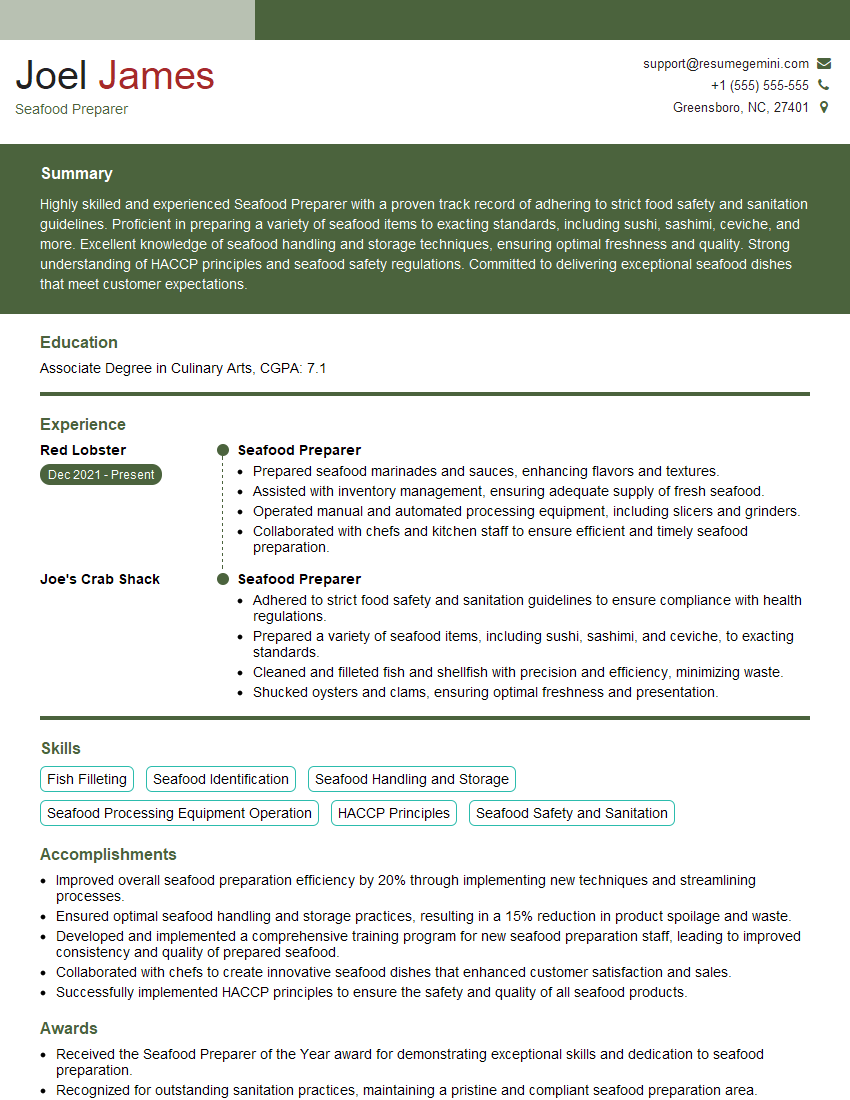
Mastering shucking and filleting skills opens doors to exciting career opportunities in the culinary and seafood industries. To increase your chances of landing your dream job, it’s crucial to present your qualifications effectively. Create an ATS-friendly resume that highlights your skills and experience. ResumeGemini is a trusted resource that can help you build a professional and impactful resume, ensuring your application gets noticed. Examples of resumes tailored to the Shucking and Filleting industry are available to guide you. Invest time in crafting a compelling resume—it’s your first impression and a critical step toward securing your next role.
Explore more articles
Users Rating of Our Blogs
Share Your Experience
We value your feedback! Please rate our content and share your thoughts (optional).
What Readers Say About Our Blog
Very informative content, great job.
good