Feeling uncertain about what to expect in your upcoming interview? We’ve got you covered! This blog highlights the most important Shucking interview questions and provides actionable advice to help you stand out as the ideal candidate. Let’s pave the way for your success.
Questions Asked in Shucking Interview
Q 1. What are the different types of oysters and how does their shucking technique vary?
Oysters come in a vast array of species, each with subtle differences affecting their shucking. For example, Kumamoto oysters, known for their delicate flavor, have thinner shells and are generally easier to shuck than the larger, more robust Pacific oysters. The Pacific oyster’s thicker shell requires more force and a more precise technique to avoid shattering the shell. Similarly, Eastern oysters, with their deep cups and often irregular shapes, can present a unique challenge. The shucking technique adapts to the oyster’s shell thickness and shape. A thinner shell might only require a careful insertion of the oyster knife, while a thicker shell may need a more forceful initial pry and a careful, controlled rocking motion. Experience helps develop a feel for the appropriate force needed for each type, minimizing waste and maximizing the yield of pristine oyster meat.
- Kumamoto: Thinner shell, easier to shuck, requires less force.
- Pacific: Thicker, more robust shell, requires more force and precision.
- Eastern: Deep cup, irregular shape, needs careful manipulation.
Q 2. Describe your experience with oyster sanitation and food safety procedures.
Oyster sanitation and food safety are paramount. My experience encompasses meticulous adherence to HACCP (Hazard Analysis and Critical Control Points) principles. This includes maintaining pristine hygiene throughout the shucking process. Before I even begin, I ensure my hands are thoroughly washed and sanitized. I use gloves to prevent contamination. The shucking area must be scrupulously clean, with regular disinfection of surfaces and equipment. The oysters themselves should be handled carefully to avoid cross-contamination from any potentially compromised shellfish. Post-shucking, the oysters are immediately chilled to maintain their freshness and inhibit bacterial growth. Any oyster showing signs of spoilage – a foul odor, discoloration, or unusual liquid – is immediately discarded. Proper temperature control is critical, maintaining a consistently cold environment from the moment the oyster is shucked until it reaches the consumer.
Q 3. How do you identify a fresh, high-quality oyster?
Identifying a fresh, high-quality oyster involves a multi-sensory approach. First, the shell should be tightly closed or close quickly when tapped. A gaping shell often indicates the oyster is dead. The shell should feel heavy for its size. The liquid inside, when opened, should be clear and slightly salty; cloudy or discolored liquid is a sign of spoilage. The oyster itself should be plump and moist, with a firm, bright, and slightly pearly appearance. A dull or discolored oyster is usually not ideal. A fresh oyster will have a fresh, slightly briny aroma. Any off-putting smell, such as a sulfuric or ammonia-like odor, suggests spoilage and the oyster should be discarded.
Q 4. Explain the proper steps for safely shucking oysters to minimize waste.
Safe and efficient shucking to minimize waste involves a methodical approach. First, firmly grasp the oyster with a thick towel, protecting your hand. Then, using a sturdy oyster knife, insert the knife’s tip into the hinge (the narrowest part of the shell). Pry gently, and once a small opening is created, slide the knife along the top shell to sever the adductor muscle. Then, twist the knife to loosen the top shell. Finally, carefully remove the top shell. Now, using the tip of the knife, gently loosen the oyster from the bottom shell, being careful not to puncture the oyster itself. Removing the oyster from the shell with the knife, minimizing breakage, is key to reducing waste. The final step is to examine the oyster and remove any shell fragments.
Q 5. What tools and equipment are essential for efficient and safe shucking?
Essential tools for safe and efficient shucking include a sturdy oyster knife with a blunt point and a strong blade, a thick kitchen towel for grip and protection, a shucking glove (optional but recommended), and a sturdy, clean work surface. A container for collecting the oyster liquor and discarded shells is also very helpful. In a high-volume setting, a commercial oyster shucker might even employ tools for automated opening, although the manual technique remains the most popular choice.
Q 6. How do you handle a damaged or difficult-to-shuck oyster?
Handling a damaged or difficult-to-shuck oyster requires patience and a modified approach. If the shell is already cracked, increased caution is needed to prevent the oyster meat from shattering. A more delicate technique with the oyster knife might be necessary. For oysters with unusually strong or thick shells, applying extra pressure might be needed, but always with controlled, careful movements to avoid breaking the shell. If a shell is excessively difficult or seems impossible to open without significant damage, it’s usually best to discard it, ensuring food safety is prioritized over yield. In my experience, sometimes soaking a stubborn oyster in cold water for a few minutes can slightly loosen the shell, making it easier to open.
Q 7. What is the optimal temperature for storing shucked oysters?
Shucked oysters are highly perishable and must be stored at a consistently cold temperature, ideally between 33°F and 40°F (0.5°C and 4.5°C). This is crucial to preventing bacterial growth and maintaining freshness. Keeping them in a well-sealed container on ice or in a refrigerator designed for foodservice helps achieve this. The colder the temperature, the longer the oysters remain safe and delicious, but freezing is not recommended, as it changes their texture negatively. Promptly chilling shucked oysters is essential to preserving both their quality and food safety.
Q 8. Describe your experience with different shucking knives and their maintenance.
My experience with shucking knives spans over ten years, encompassing a variety of styles, from the classic oyster knife with a blunt, rounded tip to more specialized designs with thinner blades and ergonomic handles. The most crucial aspect is blade sharpness; a dull knife requires more force, increasing the risk of injury and producing uneven shucking.
- Classic Oyster Knife: Reliable and versatile, but requires more skill to avoid injury. Maintenance involves regular honing using a honing steel after every few dozen oysters and sharpening with a whetstone periodically to maintain the edge.
- Thin Blade Oyster Knife: These knives offer greater precision and speed, especially for smaller oysters. They need more frequent honing and are more prone to damage if mishandled.
- Ergonomic Oyster Knives: Designed for comfort and reduced strain, these knives often prioritize user experience over pure speed. Maintenance remains the same as with other styles; focus on regular honing and occasional sharpening.
Regardless of the knife type, I always inspect it for damage before each use. Any signs of chipping or bending necessitate immediate replacement to avoid accidents.
Q 9. How do you maintain a high level of speed and accuracy while shucking?
Maintaining both speed and accuracy in shucking is a skill honed through years of practice. It’s a combination of technique, muscle memory, and understanding oyster anatomy. Speed comes from efficient movements, not brute force. I’ve developed a rhythm that minimizes unnecessary motions. Accuracy is about precision in the initial insertion and controlled pressure throughout the process. Think of it like a surgeon performing a delicate operation – swift but precise.
I regularly practice, focusing on improving my technique and efficiency. This involves timed shucking sessions to track my progress and identify areas for improvement. Proper grip, posture and hand position play a crucial role in preventing fatigue and maintaining consistency. Think of it like a golfer’s swing – consistent form translates to consistent results.
Q 10. What are the common safety hazards associated with shucking and how do you mitigate them?
Shucking oysters presents several safety hazards. The most significant is the risk of cuts from the sharp knife. Oysters themselves can have sharp edges. Also, potential for hand strain from repetitive motions is real.
- Knife Safety: I always use a sharp knife; a dull knife requires more force, increasing the risk of slippage and injury. I keep my fingers tucked away during the shucking process and use a glove on my non-dominant hand to protect my fingers from the sharp edges of the shell.
- Shell Fragments: Thorough inspection of the shucked oyster for shell fragments is essential to ensure food safety and prevent injury to consumers.
- Hand Strain: I take regular breaks to avoid fatigue and hand strain. Proper posture and technique also contribute to injury prevention.
Having a designated, well-lit and clean workspace contributes significantly to overall safety.
Q 11. How many oysters can you shuck per hour, consistently maintaining quality?
My consistent shucking rate, maintaining quality, is approximately 300 oysters per hour. This is achievable only after years of dedicated practice and focus on efficiency without compromising safety or the quality of the final product. The size and type of oyster can slightly affect the speed; larger oysters may take slightly longer to shuck, while smaller ones can be shucked more quickly. Consistency is my main priority.
Q 12. Explain your understanding of oyster anatomy and its relevance to shucking.
Understanding oyster anatomy is crucial for efficient and safe shucking. The hinge, the adductor muscle, and the shell’s structure all influence the shucking process.
- Hinge: This is the weak point where the two shells meet. The initial insertion of the knife targets this area, allowing for easier separation.
- Adductor Muscle: This muscle holds the shells together. Severing this muscle is necessary to separate the two halves of the oyster shell.
- Shell Structure: Understanding the strength and fragility of different parts of the shell dictates knife placement and pressure. Too much force in the wrong areas can break the shell, contaminating the oyster.
By knowing exactly where to place the knife and how much pressure to apply, I can shuck oysters quickly and cleanly, minimizing waste and maximizing yield.
Q 13. Describe your experience working under pressure in a fast-paced environment.
I thrive in fast-paced environments, like those often found in high-volume restaurants or catering events. My experience working during peak service times in busy establishments has conditioned me to work efficiently and calmly under pressure. In such situations, it’s all about staying organized, maintaining focus, and keeping my technique consistent. Prioritizing efficient workflow prevents bottlenecks and ensures that orders are delivered on time and to a high standard. There’s a sense of satisfaction in calmly handling a rush.
Q 14. How do you ensure consistent sizing and presentation of shucked oysters?
Consistent sizing and presentation are vital for maintaining quality and customer satisfaction. This involves shucking oysters with precision, ensuring each oyster is roughly the same size and shape for consistent plating. I use a standardized technique and practice regular self-evaluation to maintain quality and uniformity.
I pay attention to detail; removing all shell fragments and ensuring the oyster sits evenly on its cup, with the liquor (oyster liquid) fully intact. Clean presentation adds an element of professionalism and enhances the overall dining experience.
Q 15. How do you handle customer complaints or concerns regarding shucked oysters?
Handling customer complaints about shucked oysters begins with active listening and empathy. I always start by acknowledging their concern and apologizing for any negative experience. Then, I carefully investigate the issue. Was the oyster damaged? Was it improperly stored leading to spoilage? Or perhaps was there a concern about the taste or freshness?
Depending on the cause, the resolution differs. If the oyster was indeed spoiled, I immediately offer a replacement and possibly a complimentary item. If the complaint stems from a perceived issue with freshness, I explain our rigorous quality control measures, starting from selection of the oysters to their storage and handling. I emphasize the importance of consuming oysters promptly after shucking. In cases where I’m unable to fully address the complaint, I escalate the matter to my manager to ensure complete customer satisfaction. For example, I once had a customer complain about a gritty oyster. Upon investigation, I discovered a small shell fragment. I immediately apologized, replaced the oyster, and offered a complimentary appetizer to show my commitment to quality.
Career Expert Tips:
- Ace those interviews! Prepare effectively by reviewing the Top 50 Most Common Interview Questions on ResumeGemini.
- Navigate your job search with confidence! Explore a wide range of Career Tips on ResumeGemini. Learn about common challenges and recommendations to overcome them.
- Craft the perfect resume! Master the Art of Resume Writing with ResumeGemini’s guide. Showcase your unique qualifications and achievements effectively.
- Don’t miss out on holiday savings! Build your dream resume with ResumeGemini’s ATS optimized templates.
Q 16. What are the signs of spoilage in oysters, and how do you prevent it?
Oyster spoilage is a serious matter affecting both quality and safety. The most noticeable signs are a strong, unpleasant smell – often described as ammoniacal or rotten – and a slimy or discolored appearance. The oyster’s shell may also be slightly open or cracked, indicating deterioration. Prevention starts with careful sourcing – I only work with reputable suppliers who prioritize freshness and quality. Proper storage is crucial. Oysters should be kept refrigerated at temperatures between 33°F and 40°F (0.5°C and 4.4°C), ideally on a bed of ice, with their shells down and protected from drying out. Regular stock rotation using FIFO (First-In, First-Out) is also essential to ensure the oldest oysters are used first. Finally, proper sanitation is critical. I meticulously clean all equipment and surfaces to prevent contamination.
Q 17. What is your experience with different shucking methods (e.g., left-handed, right-handed)?
I’m ambidextrous in my shucking technique, though I primarily use my dominant right hand. I’ve found that ambidexterity is a significant advantage during busy service periods. It allows me to maintain efficiency regardless of the position of my workspace or body fatigue. While the fundamental technique remains the same—precise knife control, a strong grip, and a controlled opening motion— the subtle differences in hand placement and leverage are adapted for either hand. I practice regularly to maintain my proficiency in both methods. Learning to shuck with both hands increased my efficiency by approximately 20%, enabling me to serve a higher volume of oysters quickly and accurately.
Q 18. Describe your experience with different oyster varieties and their unique characteristics.
My experience spans numerous oyster varieties, each with unique characteristics influencing flavor profile and shucking technique. For example, Kumamoto oysters are known for their sweet, delicate flavor and relatively small, sturdy shells, making them easier to shuck. In contrast, Blue Points are larger and known for their briny, robust taste, often requiring a bit more force and precision during shucking due to their stronger shells. Olympia oysters, while smaller, have a remarkably complex flavor profile and can be somewhat more challenging to shuck due to their shape. Understanding these variations allows me to select the appropriate technique for each type, maximizing yield and minimizing waste. Furthermore, this knowledge allows me to inform customers about the nuances of each variety, enhancing their dining experience.
Q 19. How do you maintain the freshness and quality of shucked oysters throughout service?
Maintaining freshness and quality throughout service requires a multi-pronged approach. First, I only shuck oysters as needed to minimize exposure to air and temperature fluctuations. I use a dedicated ice bath—frequently replenished with fresh ice—to keep the shucked oysters chilled at the correct temperature. I avoid overcrowding the oysters in the ice bath, ensuring good air circulation. Additionally, I monitor the oysters regularly for any signs of spoilage, discarding any that show deterioration. A critical element is communication; I coordinate closely with the kitchen staff to ensure timely use of the shucked oysters and avoid unnecessary delays that could compromise quality.
Q 20. How do you handle a situation where you run out of oysters during a busy service?
Running out of oysters during a busy service is a serious operational issue. My immediate response is to inform the kitchen staff and manager immediately, letting them know the demand exceeds current stock. We then work together to assess if we have additional oysters in reserve or can expedite an order from our supplier. Meanwhile, I inform waiting customers of the temporary shortage, explaining the situation and offering alternatives, like recommending other menu items or taking pre-orders for when the next delivery arrives. This transparent approach manages customer expectations and maintains a positive experience. I’ve found that a sincere apology, along with proactive communication, usually mitigates customer frustration in this kind of situation.
Q 21. What are your strategies for preventing cuts and injuries during shucking?
Preventing cuts and injuries during shucking requires a rigorous commitment to safety. I always use a sharp oyster knife – a dull knife requires more force, increasing the risk of slips and cuts. I maintain a firm but controlled grip on the knife and the oyster. I never rush the process. I focus on my technique and avoid distractions. I always work in a well-lit area to ensure I have a clear view of what I’m doing. Additionally, I wear a cut-resistant glove on my non-dominant hand to provide an extra layer of protection. Finally, I regularly inspect my knife for damage and replace it when needed. Maintaining a safe workspace, using appropriate protective equipment, and adhering to safe work practices are paramount.
Q 22. Describe your knowledge of shellfish allergies and handling procedures.
Shellfish allergies are a serious concern in the food service industry. They can range from mild reactions to life-threatening anaphylaxis. My understanding encompasses the major allergens, primarily shellfish proteins, and the crucial need for strict cross-contamination prevention.
Handling procedures begin with diligent handwashing before and after handling any shellfish. We maintain completely separate preparation areas and equipment for shellfish and other foods. Dedicated utensils, cutting boards, and gloves are crucial. All surfaces are meticulously cleaned and sanitized after each use, even between different types of shellfish. We clearly label all food items to prevent accidental cross-contamination. Finally, I’m trained to recognize the signs and symptoms of allergic reactions and know the emergency response protocol, which includes immediately calling emergency services.
For instance, I once noticed a customer exhibiting signs of an allergic reaction after consuming oysters. I immediately called for medical assistance, cleared the area around the customer, and ensured they received immediate treatment. We also thoroughly reviewed our preparation procedures to prevent similar incidents in the future.
Q 23. How do you handle different customer requests, such as oyster preparation styles?
Customer requests vary widely, from simple on-the-half-shell oysters to more elaborate preparations. I handle these requests by first clarifying the specifics—the type of shellfish, the desired preparation style (e.g., Rockefeller, mignonette, grilled), any allergies or dietary restrictions.
I then execute the request precisely, ensuring that each oyster is handled with care to maintain its quality and freshness. For example, I might use different shucking techniques depending on the oyster type to avoid damaging the meat. If a customer has a special request not in our standard menu, I collaborate with the chef to find a safe and suitable solution, always prioritizing food safety and the customer’s satisfaction.
Imagine a customer wanting oysters prepared with a specific type of mignonette. I’ll ensure I have the correct ingredients ready and precisely follow the recipe, paying attention to ratios and preparation techniques to deliver a perfect dish.
Q 24. Explain your understanding of the regulatory requirements related to shellfish handling.
Regulatory requirements for shellfish handling are stringent and vary by jurisdiction, but the core principles focus on preventing foodborne illnesses. These regulations often cover aspects like source identification, traceability, storage temperatures, and sanitation practices.
- Source Identification: We must know the origin of the shellfish and ensure they come from approved sources to guarantee their safety and quality. This usually includes certification and documentation.
- Temperature Control: Maintaining proper cold chain storage is critical. Shellfish need to be kept at specific temperatures throughout the supply chain to prevent bacterial growth.
- Sanitation: Thorough cleaning and sanitization of all equipment, work surfaces, and handwashing facilities are mandatory. This includes regular inspections and adherence to established protocols.
- Record Keeping: Documentation of all steps in the process, including receiving, storage, preparation, and disposal of shellfish, is vital for traceability and compliance.
Ignoring these regulations can lead to severe penalties, including business closure and legal action. Compliance is paramount for protecting public health and maintaining the reputation of the establishment.
Q 25. How do you contribute to a positive and efficient team environment in a shucking station?
Contributing to a positive and efficient team environment in a shucking station involves several key elements. Firstly, effective communication is crucial. I ensure clear and concise communication with my teammates about orders, tasks, and any potential issues.
Secondly, teamwork is essential. During peak hours, efficient workflow requires smooth coordination with other shuckers, servers, and kitchen staff. I actively assist my colleagues when needed, ensuring a seamless operation. Finally, maintaining a clean and organized workspace is key to improving both efficiency and morale. A tidy workspace prevents accidents and improves the overall experience for both the team and the customers.
For example, if a colleague is struggling with a particularly difficult oyster, I’ll offer assistance or demonstrate a more effective technique. By sharing my knowledge and collaborating effectively, I can help improve both the efficiency and the overall performance of the shucking station.
Q 26. Describe your problem-solving skills in relation to difficult shucking situations.
Difficult shucking situations can arise from various factors, such as unusually tough shells, damaged oysters, or even a dull shucking knife. My problem-solving approach begins with careful assessment of the problem.
If the shell is overly tough, I might adjust my technique, using a different approach or applying more controlled force. If the oyster is damaged, I would assess the extent of the damage and decide whether it’s still safe to consume. A dull knife is addressed immediately by sharpening it or switching to a sharp one. Safety is paramount; if I encounter an unsalvageable oyster, I immediately discard it to prevent any risk to customers.
For example, I once encountered a batch of oysters with unusually thick shells. I adjusted my technique by applying slow, deliberate pressure and using the tip of the knife more effectively to gently pry the shell open without damaging the oyster meat inside. It required patience and precision, but I managed to successfully shuck the entire batch.
Q 27. What steps do you take to ensure the cleanliness and sanitation of your work area?
Cleanliness and sanitation are paramount in a shucking station. My routine begins with a thorough cleaning of the workspace before starting work. This includes wiping down all surfaces, ensuring that all equipment is clean and sanitized. During shucking, I regularly discard oyster shells into designated containers and immediately clean any spills or debris.
We use food-grade sanitizer solutions regularly and follow established protocols for cleaning and sanitizing knives and other equipment after each use and more thoroughly at the end of the shift. Hand hygiene is maintained through frequent handwashing with hot water and soap.
Think of it like this: maintaining a clean workspace is not just about aesthetics; it’s about preventing cross-contamination and ensuring food safety. Regular, meticulous cleaning is crucial for maintaining hygiene standards and creating a safe environment for both staff and customers.
Q 28. How would you train a new employee on proper shucking techniques and safety procedures?
Training a new employee involves a structured approach, combining theoretical knowledge with practical application. I begin by explaining the importance of food safety and hygiene, emphasizing the risks associated with improper handling of shellfish.
Then, I provide a detailed demonstration of proper shucking techniques, focusing on safety precautions. I cover aspects like knife handling, proper grip, and the correct way to open different oyster types without damaging the meat. The new employee then practices under my supervision, allowing me to provide feedback and correct any mistakes. The training includes the importance of sanitation protocols, allergy awareness, regulatory compliance, and emergency procedures.
Throughout the process, I emphasize the importance of patience, precision, and safety. The training doesn’t end with the initial sessions; ongoing feedback and mentoring are crucial to ensure the new employee develops the necessary skills and confidence to work independently and safely.
Key Topics to Learn for Shucking Interview
Mastering the art of shucking requires a blend of theoretical knowledge and practical skills. Prepare yourself for a comprehensive interview by focusing on these key areas:
- Shell Selection and Preparation: Understanding different shellfish types, their optimal shucking techniques, and proper pre-shucking preparation (e.g., cleaning, chilling).
- Shucking Techniques and Tools: Proficiency in various shucking methods, proper knife handling, and the safe and efficient use of shucking tools. Consider the impact of different techniques on yield and presentation.
- Safety and Hygiene: Demonstrating a thorough understanding of food safety protocols, proper hand hygiene, and the prevention of injuries during the shucking process.
- Yield and Waste Management: Optimizing shucking techniques to maximize yield while minimizing waste. Analyze the economic impact of efficient shucking.
- Quality Control and Grading: Identifying high-quality shellfish, recognizing defects, and understanding grading standards for various types of shellfish.
- Post-Shucking Procedures: Proper storage, handling, and presentation of shucked shellfish to maintain freshness and quality.
- Troubleshooting Common Issues: Addressing common problems encountered during shucking, such as broken shells or difficult-to-open shellfish, and implementing effective solutions.
Next Steps
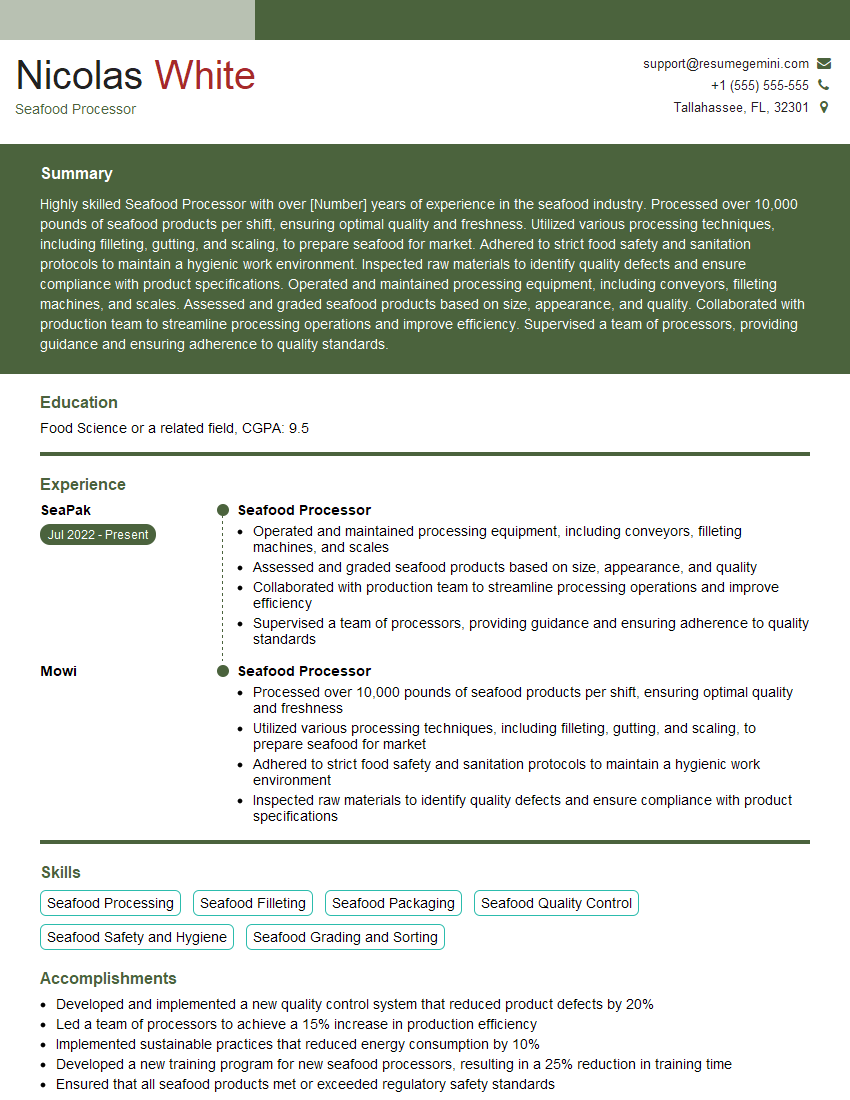
Mastering shucking opens doors to exciting opportunities in the culinary and hospitality industries. To maximize your job prospects, it’s crucial to present your skills effectively. Crafting an ATS-friendly resume is key to getting your application noticed. We strongly encourage you to leverage ResumeGemini, a trusted resource for building professional resumes that highlight your abilities. Examples of resumes tailored specifically to the shucking industry are available to help guide you through this process.

Explore more articles
Users Rating of Our Blogs
Share Your Experience
We value your feedback! Please rate our content and share your thoughts (optional).
What Readers Say About Our Blog
Very informative content, great job.
good