Feeling uncertain about what to expect in your upcoming interview? We’ve got you covered! This blog highlights the most important Sign Making interview questions and provides actionable advice to help you stand out as the ideal candidate. Let’s pave the way for your success.
Questions Asked in Sign Making Interview
Q 1. What types of sign materials are you familiar with and their applications?
Choosing the right sign material is crucial for its effectiveness and longevity. The material you select depends heavily on the sign’s location, intended use, and desired aesthetic. Here are some common materials and their applications:
- Aluminum: Durable, lightweight, and weather-resistant, making it ideal for outdoor signs, especially those requiring intricate designs or large sizes. I often use brushed aluminum for a modern look or powder-coated aluminum for vibrant colors and extra protection.
- Acrylic (Plexiglass): Known for its clarity and vibrant color reproduction. It’s perfect for indoor and outdoor signs, particularly illuminated signs or where a sleek, modern look is required. Think of those elegant storefront signs.
- PVC: A versatile, cost-effective material suitable for various applications. It’s durable and weather-resistant, making it a popular choice for banners, temporary signs, and even some long-term outdoor signage. However, it’s not as strong as aluminum.
- Wood: Offers a rustic, traditional aesthetic. While beautiful, wood requires more maintenance to withstand the elements and is typically used for indoor signs or in sheltered outdoor locations. I’ve used reclaimed wood for a unique, sustainable look.
- Foam Core: A lightweight, inexpensive material suitable for short-term indoor signs or prototypes. It’s not weather-resistant and is easily damaged.
The choice is often a balance between durability, cost, aesthetics, and the specific environment the sign will be placed in. For instance, a temporary trade show banner might utilize PVC for its affordability and ease of transport, while a permanent monument sign would likely benefit from the strength and durability of aluminum.
Q 2. Describe your experience with different sign printing methods (e.g., screen printing, digital printing).
My experience spans both traditional and modern printing methods. Each has its own strengths:
- Screen Printing: This is a time-tested technique ideal for producing high-volume, durable signs with bold, vibrant colors, particularly on rigid substrates like aluminum. Screen printing excels at printing on textured surfaces and provides excellent opacity. I’ve used it extensively for creating layered effects on signs with intricate designs. However, setup costs can be high, making it less efficient for smaller runs.
- Digital Printing: Provides unparalleled versatility and speed, allowing for intricate details, photorealistic images, and variable data printing (perfect for personalized signage). It’s highly cost-effective for small to medium runs, and I frequently use it for producing vinyl banners, vehicle wraps, and point-of-sale displays. The quick turnaround is a major advantage.
The choice between screen and digital printing often hinges on the quantity, design complexity, and material being printed. For instance, I might choose screen printing for a large run of simple, bold-colored signs on aluminum, while digital printing would be better suited for a small batch of full-color vinyl banners with intricate images.
Q 3. How do you ensure the longevity and weather resistance of outdoor signs?
Ensuring longevity and weather resistance for outdoor signs requires a multi-faceted approach. It starts with selecting the appropriate materials, as discussed previously. Beyond the material itself, several other factors contribute significantly:
- UV-Resistant Inks and Coatings: Using inks and coatings specifically designed to resist fading from prolonged sun exposure is critical. These coatings create a protective barrier against UV damage, extending the sign’s lifespan.
- Laminates: Adding a protective laminate film over printed graphics further enhances weather resistance. Different laminates provide varying levels of protection against scratches, UV damage, and moisture.
- Proper Installation: Correct installation is crucial. Signs need to be securely mounted to withstand wind and other environmental factors. Poor installation can lead to premature damage and compromise the sign’s life.
- Regular Maintenance: While not strictly part of the initial production, regular cleaning and maintenance can greatly extend the life of a sign. Removing dirt and grime prevents buildup that can damage the surface and lead to premature deterioration.
For example, I recently worked on a project where a client wanted a sign for a beachfront property. We opted for aluminum with a UV-resistant powder coat and a high-gloss laminate to maximize its resilience against salt spray and harsh sun. We also ensured the installation was exceptionally secure to withstand strong coastal winds.
Q 4. Explain your process for designing a sign, from concept to final product.
My sign design process is a collaborative and iterative one. It typically follows these steps:
- Client Consultation: Understanding the client’s needs, target audience, and budget is the first step. We discuss the sign’s purpose, location, desired message, and aesthetic preferences.
- Concept Development: Based on the client’s brief, I create several design concepts, often presenting sketches and digital mockups to illustrate different approaches.
- Design Refinement: The chosen concept is refined through multiple revisions, incorporating client feedback and incorporating any necessary changes to improve clarity and impact.
- Material Selection: We choose the optimal materials considering factors like durability, cost, and the environment.
- Production: The sign is produced using the appropriate printing and fabrication techniques.
- Installation: The sign is professionally installed, following all safety regulations.
Throughout the process, open communication and collaboration are key. I often use digital proofing to allow clients to visualize the finished product before production, minimizing the risk of errors or unexpected results. For example, for a recent restaurant sign, we went through three iterations of the design, adjusting the font, color scheme, and overall layout to perfectly capture the restaurant’s brand.
Q 5. What software programs are you proficient in for sign design and production?
Proficiency in design and production software is essential for efficient and high-quality sign making. I am proficient in the following software:
- Adobe Illustrator: For vector-based design, creating scalable logos, typography, and intricate graphics.
- Adobe Photoshop: For raster-based image editing and manipulation, enhancing photos and creating realistic mockups.
- CorelDraw: Another powerful vector graphics editor, useful for a range of sign design tasks.
- SignLab (or similar RIP software): For controlling large format printers and optimizing print settings for various materials. This software is vital for efficient production.
These tools allow me to create high-resolution designs, manage color profiles accurately, and ensure seamless integration with various printing and cutting technologies. For instance, when creating a vehicle wrap, I use Illustrator for the vector design, Photoshop for image enhancements, and SignLab to output the print job with the correct settings for the vinyl film being used.
Q 6. Describe your experience with sign installation, including safety procedures.
Sign installation is as critical as the design and production. Safety is paramount, and my approach emphasizes careful planning and adherence to all safety regulations. My process involves:
- Site Assessment: A thorough assessment of the installation location is crucial. This includes identifying any potential hazards, considering access points, and determining the most appropriate mounting method.
- Permitting (where required): Obtaining necessary permits for installation is a crucial step.
- Safe Work Practices: I always use proper safety equipment, including harnesses, fall protection, and appropriate lifting gear when necessary. Teamwork and clear communication are key during installation.
- Secure Mounting: Using appropriate anchoring methods and ensuring the sign is securely mounted to withstand environmental forces is essential.
- Post-Installation Inspection: A final inspection is always performed to ensure everything is secure and functioning as intended.
For example, installing a large sign on a high-rise building requires meticulous planning, specialized equipment, and a qualified team. I always follow stringent safety protocols, including using fall protection systems and ensuring that all team members are properly trained and certified.
Q 7. How do you handle challenging installations, such as difficult terrain or high-rise buildings?
Challenging installations require creative problem-solving and adaptability. Here’s how I approach them:
- Detailed Site Survey: A thorough on-site survey is critical for identifying any unique challenges, such as difficult terrain, limited access, or structural limitations.
- Specialized Equipment: Using specialized equipment, like cranes, lifts, or specialized rigging, is often necessary for safe and efficient installation.
- Innovative Mounting Solutions: In cases of difficult terrain or unusual building structures, I may need to develop custom mounting solutions to ensure the sign’s stability and longevity.
- Collaboration with Experts: Working closely with structural engineers, building management, or other relevant experts may be necessary to ensure a safe and compliant installation.
For instance, I once had to install a sign on a steep, rocky hillside. We used a combination of rock anchors, specialized rigging, and a winch system to safely and effectively mount the sign. The success of that project relied on careful planning, creative problem-solving, and a team effort that leveraged the strengths of each team member.
Q 8. What are the common regulations and permits required for sign installation in your area?
Sign installation regulations vary significantly depending on location, but generally involve zoning ordinances, building codes, and sometimes even historical preservation guidelines. In my area, for example, we must obtain permits from the city’s Department of Public Works and the relevant Historic Preservation Commission if the building is in a designated historical district. These permits often require detailed sign plans, including dimensions, materials, lighting specifications, and setback requirements from the property line and street. Failure to comply can result in significant fines and even forced removal of the sign. We also need to consider ADA (Americans with Disabilities Act) compliance, ensuring that signage is accessible to people with disabilities, with appropriate font sizes and braille where needed.
- Zoning Permits: These control the size, location, and type of signs allowed in different zoning districts.
- Building Permits: These are required if the sign installation involves any structural modifications to the building.
- Historical Preservation Permits: Necessary in historical districts to ensure the sign’s design complements the area’s character.
- ADA Compliance: Ensuring accessibility for people with disabilities is a legal requirement.
Obtaining the necessary permits is a crucial first step in any sign installation project. We meticulously prepare our applications to ensure a smooth and timely approval process.
Q 9. How do you manage multiple sign projects simultaneously, ensuring timely completion?
Managing multiple sign projects requires meticulous organization and effective time management. I use project management software to track deadlines, allocate resources, and monitor progress. This allows me to keep all projects on schedule and within budget. For instance, I break down large projects into smaller, manageable tasks, assigning specific deadlines and responsibilities to team members. Regular check-ins and progress reports help identify and address potential delays early on. Prioritizing tasks based on urgency and deadlines is crucial. For example, a deadline-sensitive project for a grand opening will take precedence over a less time-critical project. Clear communication with clients is essential throughout the process to manage expectations and ensure everyone is on the same page. Visual aids like Gantt charts are also extremely helpful in visualizing timelines and task dependencies.
Think of it like conducting an orchestra – each musician (team member) needs to play their part at the right time for a harmonious result. The project management software is my conductor’s baton, keeping everything synchronized and in rhythm.
Q 10. How do you determine the appropriate size and placement of a sign for optimal visibility?
Determining the optimal size and placement of a sign involves a combination of factors, including location, target audience, and the message itself. We consider factors like traffic speed, viewing distance, and surrounding signage. A sign that’s too small might go unnoticed, while one that’s too large can be overwhelming or even illegal. We use design software and sometimes conduct site surveys to assess visibility. For example, a small business on a busy street needs a larger, more prominent sign than a similar business in a quieter residential area. Placement is also critical. The sign should be visible from a safe distance without obstructing traffic or pedestrian walkways. We also need to consider the angles of visibility. A sign placed too low might be obstructed by parked cars, while one placed too high may be difficult to read from the ground.
We often use a rule of thumb: the viewer should be able to read the sign’s message from a comfortable distance, usually around 5-7 seconds of driving time. Accurate calculations are often done using specialized sign design software to ensure optimal visibility.
Q 11. Explain your experience with different types of sign lighting (e.g., LED, neon).
I have extensive experience with various sign lighting technologies, including LED, neon, and channel letters. LED lighting is now the most prevalent due to its energy efficiency, long lifespan, and versatility in color and brightness. We use LEDs in a wide range of applications, from small business signs to large-scale billboards. Neon lighting, while more traditional, still has its place, particularly for creating a vintage or eye-catching effect. Its vibrant glow offers a unique aesthetic. Channel letters offer a sophisticated and dimensional look, and we often incorporate LEDs within them for maximum impact. The choice of lighting depends on the sign’s design, budget, and the desired ambiance. For example, a modern cafe might opt for energy-efficient LEDs, while a retro diner might prefer the classic glow of neon. Safety is paramount when working with any lighting technology, and we strictly adhere to electrical codes and safety regulations during installation and maintenance.
Q 12. How do you troubleshoot and resolve common sign-related problems?
Troubleshooting sign-related problems requires a systematic approach. We begin by identifying the issue – is it a lighting problem, a structural issue, or a problem with the graphic? We use diagnostic tools, such as multimeters to check electrical circuits, to pinpoint the root cause. Common problems include flickering lights (often due to faulty ballasts or connections), loose or damaged wiring, and faded or damaged graphics. For lighting issues, we check the power supply, wiring, and the bulbs or LEDs themselves. Structural problems, such as loose brackets or damaged frames, require careful assessment and repair. Faded or damaged graphics often require replacement or refurbishment. Our approach is always to repair and restore functionality whenever possible; however, complete replacement is sometimes necessary.
We document all repairs and maintenance activities for future reference, building a detailed history of each sign we manage.
Q 13. Describe your experience with working with clients and understanding their design needs.
Building strong relationships with clients is crucial to successful sign-making. We begin by actively listening to their needs, understanding their business goals, and their brand identity. We ask questions to clarify their vision and expectations, ensuring we have a thorough understanding of their requirements. We then present design options tailored to their needs, taking into account their budget, location, and target audience. This collaborative process often involves multiple revisions and feedback sessions to ensure the final product perfectly reflects their vision. For example, a client wanting a rustic look for a craft brewery would receive different design options than a client aiming for a sleek, modern look for a tech startup. Clear communication and transparency throughout the process keep the client informed and engaged.
Q 14. What is your experience with sign maintenance and repair?
Sign maintenance and repair are essential for ensuring the longevity and effectiveness of signage. Regular inspections are key to identifying potential problems early on. We offer various maintenance packages, tailored to the client’s needs and the type of sign. These packages include cleaning, lighting checks, structural inspections, and repairs as needed. Regular cleaning prevents dirt and grime from accumulating, extending the life of the sign and maintaining its visual appeal. Lighting checks ensure the proper functioning of the lighting system and identify any burned-out bulbs or other issues. Structural inspections ensure the stability and safety of the sign, looking for any signs of wear and tear. Prompt repair of any identified problems prevents minor issues from escalating into costly repairs.
Imagine a car needing regular maintenance – neglecting this leads to bigger and more expensive issues later. Signs are the same; preventative maintenance saves time and money in the long run.
Q 15. What are some common issues that you encounter while working with vinyl or other sign materials?
Working with vinyl and other sign materials presents several challenges. One common issue is air bubbles trapped under the vinyl during application. This can ruin the aesthetic appeal and potentially lead to premature peeling. Another frequent problem is wrinkling or creasing, especially with larger sheets of vinyl, often caused by improper handling or storage. Furthermore, material incompatibility can arise. For instance, using the wrong adhesive on a specific substrate might result in poor adhesion or discoloration. Finally, weeding – the process of removing unwanted vinyl from the carrier sheet – can be tedious and requires precision to avoid damaging the design. If not done carefully, you risk creating imperfections or even ruining the whole piece. For example, I once encountered a situation where a client needed a very intricate design with extremely thin lines. The weeding process was particularly challenging, requiring patience and specialized tools to maintain quality.
- Air Bubbles: Use a squeegee to thoroughly remove air pockets during application.
- Wrinkles/Creases: Properly heat the vinyl with a heat gun (while being careful not to overheat and damage it) to relax wrinkles. Ensure the surface is clean and free of debris.
- Material Incompatibility: Always check the manufacturer’s instructions for compatibility and recommended application methods.
- Weeding Issues: Invest in high-quality weeding tools and practice proper techniques. Consider using a weeding hook for more intricate designs.
Career Expert Tips:
- Ace those interviews! Prepare effectively by reviewing the Top 50 Most Common Interview Questions on ResumeGemini.
- Navigate your job search with confidence! Explore a wide range of Career Tips on ResumeGemini. Learn about common challenges and recommendations to overcome them.
- Craft the perfect resume! Master the Art of Resume Writing with ResumeGemini’s guide. Showcase your unique qualifications and achievements effectively.
- Don’t miss out on holiday savings! Build your dream resume with ResumeGemini’s ATS optimized templates.
Q 16. How do you ensure the accurate reproduction of colors and graphics on signs?
Color accuracy is paramount in sign making. We achieve this through a combination of techniques. Firstly, we use high-quality printers calibrated regularly using color profiling tools. Secondly, we work with Pantone Matching System (PMS) colors. This system provides a standardized color language, ensuring that the colors specified by the client will be reproduced consistently across different prints and materials. For example, if a client needs their logo printed in their specific shade of blue, we will convert that blue into its PMS equivalent to ensure an exact match. Thirdly, we use color management software to manage the workflow from design to print, addressing any variations in color due to different devices and media. We also conduct test prints to verify color accuracy before large-scale production to make sure everything is spot-on. Finally, considering the lighting conditions where the sign will be displayed is crucial, as the same color might appear different under different lighting.
Q 17. How familiar are you with ADA (Americans with Disabilities Act) signage requirements?
I am very familiar with ADA signage requirements. These regulations aim to ensure accessibility for individuals with disabilities. I know the specific requirements for braille and raised characters on signs indicating things like restrooms, exits, and elevators. I also understand the stipulations for font size, font type, contrast ratios, and symbol usage to ensure that the signage is clear and easy to read from a distance and even for those with visual impairments. For instance, I know that certain minimum font sizes and high-contrast color combinations are mandated to guarantee readability for people with low vision. Failure to meet ADA standards can result in significant legal repercussions and financial penalties. I always consult the ADA Standards for Accessible Design to ensure compliance in all my projects.
Q 18. What is your experience with vehicle wraps or window graphics installation?
I have extensive experience in vehicle wraps and window graphic installations. This involves meticulous preparation, precise cutting, and careful application techniques to ensure a seamless and professional finish. The process includes cleaning the vehicle’s surface thoroughly to eliminate any dirt or debris that could affect adhesion. Then, we carefully apply the vinyl, using a squeegee to smooth out any wrinkles or air bubbles. We often use heat guns to conform the vinyl to curves and contours of the vehicle. Window graphics require similar precision and the consideration of visibility from both the inside and outside of the vehicle or building, with the added aspect of potentially affecting the driver’s view. Recently, I completed a project for a local business which involved a full vehicle wrap, and the project required a high level of precision to ensure proper alignment and a smooth finish on the many curves and contours of the vehicle. This experience highlights the importance of having the right tools and skills to execute this work professionally.
Q 19. How do you estimate the cost of materials and labor for a sign project?
Estimating costs for a sign project involves a detailed breakdown of materials and labor. For materials, I consider the type and quantity of substrates (e.g., vinyl, acrylic, aluminum), the ink, adhesives, and any additional components. I obtain quotes from suppliers for accurate pricing and factor in waste. For labor, I estimate the time required for design, printing, cutting, assembly, and installation. My hourly rate is determined based on my experience and industry standards, factoring in complexity and project size. For example, a complex, multi-layered sign with intricate designs will require more time and skill, thus justifying a higher labor cost. I will detail these factors in a written proposal including specific material quantities, labor hours, and a breakdown of costs, allowing the client to understand the price estimate completely.
Q 20. What safety measures do you take when working at heights or using power tools?
Safety is paramount. When working at heights, I always use appropriate fall protection equipment, including harnesses, lanyards, and anchors. I ensure that all equipment is inspected regularly and that I follow all relevant safety guidelines. When using power tools, I wear the necessary personal protective equipment (PPE), such as safety glasses, hearing protection, and work gloves. I also make sure the tools are properly maintained and used according to manufacturer’s instructions. I always maintain a clean and organized work area to prevent accidents. I am trained in using scaffolding safely, and I always ensure that it is properly secured and leveled before beginning any work. Regular safety checks and training are a key part of my business operation.
Q 21. How do you manage your time and prioritize tasks when working under pressure?
Managing time and prioritizing tasks under pressure involves a structured approach. I use project management tools and techniques like task breakdown, timeboxing, and prioritization matrices (like the Eisenhower Matrix). I create detailed project schedules with deadlines for each stage and allocate tasks based on their urgency and importance. I also communicate proactively with clients to manage expectations and avoid unexpected delays. For instance, I might divide a large project into smaller, manageable tasks and create a detailed timeline with specific deadlines for each phase. Regular review of progress against the schedule allows me to identify any potential issues and address them early. This approach helps me to remain calm and productive, even when dealing with tight deadlines.
Q 22. What is your experience with different types of sign structures (e.g., channel letters, illuminated signs)?
My experience encompasses a wide range of sign structures. I’m proficient in designing, fabricating, and installing various types, including channel letters, illuminated signs, and non-illuminated options.
- Channel Letters: I’ve worked extensively with face-lit, reverse-lit, and halo-lit channel letters, using diverse materials like aluminum, stainless steel, and acrylic. For example, I recently completed a project involving custom-designed, LED-illuminated channel letters for a boutique hotel, achieving a sophisticated and eye-catching result. The challenge was ensuring uniform illumination across all letters, which required meticulous attention to internal wiring and LED placement.
- Illuminated Signs: My expertise extends to cabinet signs (both internally and externally illuminated), LED signs (with various pixel pitches and control systems), and lightbox signs (using diverse backlighting techniques). A memorable project involved designing and installing a large-scale LED sign for a stadium, requiring precise calculations to ensure optimal visibility from various distances. This project demanded a deep understanding of lighting design principles and energy efficiency.
- Non-Illuminated Signs: I’m also experienced with various non-illuminated signs, including routed signs, dimensional lettering, and flat panel signs, using materials such as PVC, wood, and metal. A recent project involved creating a sophisticated routed sign for a law firm, needing fine attention to detail and precise cutting to achieve a high-quality finish.
Q 23. How familiar are you with different types of sign permits and building codes?
Navigating sign permits and building codes is crucial for any sign maker. My familiarity with these regulations is extensive, covering local, state, and sometimes federal codes depending on project location and scale.
I understand the complexities of zoning regulations, height restrictions, setbacks, and sign area limitations. I’m adept at preparing all necessary documentation, including site surveys, design plans adhering to code requirements, and submitting applications for permits. I always thoroughly research all applicable codes before commencing any sign project to ensure compliance and avoid delays. For instance, a recent project in a historic district required adherence to strict design guidelines to preserve architectural integrity, demanding careful coordination with the historical preservation board. I’ve successfully navigated these complexities in various jurisdictions, consistently ensuring compliance and minimizing potential legal issues.
Q 24. Describe your experience working with various sign fabrication techniques.
My experience in sign fabrication is diverse, encompassing a wide array of techniques.
- CNC Routing: I’m proficient in using CNC routers for precise cutting and shaping of various substrates, creating intricate designs and dimensional lettering with high accuracy. This is vital for producing consistent, high-quality signs.
- Welding and Metal Fabrication: I’m skilled in welding various metals to create robust sign structures, especially for channel letters and large-scale outdoor signs. This ensures durability and longevity.
- Digital Printing: I utilize large-format digital printing for creating vibrant and high-resolution graphics on a variety of substrates, from vinyl to acrylic. Accurate color matching and image resolution are key to achieving professional results.
- Hand-painting and Lettering: I also possess the traditional skills of hand-painting and hand-lettering, allowing me to offer bespoke and highly customized sign solutions when needed. This is particularly valuable for projects requiring a unique artistic touch.
I seamlessly integrate these techniques depending on project requirements, choosing the most appropriate methods for optimal quality and efficiency.
Q 25. Explain your knowledge of different substrates used in sign manufacturing.
The choice of substrate significantly impacts a sign’s durability, aesthetics, and cost. My experience spans a wide range of materials:
- Aluminum: Lightweight, durable, and readily available in various finishes (powder coating, anodizing), making it ideal for channel letters and exterior signs.
- Acrylic: A versatile material offering excellent clarity and color vibrancy, frequently used for illuminated signs and dimensional lettering.
- PVC: Cost-effective and weather-resistant, suitable for flat panel signs and short-term signage.
- Wood: Used for rustic-style signs, offering a natural and aesthetically pleasing look, often requiring specialized treatments for weather protection.
- Stainless Steel: Extremely durable and resistant to corrosion, excellent for long-lasting and high-end applications.
- Vinyl: A thin, flexible material used for decals, banners, and vehicle wraps, offering versatility in both color and design.
Selecting the appropriate substrate requires careful consideration of factors like budget, environmental exposure, desired aesthetic, and longevity of the sign.
Q 26. How do you handle client feedback and revisions during the sign-making process?
Client feedback is paramount. I foster open communication throughout the sign-making process. I use a multi-step approach to incorporate feedback and revisions:
- Initial Consultation: Thorough discussions to understand client needs and expectations, ensuring alignment from the outset.
- Proofs and Mockups: Presenting detailed proofs and mockups for client review and approval before production starts. This allows for early identification and resolution of design discrepancies.
- Regular Updates: Keeping clients informed about the progress of their project. Regular communication minimizes surprises and misunderstandings.
- Revision Process: Implementing revisions efficiently and promptly, making necessary adjustments to meet client satisfaction. I maintain detailed records of all changes to ensure clarity and transparency.
- Final Sign-off: Ensuring client approval of the final product before installation.
This collaborative approach ensures client satisfaction and minimizes costly rework.
Q 27. Describe a time when you had to solve a challenging problem during a sign installation.
During a recent installation of a large LED sign on a high-rise building, unforeseen high winds created a significant challenge. The original plan relied on a standard crane lift. However, the wind speeds exceeded safe operating limits.
To overcome this, I immediately implemented a contingency plan. This involved re-evaluating the installation method, utilizing a specialized, smaller crane with enhanced wind stability, which allowed for a safer and successful installation during a calmer time slot. The key was a quick assessment of the situation, adaptability, and access to alternative resources. This situation emphasized the importance of meticulous planning, having backup plans, and adapting to unexpected circumstances.
Q 28. How do you stay updated on the latest trends and technologies in the sign making industry?
Staying current in the sign making industry is vital. I employ several strategies:
- Trade Publications and Industry Websites: Regularly reviewing trade publications and industry-specific websites for the latest news, technology advancements, and design trends.
- Industry Conferences and Trade Shows: Attending conferences and trade shows to network with peers and learn about innovative materials and techniques firsthand.
- Continuing Education: Participating in workshops and training sessions to enhance my skills and knowledge in new technologies, software, and design principles.
- Online Courses and Tutorials: Utilizing online resources for continuous learning and staying updated with evolving industry standards.
This commitment to continuous learning allows me to remain at the forefront of the sign making industry, providing clients with innovative and high-quality solutions.
Key Topics to Learn for Your Sign Making Interview
- Design Principles: Understanding typography, color theory, and layout principles to create visually appealing and effective signs. Practical application: Analyzing existing signage to identify effective and ineffective design choices.
- Materials & Processes: Familiarity with various sign materials (e.g., vinyl, acrylic, aluminum) and production methods (e.g., digital printing, screen printing, cutting). Practical application: Explaining the pros and cons of different materials for specific applications (indoor vs. outdoor, temporary vs. permanent).
- Software Proficiency: Demonstrating competence in design software (e.g., Adobe Illustrator, CorelDRAW, SignLab) and potentially CAD software for more complex projects. Practical application: Describing your workflow in creating a sign design from concept to final output.
- Production Techniques: Knowledge of cutting, weeding, laminating, and installation techniques. Practical application: Troubleshooting common issues encountered during sign production and installation.
- Safety & Regulations: Awareness of safety procedures in handling materials and equipment, and understanding relevant building codes and regulations pertaining to signage. Practical application: Explaining how to ensure a sign meets all safety and regulatory requirements.
- Project Management: Ability to manage projects from initial client consultation to final installation, including budgeting, scheduling, and communication. Practical application: Describing your approach to managing multiple projects simultaneously and handling unexpected challenges.
- Client Communication: Effectively communicating with clients to understand their needs, present design options, and manage expectations. Practical application: Providing examples of how you’ve successfully addressed client concerns or resolved conflicts.
Next Steps
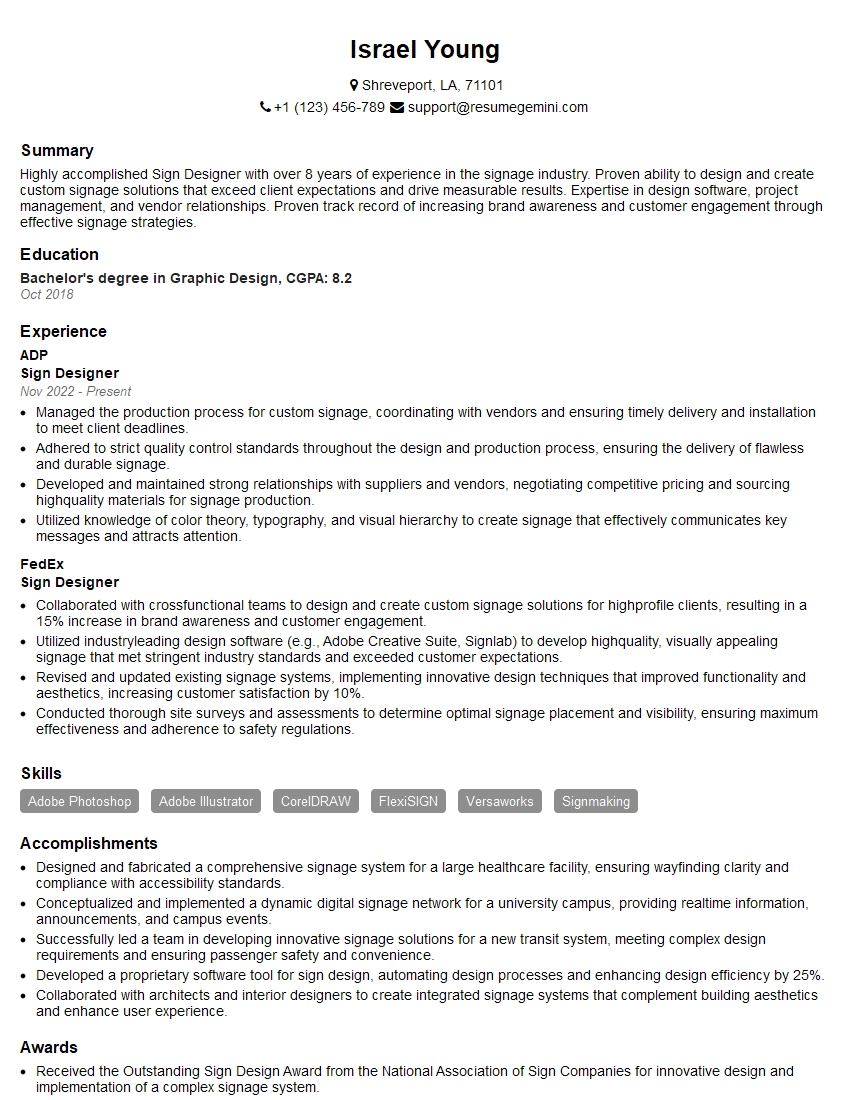
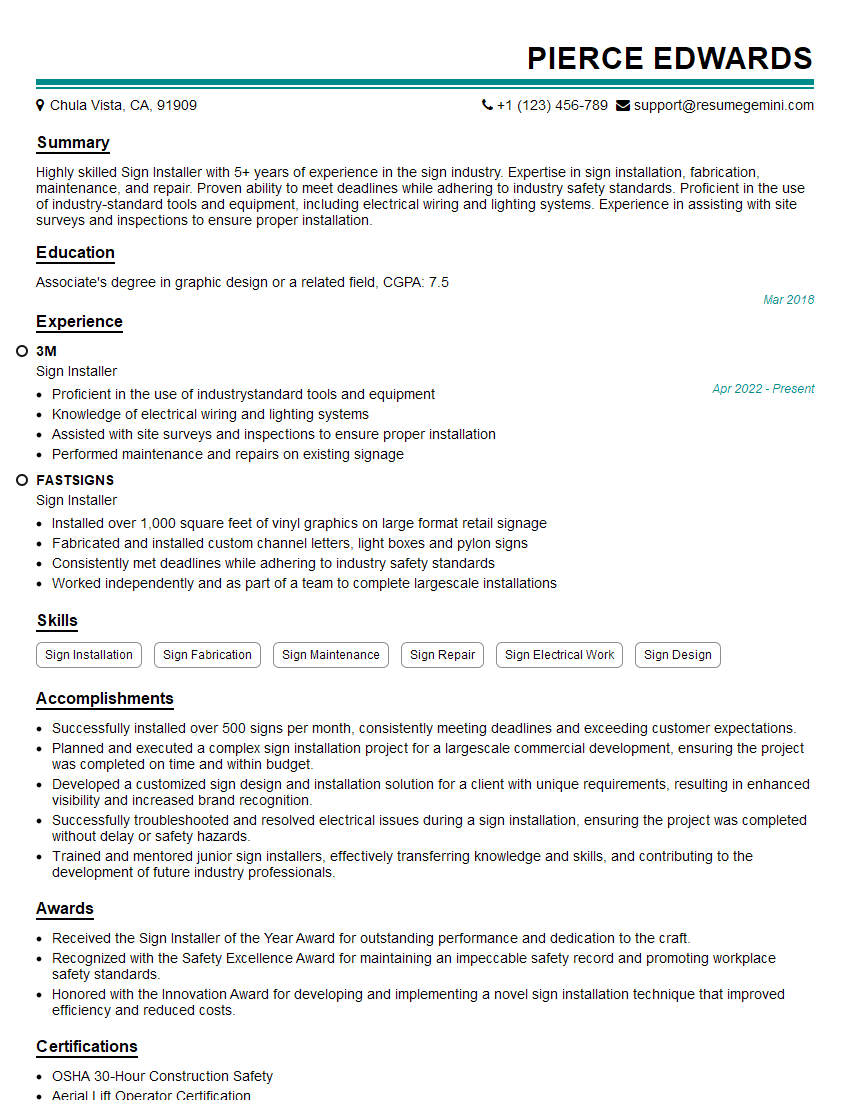
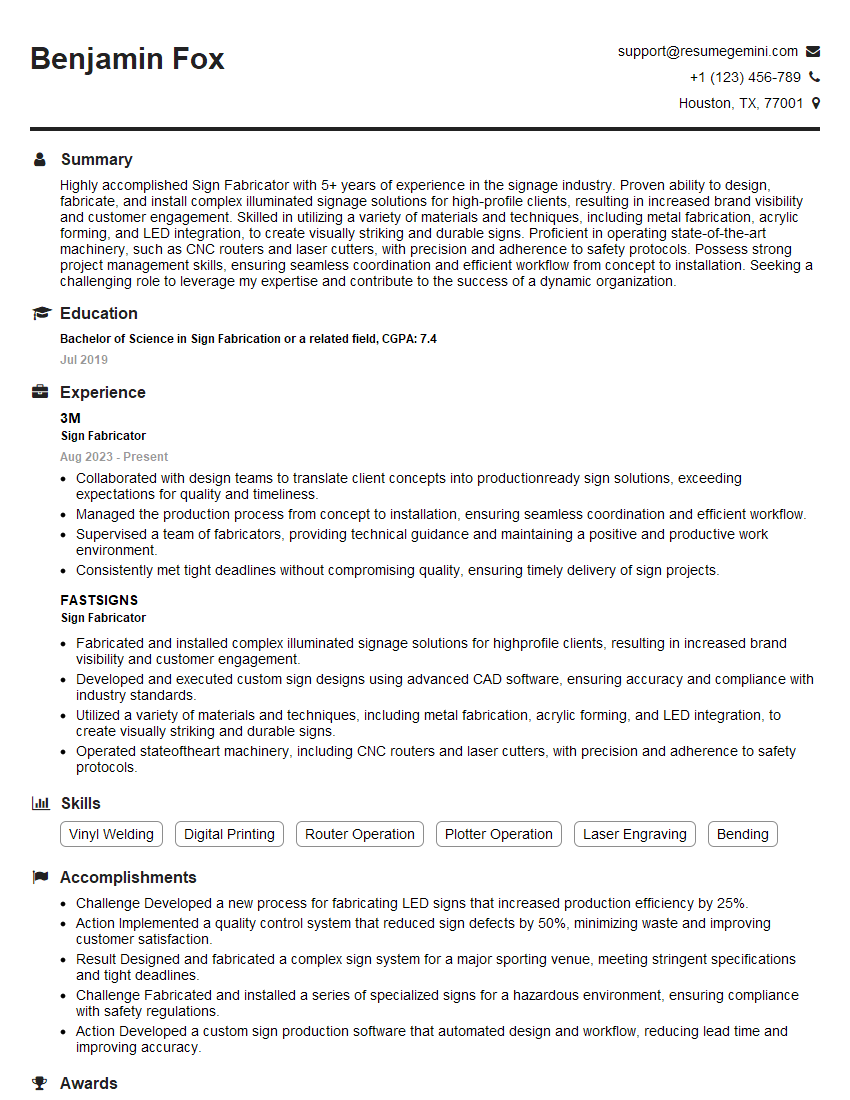
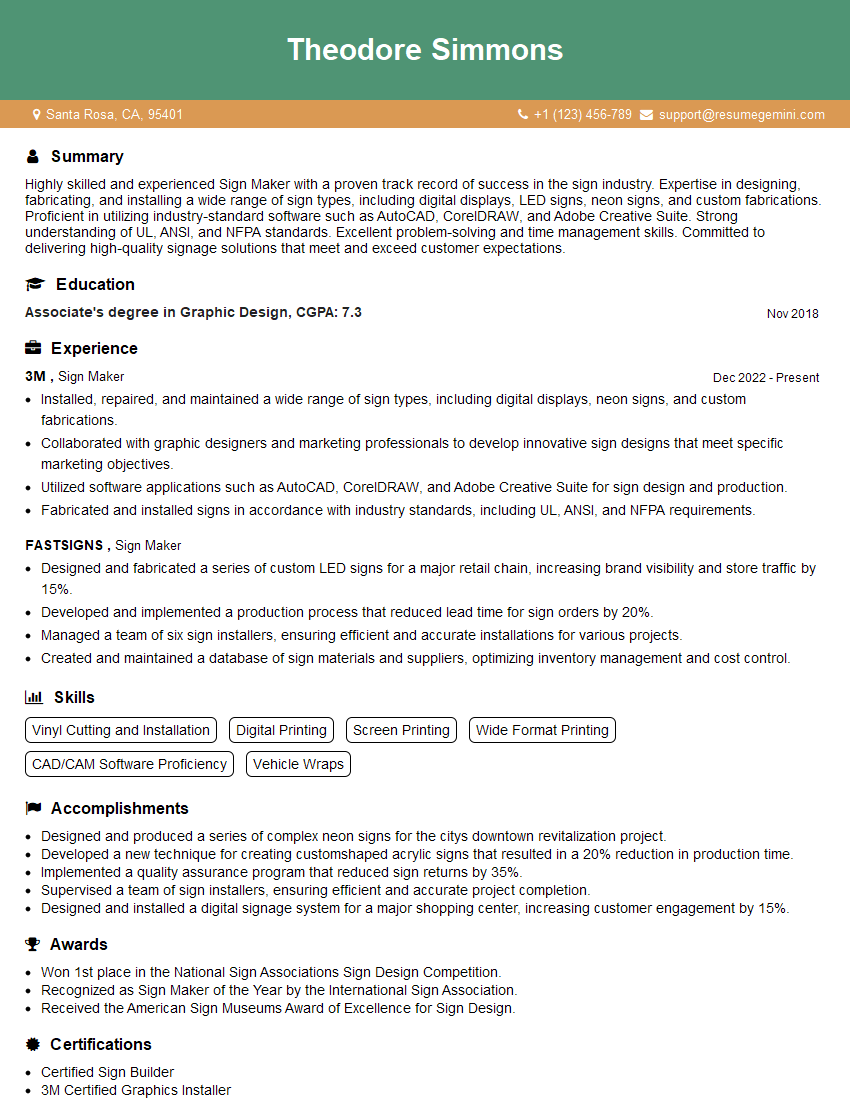
Mastering the art of sign making opens doors to a rewarding career with diverse opportunities for growth and specialization. To significantly increase your job prospects, crafting a strong, ATS-friendly resume is crucial. ResumeGemini is a trusted resource that can help you build a professional and impactful resume tailored to highlight your skills and experience. Examples of resumes specifically tailored for Sign Making professionals are available, allowing you to leverage best practices and increase your chances of landing your dream job.
Explore more articles
Users Rating of Our Blogs
Share Your Experience
We value your feedback! Please rate our content and share your thoughts (optional).
What Readers Say About Our Blog
Attention music lovers!
Wow, All the best Sax Summer music !!!
Spotify: https://open.spotify.com/artist/6ShcdIT7rPVVaFEpgZQbUk
Apple Music: https://music.apple.com/fr/artist/jimmy-sax-black/1530501936
YouTube: https://music.youtube.com/browse/VLOLAK5uy_noClmC7abM6YpZsnySxRqt3LoalPf88No
Other Platforms and Free Downloads : https://fanlink.tv/jimmysaxblack
on google : https://www.google.com/search?q=22+AND+22+AND+22
on ChatGPT : https://chat.openai.com?q=who20jlJimmy20Black20Sax20Producer
Get back into the groove with Jimmy sax Black
Best regards,
Jimmy sax Black
www.jimmysaxblack.com
Hi I am a troller at The aquatic interview center and I suddenly went so fast in Roblox and it was gone when I reset.
Hi,
Business owners spend hours every week worrying about their website—or avoiding it because it feels overwhelming.
We’d like to take that off your plate:
$69/month. Everything handled.
Our team will:
Design a custom website—or completely overhaul your current one
Take care of hosting as an option
Handle edits and improvements—up to 60 minutes of work included every month
No setup fees, no annual commitments. Just a site that makes a strong first impression.
Find out if it’s right for you:
https://websolutionsgenius.com/awardwinningwebsites
Hello,
we currently offer a complimentary backlink and URL indexing test for search engine optimization professionals.
You can get complimentary indexing credits to test how link discovery works in practice.
No credit card is required and there is no recurring fee.
You can find details here:
https://wikipedia-backlinks.com/indexing/
Regards
NICE RESPONSE TO Q & A
hi
The aim of this message is regarding an unclaimed deposit of a deceased nationale that bears the same name as you. You are not relate to him as there are millions of people answering the names across around the world. But i will use my position to influence the release of the deposit to you for our mutual benefit.
Respond for full details and how to claim the deposit. This is 100% risk free. Send hello to my email id: lukachachibaialuka@gmail.com
Luka Chachibaialuka
Hey interviewgemini.com, just wanted to follow up on my last email.
We just launched Call the Monster, an parenting app that lets you summon friendly ‘monsters’ kids actually listen to.
We’re also running a giveaway for everyone who downloads the app. Since it’s brand new, there aren’t many users yet, which means you’ve got a much better chance of winning some great prizes.
You can check it out here: https://bit.ly/callamonsterapp
Or follow us on Instagram: https://www.instagram.com/callamonsterapp
Thanks,
Ryan
CEO – Call the Monster App
Hey interviewgemini.com, I saw your website and love your approach.
I just want this to look like spam email, but want to share something important to you. We just launched Call the Monster, a parenting app that lets you summon friendly ‘monsters’ kids actually listen to.
Parents are loving it for calming chaos before bedtime. Thought you might want to try it: https://bit.ly/callamonsterapp or just follow our fun monster lore on Instagram: https://www.instagram.com/callamonsterapp
Thanks,
Ryan
CEO – Call A Monster APP
To the interviewgemini.com Owner.
Dear interviewgemini.com Webmaster!
Hi interviewgemini.com Webmaster!
Dear interviewgemini.com Webmaster!
excellent
Hello,
We found issues with your domain’s email setup that may be sending your messages to spam or blocking them completely. InboxShield Mini shows you how to fix it in minutes — no tech skills required.
Scan your domain now for details: https://inboxshield-mini.com/
— Adam @ InboxShield Mini
support@inboxshield-mini.com
Reply STOP to unsubscribe
Hi, are you owner of interviewgemini.com? What if I told you I could help you find extra time in your schedule, reconnect with leads you didn’t even realize you missed, and bring in more “I want to work with you” conversations, without increasing your ad spend or hiring a full-time employee?
All with a flexible, budget-friendly service that could easily pay for itself. Sounds good?
Would it be nice to jump on a quick 10-minute call so I can show you exactly how we make this work?
Best,
Hapei
Marketing Director
Hey, I know you’re the owner of interviewgemini.com. I’ll be quick.
Fundraising for your business is tough and time-consuming. We make it easier by guaranteeing two private investor meetings each month, for six months. No demos, no pitch events – just direct introductions to active investors matched to your startup.
If youR17;re raising, this could help you build real momentum. Want me to send more info?
Hi, I represent an SEO company that specialises in getting you AI citations and higher rankings on Google. I’d like to offer you a 100% free SEO audit for your website. Would you be interested?
Hi, I represent an SEO company that specialises in getting you AI citations and higher rankings on Google. I’d like to offer you a 100% free SEO audit for your website. Would you be interested?