Unlock your full potential by mastering the most common Signal Hardware and Equipment Knowledge interview questions. This blog offers a deep dive into the critical topics, ensuring you’re not only prepared to answer but to excel. With these insights, you’ll approach your interview with clarity and confidence.
Questions Asked in Signal Hardware and Equipment Knowledge Interview
Q 1. Explain the Nyquist-Shannon sampling theorem.
The Nyquist-Shannon sampling theorem is a fundamental concept in signal processing that dictates the minimum sampling rate required to accurately reconstruct an analog signal from its discrete samples. It states that to perfectly capture a signal, you must sample it at a rate at least twice its highest frequency component. This highest frequency is known as the Nyquist frequency.
Imagine trying to capture a spinning wheel with a camera. If you take pictures too slowly (sampling too infrequently), you might miss the details of its motion, and it might appear to be spinning slower or even in the opposite direction (aliasing). To accurately capture its rotation, you need to take pictures fast enough to ‘catch’ all the significant changes in its position.
Mathematically, if the highest frequency in the analog signal is fmax, then the minimum sampling rate, fs, must be at least 2fmax. This is often written as fs ≥ 2fmax.
Failure to meet this condition leads to aliasing, where higher-frequency components of the signal are falsely represented as lower-frequency components in the sampled data. This can lead to significant errors in signal reconstruction.
Practical Application: This theorem is crucial in the design of analog-to-digital converters (ADCs) used in various applications, from audio recording and telecommunications to medical imaging. Choosing an appropriate sampling rate is essential to avoid information loss and ensure accurate signal representation.
Q 2. Describe different types of signal modulation techniques.
Signal modulation is the process of varying one or more properties of a periodic waveform, called the carrier signal, with a modulating signal that typically contains information. Different modulation techniques offer advantages depending on the application and channel conditions.
- Amplitude Modulation (AM): The amplitude of the carrier signal is varied proportionally to the amplitude of the modulating signal. Simple to implement but susceptible to noise and less efficient in terms of power.
- Frequency Modulation (FM): The frequency of the carrier signal is varied proportionally to the amplitude of the modulating signal. Less susceptible to noise than AM and provides better audio quality but requires a wider bandwidth.
- Phase Modulation (PM): The phase of the carrier signal is varied proportionally to the amplitude of the modulating signal. Similar characteristics to FM, but the phase shift is directly proportional to the message signal.
- Pulse Amplitude Modulation (PAM): The amplitude of a series of pulses is varied proportionally to the amplitude of the modulating signal. Used as an intermediate step in many digital modulation schemes.
- Pulse Code Modulation (PCM): The modulating signal is sampled, quantized, and encoded into a binary sequence of pulses. The most common digital modulation technique, used extensively in digital communication systems.
- Quadrature Amplitude Modulation (QAM): A combination of amplitude and phase modulation that can transmit more data per unit time than many other techniques. Commonly used in high-speed data transmission such as cable modems and DSL.
Practical Application: These techniques are essential for transmitting information over long distances using radio waves, such as in radio broadcasting, cellular communication, and satellite communication. The choice of modulation scheme depends heavily on the application’s specific requirements regarding bandwidth efficiency, noise immunity, and implementation complexity.
Q 3. What are the key characteristics of an ideal operational amplifier?
An ideal operational amplifier (op-amp) is a theoretical device with characteristics that are never fully achieved in practice but serve as a useful model for analysis and design. Key characteristics include:
- Infinite open-loop gain (Aol): Even the smallest input difference results in a large output voltage. This ensures high amplification.
- Infinite input impedance (Zin): No current flows into the input terminals, preventing loading of the preceding stage.
- Zero output impedance (Zout): The output voltage remains independent of the load connected to it.
- Zero input offset voltage: No output voltage when the input terminals are at the same potential.
- Infinite bandwidth: Can amplify signals of any frequency without attenuation or phase shift.
- Infinite common-mode rejection ratio (CMRR): Completely rejects common-mode signals (signals appearing simultaneously on both input terminals).
Practical Application: Op-amps are the workhorses of analog signal processing, forming the basis of numerous circuits like amplifiers, filters, comparators, and oscillators. Real-world op-amps only approximate these ideal characteristics, but their high open-loop gain, high input impedance, and low output impedance allow them to function effectively in a wide range of applications.
Q 4. How does a digital-to-analog converter (DAC) work?
A digital-to-analog converter (DAC) transforms a digital signal (represented by a sequence of binary numbers) into an analog signal (a continuous voltage or current). This is crucial for interfacing digital systems with analog components, such as audio speakers or actuators.
The most common type is a binary-weighted DAC. In this type, each bit of the digital input corresponds to a specific weighted resistor connected to a summing node. The output voltage is the sum of the currents generated by the weighted resistors. The weights are typically powers of two, corresponding to the binary representation of the digital input. For example, the most significant bit (MSB) might have a resistance of R, the next bit 2R, the next 4R and so on. The current generated by each resistor depends on the corresponding bit’s value (0 or 1).
Other types of DACs include R-2R ladder DACs which uses a network of resistors to achieve the same result but with fewer unique resistor values making them more cost-effective. Sigma-Delta DACs which uses oversampling and noise shaping to provide high resolution at lower speeds. Flash DACs which perform the conversion using comparators for very high speed conversion.
Practical Application: DACs are found in countless devices such as audio players, video cards, and industrial control systems where the digital information needs to control an analog process.
Q 5. Explain the difference between amplitude modulation (AM) and frequency modulation (FM).
Both amplitude modulation (AM) and frequency modulation (FM) are analog modulation techniques that superimpose information onto a carrier wave, but they do so in different ways:
- Amplitude Modulation (AM): The amplitude of the carrier wave varies proportionally to the instantaneous amplitude of the modulating signal (the information). The frequency of the carrier remains constant.
- Frequency Modulation (FM): The frequency of the carrier wave varies proportionally to the instantaneous amplitude of the modulating signal. The amplitude of the carrier remains relatively constant.
Key Differences:
- Noise Immunity: FM is generally more resistant to noise than AM. Noise affects the amplitude of a signal, and AM is directly susceptible, whereas FM is less affected by amplitude variations.
- Bandwidth: FM typically requires a much wider bandwidth than AM to transmit the same information. This is because the frequency changes in FM carry the information.
- Power Efficiency: AM is typically more power efficient than FM for the same signal strength.
Practical Application: AM is often used for long-distance broadcasting because it can propagate effectively over longer ranges. FM, due to its noise immunity, is commonly used for high-fidelity audio broadcasting where noise is a greater concern.
Q 6. What are the common types of filters used in signal processing?
Filters are essential components in signal processing that allow certain frequency components of a signal to pass through while attenuating others. Several common types exist:
- Low-pass filters: Allow low-frequency signals to pass through while attenuating high-frequency signals. Think of it as a sieve allowing smaller particles (low frequencies) through but blocking larger ones (high frequencies).
- High-pass filters: Allow high-frequency signals to pass through while attenuating low-frequency signals. The opposite of a low-pass filter.
- Band-pass filters: Allow signals within a specific frequency range to pass through while attenuating signals outside that range. Think of this like a sieve with a specific hole size, only allowing specific particles through.
- Band-stop filters (or notch filters): Attenuate signals within a specific frequency range while allowing signals outside that range to pass through. Used to remove specific unwanted frequencies, like noise.
These filters can be implemented using various techniques, including passive components (resistors, capacitors, inductors), active components (op-amps), or digital signal processing (DSP) algorithms. The choice depends on factors such as frequency range, desired attenuation, and cost constraints.
Practical Application: Filters are used extensively in audio processing (equalizers), image processing (noise reduction), telecommunications (channel selection), and many other fields where selective signal transmission or rejection is required.
Q 7. Describe the concept of signal-to-noise ratio (SNR).
Signal-to-noise ratio (SNR) is a measure of the strength of a signal relative to the background noise. It’s a crucial metric for evaluating the quality of a signal and is often expressed in decibels (dB).
A higher SNR indicates a stronger signal relative to the noise. A lower SNR indicates that the signal is weak or heavily obscured by noise. For example, a SNR of 20 dB suggests that the signal is 10 times stronger than the noise (since 20dB = 10log10(10)). An SNR of 40 dB suggests that the signal is 100 times stronger than the noise (since 40dB = 10log10(100)).
Mathematically, SNR is often calculated as:
SNR = 10 * log10 (Signal Power / Noise Power)or
SNR = 20 * log10 (Signal Amplitude / Noise Amplitude)The choice between these depends on whether you are working with power or amplitude.
Practical Application: SNR is vital in numerous applications. In communication systems, a high SNR is essential for reliable data transmission. In audio systems, a high SNR translates to clearer, less noisy audio. In medical imaging, a high SNR results in clearer images with better diagnostic quality.
Q 8. Explain different types of antennas and their applications.
Antennas are crucial components in any wireless communication system, responsible for efficiently converting electrical signals into electromagnetic waves (for transmission) and vice-versa (for reception). Different antenna types are optimized for specific frequency bands, radiation patterns, and applications.
- Dipole Antenna: A simple, widely used antenna consisting of two conductive elements of equal length. Think of a classic ‘rabbit ears’ TV antenna. It’s relatively inexpensive and easy to construct but has a relatively narrow bandwidth and omnidirectional radiation pattern (signals radiate in all directions).
- Yagi-Uda Antenna: A highly directional antenna, often used for receiving television signals or in point-to-point communication systems. It consists of a driven element (similar to a dipole) and parasitic elements (reflectors and directors) that enhance its gain and directivity in a specific direction. Imagine a long, slender antenna with several elements arranged in a row.
- Patch Antenna: A planar antenna that’s often integrated into devices. It’s compact, low-profile, and commonly found in mobile phones, Wi-Fi routers, and satellite communications. They can be designed for various frequency bands and polarizations.
- Horn Antenna: A high-gain antenna with a wide bandwidth, used in applications requiring high directivity and precise beam shaping. Satellite earth stations and microwave communication systems often use horn antennas.
- Microstrip Antenna: Another planar antenna printed on a substrate. It’s popular in microwave and millimeter-wave applications due to its compact size and ease of integration with printed circuit boards.
The choice of antenna depends heavily on factors like the frequency of operation, desired radiation pattern (omnidirectional or directional), size constraints, gain requirements, and the overall system design.
Q 9. How does a mixer work in a RF system?
A mixer is a fundamental building block in RF systems, primarily used for frequency translation. It combines two input signals—a radio frequency (RF) signal and a local oscillator (LO) signal—to produce output signals at the sum and difference frequencies. This process is crucial for tasks such as modulation, demodulation, and frequency shifting.
Imagine it as a musical instrument mixing different sounds. The RF signal is one instrument, the LO is another, and the mixer combines them. The resulting output is a mixture containing the original frequencies along with their sum and difference.
In many receiver designs, the mixer is used to down-convert the incoming RF signal to an intermediate frequency (IF) for further processing. This lowers the signal’s frequency, simplifying subsequent amplification and filtering.
The operation relies on the non-linear characteristic of a mixer’s device (e.g., a diode or transistor operating in the non-linear region). The non-linearity allows the creation of the sum and difference frequencies from the two inputs. Selecting the desired frequency is achieved through filters following the mixer.
Q 10. Describe different types of oscillators used in signal generation.
Oscillators are circuits that generate periodic waveforms. They are essential for providing timing signals and reference frequencies in various electronic systems, particularly in RF signal generation. Different types are suitable for different applications and frequency ranges:
- Crystal Oscillators: Highly stable and accurate oscillators utilizing piezoelectric crystals (like quartz). Their stability makes them ideal for clocks, timing circuits, and applications requiring precise frequency control.
- LC Oscillators: Utilize inductors (L) and capacitors (C) to resonate at a specific frequency. These are simple and can generate a wide range of frequencies, though their stability is generally lower than crystal oscillators.
- Voltage-Controlled Oscillators (VCOs): Their output frequency is adjustable by an external control voltage. This characteristic is crucial in phase-locked loops (PLLs) and frequency synthesizers, allowing precise frequency adjustments.
- Ring Oscillators: A simple oscillator design utilizing an odd number of inverters connected in a loop. They are less stable but widely used in integrated circuits for clock generation where high precision isn’t critical.
- Dielectric Resonator Oscillators (DROs): Use dielectric resonators for high-frequency stability. They are common in microwave communication systems.
The selection depends on the required frequency range, stability, power consumption, and cost constraints. For instance, a high-precision clock might utilize a crystal oscillator, while a frequency synthesizer might use a VCO within a PLL for agile frequency control.
Q 11. Explain the concept of impedance matching.
Impedance matching is a crucial concept in signal transmission to ensure maximum power transfer between different components. Mismatch leads to reflections, signal loss, and potential damage to components. The goal is to match the impedance of the source (e.g., amplifier output) to the impedance of the load (e.g., antenna or transmission line).
Think of it like trying to fill a bucket with water using a hose. If the hose diameter matches the bucket opening, the water flows efficiently. If there’s a mismatch, you’ll get spillage and inefficient water transfer. The same principle applies to signal power.
Matching techniques include using:
- Matching Networks (L-section, Pi-section, T-section): These networks, typically composed of inductors and capacitors, transform the source impedance to match the load impedance.
- Transformers: Used for impedance transformation based on the turns ratio. They are efficient for wider frequency ranges.
- Transmission Lines (Quarter-wave transformers): A section of transmission line designed to provide a specific impedance transformation. This technique is often used in high-frequency applications.
Proper impedance matching maximizes power transfer, minimizes reflections, and ensures efficient signal transmission. Mismatch can lead to significant signal degradation and even equipment damage.
Q 12. What are the challenges in high-speed signal transmission?
High-speed signal transmission presents several significant challenges, primarily due to the effects of signal propagation and component limitations:
- Signal Attenuation and Distortion: As signals travel over long distances or through various media, they lose power (attenuation) and their shape becomes distorted (dispersion). This becomes more pronounced at higher frequencies.
- Electromagnetic Interference (EMI): High-speed signals are more susceptible to interference from other electronic components and environmental sources, leading to errors and unreliable data transmission.
- Crosstalk: Signals propagating on adjacent conductors can induce unwanted coupling (crosstalk), contaminating signal integrity.
- Skin Effect: At high frequencies, the current flow is concentrated at the surface of conductors, increasing resistance and further contributing to attenuation.
- Reflections and Impedance Mismatch: As mentioned previously, impedance mismatch along the transmission path causes signal reflections, leading to signal distortion and loss.
- Inter-Symbol Interference (ISI): Overlapping of adjacent symbols in a digital signal due to limited bandwidth or channel impairments. This can affect the accuracy of data decoding.
Mitigation techniques include using differential signaling, equalization, shielding, controlled impedance transmission lines, and careful board design to minimize crosstalk and EMI. Advanced coding schemes are also employed to combat errors caused by channel impairments.
Q 13. How do you troubleshoot a faulty signal chain?
Troubleshooting a faulty signal chain requires a systematic approach. Here’s a step-by-step process:
- Isolate the Problem Area: Start by verifying the signal at various points in the chain (input, intermediate stages, and output) using appropriate test equipment (e.g., oscilloscopes, spectrum analyzers, signal generators). This helps pinpoint the faulty section.
- Check for Obvious Issues: Inspect for loose connections, damaged components, incorrect wiring, or faulty connectors. A simple visual inspection often identifies the root cause.
- Verify Power Supply: Ensure that all components in the signal chain are receiving the correct voltage and current. A faulty power supply can cause unexpected behavior.
- Examine Signal Levels and Characteristics: Use an oscilloscope to check signal amplitude, frequency, and waveform shape at each stage. Compare these with expected values (datasheets). Look for distortions, clipping, or excessive noise.
- Test Individual Components: If a specific component is suspected, it should be tested individually using appropriate test equipment. This can involve comparing its characteristics with a known-good component.
- Use Signal Injection and Tracing: Introduce a known test signal at various points in the chain and trace it to identify if it’s properly amplified or processed. This helps isolate signal loss or distortion points.
- Consider Environmental Factors: High temperatures, humidity, or electromagnetic interference can impact signal integrity. Rule out environmental factors as potential causes.
Documenting each step and observation is crucial for efficient troubleshooting and future reference. Systematic testing and using appropriate test equipment are essential to effectively diagnose and resolve problems in signal chains.
Q 14. Describe different methods for signal amplification.
Signal amplification involves increasing the amplitude or power of a signal. Several methods exist, each with its own advantages and disadvantages:
- Transistor Amplifiers: The most common method, utilizing transistors (BJTs or FETs) to amplify signals. They can be designed for various frequencies, power levels, and applications. Common configurations include common emitter, common collector, and common base (for BJTs) and common source, common drain, and common gate (for FETs).
- Operational Amplifier (Op-Amp) Amplifiers: Op-amps are versatile integrated circuits that can be used to build various amplifier types, such as inverting and non-inverting amplifiers. They provide high gain and are used extensively in analog signal processing.
- RF Amplifiers: Specifically designed to handle radio frequency signals, often incorporating matching networks for optimal power transfer. They can be further categorized as low-noise amplifiers (LNAs), high-power amplifiers (HPAs), and others based on their function.
- Maser and Laser Amplifiers: High-gain amplifiers operating at microwave and optical frequencies, respectively. These are used in specialized applications such as radar, satellite communication, and optical fiber communication.
The choice of amplification method depends heavily on factors such as frequency range, power requirements, noise figure, gain, linearity, and the overall system design. For example, a low-noise amplifier (LNA) is essential in a receiver to enhance weak signals while minimizing added noise. High-power amplifiers (HPAs) are used in transmitters to boost signal strength for long-range communication.
Q 15. What is the role of a buffer amplifier?
A buffer amplifier is essentially a voltage follower with very high input impedance and very low output impedance. Its primary role is to isolate two circuits without significantly altering the signal. Think of it as a highly efficient signal transporter. It prevents loading effects – where the input impedance of a subsequent stage affects the voltage of the preceding stage – ensuring the signal remains faithful to its original form. For example, imagine a sensitive sensor producing a weak signal. A buffer amplifier placed between the sensor and a high-power amplifier prevents the high-power amplifier from drawing current from the sensor, thus maintaining the sensor’s signal integrity.
In essence, a buffer amplifier provides:
- High input impedance: Minimizes current drawn from the source.
- Low output impedance: Drives loads without significant voltage drop.
- High voltage gain (ideally unity): Preserves signal amplitude.
Without a buffer, the signal might be significantly attenuated before reaching the next stage of processing. This is particularly crucial in sensitive applications like medical instrumentation or telecommunications.
Career Expert Tips:
- Ace those interviews! Prepare effectively by reviewing the Top 50 Most Common Interview Questions on ResumeGemini.
- Navigate your job search with confidence! Explore a wide range of Career Tips on ResumeGemini. Learn about common challenges and recommendations to overcome them.
- Craft the perfect resume! Master the Art of Resume Writing with ResumeGemini’s guide. Showcase your unique qualifications and achievements effectively.
- Don’t miss out on holiday savings! Build your dream resume with ResumeGemini’s ATS optimized templates.
Q 16. Explain the concept of signal integrity.
Signal integrity refers to the fidelity of a signal as it travels from its source to its destination. It’s all about ensuring the signal arrives as intended – without significant distortion, attenuation, noise, or interference. Imagine sending a postcard across the country; signal integrity would be ensuring the postcard arrives intact and readable, not torn, faded, or covered in scribbles.
Factors affecting signal integrity include:
- Reflections: Caused by impedance mismatches along the transmission line. This leads to signal distortion and potential damage to sensitive components.
- Noise: Unwanted electrical signals that corrupt the desired signal. Sources include electromagnetic interference (EMI), crosstalk, and thermal noise.
- Attenuation: Gradual reduction in signal amplitude as it travels over distance or through lossy components.
- Jitter: Unwanted variations in timing, affecting clock signals and high-speed data transmission.
Maintaining signal integrity is critical for reliable system operation, especially in high-speed digital systems and sensitive analog signal processing.
Q 17. What are the different types of noise in electronic circuits?
Electronic circuits are susceptible to various types of noise. It’s like unwanted static on your radio.
- Thermal Noise (Johnson-Nyquist Noise): Generated by the random thermal motion of electrons in conductors. It’s always present and proportional to temperature.
- Shot Noise: Arises from the discrete nature of charge carriers (electrons or holes) flowing across a junction. It’s often described as a ‘popcorn’ sound in audio applications.
- Flicker Noise (1/f Noise): Low-frequency noise with an amplitude inversely proportional to frequency. The source isn’t fully understood, but it’s associated with material defects and surface states.
- Burst Noise (Popcorn Noise): Random bursts of noise caused by traps or defects in semiconductor devices.
- Transit-Time Noise: Caused by the time it takes for charge carriers to transit through a device, particularly significant at high frequencies.
- Interference (EMI/RFI): External electromagnetic or radio frequency interference from sources like power lines, motors, or other electronic devices.
- Crosstalk: Unwanted coupling of signals between adjacent conductors or traces on a printed circuit board (PCB).
Understanding these noise sources is critical for designing robust and reliable systems. The impact of each noise source varies with frequency and the specific circuit design.
Q 18. How do you design a low-noise amplifier?
Designing a low-noise amplifier (LNA) requires careful consideration of several factors. It’s like building a soundproof recording studio.
- Choose Low-Noise Transistors: Transistors are the primary source of noise in most LNAs. Selecting devices with low noise figures is crucial.
- Minimize Thermal Noise: Using larger transistors (to reduce the equivalent resistance) and operating at lower temperatures can reduce thermal noise.
- Optimize Biasing: Proper biasing of the transistors is important to minimize noise and distortion. Consider using current sources to improve stability.
- Careful Layout: PCB layout is critical. Minimize trace lengths, keep signal and ground planes close, and use shielding to reduce EMI/RFI interference.
- Use proper filtering: Implement input and output filters to attenuate out-of-band noise. Careful selection of filter components is necessary.
- Feedback networks: Feedback can be used to reduce noise and improve stability, but needs careful design to avoid instability.
Simulation tools are invaluable in designing an LNA, allowing engineers to optimize the circuit for low noise performance before fabrication. Measurements and adjustments will likely be necessary after construction.
Q 19. What are the key performance indicators (KPIs) for signal processing equipment?
Key Performance Indicators (KPIs) for signal processing equipment depend heavily on the application but commonly include:
- Signal-to-Noise Ratio (SNR): Measures the ratio of the signal power to the noise power. A higher SNR indicates better signal quality.
- Dynamic Range: The range of signal amplitudes the equipment can accurately process. A wider dynamic range allows for the processing of signals with large variations in amplitude.
- Total Harmonic Distortion (THD): Measures the harmonic distortion introduced by the equipment. Lower THD signifies better fidelity.
- Noise Figure (NF): Indicates the amount of noise added by the equipment itself. A lower NF is desirable.
- Spurious Free Dynamic Range (SFDR): Measures the equipment’s ability to reject unwanted signals, particularly important for high-resolution applications.
- Bandwidth: The range of frequencies the equipment can process effectively. A wider bandwidth is needed for signals with high frequency components.
- Linearity: How accurately the output of the equipment is proportional to its input. Non-linearity leads to distortion.
- Latency: The time delay between the input and output signals, critical in real-time applications.
The specific KPIs chosen and their relative importance will depend on the specific application’s requirements.
Q 20. Explain the concept of spectral analysis.
Spectral analysis is the process of decomposing a signal into its constituent frequency components. It’s like separating the individual notes in a musical chord. This allows us to see the frequency content of the signal and identify the presence of different frequencies and their relative amplitudes. It’s a fundamental technique in signal processing, used to identify and analyze various aspects of a signal.
Techniques used in spectral analysis include:
- Fourier Transform (FT): The most common technique, converting a time-domain signal into a frequency-domain representation. The Fast Fourier Transform (FFT) is a computationally efficient algorithm for computing the DFT.
- Wavelet Transform: Useful for analyzing non-stationary signals, where the frequency content changes over time.
- Short-Time Fourier Transform (STFT): Provides a time-frequency representation, useful for analyzing signals with varying frequency content.
Spectral analysis finds wide application in various fields, including audio processing, telecommunications, biomedical engineering, and seismology, where identifying specific frequency components reveals crucial information.
Q 21. Describe different methods for signal demodulation.
Signal demodulation is the process of extracting the original information signal from a modulated carrier wave. Think of it as removing the ‘envelope’ to reveal the message within.
Common demodulation techniques include:
- Envelope Detection: Used for amplitude modulation (AM). The signal is rectified and filtered to extract the envelope, which contains the information signal.
- Synchronous Demodulation: Requires a local oscillator synchronized with the carrier frequency. The modulated signal is multiplied by the oscillator signal and filtered to recover the information.
- Asynchronous Demodulation: Similar to synchronous demodulation but doesn’t require precise frequency synchronization. A more robust technique but potentially with lower fidelity.
- Quadrature Demodulation: Used for quadrature amplitude modulation (QAM) and other complex modulation schemes. The signal is split into its I (in-phase) and Q (quadrature) components, then demodulated separately.
- Frequency Demodulation (FM Demodulation): Used for frequency modulation (FM) signals. The frequency changes in the carrier wave are converted into amplitude variations containing the information.
The choice of demodulation method depends on the type of modulation used and the application’s specific requirements.
Q 22. How do you measure signal power?
Measuring signal power depends heavily on the type of signal and its frequency. For low-frequency signals, a simple voltmeter can suffice, provided the impedance matching is correct between the signal source and the meter. For higher frequency signals, however, we need specialized instruments.
One common method involves using a power meter, often connected to an antenna or sensor. These meters typically measure power in dBm (decibels relative to one milliwatt), which is a logarithmic scale making it easy to handle a wide range of power levels. The meter essentially measures the signal’s amplitude and converts it to a power reading, often needing a calibration factor specific to the measurement setup.
Another method, particularly useful for RF signals, is to use a spectrum analyzer. This instrument displays the signal’s power across a range of frequencies. This provides a more complete picture than a simple power meter, allowing for the identification and measurement of multiple signals or interference. You would simply tune the spectrum analyzer to the frequency of interest and read the power level directly from the display, which often will be shown in dBm.
Accurate measurement requires proper impedance matching between the signal source, the connecting cables, and the measuring instrument. Mismatched impedances lead to signal reflections and inaccurate power measurements. Calibration is also crucial to ensure accuracy and traceability.
Q 23. What are the different types of data converters?
Data converters are crucial components that translate analog signals (continuous values) into digital signals (discrete values) or vice-versa. There are primarily two types:
- Analog-to-Digital Converters (ADCs): These convert continuous analog signals into discrete digital values. Examples include successive approximation ADCs, which compare the input signal to internal references; flash ADCs, which use a parallel comparator array for high speed; and sigma-delta ADCs, which oversample the input and perform digital filtering for high resolution. The choice depends on factors like required speed, resolution, and power consumption. Imagine converting a temperature reading from a sensor (analog) into a number your computer can understand (digital).
- Digital-to-Analog Converters (DACs): These perform the opposite function, converting digital values into analog signals. Common types include R-2R ladder DACs, which use a network of resistors to generate the analog output, and weighted resistor DACs. These find use in applications like audio output, where you take a digital music file and convert it to an electrical signal that your speakers can reproduce. In a video card, for instance, DACs are vital to the display of images and video.
The performance of ADCs and DACs is characterized by parameters such as resolution (number of bits), sampling rate (for ADCs), and linearity (accuracy of conversion).
Q 24. Explain the use of Fourier transforms in signal processing.
The Fourier Transform is a fundamental tool in signal processing that decomposes a signal into its constituent frequencies. It essentially reveals the ‘frequency fingerprint’ of a signal. A time-domain signal, showing amplitude variations over time, is transformed into a frequency-domain representation showing the amplitude and phase of each frequency component. This allows us to analyze the signal’s frequency content, which is often crucial information that is hidden in the raw time-domain data.
Think of a musical chord. Listening to it (time domain), you perceive a blend of sounds. The Fourier Transform would separate this blend into its individual notes (frequency domain), telling you exactly which frequencies are present and their relative intensities. This is incredibly useful for various applications.
In practical terms, Fourier Transforms are used for:
- Spectrum Analysis: Identifying the frequencies present in a signal, for example, finding the frequencies of interference in a communication system.
- Signal Filtering: Removing unwanted frequencies. For example, a noise reduction algorithm in audio processing might use a Fourier Transform to identify and attenuate noise frequencies.
- Signal Compression: Removing redundant information from a signal. Methods like MP3 encoding rely heavily on the Fourier Transform to efficiently represent audio data.
- Signal Detection: Identifying specific signals within a noisy environment, such as detecting a specific radio transmission amongst background noise.
Q 25. Describe different techniques for signal filtering.
Signal filtering is the process of removing or attenuating unwanted frequency components from a signal. Several techniques exist:
- Passive Filters: These use passive components like resistors, capacitors, and inductors to shape the frequency response. Simple RC (resistor-capacitor) and RL (resistor-inductor) filters are commonly used for basic filtering tasks. These are simpler to design and implement but have limitations in terms of performance and flexibility.
- Active Filters: These employ active components like operational amplifiers (op-amps) along with passive components to achieve better performance, including higher gain and sharper cut-off frequencies. These filters can have multiple feedback paths for more complex filtering designs. They allow better control over parameters like gain and Q-factor.
- Digital Filters: Implemented using digital signal processors (DSPs) or software, these filters provide unparalleled flexibility and precision. Common types include Finite Impulse Response (FIR) filters and Infinite Impulse Response (IIR) filters, each with its own advantages and disadvantages in terms of performance and complexity. Digital filtering allows for adaptive filtering capabilities which are hard to implement using passive or active components.
The choice of filter depends on several factors, including the desired frequency response (low-pass, high-pass, band-pass, band-stop), the required sharpness of the cutoff frequencies, the complexity of the design, the cost, and the power consumption.
Q 26. What is the role of a phase-locked loop (PLL)?
A Phase-Locked Loop (PLL) is a feedback control system that synchronizes a voltage-controlled oscillator (VCO) to an input signal. It does this by continuously comparing the phase of the VCO output to the phase of the input signal and adjusting the VCO’s frequency to minimize the phase difference.
Imagine trying to keep two metronomes ticking in perfect synchronization. A PLL acts like a sophisticated mechanism to do that. It constantly monitors the difference in their timing and makes small adjustments to one metronome to keep both in step.
PLLs have numerous applications:
- Frequency Synthesis: Generating precise frequencies from a reference frequency, crucial for modern communication systems and devices.
- Clock Recovery: Extracting a clock signal from a data stream, a vital process in data communication.
- Frequency Modulation (FM) Demodulation: Recovering the audio signal from an FM radio transmission.
- Data Synchronization: Synchronizing data transmission rates between different parts of a system.
The performance of a PLL is defined by its lock range (the range of input frequencies it can track), capture range (the range of input frequencies from which it can acquire lock), and loop bandwidth (the speed of its response to phase errors).
Q 27. Explain different types of error correction codes.
Error correction codes are crucial for ensuring reliable data transmission and storage, especially in noisy environments. They add redundancy to data, allowing the receiver to detect and correct errors introduced during transmission or storage. Several types exist:
- Hamming Codes: These are linear block codes that can detect and correct single-bit errors. They add parity bits to the data, creating a codeword that allows for error detection and correction through simple parity checks.
- Reed-Solomon Codes: These are powerful codes that can correct multiple-bit errors. They are widely used in data storage (e.g., CDs, DVDs, hard drives), and communication systems (e.g., satellite communication, digital television). They’re exceptionally good at handling burst errors where multiple bits are affected consecutively.
- Turbo Codes: These are powerful iterative codes capable of achieving near-Shannon-limit performance, meaning they approach the theoretical limit of reliable communication. They use an iterative decoding process to refine the decoded message, resulting in significant error correction capabilities.
- Low-Density Parity-Check (LDPC) Codes: Another class of powerful codes often used in modern communication systems, notable for their good performance and relatively low complexity decoding algorithms.
The choice of error correction code depends on factors like the desired error correction capability, the complexity of the encoding and decoding processes, and the available bandwidth or storage space.
Q 28. How would you approach debugging a system with intermittent signal loss?
Debugging intermittent signal loss is challenging due to its unpredictable nature. A systematic approach is essential:
- Identify the Symptoms: Carefully document when and under what conditions the signal loss occurs. Is it related to specific inputs, environmental conditions (temperature, humidity), or timing events? Gather data logs, screenshots, and any other relevant information.
- Isolate the Problem Area: Divide the system into smaller, manageable blocks. Start by checking connections and signal integrity at each interface. Use oscilloscopes and signal generators to carefully examine the signals at various points in the system. This process of elimination will eventually point towards the culprit.
- Analyze the Signal: Use appropriate instrumentation (oscilloscopes, spectrum analyzers, logic analyzers) to thoroughly examine the signal before, during, and after the signal loss. Look for noise, distortion, or other anomalies. Observe the signal’s amplitude, timing, and frequency to pinpoint the exact issue.
- Environmental Factors: Investigate the possibility of external influences, like electromagnetic interference (EMI) or radio frequency interference (RFI). Consider shielding or grounding improvements. Does changing the location or orientation of equipment affect the signal loss?
- Hardware Issues: Inspect the hardware for loose connections, damaged components, or faulty soldering. Examine the signal paths for potential sources of impedance mismatch, which can cause signal reflections.
- Software Considerations (if applicable): If the system involves software, check for potential software bugs or timing issues that might be causing the signal loss. Run memory diagnostics, and consider code profiling or tracing.
- Iterative Testing: After implementing a potential fix, perform rigorous testing under various conditions to ensure the issue is resolved. Repeat these steps until you’ve identified and fixed the root cause.
Intermittent signal loss often requires patience and a methodical approach. Using appropriate test equipment and techniques is vital to isolating the problem.
Key Topics to Learn for Signal Hardware and Equipment Knowledge Interview
- Signal Generation and Modulation Techniques: Understand various modulation schemes (AM, FM, PM, etc.), their applications, and their strengths and weaknesses. Consider the hardware required for each.
- Signal Processing Fundamentals: Familiarize yourself with concepts like filtering (low-pass, high-pass, band-pass), amplification, and signal conditioning. Be prepared to discuss practical applications in different systems.
- Hardware Components and Architectures: Gain a solid understanding of key components like amplifiers, oscillators, mixers, filters, and ADCs/DACs. Know how they interact within a signal processing chain.
- RF and Microwave Systems: Explore the principles of radio frequency and microwave transmission, including antennas, waveguides, and transmission lines. Discuss challenges and solutions related to signal integrity.
- Digital Signal Processing (DSP): Understand the role of DSP in signal processing, including digital filtering, FFTs, and other relevant algorithms. Be prepared to discuss hardware implementations of DSP algorithms.
- Troubleshooting and Diagnostics: Develop your ability to analyze signal issues, identify potential sources of problems (e.g., faulty components, impedance mismatches), and propose effective solutions. This is crucial for practical application.
- Test Equipment and Measurement Techniques: Gain hands-on experience with common test equipment such as oscilloscopes, spectrum analyzers, signal generators, and network analyzers. Understand the principles behind various measurements.
- Data Acquisition and Analysis: Learn about methods for acquiring and analyzing signals, including data logging, signal visualization, and statistical analysis techniques.
Next Steps
Mastering Signal Hardware and Equipment Knowledge is vital for career advancement in many high-demand fields. A strong understanding of these concepts demonstrates a crucial skill set, opening doors to exciting opportunities and higher earning potential. To maximize your job prospects, focus on building a compelling and ATS-friendly resume that showcases your expertise. ResumeGemini is a trusted resource that can help you craft a professional resume that highlights your skills effectively. We provide examples of resumes tailored to Signal Hardware and Equipment Knowledge to guide you through the process. Invest the time to create a standout resume – it’s your first impression with potential employers.
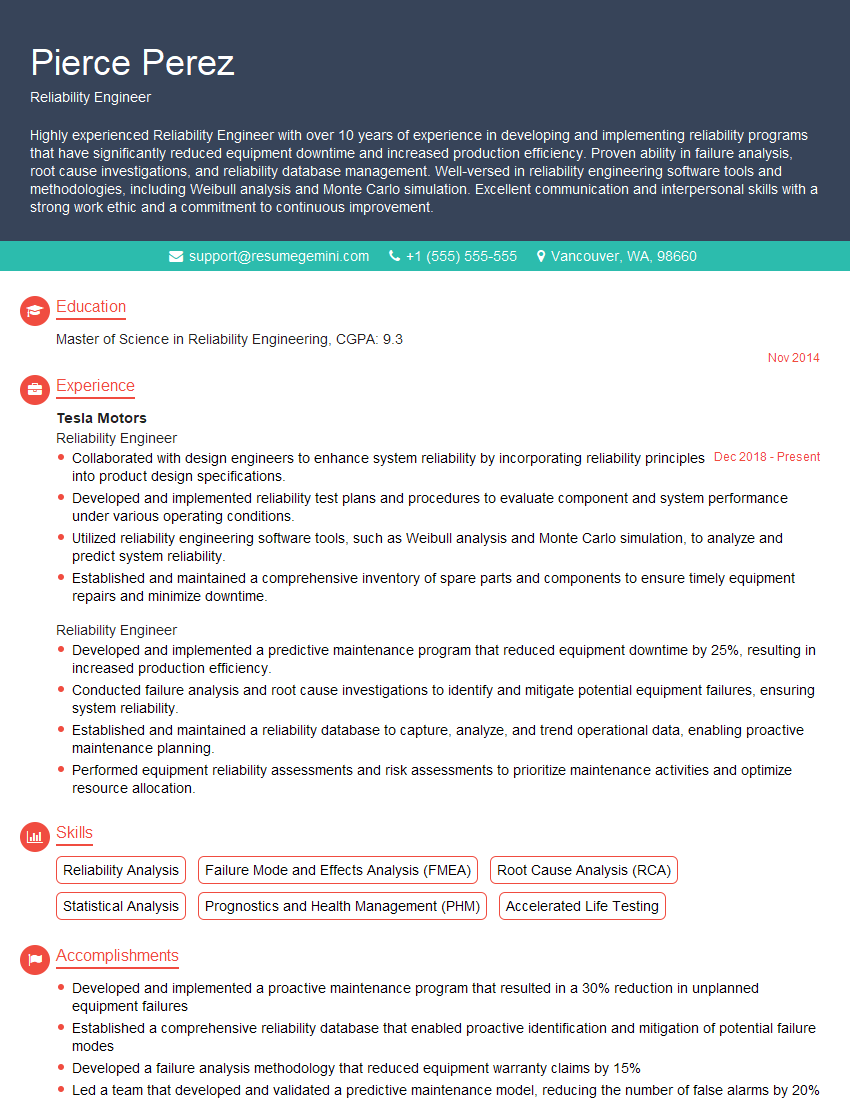
Reliability Engineer Resume Sample
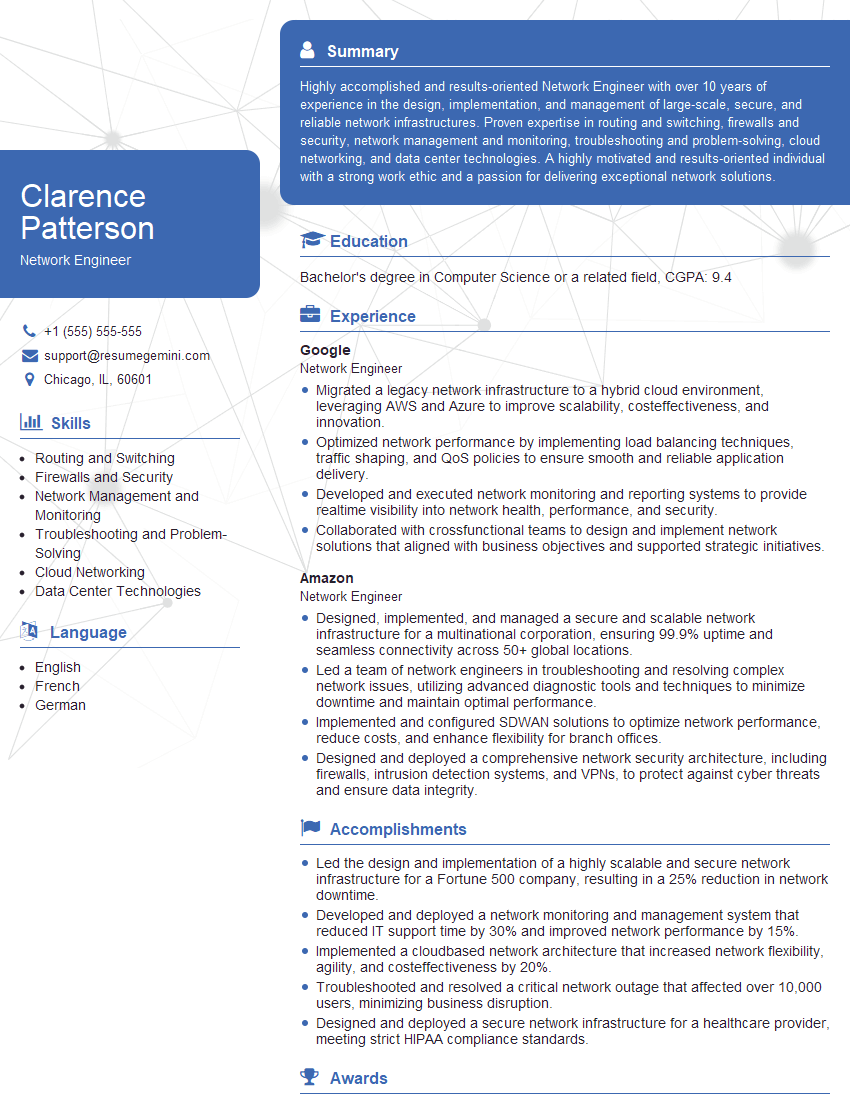
Network Engineer Resume Sample
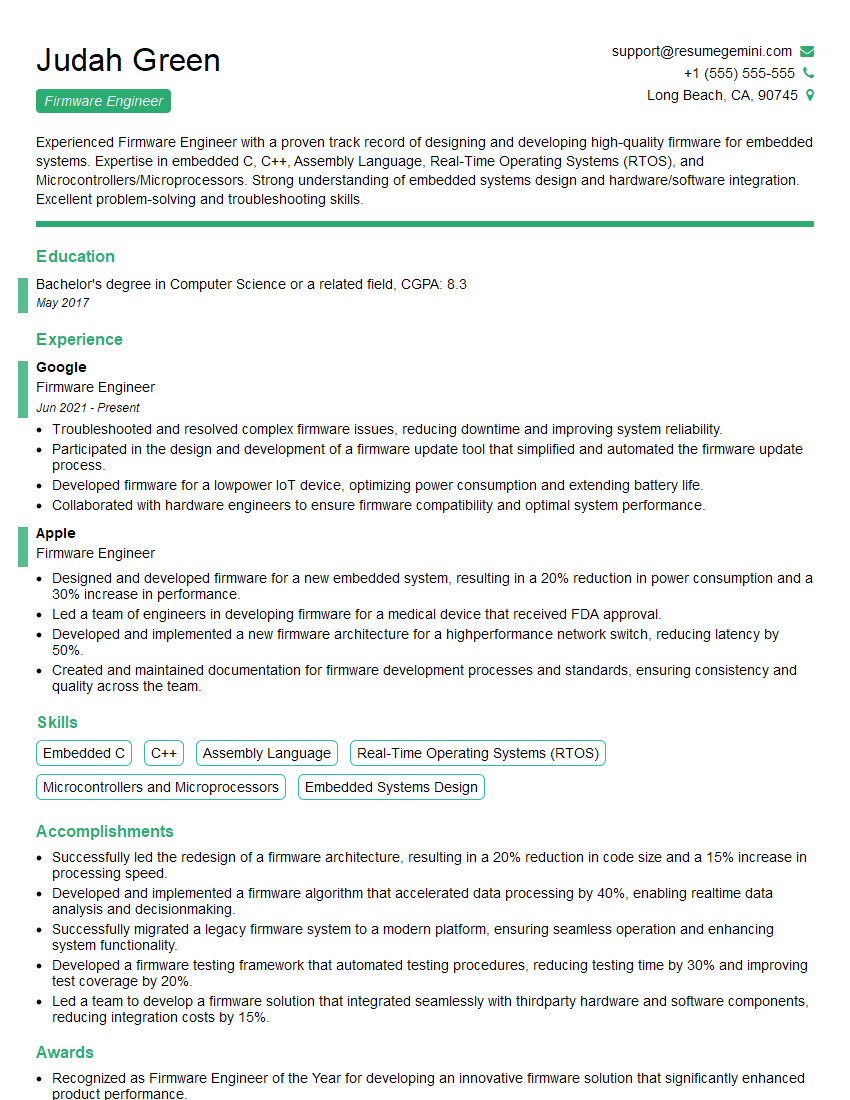
Firmware Engineer Resume Sample

Technical Support Engineer Resume Sample

Test Engineer Resume Sample
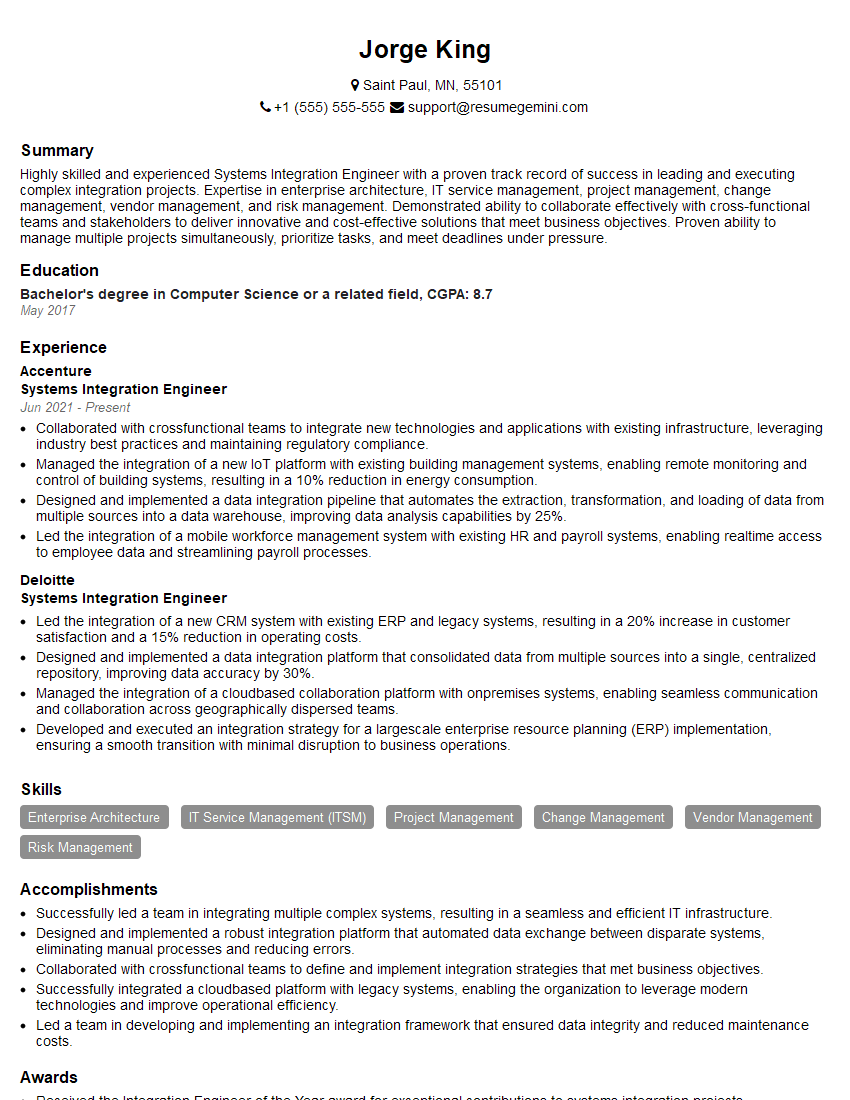
Systems Integration Engineer Resume Sample
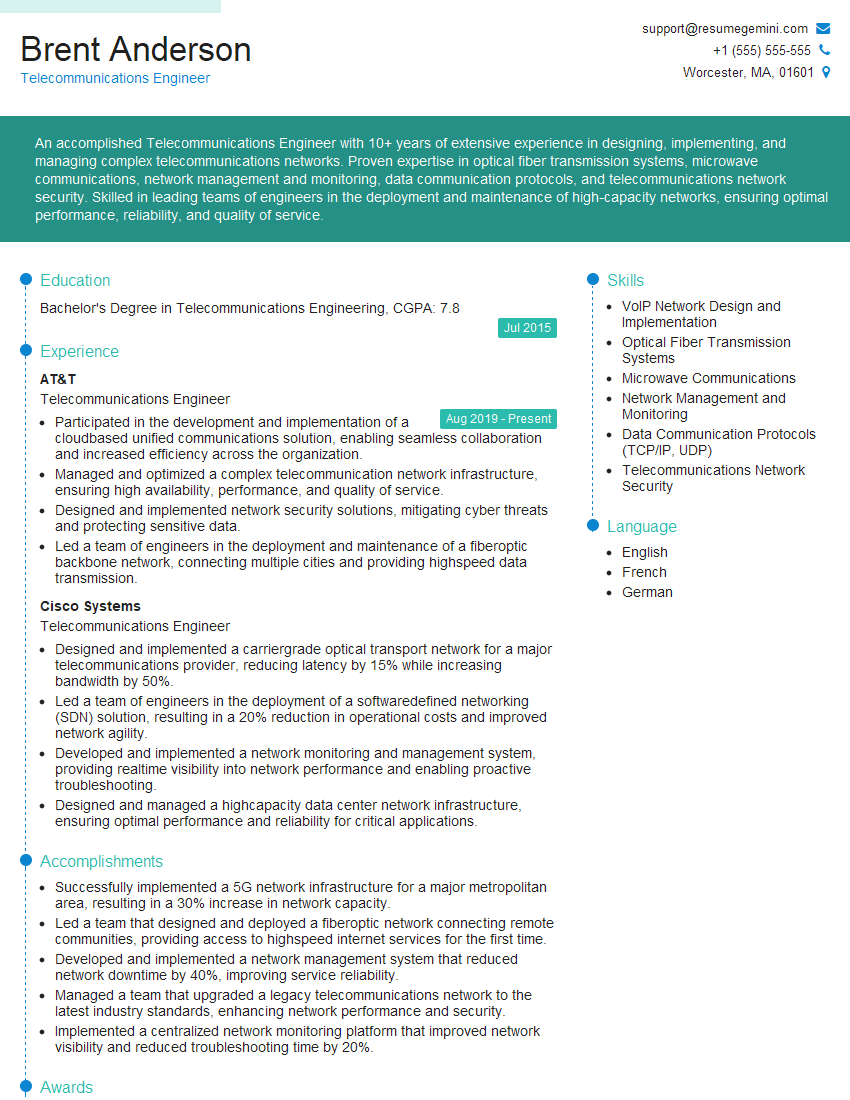
Telecommunications Engineer Resume Sample

Field Service Engineer Resume Sample
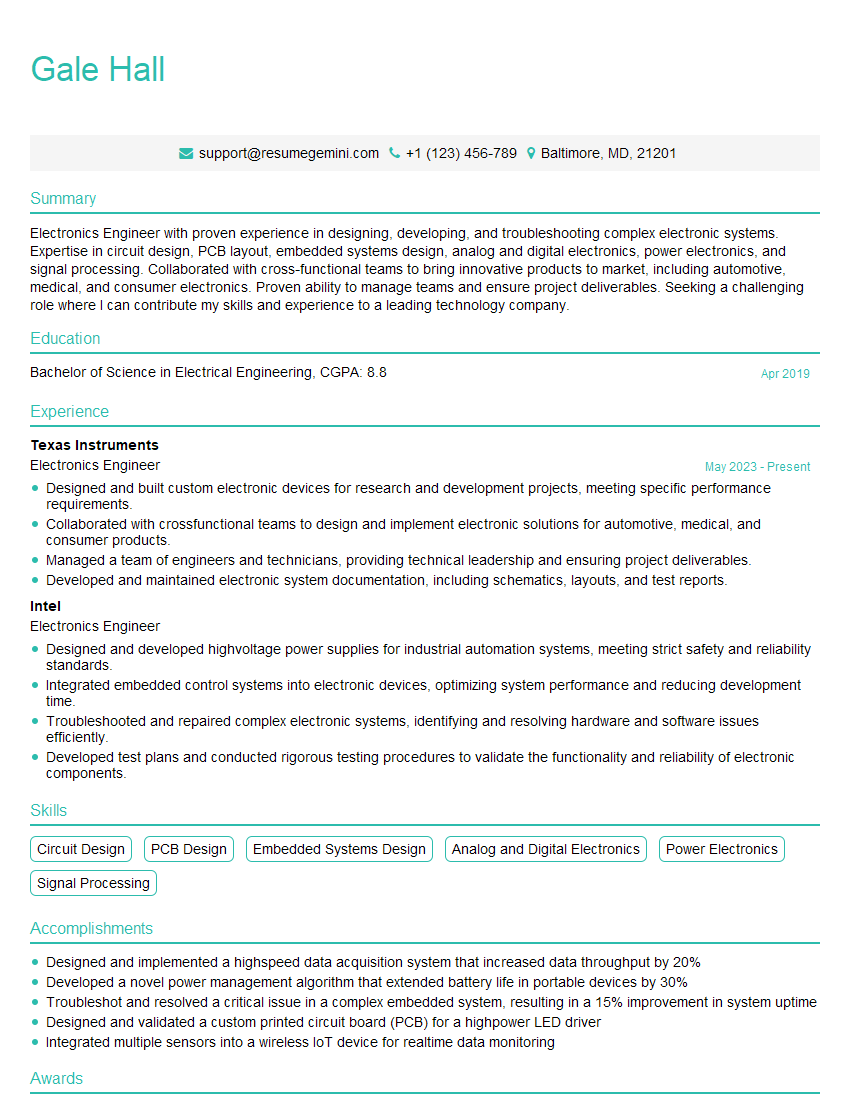
Electronics Engineer Resume Sample

Hardware Engineer Resume Sample

Microwave Engineer Resume Sample
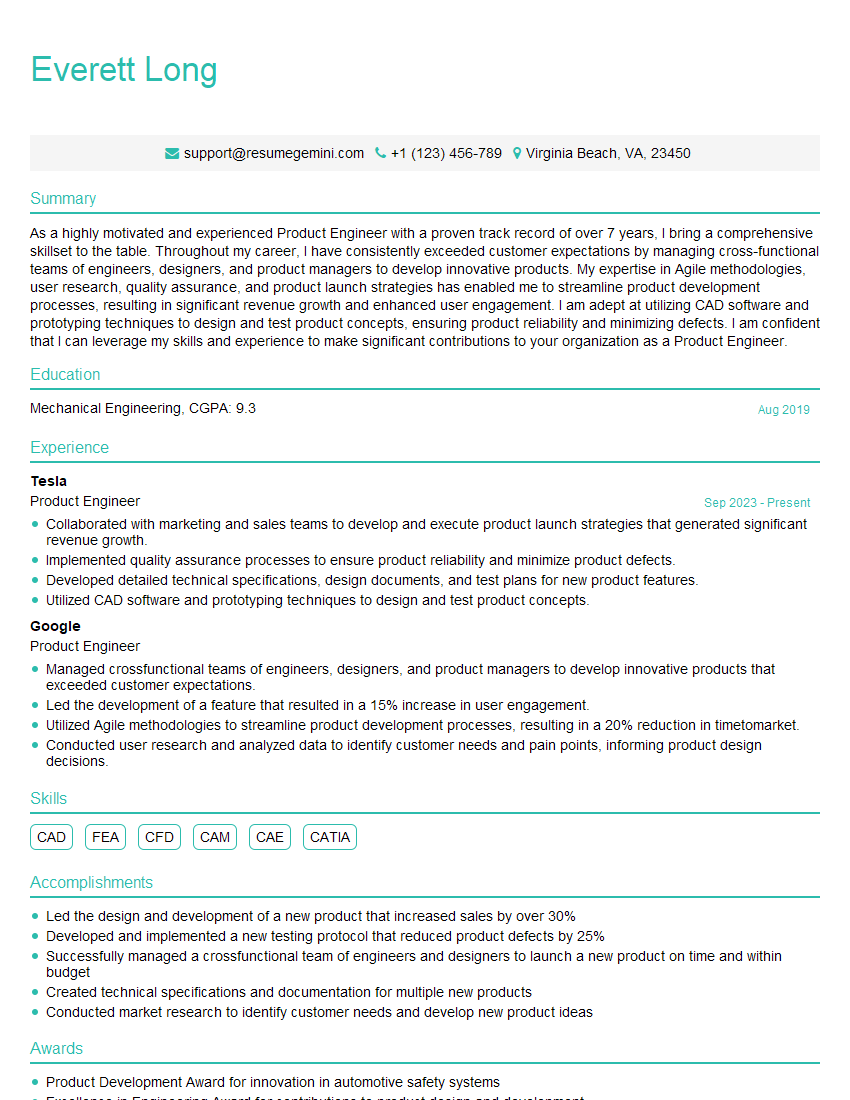
Product Engineer Resume Sample
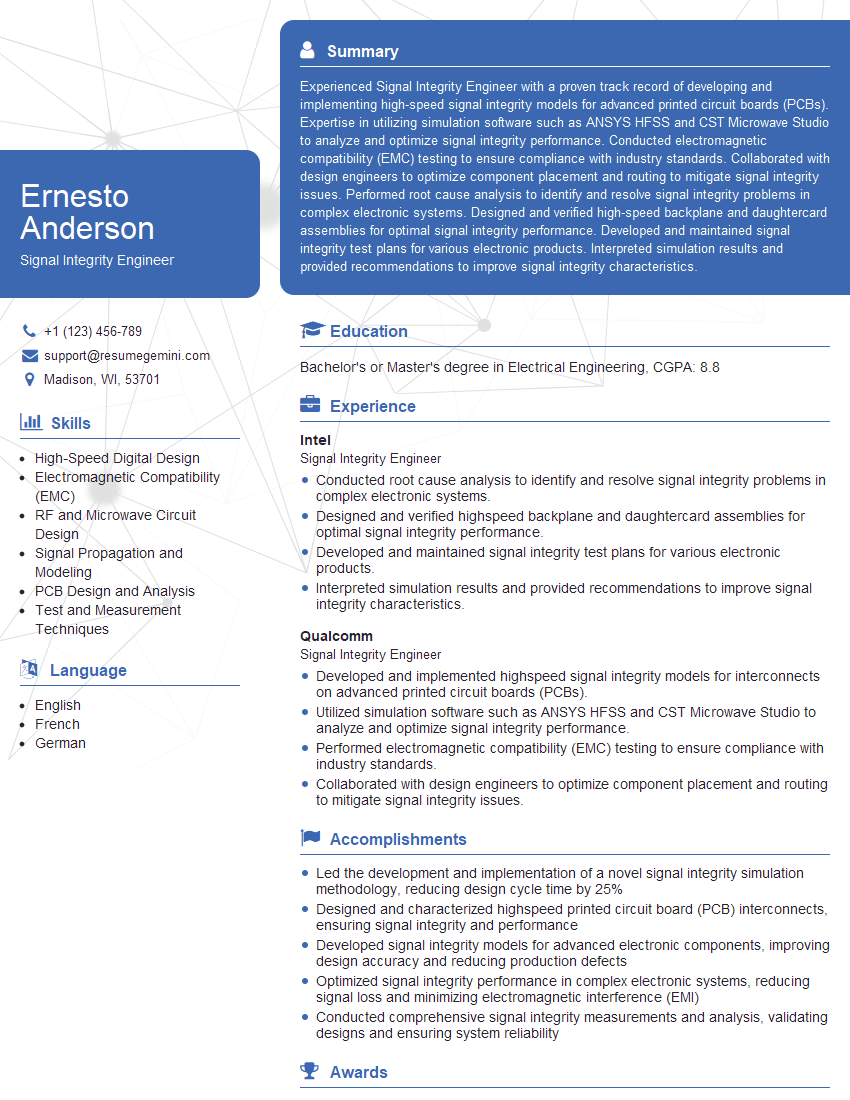
Signal Integrity Engineer Resume Sample
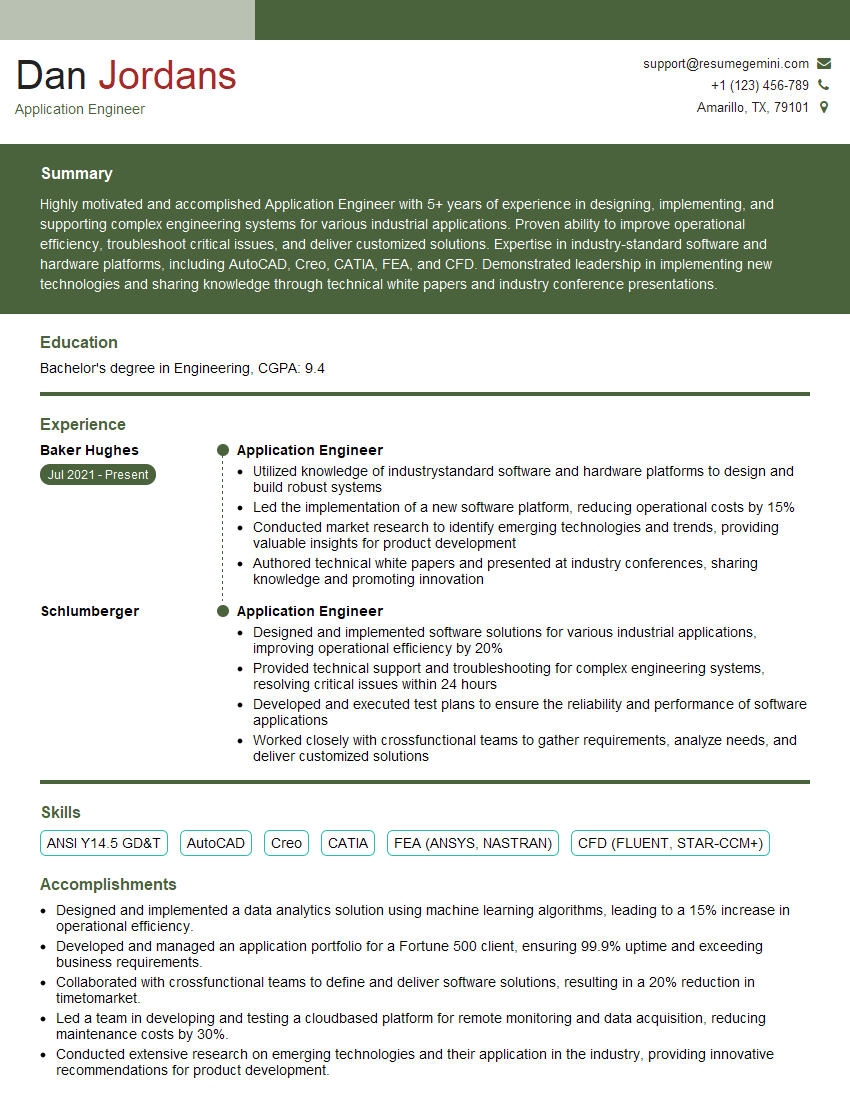
Application Engineer Resume Sample
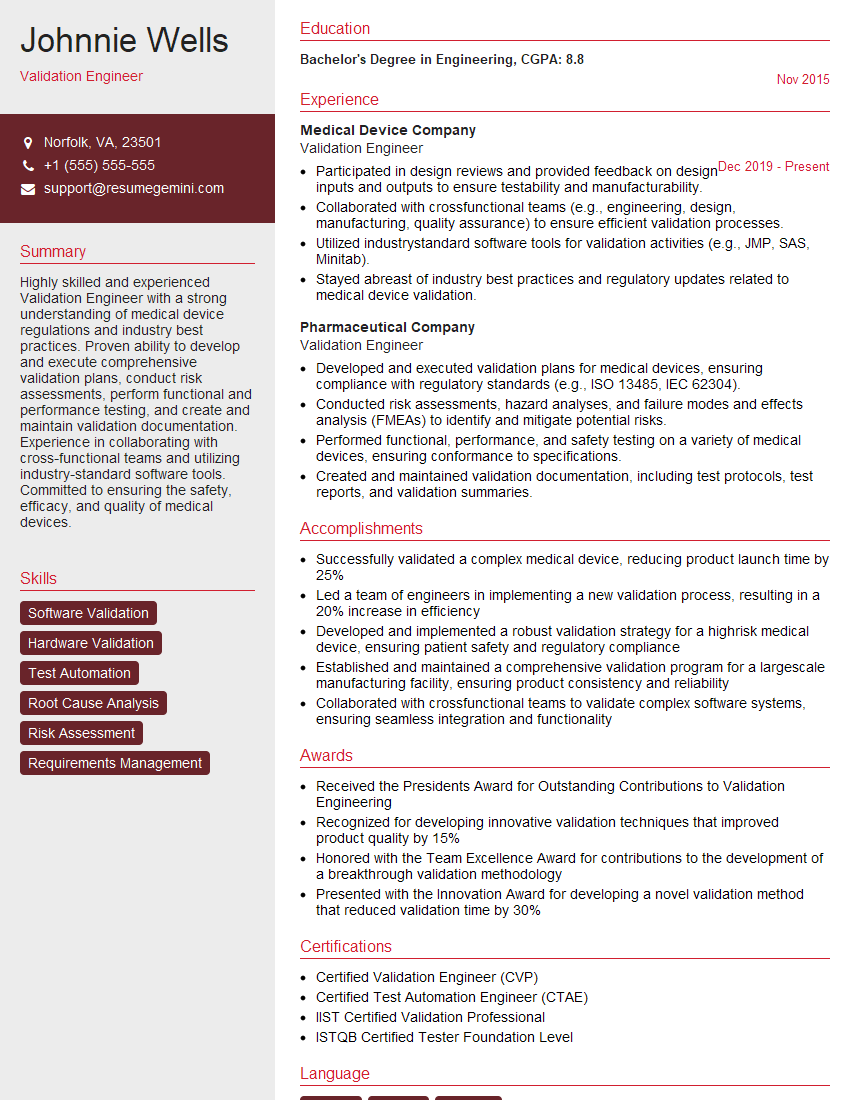
Validation Engineer Resume Sample
- Reliability Engineer
- Network Engineer
- Firmware Engineer
- Technical Support Engineer
- Test Engineer
- Systems Integration Engineer
- Telecommunications Engineer
- Field Service Engineer
- Electronics Engineer
- Hardware Engineer
- Microwave Engineer
- Product Engineer
- Signal Integrity Engineer
- Application Engineer
- Validation Engineer
Explore more articles
Users Rating of Our Blogs
Share Your Experience
We value your feedback! Please rate our content and share your thoughts (optional).
What Readers Say About Our Blog
Very informative content, great job.
good