Are you ready to stand out in your next interview? Understanding and preparing for Silver Plating interview questions is a game-changer. In this blog, we’ve compiled key questions and expert advice to help you showcase your skills with confidence and precision. Let’s get started on your journey to acing the interview.
Questions Asked in Silver Plating Interview
Q 1. Describe the process of silver plating using an electrolytic cell.
Silver plating, in an electrolytic cell, is an electrochemical process where a thin layer of silver is deposited onto a conductive substrate. It’s like painting with electricity! We use an electrolytic cell, which consists of a positive electrode (anode) made of pure silver, a negative electrode (cathode) which is the object to be plated, and an electrolyte solution containing silver ions.
The process works by applying a direct current. This current forces silver ions from the anode to dissolve into the solution as Ag+ ions. These ions then migrate through the solution towards the negatively charged cathode. At the cathode, the silver ions gain electrons (reduction) and deposit as solid silver atoms, forming a thin, adherent layer on the substrate.
Think of it like this: the electric current is the ‘brush’, the silver anode is the ‘paint’, the electrolyte is the ‘medium’, and the cathode is the ‘canvas’. The process continues until the desired thickness of silver plating is achieved.
Q 2. What are the different types of silver plating solutions?
Several types of silver plating solutions exist, each with its own advantages and disadvantages. The choice depends on factors such as the desired plating properties (brightness, ductility, hardness), the type of substrate, and the overall cost. Common types include:
- Cyanide solutions: These are historically popular because they offer high throwing power (ability to plate uniformly in recessed areas), good brightness, and relatively fast plating rates. However, cyanide is highly toxic, requiring careful handling and disposal.
- Thiocyanate solutions: These offer similar properties to cyanide solutions but are less toxic, making them a more environmentally friendly alternative. However, their plating rate is generally slower.
- Sulfamate solutions: These solutions offer excellent throwing power and produce fine-grained, ductile deposits. They are less toxic than cyanide solutions but more expensive.
- Ammonia solutions: These are less commonly used for general silver plating due to lower throwing power compared to cyanide or thiocyanate baths. However they are used in specific applications for their specific characteristics.
The selection of the appropriate solution is a critical decision in achieving the desired quality and properties in the final silver-plated product.
Q 3. Explain the role of current density in silver plating.
Current density, measured in Amperes per square decimeter (A/dm2), is the rate of electrical current flow per unit area of the cathode. It plays a crucial role in determining the quality of the silver deposit.
A lower current density generally results in a smoother, finer-grained deposit. However, the plating process will be slower. Too high a current density, on the other hand, can lead to several defects, including rough, pitted, or burned deposits, as well as hydrogen embrittlement of the base metal (which can weaken it). The optimal current density is determined experimentally and depends on the solution used, the temperature, and the agitation.
For instance, a higher current density might be tolerable in a high-agitation system, but it would likely lead to defects in a stagnant solution. Determining the correct current density is essential for consistent high-quality silver plating.
Q 4. How do you control the thickness of the silver plating layer?
Controlling the thickness of the silver plating layer is crucial for achieving the desired functionality and aesthetic appeal of the final product. The thickness is primarily controlled by two factors: plating time and current density.
A longer plating time, at a consistent current density, will naturally result in a thicker plating. Similarly, a higher current density (within acceptable limits) will deposit more silver in a given time, leading to a thicker layer. However, simply increasing the current density drastically to achieve thickness quickly can lead to inferior plating quality.
Precise control is often achieved by using a plating thickness meter or by employing Faraday’s law of electrolysis, which relates the amount of metal deposited to the current, time, and the electrochemical equivalent of the metal. Thickness = (Current Density x Time x Atomic Weight) / (Valency x Density x Faraday's Constant). This equation helps calculate the expected thickness, allowing for precise control over the plating process.
Q 5. What are the common defects encountered in silver plating and their causes?
Several defects can occur during silver plating, often indicating issues with the process parameters or pre-treatment stages. These include:
- Pitting: Small holes or cavities in the plating, often caused by impurities in the solution, inadequate cleaning of the substrate, or excessive current density.
- Burning: A dark, rough, and uneven deposit, resulting from excessive current density or poor solution agitation.
- Roughness: An uneven, irregular surface texture, often caused by excessive current density, improper solution temperature, or contamination.
- Treeing: Irregular, dendrite-like growths that occur due to high current density, localized impurities, or inadequate agitation.
- Nodules: Localized bumps or lumps on the surface, stemming from similar causes to treeing.
- Poor adhesion: The silver layer peels or separates from the base material due to inadequate cleaning or surface preparation of the substrate.
Identifying the cause of defects requires careful examination of the process parameters and meticulous troubleshooting.
Q 6. How do you prevent pitting and other surface imperfections during silver plating?
Preventing pitting and other surface imperfections requires a multi-faceted approach focusing on meticulous preparation and precise control during the plating process. Key strategies include:
- Thorough cleaning of the substrate: This is critical! The surface must be free from grease, oils, oxides, and other contaminants. Multiple cleaning steps, using various solvents and techniques (e.g., ultrasonic cleaning, alkaline cleaning) are often employed.
- Careful control of current density: Maintaining the current density within the optimal range prevents burning and other defects. Agitation of the plating solution helps to distribute the current more evenly.
- Maintaining solution purity: Regular filtration and analysis of the plating solution are essential to remove impurities that can cause pitting and other defects.
- Optimal solution temperature: Temperature control plays a vital role in maintaining a consistent plating process and avoiding undesirable deposits.
- Proper agitation: This ensures even distribution of silver ions and prevents localized high current densities.
By meticulously controlling these factors, you can significantly reduce the occurrence of pitting and other surface imperfections, leading to higher-quality silver plating.
Q 7. Describe the process of pre-treatment before silver plating.
Pre-treatment before silver plating is crucial for ensuring good adhesion and a high-quality final finish. It’s like preparing a canvas before painting—you wouldn’t start painting on a dirty, greasy canvas, would you?
The pre-treatment process typically involves several steps:
- Cleaning: This removes grease, oils, dirt, and other contaminants. Solvents, alkaline cleaners, and ultrasonic cleaning are common methods.
- Degreasing: This removes tenacious organic materials often missed by simple cleaning. Solvent degreasing or alkaline degreasing are typically employed.
- Pickling (for some metals): This removes oxides or other surface layers from the base metal to expose a clean, reactive surface. Acid solutions are often used for this purpose.
- Rinsing: Thorough rinsing between each step is crucial to remove any residual cleaning solutions or chemicals that could interfere with the plating process.
- Activation (optional): In some cases, an activation step may be necessary to improve the adhesion of the silver to the substrate. This often involves a brief immersion in a mild acid solution.
The specific pre-treatment steps depend on the base material and its condition. Proper pre-treatment ensures the best possible surface for the silver to adhere to, preventing peeling and other adhesion-related defects.
Q 8. What are the different methods used for post-treatment after silver plating?
Post-treatment in silver plating is crucial for achieving the desired finish and durability. It involves several steps to enhance the plated layer’s properties. These steps are not always necessary, depending on the application and desired final product.
Cleaning: This is the first and most important step, removing any residual plating solution, fingerprints, or other contaminants. Methods include rinsing with deionized water, followed by ultrasonic cleaning in a suitable solvent if necessary. This ensures a pristine surface.
Brightening/Dipping: Some silver plating solutions produce a slightly dull finish. A brief dip in a brightening solution, often containing organic additives, can enhance the luster. This step is highly dependent on the base plating solution used.
Passivation: This process involves treating the plated surface to enhance corrosion resistance. A common method is dipping the plated item in a dilute solution of sodium thiosulfate, forming a protective layer of silver sulfide. This creates a slightly darker, more durable finish.
Sealing/Lacquering: A final protective layer can be applied, particularly for jewelry or items that will be handled frequently. Clear lacquers or other coatings create a barrier against tarnishing and scratches.
The choice of post-treatment methods depends on factors such as the intended use of the plated item and the desired aesthetic finish. For example, jewelry might require all four steps, while a functional component might only need cleaning and passivation.
Q 9. What safety precautions are necessary when working with silver plating solutions?
Silver plating solutions, particularly those containing cyanide (though less common now due to toxicity), require stringent safety precautions. Cyanide solutions are extremely poisonous.
Proper Ventilation: Always work in a well-ventilated area or under a fume hood, especially when dealing with cyanide-based solutions. Adequate ventilation prevents inhalation of toxic fumes.
Personal Protective Equipment (PPE): This is paramount. Use gloves (nitrile or neoprene are suitable), eye protection (goggles or a face shield), and a lab coat. Avoid skin contact at all costs.
Emergency Procedures: Have readily accessible emergency eyewash stations and safety showers nearby. Know the procedures for handling spills and chemical exposure. In the case of cyanide exposure, seek immediate medical attention.
Waste Disposal: Silver plating solutions are hazardous waste and must be disposed of according to local regulations. Never pour them down the drain.
Training: Thorough training on safe handling procedures is crucial before working with silver plating solutions.
Remember: safety is not just a precaution, it’s a necessity when working with potentially harmful chemicals.
Q 10. How do you determine the optimum plating time and current for a given application?
Determining the optimum plating time and current is crucial for achieving the desired thickness and quality of the silver deposit. This involves careful consideration of several factors.
Desired Thickness: The thickness needed depends on the application. A thin layer might suffice for decorative purposes, while thicker plating is required for corrosion protection or electrical conductivity.
Current Density: The current density (amperes per square decimeter or A/dm²) affects the plating rate and the quality of the deposit. Too high a current density can lead to uneven plating (burning) or the formation of a porous deposit. Too low a current density results in slow plating times.
Plating Solution Concentration: The concentration of silver ions in the plating bath affects the plating rate. Higher concentrations generally result in faster plating rates.
Temperature: Higher temperatures generally increase the plating rate but can also affect the quality of the deposit.
Agitation: Agitation of the plating bath helps to maintain a uniform concentration of silver ions at the cathode (the item being plated), leading to more uniform plating.
Experience and experimentation are key. Often, plating parameters are initially determined through empirical testing, starting with lower current densities and gradually increasing them while closely monitoring the plating process. Amperometric methods using coulometers can help determine the actual amount of silver deposited.
Q 11. Explain the concept of throwing power in silver plating.
Throwing power in silver plating refers to the ability of the plating solution to deposit a uniform layer of silver onto a workpiece, even in areas with complex geometries or recesses. High throwing power is desirable as it ensures consistent coating thickness across the entire surface.
Good throwing power is influenced by factors like the composition of the plating bath, the current density distribution, and the presence of additives. For instance, some additives increase the conductivity of the solution and improve the throwing power. Think of it like this: a solution with good throwing power can ‘throw’ silver into all the nooks and crannies of a complex object, ensuring complete coverage, unlike a solution with poor throwing power which might only plate the easily accessible areas.
Poor throwing power often leads to uneven plating, with some areas receiving a thicker deposit than others. This can be detrimental, particularly in applications requiring uniform electrical conductivity or corrosion protection.
Q 12. What are the different types of anodes used in silver plating?
Several types of anodes are employed in silver plating, each with its own advantages and disadvantages. The choice depends on factors such as the desired plating rate, solution purity, and cost.
Pure Silver Anodes: These offer high purity and are ideal for achieving excellent plating quality. However, they can be relatively expensive.
Silver Alloy Anodes: These are often used to enhance the efficiency of the plating process and reduce the cost. Common alloying elements include copper, cadmium or zinc. However, alloying metals can affect the properties of the deposit, therefore careful selection and control are important.
Silver-plated Anodes: A more economical approach. These consist of a base metal like stainless steel, plated with silver. The base metal can still contribute to impurities.
Regardless of the anode type, proper anode bagging is critical to prevent anode sludge from contaminating the plating bath. This helps maintain the consistency and quality of the plating solution.
Q 13. How do you maintain the quality and concentration of the plating solution?
Maintaining the quality and concentration of the silver plating solution is vital for consistent plating results. This requires regular monitoring and adjustments.
Regular Analysis: The concentration of silver ions should be checked regularly using analytical techniques like titration or atomic absorption spectroscopy. This ensures the solution maintains optimal plating parameters.
Replenishment: As silver ions are consumed during the plating process, they must be replenished by adding silver salts to the bath. The specific salt used depends on the type of bath.
Filtration: The solution needs regular filtration to remove any impurities or sludge that may accumulate. This helps prevent pitting or other defects in the plated layer.
pH Control: The pH of the plating solution needs to be carefully controlled, typically within a specific range. This is achieved by adding acids or bases as needed. (Explained in more detail in the next question)
Additive Control: If the solution contains additives (brighteners, levelers, etc.), their concentrations must also be monitored and maintained at the specified levels. This is usually done through periodic additions.
Neglecting these maintenance procedures can lead to inconsistent plating, poor quality deposits, and a reduction in the overall plating life.
Q 14. What is the significance of pH control in silver plating?
pH control is critical in silver plating because it directly affects the efficiency and quality of the plating process. The optimum pH range varies depending on the specific plating solution, but it’s typically within a relatively narrow range.
Importance:
Plating Rate: The rate of silver deposition is highly dependent on the pH. Outside the optimal range, the plating rate might decrease significantly.
Deposit Quality: The pH influences the morphology (structure) and properties of the silver deposit. An incorrect pH can lead to a rough, porous, or otherwise undesirable surface.
Solution Stability: Maintaining the correct pH helps maintain the stability of the plating solution, preventing precipitation or the decomposition of essential components.
Anode Dissolution: The pH affects the dissolution rate of the anode, which is essential for maintaining the silver ion concentration in the bath.
Regular pH monitoring and adjustments using appropriate acids or bases are necessary to ensure the process remains within the specified parameters. Frequent monitoring and appropriate adjustments are vital in preventing issues with the resulting plating quality.
Q 15. How do you troubleshoot a problem with poor adhesion of the silver plating?
Poor adhesion in silver plating is a common problem, often stemming from inadequate surface preparation of the base metal. Think of it like trying to stick a sticker to a dirty surface – it won’t hold! Troubleshooting involves systematically checking each step of the process.
Insufficient Cleaning: The most frequent culprit. Oil, grease, oxides, or other contaminants prevent proper bonding. Solution: Implement rigorous cleaning procedures using appropriate solvents, alkaline cleaners, and possibly electropolishing to achieve a perfectly clean and activated surface.
Improper Activation: The base metal needs to be properly activated to ensure the silver adheres well. This usually involves a pre-plating treatment, such as a strike plating bath (a thin layer of silver deposited quickly at a high current density) which helps to initiate even plating and improved adhesion. If activation is poor, the silver will not stick. Solution: Verify the activation process and solution concentration. A fresh activation solution might be necessary.
Incorrect Plating Parameters: Current density, temperature, and agitation all play crucial roles. Too high a current density can cause burning and poor adhesion; too low, and the deposit might be porous. Solution: Optimize these parameters based on the base metal and the silver plating solution used. Check your plating bath’s chemistry regularly and adjust as needed.
Contaminated Plating Bath: Impurities in the plating solution can inhibit plating and lead to poor adhesion. Solution: Regularly analyze and filter the plating bath to remove contaminants. Proper maintenance and solution replenishment are vital.
Base Metal Issues: Certain base metals might have inherent issues that affect adhesion. For example, passivation layers on some stainless steels can impede plating. Solution: Pre-treatments such as etching or pickling might be necessary to remove these layers and enhance adhesion.
Addressing poor adhesion often requires a combination of these solutions. A systematic approach, starting with cleaning and progressing to the plating parameters, is key to diagnosis and resolution.
Career Expert Tips:
- Ace those interviews! Prepare effectively by reviewing the Top 50 Most Common Interview Questions on ResumeGemini.
- Navigate your job search with confidence! Explore a wide range of Career Tips on ResumeGemini. Learn about common challenges and recommendations to overcome them.
- Craft the perfect resume! Master the Art of Resume Writing with ResumeGemini’s guide. Showcase your unique qualifications and achievements effectively.
- Don’t miss out on holiday savings! Build your dream resume with ResumeGemini’s ATS optimized templates.
Q 16. What are the environmental regulations related to silver plating waste disposal?
Environmental regulations regarding silver plating waste disposal vary by region, but generally focus on minimizing the release of silver ions into the environment. Silver is a valuable and toxic heavy metal, so responsible disposal is crucial. Key aspects include:
Wastewater Treatment: Regulations often mandate the treatment of wastewater containing silver ions to reduce their concentration to acceptable levels before discharge. This might involve chemical precipitation, ion exchange, or other advanced treatment methods. Proper documentation and reporting of effluent quality is crucial.
Spent Solution Disposal: Spent plating solutions containing silver need to be managed carefully. Options include recycling the silver (economically advantageous), neutralizing the solution, or sending it to a licensed hazardous waste facility. Strict adherence to local and national regulations is vital.
Sludge Management: Silver-containing sludge (the solid residue from wastewater treatment) must be managed as hazardous waste and disposed of accordingly, often through specialized waste disposal companies.
It’s essential to consult the relevant environmental agencies in your area for specific requirements. Failure to comply can lead to significant fines and penalties.
For example, in the United States, the Environmental Protection Agency (EPA) sets guidelines, while individual states may have stricter regulations. Similarly, in the European Union, the Waste Framework Directive guides waste management practices for industries like silver plating.
Q 17. Describe the different methods for testing the thickness of the silver plating.
Several methods are used to measure silver plating thickness, each with its own advantages and disadvantages:
Microscopy: Cross-sectional microscopy involves embedding a sample in resin, cutting it to reveal a cross-section, and then using a microscope to measure the thickness of the silver layer. This method is accurate but destructive.
Coulometric Measurement: This is a precise method using an electrochemical technique that strips the silver plating and measures the current to determine the thickness. This is a destructive test as it dissolves the silver plating.
X-ray Fluorescence (XRF) Spectroscopy: This non-destructive technique uses X-rays to analyze the elemental composition of the surface. It’s relatively quick and can measure the thickness without damaging the part. This method is particularly useful for quality control and in-situ testing.
Beta Backscatter Gauge: A non-destructive method using beta radiation. It measures the amount of radiation reflected back from the plated surface and correlates it to the thickness. This is often used in real-time during the plating process.
The choice of method depends on factors such as the required accuracy, the availability of equipment, and whether destructive testing is acceptable. For example, in a high-volume production environment, a non-destructive method like XRF or beta backscatter might be preferred for routine quality control, while microscopy might be used for occasional calibration or troubleshooting.
Q 18. How do you ensure the uniform distribution of silver plating on complex shapes?
Achieving uniform silver plating on complex shapes requires careful consideration of several factors:
Rack Design: The design of the plating rack is paramount. The rack should ensure that all parts of the object are exposed to a relatively uniform electric field. This might involve strategically placing the parts and using conductive materials that can facilitate uniform current distribution. Poor rack design leads to uneven plating, with thicker deposits on the parts closest to the anode and thinner deposits on parts that are further away.
Agitation: Proper agitation of the plating bath helps ensure a uniform distribution of silver ions and prevents concentration gradients. This can involve mechanical agitation, air agitation, or a combination of both. Adequate agitation is crucial for parts with complex geometries, which are less accessible to the plating solution.
Plating Solution Conductivity: The conductivity of the plating bath influences the current distribution. A well-maintained solution with the correct concentration is essential. Impurities can reduce conductivity and lead to non-uniform plating.
Pulse Plating: Pulse plating techniques, which involve applying current in short pulses with periodic interruptions, can improve uniformity, especially on complex shapes. This reduces the formation of dendrites and promotes a more uniform deposit.
In practice, a combination of these techniques often yields the best results. For instance, a well-designed rack, combined with effective agitation and pulse plating, can produce a remarkably even silver plating on intricate pieces.
Q 19. What is the difference between strike plating and heavy plating?
Strike plating and heavy plating are distinct steps in the silver plating process, serving different purposes:
Strike Plating: This is a very thin initial layer of silver (typically a few micrometers) deposited at a high current density for a short period. Its main purpose is not to provide significant thickness but to create a smooth, uniform, and adherent base for subsequent heavy plating. Think of it as a primer for paint. It improves adhesion and prevents the formation of nodules or crystalline structures that could lead to defects in the thicker layers.
Heavy Plating: This follows the strike plating and deposits a thicker layer of silver, often ranging from several micrometers to tens of micrometers, depending on the application’s requirements. This layer provides the desired thickness, conductivity, or other properties for the specific application. This is the main layer responsible for the final appearance, corrosion resistance, or conductive qualities.
In essence, the strike plating is like building a solid foundation, while the heavy plating is the main structure. Both are essential for creating a high-quality silver plated part.
Q 20. What are the advantages and disadvantages of using different silver plating solutions?
Different silver plating solutions offer various advantages and disadvantages:
Cyanide-based Solutions: These offer excellent throwing power (ability to plate uniformly on complex shapes) and produce bright, shiny deposits. However, cyanide is highly toxic, requiring stringent safety precautions and specialized waste disposal. The use of cyanide solutions is increasingly restricted due to their environmental impact.
Sulfate-based Solutions: These are less toxic than cyanide solutions, making them a safer alternative. They generally offer good throwing power and produce a more matte finish compared to cyanide baths. However, they might require more additives to achieve a bright finish.
Thiosulfate-based Solutions: These are also less toxic options and have become increasingly popular due to their environmental friendliness. However, they often have lower throwing power compared to cyanide solutions and may require more careful control of plating parameters.
The selection of a specific solution depends on factors such as the required properties of the silver plating, the complexity of the parts, environmental regulations, and cost considerations. A trade-off often needs to be made between performance and environmental impact.
Q 21. Explain the process of stripping silver plating.
Stripping silver plating involves removing the silver layer from the base metal. Several methods exist, each with its specific characteristics:
Electrolytic Stripping: This is a common method using an electrolytic cell. The part to be stripped is made the anode, and an appropriate stripping solution is used as the electrolyte. The silver dissolves and goes into solution. The choice of electrolyte is critical and depends on the base metal and the type of silver plating (e.g., cyanide or sulfate). It’s crucial to avoid over-stripping, which could damage the base metal.
Chemical Stripping: This involves immersing the part in a chemical solution that dissolves the silver. This is usually more time-consuming than electrolytic stripping and might require careful control of the solution’s temperature and concentration. The specific chemicals used depend on the type of silver plating and the base metal, with nitric acid being a common component. Again, care must be taken to avoid over-stripping.
After stripping, proper cleaning and rinsing are essential to remove any residual chemicals from the surface. The choice between electrolytic and chemical stripping depends on factors like the size and complexity of the parts, production volume, and the desire to recover the silver (electrolytic methods allow for better recovery).
Q 22. How do you select the appropriate silver plating solution for a particular substrate?
Selecting the right silver plating solution depends heavily on the substrate material and the desired properties of the final plated surface. Think of it like choosing the right paint for a project – you wouldn’t use the same paint for wood as you would for metal.
- For copper, brass, or nickel substrates: A cyanide-based silver plating solution is often used, known for its high throwing power (ability to plate uniformly in recesses) and excellent conductivity. However, cyanide solutions require specialized handling due to their toxicity.
- For steel or other less noble metals: A non-cyanide silver plating solution is preferred for safety reasons. These solutions, often based on sulfamate or thiosulfate, might require pre-treatments like activation to ensure proper adhesion.
- For plastics: Before plating, plastics must be made conductive, usually through chemical or electroless plating processes. A specific silver plating solution designed for this purpose is then used, often with careful control of parameters like current density and temperature.
The selection process also involves considering factors like the desired thickness of the silver layer, the required brightness, and the overall budget. Each solution has its own operational parameters, and deviating from them can significantly impact the quality of the plating.
Q 23. What is the role of additives in silver plating solutions?
Additives in silver plating solutions are crucial for controlling the plating process and enhancing the properties of the deposited silver. They act like fine-tuning knobs, allowing for precise control over the final product’s quality.
- Brighteners: These additives promote the deposition of fine-grained, bright silver. Without them, the silver deposit can be dull and rough. Common brighteners include organic compounds like thiourea and certain sulfur-containing compounds.
- Levelers: These additives help to level out the surface, filling in imperfections and creating a smoother finish. This is especially important when plating on rough or irregular surfaces.
- Stress reducers: Silver deposits can be prone to internal stress, leading to cracking or peeling. Stress reducers help to alleviate this stress, improving the plating’s durability and adhesion.
- Carriers: These improve the solubility and stability of the plating solution. They often help in maintaining consistent plating parameters over longer periods.
The type and concentration of additives are carefully controlled to achieve the desired properties. Improper additive management can lead to uneven plating, poor adhesion, or discoloration.
Q 24. Describe your experience with different types of plating equipment.
My experience encompasses a wide range of plating equipment, from small-scale laboratory setups to large-scale industrial systems.
- DC Power Supplies: I’ve worked extensively with various DC power supplies, ranging from simple benchtop units to sophisticated automated systems capable of precise current and voltage control. These are the workhorses of the plating process, providing the electrical current needed for silver deposition.
- Plating Tanks: I’m familiar with various tank materials (polypropylene, stainless steel, etc.) and their suitability for different plating solutions. The tank’s size and design directly impact plating efficiency and uniformity.
- Filtration Systems: Maintaining solution cleanliness is crucial. I have experience using both cartridge filters and more advanced filtration systems for removing particulate matter and ensuring consistent plating quality.
- Automated Plating Lines: In larger-scale operations, I’ve worked with automated lines that incorporate robotic handling, automated rinsing, and in-line quality control systems, which dramatically increase productivity and consistency.
Understanding the capabilities and limitations of each piece of equipment is essential for optimizing the plating process and troubleshooting potential problems.
Q 25. How do you manage and interpret quality control data in a silver plating process?
Quality control in silver plating is paramount. It’s not just about a shiny finish; it’s about ensuring the plating meets specifications for thickness, adhesion, and corrosion resistance.
We routinely monitor several key parameters:
- Thickness Measurement: Using techniques like X-ray fluorescence (XRF) or coulometry to determine the silver layer’s thickness and ensure it conforms to the specified tolerances.
- Adhesion Testing: Employing standardized adhesion tests, such as the tape test or scratch test, to assess the bond strength between the silver plating and the substrate. Poor adhesion is a common failure mode.
- Corrosion Resistance: Conducting salt spray or humidity tests to determine the plating’s resistance to corrosion under various environmental conditions. The results directly impact the longevity of the plated part.
- Appearance Inspection: Visual inspection for defects like pitting, roughness, or discoloration. This often involves using magnification and standardized grading systems.
Any deviations from specifications trigger investigation and corrective actions, including adjustments to the plating solution, process parameters, or pre-treatment steps.
Q 26. Explain your troubleshooting experience regarding silver plating issues.
Troubleshooting silver plating issues requires a systematic approach. I usually follow these steps:
- Identify the problem: Carefully examine the plated parts to pinpoint the specific defect – e.g., poor adhesion, uneven plating, discoloration, or pitting.
- Analyze the process parameters: Review records of current density, temperature, solution chemistry, and plating time to identify any deviations from optimal operating conditions.
- Inspect the plating solution: Check the solution for contamination, depletion of key components, or changes in pH. Laboratory analysis often confirms these observations.
- Evaluate pre-treatment steps: Ensure that the substrate was properly cleaned and prepared before plating. Insufficient cleaning or improper activation can lead to poor adhesion.
- Check the equipment: Examine the power supply, plating tank, filtration system, and other equipment for any malfunctions or issues.
For example, if I observe uneven plating, I would first check the current distribution in the plating tank, ensuring uniform current flow to all parts. If discoloration occurs, I might investigate the solution’s composition and look for contamination.
Q 27. Describe your experience with different types of plating racks and their applications.
The choice of plating rack depends on the shape and size of the parts to be plated and the plating process itself. Improper rack selection can lead to uneven plating, masking issues, and even damage to the parts.
- Barrel Plating Racks: Used for small parts, these rotating barrels hold the parts immersed in the plating solution. They’re efficient for mass production but might cause some parts to be damaged if not carefully designed.
- Hook-Type Racks: Simple and versatile, they’re suitable for a wide variety of shapes. The parts are hung on hooks which allow efficient current flow. However, they are unsuitable for intricate or complex shapes which could be damaged during plating.
- Jigs and Fixtures: These custom-designed racks are essential for complex parts that require precise control of current distribution to ensure uniform plating. They are expensive and time-consuming to design, but are essential for many applications.
- Insulated Racks: These racks use insulating materials to prevent current from flowing to undesired areas, aiding in precise and selective plating.
Selecting the appropriate rack involves careful consideration of part geometry, material compatibility, and the specific needs of the plating process.
Q 28. How familiar are you with various plating standards and specifications?
I’m very familiar with various plating standards and specifications, including those related to silver plating thickness, adhesion, corrosion resistance, and other relevant properties.
Some key standards I regularly consult include:
- ASTM Standards: ASTM B154 (Standard Test Methods for Thickness of Metallic Coatings), ASTM B117 (Standard Practice for Operating Salt Spray (Fog) Apparatus).
- ISO Standards: Relevant ISO standards specify requirements for corrosion resistance and plating thickness.
- Industry-Specific Standards: Many industries have their own specifications for silver plating, often related to specific applications (e.g., electronic components, jewelry).
Adherence to these standards is crucial for ensuring the quality, reliability, and safety of silver-plated components, and for meeting customer requirements and regulatory compliance.
Key Topics to Learn for Silver Plating Interview
- Electrochemical Principles: Understand the fundamentals of electrochemistry, including Faraday’s laws, electrode potentials, and electrochemical cells. This forms the theoretical bedrock of silver plating.
- Silver Plating Solutions: Familiarize yourself with the composition and properties of various silver plating solutions (e.g., cyanide-based, non-cyanide alternatives). Know the roles of each component and their impact on the plating process.
- Process Parameters: Master the critical parameters influencing the quality of the silver plating, such as current density, temperature, agitation, and plating time. Understand how adjustments affect the final product.
- Surface Preparation: Learn the importance of proper substrate preparation (cleaning, polishing, pre-plating treatments) to ensure adhesion and quality of the silver deposit. This is crucial for practical application.
- Troubleshooting: Develop problem-solving skills related to common issues encountered in silver plating, such as poor adhesion, pitting, burning, or uneven coatings. Be prepared to discuss diagnostic approaches.
- Quality Control: Understand the methods used to assess the quality of a silver plating, including thickness measurement, visual inspection, and testing for porosity or other defects. This demonstrates your attention to detail.
- Safety Procedures: Be aware of the safety hazards associated with chemicals used in silver plating and the necessary precautions to maintain a safe working environment. This showcases your responsibility and awareness.
- Applications of Silver Plating: Be able to discuss the diverse applications of silver plating, such as electronics, jewelry, decorative items, and industrial components. This demonstrates a broader understanding.
Next Steps
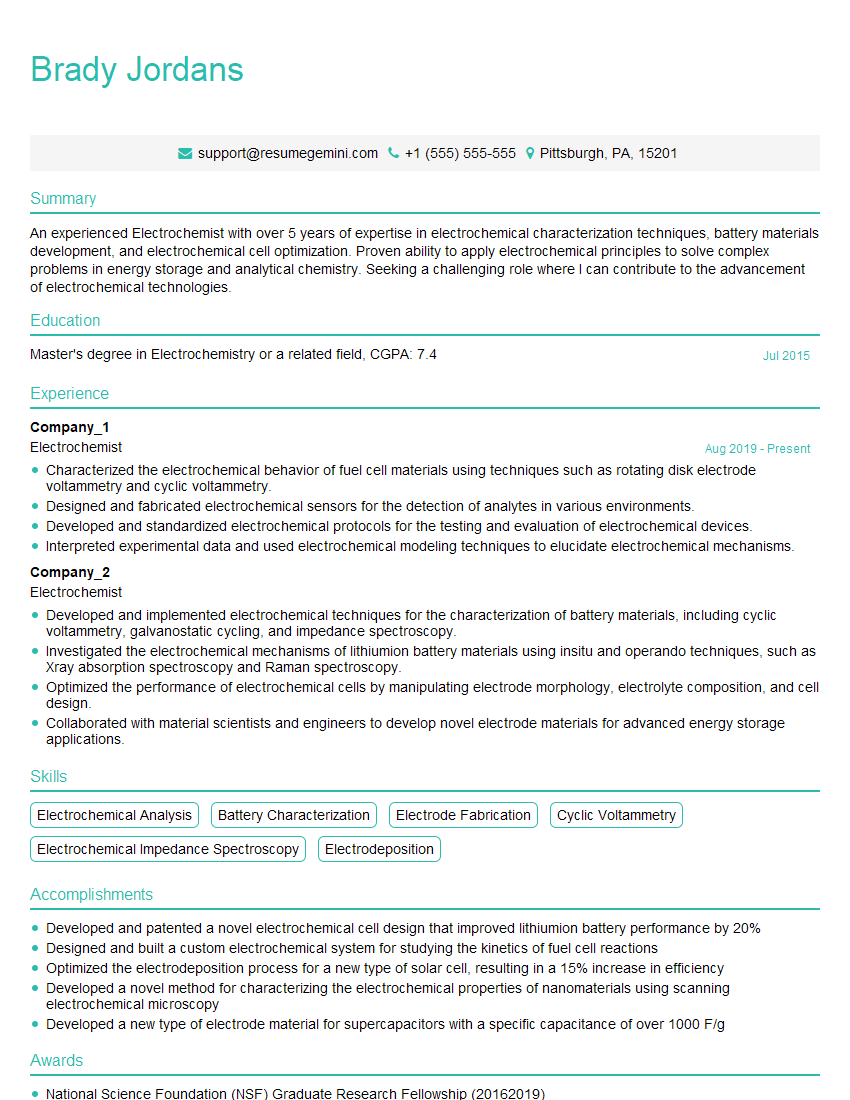
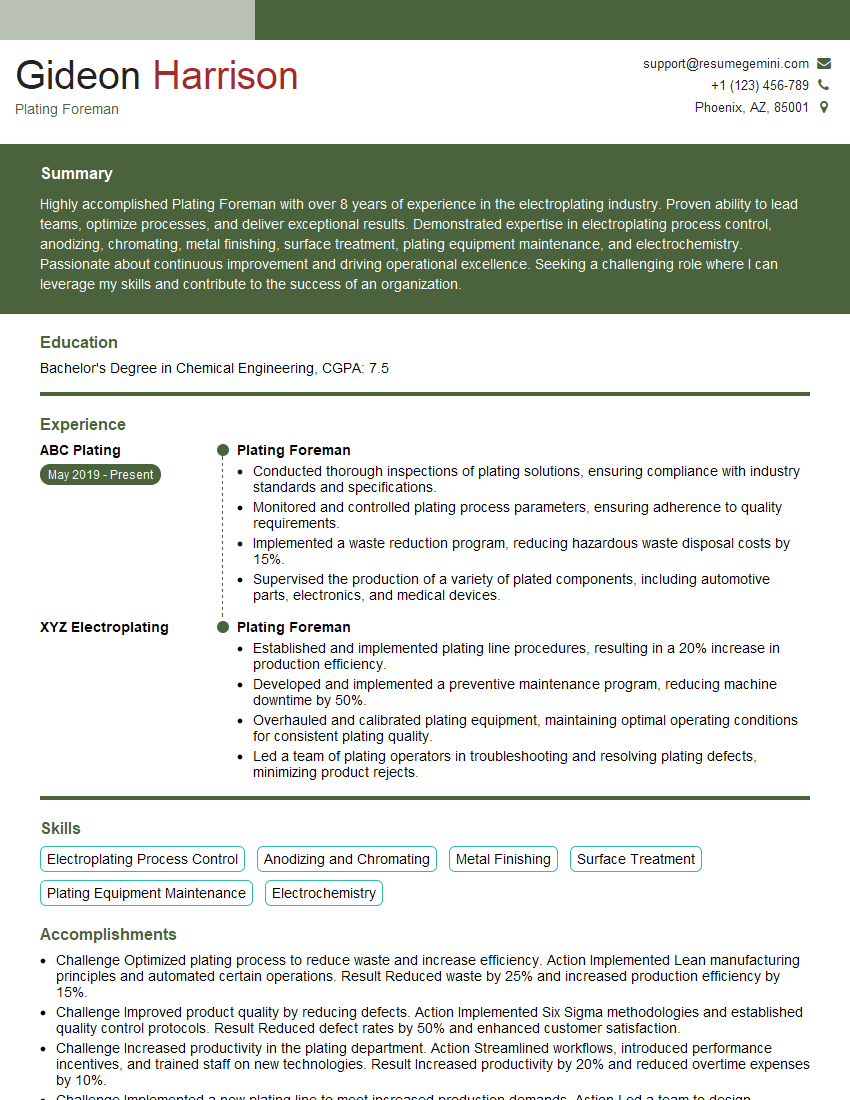
Mastering silver plating opens doors to exciting career opportunities in various industries. A strong understanding of the theoretical and practical aspects of this process is highly valued by employers. To increase your chances of landing your dream job, focus on creating an ATS-friendly resume that highlights your skills and experience effectively. ResumeGemini is a trusted resource that can help you build a professional and impactful resume. We offer examples of resumes tailored to the silver plating industry to help you get started.





Explore more articles
Users Rating of Our Blogs
Share Your Experience
We value your feedback! Please rate our content and share your thoughts (optional).
What Readers Say About Our Blog
Very informative content, great job.
good