Every successful interview starts with knowing what to expect. In this blog, we’ll take you through the top Six Sigma Operation interview questions, breaking them down with expert tips to help you deliver impactful answers. Step into your next interview fully prepared and ready to succeed.
Questions Asked in Six Sigma Operation Interview
Q 1. Explain the DMAIC methodology.
DMAIC is a data-driven improvement cycle used in Six Sigma to systematically solve problems and improve processes. It’s an acronym that stands for Define, Measure, Analyze, Improve, and Control. Think of it as a structured roadmap guiding you from problem identification to sustained improvement. It’s not just a sequence of steps; it’s a cyclical process, meaning you might revisit earlier phases as needed.
Q 2. What are the five phases of DMAIC?
The five phases of DMAIC are:
- Define: Clearly define the problem, the project goals, and the scope of the improvement effort. This includes identifying the customer, their needs, and the critical-to-quality (CTQ) characteristics. For example, if we’re improving a manufacturing process, we might define the problem as ‘reducing the number of defective widgets produced per day.’
- Measure: Collect data to quantify the current process performance. This involves identifying key metrics, establishing a baseline, and using statistical tools to understand process variation. We would measure the current defect rate of widgets.
- Analyze: Identify the root causes of the problem defined in the first phase. This often involves using tools like fishbone diagrams, Pareto charts, and statistical analysis to understand the relationships between variables and their impact on the process. We’d analyze the data to find out why the defects are occurring – is it faulty materials, incorrect machine settings, or operator error?
- Improve: Develop and implement solutions to address the root causes identified in the analysis phase. This could involve process redesign, implementing new technologies, or providing additional training to employees. For example, we might implement a new quality control check at a specific stage in the manufacturing process.
- Control: Establish methods to maintain the improvements achieved and prevent regression. This often includes implementing control charts, establishing standardized work procedures, and monitoring key metrics to ensure the gains are sustained. We’d then monitor the defect rate after the improvements to ensure it stays low.
Q 3. Describe the different Six Sigma levels (sigma levels) and their significance.
Six Sigma levels, or sigma levels, represent the number of standard deviations between the process mean and the nearest specification limit. Higher sigma levels indicate less variation and fewer defects. Here’s a breakdown:
- 3 Sigma: Represents about 66,800 defects per million opportunities (DPMO). This is considered a relatively low level of quality.
- 4 Sigma: Represents about 6,210 DPMO. While better than 3 sigma, it still has a significant number of defects.
- 5 Sigma: Represents about 233 DPMO. This level is generally considered a good target for many organizations. It signifies a substantial reduction in defects.
- 6 Sigma: Represents about 3.4 DPMO. This is an extremely high level of quality, representing near-perfection. It requires meticulous attention to detail and robust process controls.
The significance lies in the dramatic reduction in defects as you move up the sigma levels. Each level signifies a substantial improvement in quality and efficiency, leading to cost savings, improved customer satisfaction, and enhanced process reliability.
Q 4. What is a control chart and how is it used in Six Sigma?
A control chart is a graphical tool used to monitor a process over time and detect any significant shifts or changes in the process mean or variation. In Six Sigma, it’s crucial for the ‘Control’ phase of DMAIC. It allows us to track key metrics and ensure that the improvements made during the ‘Improve’ phase are sustained.
Control charts plot data points over time, along with upper and lower control limits. These limits are typically set at three standard deviations from the process mean. Points outside these limits indicate potential problems requiring investigation.
Types of Control Charts: There are various control charts, each suitable for different types of data. Common examples include X-bar and R charts (for continuous data) and p-charts or c-charts (for attribute data).
How it’s used: After implementing improvements, control charts are used to monitor the process regularly and ensure it remains stable and within the desired limits. Any unusual patterns or points outside the control limits trigger further investigation to prevent defects from reoccurring.
Q 5. Explain the concept of process capability and how it’s measured.
Process capability refers to the ability of a process to consistently produce output that meets customer specifications. It measures how well the process performs relative to its requirements. A process with high capability produces consistent output within the specified limits, while a process with low capability produces inconsistent output, leading to defects.
Measurement: Process capability is often measured using indices like Cp and Cpk. These indices compare the process’s natural variation to the specification limits.
- Cp (Process Capability Index): Measures the inherent capability of a process irrespective of its centering. A Cp of 1 indicates that the process spread is equal to the tolerance spread. A Cp greater than 1 is desirable.
- Cpk (Process Capability Index): Considers both process variation and centering. It accounts for how close the process mean is to the target value. A Cpk of 1 indicates that the process is capable and centered; a Cpk greater than 1 is desirable.
For example, a manufacturing process with a Cp of 1.5 and Cpk of 1.2 indicates a capable process that is slightly off-center but still within acceptable limits.
Q 6. What are some common tools used in Six Sigma projects (e.g., Pareto chart, fishbone diagram)?
Many tools are used in Six Sigma projects, each serving a specific purpose. Some common ones include:
- Pareto Chart: A bar graph that ranks causes of problems from most to least significant. It helps focus improvement efforts on the most impactful issues. Imagine using a Pareto chart to identify the top three reasons for customer complaints.
- Fishbone Diagram (Ishikawa Diagram): A diagram that visually displays potential causes of a problem, categorized by factors like materials, methods, manpower, machinery, measurement, and environment. It’s excellent for brainstorming potential root causes.
- Control Charts: As explained earlier, these are used to monitor process stability and identify any shifts or changes.
- Histograms: Graphical representation of the distribution of a dataset, providing insights into process variation and central tendency.
- Scatter Diagrams: Show the relationship between two variables. This helps identify correlations and potential causal links.
- Flowcharts: Visual representation of a process, helping to identify bottlenecks and areas for improvement.
Q 7. How do you calculate Cp and Cpk?
Cp and Cpk are calculated using the following formulas:
Cp = (USL - LSL) / (6 * σ)Cpk = MIN[(USL - μ) / (3 * σ), (μ - LSL) / (3 * σ)]
Where:
- USL = Upper Specification Limit
- LSL = Lower Specification Limit
- μ = Process Mean
- σ = Process Standard Deviation
Example: Let’s say USL = 10, LSL = 0, μ = 5, and σ = 1.
Then:
Cp = (10 - 0) / (6 * 1) = 1.67Cpk = MIN[(10 - 5) / (3 * 1), (5 - 0) / (3 * 1)] = MIN[1.67, 1.67] = 1.67
In this example, the process is capable (Cp > 1 and Cpk > 1), indicating consistent production within specifications.
Q 8. Explain the difference between common cause and special cause variation.
Common cause variation and special cause variation are two fundamental concepts in Six Sigma that describe the sources of variability in a process. Think of it like baking cookies: common cause variation is the inherent, natural variability in the process – slight differences in oven temperature, variations in ingredient weight, etc., that lead to cookies that are mostly similar but not exactly identical. Special cause variation, on the other hand, represents unusual, unpredictable events that significantly alter the process. This could be a power outage causing the oven to malfunction, or using a completely different flour type – leading to a batch of cookies drastically different from the norm.
Common cause variation is inherent to the process and is predictable within certain limits. It’s the background noise of the process and is often addressed through process improvements that reduce the overall variability. We manage common cause variation, we don’t eliminate it entirely, because its presence is built into the system.
Special cause variation is unpredictable and points to assignable causes. Identifying and correcting special cause variation is crucial to stabilizing a process and preventing defects. For example, if suddenly our cookie batch is consistently burning, it’s a special cause, likely due to a faulty oven thermostat that needs repair. We investigate and eliminate special causes to keep the process stable and predictable.
- Common Cause: Normal, inherent fluctuations. Managed through process improvement.
- Special Cause: Unusual, identifiable events that need investigation and correction.
Q 9. What is a SIPOC diagram and how is it used?
A SIPOC diagram is a high-level process map that visually represents the Suppliers, Inputs, Process, Outputs, and Customers of a particular process. It’s a simple yet powerful tool used early in a Six Sigma project to define the scope and boundaries of the process under investigation. Imagine planning a birthday party – the SIPOC diagram would help define everything from who’s supplying the cake (Supplier) to the ingredients (Inputs), the party planning process itself (Process), the happy guests and memories (Outputs), and ultimately the birthday kid and their family (Customers).
How it’s used:
- Defining the scope: Clearly outlines what’s included and excluded from the project.
- Identifying stakeholders: Highlights key players involved in the process.
- Understanding inputs and outputs: Provides clarity on the process’s raw materials and deliverables.
- Facilitating communication: Serves as a common language and visual aid for all team members.
For example, in a manufacturing context, the SIPOC diagram might map out the suppliers of raw materials, the raw materials themselves, the manufacturing process, the finished products, and the end customers.
Q 10. How do you identify and prioritize improvement opportunities?
Identifying and prioritizing improvement opportunities is a critical step in any Six Sigma project. We employ several techniques to achieve this:
- Data Collection & Analysis: This is paramount. We collect data on key process metrics (KPIs) using tools like control charts and histograms to understand current performance and identify areas with high variability or defect rates. For example, if customer complaints about late deliveries are high, this is a clear candidate for improvement.
- Process Mapping: Tools like value stream mapping and flowcharts help visually represent the process, highlighting bottlenecks, inefficiencies, and areas ripe for optimization. A slow step in the process is a clear improvement opportunity.
- Root Cause Analysis (RCA): Techniques like the 5 Whys, fishbone diagrams, and fault tree analysis help uncover the underlying causes of problems. Understanding the root cause rather than just symptoms helps us develop targeted solutions.
- Prioritization Matrix: A matrix ranking potential improvements based on factors like impact (how much improvement we expect) and effort (how much work is involved). This helps us focus on projects with high impact and feasible effort.
Example: Imagine a restaurant facing customer complaints about slow service. Data analysis might reveal long wait times at the ordering counter. Process mapping then helps us understand the causes: inadequate staff, inefficient ordering system, or slow food preparation. Root cause analysis might show that insufficient kitchen staff is the main problem. A prioritization matrix would then rank the options (hire more staff, improve the ordering system, etc.) and help us decide on the most effective solution.
Q 11. What is a value stream map and how is it used in Lean Six Sigma?
A value stream map is a visual representation of all the steps involved in delivering a product or service to a customer, highlighting both value-added and non-value-added activities. Think of it as a detailed roadmap of your process, showing where time and resources are spent and where improvements can be made. Imagine ordering a pizza – the value stream map would show everything from ordering the pizza online, to pizza preparation, delivery, and finally, you enjoying your delicious meal.
How it’s used in Lean Six Sigma:
- Identifying waste: The map clearly visualizes waste (muda) in the process, such as excessive inventory, unnecessary steps, waiting times, and defects. For example, the pizza delivery driver might spend too much time searching for the address, representing a waste of time.
- Improving flow: Helps identify bottlenecks and areas for process improvement to enhance efficiency and reduce lead times. Maybe the pizza place needs a better address system to reduce delivery time.
- Reducing lead times: By optimizing the process, lead times (time from order to delivery) can be significantly reduced.
- Enhancing customer satisfaction: Ultimately, streamlining the process leads to faster, more reliable delivery and improved customer satisfaction. The quicker your pizza arrives, the happier you are.
Value stream mapping is a powerful tool for identifying and eliminating waste, leading to significant process improvements and increased efficiency.
Q 12. Describe your experience with hypothesis testing.
Hypothesis testing is a crucial statistical method used to make inferences about a population based on a sample of data. It’s a structured way to test whether an assumption (hypothesis) about a population parameter is supported by the evidence. For example, we might hypothesize that a new marketing campaign will increase sales. To test this, we would collect sales data before and after the campaign and use statistical tests (like a t-test or ANOVA) to determine if the observed increase in sales is statistically significant or merely due to chance.
My experience includes using a variety of hypothesis tests, such as:
- t-tests: To compare the means of two groups.
- ANOVA: To compare the means of three or more groups.
- Chi-square tests: To analyze categorical data.
In my previous projects, I’ve used hypothesis testing to:
- Determine if a new process change reduces defects.
- Evaluate the effectiveness of a new training program.
- Assess whether customer satisfaction scores have improved.
The process typically involves formulating a null hypothesis (the status quo) and an alternative hypothesis (the claim we want to test), collecting data, performing a statistical test, and interpreting the results based on the p-value (probability of observing the results if the null hypothesis is true). A low p-value (typically less than 0.05) suggests that we can reject the null hypothesis and accept the alternative hypothesis.
Q 13. What is a FMEA (Failure Mode and Effects Analysis) and how is it used?
A Failure Mode and Effects Analysis (FMEA) is a systematic approach to identifying potential failures in a system or process and assessing their potential effects. It’s a proactive risk assessment tool used to prevent problems before they occur. Think of building a house – an FMEA would help identify potential problems like faulty wiring, leaks, or structural weaknesses and suggest ways to mitigate those risks before construction begins.
How it’s used:
- Identify potential failure modes: Brainstorm all possible ways a process or system might fail.
- Assess the severity of each failure: How serious would each failure be if it occurred?
- Determine the occurrence rate: How likely is each failure to happen?
- Assess the detection rate: How likely is it that the failure will be detected before it causes problems?
- Calculate the risk priority number (RPN): Severity x Occurrence x Detection = RPN. This number prioritizes failures based on their overall risk.
- Develop corrective actions: Create plans to mitigate the highest-risk failures.
FMEA is used across various industries, from manufacturing and automotive to healthcare and software development. It’s a powerful tool for improving product and process reliability and minimizing potential risks. A high RPN indicates an area needing immediate attention and corrective actions.
Q 14. Explain your understanding of statistical process control (SPC).
Statistical Process Control (SPC) is a powerful set of statistical tools used to monitor and control a process to ensure it remains stable and predictable. Think of it as a continuous health check for your process, allowing for early detection of problems before they escalate. Imagine a manufacturing line producing bottles – SPC would help monitor factors like bottle weight, dimensions, and defects to ensure consistent quality.
Key aspects of SPC:
- Control Charts: These are graphical tools that plot process data over time, showing the process mean and variability. Control limits are established to indicate when the process is operating outside of its normal range (out of control), suggesting the presence of special cause variation.
- Process Capability Analysis: Determines whether the process is capable of meeting specified customer requirements. This helps identify areas needing improvement to meet quality targets.
- Data collection and analysis: Consistent data collection and analysis are essential for effective SPC. This involves measuring key process variables regularly and analyzing the data to identify trends and patterns.
SPC helps identify and address issues before they affect the end product or service, improving quality, reducing waste, and increasing customer satisfaction. By monitoring the process continuously, problems can be identified and corrected early, preventing major disruptions and defects.
Q 15. How do you measure the success of a Six Sigma project?
Measuring the success of a Six Sigma project goes beyond simply completing the project. It hinges on demonstrating quantifiable improvements aligned with the project’s defined goals. We use key metrics, primarily focusing on the reduction of defects (defects per million opportunities or DPMO), cycle time reduction, and cost savings.
For instance, if a project aimed to reduce the defect rate in a manufacturing process, success would be measured by comparing the DPMO before and after project implementation. A significant reduction, say from 3,000 DPMO to 300 DPMO, would demonstrate substantial improvement. Similarly, improvements in customer satisfaction scores, process efficiency, or increased throughput can also serve as key performance indicators (KPIs). We always ensure that these KPIs are clearly defined at the project’s outset and regularly tracked throughout its lifecycle.
It’s crucial to consider both hard and soft metrics. While hard metrics like cost savings are easily quantifiable, soft metrics such as employee morale and improved team collaboration are equally important. A successful project not only delivers quantifiable results but also fosters a culture of continuous improvement within the organization.
Career Expert Tips:
- Ace those interviews! Prepare effectively by reviewing the Top 50 Most Common Interview Questions on ResumeGemini.
- Navigate your job search with confidence! Explore a wide range of Career Tips on ResumeGemini. Learn about common challenges and recommendations to overcome them.
- Craft the perfect resume! Master the Art of Resume Writing with ResumeGemini’s guide. Showcase your unique qualifications and achievements effectively.
- Don’t miss out on holiday savings! Build your dream resume with ResumeGemini’s ATS optimized templates.
Q 16. What are some common challenges faced during Six Sigma projects?
Six Sigma projects, while powerful, often encounter hurdles. One common challenge is resistance to change. People are naturally hesitant to adopt new processes or relinquish familiar methods, even if those methods are inefficient. Another significant challenge is data availability and quality. Accurate and sufficient data is crucial for effective analysis, yet obtaining clean, reliable data can be surprisingly difficult. Often data is scattered across different systems or is simply not consistently recorded.
Lack of management support is also a frequent stumbling block. Six Sigma projects require significant resources and commitment from leadership. Without dedicated support, projects may lack the necessary funding, personnel, or authorization to implement recommended changes. Defining and measuring success can sometimes be ambiguous, leading to disagreements on whether the project has achieved its objectives. Finally, scope creep, where the project expands beyond its initial boundaries, can lead to delays, cost overruns, and diluted focus.
Q 17. How do you handle resistance to change during a Six Sigma project?
Handling resistance to change requires a multifaceted approach. Firstly, communication is key. We proactively engage stakeholders, explaining the project’s purpose, benefits, and the rationale behind proposed changes. We actively solicit feedback and address concerns transparently. This often involves presentations, workshops, and one-on-one conversations.
Secondly, we aim to build consensus and buy-in by involving stakeholders in the process. This can include forming cross-functional teams that incorporate diverse perspectives and expertise. By actively involving people in the solution-finding process, we can overcome resistance by building ownership and reducing feelings of being imposed upon.
Furthermore, we demonstrate early successes whenever possible, showcasing positive results that build confidence and momentum. We highlight improvements as they occur and reinforce the positive impact of the changes. Finally, providing training and support to those who are adjusting to the new processes helps ease the transition and reduces apprehension. We often offer ongoing coaching and mentoring to ensure smooth adoption of the changes.
Q 18. Describe your experience with data analysis and interpretation.
My experience with data analysis spans several years and encompasses a wide range of statistical techniques. I’m proficient in descriptive statistics (calculating means, medians, standard deviations), inferential statistics (hypothesis testing, regression analysis), and process capability analysis. I’m comfortable working with both large and small datasets, and I’m adept at identifying trends, patterns, and outliers.
For example, in a recent project for a logistics company, we analyzed delivery times to identify bottlenecks in the supply chain. We used regression analysis to isolate factors impacting delivery delays and discovered that weather conditions were a major contributor. This enabled us to implement improved routing strategies and weather-based contingency planning, resulting in a 15% reduction in late deliveries. This involved cleaning and transforming the data, identifying relevant variables and applying appropriate statistical methods. The key was not just running the analysis but effectively communicating the findings to stakeholders and translating them into actionable insights.
Q 19. What software tools are you proficient in (e.g., Minitab, JMP)?
I am proficient in several software tools commonly used in Six Sigma projects. My expertise includes Minitab, which I regularly use for statistical process control (SPC), design of experiments (DOE), and regression analysis. I’m also experienced with JMP, utilizing its powerful visualization capabilities and advanced statistical functions. Beyond these, I have working knowledge of Excel for data manipulation and visualization and experience with data management tools like SQL for database querying.
My proficiency extends beyond simply running analyses; I understand the underlying statistical principles and can interpret results effectively. I can effectively use these tools to create compelling visualizations that clearly communicate complex data insights to both technical and non-technical audiences.
Q 20. Explain your experience with project management methodologies.
My project management experience aligns closely with Six Sigma principles. I am familiar with various methodologies, including DMAIC (Define, Measure, Analyze, Improve, Control) and DMADV (Define, Measure, Analyze, Design, Verify). I understand the importance of clearly defined scope, timelines, budgets, and risk management. I have extensive experience using project management software such as MS Project to track progress, manage resources, and ensure timely completion of deliverables.
My approach emphasizes iterative progress, regular communication, and proactive risk mitigation. I utilize tools like Gantt charts to visualize project timelines, work breakdown structures (WBS) to organize tasks, and regular status meetings to maintain transparency and collaboration among team members. A key aspect of my project management approach is the ability to adapt and adjust plans as needed, responding effectively to unexpected challenges or changes in requirements.
Q 21. How do you ensure stakeholder buy-in for a Six Sigma project?
Securing stakeholder buy-in is crucial for the success of any Six Sigma project. This requires a strategic approach that addresses the concerns and expectations of various stakeholders.
First, I start by clearly defining the problem and outlining the project’s potential benefits for each stakeholder group. This includes quantifiable benefits whenever possible (e.g., cost savings, efficiency gains, improved customer satisfaction). A compelling business case that demonstrates a clear return on investment (ROI) is essential.
Second, I foster open communication and active involvement. This might involve early presentations, workshops, and regular updates to keep stakeholders informed of progress. Active participation in problem-solving sessions, soliciting their input, and addressing their concerns directly are critical steps.
Third, I build a coalition of support by identifying key influencers within the organization and engaging them early. Their endorsement can help to build momentum and garner broader support. By demonstrating a collaborative and transparent approach, I aim to build trust and confidence in the project’s potential.
Q 22. Describe a situation where you had to overcome a significant challenge in a Six Sigma project.
In a recent Six Sigma project focused on reducing customer order fulfillment time, we encountered a significant challenge: inconsistent data from our legacy order management system. This system lacked proper data validation and contained numerous inconsistencies, making accurate analysis and root cause identification extremely difficult. The initial DMAIC (Define, Measure, Analyze, Improve, Control) approach faced roadblocks due to unreliable data.
To overcome this, we implemented a multi-pronged strategy. First, we prioritized data cleansing by developing a robust data validation protocol and engaging a small team to manually correct inconsistencies in a sample set. This allowed us to build a more accurate baseline. Second, we employed data visualization techniques to identify patterns and correlations, even with incomplete data. Third, we transitioned to a more agile approach, incorporating iterative improvements and feedback loops along the way. Instead of waiting for perfect data, we used the best available data to make informed decisions and refine our process. This iterative approach helped us identify the major bottlenecks (poor integration between the warehouse management and order management systems) leading to much faster improvements than initially anticipated. Eventually, we migrated to a newer, more robust system, ensuring the long-term sustainability of our improvements and the reliability of data collection going forward. The project ultimately delivered a 30% reduction in order fulfillment time.
Q 23. What is your experience with Lean principles and how do they integrate with Six Sigma?
My experience with Lean principles is extensive, having implemented them across several projects, often in conjunction with Six Sigma methodologies. Lean principles, which focus on eliminating waste and maximizing value, are perfectly complementary to Six Sigma’s emphasis on reducing variation and improving quality.
For instance, in a Lean Six Sigma project aimed at improving a manufacturing process, we first used Value Stream Mapping (VSM) to visualize the entire process flow, identifying non-value-added steps (waste) such as unnecessary movements, excessive inventory, and waiting time. These were targeted for elimination or reduction using Lean tools like 5S (Sort, Set in Order, Shine, Standardize, Sustain) and Kaizen (continuous improvement). Simultaneously, we used Six Sigma DMAIC to analyze the remaining steps to reduce variation and improve process capability. This integrated approach delivered significant improvements in efficiency, quality and cycle time. In essence, Lean provides the framework for identifying waste and streamlining processes, while Six Sigma ensures the resulting process is highly consistent and efficient.
Q 24. How do you define and measure customer satisfaction within a Six Sigma framework?
Defining and measuring customer satisfaction within a Six Sigma framework involves a multifaceted approach. It begins with clearly defining what constitutes customer satisfaction for your specific product or service. This often involves surveys, focus groups, and analysis of customer feedback channels (reviews, social media, support tickets).
Key metrics for measuring customer satisfaction can include Customer Satisfaction Score (CSAT), Net Promoter Score (NPS), and Customer Effort Score (CES). These metrics, collected systematically, allow for ongoing monitoring and analysis. Within the DMAIC framework, this occurs during the ‘Measure’ phase. For example, we might use CSAT surveys to measure customer satisfaction with the speed of order fulfillment. These results then inform the analysis and improvement phases, allowing us to identify opportunities to enhance customer experience. The control phase incorporates mechanisms to sustain improvements and continuously monitor customer satisfaction. It’s crucial to establish clear benchmarks, regularly collect data, and use statistical methods to analyze trends and identify areas for improvement. This ensures that efforts to improve customer satisfaction are data-driven and demonstrably effective.
Q 25. What are the key differences between Lean and Six Sigma?
While Lean and Six Sigma are often used together, they have distinct focuses. Lean aims to eliminate waste and maximize value, focusing on efficiency and process flow. Six Sigma, on the other hand, focuses on reducing variation and improving quality, aiming for near-perfection.
- Lean: Concentrates on eliminating waste (Muda) through tools like 5S, Kaizen, and Value Stream Mapping. It’s about doing more with less.
- Six Sigma: Employs statistical methods (e.g., DMAIC) to reduce variation and defects, leading to higher quality and consistency. It’s about doing things right consistently.
Think of it this way: Lean is about making the process faster and more efficient, while Six Sigma is about making the process consistently high-quality. They are complementary approaches that together can lead to a highly efficient and high-quality process.
Q 26. Explain your understanding of Design for Six Sigma (DFSS).
Design for Six Sigma (DFSS) is a proactive methodology used to design new products, processes, or services that meet customer requirements and achieve high levels of quality from the outset, minimizing defects and reducing variation. Unlike DMAIC, which focuses on improving existing processes, DFSS is a design phase approach.
Common DFSS methodologies include DMADV (Define, Measure, Analyze, Design, Verify) and IDOV (Identify, Design, Optimize, Verify). DFSS uses advanced statistical tools and techniques to predict and optimize the performance of a new design before it’s implemented. This minimizes the risk of costly rework or failure later in the process. For example, in designing a new software application, DFSS would involve using techniques like Failure Mode and Effects Analysis (FMEA) to identify potential failures early on and designing robust solutions to prevent them. It also utilizes Design of Experiments (DOE) to optimize design parameters and ensure the final product meets specified quality targets.
Q 27. What are your salary expectations for this role?
My salary expectations for this role are in the range of [Insert Salary Range], based on my experience, skills, and the responsibilities of this position. I am open to discussing this further and am confident that my contributions will significantly benefit your organization.
Key Topics to Learn for Six Sigma Operation Interview
- DMAIC Methodology: Understand each phase (Define, Measure, Analyze, Improve, Control) thoroughly. Be prepared to discuss real-world applications of each step in various operational contexts.
- Statistical Process Control (SPC): Know how to interpret control charts (e.g., X-bar and R charts, p-charts, c-charts) and use them to identify process variation and potential issues. Be ready to explain the difference between common and special cause variation.
- Measurement Systems Analysis (MSA): Discuss the importance of accurate and reliable data. Be familiar with methods for assessing measurement system capability (e.g., Gage R&R studies).
- Lean Principles: Demonstrate understanding of how Lean principles complement Six Sigma, focusing on eliminating waste and improving efficiency. Be able to provide examples of Lean tools and their application.
- Problem-Solving Techniques: Be prepared to discuss various problem-solving methodologies, such as 5 Whys, Fishbone diagrams (Ishikawa diagrams), Pareto charts, and Failure Mode and Effects Analysis (FMEA). Practice applying these techniques to hypothetical scenarios.
- Data Analysis and Interpretation: Showcase your ability to analyze data using various statistical tools and techniques. This includes hypothesis testing, regression analysis, and capability analysis. Emphasize clear and concise communication of findings.
- Six Sigma Tools and Techniques: Familiarize yourself with a range of tools, including but not limited to, process mapping, value stream mapping, and design of experiments (DOE).
- Project Management in Six Sigma: Highlight your understanding of project planning, execution, monitoring, and closure within a Six Sigma framework. Demonstrate an understanding of timelines, resource allocation and risk management.
Next Steps
Mastering Six Sigma principles significantly enhances your career prospects, opening doors to leadership roles and higher earning potential across various industries. To maximize your chances of landing your dream job, creating an ATS-friendly resume is crucial. This ensures your qualifications are effectively highlighted to recruiters and applicant tracking systems. ResumeGemini is a trusted resource to help you build a compelling and effective resume. We provide examples of resumes tailored to Six Sigma Operation roles to help guide you through the process. Let us help you present your skills and experience in the best possible light.

Operations Manager Resume Sample
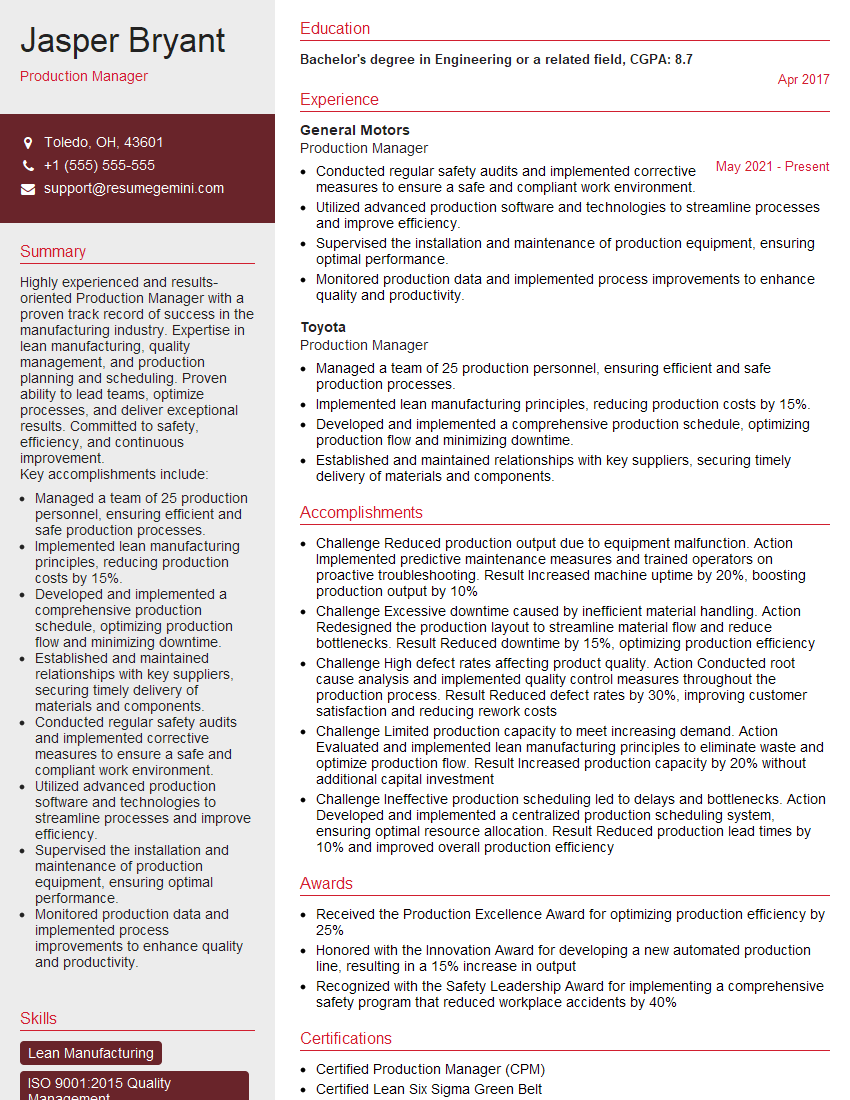
Production Manager Resume Sample
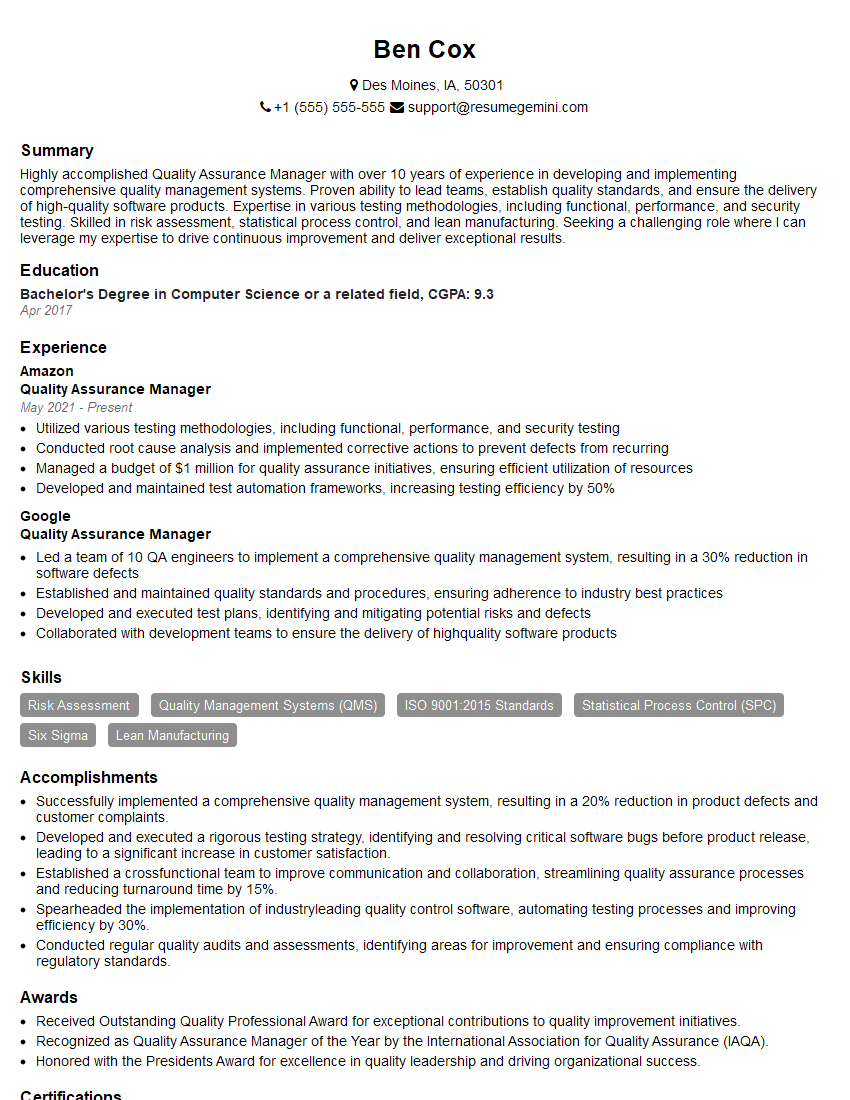
Quality Assurance Manager Resume Sample
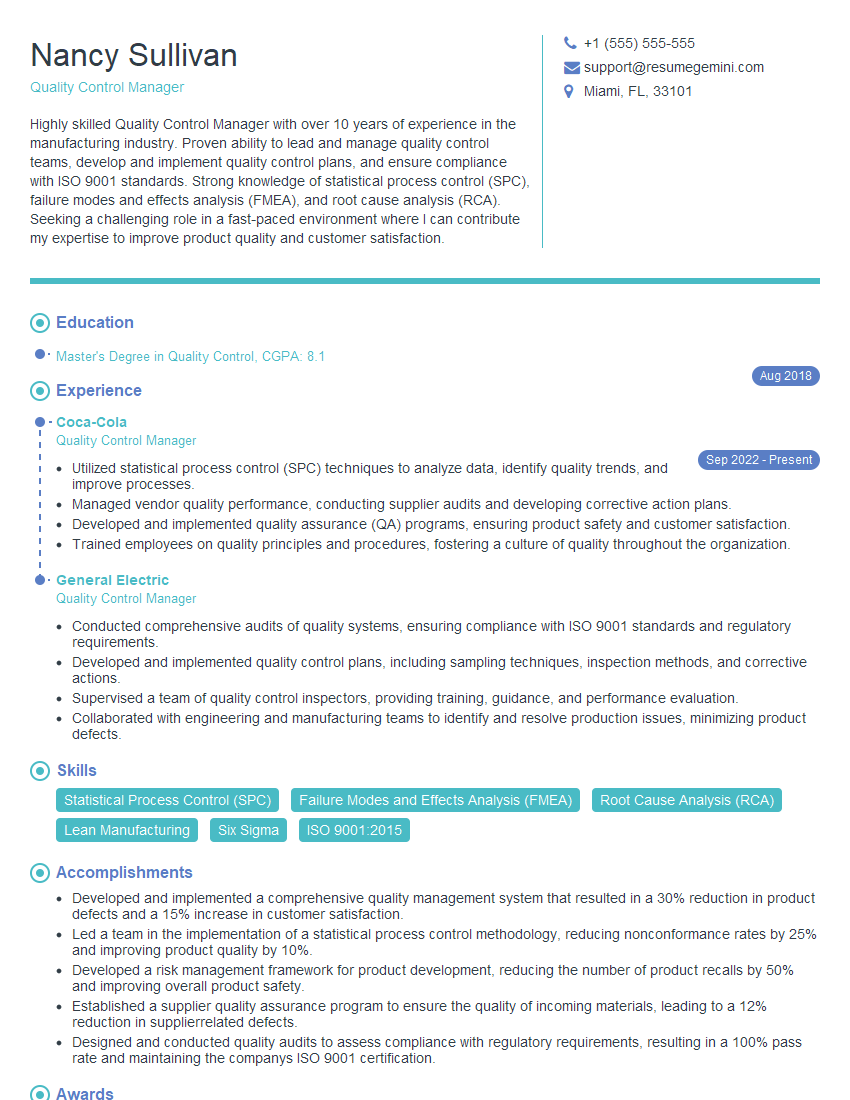
Quality Control Manager Resume Sample
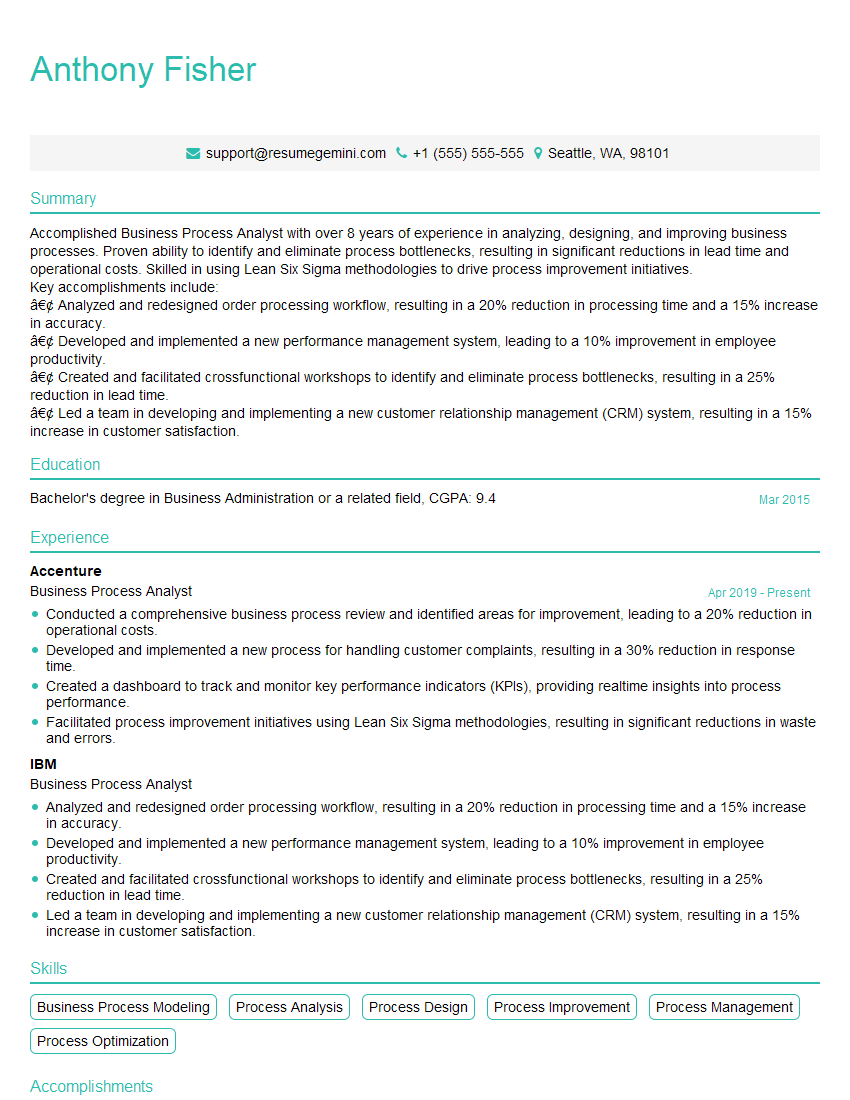
Business Process Analyst Resume Sample
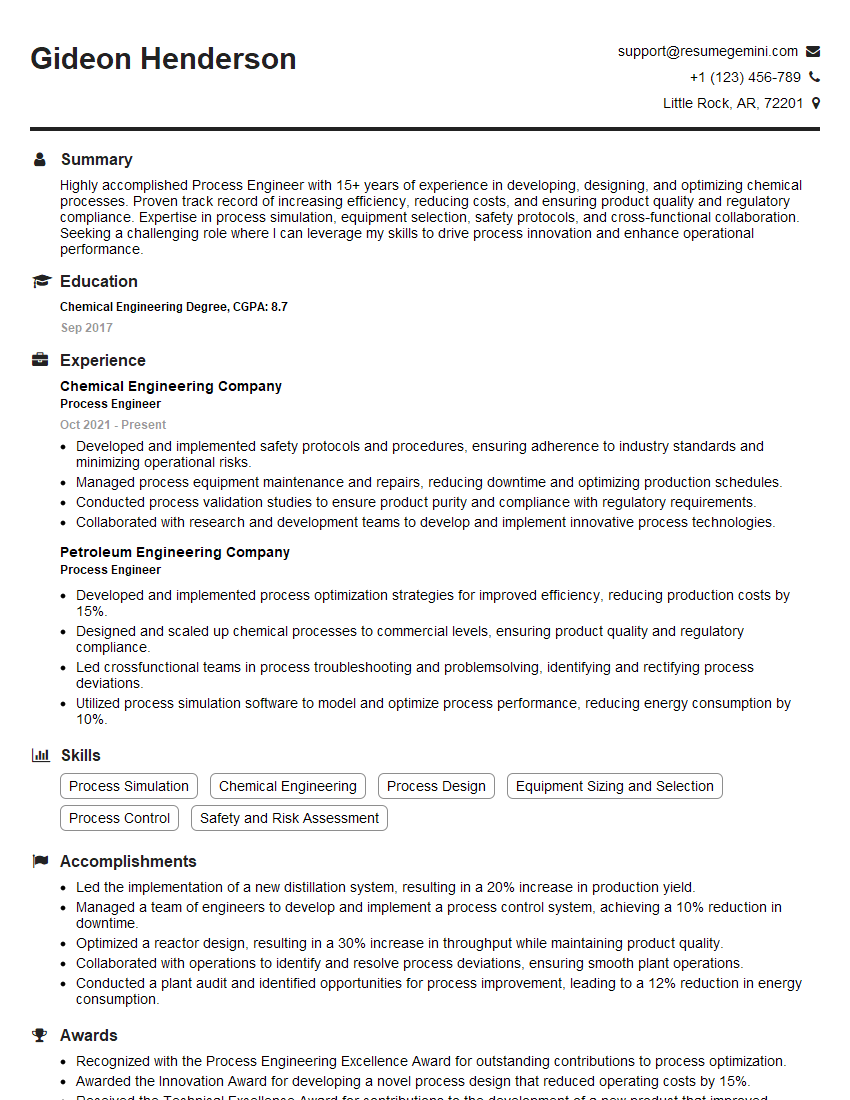
Process Engineer Resume Sample
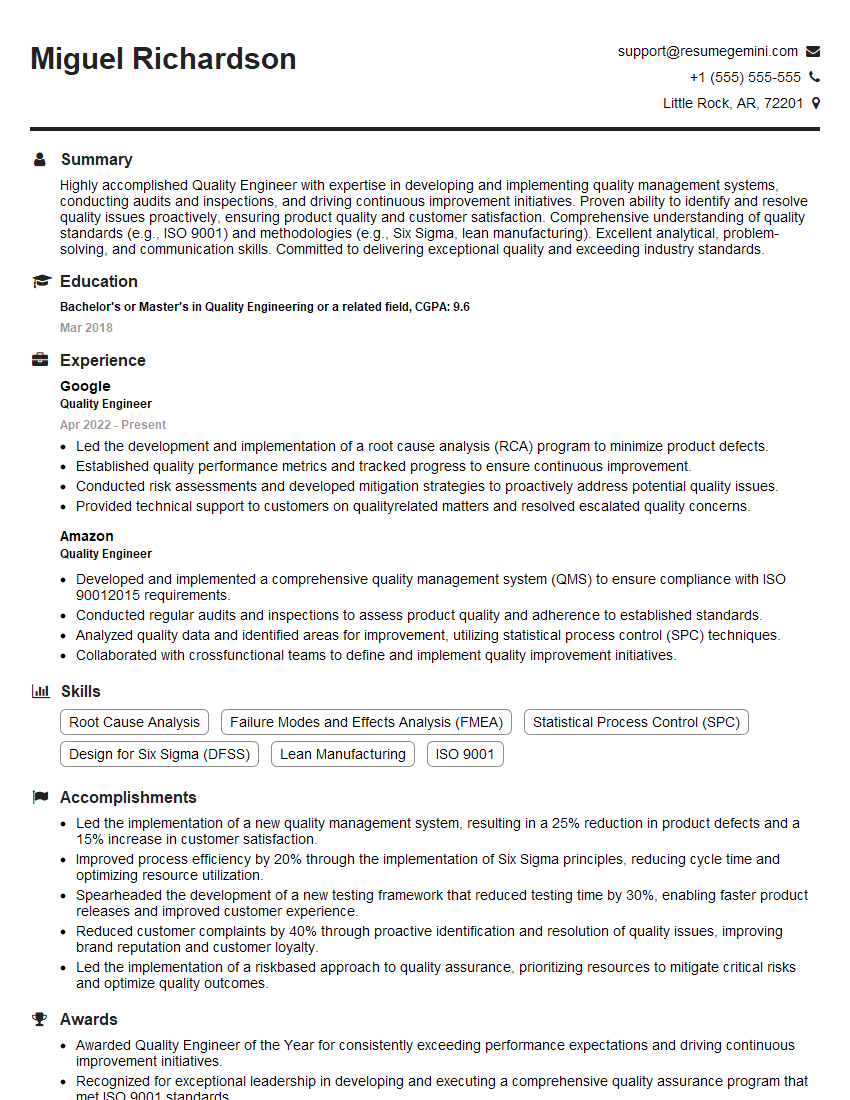
Quality Engineer Resume Sample
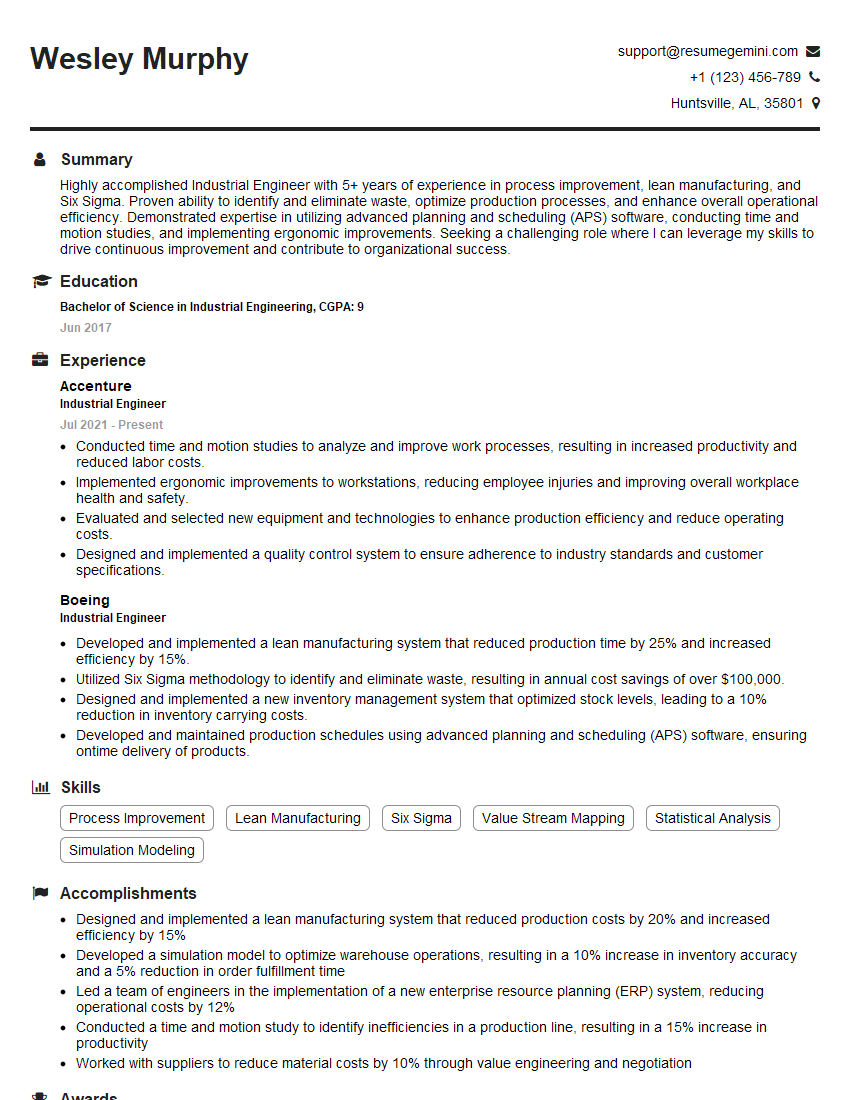
Industrial Engineer Resume Sample
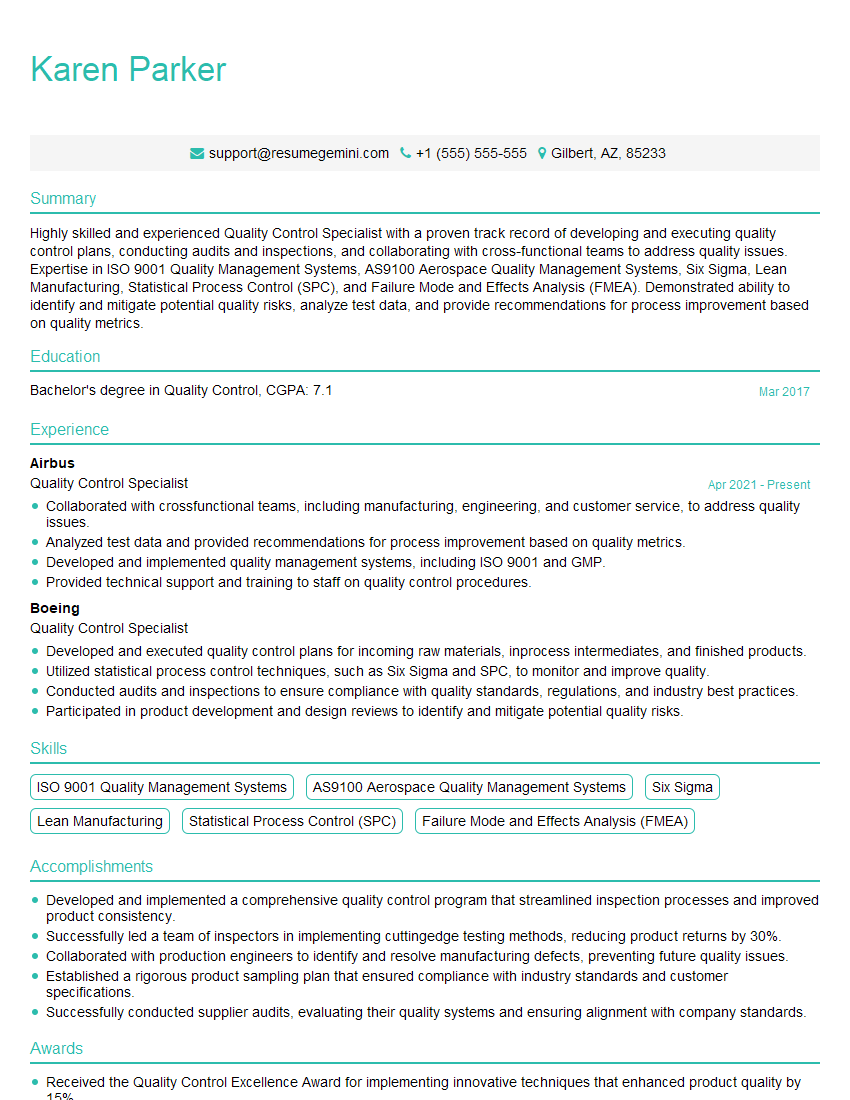
Quality Control Specialist Resume Sample
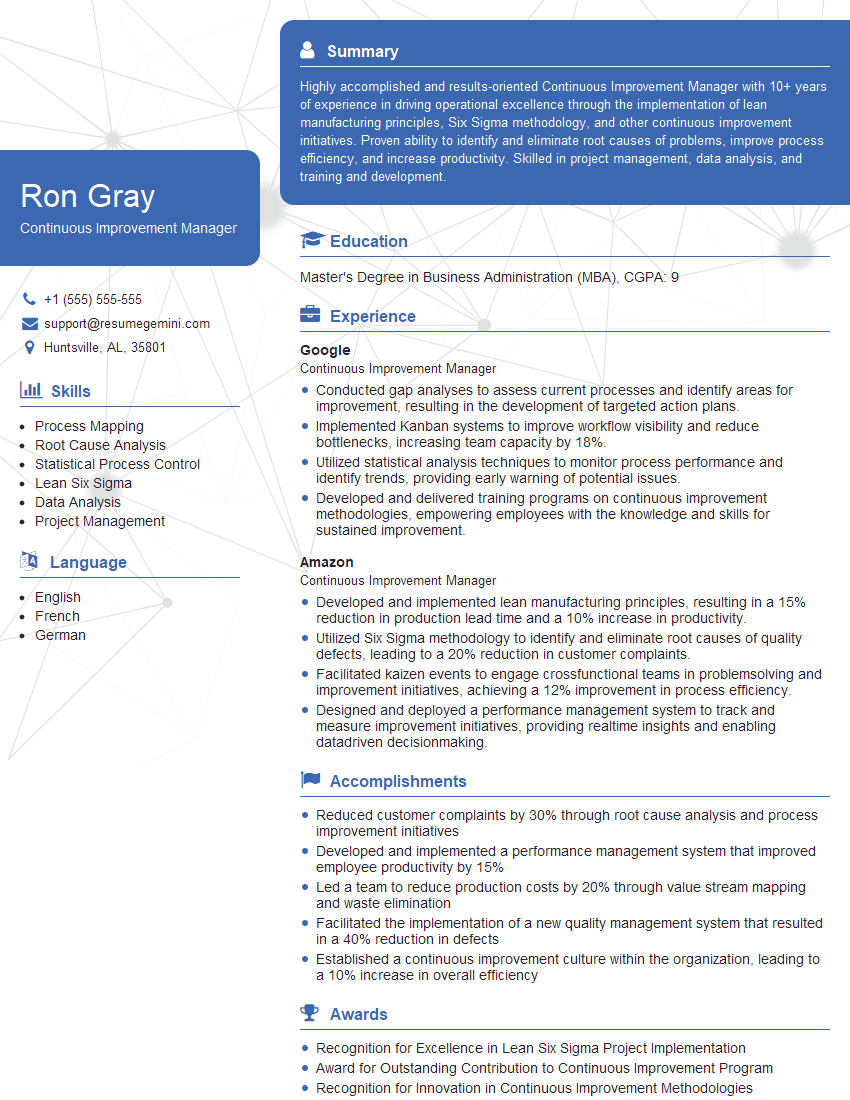
Continuous Improvement Manager Resume Sample
Explore more articles
Users Rating of Our Blogs
Share Your Experience
We value your feedback! Please rate our content and share your thoughts (optional).
What Readers Say About Our Blog
Very informative content, great job.
good