Interviews are opportunities to demonstrate your expertise, and this guide is here to help you shine. Explore the essential Sketching and Garment Design interview questions that employers frequently ask, paired with strategies for crafting responses that set you apart from the competition.
Questions Asked in Sketching and Garment Design Interview
Q 1. Explain your process for creating a fashion sketch from initial concept to final rendering.
My fashion sketching process is a meticulous journey from initial inspiration to a polished rendering. It begins with ideation, where I brainstorm concepts, mood boards, and initial thumbnail sketches to explore different design directions. I then refine my chosen concept into a detailed croquis, focusing on the silhouette, proportions, and key design elements. This croquis serves as the foundation for my detailed sketch. Next, I add precise details like textures, embellishments, and folds using various rendering techniques such as shading and line weight variation to create depth and realism. Finally, I refine the sketch digitally, using software like Adobe Photoshop or Illustrator, to enhance lines, colors, and overall presentation. This final rendering then serves as a clear visual communication tool for garment construction and presentation to clients.
For example, when designing a new cocktail dress, I might start with quick sketches exploring different necklines and sleeve styles. After choosing a specific design, I’d create a detailed croquis illustrating the overall shape and proportions. Subsequently, I would add detailed renderings of the lace fabric and embellishments. The final digital rendering would showcase the dress’s elegance and intricate design to potential clients or production teams.
Q 2. Describe your experience with different sketching techniques (e.g., croquis, flat sketches, draping illustrations).
My experience encompasses a wide range of sketching techniques. Croquis, the foundational figure template, forms the base for all my fashion sketches. It ensures consistent proportions and allows me to focus on the garment’s design rather than anatomical accuracy. Flat sketches are essential for showcasing the garment’s design details without the complexity of a full figure drawing, providing a clear representation of the front, back, and side views. Draping illustrations, on the other hand, are crucial for visualizing the fall and flow of fabric on the body. I frequently combine these techniques, starting with a croquis to establish the overall silhouette, then using flat sketches to detail the individual components and draping illustrations to ensure a realistic representation of the garment’s drape and movement.
For instance, while designing a flowing maxi skirt, a croquis would be used to capture the overall A-line silhouette. Flat sketches would help meticulously detail the pleats and the waistband. Finally, draping illustrations would showcase how the fabric would naturally fall and move when worn.
Q 3. How proficient are you with industry-standard CAD software (e.g., Adobe Illustrator, CLO3D)?
I’m highly proficient in industry-standard CAD software, including Adobe Illustrator and CLO3D. Adobe Illustrator is my go-to for vector-based illustrations and creating clean, scalable files for print and presentation. I use it to finalize sketches, create technical drawings, and develop patterns. CLO3D, a 3D garment design software, is instrumental in creating realistic 3D simulations of garments based on my 2D sketches. This allows for virtual draping and fitting, significantly reducing the need for physical prototypes and accelerating the design process.
For example, after creating a detailed sketch of a blazer in Illustrator, I can import it into CLO3D to create a virtual 3D model, enabling adjustments to fit and drape before actual production. This saves time and resources compared to traditional pattern-making methods.
Q 4. How do you translate a 2D sketch into a 3D garment?
Translating a 2D sketch into a 3D garment involves a multi-step process. The first step is to create accurate technical drawings from the initial sketch, clearly specifying dimensions, seam lines, and construction details. These drawings become the blueprint for the pattern making. I would then either draft patterns manually, using traditional pattern-making techniques, or utilize CAD software like CLO3D, which allows me to digitally create and manipulate patterns. Once the pattern is complete, it’s used to cut fabric pieces. These pieces are then assembled according to the technical drawings and construction specifications, resulting in the final 3D garment. Throughout this process, careful attention is paid to maintaining accuracy and consistency from the initial sketch to the finished garment.
A simple example would be a basic T-shirt. The 2D sketch provides the overall design, neckline, and sleeve length. The technical drawing translates these elements into precise measurements. The pattern pieces are then created, cut, and sewn together based on the pattern and technical drawings, ultimately resulting in the 3D garment. CLO3D can greatly accelerate this process by allowing for virtual pattern-making and virtual fitting.
Q 5. Describe your understanding of garment construction techniques.
My understanding of garment construction techniques is comprehensive. I’m familiar with various methods of seam construction, including flat-felled seams, French seams, and bound seams. I’m also well-versed in different types of closures, such as zippers, buttons, hooks and eyes, and snaps. Furthermore, I have extensive knowledge of various fabric manipulation techniques, including darts, gathers, pleats, and ruffles. Understanding these techniques is crucial for creating garments that are both aesthetically pleasing and structurally sound. I know which construction methods are suitable for different fabrics and design aesthetics. For example, I would choose a French seam for a high-end garment to create a clean, professional finish, but I might opt for a simpler seam construction for a more casual garment.
For instance, when constructing a tailored jacket, a thorough understanding of shoulder construction techniques – including the use of pads and interfacing – is paramount for achieving the desired fit and drape.
Q 6. Explain your experience with pattern making and grading.
My experience with pattern making and grading is extensive. I’m proficient in both manual drafting and digital pattern making using CAD software. I understand the principles of accurate measurement, grading, and sloper creation. This knowledge allows me to adapt existing patterns to various sizes and body types, ensuring a consistent fit across a range of sizes. Grading involves systematically scaling a pattern to create different sizes, maintaining the design’s integrity. The process includes adjusting seam allowances and other design elements as needed.
For instance, I’ve developed patterns for various garments, from simple T-shirts to complex tailored jackets. For a dress design, after creating the base pattern for one size, I’ll meticulously grade it to produce sizes small, medium, large, etc., while carefully checking for shape and proportion changes needed for each grade.
Q 7. How do you handle design changes during the production process?
Handling design changes during the production process requires flexibility and clear communication. The first step is to carefully evaluate the requested changes, analyzing their impact on the existing design and production schedule. I then assess the feasibility of implementing the changes without significant delays or cost overruns. If the changes are minor, I’ll adjust the patterns and technical specifications accordingly. For major changes, I might need to create entirely new patterns and revise the production plan. Throughout this process, I maintain open communication with the production team and clients to manage expectations and ensure a smooth transition. Documentation is crucial, keeping records of all changes implemented. For example, if a client requests a change in sleeve length mid-production, I’ll carefully document the change, adjust the pattern, and update the production team accordingly to ensure consistent communication.
Transparent communication is key. I ensure the team understands the implications of each change and collaboratively work toward implementing them effectively.
Q 8. How do you incorporate client feedback into your designs?
Incorporating client feedback is crucial for a successful design. My approach involves active listening and clear communication throughout the design process. I begin by asking open-ended questions to understand their vision, needs, and preferences. Then, I present initial sketches and mood boards for their review, encouraging them to share their immediate reactions. I actively document all feedback, noting both verbal and written comments. For example, if a client expresses concern about the length of a sleeve, I’ll note that, and revise the sketch accordingly. The iterative process involves presenting refined designs based on their feedback, continuing this cycle until the design aligns perfectly with their vision. This collaborative approach ensures the final product reflects the client’s needs and satisfaction.
For instance, I once worked with a client who initially envisioned a flowing, maxi dress. After reviewing my first sketches, they expressed a preference for a more structured, knee-length silhouette. By actively listening and incorporating their feedback, we evolved the design to a style that reflected both their initial vision and new preferences. This led to a far happier client and a more successful outcome.
Q 9. Describe your understanding of different fabric types and their properties.
Understanding fabric properties is fundamental to garment design. Different fabrics possess unique characteristics that dictate their drape, texture, weight, and suitability for various garments. For example, Cotton is breathable and absorbent, ideal for summer wear. Silk, known for its luxurious drape and sheen, is perfect for formal wear. Wool provides warmth and insulation, excellent for outerwear. Linen is strong and durable yet often wrinkles easily. Polyester is a synthetic fiber that’s wrinkle-resistant and durable, making it a popular choice for many garments. Furthermore, understanding the weight of fabric (lightweight, medium-weight, heavyweight) is crucial for selecting fabrics based on the design and intended use.
Beyond fiber content, I consider factors like the fabric’s weave structure (plain, twill, satin), its finish (washed, brushed, etc.), and its properties like stretch and shrinkage. Knowing these details ensures the garment drapes, hangs, and performs as intended.
Q 10. How do you choose appropriate fabrics for different garment styles and functions?
Fabric selection directly impacts garment style and function. A flowing, summer dress would ideally be made from a lightweight, breathable fabric like cotton voile or linen. For a tailored business suit, a sturdy, wrinkle-resistant fabric like wool or a wool blend would be appropriate. Athletic wear necessitates fabrics that are moisture-wicking and quick-drying, often blends of polyester and spandex. Consider a winter coat; here, a warm, water-resistant fabric like wool or down-filled nylon is ideal. My process involves reviewing the design specifications, considering the intended use, seasonality, and the overall look and feel desired. I then select fabrics based on their drape, texture, weight, and performance characteristics to achieve the optimal result.
For instance, designing a performance running top requires a fabric that moves with the body while wicking away sweat. A heavy cotton jersey would be unsuitable, while a lightweight polyester blend with elastane would be perfect.
Q 11. Explain your process for creating a technical design package.
Creating a technical design package is a systematic process. It begins with detailed sketches, including front, back, and side views. These sketches are then translated into accurate technical drawings, specifying measurements, seam allowances, construction details, and fabric specifications. The package includes a bill of materials listing all required fabrics, trims (buttons, zippers, etc.), and notions (threads, interfacing). Detailed diagrams illustrate construction techniques, such as pocket placement, dart formation, and zipper insertion. Finally, I include grading specifications which show how patterns are modified to create different sizes.
The goal is to provide a comprehensive set of instructions for the pattern maker and the production team. Clarity and precision are paramount. I typically use industry-standard software to create clean, accurate drawings and specifications.
Q 12. How do you ensure the accuracy and consistency of your technical drawings?
Accuracy and consistency in technical drawings are crucial. I maintain accuracy through meticulous measurements and the use of precise drafting tools, both digital and physical. I use industry-standard software and templates to ensure consistency in measurements and notations. Regularly checking measurements against established standards, and using tools that allow for precise scaling, ensures accuracy. I also cross-reference measurements at each stage of development, comparing them against both the initial design specifications and the patterns themselves. Double-checking all measurements and annotations significantly reduces errors.
Consistency is maintained by utilizing consistent notation conventions and colour codes throughout all the documents within the technical design package. Using a standardised format ensures clarity for the pattern maker and the production team.
Q 13. Describe your experience with sample making and fitting.
My experience with sample making and fitting is extensive. I’ve worked on countless projects, from simple designs to complex, multi-layered garments. This includes creating muslins (toile samples) from initial patterns for fitting and adjustments before cutting the final fabric. I carefully fit the muslin on a model or dress form, making detailed notes of any areas needing adjustment. Once the muslin fit is approved, I cut the fabric and construct the sample garment. I then conduct a second fitting, and perform any necessary alterations. Detailed notes are meticulously documented at each stage. This iterative process ensures a precise fit and allows for revisions before mass production begins.
For example, I recently worked on a fitted blazer. The initial muslin revealed a tightness across the shoulders. Through meticulous adjustments, including shoulder slope modifications and ease adjustments, the final blazer fit perfectly.
Q 14. How do you address fit issues during the sampling process?
Addressing fit issues during sampling is critical. I approach this systematically. First, I carefully analyze the fit problems, noting specific areas – tightness, looseness, pulling, or gapping. The next step involves determining the cause: incorrect measurements, pattern drafting errors, or fabric issues. Once the cause is identified, I make corresponding adjustments to the pattern. This might involve adding or reducing seam allowances, altering darts, or adjusting the overall shape of the garment. After making these corrections, I create a new sample and repeat the fitting process until the desired fit is achieved.
For example, if the garment is too tight across the bust, I would add fullness to the pattern pieces in the bust area. If the sleeves are too long, I would shorten the sleeve pattern pieces. Each adjustment is meticulously documented to ensure consistency in subsequent production.
Q 15. What are your preferred methods for communicating design ideas to a team?
Communicating design ideas effectively is crucial for collaborative success. My approach is multifaceted, prioritizing clarity and visual aids. I begin with concise verbal explanations, ensuring everyone understands the core concept. Then, I leverage sketches – both quick thumbnails for initial brainstorming and more detailed technical drawings for precise specifications. For complex ideas, I utilize mood boards, incorporating fabric swatches, color palettes, and inspiration images to paint a holistic picture. Finally, I always encourage open dialogue and feedback sessions, fostering a collaborative environment where team members can contribute their perspectives and refine the designs collaboratively. For instance, during a recent project designing a new line of activewear, I used a combination of detailed sketches showing the garment construction, a mood board highlighting the target audience’s aesthetic preferences (e.g., vibrant colors, athletic silhouettes), and a presentation outlining technical specifications such as fabric choices and manufacturing processes. This approach ensured everyone was on the same page, leading to a smoother design process.
Career Expert Tips:
- Ace those interviews! Prepare effectively by reviewing the Top 50 Most Common Interview Questions on ResumeGemini.
- Navigate your job search with confidence! Explore a wide range of Career Tips on ResumeGemini. Learn about common challenges and recommendations to overcome them.
- Craft the perfect resume! Master the Art of Resume Writing with ResumeGemini’s guide. Showcase your unique qualifications and achievements effectively.
- Don’t miss out on holiday savings! Build your dream resume with ResumeGemini’s ATS optimized templates.
Q 16. How do you stay up-to-date with current fashion trends?
Staying current in the dynamic fashion world requires a multi-pronged approach. I religiously follow key fashion publications – both print and online – such as Vogue, WWD, and Elle, analyzing runway shows and trend reports. I also actively engage with online platforms like Pinterest and Instagram, paying close attention to emerging designers and influential stylists. Attending industry events, trade shows, and fashion weeks provides invaluable first-hand exposure to the latest trends and innovations. Furthermore, I participate in online forums and communities, discussing industry news and exchanging ideas with other professionals. This constant engagement helps me to identify emerging patterns, understand market demands, and incorporate relevant trends into my designs in a creative and meaningful way. For example, recently I noticed a resurgence of 90s minimalism influencing current runway trends. I incorporated this by designing a capsule collection focusing on clean lines, neutral color palettes, and high-quality, sustainable fabrics.
Q 17. Describe a time you had to solve a design problem under pressure.
During a high-pressure situation, we were nearing a crucial deadline for a client’s bespoke wedding dress. The initial design involved intricate beadwork that proved far more time-consuming than initially anticipated. With the deadline looming, I needed a solution quickly. First, I analyzed the design, identifying sections where the beadwork could be simplified without compromising the overall aesthetic. I then proposed alternative techniques, such as strategically placing larger embellishments to create a similar visual effect with reduced labor. Finally, I actively collaborated with the seamstress, dividing the workload efficiently and providing additional training on the modified techniques. This proactive approach, combining design adjustments and team collaboration, allowed us to complete the dress on time and to the client’s satisfaction. This situation highlighted the importance of adaptability, problem-solving skills, and effective communication under pressure.
Q 18. How do you manage your time effectively when working on multiple projects?
Effective time management is paramount when juggling multiple projects. I utilize project management tools, such as Trello or Asana, to organize tasks, set deadlines, and track progress. I prioritize tasks based on urgency and importance, employing methods like the Eisenhower Matrix (urgent/important). I break down larger projects into smaller, manageable steps, assigning specific timelines to each. I also allocate dedicated time blocks for each project, avoiding multitasking and minimizing distractions. Regularly reviewing my schedule and adjusting priorities as needed ensures that I stay on track and meet all deadlines. For example, I might dedicate Monday mornings to sketching, Tuesdays to technical design, Wednesdays to sourcing fabric, and so on. This structured approach allows me to maintain a good work-life balance while delivering high-quality results across all my projects.
Q 19. What is your experience with sustainability in fashion design?
Sustainability is no longer a trend; it’s a necessity in fashion design. I deeply value sustainable practices, and I integrate them into my work in several ways. I prioritize the use of eco-friendly materials, such as organic cotton, recycled fabrics, and innovative sustainable alternatives like Tencel. I research and choose suppliers committed to ethical and environmentally sound manufacturing practices. I strive to minimize waste by carefully planning fabric cuts and exploring design techniques that reduce material usage. Furthermore, I advocate for circular design principles, considering the entire lifecycle of a garment – from sourcing materials to end-of-life disposal – to minimize its environmental impact. For instance, in my recent collection, I employed zero-waste pattern cutting techniques to reduce fabric waste significantly and upcycled leftover fabrics into accessories, extending the life of the materials.
Q 20. How familiar are you with different manufacturing processes?
I possess a strong understanding of various garment manufacturing processes, from pattern making and cutting to sewing, embroidery, and finishing techniques. My experience encompasses both traditional methods and modern technologies, such as computer-aided design (CAD) and automated cutting systems. I am familiar with different types of stitching, fabric treatments, and embellishment techniques. This knowledge allows me to design garments that are both aesthetically pleasing and technically feasible, ensuring the designs can be produced efficiently and cost-effectively. My understanding extends to various manufacturing locations and their specific capabilities, allowing me to make informed decisions regarding sourcing and production based on factors such as cost, lead times, and quality standards. For instance, I am proficient in understanding the differences between flat-bed sewing machines and industrial overlock machines and when each is most appropriately used.
Q 21. Explain your understanding of costing and budgeting in garment production.
Costing and budgeting are integral to successful garment production. I understand the various cost components involved, including fabric costs, labor costs, trims and embellishments, manufacturing overhead, and transportation. I am proficient in creating detailed cost breakdowns, accurately estimating material quantities and labor hours required for each garment. I utilize costing software to track expenses and generate detailed reports. This understanding allows me to develop realistic budgets, ensuring profitability while maintaining quality and delivering projects on time. Furthermore, I am adept at negotiating with suppliers to secure favorable pricing and explore cost-effective alternatives without compromising quality. For example, I might explore using alternative, equally high-quality but less expensive fabrics that still meet the design requirements, or negotiate better rates with manufacturers based on higher order volumes.
Q 22. How do you handle constructive criticism on your designs?
Constructive criticism is invaluable in design. I approach it as an opportunity for growth, not a personal attack. My process involves actively listening to the feedback, asking clarifying questions to fully understand the perspective, and then analyzing how the suggestions can improve the design. For instance, if feedback points to a lack of visual balance in a garment sketch, I would carefully re-examine the proportions and placement of elements, perhaps using a grid system to ensure better harmony. I also document all feedback received, noting the source and the suggested changes, allowing me to track progress and refine my approach over time. Ultimately, my goal is to transform critique into tangible improvements, leading to a stronger, more refined final product.
Q 23. Describe your experience working with different design teams.
I’ve had the pleasure of collaborating with diverse design teams, ranging from small, agile start-ups to larger, more established fashion houses. In smaller teams, I’ve experienced a hands-on approach, contributing across all stages of the design process, from initial sketching to final production. This fostered a deep understanding of the entire workflow. In larger teams, I’ve worked within specialized departments, focusing on my core strengths in sketching and technical design. This allowed me to refine my skills and collaborate effectively with specialists in pattern making, sampling, and production. I adapt my communication style and collaboration methods depending on the team’s structure and dynamics, ensuring effective communication and efficient workflow regardless of the team’s size or working style. A key aspect across all my experiences has been the ability to integrate feedback and contribute to a cohesive team vision.
Q 24. What are your strengths and weaknesses as a garment designer?
My strengths lie in my ability to translate abstract concepts into visually compelling sketches and technical drawings. I excel at creating innovative designs that are both aesthetically pleasing and functionally sound. I also possess a strong understanding of garment construction and the technical aspects of pattern making, which allows me to create realistic and manufacturable designs. For example, I recently developed a unique draping technique for a flowing evening gown, resulting in a design that was both visually stunning and surprisingly easy to construct. However, I acknowledge that time management can sometimes be a challenge, particularly when working under tight deadlines. To mitigate this, I’m actively working on improving my organizational skills and prioritizing tasks effectively using project management techniques. I’m also open to feedback regarding my time management and proactively seek guidance to enhance this aspect of my work.
Q 25. Where do you see yourself in five years?
In five years, I envision myself as a senior garment designer, leading projects and mentoring junior designers. I aim to have further developed my expertise in sustainable and ethical fashion practices, incorporating these principles into my designs and production processes. I also aspire to contribute to innovative design technologies, exploring the potential of digital design tools to streamline the design process and enhance collaboration. Ultimately, my goal is to create impactful designs that blend aesthetics, functionality, and ethical considerations, making a positive contribution to the fashion industry.
Q 26. Why are you interested in this specific role?
This specific role deeply appeals to me because of its focus on [mention specific aspects of the role that interest you, e.g., sustainable fashion, innovative design techniques, specific brand values]. The opportunity to contribute to a team that shares my passion for [mention specific values, e.g., ethical sourcing, creative innovation, community engagement] is particularly exciting. I’m confident that my skills and experience align perfectly with the requirements outlined in the job description, and I’m eager to contribute my expertise to the success of your team.
Q 27. What is your salary expectation?
My salary expectation is in the range of $[mention salary range], depending on the specifics of the benefits package and the overall compensation structure. I’m open to discussing this further and am confident that my contributions will justify this compensation.
Q 28. Do you have any questions for us?
Yes, I have a few questions. First, could you elaborate on the company’s approach to [mention specific company practices or aspects you are interested in, e.g., sustainable practices, employee development, design processes]? Second, what are the primary challenges the design team is currently facing, and how would my role contribute to addressing those challenges? Finally, what opportunities are there for professional development and growth within the company?
Key Topics to Learn for Sketching and Garment Design Interview
- Draping Techniques: Understanding the principles of draping on a dress form, translating 3D forms into 2D sketches, and recognizing how fabric manipulation affects garment construction.
- Flat Sketching & Technical Drawings: Mastering accurate representation of garments, including proportions, details, and construction features. Practical application involves creating detailed sketches for pattern making and communication with production teams.
- Design Principles & Aesthetics: A strong grasp of color theory, silhouette, proportion, balance, and texture. Practical application involves creating cohesive and visually appealing designs that align with current fashion trends.
- Pattern Making Fundamentals: Understanding basic pattern blocks, drafting techniques, and garment construction methods. This is crucial for translating sketches into wearable garments and for troubleshooting design issues.
- Software Proficiency (e.g., Adobe Illustrator, CLO3D): Demonstrating familiarity with industry-standard software for digital sketching, pattern making, and 3D garment visualization. Practical application includes showcasing your ability to create professional-quality digital renderings.
- Fabric Selection & Properties: Knowledge of various fabrics, their drape, texture, and suitability for different garment styles. This is crucial for making informed design choices and achieving desired aesthetics.
- Problem-Solving & Design Iteration: Ability to identify and address design challenges, incorporate feedback, and iterate on designs to achieve optimal results. This demonstrates a practical understanding of the design process.
Next Steps
Mastering Sketching and Garment Design is crucial for a successful and rewarding career in the fashion industry, opening doors to diverse roles from design assistant to lead designer. To significantly improve your job prospects, invest time in crafting a strong, ATS-friendly resume that highlights your skills and experience effectively. ResumeGemini is a trusted resource that can help you build a professional and impactful resume tailored to the fashion industry. Examples of resumes tailored specifically to Sketching and Garment Design are available to help guide you. Take this opportunity to showcase your talents and land your dream job!

Creative Director Resume Sample
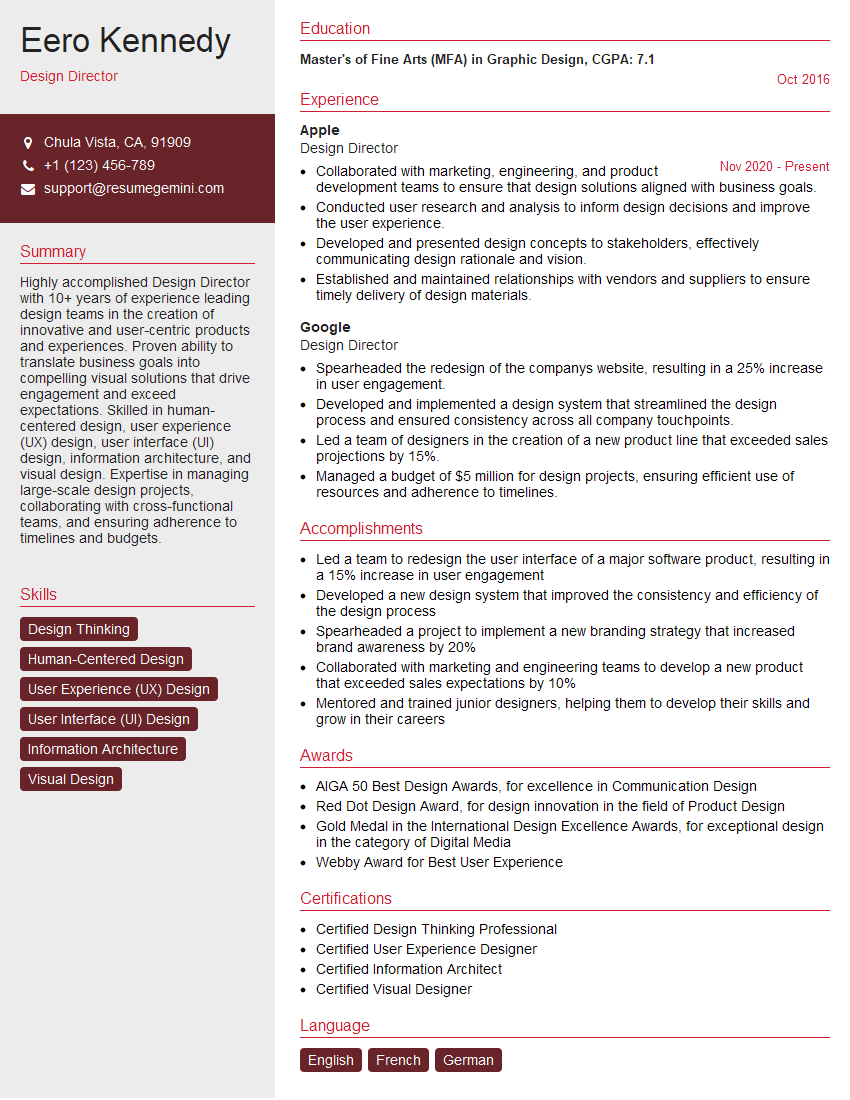
Design Director Resume Sample
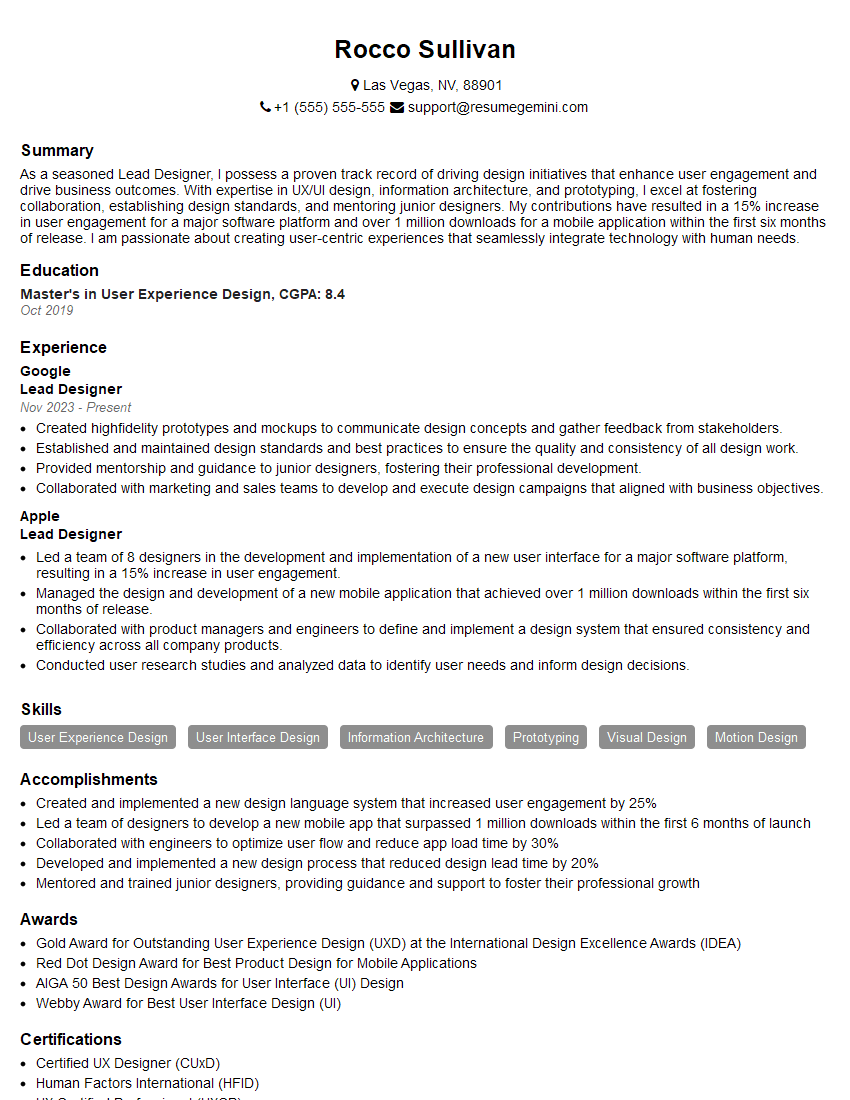
Lead Designer Resume Sample
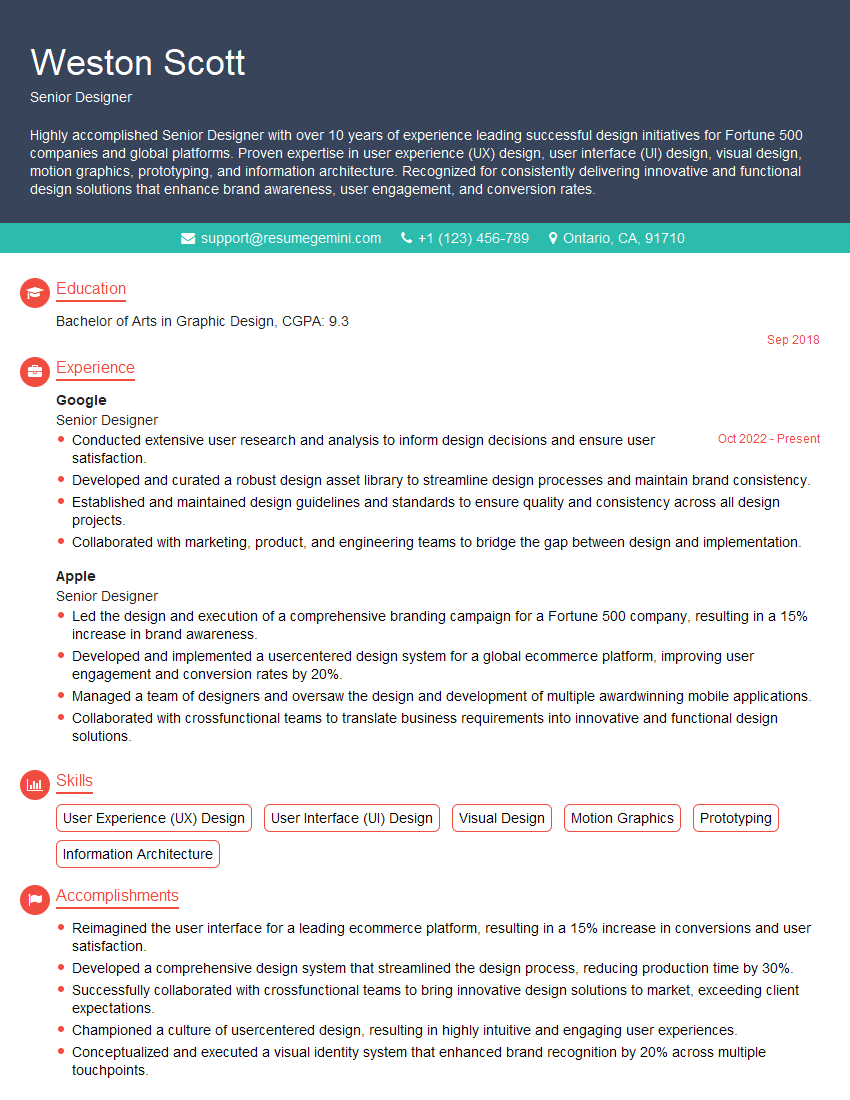
Senior Designer Resume Sample
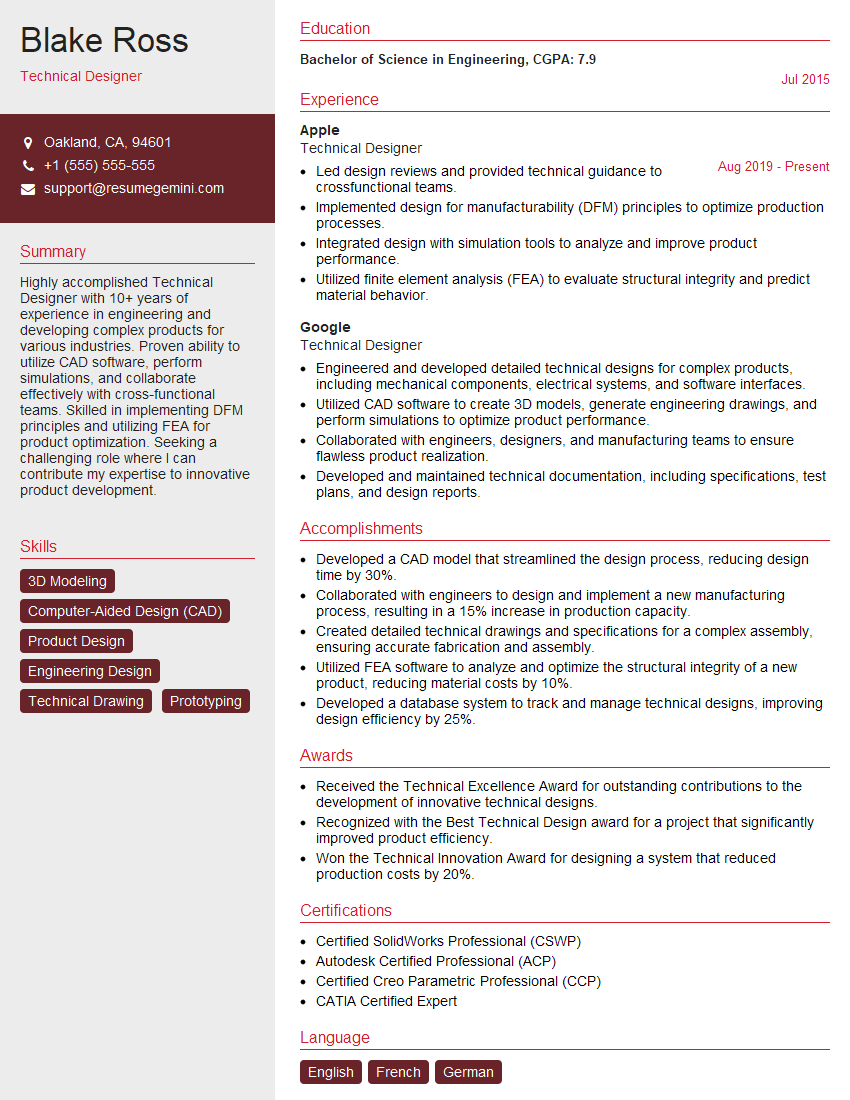
Technical Designer Resume Sample
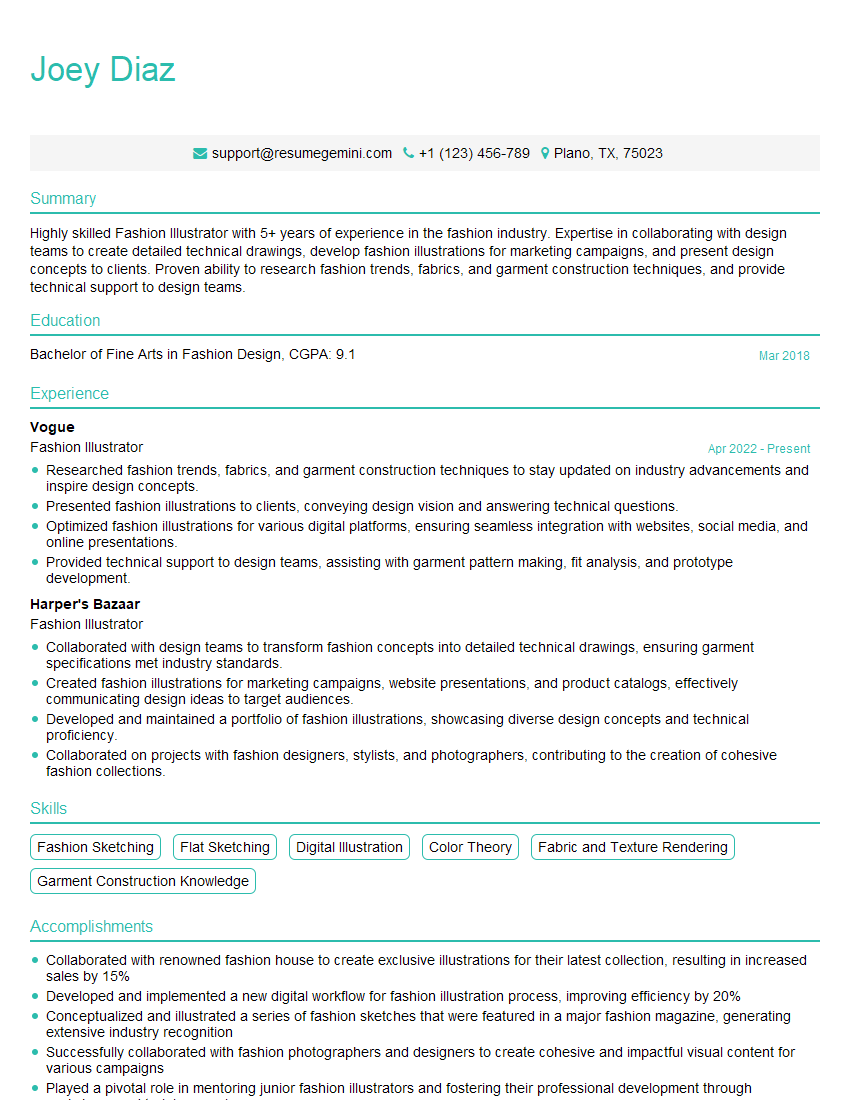
Fashion Illustrator Resume Sample
Sketch Artist Resume Sample
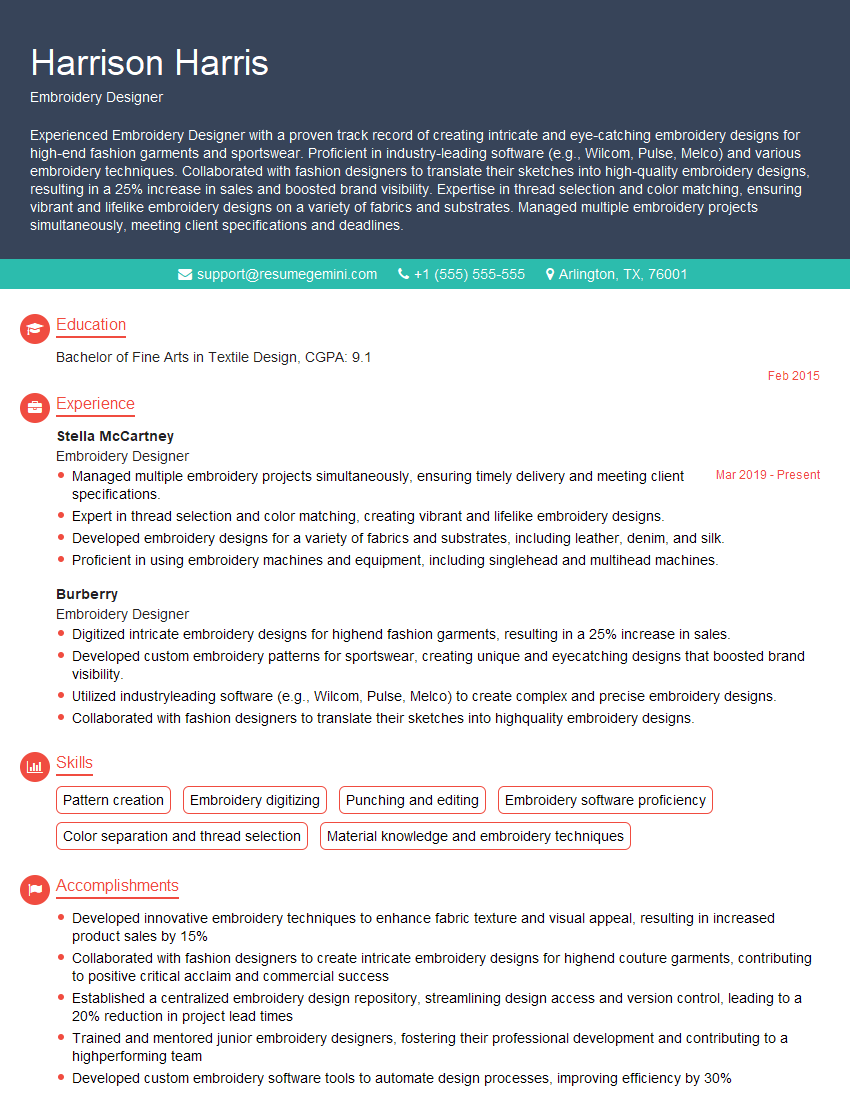
Embroidery Designer Resume Sample
Product Developer Resume Sample
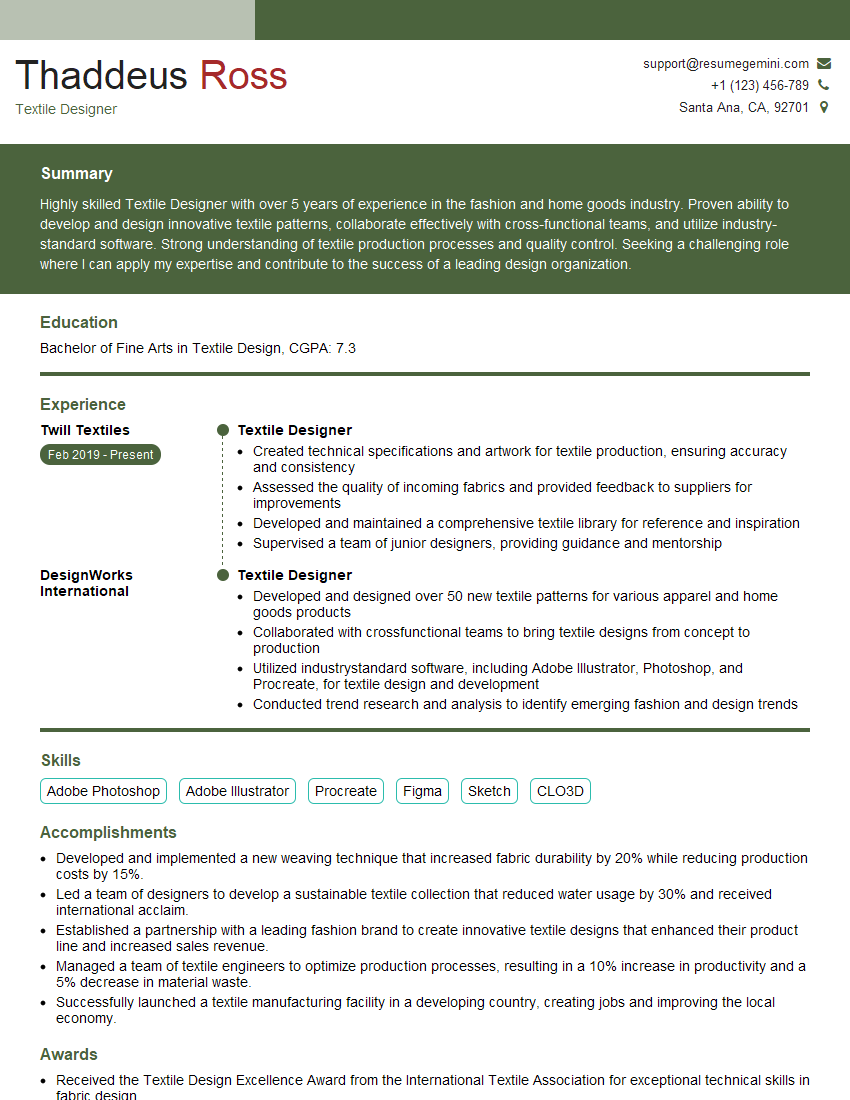
Textile Designer Resume Sample
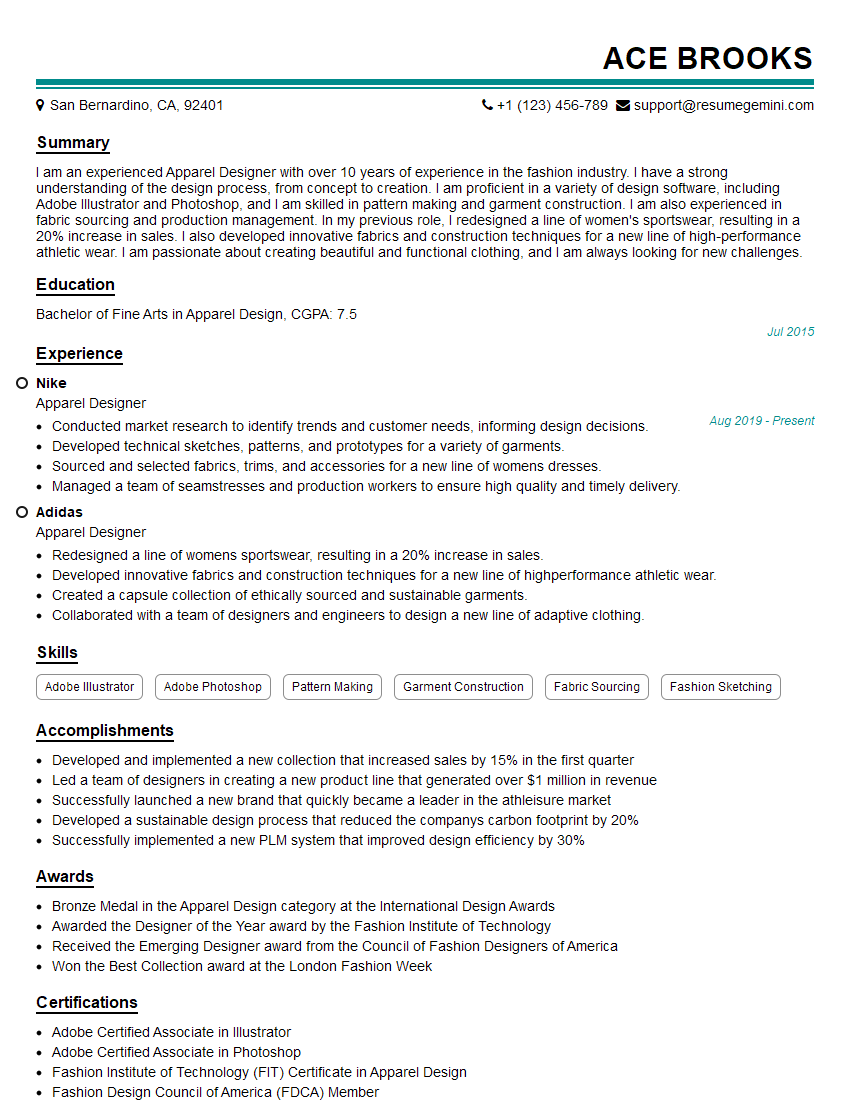
Apparel Designer Resume Sample
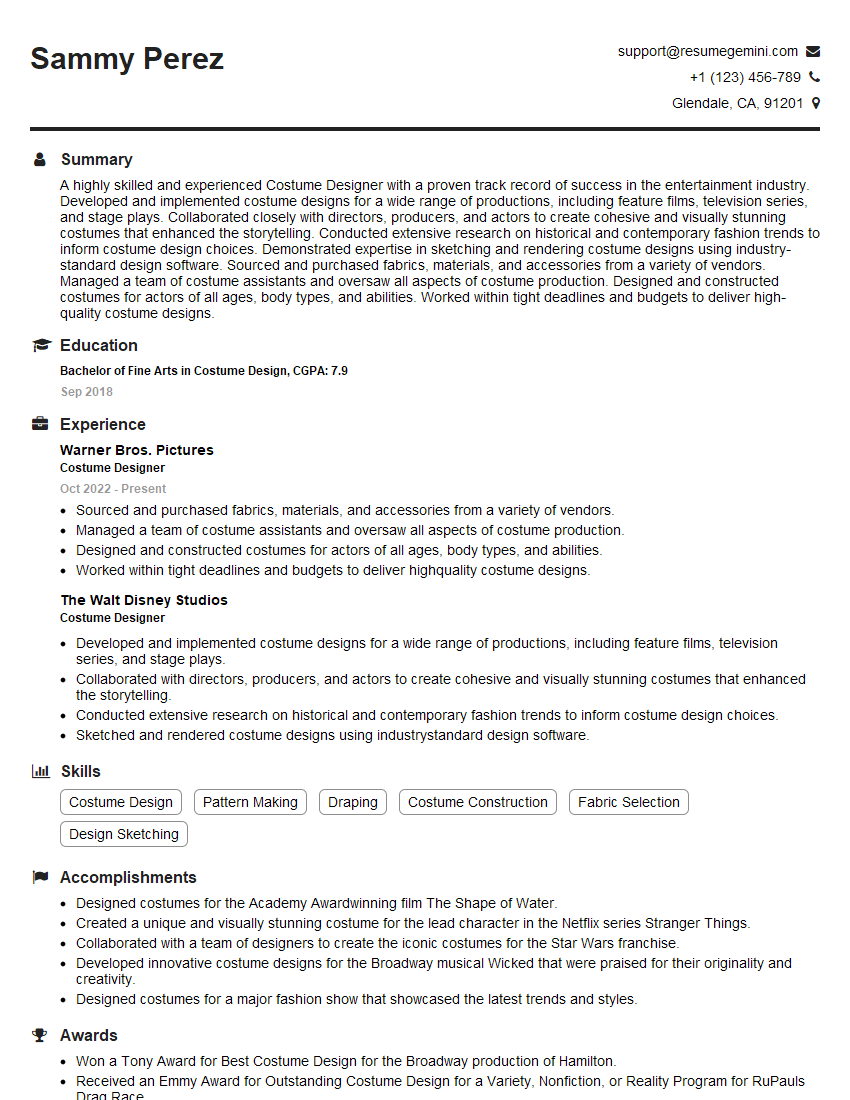
Costume Designer Resume Sample
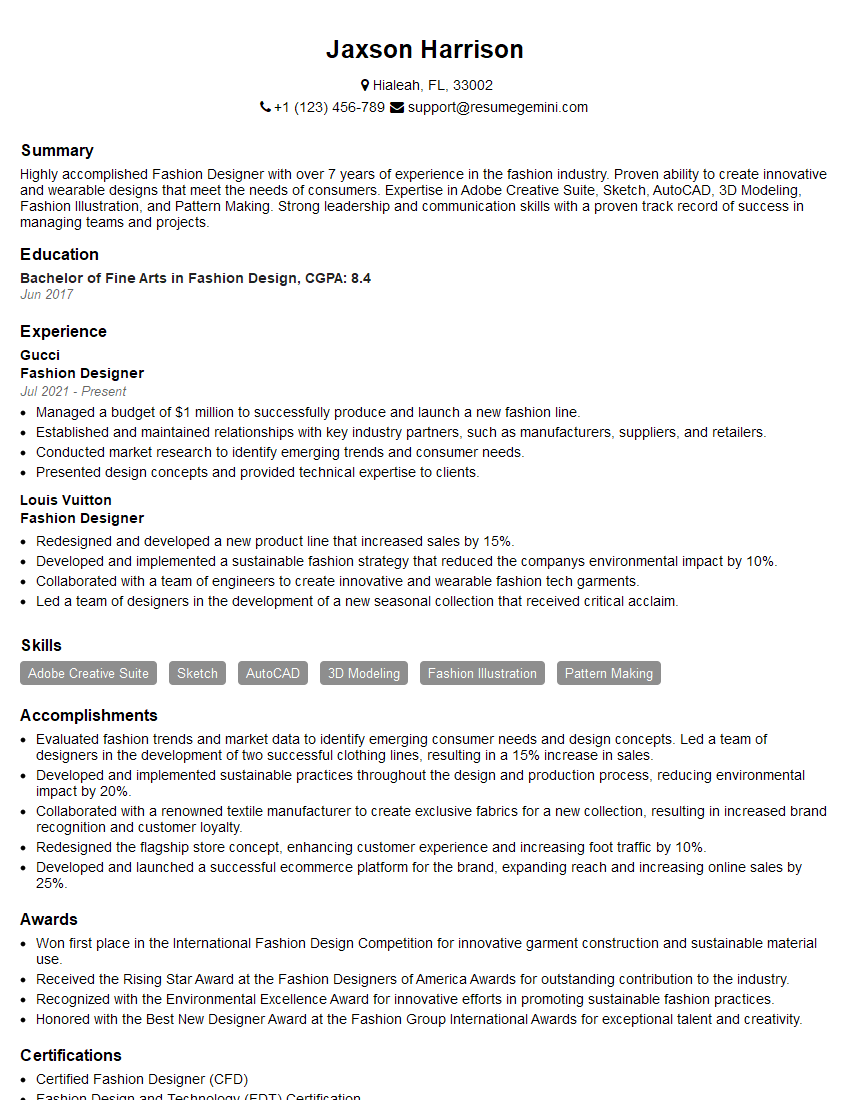
Fashion Designer Resume Sample
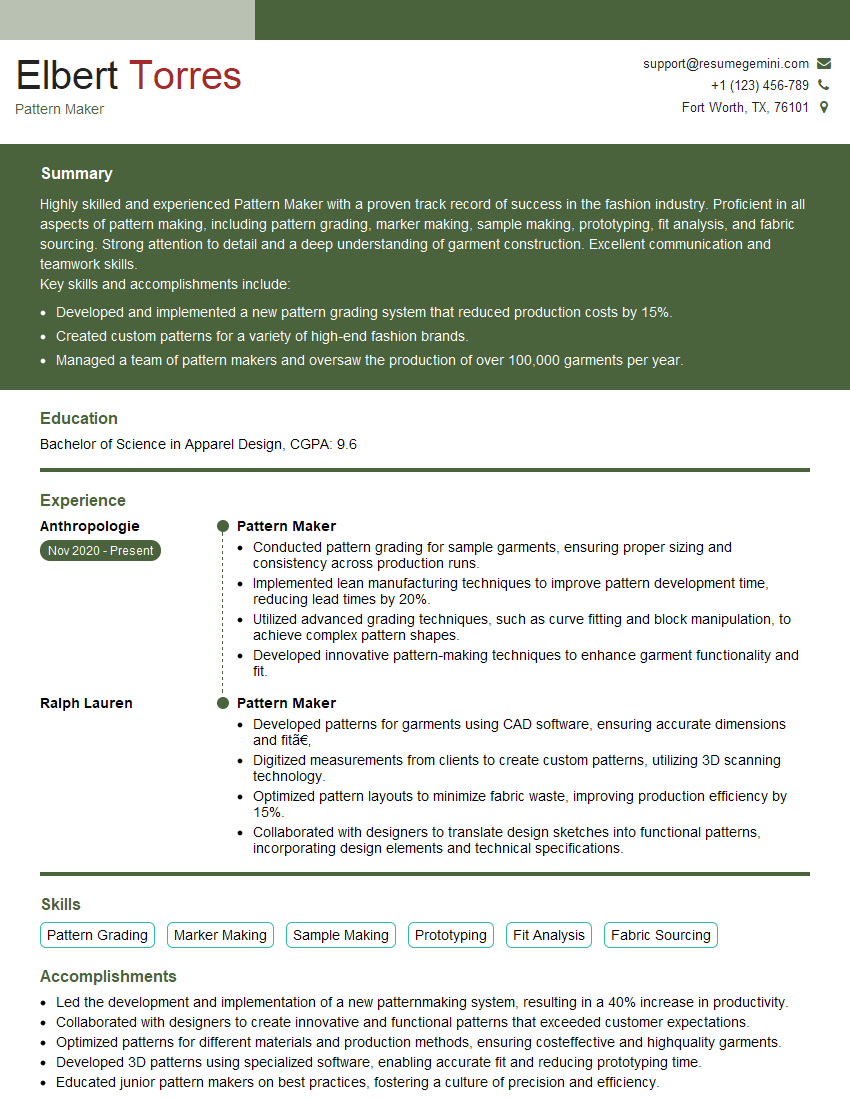
Pattern Maker Resume Sample
Sample Maker Resume Sample
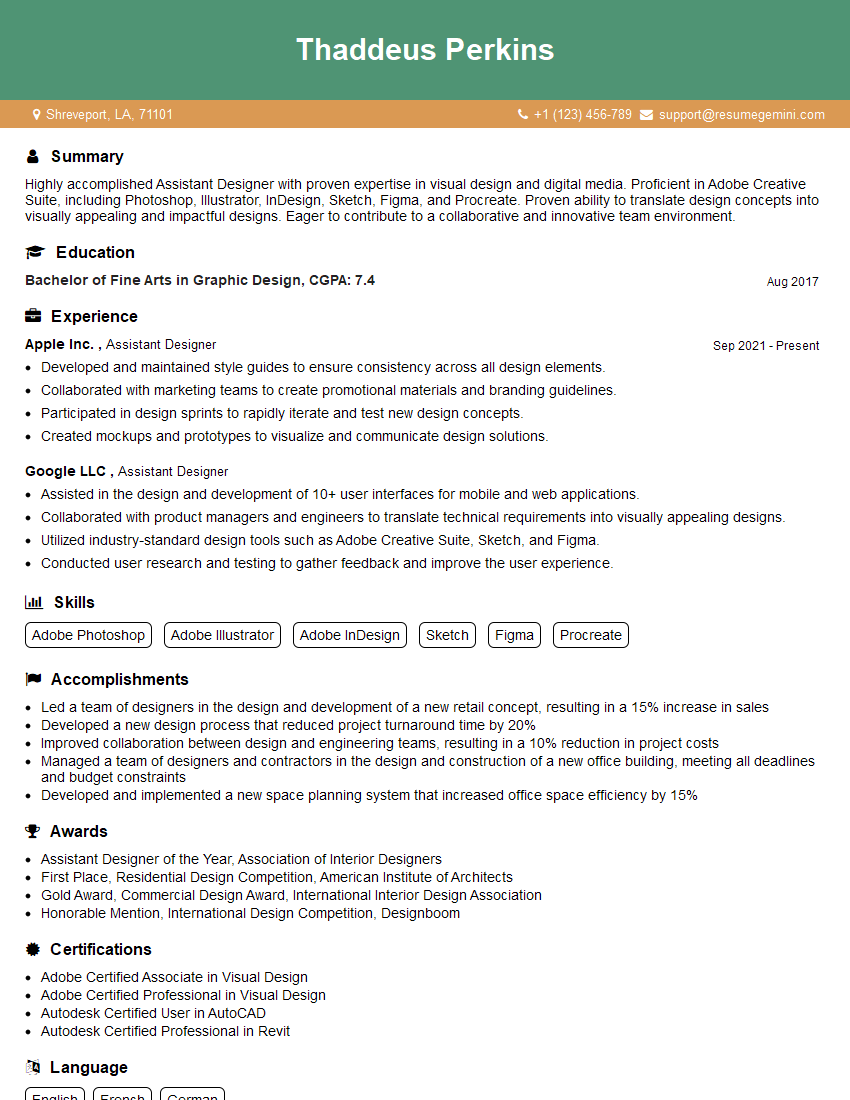
Assistant Designer Resume Sample
Explore more articles
Users Rating of Our Blogs
Share Your Experience
We value your feedback! Please rate our content and share your thoughts (optional).
What Readers Say About Our Blog
Very informative content, great job.
good