Cracking a skill-specific interview, like one for Skilled in Voyage Planning and Risk Assessment, requires understanding the nuances of the role. In this blog, we present the questions you’re most likely to encounter, along with insights into how to answer them effectively. Let’s ensure you’re ready to make a strong impression.
Questions Asked in Skilled in Voyage Planning and Risk Assessment Interview
Q 1. Explain the process of voyage planning, including route selection and optimization.
Voyage planning is a crucial process ensuring safe and efficient navigation. It involves meticulously selecting the most suitable route, considering various factors like weather, currents, navigational hazards, and port limitations. Optimization aims to minimize fuel consumption, transit time, and risks.
The process typically starts with defining the voyage parameters: departure and arrival ports, vessel characteristics (draft, speed, etc.), cargo details, and any operational constraints. Then, I utilize various tools, including Electronic Chart Display and Information Systems (ECDIS) and specialized voyage planning software. I consider several route options, analyzing them based on distance, estimated time of arrival (ETA), fuel consumption predictions, and potential hazards. This analysis often involves checking weather forecasts, assessing potential piracy risks, and reviewing navigational warnings. Route optimization software can simulate different routes, providing quantitative comparisons based on pre-defined criteria. After selecting the optimal route, a detailed plan is created, including waypoints, estimated times at various points, and contingency plans for unforeseen circumstances.
For example, during a recent voyage across the North Atlantic, I compared a more direct route against a slightly longer, but calmer, route south of the prevailing storm track. The optimized route, though slightly longer, resulted in significantly reduced fuel consumption and a smoother passage, ultimately minimizing risks and enhancing crew comfort and cargo safety.
Q 2. Describe your experience in using Electronic Chart Display and Information Systems (ECDIS).
I have extensive experience using ECDIS, a critical tool for modern voyage planning and navigation. My proficiency includes chart management, route planning, and utilizing ECDIS functionalities for collision avoidance and navigational safety. I’m familiar with various ECDIS manufacturers and their specific features, enabling me to adapt to diverse systems effectively.
ECDIS allows for real-time monitoring of the vessel’s position, speed, and course relative to charted features. I routinely use its route planning features, including setting waypoints and calculating ETAs. The system’s integrated safety features, such as alerts for approaching dangers or shallow water, are invaluable for risk mitigation. For example, ECDIS’s ability to display tidal streams and currents is vital for accurate ETA calculations and optimizing fuel efficiency. Further, I utilize its ability to manage raster and vector charts, ensuring compliance with regulations and maintaining access to the most up-to-date navigational information.
During a passage through a congested shipping lane, the ECDIS’s Automatic Identification System (AIS) integration proved essential in identifying and avoiding potential collisions. By effectively using the ECDIS’s various functionalities, I significantly contribute to safe navigation.
Q 3. How do you assess and mitigate the risks associated with adverse weather conditions?
Adverse weather significantly impacts voyage safety. My approach to assessing and mitigating these risks involves a multi-layered strategy. It starts with constantly monitoring weather forecasts from reputable sources, evaluating the potential impact of wind, waves, currents, and visibility on the vessel’s stability and operational capabilities.
Risk mitigation involves several steps: adjusting the planned route to avoid severe weather systems, adjusting speed to maintain seaworthiness, preparing the vessel and cargo for expected conditions, and developing contingency plans for emergency situations. This might involve seeking shelter in a port or designated area, adjusting the course to minimize exposure, or implementing specific procedures for cargo handling and crew safety. Regular communication with meteorological services and senior management is critical to updating the risk assessment throughout the voyage.
For instance, when faced with a predicted hurricane, I would consult updated weather models and reroute the vessel to a safer location well in advance, potentially incurring some extra transit time. Simultaneously, I’d communicate the updated plan to the crew and management, ensuring all are aware of the situation and the steps taken to manage the risks.
Q 4. What are the key elements of a comprehensive pre-voyage risk assessment?
A comprehensive pre-voyage risk assessment is crucial for a successful voyage. It involves a systematic evaluation of potential hazards and developing appropriate mitigation strategies. Key elements include:
- Vessel Condition: Thorough inspection of the vessel’s hull, machinery, and equipment, ensuring seaworthiness.
- Crew Competency: Evaluating crew qualifications, experience, and training to ensure adequate skills for handling emergencies and executing voyage tasks.
- Weather Forecasts: Reviewing predicted weather conditions along the planned route, considering wind speed, waves, visibility, and ice.
- Navigational Hazards: Identifying potential navigational risks, such as shallow water, reefs, icebergs, and shipping traffic.
- Security Risks: Evaluating risks associated with piracy, terrorism, or other security threats based on the planned route.
- Cargo Security: Ensuring cargo is properly secured and measures are in place to prevent theft or damage.
- Communication Systems: Verifying the functionality of communication systems and establishing communication protocols for emergency situations.
- Emergency Procedures: Reviewing emergency procedures and drills, ensuring crew familiarity and readiness.
These elements are documented and reviewed before the voyage commences, and updated as needed during the voyage. A well-structured pre-voyage risk assessment provides a framework for proactive hazard identification and mitigation, enhancing overall voyage safety.
Q 5. How do you handle unexpected events or emergencies during a voyage?
Handling unexpected events requires calm, decisive action. My approach begins with rapid assessment of the situation. I prioritize safety and follow established emergency procedures. This includes contacting relevant authorities (coast guard, company management), assessing the impact of the event on the vessel, crew, and cargo, and executing corrective actions to mitigate damage or further risk. Documentation of the event, including actions taken and their results, is vital for post-incident analysis and improvement.
Examples of unexpected events might include engine failure, a medical emergency onboard, or a collision. In each case, my actions would be guided by the specific situation, but the common threads are swift assessment, clear communication, and adherence to established protocols. For example, during an engine failure, the immediate priority would be maintaining vessel stability and communicating with the company for assistance. The crew would be briefed on the situation and actions required. In a medical emergency, emergency medical procedures would be followed, with possible diversion to the nearest port with adequate medical facilities. Post-incident, a thorough investigation would be conducted to prevent similar incidents in the future.
Q 6. Explain your experience with different types of charts and publications.
My experience encompasses various types of charts and publications, including paper charts, electronic charts (ENCs), sailing directions, tide tables, and nautical almanacs. I understand the differences between these sources and how to integrate them effectively for safe navigation. Paper charts, while less common now, serve as a valuable backup to ECDIS. ENCs provide a detailed, digital representation of navigational information, continually updated through regular downloads. Sailing directions offer comprehensive descriptions of coastlines, harbor details, and potential hazards. Tide tables and nautical almanacs provide critical information about tidal currents and celestial data for positioning.
For example, while navigating a less-charted area, I might supplement my ECDIS with paper charts for a secondary source of information. Sailing directions provide valuable context regarding local currents, recommended routes, and potential dangers not explicitly shown on electronic charts. Proficiency in interpreting these various sources ensures a layered approach to navigation and risk management.
Q 7. Describe your knowledge of International Maritime Organization (IMO) regulations.
I possess in-depth knowledge of International Maritime Organization (IMO) regulations, particularly those related to safety, security, and environmental protection. This includes the International Convention for the Safety of Life at Sea (SOLAS), the International Convention for the Prevention of Pollution from Ships (MARPOL), and the International Ship and Port Facility Security (ISPS) Code. I understand the specific requirements for voyage planning, crew training, safety management systems (SMS), and pollution prevention. Compliance with these regulations is paramount to safe and responsible ship operation.
For example, I am acutely aware of the requirements for maintaining a ship’s ISM (International Safety Management) code and understand my responsibilities in upholding these procedures. Understanding the specific requirements for reporting pollution incidents and adhering to MARPOL Annexes is crucial for environmental compliance. My knowledge extends to the various amendments and updates to these regulations, ensuring continuous compliance with the latest standards. The IMO regulations form the foundation of my risk assessment and voyage planning practices, ensuring I maintain the highest standards of maritime safety.
Q 8. How do you ensure compliance with safety regulations and procedures?
Ensuring compliance with safety regulations and procedures is paramount in voyage planning. It’s not just about ticking boxes; it’s about proactively building a safety culture. This involves a multi-faceted approach.
- Thorough Knowledge of Regulations: I maintain a comprehensive understanding of international maritime regulations like SOLAS, MARPOL, STCW, and relevant port state control regulations. Regular updates and training are crucial to stay abreast of any changes.
- Pre-Voyage Checks and Documentation: Before any voyage, I meticulously review the ship’s documentation, including certificates, permits, and safety equipment inventory, ensuring everything is up-to-date and compliant. This includes verifying the crew’s certifications and training records.
- Risk Assessments and Mitigation Plans: I conduct thorough risk assessments identifying potential hazards, evaluating their likelihood and severity, and developing mitigation strategies. This forms the basis of a comprehensive safety plan for the voyage.
- Regular Audits and Inspections: I participate in and sometimes lead internal audits and inspections to ensure ongoing compliance and identify areas for improvement. This proactive approach ensures that our safety management system remains effective.
- Reporting and Investigation: Any non-conformances or incidents are reported immediately, thoroughly investigated, and corrective actions implemented to prevent recurrence. This demonstrates a commitment to continuous improvement in safety.
For example, during a recent voyage, a minor discrepancy was found in the life raft inspection records. Immediate corrective action was taken, the records were updated, and a thorough inspection of all life-saving equipment was conducted, ensuring full compliance before departure.
Q 9. Explain your experience with cargo securing and handling procedures.
Cargo securing and handling are critical for safety and efficient operations. My experience encompasses various cargo types, from containers and bulk goods to specialized project cargo. The process is systematic and requires meticulous attention to detail.
- Pre-Loading Planning: This involves reviewing the cargo manifest, understanding the cargo characteristics (weight, dimensions, stowage requirements), and developing a secure stowage plan. This often includes using specialized software to optimize the placement of cargo for stability and weight distribution.
- Securing Procedures: I am proficient in applying appropriate lashing and securing techniques for different cargo types, adhering to international standards and best practices. This includes using various securing devices such as lashing straps, chains, and containers’ twistlocks.
- Inspection and Documentation: Thorough inspections are conducted before, during, and after loading to ensure that cargo is properly secured and there are no potential hazards. All securing procedures and inspections are meticulously documented.
- Hazardous Cargo Handling: I have experience handling dangerous goods, ensuring strict adherence to the IMDG Code, including proper segregation, labeling, and documentation.
- Emergency Response: I am trained in emergency procedures related to cargo shifting or damage, including communication protocols and corrective actions.
For instance, during the transportation of oversized wind turbine components, I was involved in developing a detailed securing plan, coordinating with the stevedores, and overseeing the loading process to ensure the safe and secure transportation of this sensitive cargo.
Q 10. How do you identify and assess potential security risks during a voyage?
Identifying and assessing potential security risks during a voyage requires a proactive and multi-layered approach. It’s about anticipating threats and implementing measures to mitigate them.
- Threat Assessment: This involves considering various factors like the geopolitical situation in transit areas, potential piracy risks, and the vulnerability of the vessel to various threats. Information from reputable sources, such as the International Maritime Bureau (IMB), is vital.
- Vulnerability Analysis: I evaluate the ship’s security systems, procedures, and personnel to identify any weaknesses that could be exploited. This includes assessing the effectiveness of access control, CCTV systems, and crew training.
- Risk Mitigation Strategies: Based on the threat and vulnerability assessment, appropriate mitigation strategies are developed and implemented. This may include altering the voyage route, increasing security patrols, enhancing communication protocols, and implementing stricter access control measures.
- Communication and Coordination: Maintaining close communication with the ship’s security officer, shore-based security personnel, and relevant authorities is crucial for sharing information and coordinating responses to potential threats.
- Incident Response Planning: Developing and regularly practicing incident response plans ensures that the crew is prepared to handle various security incidents effectively and efficiently.
In a recent voyage through a high-risk area, we implemented enhanced security measures, including increased crew vigilance, altered course to avoid known pirate hotspots, and established stricter communication protocols with shore-based security.
Q 11. How do you use weather forecasts and other meteorological data in voyage planning?
Weather forecasts and meteorological data are integral to safe and efficient voyage planning. They are not merely consulted; they are actively integrated into every stage of the process.
- Route Planning: Weather forecasts influence route selection, allowing us to avoid severe weather conditions such as storms, hurricanes, or heavy fog. Optimizing the route based on weather predictions helps minimize delays and ensures safe passage.
- Speed and Fuel Optimization: By considering wind and current data, we can optimize the ship’s speed and fuel consumption, reducing operational costs and environmental impact. Sailing with favorable winds can significantly improve fuel efficiency.
- Sea State Prediction: Accurate sea state prediction helps assess the risk of heavy seas, high waves, and potential cargo damage. This information is vital for adjusting speed and taking appropriate precautions.
- Ice Conditions: In polar regions or areas prone to ice formation, ice charts and forecasts are used to plan routes and avoid potential collisions with icebergs or ice floes.
- Data Sources: I utilize various sources for meteorological data, including meteorological services, weather routing software, and onboard weather systems. Data validation is critical to ensure reliability.
For example, during a voyage across the North Atlantic, we adjusted our route slightly to avoid a predicted storm system, resulting in a smoother passage and reduced risk of damage to the vessel.
Q 12. Describe your understanding of different navigational systems and techniques.
My understanding of navigational systems and techniques is comprehensive and encompasses both traditional and modern methods.
- Traditional Navigation: I am proficient in celestial navigation, piloting, and dead reckoning, possessing a deep understanding of chart work, compass usage, and position fixing using various methods.
- Electronic Navigation Systems: I have extensive experience using modern electronic chart display and information systems (ECDIS), GPS, radar, automatic identification systems (AIS), and other navigational aids. This includes understanding the limitations and potential errors associated with each system.
- Integrated Navigation Systems: I understand how to integrate data from various sources to create a complete navigational picture, improving situational awareness and decision-making.
- Voyage Data Recorders (VDR): I’m familiar with the operation and data analysis capabilities of VDRs, which provide valuable information for post-voyage analysis and accident investigation.
- Navigational Software: I utilize specialized voyage planning software for route optimization, weather routing, and collision avoidance.
For instance, in a situation with GPS failure, I was able to accurately determine our position using a combination of celestial navigation, dead reckoning, and radar information, ensuring the safe continuation of the voyage.
Q 13. How do you communicate effectively with the bridge team and other stakeholders?
Effective communication is the cornerstone of safe and efficient operations. It involves clear, concise, and timely exchange of information with the bridge team and other stakeholders.
- Clear and Concise Communication: I use plain language, avoiding jargon unless absolutely necessary. I ensure that all information is presented in a clear, understandable manner, regardless of the recipient’s technical expertise.
- Multiple Communication Channels: I utilize various communication channels, including face-to-face discussions, email, telephone, and onboard communication systems, to ensure effective information dissemination.
- Active Listening and Feedback: I am a strong active listener, seeking clarification and feedback to ensure that my instructions and information are understood correctly. This two-way communication promotes collaboration and problem-solving.
- Regular Briefings and Meetings: I participate in and sometimes lead regular briefings and meetings to share relevant information and coordinate actions with the bridge team and other departments.
- Emergency Communication Procedures: I am thoroughly familiar with emergency communication protocols, ensuring timely and effective communication during crisis situations.
For example, during a situation involving a sudden change in weather, I promptly communicated the updated forecast to the bridge team and coordinated actions to adjust the ship’s course and speed for optimal safety.
Q 14. Explain your experience with voyage data recording and analysis.
Voyage data recording and analysis are crucial for continuous improvement, safety enhancement, and operational efficiency. My experience covers several aspects.
- Data Collection: I am familiar with collecting voyage data from various sources, including ECDIS, VDRs, and other onboard systems.
- Data Analysis: I utilize various tools and techniques to analyze voyage data, identifying trends, patterns, and potential areas for improvement.
- Performance Monitoring: Analyzing voyage data helps monitor the performance of the vessel, identifying potential inefficiencies and suggesting corrective measures.
- Safety Analysis: Voyage data is crucial for identifying potential safety risks and conducting post-incident analysis to prevent future occurrences.
- Compliance Reporting: Voyage data contributes to generating reports required for compliance with various regulatory requirements.
For instance, by analyzing voyage data from previous trips, I identified a pattern of increased fuel consumption under specific weather conditions. This led to adjustments in route planning and speed optimization, resulting in significant fuel savings.
Q 15. How do you manage fuel efficiency during a voyage?
Fuel efficiency is paramount in voyage planning, impacting both operational costs and environmental responsibility. Managing it effectively involves a multi-faceted approach.
- Optimized Speed: We utilize speed optimization techniques, often employing software that considers weather forecasts, sea state, and hull fouling to determine the most fuel-efficient speed for each leg of the voyage. Simply put, it’s about finding the sweet spot between speed and fuel consumption. For example, slowing down by just a few knots can significantly reduce fuel burn over a long voyage.
- Trim and Draft Optimization: Maintaining the optimal trim and draft minimizes resistance through the water. Regular monitoring and adjustments are crucial. An improperly trimmed vessel will experience increased drag and higher fuel consumption.
- Weather Routing: Sophisticated weather routing software allows us to anticipate and avoid adverse weather conditions, such as strong headwinds or heavy seas. Navigating around these conditions can save significant amounts of fuel by reducing the vessel’s power requirements.
- Hull Maintenance: Regular hull cleaning is essential. Biofouling (accumulation of marine organisms on the hull) dramatically increases drag and fuel consumption. A clean hull can result in fuel savings of up to 10%.
- Engine Maintenance: Proper engine maintenance is crucial for optimal performance and fuel efficiency. Regular servicing and preventative measures minimize wear and tear, ensuring efficient fuel combustion.
For instance, on a recent voyage across the Atlantic, implementing these strategies resulted in a 7% reduction in fuel consumption compared to previous voyages on similar routes.
Career Expert Tips:
- Ace those interviews! Prepare effectively by reviewing the Top 50 Most Common Interview Questions on ResumeGemini.
- Navigate your job search with confidence! Explore a wide range of Career Tips on ResumeGemini. Learn about common challenges and recommendations to overcome them.
- Craft the perfect resume! Master the Art of Resume Writing with ResumeGemini’s guide. Showcase your unique qualifications and achievements effectively.
- Don’t miss out on holiday savings! Build your dream resume with ResumeGemini’s ATS optimized templates.
Q 16. How do you calculate ETA and adjust it based on various factors?
ETA (Estimated Time of Arrival) calculation is a complex process, requiring accurate data and consideration of various factors. We typically use specialized voyage planning software to determine the ETA.
- Distance and Speed: The fundamental calculation involves dividing the total distance by the average speed. However, this is just the starting point.
- Currents and Tides: Ocean currents and tidal flows significantly impact the vessel’s speed over ground. We incorporate real-time current and tidal data from reliable sources into our calculations.
- Weather Conditions: Adverse weather, such as storms or strong headwinds, will reduce the vessel’s speed. Weather forecasts are integrated into the ETA calculation, adjusting the ETA dynamically as the forecast changes.
- Port Delays: Potential port delays due to congestion or other unforeseen circumstances are factored in. We actively monitor port conditions and adjust the ETA accordingly.
- Canal Transits: If the voyage involves canal transits (e.g., Panama Canal, Suez Canal), transit times and potential waiting periods are added to the calculation.
The ETA is not a static value; it’s continuously monitored and updated throughout the voyage. For example, if we encounter unexpected headwinds, the software will automatically recalculate the ETA, notifying relevant stakeholders of the delay.
Q 17. What are the key factors to consider when planning a voyage through a congested waterway?
Navigating congested waterways requires meticulous planning and a high level of situational awareness. Key considerations include:
- Traffic Density: We analyze real-time vessel traffic data to identify areas of high traffic density and potential congestion points. This involves using AIS (Automatic Identification System) data and other navigational tools.
- Navigation Rules and Regulations: Strict adherence to the International Regulations for Preventing Collisions at Sea (COLREGs) is paramount. Understanding local regulations and specific rules for the waterway is essential.
- Water Depth and Restrictions: We verify the vessel’s draft and ensure sufficient water depth along the planned route, accounting for tides and variations in water level.
- Environmental Considerations: Navigating through ecologically sensitive areas requires extra caution, following any specific environmental regulations or restrictions.
- Communication: Maintaining open and clear communication with other vessels via VHF radio is crucial for safe navigation in congested areas.
- Pilot Assistance: In many congested waterways, pilot assistance is mandatory. We arrange for pilots well in advance to ensure a smooth and safe passage.
A recent experience navigating the Strait of Malacca highlighted the importance of these factors. By carefully monitoring traffic density and communicating effectively with other vessels, we successfully avoided potential collision risks and maintained a safe passage.
Q 18. How do you handle issues related to port congestion and delays?
Port congestion is a significant challenge in modern shipping. Effective management requires proactive measures and contingency planning.
- Real-time Monitoring: We constantly monitor port congestion levels using various information sources, including port authority websites, specialized shipping intelligence providers, and local agents.
- Alternative Port Options: If a port is severely congested, we explore alternative ports that can handle the cargo and offer shorter waiting times. This may involve reevaluating the entire voyage plan.
- Communication with Port Authorities: We maintain open communication with port authorities to obtain updates on congestion levels and expected waiting times. This allows us to adjust our ETA and inform clients.
- Coordination with Terminal Operators: Efficient coordination with terminal operators is essential to minimize delays in loading/unloading operations. This includes providing accurate cargo information well in advance.
- Contingency Planning: We develop contingency plans to handle unexpected delays. This may involve securing alternative berths or arranging for faster turnaround times.
For example, during a recent voyage to a port in China experiencing significant congestion, we successfully diverted to a nearby port with less congestion, minimizing the overall delay and minimizing impact on cargo delivery.
Q 19. What is your experience with ship-to-ship transfers and their associated risks?
Ship-to-ship (STS) transfers involve transferring cargo or fuel between two vessels at sea. While efficient, they carry inherent risks.
- Weather Conditions: STS operations require calm sea conditions. Adverse weather can lead to delays, damage, or even accidents.
- Vessel Stability: Both vessels must maintain stability during the transfer. Improper ballasting or shifting cargo can compromise stability.
- Cargo Handling: Safe and efficient cargo handling procedures are crucial to prevent spills, damage, or injuries.
- Communication: Clear communication between the vessels is essential, especially during critical phases of the operation.
- Personnel Safety: Specialized training and safety procedures are mandatory to ensure the safety of personnel involved in the transfer.
My experience with STS transfers includes several successful operations involving both oil and dry bulk cargo. In each instance, meticulous planning, adherence to safety protocols, and constant monitoring of weather and vessel stability were paramount. One particular transfer involved a delicate operation in moderately challenging conditions, requiring careful adjustments to compensate for a slight swell, which was successfully accomplished using constant communication and a highly skilled crew.
Q 20. How do you assess and mitigate piracy risks?
Piracy risk assessment and mitigation are crucial, especially in high-risk areas. This involves a layered approach.
- Risk Assessment: We use specialized software and intelligence reports to assess the piracy risk along planned routes. This includes considering factors such as the location, time of year, and current piracy activity levels.
- Route Planning: We plan routes that avoid high-risk areas whenever possible. This may involve longer voyages but minimizes the risk of encountering pirates.
- Security Measures: Depending on the risk level, we may employ various security measures, including armed guards, ship security alerts, and improved communication systems.
- Crew Training: Crew members receive training on anti-piracy procedures, including emergency protocols and communication procedures.
- Best Management Practices (BMP): Following BMP guidelines set by organizations like the International Maritime Organization (IMO) is essential for reducing the risk of piracy attacks.
In one instance, a planned route was significantly altered based on intelligence reports indicating increased piracy activity in a specific area. The rerouting added a few days to the voyage, but it ensured the safety of the crew and cargo.
Q 21. Describe your experience with ballast water management.
Ballast water management is crucial for preventing the spread of invasive species. My experience involves adherence to international regulations and implementing best practices.
- Ballast Water Exchange: We conduct ballast water exchange at sea, replacing ballast water taken in one location with water from another location. This reduces the likelihood of transferring invasive species.
- Ballast Water Treatment Systems: Many vessels are equipped with ballast water treatment systems that use various technologies (UV sterilization, filtration) to kill or remove organisms in the ballast water.
- Record Keeping: Meticulous record-keeping of ballast water operations is essential to comply with regulations. This includes documenting the exchange location, treatment methods, and any other relevant details.
- Compliance Monitoring: We regularly monitor compliance with international and national regulations regarding ballast water management.
We’ve consistently implemented best practices for ballast water management, ensuring compliance with regulations and minimizing the environmental impact of our operations. We conduct regular audits to ensure our systems are functioning correctly and that all procedures are being followed.
Q 22. Explain your experience with hull and machinery surveys.
Hull and machinery (H&M) surveys are crucial for assessing the condition of a vessel’s physical structure and its onboard machinery. They’re essentially comprehensive health checks, identifying potential problems before they escalate into major issues and costly repairs. My experience involves participating in and overseeing these surveys, working closely with surveyors and engineers. This includes reviewing survey reports, ensuring compliance with classification society standards, and coordinating necessary repairs or maintenance based on the findings.
For instance, I once worked on a vessel where a routine H&M survey revealed early signs of corrosion in a critical section of the hull plating. By addressing this promptly through targeted repairs, we prevented a far more extensive and costly repair later, and more importantly, averted a potential safety hazard.
My involvement extends beyond simply reviewing reports. I understand the technical aspects, allowing me to actively engage in the survey process, asking pertinent questions and ensuring all critical areas are thoroughly inspected. This proactive approach ensures a more comprehensive assessment and minimizes the risk of overlooking potential problems.
Q 23. How do you manage crew fatigue and its impact on safety?
Crew fatigue is a significant safety concern, directly impacting alertness, decision-making, and reaction time. Management involves a multi-pronged approach. Firstly, strict adherence to the Maritime Labour Convention (MLC) 2006 regarding hours of rest and work is paramount. We use electronic monitoring systems to track crew fatigue levels and ensure compliance.
Beyond regulations, fostering a culture of reporting fatigue is essential. Open communication ensures that crew members feel comfortable reporting tiredness without fear of reprimand. We provide regular fatigue management training and promote a culture of self-care, emphasizing proper sleep hygiene, nutrition, and stress management techniques. Finally, careful voyage planning, avoiding excessive workloads during critical phases of the voyage, contributes significantly to mitigating fatigue.
Imagine a situation where a crew member is feeling overly fatigued but remains silent out of concern for their career. This silence can result in error and accident. By implementing fatigue-management protocols that prioritize safe reporting, we build trust and keep everyone safer.
Q 24. How do you handle conflict resolution within the crew?
Conflict resolution is a vital skill for effective leadership at sea. My approach is based on proactive communication and fair mediation. I encourage open dialogue, active listening, and a focus on finding mutually acceptable solutions. The process starts with establishing clear expectations and communication protocols right from the start of the voyage.
When conflict does arise, I utilize a structured approach: I listen to all parties involved without judgment, identify the root cause of the disagreement, and collaboratively explore potential solutions. If necessary, I involve senior crew members or utilize formal conflict resolution methods outlined in the ship’s safety management system (SMS).
For example, a disagreement between the chief engineer and the second mate about maintenance priorities was resolved through a collaborative meeting. By understanding each party’s perspectives and operational constraints, a mutually acceptable schedule that prioritized safety and efficiency was developed, reinforcing a collaborative work environment.
Q 25. Explain your knowledge of collision avoidance regulations.
Collision avoidance regulations, primarily based on the International Regulations for Preventing Collisions at Sea (COLREGs), are crucial for safe navigation. My understanding encompasses all aspects, including rules of the road, the use of navigational equipment like radar and Automatic Identification System (AIS), and the interpretation of navigational situations. I regularly conduct training sessions for the crew on COLREGs, focusing on practical application and case studies.
Beyond theoretical knowledge, I emphasize risk assessment in navigating congested waters. This includes considering factors like vessel traffic density, environmental conditions (fog, reduced visibility), and the capabilities of the vessel. Strict adherence to COLREGs, combined with sound judgment and prudent navigation practices, forms the basis of our collision avoidance strategy.
For instance, in a situation with limited visibility due to fog, I’d prioritize slow speed, increased lookout, and frequent use of radar and AIS to maintain a safe distance from other vessels and effectively navigate the area.
Q 26. How do you use various communication systems, including GMDSS, for effective voyage management?
Effective voyage management relies heavily on various communication systems. The Global Maritime Distress and Safety System (GMDSS) is crucial for distress alerts and safety communications. I’m proficient in using all GMDSS components, including Inmarsat-C, VHF radio, and EPIRB, ensuring we can effectively communicate in any situation.
Beyond GMDSS, other systems such as email, satellite phones, and company-specific communication platforms facilitate smooth operation. I utilize these tools to update the voyage plan, coordinate with shore-based support, and share information with the crew. Effective communication management is key to addressing urgent situations, coordinating maintenance activities, and obtaining necessary approvals.
Imagine needing to report a medical emergency. The seamless use of GMDSS and other communication systems enables a swift and efficient response, potentially saving lives. My proficiency in managing various communication channels ensures that this happens effectively.
Q 27. How do you contribute to a culture of safety and compliance onboard?
Contributing to a culture of safety and compliance requires consistent effort and leadership. This starts with setting a clear example by adhering to all safety regulations and procedures myself. I actively participate in safety drills and encourage proactive participation from the entire crew.
Regular safety meetings, toolbox talks, and targeted training sessions are crucial. These sessions not only reinforce existing knowledge but also provide opportunities to address specific safety concerns and introduce new best practices. Open communication channels ensure that safety concerns can be raised without fear of retribution. Finally, proactively identifying and mitigating hazards is a key aspect of my role.
For example, by implementing a comprehensive risk assessment and implementing additional safety precautions before entering a particularly hazardous port, I ensure the crew’s safety and that company compliance standards are always exceeded.
Q 28. Describe a situation where you had to make a critical decision related to voyage planning or risk assessment. What was the outcome?
During a voyage through the Strait of Malacca, we encountered unexpectedly severe weather conditions with high waves and strong winds. The initial voyage plan had not accounted for this sudden deterioration. I had to make a critical decision: whether to proceed according to the original plan, potentially risking vessel safety and crew well-being, or to deviate from the route and seek shelter in a nearby port.
After assessing the situation using available weather forecasts and considering the vessel’s capabilities, I opted to deviate from the route and sought shelter. This decision, while extending the voyage duration slightly, ensured the safety of the vessel and crew. The outcome was positive; we arrived safely in port and avoided potential damage to the vessel and injury to the crew. The experience reinforced the importance of regularly updating voyage plans based on real-time weather conditions and using dynamic risk assessment.
Key Topics to Learn for Skilled in Voyage Planning and Risk Assessment Interview
- Voyage Planning Fundamentals: Understanding voyage planning software, chart work, calculating ETA/ETD, route optimization techniques, and complying with international regulations (SOLAS, MARPOL).
- Risk Assessment Methodologies: Familiarize yourself with various risk assessment frameworks (e.g., HAZOP, bowtie analysis), identifying potential hazards at sea, evaluating risk levels, and developing mitigation strategies.
- Weather Routing and Forecasting: Interpreting weather forecasts, utilizing weather routing software, understanding the impact of weather on voyage planning and safety, and adapting plans based on changing conditions.
- Navigation and Positioning Systems: Demonstrate a strong understanding of GPS, ECDIS, and other electronic navigational aids, their limitations, and how to ensure accurate positioning and safe navigation.
- Emergency Response Planning: Outline procedures for handling various emergencies (e.g., fire, flooding, man overboard), including communication protocols and emergency response procedures.
- Cargo Handling and Security: Discuss safe cargo handling practices, security protocols, and the importance of complying with relevant regulations and standards.
- Communication and Teamwork: Explain your approach to effective communication within a team, particularly during critical situations requiring collaborative decision-making.
- Practical Application: Be prepared to discuss specific examples from your experience where you successfully planned a voyage, conducted a risk assessment, or handled an emergency situation. Focus on the decision-making process and the outcome.
- Problem-Solving Skills: Highlight your ability to analyze complex situations, identify potential problems, and develop effective solutions under pressure. Use the STAR method (Situation, Task, Action, Result) to structure your responses.
Next Steps
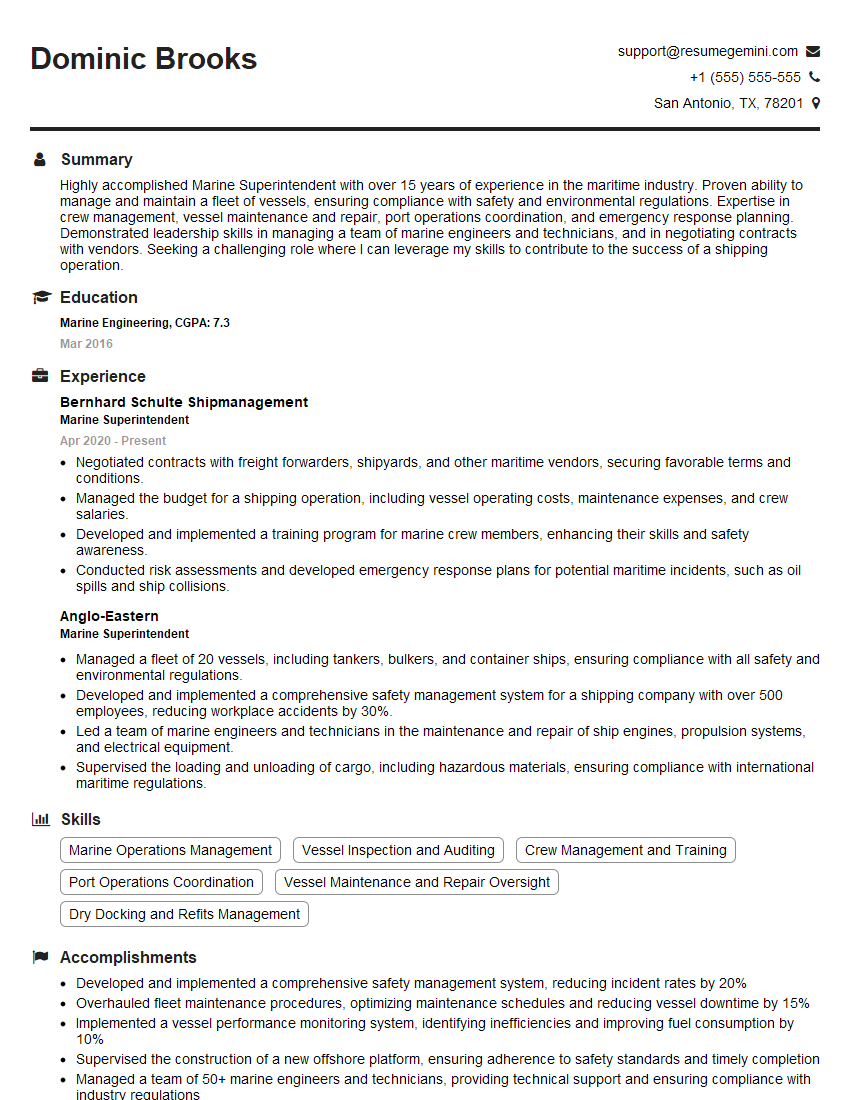
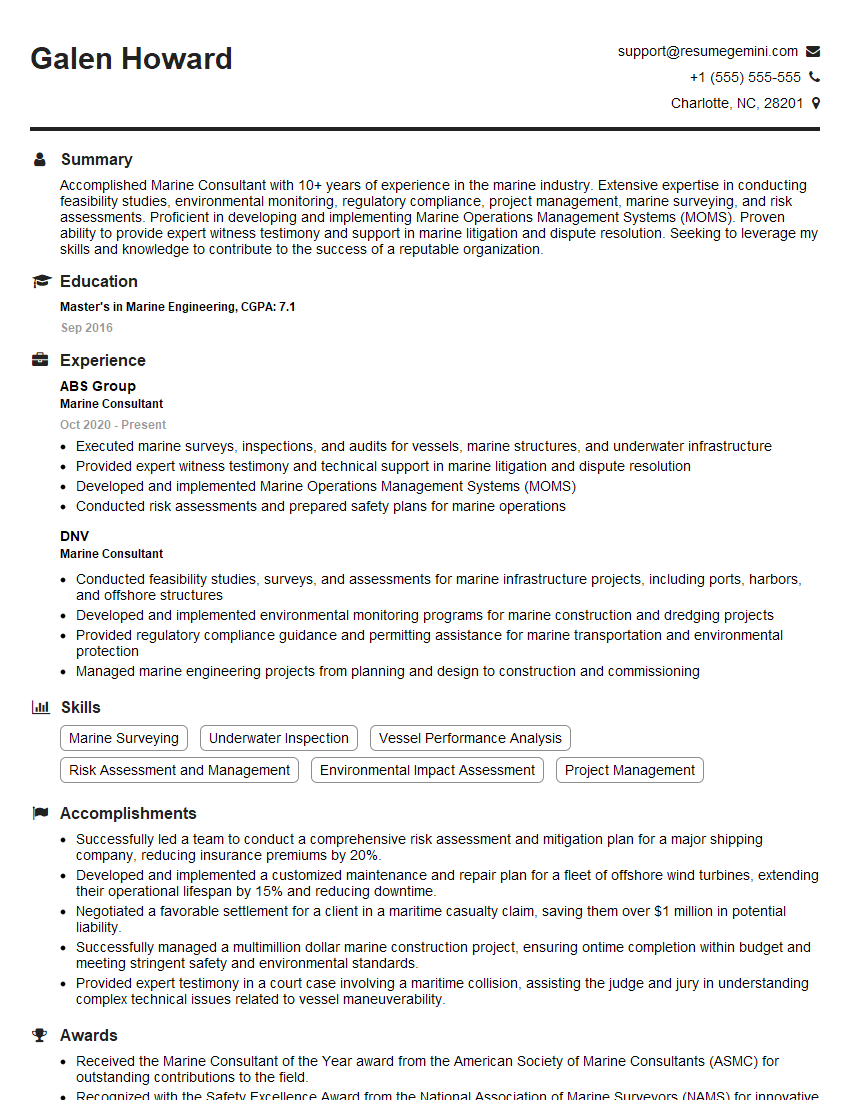
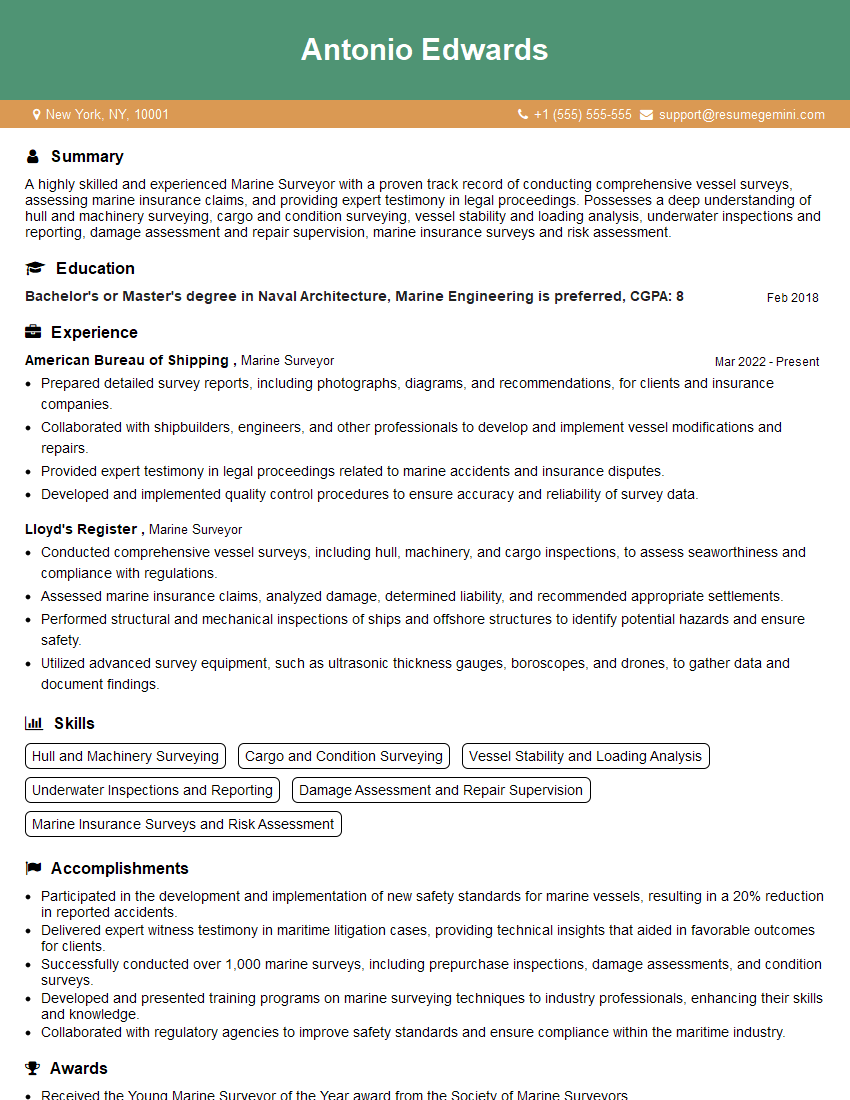
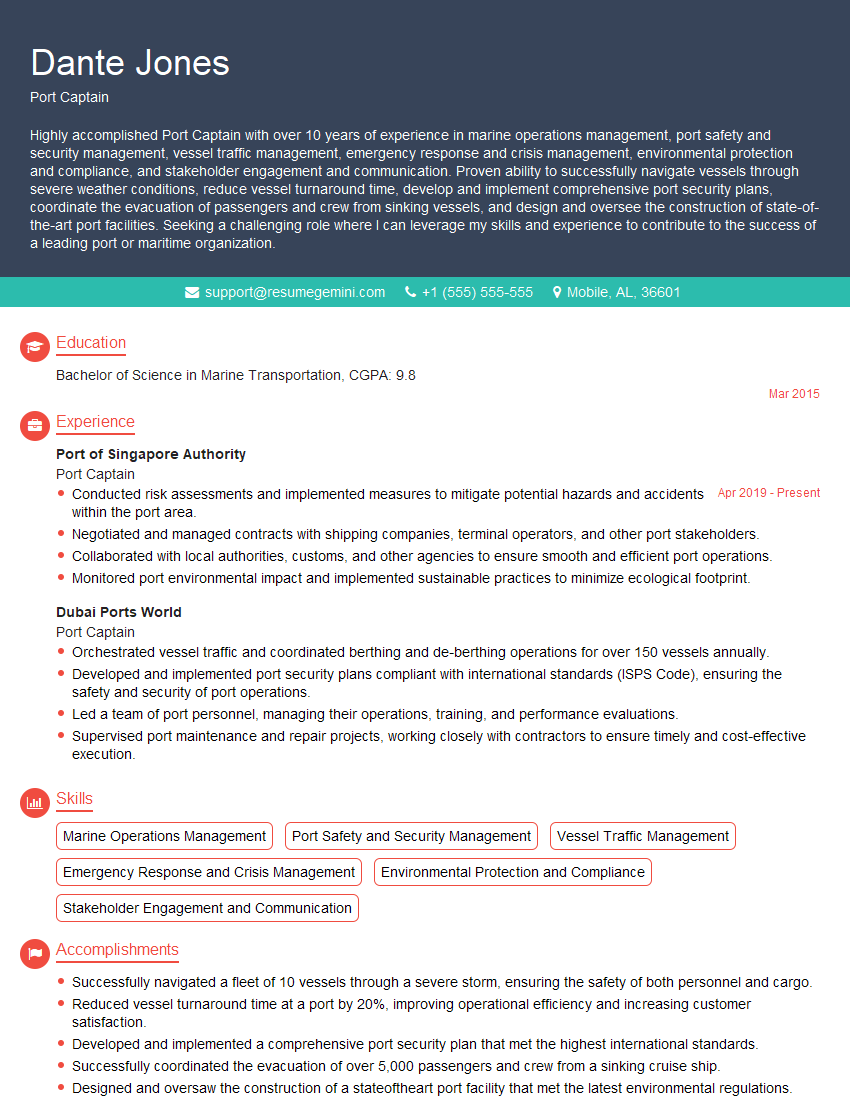
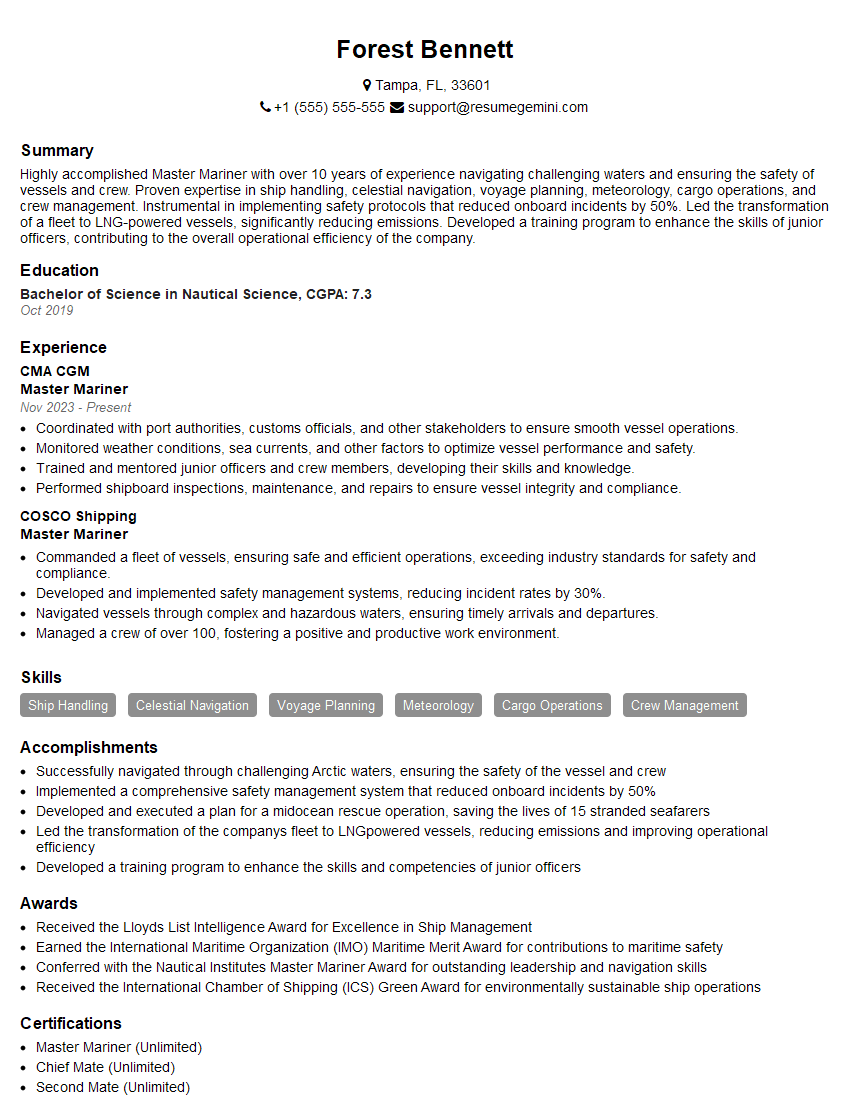
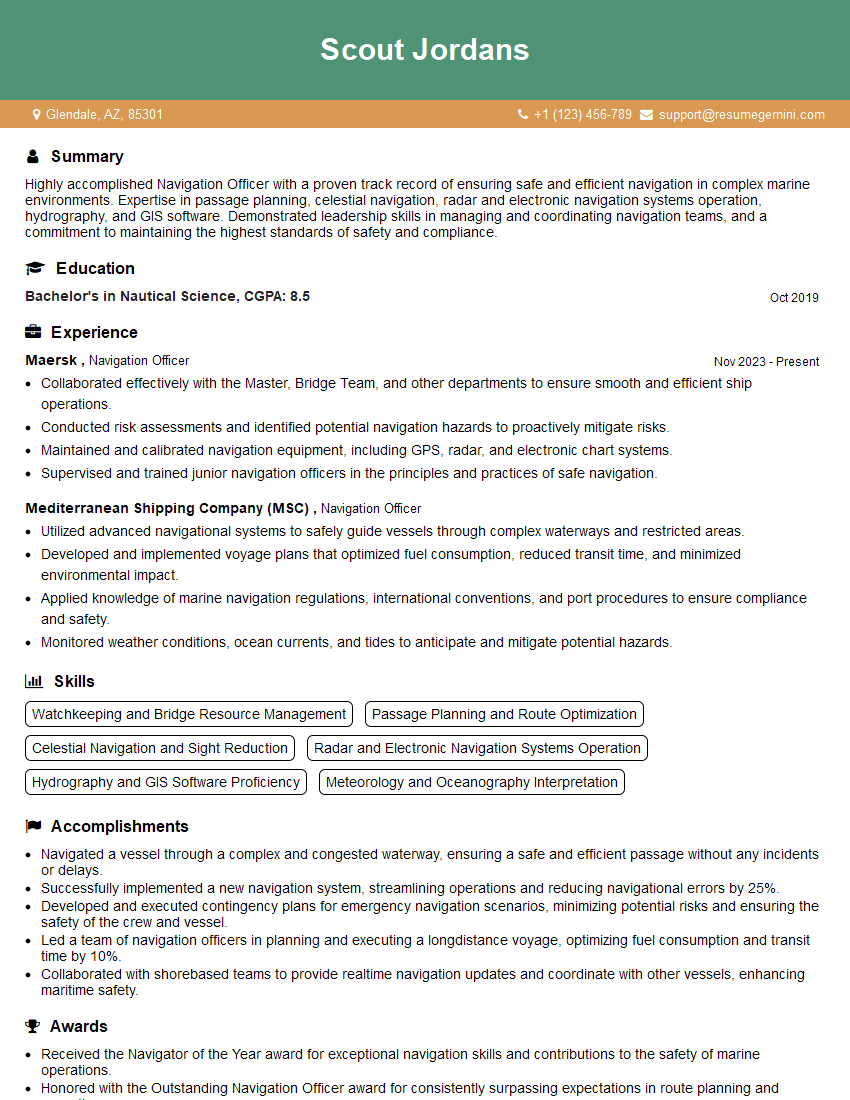
Mastering voyage planning and risk assessment is crucial for career advancement in the maritime industry, opening doors to leadership roles and higher earning potential. An ATS-friendly resume is essential for getting your application noticed by recruiters. To significantly enhance your resume and increase your chances of securing your dream job, we recommend using ResumeGemini. ResumeGemini provides tools and resources to create a professional and effective resume, including examples tailored to Skilled in Voyage Planning and Risk Assessment. See below for examples.
Explore more articles
Users Rating of Our Blogs
Share Your Experience
We value your feedback! Please rate our content and share your thoughts (optional).
What Readers Say About Our Blog
Very informative content, great job.
good