Interviews are opportunities to demonstrate your expertise, and this guide is here to help you shine. Explore the essential Smart Grid and Grid Integration for Solar Systems interview questions that employers frequently ask, paired with strategies for crafting responses that set you apart from the competition.
Questions Asked in Smart Grid and Grid Integration for Solar Systems Interview
Q 1. Explain the challenges of integrating intermittent renewable energy sources like solar PV into the grid.
Integrating intermittent renewable energy sources like solar PV into the grid presents significant challenges primarily due to their inherent variability. Unlike traditional power plants that can be dispatched on demand, solar power generation is directly dependent on sunlight availability, fluctuating throughout the day and significantly impacted by weather conditions. This intermittency creates difficulties in maintaining grid stability and balancing supply with demand.
- Forecasting Inaccuracies: Predicting solar power output accurately is challenging. Inaccurate forecasts can lead to imbalances, potentially resulting in frequency deviations or even blackouts.
- Ramp Rate Issues: Rapid changes in solar power generation, such as those caused by sudden cloud cover, can stress the grid’s ability to respond quickly enough to maintain stability. This is especially problematic during peak demand periods.
- Grid Capacity: Integrating large amounts of solar PV requires upgrades to existing grid infrastructure. The transmission and distribution networks may need reinforcement to handle the increased power flow and prevent overloading.
- Reverse Power Flow: During periods of high solar generation, power can flow back from the distribution network towards the substation, potentially causing unexpected voltage rises and operational issues if not properly managed.
Imagine trying to balance a scale with weights that keep changing unpredictably – that’s the challenge solar PV poses to grid operators. Sophisticated control systems and forecasting techniques are crucial to mitigate these challenges.
Q 2. Describe different grid integration methods for solar PV systems.
Several methods are employed to effectively integrate solar PV systems into the grid. The choice depends on the size of the system, grid infrastructure, and regulatory requirements.
- Centralized Inverters: Larger solar farms often use centralized inverters that convert DC power from numerous solar panels into AC power for direct injection into the grid. This requires robust protection and monitoring systems.
- String Inverters: Smaller systems, like residential installations, commonly use string inverters. Each inverter handles a small string of panels, simplifying installation and maintenance. They can provide some level of maximum power point tracking (MPPT) to optimize energy production.
- Microinverters: Each panel has its own microinverter, allowing for independent optimization and increased efficiency, even with shading or panel failures. This offers more resilience than string inverters.
- Power Electronic Interfaces (PEIs): Sophisticated PEIs provide advanced control capabilities, enabling seamless grid integration. They can help manage voltage fluctuations, reduce harmonic distortion, and support grid services like frequency regulation.
For example, a large utility-scale solar farm might opt for a centralized inverter system with advanced grid-forming capabilities, whereas a residential rooftop solar installation might use microinverters for simplicity and individual panel optimization.
Q 3. What are the key components of a Smart Grid?
A Smart Grid is a modernized power grid that uses information and communication technologies to enhance its efficiency, reliability, and sustainability. Key components include:
- Advanced Metering Infrastructure (AMI): Smart meters that communicate real-time energy consumption data.
- Distributed Generation (DG): Integration of renewable energy sources like solar PV and wind turbines at various points in the grid.
- Energy Storage Systems (ESS): Batteries and other storage technologies to manage intermittent renewable energy and improve grid stability.
- Communication Networks: Advanced communication systems (e.g., fiber optics, wireless) to facilitate data exchange between grid components.
- Supervisory Control and Data Acquisition (SCADA) Systems: Centralized systems for monitoring and controlling grid operations.
- Advanced Sensors and Actuators: Devices that monitor grid conditions and automatically respond to events, optimizing grid performance.
- Demand Response Programs: Incentivizing consumers to shift their energy consumption to better match generation.
Think of it as upgrading from an old, manual phone system to a modern, interconnected mobile network – vastly improved capabilities and responsiveness.
Q 4. How does a smart grid improve grid stability and reliability?
A smart grid improves grid stability and reliability through several mechanisms:
- Real-time Monitoring and Control: AMI and SCADA systems provide continuous monitoring of grid conditions, allowing operators to proactively address potential issues before they escalate.
- Faster Fault Detection and Isolation: Smart grid technologies enable faster detection and isolation of faults, minimizing the impact on power supply to consumers.
- Improved Load Balancing: By monitoring energy consumption and generation in real-time, smart grids can optimize power flow and distribution, preventing overloading and improving system efficiency.
- Integration of Renewable Energy Sources: Smart grid technologies facilitate seamless integration of intermittent renewable energy sources, improving grid stability and reducing reliance on fossil fuels.
- Demand Response Management: Smart grids can incentivize consumers to shift their energy consumption to match generation, reducing peak demand and improving overall grid stability.
- Energy Storage Optimization: Smart grids utilize energy storage systems to buffer intermittent generation and respond to sudden changes in demand, enhancing grid resilience.
For instance, during a sudden surge in demand, a smart grid can automatically dispatch stored energy or activate demand response programs to prevent grid collapse, a feat far beyond the capabilities of traditional grids.
Q 5. Explain the role of advanced metering infrastructure (AMI) in a smart grid.
Advanced Metering Infrastructure (AMI) plays a crucial role in a smart grid by providing real-time data on energy consumption and grid conditions. This data is essential for optimizing grid operations and enhancing grid management.
- Real-time Monitoring of Energy Consumption: AMI enables utilities to track energy consumption patterns at the individual customer level, allowing for better demand forecasting and optimized grid planning.
- Improved Customer Engagement: AMI empowers consumers with detailed energy usage information, promoting energy conservation and better energy management.
- Faster Fault Detection: Smart meters can detect outages and report them quickly, reducing the time required for restoration.
- Load Forecasting and Management: AMI data helps utilities predict energy demand more accurately, enabling better generation scheduling and resource allocation.
- Support for Distributed Energy Resources: AMI facilitates the integration of distributed energy resources like solar PV, allowing for efficient two-way communication between the grid and these resources.
Think of AMI as the eyes and ears of the smart grid, providing the vital data needed to make informed decisions and enhance operational efficiency. It’s the foundation upon which many smart grid functionalities are built.
Q 6. What are the different types of energy storage systems used in grid integration?
Various energy storage systems (ESS) are used in grid integration, each with its own advantages and disadvantages:
- Batteries (Lithium-ion, Lead-acid, Flow batteries): Widely used for their flexibility, relatively fast response times, and diverse applications. Lithium-ion batteries are becoming increasingly prevalent due to their high energy density and efficiency.
- Pumped Hydro Storage: A mature technology involving pumping water uphill during periods of low demand and releasing it to generate electricity during peak demand. It offers large-scale storage capabilities but requires specific geographical conditions.
- Compressed Air Energy Storage (CAES): Stores energy by compressing air and releasing it to drive turbines. It’s suitable for large-scale storage but has limitations related to efficiency and environmental impact.
- Thermal Energy Storage: Stores energy as heat (e.g., molten salt) or cold (e.g., ice) and releases it later to generate electricity or provide heating/cooling. It’s suitable for long-duration storage applications.
- Flywheels: Stores energy as rotational kinetic energy in a spinning rotor. Offers very fast response times but has limitations in energy capacity.
The choice of ESS depends on factors like storage capacity, response time, cost, lifespan, and environmental impact. For example, lithium-ion batteries are ideal for frequency regulation, while pumped hydro storage is suited for larger-scale energy shifting.
Q 7. Discuss the impact of solar PV integration on power system protection schemes.
The integration of solar PV significantly impacts power system protection schemes. The intermittent nature of solar generation and the potential for reverse power flow require modifications to existing protection systems to ensure grid stability and safety.
- Islanding Protection: When a portion of the grid becomes isolated from the main grid (islanding), continued solar generation can pose a risk to line workers. Advanced islanding detection schemes are needed to safely disconnect solar systems.
- Anti-Islanding Relay: This is a critical protection device preventing the unintentional islanding of distributed generators (DGs), including solar PV systems, ensuring grid stability and the safety of line workers. It must be sensitive to a range of islanding conditions.
- Reverse Power Flow Protection: When solar generation exceeds local demand, power flows back into the grid. Protection systems must handle this reverse power flow without causing damage or instability. This often involves using sophisticated inverters with advanced control capabilities.
- Overvoltage Protection: High solar generation can cause overvoltages in the distribution network. Protection schemes must include devices to prevent these overvoltages, like surge arresters and voltage regulators.
- Arc Flash Protection: Arc flashes are electrical explosions that can occur due to faults in the electrical system. Increased PV penetration necessitates enhanced arc flash protection measures.
For instance, traditional overcurrent relays may not be sufficient to protect against reverse power flow. More sophisticated protection schemes incorporating digital relays and advanced communication capabilities are essential for handling the complexities introduced by widespread solar PV integration.
Q 8. How does demand-side management contribute to grid stability with high solar penetration?
Demand-side management (DSM) is crucial for grid stability when integrating high levels of solar power. Think of it as a balancing act – when solar energy production fluctuates (e.g., due to cloud cover), DSM helps to match supply and demand. This prevents over- or under-voltage situations that can destabilize the grid.
DSM strategies use a variety of techniques to influence consumer energy usage. These include:
- Time-of-use pricing: Encouraging consumers to shift energy-intensive tasks to off-peak hours when solar production is lower or demand is less. For example, running dishwashers or clothes dryers at night.
- Incentivized demand response programs: Paying consumers to reduce their energy consumption during peak demand periods, often via smart home devices that automatically adjust appliance usage.
- Smart appliances and energy management systems: These systems utilize real-time grid data to optimize energy consumption based on supply and demand, automatically adjusting energy usage patterns to support grid stability.
For example, during a period of high solar output, DSM programs can reduce energy consumption from the grid, preventing oversupply. Conversely, during periods of reduced solar output (e.g., at sunset), they can incentivize energy conservation to lessen strain on the grid.
Q 9. What are the technical challenges associated with large-scale solar PV integration?
Integrating large-scale solar PV systems presents several technical hurdles:
- Intermittency and variability: Solar power generation is highly dependent on weather conditions. This unpredictability requires sophisticated forecasting and grid management strategies.
- Voltage fluctuations: Large solar PV installations can cause voltage rises and falls on the distribution grid, potentially damaging equipment or causing power outages. Advanced power electronics and grid management systems are necessary to mitigate this.
- Reverse power flow: In certain situations, solar generation can exceed local demand, causing power to flow back towards the substation. This requires careful management to prevent grid instability.
- Islanding protection: If a portion of the grid becomes isolated during a fault, solar inverters must automatically disconnect to prevent injury to line workers repairing the fault.
- Power quality issues: Solar PV systems can introduce harmonics and other power quality disturbances into the grid. Solutions often include the use of filters and advanced inverter controls.
Consider the example of a large-scale solar farm connected to a rural distribution network. The intermittent nature of solar power can lead to significant voltage fluctuations unless sophisticated power electronics and grid management solutions are deployed. It’s not just about generating the power, it’s about managing it safely and efficiently.
Q 10. Explain the concept of microgrids and their benefits.
A microgrid is a localized electrical grid that can operate independently from the main power grid. Imagine it as a mini power grid within a larger grid system, often incorporating various energy sources like solar, wind, and batteries. This decentralized approach offers several benefits:
- Enhanced resilience: During grid outages, microgrids can island (operate independently), ensuring continued power supply to critical loads such as hospitals or data centers.
- Improved grid stability: Microgrids can provide ancillary services like frequency regulation and voltage support to the main grid, enhancing its overall stability.
- Increased renewable energy integration: Microgrids facilitate higher penetration of renewable energy sources like solar and wind, as they can better manage the inherent intermittency of these resources.
- Reduced transmission losses: Generating power closer to the point of consumption reduces transmission losses associated with long-distance power transmission.
For example, a hospital might have its own microgrid with solar panels and batteries. During a major power outage, the microgrid seamlessly transitions to island mode, keeping the hospital functioning. This enhances reliability and minimizes disruption.
Q 11. Describe different methods for forecasting solar power generation.
Accurately forecasting solar power generation is essential for grid planning and operation. Several methods exist:
- Persistence forecasting: This simple method assumes that future generation will be similar to the present generation. While straightforward, it’s least accurate for longer prediction horizons.
- Statistical methods: These use historical solar irradiance data and meteorological forecasts to predict future generation. Techniques like ARIMA (Autoregressive Integrated Moving Average) models are frequently used.
- Physical models: These models simulate the physics of solar radiation, considering factors like cloud cover, atmospheric conditions, and solar geometry. They are more complex but provide more accurate predictions.
- Hybrid models: Combine statistical and physical methods, leveraging the strengths of both approaches to improve forecasting accuracy.
- Artificial intelligence (AI)-based methods: Machine learning algorithms, such as neural networks, can learn complex patterns in historical data to generate highly accurate forecasts.
A combination of these methods, often tailored to specific geographic locations and system characteristics, provides the most robust forecasts. For instance, a utility might use a hybrid model combining satellite imagery with statistical methods to generate short-term forecasts, while employing physical models for longer-term planning.
Q 12. How do you ensure the safety of grid workers during solar PV integration projects?
Ensuring the safety of grid workers during solar PV integration projects is paramount. Several measures should be implemented:
- Lockout/Tagout procedures: These procedures are crucial to prevent accidental energization of equipment during maintenance or repairs. Every worker must follow strict procedures before working on any part of the system.
- Arc flash hazard analysis: This assessment identifies potential arc flash hazards (electrical explosions) and determines appropriate personal protective equipment (PPE) requirements.
- Proper grounding and bonding: This prevents electrical shocks and reduces the risk of equipment damage.
- Comprehensive safety training: All workers must receive thorough training on safe work practices, including working with solar PV systems and high-voltage equipment.
- Regular safety inspections: Regular inspections help identify and address potential hazards before they lead to accidents.
- Clear communication and coordination: Effective communication between all workers and supervisors is essential to ensure safe work practices.
A real-world example would be a utility company implementing a comprehensive safety program that includes regular training sessions on arc flash hazards and the use of PPE, and strictly enforcing lockout/tagout procedures before any work commences on the solar PV system.
Q 13. What are the economic impacts of integrating solar PV into the grid?
Integrating solar PV into the grid has significant economic impacts:
- Reduced electricity costs: Solar PV can reduce reliance on fossil fuels, lowering electricity costs for consumers and businesses. This is particularly impactful in regions with high electricity prices.
- Job creation: The solar industry creates numerous jobs in manufacturing, installation, maintenance, and research.
- Increased energy independence: Solar energy reduces dependence on foreign oil and gas, enhancing national energy security.
- Environmental benefits: Reduced greenhouse gas emissions lead to decreased healthcare costs associated with air pollution and environmental damage.
- Potential for new revenue streams: Solar PV systems can generate revenue through feed-in tariffs (payments for excess energy fed back to the grid) or through participation in energy markets.
- Investment opportunities: The growth of the solar industry attracts significant investment, stimulating economic growth.
For example, a large-scale solar farm can reduce the overall cost of electricity for a region, while simultaneously creating jobs in the local community. These economic benefits can outweigh initial investment costs over the long term.
Q 14. Discuss the role of power electronics in grid-tied solar inverters.
Power electronics play a critical role in grid-tied solar inverters, the devices that convert the DC power generated by solar panels into AC power compatible with the grid.
Key functions of power electronics in solar inverters include:
- DC-to-AC conversion: This is the core function, utilizing switches (like IGBTs or MOSFETs) and control circuits to convert the variable DC output of solar panels into a stable AC waveform matching the grid’s frequency and voltage.
- Maximum power point tracking (MPPT): Power electronics algorithms dynamically adjust the inverter’s operation to extract the maximum power from the solar panels under varying sunlight conditions.
- Grid synchronization: The inverter must precisely synchronize its output with the grid’s frequency and voltage to ensure seamless integration.
- Power quality improvement: Power electronics circuits can filter out harmonics and other disturbances generated by the solar panels, improving the overall power quality of the grid.
- Protection functions: The inverter uses power electronics to implement protection mechanisms, including islanding detection, overcurrent protection, and overvoltage protection.
Example: A typical grid-tied inverter uses a pulse width modulation (PWM) technique controlled by a microcontroller to precisely regulate the AC output waveform.
The efficient and reliable operation of a grid-tied solar inverter relies heavily on sophisticated power electronics design and control algorithms, ensuring safety, reliability, and seamless grid integration.
Q 15. Explain the concept of frequency regulation in a grid with high solar penetration.
Frequency regulation maintains the stability of the power grid’s frequency, typically around 50Hz or 60Hz. With high solar penetration, this becomes challenging because solar power is intermittent – its output fluctuates based on sunlight availability. When solar power dips unexpectedly (e.g., due to cloud cover), the grid frequency can drop, leading to instability and potential blackouts. Conversely, a sudden increase in solar power can cause the frequency to rise, which is equally problematic. To counter this, smart grids utilize various frequency regulation mechanisms. These include:
- Increased reliance on fast-responding power plants: Gas-fired or hydro plants can quickly adjust their power output to compensate for solar fluctuations.
- Advanced forecasting and control systems: These systems predict solar output based on weather data and adjust grid operations proactively.
- Energy storage: Batteries or pumped hydro storage can store excess solar energy and release it when needed, smoothing out the fluctuations.
- Demand-side management: Smart grids can incentivize consumers to shift their energy usage, reducing demand during periods of low solar generation.
For example, imagine a large solar farm suddenly experiencing a cloud cover. Without frequency regulation, the grid frequency would dip. A well-designed smart grid would automatically dispatch a nearby gas-fired power plant to increase its output, restoring the frequency to its setpoint. The grid operator might also receive alerts about potential solar output reduction based on weather forecast data, allowing them to preemptively address the issue.
Career Expert Tips:
- Ace those interviews! Prepare effectively by reviewing the Top 50 Most Common Interview Questions on ResumeGemini.
- Navigate your job search with confidence! Explore a wide range of Career Tips on ResumeGemini. Learn about common challenges and recommendations to overcome them.
- Craft the perfect resume! Master the Art of Resume Writing with ResumeGemini’s guide. Showcase your unique qualifications and achievements effectively.
- Don’t miss out on holiday savings! Build your dream resume with ResumeGemini’s ATS optimized templates.
Q 16. Describe different communication protocols used in smart grids.
Smart grids utilize a variety of communication protocols to facilitate data exchange between various grid components, ensuring efficient and reliable operation. These protocols vary in their range, speed, and security features, tailoring them to specific applications. Some commonly used protocols include:
- IEC 61850: A widely adopted standard for substation automation, enabling seamless communication between intelligent electronic devices (IEDs) within substations.
- DNP3 (Distributed Network Protocol 3): A widely deployed protocol for SCADA (Supervisory Control and Data Acquisition) systems, transmitting data from remote devices to a central control center.
- Modbus: A simple and widely used protocol for industrial automation, often used in smaller-scale smart grid applications.
- Zigbee and Z-Wave: Low-power wireless protocols used for communication with smart meters and other residential devices within a smart grid network.
- Cellular (3G/4G/5G): Used for wide-area communication and data transmission, particularly for large-scale grid monitoring and control.
- Power Line Communication (PLC): Utilizes existing power lines for communication, reducing the need for separate communication infrastructure.
Imagine a smart meter in a home. It uses a wireless protocol like Zigbee to communicate its consumption data to a local concentrator, which then utilizes a more robust protocol like cellular or PLC to send the data to the utility company’s central control system. The utility company leverages a protocol such as IEC 61850 for the control and data acquisition of substations across their grid.
Q 17. What are the cybersecurity threats associated with smart grids?
Smart grids, with their extensive interconnectedness and reliance on digital communication, are susceptible to a range of cybersecurity threats. These threats can range from data breaches to complete system outages, potentially impacting power reliability and even national security. Key threats include:
- Phishing and malware attacks: Targeting grid employees or users to gain access to sensitive systems and data.
- Denial-of-service (DoS) attacks: Overwhelming grid systems with traffic to disrupt their operation.
- Data breaches: Unauthorized access to sensitive grid data, such as customer information or operational parameters.
- Man-in-the-middle attacks: Intercepting communication between grid components to manipulate data or control commands.
- Advanced persistent threats (APTs): Sophisticated attacks aimed at gaining long-term access to grid systems for espionage or sabotage.
For instance, a successful cyberattack could manipulate sensor data, leading to inaccurate readings that cause grid instability. An attacker might also remotely shut down critical grid components, resulting in widespread blackouts. Robust cybersecurity measures, including intrusion detection systems, firewalls, and encryption protocols, are crucial for mitigating these risks.
Q 18. How do you address voltage fluctuations caused by intermittent solar generation?
Voltage fluctuations are a common issue with intermittent solar generation. When solar power output changes rapidly, the voltage on the grid can fluctuate, potentially damaging equipment or disrupting service. Several strategies are employed to address this:
- Voltage regulation through inverters: Solar inverters with voltage control capabilities can actively adjust their output to maintain grid voltage within acceptable limits. This is a fundamental part of any grid-connected solar system design.
- Reactive power compensation: Solar inverters can generate or absorb reactive power to adjust the voltage magnitude and improve power factor. This is crucial for maintaining voltage stability.
- Advanced grid control systems: Smart grids utilize sophisticated control algorithms and sensors to monitor voltage levels and dynamically adjust grid operations to mitigate voltage fluctuations.
- Distributed generation management: By managing the output of numerous smaller solar systems, the effect of any individual system’s intermittent output is lessened.
- Energy storage: Battery systems or other storage solutions can help to absorb sudden surges or dips in solar power, preventing voltage excursions.
Imagine a scenario where a cloud passes over a solar farm, causing a sudden drop in solar power. The grid’s voltage might momentarily dip. Grid-connected inverters would adjust their output to compensate for this loss, maintaining the voltage within acceptable limits. Furthermore, the advanced grid control system might dispatch other resources to support the grid in the short term.
Q 19. Explain the concept of reactive power compensation in grid-connected solar systems.
Reactive power compensation plays a crucial role in maintaining voltage stability in grids with high penetration of solar PV systems. Reactive power doesn’t contribute to real power consumption but affects voltage levels. Solar PV systems, especially those operating at high voltage levels, tend to consume reactive power, potentially causing voltage drops. Reactive power compensation involves injecting reactive power back into the grid to counteract this effect. This is typically done through:
- Power factor correction (PFC) capabilities in inverters: Modern inverters are designed with PFC capabilities to control the power factor, reducing the amount of reactive power consumed and improving the overall grid efficiency.
- Static synchronous compensators (STATCOMs): These devices can quickly and efficiently inject or absorb reactive power, offering superior voltage regulation capabilities compared to passive methods.
- Synchronous condensers: Large rotating machines that can be used for reactive power compensation, but they are less flexible and cost-effective than modern STATCOMs.
Think of it like this: real power is the actual work done (analogous to moving a box), while reactive power is like the friction involved in moving the box. Reactive power doesn’t do useful work, but it impacts the system’s efficiency. Reactive power compensation helps minimize this ‘friction’, improving the efficiency of the grid and voltage stability.
Q 20. Describe the different types of grid-connected inverters used for solar PV systems.
Grid-connected inverters are essential components in solar PV systems, converting the DC power generated by solar panels into AC power that can be fed into the grid. Different types of inverters exist, each with its characteristics and suitability for specific applications:
- String inverters: These inverters connect to multiple solar panels in series (a string) and are relatively cost-effective but offer less flexibility in maximizing energy generation if one panel malfunctions.
- Microinverters: These inverters are connected to individual solar panels and optimize the energy output from each panel independently, offering greater efficiency and resilience to shading or panel failures. However, they are more expensive per unit.
- Power optimizers: These devices are located between the solar panel and the inverter, enhancing the performance of individual panels by maximizing energy yield and mitigating the effects of shading.
- Central inverters: Used in large solar farms, these high-power inverters manage the output of many strings of solar panels. They are cost-effective for large-scale applications but require extensive cabling.
The choice of inverter depends on factors like system size, cost considerations, performance requirements, and desired level of fault tolerance. For residential applications, string or microinverters are common choices. Large-scale solar farms often utilize central inverters.
Q 21. What are the environmental benefits of solar PV integration?
Solar PV integration offers significant environmental benefits by reducing reliance on fossil fuels and minimizing greenhouse gas emissions. These benefits include:
- Reduced greenhouse gas emissions: Solar PV systems generate electricity without producing direct greenhouse gas emissions, reducing the carbon footprint of energy production.
- Improved air quality: By decreasing our dependence on fossil fuel-based power plants, we reduce air pollution associated with the burning of coal, oil, and natural gas.
- Reduced water consumption: Unlike fossil fuel power plants, solar PV systems require minimal water for operation, reducing water stress in water-scarce regions.
- Sustainable energy source: Sunlight is an abundant and virtually inexhaustible resource, offering a sustainable alternative to finite fossil fuels.
- Reduced land use (in some cases): Solar PV systems can be integrated into existing infrastructure (e.g., rooftops), minimizing the need for additional land development compared to large-scale fossil fuel power plants.
The widespread adoption of solar PV systems can significantly contribute to mitigating climate change and improving overall environmental sustainability. The reduction in air pollution alone can lead to substantial public health improvements.
Q 22. How do you assess the grid impact of a new solar PV project?
Assessing the grid impact of a new solar PV project requires a multi-faceted approach. We need to consider both the technical and regulatory aspects. Technically, we perform detailed simulations using power flow analysis software to model the project’s interaction with the existing grid. This involves determining the project’s size, location, and the characteristics of its inverter. We then model various operating conditions, including peak solar irradiance and different load profiles, to predict voltage variations, power flows, and potential overloading of grid components.
Regulatory compliance is crucial. We need to check against local and national grid codes, ensuring compliance with voltage limits, frequency stability requirements, and interconnection standards. For example, we need to determine if reactive power support from the PV system is needed, to maintain stable voltage levels. This might involve adding capacitor banks or using advanced inverter controls. A comprehensive report summarizing these analyses is crucial for obtaining interconnection approval from the grid operator.
Example: In a recent project, our simulation revealed that a large solar farm might cause voltage rise issues during peak solar production in a specific feeder. By strategically placing reactive power compensation devices, we were able to mitigate this issue and secure interconnection approval.
Q 23. Explain the concept of distributed generation and its impact on the grid.
Distributed generation (DG) refers to smaller-scale electricity generation sources, like solar PV systems, wind turbines, or micro-turbines, located close to the load centers they serve, unlike traditional large power plants. This has a significant impact on the grid, presenting both challenges and opportunities.
Impact on the Grid:
- Increased Reliability: DG can reduce reliance on large centralized power plants, making the grid more resilient to outages. If one section experiences a failure, DG in other areas can continue supplying power.
- Improved Voltage Profile: DG can help maintain voltage levels within acceptable limits, particularly in areas with weak grids. By injecting power close to the load, voltage drops are minimized.
- Challenges: DG integration requires robust grid management systems, including advanced monitoring and control to handle intermittent power generation and maintain grid stability. Managing the bidirectional power flow (both from the grid to DG and from DG to the grid) can be complex.
Example: A neighborhood with many rooftop solar panels experiences fewer outages during a grid-wide failure because these panels provide localized power supply. However, managing the combined output of all these panels and ensuring safe operation requires advanced grid management techniques.
Q 24. What are the different standards and regulations related to grid integration of solar PV?
Standards and regulations for solar PV grid integration vary geographically, but some common themes exist. They broadly cover technical specifications, safety requirements, and interconnection procedures.
- IEEE Standards: The Institute of Electrical and Electronics Engineers (IEEE) publishes numerous standards related to solar PV systems, such as those governing inverter performance, protection schemes, and grid interconnection requirements. For example, IEEE 1547 addresses the requirements for interconnection and safety.
- IEC Standards: The International Electrotechnical Commission (IEC) provides similar international standards focusing on safety and performance.
- National Grid Codes: Each country or region typically has its own grid code that outlines specific technical requirements for connecting renewable energy sources. These codes typically address aspects like voltage regulation, frequency control, and protection schemes.
- Utility Interconnection Procedures: Utilities establish their procedures for evaluating and approving interconnection requests. These procedures include technical studies, safety reviews, and the establishment of interconnection agreements.
Example: In the US, compliance with IEEE 1547 is often a mandatory requirement for connecting solar PV systems to the grid. Specific requirements might vary depending on the utility company.
Q 25. Discuss the role of artificial intelligence in optimizing smart grid operations.
Artificial intelligence (AI) is revolutionizing smart grid operations by enabling more efficient, reliable, and resilient grids. AI algorithms, especially machine learning, can analyze vast datasets from various sources (smart meters, sensors, weather forecasts) to optimize various aspects of grid management.
- Predictive Maintenance: AI can predict equipment failures by analyzing historical data and identifying patterns that indicate potential problems, allowing for proactive maintenance and reducing outages.
- Demand-Side Management: AI can optimize energy consumption by predicting load profiles and adjusting energy prices dynamically. This can shift peak demand to off-peak hours, improving grid stability.
- Renewable Energy Forecasting: AI can improve forecasting of solar and wind power generation, enabling better grid planning and dispatch decisions. This allows grid operators to better manage the intermittent nature of renewable sources.
- Fault Detection and Localization: AI can detect and isolate faults much faster than traditional methods, minimizing service disruptions.
Example: AI-powered systems can predict solar irradiance with higher accuracy, enabling grid operators to optimize the dispatch of conventional power plants and better integrate solar power.
Q 26. Explain the concept of power flow analysis and its importance in grid planning.
Power flow analysis is a crucial computational technique used to determine the flow of real and reactive power throughout an electrical network, under various operating conditions. It uses network topology, component parameters (impedance, voltage), and load demands as input.
Importance in Grid Planning:
- Grid Stability Assessment: Power flow analysis helps determine the stability of the grid under various scenarios, identifying potential vulnerabilities and areas prone to voltage collapse or overloading.
- Optimal Power Dispatch: It helps in optimally scheduling power generation from various sources to meet demand while minimizing losses and maximizing efficiency.
- Capacity Planning: By analyzing power flows, engineers can determine the need for upgrading existing infrastructure or planning new transmission lines to accommodate increasing demand.
- Renewable Energy Integration Planning: Power flow analysis is critical for assessing the impact of integrating renewable energy sources like solar PV and wind power, ensuring that the grid can accommodate their intermittent nature without compromising stability.
Example: Before connecting a large solar farm, power flow analysis is used to determine the impact on voltage levels and transmission line loading. This analysis informs decisions about necessary grid upgrades or control strategies.
Q 27. How do you ensure grid compliance with renewable energy integration standards?
Ensuring grid compliance with renewable energy integration standards requires a rigorous and multi-step process:
- Thorough Grid Studies: Comprehensive power flow, stability, and fault studies are performed to assess the impact of the renewable energy integration on the grid’s performance. These studies help identify potential issues and inform mitigation strategies.
- Compliance with Grid Codes: The design and operation of the renewable energy system must fully comply with all applicable grid codes, standards, and interconnection agreements. This often involves adhering to specific requirements related to voltage regulation, frequency response, protection schemes, and fault ride-through capabilities.
- Equipment Selection and Testing: Choosing equipment that meets the required standards is crucial. This includes inverters, transformers, and protection relays. Rigorous testing of the integrated system is also essential to verify compliance.
- Monitoring and Control: Implementing a robust monitoring and control system is necessary to continuously observe the grid’s performance and promptly respond to any deviations from the acceptable operating parameters. This often involves advanced metering infrastructure and supervisory control and data acquisition (SCADA) systems.
- Continuous Monitoring and Reporting: After integration, continuous monitoring and reporting of system performance is crucial to identify and address any emerging issues and maintain long-term compliance.
Example: In a recent project, we developed a customized protection scheme for a large solar farm, designed to meet specific grid code requirements and effectively coordinate with the grid protection system, thereby ensuring grid safety and reliability.
Q 28. Describe your experience with SCADA systems in the context of smart grid management.
SCADA (Supervisory Control and Data Acquisition) systems are vital for managing and monitoring smart grids. My experience involves utilizing SCADA systems to oversee the operation of various grid components, including substations, transmission lines, and distribution networks, with a particular focus on integrating renewable energy sources.
Applications in Smart Grid Management:
- Real-time Monitoring: SCADA systems provide real-time visibility into the grid’s operational status, including voltage levels, current flows, and equipment performance. This enables proactive identification of issues and potential problems.
- Remote Control: SCADA allows remote control of grid components, enabling rapid responses to disturbances and facilitating efficient grid management. This is particularly useful in managing the intermittent nature of renewable sources.
- Data Acquisition and Analysis: SCADA systems collect vast amounts of data that can be used for trend analysis, performance evaluation, and predictive maintenance. This data analysis supports operational optimization and improved decision-making.
- Renewable Energy Integration: SCADA plays a significant role in integrating renewable energy sources by monitoring their output, ensuring grid stability, and coordinating their operation with other grid assets.
Example: In a previous role, I used SCADA to monitor the performance of a large solar PV plant, identifying and addressing operational issues remotely. We used the SCADA data to optimize the plant’s output and improve its integration into the grid.
Key Topics to Learn for Smart Grid and Grid Integration for Solar Systems Interview
- Smart Grid Fundamentals: Understanding the architecture, components (e.g., SCADA systems, advanced metering infrastructure (AMI)), and functionalities of a smart grid. Consider the benefits and challenges of smart grid implementation.
- Renewable Energy Integration: Focus on the challenges of integrating intermittent renewable energy sources (like solar) into the existing grid. Explore topics like grid stability, forecasting, and power quality issues.
- Solar PV System Design and Operation: Understand the different types of solar PV systems (rooftop, utility-scale), their components, and operational characteristics. Familiarize yourself with performance metrics and optimization techniques.
- Grid-Tied Inverters and Power Electronics: Learn about the role of inverters in converting DC power from solar panels to AC power suitable for the grid. Explore different inverter topologies and their impact on grid stability.
- Power Flow and Stability Analysis: Understand how to model and analyze power flow in a grid with significant solar penetration. Be prepared to discuss methods for maintaining grid stability and preventing blackouts.
- Energy Storage Systems (ESS): Explore the role of battery storage and other ESS technologies in mitigating the intermittency of solar power and improving grid reliability. Understand different battery chemistries and their applications.
- Grid Codes and Standards: Familiarize yourself with relevant grid codes and standards related to the integration of solar PV systems. Understand compliance requirements and their impact on system design.
- Protection and Control Schemes: Understand the protection mechanisms and control strategies used to protect the grid and solar PV systems from faults and disturbances. Discuss various relaying schemes and their functionalities.
- Advanced Metering Infrastructure (AMI): Learn about the role of smart meters in monitoring and controlling energy flow in a smart grid. Understand data analytics and its applications in improving grid management.
- Cybersecurity in Smart Grids: Discuss the cybersecurity threats and vulnerabilities associated with smart grids and the measures needed to ensure their security and resilience.
Next Steps
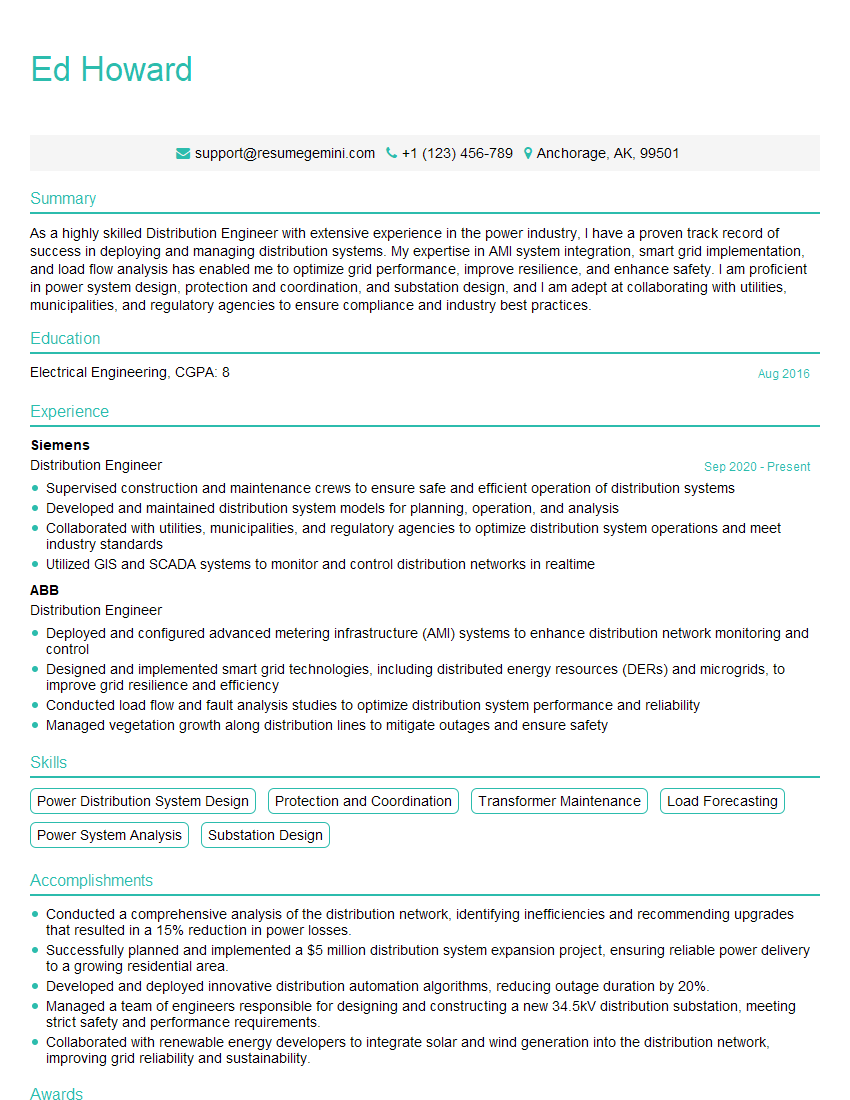
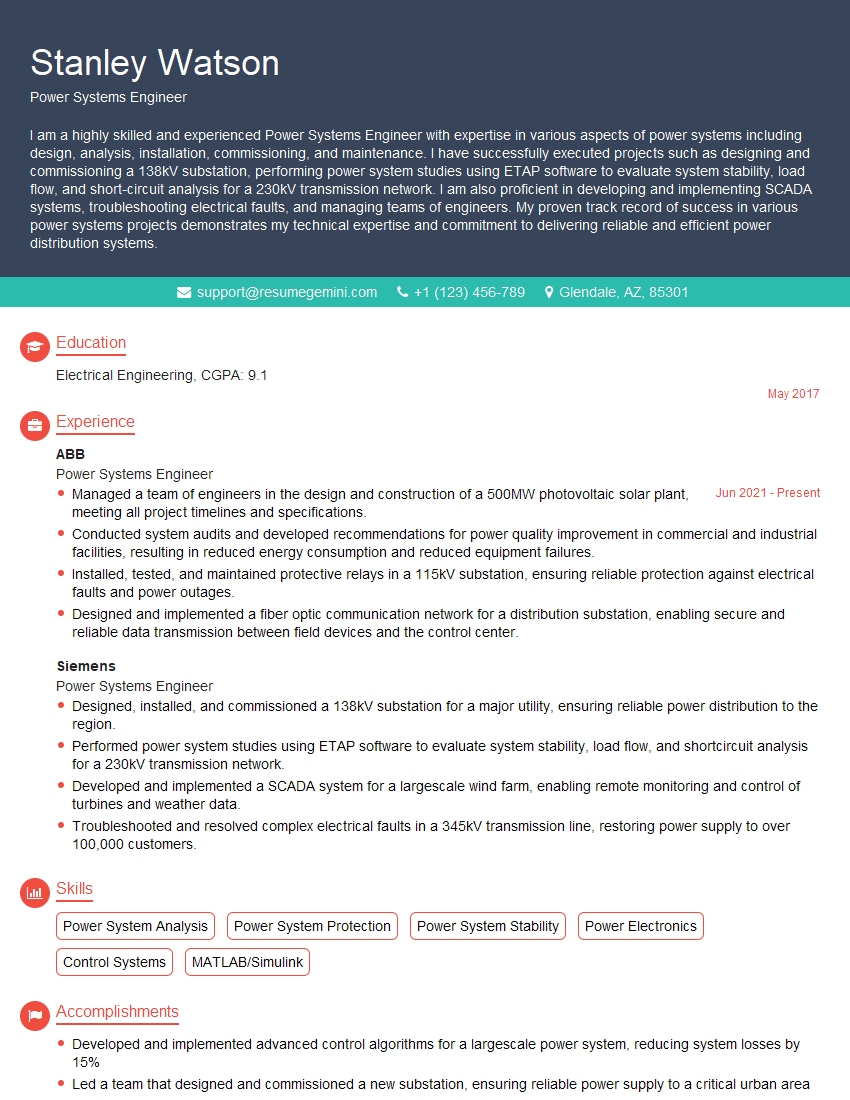
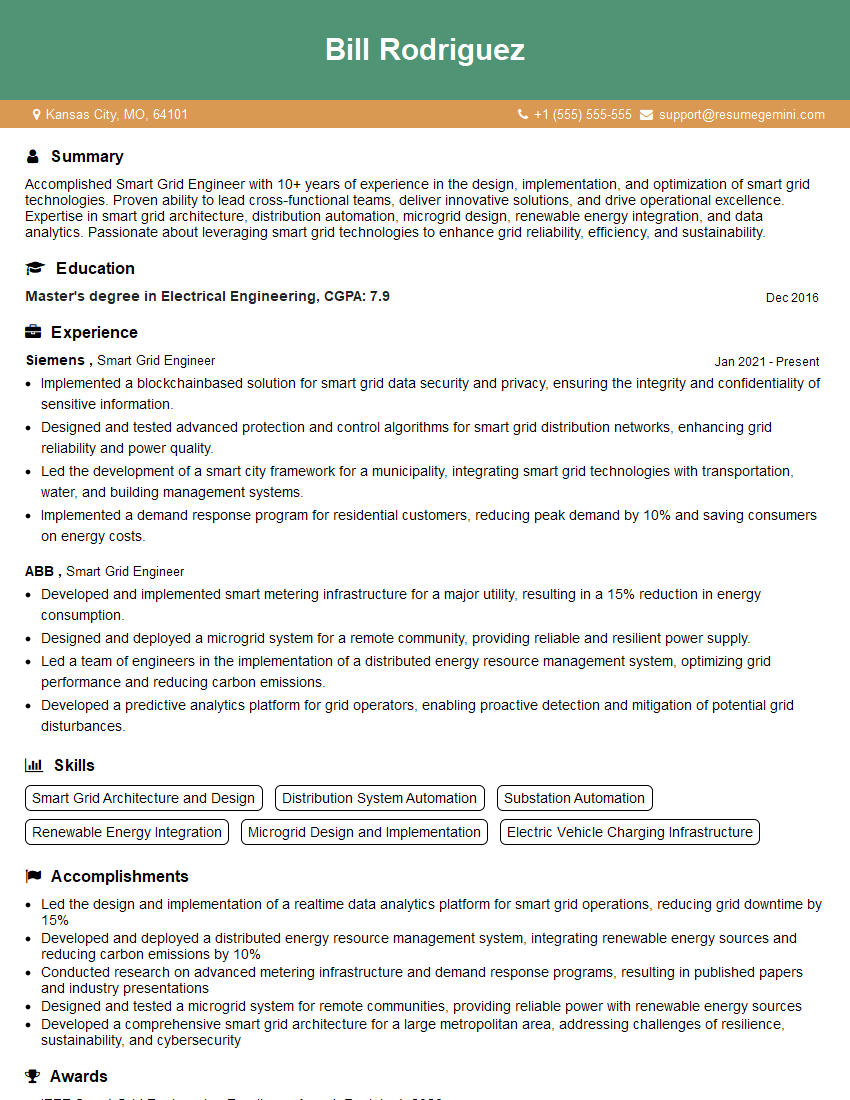
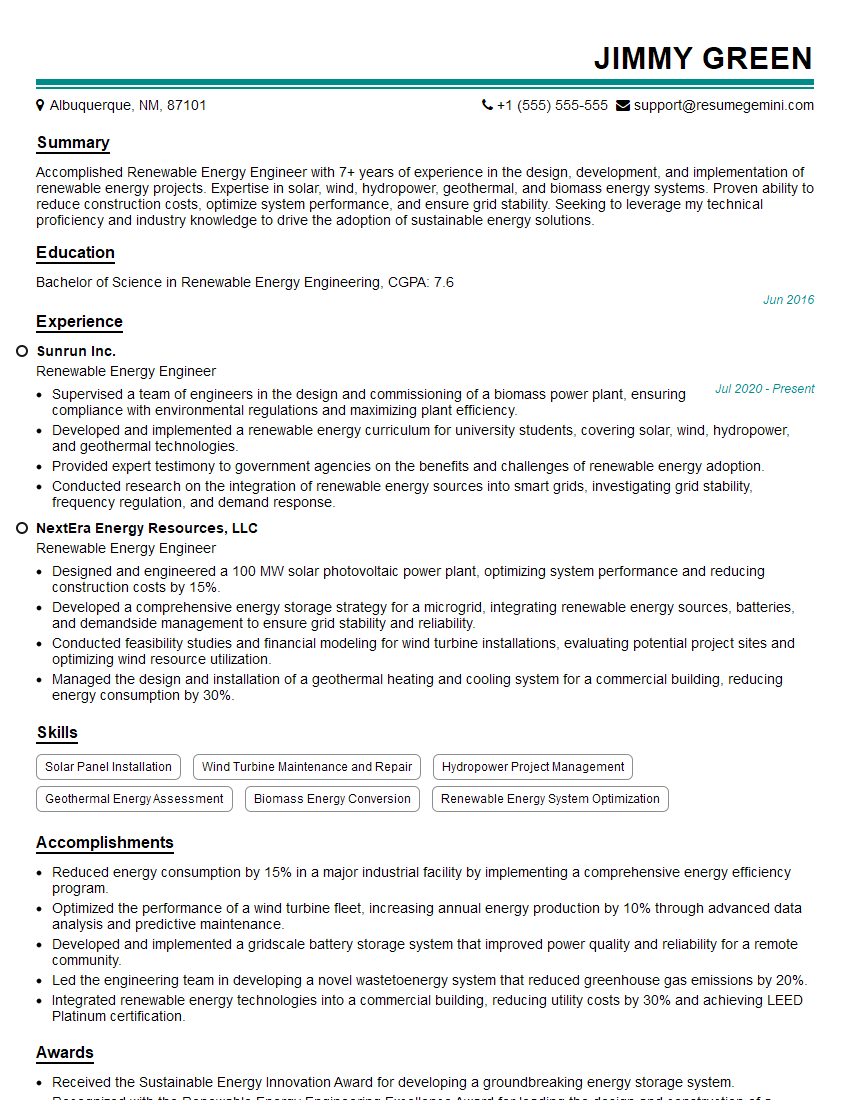
Mastering Smart Grid and Grid Integration for Solar Systems is crucial for a successful career in the rapidly growing renewable energy sector. This field offers exciting opportunities for innovation and impactful work. To maximize your job prospects, creating a strong, ATS-friendly resume is essential. ResumeGemini is a trusted resource that can help you build a professional and effective resume tailored to your specific skills and experience. Examples of resumes specifically tailored to Smart Grid and Grid Integration for Solar Systems are available to help you get started. Invest in your career future – craft a compelling resume that showcases your expertise and secures your next interview.
Explore more articles
Users Rating of Our Blogs
Share Your Experience
We value your feedback! Please rate our content and share your thoughts (optional).
What Readers Say About Our Blog
Very informative content, great job.
good