Unlock your full potential by mastering the most common Soft Sculpture interview questions. This blog offers a deep dive into the critical topics, ensuring you’re not only prepared to answer but to excel. With these insights, you’ll approach your interview with clarity and confidence.
Questions Asked in Soft Sculpture Interview
Q 1. Describe your experience with various soft sculpture techniques (e.g., needle felting, wet felting, stuffing techniques).
My experience in soft sculpture encompasses a wide range of techniques, each offering unique qualities and challenges. Needle felting, for instance, involves repeatedly stabbing fibers with barbed needles to create a dense, three-dimensional form. This is excellent for creating detailed features and achieving a firm structure, particularly in smaller sculptures. I’ve used it extensively to sculpt animal faces, capturing fine details like fur texture.
Wet felting, on the other hand, uses hot water and soap to entangle fibers, resulting in a more fluid, less precise, yet incredibly strong and durable material. I often use this method to create the base for larger sculptures or to construct textured surfaces. I once used wet felting to create a large, flowing dress for a whimsical figure.
Stuffing techniques are essential for creating volume and form. I’m proficient in various methods, from using simple fiberfill for even distribution to employing more complex techniques like layering different materials for varied density and texture. For example, I might use cotton batting for a soft, plush feel in the body of a plush toy and then add small amounts of poly pellets in strategic areas to create firmness and prevent sagging.
Q 2. What types of fabrics are best suited for soft sculpture, and why?
Fabric selection is crucial in soft sculpture; it directly impacts the final look, feel, and durability of the piece. Natural fibers like cotton, wool, and linen are popular choices because of their softness, breathability, and ability to hold their shape. Cotton is versatile, easy to sew, and comes in a vast array of colors and weights. Wool’s natural elasticity and ability to felt make it perfect for projects requiring both texture and strength. Linen, while sometimes more challenging to work with, provides a beautiful drape and a unique textural quality.
Synthetic fabrics like fleece, felt, and various blends offer unique properties as well. Fleece is incredibly soft and easy to sew, ideal for cuddly toys and comforting items. Felt’s inherent stability makes it a great choice for creating rigid forms or intricate details. However, the choice often depends on the desired effect. For instance, a delicate flower might use fine silk, while a robust animal might utilize heavy canvas or a durable synthetic blend.
Q 3. Explain your process for creating a soft sculpture, from initial concept to final product.
My process begins with a detailed concept sketch, exploring the form, proportions, and overall aesthetic of the sculpture. This is followed by selecting the appropriate materials – fabrics, stuffing, and embellishments. Next, I create patterns, usually from paper or fabric, to ensure accurate cutting and assembly. Construction involves carefully stitching or assembling the fabric pieces, paying close attention to seams and structural integrity. Stuffing is a critical step, demanding even distribution to prevent lumps or distortions. Finally, I add finishing touches, such as embroidery, appliqué, or painting, to refine the details and bring the sculpture to life.
For example, when creating a life-size whimsical bird, I started with a wire armature for the pose. I then constructed the body sections from various fabrics – a silky cotton for the belly, a patterned wool for the wings, and felt for the beak. I stuffed each section separately for evenness and shape before final assembly. The intricate detailing of feathers were carefully stitched and painted post-assembly.
Q 4. How do you address challenges related to maintaining the structural integrity of a soft sculpture?
Maintaining structural integrity is paramount in soft sculpture. Poor construction can lead to sagging, deformation, or even complete collapse. To address this, I use several strategies. First, I employ strong, durable fabrics and carefully select seam types appropriate to the stress points of the design. Second, I use interfacing or other reinforcement techniques in areas prone to stretching or tearing, such as the joints or edges of limbs. Third, strategic placement of stuffing ensures adequate support without creating lumps or unevenness. Lastly, I employ armature techniques like wire frames or foam cores within the sculpture for added support where needed, particularly in larger or more complex pieces. This combination of careful construction and reinforcement ensures the longevity and shape of my sculptures.
Q 5. Describe your experience working with different stuffing materials (e.g., fiberfill, wool, cotton).
My experience with stuffing materials is extensive. Fiberfill is a staple; it’s lightweight, readily available, and provides even cushioning. However, it can be prone to clumping and doesn’t hold its shape well over time. Wool offers a more natural feel, and its inherent resilience creates a firmer, more durable stuffing. However, it’s more expensive and can be challenging to work with if you’re aiming for absolute uniformity. Cotton batting provides a soft, plush texture, excellent for plush toys, but it can compress easily. I frequently blend different materials to achieve the precise level of firmness and texture I need for each project, combining, for example, wool roving with fiberfill for a plush texture, yet firm support in a puppet.
Q 6. How do you achieve specific textures and surface effects in your soft sculptures?
Achieving specific textures and surface effects is where the artistry of soft sculpture truly shines. Embroidery, for instance, adds intricate detail and can mimic fur, scales, or feathers. Appliqué, where fabric shapes are sewn onto the base, allows for complex patterns and textures. Different stitching techniques, from simple running stitch to complex decorative stitches, each produces unique effects. Embossing, using heat or pressure to create raised designs, introduces another level of visual depth. Finally, the choice of fabric itself plays a key role; a coarse fabric will naturally create a rougher texture than a smooth satin.
For example, I recently created a plush octopus using multiple textures: smooth, sheer fabric for the underbelly, a crocheted texture for the suckers, and a fuzzy yarn for the added 3D effect on its head. Using multiple techniques adds a lot of dimension and interest to the final product.
Q 7. Discuss your understanding of color theory and its application in soft sculpture.
Color theory is fundamental to creating visually appealing soft sculptures. Understanding the color wheel – primary, secondary, and tertiary colors – helps me create harmonious or contrasting color palettes. I use analogous colors (those next to each other on the wheel) for a calm, cohesive look, while complementary colors (opposite each other) create vibrant, striking contrasts. Warm colors (reds, oranges, yellows) convey energy and excitement, while cool colors (blues, greens, purples) create a sense of calm and tranquility. Value (lightness and darkness) and saturation (intensity) also play crucial roles. By employing a thoughtful and calculated use of color, I can evoke specific moods or emphasize different aspects of the sculpture’s design.
For example, in a series of whimsical woodland creatures, I used warm, earthy tones for the forest floor settings and cool, softer greens for the leaves. It helped provide a contrasting backdrop for the brightly colored animals, making the animals pop in the final design.
Q 8. How do you approach the design and construction of complex forms in soft sculpture?
Approaching complex forms in soft sculpture involves a multi-stage process that prioritizes planning and understanding the three-dimensional nature of the design. It’s not unlike sculpting with clay, but instead of subtracting material, we’re adding and shaping fabric.
Firstly, I begin with a detailed sketch and possibly a small maquette (a small-scale model) to explore the form. This allows me to visualize the flow of fabric and anticipate potential challenges. Next, I break down the complex form into simpler, manageable sections. Think of it like constructing a building – you don’t build the entire thing at once, you start with the foundation and work upwards. For example, a large, flowing dress form might be sectioned into the bodice, sleeves, skirt, and then further into smaller panels for each section. This modular approach allows for easier construction and manipulation of the fabric.
Finally, I utilize various techniques like pattern grading (adjusting patterns for different sizes) and adding darts or gathers to shape the fabric and create curves and folds. For instance, a curved surface might require multiple smaller pieces sewn together, rather than one large piece that would distort.
Q 9. Explain your experience with pattern making and drafting for soft sculptures.
Pattern making and drafting are fundamental to soft sculpture. My experience spans various techniques, from flat pattern drafting, which is ideal for simple shapes, to draping, where I directly shape the fabric on a mannequin to create more complex forms. Draping allows for a more intuitive approach, allowing the fabric to dictate the design, especially when working with flowing or unstructured textiles.
For flat pattern drafting, I use industry-standard techniques, creating templates on paper that I then transfer to fabric. This often involves precise measurements, understanding grainlines, and considering seam allowances. For example, when making a pair of pants, I’d need accurate measurements of the wearer’s legs to draft the patterns correctly. With draping, I use pins and tailor’s chalk to create patterns directly on the fabric, often making adjustments on the go to achieve the desired form. This method is particularly useful when working with flowing fabrics like silk or chiffon, which can be difficult to control using flat pattern techniques. After draping, I carefully remove the pinned fabric and create paper patterns based on the draped shape. I then add seam allowances to these patterns.
Q 10. Describe your proficiency with various sewing techniques relevant to soft sculpture.
My sewing skills encompass a wide range of techniques crucial to soft sculpture. Beyond basic stitches, I’m proficient in techniques like French seams (for a clean, professional finish), felled seams (durable and flat), and topstitching (for both decorative and structural purposes). I’m also adept at various types of decorative stitching, including embroidery and appliqué, which enhance the artistic value and add intricate detailing to my work.
Furthermore, I’m experienced with techniques such as gathering, smocking, and pleating, which are essential for creating volume, texture, and shaping the fabric. For example, gathering is crucial for creating the fullness of a skirt or sleeve. I frequently use blind stitching for invisible seams and bound buttonholes for a high-quality finish. Understanding the different strengths and aesthetic qualities of each stitch allows me to choose the most appropriate technique for a given project, and I always tailor my approach to the specific fabric and design.
Q 11. How do you handle critiques of your work and incorporate feedback into your process?
I view critiques as essential for growth and improvement. I actively seek constructive criticism, both from peers and mentors. I find it beneficial to approach feedback with an open mind, focusing on understanding the perspective of the critic rather than getting defensive. This means really listening to what’s being said, asking clarifying questions, and understanding the context of their observations.
When incorporating feedback, I carefully consider its validity. Sometimes, feedback might simply reflect a difference in aesthetic preferences, which is perfectly valid. Other times, the feedback might highlight a technical flaw or an area for improvement. I document the feedback received along with sketches and revisions. I then integrate the changes into my process, whether that’s adjusting the design, improving my techniques, or refining my approach to a particular aspect of the construction.
Q 12. What are your preferred methods for finishing and detailing your soft sculptures?
Finishing and detailing are critical to the overall success of a soft sculpture. I utilize a variety of techniques depending on the piece and desired aesthetic. This often includes hand-finishing seams for a clean look, using techniques like seam binding or bias tape. I’m adept at hand-sewing decorative elements, such as beads, buttons, and embroidery, which add personality and texture. For example, I might use French knots to create a starry night sky effect on a fabric moon.
I also pay close attention to the choice of materials. Fabric selection is crucial. The right fabric can significantly influence the drape, texture, and overall feel of the finished piece. This includes considering the weight, drape, and color of the fabric, and ensuring that they are compatible with the chosen sewing techniques and overall design. I also sometimes incorporate unique embellishments such as vintage lace or antique buttons to create a more narrative piece.
Q 13. Describe your experience with different types of armatures (if any) and their application.
Armatures play a significant role in supporting the form and structure of soft sculptures, especially in larger or more complex pieces. My experience includes using various materials such as wire, foam, and wood. Wire armatures provide excellent support for organic forms and can be manipulated to create curves and bends. For instance, I’ve used wire to create the skeletal structure of a large bird sculpture, allowing the fabric to drape naturally over the underlying frame.
Foam armatures, such as those made from floral foam or upholstery foam, are great for creating solid, three-dimensional shapes. They provide a stable base for layering fabric and offer a less rigid structure than wire. I’ve used foam to create the body of a plush animal, allowing for a softer feel. The choice of armature depends greatly on the final piece’s intended form and flexibility. Sometimes I combine materials, such as using a wire armature to support the overall structure and then adding foam padding for a smoother surface. This layered approach allows me to achieve the desired form while ensuring stability and durability.
Q 14. How do you manage your time and resources effectively when creating a soft sculpture?
Effective time and resource management are crucial in soft sculpture. I approach each project with a detailed plan that includes a timeline, a budget, and a list of materials. I break down the project into smaller, manageable tasks, assigning realistic timeframes to each. Using a project management tool helps me track progress and identify potential delays. For instance, for a large-scale commission, I’d create a Gantt chart detailing each stage of the project, from design to completion.
Resource management involves careful budgeting for materials and supplies, sourcing high-quality materials at reasonable prices, and minimizing waste by creating efficient patterns and utilizing scraps creatively. I prioritize finding high-quality materials, as this contributes to the longevity and aesthetic appeal of my final product. Careful planning and a well-organized workflow minimize wasted time and resources, leading to a more efficient and productive creative process.
Q 15. How do you approach collaboration with other artists or designers?
Collaboration is crucial in the art world, and I approach it with a spirit of open communication and mutual respect. I believe in active listening – truly understanding the other artist’s vision, their strengths, and their concerns. Before we begin, I like to clearly define roles, responsibilities, and deadlines, creating a collaborative workflow document that ensures everyone is on the same page. For example, in a recent project creating a large-scale soft sculpture installation, I collaborated with a textile designer. They brought their expertise in fabric selection and surface design, while I focused on the structural integrity and overall form of the sculpture. We held regular meetings, reviewing progress and making adjustments as needed, ensuring a cohesive final product that reflected both our unique talents.
I also find brainstorming sessions invaluable. These sessions allow for free-flowing ideas, where everyone feels comfortable contributing, and we can explore a range of design possibilities. Constructive criticism is essential; we embrace it as a tool for improvement, not a personal attack. The key is building trust and a shared understanding of our goals.
Career Expert Tips:
- Ace those interviews! Prepare effectively by reviewing the Top 50 Most Common Interview Questions on ResumeGemini.
- Navigate your job search with confidence! Explore a wide range of Career Tips on ResumeGemini. Learn about common challenges and recommendations to overcome them.
- Craft the perfect resume! Master the Art of Resume Writing with ResumeGemini’s guide. Showcase your unique qualifications and achievements effectively.
- Don’t miss out on holiday savings! Build your dream resume with ResumeGemini’s ATS optimized templates.
Q 16. Describe your experience with creating life-sized or large-scale soft sculptures.
Creating life-sized or large-scale soft sculptures presents unique challenges, primarily in structural integrity and material management. For instance, I recently worked on a life-sized soft sculpture of a whale for a museum exhibit. To achieve the scale and maintain the form, I used an internal armature of lightweight yet strong metal piping and foam padding. This armature provides the support needed to hold the whale’s shape, while the outer layers of fabric give the necessary texture and appearance. This method requires meticulous planning and precision in construction, ensuring the structure can withstand potential environmental factors like temperature fluctuations and movement.
Scaling up also means considering the weight of materials. Instead of heavy fabrics, I often opt for lighter-weight alternatives such as cotton blends or specialized fabrics designed for large-scale projects. The seams must be reinforced to bear the weight of the sculpture, and careful planning of the fabric cutting and assembly is essential to minimize material waste. Transporting and installing the finished sculpture also demands careful coordination and potentially specialized equipment. Large-scale projects are a fascinating blend of artistry and engineering, requiring a multi-faceted approach to design and construction.
Q 17. How do you ensure the durability and longevity of your soft sculptures?
Durability and longevity are paramount in soft sculpture. The choice of materials is critical. I prefer durable, high-quality fabrics that are resistant to fading, tearing, and general wear and tear. For instance, I might choose a heavy-duty canvas or a blended fabric with UV protection for outdoor installations. Proper construction techniques are also key. Reinforced seams, strategically placed internal supports (like the armature in the whale sculpture), and careful attention to detail during the sewing process are all vital to extending the lifespan of the artwork.
Beyond material and construction, proper storage and handling are critical. To protect a sculpture from dust and damage, I often recommend a dust cover, especially for sculptures stored for extended periods. If the sculpture is displayed in a public space, I may suggest protective coatings or treatments. Regular inspections and minor repairs can also prolong the lifespan. Essentially, ensuring the durability of a soft sculpture is a holistic approach that encompasses material selection, skilled craftsmanship, and careful maintenance.
Q 18. What are some common mistakes to avoid when creating soft sculptures?
One common mistake is neglecting the importance of a well-planned armature. A poorly constructed armature can lead to sagging, distortions, or even collapse of the sculpture. Another is using inappropriate materials – choosing fabrics that are too thin or prone to stretching can ruin the form and aesthetic of the sculpture. Not accounting for the weight of the materials can also lead to issues, especially with larger sculptures. Overestimating one’s sewing skills, leading to rushed work and poorly finished seams, is another pitfall.
Finally, ignoring the environmental factors – whether it’s temperature fluctuations, direct sunlight, or humidity – can seriously damage the sculpture over time. Careful planning considering these factors is vital. A step-by-step approach, including thorough planning, prototyping, and testing before the main construction, helps avoid these pitfalls and leads to a more successful project.
Q 19. What are your go-to resources (books, websites, artists) for inspiration and learning in soft sculpture?
My inspiration comes from a variety of sources. I regularly delve into books on textile art, exploring different techniques and historical approaches. Websites and online portfolios of other soft sculptors provide a wealth of visual inspiration and insights into their processes. Artists like [mention a few relevant soft sculptors, if comfortable] have significantly impacted my work; their unique approaches and innovative techniques are a constant source of learning. Also, I find inspiration in nature—the fluidity of animal forms, the textures of plants, and the overall organic shapes of the natural world have always been a powerful influence on my creative process. Museums and galleries provide valuable in-person learning experiences, and hands-on workshops allow further exploration of new techniques and materials.
Q 20. How do you adapt your techniques to different project scales and requirements?
Adapting techniques to different scales involves a fundamental shift in thinking and approach. Smaller sculptures allow for more intricate detailing and perhaps the use of more delicate materials. Larger sculptures demand a focus on structural integrity and the wise selection of materials that manage weight effectively. For instance, while I might use fine embroidery for a small character, a large-scale sculpture might rely on broader surface treatments and strategically placed seams. The armature design becomes much more complex as scale increases, demanding a more engineering-focused approach. A small sculpture might be constructed almost entirely by hand, while a large one will require more teamwork and potentially the use of specialized tools and equipment.
The choice of materials is also crucial. A tiny sculpture might use silk, while a larger one might need a sturdier canvas or even industrial-grade fabrics. The approach to surface design also changes. Fine details may not be feasible or visible at a larger scale, so I adapt the level of detail to match the appropriate scale and desired effect.
Q 21. Describe your experience with sculpting different forms (e.g., animals, humans, abstract shapes).
My experience encompasses a broad range of forms. Sculpting animals involves careful observation of their anatomy and movement. I use a variety of techniques, including armatures and shaping techniques to achieve lifelike forms and movement. Working with human forms presents different challenges, requiring an understanding of human anatomy and proportions. Abstract shapes offer more freedom, allowing me to explore texture, color, and form in a less representational manner. For example, I once created a series of abstract sculptures inspired by flowing water, using layers of sheer fabrics to create a sense of movement and depth.
Each form requires a different approach to material selection and construction techniques. Animal sculptures often require more attention to detail to accurately capture their features, while human forms necessitate a balance between anatomical accuracy and artistic expression. Abstract sculptures offer greater freedom and allow for experimentation with new materials and techniques. Ultimately, the challenge and satisfaction lie in adapting my skills and approaches to each unique project.
Q 22. What safety precautions do you take when working with your chosen materials and tools?
Safety is paramount in soft sculpture. My materials and tools pose various risks, so I prioritize a safe workspace and proper handling techniques. For example, when working with needles and pins, I always use a pincushion and keep them away from reach when not in use. I never rush my work, ensuring my focus remains on precision to avoid accidental pricks. When using sharp scissors or rotary cutters, I employ a cutting mat to protect my work surface and always keep the blades sharp – dull blades require more force, increasing the chance of slippage and injury. When working with fabrics like wool or synthetic fibers that can cause allergic reactions, I wear a dust mask and work in a well-ventilated area. And finally, I always clean my workspace thoroughly after each session, disposing of sharp objects safely.
For hot glue guns, I make sure the area is clear and I use appropriate heat-resistant surfaces. I never leave a hot glue gun unattended. Similarly, when using a sewing machine, I check that it’s properly functioning, with the safety features enabled. I keep long hair tied back to avoid entanglement.
- Pincushion use: Essential for safe needle and pin storage.
- Sharp tool maintenance: Prevents accidents from excessive force.
- Ventilation and masks: To mitigate allergic reactions.
- Hot glue gun safety: Includes clear workspace and heat-resistant surfaces.
Q 23. How do you price your soft sculpture work?
Pricing my soft sculptures involves considering several factors. The most significant is the time invested in the project, factoring in design, material sourcing, construction, and finishing touches. I track my hourly rate and multiply that by the total hours spent. Material costs are added next, considering the quality and quantity of fabrics, stuffing, embellishments, and any additional components. The complexity of the design also affects the price – intricate details and challenging techniques demand a higher price point. My experience and reputation also play a role; as my skill and recognition grow, so does my pricing.
I also analyze the market, researching prices of comparable pieces to gauge a competitive yet fair valuation. Finally, I offer different size and complexity options to cater to various budgets. I’m transparent about my pricing, breaking down the costs for clients who request it, building trust and understanding.
Q 24. Describe a time you had to overcome a significant challenge while creating a soft sculpture.
Creating a life-sized soft sculpture of a Great Dane presented a significant challenge. The sheer scale required meticulous planning and an unconventional approach to structure. Initial attempts using traditional stuffing methods proved unwieldy and resulted in an uneven, saggy figure. The weight of the stuffing also distorted the fabric.
To overcome this, I researched different armature techniques, eventually opting for a wire armature system covered in foam padding, upon which I could construct the fabric form. This provided a robust base that held the substantial weight and allowed me to maintain the desired shape. The process was iterative, requiring adjustments to the wire structure and foam padding to achieve the accurate proportions and realistic form. It involved many hours of careful layering, stitching, and shaping to create a smooth, even surface, preventing unsightly bulging or sagging.
The experience taught me the importance of thorough planning and adaptability when tackling large-scale projects. It showcased the power of experimentation and the need to select appropriate techniques for the task.
Q 25. How do you market and sell your soft sculpture artwork?
Marketing and selling my work involves a multifaceted strategy. My online presence is crucial, starting with a professional website showcasing my portfolio and artist statement. Social media platforms like Instagram and Etsy are vital for visual promotion, allowing me to engage directly with potential buyers. High-quality photographs are paramount for this online presence. I regularly post updates on my progress, behind-the-scenes glimpses of the creation process, and completed pieces.
Beyond the digital realm, I participate in local craft fairs and art markets to connect directly with customers, showcasing my sculptures in person and fostering personal connections. Collaborations with other artists or businesses offer additional exposure and networking opportunities. Word-of-mouth referrals and building relationships with galleries are also effective long-term strategies.
Q 26. What are your long-term goals and aspirations as a soft sculpture artist?
My long-term goals center on expanding my artistic expression and reaching a wider audience. I aim to continue refining my technical skills, exploring new materials and techniques, and challenging myself with increasingly complex projects. This includes experimenting with different sizes and scales, exploring mixed media approaches incorporating elements like embroidery or painting, and developing a more distinctive artistic style.
In terms of business, I aspire to establish a strong reputation within the soft sculpture community, securing representation with galleries and participating in prestigious exhibitions. Teaching workshops or mentoring aspiring artists is also a long-term goal, allowing me to share my knowledge and contribute to the art form’s growth.
Q 27. Describe your experience with different types of stitching for seams and attachments.
My experience with stitching techniques is extensive, encompassing various methods based on the project’s needs and aesthetic. For basic seams, I often use a straight stitch, which is strong and versatile, particularly suitable for straight lines and seams that need to withstand stress. For curves and more delicate work, I use a running stitch, which is flexible and allows for more controlled shaping. A whip stitch is excellent for neatly finishing raw edges, offering a clean, invisible seam. The backstitch, although slower, is incredibly strong, particularly beneficial for areas experiencing high strain, such as stress points on a plush toy.
Beyond basic seams, I utilize ladder stitch for almost invisible joining, ideal for joining fabric pieces without leaving visible stitches. For decorative purposes, I sometimes use blanket stitch to create a visually appealing border, and French seams for a very clean, professional finish. The choice of stitch always depends on the fabric, the project’s intended use, and the desired aesthetic result. My mastery of these techniques is fundamental to the success of my projects.
Q 28. How do you approach the creation of realistic versus stylized soft sculptures?
Creating realistic versus stylized soft sculptures involves fundamentally different approaches. Realistic soft sculptures demand precise attention to anatomical accuracy, color gradients, and textural details. My process begins with extensive reference gathering – photographs, anatomical charts, and even observation of live subjects. I painstakingly translate these references into the three-dimensional form using techniques like sculpting the base form with foam or wire, and then meticulously layering and shaping the fabric to achieve a lifelike form. The choice of fabrics and coloration plays a critical role in creating believable textures and shades.
Stylized soft sculptures allow for more artistic license. They might be based on real-world subjects but exaggerate or simplify features for expressive purposes. The focus is on creating a mood or conveying an idea, not necessarily replicating reality with photographic precision. Shapes might be simplified, colors bolder, and textural details minimized. This allows for greater freedom in materials and construction methods, using varied fabrics, textures, and embellishments to achieve the desired artistic effect. The level of detail depends entirely on the chosen style, allowing for both minimalist designs and richly textured, expressive pieces.
Key Topics to Learn for a Soft Sculpture Interview
- Material Selection and Properties: Understanding the characteristics of various fabrics, yarns, fibers, and fillings (e.g., wool, cotton, synthetic fibers, foam, stuffing) and their suitability for different sculpting techniques and desired effects.
- Construction Techniques: Mastering fundamental techniques like layering, stuffing, stitching (hand and machine), knotting, assembling components, and surface texturing. Consider the strengths and weaknesses of various approaches.
- Form and Structure: Developing a strong understanding of three-dimensional form, armature construction (if applicable), and the creation of realistic or abstract shapes through manipulation of materials.
- Design Principles: Applying design principles like balance, proportion, rhythm, emphasis, and unity to create visually appealing and cohesive sculptures. Explore different design styles and aesthetics.
- Finishing Techniques: Knowing how to refine and finish a soft sculpture, including techniques for surface treatment, embellishment, and display. This encompasses considerations like durability and longevity.
- Problem-Solving and Troubleshooting: Developing the ability to identify and resolve issues related to material selection, construction, design flaws, and finishing techniques. Be prepared to discuss your approach to challenges during the creation process.
- Artistic Expression and Conceptualization: Demonstrating an understanding of how to translate ideas and concepts into tangible three-dimensional forms. Discuss your creative process and artistic influences.
Next Steps
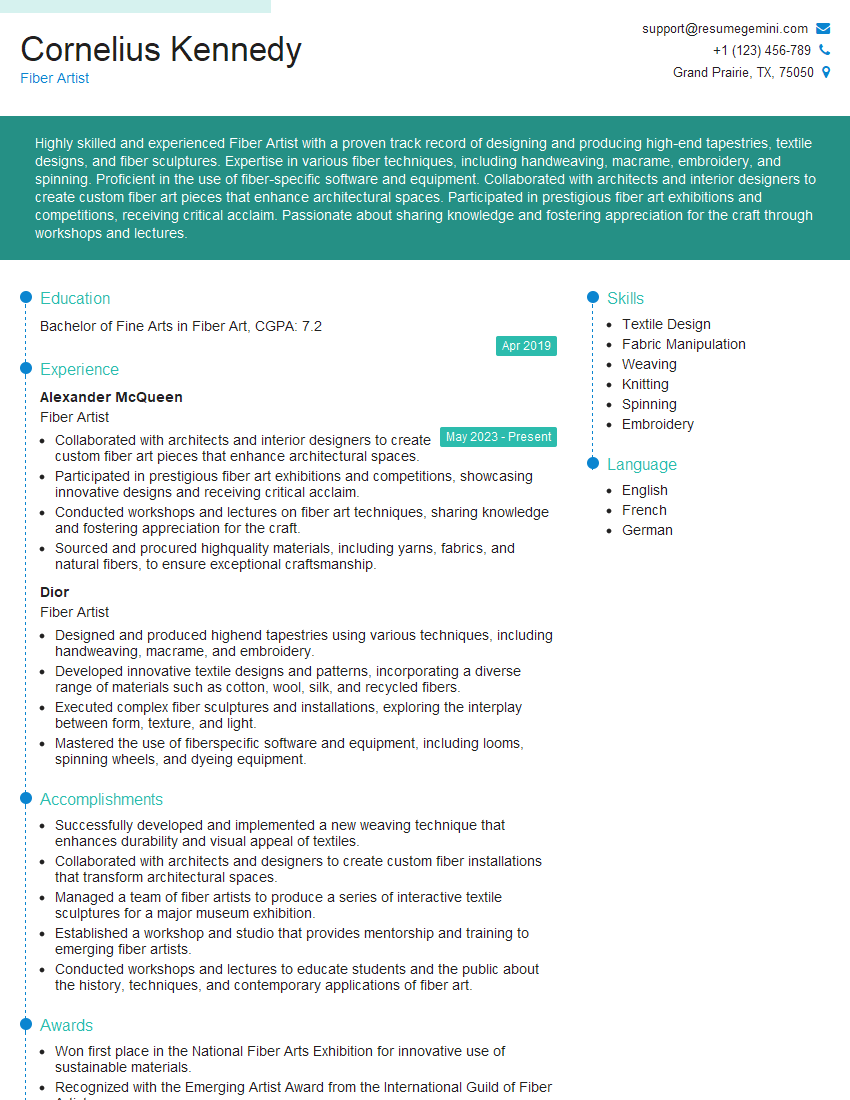
Mastering soft sculpture opens doors to exciting career opportunities in fields such as art, design, toy making, animation, and fashion. A strong portfolio is crucial, but so is a well-crafted resume that effectively showcases your skills and experience. Building an ATS-friendly resume is vital for getting your application noticed by recruiters. We highly recommend using ResumeGemini to create a professional and impactful resume that highlights your unique abilities in soft sculpture. ResumeGemini offers examples of resumes tailored specifically to this field, providing you with a valuable template to get started. Take the next step toward your dream career – build your best resume today!

Explore more articles
Users Rating of Our Blogs
Share Your Experience
We value your feedback! Please rate our content and share your thoughts (optional).
What Readers Say About Our Blog
Very informative content, great job.
good