Interviews are more than just a Q&A session—they’re a chance to prove your worth. This blog dives into essential Software Control interview questions and expert tips to help you align your answers with what hiring managers are looking for. Start preparing to shine!
Questions Asked in Software Control Interview
Q 1. Explain the difference between open-loop and closed-loop control systems.
The core difference between open-loop and closed-loop control systems lies in their feedback mechanisms. An open-loop system, also known as a feedforward system, operates without feedback. It simply executes a pre-determined sequence of actions based on the input signal, regardless of the actual output. Think of a toaster: you set the time, it runs for that duration, and there’s no check to see if the bread is actually toasted.
In contrast, a closed-loop system, or feedback control system, uses feedback to compare the actual output to the desired output (setpoint). This difference (the error) is then used to adjust the input signal, ensuring the system reaches and maintains the desired output. A thermostat is a great example: it measures the room temperature (output), compares it to the set temperature, and turns the heater on or off to maintain the desired temperature.
Open-loop systems are simpler and cheaper, but less accurate and robust to disturbances. Closed-loop systems are more complex and expensive, but significantly more accurate and resistant to external factors.
Q 2. Describe your experience with PID controllers. What are the tuning methods you’re familiar with?
I have extensive experience designing and implementing PID (Proportional-Integral-Derivative) controllers in various applications. PID controllers are ubiquitous in control systems because of their ability to effectively handle a wide range of control problems. They work by combining three control actions:
- Proportional (P): Responds to the current error. A larger error leads to a larger corrective action. This action is immediate but might result in persistent error (offset).
- Integral (I): Accumulates the error over time. This helps eliminate the steady-state error left by the proportional term.
- Derivative (D): Responds to the rate of change of the error. This action anticipates future error and helps dampen oscillations.
The effectiveness of a PID controller hinges on its tuning. I’m proficient in several tuning methods, including:
- Ziegler-Nichols method: A classic, empirical method that uses the system’s response to a step input to determine PID gains. It’s quick but can lead to oscillatory behavior if the model is inaccurate.
- Cohen-Coon method: Another empirical method, offering a more stable response compared to Ziegler-Nichols.
- Auto-tuning algorithms: These use iterative techniques to automatically find optimal PID gains. They require more computational resources but provide superior results.
- Manual tuning: This iterative method relies on observing the system response to adjustments of the P, I, and D gains. It’s time-consuming but allows for a deep understanding of the system’s dynamics.
In my previous role, I used auto-tuning to optimize the temperature control system in a chemical reactor, significantly improving the stability and consistency of the process. For simpler applications, I’ve successfully used Ziegler-Nichols and manual tuning.
Q 3. What are the advantages and disadvantages of using a PLC versus a microcontroller for a control application?
The choice between a PLC (Programmable Logic Controller) and a microcontroller for a control application depends heavily on the application’s requirements. PLCs are generally preferred for larger, industrial-scale applications, while microcontrollers are better suited for smaller, embedded systems.
PLCs offer:
- Robustness and reliability: Designed to withstand harsh industrial environments.
- Extensive I/O capabilities: Easily connect to a wide range of sensors and actuators.
- Safety features: Incorporate safety mechanisms to prevent hazards.
- Powerful programming environments and diagnostics tools.
Microcontrollers offer:
- Low cost and power consumption: Ideal for battery-powered or cost-sensitive applications.
- Compact size and form factor: Suitable for embedded systems.
- Greater programming flexibility, allowing more direct control over hardware.
Disadvantages: PLCs are typically more expensive and consume more power than microcontrollers. Microcontrollers might lack the robustness and safety features of PLCs for demanding industrial applications.
For example, I once chose a PLC to control a complex automated assembly line due to its robust I/O capabilities and safety certifications. In another project, a microcontroller was perfect for controlling a small, low-power sensor network because of its low cost and power consumption.
Q 4. Explain the concept of state machines in control systems.
State machines are a powerful modeling technique used in control systems to represent the system’s behavior as a sequence of discrete states. Each state represents a specific condition or mode of operation, and transitions between states are triggered by specific events or conditions. This allows for a structured and manageable design, especially in systems with complex logic or multiple operating modes.
A simple example would be a traffic light controller. The system could have three states: Green, Yellow, and Red. Transitions between states are timed events (e.g., after a set duration, Green changes to Yellow). More sophisticated state machines can have many states and intricate transitions based on sensor inputs or external commands.
Using state machines offers several benefits:
- Improved code clarity and maintainability: The system’s logic is neatly organized and easy to understand.
- Simplified debugging: Isolating and diagnosing errors is easier with a clear state model.
- Enhanced system reliability: State machines reduce the risk of unexpected behavior or race conditions.
In a recent project, I used a state machine to control a robotic arm, defining states for different actions (e.g., ‘moving to pick-up position,’ ‘grasping object,’ ‘moving to drop-off position’). This approach resulted in more organized and robust code.
Q 5. How do you handle real-time constraints in software control applications?
Handling real-time constraints in software control applications is crucial for ensuring the system’s responsiveness and safety. The core strategy involves careful consideration of both hardware and software aspects:
- Hardware selection: Choosing a processor with sufficient processing power and real-time capabilities (e.g., a real-time operating system (RTOS)).
- Real-time operating system (RTOS): Using an RTOS is crucial for deterministic timing. An RTOS manages tasks and resources to guarantee that deadlines are met.
- Optimized code: Employing techniques like minimizing interrupt latency, avoiding blocking operations, and using efficient data structures.
- Task scheduling: Carefully designing the task scheduler to prioritize critical tasks and minimize task switching overhead. Using techniques like Rate Monotonic Scheduling (RMS) or Earliest Deadline First (EDF).
- Interrupt handling: Efficiently handling interrupts to minimize latency in responding to external events.
- Testing and verification: Rigorous testing is necessary to ensure that all real-time deadlines are consistently met under various operating conditions. Methods such as Worst-Case Execution Time (WCET) analysis can help identify potential bottlenecks.
In a project involving a motor control system, I carefully selected an RTOS and employed optimized code to ensure the system responded to sensor inputs and control commands within the required time constraints. Failure to meet these constraints could have resulted in damage to the motor or the system.
Q 6. Describe your experience with different communication protocols used in industrial control systems (e.g., Modbus, Profibus, Ethernet/IP).
My experience encompasses several common industrial communication protocols. Each offers unique advantages and disadvantages depending on the application.
- Modbus: A widely used, simple, and robust serial communication protocol, particularly for smaller systems. It’s easy to implement and understand, making it ideal for simpler applications. However, it’s relatively slow compared to newer protocols.
- Profibus: A fieldbus protocol offering high speed and reliability. It’s suitable for complex industrial automation networks requiring fast data transfer and deterministic communication. However, it’s more complex to implement than Modbus.
- Ethernet/IP: An Ethernet-based industrial protocol offering high bandwidth and flexibility. It’s well-suited for large, complex networks and supports various industrial devices. It requires a more robust network infrastructure and is more complex than serial protocols.
In my previous role, I integrated PLCs using Modbus for simpler data acquisition tasks. For a more complex automation system, I implemented Ethernet/IP to manage high-speed communication between various devices on the factory floor. The selection of the protocol was determined by factors like bandwidth requirements, network size, and budget constraints.
Q 7. What is SCADA and how does it integrate with PLC systems?
SCADA (Supervisory Control and Data Acquisition) is a system used to monitor and control industrial processes. It provides a centralized overview of a wide range of equipment, allowing operators to supervise and manage complex processes from a single location. A SCADA system typically consists of several components, including:
- Human-Machine Interface (HMI): Provides operators with a visual interface to monitor and control the process.
- Supervisory software: Collects data from PLCs and other devices, performs calculations, and manages alarms.
- Communication network: Connects the SCADA system to PLCs and other field devices.
- PLCs and RTUs (Remote Terminal Units): Perform local control and data acquisition.
SCADA systems integrate with PLC systems through communication protocols like Modbus, Profibus, or Ethernet/IP. PLCs act as the primary interface between the SCADA system and the field devices, collecting data from sensors and actuators and sending it to the SCADA system. The SCADA system then processes this data, generates reports, and provides operators with a comprehensive overview of the process.
For instance, in a water treatment plant, a SCADA system might monitor parameters like water level, pH, and flow rate, controlled by PLCs that manage individual pumps and valves. The SCADA system provides a visual representation of the plant’s status and allows operators to remotely control various aspects of the process, enhancing efficiency and safety.
Q 8. Explain the importance of safety considerations in designing control systems.
Safety is paramount in control system design because these systems often manage critical processes with potentially hazardous consequences. A malfunction could lead to anything from minor inconvenience to catastrophic failure. We prioritize safety through several key strategies:
- Redundancy: Implementing backup systems and components to ensure continued operation even if one part fails. For instance, a critical motor might have a secondary motor ready to take over.
- Fail-safe mechanisms: Designing systems to default to a safe state in case of failure. This could involve an emergency stop mechanism or a system that automatically shuts down if a sensor detects an anomaly.
- Robust error handling: Implementing comprehensive error detection and recovery mechanisms to prevent cascading failures. This involves checks at every stage of the control process to ensure variables are within safe limits.
- Rigorous testing and validation: Performing extensive testing, including simulations and real-world trials, to identify and mitigate potential safety hazards. This is crucial before deployment, especially in high-risk applications.
- Adherence to safety standards: Following industry safety standards (like IEC 61508 for functional safety) to ensure compliance and best practices.
For example, in an automated manufacturing plant, a safety system might stop the robotic arm immediately if it detects a human worker entering its operational zone, preventing potential injury.
Q 9. How do you debug a malfunctioning control system?
Debugging a malfunctioning control system is a systematic process. It involves a blend of technical skills, logical reasoning, and the ability to interpret data. My approach typically includes:
- Identify the symptoms: What exactly is going wrong? Is the system behaving erratically? Are there specific errors being reported?
- Gather data: Use monitoring tools, logs, and sensor readings to understand the system’s behavior before, during, and after the malfunction. This data is vital to pinpoint the root cause.
- Isolate the problem: Systematically rule out potential causes. Check hardware components like sensors, actuators, and communication networks. Examine the software for bugs, logical errors, or incorrect parameter settings.
- Use debugging tools: Employ software debuggers, logic analyzers, or oscilloscopes to trace the flow of execution and identify problematic code sections or hardware signals.
- Simulate the problem: Create a simplified model of the system to replicate the malfunction and test potential solutions. This helps avoid affecting the real system during the debugging phase.
- Implement and test solutions: Once the root cause is identified, implement the necessary fixes. Test thoroughly to ensure the issue is resolved and that no new problems have been introduced.
For instance, if a robotic arm is not moving correctly, I would first check the motor power, sensor readings, and communication links. Then, I might use a debugger to step through the control software to identify any errors in the motion control algorithms.
Q 10. What are your experiences with different programming languages used in control systems (e.g., Ladder Logic, C, C++)?
My experience spans several programming languages commonly used in control systems:
- Ladder Logic (LD): I have extensive experience with LD, particularly in Programmable Logic Controllers (PLCs). It’s highly intuitive for representing logic and control flow, especially in industrial automation. I’ve used it to develop programs for various applications, including conveyor systems, robotic control, and process monitoring.
- C/C++: I’m proficient in C and C++, which are essential for developing more complex control algorithms and real-time applications. Their efficiency and low-level access are crucial for high-performance control systems. I’ve utilized these languages for tasks like designing embedded controllers, developing PID controllers, and creating real-time data acquisition systems.
The choice of language often depends on the specific application. PLCs are best suited for LD, while complex algorithms and resource-constrained environments often benefit from the efficiency and control offered by C/C++.
Q 11. Describe your experience with control system design methodologies (e.g., waterfall, agile).
I’ve worked with both waterfall and agile methodologies in control system design. The choice often depends on the project’s size, complexity, and the client’s requirements:
- Waterfall: In larger, well-defined projects with stable requirements, the waterfall methodology can be efficient. Its sequential nature allows for detailed planning and documentation. I’ve used this approach for projects with stringent safety regulations where thorough upfront planning is essential.
- Agile: For smaller, more flexible projects where requirements might evolve, agile methodologies offer greater adaptability. Its iterative nature allows for quicker feedback and adjustments based on ongoing testing and client input. I’ve successfully implemented agile in projects involving rapid prototyping and iterative refinements of control algorithms.
In practice, a hybrid approach combining elements of both methodologies can often be the most effective, leveraging the strengths of each.
Q 12. Explain the concept of feedback control and its role in maintaining system stability.
Feedback control is a cornerstone of control systems. It involves continuously measuring the system’s output and comparing it to the desired setpoint. Any difference between the actual output and the desired output (the error) is used to adjust the system’s input, aiming to minimize the error and maintain stability.
Imagine a thermostat controlling room temperature: The setpoint is the desired temperature, the sensor measures the actual temperature, and the heater’s power is adjusted based on the difference. If the room is colder than the setpoint, the heater turns on; if it’s warmer, it turns off. This continuous feedback loop helps maintain the desired temperature.
Feedback control is crucial for stability because it continuously corrects deviations from the setpoint. Without feedback, even small disturbances could lead to significant errors and potentially unstable behavior. Different control algorithms (e.g., Proportional-Integral-Derivative or PID control) are used to achieve different levels of responsiveness and stability.
Q 13. What are the different types of sensors used in control systems and their applications?
A wide variety of sensors are used in control systems, each suited for specific tasks:
- Temperature sensors (thermocouples, RTDs, thermistors): Measure temperature in various applications, from industrial ovens to climate control systems.
- Pressure sensors: Detect pressure changes in hydraulic systems, pneumatic systems, and process control applications.
- Flow sensors: Measure the flow rate of liquids or gases, used in pipelines, chemical processes, and water management systems.
- Level sensors: Monitor liquid levels in tanks and reservoirs, critical for inventory control and preventing overflows.
- Position sensors (potentiometers, encoders, LVDTs): Determine the position or displacement of mechanical components, essential for robotic control, motor positioning, and machine automation.
- Proximity sensors (inductive, capacitive, ultrasonic): Detect the presence or absence of objects without physical contact, used in safety systems, robotic sensing, and automation.
The choice of sensor depends on factors such as the required accuracy, range, environmental conditions, and cost.
Q 14. How do you ensure the reliability and maintainability of a control system?
Reliability and maintainability are critical for control systems. Several strategies enhance these aspects:
- Modular design: Breaking down the system into smaller, independent modules simplifies maintenance and replacement. If one module fails, the others continue operating.
- Self-diagnostic capabilities: Incorporating self-testing routines and error detection mechanisms allows for early identification of potential problems.
- Easy access for maintenance: Designing the system for ease of access to components for inspection, repair, and replacement.
- Standardized components: Using readily available and well-documented components simplifies maintenance and reduces reliance on specialized expertise.
- Comprehensive documentation: Maintaining detailed documentation of the system’s architecture, operation, and maintenance procedures.
- Regular maintenance schedules: Implementing a preventative maintenance program to identify and address potential issues before they lead to failures.
For example, using readily available PLC modules allows for easier replacement if one fails. Regular software updates address potential bugs and vulnerabilities. Comprehensive documentation enables engineers to quickly understand the system and troubleshoot issues. This approach significantly reduces downtime and keeps the system running smoothly.
Q 15. Describe your experience with simulation and modeling tools for control systems.
Simulation and modeling are crucial for designing and testing control systems before real-world implementation. My experience encompasses a range of tools, including MATLAB/Simulink, which I’ve used extensively for building detailed models of dynamic systems. I’ve also worked with specialized packages like AMESim for fluid power systems and Python-based tools for more customized simulations. For example, in a recent project involving a robotic arm, I used Simulink to model the arm’s dynamics, including inertia, friction, and motor characteristics. This allowed us to fine-tune the control algorithms virtually before deploying them on the physical robot, significantly reducing development time and risk.
Beyond specific software, I’m proficient in various modeling techniques, such as state-space representation, transfer functions, and block diagrams. I understand the importance of model validation and verification, ensuring the simulation accurately reflects the real-world system’s behavior. This often involves comparing simulation results with experimental data and iteratively refining the model to improve accuracy.
Career Expert Tips:
- Ace those interviews! Prepare effectively by reviewing the Top 50 Most Common Interview Questions on ResumeGemini.
- Navigate your job search with confidence! Explore a wide range of Career Tips on ResumeGemini. Learn about common challenges and recommendations to overcome them.
- Craft the perfect resume! Master the Art of Resume Writing with ResumeGemini’s guide. Showcase your unique qualifications and achievements effectively.
- Don’t miss out on holiday savings! Build your dream resume with ResumeGemini’s ATS optimized templates.
Q 16. What are the challenges you’ve faced in implementing control systems in real-world applications?
Implementing control systems in real-world applications presents unique challenges. One common issue is dealing with model uncertainties. Real-world systems are rarely perfectly represented by mathematical models; factors like noise, unmodeled dynamics, and environmental disturbances can significantly impact performance. For instance, in a temperature control system for a chemical reactor, variations in ambient temperature or unexpected heat generation can lead to deviations from the setpoint. We addressed this in a past project by incorporating robust control techniques and adaptive control algorithms to compensate for these uncertainties.
Another challenge is dealing with hardware limitations. Actuators may have limited speed, precision, or power, while sensors can be noisy or have limited bandwidth. This necessitates careful consideration of the hardware’s capabilities during the design phase, often involving compromises and trade-offs between performance and cost. For example, we once had to select a less precise actuator to meet budgetary constraints, requiring a more sophisticated control algorithm to achieve the desired accuracy.
Finally, safety and reliability are paramount. Control systems, especially those in critical applications, must be designed to prevent accidents and ensure fail-safe operation. This involves implementing redundancy, fault detection, and safety protocols, often requiring adherence to strict industry standards and certifications.
Q 17. How do you approach the design of a control system for a specific application?
Designing a control system follows a systematic approach. It starts with clearly defining the application’s requirements and specifications, including performance goals (e.g., accuracy, speed, stability), constraints (e.g., cost, size, power consumption), and safety requirements. I use a structured design methodology that includes:
- System Modeling: Developing a mathematical model of the system to be controlled, considering its dynamics and interactions with the environment.
- Controller Design: Selecting an appropriate control strategy (e.g., PID, model predictive control) based on the system’s characteristics and requirements. This often involves using simulation tools to evaluate different controller designs.
- Implementation: Translating the design into code and integrating it with the hardware (sensors, actuators, microcontroller/PLC).
- Testing and Validation: Rigorously testing the implemented system, both in simulation and on the physical system, to verify that it meets the specifications and is safe and reliable.
- Commissioning and Tuning: Fine-tuning the controller parameters on the actual system to optimize performance.
This iterative process often involves revisiting earlier stages as new information is gathered or requirements evolve. For example, during testing, we might discover unanticipated dynamic behavior that requires modifications to the controller design or system model.
Q 18. What is your experience with data acquisition and logging in control systems?
Data acquisition and logging are essential for monitoring, analyzing, and improving control system performance. My experience involves using various hardware and software tools to acquire data from sensors and log it for later analysis. I’m proficient in using data acquisition (DAQ) cards and software packages like LabVIEW and Python libraries such as PyVISA to interface with various sensors and actuators. The data is typically logged in structured formats such as CSV or HDF5 for efficient storage and retrieval.
In one project involving a wind turbine control system, we used a DAQ system to collect data on wind speed, turbine rotational speed, and power output. This data was then used to analyze system performance, identify areas for improvement, and validate the control algorithms. Proper timestamping and metadata management are crucial to ensure data integrity and traceability.
Beyond basic data logging, I have experience with implementing data visualization dashboards, providing real-time monitoring and diagnostics of the control system’s behavior. This often involves using tools like Grafana or customized Python scripts to create informative dashboards tailored to the application’s needs.
Q 19. Explain your understanding of control system architectures and topologies.
Control system architectures and topologies refer to the arrangement and interconnections of various components within a control system. Common architectures include centralized, decentralized, and distributed control systems. In a centralized system, a single controller manages all aspects of the process. This approach is simple but can be vulnerable to single points of failure. A decentralized system uses multiple independent controllers, each managing a portion of the system. This improves robustness but increases complexity. Distributed systems combine elements of both, using a network to connect multiple controllers, allowing for coordinated control and efficient resource allocation.
The choice of topology depends on the application’s requirements and constraints. For example, a large industrial plant might use a distributed architecture with multiple PLCs (Programmable Logic Controllers) interconnected via a fieldbus network, allowing for modularity and scalability. A simpler application like a robotic arm might employ a centralized architecture with a single microcontroller.
My experience encompasses designing and implementing control systems using various topologies and communication protocols, such as Profibus, Ethernet/IP, and Modbus. Understanding the trade-offs between different architectures and protocols is critical for designing efficient, robust, and scalable control systems.
Q 20. How do you manage software version control in a control system development project?
Software version control is fundamental in control system development. We consistently use Git for managing code, configurations, and documentation throughout the project lifecycle. This ensures traceability, facilitates collaboration among team members, and allows for easy rollback to previous versions if needed. We typically establish a well-defined branching strategy, often employing feature branches for development and pull requests for code integration. This minimizes the risk of conflicts and ensures code quality through code reviews before merging into the main branch.
Beyond the code itself, we use Git to version control configuration files, such as those defining controller parameters, sensor calibrations, and communication settings. This is crucial for maintaining consistency and reproducibility across different deployments. We also incorporate automated testing and continuous integration (CI) into our workflow, which automatically builds, tests, and integrates changes, providing early detection of potential problems.
Proper documentation, including commit messages and release notes, is integral to maintain a clear history of changes and facilitate future maintenance and updates. Our processes adhere to best practices for software development, minimizing errors and improving the overall quality and reliability of the control system.
Q 21. What are your experience with different types of actuators and their selection criteria?
Actuators are the muscles of a control system, converting control signals into physical actions. My experience includes working with a variety of actuators, including electric motors (DC, AC servo, stepper), hydraulic and pneumatic cylinders, and solenoids. The selection of an actuator depends on various factors, including:
- Force/Torque Requirements: How much force or torque is needed to perform the desired action?
- Speed and Precision: What is the required speed and accuracy of movement?
- Power Consumption: How much energy will the actuator consume?
- Environmental Considerations: Will the actuator operate in extreme temperatures, humidity, or other harsh conditions?
- Cost and Maintenance: What is the cost of the actuator and its maintenance requirements?
- Safety: Are there any safety considerations related to the actuator’s operation?
For example, in a robotics application requiring high precision and speed, we might choose servo motors. However, for a simple on/off control application, a solenoid might suffice. A thorough understanding of each actuator’s characteristics and limitations is essential for making informed design decisions that balance performance, cost, and safety.
Q 22. Explain your knowledge of control system performance metrics (e.g., rise time, settling time, overshoot).
Control system performance metrics quantify how well a system responds to changes in its input. Think of it like judging a race car – you wouldn’t just say it’s ‘fast’; you’d measure its acceleration, how quickly it reaches top speed, and how smoothly it stops. Similarly, we use specific metrics for control systems.
- Rise Time: The time it takes for the system’s output to go from a specified lower percentage (e.g., 10%) to a specified upper percentage (e.g., 90%) of its final value. A shorter rise time indicates a faster response. Imagine a thermostat – a faster rise time means the room heats up quickly.
- Settling Time: The time it takes for the system’s output to settle within a certain percentage (e.g., 2%) of its final value after a change in input. A shorter settling time means less oscillation and faster stability. Think of a self-driving car maintaining a constant speed – a shorter settling time means less jerky adjustments.
- Overshoot: The amount by which the system’s output exceeds its final value before settling. Lower overshoot is desirable as it indicates less instability. Imagine a robot arm picking up an object – excessive overshoot could cause it to crash into something.
- Steady-State Error: The difference between the desired output and the actual output after the system has settled. A zero steady-state error is ideal, indicating perfect accuracy. This is like a temperature controller consistently maintaining the desired temperature without deviation.
These metrics are crucial in designing and tuning controllers to achieve the desired performance. For example, in a robotic arm application, a fast rise time might be prioritized, while in a chemical process, minimizing overshoot to prevent dangerous reactions might be paramount.
Q 23. How do you handle system failures and implement fault tolerance in control systems?
Handling system failures and implementing fault tolerance is crucial for reliable control systems. My approach involves a multi-layered strategy.
- Redundancy: Employing redundant components (e.g., sensors, actuators, processors) to provide backup in case of failure. If one sensor fails, another immediately takes over, preventing system downtime. This is common in aircraft control systems.
- Fail-safe Mechanisms: Designing the system so that in case of failure, it defaults to a safe state. This might involve shutting down the system, going to a pre-defined safe operating point, or switching to a backup control mode. Think of emergency brakes on a train.
- Fault Detection and Diagnosis: Implementing algorithms and procedures to detect anomalies and diagnose the cause of failures. This often involves monitoring system parameters and using analytical techniques to identify potential issues before they cause major problems. This is similar to a car’s diagnostic system identifying a malfunctioning sensor.
- Self-Healing Systems: Designing systems that can automatically adapt to failures and reconfigure themselves to maintain functionality. This requires advanced techniques like adaptive control and self-organizing systems. This is found in advanced networking technologies that can reroute traffic automatically after a link failure.
The specific approach depends on the criticality of the system and the potential consequences of failure. For a critical system like a nuclear power plant, the emphasis would be on high redundancy and fail-safe mechanisms.
Q 24. Describe your experience with different types of industrial networks.
I have experience with several types of industrial networks, each with its strengths and weaknesses.
- PROFIBUS: A fieldbus used extensively in process automation. It’s known for its reliability and robustness in harsh industrial environments. I’ve worked on projects integrating PROFIBUS with programmable logic controllers (PLCs).
- Profinet: An Ethernet-based industrial network that offers high bandwidth and flexibility. It’s well-suited for applications requiring high data throughput, such as advanced robotics and machine vision. I’ve used Profinet in projects involving high-speed data acquisition and control.
- EtherCAT: A high-performance Ethernet network used for real-time control applications. Its deterministic nature makes it suitable for applications requiring precise synchronization, such as motion control systems. I’ve implemented EtherCAT in robotic control systems.
- Modbus: A widely used serial communication protocol. It’s simple and widely supported but can be less efficient than Ethernet-based networks. I’ve used Modbus in legacy systems and for integrating simpler devices.
Choosing the right network is crucial and depends on factors like speed requirements, network topology, and the specific devices being connected. For example, a high-speed robotic arm would benefit from EtherCAT, while a simple monitoring system might use Modbus.
Q 25. How do you validate and verify the functionality of a control system?
Validation and verification are distinct but equally important processes for ensuring the correctness and reliability of a control system.
- Verification: This involves checking that the system is built correctly. Are the components correctly installed and wired? Does the software code accurately reflect the design specifications? Techniques include code reviews, simulations, and unit testing.
- Validation: This involves checking that the system meets its intended purpose. Does the system achieve the required performance metrics? Does it behave as expected under various operating conditions? Techniques include factory acceptance testing (FAT), site acceptance testing (SAT), and field testing.
A rigorous approach often follows a V-model, with verification activities (unit testing, integration testing) paralleling the design phases, culminating in validation activities (system testing, user acceptance testing) at the end. A practical example would be testing a robotic arm’s ability to pick and place objects within specified tolerances. Verification would ensure the motors, sensors, and control software function correctly. Validation would confirm that the arm achieves the required accuracy and speed.
Q 26. What are your experiences with cybersecurity in industrial control systems?
Cybersecurity in industrial control systems (ICS) is paramount, as attacks can have devastating consequences. My experience covers several key areas:
- Network Segmentation: Isolating different parts of the ICS network to limit the impact of a breach. This involves using firewalls and VLANs to prevent unauthorized access.
- Access Control: Implementing strong authentication and authorization mechanisms to restrict access to sensitive system components. This includes using strong passwords, multi-factor authentication, and role-based access control.
- Intrusion Detection and Prevention: Employing security information and event management (SIEM) systems and intrusion detection systems (IDS) to monitor network traffic and detect malicious activity. This involves analyzing logs and network packets for suspicious patterns.
- Regular Security Audits and Updates: Conducting regular security assessments to identify vulnerabilities and implementing timely software and firmware updates to patch known weaknesses.
- Secure Programming Practices: Developing secure code by following secure coding guidelines and using appropriate security libraries and frameworks. This prevents vulnerabilities like buffer overflows and SQL injections.
I understand the importance of adhering to industry standards like NIST Cybersecurity Framework and ISA/IEC 62443 to ensure the security and resilience of ICS environments.
Q 27. Explain your understanding of different control algorithms (e.g., predictive control, model-predictive control).
Control algorithms are the brain of a control system, dictating how the system responds to its environment. I have experience with several types.
- PID Control: A widely used algorithm that adjusts the control output based on proportional, integral, and derivative error terms. It’s simple to implement but may struggle with complex systems or those with significant non-linearities. I’ve used PID control extensively in temperature and motor speed control.
- Predictive Control: This algorithm predicts the future behavior of the system based on a model and adjusts the control actions accordingly. It’s particularly useful for systems with significant delays or non-linearities. This is often used in process control applications where precise control is needed over long periods.
- Model Predictive Control (MPC): An advanced form of predictive control that uses an explicit model of the system to optimize the control actions over a prediction horizon. It’s capable of handling constraints and multiple inputs and outputs, making it suitable for complex systems. I’ve used MPC in optimizing the operation of large-scale industrial processes.
The choice of algorithm depends heavily on the system’s characteristics and the desired performance. For simple systems, a PID controller might suffice, while complex systems might benefit from the advanced capabilities of MPC.
Q 28. Describe your experience with testing and commissioning control systems.
Testing and commissioning are crucial final steps in deploying a control system. My experience includes:
- Factory Acceptance Test (FAT): Testing the system in the vendor’s facility to verify functionality and performance before shipping to the customer. This is where basic functionality is checked, and critical parameters are validated.
- Site Acceptance Test (SAT): Testing the system at the customer’s site to ensure seamless integration with existing infrastructure and processes. This involves checking the system’s compatibility with the plant environment.
- Commissioning: The process of configuring and starting up the control system, ensuring that it operates as intended in the field. This involves testing under normal and abnormal operating conditions.
- Loop Tuning: Fine-tuning the control algorithms to optimize the system’s performance. This involves adjusting parameters to achieve desired responsiveness, stability, and accuracy.
These steps often involve close collaboration with other engineering disciplines like instrumentation and electrical engineering. A thorough testing and commissioning process is critical for preventing costly delays and ensuring the safe and reliable operation of the control system. I’ve been involved in many such testing and commissioning phases for various industrial control systems, ranging from simple HVAC systems to complex robotic manufacturing lines.
Key Topics to Learn for Software Control Interview
- Real-time Systems: Understanding the principles of real-time operating systems (RTOS) and their application in software control systems. Practical application includes analyzing timing constraints and scheduling algorithms.
- Embedded Systems: Familiarity with the architecture and programming of embedded systems, including hardware-software interaction and resource management. Consider exploring case studies involving sensor integration and actuator control.
- Control Algorithms: A solid grasp of fundamental control algorithms like PID controllers, state-space methods, and model predictive control (MPC). Practical applications involve designing controllers for robotic systems or industrial processes.
- System Modeling and Simulation: Proficiency in modeling dynamic systems using tools like MATLAB/Simulink. Practical applications include simulating controller performance and identifying potential issues before implementation.
- Software Development Methodologies: Understanding Agile development, version control (Git), and testing methodologies crucial for collaborative software control projects. Practical applications include participating in code reviews and implementing unit tests.
- Troubleshooting and Debugging: Developing skills in identifying and resolving software and hardware issues in real-time systems. Consider exploring common debugging techniques and tools used in embedded systems.
- Communication Protocols: Familiarity with industrial communication protocols like CAN, Modbus, or Ethernet/IP. Practical applications include integrating different components within a control system.
Next Steps
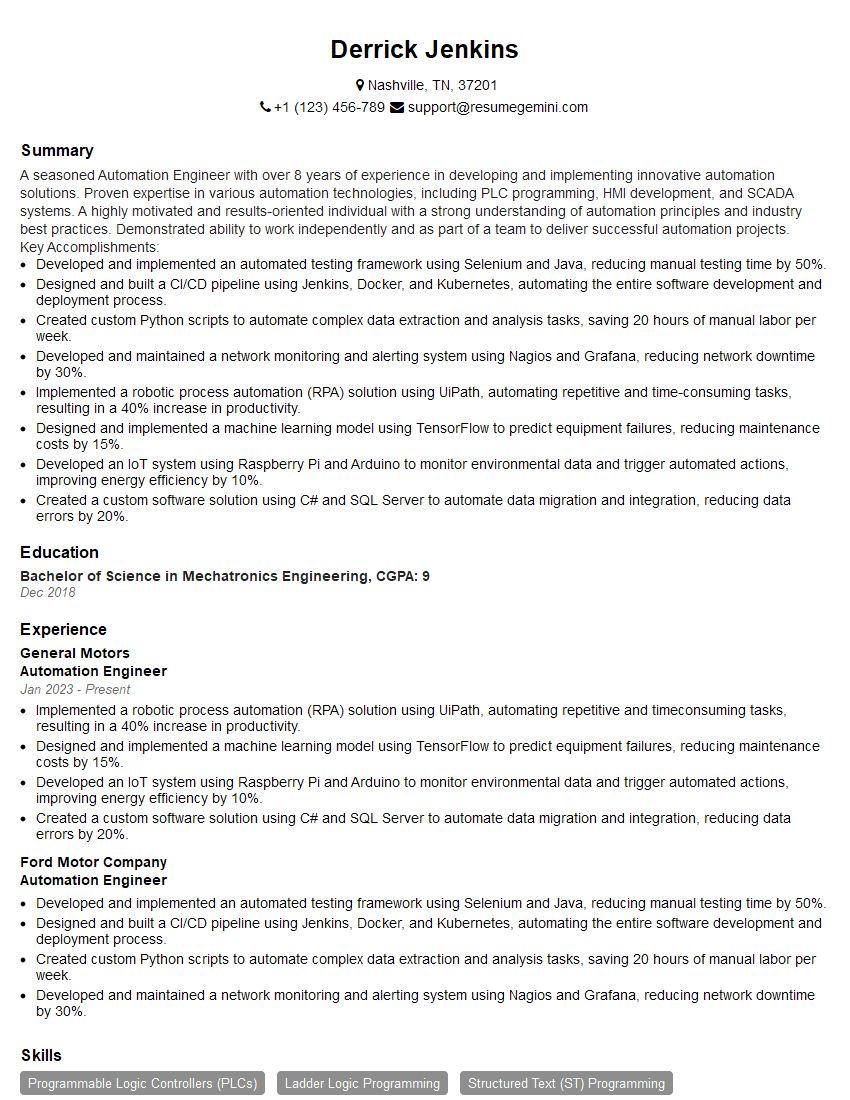
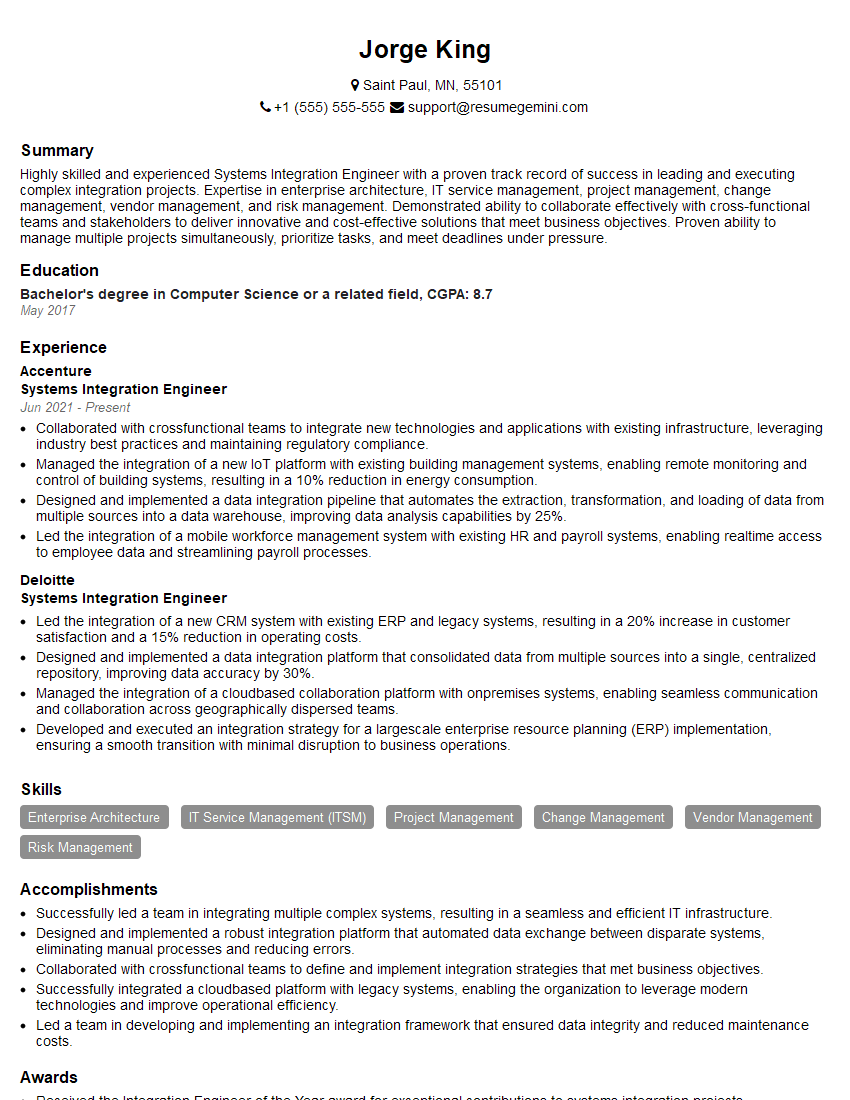
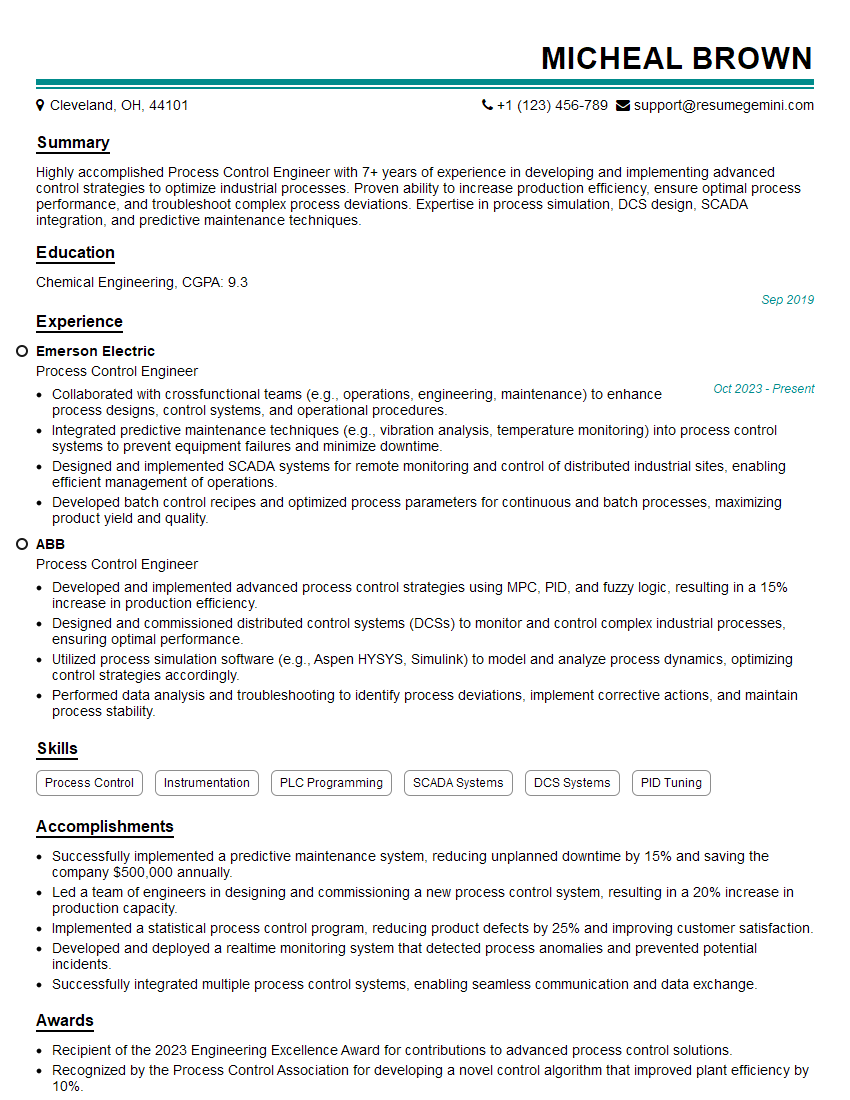
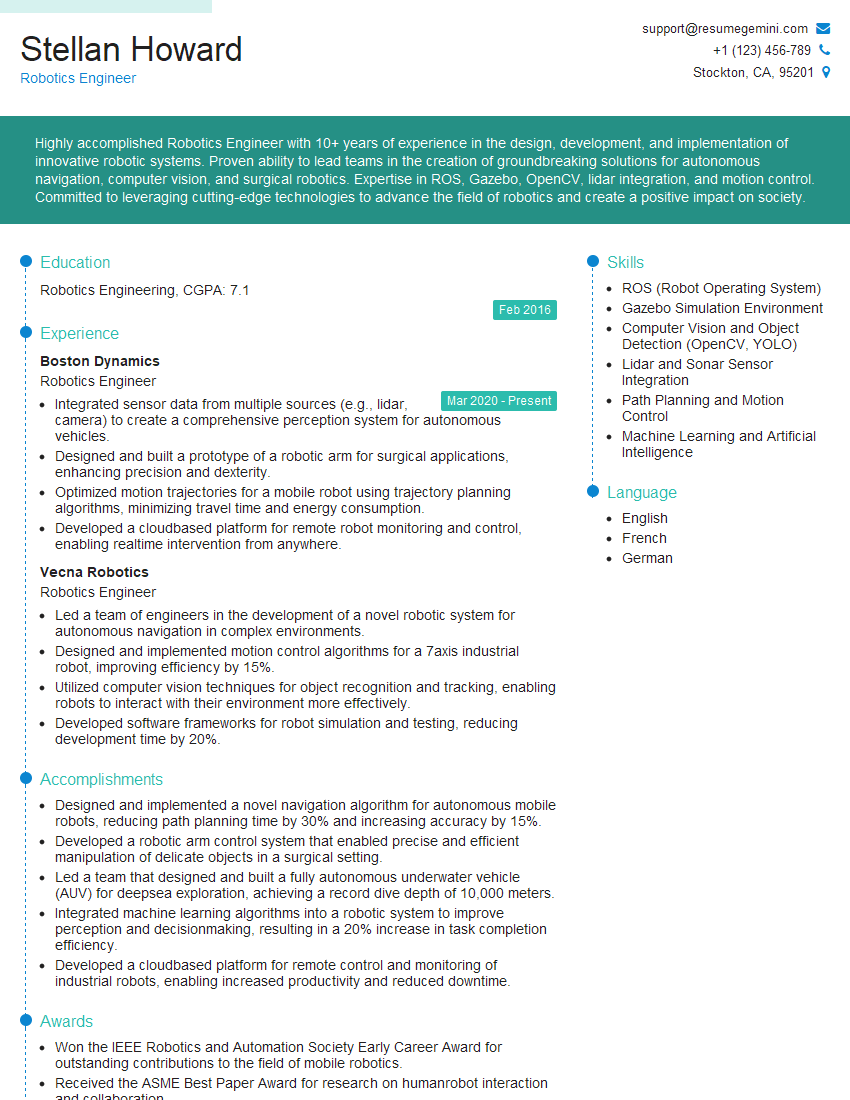
Mastering Software Control opens doors to exciting and challenging careers in automation, robotics, aerospace, and many more high-growth industries. To maximize your job prospects, crafting an ATS-friendly resume is essential. This ensures your qualifications are effectively communicated to hiring managers and Applicant Tracking Systems. ResumeGemini is a trusted resource to help you build a professional and impactful resume tailored to the specific requirements of Software Control roles. Examples of resumes optimized for Software Control positions are available to guide you through the process.
Explore more articles
Users Rating of Our Blogs
Share Your Experience
We value your feedback! Please rate our content and share your thoughts (optional).
What Readers Say About Our Blog
Very informative content, great job.
good