Every successful interview starts with knowing what to expect. In this blog, we’ll take you through the top Solar Prospector interview questions, breaking them down with expert tips to help you deliver impactful answers. Step into your next interview fully prepared and ready to succeed.
Questions Asked in Solar Prospector Interview
Q 1. Explain your understanding of Solar Prospector’s functionalities.
Solar Prospector is a powerful software platform designed to streamline the solar project development process. Its functionalities encompass everything from initial site assessment and suitability analysis to detailed financial modeling and sales lead generation. Think of it as a one-stop shop for solar professionals, handling the heavy lifting of data analysis and visualization.
- Site Assessment: It uses GIS data and satellite imagery to evaluate a location’s suitability for solar power, considering factors like shading, roof orientation, and available area.
- Performance Modeling: Solar Prospector simulates the energy production of a proposed solar system, factoring in weather patterns, panel efficiency, and system design.
- Financial Modeling: It helps create detailed financial projections, including system costs, energy savings, and potential return on investment (ROI).
- Sales Lead Generation: The platform can identify potential customers based on criteria like roof type, energy consumption, and geographic location.
- Report Generation: Solar Prospector automates the creation of professional-looking reports for clients and stakeholders.
Essentially, Solar Prospector helps solar companies save time, reduce costs, and improve the accuracy of their solar project proposals.
Q 2. How would you use Solar Prospector to identify ideal solar panel locations?
Identifying ideal solar panel locations with Solar Prospector involves a multi-step process. First, I’d import the necessary geographical data, such as aerial imagery and property boundaries. Then, I’d leverage the platform’s tools to analyze shading, roof orientation, and available space.
For example, I might use the shading analysis tool to identify areas of the roof that are consistently in the shade throughout the day. This information would help me determine the best locations for solar panels to maximize energy generation. Similarly, I would analyze the roof orientation to ensure panels are optimally positioned towards the sun. The software’s built-in tools facilitate this. The process is highly visual, often allowing me to overlay shading analysis directly onto the aerial imagery of the property. This allows for intuitive decision-making and efficient selection of optimal locations.
Finally, I’d consider other factors such as roof material, structural integrity, and access for installation. I’d only consider areas where the shading is minimal and the orientation is favorable, ensuring maximum system efficiency and client satisfaction.
Q 3. Describe your experience with Solar Prospector’s data analysis tools.
My experience with Solar Prospector’s data analysis tools has been extremely positive. The platform provides a user-friendly interface for processing large datasets and visualizing complex information. I regularly use its features to generate insightful reports, including:
- Shading analysis reports: These reports highlight areas of the roof impacted by shading, aiding in optimal panel placement.
- Energy production reports: These forecasts annual and monthly energy production based on location, system size, and weather patterns.
- Financial analysis reports: These reports project system costs, payback periods, and ROI, crucial for client presentations.
The ability to quickly and easily export data in various formats, such as CSV and PDF, is also incredibly valuable for sharing reports and incorporating findings into other documents. The reporting features are particularly crucial for generating professional and well-structured presentations for clients, showing a clear pathway to successful project completion.
Q 4. What are the key factors you consider when evaluating a potential solar project site using Solar Prospector?
When evaluating a potential solar project site using Solar Prospector, several key factors are crucial:
- Available Roof Area: Sufficient roof space is necessary to accommodate the solar panels and achieve the desired energy production.
- Roof Orientation and Angle: South-facing roofs generally produce the most energy; however, the software accounts for variations in latitude.
- Shading: Trees, buildings, or other obstructions can significantly reduce energy generation. Solar Prospector’s shading analysis is critical here.
- Energy Consumption: Understanding the client’s electricity usage helps determine the appropriate system size.
- Local Climate and Weather: Weather patterns directly impact solar energy production. The software uses local weather data for its calculations.
- Building Codes and Regulations: Compliance with local regulations is essential for project approval. This may influence site selection and system design.
- Accessibility: Easy access for installation is key for efficient and cost-effective implementation.
By meticulously evaluating these factors, I can ensure the selection of a site that maximizes energy production, minimizes costs, and satisfies client needs.
Q 5. How do you utilize Solar Prospector to generate sales leads?
Solar Prospector is a valuable tool for generating sales leads. I use it to identify potential customers who meet specific criteria, such as high energy consumption, suitable roof characteristics, and geographical location. The platform’s ability to filter properties based on these characteristics allows for targeted outreach.
For instance, I can filter for properties with south-facing roofs larger than a certain square footage and located within a specific radius. This allows me to focus my efforts on prospects highly likely to be suitable for solar installation. Following identification, I then use the generated data to develop tailored proposals, focusing on the individualized potential energy savings and ROI, increasing conversion rates significantly. This targeted approach allows for efficient lead qualification, saving valuable time and resources.
Q 6. Explain your process for importing and managing data within Solar Prospector.
Importing and managing data within Solar Prospector is straightforward. The platform supports various data formats, including shapefiles, KML files, and CAD drawings. I typically start by importing geographical data, such as aerial imagery and property boundary information, from GIS sources. It’s a simple drag-and-drop process for most file types.
Once the data is imported, I can easily manage and manipulate it using the platform’s intuitive tools. For example, I can overlay different data layers to analyze shading, roof orientation, and other relevant factors. The software also allows for annotation and custom data input. The ability to visually check the data quality before analysis is a big advantage. Data management is critical for accuracy and ensures the reliability of the project analysis.
Q 7. How do you interpret the shading analysis results generated by Solar Prospector?
Interpreting shading analysis results in Solar Prospector is crucial for optimal solar panel placement. The platform visually represents shading patterns on the roof, often using color-coding to illustrate the degree and duration of shading throughout the day. Darker colors typically indicate more significant shading.
For example, areas shaded for most of the day are unsuitable for panel placement, as they won’t generate significant energy. Conversely, areas with minimal shading are ideal. I usually analyze the results in conjunction with roof orientation data to pinpoint optimal locations that maximize sun exposure. This detailed shading analysis ensures that only areas with significant direct sunlight are utilized for panels, maximizing return on investment for my clients.
Q 8. Describe a situation where you had to troubleshoot a problem in Solar Prospector.
One time, I encountered an issue where Solar Prospector wasn’t accurately calculating the potential energy production for a specific project. The system was pulling incorrect shading data. This resulted in inaccurate financial projections, which could have significantly impacted the sales pitch.
My troubleshooting involved several steps. First, I carefully reviewed the imported site survey data to ensure the coordinates and building information were correctly input. I then checked the satellite imagery overlay within Solar Prospector to visually verify the shading information. It turned out there was a discrepancy between the survey data and the actual physical obstructions on the satellite imagery. I corrected the shading data in Solar Prospector by manually adjusting the obstruction parameters, cross-referencing with Google Earth to ensure accuracy. Once the corrected data was used, the energy production and financial projections were updated, resolving the issue.
This experience highlighted the importance of rigorous data verification and the need to visually cross-reference automated data within Solar Prospector with real-world observations.
Q 9. How familiar are you with integrating Solar Prospector with other CRM systems?
I’m highly familiar with integrating Solar Prospector with various CRM systems. My experience includes integrating it with Salesforce, HubSpot, and Zoho CRM. The process typically involves using APIs (Application Programming Interfaces) or data export/import functionalities. For example, with Salesforce, we can typically use custom objects to store Solar Prospector’s project data, such as energy production estimates and financial analysis, and then link this data to Salesforce’s lead and opportunity records.
The key is to map the relevant fields between Solar Prospector and the chosen CRM. For instance, the project address in Solar Prospector might map to the address field in Salesforce, and the projected annual energy output could map to a custom field on the Salesforce Opportunity object. This integration streamlines the sales process, enabling seamless data flow between the design and sales stages.
Q 10. How do you ensure the accuracy of the data you input into Solar Prospector?
Ensuring data accuracy in Solar Prospector is paramount. My approach is multifaceted and begins with meticulous data collection. This involves verifying the accuracy of site surveys, ensuring accurate measurements of roof dimensions, azimuth, and tilt angles are obtained. I always double-check coordinates using GPS devices and confirm them against Google Earth or similar mapping software. I always use high resolution satellite imagery available in Solar Prospector to confirm shading calculations.
In addition, I implement internal quality checks. Before finalizing a project within Solar Prospector, I review the system’s generated reports for inconsistencies or unusual values. I compare the calculated energy production against industry standards and benchmark data to identify any potential discrepancies. If any anomalies are detected, I thoroughly investigate the source of the error and make the necessary corrections.
Q 11. What are the limitations of Solar Prospector, and how do you work around them?
While Solar Prospector is a powerful tool, it does have limitations. One key limitation is its reliance on accurate input data. Inaccurate site survey data or incorrect shading assumptions can lead to significant errors in the projected energy production and financial analysis. Another limitation can be its handling of complex roof geometries or unusual shading patterns. It might require manual adjustments or workarounds for such scenarios.
To overcome these limitations, I employ a combination of strategies. I always prioritize thorough site surveys and data validation. For complex projects, I might use complementary software for more detailed modeling, then import the key findings into Solar Prospector for financial analysis. If the software struggles with unusual shading patterns, I might use manual calculations as a supplementary check.
Think of it like building a house: Solar Prospector is the blueprint, but a skilled builder (me) needs to ensure the foundation (data) is solid and address any unforeseen complexities (limitations).
Q 12. How do you use Solar Prospector to create compelling sales presentations?
Solar Prospector is invaluable for creating compelling sales presentations. Its ability to generate visually appealing reports and detailed financial analysis is key. I use the system to create customized presentations that highlight the potential energy savings, return on investment (ROI), and environmental benefits for each client. I tailor the reports to reflect each client’s specific needs and preferences, focusing on the aspects most relevant to their individual circumstances.
For example, I might emphasize the long-term cost savings for a budget-conscious client or highlight the environmental impact for a client concerned about sustainability. I use the software’s features to create interactive elements, like 3D models of the proposed solar system, which helps clients visualize the project and improves engagement.
Q 13. What are the key performance indicators (KPIs) you monitor when using Solar Prospector?
Several key performance indicators (KPIs) are crucial when using Solar Prospector. These include the accuracy of energy production estimates, the speed of project design and modeling, and the quality of the generated reports. I also monitor the sales conversion rate for projects designed using Solar Prospector, and the average deal size. Tracking these metrics allows me to assess the effectiveness of the software and identify areas for improvement.
For example, if the accuracy of energy production estimates is consistently low, it might indicate a need for better data validation or more advanced modeling techniques. A slow project design process might necessitate training or process improvements. Similarly, low conversion rates could indicate a need to enhance the quality of sales presentations or refine the sales strategy.
Q 14. Describe your experience with Solar Prospector’s reporting features.
Solar Prospector offers robust reporting features that are essential for analysis and presentation. I use these features extensively to create customized reports tailored to specific clients or internal reviews. The reports provide detailed information on energy production, financial projections, and system specifications. I find the ability to export data in various formats, such as PDF and Excel, very useful. This allows for seamless integration with other business tools and simplifies data analysis.
I use the reporting features to track project progress, identify trends, and support decision-making. For example, I might generate a report summarizing the financial performance of projects completed within a specific timeframe or analyze the distribution of system sizes across different customer segments. The flexibility of the reporting tools allows me to extract actionable insights, optimize the sales process, and improve overall business efficiency.
Q 15. How proficient are you in using Solar Prospector’s mapping and GIS functionalities?
I possess a high level of proficiency in utilizing Solar Prospector’s mapping and GIS functionalities. My expertise extends beyond basic navigation; I’m adept at leveraging its powerful tools for detailed site analysis, encompassing tasks such as creating custom layers, analyzing terrain, assessing shading impacts, and integrating data from various sources to create comprehensive project overviews. For example, I routinely use the GIS tools to overlay land-use data with solar irradiance maps to quickly identify suitable locations for large-scale solar farms. I’m also comfortable with the various projection systems and coordinate reference systems used within the platform.
I frequently use the tools to create visually compelling maps that clearly communicate project feasibility and potential return on investment to clients and stakeholders. The ability to visually represent data through maps is crucial for efficient communication and decision-making in the solar industry.
Career Expert Tips:
- Ace those interviews! Prepare effectively by reviewing the Top 50 Most Common Interview Questions on ResumeGemini.
- Navigate your job search with confidence! Explore a wide range of Career Tips on ResumeGemini. Learn about common challenges and recommendations to overcome them.
- Craft the perfect resume! Master the Art of Resume Writing with ResumeGemini’s guide. Showcase your unique qualifications and achievements effectively.
- Don’t miss out on holiday savings! Build your dream resume with ResumeGemini’s ATS optimized templates.
Q 16. How do you identify and prioritize potential solar projects using Solar Prospector?
Identifying and prioritizing potential solar projects in Solar Prospector involves a multi-step process. It starts with defining clear project criteria, such as desired capacity, budget, and geographic area. Then, I leverage Solar Prospector’s data layers to filter and refine my search. For instance, I might start by selecting areas with high solar irradiance and then overlay land-use data to exclude unsuitable locations like protected areas or residential zones. Next, I assess factors such as land availability, proximity to the grid, and potential environmental impacts. This process is iterative, with each step refining the pool of potential projects.
Prioritization is based on several key factors including the potential energy yield, the cost of land acquisition and grid connection, regulatory hurdles, and the potential for financial return. I often use a weighted scoring system to quantify these factors and rank potential projects. Finally, I create detailed project reports, supported by visuals from Solar Prospector, to present to stakeholders for approval. This methodical approach helps ensure that we focus on the most promising projects, maximizing efficiency and ROI.
Q 17. Explain your understanding of the different data layers available in Solar Prospector.
Solar Prospector offers a rich array of data layers crucial for solar project development. These layers provide critical information for site assessment and project planning. Key examples include:
- Solar Irradiance: This layer shows the amount of solar energy received at a specific location, essential for estimating energy production.
- Topography/Elevation: This allows for analysis of shading effects from nearby hills or buildings.
- Land Use/Land Cover: Crucial for identifying suitable land parcels for solar projects and avoiding environmentally sensitive areas.
- Transmission Lines/Grid Infrastructure: Essential for assessing the feasibility of grid connection and minimizing transmission losses.
- Climate Data: Provides temperature, rainfall, and other climate factors that impact energy production and system design.
- Property Ownership/Parcel Data: Necessary for determining land ownership and initiating negotiations for land acquisition.
- Regulatory Zones: Helps avoid locations with restrictions on solar development.
Understanding the interplay between these layers is key to effective site selection and project feasibility analysis. For example, a high-irradiance area might be unsuitable due to significant shading from topography or restricted by zoning regulations. The ability to integrate and analyze these diverse data layers is a core strength of Solar Prospector.
Q 18. How do you maintain data integrity and security within Solar Prospector?
Maintaining data integrity and security within Solar Prospector is paramount. My approach involves several key strategies:
- Regular Data Validation: I routinely check for inconsistencies and errors in data, comparing different data sources to ensure accuracy.
- Version Control: I utilize the version control features within the software (if available) or maintain a detailed log of all changes made to datasets. This allows for easy rollback in case of errors or unintentional modifications.
- Access Control: I adhere to strict access control protocols, ensuring that only authorized personnel have access to sensitive project data. I utilize the platform’s built-in security features to manage user permissions effectively.
- Data Backups: Regular backups of all project data are essential to mitigate the risk of data loss due to hardware failure or other unforeseen events.
- Data Encryption: Utilizing encryption for sensitive data both in transit and at rest is a crucial security measure. This would be configured at the platform level and would be in line with the overall system architecture of Solar Prospector.
These measures help ensure the reliability, accuracy, and security of the data used for solar project development, minimizing risks and maximizing project success.
Q 19. Describe your experience with exporting data from Solar Prospector for analysis.
Exporting data from Solar Prospector for further analysis is a routine part of my workflow. I frequently export data in various formats, including shapefiles (.shp), GeoTIFFs (.tif), and CSV files (.csv), depending on the specific needs of the analysis. For example, I might export a shapefile of potential project sites to be further analyzed in GIS software like ArcGIS for more detailed spatial analysis or export solar irradiance data as a GeoTIFF to perform detailed energy yield calculations in external modeling software. I also utilize the platform’s export functionality to create customized reports for stakeholders containing key project parameters.
My experience encompasses using these exported datasets in diverse software applications, including statistical packages (e.g., R, Python) and specialized energy modeling software, allowing for a comprehensive analysis not solely reliant on the functionalities of Solar Prospector. Data cleaning and standardization are vital steps before importing this data into other platforms, and these best practices are always applied.
Q 20. How familiar are you with the different types of solar panel systems?
I am very familiar with the various types of solar panel systems. My knowledge covers different technologies, including:
- Photovoltaic (PV) Systems: These are the most common type, converting sunlight directly into electricity. Within this category, I understand the differences between monocrystalline, polycrystalline, and thin-film technologies, each with its own advantages and disadvantages regarding efficiency, cost, and lifespan.
- Concentrated Solar Power (CSP) Systems: These systems use mirrors or lenses to concentrate sunlight onto a receiver, which then generates heat to drive a turbine and produce electricity. I am aware of different CSP technologies, including parabolic trough, power tower, and linear Fresnel reflector systems.
- Hybrid Systems: These combine PV and CSP technologies or incorporate battery storage to improve energy efficiency and grid stability.
This understanding of different solar technologies is crucial for selecting the most appropriate system for a given project based on factors such as budget, site conditions, energy demands, and environmental considerations. For example, a large-scale solar farm might benefit from a CSP system, whereas a residential installation would typically utilize a PV system.
Q 21. How do you use Solar Prospector to determine the optimal system size for a given project?
Determining the optimal system size for a solar project using Solar Prospector involves a combination of data analysis and engineering judgment. I begin by analyzing the solar irradiance data for the specific location, considering factors such as shading and the angle of incidence of sunlight. Then I estimate the energy demand based on the project’s requirements. Solar Prospector’s tools can help estimate energy consumption patterns. The difference between the estimated energy production and the demand will guide the design.
The next step is to consider the characteristics of the available solar panels (efficiency, size, etc.). Combining irradiance data with the panel characteristics allows for calculating the number of panels needed to meet the energy demand. Factors like available land area and budget also play critical roles in final system size determination. The process often involves iterative refinement, adjusting system parameters and running simulations until an optimal balance between cost, energy production, and land use is achieved. Software external to Solar Prospector may also be utilized for more detailed simulations and system optimization.
Q 22. What are the different types of solar inverters, and how does this relate to your use of Solar Prospector?
Solar inverters are crucial components of a photovoltaic (PV) system, converting the direct current (DC) electricity generated by solar panels into alternating current (AC) electricity usable in homes and businesses. There are several types, each with its own advantages and disadvantages. Solar Prospector uses this information to optimize system design and cost estimations.
- String Inverters: These are the most common and cost-effective type. They connect multiple solar panels in series (a string) and convert the combined DC power to AC. Solar Prospector utilizes string inverter specifications—like power capacity and efficiency—to model system performance and cost.
- Microinverters: Each panel has its own microinverter, optimizing individual panel performance and increasing system efficiency, especially in situations with shading. Solar Prospector allows for the selection of microinverters and accounts for their higher individual cost, but potentially higher overall energy production.
- Power Optimizers: These sit between the panels and the inverter, maximizing energy harvest from each panel, similar to microinverters but usually integrated into a central string inverter system. Solar Prospector incorporates power optimizer data to model energy production under varying shading conditions.
- Central Inverters: These handle large-scale solar installations, connecting to many strings of panels. Solar Prospector includes central inverter options for larger projects, considering factors like their higher initial cost and potential efficiency trade-offs at lower power outputs.
When using Solar Prospector, I carefully select the inverter type based on the project’s size, budget, and shading conditions. This impacts not only the upfront cost but also long-term energy production and system efficiency, all factors that Solar Prospector calculates and incorporates into the final project proposal.
Q 23. How do you use Solar Prospector to estimate the cost of a solar project?
Solar Prospector simplifies solar project cost estimation by guiding you through a step-by-step process. I typically start by inputting the client’s address to obtain accurate solar irradiance data. Then, I input the desired system size (in kilowatts), which depends on the client’s energy consumption and goals. The software then automatically calculates the number of panels, inverters, and other components needed.
Next, I select the specific components from a database of manufacturers and models within the software. This allows me to compare costs from different vendors and optimize for price, efficiency, and warranty. Solar Prospector automatically calculates the total equipment cost. I also input labor costs (based on my company’s rates and project complexity), permitting fees, and any other relevant expenses. Finally, Solar Prospector generates a detailed cost breakdown, including potential savings based on local incentives and financing options. This detailed estimate is crucial for proposing a competitive and financially viable project to the client.
For example, recently I estimated the cost for a 5kW system in a sunny area. By selecting high-efficiency panels and a string inverter, Solar Prospector helped me create a competitive bid that was attractive to the client while maximizing return on investment.
Q 24. What are some common challenges you face when using Solar Prospector, and how do you overcome them?
One common challenge is inaccurate or incomplete data. Sometimes, the software struggles to accurately map rooftops with complex geometries or significant shading from trees or other buildings. To overcome this, I use satellite imagery and on-site visits to refine the system design and ensure accuracy. Occasionally, there may be discrepancies between the manufacturer’s specifications in Solar Prospector and real-world performance. I account for this by using a safety margin in my calculations and relying on field experience to adjust my expectations.
Another challenge is keeping up with constantly changing component costs and availability. I address this by regularly checking manufacturer websites and industry news for updates, and I manually adjust prices in Solar Prospector as needed. Finally, accurately predicting future electricity prices is always a challenge. While Solar Prospector provides estimates, I supplement this data with my knowledge of local utility rates and future energy market trends to provide a more holistic financial analysis.
Q 25. Describe your experience with Solar Prospector’s customer support resources.
My experience with Solar Prospector’s customer support has been consistently positive. Their online resources, including tutorials and FAQs, are comprehensive and easy to navigate. I’ve also found their telephone support to be responsive and helpful; the engineers are knowledgeable and efficient in addressing any technical questions or troubleshooting issues I’ve encountered. In one instance, a software glitch caused an unexpected calculation error. Their support team helped me identify the problem, implement a workaround, and ultimately ensured accurate estimations for my client’s proposal.
Q 26. How would you train a new employee on using Solar Prospector?
Training a new employee on Solar Prospector involves a multi-stage approach. I begin with an overview of the software’s purpose and functionality. Then, we complete a series of guided exercises, starting with simple projects and gradually increasing complexity. This hands-on approach allows the trainee to familiarize themselves with each step of the process.
I emphasize the importance of accurate data input and the interpretation of results. I also share my own experiences and tips, including best practices and common pitfalls. Throughout the training, open communication is crucial, encouraging the trainee to ask questions and share challenges. Finally, I provide ongoing mentorship and support as they work on real-world projects, gradually transferring responsibilities as their confidence and expertise grow. This approach ensures a smooth transition and confident usage of the software.
Q 27. How do you stay updated on the latest features and updates to Solar Prospector?
Staying updated on Solar Prospector is crucial for accurate and efficient work. I subscribe to their newsletter and regularly check their website for announcements regarding new features and updates. They often hold webinars, which I attend to learn about new functionalities and best practices. I also actively participate in online forums and industry events to stay abreast of industry developments and share best practices with other Solar Prospector users. This ensures that I’m always using the most current version of the software and leveraging its latest capabilities to benefit my clients.
Key Topics to Learn for Solar Prospector Interview
- Data Acquisition and Preprocessing: Understanding the methods used to collect and clean solar data, including dealing with missing or erroneous values. Practical application: Explain how you would handle inconsistent data formats from different sources.
- Solar Irradiance Modeling: Familiarize yourself with different models for estimating solar irradiance and their strengths and weaknesses. Practical application: Discuss the trade-offs between accuracy and computational cost of various models.
- Geographic Information Systems (GIS) Integration: Mastering the use of GIS data within the Solar Prospector system, including understanding spatial analysis techniques. Practical application: Describe how you would use GIS to identify optimal locations for solar projects.
- Site Assessment and Suitability Analysis: Learn the process of evaluating potential solar sites, considering factors like shading, land use, and environmental regulations. Practical application: Explain your approach to identifying and mitigating risks associated with a particular site.
- Energy Yield Prediction and Forecasting: Understand the methods employed to predict the energy output of a solar system. Practical application: Discuss the challenges and uncertainties involved in making accurate long-term predictions.
- Financial Modeling and Project Evaluation: Grasp the financial aspects of solar projects, including calculating return on investment (ROI) and levelized cost of energy (LCOE). Practical application: Explain how you would evaluate the financial viability of a solar project.
- Software and Programming Skills (if applicable): Depending on the specific role, be prepared to discuss your proficiency in relevant programming languages (e.g., Python) and data analysis tools.
Next Steps
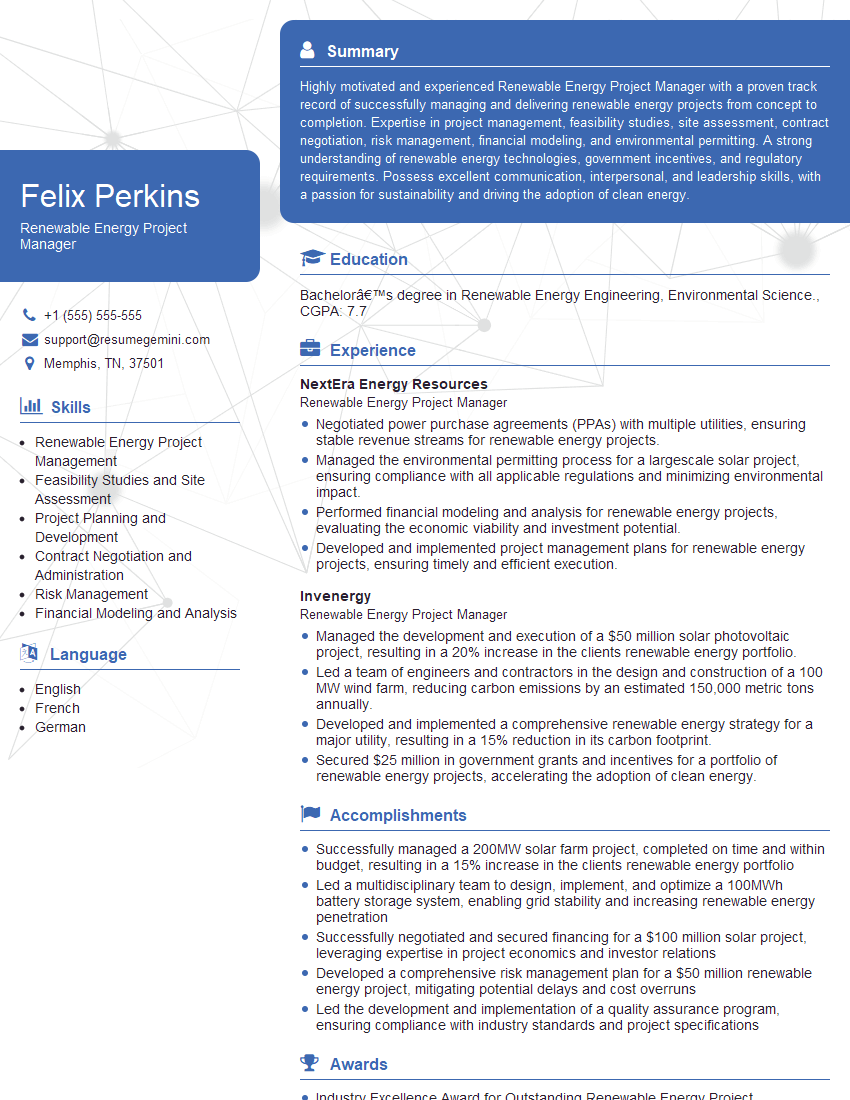
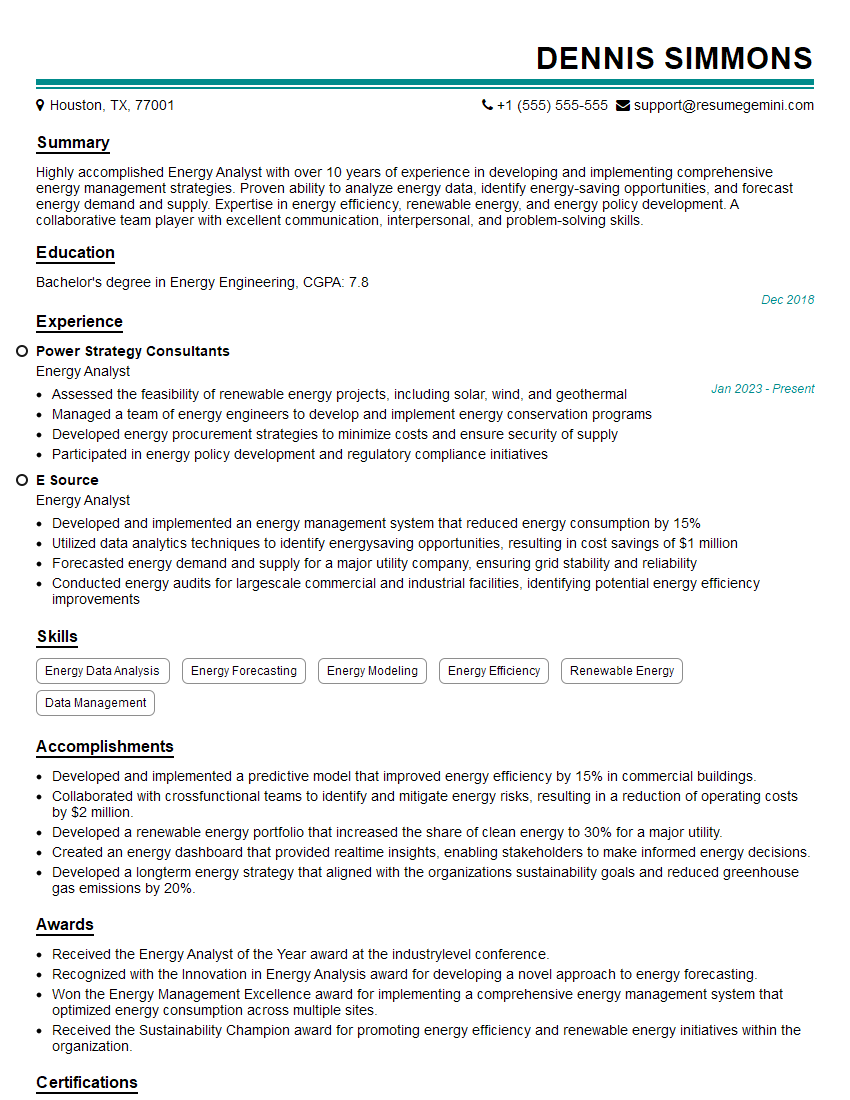
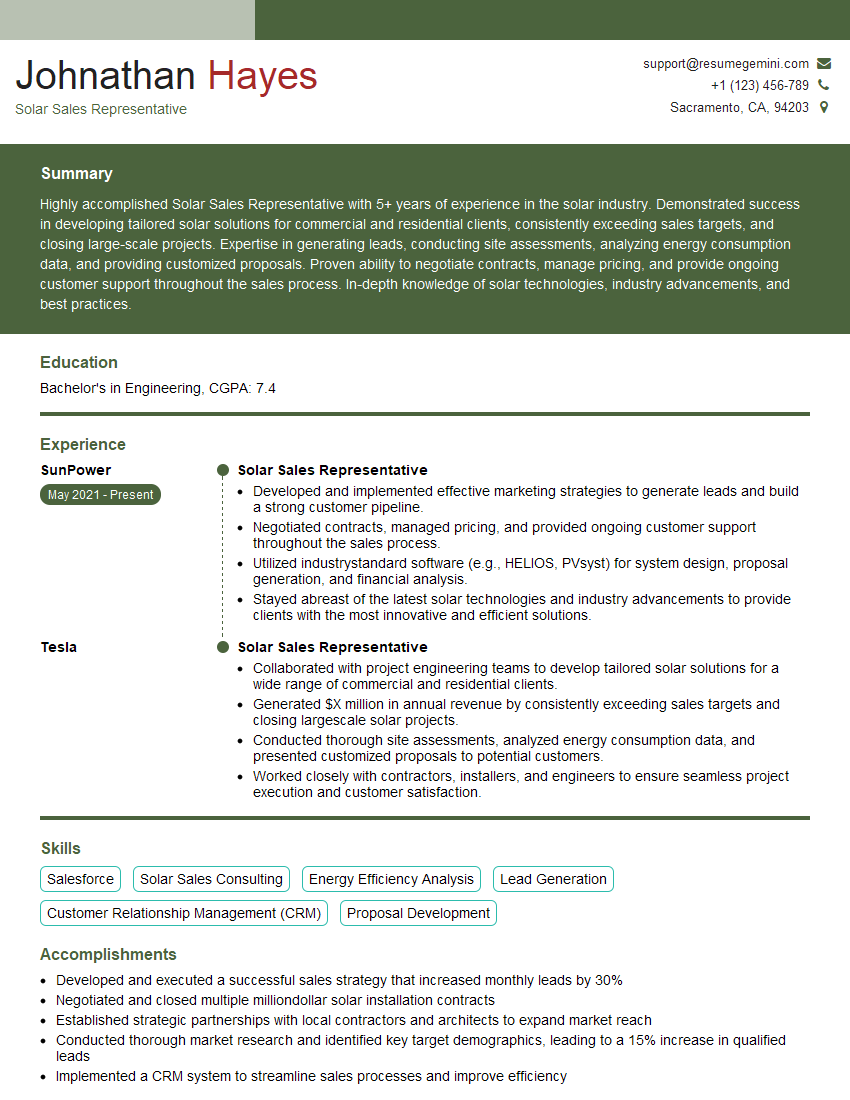
Mastering Solar Prospector’s functionalities significantly enhances your career prospects in the rapidly growing renewable energy sector. Demonstrating a strong understanding of these tools will set you apart from other candidates. To increase your chances of landing your dream job, focus on creating an ATS-friendly resume that highlights your relevant skills and experience. We highly recommend using ResumeGemini, a trusted resource for building professional and effective resumes. Examples of resumes tailored specifically to Solar Prospector are available to help guide you.




Explore more articles
Users Rating of Our Blogs
Share Your Experience
We value your feedback! Please rate our content and share your thoughts (optional).
What Readers Say About Our Blog
Very informative content, great job.
good