Cracking a skill-specific interview, like one for Solar PV System Design, requires understanding the nuances of the role. In this blog, we present the questions you’re most likely to encounter, along with insights into how to answer them effectively. Let’s ensure you’re ready to make a strong impression.
Questions Asked in Solar PV System Design Interview
Q 1. Explain the difference between monocrystalline, polycrystalline, and thin-film solar panels.
The main difference between monocrystalline, polycrystalline, and thin-film solar panels lies in their silicon crystal structure and manufacturing process, directly impacting their efficiency and cost.
- Monocrystalline silicon panels: These panels are made from a single, large silicon crystal, resulting in a uniform, dark-blue appearance. Their efficiency is typically the highest (around 18-22%), meaning they generate more power per square foot. They are also generally more durable and have a longer lifespan. However, their manufacturing process is more energy-intensive, making them slightly more expensive.
- Polycrystalline silicon panels: These panels use multiple silicon crystals fused together, giving them a characteristic speckled blue appearance. Their efficiency is slightly lower than monocrystalline panels (typically 15-17%), but their manufacturing process is less energy-intensive, resulting in a lower cost. They’re a popular choice for budget-conscious projects.
- Thin-film solar panels: These panels use a thin layer of photovoltaic material deposited on a substrate like glass or metal. Their efficiency is generally lower (8-13%) than crystalline silicon panels, but they are flexible, lightweight, and can be aesthetically integrated into various building designs. They are also less impacted by high temperatures.
Think of it like this: monocrystalline is like a perfectly cut diamond – high quality, high price, high performance. Polycrystalline is like a cluster of smaller diamonds – good quality, lower price, slightly lower performance. Thin-film is like a thin coating of diamond dust – less power, more versatile, and lower cost.
Q 2. Describe the process of sizing a solar PV system for a residential application.
Sizing a residential solar PV system involves carefully assessing the household’s energy consumption and available roof space. It’s a multi-step process:
- Energy Consumption Assessment: Obtain your electricity bills to determine your average monthly and annual energy consumption (kWh). This gives a baseline for system size.
- Solar Irradiance Data: Gather data on the average daily solar irradiance (sunlight intensity) at your location. This data is typically available online from solar resource maps or government agencies.
- System Size Calculation: Calculate the required system size based on your energy consumption and solar irradiance. Consider factors like panel efficiency, inverter efficiency, and system losses (shading, wiring losses, etc.). This calculation often involves estimating your energy production based on your location and system capacity.
- Roof Assessment: Evaluate your roof’s orientation, inclination, shading, and structural capacity to determine the optimal placement of solar panels and any necessary structural modifications.
- System Design: Design the system layout, including panel arrangement, wiring, and inverter placement. This often involves using specialized software to optimize system performance and minimize losses.
- Permitting and Inspections: Obtain necessary permits from your local authorities and ensure compliance with building codes and safety regulations.
For example, a household consuming 10,000 kWh annually in a location with good solar irradiance might require a 5-7 kW system. However, this is just an estimation and a professional solar installer will provide accurate calculations and design solutions.
Q 3. What are the key components of a solar PV system?
A typical solar PV system comprises several key components working in concert to convert sunlight into usable electricity:
- Solar Panels (Photovoltaic Modules): These are the heart of the system, converting sunlight into direct current (DC) electricity.
- Inverters: These convert the DC electricity from the panels into alternating current (AC) electricity, which is compatible with household appliances and the power grid.
- Mounting System: This system securely attaches the solar panels to the roof or ground.
- Wiring and Connectors: These connect the panels, inverter, and other system components to allow for the flow of electricity.
- Disconnects: These are safety switches that allow for quick isolation of the system in case of emergencies.
- Monitoring System (Optional): This system allows you to track the performance of your solar PV system, and provides valuable data regarding production and potential issues.
- Battery Storage (Optional): Batteries can store excess solar energy generated during the day for use at night or during periods of low sunlight.
Imagine a water system: Solar panels are like the solar collectors gathering sunlight (water), inverters are like the pump converting the collected water to a usable form, and the wiring and mounting system are the pipes connecting everything.
Q 4. How do you calculate the energy yield of a solar PV system?
Calculating the energy yield of a solar PV system is not a simple formula, but rather an estimation based on several factors. It generally involves:
- Panel Wattage and Quantity: Determine the total wattage of all panels in the system.
- Solar Irradiance: Determine the average daily solar irradiance at the system’s location using tools and data provided by the National Renewable Energy Laboratory (NREL).
- System Losses: Account for various losses, including inverter efficiency losses, shading, wiring losses, temperature losses, soiling losses (dirt accumulation), and other system related losses. These losses can range from 10% to 20% of the total system potential. This is a critical step that often gets overlooked.
- Derate Factor: Apply a derate factor (typically 0.75 to 0.85) to account for all these losses. This is a percentage that reduces the nameplate capacity of the system to account for real-world performance
- Annual Energy Production: Multiply the total system wattage by the derate factor and the average daily solar irradiance to get an estimated annual energy production (kWh).
For example, a 5 kW system with a 0.8 derate factor and an average daily solar irradiance of 5 peak sun hours would produce approximately 18.25 MWh annually (5 kW * 0.8 * 5 hours/day * 365 days/year).
Q 5. Explain the concept of solar irradiance and its impact on system design.
Solar irradiance refers to the amount of solar energy received per unit area. It’s a crucial factor in solar PV system design because it directly impacts the system’s energy production. Higher irradiance means more power generation.
Solar irradiance varies based on several factors:
- Geographical Location: Equatorial regions receive higher solar irradiance than higher latitudes.
- Time of Day: Irradiance is highest at midday and lowest in the morning and evening.
- Time of Year: Irradiance is higher during summer months and lower during winter months.
- Weather Conditions: Cloud cover significantly reduces irradiance.
In system design, we use solar irradiance data to accurately estimate the energy production of a solar PV system. This data is crucial for sizing the system appropriately, ensuring it meets the energy demands of the intended application. Accurate irradiance data also contributes to obtaining precise system performance predictions.
Q 6. What are the different types of inverters used in solar PV systems?
Several types of inverters are used in solar PV systems, each with its own advantages and disadvantages:
- String Inverters: These are the most common and cost-effective type. They connect to a string of solar panels and convert the DC power into AC power. However, shading on even one panel can impact the entire string’s output.
- Microinverters: These are small inverters attached to each individual panel. They offer better performance in partially shaded conditions as each panel operates independently. They are more expensive than string inverters but offer higher reliability and better energy production.
- Power Optimizers: These devices sit between each solar panel and the string inverter, monitoring and maximizing the power output of each panel. They offer benefits similar to microinverters, but at a lower cost than microinverters, but slightly more than string inverters.
Choosing the right inverter type depends on factors like system size, budget, and desired performance characteristics. For example, string inverters are often preferred for large systems due to their lower cost, while microinverters are a better fit for situations with significant shading issues.
Q 7. Explain the importance of MPPT (Maximum Power Point Tracking) in solar PV systems.
MPPT, or Maximum Power Point Tracking, is a crucial feature in solar PV inverters. Solar panels don’t generate power at a constant rate; their voltage and current change depending on factors such as sunlight intensity and temperature. The MPPT algorithm constantly monitors the voltage and current of the panels and adjusts the inverter’s operation to extract the maximum possible power at any given moment.
Without MPPT, the system wouldn’t be working at its peak capacity. Imagine trying to fill a bucket with water from a stream that has varying water pressure – you need an MPPT function like a variable pressure nozzle, to ensure your bucket fills as quickly as possible. By continually optimizing the power draw from the panels, MPPT ensures higher energy yield from the solar PV system over its lifetime.
Q 8. How do you determine the optimal tilt angle and azimuth for a solar PV array?
Determining the optimal tilt and azimuth angles for a solar PV array is crucial for maximizing energy production. The tilt angle refers to the angle of the array relative to the horizontal plane, while the azimuth angle specifies its orientation relative to true south (in the Northern Hemisphere). The ideal angles depend on several factors, primarily the geographical location and the time of year.
For maximum annual energy production, the optimal tilt angle is generally close to the latitude of the location. However, this is just a starting point. Software tools and online calculators can perform detailed calculations considering factors such as shading from trees or buildings, seasonal variations in solar radiation, and the specific panel characteristics. For example, a location at 34° latitude might benefit from a tilt angle between 30° and 35°, potentially slightly adjusted based on specific site conditions and the preference for maximizing either winter or summer output.
The optimal azimuth angle is usually directly south (0°), again in the Northern Hemisphere. Any deviation from south will reduce the amount of sunlight received, particularly during the crucial midday hours. However, sometimes a slight deviation might be necessary to avoid shading from obstructions.
In practice, I’d use specialized PVsyst software, or similar, to model the solar resource at the site, factor in shading, and optimize the tilt and azimuth for maximum energy yield. This involves inputting precise geographical coordinates, terrain data, and details about any shading objects. The software then simulates the performance of the array at different angles and recommends the best configuration.
Q 9. What are the different types of grounding systems for solar PV systems?
Grounding a solar PV system is vital for safety and reliable operation. It protects against electrical shocks, prevents damage from lightning strikes, and ensures the system remains electrically stable. Different grounding systems exist, each with its own advantages and disadvantages.
- System Grounding: This is the most common method and connects the metallic parts of the solar array, including the racking system, to the earth. It’s typically achieved using ground rods driven into the earth and connected to the system using appropriately sized conductors. This helps dissipate any stray currents or lightning surges safely.
- Equipment Grounding: This involves grounding individual components like inverters and other equipment within the system to the earth ground. This is often done via the provided grounding lugs on these devices.
- Ground Fault Protection: This isn’t a grounding *system* itself but rather a crucial safety mechanism that rapidly disconnects the system if a ground fault occurs. Rapid Shutdown devices are commonly employed for this purpose.
The choice of grounding system depends on local codes, soil conditions, and the specific system design. In areas prone to lightning, a more robust grounding system might be required, potentially involving multiple ground rods and a larger gauge grounding wire. Poor soil conductivity may necessitate the use of ground enhancement techniques.
Q 10. Describe the process of designing a solar PV system for a commercial building.
Designing a solar PV system for a commercial building is a multi-faceted process that requires a thorough understanding of the building’s energy consumption, available roof space, shading conditions, and local regulations. It’s more complex than residential design due to larger scales and diverse energy needs.
- Energy Audit and Load Profile: Begin with a comprehensive energy audit to determine the building’s energy usage pattern throughout the year. This informs the sizing of the PV system. Understanding peak demand periods is crucial for calculating the required system capacity and considering potential energy storage solutions.
- Site Assessment: A detailed site survey is vital. This includes assessing the available roof space, its orientation, shading from nearby structures or trees, and the structural integrity of the roof to support the weight of the PV array.
- System Design and Sizing: Based on the energy audit and site assessment, the system’s size and configuration are determined. This involves selecting suitable PV modules, inverters, and other components to meet the energy needs efficiently.
- Shading Analysis: Thorough shading analysis is critical, especially in densely populated areas. This might involve using specialized software to model shading effects throughout the year and optimize array layout to minimize losses.
- Permitting and Compliance: Secure all necessary permits and approvals from local authorities. This often involves submitting detailed design plans and adhering to relevant building codes and electrical regulations.
- System Installation and Commissioning: Once approved, the system is installed by qualified professionals. Commissioning involves testing and verifying all aspects of the system to ensure its safe and efficient operation.
For a commercial building, you might consider incorporating advanced features like power optimization technology, sophisticated monitoring systems, and energy storage solutions. The specific design will be customized to the unique needs and constraints of each building.
Q 11. What are the safety considerations during the design and installation of solar PV systems?
Safety is paramount throughout the design and installation of solar PV systems. Neglecting safety precautions can lead to serious accidents, equipment damage, and even fatalities.
- Electrical Safety: All work must be performed by qualified electricians following appropriate safety protocols. Lockout/Tagout procedures must be followed to prevent accidental energization during maintenance or repairs. Personal protective equipment (PPE) including insulated gloves, eye protection, and safety footwear is mandatory.
- Fall Protection: Rooftop installations require strict adherence to fall protection regulations. Fall arrest systems, safety harnesses, and proper training are essential. The use of scaffolding or elevated work platforms may be necessary.
- Fire Safety: Solar PV systems present a potential fire risk, especially in the event of a fault. Proper wiring techniques, appropriate circuit breakers, and fire-resistant materials are crucial. Regular inspections and maintenance are key for preventing fire hazards.
- Arc Flash Hazards: High voltages present an arc flash risk. Proper safety procedures and PPE, including arc flash suits, are vital when working on live systems.
- Structural Integrity: Ensuring the roof or mounting structure can safely support the weight of the PV array is critical. Structural engineering calculations might be required for larger installations.
Regular inspections and maintenance are crucial for ensuring the long-term safety and performance of the solar PV system. These inspections should include visual checks of the wiring, connections, and mounting hardware, as well as testing of the grounding system and safety devices.
Q 12. How do you account for shading effects in solar PV system design?
Shading significantly impacts the performance of solar PV systems. Even partial shading of a single module can drastically reduce the output of the entire string due to the phenomenon of current mismatch. Addressing shading effects is crucial for maximizing system efficiency.
Several strategies can mitigate the impact of shading:
- Careful Site Selection and Array Orientation: Thorough site assessments are crucial to identify and minimize potential shading sources. Proper array orientation can help to reduce the duration and severity of shading.
- Optimized Array Layout: Design the array layout to minimize shading between modules, taking into account the sun’s path throughout the year. This often requires using specialized software to model the shading.
- Bypass Diodes: Most modules incorporate bypass diodes which allow current to flow around shaded cells within a module, limiting the impact on the overall output. However, they are not a complete solution.
- String Optimization with Microinverters or Power Optimizers: Microinverters or power optimizers allow each module (or groups of modules) to operate independently. They can substantially reduce the impact of shading by optimizing the energy production of each module individually.
- Using Shading Tolerant Modules: Some newer modules are designed to be more tolerant of shading, reducing the energy losses compared to traditional modules.
Incorporating these strategies will ensure you maximize energy generation despite shading, leading to a more efficient and cost-effective system. Ignoring shading can lead to significant energy losses, reducing the overall return on investment.
Q 13. Explain the concept of net metering and its implications for solar PV system owners.
Net metering is a billing mechanism that allows solar PV system owners to sell excess electricity generated by their system back to the utility grid. This essentially means you can offset the energy you consume from the grid with the energy you produce. The implications are significant for solar PV owners:
- Reduced Electricity Bills: The most direct benefit is a reduction in electricity bills. Any excess energy exported to the grid can reduce your overall energy costs.
- Financial Incentives: Net metering acts as a financial incentive, making solar PV systems more economically attractive. It essentially monetizes your excess energy production.
- Environmental Benefits: By reducing reliance on grid electricity, net metering contributes to reducing carbon emissions and promoting clean energy.
However, net metering policies vary widely depending on the region and utility company. Some utilities offer generous net metering rates, while others have limited programs or impose time-of-use metering. Before installing a PV system, it’s crucial to understand the specific net metering policy in your area to accurately assess the system’s financial viability and long-term cost savings. The net metering credit you receive might vary depending on the time of day your energy is exported to the grid and the overall electricity demands of the grid.
Q 14. What are the different types of batteries used for energy storage in solar PV systems?
Energy storage is increasingly important for solar PV systems, allowing for energy use even when the sun isn’t shining. Several battery technologies are available for this purpose, each with its pros and cons:
- Lead-Acid Batteries: These are the oldest and most established technology. They are relatively inexpensive but have a shorter lifespan and lower energy density compared to newer options.
- Lithium-ion Batteries: This is currently the most popular technology due to its higher energy density, longer lifespan, and faster charging/discharging capabilities. However, they are generally more expensive than lead-acid batteries.
- Flow Batteries: These are becoming increasingly relevant for large-scale energy storage due to their scalability and long cycle life. They are better suited for longer-duration energy storage needs but are generally more expensive than Lithium-ion and require significant space.
- Solid-State Batteries: A relatively new technology that offers higher energy density, improved safety, and a longer lifespan compared to Lithium-ion batteries. They are still under development and not widely used in residential or commercial applications yet.
The choice of battery technology depends on factors like budget, energy storage needs, lifespan requirements, and the available space for installation. For residential applications, lithium-ion batteries are becoming increasingly common due to their high energy density and relatively manageable costs, while flow batteries are more appropriate for larger commercial or utility-scale energy storage systems.
Q 15. How do you select the appropriate size and type of inverter for a specific solar PV system?
Selecting the right inverter is crucial for optimal solar PV system performance. It’s like choosing the right engine for a car – the wrong one will limit its potential. The inverter converts the DC power generated by the solar panels into AC power usable by your home or business. The key factors are:
- System Size (kWp): The inverter’s capacity must match or slightly exceed the total power output of your solar panels. For example, if your solar array produces 5 kWp, you’ll need at least a 5 kW inverter, ideally with some headroom for future expansion.
- Inverter Type: Several types exist, each with its advantages and disadvantages:
- String Inverters: Simpler, cost-effective, but less efficient with partially shaded arrays.
- Microinverters: Each panel has its own inverter, maximizing energy harvest even with shading, but are more expensive.
- Power Optimizers: Combine the best of both worlds, offering module-level power electronics with the efficiency and lower cost of a central inverter.
- MPPT (Maximum Power Point Tracking): MPPT algorithms ensure the inverter extracts the maximum possible power from the solar panels under varying conditions. More MPPT trackers mean better performance in partially shaded conditions. Consider the number of MPPT trackers based on your array design.
- Efficiency: Look for high-efficiency inverters to minimize energy losses. Efficiency is expressed as a percentage and can significantly impact your overall energy production.
- Safety Certifications: Ensure the inverter carries the necessary safety certifications and meets local building codes.
For instance, a residential system with a 6 kWp array might use a single 6kW string inverter, while a larger commercial system with multiple strings and potential shading might benefit from microinverters or a central inverter with multiple MPPT trackers.
Career Expert Tips:
- Ace those interviews! Prepare effectively by reviewing the Top 50 Most Common Interview Questions on ResumeGemini.
- Navigate your job search with confidence! Explore a wide range of Career Tips on ResumeGemini. Learn about common challenges and recommendations to overcome them.
- Craft the perfect resume! Master the Art of Resume Writing with ResumeGemini’s guide. Showcase your unique qualifications and achievements effectively.
- Don’t miss out on holiday savings! Build your dream resume with ResumeGemini’s ATS optimized templates.
Q 16. Describe the process of designing a solar PV system that integrates with a building’s energy management system.
Integrating a solar PV system with a building’s energy management system (BMS) allows for intelligent energy control and optimization. The design process involves:
- BMS Communication Protocol: Determine the BMS’ communication protocol (e.g., Modbus, BACnet) and ensure the solar inverter supports it. This allows seamless data exchange between the solar system and the BMS.
- Data Acquisition: Define the data points to be shared – solar power generation, battery charge levels (if applicable), grid power consumption, etc. Real-time monitoring improves efficiency.
- Control Strategies: Develop control strategies for load balancing and energy optimization. For instance, the BMS can prioritize solar power for critical loads during peak generation and switch to grid power otherwise.
- System Integration: The integration itself involves wiring and configuring the communication interfaces between the solar inverter, energy storage (if included), and the BMS. This often requires specialized expertise.
- Testing and Commissioning: After installation, thorough testing and commissioning ensure the system functions as designed. Verify data exchange and control strategies.
For example, a commercial building might use its BMS to prioritize solar energy for lighting and HVAC during sunny periods, reducing reliance on grid power. This not only saves money but also minimizes the environmental impact.
Q 17. Explain the impact of temperature on the performance of solar PV modules.
Temperature significantly affects solar PV module performance. Think of it like a human’s performance on a hot day – efficiency drops. The effect is primarily due to the change in the bandgap energy of the semiconductor material (silicon).
- Negative Temperature Coefficient: As temperature increases, the output power of a solar panel decreases. This is known as the negative temperature coefficient. The effect is typically around 0.3-0.5% per degree Celsius increase.
- Optimum Operating Temperature: Each solar panel has an optimum operating temperature (typically around 25°C) at which it produces its rated power. Exceeding this temperature leads to reduced efficiency.
- Module Design Considerations: Manufacturers consider temperature effects in module design by employing techniques like incorporating bypass diodes to mitigate the impact of hot spots.
For instance, a module rated at 300W at 25°C may only produce around 285W at 40°C due to the negative temperature coefficient. Understanding this impact is crucial for accurate system sizing and performance predictions, especially in hot climates.
Q 18. What are the key performance indicators (KPIs) used to evaluate the performance of a solar PV system?
Key Performance Indicators (KPIs) are vital for assessing the performance and efficiency of a solar PV system. They provide insights into the system’s health and ROI.
- Energy Yield: The total amount of energy produced by the system over a specific period (kWh).
- Capacity Factor: The ratio of actual energy generated to the maximum possible energy output based on the system’s capacity and available sunlight (%).
- Performance Ratio (PR): A comprehensive KPI that accounts for various losses in the system, such as losses due to temperature, shading, and soiling (%).
- Specific Yield: Energy produced per kWp of installed capacity (kWh/kWp).
- System Efficiency: The overall efficiency of the entire system, from solar panel to AC output (%).
- Return on Investment (ROI): The financial profitability of the system, considering initial investment and energy savings.
Regularly monitoring these KPIs allows for early identification of potential issues and optimization of system performance. For example, a low capacity factor might indicate shading issues, while a low performance ratio might point to problems with the inverter or wiring.
Q 19. What are the common challenges faced in solar PV system design?
Solar PV system design presents several challenges:
- Shading: Even partial shading can significantly reduce the output of the entire array. Careful site assessment and panel placement are essential.
- Roof Compatibility: Not all roofs are suitable for solar installations. Factors like roof orientation, angle, strength, and accessibility need consideration.
- Grid Connection: Interconnection with the utility grid requires compliance with specific regulations and may involve costs and delays.
- Microclimates: Local weather conditions and microclimates can affect energy production. A sunny area might experience frequent cloud cover.
- System Cost Optimization: Balancing performance, cost, and longevity requires careful system component selection. Choosing the right balance is a critical challenge.
- Permitting and Approvals: Navigating the regulatory landscape and obtaining necessary permits can be time-consuming.
For example, a project might be delayed due to unexpected issues with obtaining grid connection permits or encountering unforeseen shading issues during installation.
Q 20. How do you perform a site assessment for a solar PV system installation?
A thorough site assessment is the foundation of any successful solar PV system installation. It involves:
- Roof Inspection: Assessing the roof’s structural integrity, orientation, angle, shading, and accessibility. This includes checking for potential obstacles like chimneys or skylights.
- Shading Analysis: Identifying potential shading sources (trees, buildings, etc.) and estimating their impact on energy production. Software tools and sun path diagrams are often used.
- Energy Consumption Analysis: Determining the building’s energy consumption profile to estimate the size of the required solar PV system. Utility bills are a valuable resource.
- Electrical System Assessment: Evaluating the existing electrical system’s capacity and determining the necessary upgrades for grid interconnection. This includes panelboards, wiring, and meter.
- Regulatory Compliance: Checking local building codes, zoning regulations, and interconnection requirements. Understanding local regulations is critical.
- Environmental Considerations: Identifying any environmental constraints or potential impacts of the installation.
A comprehensive site assessment allows for accurate system design, cost estimation, and avoidance of potential problems during installation. For example, discovering significant shading during the site assessment may lead to adjustments in the system design or a different site selection.
Q 21. Explain the concept of string sizing in solar PV system design.
String sizing refers to the process of grouping solar PV modules into strings to optimize the performance of the solar PV system. Each string is connected to a Maximum Power Point Tracker (MPPT) within the inverter. It’s like organizing a team – you want balanced groups for maximum productivity.
- Voltage and Current Matching: Strings should have similar voltage and current characteristics to ensure optimal performance. Large discrepancies can lead to power losses.
- String Length: String length is limited by the maximum voltage input of the inverter’s MPPT. Exceeding the limit could damage the inverter.
- Shading Considerations: If possible, avoid placing modules from different strings in the same shaded areas. String sizing must account for potential shading.
- Mismatch Losses: Mismatch losses are reduced by string sizing that creates relatively uniform current and voltage. Minimizing differences is key.
- Number of MPPTs: The number of MPPT inputs on the inverter determines the number of strings you can have. More MPPTs allow better handling of shading.
Proper string sizing ensures each MPPT operates near its optimal point and maximizes energy harvest. Incorrect string sizing can lead to performance losses and potentially damage the inverter.
Q 22. Describe the process of obtaining permits and approvals for a solar PV system installation.
Obtaining permits and approvals for a solar PV system installation is a crucial step, varying significantly depending on location. It typically involves several stages. First, you’ll need to check with your local authorities (city, county, and potentially state) for specific requirements. This might include zoning regulations, building codes, and electrical codes. You’ll likely need to submit detailed plans showing the system’s location, size, and electrical connections. These plans usually need to be prepared by a qualified professional, often a licensed electrical engineer or a solar PV system designer.
Next, you’ll need to obtain any necessary inspections. These inspections might include a site assessment to ensure the proposed system is structurally sound and doesn’t interfere with other utilities. Following a successful inspection, you can apply for the final permits needed for construction. The whole process can take anywhere from a few weeks to several months, depending on the complexity of the project and the efficiency of the permitting authorities. It’s essential to start the permitting process early to avoid delays in the project timeline.
For example, in some areas, you might need a separate permit for the electrical work, another for the structural components, and yet another for interconnection to the grid. Proactive communication with the authorities is key to a smooth and efficient permitting process. Thorough documentation, including detailed system specifications and compliance certifications, is essential for a successful application.
Q 23. What are the different types of mounting systems for solar PV panels?
Solar PV panel mounting systems are chosen based on factors such as roof type, structural integrity, and aesthetic preferences. The main types include:
- Roof-mounted systems: These are the most common and can be further categorized into:
- Racking systems: These use pre-fabricated metal frames to securely attach panels to the roof, offering flexibility and ease of installation.
- Integrated systems: These are built directly into the roof during construction and are aesthetically pleasing, but less flexible in terms of later adjustments.
- Ballasted systems: These use weights or ballast to hold the panels in place, ideal for flat roofs without penetrations, however, can be bulky.
- Ground-mounted systems: These involve installing panels on the ground using poles or foundations. They offer flexibility in location and panel orientation but require more land.
- Wall-mounted systems: These are suitable for vertical surfaces and often utilize brackets or rails to secure panels. They’re ideal when roof space is limited.
The choice of mounting system significantly impacts the system’s cost, efficiency, and longevity. For instance, a ground-mounted system might be cheaper than an integrated roof system but could require more land and may not be aesthetically pleasing to some.
Q 24. How do you design a solar PV system that meets the specific energy needs of a customer?
Designing a solar PV system to meet a customer’s specific energy needs is a multi-step process that involves careful consideration of several factors. First, we determine the customer’s energy consumption profile using their historical utility bills. This helps establish their average daily and annual energy usage. Then, we analyze the site’s characteristics including roof orientation, shading from trees or buildings, and available space.
Next, we use specialized software (discussed in question 4) to model the system’s performance. We input data such as panel specifications, inverter efficiency, and the site’s geographical location to simulate energy production. The goal is to ensure the system generates enough energy to offset the customer’s consumption while accounting for seasonal variations in solar irradiance.
We must also consider the customer’s budget, their preference for aesthetics, and any local regulations or incentives. For example, a customer might prefer a smaller, less visually intrusive system, even if it slightly increases the cost per kilowatt-hour. Finally, we create a detailed system design specifying the number of panels, inverters, mounting system, wiring diagrams, and other components, ensuring it adheres to all relevant safety codes and standards.
Q 25. Explain the concept of solar PV system design software and give examples of common programs.
Solar PV system design software utilizes algorithms and databases to model the performance of various system configurations. These programs simplify the design process, enabling engineers to simulate different scenarios, optimize system sizing, and predict energy output. They also help with creating detailed system drawings and documentation.
Popular examples include PVsyst, Helioscope, and Aurora. These programs allow users to input site-specific parameters, such as solar irradiance data, panel specifications, and shading profiles, to model the system’s performance accurately. They can also perform advanced simulations that incorporate factors such as weather patterns, temperature effects, and inverter behavior. For example, Helioscope allows for interactive 3D modeling, helping visualize the system on the customer’s property. This visualization aids in discussions about placement and aesthetics.
Q 26. What are the considerations for integrating solar PV systems with existing electrical systems?
Integrating a solar PV system with an existing electrical system requires careful planning to ensure safety and proper functionality. The most crucial aspect is ensuring compatibility with the existing electrical panel and wiring. This usually requires a licensed electrician.
The system must be properly grounded to prevent electrical shocks and protect against lightning strikes. Furthermore, the inverter must be sized correctly to handle the solar panel’s output and match the existing grid voltage. The interconnection process, connecting the solar PV system to the main electrical panel, must adhere strictly to all local electrical codes and guidelines. This usually necessitates a detailed design and an inspection by the utility company or a relevant authority.
For instance, the electrician needs to determine the appropriate circuit breakers and wiring gauges for the solar array, and ensure the system’s protective devices work seamlessly with the existing safety mechanisms. This involves adding new circuits, potentially upgrading the main electrical panel, and possibly adding a metering system to monitor energy production and consumption.
Q 27. How do you ensure the compliance of solar PV systems with relevant codes and standards?
Ensuring compliance of solar PV systems with relevant codes and standards is paramount for safety and reliability. This involves adhering to both national and local regulations, including those related to electrical safety, structural integrity, and fire protection. Key standards include the National Electrical Code (NEC) in the US, IEC standards internationally, and any local building codes.
During the design phase, we ensure all components are UL-listed or meet equivalent safety standards. This verifies that equipment is tested and conforms to specific safety criteria. We also ensure that the system is properly grounded, adequately protected against overcurrent and overvoltage, and designed to withstand harsh weather conditions. Detailed documentation, including design drawings, calculations, and test results, must be kept to demonstrate compliance. Regular inspections and maintenance are also crucial to maintain compliance and ensure the long-term performance and safety of the system. For example, the electrical design must ensure proper overcurrent protection to prevent equipment damage and hazards.
Q 28. Describe your experience with different solar PV system design software and simulation tools.
I have extensive experience with several solar PV system design software packages, including PVsyst, Helioscope, and Aurora. PVsyst is a powerful tool for detailed system simulations, offering a wide array of features and analytical capabilities. I’ve used it extensively for complex projects requiring high accuracy in performance predictions. Helioscope’s intuitive interface and 3D modeling capabilities are excellent for client presentations and visualizing system layouts. This is particularly useful when discussing shading and site constraints with clients. Aurora software’s strengths lie in its streamlined workflow and efficient design process, making it particularly effective for larger-scale projects.
My experience with these programs includes not only system design but also performance analysis and optimization. I’m proficient in using their various tools for shading analysis, energy yield estimations, and cost optimization. I regularly use these tools to compare different design options, select the most optimal components, and create detailed system specifications. This expertise allows me to deliver designs that are not only technically sound but also cost-effective and efficient.
Key Topics to Learn for Your Solar PV System Design Interview
Acing your Solar PV System Design interview requires a solid understanding of both theory and practical application. Focus your preparation on these key areas:
- Site Assessment and Energy Needs Analysis: Understanding factors like solar irradiance, shading, roof orientation, and energy consumption patterns to determine system feasibility and optimal sizing.
- System Design and Component Selection: Choosing appropriate PV modules, inverters, racking systems, and other components based on site-specific requirements and budget considerations. Explore different system topologies (e.g., grid-tied, off-grid, hybrid).
- Electrical Design and Calculations: Mastering the calculations involved in determining wire sizing, circuit breaker ratings, and overall system safety. Familiarize yourself with relevant codes and standards.
- Software and Simulation Tools: Gain proficiency in using PVSyst, Helioscope, or other industry-standard software for system design, modeling, and performance analysis. Be prepared to discuss your experience with these tools.
- Economic Analysis and Financial Modeling: Understanding the financial aspects of PV system design, including payback periods, levelized cost of energy (LCOE), and return on investment (ROI). Be ready to discuss different financing options.
- Installation and Commissioning: While not the primary focus, a basic understanding of installation procedures and commissioning practices is beneficial for demonstrating a holistic understanding of the PV system lifecycle.
- Troubleshooting and Maintenance: Discuss common issues encountered in solar PV systems and your approach to troubleshooting and preventative maintenance.
- Codes and Standards: Demonstrate familiarity with relevant safety codes and industry standards (e.g., NEC, IEC).
Next Steps: Power Up Your Career
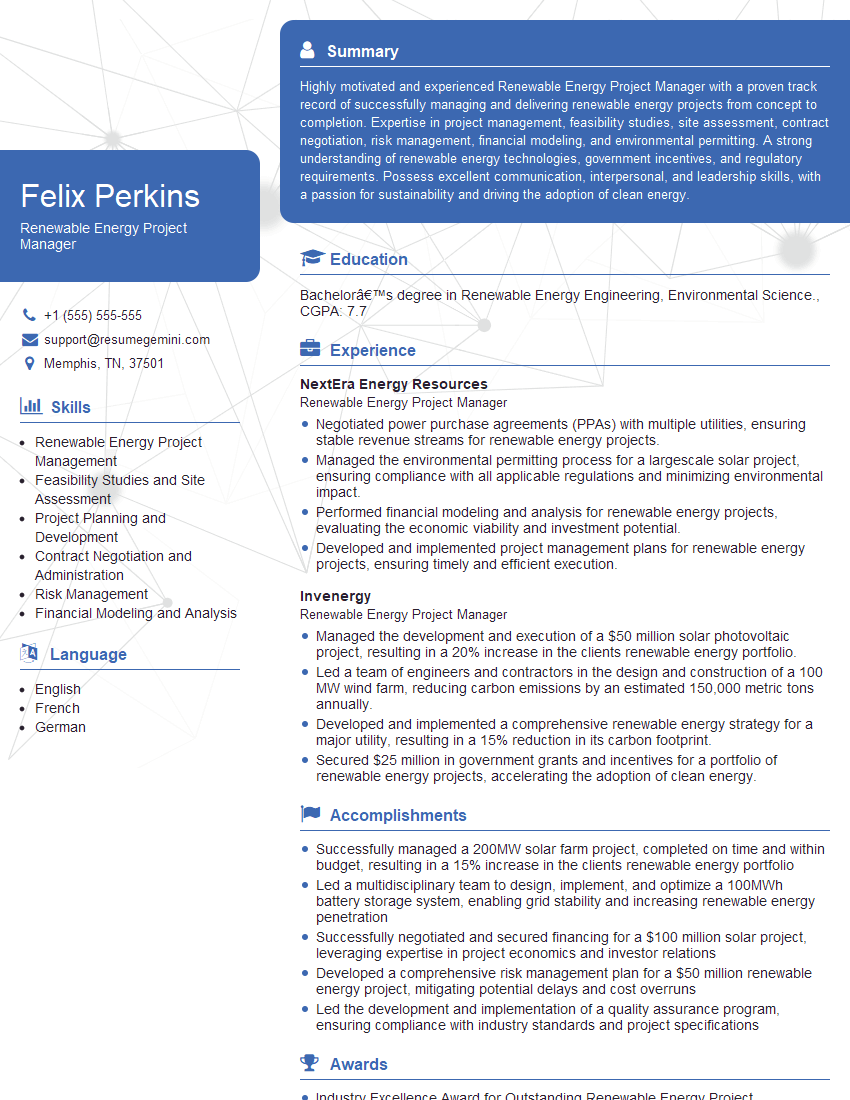
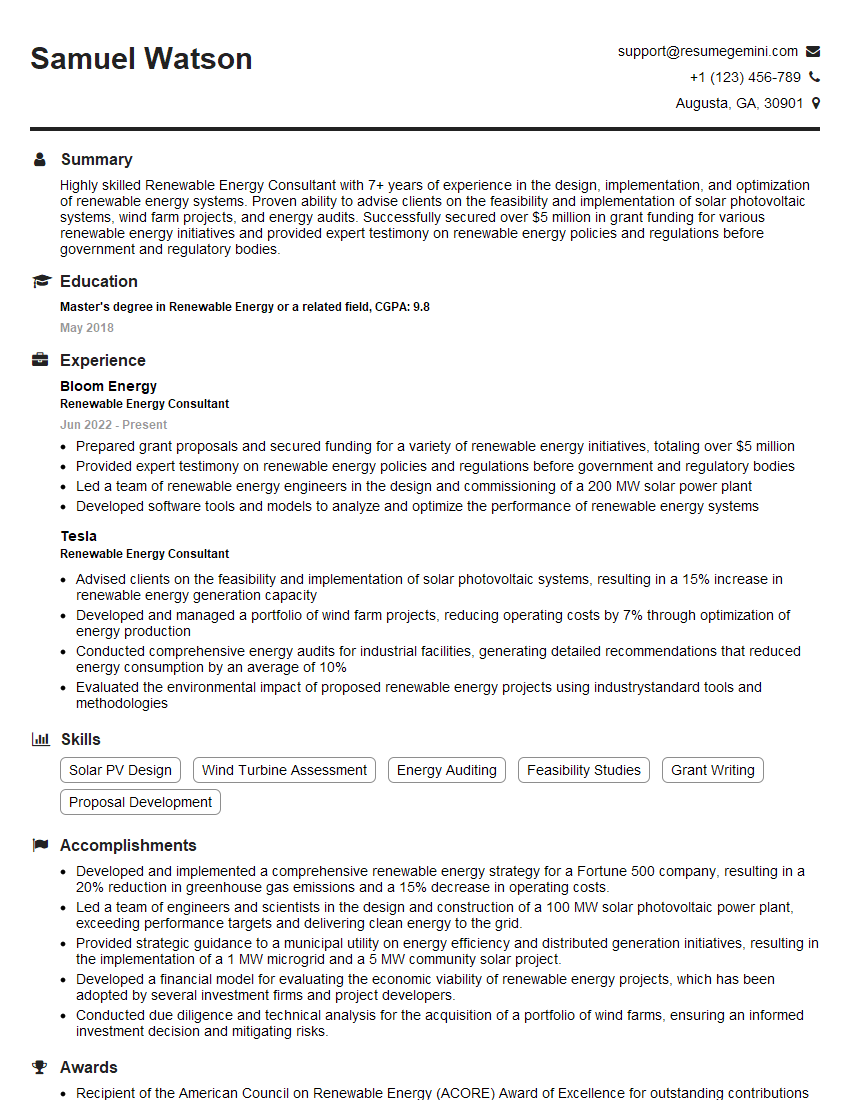
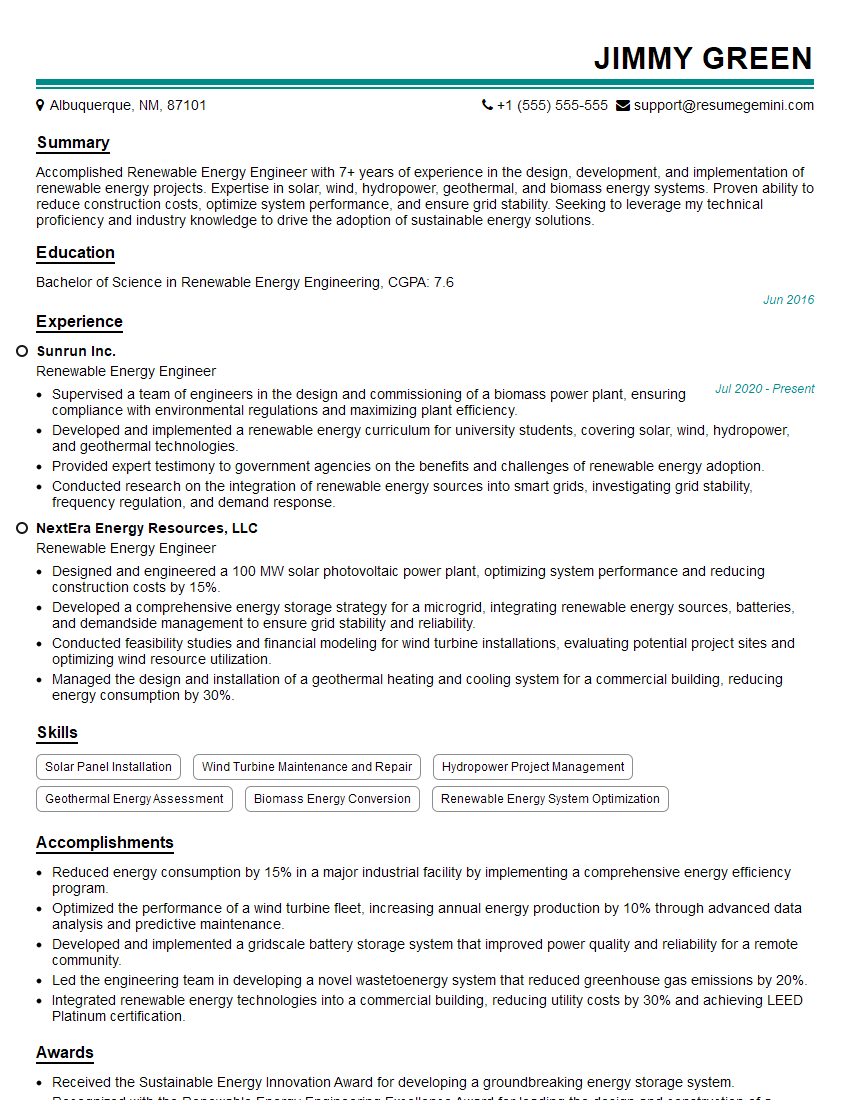
Mastering Solar PV System Design is crucial for career advancement in this rapidly growing industry. To stand out, create a compelling resume that showcases your skills and experience effectively. An ATS-friendly resume is vital for getting your application noticed by recruiters. We recommend using ResumeGemini to craft a professional and impactful resume tailored to your specific experience and target roles. ResumeGemini provides examples of resumes specifically designed for Solar PV System Design professionals – check them out to see how you can present your qualifications effectively!

Explore more articles
Users Rating of Our Blogs
Share Your Experience
We value your feedback! Please rate our content and share your thoughts (optional).
What Readers Say About Our Blog
Very informative content, great job.
good