Interviews are more than just a Q&A session—they’re a chance to prove your worth. This blog dives into essential Solar Resource Assessment and Modeling interview questions and expert tips to help you align your answers with what hiring managers are looking for. Start preparing to shine!
Questions Asked in Solar Resource Assessment and Modeling Interview
Q 1. Explain the difference between direct, diffuse, and global solar irradiance.
Solar irradiance is the amount of solar energy received per unit area. We categorize it into three types: direct, diffuse, and global.
Direct irradiance is the solar radiation that reaches a surface directly from the sun without scattering or reflection. Think of it as a laser beam – a concentrated ray of sunlight. It’s the strongest component, especially on clear sunny days.
Diffuse irradiance is the sunlight scattered by atmospheric particles like dust, water vapor, and clouds. This is softer, less intense light coming from all directions. Imagine a cloudy day; the sunlight is diffused and less focused.
Global irradiance is the sum of both direct and diffuse irradiance. It represents the total solar radiation received on a surface. It’s what we typically use in solar energy assessments, as it reflects the total energy available for PV panels.
For example, on a perfectly clear day, direct irradiance may be high, while diffuse irradiance is low. On a cloudy day, direct irradiance will be low, but diffuse irradiance might be significant, leading to a moderate global irradiance.
Q 2. Describe the various methods used for measuring solar irradiance.
Measuring solar irradiance involves several methods, each with its advantages and limitations:
Pyranometers: These are the most common instruments for measuring global horizontal irradiance (GHI). They are essentially thermopiles that measure the temperature difference caused by the absorption of solar radiation. They provide a continuous measurement of solar energy reaching a horizontal surface.
Pyrheliometers: These measure direct normal irradiance (DNI), the amount of solar radiation received per unit area on a surface perpendicular to the sun’s rays. They are more specialized and often used in conjunction with pyranometers.
Shaded pyranometers: These are used to measure diffuse horizontal irradiance (DHI) by shading the direct beam component from the pyranometer.
Satellite-based measurements: Satellite data provides broad-scale information about solar irradiance across larger geographical areas, though the resolution may not always be as high as ground-based measurements. They’re invaluable for creating solar resource maps.
The choice of measurement method depends on the specific application. For detailed site-specific assessments, ground-based measurements are essential. For large-scale projects or regional planning, satellite data is often sufficient.
Q 3. What are the key factors influencing solar resource availability?
Solar resource availability is affected by several interconnected factors:
Latitude and Longitude: Locations closer to the equator receive more solar energy annually due to the higher solar elevation angle.
Altitude: Higher altitudes generally experience higher solar irradiance due to less atmospheric attenuation.
Climate and weather patterns: Cloud cover, precipitation, and atmospheric aerosols significantly reduce solar irradiance. Deserts, for instance, receive much higher solar radiation than cloudy, rainy regions.
Topography and shading: Mountains, buildings, and trees can significantly affect the amount of solar radiation reaching a specific location. Shading analysis is critical in site selection for solar projects.
Atmospheric conditions: Air pollution and dust reduce solar irradiance through scattering and absorption.
Time of year and day: Solar irradiance varies throughout the year and the day. Summer months and midday typically experience higher irradiance.
Understanding these factors is vital for accurate solar resource assessment. For instance, a project in a hilly region requires detailed shading analysis to avoid substantial energy losses.
Q 4. How do you account for shading effects in solar resource assessment?
Accounting for shading is crucial for accurate solar resource assessment, particularly in complex terrains or urban environments. Several methods exist:
Digital Elevation Models (DEMs): These provide topographic information to assess shading from surrounding terrain. Software can analyze the DEM to simulate shadow casting throughout the year.
GIS Software and shading analysis tools: Geographic Information Systems (GIS) software incorporates DEMs and other spatial data (e.g., building footprints) to perform detailed shading analyses. The software can generate shadow maps showing shaded areas at different times of the day and year.
3D modeling: Advanced software can create 3D models of the site, including buildings and surrounding obstacles, to simulate shading effects with high accuracy.
For example, designing a solar farm needs meticulous shading analysis to optimize the placement of panels to minimize shading losses. Without proper accounting for shading, the projected energy yield could be significantly overestimated.
Q 5. Explain the concept of solar resource maps and their applications.
Solar resource maps are geographical representations of solar irradiance data, usually showing average annual or monthly values. They are invaluable tools for various applications:
Site selection for solar energy projects: They help identify locations with the highest solar potential, reducing development risks and maximizing energy production.
Solar energy resource planning: They enable policymakers and energy planners to assess the potential for solar energy development at regional and national scales.
Solar energy system design: They provide input data for designing and sizing solar photovoltaic (PV) systems.
Research and development: They provide a crucial dataset for evaluating new solar technologies and improving solar resource models.
For instance, a developer looking to build a large-scale solar farm would use solar resource maps to identify suitable locations with high irradiance levels and minimal shading.
Q 6. What software packages are you familiar with for solar resource modeling?
I am proficient in several software packages for solar resource modeling, including:
PVsyst: A comprehensive software for designing and simulating PV systems.
Helioscope: A cloud-based software for solar energy system design and analysis.
SAM (System Advisor Model): A National Renewable Energy Laboratory (NREL) software for system design, performance analysis, and financial modeling of renewable energy systems.
Meteonorm: A database providing meteorological data including solar irradiance for various locations globally.
GIS software (ArcGIS, QGIS): These are used for spatial analysis, integrating solar irradiance data with other geographic information for shading analysis and site selection.
My expertise extends to using these tools to develop customized models tailored to specific project requirements and integrating them into project workflow.
Q 7. Describe your experience with PVsyst or similar software.
I have extensive experience using PVsyst for solar resource assessment and PV system design. I’ve utilized its features for:
Simulating solar irradiance on tilted surfaces: PVsyst allows for precise calculation of solar irradiance on PV panels with various tilt angles and orientations, accounting for shading and atmospheric conditions.
Modeling PV system performance: I’ve used PVsyst to model the energy production of PV systems under various conditions, including different PV module types, inverter efficiency, and environmental factors.
Optimizing system design: PVsyst’s optimization tools enable me to find optimal configurations for PV systems, maximizing energy yield and minimizing costs.
Generating detailed reports: The software provides comprehensive reports outlining system performance parameters, helping in making informed design and investment decisions.
For example, I recently used PVsyst to optimize the design of a rooftop PV system, considering shading from nearby buildings and local weather data. The analysis helped in choosing the optimal panel orientation, tilt angle, and inverter capacity to maximize energy production and achieve the client’s energy goals.
Q 8. How do you validate the accuracy of solar resource models?
Validating the accuracy of solar resource models is crucial for ensuring the reliability of any solar energy project. We do this through a multi-pronged approach, comparing model outputs against measured data from various sources.
Comparison with ground-based measurements: This is the gold standard. We compare the model’s predicted global horizontal irradiance (GHI), direct normal irradiance (DNI), and diffuse horizontal irradiance (DHI) with actual measurements from pyranometers and other instruments at nearby meteorological stations. Statistical metrics like RMSE (Root Mean Square Error), MBE (Mean Bias Error), and R2 (coefficient of determination) are used to quantify the agreement. A lower RMSE and MBE, and an R2 closer to 1, indicate better model accuracy.
Satellite data validation: Data from satellites like GOES and Meteosat provide broader spatial coverage. We compare model estimations with these satellite-derived irradiance values, bearing in mind that satellite data can have its own uncertainties and spatial resolutions.
Independent model comparisons: Using multiple solar resource models and comparing their results provides a more robust validation. Discrepancies between models can highlight potential issues or areas needing further investigation.
Long-term validation: Validating models over extended periods (several years) helps assess their performance under varying weather conditions and seasonal changes. This reveals potential biases or limitations in the model’s ability to capture long-term trends.
For example, if we find a significant bias in DNI predictions during clear-sky conditions, we might need to refine the model’s atmospheric correction parameters or investigate potential calibration issues with the measurement instruments.
Q 9. Explain the importance of solar resource assessment in project feasibility studies.
Solar resource assessment is fundamental to the feasibility of any solar energy project, acting as the cornerstone for financial modeling and decision-making. It determines the potential energy output of a solar PV system or a concentrated solar power plant.
Energy yield prediction: Accurate assessment allows for precise prediction of the annual energy yield, directly impacting project profitability and return on investment (ROI).
System sizing and design: The assessment dictates the optimal size and configuration of the solar energy system, ensuring it meets the energy demand while minimizing costs. An underestimation could lead to insufficient energy generation, while an overestimation would mean unnecessary investment.
Financial viability analysis: Accurate energy yield projections are crucial for securing financing, as they form the basis for assessing project economics. Lenders and investors need confidence in the predicted returns.
Risk assessment: The assessment helps identify potential risks associated with solar resource variability, such as shading effects or cloud cover, enabling mitigation strategies to be incorporated into the project design.
Imagine trying to build a solar farm without knowing the average solar irradiance – it’s like building a house without knowing the size of the plot of land. The project would be doomed to failure from the start.
Q 10. What are the common data sources used for solar resource assessment?
Solar resource assessment relies on a combination of data sources, each with its own strengths and limitations:
Ground-based measurements: Data from pyranometers and other instruments at meteorological stations provide highly accurate, localized measurements. However, the spatial coverage is often limited.
Satellite data: Satellites like GOES and Meteosat provide extensive spatial coverage but with lower accuracy than ground-based measurements. They are especially useful in areas lacking ground stations.
Reanalysis datasets: These datasets, such as ERA5, combine observational data with model simulations to provide consistent, long-term meteorological data, including solar irradiance estimates.
Solar radiation models: Models like ClearSky and others estimate solar irradiance based on various input parameters, including atmospheric conditions and geographical location. They can be used to fill data gaps or extrapolate measurements.
Often, a combination of these data sources is used to create a comprehensive and reliable solar resource assessment. For example, ground measurements might be used to calibrate satellite data or validate model outputs.
Q 11. How do you handle data gaps or inconsistencies in solar resource data?
Data gaps and inconsistencies are common in solar resource data, especially in remote areas or for historical periods. Handling these requires a strategic approach:
Interpolation and extrapolation: For small gaps, spatial and temporal interpolation techniques can be employed to estimate missing values based on nearby measurements. Extrapolation should be used cautiously and only when justified.
Data imputation: Statistical methods, such as the use of machine learning algorithms, can be applied to estimate missing values based on patterns in available data.
Use of alternative datasets: If data is missing for a particular location, data from a nearby station with similar characteristics could be used as a proxy. However, this requires careful consideration of the differences between the sites.
Model-based estimation: Solar irradiance models can be used to fill gaps, but their accuracy needs to be carefully evaluated, ideally through comparison with available measurements.
The choice of method depends on the extent and nature of the data gaps, and the overall quality of the available data. It’s important to document all data processing steps to maintain transparency and traceability.
Q 12. Discuss the different types of solar resource models and their limitations.
Several types of solar resource models exist, each with its strengths and limitations:
Clear-sky models: These models estimate solar irradiance under ideal atmospheric conditions, assuming no clouds. They are simple and computationally efficient but don’t account for cloud cover effects.
Statistical models: These models use statistical relationships between meteorological parameters (e.g., cloud cover, temperature) and solar irradiance to predict future values. They are relatively simple but may not capture complex interactions between atmospheric variables.
Physical models: These models simulate the radiative transfer processes in the atmosphere to estimate solar irradiance. They are more complex but can provide higher accuracy if the atmospheric inputs are accurate.
Machine learning models: These models use machine learning algorithms to learn the relationships between various input parameters (including weather data, geographical location) and solar irradiance. They are able to deal with complex and non-linear relationships, but require large, high-quality datasets for training.
The choice of model depends on the specific application, the available data, and the desired accuracy. For example, a clear-sky model might be sufficient for preliminary feasibility assessments, while a physical or machine learning model might be necessary for detailed energy yield predictions.
Q 13. Explain the concept of solar irradiance variability and its impact on solar energy production.
Solar irradiance variability refers to the fluctuations in solar radiation received at a given location over time. These fluctuations are primarily due to atmospheric conditions, such as cloud cover, dust, and aerosols.
Impact on energy production: Variability significantly impacts solar energy production. Periods of high irradiance lead to peak power generation, while cloud cover causes significant drops in output. This intermittency makes grid integration challenging and necessitates energy storage or other mitigation strategies.
Economic implications: Irradiance variability affects the economic viability of solar projects by influencing the overall energy yield and revenue generation. Accurate modeling of this variability is crucial for effective financial planning.
System design considerations: Understanding variability informs the design of solar power systems, including the sizing of inverters, battery storage, and grid connection infrastructure.
Imagine a solar panel on a sunny day – it produces energy steadily. Now imagine clouds passing by; the energy production fluctuates significantly. This fluctuation is solar irradiance variability, and managing this is key to the successful operation of solar power systems.
Q 14. How do you incorporate weather data into solar resource modeling?
Weather data is essential for accurate solar resource modeling, as it significantly influences the amount of solar radiation reaching the Earth’s surface. Incorporating weather data typically involves the following steps:
Data acquisition: Obtain relevant weather data from meteorological stations, satellite observations, or reanalysis datasets. Essential parameters include cloud cover, temperature, humidity, wind speed, and precipitation.
Data preprocessing: Clean and process the weather data to ensure consistency and accuracy. This may involve filling gaps, removing outliers, and converting data into a suitable format.
Model integration: Integrate the weather data into the chosen solar resource model. Different models utilize weather data in different ways. Some may require direct input of cloud cover data, while others might use temperature and humidity to estimate atmospheric attenuation.
Model validation: Validate the model’s performance by comparing its predictions with actual solar irradiance measurements, paying close attention to how well the model captures variability under different weather conditions.
For example, a physical model might use cloud cover data to calculate the amount of solar radiation that is blocked, while a statistical model might use past relationships between weather parameters and solar irradiance to predict future values. The accuracy of the final predictions strongly depends on the quality and completeness of the weather data used.
Q 15. What are the key performance indicators (KPIs) used to evaluate solar resource models?
Evaluating the accuracy and reliability of solar resource models hinges on several key performance indicators (KPIs). These KPIs help us understand how well the model predicts actual solar irradiance and ultimately, the performance of a solar energy system. Let’s look at some of the most important ones:
- Root Mean Square Error (RMSE): This measures the average difference between the modeled and measured irradiance values. A lower RMSE indicates better model accuracy. Think of it like the average distance between your model’s prediction and the actual measurement; smaller distances mean a more accurate model.
- Mean Bias Error (MBE): This tells us if the model consistently overestimates or underestimates the irradiance. An MBE of zero means the model is unbiased, a positive MBE means it tends to overestimate, and a negative MBE means it tends to underestimate.
- R-squared (R²): This statistic indicates the proportion of variance in the measured irradiance that’s explained by the model. An R² closer to 1 signifies a stronger correlation between the model’s predictions and the real-world data. A perfect model would have an R² of 1.
- Mean Absolute Error (MAE): Similar to RMSE, MAE calculates the average absolute difference between predicted and measured values. It’s less sensitive to outliers than RMSE.
In practice, we use these KPIs to compare different solar resource models, assess the impact of different input parameters (like atmospheric conditions), and ultimately select the best model for a particular location and application. For example, a model with a low RMSE and MBE, and a high R² would be considered highly accurate and reliable.
Career Expert Tips:
- Ace those interviews! Prepare effectively by reviewing the Top 50 Most Common Interview Questions on ResumeGemini.
- Navigate your job search with confidence! Explore a wide range of Career Tips on ResumeGemini. Learn about common challenges and recommendations to overcome them.
- Craft the perfect resume! Master the Art of Resume Writing with ResumeGemini’s guide. Showcase your unique qualifications and achievements effectively.
- Don’t miss out on holiday savings! Build your dream resume with ResumeGemini’s ATS optimized templates.
Q 16. Describe your experience with GIS software and its application in solar resource assessment.
GIS software is an indispensable tool in solar resource assessment. My experience spans several years using ArcGIS and QGIS for various tasks. These systems allow for the spatial analysis and visualization of crucial data.
- Data Integration: I utilize GIS to integrate diverse datasets, including elevation data (DEMs), land use/land cover maps, and solar irradiance data from various sources (satellite imagery, meteorological stations).
- Spatial Analysis: I use GIS to perform spatial analysis to identify suitable locations for solar power plants based on factors like solar irradiance, land availability, proximity to the grid, and environmental constraints. For instance, I can create maps showcasing areas with high solar irradiance potential overlayed with land use restrictions.
- Modeling and Simulation: GIS allows for the creation of 3D models of the terrain, which is vital for accurate solar resource modeling, especially when considering shading effects from nearby objects. I’ve also used GIS to visualize and analyze results from solar resource simulations, such as potential energy generation maps.
- Presentation and Reporting: Finally, GIS helps create high-quality maps and visualizations to communicate findings effectively to clients and stakeholders. These maps can illustrate the optimal locations for solar projects, predicted energy yields, and associated risks.
For example, in one project, I used ArcGIS to analyze the shading impact of a nearby forest on a proposed solar farm, allowing us to optimize the layout and maximize energy generation.
Q 17. How do you use remote sensing data for solar resource assessment?
Remote sensing data, primarily from satellites, plays a pivotal role in solar resource assessment. These data provide a broad spatial coverage and long-term historical records, crucial for understanding solar irradiance patterns.
- Satellite Imagery: I commonly use data from satellites like Landsat, MODIS, and GOES to estimate surface solar irradiance. These satellites measure reflected and emitted radiation, which can be used to derive clear-sky irradiance values.
- Data Processing: The raw satellite data requires extensive processing. This includes atmospheric correction to remove the effects of clouds and aerosols, geometric correction to align the data with geographic coordinates, and conversion to appropriate units (W/m²).
- Validation: While satellite data is valuable, it’s essential to validate these estimates with ground-based measurements from meteorological stations. This validation process ensures the accuracy and reliability of our assessments.
- Spatial Interpolation: Satellite data often isn’t available at a high enough resolution for detailed site assessments. Therefore, I use spatial interpolation techniques (e.g., Kriging, Inverse Distance Weighting) to estimate irradiance at specific locations based on the satellite observations.
For instance, in a recent project, we used MODIS data to create a high-resolution solar irradiance map for a large region, which was then used to identify potential sites for utility-scale solar farms. The use of remote sensing significantly reduced the cost and time required for initial site screening.
Q 18. Explain the concept of solar potential and how it’s calculated.
Solar potential represents the amount of solar energy that can be harvested at a specific location. It’s essentially a measure of the available solar resource, expressed in units like kilowatt-hours per kilowatt-peak (kWh/kWp) per year or kilowatt-hours per square meter per year (kWh/m²/year). The calculation is not a single equation, but rather a process incorporating several factors.
- Global Horizontal Irradiance (GHI): This is the total solar radiation received on a horizontal surface. It’s a primary input to solar potential calculations.
- Solar Panel Characteristics: We consider the efficiency of the solar panels, their orientation (tilt and azimuth angles), and shading effects.
- Atmospheric Effects: Atmospheric attenuation (absorption and scattering of sunlight) reduces the amount of radiation reaching the surface, and we account for this.
- Other Factors: We also factor in factors like cloud cover, and the effect of seasonal variations in solar angles.
The calculation often involves using solar radiation models and specialized software to simulate the energy generation of a solar system at a specific location. It often involves using solar resource maps, created from satellite and ground-based data, as well as sophisticated software that simulates the complex interactions of sunlight with the atmosphere and the photovoltaic panels. The output is an estimation of the expected annual energy yield from a solar system of a given size and configuration.
Q 19. Discuss the difference between tilted-surface and horizontal-surface irradiance.
The difference between tilted-surface and horizontal-surface irradiance lies in the angle at which solar radiation is received. Horizontal-surface irradiance (GHI) is the total solar radiation received on a horizontal plane, while tilted-surface irradiance is the solar radiation received on a surface tilted at a specific angle and orientation (azimuth). This distinction is vital for designing and optimizing solar energy systems.
- Horizontal-Surface Irradiance (GHI): Represents the total solar radiation received on a flat surface parallel to the ground. This is often used as a baseline measurement in solar resource assessments. It is the sum of direct beam radiation, diffuse sky radiation, and reflected radiation.
- Tilted-Surface Irradiance (usually Plane-of-Array Irradiance, POA): Represents the solar radiation received on a tilted surface, which is typically the orientation of a solar panel. The tilt angle is usually optimized to maximize energy capture for the specific geographic location and season.
Tilted-surface irradiance is always greater than or equal to horizontal-surface irradiance for optimally tilted panels because it captures more direct beam radiation. The exact difference depends on factors like solar elevation angle, solar azimuth angle, tilt angle, and surface albedo (reflectivity).
For instance, a south-facing panel tilted at the optimal angle (latitude plus 15°) in the northern hemisphere will receive significantly more tilted-surface irradiance compared to a horizontal surface, leading to a higher energy yield.
Q 20. How do you account for atmospheric effects in solar resource modeling?
Atmospheric effects significantly influence solar resource modeling. These effects reduce the amount of solar radiation reaching the Earth’s surface. Accurately accounting for these effects is crucial for realistic predictions. Here’s how I approach it:
- Atmospheric Attenuation: This is the reduction in solar irradiance due to absorption and scattering by atmospheric constituents like water vapor, aerosols, and dust. I use atmospheric models (e.g., Bird clear sky model, MODTRAN) to estimate this attenuation.
- Aerosols: Aerosols, tiny solid or liquid particles suspended in the air, affect both direct and diffuse irradiance. I incorporate aerosol optical depth data from sources like satellite retrievals or ground-based measurements into my models.
- Cloud Cover: Clouds have a major impact on solar irradiance, reducing it considerably. I use cloud cover data from satellites or weather stations to account for this variability. Sometimes, probabilistic methods are used to represent the uncertain nature of clouds.
- Water Vapor: Water vapor absorbs a significant portion of solar radiation, particularly in the infrared spectrum. This is taken into account using detailed atmospheric models or estimations from meteorological data.
The incorporation of these atmospheric effects is typically done through complex algorithms within solar resource models. These models may use sophisticated radiative transfer equations to simulate the passage of solar radiation through the atmosphere. The goal is to accurately predict the amount of radiation reaching the surface at any given time and location, taking all the atmospheric variability into consideration.
Q 21. Explain your understanding of the different types of solar collectors.
Solar collectors are devices designed to capture solar radiation and convert it into usable energy. Several types exist, each with its own characteristics and applications:
- Flat-Plate Collectors: These are the most common type, consisting of a flat absorber plate covered with a transparent glazing (usually glass or plastic). They are relatively inexpensive and suitable for lower temperature applications like water heating.
- Evacuated Tube Collectors: These collectors use individual glass tubes with a vacuum between the inner and outer layers. The vacuum significantly reduces heat loss, leading to higher efficiency, particularly in colder climates.
- Concentrating Collectors: These collectors use mirrors or lenses to concentrate sunlight onto a smaller receiver area, achieving higher temperatures than flat-plate collectors. They are often used in solar thermal power plants or high-temperature industrial processes. These are categorized into parabolic trough, parabolic dish, and power tower systems.
- Photovoltaic (PV) Collectors: These collectors use photovoltaic cells to directly convert sunlight into electricity. PV collectors can range from small rooftop panels to large-scale solar farms, and the choice depends on the specific application.
Understanding the different types of solar collectors is crucial for selecting the appropriate technology for a specific application, considering factors like cost, efficiency, temperature requirements, and environmental conditions. For example, in a high-altitude location with significant temperature fluctuations, evacuated tube collectors may be preferred over flat-plate collectors due to their enhanced thermal performance.
Q 22. How do you incorporate terrain effects in your solar resource assessment?
Accurately assessing solar resources requires considering terrain’s significant impact on irradiance. Mountains, hills, and even subtle changes in elevation can cast shadows, reducing the amount of sunlight reaching a proposed solar site. We incorporate terrain effects using digital elevation models (DEMs) in specialized software. These DEMs provide a three-dimensional representation of the landscape. The software then uses this data to simulate the sun’s path throughout the day and year, calculating the shadowing impact on each point of the site. For instance, a north-facing slope will receive less direct sunlight than a south-facing one in the northern hemisphere. This shadow analysis is crucial for optimizing the placement and orientation of solar panels to maximize energy generation and avoid unnecessary shading losses. We often employ ray-tracing techniques, which simulate the path of sunlight rays to precisely determine shadowing effects, for particularly complex terrains.
We also use tools that allow for the generation of solar resource maps that incorporate these terrain effects visually. This helps stakeholders quickly understand the impact of terrain on energy production across the entire site. Imagine designing a solar farm in a mountainous region; without considering terrain effects, you might underestimate energy production and potentially misallocate resources. Therefore, accurately modeling terrain is a critical step in ensuring the feasibility and profitability of any solar project.
Q 23. Discuss the role of albedo in solar resource modeling.
Albedo, or the reflectivity of a surface, plays a vital role in solar resource modeling because it affects the amount of solar radiation absorbed by the ground and subsequently re-radiated. A high albedo surface, such as fresh snow or light-colored sand, reflects a significant portion of incoming solar radiation back into the atmosphere. This reduces the amount of solar energy available for photovoltaic (PV) systems. Conversely, a low albedo surface, such as dark soil or asphalt, absorbs more solar radiation.
In our models, we incorporate albedo data derived from satellite imagery or ground measurements. This data is used to adjust the predicted solar irradiance values based on the surface characteristics of the site. For example, if we’re modeling a site in a desert region with high albedo, the model will account for the increased reflection and adjust the solar irradiance downwards. This ensures that the model’s predictions are more realistic and accurate. Failing to account for albedo can lead to significant overestimation of solar energy potential, particularly in areas with high albedo surfaces.
Q 24. How do you estimate the uncertainty associated with solar resource predictions?
Estimating uncertainty in solar resource predictions is paramount for responsible project development. We employ several methods to quantify this uncertainty, aiming for transparency and realistic expectations. First, we consider the inherent uncertainty in the input data itself. This includes the accuracy of meteorological data (temperature, wind speed, cloud cover), the resolution of satellite imagery used for albedo determination, and the accuracy of the DEM. The uncertainty in these inputs propagates through the model, resulting in uncertainty in the final predictions. Second, we evaluate the performance of the model itself using statistical methods. We might compare our model predictions with measurements from nearby weather stations or with long-term historical data. By comparing modeled and measured values, we can assess the model’s accuracy and identify potential biases.
Finally, we express the uncertainty in our predictions using probabilistic methods such as confidence intervals. We might say, for example, that we are 95% confident that the annual average solar irradiance at a given site will fall within a specific range. Presenting this range clearly communicates the inherent uncertainty in the predictions, allowing for more robust and risk-aware project planning.
Q 25. What are the implications of different solar resource models on project design?
Different solar resource models vary in their complexity, spatial resolution, and underlying assumptions, leading to varying predictions of solar irradiance. These variations directly impact project design choices. For instance, a simple model might only consider clear-sky conditions, leading to an overestimation of energy production. A more sophisticated model, incorporating cloud cover and atmospheric effects, would produce a more realistic but possibly lower estimate.
These discrepancies directly influence several design aspects: system sizing (number of panels), energy storage requirements, and grid connection plans. If the model underestimates solar resource, the system might be undersized, resulting in insufficient energy production. Conversely, an overestimation could lead to oversizing and unnecessary capital expenditure. Therefore, selecting the appropriate model based on the project’s specific needs and scale is critical. In large-scale projects, high-resolution models are needed for accurate spatial variability assessment while smaller projects might suffice with less complex models. The model’s accuracy directly affects the economic feasibility and overall success of the project.
Q 26. How do you present your solar resource assessment findings to stakeholders?
Presenting solar resource assessment findings to stakeholders requires clear, concise, and visually appealing communication. We avoid technical jargon whenever possible and use charts and maps to illustrate our findings. A typical presentation includes: 1) A summary of the methodology used for the assessment, 2) Maps showing the spatial distribution of solar irradiance across the site, highlighting areas of high and low potential; 3) Tables and graphs presenting key statistical data, such as annual average irradiance, peak sun hours, and uncertainty estimates; and 4) A discussion of the implications of the findings on project design and economics. For example, we may present a 3D model showing the terrain and the predicted solar irradiance at various points, visually demonstrating shadowing effects.
We also tailor our presentations to the audience’s level of technical expertise. For technical audiences, we may provide more detailed information on the models and methodologies used. For non-technical audiences, we focus on the key findings and their implications for the project. Interactive dashboards and online tools can be very useful to make the information accessible and promote stakeholder engagement.
Q 27. Describe your experience with analyzing solar resource data from different locations.
My experience spans a wide range of geographical locations, from sunny deserts to cloudier regions. I’ve worked on projects in diverse environments, which has provided valuable insights into the nuances of solar resource variability. For instance, a project in a high-altitude location in the Andes Mountains required a specialized model to account for the thinner atmosphere and higher irradiance levels compared to sea level. Conversely, a project near a large body of water needed to incorporate the effects of increased cloud cover and humidity. Each location presents unique challenges and considerations, requiring careful selection of appropriate models and datasets.
I’m proficient in using various data sources, including meteorological stations, satellite data (e.g., GOES, MODIS), and reanalysis datasets (e.g., MERRA-2). The selection of the data source depends on data availability, spatial resolution, and temporal coverage required for the specific project. I’ve also developed expertise in quality-controlling and cleaning these data sets before feeding them into solar resource models, ensuring data accuracy and reliability.
Q 28. How do you integrate solar resource assessments with other aspects of renewable energy project development?
Solar resource assessment is not an isolated task; it’s intricately linked to various aspects of renewable energy project development. It’s fundamental to the entire process. First, accurate resource assessment informs the sizing and design of the solar energy system. The predicted energy output dictates the number of panels needed, the size of the inverters, and the overall system capacity. This assessment is also crucial for financial modeling and investment decisions. The estimated energy production directly influences the project’s profitability and return on investment.
Furthermore, the assessment is integrated with grid integration studies. Understanding the energy output profile from the resource assessment allows engineers to evaluate the impact of the solar power plant on the electricity grid, helping to plan necessary grid upgrades or modifications. It also informs the design of energy storage systems, which can help to stabilize the power supply and improve grid reliability, particularly if intermittency is a concern. The spatial distribution of solar irradiance is also critical for site selection, optimizing land use, and minimizing environmental impact.
Key Topics to Learn for Solar Resource Assessment and Modeling Interview
- Solar Irradiance Fundamentals: Understanding direct, diffuse, and global solar radiation; the impact of atmospheric conditions (aerosols, clouds) on irradiance; and different measurement techniques (pyranometers, satellite data).
- Solar Resource Databases and GIS: Working with publicly available solar resource datasets (e.g., NREL data); utilizing GIS software for spatial analysis and visualization of solar irradiance data; creating solar resource maps.
- Solar Resource Modeling Techniques: Familiarity with various modeling approaches (e.g., clear-sky models, statistical models, ray tracing models); understanding model limitations and uncertainties; evaluating model accuracy and validation.
- Practical Applications: Site assessment for solar power plants; optimizing PV system design and placement; estimating energy yield and performance of solar energy systems; conducting energy balance calculations.
- Data Analysis and Interpretation: Analyzing solar resource data; identifying trends and patterns; using statistical methods to analyze uncertainty; presenting data clearly and effectively in reports and presentations.
- Advanced Topics (for Senior Roles): Advanced modeling techniques (e.g., physically-based models); uncertainty quantification and propagation; integration with other energy system models; life-cycle assessment of solar energy projects.
Next Steps
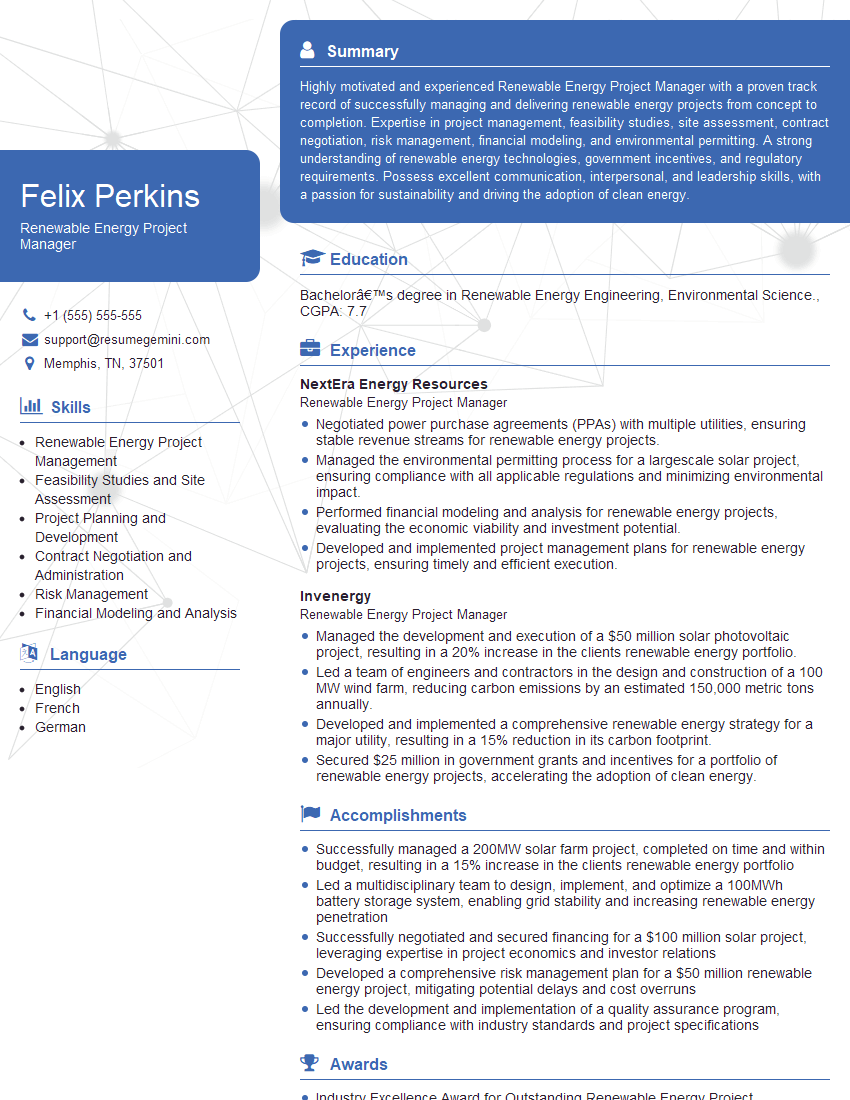
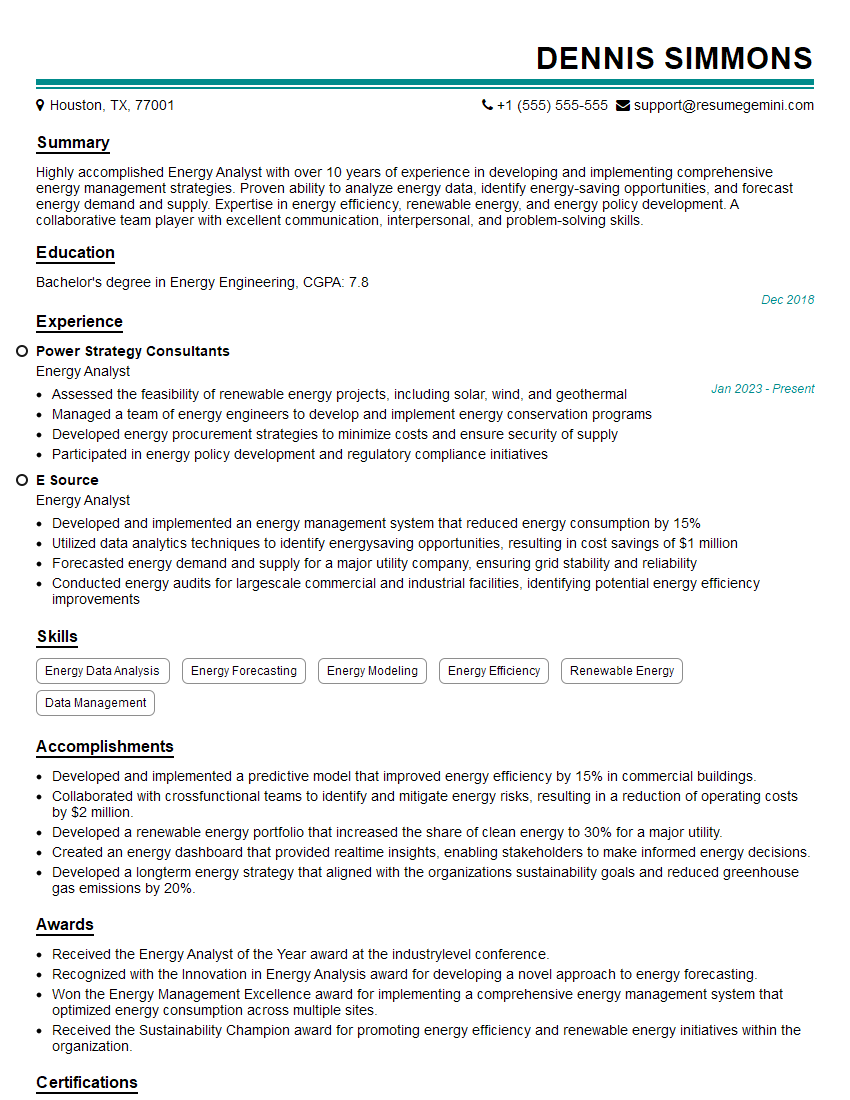
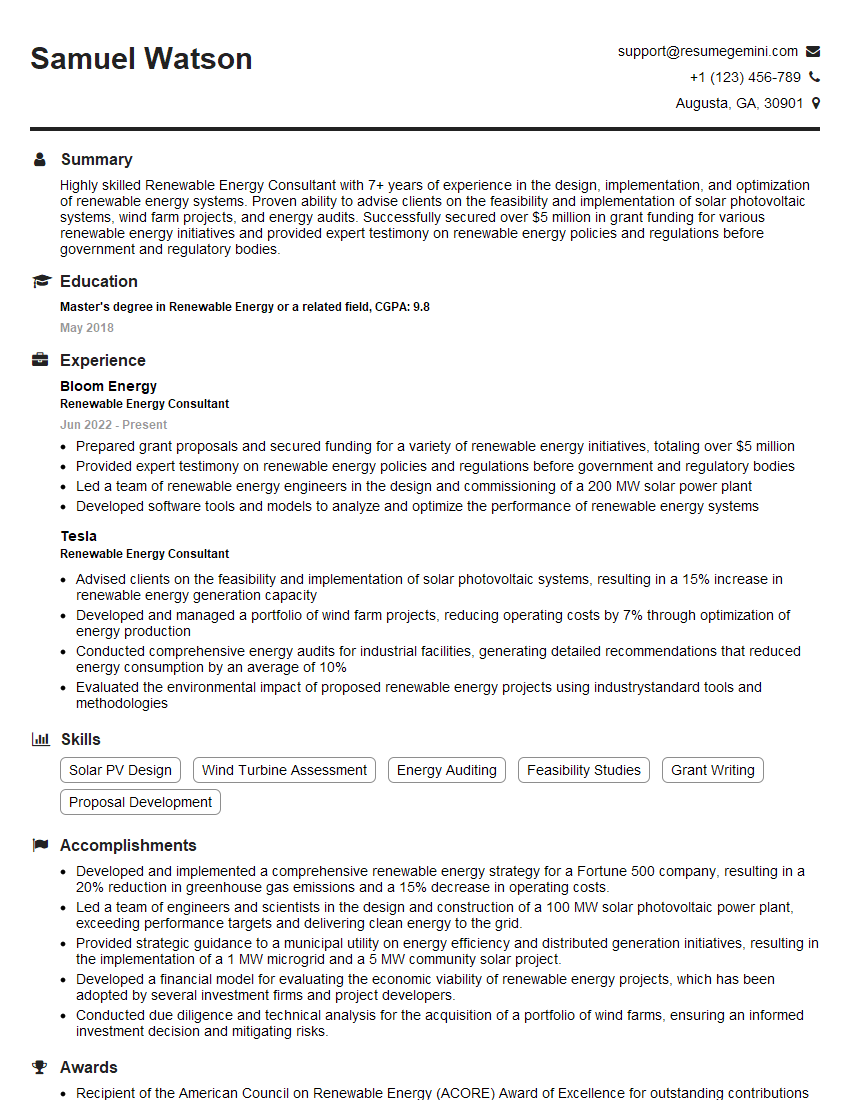
Mastering Solar Resource Assessment and Modeling opens doors to exciting and impactful careers in renewable energy, offering opportunities for growth and innovation. A strong understanding of these concepts is highly sought after by employers. To maximize your job prospects, it’s crucial to present your skills effectively. Creating an ATS-friendly resume is essential for getting your application noticed. ResumeGemini is a trusted resource that can help you build a compelling and professional resume. We provide examples of resumes tailored to Solar Resource Assessment and Modeling roles to help you showcase your qualifications effectively.
Explore more articles
Users Rating of Our Blogs
Share Your Experience
We value your feedback! Please rate our content and share your thoughts (optional).
What Readers Say About Our Blog
Very informative content, great job.
good