Preparation is the key to success in any interview. In this post, we’ll explore crucial Solid State Laser Fundamentals interview questions and equip you with strategies to craft impactful answers. Whether you’re a beginner or a pro, these tips will elevate your preparation.
Questions Asked in Solid State Laser Fundamentals Interview
Q 1. Explain the principle of stimulated emission in a solid-state laser.
Stimulated emission is the cornerstone of laser operation. Imagine an excited atom; it’s like a ball perched precariously on a hill. Normally, this atom would spontaneously release its energy (the ball rolling down) as a photon of light. However, if another photon with exactly the right energy (the same wavelength) passes by, it triggers the excited atom to release its energy as a second photon. This second photon is an exact copy of the first – identical in wavelength, phase, and direction. This is stimulated emission: one photon stimulating the creation of an identical one.
In a solid-state laser, this process happens within the gain medium (a crystal or glass doped with specific ions). Millions of these atoms are stimulated simultaneously, creating a highly coherent and intense beam of light.
Q 2. Describe the different types of solid-state laser gain media and their properties.
Solid-state laser gain media are materials doped with specific ions that provide the energy levels necessary for laser action. Common types include:
- Neodymium-doped Yttrium Aluminum Garnet (Nd:YAG): This is a workhorse in the field, offering high efficiency and excellent power output at various wavelengths, particularly 1064 nm (infrared). Its robustness and high thermal conductivity make it suitable for high-power applications.
- Ytterbium-doped Yttrium Aluminum Garnet (Yb:YAG): Known for its high efficiency and relatively low heat generation compared to Nd:YAG, making it ideal for compact and highly efficient lasers.
- Titanium-sapphire (Ti:Sapphire): This crystal allows for tunable laser operation over a broad range of wavelengths in the visible and near-infrared spectrum, making it a versatile tool for scientific research and spectroscopy.
- Erbium-doped Yttrium Aluminum Garnet (Er:YAG): Operates at wavelengths around 1.54 μm, which is highly important for medical applications like laser surgery and dermatology because of its excellent absorption by water.
The choice of gain medium depends heavily on the desired wavelength and power output, as well as considerations like efficiency and cost.
Q 3. What are the key components of a typical solid-state laser system?
A typical solid-state laser system comprises several key components:
- Gain Medium: The heart of the laser, containing the atoms or ions that undergo stimulated emission.
- Pump Source: Provides the energy to excite the gain medium, typically a flash lamp or a laser diode.
- Optical Resonator (Cavity): Usually formed by two mirrors that reflect the light back and forth through the gain medium, amplifying the stimulated emission. One mirror is partially reflective to allow the laser beam to escape.
- Cooling System: Essential for dissipating the heat generated during laser operation, especially in high-power lasers. Water cooling or thermoelectric coolers are common.
- Power Supply: Provides the electrical power to the pump source and other components.
The precise arrangement and design of these components depend on the specific application and desired laser characteristics.
Q 4. Explain the concept of population inversion and its importance in laser operation.
Population inversion is a crucial condition for laser operation. It refers to a situation where a higher energy level of the gain medium’s atoms has a greater population than a lower energy level. This is unnatural, as typically, lower energy levels are more populated. Imagine a hill with more balls at the top than at the bottom – that’s population inversion.
This inverted population is essential because it ensures that stimulated emission dominates over absorption. When a photon passes through the gain medium, it is more likely to stimulate the emission of another photon than to be absorbed, leading to the amplification of light. Without population inversion, the laser will not function.
Q 5. Describe different laser pumping mechanisms used in solid-state lasers.
Several pumping mechanisms are used to achieve population inversion in solid-state lasers:
- Flashlamp Pumping: A high-intensity flash lamp surrounds the gain medium, emitting broad-spectrum light that excites the dopant ions. It’s a relatively simple and cost-effective method but less efficient than other techniques.
- Diode Laser Pumping: More efficient and compact than flashlamp pumping, this method uses semiconductor laser diodes to directly pump the gain medium at specific wavelengths corresponding to the absorption lines of the dopant ions. This results in higher efficiency and better beam quality.
- Optical Pumping: Uses another laser as a pump source to efficiently excite the gain medium. This method allows for high power and high beam quality lasers.
The choice of pumping mechanism depends on factors such as desired laser output power, efficiency requirements, and cost considerations.
Q 6. What are the advantages and disadvantages of diode-pumped solid-state lasers (DPSSLs)?
Diode-pumped solid-state lasers (DPSSLs) have revolutionized the field of laser technology. Their advantages include:
- High Efficiency: They convert electrical energy into laser light much more efficiently than flashlamp-pumped lasers.
- Compact Size: The use of compact laser diodes allows for smaller and more portable laser systems.
- Excellent Beam Quality: DPSSLs typically produce beams with superior spatial coherence compared to flashlamp-pumped lasers.
- Long Lifetime: Laser diodes have longer operational lifetimes than flashlamps.
However, some disadvantages exist:
- Cost: The cost of high-power laser diodes can be significant.
- Thermal Management: Efficient thermal management is crucial for optimal performance, particularly at high power levels.
Despite these drawbacks, the advantages of DPSSLs have made them the preferred choice for many applications, ranging from scientific research to industrial processing and medical procedures.
Q 7. Explain the concept of laser threshold and how it’s determined.
Laser threshold is the minimum pump power required to achieve population inversion and initiate laser oscillation. Below this threshold, the spontaneous emission and absorption processes dominate, and no net amplification of light occurs. Think of it as the critical point where the number of photons created through stimulated emission exceeds the number lost through absorption and other losses within the cavity.
Determining the laser threshold involves measuring the output power of the laser as a function of the pump power. The threshold is the point where the output power starts to increase significantly. This can be determined graphically by extrapolating the linear portion of the output power versus pump power curve to the horizontal axis (zero output power). Various theoretical models can also predict threshold power based on parameters such as gain medium properties, cavity losses, and pump efficiency.
Q 8. Describe different types of laser resonators and their characteristics.
Laser resonators are the heart of any laser, providing the optical feedback necessary for lasing action. They essentially define the optical path and the spatial characteristics of the emitted beam. Different resonator designs offer various advantages and disadvantages, influencing beam quality, stability, and output power.
- Fabry-Pérot Resonator: This is the simplest and most common type, consisting of two parallel mirrors. The gain medium is placed between these mirrors. Its simplicity makes it cost-effective, but it’s susceptible to misalignment and has a relatively large beam divergence.
- Stable Resonators: These resonators maintain a stable beam profile over time. The radius of curvature of the mirrors is carefully chosen to keep the beam size within a manageable range. Different configurations exist, like concentric (both mirrors have equal radii of curvature and the beam waist is at the center), confocal (mirrors with equal radii of curvature, beam waist is midway between mirrors), and plane-parallel (flat mirrors).
- Unstable Resonators: These resonators have a larger beam diameter inside the cavity, leading to higher output power but a lower beam quality, often requiring mode selection techniques. They are typically used when higher power is desired, even at the cost of beam quality. The beam expands as it travels through the resonator, leading to large output power but reduced beam quality.
- Ring Resonators: In a ring resonator, the beam travels in a closed loop, not directly back and forth between mirrors. This configuration can suppress certain modes and lead to improved stability and beam quality. They are useful in applications requiring high beam quality and frequency stability.
The choice of resonator depends on the specific application; for example, a high-power laser might use an unstable resonator to maximize output, while a precision application would benefit from a stable resonator or ring resonator design offering excellent beam quality.
Q 9. How does the choice of resonator affect laser beam quality?
The resonator design significantly impacts laser beam quality, primarily characterized by the M² factor (beam propagation factor). A lower M² value indicates a beam closer to the ideal Gaussian profile, signifying better quality and easier focusing.
- Stable resonators generally produce better beam quality (lower M²) compared to unstable resonators, although at the cost of lower output power. The stable configuration confines the beam within a relatively small volume, promoting a more Gaussian-like profile.
- Unstable resonators, while producing higher power, lead to a larger M² value due to the inherent expansion of the beam within the cavity. The beam quality is compromised because the output is the spatial sum of many transverse modes.
- Careful mirror selection and cavity design is paramount in influencing beam quality. Precisely controlling the curvature and spacing of the mirrors is crucial for ensuring the resonator operates in the desired transverse mode (preferably the fundamental TEM00 mode for optimal beam quality).
- Intracavity elements such as apertures or etalons can be used to filter out higher-order modes, improving beam quality. However, this is often done at the expense of output power.
For instance, in material processing or medical applications, a high-quality beam (low M²) is crucial for precise control and minimal collateral damage, while in some high-power industrial applications, beam quality is less important than total output power.
Q 10. Explain the concept of thermal lensing in solid-state lasers and its mitigation techniques.
Thermal lensing is a phenomenon where the heat generated within the gain medium of a solid-state laser due to pump absorption causes a change in its refractive index, acting like a lens. This effect is particularly prominent in high-power lasers. The temperature increase is not uniform across the medium causing a refractive index gradient, creating a positive lens effect (convergent).
This thermal lens distorts the beam profile, leading to reduced beam quality, instability, and even potential damage to the laser components. The degree of thermal lensing depends on several factors, including pump power, the gain medium’s thermal conductivity, and its geometry.
- Mitigation techniques aim to minimize or compensate for this effect. These techniques include:
- Improved Heat Sinking: Using efficient heat sinks to quickly dissipate the heat generated helps reduce the temperature gradient.
- Optimized Pump Geometry: Careful design of the pump source to distribute the pump energy more uniformly can minimize the thermal gradient. For example, using fiber-coupled lasers instead of lamp pumping offers better control over the pump profile.
- Active Thermal Compensation: Using adaptive optics components or deformable mirrors to actively compensate for the induced lensing effects.
- Use of Materials with High Thermal Conductivity: Selecting a gain medium material with higher thermal conductivity helps to reduce temperature gradients.
Imagine trying to focus a laser beam through a glass lens that’s heating up unevenly—the beam would be distorted. Thermal lensing is similar; it degrades the beam quality, making it harder to focus or maintain a stable output. By employing effective heat management and compensation methods, you can improve beam quality and power stability.
Q 11. What are the different types of Q-switching techniques used in solid-state lasers?
Q-switching is a technique used to generate high-energy pulses from a solid-state laser. It involves rapidly changing the quality factor (Q) of the laser resonator, building up energy in the gain medium and then releasing it in a short, intense pulse. Several techniques achieve this:
- Acousto-optic Q-switching: Uses an acousto-optic modulator (AOM) to diffract light out of the resonator, effectively reducing the Q factor. When the AOM is switched off, the stored energy is released as a pulse.
- Electro-optic Q-switching: Employs an electro-optic crystal (like Pockels cell) to change its refractive index, altering the polarization of light within the cavity and diverting it out of the resonator. A fast change in voltage creates the pulse.
- Passive Q-switching: Doesn’t require an external driving signal. Instead, a saturable absorber within the cavity acts as a shutter, allowing the laser to reach a high population inversion before rapidly releasing the energy in a pulse. This method is simpler but can have less precise control over pulse characteristics.
Each method has its advantages and disadvantages regarding pulse width, energy, repetition rate, and complexity. Acousto-optic Q-switching offers good control and high repetition rates, while passive Q-switching is simpler but less precise. Electro-optic methods are fast, with good pulse shaping capabilities.
Q 12. Describe the principles of mode-locking in solid-state lasers.
Mode-locking is a technique used to generate ultrashort laser pulses by forcing many longitudinal modes of the laser cavity to oscillate in phase. This creates a train of very short, high-intensity pulses.
In a passively mode-locked laser, a saturable absorber inside the laser cavity preferentially absorbs low-intensity light. The most intense portions of the pulse, the leading edge, pass through the absorber with minimal losses. The absorber favors the leading edge of the intensity profile within the cavity. This leads to a pulse shaping process. The pulse shortens until it reaches a steady state based on the gain and losses within the cavity.
In actively mode-locked lasers, an external modulator (e.g., an electro-optic modulator) periodically introduces losses into the resonator, preferentially selecting the most intense part of the light in the cavity. This leads to the same pulse shortening effect as with passive mode locking but allows more precise control over the pulse width and repetition rate.
Imagine many waves overlapping, with varying phase relationships. Mode-locking aligns them precisely to create a single, towering wave—a short, intense pulse. This is the essence of this technique, which enables femtosecond to picosecond pulsed operation which is widely used for spectroscopic and metrology applications.
Q 13. What are the factors influencing the output power and efficiency of a solid-state laser?
Several factors influence the output power and efficiency of a solid-state laser:
- Pump Power: Higher pump power generally leads to higher output power but only up to a saturation point beyond which further increases in pump power do not provide significant power increases.
- Gain Medium Properties: The gain medium’s properties, such as doping concentration, length, and optical quality, greatly impact the laser’s efficiency and power output. Material selection is critical.
- Resonator Design: The resonator design and mirror reflectivity influence how much energy is extracted from the gain medium and converted into output power.
- Thermal Management: Efficient heat removal prevents thermal lensing and maintains the gain medium’s optimal operating temperature, thus boosting efficiency.
- Optical Losses: Losses due to absorption, scattering, and imperfect mirror reflectivity reduce the laser’s efficiency and power.
- Quantum Efficiency: The intrinsic efficiency of the gain medium in converting pump photons into laser photons.
For example, optimizing the pump geometry, using high-reflectivity mirrors, and implementing efficient cooling can significantly enhance both output power and efficiency. The efficiency is the ratio of the output laser power to the input electrical power used to pump the laser.
Q 14. How is the beam quality of a solid-state laser characterized (e.g., M² factor)?
The beam quality of a solid-state laser is primarily characterized by the M² factor (beam propagation factor), a measure of how closely the beam profile resembles an ideal Gaussian beam.
An M² value of 1 represents a perfect Gaussian beam, while higher values indicate deviations from the ideal, signifying poorer beam quality. The M² factor is determined experimentally by measuring the beam’s diameter at various distances from the laser output and fitting the data to a theoretical model. Specialized beam profiling equipment is used for this measurement, often using cameras and software that analyze the intensity distribution of the beam.
Other metrics, such as beam divergence (how much the beam spreads out) and beam pointing stability (how much the beam direction varies over time), are also important factors in characterizing beam quality. However, the M² factor remains the most widely used and recognized parameter, providing a concise assessment of the beam’s ability to be focused to a small spot.
In precision applications like laser surgery or micromachining, a low M² value (close to 1) is crucial for achieving the desired accuracy and precision. In other applications where tight focusing isn’t paramount, a higher M² value might be acceptable, particularly if higher power is desired.
Q 15. Explain different techniques for laser beam shaping and control.
Laser beam shaping and control are crucial for many applications, from micromachining to medical treatments. We need to manipulate the beam’s spatial profile (its intensity distribution), its temporal characteristics (pulses), and its polarization. Several techniques achieve this.
Spatial Shaping: This modifies the beam’s transverse intensity distribution. Methods include:
- Diffractive Optical Elements (DOEs): These are patterned structures (like computer-generated holograms) that diffract the incident beam into a desired shape. Think of it like a specialized lens that creates a specific pattern. For example, a DOE can transform a Gaussian beam (the typical output of a laser) into a flat-top beam, ideal for uniform material processing.
- Refractive Optics: Traditional lenses, mirrors, and prisms can be used to shape the beam, often in combination. A simple example is using a cylindrical lens to create a line focus, useful for welding or cutting long seams.
- Spatial Light Modulators (SLMs): These devices allow for dynamic control of the beam shape, essentially acting as programmable optical elements. They’re used in advanced applications requiring real-time beam shaping adjustments.
Temporal Shaping: This controls the temporal characteristics of the laser pulse, particularly its duration and shape. Techniques include:
- Pulse Shaping Systems: Employ specialized optical components to modify the temporal profile of ultrashort laser pulses. This is critical in applications like coherent control of chemical reactions.
- Q-switching and Mode-locking: These techniques are built into the laser itself to generate short pulses. Q-switching produces pulses with longer durations (nanoseconds) while mode-locking generates ultrashort pulses (femtoseconds).
Polarization Control: This involves manipulating the orientation of the electric field vector of the light. Common methods use polarizers, waveplates (e.g., half-wave plates and quarter-wave plates), and Faraday rotators. Polarization control is important for certain nonlinear optical processes and interferometric applications.
The choice of technique depends heavily on the specific application and the required level of control. For simple tasks, refractive optics might suffice, while complex applications necessitate the use of DOEs or SLMs.
Career Expert Tips:
- Ace those interviews! Prepare effectively by reviewing the Top 50 Most Common Interview Questions on ResumeGemini.
- Navigate your job search with confidence! Explore a wide range of Career Tips on ResumeGemini. Learn about common challenges and recommendations to overcome them.
- Craft the perfect resume! Master the Art of Resume Writing with ResumeGemini’s guide. Showcase your unique qualifications and achievements effectively.
- Don’t miss out on holiday savings! Build your dream resume with ResumeGemini’s ATS optimized templates.
Q 16. Describe different types of optical damage mechanisms in solid-state laser materials.
Optical damage in solid-state laser materials is a significant concern, limiting the performance and lifespan of the laser. Several mechanisms contribute:
Linear Absorption: At high intensities, even small amounts of absorption can lead to localized heating and damage. Impurities or defects in the laser crystal are the primary culprits. This can cause thermal stress fracture or melting.
Nonlinear Absorption: This involves multiphoton absorption or avalanche ionization, where multiple photons are simultaneously absorbed, leading to rapid energy deposition and material breakdown. This is especially relevant with high-peak-power, short-pulse lasers.
Self-Focusing: At high intensities, the refractive index of the material can change, causing the beam to self-focus and create extremely high intensities at a single point. This can lead to catastrophic damage.
Photochemical Damage: This involves changes in the material’s chemical composition due to the interaction with light. This can alter the optical properties and ultimately lead to damage.
Surface Damage: Surface imperfections or contaminants can significantly lower the laser damage threshold. Cleaning and polishing the laser crystal surfaces are crucial.
Understanding these damage mechanisms is key to designing and operating solid-state lasers reliably. Careful selection of materials, precise control of laser parameters (power, pulse duration, beam quality), and effective cooling strategies are essential to mitigate damage.
Q 17. How are solid-state lasers used in material processing applications?
Solid-state lasers are workhorses in material processing because of their high power, excellent beam quality, and wavelength tunability. Their applications are diverse:
Cutting: Lasers are used to cut various materials with high precision and speed, from metals and ceramics to plastics and textiles. The high power density allows for clean cuts with minimal heat-affected zones.
Welding: Lasers provide deep penetration welds with excellent control over the weld bead. They’re used in industries like automotive manufacturing and aerospace.
Drilling: Precisely drilling holes in various materials, from microelectronics to engine components, is another common application. Lasers can drill intricate geometries with high accuracy.
Marking and Engraving: Lasers are used for marking product codes, serial numbers, and logos. They allow for permanent and highly detailed marking.
Surface Treatment: Laser surface treatments like hardening, cladding, and texturing modify surface properties to enhance wear resistance, corrosion resistance, and other functionalities.
The choice of laser wavelength and parameters (power, pulse duration, scan speed) is tailored to the specific material and processing requirement. For example, shorter wavelengths are generally better for cutting metals, while longer wavelengths might be more suitable for plastics.
Q 18. Explain the principles of laser spectroscopy and its applications.
Laser spectroscopy utilizes lasers to probe the energy levels of atoms and molecules. The high spectral brightness and tunability of lasers enable precise and sensitive measurements. The principle is based on the interaction of light with matter: atoms and molecules absorb or emit light at specific wavelengths, corresponding to the energy differences between their electronic, vibrational, and rotational energy levels.
Absorption Spectroscopy: Measures the amount of light absorbed by a sample as a function of wavelength. It’s used to identify and quantify substances.
Emission Spectroscopy: Analyzes the light emitted by a sample after excitation. It reveals information about the sample’s composition and energy levels.
Raman Spectroscopy: Measures the inelastic scattering of light by a sample. It provides information about vibrational modes and molecular structure.
Fluorescence Spectroscopy: Measures the light emitted by a sample after excitation. It’s a sensitive technique used in biological and medical applications.
Applications span diverse fields: environmental monitoring (measuring pollutants), medical diagnostics (detecting diseases), chemical analysis (identifying compounds), and fundamental research (studying atomic and molecular structures). For instance, laser-induced breakdown spectroscopy (LIBS) is used for real-time elemental analysis in various settings.
Q 19. Discuss the safety precautions associated with working with solid-state lasers.
Solid-state lasers, especially high-power ones, pose significant safety hazards. Proper precautions are crucial to prevent eye and skin damage:
Eye Protection: Always wear appropriate laser safety eyewear that is rated for the laser’s wavelength and power. The eyewear must be specifically designed to block the laser wavelength.
Skin Protection: High-power lasers can cause severe burns. Protective clothing, including gloves and lab coats, might be necessary.
Beam Enclosure: Enclose the laser beam path as much as possible to prevent accidental exposure. Use beam stops and appropriate shielding.
Warning Signs: Clearly mark the laser area with warning signs indicating the laser’s class and potential hazards.
Emergency Procedures: Develop and practice emergency procedures in case of laser accidents. This includes knowing the location of emergency eyewash stations and first aid kits.
Training: All personnel working with lasers should receive appropriate training on safe laser operation and handling.
Laser safety regulations vary by location, but adhering to established safety standards is paramount. Never underestimate the potential hazards associated with high-power lasers. Prioritizing safety is not just a good practice, it’s a necessity.
Q 20. What are different methods for measuring laser power and energy?
Measuring laser power and energy requires different techniques depending on the laser’s characteristics (power level, pulse duration, wavelength).
Power Meters: Used to measure the average power of continuous-wave (CW) lasers. These devices use a thermal sensor or photodiode to measure the light’s intensity. The calibration of the power meter is crucial for accurate measurements.
Energy Meters: Used to measure the energy of pulsed lasers. These employ a calorimeter or pyroelectric detector to absorb the laser energy and convert it into a measurable signal. The energy meter must be compatible with the laser’s wavelength and pulse duration.
Beam Profilers: Provide spatial information about the beam’s intensity distribution in addition to total power or energy. This information is critical for characterizing beam quality.
Photodiodes: Simple and relatively inexpensive detectors suitable for specific applications and power ranges, often used in conjunction with appropriate attenuators to avoid damage.
The choice of measurement technique depends on factors like the laser’s power level, pulse duration, wavelength, and the required accuracy. Calibration and proper handling procedures are essential to ensure accurate and reliable measurements.
Q 21. Explain the difference between CW and pulsed laser operation.
The fundamental difference between CW (Continuous Wave) and pulsed laser operation lies in how the light is emitted.
CW Lasers: Emit a continuous beam of light. The output power remains constant over time. Think of a regular light bulb, though the light is highly monochromatic and coherent.
Pulsed Lasers: Emit light in short bursts or pulses. The output power is not constant, varying with time. The peak power during a pulse can be significantly higher than the average power. Imagine a strobe light—intense bursts of light separated by periods of darkness.
The choice between CW and pulsed operation depends on the application. CW lasers are suitable for applications requiring constant illumination, such as laser pointers or material processing where continuous energy input is needed. Pulsed lasers are advantageous when high peak powers are required or when short pulses are crucial for specific interactions, such as in laser spectroscopy or micromachining.
Furthermore, pulsed lasers can enable applications that are impossible with CW lasers due to effects like nonlinear optics, where high peak intensity drives processes such as frequency doubling or parametric amplification. The pulse duration and repetition rate (how frequently the pulses are emitted) are key parameters defining pulsed laser operation.
Q 22. What are the advantages and disadvantages of different types of laser cooling techniques?
Laser cooling techniques are crucial for achieving high-performance solid-state lasers, particularly in applications requiring narrow linewidths and high spectral purity. Several methods exist, each with its own strengths and weaknesses.
- Doppler Cooling: This relies on the Doppler effect. Atoms moving towards a laser beam absorb photons, slowing down, while atoms moving away are less likely to interact. It’s relatively simple but limited by the Doppler limit, preventing cooling below a certain temperature. Example: Used in atomic clocks and quantum computing.
- Sisyphus Cooling: This technique uses a spatially varying light field to create a kind of optical molasses, further slowing atoms. It can achieve temperatures significantly lower than Doppler cooling. Example: Used in advanced atomic physics experiments.
- Electromagnetically Induced Transparency (EIT) Cooling: This sophisticated method exploits quantum interference effects to create extremely low temperatures. However, it’s more complex to implement. Example: Crucial for creating Bose-Einstein condensates.
In summary, Doppler cooling is simpler but less effective, while Sisyphus and EIT cooling offer superior performance at the cost of increased complexity. The choice of method depends entirely on the desired temperature and the complexity one is willing to accept.
Q 23. Describe your experience with laser diagnostics and troubleshooting.
My experience with laser diagnostics involves a wide range of techniques, from basic power and beam profile measurements to sophisticated spectral analysis. I’m proficient in using various diagnostic tools such as optical spectrum analyzers, power meters, beam profilers, and auto-correlator.
Troubleshooting is often an iterative process. For instance, if a laser’s output power is lower than expected, I’d systematically check the pump source, the laser crystal’s condition (checking for thermal lensing, damage, or contamination), the cavity alignment, and the cooling system. Spectral analysis helps identify unwanted modes or frequency shifts. I’ve also used thermal imaging to diagnose overheating issues within the laser cavity.
One memorable instance involved a Yb:YAG laser with unstable output. By carefully analyzing the spectral characteristics and comparing them with previous data, I identified a slight misalignment of the laser cavity mirrors, which was easily corrected, restoring stable operation. This highlights the importance of a structured diagnostic approach and meticulous record keeping.
Q 24. How would you design a solid-state laser for a specific application?
Designing a solid-state laser for a specific application requires a thorough understanding of the application’s needs and careful selection of components. The process typically involves the following steps:
- Define Requirements: Determine the desired wavelength, output power, beam quality (M2), pulse duration (if pulsed), and operating conditions (temperature, environment).
- Gain Medium Selection: Choose a suitable laser crystal (e.g., Nd:YAG, Yb:YAG, Ti:Sapphire) based on the required wavelength and other parameters. Factors like efficiency, thermal conductivity, and cost need consideration.
- Pump Source Selection: Decide on the optimal pump source (e.g., diode lasers, flash lamps) based on the gain medium’s absorption spectrum and the desired power. Diode pumping is generally preferred for its high efficiency.
- Resonator Design: Design the laser cavity to ensure optimal mode matching, stability, and output characteristics. This involves selecting appropriate mirrors and designing the cavity geometry (e.g., plane-parallel, folded, unstable).
- Thermal Management: Implement effective thermal management to minimize heat buildup in the laser crystal, preventing thermal lensing and damage. This often involves efficient cooling systems.
- Control System Design: Design a control system to monitor and regulate parameters such as temperature, pump power, and cavity length, ensuring stable and reliable laser operation.
For example, designing a high-power green laser for material processing would require a high-power Nd:YAG laser followed by a frequency-doubling crystal to generate the green light, while a laser for high-precision micromachining might call for a more sophisticated resonator design to ensure high beam quality.
Q 25. Explain the concept of nonlinear optical processes in solid-state lasers.
Nonlinear optical processes occur when the response of a material to an intense optical field is no longer linear. This means the output light’s properties (intensity, frequency, polarization) are not simply proportional to the input. In solid-state lasers, these processes are often exploited to generate new wavelengths or modify the properties of the laser light.
- Second-Harmonic Generation (SHG): Two photons of the same frequency interact in a nonlinear crystal to produce a single photon with double the frequency (and half the wavelength). Example: Converting the infrared output of an Nd:YAG laser (1064 nm) to green light (532 nm).
- Optical Parametric Oscillation (OPO): A pump photon is split into two photons (signal and idler) with different frequencies, satisfying energy and momentum conservation. OPOs are tunable, allowing generation of a range of wavelengths. Example: Generating tunable mid-infrared radiation.
- Sum Frequency Generation (SFG): Two photons with different frequencies interact in a nonlinear crystal to generate a photon with a frequency that is the sum of the two input frequencies. Example: Combining outputs from different lasers to produce new colours.
The efficiency of nonlinear processes depends strongly on the crystal’s nonlinear susceptibility, the input intensity, and the phase matching condition. Careful crystal selection and precise control of beam parameters are crucial for optimizing these processes.
Q 26. Describe your experience with different laser control systems.
My experience encompasses various laser control systems, ranging from simple analog controllers to sophisticated digital systems utilizing embedded microcontrollers and software-based control loops.
I’ve worked with:
- Analog controllers: These use operational amplifiers and other analog components to regulate parameters like temperature and pump current. They are simpler but offer less precision and flexibility.
- Proportional-Integral-Derivative (PID) controllers: Widely used for precise control of laser parameters, offering stability and responsiveness. I’ve implemented these in several laser systems to stabilize output power and maintain precise wavelength control.
- Digital controllers: These utilize microcontrollers or computers to control and monitor laser parameters through software. This provides greater flexibility and allows for advanced control algorithms, such as adaptive control for optimizing laser performance under varying conditions. I’ve extensively used LabVIEW and Python for programming digital laser control systems.
The choice of control system depends heavily on factors like the desired precision, cost constraints, and complexity of the laser system. For example, a high-power industrial laser would typically employ a sophisticated digital control system, while a simple research laser may be controlled with a simpler analog system.
Q 27. Discuss the challenges in scaling solid-state lasers to higher powers.
Scaling solid-state lasers to higher powers presents several significant challenges:
- Thermal Management: Higher power densities lead to increased heat generation, requiring sophisticated cooling systems to prevent thermal lensing, stress fracture, and damage to the laser crystal. This often involves the use of advanced cooling techniques like microchannel coolers or cryogenic cooling.
- Beam Quality: Maintaining good beam quality (low M2) at high powers is challenging. Thermal lensing and other thermal effects can distort the beam profile. Techniques like adaptive optics are often necessary.
- Gain Saturation: At high power levels, the gain medium may saturate, limiting further increases in output power. This requires careful design of the gain medium and pump scheme.
- Nonlinear Effects: Higher power densities can enhance nonlinear effects such as self-focusing and stimulated Brillouin scattering, which can degrade beam quality or damage the laser components.
- Parasitic Oscillations: High-gain laser systems can be prone to parasitic oscillations that compete with the main laser mode. Careful cavity design and proper gain management are critical.
Overcoming these challenges requires careful design, advanced materials, and innovative engineering solutions. For instance, the development of new laser crystals with improved thermal conductivity and the use of advanced cooling techniques are key areas of active research.
Q 28. What are the latest advancements in solid-state laser technology?
Recent advancements in solid-state laser technology include:
- High-power fiber lasers: These lasers utilize optical fibers as the gain medium, allowing for excellent thermal management and scalability to very high powers (kilowatts to megawatts). They are becoming increasingly important for industrial applications.
- Improved laser crystals: Development of new laser crystals with enhanced properties, such as higher thermal conductivity, broader absorption bandwidths, and improved optical quality, is continually pushing the limits of solid-state laser performance.
- Advanced pump sources: High-brightness, high-power diode lasers are enabling more efficient and compact laser systems. Advances in laser diode technology are also contributing to the development of direct diode lasers that bypass the need for external pump sources.
- Nonlinear frequency conversion: Significant progress in nonlinear optical crystals has led to more efficient frequency conversion techniques, allowing for the generation of high-power lasers at a wider range of wavelengths.
- Advanced control systems: Sophisticated control systems using machine learning and adaptive optics are enhancing the stability, efficiency, and beam quality of high-power solid-state lasers.
These advancements continue to drive innovation in various fields, including laser material processing, medicine, scientific research, and defense.
Key Topics to Learn for Solid State Laser Fundamentals Interview
- Energy Levels and Transitions: Understand the principles of population inversion, stimulated emission, and spontaneous emission within the laser gain medium. Be prepared to discuss different energy level diagrams and their implications for laser operation.
- Laser Resonators: Master the design and function of optical resonators, including Fabry-Perot cavities. Analyze the impact of resonator parameters on laser output characteristics such as beam quality and mode structure.
- Gain Media: Develop a strong understanding of different solid-state gain materials (e.g., Nd:YAG, Ti:Sapphire), their properties, and how they influence laser performance. Be ready to compare and contrast various materials.
- Pumping Mechanisms: Familiarize yourself with various methods for pumping solid-state lasers, including flash lamps and diode lasers. Analyze the efficiency and limitations of each technique.
- Laser Beam Characteristics: Understand key parameters like beam divergence, spatial coherence, and temporal coherence. Be able to discuss how these characteristics are affected by laser design and operation.
- Nonlinear Optics in Solid-State Lasers: Explore concepts like frequency doubling, harmonic generation, and optical parametric oscillation as they relate to solid-state lasers and their applications.
- Practical Applications: Prepare examples of how solid-state lasers are used in various fields, such as materials processing, medical applications (e.g., laser surgery), and scientific research. Be ready to discuss specific applications and their underlying principles.
- Problem-Solving & Troubleshooting: Practice identifying and resolving common issues encountered in solid-state laser systems. This might involve understanding power instability, beam quality degradation, or thermal management challenges.
Next Steps
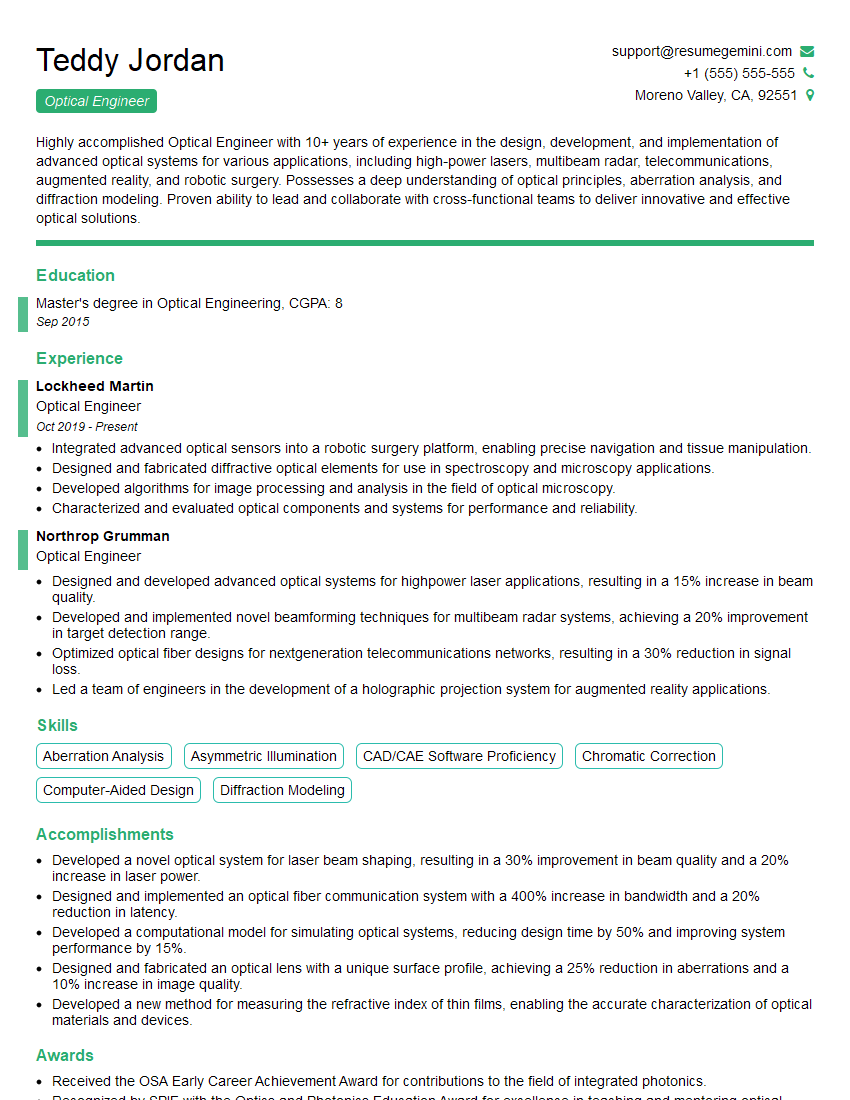
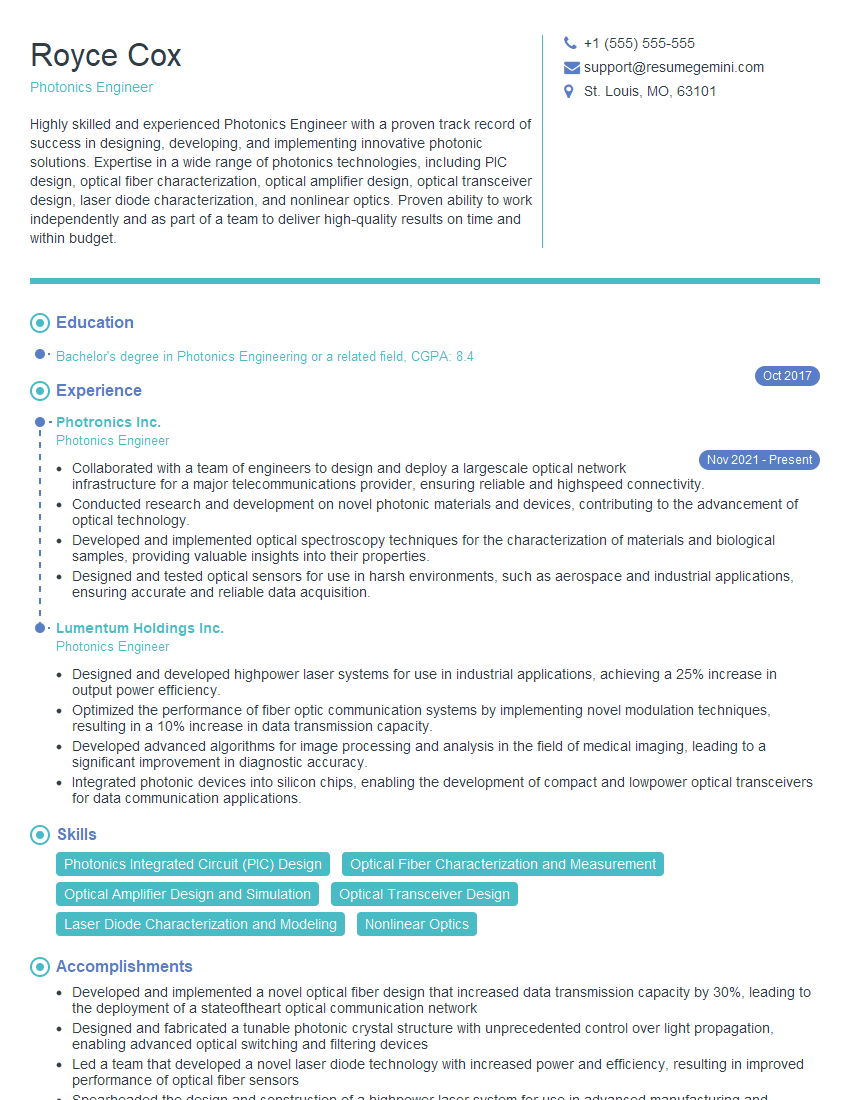
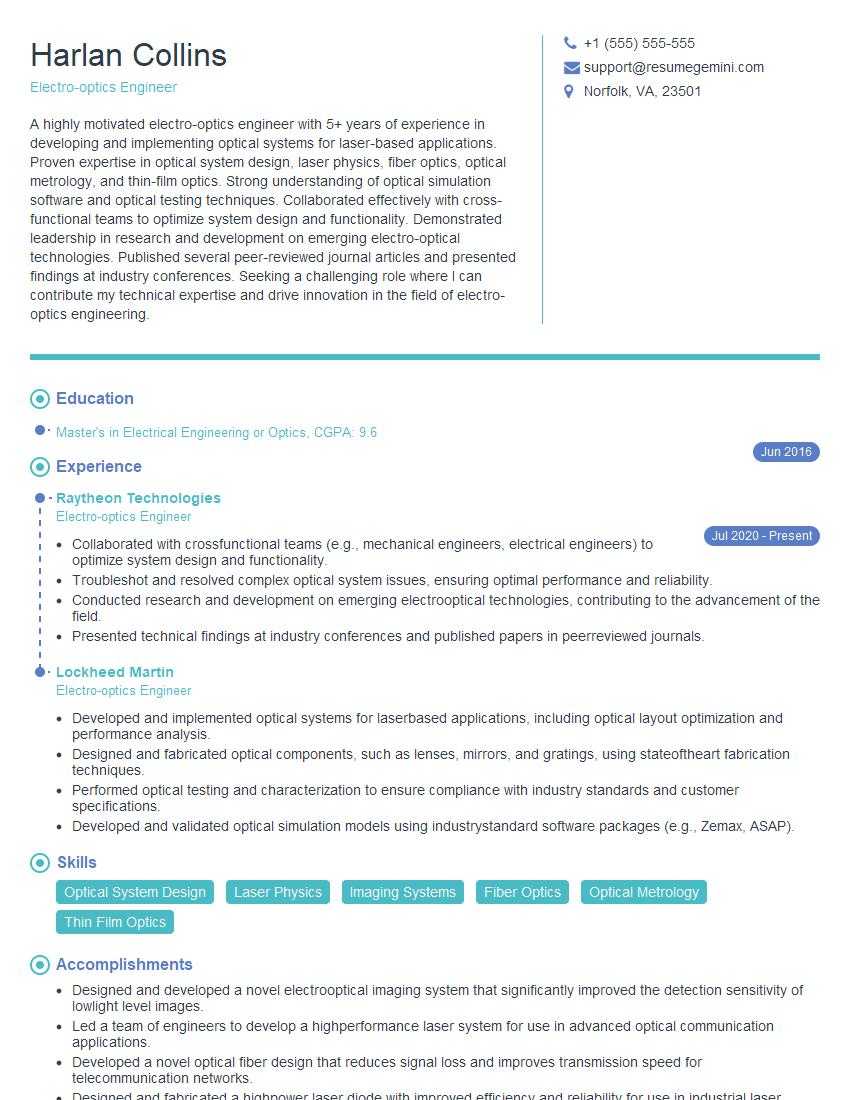
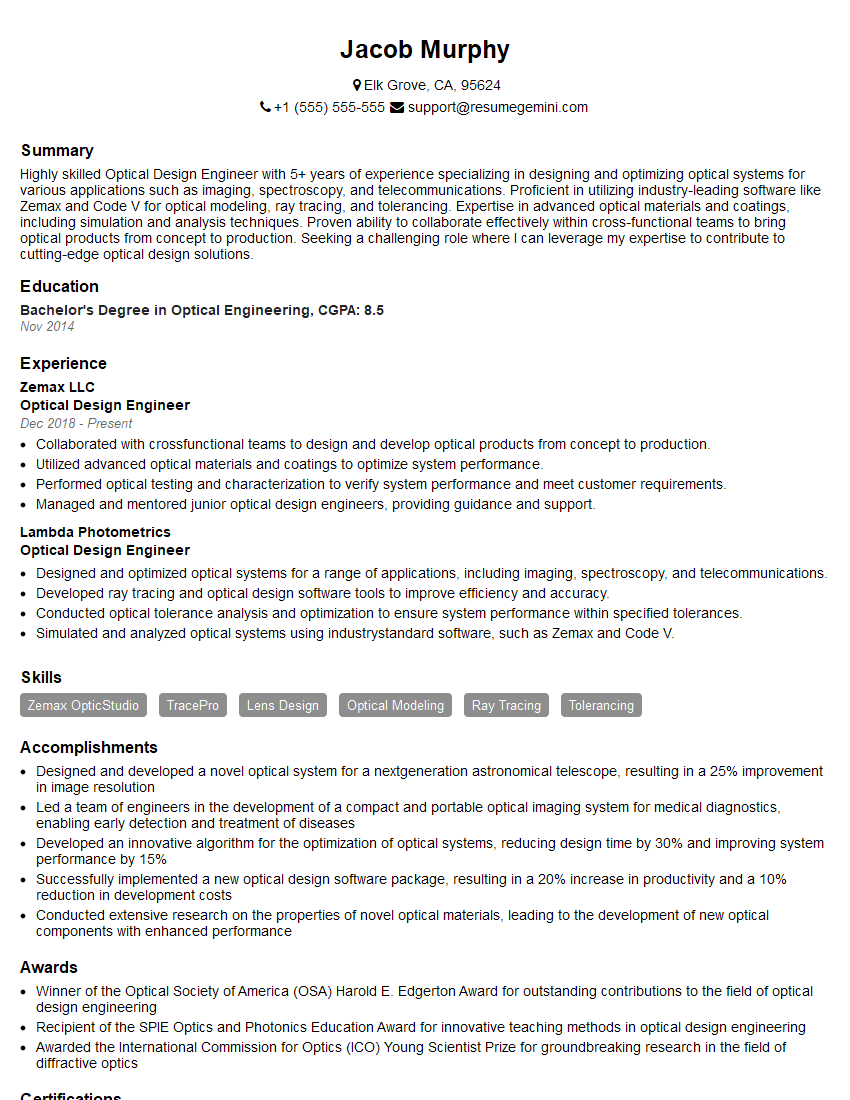
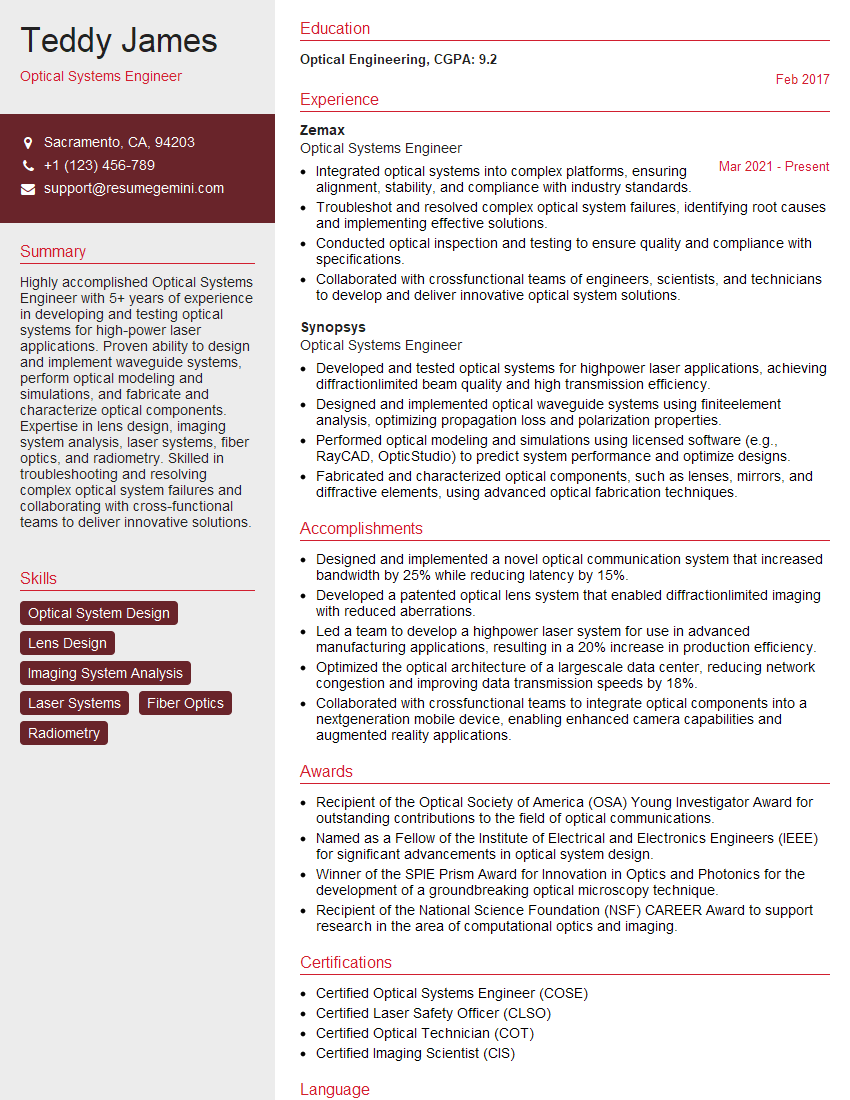
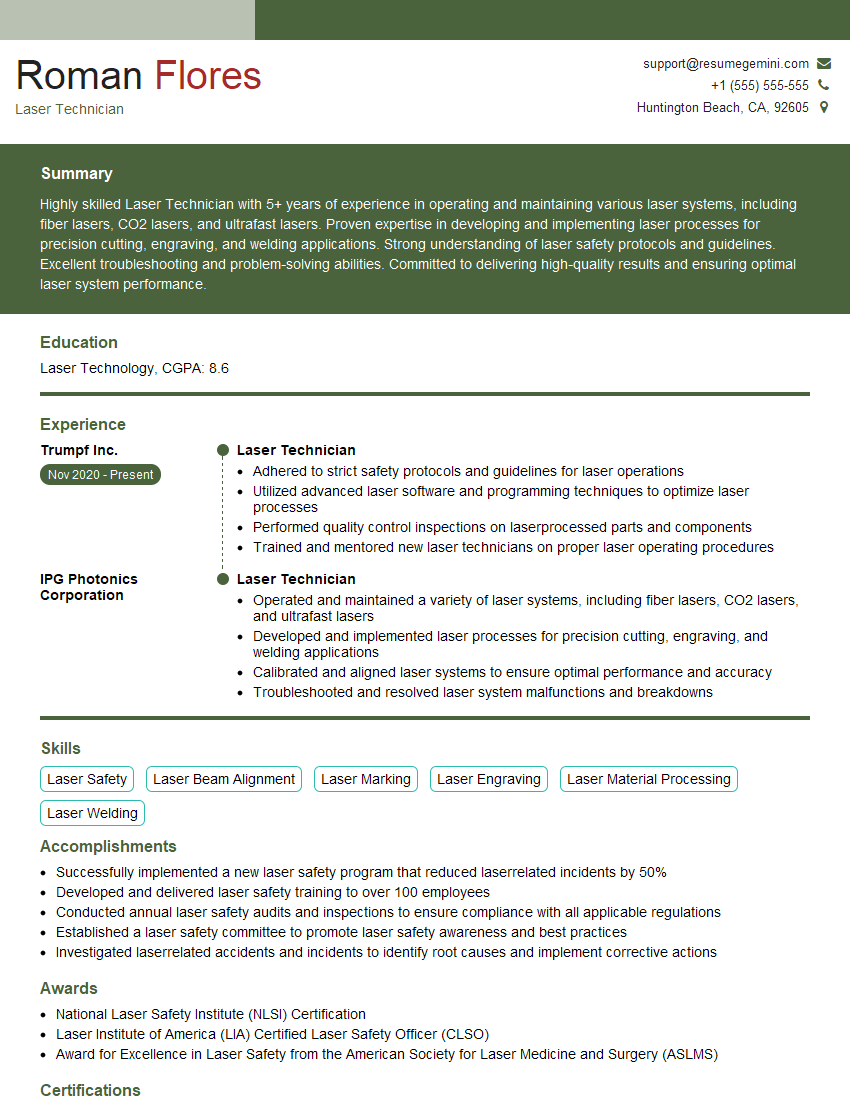
Mastering Solid State Laser Fundamentals is crucial for career advancement in optics, photonics, and related fields. A strong understanding of these concepts opens doors to exciting opportunities in research, development, and engineering. To maximize your job prospects, it’s vital to create a compelling and ATS-friendly resume that highlights your skills and experience effectively. ResumeGemini is a trusted resource to help you build a professional and impactful resume. We provide examples of resumes tailored to Solid State Laser Fundamentals to guide you in crafting your own. Invest time in crafting a strong resume – it’s your first impression on potential employers.
Explore more articles
Users Rating of Our Blogs
Share Your Experience
We value your feedback! Please rate our content and share your thoughts (optional).
What Readers Say About Our Blog
Very informative content, great job.
good