The thought of an interview can be nerve-wracking, but the right preparation can make all the difference. Explore this comprehensive guide to Song Structure and Arrangement interview questions and gain the confidence you need to showcase your abilities and secure the role.
Questions Asked in Song Structure and Arrangement Interview
Q 1. Explain the typical structure of a pop song (verse, chorus, bridge, etc.).
The typical structure of a pop song provides a framework for building tension and release, keeping the listener engaged. While variations exist, a common structure includes:
- Verse: Typically tells a story or sets a scene. It establishes the song’s mood and theme. Verses often repeat with slight lyrical variations.
- Chorus: The memorable and catchy part of the song. It’s usually the most powerful melodically and harmonically, representing the song’s central idea or feeling. It typically repeats consistently.
- Bridge: Provides contrast to the verses and chorus, offering a change of pace, mood, or perspective. It often features a different melody and harmony, and sometimes a different rhythm.
- Intro/Outro: The intro sets the stage, often with a simpler arrangement before the first verse. The outro brings the song to a satisfying conclusion, often echoing elements of the chorus or bridge.
Many songs also include pre-choruses (building up to the chorus) and post-choruses (extending the emotional impact of the chorus). Think of it like a story with a beginning, rising action (verses), climax (chorus), a twist (bridge), and resolution (outro).
Q 2. Describe the difference between verse and chorus in terms of melody, harmony, and rhythm.
The verse and chorus are distinct in several key ways:
- Melody: Verses usually feature simpler, less memorable melodies that build anticipation for the chorus. The chorus has a more memorable, catchy melody, often higher in pitch and more impactful.
- Harmony: Verses often use more subtle harmonies, sometimes relying on a basic chord progression. The chorus typically employs richer harmonies, possibly with layered vocals or instrumental parts to create a fuller sound.
- Rhythm: Verses often have a more relaxed or conversational rhythm. The chorus usually has a more driving and repetitive rhythm, designed to get the listener moving.
For example, in a song like ‘Bohemian Rhapsody’ by Queen, the verses are relatively quiet and narrative, while the chorus is powerful and anthemic. This contrast makes the chorus instantly recognizable and impactful.
Q 3. How do you create tension and release in a song’s structure?
Creating tension and release is crucial for a compelling song. Tension builds anticipation and emotional investment, while release provides catharsis and satisfaction. Here’s how it’s achieved:
- Dynamic Variation: Gradually increasing the intensity of the music (louder volume, faster tempo, more complex instrumentation) creates tension. Releasing this tension involves returning to quieter, simpler sections.
- Melodic and Harmonic Movement: Using chromaticism (notes outside the key) or unresolved chords builds tension. Resolving these tensions with consonant chords and simpler melodies creates a feeling of release.
- Lyrical Content: Building suspense or posing a problem in the verses and resolving it in the chorus or bridge is a powerful way to create tension and release.
- Rhythmic Variation: Shifting from simple, predictable rhythms to complex, syncopated rhythms can build tension. Returning to a simpler, more straightforward rhythm provides release.
Think of it like a rollercoaster: the climb is the tension, and the plunge is the release. The carefully planned shifts between these elements create a dynamic and engaging listening experience.
Q 4. What are some common strategies for creating a memorable hook?
A memorable hook is crucial for a song’s success. Here are some strategies:
- Simple and Repetitive Melodies: Easy-to-remember melodies are more likely to stick in the listener’s head.
- Strong Lyrical Hooks: Using concise, evocative, and relatable lyrics that convey the song’s essence.
- Unexpected Rhythmic or Melodic Turns: Adding a unique twist to a predictable pattern can make the hook more memorable.
- Catchy Vocal Delivery: A charismatic vocal performance can greatly enhance a hook’s memorability.
- Instrumental Hooks: A distinctive riff or melody played on an instrument can also serve as a hook.
Examples include the instantly recognizable riff in ‘Smoke on the Water’ or the catchy melody of ‘Hey Jude’. The key is to make it concise, memorable and emotionally resonant.
Q 5. Explain the importance of dynamic range in song arrangement.
Dynamic range refers to the difference between the loudest and softest parts of a song. It’s crucial for creating emotional depth and impact. A song with a wide dynamic range feels more dynamic and expressive. A song that stays at a consistent volume can feel flat and uninteresting.
Consider a quiet, introspective verse leading into a powerful, anthemic chorus. The contrast amplifies the emotional impact of both sections. Conversely, a song that lacks dynamic variation can feel monotonous, even if the individual sections are well-written.
Think about a classic rock song – it often starts softly, builds gradually, explodes in the chorus, and then maybe fades out beautifully. This ebb and flow is what makes the song powerful and engaging. A good mix engineer can make the difference between a dull and a dynamic recording.
Q 6. How do you use instrumentation to support the emotional arc of a song?
Instrumentation plays a pivotal role in supporting a song’s emotional arc. Different instruments evoke different emotions and can be used to enhance the mood at different points in the song.
- Building Tension: Adding layers of instrumentation, like strings or horns, or using instruments with a more intense sound (e.g., distorted guitars) can help build tension.
- Creating Release: Simpler instrumentation or a change to warmer-sounding instruments (like acoustic guitars) can provide a sense of release after a high-intensity section.
- Setting the Mood: Using instruments associated with a particular emotion—for example, acoustic guitar for intimacy, heavy drums for aggression—can immediately set the tone for a section.
- Counterpoint and Harmony: The interplay between different instruments can create interesting textures and harmonies, further enhancing the emotional impact.
For instance, a slow, melancholic melody played on a solo acoustic guitar will evoke a very different feeling than the same melody played with a full orchestra. Careful consideration of instrumentation is vital to create the desired emotional experience for the listener.
Q 7. Describe your process for arranging a song for a specific genre.
My process for arranging a song for a specific genre involves several steps:
- Genre Research: I begin by deeply immersing myself in the chosen genre. This includes listening to many examples, analyzing their common characteristics (instrumentation, rhythm, harmony, structure), and identifying what makes the genre unique.
- Song Analysis: I then analyze the song itself, identifying its key emotional elements, its climaxes and quiet moments, and the overall mood. This helps me map the emotional arc.
- Instrumentation Selection: I choose instruments that align with the genre’s conventions and the song’s emotional needs. This involves considering both the sonic qualities of the instruments and their role in building the emotional arc.
- Arrangement Development: I create a detailed arrangement plan, outlining the instrumentation, rhythmic patterns, and dynamic shifts for each section of the song. This is often done using music notation software.
- Experimentation and Iteration: I then start experimenting with different sounds and arrangements, constantly revising and refining the arrangement until it perfectly complements the song and aligns with the genre’s stylistic conventions.
- Mixing and Mastering: The final step involves collaborating with a mixing and mastering engineer to ensure the final product sounds professional and polished.
For example, arranging a country song would involve a focus on acoustic guitars, banjo, pedal steel guitar, and a generally simpler harmonic structure compared to, say, a heavy metal song which emphasizes distorted electric guitars, powerful drums, and complex rhythmic patterns. Each genre has its own set of conventions that I use as a guideline, while still ensuring the arrangement enhances the unique features of the specific song.
Q 8. How do you approach arranging a song with multiple vocal parts?
Arranging songs with multiple vocal parts is all about creating a rich tapestry of sound while maintaining clarity and balance. It’s like weaving individual threads into a beautiful fabric. My approach starts with a strong understanding of the melody and the lyrical content. I then consider the vocal ranges of the singers and their individual strengths.
- Part Selection: I decide which parts will carry the main melody (soprano or lead), which will provide harmony (alto, tenor, baritone), and which might add countermelodies or rhythmic interest. Sometimes, a simple unison line can be surprisingly effective.
- Vocal Textures: I experiment with different vocal textures – unison, harmony, canon (where one part imitates another), or even call-and-response patterns. The choice depends on the song’s mood and style.
- Range and Dynamics: I carefully arrange the parts to fit comfortably within each singer’s vocal range, avoiding awkward leaps or notes that are difficult to sing. I also consider dynamic variations—some parts might be louder or softer than others at different points to create contrast and interest.
- Blending and Separation: I pay close attention to the blending of the vocal parts, ensuring that each is audible but also that they work together cohesively. In some sections, I might want distinct separation between parts, while in others, I might prefer a close, blended sound.
For example, in a gospel arrangement, I might use close harmonies with call-and-response sections, while a pop song might feature lead vocals with layered backing vocals that provide harmonic support and subtle counter-melodies.
Q 9. Explain the role of countermelody in a musical arrangement.
A countermelody is a secondary melody that plays simultaneously with the main melody. It’s like a conversation between two musical voices; while the main melody states the primary musical idea, the countermelody adds depth, complexity, and interest without overshadowing the primary melody. Think of it as a supporting character in a story, enriching the narrative without stealing the spotlight.
The effectiveness of a countermelody relies on its relationship with the main melody. It can be:
- Contrasting: A countermelody can be rhythmically or melodically different from the main melody, creating a sense of movement and intrigue.
- Complementary: It can reinforce the main melody’s harmonies or create a sense of consonance, enriching the overall sonic texture.
- Independent: Sometimes, a countermelody can function independently, almost as a mini-melody within the larger musical context. This is common in Baroque music, where multiple independent melodic lines are interwoven.
Consider Bach’s counterpoint – many of his compositions feature intricate countermelodies that create a complex and beautiful texture while maintaining clarity and balance. In a more contemporary context, you might hear a simple, gently arpeggiated figure in the background serving as a countermelody to a vocal melody.
Q 10. How do you balance simplicity and complexity in your arrangements?
Balancing simplicity and complexity in arrangements is a crucial aspect of creating engaging music. Too much complexity can overwhelm the listener, while too much simplicity can feel monotonous. It’s finding the ‘sweet spot’ – the perfect equilibrium.
I approach this by:
- Identifying the Core: I begin by identifying the most important musical ideas – usually the melody and harmony. These elements form the foundation of the arrangement, providing a sense of simplicity and coherence.
- Gradual Introduction of Complexity: I then gradually introduce complexity through rhythmic variation, melodic embellishments, or instrumental countermelodies. I avoid overwhelming the listener by adding complexity layer by layer.
- Strategic Simplicity: There are times when simplicity is needed to create dramatic impact or emphasis. A sudden reduction in instrumentation, a simplified harmonic progression, or a return to the main melody can be incredibly powerful.
- Dynamic Contrast: The alternation of simpler and more complex sections creates dynamic contrast and keeps the listener engaged. Think of a song that builds slowly from a simple verse to a complex chorus; the contrast makes both sections more impactful.
Essentially, I strive for an arrangement that is both intellectually stimulating and emotionally satisfying – a balance between the intricate and the accessible.
Q 11. Describe your experience with different types of musical forms (e.g., sonata form, rondo form).
My experience with different musical forms is extensive. Understanding these forms allows me to draw upon established structures and patterns, which can serve as a starting point and then allowing me room for creative deviation.
- Sonata Form: This classical form (Exposition, Development, Recapitulation) provides a strong framework for building tension and resolution within a piece. I often utilize its principles when arranging longer instrumental pieces, even in contemporary genres, to create a sense of journey and narrative arc.
- Rondo Form (ABACA): This form is characterized by a recurring main theme (A) interspersed with contrasting sections (B, C). It’s ideal for creating a memorable and repetitive feel, making it excellent for pop songs where hooks are paramount.
- Theme and Variations: This form takes a central theme and develops it through various transformations – harmonic changes, rhythmic variations, melodic embellishments, etc. This is a great way to explore the potential of a single musical idea in depth.
- Verse-Chorus: The ubiquitous verse-chorus form is widely used in popular music. While seemingly simple, its effectiveness lies in the contrast between the verse and chorus, building tension and release.
While I utilize these traditional forms, I often adapt and combine them to create unique arrangements. The underlying principle is always to serve the song’s emotional content and overall aesthetic.
Q 12. How do you utilize harmonic progressions to create interest and movement in a song?
Harmonic progressions are the foundation of a song’s emotional journey. They are the ‘road map’ that guides the listener through the musical landscape. Using them effectively creates movement, tension, and release.
My approach to utilizing harmonic progressions focuses on:
- Unexpected Turns: I occasionally incorporate unexpected harmonic turns or modulations to create surprise and interest. A sudden shift to a distant key can create a dramatic effect.
- Chromaticism: The use of chromatic notes (notes outside the key) can add color and tension to the harmony. A strategically placed chromatic chord can heighten the emotional impact.
- Borrowed Chords: Borrowing chords from parallel keys (e.g., using minor chords in a major key) introduces a sense of melancholy or drama.
- Secondary Dominants: Using secondary dominants creates smooth transitions between chords, providing a sense of forward momentum.
- Inversions: Inverting chords changes their voicing, creating a different tonal color and texture.
A simple I-IV-V-I progression is a staple, but adding a secondary dominant (e.g., V/vi) before the IV chord can create smoother movement. Experimentation with progressions is key to finding what works best for a song.
Q 13. Explain the concept of rhythmic variation and its role in song arrangement.
Rhythmic variation is crucial for keeping a song dynamic and engaging. A monotonous rhythm can quickly become boring, even with a great melody and harmony. It’s about creating rhythmic interest and surprise.
Methods I use to incorporate rhythmic variation include:
- Syncopation: Accenting offbeats creates syncopation, a rhythmic displacement that adds a sense of swing or groove.
- Polyrhythms: Layering different rhythmic patterns simultaneously creates complex and interesting textures. Think of Afro-Cuban music, which is rich in polyrhythms.
- Rhythmic Motifs: Developing short rhythmic ideas and repeating them throughout the song provides a sense of coherence and unity.
- Metric Modulation: Changing time signatures (e.g., from 4/4 to 3/4) adds a sense of surprise and dramatic change.
- Rubato: Flexible tempo changes (speeding up or slowing down) can emphasize emotional moments or create a more expressive feel.
For instance, a simple drum beat can be transformed by adding syncopated hi-hat patterns or ghost notes on the snare. A repetitive bass line can gain interest with subtle rhythmic variations and embellishments.
Q 14. How do you ensure that your arrangements are suitable for the chosen instrumentation?
Ensuring arrangements are suitable for the chosen instrumentation is critical for a successful outcome. It’s about understanding the capabilities and limitations of each instrument.
My strategy involves:
- Instrument Specific Writing: I write parts that are idiomatic to each instrument – using techniques and ranges that are natural and expressive for the given instruments.
- Range and Timbre Considerations: I consider the range and timbre (tone quality) of each instrument, ensuring that the arrangement utilizes their unique characteristics to the fullest extent. A flute will sound different from a tuba, so I must write parts that complement their individual tones.
- Balancing Instruments: I carefully balance the different instrumental parts, ensuring that no single instrument overpowers the others, avoiding a muddy mix. This often requires careful consideration of volume levels and frequency ranges.
- Instrumentation Selection: The choice of instrumentation depends heavily on the style and mood of the song. A string quartet will evoke a different feeling than a rock band. I consider this aspect from the initial stages of arranging.
- Mock-ups and Revisions: I often create mock-ups or demos using virtual instruments to test the arrangement’s efficacy before working with actual musicians. This allows me to make changes efficiently and avoid wasting time and resources on unsuitable arrangements.
For example, if arranging for a string quartet, I need to be mindful of their ranges and avoid writing passages that are technically challenging or awkward. Conversely, arranging for a brass band requires a completely different approach to dynamics and voicing.
Q 15. Describe your workflow for arranging a piece of music from a musical score or demo.
My workflow for arranging a piece starts with deep listening. Whether it’s a score or a demo, I immerse myself in the existing material to understand the composer’s intent and emotional arc. This initial phase is crucial for respecting the original vision while adding my own creative input.
Next, I analyze the harmonic structure, melodic contours, and rhythmic patterns. I identify key sections – verse, chorus, bridge, etc. – and determine the overall tempo and feel. I might create a detailed chart outlining these elements, almost like a blueprint for the arrangement.
Then comes the exciting part: building the arrangement. I start by sketching out instrumentation and basic rhythmic ideas for each section. I experiment with different textures and sonic palettes, considering the overall mood and style of the piece. I frequently iterate, listening back critically and making adjustments as I go. This often involves experimenting with different instrumental combinations and rhythmic variations.
For example, a simple ballad might start with just piano and vocals, then build to include strings in the chorus and a subtle percussion part in the bridge. Conversely, a high-energy rock song might start with a powerful guitar riff, add drums and bass, then layer in keyboards and backing vocals.
The final stages involve refining the details – balancing the mix, adding subtle effects, and polishing the overall sound. This iterative process ensures a cohesive and impactful final product. I always prioritize clarity and emotional resonance throughout.
Career Expert Tips:
- Ace those interviews! Prepare effectively by reviewing the Top 50 Most Common Interview Questions on ResumeGemini.
- Navigate your job search with confidence! Explore a wide range of Career Tips on ResumeGemini. Learn about common challenges and recommendations to overcome them.
- Craft the perfect resume! Master the Art of Resume Writing with ResumeGemini’s guide. Showcase your unique qualifications and achievements effectively.
- Don’t miss out on holiday savings! Build your dream resume with ResumeGemini’s ATS optimized templates.
Q 16. How do you incorporate unexpected elements into your arrangements while maintaining cohesion?
Incorporating unexpected elements while maintaining cohesion is a delicate balancing act. The key is to introduce these elements gradually and strategically, ensuring they serve a purpose within the overall structure. Think of it like adding spices to a dish – a little goes a long way.
One effective technique is to use unexpected instrumentation. For example, introducing a flute solo in a traditionally rock-oriented song can create a surprising and memorable moment, provided it’s well-integrated. The melodic line of the flute solo might subtly reflect or counterpoint the existing melodic material, creating a sense of both surprise and unity.
Another approach is to introduce rhythmic or harmonic shifts. A sudden change in tempo or a modulation to a unexpected key can inject excitement and drama, as long as the transition is smooth and logical. For instance, a sudden shift to a minor key in a major key piece can amplify feelings of tension or sadness. The key is to signal the change carefully, perhaps by gradually shifting the harmonic landscape, rather than a jarring, abrupt change.
Ultimately, the success of incorporating unexpected elements depends on the context and the overall narrative of the piece. These elements should not disrupt the flow, but rather enhance it by adding depth, contrast, and surprise.
Q 17. How do you address potential issues of harmonic clashes or rhythmic conflicts in your arrangements?
Addressing harmonic clashes and rhythmic conflicts requires careful planning and a strong understanding of music theory. Often, the solution lies not in removing the conflicting elements, but in recontextualizing them.
For harmonic clashes, I often analyze the root progressions and identify the points of conflict. Sometimes a simple chord substitution can resolve the issue. For example, replacing a major chord with its minor equivalent can soften a jarring transition. Other times, adding a passing chord or using a suspension can smooth out the progression.
Rhythmic conflicts are often resolved by adjusting note durations or phrasing. I might slightly alter a rhythmic motif to avoid clashes or add rests to create space and improve clarity. In some cases, polyrhythms can be employed deliberately to create a more complex and interesting rhythmic texture.
Example: If two instruments play simultaneously on a beat resulting in dissonance, the solution could be to slightly offset one instrument’s rhythm or introduce a short rest to avoid the clash. Alternatively, a different articulation or playing style can soften the harshness of the clash.
Ultimately, the approach to resolving conflicts depends on the context and the desired overall effect. It’s often a process of experimentation and refinement.
Q 18. How do you adapt your arrangements to suit the capabilities of specific performers or instruments?
Adapting arrangements to suit specific performers or instruments is crucial for achieving a successful performance. This involves understanding the technical limitations and strengths of each musician and instrument.
For example, if I’m arranging for a string quartet, I need to be mindful of the tessitura of each instrument. I wouldn’t write a melody in a high register for the cello. Similarly, if a vocalist has a limited range, I would adapt the melody accordingly.
With instrumental capabilities, I may need to simplify complex passages or transpose sections to better suit the instrumental range. For instance, if a guitarist is not skilled in playing complex chords, I would simplify the accompaniment.
I often communicate directly with the performers to understand their preferences and comfort levels. Collaborative discussions help me make informed decisions, ultimately producing an arrangement that both sounds good and is easily playable.
In essence, this process is about finding the sweet spot between the musical vision and the practical realities of the performers and their instruments, ensuring a satisfying outcome for both artist and audience.
Q 19. Explain the importance of using appropriate instrumentation for different emotional effects in a song.
Instrumentation plays a vital role in shaping the emotional impact of a song. Different instruments evoke different feelings. The choice of instruments dramatically alters the overall mood and atmosphere.
For instance, a solo cello often evokes feelings of melancholy or longing, while a full brass section can create a sense of grandeur or triumph. Strings tend to be associated with emotional depth and sensitivity, while percussion instruments can add energy and excitement. Woodwinds can convey a sense of folk or pastoral quality.
Consider a love song: using a gentle acoustic guitar and soft vocals creates intimacy, while adding strings and a soft piano can amplify the romantic feeling. Conversely, a dramatic orchestral arrangement may create a more epic and sweeping feel.
The combination of instruments is key. For a somber piece, using muted trumpets and somber strings can amplify the sorrowful tone, while bright woodwinds and percussive elements can be ideal for a joyful piece. The careful selection and combination of instruments are critical for achieving the intended emotional resonance.
Q 20. How do you use sound effects and other audio elements to enhance the overall emotional impact of a song?
Sound effects and other audio elements can greatly enhance the emotional impact of a song, adding layers of texture, depth, and atmosphere. They can be used subtly to enhance mood or more prominently to punctuate specific moments.
For example, a subtle rain sound effect can create a melancholic atmosphere in a ballad, while a dramatic crash cymbal can emphasize a climax. Sound effects can also help to tell a story, adding realism or abstract imagery.
Consider a song about a storm. The use of thunder, wind, and rain sounds not only complements the lyrical content but also enhances the song’s emotional power, bringing the lyrics to life for the listener. The judicious use of reverb, delay, or other effects can also shape the sound, adding space and depth.
The key is to use these elements sparingly and purposefully. Overuse can become distracting and detract from the musical core. The goal is to enhance the emotional experience, not to overshadow the music.
Q 21. What are your preferred software and tools for music arrangement?
My preferred software for music arrangement includes Logic Pro X and Ableton Live. Logic Pro X is excellent for its comprehensive features and intuitive interface, particularly for orchestral arrangements and detailed scoring. Its MIDI editor is incredibly versatile.
Ableton Live, on the other hand, excels in its workflow for electronic music production and allows for greater flexibility in experimentation with sounds and effects. It’s superb for creating layered soundscapes and crafting unique textures.
Beyond DAWs (Digital Audio Workstations), I often use specialized plugins for specific tasks. For instance, I might use a high-quality reverb plugin to create a specific acoustic space, or a compressor to control dynamics. I also utilize notation software such as Sibelius for creating scores when working with orchestral or chamber ensembles.
Ultimately, the best tools are the ones that allow for efficient and creative workflows. The choice of software depends largely on personal preference and the specific requirements of the project.
Q 22. How do you prioritize different elements (melody, harmony, rhythm) when arranging a song?
Prioritizing melody, harmony, and rhythm in arrangement is like building a house: you need a strong foundation (rhythm), attractive walls (melody), and beautiful interior design (harmony). There’s no single ‘correct’ order, but a common approach is to start with rhythm, the backbone of the song. A compelling rhythmic groove provides the energy and momentum. Next, I usually focus on the melody, crafting a memorable and emotionally resonant line that carries the lyrical narrative. Finally, I layer in the harmonies, using them to enrich the melody and create sonic textures, supporting the emotional arc. However, the process is iterative. I’ll often adjust the rhythm based on how the melody sits, or refine the harmony to better complement the rhythmic feel. For example, a simple, repetitive rhythm might work well for a driving rock song, but a more complex, polyrhythmic approach might be necessary for a world music piece. The key is flexibility and a willingness to experiment.
Q 23. Describe a time when you had to significantly revise a song arrangement due to unforeseen challenges.
During the arrangement of a jazz piece, we initially envisioned a fast tempo with intricate instrumental solos. However, during rehearsals, we realized that the complex harmonic structure didn’t quite work at that speed. The transitions felt rushed and the solos lacked breathing room. We needed to significantly revise the arrangement. The solution was a two-pronged approach: first, we slowed down the tempo, allowing for greater clarity in the harmonic progressions and more space for the musicians’ expression. Second, we streamlined certain sections, removing some less essential melodic flourishes to prevent the piece from feeling overloaded. This meant sacrificing some of the initial complexity but gaining significantly in musical impact and emotional coherence. The result was a more mature and ultimately more powerful arrangement.
Q 24. How do you collaborate with other musicians during the arrangement process?
Collaboration is crucial. I believe in a collaborative, democratic process. It starts with open communication, understanding each musician’s strengths and stylistic preferences. I often use a shared online platform like Google Drive or Dropbox to share the arrangement in progress, allowing everyone to suggest changes and leave comments. For example, if a guitarist proposes a different riff, I’ll incorporate it if it enhances the song’s overall quality and complements the other instruments. This iterative process includes frequent listening sessions where we discuss the overall sound and address any issues collaboratively. The goal is to create a piece that feels genuinely owned by everyone involved. We even use video conferencing to have ‘virtual jam sessions’ when geographically separated, focusing on parts where collaborative input is most valuable.
Q 25. Explain your experience with different mixing techniques and their effects on the final sound.
My experience spans various mixing techniques, from vintage analog consoles to modern digital DAWs. Analog mixing offers warmth and character, often described as a more ‘organic’ sound, due to the natural saturation and harmonic distortion inherent in the equipment. However, it lacks the flexibility and precision of digital mixing. Digital mixing, on the other hand, offers limitless possibilities for editing, automation, and effects processing. For example, using dynamic EQ, I can sculpt the frequency response of an instrument to make it cut through the mix better without affecting other elements, achieving a balance which would be more difficult with analog equipment. It is important to note that ‘better’ is subjective; the ‘ideal’ mixing technique is always dependent on the genre and artistic vision. I often blend both approaches, using digital tools for precision and then injecting the warmth of analog effects processing later in the workflow, aiming for a unique blend of modern clarity and vintage vibe.
Q 26. Describe your understanding of the principles of audio production and mixing in relation to song structure and arrangement.
Audio production and mixing are inextricably linked to song structure and arrangement. The arrangement determines the overall sonic landscape, the way the music unfolds, and where the emotional climaxes are placed. Mixing, in turn, shapes the individual elements and their interplay, ensuring that the arrangement’s intended emotional flow is successfully translated into the final sound. For instance, building up the dynamic range throughout a verse-chorus structure relies heavily on mixing techniques. During a verse, we might use subtle compression to glue the instruments together and create intimacy, while using more dramatic dynamics during the chorus to enhance its impact. Think of the arrangement as the blueprint, and the mix as the careful construction, ensuring that every structural element is appropriately showcased and serves the overall purpose of the song.
Q 27. How do you ensure the overall mix balances each instrument’s role and serves the song’s emotional narrative?
Balancing instruments and serving the song’s narrative requires a deep understanding of the music’s emotional arc. It’s not just about making every instrument equally loud; it’s about crafting sonic space and highlighting crucial elements at specific points. For example, during a delicate moment, I might prioritize the vocals and acoustic guitar, lowering the volume of drums and bass to create a sense of intimacy. Conversely, during a powerful chorus, I might boost the drums and bass to increase energy. I use EQ, compression, and panning to shape the individual sounds and create a cohesive whole, always keeping the emotional narrative in mind. It’s a constant interplay of technical adjustments and artistic choices, aiming to maximize the emotional impact of the music. It’s almost like storytelling through sound.
Q 28. What methods do you use to achieve a professional-sounding mix, especially regarding dynamics and stereo imaging within a specific song structure?
Achieving a professional-sounding mix within a specific song structure involves several key strategies. For dynamics, I utilize both compression and limiting, but sparingly, to control the overall level and ensure consistent energy. Over-compression can lead to a lifeless sound. Regarding stereo imaging, I carefully place instruments in the stereo field to create depth and width without creating a muddy or confused soundscape. For instance, I might pan the guitars wide, adding a sense of spaciousness, while leaving the bass centered for grounding. Furthermore, I use automation heavily, manipulating parameters like volume, EQ, and reverb throughout the song to create dynamic shifts and highlight transitions between sections. Careful attention to detail, constant A/B comparisons, and reference tracks (comparing to professionally mixed songs of a similar genre) are crucial for achieving professional results. The ultimate goal is to create a mix that is both technically excellent and emotionally compelling, effectively conveying the song’s intended message and atmosphere.
Key Topics to Learn for Song Structure and Arrangement Interview
- Fundamental Song Structures: Mastering common structures like verse-chorus, verse-chorus-bridge, and AABA forms, understanding their emotional impact and variations.
- Arrangement Techniques: Explore the practical application of arrangement principles, including layering instruments, creating dynamics, and using transitions effectively to enhance a song’s narrative.
- Harmony and Melody Interaction: Analyze how melody and harmony work together to create a cohesive and engaging musical experience. Understand the role of counterpoint and voice leading.
- Form and Variation: Discuss the creative use of repetition, contrast, and variation within a song structure to maintain listener interest and build tension/release.
- Rhythmic and Metric Manipulation: Understand how rhythmic variations and syncopation can add energy and interest to a song’s arrangement. Explore the use of different time signatures and rhythmic motifs.
- Instrumentation and Sound Design: Explore the role of different instruments and their timbral characteristics in shaping the overall sound of an arrangement. Discuss effective sound design techniques.
- Production Techniques for Song Arrangement: Understand the practical aspects of mixing and mastering, and how these processes affect the final arrangement. Discuss the use of effects processing to enhance the sonic palette.
- Analyzing Existing Arrangements: Develop the skill of critically listening to and analyzing the arrangements of successful songs, identifying key techniques and choices made by the composers/producers.
- Problem-Solving in Arrangement: Practice identifying and resolving common arrangement challenges, such as balancing competing melodic lines or creating effective transitions between sections.
Next Steps
Mastering song structure and arrangement is crucial for career advancement in the music industry, opening doors to a wider range of opportunities and allowing for more creative control over your projects. A strong resume is your first step towards landing your dream role. To increase your chances of getting noticed by recruiters and Applicant Tracking Systems (ATS), focus on creating an ATS-friendly resume that effectively showcases your skills and experience. ResumeGemini is a trusted resource that can help you build a professional and impactful resume. They offer examples of resumes tailored to Song Structure and Arrangement, giving you a head start in crafting your application materials.
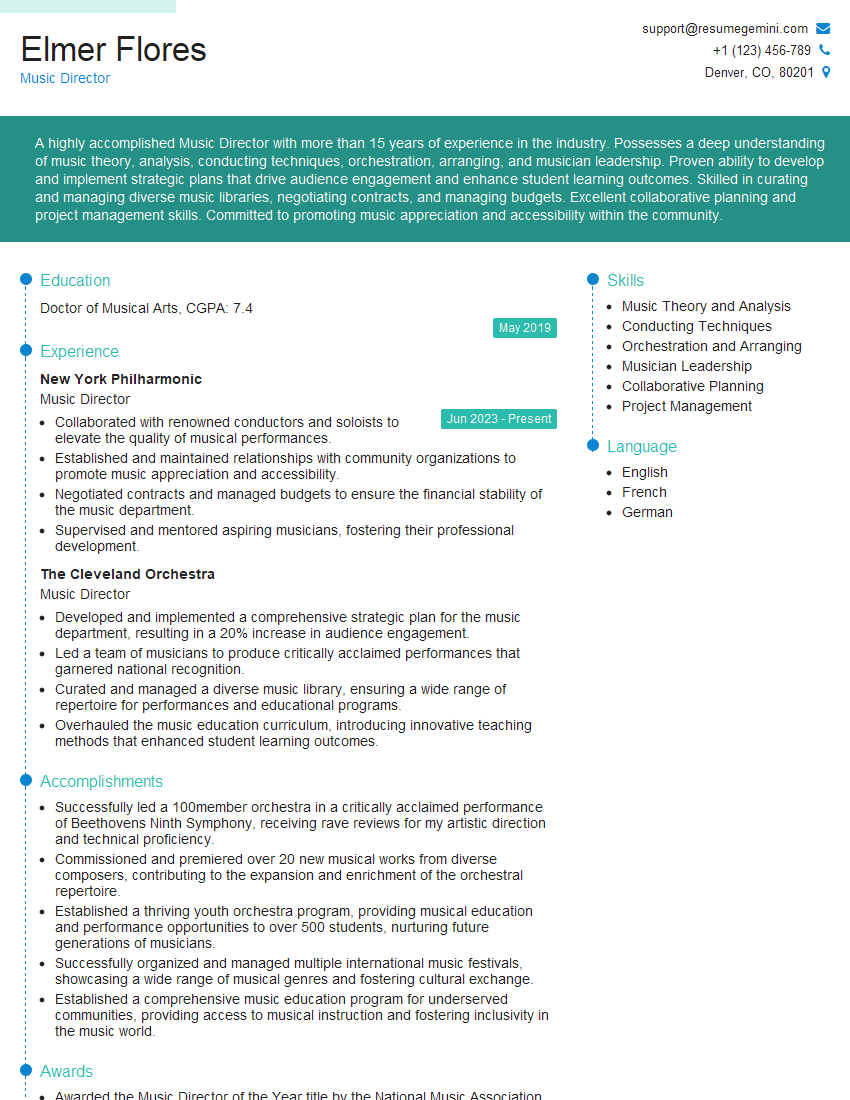
Music Director Resume Sample
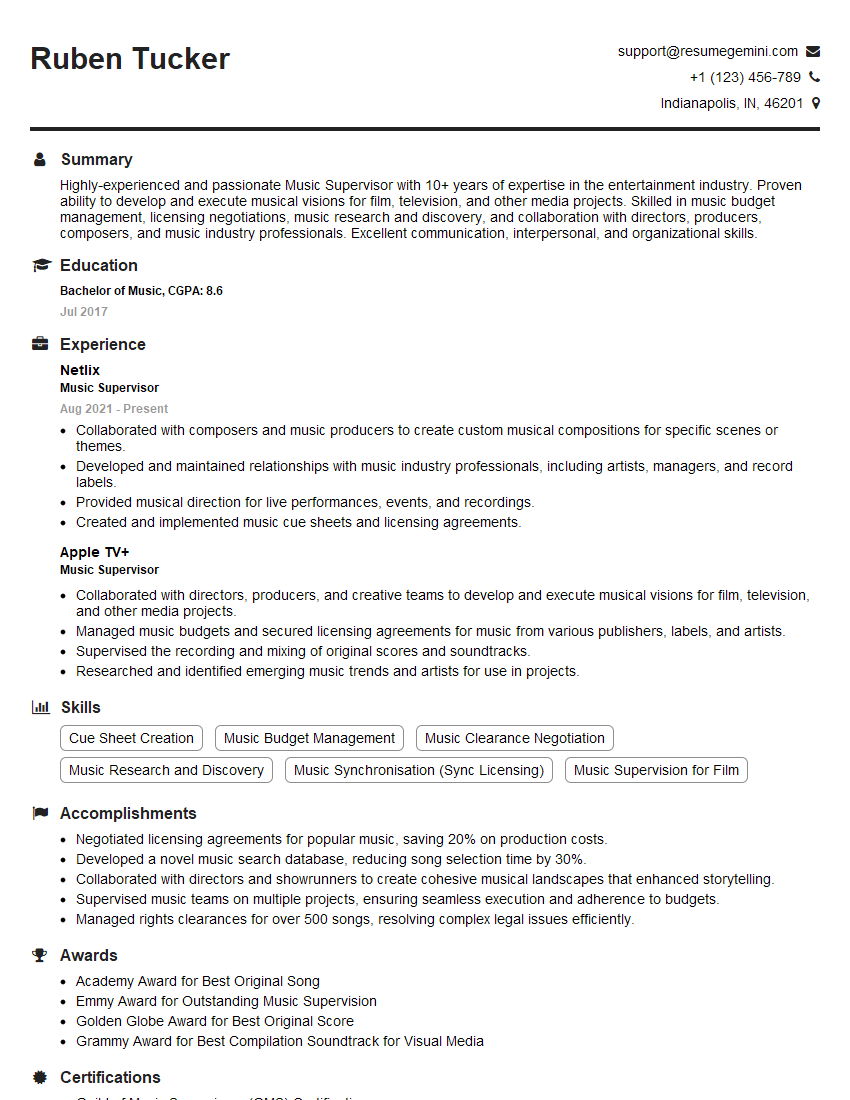
Music Supervisor Resume Sample
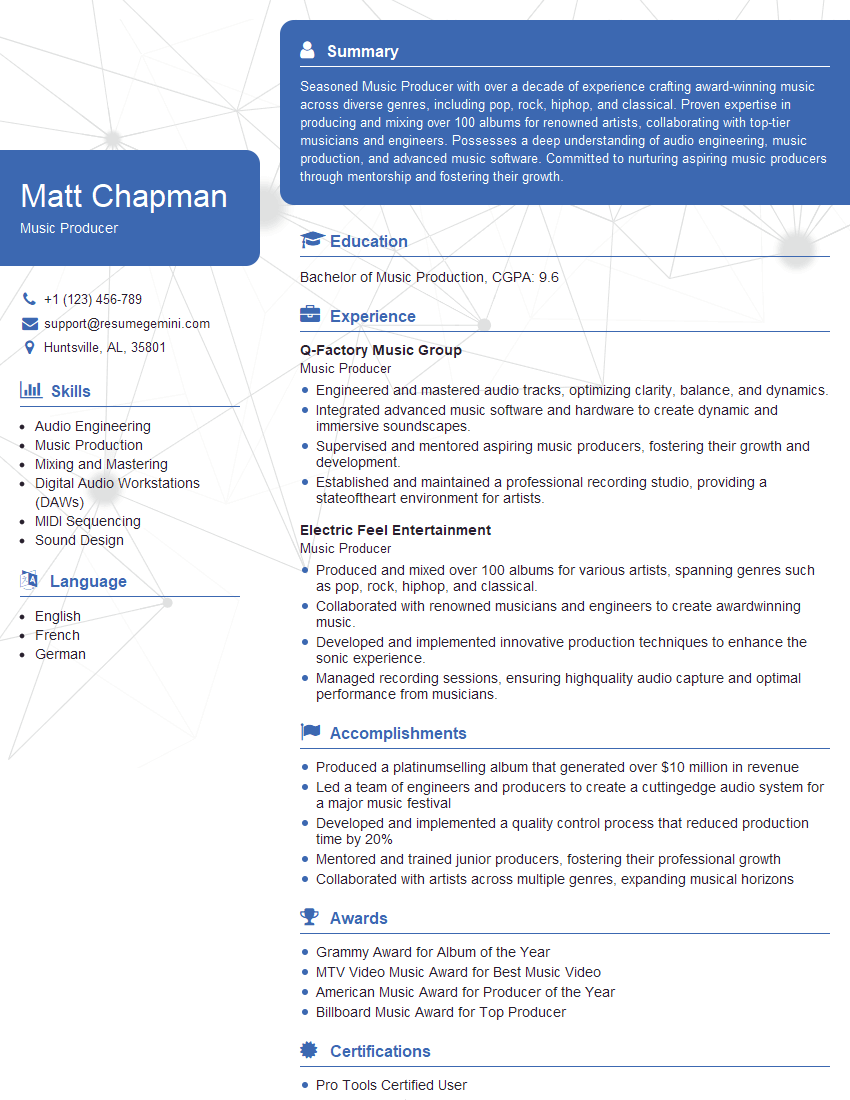
Music Producer Resume Sample
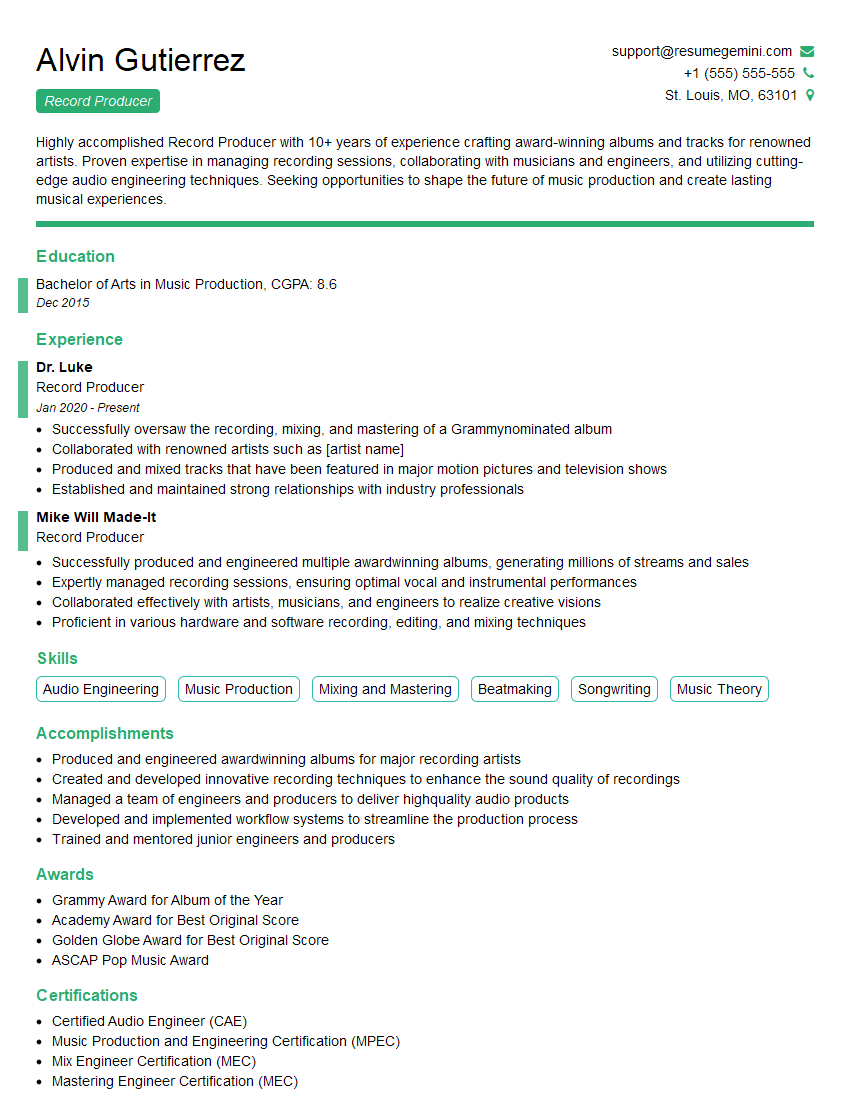
Record Producer Resume Sample
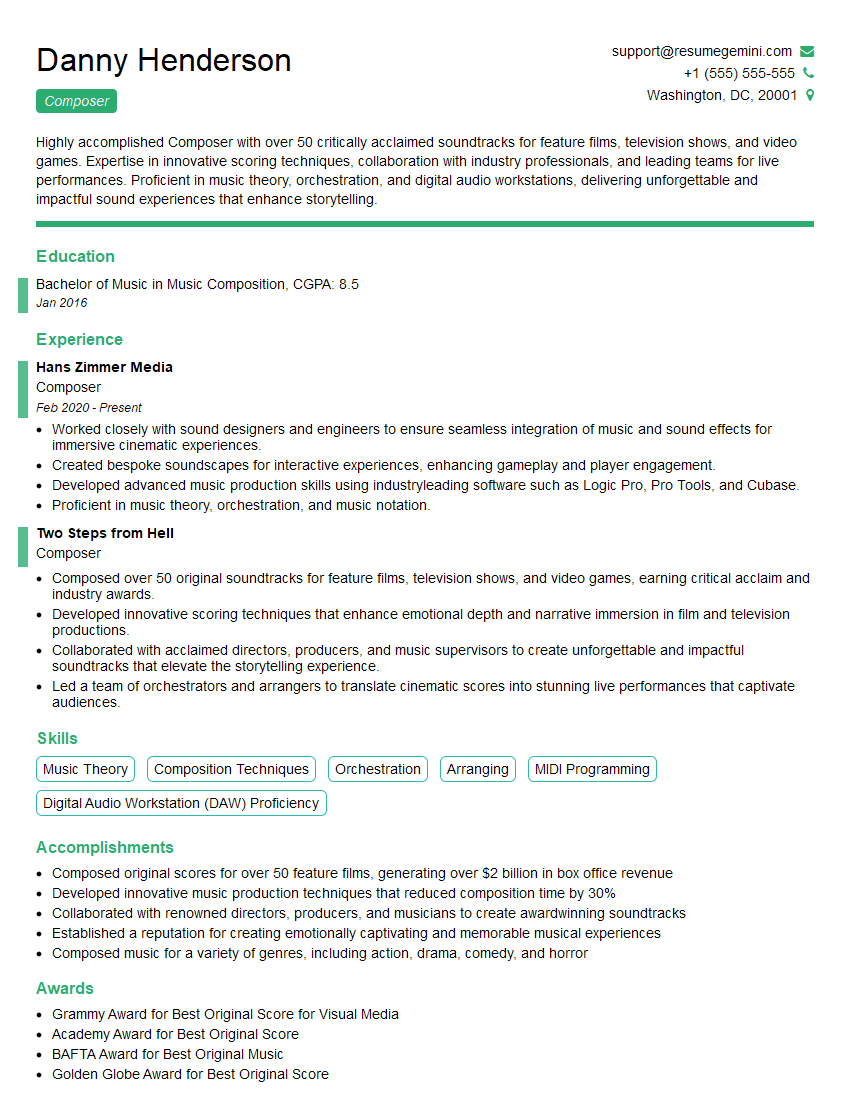
Composer Resume Sample
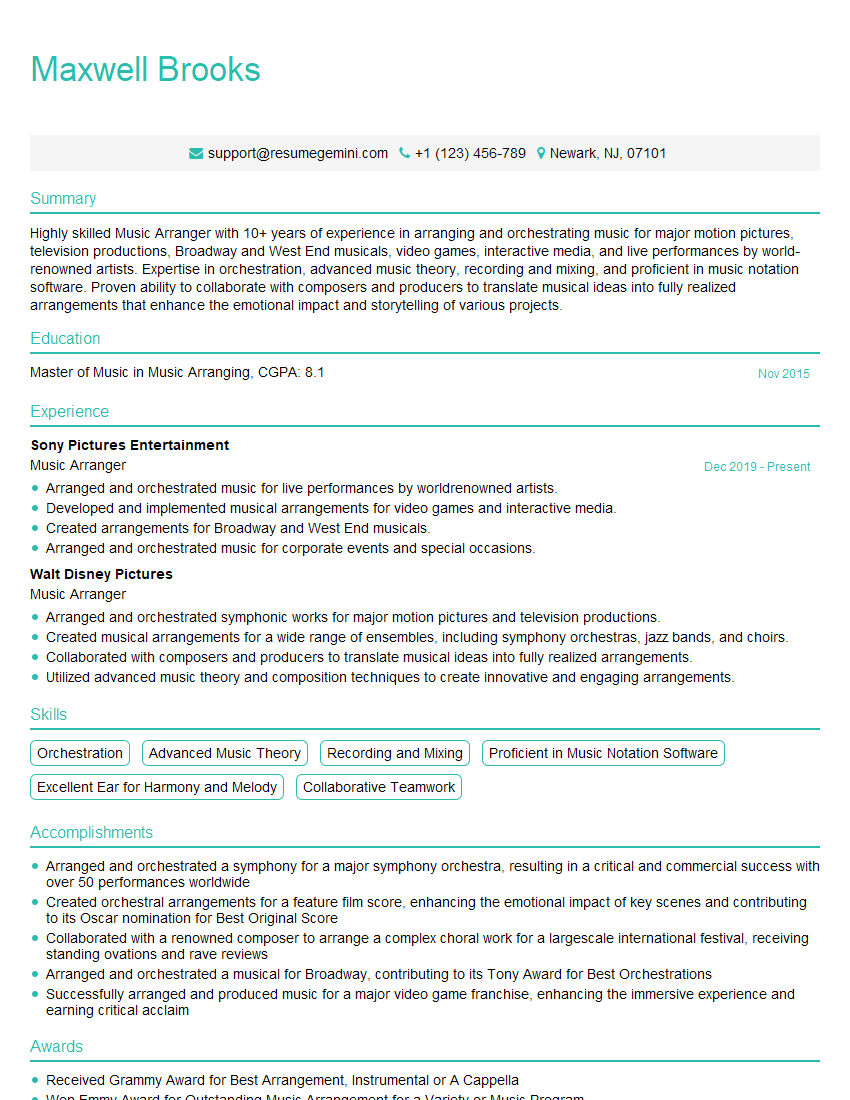
Music Arranger Resume Sample
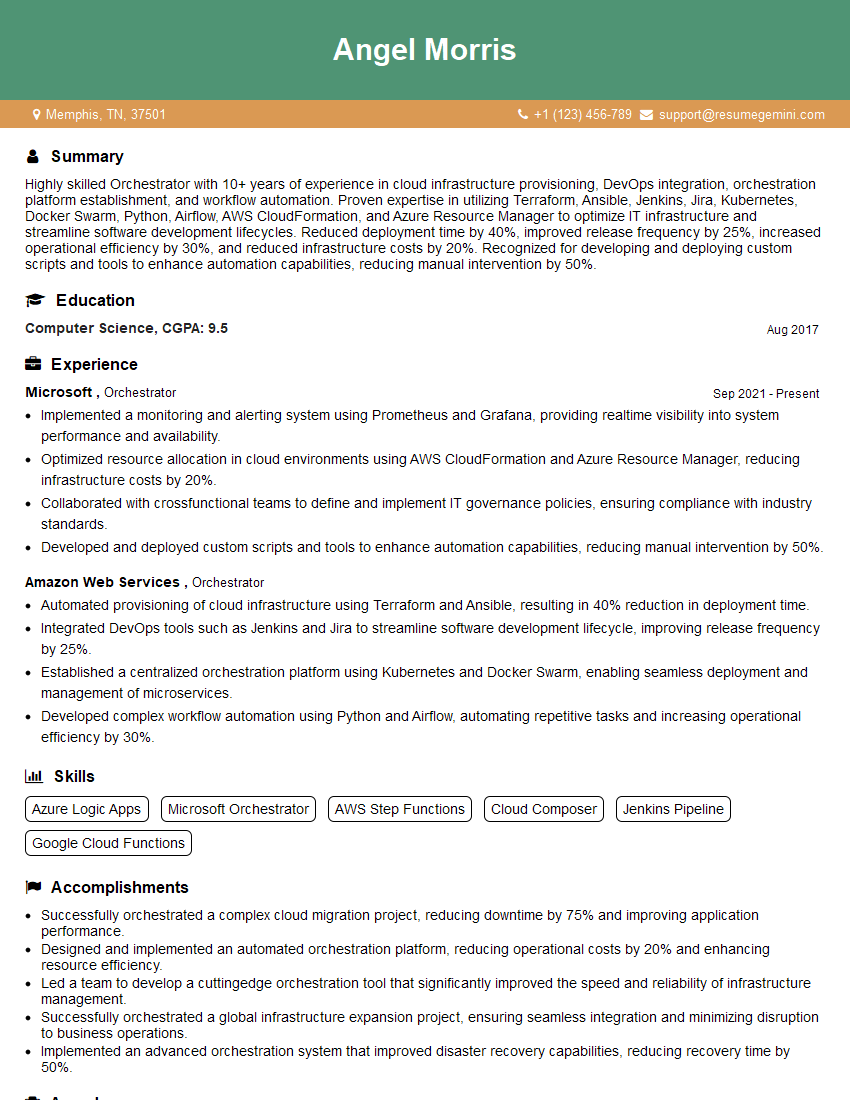
Orchestrator Resume Sample
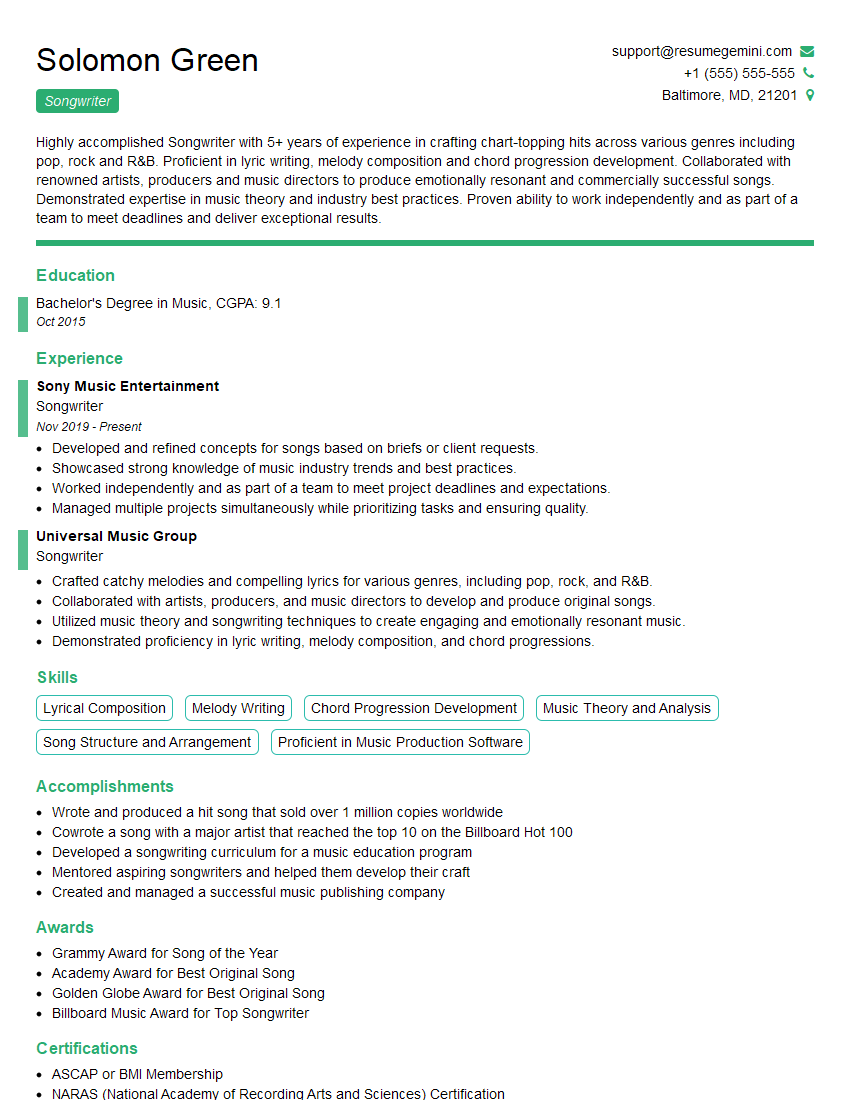
Songwriter Resume Sample
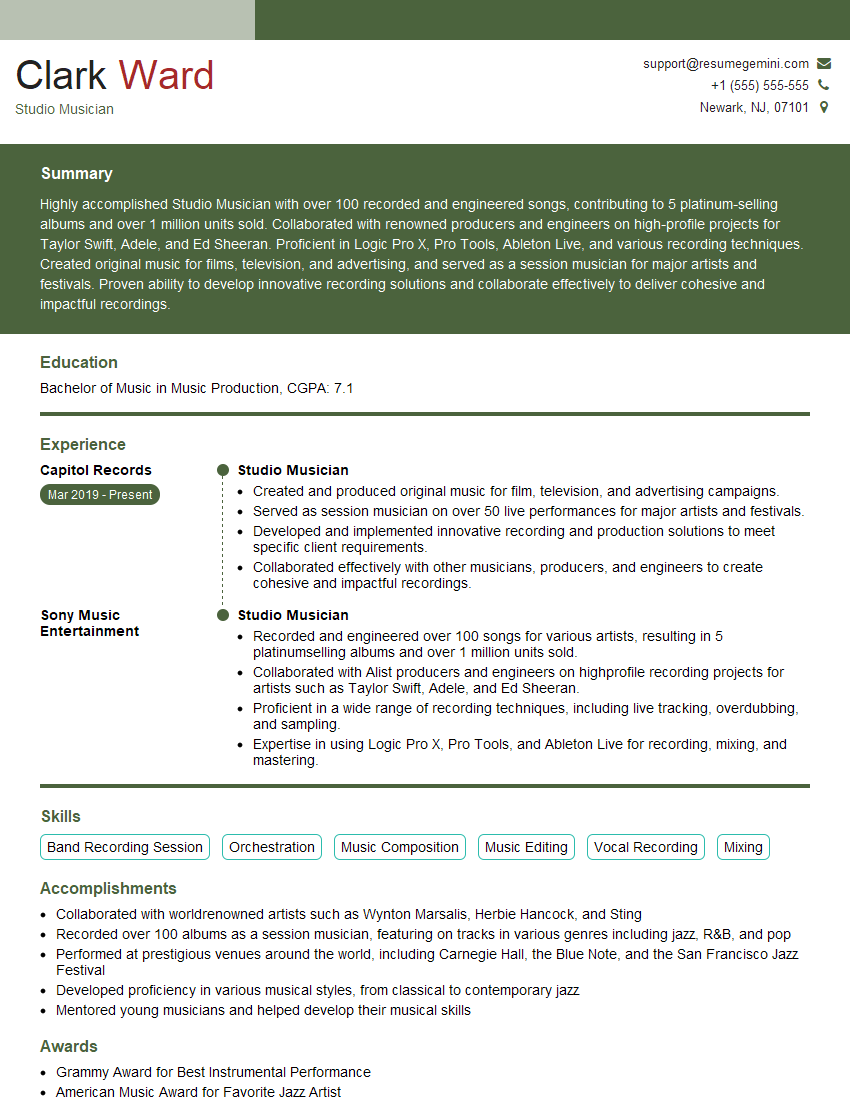
Studio Musician Resume Sample
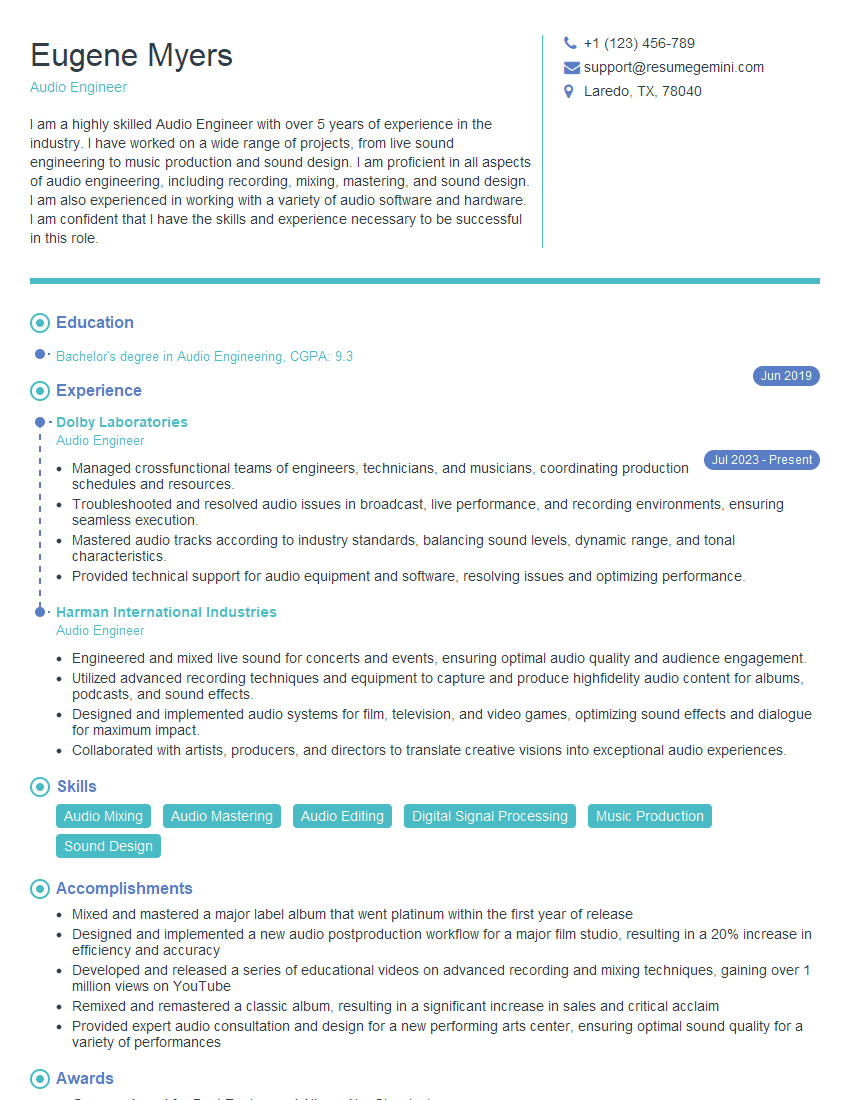
Audio Engineer Resume Sample
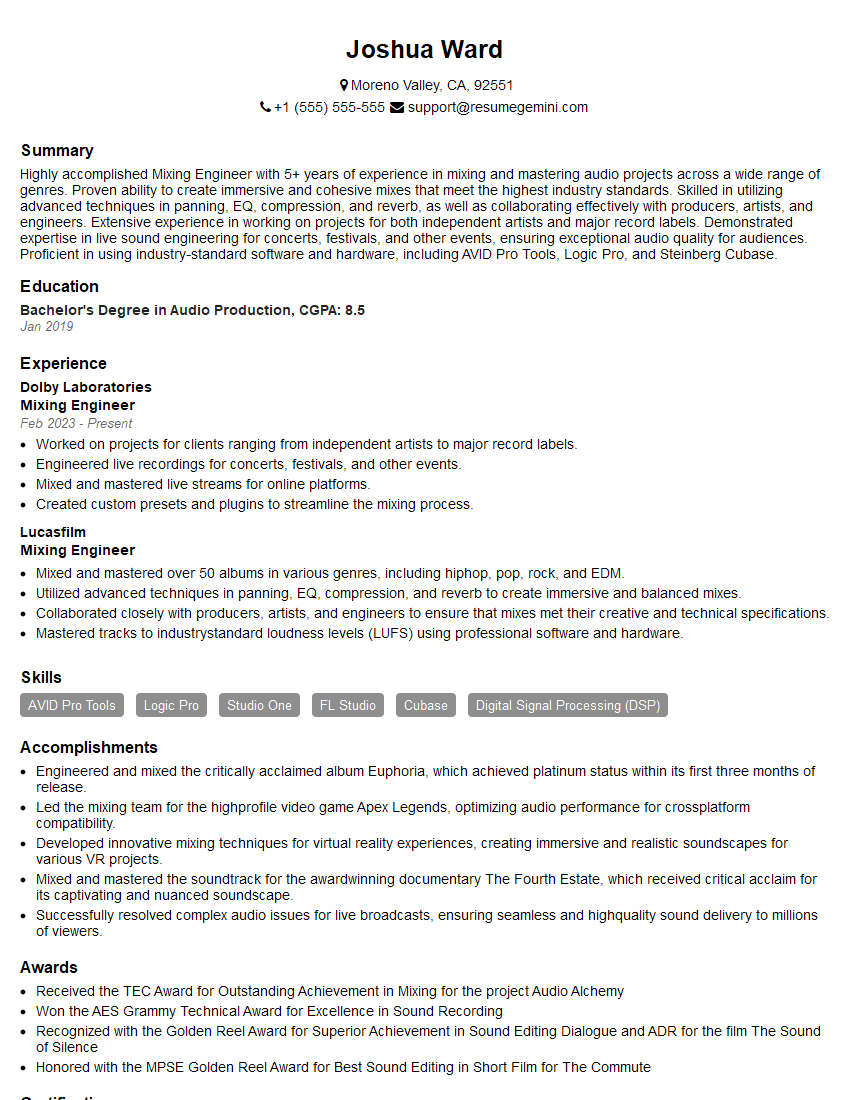
Mixing Engineer Resume Sample
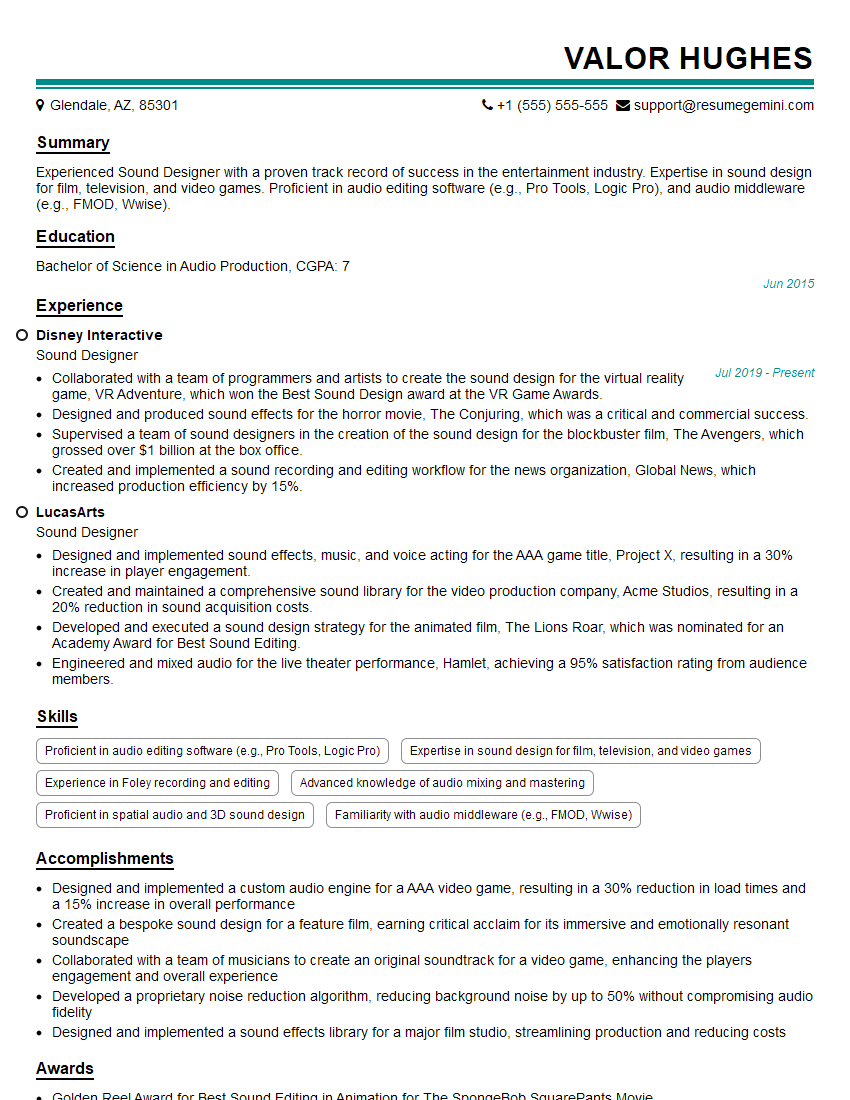
Sound Designer Resume Sample
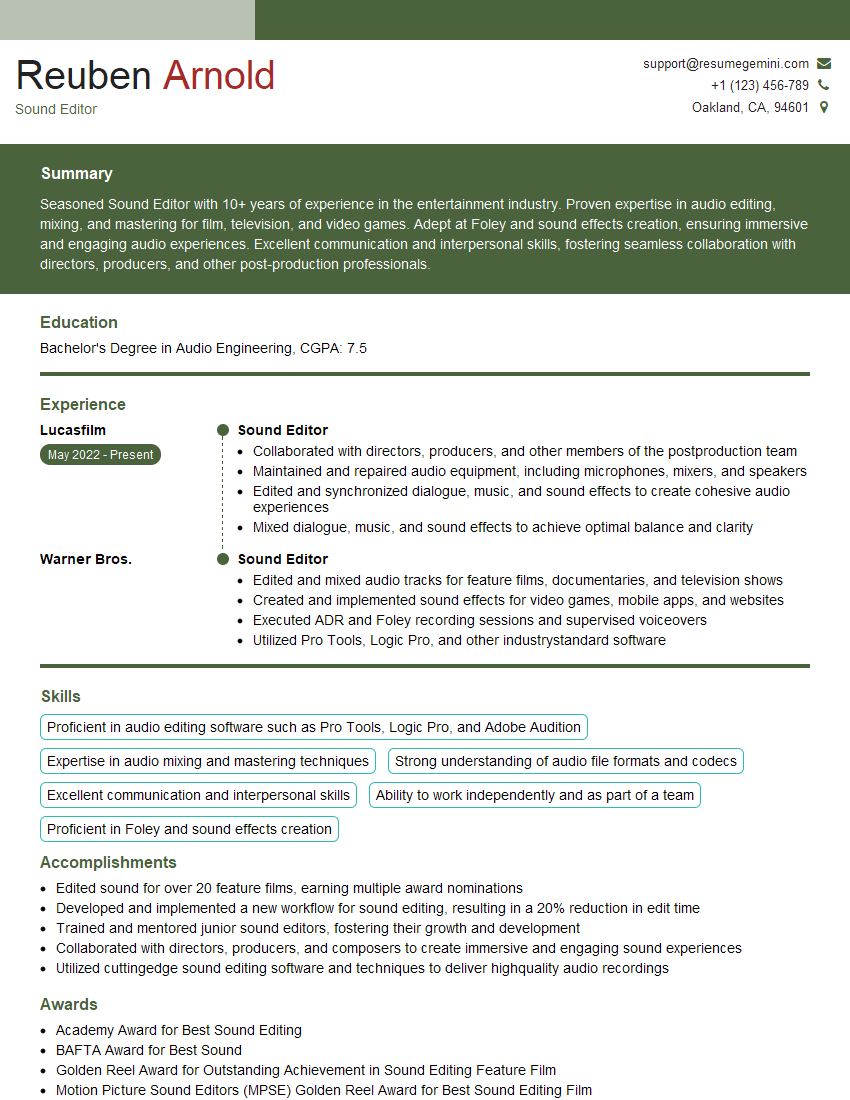
Sound Editor Resume Sample
Explore more articles
Users Rating of Our Blogs
Share Your Experience
We value your feedback! Please rate our content and share your thoughts (optional).
What Readers Say About Our Blog
Very informative content, great job.
good