Cracking a skill-specific interview, like one for Spacecraft Autonomy, requires understanding the nuances of the role. In this blog, we present the questions you’re most likely to encounter, along with insights into how to answer them effectively. Let’s ensure you’re ready to make a strong impression.
Questions Asked in Spacecraft Autonomy Interview
Q 1. Explain the difference between reactive and proactive autonomy in spacecraft.
Reactive autonomy and proactive autonomy represent two distinct approaches to spacecraft control. Imagine a self-driving car: reactive autonomy is like the car’s emergency braking system – it responds to immediate events. Proactive autonomy is akin to the car’s navigation system – it plans a route beforehand and adapts to changing conditions.
Reactive autonomy focuses on immediate responses to sensor data. The spacecraft reacts to its current state and environment, making decisions based on pre-programmed rules or simple algorithms. This is ideal for situations requiring quick, reflexive actions, such as collision avoidance maneuvers. It’s simpler to implement but limited in its ability to handle complex scenarios.
Proactive autonomy, on the other hand, involves planning and decision-making based on predictions and expectations. The spacecraft anticipates future events and develops strategies accordingly. This allows for more sophisticated operations such as optimal trajectory planning or autonomous science operations. While more powerful, it requires more computational resources and advanced algorithms.
For example, a reactive system might fire thrusters to correct a small deviation from a planned trajectory as soon as it’s detected. A proactive system would predict future deviations based on environmental factors like solar pressure and plan adjustments to the trajectory days in advance to minimize fuel consumption and maintain accuracy. The choice between reactive and proactive strategies depends on mission objectives and available resources.
Q 2. Describe different methods for spacecraft navigation and how they are selected.
Spacecraft navigation relies on a variety of methods, often employed in combination. The selection of methods depends on factors such as mission requirements, accuracy needs, available resources (power, computational capacity, sensor payload), and the spacecraft’s environment.
- Inertial Navigation: Uses accelerometers and gyroscopes to measure changes in velocity and orientation. This is prone to drift over time and requires periodic updates from other systems.
- GPS (or GNSS): Utilizes signals from ground-based constellations of satellites for precise positioning. This is highly accurate but is only available within the range of the satellite signals, which limits its use for deep-space missions.
- Optical Navigation: Uses onboard cameras to take images of celestial bodies (stars, planets, moons). Sophisticated image processing algorithms compare the measured positions of these objects with their known positions in an ephemeris (a table of astronomical positions), providing accurate position and attitude information. This is commonly used for deep-space missions.
- Radiometric Navigation: Uses radio signals exchanged between the spacecraft and ground stations to measure the Doppler shift (change in frequency due to relative motion) and time delay of the signals. This method provides accurate distance and velocity information.
Selecting the right navigation system is a critical part of mission design. A deep-space probe, for instance, might rely heavily on optical and radiometric navigation because GPS is unavailable. Earth-orbiting satellites often use a combination of GPS and inertial navigation, with GPS providing regular updates to correct the drift in the inertial system.
Q 3. What are the challenges of implementing AI/ML in spacecraft autonomy?
Implementing AI/ML in spacecraft autonomy presents unique challenges, primarily due to the constraints of the space environment and the critical nature of space missions.
- Limited Computational Resources: Spacecraft have limited processing power and memory, making it challenging to run complex AI/ML algorithms. Simplified models and efficient algorithms are needed.
- High Reliability and Safety Requirements: Space missions demand extremely high reliability. Errors in AI/ML systems could have catastrophic consequences. Robust methods for validation and verification are essential.
- Data Scarcity: Collecting sufficient training data for AI/ML models can be difficult and expensive. Data augmentation techniques and synthetic data generation are crucial.
- Long Communication Delays: Communication delays in deep space missions can make real-time AI/ML interaction impractical. Autonomous decision-making capabilities are therefore essential.
- Extreme Environments: Spacecraft operate in harsh radiation environments which can affect the performance and reliability of AI/ML systems. Radiation-hardened hardware and software are necessary.
- Explainability and Trust: Understanding why an AI/ML system made a particular decision is critical, especially in safety-critical applications. Developing explainable AI (XAI) techniques is essential to build trust in these systems.
Overcoming these challenges requires careful planning, innovative algorithm design, and rigorous testing and validation. Researchers are actively working on developing AI/ML algorithms optimized for resource-constrained environments and techniques to improve the reliability and safety of these systems.
Q 4. How do you ensure fault tolerance and redundancy in autonomous spacecraft systems?
Fault tolerance and redundancy are paramount in autonomous spacecraft systems to ensure mission success despite component failures. This is achieved through various strategies:
- Hardware Redundancy: Critical components are duplicated or triplicated. If one component fails, a backup takes over seamlessly. This is often implemented using voting mechanisms where the output of multiple components is compared, and the majority decision is selected.
- Software Redundancy: Multiple independent software modules perform the same function. This helps catch errors and ensure that a single software bug doesn’t cripple the entire system. Techniques like N-version programming, where multiple versions of a program are run in parallel, are used.
- Fault Detection and Isolation (FDI): Systems are designed to monitor their own health and identify potential faults. When a fault is detected, the system attempts to isolate it and switch to a redundant component or a backup operation mode. This requires sophisticated diagnostic capabilities.
- Graceful Degradation: The system is designed to continue operating, albeit with reduced functionality, even if some components fail. This minimizes the impact of failures and allows the mission to continue, possibly with revised objectives.
Consider a spacecraft’s attitude control system. Multiple reaction wheels might be used for redundancy. If one wheel fails, the others can compensate, maintaining stability. However, if multiple wheels fail, the system might switch to backup thrusters, albeit with reduced precision and increased fuel consumption.
Q 5. Explain the role of onboard software in spacecraft autonomy.
Onboard software is the brain of an autonomous spacecraft, orchestrating all its functions and making real-time decisions. It’s responsible for:
- Navigation and Guidance: Processing sensor data, computing the spacecraft’s position and orientation, and planning trajectories.
- Control: Controlling the spacecraft’s actuators (thrusters, reaction wheels) to execute maneuvers and maintain stability.
- Data Handling: Collecting, processing, and storing scientific data and telemetry.
- Command and Data Handling (C&DH): Receiving, interpreting, and executing commands from ground control and managing communication with Earth.
- Health and Status Monitoring: Monitoring the status of all spacecraft subsystems and detecting any anomalies.
- Fault Detection, Isolation, and Recovery (FDIR): Responding to faults by isolating the problem, switching to redundant systems, and reconfiguring the spacecraft to maintain operational capabilities.
- Autonomous Science Operations: Executing complex scientific tasks autonomously, like selecting targets, planning observations, and processing data.
The onboard software needs to be highly reliable, robust, efficient, and optimized for the spacecraft’s limited computational resources. It typically consists of a real-time operating system (RTOS) and multiple software modules interacting through well-defined interfaces. Rigorous testing and verification are crucial to ensure the software’s correctness and reliability.
Q 6. Discuss various techniques for spacecraft trajectory optimization.
Spacecraft trajectory optimization involves finding the best path between two points, considering constraints like fuel consumption, mission duration, and safety. Various techniques are employed:
- Optimal Control Theory: Formulates trajectory optimization as a mathematical problem where the goal is to minimize a cost function (e.g., fuel consumption) subject to certain constraints (e.g., arrival time). Powerful but can be computationally intensive for complex scenarios.
- Direct Methods: Discretize the trajectory into a sequence of points and use numerical optimization techniques (e.g., gradient descent, sequential quadratic programming) to find the optimal sequence. Often used for complex problems with many variables.
- Indirect Methods: Solve the necessary conditions for optimality (e.g., Pontryagin’s Maximum Principle) to obtain a solution. Can be more efficient than direct methods for certain types of problems, but can be challenging to implement.
- Genetic Algorithms: Evolutionary algorithms that explore the solution space by mimicking natural selection. Useful for complex, non-convex optimization problems where other methods might struggle.
- Particle Swarm Optimization: Another evolutionary algorithm that simulates the social behavior of bird flocks or fish schools to find optimal solutions.
The choice of optimization technique depends on the specific mission requirements and the complexity of the problem. For simple problems, optimal control theory might suffice. For more complex scenarios involving many variables and constraints, direct or evolutionary methods might be more appropriate. Often, hybrid approaches combining different techniques are employed.
Q 7. Describe your experience with different sensor fusion techniques for autonomous navigation.
Sensor fusion is essential for autonomous navigation, combining data from multiple sensors to get a more accurate and reliable estimate of the spacecraft’s state. I have experience with several techniques:
- Kalman Filtering: A powerful technique for estimating the state of a dynamic system from noisy measurements. It predicts the state based on a model of the system’s dynamics and then updates the prediction using sensor measurements. I’ve used extended Kalman filters (EKFs) and unscented Kalman filters (UKFs) to fuse data from inertial measurement units (IMUs), star trackers, and GPS receivers.
- Bayesian Estimation: A more general framework for probabilistic inference that includes Kalman filtering as a special case. Bayesian methods allow for the incorporation of prior knowledge and uncertainty in the sensor models. I’ve employed Bayesian techniques to fuse data from optical navigation cameras and range sensors.
- Fuzzy Logic: Useful when dealing with uncertainty and imprecise sensor data. Fuzzy logic can integrate qualitative information from different sensors. I’ve used fuzzy logic to combine data from different sensors for fault detection.
- Neural Networks: Neural networks can learn complex relationships between sensor data and the spacecraft’s state. However, they require significant training data and can be computationally intensive. I’ve explored using neural networks for sensor data association and outlier detection.
The choice of fusion technique depends on the sensors used, the desired accuracy, and the available computational resources. Often a combination of techniques is employed to achieve optimal performance. For instance, a Kalman filter might be used to fuse high-rate IMU data with less frequent GPS updates, while a neural network might be used for outlier detection in the fused data.
Q 8. How would you handle a critical anomaly during an autonomous space mission?
Handling a critical anomaly during an autonomous space mission requires a layered approach emphasizing fault detection, isolation, and recovery. Imagine a scenario where a crucial solar panel malfunctions on a Mars rover. First, the spacecraft’s onboard diagnostics would detect the anomaly – perhaps a drop in power generation. This triggers a pre-programmed fault detection routine.
Next, the system isolates the problem. It might switch to backup power sources (e.g., batteries) and attempt to diagnose the specific malfunction within the solar panel array. The isolation phase uses redundancy built into the system to prevent cascading failures.
Finally, recovery strategies are initiated based on the severity and nature of the failure. This could involve adjusting the rover’s orientation to maximize sunlight on remaining functional panels, entering a low-power mode to conserve energy until a solution is found, or even triggering a pre-planned safe mode that prioritizes critical functions and data preservation.
Crucially, throughout this process, the spacecraft’s autonomy system will log telemetry data, providing valuable information for post-mission analysis and future design improvements. This data will be critical for understanding the root cause and refining fault-tolerance mechanisms.
Q 9. What are the ethical considerations of autonomous spacecraft operations?
The ethical considerations surrounding autonomous spacecraft operations are complex and far-reaching. One key concern is the potential for unintended consequences. A spacecraft acting autonomously could encounter unforeseen situations and make decisions with unforeseen impacts. For example, an autonomous probe exploring a potentially habitable moon might inadvertently contaminate it with terrestrial microbes, jeopardizing any existing life.
Another ethical dilemma involves accountability. If an autonomous spacecraft malfunctions and causes damage, who is responsible? Is it the engineers who designed the system, the operators who launched it, or the spacecraft itself? Establishing clear lines of responsibility is critical. Finally, we must consider the long-term implications. Autonomous systems operating independently in space raise questions about resource allocation, planetary protection, and the potential for unintended interactions with extraterrestrial life.
Addressing these ethical concerns requires a multi-faceted approach. This includes rigorous testing, comprehensive risk assessments, strict adherence to international space laws and guidelines, and the development of ethical frameworks specifically tailored to autonomous space operations. Open discussion and collaboration among scientists, engineers, ethicists, and policymakers are crucial to ensure responsible development and deployment of these sophisticated technologies.
Q 10. Explain the concept of onboard decision-making in spacecraft.
Onboard decision-making in spacecraft refers to the ability of a spacecraft to make decisions independently without direct human intervention. Think of it like giving a robot a brain. Instead of relying on ground control for every instruction, the spacecraft analyzes its environment, processes information, and makes choices based on pre-programmed rules and algorithms.
This autonomy is crucial for missions where real-time communication with Earth is impossible, such as deep-space probes. The level of autonomy varies widely depending on the mission. A simple spacecraft might only have the autonomy to switch to backup systems in case of a failure, while a more sophisticated rover exploring another planet might have the autonomy to navigate terrain, select science targets, and even perform basic repairs.
Onboard decision-making uses a combination of sensors (like cameras, spectrometers, and accelerometers), onboard processors, and sophisticated algorithms to analyze data and make decisions. The process often involves tasks like path planning, target identification, resource management, and anomaly handling. For example, a rover might use image processing to identify a scientifically interesting rock, then autonomously navigate to it, collect samples, and analyze them.
Q 11. Describe your experience with real-time operating systems (RTOS) in a space environment.
My experience with real-time operating systems (RTOS) in space environments is extensive. I’ve worked extensively with VxWorks and RTEMS, which are industry standards known for their reliability and deterministic nature—essential for mission-critical applications.
RTOS are crucial because they guarantee timely execution of tasks, even under high loads. Imagine a spacecraft maneuvering to avoid an obstacle; the RTOS ensures that the navigation software receives the necessary sensor data and computes control commands within a strict timeframe to prevent a collision. We need predictability and efficiency to manage limited resources like power and processing capacity.
My work involved configuring RTOS tasks, managing priorities, and ensuring inter-process communication with minimal latency. I’ve also handled issues like memory management, interrupt handling, and error recovery within the RTOS framework. Furthermore, we meticulously verify and validate these systems using extensive simulations and rigorous testing in environments designed to mimic the harsh conditions of space. For instance, we test the RTOS’s ability to handle radiation-induced errors through fault injection experiments.
Q 12. How do you validate and verify autonomous spacecraft software?
Validating and verifying autonomous spacecraft software is a rigorous process that involves multiple stages. We can’t simply deploy software to space and hope for the best! Verification focuses on ensuring the software meets its specified requirements, while validation demonstrates that it performs correctly in its intended environment.
This process typically starts with unit testing, where individual software components are tested in isolation. Next, integration testing combines these components and verifies their interaction. System testing evaluates the entire software system in a simulated environment that replicates the conditions of space, including potential anomalies.
Then, we move to hardware-in-the-loop (HIL) testing, where the software interacts with simulated hardware to further validate its performance. Finally, we often conduct flight tests, deploying a simplified version of the software on a smaller spacecraft or using a testbed. Each step employs various techniques like code reviews, static analysis, formal methods, and simulations. The goal is to build confidence that the software is robust, reliable, and will function flawlessly in space.
Q 13. Explain different approaches to power management in autonomous spacecraft.
Power management in autonomous spacecraft is paramount due to the limited energy resources available. The approach often involves a multi-faceted strategy. One key aspect is maximizing energy generation. This usually means optimizing the spacecraft’s solar panels or radioisotope thermoelectric generators (RTGs), depending on the mission.
Another key area is efficient energy consumption. This involves using low-power components, optimizing software to minimize energy use, and employing power-saving modes when possible. The spacecraft might enter a sleep mode during periods of inactivity to conserve energy and activate only essential systems when needed.
Smart power management systems play a significant role. These systems dynamically allocate power based on the mission’s priorities and the available resources. They might prioritize critical functions like communication and attitude control over less crucial tasks during energy-scarce periods. Imagine a situation where the battery power is critically low—the power management system would automatically shut down non-essential subsystems to maintain communication with Earth.
Q 14. Describe your experience with different communication protocols for spacecraft.
My experience encompasses various communication protocols used in spacecraft. These protocols need to be robust, reliable, and able to handle the challenges of deep-space communication, including signal attenuation and interference.
I’ve worked extensively with standard protocols like CCSDS (Consultative Committee for Space Data Systems) which define standards for telemetry, tracking, and command. These protocols are highly reliable and handle error correction and data synchronization. I’ve also had experience with other protocols like TCP/IP adapted for space communication, which allows for more flexible data exchange.
The choice of protocol often depends on factors like data rate requirements, distance to Earth, available bandwidth, and mission constraints. For missions close to Earth, higher bandwidth protocols might be used, allowing for more real-time data transmission. For deep-space missions, power and bandwidth are more critical, necessitating more robust error correction and efficient data compression techniques. My experience includes designing and implementing communication systems that incorporate these considerations and deal with the complexities of deep space communication links.
Q 15. How do you handle communication latency and network limitations in autonomous systems?
Communication latency and network limitations are significant challenges in autonomous spacecraft systems, especially for deep-space missions where signal travel times can be hours or even days. We mitigate these challenges through a combination of strategies focusing on onboard autonomy and robust communication protocols.
Predictive Control: Instead of relying on constant real-time commands from Earth, we use predictive control algorithms. These algorithms allow the spacecraft to make decisions and execute maneuvers based on pre-programmed instructions and onboard sensor data, even without immediate communication from Earth. Think of it like a self-driving car using its sensors and pre-planned route to navigate a section of road even if temporarily disconnected from GPS.
Onboard Data Processing: Sophisticated onboard computing allows for processing sensor data, identifying anomalies, and generating responses without needing to transmit raw data back to Earth. Only crucial information or exceptional events are transmitted, conserving bandwidth.
Error Detection and Correction Codes: We employ robust error detection and correction codes for all communications to minimize the impact of bit errors caused by interference or signal degradation. This is similar to how our smartphones use advanced error correction to ensure you receive clear images and messages, even with poor network signal.
Autonomous Fault Detection, Isolation, and Recovery (FDIR): Onboard systems continuously monitor the spacecraft’s health and automatically react to failures. This might involve switching to backup systems or executing pre-planned recovery maneuvers, thus enabling the spacecraft to continue operation even with partial system failures.
Scheduled Communication: We plan communication sessions strategically to maximize efficiency. Rather than continuous communication, which is highly bandwidth-intensive, data is accumulated and transmitted during scheduled windows when the spacecraft has a clear line of sight to Earth.
Career Expert Tips:
- Ace those interviews! Prepare effectively by reviewing the Top 50 Most Common Interview Questions on ResumeGemini.
- Navigate your job search with confidence! Explore a wide range of Career Tips on ResumeGemini. Learn about common challenges and recommendations to overcome them.
- Craft the perfect resume! Master the Art of Resume Writing with ResumeGemini’s guide. Showcase your unique qualifications and achievements effectively.
- Don’t miss out on holiday savings! Build your dream resume with ResumeGemini’s ATS optimized templates.
Q 16. What are the key performance indicators (KPIs) for autonomous spacecraft?
Key Performance Indicators (KPIs) for autonomous spacecraft vary depending on the mission objectives. However, several common KPIs consistently provide valuable insight into system performance and operational effectiveness.
Mission Success Rate: This measures the percentage of mission objectives successfully achieved. It’s a fundamental indicator of overall system reliability and effectiveness.
Fuel Efficiency: Especially critical for long-duration missions, fuel efficiency reflects the optimal use of onboard propellant. This KPI is crucial for sustainability and mission longevity.
Data Acquisition Rate and Quality: For scientific missions, the quantity and quality of scientific data collected are vital KPIs. This involves factors such as data integrity, resolution, and volume.
Autonomous Operation Time: This KPI represents the duration the spacecraft operated autonomously without human intervention. It demonstrates the effectiveness of autonomous systems in handling unexpected situations.
System Reliability/Mean Time Between Failures (MTBF): This metric provides insights into system robustness and longevity, measuring the average time between system failures. High MTBF suggests a dependable and durable system.
Computational Efficiency: In resource-constrained environments, computational efficiency is vital. It signifies how effectively onboard processing resources are used to achieve mission goals.
Q 17. Explain the concept of a state machine in the context of spacecraft control.
A state machine is a fundamental control paradigm commonly used in spacecraft control. It models the spacecraft’s behavior as a series of distinct states, each with its own set of actions and transitions to other states. Think of it as a flow chart that dictates the spacecraft’s actions based on its current situation.
For example, a simple state machine for a spacecraft might include states such as:
- Idle: The spacecraft performs minimal operations and awaits commands.
- Safe Mode: The spacecraft transitions to this state in the event of anomalies or emergencies, performing actions to ensure spacecraft safety.
- Trajectory Correction: The spacecraft executes a maneuver to correct its trajectory based on calculated deviations.
- Data Acquisition: The spacecraft is collecting scientific data.
Transitions between states are triggered by events, such as receiving a command from ground control, detecting an anomaly through sensors, or satisfying a pre-defined condition. State machines provide a structured, robust, and easily understandable method for managing the complex behaviors of autonomous spacecraft.
Example (pseudocode):
currentState = Idle;

if (emergencyDetected) {
  currentState = SafeMode;
} else if (trajectoryDeviation > threshold) {
  currentState = TrajectoryCorrection;
} else if (dataAcquisitionTime) {
  currentState = DataAcquisition;
}

// Actions based on currentState
switch (currentState) {
  case Idle: // perform idle actions
    break;
  case SafeMode: // perform safe mode actions
    break;
  // ... other cases
}
Q 18. Discuss the advantages and disadvantages of different spacecraft attitude control systems.
Spacecraft attitude control systems maintain the spacecraft’s orientation in space. Several systems exist, each with trade-offs:
Reaction Wheels: These are momentum exchange devices that rotate to change the spacecraft’s orientation. They are highly efficient for fine pointing but require momentum unloading mechanisms (like magnetic torquers) to avoid saturation.
Thrusters: These use small bursts of gas to change the spacecraft’s attitude. They are simple and robust but less fuel-efficient than reaction wheels for fine pointing.
Control Moment Gyroscopes (CMGs): These utilize spinning gyroscopes to provide torque. They are highly efficient for large maneuvers but are complex and potentially prone to singularities (states where control is lost).
Magnetic Torquers: These use the Earth’s magnetic field to create torque. They are fuel-free but only effective in low Earth orbit and are not suitable for fast maneuvers.
Advantages and Disadvantages Summary:
| System | Advantages | Disadvantages |
|---|---|---|
| Reaction Wheels | High precision, efficient | Momentum saturation, requires desaturation |
| Thrusters | Simple, robust | Fuel consumption, less precise |
| CMGs | High torque, efficient | Complex, singularities |
| Magnetic Torquers | Fuel-free | Limited torque, only works in LEO |
The choice of attitude control system depends on mission requirements, such as precision pointing accuracy, maneuver speed, fuel budget, and operational environment.
Q 19. How do you ensure the safety and security of autonomous spacecraft systems?
Ensuring the safety and security of autonomous spacecraft systems is paramount. It involves a multi-layered approach combining hardware, software, and operational procedures.
Redundancy and Fault Tolerance: Critical systems are designed with redundant components and fault-tolerant architectures. If one component fails, backups take over seamlessly. Think of it as having backup systems, just like airplanes.
Cybersecurity Measures: Spacecraft systems are hardened against cyberattacks. This involves secure boot processes, encrypted communication, access control, and intrusion detection systems. Protecting against malicious actors is as critical as protecting against physical failures.
Software Verification and Validation: Rigorous testing and verification methods are used to ensure the software is bug-free and functions as intended. This involves extensive simulation, testing, and formal verification techniques.
Operational Procedures: Safe operational procedures are developed and followed. These procedures cover aspects like command validation, anomaly response, and emergency procedures, ensuring a controlled environment for autonomous operations.
Regular Health Checks and Updates: Spacecraft health is monitored continuously. Updates and patches to correct bugs or vulnerabilities are applied when necessary to ensure the continued health and stability of the systems.
A combination of these strategies is crucial to ensuring the safe and secure operation of autonomous spacecraft, balancing autonomy with necessary levels of control and protection.
Q 20. Describe your experience with different spacecraft simulation tools and techniques.
My experience encompasses a wide range of spacecraft simulation tools and techniques. I’ve extensively used:
STK (Systems Tool Kit): For orbit propagation, mission design, and constellation analysis. It’s invaluable for simulating the spacecraft’s trajectory and assessing mission feasibility.
MATLAB/Simulink: For developing and simulating control algorithms, including attitude control and navigation systems. Its flexibility and extensive toolboxes are ideal for prototyping and validating control strategies.
SPICE (Spacecraft Planet Instrument C-matrix Events): For accurate modeling of planetary ephemerides and spacecraft orientations. Precise ephemeris data is vital for navigation and pointing accuracy.
Custom Simulation Environments: I’ve developed custom simulation environments in C++ and Python to simulate specific spacecraft subsystems or aspects of the mission. This allows tailored simulations to answer specific questions.
My techniques include both high-fidelity simulations that account for detailed physical models and lower-fidelity simulations focusing on specific aspects of the system. The choice of simulation technique is always guided by the specific problem being addressed and the level of detail required.
Q 21. Explain your understanding of Kalman filtering and its application in spacecraft navigation.
Kalman filtering is a powerful technique used for state estimation, meaning it provides the best possible estimate of a system’s state based on noisy measurements. In spacecraft navigation, it’s essential for determining the spacecraft’s position, velocity, and attitude accurately. Think of it as a sophisticated way to combine sensor readings with our prior knowledge of the spacecraft’s behavior to get the best possible estimate of its current state.
In the context of spacecraft navigation, Kalman filtering combines data from various sources, such as:
Inertial Measurement Units (IMUs): IMUs measure acceleration and rotation rates, but their measurements drift over time, leading to errors.
GPS (Global Positioning System): While GPS provides accurate position information, it may not always be available (e.g., in deep space).
Star Trackers: Star trackers measure spacecraft attitude with high precision, providing orientation information.
The Kalman filter integrates these measurements, incorporating the system dynamics and measurement noise models to produce an optimal estimate of the spacecraft’s state, minimizing the impact of noise and uncertainties. It recursively updates this estimate as new data arrives, continuously refining the accuracy of the spacecraft’s navigation solution.
For instance, a Kalman filter might combine the noisy acceleration data from an IMU with a GPS position measurement to generate a more precise estimate of the spacecraft’s velocity and position, compensating for the IMU’s drift. Similarly, star tracker data can be integrated with IMU data to provide a more accurate estimate of the spacecraft’s attitude.
Q 22. What are the different types of orbit determination techniques?
Orbit determination, a crucial aspect of spacecraft autonomy, involves calculating a spacecraft’s precise position and velocity in space. Several techniques exist, each with its strengths and weaknesses depending on the mission and available resources.
- Ground-Based Tracking: This classic method utilizes ground stations with radar or optical telescopes to measure the spacecraft’s range, range-rate, and angles. The data is then processed to estimate the orbit. Think of it like using multiple points on Earth to triangulate the spacecraft’s location.
- GPS/GNSS (Global Navigation Satellite System): For spacecraft in lower Earth orbits, GPS or similar systems can provide accurate position and velocity measurements. However, signal strength and atmospheric effects can be limiting factors.
- Autonomous Navigation using onboard sensors: Advanced spacecraft employ star trackers, sun sensors, and inertial measurement units (IMUs) to independently determine their orientation and velocity. These sensors provide measurements that are then processed using sophisticated algorithms to estimate the orbit. For example, a star tracker identifies known stars to determine the spacecraft’s attitude.
- Inter-satellite ranging: This technique involves measuring the distance between two or more spacecraft using onboard ranging systems, such as laser or radio frequency devices. This relative information, combined with other data, allows for accurate orbit determination of each spacecraft. It’s like having two people measuring the distance between them to determine their relative positions.
The choice of technique often depends on factors such as mission requirements for accuracy, available resources (power, computational capability, communication bandwidth), and the spacecraft’s orbit. Often a combination of these techniques is used for redundancy and improved accuracy.
Q 23. How do you design for radiation hardness in spacecraft autonomy systems?
Designing for radiation hardness in spacecraft autonomy systems is critical for mission success, as radiation exposure in space can lead to Single Event Upsets (SEUs) causing malfunctions or complete failures. This involves a multi-faceted approach:
- Component Selection: Selecting radiation-hardened components like processors, memory, and sensors is fundamental. These components are designed and manufactured to withstand higher levels of radiation without suffering damage or functional errors. For example, using radiation-hardened SRAM instead of standard SRAM is essential.
- Redundancy and Fault Tolerance: Implementing redundant systems and fault-tolerant mechanisms ensures that the spacecraft can continue to operate even if one component fails. This could involve having duplicate processors, memory modules, or even complete subsystems.
- Error Detection and Correction Codes: Employing error detection and correction codes in both memory and communication protocols is crucial for mitigating the effects of SEUs. These codes allow for detection and correction of bit flips caused by radiation.
- Software Design and Testing: Writing robust and fault-tolerant software is equally vital. This includes implementing comprehensive error handling routines, self-checks, and watchdog timers. Thorough testing, including radiation testing, is necessary to validate the system’s resilience to radiation effects.
- Shielding: Physical shielding, while adding weight and complexity, can effectively reduce the radiation dose received by sensitive components. This might involve strategically placing shielding materials around critical electronics.
A holistic approach combining these strategies provides the highest probability of mission success in harsh space environments. The level of radiation hardening required depends on the mission’s duration and the spacecraft’s orbit – deeper orbits typically involve higher radiation levels.
Q 24. Discuss your experience with different testing methodologies for autonomous spacecraft software (e.g., unit, integration, system testing).
Testing autonomous spacecraft software requires a rigorous multi-stage approach. I’ve extensive experience using various methodologies:
- Unit Testing: This involves testing individual software modules (units) in isolation to ensure they function correctly. Unit tests are typically automated and can be run repeatedly to verify functionality. We use tools like JUnit or Google Test. For instance, we’d test a specific algorithm module for path planning separately from the overall navigation system.
- Integration Testing: After successfully testing individual units, integration testing combines multiple units to verify their interactions and interfaces. This ensures that different parts of the system work together seamlessly. We use test harnesses to simulate the interactions between units.
- System Testing: This final stage tests the entire software system as a whole in a simulated or realistic environment. System testing may involve hardware-in-the-loop simulations, simulating sensor data, or even testing the system with reduced-fidelity flight hardware.
- Hardware-in-the-Loop (HIL) Simulation: We use HIL simulations extensively to realistically test the software on realistic hardware. This involves connecting the software to simulated spacecraft hardware, allowing for testing in conditions closely mirroring the actual flight environment.
- Fault Injection Testing: We intentionally inject faults into the system – such as simulating SEUs – to assess the software’s resilience and fault tolerance. This involves modifying inputs or simulating hardware failures to verify the system’s response.
The selection and combination of these methodologies depend on the complexity of the software, mission requirements, and available resources. Detailed test plans and reports are essential to document the testing process and results, ensuring traceability and accountability.
Q 25. Explain the role of ground control in managing an autonomous spacecraft mission.
While a spacecraft operates autonomously, ground control plays a vital role in managing the mission. It’s not a case of ‘set and forget’.
- Mission Planning and Uploads: Ground control plans the mission, defining the spacecraft’s trajectory, science objectives, and operational parameters. These plans, along with software updates and configurations, are uploaded to the spacecraft.
- Monitoring and Telemetry Analysis: Ground control constantly monitors the spacecraft’s health, status, and scientific data via telemetry. This allows for early detection of any anomalies or potential problems. Think of it as a vital sign monitor for the spacecraft.
- Commanding and Control: While autonomy handles routine operations, ground control retains the ability to issue commands to the spacecraft for critical situations, such as correcting trajectory errors or adjusting science observations.
- Data Processing and Analysis: Ground control receives large amounts of scientific data from the spacecraft. This data is processed and analyzed to achieve the mission’s scientific goals.
- Fault Diagnosis and Recovery: In the event of anomalies, ground control plays a crucial role in diagnosing problems and developing strategies for recovery, possibly by sending corrective commands to the spacecraft.
Ground control acts as the brains behind the spacecraft’s autonomous operations, providing oversight, guidance, and intervention when needed. The balance between autonomy and ground control is crucial for mission success.
Q 26. Describe the process of developing and deploying autonomous navigation algorithms for a spacecraft.
Developing and deploying autonomous navigation algorithms for a spacecraft is a complex, iterative process.
- Requirements Definition: The process starts with defining the navigation requirements, such as accuracy, precision, and update rate. These requirements are dictated by the mission objectives and constraints.
- Algorithm Design and Simulation: Next, appropriate navigation algorithms are designed and rigorously tested through simulations. These simulations often involve realistic models of the spacecraft, its sensors, and the environment.
- Software Implementation and Unit Testing: The algorithms are then implemented in software, followed by thorough unit testing to verify their correct functionality.
- Integration and System Testing: Integration testing combines the navigation algorithms with other spacecraft subsystems. System testing may involve hardware-in-the-loop simulation, testing on flight-like hardware, or testing in a reduced-gravity environment.
- Deployment and In-flight Validation: Once testing is complete, the navigation software is deployed to the spacecraft. The performance of the algorithms is then monitored and validated during the mission, with ground control actively observing and analyzing the results. Adjustments might be made via software uploads based on real-flight data.
For example, in developing a navigation algorithm for a Mars rover, we might use a combination of visual odometry (using images from cameras to track motion) and inertial navigation (using IMUs to measure acceleration and rotation), with data fusion techniques to integrate the measurements and improve accuracy.
Q 27. How do you manage data storage and retrieval in resource-constrained spacecraft environments?
Managing data storage and retrieval in resource-constrained spacecraft environments necessitates careful planning and efficient techniques.
- Data Compression: Employing data compression techniques, such as lossless or lossy compression algorithms, reduces the amount of storage space required. The choice depends on the type of data and the acceptable level of data loss.
- Data Prioritization and Selection: Determining which data to store and which to discard is essential. Prioritization schemes can be implemented to favor critical data during resource limitations.
- Data Buffering: Implementing data buffering allows for temporary storage of data that will be transmitted later. This approach helps manage temporary peaks in data generation rates.
- Efficient Data Structures: Using efficient data structures, like linked lists or trees, can minimize storage requirements and optimize data access times.
- Onboard Data Processing: Processing data onboard, such as reducing resolution or performing initial analysis, can reduce the amount of raw data that needs to be stored and transmitted.
- Solid-State Storage: Using reliable and radiation-hardened solid-state storage devices (like flash memory) is essential due to their non-volatile nature and resistance to mechanical shock and vibration.
The selection of techniques depends on the mission, the type of data collected, the available storage capacity, and the communication bandwidth. Balancing the trade-offs between data loss and storage efficiency is crucial for successful mission operation.
Q 28. Discuss the challenges of testing and debugging autonomous spacecraft systems in a realistic environment.
Testing and debugging autonomous spacecraft systems in a realistic environment presents significant challenges:
- High Cost and Complexity of Testing: Conducting tests in realistic environments, such as using high-fidelity simulations or space-based testbeds, can be expensive and complex.
- Limited Accessibility: Once a spacecraft is launched, access for debugging and repair is extremely limited. This emphasizes the need for thorough testing prior to launch.
- Reproducibility of Errors: Reproducing errors encountered in space can be difficult due to the complexity of the system and the multitude of factors affecting its behavior. Meticulous logging and monitoring are crucial.
- Time Delays: Communication delays between the ground station and the spacecraft can complicate debugging efforts. This makes real-time debugging practically impossible.
- Environmental Factors: The harsh space environment, including radiation, temperature extremes, and vacuum, can introduce unpredictable behaviors that are difficult to simulate exactly on the ground.
To mitigate these challenges, a combination of techniques is needed, including extensive ground testing, simulations, rigorous software verification, and careful monitoring of spacecraft telemetry. A strong emphasis on rigorous design, fault tolerance, and thorough testing is paramount to minimize these issues.
Key Topics to Learn for Spacecraft Autonomy Interview
- Orbital Mechanics: Understanding Keplerian elements, orbital maneuvers (e.g., Hohmann transfer), and perturbation effects is crucial. Practical application includes trajectory planning and station-keeping.
- Attitude Determination and Control (ADCS): Grasp concepts like sensor integration (star trackers, IMUs), attitude estimation algorithms (Kalman filtering), and actuator control (reaction wheels, thrusters). Practical application involves designing stable and accurate pointing systems for scientific instruments or communication antennas.
- Navigation and Guidance: Learn about navigation solutions using GPS, onboard sensors, and celestial navigation. Understand guidance algorithms for autonomous trajectory correction and target acquisition. Practical application involves ensuring accurate spacecraft positioning and safe arrival at destinations.
- Spacecraft Power Systems and Resource Management: Familiarize yourself with power generation (solar arrays), energy storage (batteries), and power distribution within the spacecraft. Understanding power budgeting and resource allocation is essential for mission success.
- Fault Detection, Isolation, and Recovery (FDIR): This critical area involves designing systems to diagnose anomalies, isolate faulty components, and implement recovery strategies to maintain mission objectives. Practical application focuses on ensuring spacecraft safety and mission continuity in the face of unforeseen events.
- Software Engineering Principles: A strong understanding of software development methodologies (Agile, Waterfall), coding best practices, and testing procedures is essential. Practical application involves developing robust and reliable autonomy software.
- Artificial Intelligence (AI) and Machine Learning (ML) in Spacecraft Autonomy: Explore the applications of AI/ML for tasks such as anomaly detection, autonomous navigation, and decision-making in complex scenarios. This is a rapidly growing field with significant interview relevance.
Next Steps
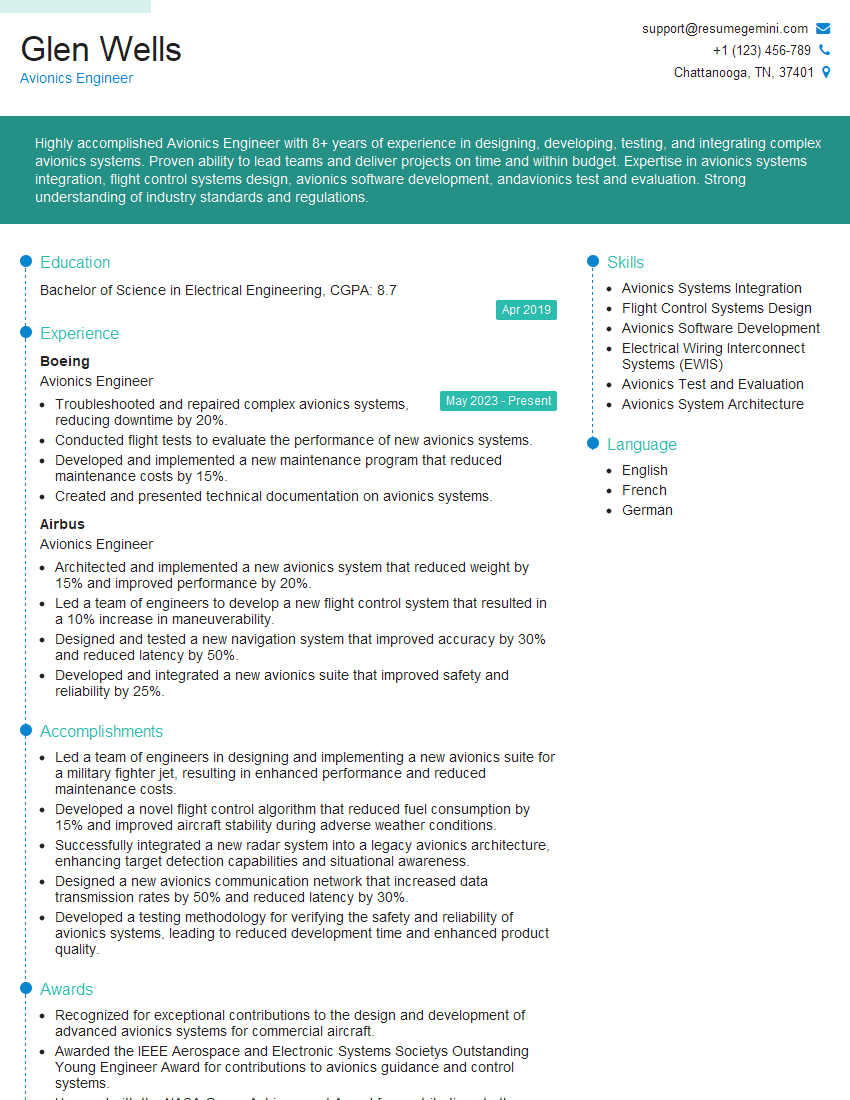
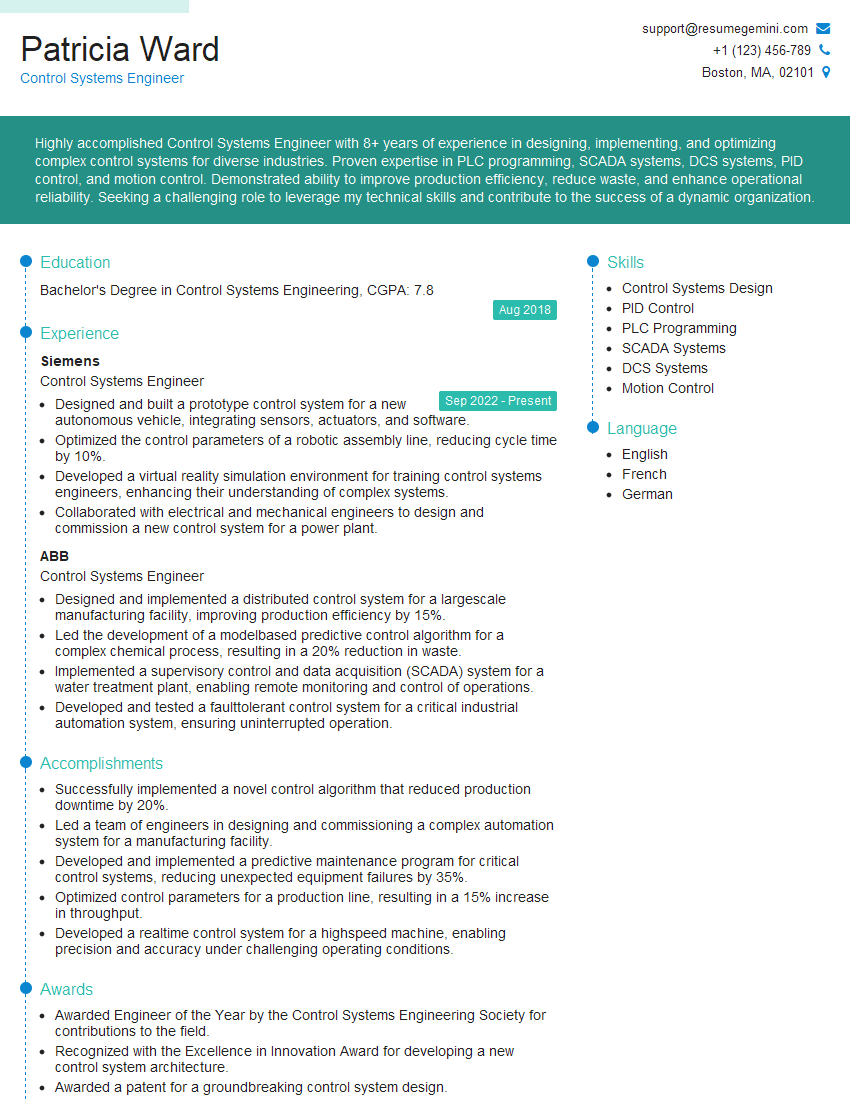
Mastering Spacecraft Autonomy opens doors to exciting and impactful careers at the forefront of space exploration. To significantly enhance your job prospects, creating a strong, ATS-friendly resume is paramount. ResumeGemini is a trusted resource to help you build a professional and effective resume that highlights your skills and experience. Examples of resumes tailored to Spacecraft Autonomy are available to guide you through the process, ensuring your qualifications shine through.
Explore more articles
Users Rating of Our Blogs
Share Your Experience
We value your feedback! Please rate our content and share your thoughts (optional).
What Readers Say About Our Blog
Very informative content, great job.
good