The right preparation can turn an interview into an opportunity to showcase your expertise. This guide to SPC Charting interview questions is your ultimate resource, providing key insights and tips to help you ace your responses and stand out as a top candidate.
Questions Asked in SPC Charting Interview
Q 1. Explain the purpose of Statistical Process Control (SPC).
Statistical Process Control (SPC) is a powerful collection of statistical methods used to monitor and control a process to ensure it operates within predefined limits and consistently produces high-quality output. Think of it as a proactive approach to quality management, helping businesses prevent defects rather than just detecting them after they occur. It’s all about understanding and managing variation within a process.
Imagine baking cookies. You want each cookie to be the perfect size and taste. SPC helps you identify if changes in ingredients, oven temperature, or even the way you mix the batter are affecting the final product’s consistency. By monitoring these factors, you can maintain a consistently delicious batch of cookies every time.
Q 2. What are the key principles of SPC?
The key principles of SPC revolve around understanding and managing variation. These include:
- Data-Driven Decision Making: SPC relies on collecting and analyzing data to identify trends and patterns, leading to informed decisions about process improvement.
- Focus on Variation: Understanding the sources of variation (common cause vs. special cause) is crucial. SPC helps differentiate between normal fluctuations and unexpected events impacting the process.
- Process Control: Implementing corrective actions to address special cause variation and maintain the process within its control limits.
- Continuous Improvement: SPC is a cyclical process. Monitoring, analysis, and improvement are ongoing activities aimed at optimizing process efficiency and quality.
- Statistical Methods: SPC employs various statistical tools, primarily control charts, to visualize data and identify patterns. This helps in making data-driven decisions and avoiding subjective judgments.
Q 3. Describe the different types of control charts and their applications.
There are various types of control charts, each designed for specific data types and applications:
- X-bar and R chart: Used for monitoring the average (X-bar) and range (R) of a variable data. Suitable for small sample sizes (typically 2-10 observations per subgroup).
- X-bar and s chart: Used for monitoring the average (X-bar) and standard deviation (s) of a variable data. Preferred for larger sample sizes (typically greater than 10 observations per subgroup).
- Individuals and Moving Range (I-MR) chart: Used when only individual measurements are available, typically for processes with infrequent observations or long cycle times.
- p-chart: Used to monitor the proportion of nonconforming units in a sample. Useful for attributes data, where items are classified as conforming or nonconforming.
- np-chart: Similar to the p-chart, but monitors the number of nonconforming units in a sample of constant size.
- c-chart: Used to monitor the number of defects per unit. Useful for situations where defects are counted on each unit.
- u-chart: Used to monitor the number of defects per unit when the sample size varies.
The choice of control chart depends on the type of data being collected (variable or attribute) and the sample size.
Q 4. When is an X-bar and R chart appropriate?
An X-bar and R chart is appropriate when you have variable data (continuous measurements) and relatively small sample sizes (usually 2 to 10 observations per subgroup). The X-bar chart tracks the average of the subgroups, while the R chart monitors the range (the difference between the highest and lowest values) within each subgroup. This combination provides a good picture of both the central tendency and the dispersion of your process.
Example: Monitoring the diameter of manufactured parts. You take 5 measurements of the diameter from each batch of parts produced. The X-bar chart tracks the average diameter across batches, and the R chart shows the variation in diameter within each batch.
Q 5. When is an X-bar and s chart appropriate?
An X-bar and s chart is also used for variable data but is preferred when you have larger sample sizes (generally over 10 observations per subgroup). The X-bar chart continues to track the average, but the s chart tracks the standard deviation, which provides a more precise measure of the variation compared to the range used in the X-bar and R chart. Using the standard deviation is statistically more efficient with larger samples.
Example: Monitoring the weight of filled containers. You take 15 weight measurements from each production run. The X-bar chart tracks the average weight of containers, and the s chart tracks the standard deviation of weights within each run, giving a better picture of consistency.
Q 6. Explain the difference between common cause and special cause variation.
Common cause variation and special cause variation are two fundamental concepts in SPC. Common cause variation refers to the inherent, natural variability present in any process due to many small, unpredictable factors. It’s the background noise of the process. Think of it as the small variations you’d expect in the baking process mentioned earlier – minor temperature fluctuations, slight differences in ingredient amounts, etc. These are inherent to the process and are not easily controlled.
Special cause variation, on the other hand, represents significant deviations from the normal process behavior. It’s caused by identifiable factors, such as a machine malfunction, a change in raw materials, or an operator error. This type of variation needs to be investigated and corrected to improve the process stability.
Q 7. How do you identify special cause variation on a control chart?
Special cause variation on a control chart is identified by looking for patterns or points that fall outside of the established control limits. These limits are typically set at 3 standard deviations above and below the central line. There are several rules for detecting special cause variation, but the most common include:
- One point outside the control limits: A single data point that falls above the upper control limit (UCL) or below the lower control limit (LCL) strongly suggests a special cause.
- Two out of three consecutive points beyond 2 standard deviations from the central line: This indicates a potential shift in the process mean.
- Four out of five consecutive points beyond 1 standard deviation from the central line: Suggests a trend or shift is occurring.
- Nine consecutive points on one side of the central line: Points consistently above or below the central line indicate a potential systematic issue.
- Other patterns: Any unusual patterns, such as cycles or trends, warrant further investigation.
When special cause variation is identified, it’s crucial to investigate the root cause and implement corrective actions to prevent recurrence. This is where process improvement comes in.
Q 8. What are control limits and how are they calculated?
Control limits in Statistical Process Control (SPC) charts define the boundaries within which a process is considered to be operating in a stable and predictable manner. They’re not arbitrary; they’re statistically calculated based on the process data itself, and they help us distinguish between common cause variation (inherent to the process) and special cause variation (due to assignable causes like equipment malfunction or human error).
The most common method for calculating control limits uses the data’s mean (average) and standard deviation. For example, in a control chart for the average (X-bar chart), the upper control limit (UCL) and lower control limit (LCL) are typically calculated as:
UCL = X̄ + 3σX̄LCL = X̄ - 3σX̄
where:
X̄is the average of the subgroup means.σX̄is the standard deviation of the subgroup means (often estimated using the average range or the standard deviation of the individual data points).
The ‘3’ represents three standard deviations, a value chosen because it captures nearly all (99.73%) of the data points if the process is normally distributed and only common cause variation is present. Other multiples of sigma can be used, depending on the desired level of confidence. Choosing the correct subgroup size and calculating the standard deviation appropriately are critical steps for accurate control limits.
Q 9. Explain the concept of process capability.
Process capability refers to the inherent ability of a process to consistently produce outputs that meet or exceed pre-defined specifications. It’s a measure of how well a process performs relative to customer requirements, expressed by the specification limits. A highly capable process produces very few defects, consistently meeting customer expectations. A poorly capable process produces many defects, leading to wasted materials, customer dissatisfaction, and potentially lost revenue.
Imagine a factory producing bolts. The specification might require bolts to be 10mm in diameter, plus or minus 0.1mm (9.9mm to 10.1mm). A highly capable process would produce almost all bolts within this range, while a poorly capable process would produce many bolts outside those limits, leading to rejects and re-work.
Q 10. What is Cp and Cpk, and how are they interpreted?
Cp and Cpk are process capability indices that quantify a process’s ability to meet specifications. Both are ratios that compare the process’s natural variation to the allowed variation defined by the customer’s specifications.
- Cp (Process Capability): Cp measures the potential capability of a process if it were centered on the target. It only considers the spread of the process data relative to the specification width. A Cp of 1 indicates that the process spread is equal to the tolerance spread. A higher Cp suggests greater potential capability.
- Cpk (Process Capability and Centering): Cpk is a more realistic measure because it considers both the spread and the centering of the process relative to the target. It assesses how capable the process is while accounting for its potential shift from the target value. A Cpk of 1 indicates that the process spread is equal to one-third of the tolerance spread and that it’s centered on the target. A higher Cpk is better.
Think of Cp as the process’s potential, and Cpk as its actual performance.
Q 11. How do you calculate Cp and Cpk?
The calculation of Cp and Cpk requires the following parameters:
- USL (Upper Specification Limit)
- LSL (Lower Specification Limit)
- X̄ (Process Mean)
- σ (Process Standard Deviation)
The formulas are:
Cp = (USL - LSL) / (6σ)Cpk = min[(USL - X̄) / (3σ), (X̄ - LSL) / (3σ)]
Let’s say we have USL = 10.1, LSL = 9.9, X̄ = 10.0, and σ = 0.05. Then:
Cp = (10.1 - 9.9) / (6 * 0.05) = 0.67Cpk = min[(10.1 - 10.0) / (3 * 0.05), (10.0 - 9.9) / (3 * 0.05)] = min[0.67, 0.67] = 0.67
In this case, Cp and Cpk are equal because the process is centered. If the mean were shifted, Cpk would be lower than Cp.
Q 12. What is the difference between Cp and Cpk?
The key difference between Cp and Cpk lies in their consideration of process centering. Cp only considers the process spread, ignoring whether the process is centered on the target value. It shows the potential capability if the process were perfectly centered. Cpk, however, takes into account both the spread and the centering. It reflects the actual capability of the process as it’s currently running.
A process can have a high Cp but a low Cpk if it’s not centered on the target. This indicates that the process is capable of producing good parts, but it isn’t doing so consistently due to an offset mean. Conversely, a low Cp will always result in a low Cpk.
Q 13. Explain the concept of process stability.
Process stability refers to a state where a process’s variation is solely due to common causes. In a stable process, the variation is predictable and consistent over time. It doesn’t exhibit any unusual patterns or trends attributable to special causes, like equipment failures, operator errors, or changes in materials. A stable process is predictable, making it easier to manage and improve.
Imagine a bakery producing loaves of bread. A stable process would produce loaves of relatively consistent weight and size over time, with variations falling within a predictable range. An unstable process, however, might show sudden spikes or drops in loaf size due to inconsistencies in the oven temperature or ingredient quality.
Q 14. How do you determine if a process is stable?
Determining process stability involves analyzing control charts. Points outside the control limits, trends (consistent upward or downward movement), or unusual patterns (e.g., runs, cycles) indicate instability. The absence of these signals suggests stability.
Specific tests can help formalize this assessment. For example, the Western Electric rules provide criteria for identifying out-of-control points and patterns. These rules include tests for points outside the control limits, points outside zones around the central line (2σ and 1σ limits), and various run rules (e.g., 8 consecutive points on one side of the central line). If any of these rules are violated, then the process is considered to be out of control, and special cause variation should be investigated.
It’s crucial to remember that control charts are tools for identifying instability, not for immediately determining the *cause* of instability. Further investigation is always required to identify and address root causes when instability is detected.
Q 15. What are the limitations of SPC?
Statistical Process Control (SPC) is a powerful tool, but it’s not a silver bullet. Its limitations stem from several factors:
- Assumption of Stability: SPC relies on the assumption that the process is stable, meaning that only common cause variation is present. If special cause variation is already significantly impacting the process, the control chart may not accurately reflect the true state of affairs until that special cause is identified and addressed.
- Data Requirements: Accurate and representative data is crucial. Insufficient data, improperly collected data, or data containing significant measurement error can lead to misleading results and incorrect conclusions. A minimum sample size is usually required to establish a reliable control chart.
- Process Complexity: Highly complex processes with many interacting variables might not be easily captured by simple SPC charts. More advanced multivariate techniques might be necessary.
- Reactive, Not Proactive: SPC primarily acts as a reactive tool; it helps identify problems *after* they occur. It’s not inherently a proactive tool for predicting future problems or preventing them altogether. Proactive measures like robust process design are still essential.
- Over-reliance: SPC shouldn’t be used in isolation. It should complement other quality management tools and techniques for a holistic approach. Blindly following control chart signals without considering other process knowledge can lead to inappropriate actions.
For example, imagine a manufacturing process producing widgets. If a critical machine is slowly degrading but the variation is still within the control limits, SPC alone might not reveal the issue until a major breakdown occurs. This is a limitation; proactive maintenance and predictive analytics would be beneficial complements.
Career Expert Tips:
- Ace those interviews! Prepare effectively by reviewing the Top 50 Most Common Interview Questions on ResumeGemini.
- Navigate your job search with confidence! Explore a wide range of Career Tips on ResumeGemini. Learn about common challenges and recommendations to overcome them.
- Craft the perfect resume! Master the Art of Resume Writing with ResumeGemini’s guide. Showcase your unique qualifications and achievements effectively.
- Don’t miss out on holiday savings! Build your dream resume with ResumeGemini’s ATS optimized templates.
Q 16. How do you interpret a control chart with points outside the control limits?
A point outside the control limits on a control chart is a strong signal of special cause variation—something unusual has affected the process. It indicates that the process is no longer behaving as it did when the control limits were established.
The interpretation should not be taken lightly. Before jumping to conclusions, carefully examine the data point itself. Consider what might have been different at that time. Was there a machine malfunction, a change in raw material, a change in operator, or an unusual external factor? Investigate the possible root causes.
For example, if a point on an X-bar chart (measuring the average of a sample) falls above the upper control limit (UCL), it suggests a sudden increase in the average of the quality characteristic. A point below the lower control limit (LCL) suggests a sudden decrease. Thorough investigation of the process during the time period of this outlier is crucial to determine the root cause and take corrective action.
Q 17. How do you interpret a control chart with patterns within the control limits?
Even if all points fall within the control limits, patterns can still indicate the presence of special cause variation that may not be readily apparent. A stable process will exhibit random variation around the centerline. Non-random patterns suggest the influence of factors beyond common cause variation.
- Trends: A series of points consistently increasing or decreasing suggests a gradual shift in the process mean.
- Cycles: Periodic patterns (e.g., repeating high and low points) may hint at cyclical factors like day-night shifts or weekly variations.
- Stratification: Clustering of points in specific regions of the chart may suggest that subgroups are not homogeneous.
- Unusual runs: A series of points consistently above or below the centerline, even within limits, could indicate a change in the process.
Imagine a control chart showing the weight of bread loaves. If you see a consistent upward trend of weights within the control limits over several weeks, that may be the result of a slow increase in flour added by the automated filling machine, even though individual weights are still within specifications. A trend like this needs investigating.
Q 18. What actions should be taken when special cause variation is detected?
When special cause variation is detected, a structured approach is crucial:
- Investigate: Thoroughly investigate the potential causes for the special cause variation. This may involve reviewing process data, interviewing operators, checking equipment logs, and examining raw materials.
- Identify the Root Cause: Determine the specific root cause(s) responsible for the deviation from the expected behavior. The “5 Whys” technique can be a valuable tool here.
- Implement Corrective Actions: Implement actions to eliminate or mitigate the identified root cause. This could involve repairing equipment, adjusting parameters, retraining personnel, or changing suppliers.
- Verify Effectiveness: Monitor the process after implementing corrective actions to confirm that they have been effective in eliminating the special cause variation.
- Document Everything: Thoroughly document the entire process, including the root cause analysis, corrective actions, and verification results. This is essential for continuous improvement.
For example, if a control chart reveals an increase in defects after a machine maintenance, the investigation should involve checking the maintenance procedure and verifying if the machine was correctly calibrated afterward. If necessary, retraining the maintenance personnel might be a corrective action.
Q 19. How do you use SPC data to improve a process?
SPC data provides valuable insights for process improvement through a data-driven approach:
- Process Capability Analysis: SPC data can be used to assess the capability of a process to meet specifications. This involves calculating Cp, Cpk, and other process capability indices, which quantify how well the process performs relative to customer requirements.
- Process Monitoring and Control: Continuous monitoring of control charts allows for the early detection of deviations from process targets, enabling timely intervention and preventing the production of non-conforming products.
- Reduction of Variation: By identifying and addressing sources of special cause variation, SPC helps in reducing process variability, leading to improved product quality and consistency.
- Benchmarking: Control charts can track process performance over time and facilitate comparisons between different processes or time periods, providing a basis for continuous improvement initiatives.
- Data-Driven Decision Making: SPC provides objective data to support decisions related to process improvements. It minimizes reliance on intuition and promotes a fact-based approach.
For instance, if a control chart for a bottling process shows consistently high variability in fill volume, SPC analysis can pinpoint the cause – perhaps a faulty filling machine or inconsistent raw material – leading to targeted adjustments and process optimization.
Q 20. Describe your experience using different statistical software packages for SPC analysis (e.g., Minitab, JMP).
I have extensive experience using various statistical software packages for SPC analysis, including Minitab and JMP. Both offer robust capabilities for creating various control charts (X-bar and R charts, p-charts, c-charts, etc.), performing capability analysis, and conducting root cause investigations.
Minitab: I’ve used Minitab extensively for its user-friendly interface and comprehensive features. Its capability to handle large datasets, its powerful graphing tools, and its extensive statistical analyses make it a reliable choice for both simple and complex SPC projects. I’ve utilized its features for generating control charts, analyzing patterns, performing process capability studies (Cp, Cpk), and implementing various tests for detecting special cause variation.
JMP: JMP’s visual and interactive approach complements Minitab’s strength in statistical rigor. I appreciate JMP’s dynamic capabilities, including its interactive control charts, which allow for real-time exploration of data and pattern identification. Its dynamic linking of graphs and data tables provides valuable insights during root cause analysis. I’ve leveraged JMP’s ability to visualize relationships between various process parameters and quality characteristics.
My experience encompasses projects across different industries, ranging from manufacturing and pharmaceuticals to healthcare and finance, showcasing the adaptability of these tools across various domains.
Q 21. How do you handle missing data in SPC analysis?
Missing data in SPC analysis can significantly impact the results and lead to inaccurate conclusions. Handling missing data requires careful consideration and a strategy aligned with the nature and extent of the missingness:
- Identify the Cause: The first step is to investigate the reasons for the missing data. Is it random (e.g., due to equipment malfunction), or is there a systematic pattern (e.g., data intentionally omitted)?
- Assess the Extent: Determine the amount of missing data. A small amount of missing data might not significantly affect the analysis, while a large amount necessitates a more thorough approach.
- Imputation Methods: If the missing data is minimal and deemed to be random, imputation methods can be used to replace the missing values. Simple imputation methods include using the mean, median, or last observation carried forward. More sophisticated methods, like multiple imputation, can account for uncertainty in the imputed values. Software like Minitab and JMP offer various imputation options.
- Data Exclusion: If the missing data is extensive or non-random, it might be necessary to exclude the affected data points from the analysis. This can lead to a reduction in sample size, however, so this needs to be done judiciously and with a clear understanding of the potential biases it can introduce.
- Analysis Adjustment: In some cases, analysis methods can be adjusted to accommodate missing data. For example, certain non-parametric methods may be less sensitive to missing values than their parametric counterparts.
The best strategy will always depend on the context. The key is to document the approach used, acknowledging the potential limitations of the analysis due to the missing data.
Q 22. Explain the concept of a Pareto chart and its application in SPC.
A Pareto chart is a type of bar chart that ranks causes of problems or defects from most to least frequent. It’s incredibly useful in Statistical Process Control (SPC) because it helps prioritize improvement efforts. The chart visually displays the ‘vital few’ contributing factors as opposed to the ‘trivial many’.
In SPC, we use Pareto charts to:
- Identify the root causes of variation in a process.
- Focus improvement efforts on the most significant contributors to defects.
- Track progress after implementing corrective actions.
Example: Imagine a manufacturing process producing defective widgets. A Pareto chart might reveal that 70% of defects stem from improper material handling, 20% from machine malfunction, and the remaining 10% from various minor causes. This clearly shows where to concentrate improvement efforts – on material handling.
Q 23. How do you calculate the process sigma level?
Calculating the process sigma level, often represented as σ (sigma), quantifies the process capability – how well a process performs relative to its specifications. It essentially tells you how many defects you can expect per million opportunities (DPMO).
The calculation involves several steps:
- Determine the process mean (μ) and standard deviation (σ): These are calculated from a sufficiently large sample of data collected from the process.
- Determine the upper and lower specification limits (USL and LSL): These are the acceptable limits for the process output, defined by the customer or internal requirements.
- Calculate the Z-score: This measures the distance between the process mean and the nearest specification limit in terms of standard deviations. The formula is:
Z = (USL - μ) / σ(for upper specification limit)Z = (μ - LSL) / σ(for lower specification limit)- Calculate the Sigma Level: Z-scores are then converted to sigma levels using a conversion table or a statistical software package which takes into account the short-term and long-term variation.
A higher sigma level indicates better process capability and fewer defects. Six Sigma (6σ) is a widely-used benchmark, representing only 3.4 defects per million opportunities.
Q 24. What are some common mistakes made when using SPC?
Many pitfalls can derail effective SPC implementation. Some common mistakes include:
- Ignoring special cause variation as common cause: This leads to unnecessary process adjustments, potentially destabilizing a stable process.
- Insufficient data: Using too little data to make inferences about the process can lead to incorrect conclusions.
- Incorrectly interpreting control charts: Misunderstanding the rules for identifying out-of-control points can lead to overlooking real problems or falsely concluding a process is out of control.
- Focusing solely on charts and neglecting root cause analysis: SPC charts highlight problems, but only root cause analysis provides solutions.
- Lack of training and understanding: Effective SPC requires adequate knowledge and skill in data collection, analysis, and interpretation.
- Treating SPC as a stand-alone tool: It should be integrated within a comprehensive quality management system.
Q 25. How do you ensure the accuracy and reliability of SPC data?
Ensuring accurate and reliable SPC data demands a rigorous approach:
- Proper Measurement Systems Analysis (MSA): Verify the accuracy, precision, and repeatability of your measurement system. This involves gauging variability within the measuring instrument itself.
- Standardized Measurement Procedures: Clearly defined procedures help maintain consistency in data collection, reducing human error.
- Trained Personnel: Employees collecting data must be properly trained in the procedures and the proper use of measuring equipment.
- Regular Calibration of Equipment: Ensure measuring instruments are accurately calibrated and maintained.
- Data Verification and Validation: Implement checks and balances to identify and correct errors in data entry and analysis.
- Auditing the process: Periodic audits ensure the data collection and analysis process adheres to established standards and procedures.
By adhering to these guidelines, you can greatly enhance the reliability and validity of your SPC data, leading to more accurate process insights and more effective improvement initiatives.
Q 26. Explain the relationship between SPC and other quality management tools (e.g., Six Sigma).
SPC is intricately related to other quality management tools, most prominently Six Sigma. They complement each other:
- SPC provides the diagnostic tools: Control charts, histograms, and other SPC tools help identify and quantify process variation. This informs the Six Sigma DMAIC (Define, Measure, Analyze, Improve, Control) methodology.
- Six Sigma provides the framework: Six Sigma’s structured approach, with its emphasis on defining critical-to-quality (CTQ) characteristics and reducing variation, creates the context for applying SPC tools effectively.
- Common Goal: Both aim to reduce process variability and improve quality. Six Sigma provides a broader quality management framework, while SPC offers specific tools for monitoring and controlling processes. Other tools like FMEA (Failure Mode and Effects Analysis) can aid in identifying potential problems before they manifest as variations observed by SPC.
In essence, Six Sigma sets the strategic direction, while SPC provides the tactical tools for monitoring and controlling processes.
Q 27. Describe a situation where you used SPC to solve a problem.
In a previous role at a pharmaceutical company, we experienced high variability in the fill weight of a particular medication. This inconsistency threatened product quality and regulatory compliance. We implemented an SPC program using X-bar and R charts (control charts for averages and ranges) to monitor the fill weight.
Initially, the charts revealed significant out-of-control points. Through investigation, we discovered that the filling machine’s calibration was drifting over time. We adjusted the calibration procedure, introduced regular machine maintenance checks, and implemented operator training on correct filling techniques. After implementing these changes and tracking them using control charts, the process variation significantly decreased, resulting in more consistent fill weights, fewer rejected products, and improved customer satisfaction.
Q 28. How would you explain SPC concepts to a non-technical audience?
Imagine a basketball player consistently missing shots. SPC is like keeping a record of each shot – whether it went in or not – to see if there’s a pattern. If the player *consistently* misses, it might mean there’s a problem with their technique (common cause variation). If they suddenly start missing a lot more shots after changing shoes, it might be the shoes causing the issue (special cause variation).
SPC uses charts to visually represent this data, helping us see if there’s a problem or if things are just naturally varying. It helps identify the root cause of those missed shots, so we can make adjustments (new shoes or a coaching session) to improve the player’s accuracy.
The goal of SPC is to help maintain consistency. Just like we want the basketball player to make shots consistently, we want manufacturing processes, service delivery, or any other process to be consistent and predictable, minimizing defects and errors.
Key Topics to Learn for SPC Charting Interview
- Understanding Statistical Process Control (SPC): Grasp the fundamental principles behind SPC and its role in quality control. This includes understanding variation, common and special cause variation, and the importance of process capability.
- Control Charts: Become proficient in interpreting and constructing various control charts, including X-bar and R charts, X-bar and s charts, p-charts, c-charts, and u-charts. Understand how to identify patterns and signals indicating process instability.
- Process Capability Analysis: Learn how to calculate and interpret Cp, Cpk, and Pp, PpK indices to assess the capability of a process to meet specifications. Understand the implications of these indices for process improvement.
- Data Analysis and Interpretation: Develop strong skills in analyzing data from control charts. Practice identifying trends, shifts, and other patterns that indicate process issues. Be prepared to discuss the root causes of identified variations.
- Practical Applications: Be ready to discuss real-world applications of SPC charting across various industries (manufacturing, healthcare, etc.). Consider examples showcasing how SPC has been used to improve quality, reduce defects, and enhance efficiency.
- Problem-Solving Using SPC: Practice applying SPC methodologies to solve real-world quality problems. Understand how to use control charts to identify the source of variation and implement corrective actions. Be ready to discuss your approach to problem-solving using a structured methodology (e.g., DMAIC).
- Software Proficiency: Familiarize yourself with common SPC software packages (mention specific software if relevant to your target roles). Understanding how to use these tools to analyze data and generate reports is crucial.
Next Steps
Mastering SPC charting significantly enhances your value in today’s data-driven workplace, opening doors to advanced roles in quality control, process improvement, and data analysis. To maximize your job prospects, create a compelling, ATS-friendly resume that showcases your skills and experience effectively. ResumeGemini is a trusted resource for building professional resumes that get noticed. They offer examples of resumes tailored to SPC Charting to help guide you in creating a standout application. Take advantage of these resources and increase your chances of landing your dream job!

Operations Manager Resume Sample

Quality Assurance Manager Resume Sample
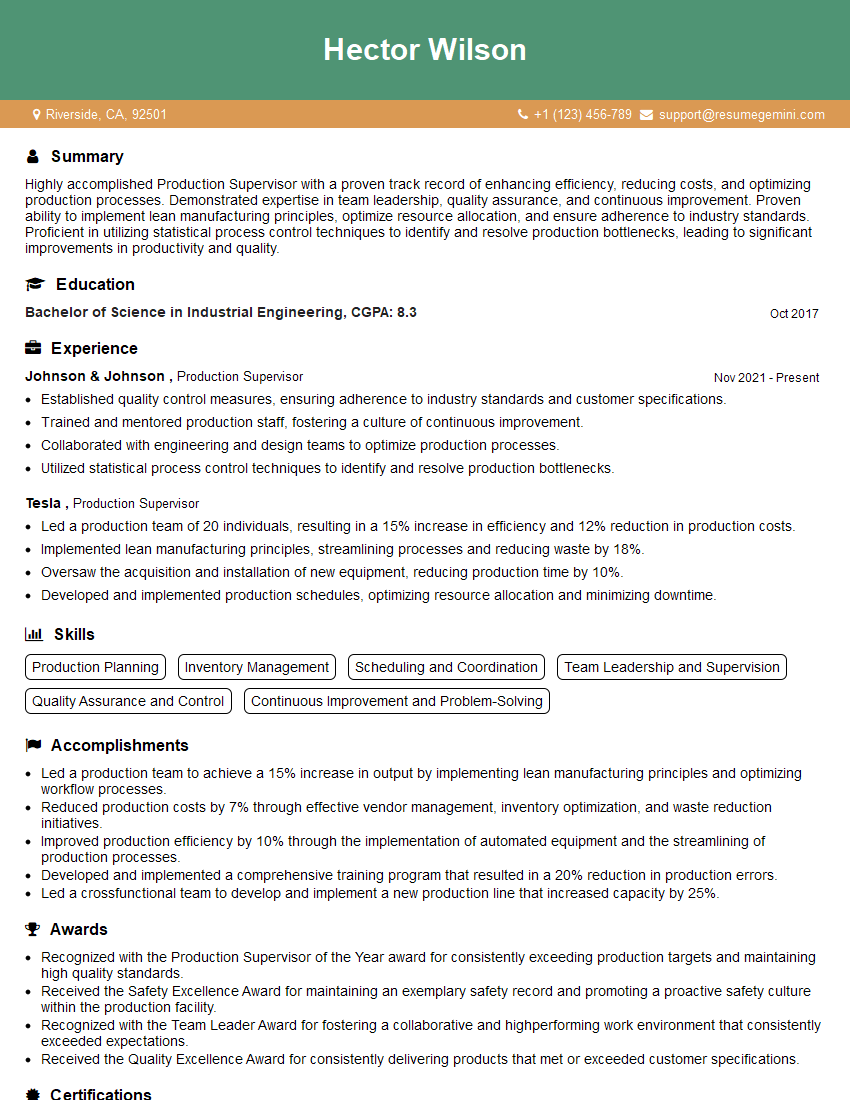
Production Supervisor Resume Sample

Supply Chain Manager Resume Sample
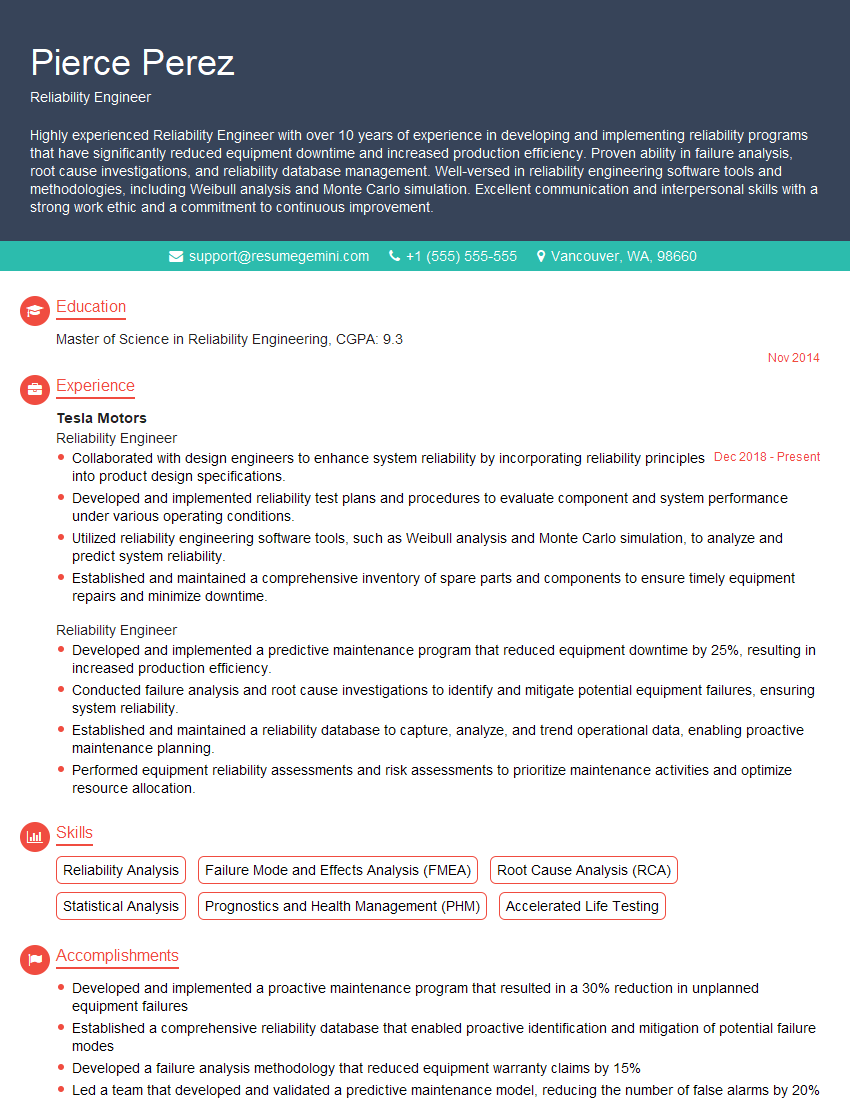
Reliability Engineer Resume Sample

Data Analyst Resume Sample
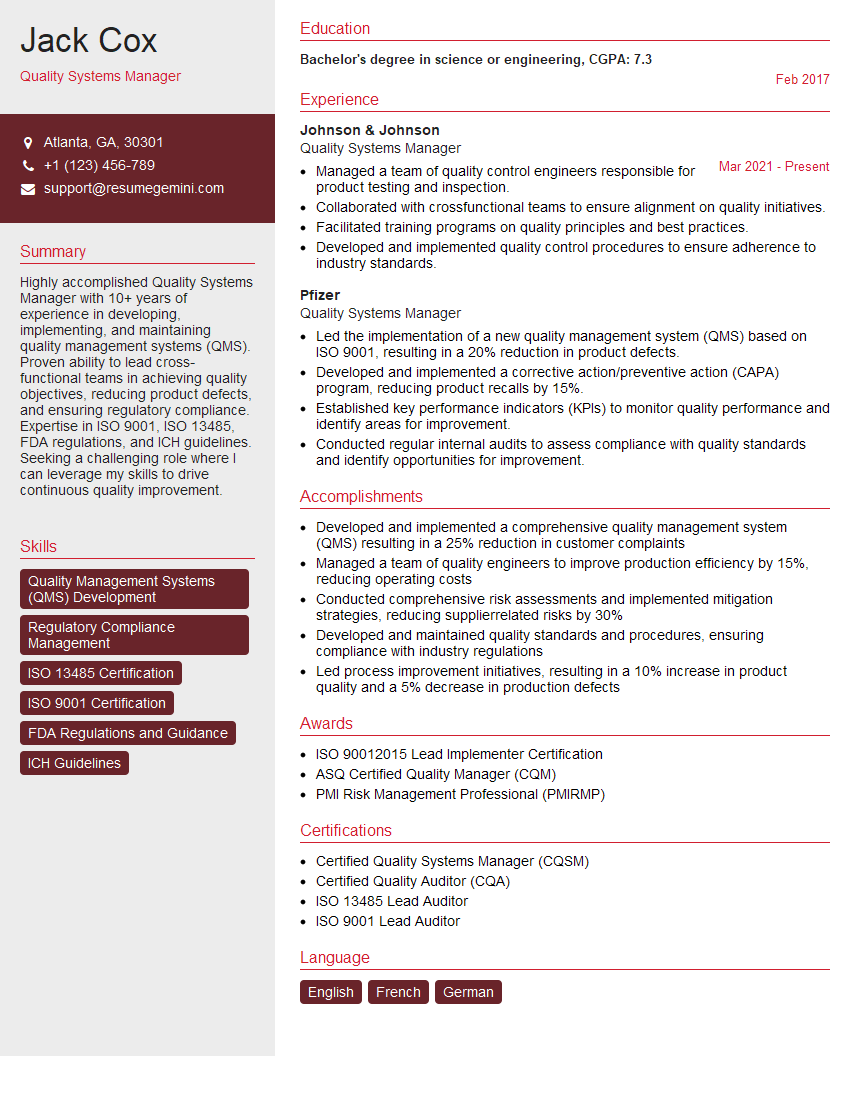
Quality Systems Manager Resume Sample
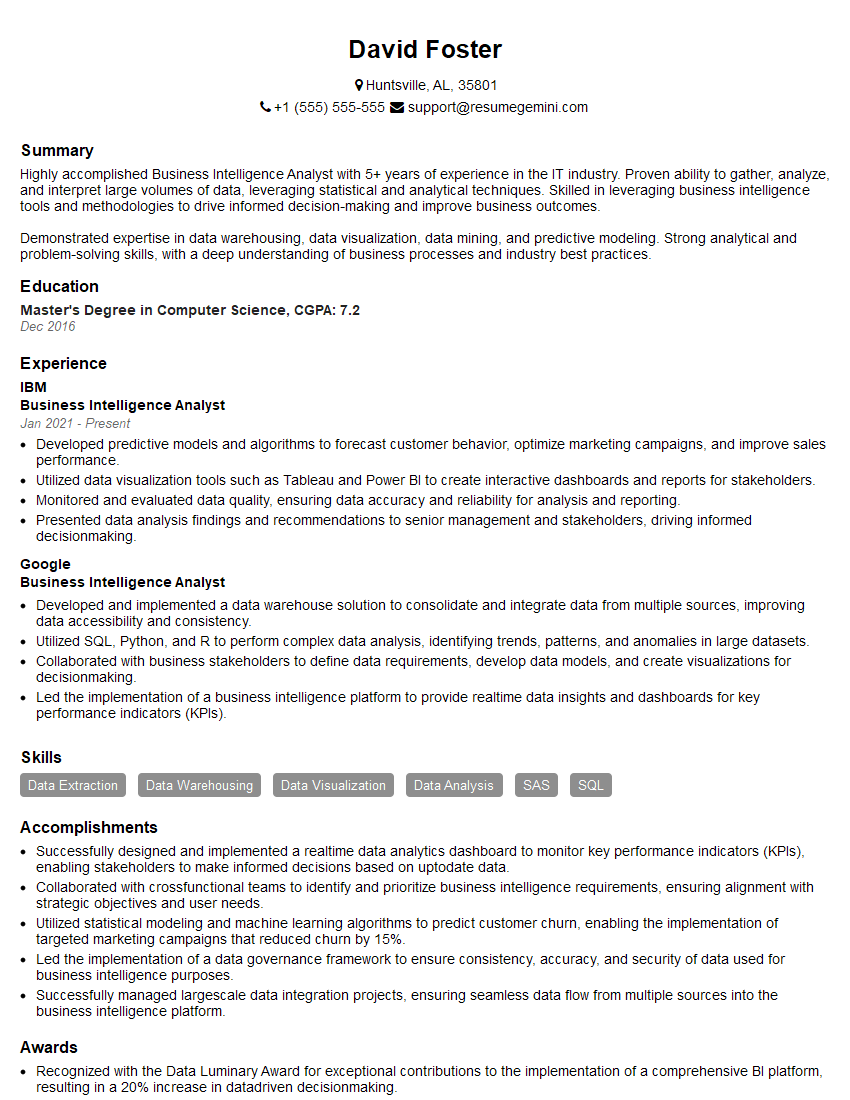
Business Intelligence Analyst Resume Sample

Statistical Analyst Resume Sample
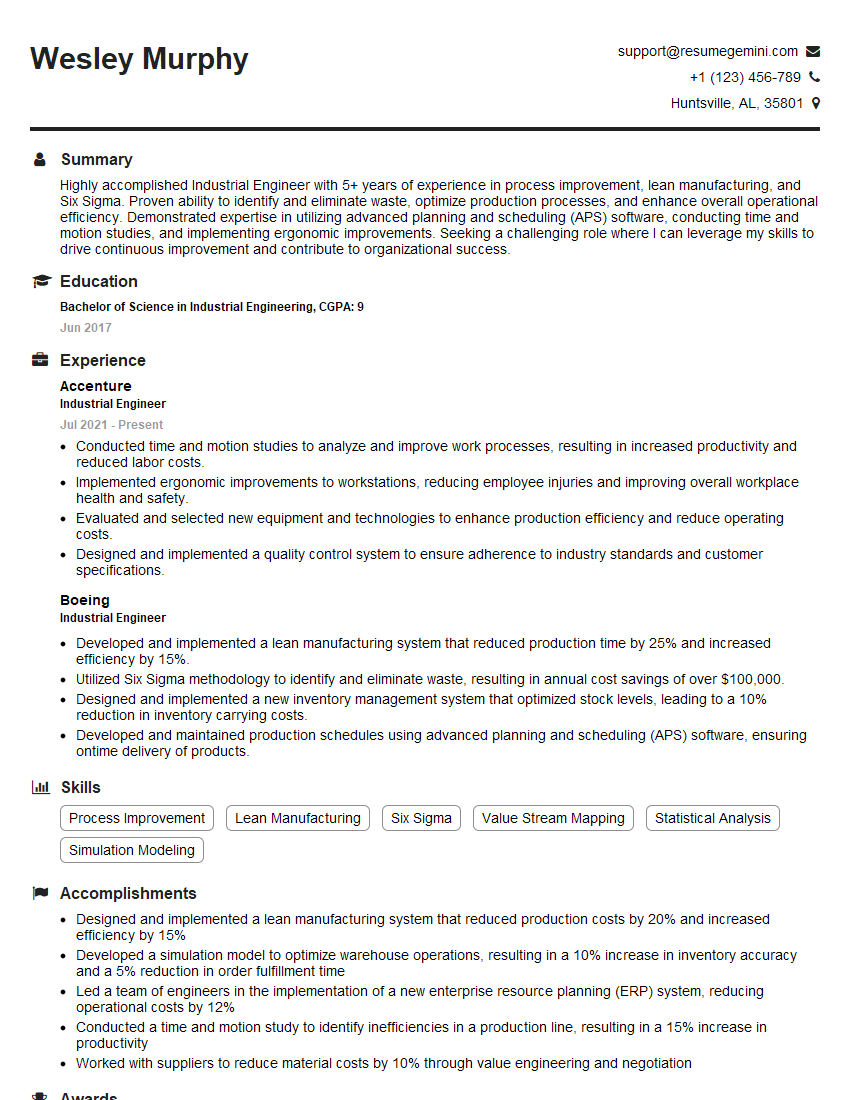
Industrial Engineer Resume Sample
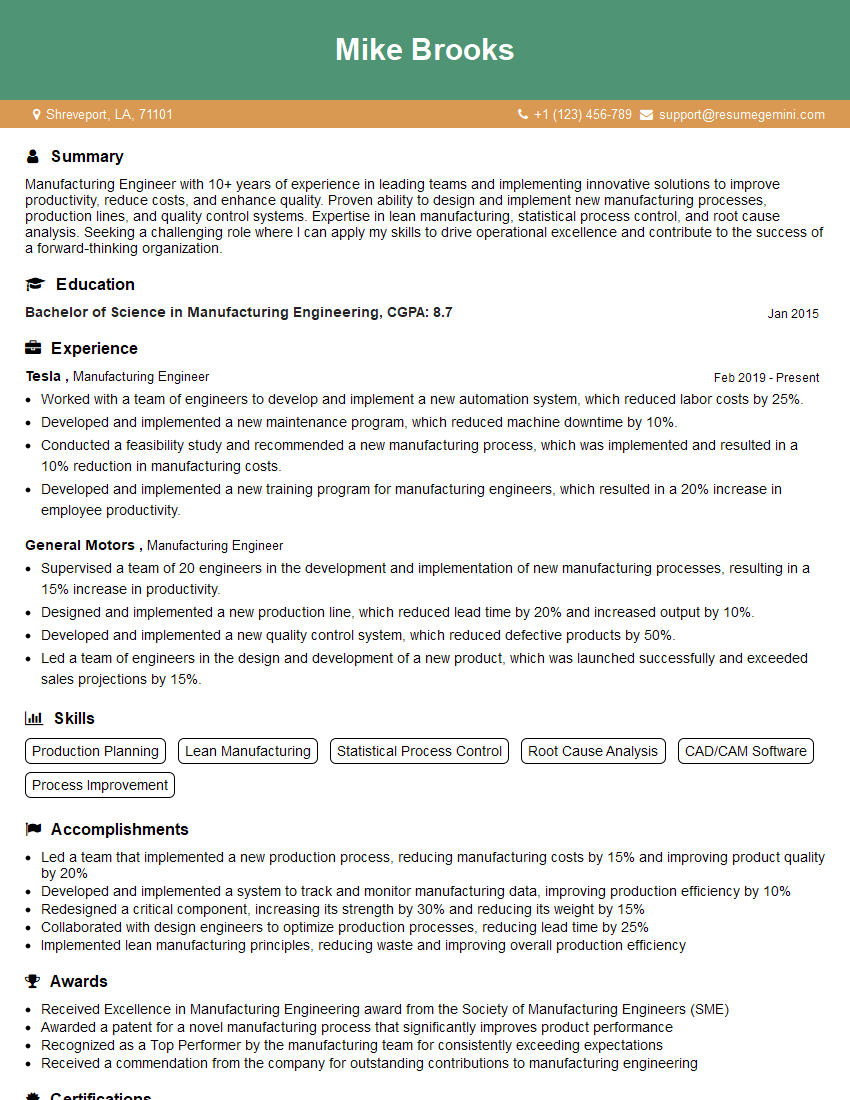
Manufacturing Engineer Resume Sample
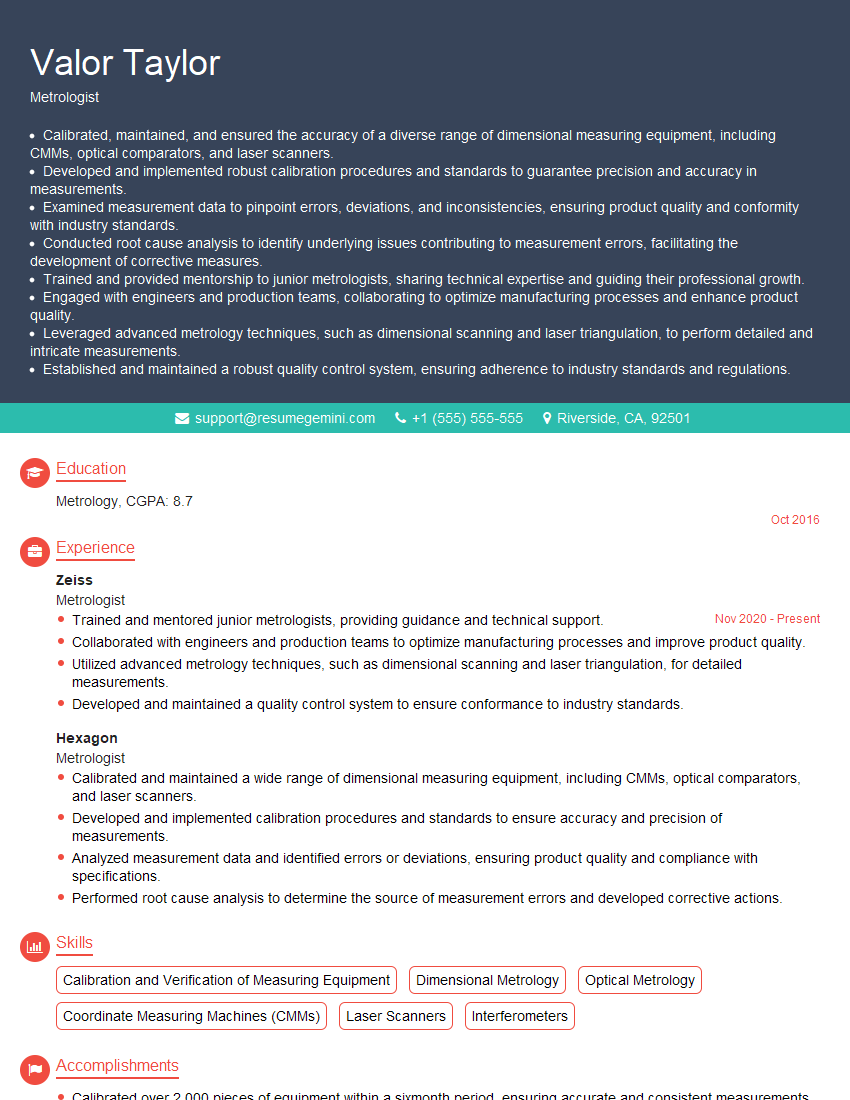
Metrologist Resume Sample
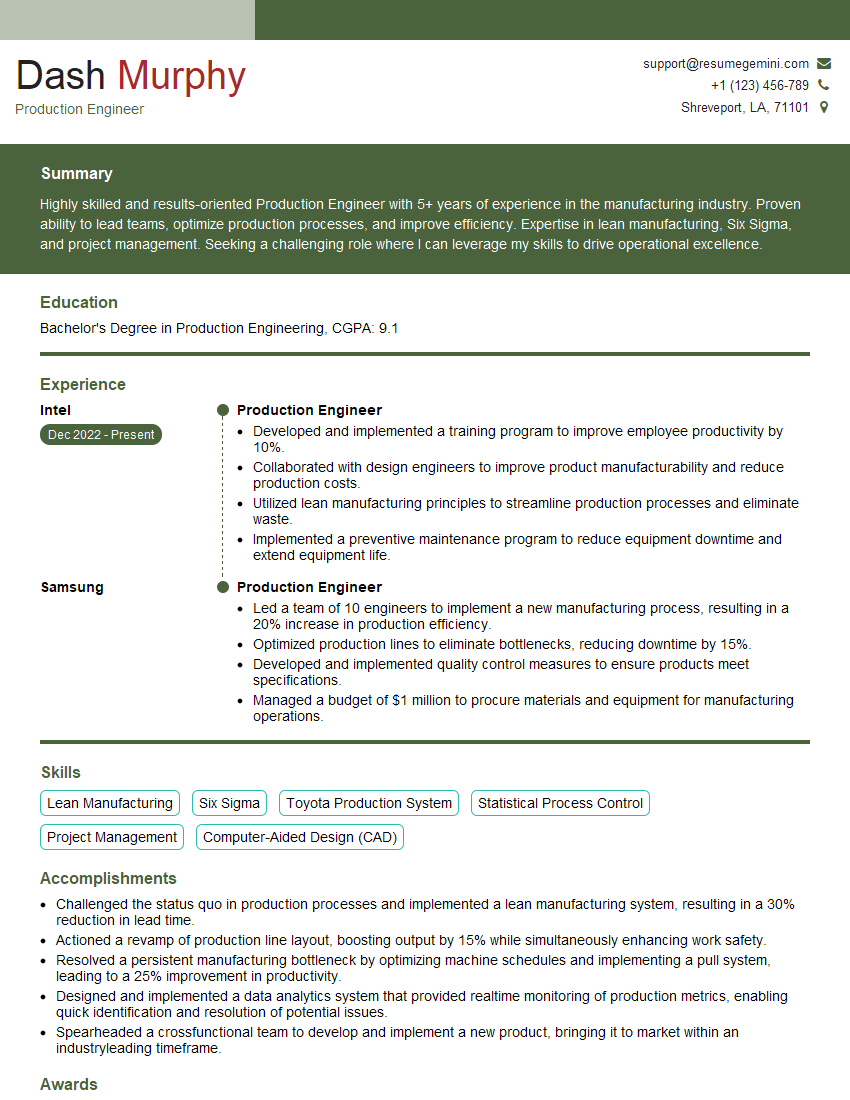
Production Engineer Resume Sample
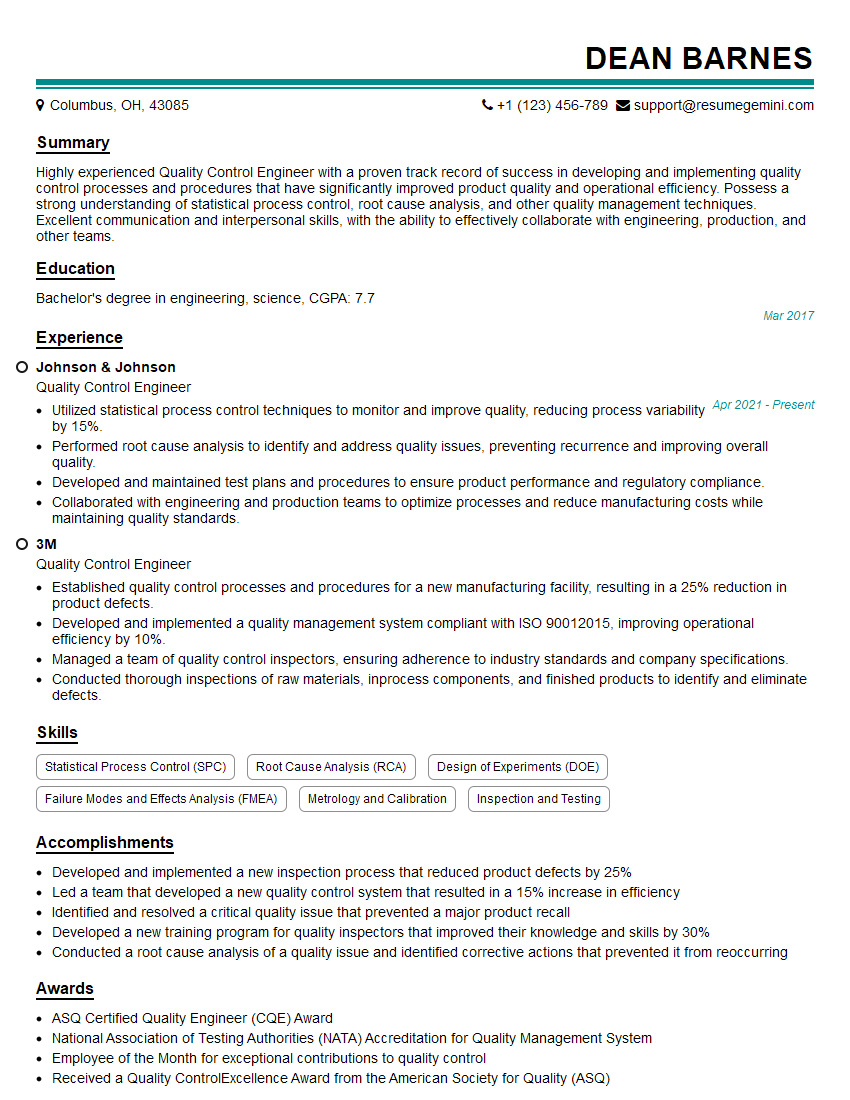
Quality Control Engineer Resume Sample
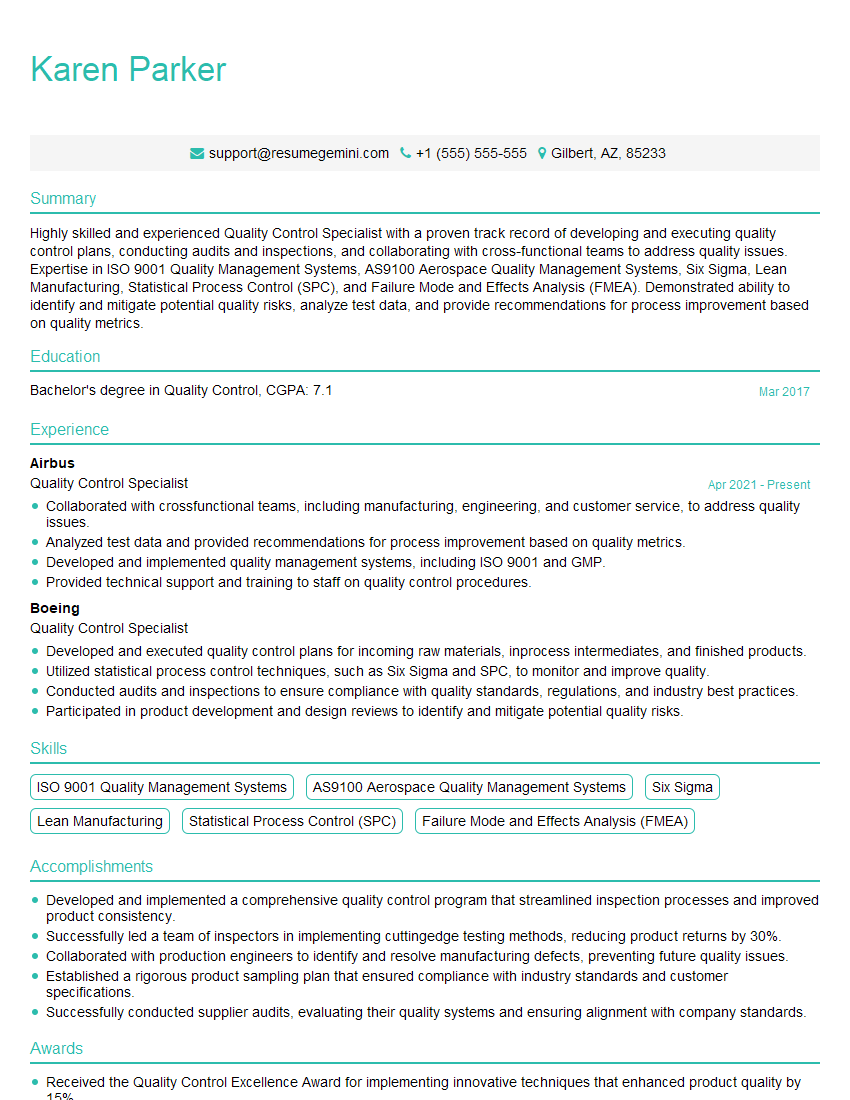
Quality Control Specialist Resume Sample
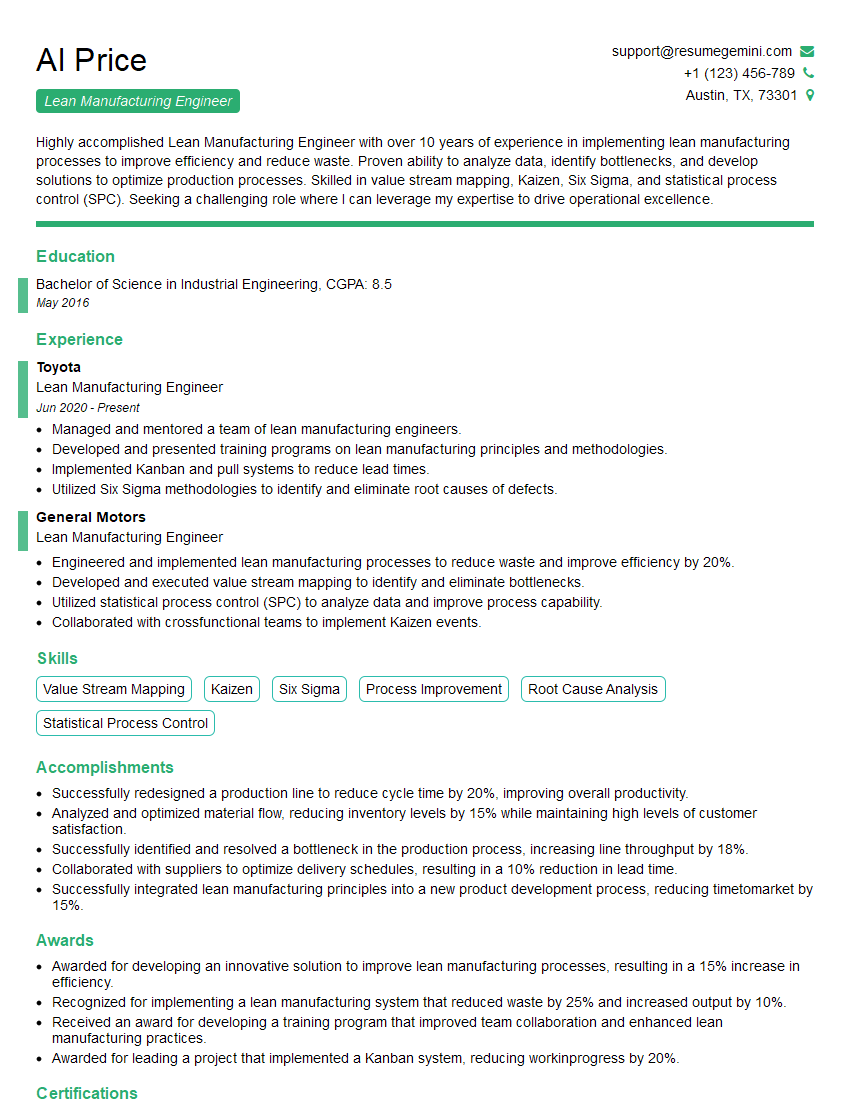
Lean Manufacturing Engineer Resume Sample
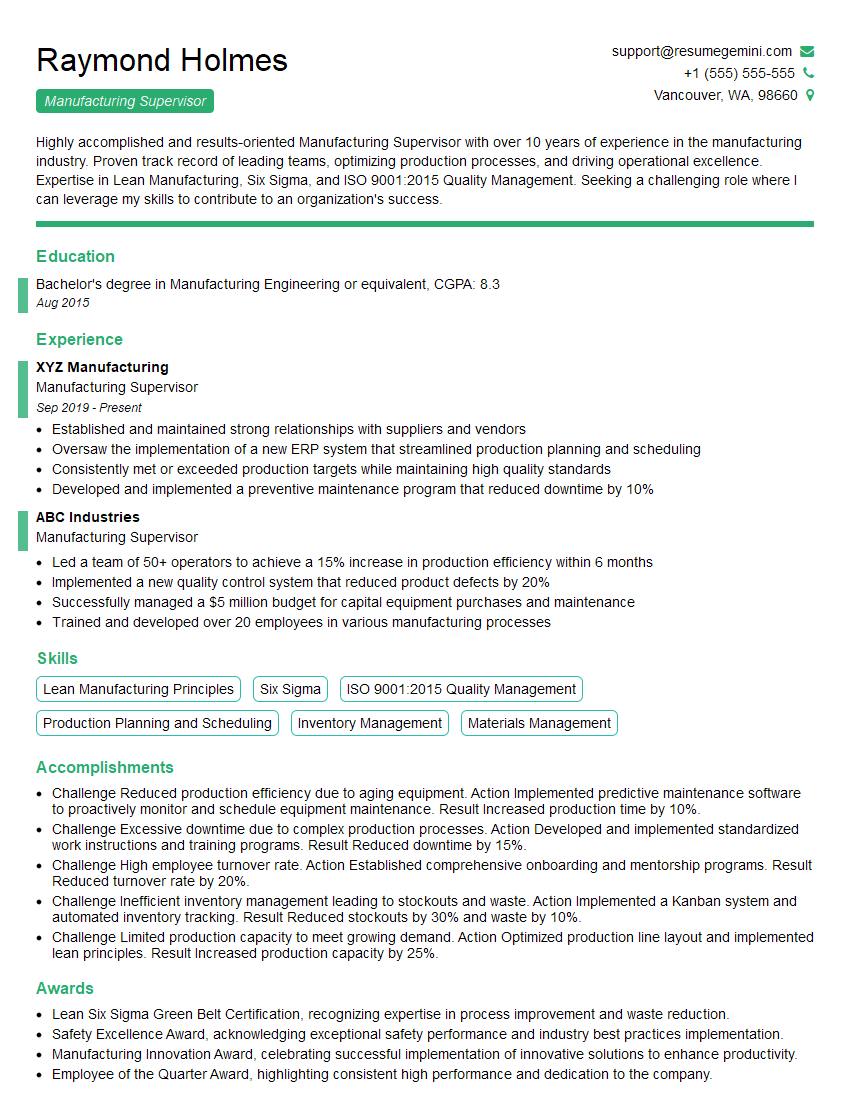
Manufacturing Supervisor Resume Sample
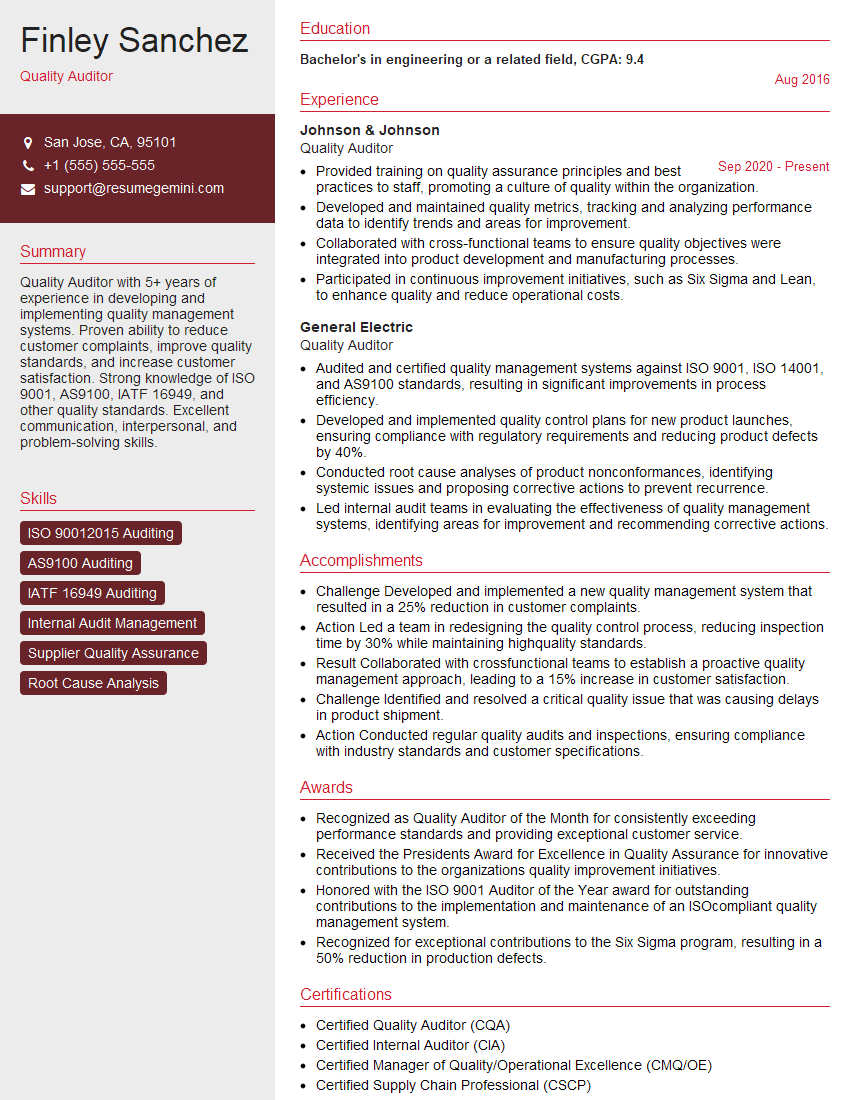
Quality Auditor Resume Sample
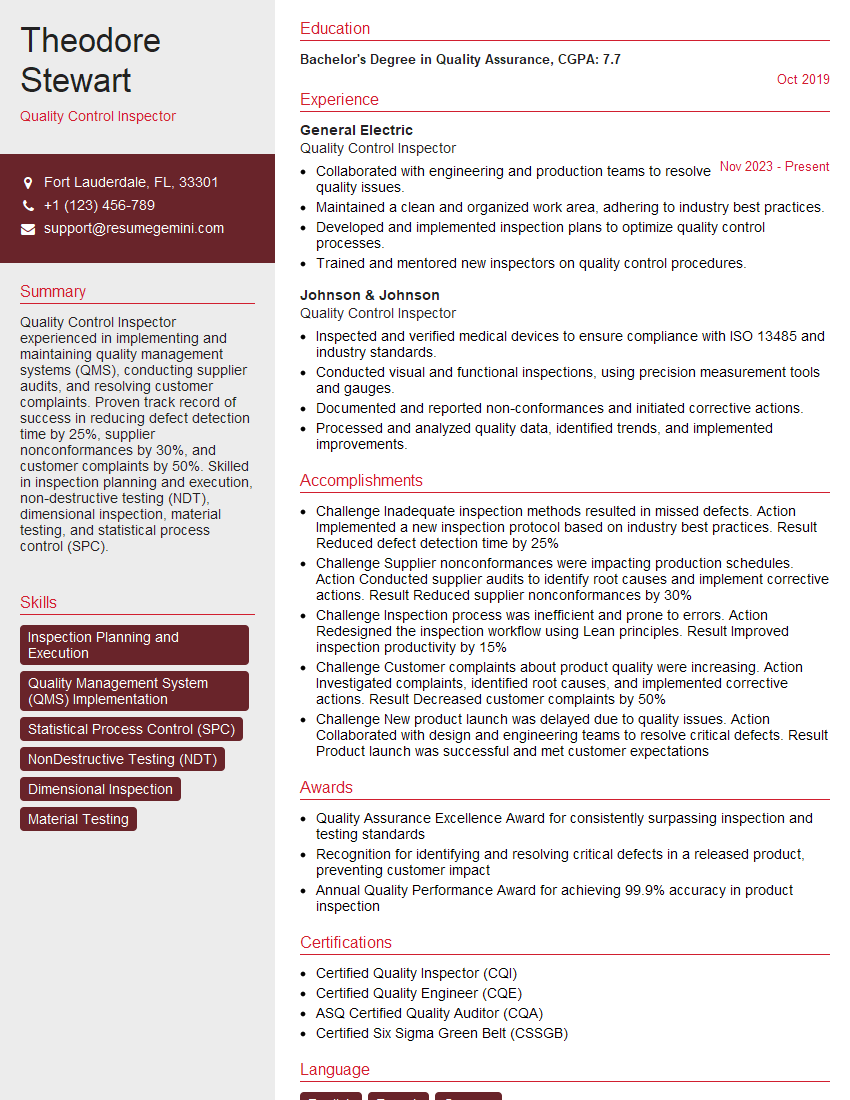
Quality Control Inspector Resume Sample
- Operations Manager
- Quality Assurance Manager
- Production Supervisor
- Supply Chain Manager
- Reliability Engineer
- Data Analyst
- Quality Systems Manager
- Business Intelligence Analyst
- Statistical Analyst
- Industrial Engineer
- Manufacturing Engineer
- Metrologist
- Production Engineer
- Quality Control Engineer
- Quality Control Specialist
- Lean Manufacturing Engineer
- Manufacturing Supervisor
- Quality Auditor
- Quality Control Inspector
Explore more articles
Users Rating of Our Blogs
Share Your Experience
We value your feedback! Please rate our content and share your thoughts (optional).
What Readers Say About Our Blog
Very informative content, great job.
good