Every successful interview starts with knowing what to expect. In this blog, we’ll take you through the top Species Monitoring and Tracking interview questions, breaking them down with expert tips to help you deliver impactful answers. Step into your next interview fully prepared and ready to succeed.
Questions Asked in Species Monitoring and Tracking Interview
Q 1. Describe your experience with various species monitoring techniques.
My experience encompasses a wide array of species monitoring techniques, tailored to the specific species and research goals. For example, I’ve extensively used mark-recapture methods for small mammals, involving trapping, marking individuals (e.g., with ear tags or PIT tags), and then recapturing them to estimate population size. For larger, more elusive animals, I’ve relied on camera trapping, deploying motion-sensing cameras in strategic locations to passively record animal activity. This provides valuable data on species presence, abundance, and behavior without disturbing them.
Another significant part of my work involves acoustic monitoring, particularly for vocalizing species like birds or bats. We use specialized recording devices to capture soundscapes, which are then analyzed to identify species and assess their abundance and activity patterns. Finally, I’ve participated in direct observation studies, which may involve systematic surveys using transects or point counts, depending on the species and habitat.
Each technique has its strengths and weaknesses; selecting the appropriate method often involves considering factors like species behavior, habitat characteristics, and available resources. For instance, while mark-recapture is effective for small, mobile animals, it’s less suitable for large, migratory species. Conversely, camera trapping is excellent for shy or elusive animals, but it relies on animals being within camera range.
Q 2. What software are you proficient in for data analysis in species monitoring?
My data analysis skills encompass several software packages crucial for species monitoring. I’m highly proficient in R, a powerful statistical computing environment that allows me to perform complex analyses, including data visualization, statistical modeling (e.g., occupancy modeling, capture-recapture analysis), and spatial analysis. I also have extensive experience with GIS software such as ArcGIS and QGIS, used for mapping species locations, habitat analysis, and visualizing spatial patterns. Furthermore, I’m familiar with Program MARK for analyzing mark-recapture data and other dedicated ecological software.
Beyond the statistical analysis, I use spreadsheet software like Microsoft Excel for data management and basic data cleaning before conducting more advanced statistical analyses in R or dedicated software.
Q 3. Explain the importance of spatial analysis in species tracking.
Spatial analysis is absolutely fundamental to species tracking and monitoring. It allows us to understand the geographic distribution of species, identify key habitats, and analyze the relationships between species and their environment. For example, by mapping the locations of individual animals tracked using GPS collars, we can determine their home ranges, movement patterns, and habitat use. This information is critical for conservation planning and management.
Spatial analysis also enables us to analyze habitat suitability, connectivity between populations, and the impacts of environmental changes on species distributions. Imagine trying to understand the effect of deforestation on a primate population—mapping the deforestation alongside the primate home ranges reveals exactly how much critical habitat has been lost. Techniques like kernel density estimation can help visualize species density across the landscape, providing insights into areas of high population concentration.
Q 4. How do you handle data inconsistencies or errors in species monitoring datasets?
Data inconsistencies and errors are inevitable in species monitoring, particularly with large datasets collected over extended periods. My approach to handling these issues is multi-faceted. Firstly, I implement rigorous data quality control measures during data collection, ensuring consistency in recording methods and accurate data entry. Secondly, I employ data cleaning techniques in R or Excel to identify and address obvious errors, such as impossible values or outliers.
For more complex inconsistencies, I utilize exploratory data analysis to visualize data distributions and identify patterns indicative of errors. For instance, if there are unexpected spikes or gaps in data, I may investigate the underlying reasons. Statistical techniques like outlier detection can also be employed. Finally, when dealing with large datasets, imputation methods can be used to fill in missing values (with appropriate caution), but I always document these steps in detail.
Transparency is key; I always clearly document the data cleaning and error handling steps in my reports and publications, ensuring that the limitations of the data are clearly understood.
Q 5. What are the ethical considerations in wildlife tracking and monitoring?
Ethical considerations are paramount in wildlife tracking and monitoring. Minimizing disturbance to animals is crucial. This involves selecting appropriate tracking methods that cause minimal stress and ensuring that any capture or handling procedures are humane and comply with relevant regulations and permits. For example, we might use non-invasive methods such as camera trapping instead of more invasive techniques if possible.
Data privacy and security are also critical. We must ensure the responsible use and storage of data, protecting individual animal identities and preventing unauthorized access. Furthermore, there are ethical implications related to the use of the data, ensuring that research findings are used for conservation purposes and do not contribute to any harm to the species.
Openly communicating research findings and collaborating with local communities and stakeholders are vital steps in conducting ethical wildlife tracking and monitoring studies. This fosters trust and allows for informed decision-making.
Q 6. Describe your experience with GPS tracking devices and data interpretation.
I have considerable experience working with GPS tracking devices, from deploying them on various species to analyzing the resulting data. I’m proficient in programming and using software to process and interpret this data. This includes data cleaning (removing erroneous data points), data transformation (e.g., converting coordinate systems), and developing algorithms to extract meaningful information. I’ve worked with various collar types, each with its own specifications and limitations regarding battery life, transmission frequency, and positional accuracy.
Data interpretation often involves visualizing movement patterns using GIS software. We can create maps displaying animal tracks, home ranges, and core use areas. This allows us to assess habitat use, movement corridors, and potential interactions between individuals or populations. Statistical analysis might reveal patterns in movement related to environmental factors or biological events (e.g., migration, breeding). For example, I once used GPS tracking data to identify critical foraging areas for a threatened bird species, informing subsequent conservation efforts.
Q 7. How do you ensure the accuracy and reliability of your species monitoring data?
Ensuring accuracy and reliability is achieved through a rigorous and multi-stage approach, starting with careful planning and design of the monitoring program. This includes selecting appropriate methods, ensuring adequate sample sizes, and using calibrated equipment. For example, GPS collars need regular maintenance and calibration to ensure their accuracy.
Rigorous data quality control measures during data collection and processing are essential. We employ thorough checks for errors, using both manual inspection and automated quality control checks in software. Data validation methods are applied to detect improbable data points, ensuring outliers are properly investigated and handled. For instance, GPS data may contain outliers due to signal interference.
Finally, we rigorously document all procedures, including methodological details, data cleaning steps, and any limitations or uncertainties associated with the data. This transparency is crucial for evaluating the reliability and credibility of the findings. Peer review and validation through independent assessment further enhances the quality of our data.
Q 8. What are some common challenges in long-term species monitoring projects?
Long-term species monitoring, while crucial for conservation, faces numerous hurdles. Imagine trying to track a population of elusive leopards over 20 years – that’s the scale of the challenge. One major issue is funding inconsistencies; securing long-term financial support can be difficult. This leads to gaps in data collection, hindering accurate trend analysis. Another significant problem is personnel changes. Experienced researchers may move on, and training replacements requires time and resources, potentially affecting data consistency. Habitat changes, like deforestation or climate change, can alter species distribution and behavior, making existing monitoring protocols obsolete. Finally, unexpected events, such as disease outbreaks or natural disasters, can disrupt data collection and significantly impact populations, requiring adaptive management strategies.
- Example: A long-term bird monitoring project might be affected by changes in land use that alter bird habitat, resulting in population declines that weren’t initially anticipated.
- Example: A lack of consistent funding might force researchers to reduce the frequency of data collection, leading to incomplete datasets and potentially flawed conclusions.
Q 9. How do you determine appropriate sample sizes for species monitoring studies?
Determining appropriate sample sizes in species monitoring is vital for obtaining reliable results. Think of it like baking a cake – you need the right amount of each ingredient for a perfect outcome. The sample size depends on several factors, including the species’ abundance and distribution, the desired level of precision, and the variability in the population. Statistical power analysis is commonly used. We determine the minimum sample size needed to detect a meaningful change in population size with a specified probability. For example, if we want to detect a 10% decline in a bird population with 80% power and a 5% significance level, a power analysis would determine the necessary sample size. This calculation takes into account the estimated population size, its variability, and the chosen statistical test. Software packages like R or specialized ecological software are often used for this purpose.
Example: For a rare and endangered species with a small, clustered population, we would need a larger sample size relative to a common species with a widespread and homogenous distribution, to ensure that we can detect any change in population size.
Q 10. Explain your experience with population viability analysis (PVA).
Population Viability Analysis (PVA) is a powerful tool for assessing the risk of extinction for a given species. It’s like a financial risk assessment, but for populations. I’ve extensively used PVA in various projects, incorporating demographic data (birth rates, death rates, sex ratios), environmental factors (habitat loss, climate change), and stochasticity (random events) into computer models. These models simulate the population’s trajectory under different scenarios, predicting the probability of extinction over a set time period. For example, I used PVA to assess the viability of a small population of mountain gorillas facing habitat fragmentation. The model identified critical threats like poaching and disease, allowing us to prioritize conservation efforts effectively. The results guided the development of management strategies aimed at improving habitat connectivity and reducing poaching incidents, thus increasing the gorillas’ chance of long-term survival.
Example: PVA could be used to assess the impact of a proposed dam on the population viability of a fish species, considering the effects of habitat loss and altered river flow.
Q 11. How do you design a species monitoring protocol?
Designing a robust species monitoring protocol is crucial for obtaining meaningful data. Think of it as creating a detailed recipe for a scientific experiment. The first step involves defining clear objectives: What are we trying to measure? Population size? Distribution? Behavior? Then, we select appropriate methods based on the species, its habitat, and available resources. For example, for a mobile species, we might use mark-recapture, whereas for a sessile species, we might employ quadrat sampling. The protocol must specify the study area, sampling design (e.g., random, stratified), sampling frequency, and data collection procedures. It’s critical to include detailed instructions on data recording, quality control, and data management to ensure consistency and minimize errors. A pilot study is always recommended to refine the protocol before full-scale implementation. Finally, the protocol should include a plan for data analysis and reporting.
Example: A monitoring protocol for a bird species might include methods for capturing and banding birds, surveying nest sites, and collecting data on breeding success.
Q 12. Describe your experience with mark-recapture techniques.
Mark-recapture techniques are powerful tools for estimating population size, particularly for mobile species. Imagine tagging a fraction of fish in a lake, then recapturing some later; analyzing the proportion of marked individuals in the recapture allows us to estimate the total population. The basic principle involves marking a sample of individuals (e.g., tagging, banding, unique markings), releasing them back into the population, then capturing a second sample at a later time. The proportion of marked individuals in the second sample is used to estimate the total population size using various statistical models like the Lincoln-Petersen index or more sophisticated models considering survival and movement. I have extensive experience using this technique, from capturing and marking small mammals to studying movements of large migratory birds. Data quality is paramount, ensuring appropriate marking methods that don’t harm the animals and effective recapture techniques. The choice of model depends on the study design and assumptions about population dynamics.
Example: Using radio-collars to track the movements of wolves, or using pit-tags to monitor fish populations.
Q 13. How do you identify and mitigate bias in species monitoring data?
Bias in species monitoring data can significantly skew results and lead to flawed conclusions. Imagine taking a temperature reading only when it’s sunny – you’ll get a biased picture of the average temperature. Several types of bias exist: sampling bias (e.g., only sampling in easily accessible areas), observation bias (e.g., observer fatigue leading to missed observations), and measurement bias (e.g., inaccurate equipment). Mitigating bias involves careful study design, standardized protocols, rigorous quality control, and appropriate statistical analysis. Using random sampling, blind observations (where the observer is unaware of the treatment group), and calibration of equipment can help minimize bias. Statistical methods like generalized linear models can account for known biases during data analysis. Careful documentation of any potential biases is crucial for transparent and accurate reporting.
Example: Using stratified random sampling to ensure that all habitats within a study area are represented proportionally in the sample.
Q 14. What is your experience with camera trapping and data analysis?
Camera trapping has revolutionized wildlife monitoring, offering a non-invasive way to study elusive species. It’s like having a 24/7 surveillance system in the wild. I have extensive experience deploying camera traps in various habitats, from forests to grasslands. Data analysis involves identifying species, counting individuals, and analyzing activity patterns. Software packages like R with packages like camtrapR or commercial software are used to organize, process, and analyze the vast amount of data generated by camera traps. Challenges include camera malfunction, data storage, and species identification, which can be aided by expert knowledge and image recognition software. However, the richness of information provided, including species interactions, activity budgets, and habitat use, makes camera trapping a valuable tool in species monitoring.
Example: Analyzing camera trap data to estimate the abundance and density of tigers in a protected area, or to assess the effectiveness of anti-poaching measures.
Q 15. How do you analyze spatial distribution patterns of a species?
Analyzing spatial distribution patterns involves understanding how a species is spread across a landscape. We use various techniques to achieve this, ranging from simple mapping of observation points to sophisticated statistical modeling.
First, we collect data on species locations. This could involve direct observation through field surveys, camera traps, GPS tracking collars on animals, or even analyzing scat or other signs. Then, we use this data to create maps showing the species’ presence and absence. We might also estimate population density within different areas.
Next, we look for patterns. Are individuals clustered together, uniformly distributed, or randomly scattered? Spatial point pattern analysis techniques, often using GIS software, can help quantify these patterns. For instance, we might use tools like kernel density estimation to create a smooth surface showing density, or Ripley’s K-function to test for spatial randomness. We also consider environmental factors—elevation, vegetation type, proximity to water—that may influence the species’ distribution and incorporate them into our analysis.
For example, in a study of mountain lions, we might find they are clustered near areas with high prey density and avoid areas with high human activity. By analyzing these spatial patterns, we gain insights into habitat preferences, population dynamics, and potential conservation needs.
Career Expert Tips:
- Ace those interviews! Prepare effectively by reviewing the Top 50 Most Common Interview Questions on ResumeGemini.
- Navigate your job search with confidence! Explore a wide range of Career Tips on ResumeGemini. Learn about common challenges and recommendations to overcome them.
- Craft the perfect resume! Master the Art of Resume Writing with ResumeGemini’s guide. Showcase your unique qualifications and achievements effectively.
- Don’t miss out on holiday savings! Build your dream resume with ResumeGemini’s ATS optimized templates.
Q 16. What are the key indicators of a healthy population for a given species?
Key indicators of a healthy population vary depending on the species, but generally include:
- Population Size and Density: A sufficiently large and appropriately dense population is crucial for long-term survival. Extremely low numbers indicate vulnerability to extinction.
- Age Structure: A balanced age distribution (meaning a good representation of young, adult, and older individuals) signifies ongoing reproduction and recruitment. A skewed age structure, with mainly older individuals, for example, indicates poor reproductive success.
- Sex Ratio: A relatively even sex ratio ensures successful breeding. Significant deviations could signal challenges to the population’s health.
- Genetic Diversity: High genetic diversity boosts resilience to disease and environmental change. Low diversity makes a population vulnerable.
- Reproductive Rate: Monitoring birth rates and juvenile survival rates are essential. A decline in these metrics is a warning sign.
- Disease Prevalence: Outbreaks of disease can severely impact population size and health.
- Survival Rates: Tracking survival rates from one year to the next provides an essential measure of the population’s health.
Monitoring these indicators requires a combination of methods, from direct counts and mark-recapture studies to genetic analysis and health assessments. Analyzing trends in these indicators over time provides crucial insight into the population’s health and trajectory.
Q 17. Explain your understanding of habitat suitability modeling.
Habitat suitability modeling is a powerful tool for predicting where a species is likely to be found based on its environmental requirements. Essentially, we create a model that links species occurrence data with environmental variables, such as temperature, precipitation, vegetation type, and elevation.
The process usually starts with gathering presence data (where the species has been observed) and, ideally, absence data (where the species is known not to occur). Then, we collect environmental data for these locations. Many statistical methods exist to develop these models. Common approaches include:
- MaxEnt (Maximum Entropy): A popular method that uses presence-only data and performs well with limited data.
- Generalized Linear Models (GLMs): A flexible approach allowing us to model species presence/absence based on different environmental predictors.
- Generalized Additive Models (GAMs): Similar to GLMs but can handle non-linear relationships between environmental variables and species occurrence.
Once the model is built, we can apply it to a broader area to predict the suitability of the habitat. Areas with high suitability scores are likely to be suitable for the species. It’s important to validate the model to ensure its accuracy. We might do this by comparing the predicted suitability with independent species observation data.
These models are extremely useful for conservation planning, helping identify priority areas for habitat protection and restoration.
Q 18. How do you use GIS software in species monitoring and spatial data analysis?
GIS (Geographic Information Systems) software is indispensable for species monitoring and spatial data analysis. It allows us to integrate, visualize, and analyze spatial data from various sources.
We use GIS to:
- Create maps of species locations: This is the foundation of any spatial analysis. We input location data (latitude/longitude coordinates) from field surveys, GPS trackers, or camera traps and visualize them on a map.
- Overlay environmental layers: We can integrate environmental datasets (e.g., elevation, land cover, temperature) with species location data to analyze relationships between species distribution and environmental factors. This is essential for habitat suitability modeling.
- Perform spatial analysis: GIS software enables us to perform spatial analyses such as buffer analysis (determining areas within a certain distance of a species location), proximity analysis (measuring distances between species locations and other features), and overlay analysis (comparing different spatial layers).
- Create and manage spatial databases: GIS allows us to store and manage large datasets of species observations and environmental variables in a structured and organized manner.
- Visualize results: Finally, GIS provides powerful visualization tools, allowing us to create maps, charts, and graphs to communicate our findings effectively to both technical and non-technical audiences.
Examples of GIS software include ArcGIS, QGIS, and MapInfo. Specific functions like Spatial Join and Overlay are regularly used to link species observation points to environmental data and calculate habitat suitability indices.
Q 19. What experience do you have with remote sensing techniques for species monitoring?
Remote sensing techniques, such as satellite imagery and aerial photography, are increasingly important for large-scale species monitoring. They provide a cost-effective and efficient way to monitor habitat changes and species distributions across vast areas.
My experience includes using:
- Satellite imagery: Analyzing high-resolution satellite images to identify species habitats, estimate habitat extent and quality, and detect changes in habitat over time (e.g., deforestation, urbanization). I’ve used software like ENVI and Erdas Imagine to process and interpret these images.
- Aerial photography: Interpreting aerial photographs to map species habitats and monitor changes. This is particularly useful for detailed habitat assessment at a finer spatial scale.
- LiDAR (Light Detection and Ranging): LiDAR data provides detailed 3D information on the landscape, enabling us to create highly accurate digital elevation models and analyze species distributions in relation to topographic features.
For example, in a project monitoring sea turtle nesting sites, we used high-resolution satellite imagery to identify and map nesting beaches, monitor beach erosion, and detect changes in vegetation cover. The combination of remote sensing with ground-truthing data (direct observation on the ground) provides a comprehensive approach to species monitoring.
Q 20. How do you communicate complex ecological data to non-technical audiences?
Communicating complex ecological data to non-technical audiences requires a clear and engaging approach. Jargon should be minimized, and technical concepts should be explained using simple language and relatable analogies.
I use several strategies:
- Visualizations: Maps, graphs, and charts are powerful tools. A well-designed map showing species distribution, for instance, can communicate information more effectively than pages of numbers.
- Storytelling: Framing data within a compelling narrative can capture attention and make the information more memorable. I might present a story of a species struggling for survival and explain how data reveal the factors behind those struggles.
- Analogies and metaphors: Relating complex ideas to everyday concepts can improve comprehension. For example, I might compare habitat fragmentation to cutting a pizza into smaller pieces, reducing the available area for a species.
- Interactive presentations: Using interactive elements like maps with clickable features, short videos, or animations can enhance engagement and make the information more accessible.
- Tailoring the message: It’s crucial to adapt the communication style to the specific audience. I would tailor my presentation differently for a group of school children compared to a group of policymakers.
For instance, when presenting data on climate change impacts on a species to the general public, I might focus on how climate change affects the species’ habitat and the resulting threats to its survival, utilizing visually appealing graphs and simple language. For policymakers, I might emphasize the economic and social implications of species loss and recommend specific conservation actions supported by the data.
Q 21. Describe your experience with citizen science initiatives in species monitoring.
Citizen science initiatives are invaluable for large-scale species monitoring efforts. They leverage the efforts of volunteers to collect data that would be impossible for scientists to gather alone.
My experience includes:
- Designing and implementing citizen science projects: I’ve been involved in creating protocols for data collection, training volunteers, and developing data management systems. I prioritize clear and user-friendly instructions to ensure data quality.
- Data analysis and interpretation: I analyze data collected by volunteers, ensuring data quality control and interpreting the findings. It’s crucial to account for potential biases in volunteer data.
- Communication and outreach: I communicate findings to volunteers and the wider public, acknowledging their valuable contribution.
One project I participated in involved monitoring bird populations across a large national park. Volunteers used a standardized protocol to record bird sightings, creating a vast dataset that would have been impossible to collect without their help. This data provided valuable insights into the distribution and abundance of various bird species and helped inform park management decisions. Engaging the community also increased public awareness and support for conservation efforts.
Q 22. How do you address conflicts between species monitoring and human activities?
Addressing conflicts between species monitoring and human activities requires a multi-faceted approach focusing on collaboration, communication, and mitigation. It’s not simply about protecting the species; it’s about finding sustainable solutions that benefit both conservation and human livelihoods.
- Collaboration: Engaging with local communities, industries, and government agencies is crucial. For example, when monitoring endangered sea turtles nesting on beaches, we’ve worked with local tourism operators to establish guidelines for beach access and lighting, minimizing disturbance to nesting females. This collaborative approach ensures buy-in and minimizes conflict.
- Communication: Clearly communicating the importance of species monitoring and its benefits to stakeholders is essential. We use accessible language, visuals, and community meetings to educate the public about conservation efforts and the impact of their actions. Transparency fosters trust and understanding.
- Mitigation: Implementing measures to reduce negative impacts is vital. This might involve designing wildlife crossings for roads to reduce animal-vehicle collisions or implementing buffer zones around sensitive habitats to limit human encroachment. In one project, we worked with farmers to create wildlife-friendly farming practices that minimized habitat destruction while maintaining agricultural productivity.
Q 23. What is your experience with regulatory compliance in wildlife research and monitoring?
Regulatory compliance is paramount in wildlife research and monitoring. My experience encompasses working within the frameworks of various national and international regulations, including CITES (Convention on International Trade in Endangered Species), ESA (Endangered Species Act), and local environmental protection laws. I’m proficient in obtaining necessary permits, adhering to ethical guidelines for animal handling and data collection, and ensuring data security and confidentiality. I’ve developed comprehensive protocols and documentation to ensure complete compliance, minimizing potential legal issues and maximizing research integrity.
For instance, a project involving radio-collaring wolves required securing permits from multiple agencies and adhering to strict protocols for animal capture, handling, and data recording. Detailed documentation and regular reporting to the relevant authorities were integral to ensuring ongoing compliance.
Q 24. Describe your proficiency in data visualization and presentation.
I possess extensive experience in data visualization and presentation using various software packages, including R, ArcGIS, and Tableau. I’m adept at translating complex ecological data into clear and compelling visuals that effectively communicate key findings to both technical and non-technical audiences. My approach prioritizes clarity, accuracy, and aesthetic appeal.
- Data types: I comfortably handle diverse data types, including spatial data (GIS maps), time series data (population trends), and categorical data (species presence/absence).
- Visualization techniques: I use a range of techniques including maps, charts (bar, line, scatter plots), graphs, and dashboards to effectively visualize different aspects of the data. The choice of visualization is always tailored to the specific data and target audience.
- Presentation styles: I’m skilled in presenting data through scientific papers, presentations, reports, and infographics, adapting my approach to the needs of the audience and the context of the communication.
For example, in a recent project studying bird migration patterns, I created interactive maps showing migration routes and stopover sites, along with graphs illustrating population changes over time, making the complex data easily understandable for a broad audience, including policymakers and the general public.
Q 25. How do you manage and archive species monitoring data effectively?
Effective management and archiving of species monitoring data are crucial for ensuring data integrity, accessibility, and long-term usability. My approach follows established best practices for data management and utilizes a combination of digital and physical archiving techniques.
- Data standardization: I implement standardized data formats (e.g., CSV, shapefiles) and metadata schemas to ensure data consistency and facilitate data analysis and sharing.
- Database management: I utilize relational databases (e.g., PostgreSQL, MySQL) or cloud-based solutions to store and manage large datasets efficiently. This ensures data security, accessibility, and version control.
- Data backup and redundancy: I implement robust backup and recovery strategies to protect against data loss. This typically involves regular backups to multiple locations, including cloud storage and offsite servers.
- Metadata documentation: Detailed metadata documentation is essential, providing context and ensuring data understandability for future researchers and users. This includes information on data collection methods, spatial and temporal coverage, and data quality.
Furthermore, I utilize version control systems (like Git) for managing code and scripts used in data processing and analysis, ensuring reproducibility and transparency.
Q 26. Explain your experience with statistical analysis of ecological data.
My experience in statistical analysis of ecological data spans a wide range of techniques, from descriptive statistics to complex statistical modeling. I’m proficient in using software packages like R and Python to conduct analyses and interpret results. My expertise allows me to select the appropriate statistical method depending on the research question and data characteristics.
- Descriptive statistics: I’m comfortable summarizing and visualizing data using measures of central tendency, variability, and distribution.
- Inferential statistics: I utilize a range of statistical tests, including t-tests, ANOVA, regression analysis, and non-parametric tests, to draw inferences from data and test hypotheses.
- Spatial analysis: I apply spatial statistics techniques (e.g., spatial autocorrelation, geostatistics) to analyze spatially explicit ecological data.
- Modeling: I have experience in developing and applying various ecological models, including occupancy models, population viability analysis, and species distribution models.
For example, in a study on the impact of climate change on amphibian populations, I used generalized linear mixed models to assess the effects of temperature and precipitation on species abundance, incorporating spatial and temporal autocorrelation in the analysis.
Q 27. How do you adapt your monitoring strategies based on changing environmental conditions?
Adapting monitoring strategies to changing environmental conditions is crucial for maintaining the relevance and effectiveness of conservation efforts. This necessitates a flexible and adaptive approach. A static monitoring plan is unlikely to remain effective in the face of dynamic environmental change.
- Monitoring indicators: Regularly reviewing the selected monitoring indicators is critical. Are the chosen variables still relevant to the research question in light of environmental changes? May we need to add or remove specific indicators?
- Sampling design: The sampling design itself may need adaptation. If a habitat has been significantly altered, the sampling locations or frequency might need adjustment to ensure representative data are collected.
- Data analysis: Changes in environmental conditions may influence the data analysis required. This could necessitate incorporating new variables or adjusting statistical models to reflect altered environmental conditions.
- Technology: New technologies should be evaluated for their potential to enhance monitoring effectiveness and efficiency. For example, the use of drones for surveying large areas or sensor networks for collecting environmental data can greatly improve the scope and detail of monitoring efforts.
For example, in a project monitoring coral reefs, we had to adapt our monitoring strategy after a major bleaching event. We increased the frequency of surveys, added new indicators to assess coral recovery, and incorporated remote sensing techniques to monitor bleaching events in real-time.
Q 28. What are your salary expectations for this role?
My salary expectations for this role are commensurate with my experience and qualifications, and are in line with industry standards for a senior-level position in species monitoring and tracking. I am open to discussing a competitive salary package that reflects the value I can bring to your organization. My specific expectations will depend on the details of the job description, including responsibilities, benefits, and location.
Key Topics to Learn for Species Monitoring and Tracking Interview
- Population Estimation Techniques: Understanding methods like mark-recapture, distance sampling, and abundance indices. Consider the strengths and weaknesses of each in various ecological contexts.
- Data Collection and Analysis: Proficiency in using various data collection tools (e.g., GPS trackers, camera traps, acoustic monitoring) and analyzing the resulting data using statistical software (e.g., R, Python).
- Spatial Ecology and GIS: Familiarity with GIS software and its application in analyzing species distribution, habitat suitability, and movement patterns. Understanding concepts like habitat fragmentation and connectivity.
- Species Identification and Taxonomy: A solid understanding of the taxonomic classification of relevant species and the ability to accurately identify them in the field.
- Conservation Biology Principles: Applying knowledge of conservation principles to inform monitoring strategies and contribute to effective conservation efforts. This includes understanding threats to biodiversity and potential mitigation strategies.
- Ethical Considerations in Research: Understanding and applying ethical guidelines for handling wildlife, obtaining permits, and minimizing disturbance to animals and their habitats.
- Problem-solving and Data Interpretation: Demonstrating the ability to analyze complex datasets, identify trends, and draw meaningful conclusions to inform management decisions. Be prepared to discuss challenges encountered during fieldwork and how they were overcome.
- Report Writing and Communication: Ability to clearly and concisely communicate findings through written reports, presentations, and collaborations with stakeholders.
Next Steps
Mastering Species Monitoring and Tracking opens doors to a rewarding career contributing to vital conservation efforts. Your expertise in data analysis, fieldwork, and ecological understanding will be highly sought after in various organizations. To significantly increase your chances of landing your dream role, focus on crafting an ATS-friendly resume that effectively highlights your skills and experience. ResumeGemini is a trusted resource that can help you build a professional and impactful resume. They provide examples of resumes tailored to Species Monitoring and Tracking to help guide you. Invest time in building a strong resume – it’s your first impression on potential employers.
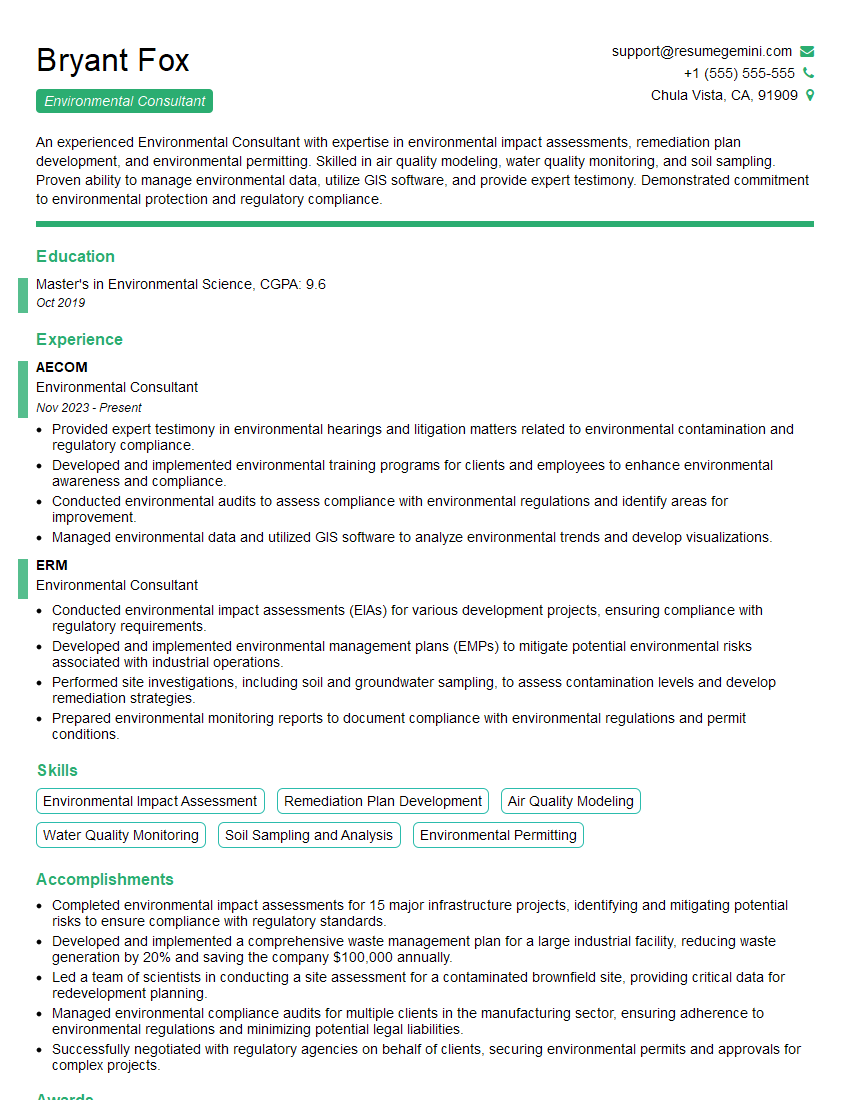
Environmental Consultant Resume Sample

Entomologist Resume Sample
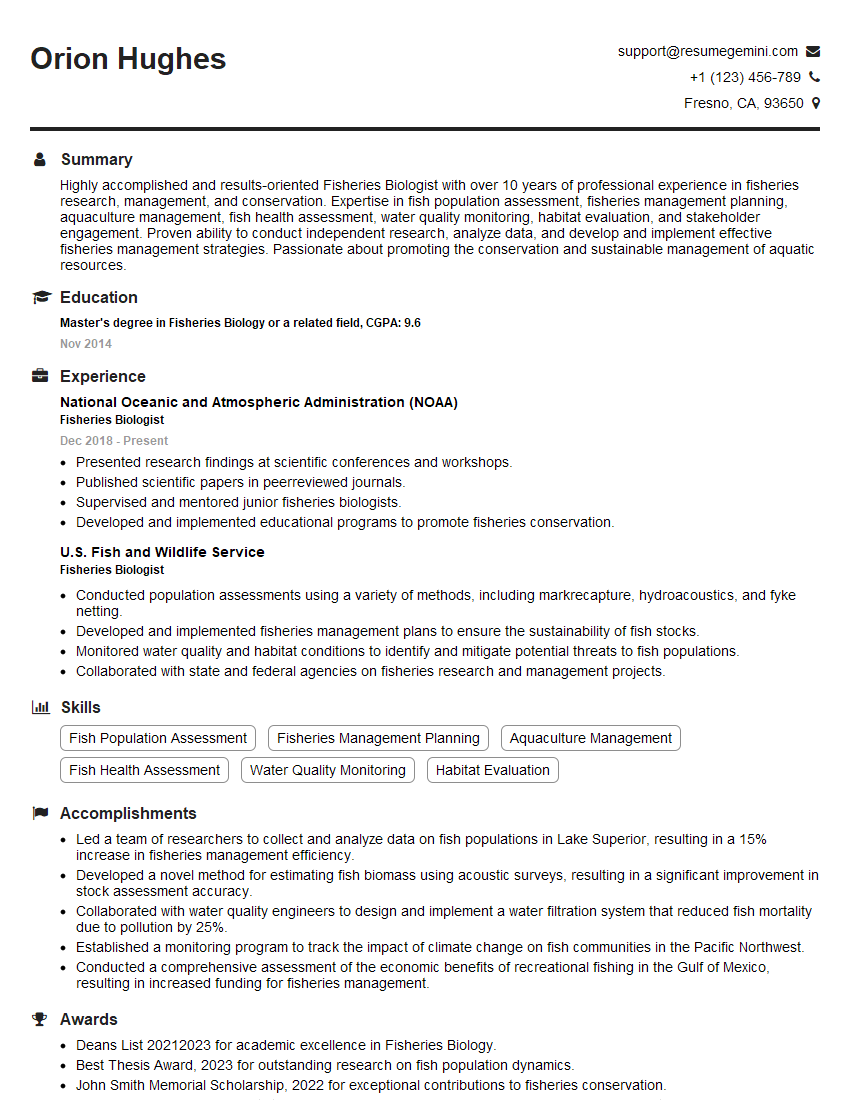
Fisheries Biologist Resume Sample
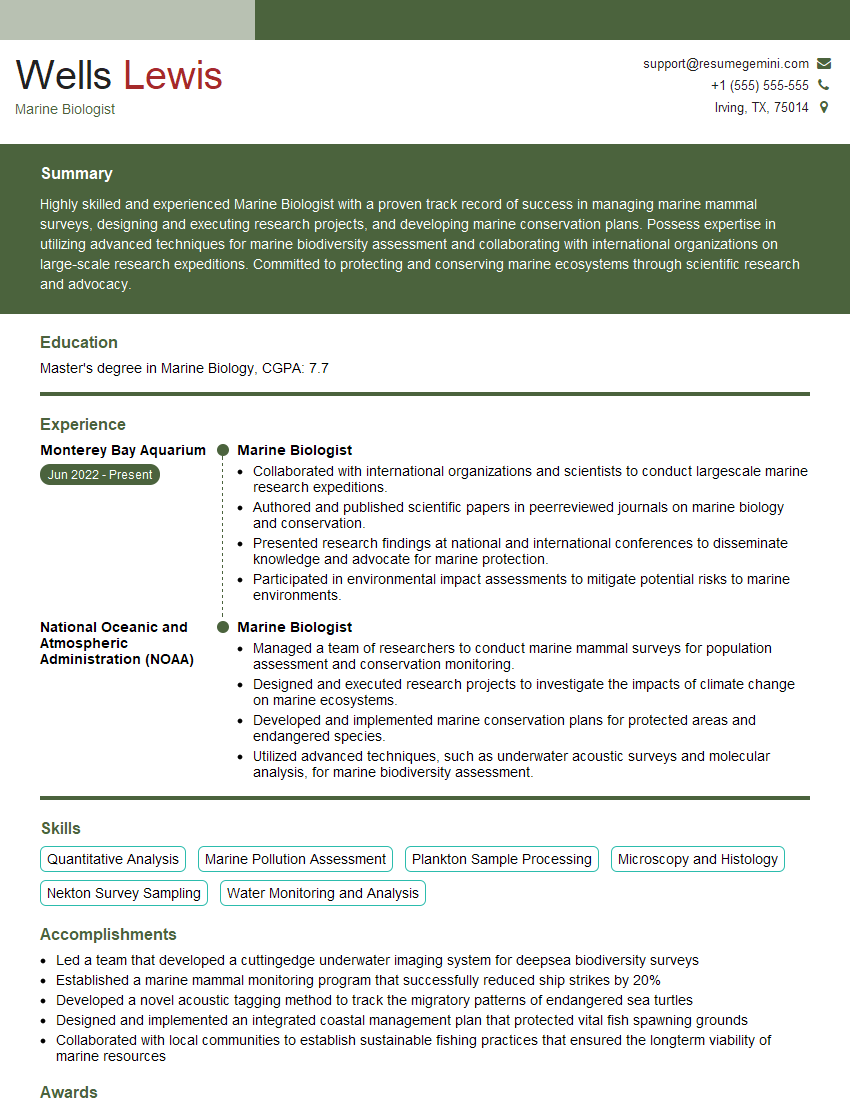
Marine Biologist Resume Sample

Wildlife Biologist Resume Sample
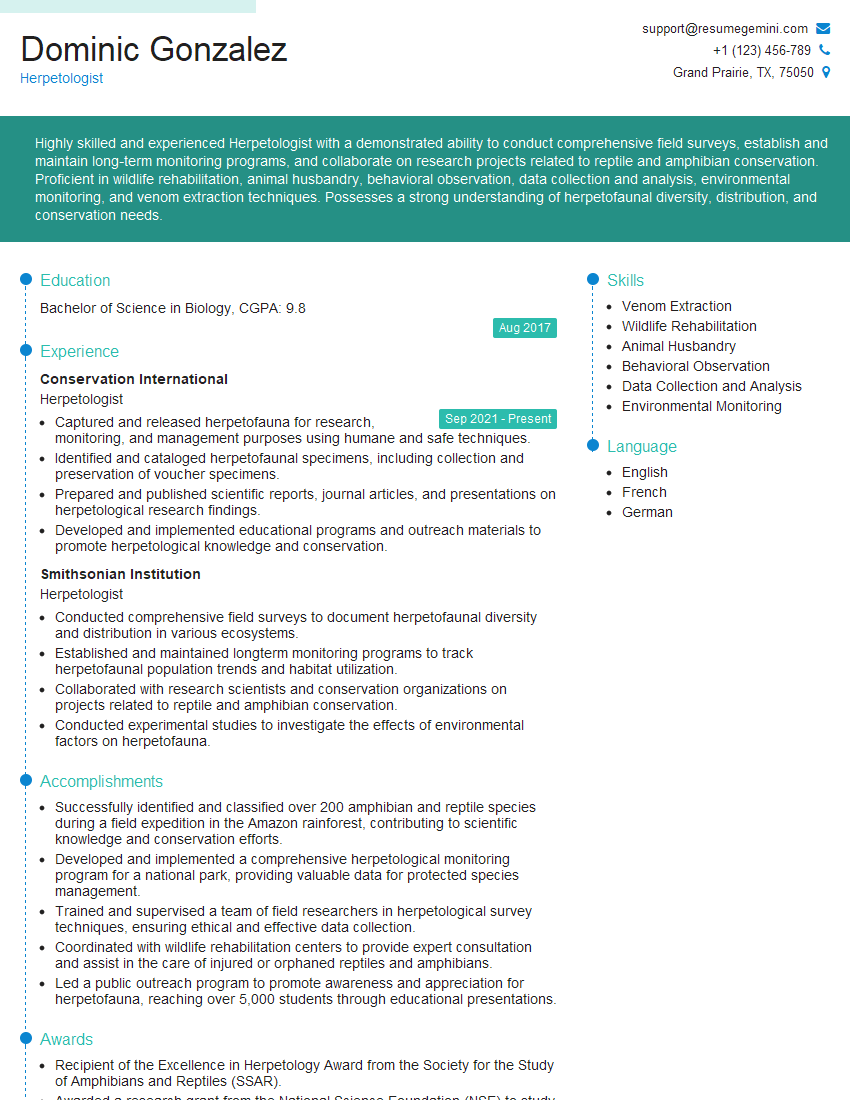
Herpetologist Resume Sample
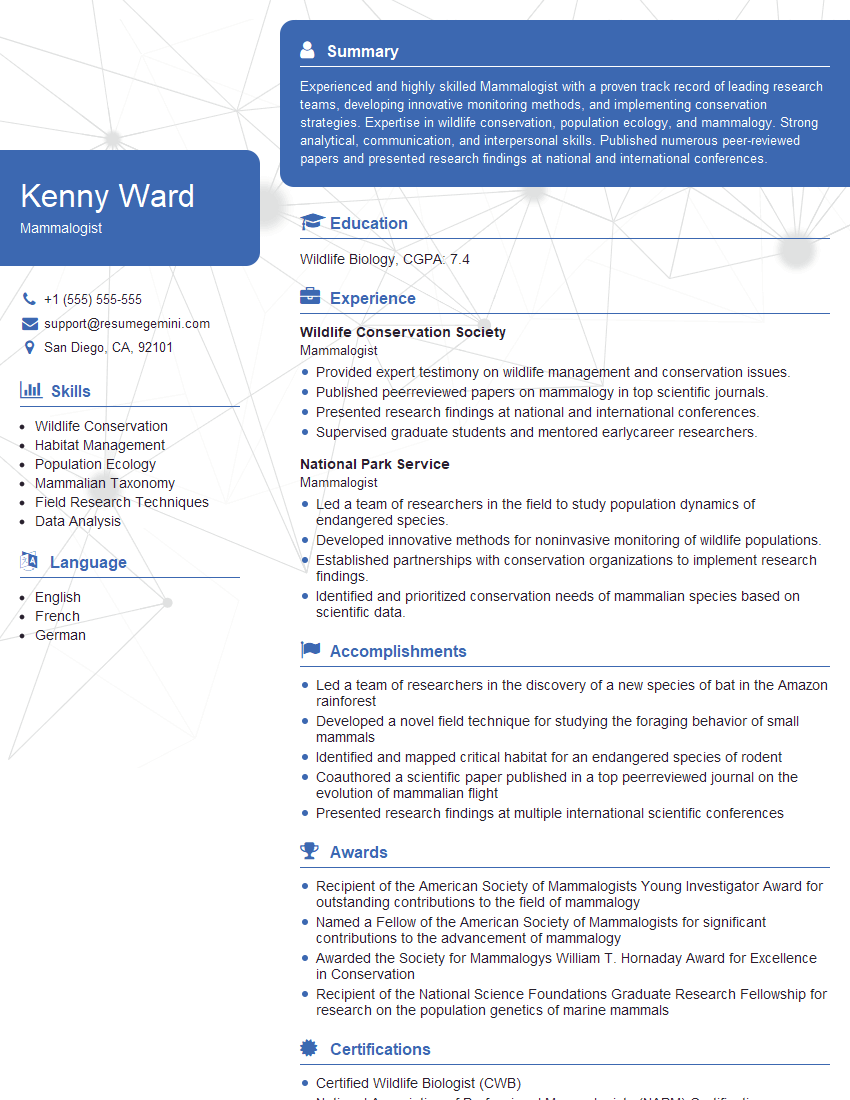
Mammalogist Resume Sample

Ornithologist Resume Sample

Wildlife Technician Resume Sample
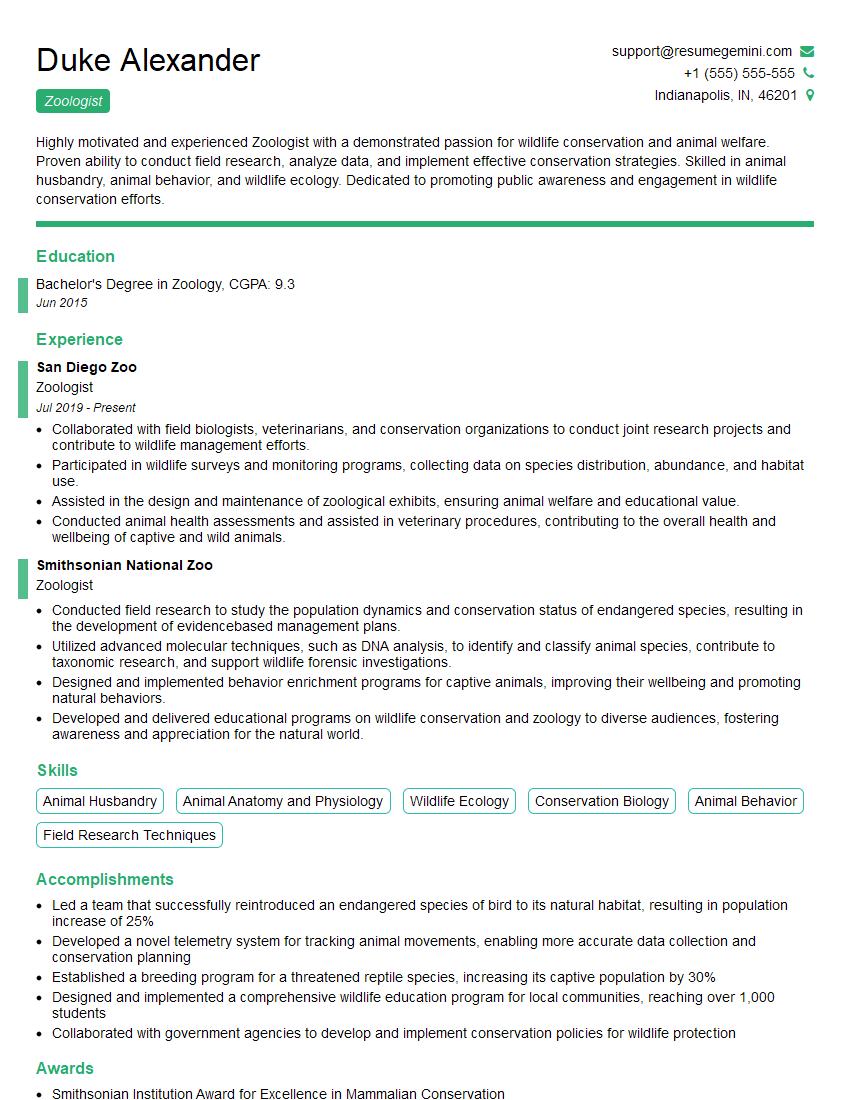
Zoologist Resume Sample

Wildlife Rehabilitator Resume Sample
Explore more articles
Users Rating of Our Blogs
Share Your Experience
We value your feedback! Please rate our content and share your thoughts (optional).
What Readers Say About Our Blog
Very informative content, great job.
good