Every successful interview starts with knowing what to expect. In this blog, we’ll take you through the top Speed and Agility Drills interview questions, breaking them down with expert tips to help you deliver impactful answers. Step into your next interview fully prepared and ready to succeed.
Questions Asked in Speed and Agility Drills Interview
Q 1. Explain the difference between speed and agility.
While often used interchangeably, speed and agility are distinct athletic capabilities. Speed refers to the ability to move your body from point A to point B as quickly as possible in a straight line. Think of a 100-meter sprint. Agility, however, is the ability to rapidly change direction and speed while maintaining balance and control. A good example is a soccer player weaving through defenders. Speed is a component of agility, but agility requires more than just speed; it demands coordination, balance, and quick reaction time.
Q 2. Describe three key components of a comprehensive speed and agility training program.
A comprehensive speed and agility program should incorporate three key components:
- Strength and Conditioning: A strong foundation is crucial. This involves exercises like squats, deadlifts, and lunges to build lower-body power, essential for explosive movements. Core strength exercises (planks, Russian twists) improve stability, vital for quick directional changes.
- Plyometrics: Plyometrics, or jump training, enhances power and explosiveness. Activities like box jumps, depth jumps, and lateral bounds train muscles to generate force rapidly. This translates directly into quicker acceleration and deceleration on the field.
- Agility Drills: This is where the specific agility training comes in. Cone drills, ladder drills, and shuttle runs focus on quick changes of direction, footwork, and reactive movements. These drills are crucial for improving an athlete’s ability to respond effectively to unpredictable situations.
Q 3. What are the benefits of plyometrics in developing speed and agility?
Plyometrics significantly improve speed and agility by enhancing the neuromuscular system’s ability to produce explosive power. The eccentric (lengthening) phase of a plyometric exercise, like landing from a jump, stores elastic energy in the muscles. This energy is then released during the concentric (shortening) phase, leading to a more powerful and rapid movement. Think of a coiled spring releasing its energy – that’s the principle behind plyometric training. It improves reaction time, stride frequency, and overall power output, making an athlete faster and more agile on the field.
Q 4. How do you assess an athlete’s current speed and agility level?
Assessing an athlete’s speed and agility requires a combination of tests. For speed, a simple timed 40-yard dash is common. However, for a more comprehensive assessment, consider testing acceleration over shorter distances (e.g., 10-yard sprint). For agility, several tests are available:
- T-test: Measures the ability to change direction quickly and efficiently.
- Cone drill variations: These can be customized to assess specific agility aspects relevant to the sport.
- Pro agility shuttle run: Measures change-of-direction speed.
The results should be compared to norms for the athlete’s age and sport to understand their relative strengths and weaknesses.
Q 5. What are some common mistakes athletes make when performing speed and agility drills?
Common mistakes in speed and agility training include:
- Poor form: Incorrect technique reduces effectiveness and increases injury risk. Proper form should be prioritized over speed.
- Overtraining: The body needs adequate rest and recovery. Overtraining leads to fatigue, injury, and plateaus in improvement.
- Ignoring strength and conditioning: Speed and agility are built upon a strong foundation. Neglecting strength training hinders progress.
- Lack of proper warm-up and cool-down: Adequate warm-up prepares the body for activity, while a cool-down aids recovery and reduces muscle soreness.
- Neglecting flexibility and mobility: Tight muscles restrict movement and increase injury risk.
Q 6. Describe different types of agility drills and their applications.
Agility drills vary widely depending on the specific needs of the athlete and their sport. Examples include:
- Cone drills: Involve running around cones, focusing on quick changes of direction. Different cone patterns (e.g., ‘L’ drills, ‘T’ drills) target specific movement patterns.
- Ladder drills: Improve footwork speed and coordination using agility ladders. Various footwork patterns can be incorporated.
- Shuttle runs: These involve sprinting back and forth between designated points, emphasizing acceleration and deceleration.
- Mirror drills: Enhance coordination and proprioception by replicating movements on one side of the body to match those on the other.
- Reactive drills: Involve reacting to unpredictable cues (e.g., coach’s commands or sudden changes in the drill) and responding quickly and effectively.
Applications depend on the sport. For example, a basketball player might focus on lateral movement drills, while a tennis player might prioritize drills involving quick changes in direction and rapid acceleration and deceleration.
Q 7. Explain how you would design a speed and agility program for a young athlete.
Designing a program for a young athlete requires careful consideration of their age, developmental stage, and experience level. Focus should be on building a solid foundation of fundamental movement skills before introducing advanced drills. The program should prioritize proper technique and injury prevention. Start with basic exercises focusing on bodyweight movements to build strength and coordination. Introduce plyometrics gradually, using low-impact variations initially. Keep the training sessions shorter and fun to maintain motivation. Regular breaks and rest are essential. Progression should be slow and gradual. Regular monitoring of form and progress ensures the athlete develops safely and effectively.
Example: A program for a 10-year-old might include bodyweight exercises (squats, lunges, push-ups), basic cone drills, and simple plyometrics like jumping jacks and box jumps (low box height). It would incorporate play and games to keep them engaged and ensure adherence.
Q 8. How do you incorporate resistance training into a speed and agility program?
Resistance training is crucial for enhancing speed and agility, but it needs to be carefully integrated to avoid hindering speed development. We shouldn’t focus on building maximal strength; instead, we prioritize strength-speed and power. This means using lighter weights and focusing on explosive movements.
How it’s incorporated:
- Plyometrics: Exercises like box jumps, depth jumps, and medicine ball throws develop explosive power, directly translating to improved agility and speed.
- Isometric exercises: Holding positions under tension (e.g., holding a squat position) builds strength without sacrificing speed. These are fantastic for injury prevention.
- Olympic lifts (modified): Power cleans and snatches (with lighter weights and emphasis on technique) improve power output. Proper coaching is essential to avoid injury.
- Resistance band exercises: These provide variable resistance, allowing for adaptable training across the spectrum of movement speeds.
Example: A sprinter might incorporate plyometrics (box jumps) twice a week, isometric holds (wall sits) daily, and light power cleans once a week, strategically placed to avoid fatigue in their sprint training days. We carefully monitor their form and recovery to avoid injury.
Q 9. What are the common injuries associated with speed and agility training and how can they be prevented?
Speed and agility training, while beneficial, carries inherent injury risks if not approached carefully. Common injuries include:
- Hamstring strains: Often caused by inadequate warm-up, improper sprinting technique, or overuse.
- Knee injuries (ACL, meniscus tears): Result from sudden changes in direction, improper landing technique, or muscle imbalances.
- Ankle sprains: Common due to rapid changes in direction and inadequate ankle stability.
- Groin pulls: Occur from forceful hip adduction or abduction movements.
Injury Prevention Strategies:
- Proper warm-up: Dynamic stretching, light cardio, and sport-specific drills prepare muscles and joints for activity.
- Progressive overload: Gradually increasing the intensity and volume of training prevents sudden strain on the body.
- Correct technique: Proper form in all exercises minimizes stress on joints and muscles. Coaching and video analysis are invaluable here.
- Strength and conditioning: Building strength and stability in supporting muscles reduces injury risk. (See the previous answer about resistance training.)
- Adequate recovery: Rest, nutrition, and sleep allow the body to repair and rebuild.
- Listen to your body: Pay attention to pain signals and don’t push through injuries.
Q 10. How do you adapt speed and agility training for different age groups?
Adapting speed and agility training for different age groups is crucial. Children, adolescents, and adults have vastly different physiological capabilities and developmental stages.
- Children (under 12): Focus should be on fundamental movement skills (running, jumping, throwing), game-like activities, and fun. Avoid high-intensity, repetitive drills. Emphasis is on developing motor control and coordination, rather than achieving peak performance.
- Adolescents (12-18): More structured training can be introduced, but careful monitoring of workload is essential. Emphasis on proper technique and gradual progression of intensity is vital to avoid overuse injuries.
- Adults (18+): Programs can be more intense, incorporating advanced drills and higher volumes. However, individual needs and fitness levels must be considered. Focus should be on injury prevention and maintaining functional fitness.
Example: While a professional athlete might run 400-meter repeats, a child might play tag or perform short sprints with plenty of rest in between. This gradual progression is key to safety and success.
Q 11. Explain the role of proper warm-up and cool-down in speed and agility training.
Proper warm-up and cool-down are essential components of any speed and agility program. They prepare the body for intense activity and aid in recovery, minimizing injury risk and enhancing performance.
Warm-up (10-15 minutes):
- General warm-up: Light cardio, such as jogging or jumping jacks, increases heart rate and blood flow.
- Dynamic stretching: Leg swings, arm circles, torso twists, and high knees improve flexibility and range of motion.
- Sport-specific drills: Light versions of the drills planned for the workout session, to activate relevant muscle groups and prepare the nervous system.
Cool-down (10-15 minutes):
- Light cardio: Slow jogging or walking helps gradually lower heart rate.
- Static stretching: Holding stretches for 20-30 seconds (e.g., hamstring stretch, quadriceps stretch) increases flexibility and reduces muscle soreness.
- Foam rolling: Self-massage helps alleviate muscle tightness and improve recovery.
Skipping warm-up or cool-down dramatically increases injury risk. Think of it like warming up your car engine before a long drive – necessary for optimal performance and longevity.
Q 12. How do you monitor and track an athlete’s progress in speed and agility?
Monitoring progress in speed and agility requires a multi-faceted approach. We need objective measures and subjective feedback.
- Time trials: Measuring the time taken to complete specific distances (e.g., 40-yard dash, shuttle runs) provides objective data on speed improvements.
- Agility drills: T-tests, cone drills, and other agility courses assess changes in agility and quickness.
- Strength and power assessments: Vertical jump height, medicine ball throws, and other power tests reflect improvements in explosive strength.
- Performance-based metrics: In team sports, consider game statistics reflecting speed and agility (e.g., number of tackles, successful steals).
- Subjective feedback: Athlete’s self-reported effort levels, perceived exertion, and any pain or discomfort should be considered.
We should chart these metrics over time to identify trends and adjust training plans accordingly. A plateau might indicate the need for a change in training, focusing on strength, technique correction, or active recovery.
Q 13. What are some technological tools you could use to measure speed and agility improvements?
Technology plays a significant role in quantifying speed and agility improvements.
- GPS tracking systems: These provide detailed information on speed, acceleration, deceleration, and distance covered during training or competitions.
Example data: Peak speed: 28mph, total distance: 8km. - Video analysis: Recording drills and analyzing them frame-by-frame allows for detailed assessment of technique and identifying areas for improvement.
- Force plates: Measure ground reaction forces during jumps and sprints, offering insights into power output and movement efficiency.
- Wearable sensors: These devices can track various physiological parameters (heart rate, stride length, step frequency) to optimize training intensity and recovery.
Combining data from these different sources provides a holistic understanding of the athlete’s progress. For instance, we might find that an athlete’s GPS data shows improved peak speed, but video analysis reveals an inefficient running technique, hinting at areas for focused coaching.
Q 14. Explain the importance of proper nutrition and recovery in speed and agility development.
Proper nutrition and recovery are paramount for optimizing speed and agility development. These two factors are intrinsically linked.
Nutrition:
- Carbohydrates: Provide the body’s primary energy source for high-intensity exercise. Focus on complex carbs, such as whole grains and fruits.
- Protein: Essential for muscle repair and growth. Sufficient protein intake aids in recovery and minimizes muscle soreness.
- Healthy fats: Support hormone production and cell function. Essential fatty acids contribute to overall health and athletic performance.
- Hydration: Maintaining adequate hydration is crucial for optimal performance and preventing dehydration.
Recovery:
- Sleep: Adequate sleep allows for muscle repair, hormone regulation, and cognitive recovery. Aim for 7-9 hours of quality sleep per night.
- Active recovery: Light activities, such as walking or stretching, promote blood flow and reduce muscle soreness.
- Rest and regeneration: Adequate rest days are crucial to avoid overtraining and allow the body to recover fully.
- Stress management: Chronic stress negatively impacts recovery and performance. Techniques like yoga, meditation, or spending time in nature can help reduce stress.
Think of nutrition as fuel and recovery as maintenance – both are crucial for keeping your high-performance machine running smoothly.
Q 15. How would you differentiate your training approach for a team sport athlete versus an individual sport athlete?
The training approach for team sport athletes differs significantly from that of individual sport athletes primarily due to the demands of their respective sports. Team sport athletes require drills that emphasize agility, quick reaction time, and coordination within a dynamic environment, often involving multiple opponents and teammates. Individual sport athletes, conversely, might prioritize linear speed, explosive power, and highly specific movement patterns relevant to their sport.
Team Sport Athlete: My training would focus on multi-directional movements, agility drills like cone drills, shuttle runs, and various reaction-based exercises. I’d incorporate game-specific scenarios to simulate real-match situations, such as dodging defenders or changing direction quickly while maintaining ball control. Team drills emphasizing communication and coordination would also be included.
Individual Sport Athlete: For an individual sport athlete, the emphasis would be on maximizing linear speed, power, and explosive movements specific to their sport. Examples include plyometrics (box jumps, depth jumps), sprint training with different acceleration phases, and strength training focused on developing the muscles directly related to the primary movements of the sport. Drills are more focused on individual performance metrics.
For example, a basketball player needs rapid change-of-direction drills and reactive agility, while a marathon runner would benefit more from sustained endurance work and speed development over longer distances. Understanding the specific demands of the sport is crucial to designing an effective program.
Career Expert Tips:
- Ace those interviews! Prepare effectively by reviewing the Top 50 Most Common Interview Questions on ResumeGemini.
- Navigate your job search with confidence! Explore a wide range of Career Tips on ResumeGemini. Learn about common challenges and recommendations to overcome them.
- Craft the perfect resume! Master the Art of Resume Writing with ResumeGemini’s guide. Showcase your unique qualifications and achievements effectively.
- Don’t miss out on holiday savings! Build your dream resume with ResumeGemini’s ATS optimized templates.
Q 16. Describe a time you had to modify a speed and agility program due to an athlete’s injury.
I once worked with a soccer player who suffered a hamstring strain. Initially, her program involved high-intensity interval training (HIIT) and plyometrics. After the injury, I had to completely revise her program. The first step was to completely rest the affected muscle group, avoiding any activity that could exacerbate the injury. After a few days of rest, we transitioned to low-impact activities, like stationary cycling and upper-body strength training, to maintain general fitness. We then progressed to range-of-motion exercises to restore flexibility, followed by light jogging and gentle hamstring stretches. Only after several weeks, with the athlete demonstrating consistent improvement and minimal pain, did we gradually reintroduce agility drills, starting with low-intensity activities like slow cone drills and gradually increasing the intensity and complexity of the drills as tolerance increased. We consistently monitored her progress and adjusted the training load to prevent re-injury.
Q 17. How do you incorporate flexibility and mobility work into speed and agility training?
Flexibility and mobility are crucial components of any speed and agility program. Neglecting these aspects can increase the risk of injury and limit athletic performance. I integrate them in the following ways:
Dynamic Stretching: Before each training session, we begin with dynamic stretching, such as arm circles, leg swings, and torso twists, to prepare the muscles for movement. This increases blood flow and range of motion, reducing the risk of injury.
Static Stretching: After the workout, static stretching (holding a stretch for a period) is incorporated to help increase flexibility and promote muscle recovery. This includes stretches that target major muscle groups used in speed and agility training like hamstrings, quads, hip flexors, and calves.
Mobility Work: Specific mobility exercises, such as foam rolling, dynamic stretches focusing on hip mobility, and thoracic spine rotations are incorporated regularly. This is essential to address muscle imbalances and improve overall movement quality.
Proprioceptive Training: Exercises focused on improving balance and coordination, like single-leg stances and balance board exercises, are incorporated to improve neuromuscular control and reduce injury risk. The goal is to develop more efficient and injury-resistant movement patterns.
Proper flexibility and mobility work aren’t just about stretching; they’re fundamental in preventing muscle tightness, improving movement efficiency, and ultimately enhancing performance in speed and agility drills.
Q 18. What are the key principles of Periodization related to speed and agility training?
Periodization in speed and agility training involves strategically planning training phases over a period of time (e.g., a season) to optimize performance and minimize the risk of overtraining. It typically involves:
Preparation Phase (Off-season): Focuses on building a base level of fitness, strength, and mobility. This phase includes general conditioning, foundational speed work, and building overall endurance.
Competition Phase (In-season): Emphasizes sport-specific speed and agility drills, skill refinement, and maintaining peak performance. Training volume may decrease, while intensity increases.
Transition Phase (Post-season): A period for recovery and active rest. It involves lighter training loads and a shift in focus towards general well-being and injury prevention.
Within each phase, microcycles (weekly plans) and macrocycles (overall seasonal plans) would further break down training, allowing for systematic progression and rest. This structured approach ensures that athletes are optimally prepared for competitions and prevents burnout.
Q 19. How do you ensure that your speed and agility training programs are safe and effective?
Ensuring safety and effectiveness in speed and agility training programs requires a multi-pronged approach:
Proper Warm-up: A thorough warm-up, including dynamic stretching and light cardiovascular activity, is crucial to prepare the body for high-intensity exercise and reduce injury risk. This might include dynamic stretches, light jogging, and jumping jacks.
Progressive Overload: Gradually increasing the intensity, duration, and complexity of drills over time allows the body to adapt progressively without overexertion. Sudden increases in training load can significantly increase injury risk.
Proper Technique: Correct technique is paramount. Poor form can lead to injuries and limit performance gains. I always emphasize proper technique, correcting mistakes, and providing individualized instruction.
Adequate Recovery: Sufficient rest and recovery are essential for muscle repair and performance enhancement. Overtraining can lead to injury and burnout.
Monitoring and Evaluation: Regularly monitoring athletes’ progress, including performance metrics and any signs of fatigue or injury, enables timely adjustments to the training program and prevents potential issues. This might include utilizing heart rate monitors, tracking performance in drills, and regular communication with the athletes.
Appropriate Equipment and Facilities: Using suitable equipment and ensuring a safe training environment minimizes the risk of injury.
By adhering to these principles, I strive to create programs that are both challenging and safe, leading to optimal performance improvements.
Q 20. What is the importance of proper technique in speed and agility drills?
Proper technique is the cornerstone of effective and safe speed and agility training. Incorrect form can lead to decreased performance, increased injury risk, and ultimately limit the athlete’s potential. For instance, improper running mechanics can lead to knee or ankle injuries, while faulty landing techniques in plyometrics can result in muscle strains or joint damage. Efficient technique ensures that energy is used effectively, optimizing speed and agility development.
Example: In sprint training, proper posture, arm drive, and foot placement are critical. A slouched posture reduces power and increases the risk of back injuries. Incorrect foot placement can limit stride length and increase the risk of ankle problems.
Implementation: I use video analysis to assess technique, provide individualized feedback, and correct flaws. I utilize drills designed specifically to refine technique, like drills focusing on proper foot strike, arm swing, and posture. Repetition and consistent feedback are key.
Paying attention to detail in technique ensures athletes maximize their potential while reducing injury risks. It’s an investment in long-term athletic success.
Q 21. How do you motivate athletes to improve their speed and agility?
Motivating athletes to improve their speed and agility requires a multifaceted approach that goes beyond just setting goals. It’s about creating a positive and supportive environment where athletes feel challenged and engaged.
Setting SMART Goals: Setting Specific, Measurable, Achievable, Relevant, and Time-bound (SMART) goals provides athletes with clear targets and a sense of purpose. This might involve tracking improvement in sprint times or cone drill completion times.
Positive Reinforcement: Regular positive feedback and encouragement build confidence and foster intrinsic motivation. Celebrating small victories along the way is equally important.
Varied Training: Keeping training varied and engaging prevents monotony and boredom. Incorporating different drills, games, and competitions adds an element of fun and excitement.
Progress Tracking: Monitoring progress and providing visual representations of improvement through data and charts helps athletes visualize their achievements and stay motivated. The simple act of seeing the graph of improvement can be a powerful motivator.
Individualized Approach: Recognizing that each athlete is unique and adapting the training program to meet individual needs and preferences is crucial for sustained motivation. This could be adjusting the intensity level or modifying drills to accommodate skill levels.
Ultimately, motivation is about building a relationship with the athlete, understanding their individual aspirations, and making the training process rewarding and meaningful, not just about the physical outcome.
Q 22. Describe a scenario where you had to troubleshoot a problem during a speed and agility session.
During a speed and agility session focused on ladder drills, I noticed one athlete consistently struggling with footwork precision and exhibiting a tendency to trip. Troubleshooting began with observation. I analyzed their form, noting a lack of controlled movement and a tendency to rush. Next, I adjusted the exercise. We started with a simplified version of the ladder drill, focusing on correct foot placement and controlled movement at a slower pace. We progressively increased the speed as their form improved. We also incorporated balance exercises to improve their proprioception (body awareness). Finally, I provided personalized feedback throughout, emphasizing proper technique over speed. This step-by-step approach led to significant improvement in their performance and reduced the risk of injury.
Q 23. How do you measure the effectiveness of your speed and agility training programs?
Measuring the effectiveness of speed and agility training involves a multi-faceted approach. We don’t solely rely on subjective observations. We employ a combination of quantitative and qualitative measures. Quantitatively, we use timed drills like 40-yard dashes (linear speed), T-tests (lateral speed and agility), and shuttle runs. These provide objective data on improvement in speed, acceleration, and change of direction. Qualitatively, we assess improvements in movement mechanics through video analysis, looking at factors like stride length, foot placement, and overall efficiency. We also conduct regular feedback sessions with the athletes to gauge their perceived exertion, progress, and any challenges they are facing. By combining these objective and subjective measures, we get a comprehensive understanding of program effectiveness and can make necessary adjustments.
Q 24. Explain the difference between linear and lateral speed.
Linear speed refers to the ability to move quickly in a straight line, like sprinting. Think of a 100-meter dash—pure speed in one direction. Lateral speed, on the other hand, is the ability to move quickly side to side, involving quick changes of direction and agility. A good example is the agility drills found in sports like basketball or soccer, which require rapid changes of direction and quick movements to evade opponents or control the ball. While both are crucial for athletic performance, they require different training techniques. Linear speed training focuses on acceleration and top-end speed, while lateral speed training emphasizes agility, quickness, and change-of-direction abilities.
Q 25. How do you incorporate agility training into a strength and conditioning program?
Agility training shouldn’t be an isolated component; it should integrate seamlessly with strength and conditioning. We incorporate agility into strength and conditioning programs in several ways. For instance, we use plyometrics, such as box jumps and depth jumps, to improve power and explosive strength, which directly translates to improved agility. We also use agility drills that require strength, such as cone drills while carrying resistance bands or medicine balls, building strength and agility simultaneously. Furthermore, we design circuits that alternate between strength training exercises (e.g., squats, deadlifts) and agility drills, optimizing both physical capabilities within a single session. The key is to create a well-balanced program where both aspects support and enhance each other.
Q 26. Discuss the importance of the relationship between strength, power, and agility.
Strength, power, and agility are interconnected and mutually reinforcing. Strength forms the base—it provides the foundation for generating force. Power, which is the combination of strength and speed, is essential for rapid and explosive movements. Agility builds on both strength and power by incorporating the ability to change direction quickly and efficiently. Think of a football player—they need strength to maintain balance while running at speed and while making contact, power for quick bursts and tackles, and agility to change direction and evade defenders. An athlete lacking in any one of these components will have limitations in their overall athletic performance. Therefore, a well-rounded program must address all three equally.
Q 27. How do you create a fun and engaging environment for speed and agility training?
Creating a fun and engaging environment is crucial for maintaining athlete motivation and maximizing training effectiveness. We incorporate games and competitions into the drills, such as relay races or timed challenges against teammates. We use varied drills to prevent monotony and keep athletes challenged. Music is also a powerful tool to energize and uplift the mood. Finally, positive reinforcement and encouragement play a crucial role in maintaining morale and promoting a collaborative, supportive training environment. By creating a positive and enjoyable experience, we foster a greater commitment to training and improved performance.
Q 28. Describe your experience with different speed and agility training methods.
My experience spans various speed and agility training methods. I’ve worked extensively with ladder drills for footwork refinement, cone drills for change-of-direction training, and shuttle runs to improve speed and acceleration. I’ve also integrated plyometrics to enhance explosive power and incorporated resistance training to build strength and power as a foundation for improved agility. I’m familiar with various agility courses and obstacle courses that focus on both speed and cognitive processing—reacting to visual and auditory cues. The choice of method depends on the athlete’s specific needs, goals, and skill level, requiring a personalized approach to optimization.
Key Topics to Learn for Speed and Agility Drills Interview
- Fundamentals of Speed and Agility: Understanding the biomechanics of speed, acceleration, and agility. This includes concepts like stride length, frequency, and power development.
- Training Methodology: Exploring different training programs and drills designed to enhance speed and agility. This encompasses plyometrics, resistance training, and agility ladder drills.
- Practical Application in Various Sports/Activities: Analyzing how speed and agility training translates into real-world performance in diverse fields, such as athletics, team sports, and even specific occupational settings requiring quick reflexes and movements.
- Performance Measurement and Analysis: Understanding the methods used to assess speed and agility, such as timing tests, agility courses, and video analysis. This includes interpreting data and identifying areas for improvement.
- Injury Prevention and Rehabilitation: Recognizing common injuries related to speed and agility training and the strategies for prevention and recovery. This involves proper warm-up, cool-down, and training modifications.
- Program Design and Adaptation: Learning how to design personalized speed and agility training programs based on individual needs, goals, and limitations. This involves progressive overload and periodization principles.
- Nutritional and Recovery Strategies: Understanding the role of nutrition and recovery in optimizing speed and agility performance. This includes fueling for training, hydration, and sleep.
Next Steps
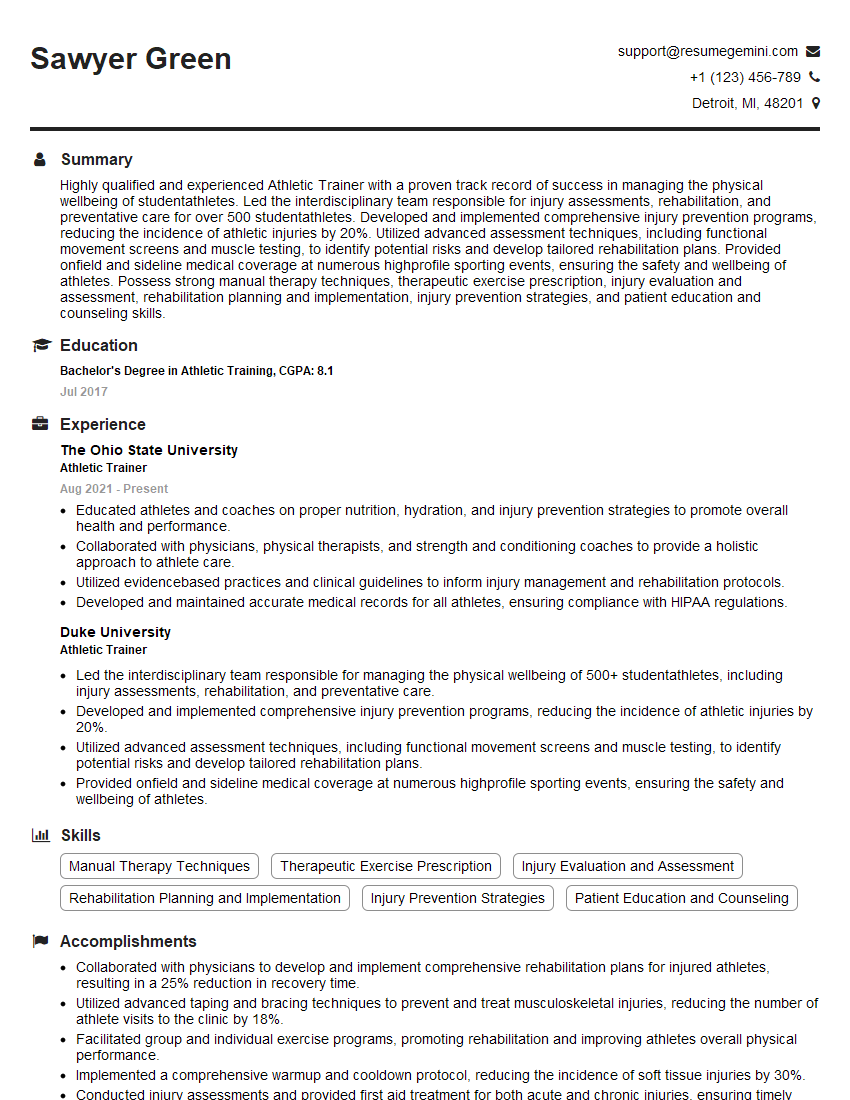
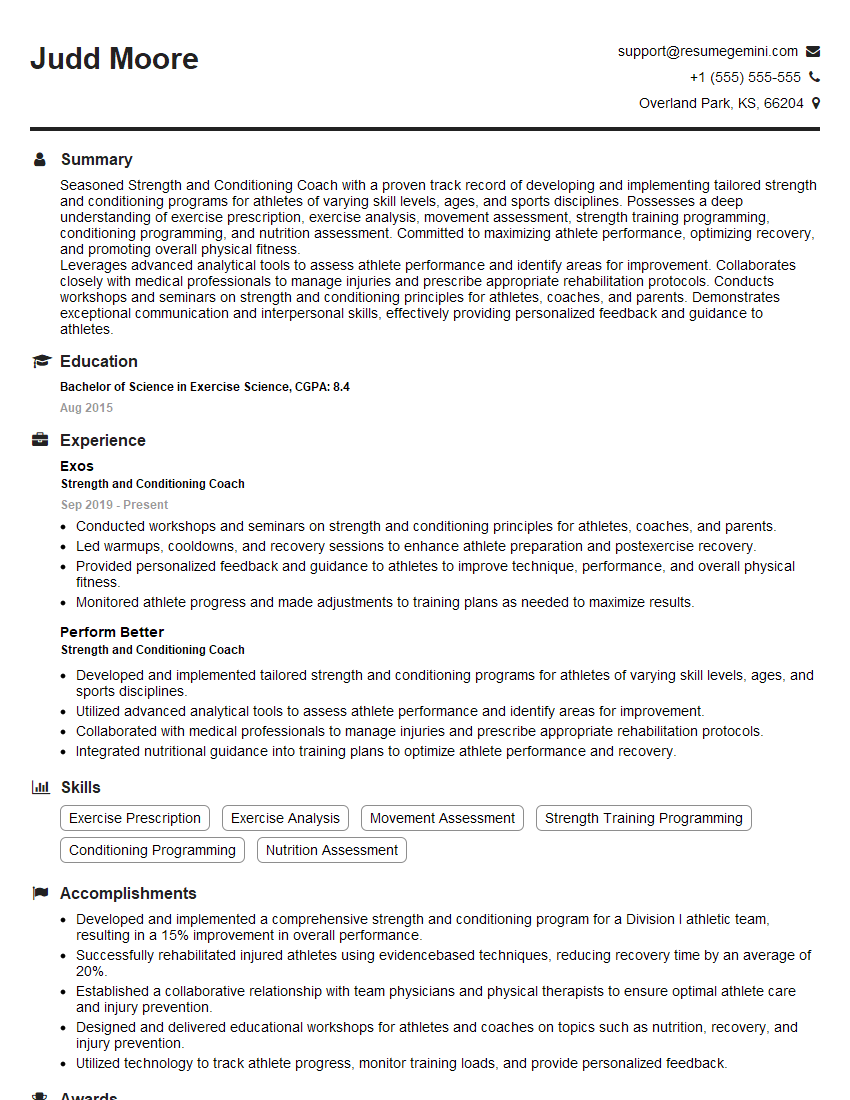
Mastering speed and agility drills is crucial for career advancement in various performance-based fields. A strong understanding of these concepts demonstrates your commitment to continuous improvement and your ability to adapt to challenging situations. To maximize your job prospects, it’s essential to create an ATS-friendly resume that highlights your relevant skills and experience effectively. We recommend using ResumeGemini, a trusted resource for building professional resumes that stand out. ResumeGemini provides examples of resumes tailored to Speed and Agility Drills, helping you showcase your qualifications and secure your dream job.



Explore more articles
Users Rating of Our Blogs
Share Your Experience
We value your feedback! Please rate our content and share your thoughts (optional).
What Readers Say About Our Blog
good