Interviews are opportunities to demonstrate your expertise, and this guide is here to help you shine. Explore the essential Spray Machine Operation interview questions that employers frequently ask, paired with strategies for crafting responses that set you apart from the competition.
Questions Asked in Spray Machine Operation Interview
Q 1. Describe your experience with different types of spray guns (HVLP, airless, electrostatic).
My experience encompasses a wide range of spray guns, each suited for different applications and materials. I’m proficient with HVLP (High Volume Low Pressure), airless, and electrostatic spray guns. HVLP guns, known for their efficiency and reduced overspray, are ideal for fine finishing work and applications where minimizing material waste is crucial. I’ve used them extensively on furniture refinishing projects, achieving a smooth, even finish. Airless spray guns, on the other hand, offer high transfer rates and are perfect for large-scale projects like painting houses or applying thick coatings. Their power allows for quick coverage, making them cost-effective for large surfaces. Finally, electrostatic spray guns utilize a charged spray pattern that adheres to the workpiece more effectively, minimizing paint waste and providing superior coverage, even on complex geometries. I’ve used this type extensively in automotive refinishing where precision and minimal overspray are paramount.
Q 2. Explain the process of preparing a surface for spraying.
Surface preparation is the cornerstone of a professional spray job. It’s a multi-step process that significantly impacts the final finish. First, the surface needs a thorough cleaning to remove any dirt, grease, or loose particles. This often involves degreasing with a suitable solvent and then using a pressure washer or scrubbing to eliminate any contaminants. Next, any imperfections like holes or cracks need to be repaired using fillers or putties, ensuring a smooth, even surface. After filling, sanding is crucial to create a consistent profile. I usually start with coarser grit sandpaper and gradually move to finer grits, removing any blemishes and creating a smooth base for painting. Finally, before spraying, I always apply a primer. Primers act as a barrier, improving paint adhesion, and can also provide extra protection against rust or other surface degradation. The type of primer selected depends on the substrate and the topcoat to be applied.
Q 3. How do you ensure proper air pressure and fluid flow during spraying?
Maintaining the correct air pressure and fluid flow is essential for achieving a consistent and high-quality spray pattern. The optimal settings vary depending on the type of spray gun, the material being sprayed, and the desired finish. For HVLP guns, I typically adjust the air pressure to the manufacturer’s recommendations, usually between 10-30 PSI, and carefully regulate fluid flow using the control knob. Airless systems require higher pressure – usually between 2000-3000 PSI – carefully monitoring the pressure gauge. This needs to be done carefully as excessive pressure can lead to overspray and poor finish. For both systems, consistent monitoring is key. I visually inspect the spray pattern frequently, making adjustments to pressure and fluid flow as needed to achieve a uniform and even coating. Think of it like baking – precise measurements lead to perfect results.
Q 4. What safety precautions do you take when operating a spray machine?
Safety is my utmost priority when operating spray equipment. I always wear appropriate personal protective equipment (PPE), including a respirator to protect my lungs from paint fumes, safety glasses to shield my eyes from overspray, and protective clothing like coveralls to prevent paint from contacting my skin. In addition, I work in a well-ventilated area, preferably outdoors or in a spray booth with proper exhaust systems. Prior to starting any work, I thoroughly inspect the equipment for any leaks or damage. I also ensure the area is free from any fire hazards, as many spray paints are flammable. Finally, I always adhere to the manufacturer’s safety guidelines and regulations specific to the equipment and materials I’m using.
Q 5. How do you troubleshoot common spray machine problems (e.g., clogging, inconsistent spray pattern)?
Troubleshooting spray equipment problems is a common part of the job. If the spray gun clogs, I first check the fluid nozzle for any blockages, cleaning it thoroughly or replacing it if necessary. Inconsistent spray patterns are often caused by incorrect air pressure or fluid flow settings; I carefully adjust these parameters until a uniform pattern is achieved. If the problem persists, I examine the air cap and fluid tip for any damage or wear. Sometimes, the issue could be with the material itself; if the paint or coating is too thick, it needs to be thinned according to the manufacturer’s instructions. I always systematically check each component and setting, using a process of elimination to identify the root cause. Thinking logically and following a troubleshooting flow chart are incredibly helpful.
Q 6. Describe your experience with different types of paint and coatings.
My experience extends to a variety of paints and coatings, including acrylics, lacquers, enamels, and specialized coatings such as epoxy and polyurethane. I’m familiar with their properties, application techniques, and drying times. Acrylics are versatile and water-based, suitable for interior and exterior applications. Lacquers dry quickly and offer a durable finish, ideal for furniture. Enamels provide a hard, glossy finish, often used on metal surfaces. Epoxy and polyurethane coatings are known for their strength and chemical resistance, frequently used in industrial settings or for high-performance applications. The selection of the correct paint or coating is determined by factors such as the type of surface being coated, the desired finish and durability, and any environmental factors such as weather conditions.
Q 7. How do you maintain and clean your spray equipment?
Regular maintenance and cleaning are critical for extending the lifespan of spray equipment and ensuring optimal performance. After each use, I thoroughly clean the spray gun, removing all traces of paint or coating using the appropriate solvent or cleaner. This usually involves disassembling the gun, cleaning each component individually, and then reassembling it. The air filter needs to be inspected and replaced periodically to maintain consistent air pressure. I also lubricate moving parts as necessary to prevent wear and tear. Storing the equipment properly in a clean, dry environment is equally important to protect it from damage and corrosion. Regular maintenance, akin to regularly servicing your car, ensures the machine stays in top condition.
Q 8. What is your experience with different spray booth types and their operation?
My experience encompasses a wide range of spray booth types, from downdraft booths ideal for minimizing overspray and maintaining a clean environment, to side-draft booths offering a more economical solution, particularly suitable for smaller operations. I’ve also worked extensively with cross-draft booths, which efficiently move air across the painting area, and have experience troubleshooting issues in each. Understanding the airflow dynamics of each type is crucial for achieving a high-quality finish. For instance, in a downdraft booth, maintaining the correct air velocity is paramount to prevent dust and overspray from settling on the workpiece. In a side-draft booth, proper placement of the workpiece within the booth’s airflow is key to preventing uneven coating.
- Downdraft Booths: Excellent for minimizing overspray and ensuring a clean working environment, making them ideal for high-quality finishes.
- Side-Draft Booths: More economical, suitable for smaller operations, but require careful workpiece placement to optimize airflow.
- Cross-Draft Booths: Efficient air movement across the painting area, leading to effective overspray removal. Requires proper ventilation setup for optimal performance.
Q 9. How do you achieve a consistent finish using a spray machine?
Achieving a consistent finish hinges on several interconnected factors. First, proper preparation is essential. This includes meticulously cleaning and prepping the surface, ensuring it’s free of contaminants. Then, maintaining consistent spray gun distance, speed, and overlap is key. Think of it like painting a wall – if your strokes are uneven or you apply too much paint in one spot, the finish will be uneven. I also carefully monitor the air pressure and fluid viscosity, using a pressure gauge and viscosity cup respectively to ensure consistency throughout the spraying process. Finally, environmental factors like temperature and humidity play a role and I account for those in my technique.
For instance, during a recent project involving painting a series of custom car parts, I maintained a constant spray distance of 6-8 inches, ensuring a consistent overlap of approximately 50% between passes. This methodical approach resulted in an exceptionally even and smooth finish.
Q 10. What is your experience with different spray techniques (e.g., wet-on-wet, multiple coats)?
My experience with various spray techniques is extensive. Wet-on-wet application, where subsequent coats are applied before the previous one fully dries, is ideal for achieving a smooth, flowing finish but requires precise control of material flow and drying times. Conversely, applying multiple coats with sufficient drying time between each ensures complete cure and optimal durability. The choice depends entirely on the material being used and desired finish. For example, when working with high-gloss automotive finishes, I typically opt for wet-on-wet techniques to minimize visible layer lines. However, with certain primers or basecoats, allowing ample drying time between coats is crucial for proper adhesion and to avoid issues such as bubbling or cracking.
- Wet-on-Wet: Requires precise control and is best suited for specific materials and desired finish.
- Multiple Coats (with drying time): Ensures complete cure and optimal durability; ideal for various materials and applications.
Q 11. How do you manage material waste during spraying?
Managing material waste is a crucial aspect of responsible spray painting. I utilize several strategies to minimize waste. First, I always accurately measure and mix the required amount of material, avoiding over-mixing. Secondly, I employ proper spray gun techniques to optimize transfer efficiency, reducing overspray. Regular maintenance of the spray equipment ensures it’s operating at peak performance, further minimizing waste. Finally, any leftover material is carefully stored according to manufacturer recommendations to avoid degradation and future waste. We also have a system in place to recycle any usable overspray from the booth’s filter system.
Implementing these measures has significantly reduced material waste in my projects, contributing to both cost savings and environmental responsibility.
Q 12. What is your experience with color matching and mixing?
Color matching and mixing is a critical skill. I utilize spectrophotometers to accurately measure the color of existing samples, which allows for precise replication of colors using computerized mixing systems. This involves using specialized software to determine the correct ratios of pigments and base coats needed for a perfect match. I always perform test sprays on scrap materials before applying to the final product to confirm accuracy. In the event of a mismatch, I carefully analyze the difference and make adjustments to the mixture until a precise match is achieved. Years of experience has taught me to account for variations in lighting and substrate properties.
For instance, I recently had to match a unique color for a vintage car restoration. The spectrophotometer analysis, coupled with meticulous mixing and testing, resulted in a perfect color match which exceeded the client’s expectations.
Q 13. How do you ensure proper ventilation and safety in the spray booth?
Maintaining proper ventilation and safety in the spray booth is paramount. This involves ensuring adequate airflow to effectively remove overspray and hazardous fumes. The booth’s ventilation system should be regularly inspected and maintained to guarantee proper function. This includes checking for filter clogs, ensuring adequate exhaust fan power, and regularly replacing filters. Furthermore, I always wear appropriate personal protective equipment (PPE), including respirators, safety glasses, and protective clothing, to minimize exposure to harmful substances. All materials are handled and stored according to their safety data sheets (SDS).
Regular safety training and adherence to safety protocols are critical components of my approach. We have rigorous procedures in place for emergency situations, ensuring everyone’s safety.
Q 14. Explain the importance of maintaining proper air pressure and atomization.
Maintaining proper air pressure and atomization is crucial for achieving a high-quality finish and efficient material transfer. Air pressure directly impacts the atomization of the paint, influencing the particle size and distribution. Insufficient pressure results in a coarse spray pattern, leading to an uneven finish and increased overspray. Conversely, excessive pressure can cause a fine, dry spray that may not adhere properly. Atomization refers to the process of breaking down the paint into tiny droplets, creating a fine mist that can evenly coat the surface. Poor atomization can result in runs, sags, and an uneven finish.
I regularly check and adjust the air pressure using a pressure gauge, ensuring it aligns with the manufacturer’s recommendations for the specific paint and spray gun. Regular cleaning and maintenance of the air cap and nozzle are also vital for maintaining optimal atomization.
Q 15. Describe your experience with different types of spray nozzles and their applications.
Spray nozzles are the heart of any spray painting operation, and their selection significantly impacts the final finish. Different nozzle types create varying spray patterns, droplet sizes, and material transfer efficiency. My experience encompasses a wide range, including:
- Airless nozzles: These are ideal for high-volume, low-pressure applications, such as painting large exterior surfaces like houses. I’ve used them extensively on projects requiring fast coverage and a relatively thick film build. The key here is understanding the tip size and pressure settings to avoid overspray and runs.
- Air-assisted airless nozzles: Offering a balance between the speed of airless and the finer atomization of HVLP, these are versatile choices for various substrates and paints. I’ve found them especially beneficial when working on projects requiring a smoother finish than a standard airless setup allows, while still maintaining good transfer efficiency.
- High-Volume Low-Pressure (HVLP) nozzles: These prioritize atomization, resulting in a fine, even spray pattern with minimal overspray. They’re perfect for delicate applications like automotive painting or furniture refinishing, where a flawless finish is crucial. However, they’re slower and require more careful control.
- Conventional air spray nozzles: These use compressed air to atomize the paint, offering precise control but lower transfer efficiency compared to airless systems. I’ve utilized these for detailed work and applications requiring specialized paint application techniques.
Choosing the right nozzle depends on the paint type, substrate, desired finish, and project scale. For example, I wouldn’t use an airless nozzle on a delicate antique piece but would opt for an HVLP nozzle instead. Experience allows me to quickly assess the job requirements and select the most appropriate nozzle for optimal results.
Career Expert Tips:
- Ace those interviews! Prepare effectively by reviewing the Top 50 Most Common Interview Questions on ResumeGemini.
- Navigate your job search with confidence! Explore a wide range of Career Tips on ResumeGemini. Learn about common challenges and recommendations to overcome them.
- Craft the perfect resume! Master the Art of Resume Writing with ResumeGemini’s guide. Showcase your unique qualifications and achievements effectively.
- Don’t miss out on holiday savings! Build your dream resume with ResumeGemini’s ATS optimized templates.
Q 16. How do you identify and address defects in a sprayed finish?
Identifying and addressing defects in a sprayed finish requires a keen eye for detail and a methodical approach. Common defects include:
- Orange peel: A textured finish resembling an orange peel, often caused by incorrect spray gun settings, insufficient air pressure, or improper atomization.
- Runs and sags: Excess paint accumulating in one area, usually due to too much paint, slow passes, or high viscosity.
- Dry spray: A blotchy, uneven finish caused by insufficient paint, too much air pressure, or the nozzle being too far from the surface.
- Fisheyes: Small crater-like imperfections, often caused by contaminants on the surface or incompatibility between the paint and the surface.
Addressing these defects involves understanding their root causes. For example, orange peel might be corrected by adjusting the gun settings, while runs can be mitigated by applying thinner coats and slower passes. Fisheyes usually require thorough surface preparation and potentially a different primer or paint. I always investigate the source of the defect before attempting a correction, ensuring the problem is solved rather than just masked.
Q 17. Explain your experience with different types of spray booth filters and their maintenance.
Spray booth filters are crucial for maintaining air quality and preventing overspray from contaminating the final finish. My experience includes working with various types:
- Pre-filters: These large filters capture larger particles and debris, extending the life of the finer filters. Regular cleaning or replacement, often involving vacuuming and compressed air blowing is essential.
- High-efficiency particulate air (HEPA) filters: These capture microscopic particles, vital for achieving a high-quality finish, especially in automotive and industrial applications. HEPA filters require careful handling and replacement schedules to ensure optimal performance; a clogged HEPA filter can severely reduce booth efficiency.
- Activated carbon filters (for VOCs): These absorb volatile organic compounds (VOCs) present in many paints and solvents, safeguarding the environment and worker health. Regular inspection and timely replacement are critical for maintaining their effectiveness. Ignoring VOC filter maintenance can lead to significant health hazards and regulatory violations.
Maintenance involves regular inspections, cleaning schedules, and timely filter replacements based on manufacturer guidelines and observed performance. I always document filter changes and maintenance, ensuring regulatory compliance and a clean working environment.
Q 18. How do you calculate the amount of paint needed for a given project?
Calculating paint quantity requires careful consideration of several factors. A common approach involves measuring the surface area to be painted, considering the coverage rate provided by the paint manufacturer (usually expressed in square meters or square feet per liter or gallon), and accounting for potential losses due to overspray or imperfections.
For example: If a project requires painting a wall with a surface area of 100 square meters, and the paint manufacturer specifies a coverage rate of 10 square meters per liter, a simple calculation (100 sq m / 10 sq m/liter = 10 liters) suggests 10 liters of paint are needed. However, I always add a safety margin of 10-20% to account for overspray, uneven application, or unforeseen circumstances. In this case, I would purchase approximately 12 liters (10 liters + 20% = 12 liters) to ensure sufficient paint.
Furthermore, it’s essential to consider the number of coats needed. If two coats are required, the calculated quantity needs to be doubled. Accurate measurements and a conservative approach ensure sufficient paint without unnecessary waste.
Q 19. What is your experience with different types of spray booth lighting and their impact on color accuracy?
Spray booth lighting significantly impacts color accuracy during painting. My experience includes working with various lighting systems:
- Fluorescent lighting: Affordable and widely available, but may exhibit color inconsistencies across the spectrum. It can be suitable for general-purpose painting, but might not be ideal for critical color matching applications.
- LED lighting: Increasingly popular for its energy efficiency and consistent color temperature. LED systems offer excellent color rendering index (CRI), crucial for accurate color assessment, allowing for greater consistency in the finished product.
- Specialized color-matching lights: These lights are designed to simulate specific lighting conditions, such as daylight, ensuring accurate color reproduction across different environments. These are particularly crucial in industries with strict color tolerances, such as automotive painting.
The impact on color accuracy is significant. Using an unsuitable light source can lead to color mismatches, necessitating rework or costly rejects. I always choose a lighting system appropriate for the specific project’s requirements and color criticality. My experience ensures the choice of lighting system supports the consistent color throughout the project.
Q 20. Explain your understanding of different coating properties (e.g., viscosity, VOC content).
Understanding coating properties is fundamental to successful spray painting. Key properties include:
- Viscosity: This measures the paint’s resistance to flow. Too high viscosity leads to a rough, uneven finish, while too low viscosity causes runs and sags. Adjusting viscosity with thinners is crucial for achieving the optimal spray consistency for each application.
- Volatile Organic Compound (VOC) content: VOCs are organic chemicals that evaporate easily, contributing to air pollution. Understanding a paint’s VOC content is crucial for regulatory compliance and environmental responsibility. Many modern paints aim for low VOC content to minimize environmental impact.
- Drying time: The time it takes for the paint to dry impacts the application process. Faster drying times necessitate faster application techniques, while longer drying times may necessitate multiple passes.
- Adhesion: How well the paint bonds to the surface affects the durability of the finish. Surface preparation plays a huge role in maximizing adhesion.
I regularly consult the paint’s technical data sheet to understand these properties and make informed decisions about application methods and environmental controls. This ensures the project’s success, while maintaining regulatory compliance and preserving the environment.
Q 21. How do you handle different surface textures when spraying?
Handling different surface textures during spraying requires adapting techniques to ensure even coating and prevent defects. Common strategies include:
- Smooth surfaces: These require standard spray techniques with even, controlled passes, maintaining consistent distance from the surface.
- Rough surfaces: These might require a higher fluid viscosity or increased spray pressure to ensure proper penetration into the surface texture. Multiple thin coats might be necessary for a uniform finish.
- Porous surfaces: These absorb more paint, so a primer may be required to seal the surface and enhance adhesion. More coats may be needed to achieve the desired coverage.
- Textured surfaces: The spray technique should be adapted to follow the contours of the texture, ensuring uniform coverage without excessive build-up in valleys or troughs. This often involves using a slower, more controlled spray pattern.
My experience allows me to assess the surface texture and adjust the spray technique, paint viscosity, and application method accordingly. It’s crucial to avoid overspray in low areas and ensure complete coverage on raised areas. This ensures a consistent, high-quality finish, regardless of the surface texture.
Q 22. What are the environmental regulations regarding spray painting that you are aware of?
Environmental regulations regarding spray painting are stringent and vary by location, but generally focus on minimizing Volatile Organic Compound (VOC) emissions and the disposal of hazardous waste. These regulations are designed to protect air quality and public health. For example, many jurisdictions limit the VOC content of paints and coatings used in spray painting. This often necessitates the use of low-VOC or water-based paints. Furthermore, regulations dictate the proper handling and disposal of paint overspray, waste solvents, and used filters. These typically involve specialized containers, licensed disposal facilities, and detailed record-keeping. Failure to comply can lead to significant fines and legal repercussions. I always ensure I’m up-to-date with all local, state, and federal regulations before commencing any spray painting project. A good example is the use of airless spray systems which minimize overspray and thus reduces VOC emissions, contributing to environmental compliance.
Q 23. How do you measure the film thickness of a sprayed coating?
Measuring the film thickness of a sprayed coating is crucial for ensuring quality and adherence to specifications. The most common method is using a wet film thickness gauge, which measures the thickness of the coating before it dries. This gauge is typically a calibrated tool with a flat surface that’s pressed against the wet coating. The measurement is in mils (thousandths of an inch) or micrometers. After drying, we use a dry film thickness gauge, such as a magnetic or eddy current gauge, for a precise reading of the cured film thickness. Magnetic gauges work best on ferrous substrates (like steel), while eddy current gauges are suitable for both ferrous and non-ferrous substrates (like aluminum). Accurate film thickness is crucial because it affects the coating’s protection, appearance, and durability. For instance, if the film is too thin, it won’t provide adequate protection from corrosion or damage. If it’s too thick, it can lead to uneven surfaces, increased material costs, and potentially longer drying times.
Q 24. What is your experience with different types of masking techniques?
My experience encompasses a wide range of masking techniques, each chosen based on the project’s complexity and the substrate. Simple masking involves using painter’s tape and paper or plastic sheeting to protect areas not intended for painting. This is effective for straightforward applications. More complex projects may require specialized masking materials like low-tack tapes for delicate surfaces or specialized films for intricate shapes and curves. I’ve also worked extensively with masking fluids, which can be applied to areas that need to remain unpainted and are then easily removed after painting. Choosing the right masking technique is critical for achieving a clean, professional finish. For example, on a car, I might use a combination of masking tape, paper, and masking fluid to protect the trim, windows, and other delicate components. Improper masking can lead to paint bleeding, uneven edges, and the need for extensive rework, significantly affecting the final product’s quality.
Q 25. How do you handle emergencies or equipment malfunctions during spraying?
Handling emergencies during spray painting requires quick thinking and a well-defined protocol. If there’s a malfunction, such as a nozzle clog or a sudden loss of pressure, I immediately turn off the spray machine to prevent further issues. Then I perform a systematic troubleshooting process. This might involve checking the air supply, cleaning the nozzle, or examining the fluid lines for blockages. Safety is paramount, so if I detect a significant leak or suspect a fire hazard, I evacuate the area and contact emergency services. On one occasion, during a large project, the air compressor failed unexpectedly. I immediately stopped work, secured the area, and prioritized the safety of the team. We then contacted the maintenance team and, following their guidance, completed necessary repairs before resuming operations. Having a pre-planned emergency response strategy, along with adequate training in first aid and fire safety, is crucial in minimizing risks and damage.
Q 26. Describe your experience with quality control procedures for sprayed finishes.
Quality control is integral to my spray painting process. It begins with material selection – using high-quality paints and primers that meet project specifications. Throughout the process, I continuously monitor the spray technique, ensuring even application and avoiding runs or sags. Regular checks of the film thickness at multiple points ensure consistency. After drying, visual inspection for defects like orange peel, pinholes, or dust nibs is conducted. Depending on the application, we might use specialized tools like gloss meters to objectively assess surface quality and uniformity. Documentation is key; I maintain detailed records of materials used, application parameters, and quality control checks. This meticulous approach helps identify any deviations from standards and allows for corrective actions during the process. Non-conformances are always documented and addressed effectively. In the end, thorough quality control procedures result in a superior product and enhance customer satisfaction.
Q 27. How do you ensure compliance with safety regulations while operating a spray machine?
Safety is my top priority when operating spray equipment. This includes wearing appropriate Personal Protective Equipment (PPE), such as respirators to filter out paint particles and fumes, safety glasses to protect my eyes, and protective clothing to prevent skin contact with the paint. I also ensure the spray booth is properly ventilated to remove hazardous vapors. The spray area must be well-lit and free of obstacles to prevent accidents. I thoroughly check the equipment before each use, ensuring all safety mechanisms are functional. Training is essential; I always undergo regular refresher training on safety protocols and hazard awareness. For instance, I’m trained in the proper use of fire extinguishers and emergency shut-off procedures. Compliance with safety regulations not only protects my health and safety but also prevents costly accidents and ensures a smooth and productive work environment. It’s important to remember that safety isn’t just about rules; it’s about a mindset and a commitment to responsibility.
Q 28. What are your strategies for improving efficiency and productivity while spray painting?
Improving efficiency and productivity in spray painting involves several strategies. First, proper preparation is key: Thorough surface cleaning and preparation significantly reduce rework time. Second, optimizing the spray parameters – adjusting the air pressure, fluid flow, and spray pattern – improves the transfer efficiency of the paint and minimizes overspray. Third, using appropriate spray equipment for the task enhances speed and control. For instance, an airless sprayer can be significantly faster than an air-assisted sprayer for large-scale projects. Fourth, efficient workflow and organized material management contribute to faster turnaround times. Lastly, regular maintenance of the spray equipment ensures optimal performance and minimizes downtime. By implementing these strategies, I’ve consistently improved project completion times while maintaining high standards of quality. Moreover, embracing new technologies, such as robotic spray painting systems for high-volume applications, also dramatically improves both efficiency and overall productivity.
Key Topics to Learn for Spray Machine Operation Interview
- Machine Setup and Calibration: Understanding the different types of spray machines, their components, and the process of setting them up for optimal performance. This includes proper pressure adjustments, nozzle selection, and fluid delivery system checks.
- Safety Procedures and Regulations: Demonstrating knowledge of relevant safety protocols, including PPE requirements, hazard identification, and emergency procedures. This is crucial for showcasing your commitment to workplace safety.
- Material Handling and Application Techniques: Explain your understanding of different spraying techniques (e.g., airless, air assisted airless, electrostatic) and their application to various materials. This includes knowledge of proper mixing ratios and material viscosity control.
- Troubleshooting and Maintenance: Highlight your ability to identify and resolve common malfunctions, perform routine maintenance tasks, and understand preventative maintenance schedules. This shows your proactive problem-solving skills.
- Quality Control and Inspection: Describe your experience in ensuring consistent spray patterns, uniform coating thickness, and adherence to quality standards. Knowing how to inspect your work and identify defects is vital.
- Environmental Considerations: Discuss the environmental impact of spray operations and methods for minimizing waste and maximizing efficiency. This demonstrates awareness of sustainable practices.
- Data Recording and Reporting: Explain your proficiency in documenting spray parameters, material usage, and maintenance records. This highlights your attention to detail and organizational skills.
Next Steps
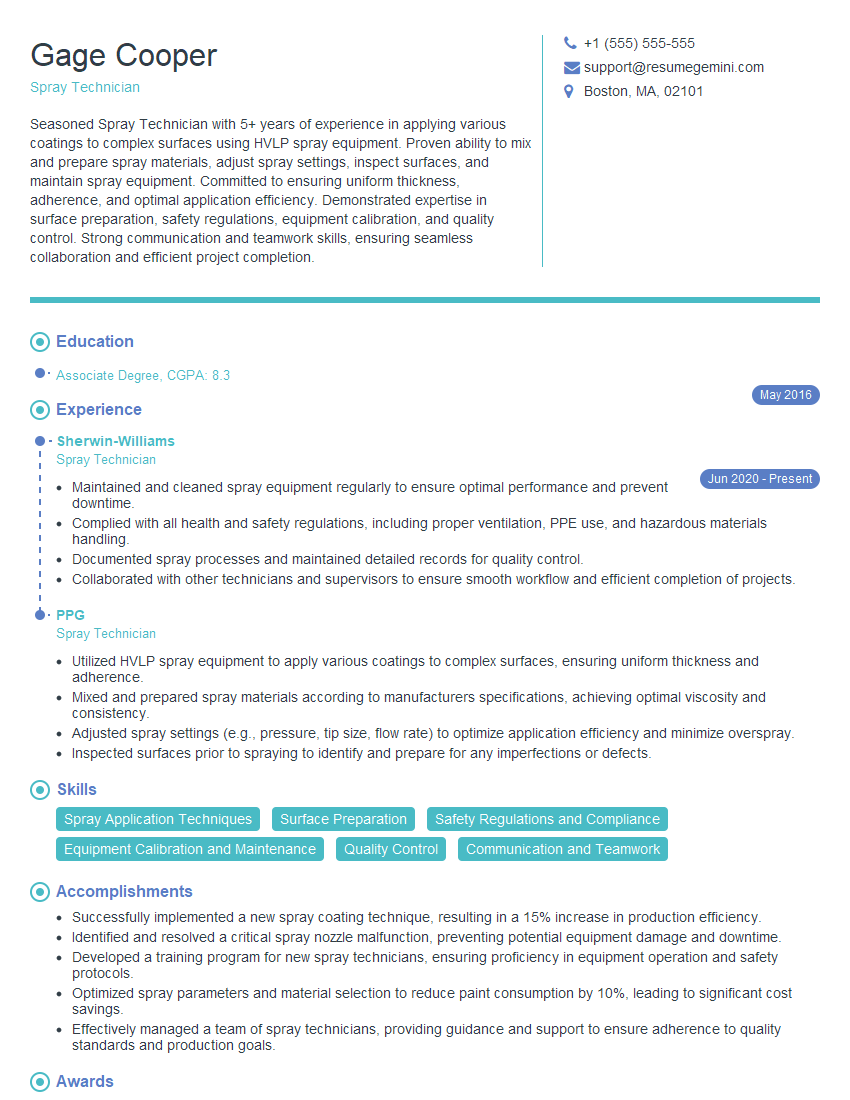
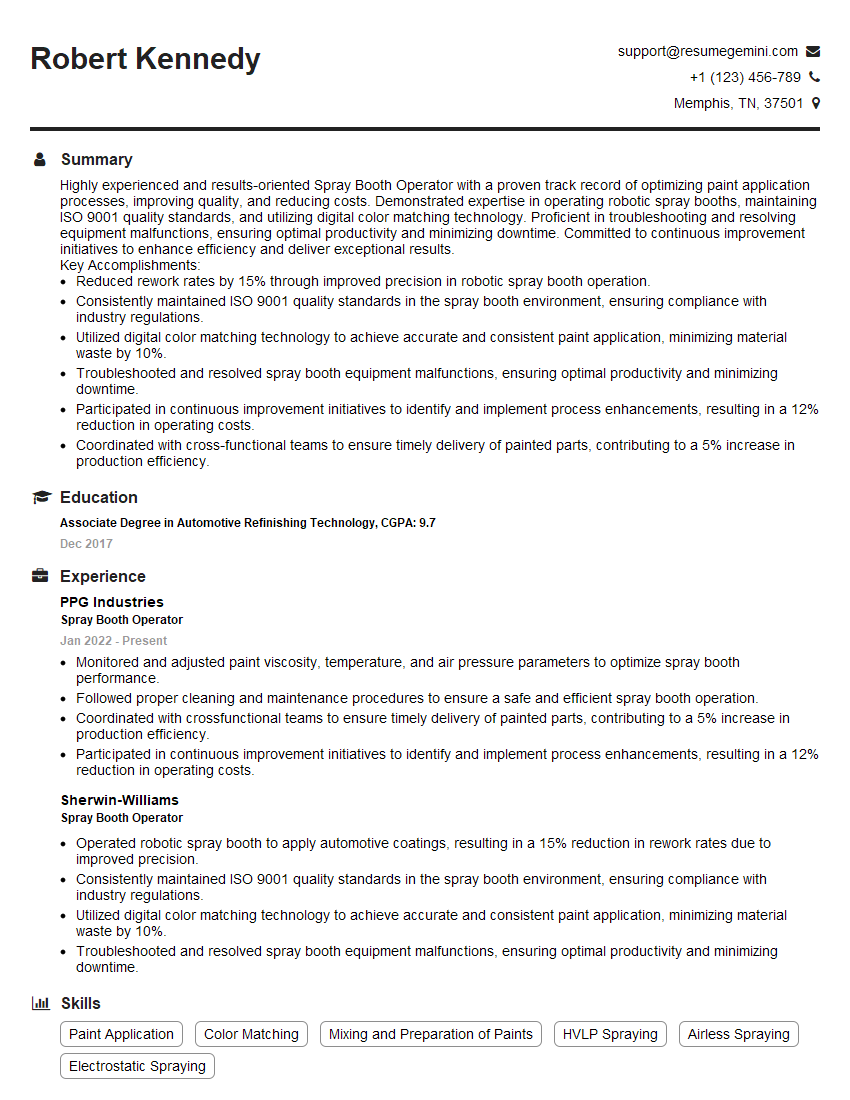
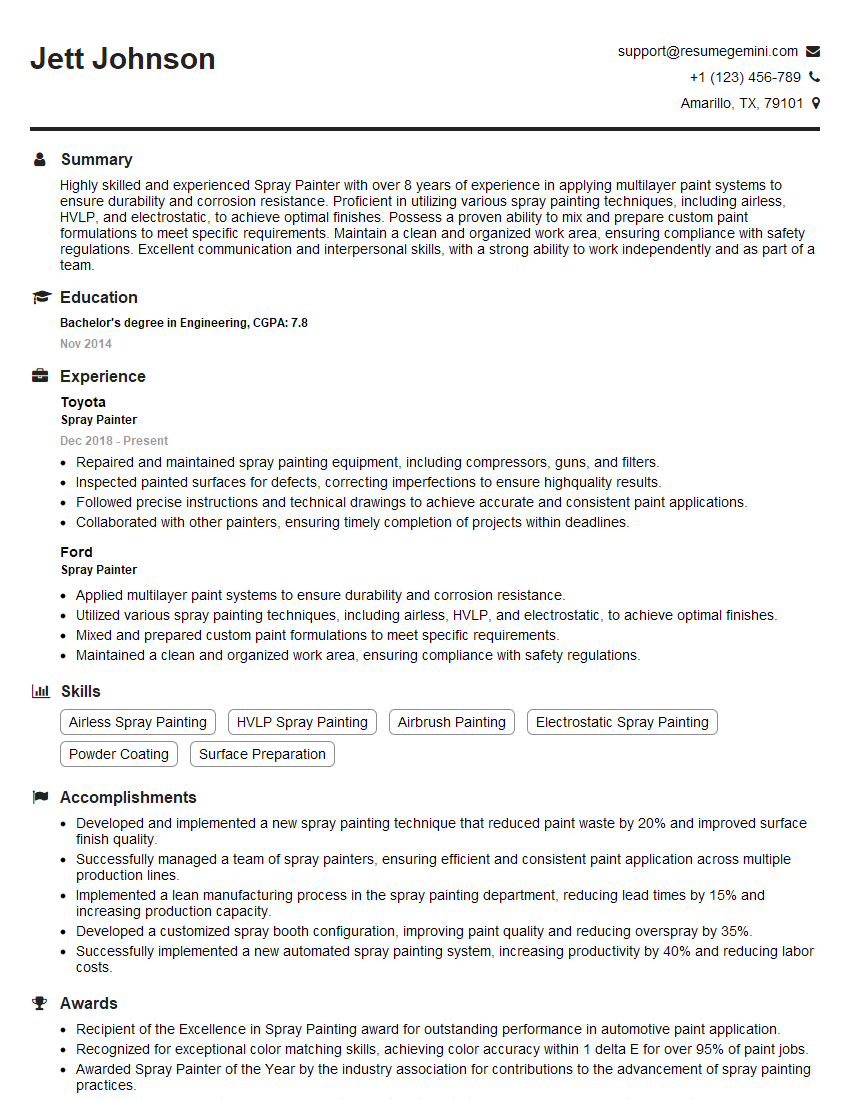
Mastering spray machine operation opens doors to a rewarding career with excellent growth potential. Whether you’re aiming for supervisory roles, specialized applications, or simply seeking a secure and skilled position, proficiency in this area is highly valued. To enhance your job prospects, creating a strong, ATS-friendly resume is crucial. ResumeGemini is a trusted resource that can help you build a professional resume that highlights your skills and experience effectively. Examples of resumes tailored to Spray Machine Operation are available to guide you through the process.

Explore more articles
Users Rating of Our Blogs
Share Your Experience
We value your feedback! Please rate our content and share your thoughts (optional).
What Readers Say About Our Blog
Very informative content, great job.
good