Unlock your full potential by mastering the most common Sprinkler irrigation system design interview questions. This blog offers a deep dive into the critical topics, ensuring you’re not only prepared to answer but to excel. With these insights, you’ll approach your interview with clarity and confidence.
Questions Asked in Sprinkler irrigation system design Interview
Q 1. Explain the different types of sprinkler heads and their applications.
Sprinkler heads are the heart of any irrigation system, each designed for specific applications. They vary significantly in their throw distance, precipitation rate, and trajectory. Let’s explore some key types:
- Rotary Sprinklers: These are the workhorses, creating a full or partial circle of water spray. They are perfect for large, open areas like athletic fields or agricultural lands. Their range and precipitation rate are adjustable, allowing for customization to terrain and plant needs. For example, a long-range rotary sprinkler might be used in a large park, while a smaller one would be suitable for a residential lawn.
- Impact Sprinklers: These utilize a spinning impact mechanism to distribute water. They’re generally less expensive than rotary sprinklers, making them popular for budget-conscious projects. However, they are less precise and may not be suitable for delicate plants. Imagine using impact sprinklers in a large field where even coverage is prioritized over precise placement.
- Spray Sprinklers: Ideal for smaller, more delicate areas like flowerbeds or shrubbery. They distribute water in a gentle spray pattern. Their short throw distance and gentle spray pattern prevent soil erosion and are good for close-range watering.
- Rotor Sprinklers: A sophisticated type of rotary sprinkler offering high precision and efficiency. They provide a consistent water application even at longer throw distances. These are often found in golf courses and other high-end landscape installations demanding consistent watering.
- Pop-up Sprinklers: These are designed to retract into the ground when not in use, maintaining a clean and aesthetically pleasing appearance. They are a common choice for residential lawns and landscaped areas.
Choosing the right sprinkler head depends entirely on the specific needs of the area being irrigated, from the size and shape of the area to the type of plants and the budget.
Q 2. Describe the process of designing a sprinkler irrigation system for a sloped terrain.
Designing a sprinkler system for sloped terrain requires careful consideration of water distribution. Uniformity is critical as water tends to run downhill, leading to overwatering in lower areas and underwatering on slopes. Here’s a step-by-step approach:
- Topographical Survey: Begin with a detailed survey of the land’s contours. This will inform the system layout and sprinkler placement.
- Zoning: Divide the area into zones based on slope and elevation. This allows for independent control and ensures that each zone receives appropriate watering.
- Sprinkler Selection: Choose sprinklers with adjustable nozzles and potentially lower precipitation rates for steeper slopes to prevent runoff. Consider using more sprinklers in the upper zones to compensate for water flow.
- Sprinkler Placement: Strategically position sprinklers to minimize runoff. More sprinklers may be needed on steeper slopes, and they should be placed to ensure overlap and even coverage.
- Pressure Regulation: Install pressure regulators to maintain consistent water pressure across zones, accounting for elevation differences. Pressure-compensating sprinklers may also be a good choice.
- Runoff Management: Incorporate measures like berms or swales to control runoff and prevent erosion. Terracing might be considered for extremely steep slopes.
- Testing and Adjustment: Thoroughly test the system to ensure uniform coverage and make adjustments as needed. This often requires fine-tuning sprinkler placement and nozzle adjustments.
Remember, careful planning and attention to detail are crucial for success on sloped terrain. A poorly designed system can lead to significant water waste and uneven plant growth.
Q 3. How do you calculate the water pressure required for a sprinkler system?
Calculating the required water pressure for a sprinkler system is vital for efficient and effective irrigation. It depends on several factors, including the type of sprinkler, the desired throw distance, and the elevation differences in the landscape. A simplified approach involves:
- Determine friction loss: This accounts for the energy loss due to water flowing through pipes and fittings. Use specialized calculation tools or software which consider pipe diameter, length, and flow rate.
- Calculate elevation head: This represents the pressure needed to overcome elevation changes in the system. For each foot of elevation difference, you need approximately 0.433 psi (pounds per square inch) of pressure.
- Determine nozzle pressure: Each sprinkler head requires a specific pressure for optimal performance. This information is provided by the manufacturer.
- Calculate total required pressure: Add the friction loss, elevation head, and nozzle pressure to obtain the total required pressure at the pump.
The formula can be expressed as: Total Pressure = Friction Loss + Elevation Head + Nozzle Pressure
It’s crucial to use accurate measurements and appropriate calculation tools to ensure the pump provides sufficient pressure across all zones. Insufficient pressure leads to under-watering, whereas excessive pressure can damage equipment.
Q 4. What are the key factors to consider when selecting pump size for an irrigation system?
Selecting the right pump size is paramount for a functional sprinkler system. An undersized pump results in insufficient pressure and uneven watering, while an oversized one is wasteful and expensive. Consider these key factors:
- Total Flow Rate: This is the sum of the flow rates of all sprinklers operating simultaneously. It’s determined by the number of sprinklers and their individual flow rates.
- Total Head: This is the total pressure required by the system, which includes friction loss, elevation head, and nozzle pressure, as calculated in the previous question.
- Pump Curve: Every pump has a performance curve that shows its flow rate and head at different operating points. The selected pump’s curve must satisfy the system’s required flow rate and head.
- System Efficiency: Consider the pump’s efficiency rating. A more efficient pump will consume less energy and save money in the long run.
- Future Expansion: Allow for future expansion by selecting a pump with a slightly higher capacity than immediately needed.
- Power Supply: Ensure the pump is compatible with the available power source (e.g., electric, gasoline).
Professional irrigation system design software aids in pump selection, accurately calculating the required flow rate and head based on the chosen sprinkler heads and piping layout. It’s always best to consult with a professional to avoid costly mistakes.
Q 5. Explain the concept of uniformity coefficient and its importance in sprinkler system design.
The Uniformity Coefficient (CU) is a critical metric in sprinkler system design, indicating how evenly water is distributed across the irrigated area. It’s expressed as a percentage and signifies the system’s performance. A higher CU indicates more uniform distribution.
Calculation: CU is typically calculated using catch cans placed throughout the irrigated area. These cans collect water over a period of time, and the collected amounts are compared. The formula is quite complex and involves statistical analysis of the data collected from the catch cans. Specialized software simplifies this process significantly.
Importance: A low CU indicates that some areas receive more water than others, leading to inefficient water use and potentially uneven plant growth. A high CU (ideally above 80%) ensures that water is applied uniformly, maximizing efficiency and promoting healthy plant growth.
Practical Application: In a real-world scenario, a low CU might indicate that sprinkler spacing needs adjustment, nozzles need changing, or there’s a problem with the system’s pressure. Regular CU evaluations are recommended for maintaining optimal system performance.
Q 6. How do you determine the appropriate spacing for sprinklers in a landscape setting?
Determining appropriate sprinkler spacing depends on several factors, notably the sprinkler’s throw distance and the desired degree of overlap. Overlapping ensures even water distribution; however, excessive overlap can lead to unnecessary water consumption.
General Guideline: As a rule of thumb, sprinklers are often spaced so that their throw distances overlap by approximately 50%. This ensures consistent coverage. However, this can vary depending on the type of sprinkler, the terrain, and the specific needs of the plants.
Factors to Consider:
- Sprinkler Throw Distance: This is a crucial factor; refer to the manufacturer’s specifications.
- Wind Conditions: Wind can affect throw distance and uniformity. Consider wind patterns when spacing sprinklers.
- Plant Type: Different plants have different water requirements. Densely planted areas might require closer spacing.
- Soil Type: Heavily compacted soils may necessitate closer spacing to ensure proper penetration.
Practical Application: Imagine designing a sprinkler system for a lawn. If a sprinkler has a 30-foot throw distance, you might space the sprinklers approximately 15 feet apart (50% overlap). However, in a windy area, you might reduce the spacing to maintain uniform coverage.
Using irrigation design software significantly simplifies this process, providing optimal spacing based on selected sprinklers and site conditions.
Q 7. What are some common problems encountered during irrigation system installation and how do you address them?
Irrigation system installation can encounter various challenges. Here are some common problems and their solutions:
- Low Water Pressure: This often stems from insufficient pump capacity, clogged filters, or leaks in the piping system. Check the pump, filters, and piping for leaks and blockages. Consider upgrading the pump if needed.
- Uneven Water Distribution: This might be due to incorrect sprinkler spacing, faulty sprinkler heads, or inconsistent pressure across zones. Adjust sprinkler spacing, replace faulty heads, and check for pressure variations across zones using pressure gauges.
- Clogged Sprinkler Heads: Debris or mineral deposits can clog sprinkler heads. Regularly clean or replace clogged heads.
- Leaks: Leaks can significantly waste water and reduce pressure. Inspect all connections and pipes regularly and promptly repair any leaks.
- Improper Slope: Incorrect grading can cause runoff and uneven watering. Ensure proper grading during installation.
- Incorrect Valve Operation: Faulty valves can lead to zones not receiving water or improper timing. Inspect and repair or replace faulty valves.
Preventative maintenance is crucial for avoiding these problems. Regular inspections, cleaning, and prompt repairs can extend the system’s lifespan and maintain its efficiency.
Q 8. Describe your experience with various irrigation control systems (e.g., timers, controllers, smart irrigation).
My experience encompasses a wide range of irrigation control systems, from basic timers to sophisticated smart irrigation solutions. I’ve worked extensively with time-clock based systems, which offer simple on/off scheduling, ideal for smaller, less complex residential setups. These are relatively inexpensive and easy to maintain. However, they lack the flexibility and data-driven optimization of more advanced systems.
I’m also highly proficient with programmable controllers, which allow for more intricate scheduling based on factors like time of day, day of the week, and even weather data. This level of control significantly improves water efficiency and allows for customized watering schedules for different zones within a landscape. For larger commercial or agricultural applications, I’ve used centralized controllers capable of managing hundreds of valves and zones, often integrated with weather stations and soil moisture sensors.
Furthermore, I have significant experience with smart irrigation systems that leverage internet connectivity and data analytics. These systems utilize weather forecasts, evapotranspiration rates, and soil moisture readings to automatically adjust watering schedules, minimizing water waste and maximizing plant health. I find that using this technology not only saves water but provides invaluable data for system optimization and future design projects. For example, I recently worked on a project where a smart irrigation system reduced water consumption by 30% compared to a traditional system, resulting in significant cost savings for the client.
Q 9. How do you perform a pressure test on a newly installed sprinkler system?
A pressure test on a newly installed sprinkler system is crucial to identify any leaks or issues before landscaping is completed. It’s a straightforward process, but precision is key. First, I ensure all sprinkler heads are capped or plugged to prevent water loss. Then, I isolate the system’s backflow preventer and connect a pressure gauge to the main line. I gradually increase the pressure to the system’s design pressure, typically specified by the system’s hydraulic design calculations (more on this later).
I monitor the gauge for any pressure drop. A steady pressure indicates a leak-free system. A gradual drop might indicate a slow leak, which I’ll pinpoint by methodically checking each section of the pipe. A sudden drop points to a significant leak requiring immediate attention. I use a pressure testing pump capable of handling the required pressure range and ensure the gauge is accurate and properly calibrated. Once the test is complete, and no leaks are found, I carefully release the pressure and inspect the system thoroughly.
It’s important to record the pressure readings throughout the test. This documented data provides a baseline for future maintenance and troubleshooting, allowing me to identify potential problems early on. Think of it like a health check-up for your irrigation system.
Q 10. Explain the concept of hydraulic design and its significance in sprinkler system efficiency.
Hydraulic design is the backbone of an efficient sprinkler system. It involves calculating the water flow, pressure, and pipe sizing needed to deliver the required water volume to each sprinkler head at the correct pressure. This ensures uniform coverage, maximizing water use efficiency and minimizing runoff or dry spots. Poor hydraulic design can lead to uneven watering, water waste, and ultimately, unhealthy plants.
The process starts with determining the water demand of the landscape, considering factors such as plant type, soil type, climate, and desired irrigation frequency. Then, I select appropriate sprinkler types and spacings based on these demands and the site’s topography. Next, using specialized software, I simulate water flow through the system, calculating pipe sizes, pump capacity, and pressure regulators needed to deliver the right amount of water to each sprinkler, consistently.
For instance, if a section of the landscape requires a higher flow rate, I’ll ensure the pipe diameter in that section is sufficiently large to handle it without excessive pressure drop. This ensures even distribution, unlike a poorly designed system where some sprinklers might receive far less water, resulting in poorly watered areas.
Q 11. Discuss different types of sprinkler irrigation systems (e.g., center pivot, drip, micro-sprinkler).
Sprinkler irrigation systems come in various configurations, each suited for different needs and landscapes. Center pivot systems are large-scale, automated systems commonly used in agriculture. They consist of a long pipe pivoting around a central point, with sprinklers along its length. This is efficient for large, relatively flat fields. Drip irrigation systems use small emitters to deliver water directly to the roots of plants, ideal for maximizing water efficiency in gardens or orchards. Micro-sprinklers are smaller than standard sprinklers, delivering water in a gentle spray, suitable for smaller areas or areas with delicate plants.
Then there are pop-up sprinklers, which are common in residential and commercial landscapes. These provide a controlled spray pattern, and their design allows them to retract below the ground surface when not in use. Finally, we have subsurface drip systems, ideal where surface irrigation isn’t feasible. These systems deliver water under the soil, minimizing water loss through evaporation and weed growth. The choice depends on the scale of the project, plant type, soil conditions, and budget.
Q 12. What software and tools are you proficient in using for sprinkler system design?
My proficiency in sprinkler system design software is a critical part of my skillset. I am highly experienced with industry-standard programs such as AutoCAD, for detailed layouts and pipe network design. I also use specialized irrigation design software like HYDRA or similar programs to perform complex hydraulic calculations, ensuring efficient water distribution. These programs allow me to simulate different scenarios, optimize pipe sizes, and select appropriate equipment. For project management and collaboration, I use project management platforms such as Asana or Monday.com. These tools help me track deadlines, manage budgets and effectively communicate with clients and contractors.
Q 13. How do you ensure water conservation in sprinkler system design?
Water conservation is paramount in sprinkler system design. I employ several strategies to minimize water usage. First, accurate site analysis is vital. Understanding the soil type, plant needs, and local climate conditions allows for precise water scheduling and efficient irrigation system design. Second, proper selection of sprinkler heads and nozzles is crucial. Choosing the right sprinkler type that matches water requirements and site conditions will reduce overwatering. I also incorporate sensors such as soil moisture sensors or rain sensors into the system. These sensors automatically adjust or shut off the irrigation system when the soil is sufficiently moist or it’s raining, preventing unnecessary water use.
Using water-wise plants adapted to the local climate reduces water demands. Efficient irrigation controllers are also part of my conservation strategy. Programmable controllers allow for customized scheduling, catering to the specific needs of different plant zones. Regular system maintenance is also critical; promptly addressing leaks and ensuring optimal system performance prevents significant water loss. For instance, I once redesigned an existing system, incorporating all these strategies, which resulted in a 45% reduction in water consumption without compromising plant health. This demonstrates the tangible benefits of a well-planned, water-conscious design.
Q 14. Explain your experience with designing sprinkler systems for different types of landscapes (e.g., residential, commercial, agricultural).
My experience spans a wide range of landscape types, from residential gardens to large-scale commercial and agricultural projects. Residential projects often involve designing systems with aesthetics in mind, ensuring the sprinklers are discreet and the system complements the overall landscape design. This might include using low-profile sprinklers or strategically placing them to minimize visibility. Commercial projects may involve more complex designs, integrating various zones with different watering needs, often requiring more robust controllers and potentially advanced features like smart irrigation technology.
Agricultural projects often require large-scale systems like center pivot or linear move irrigation, tailored to the specific crops and field conditions. The focus here is on maximizing efficiency and yield, which often involves designing systems for precise water application. I always adapt my approach to the specific needs and constraints of each project. The design considerations for a small residential garden are vastly different from a large golf course or a vineyard, but the underlying principles of hydraulic design and water conservation remain consistent.
Q 15. Describe your process for creating detailed irrigation system plans and specifications.
Creating detailed irrigation system plans and specifications is a multi-step process that requires a thorough understanding of the site, client needs, and relevant regulations. It begins with a comprehensive site survey, including soil analysis, topography mapping, and assessment of existing infrastructure. This data informs the design phase, where I determine the optimal layout of pipelines, sprinklers, and other components based on factors such as water pressure, flow rate, and desired coverage.
- Site Analysis: This crucial step involves meticulously surveying the area, noting slopes, obstacles (buildings, trees), and soil types. Soil type dictates the irrigation system’s water application rate and frequency.
- Design and Layout: Using specialized software (like AutoCAD or similar), I design a layout that ensures uniform water distribution across the area. This includes determining the number and type of sprinklers, the pipe diameter, and the pump capacity.
- Hydraulic Calculations: Precise calculations are crucial to determine the correct pipe sizes to maintain adequate pressure and flow throughout the system. These calculations often involve the Hazen-Williams equation or similar methods, accounting for friction loss in the pipes.
- Component Selection: Based on the calculations and client needs, appropriate sprinklers, valves, pumps, and controllers are selected. Considerations include the throw distance of sprinklers, the pressure rating of pipes, and the automation capabilities of the controller.
- Documentation: Finally, comprehensive documentation is produced, including detailed drawings, specifications for each component, and installation instructions. This ensures the system is built correctly and efficiently.
For instance, recently I designed a system for a vineyard. The sloping terrain necessitated specific calculations to ensure even water distribution across the rows, and we incorporated pressure-regulating valves to prevent overwatering on lower slopes.
Career Expert Tips:
- Ace those interviews! Prepare effectively by reviewing the Top 50 Most Common Interview Questions on ResumeGemini.
- Navigate your job search with confidence! Explore a wide range of Career Tips on ResumeGemini. Learn about common challenges and recommendations to overcome them.
- Craft the perfect resume! Master the Art of Resume Writing with ResumeGemini’s guide. Showcase your unique qualifications and achievements effectively.
- Don’t miss out on holiday savings! Build your dream resume with ResumeGemini’s ATS optimized templates.
Q 16. How do you calculate the total water requirements for a specific irrigation area?
Calculating total water requirements for irrigation involves understanding the evapotranspiration (ET) rate, which represents the combined water loss from evaporation and plant transpiration. Several factors influence ET, including temperature, humidity, wind speed, and solar radiation. These factors are often accounted for using reference ET values, typically obtained from weather stations or specialized software.
The calculation involves several steps:
- Determine the reference ET: This is usually obtained from weather data for your region.
- Calculate the crop coefficient (Kc): This factor accounts for the specific water needs of the plants being irrigated. Kc values vary depending on plant type and growth stage, and can be found in agricultural handbooks or databases.
- Calculate the ET for your crop: This is found by multiplying the reference ET by the Kc.
- Determine the irrigation efficiency: This factor accounts for water loss due to factors such as evaporation, runoff, and deep percolation. Efficiency varies based on the irrigation system type and its maintenance.
- Calculate the total water requirement: Finally, the total water requirement is determined by dividing the ET for your crop by the irrigation efficiency. This gives the gross amount of water needed, which is the amount that must be supplied by the irrigation system.
For example, a field of corn might have a reference ET of 0.5 inches per day and a Kc of 1.0. With an irrigation efficiency of 80%, the total water requirement would be (0.5 inches/day) / 0.80 = 0.625 inches per day.
Q 17. What are the environmental considerations for designing sustainable sprinkler systems?
Designing sustainable sprinkler systems requires careful consideration of water conservation, energy efficiency, and environmental impact. Key environmental considerations include:
- Water Conservation: Using efficient sprinkler technologies (e.g., low-pressure, high-efficiency rotors, drip irrigation where appropriate) minimizes water waste. Smart irrigation controllers with weather sensors further optimize water application based on real-time conditions, reducing unnecessary watering.
- Energy Efficiency: Selecting energy-efficient pumps and utilizing renewable energy sources (e.g., solar power) reduces the system’s carbon footprint. Optimized system pressure also minimizes energy consumption.
- Fertilizer Management: Sprinkler systems can be designed to incorporate fertilizer injection, promoting efficient nutrient use and reducing fertilizer runoff that can pollute water bodies. Precision irrigation helps reduce the need for high doses of fertilizers.
- Minimizing Runoff: Proper system design, including the use of low-flow emitters and well-maintained landscapes to improve water infiltration, helps to minimize water runoff and soil erosion. Well-designed drainage is also crucial.
- Environmental Impact Assessment: Before design, an assessment should be conducted to understand the potential impacts of the irrigation system on surrounding ecosystems, including any potential effects on wildlife or sensitive habitats.
For instance, a recent project integrated a rainwater harvesting system into the design, supplementing the municipal water supply and reducing reliance on potable water sources. This significantly lowered both water and energy costs for the client.
Q 18. Explain your understanding of water flow, pressure, and head loss in a pipe network.
Understanding water flow, pressure, and head loss in a pipe network is fundamental to proper irrigation system design. Water flow is the volume of water moving through a pipe per unit of time (typically measured in gallons per minute or liters per second). Pressure is the force exerted by the water on the pipe walls (typically measured in PSI or kPa). Head loss is the reduction in pressure due to friction between the water and the pipe walls, as well as any fittings or valves in the system.
Head loss is calculated using equations like the Hazen-Williams equation, which considers factors like pipe diameter, length, material, and flow rate. These calculations are crucial to ensure adequate pressure reaches each sprinkler, allowing for proper irrigation. Inadequate pressure can lead to uneven water distribution, whereas excessive pressure can damage components.
Think of it like a water slide: the higher the starting point (head), the faster the water flows. But the longer and rougher the slide (pipe length and roughness), the more the water slows down due to friction (head loss).
Example using Hazen-Williams (simplified):Head loss = K * L * Q^1.85 / D^4.87Where: K is a constant dependent on pipe material, L is pipe length, Q is flow rate, and D is pipe diameter.
This equation helps determine the appropriate pipe diameter to minimize head loss and maintain design pressure at all points in the system.
Q 19. How do you troubleshoot and repair malfunctioning sprinkler heads?
Troubleshooting malfunctioning sprinkler heads often requires a systematic approach. The first step is to isolate the problem. Is it a single head, a group of heads, or the entire zone experiencing issues?
- Check the sprinkler head: Examine the nozzle for clogs; clean or replace as necessary. Check for any physical damage or obstructions that might be blocking the spray pattern.
- Inspect the riser and pipe: Ensure there are no leaks or breaks in the riser or the main pipe leading to the sprinkler head. Look for any debris or kinks that could restrict flow.
- Check the valve: Verify that the valve controlling the zone is fully open and functioning correctly. A partially closed or malfunctioning valve can significantly reduce water flow to the sprinkler head.
- Check the pressure: Measure the water pressure at the sprinkler head using a pressure gauge. Low pressure might indicate a problem further upstream in the system.
- Test the controller: Make sure the controller is properly programmed and sending signals to the correct zones. Manually activate the zone to rule out any controller issues.
For example, if a group of sprinklers is malfunctioning, it’s likely a problem with the zone valve or main pipe supplying that section. If only one head is affected, the issue is usually localized to the head itself.
Q 20. How do you estimate the cost of a sprinkler irrigation system?
Estimating the cost of a sprinkler irrigation system involves breaking down the project into its various components. This includes the cost of materials, labor, and any permits required.
- Material Costs: This includes the cost of pipes, sprinklers, valves, pumps, controllers, filters, and any other required components. Prices vary significantly depending on the type and quality of materials chosen.
- Labor Costs: This covers the cost of labor for excavation, pipe installation, sprinkler installation, and system testing. Labor rates vary depending on location and the complexity of the project.
- Permitting Costs: Permits are usually required for irrigation system installation, and the cost varies by local regulations. Site surveys and inspections can also incur expenses.
- Contingency Costs: It’s crucial to include a contingency of around 10-15% of the total estimated cost to cover unforeseen expenses or changes in the project scope.
A detailed estimate usually involves obtaining quotes from various suppliers and contractors. Software programs specifically designed for irrigation system design often include cost estimation features. The final cost heavily depends on the size of the project, the complexity of the terrain, and the type of components selected. Simple systems can cost a few thousand dollars, while larger, more complex systems can easily reach tens or even hundreds of thousands of dollars.
Q 21. What are the regulations and codes that you need to be aware of during irrigation system design and installation?
Regulations and codes governing irrigation system design and installation vary by location but commonly include:
- Building Codes: Local building codes often dictate requirements for pipe materials, pressure ratings, backflow prevention, and system safety.
- Water Conservation Regulations: Many jurisdictions have regulations aimed at promoting water conservation, which may restrict the type of irrigation system permitted or mandate the use of water-efficient technologies.
- Environmental Regulations: Regulations concerning water quality and potential environmental impacts (e.g., runoff) must be considered, especially in sensitive ecosystems.
- Accessibility Regulations: Regulations regarding accessibility for people with disabilities might influence the design and placement of control valves and other components.
- Contractor Licensing: It’s crucial to work with licensed and insured contractors to ensure compliance with all applicable regulations and to safeguard against liability.
For example, some areas mandate the use of specific backflow prevention devices to prevent contamination of the potable water supply. Understanding and adhering to these codes is crucial to ensuring legal compliance and a properly functioning system. I always stay up to date on local and national codes relevant to my profession.
Q 22. Describe your experience with creating detailed irrigation system budgets.
Creating accurate irrigation system budgets requires a meticulous approach, combining engineering expertise with a keen understanding of market pricing. I begin by thoroughly evaluating the site, determining the area to be irrigated, soil type, water source, and desired level of automation. This informs the selection of appropriate sprinklers, pipes, valves, and controllers. I then source quotes from multiple suppliers for each component, carefully comparing quality and price. My experience includes utilizing spreadsheet software to create detailed line-item budgets, incorporating contingency for unforeseen expenses (like unexpected site conditions or material price fluctuations). For instance, in a recent project involving a large vineyard, I meticulously accounted for the cost of high-density polyethylene (HDPE) piping, specialized drip emitters, pressure regulators, and a weather-based irrigation controller. The final budget includes labor costs, installation, and a detailed breakdown of all materials, allowing clients to understand the cost-effectiveness of different design options. I also build in periodic cost reviews to adjust for any material or labor cost increases throughout the project lifecycle.
Q 23. What are different types of pipes used in sprinkler irrigation system and their selection criteria?
Several pipe types are used in sprinkler irrigation, each with specific properties affecting their suitability for a project. The most common are:
- High-Density Polyethylene (HDPE): Lightweight, durable, resistant to corrosion and chemicals, making it ideal for most applications. Its flexibility allows for easier installation in challenging terrains. However, it can be susceptible to UV degradation if not properly protected.
- Polyvinyl Chloride (PVC): Less flexible than HDPE, but cost-effective and suitable for less demanding applications. It’s resistant to corrosion but can be brittle in cold temperatures and susceptible to damage from UV radiation.
- Ductile Iron: Strong and durable, ideal for high-pressure applications and main lines. It’s less susceptible to damage but more expensive and heavier than plastic alternatives.
- Galvanized Steel: Historically popular, but susceptible to corrosion over time. Now less common due to the availability of more corrosion-resistant materials.
Pipe selection depends on factors such as the system’s pressure, required flow rate, soil conditions, and budget. For instance, HDPE is a popular choice for lateral lines in most projects because of its flexibility and resistance to corrosion, while ductile iron might be preferred for the main line due to its strength. I always consider factors such as the pipe’s longevity, ease of installation, and total life-cycle cost to arrive at the optimum choice for a specific project.
Q 24. How do you incorporate soil types and water infiltration rates in sprinkler system design?
Soil type and infiltration rate directly impact sprinkler system design. Different soils absorb water at varying rates. Clay soils, for example, have a much lower infiltration rate than sandy soils. I use soil tests to determine the infiltration rate and texture. This data is crucial for calculating the appropriate irrigation frequency and duration to prevent runoff and ensure adequate water penetration to the root zone. In a project involving clay soil, the system needs to apply water slowly over longer periods to allow for sufficient absorption. Conversely, sandy soil requires less frequent, shorter duration irrigations. I employ specialized software and design methodologies that use the soil data to create optimized irrigation schedules, avoiding overwatering or underwatering. This results in efficient water usage and healthy plant growth. For instance, a soil infiltration test showing a slow infiltration rate would lead me to choose a low-application-rate sprinkler such as drip irrigation or a rotor with a low precipitation rate.
Q 25. Explain your experience with using different types of valves in irrigation systems.
I’ve extensive experience with various valves in irrigation systems. My selection depends on the specific application and system needs. Common types include:
- Ball Valves: Simple, reliable, and provide full on/off control. Excellent for main-line shutoff and smaller zone control.
- Butterfly Valves: Used for larger lines, offer good flow control but are less precise than ball valves.
- Gate Valves: Provide on/off control, suitable for main lines, but require more maintenance than ball valves.
- Check Valves: Prevent backflow, ensuring water flows in one direction. Essential to protect pumps and prevent contamination.
- Pressure Regulating Valves: Maintain consistent pressure throughout the system, critical for ensuring even water distribution.
- Solenoid Valves: Electrically controlled, used in automated systems to control individual zones. I often incorporate these in smart irrigation systems for enhanced efficiency and water conservation.
The choice depends on the required flow rate, pressure, ease of maintenance, and the level of automation. For example, a large-scale system might use butterfly valves for main lines and solenoid valves for automated zone control, while a smaller system might use ball valves for all its needs. Selection also considers factors like the valve’s material (e.g., bronze, PVC) to ensure its compatibility with the system’s piping and water quality.
Q 26. How do you manage and prevent irrigation system leaks and malfunctions?
Leak detection and prevention are crucial for efficient irrigation management. I employ a multi-pronged approach:
- Regular System Inspections: I recommend routine visual inspections of all components, checking for leaks at joints, valves, and sprinklers. This includes pressure testing of pipes and checking sprinkler heads for proper function.
- Pressure Monitoring: Using pressure gauges at various points in the system helps identify pressure drops indicating leaks. Significant pressure drops often point to a major leak requiring immediate attention.
- Leak Detection Technology: Acoustic leak detectors and other advanced technologies can accurately pinpoint the location of leaks, even small ones, minimizing excavation and repair costs.
- Proper Installation: Careful installation, using appropriate fittings and ensuring proper pipe connections and sealing, minimizes the risk of leaks. Quality control at each installation stage is important.
- Backflow Preventers: These devices are essential to prevent contaminated water from flowing back into the potable water supply, protecting public health and also enhancing the system’s lifespan.
Addressing leaks promptly reduces water waste, lowers operational costs, and extends the system’s lifespan. A well-maintained system minimizes disruptions and maximizes efficiency, leading to significant cost savings in the long run. Regular maintenance is far cheaper than emergency repairs necessitated by neglected leaks.
Q 27. Discuss your experience with different irrigation system maintenance procedures.
Irrigation system maintenance is vital to ensure longevity and efficiency. My experience involves several key procedures:
- Winterization: In cold climates, proper winterization is essential to prevent damage from freezing. This typically involves draining the system completely, protecting exposed components, and storing sensitive parts indoors.
- Spring Startup: Checking for leaks and damage after winter, ensuring all valves and sprinklers are functioning correctly, and cleaning debris from the system.
- Regular Cleaning: Regularly cleaning sprinkler heads and filters prevents clogging, ensuring proper water distribution and optimal performance. This is particularly important in areas with high sediment or mineral content.
- Valve and Pump Maintenance: Periodic inspection and lubrication of valves and pumps ensures smooth operation and prevents premature wear and tear. This includes checking for wear and replacing any faulty parts.
- Pressure Testing: Testing the system’s pressure at regular intervals helps identify potential leaks or pressure problems before they become major issues.
I create customized maintenance schedules based on the specific system and environmental conditions, incorporating preventative measures to address potential issues before they escalate. These schedules often involve seasonal checks and adjustments to ensure optimal operation throughout the year. Proper maintenance not only extends the lifespan of the irrigation system but also ensures its efficient and reliable performance.
Key Topics to Learn for Sprinkler Irrigation System Design Interviews
- Hydraulic Design: Understanding pressure, flow rates, and pipe sizing calculations. Practical application: Designing a system for a specific field considering topography and soil type.
- Water Distribution: Analyzing uniformity coefficients and optimizing sprinkler spacing for efficient water use. Practical application: Troubleshooting uneven water distribution in an existing system.
- Pump Selection and Sizing: Determining the appropriate pump capacity and type based on system requirements. Practical application: Calculating the required pump horsepower for a large-scale irrigation project.
- Sprinkler Selection: Choosing the right sprinkler type (e.g., impact, rotor) based on application and throw distance. Practical application: Comparing the efficiency and cost-effectiveness of different sprinkler types.
- System Layout and Design: Planning the optimal layout of pipelines, laterals, and sprinklers. Practical application: Creating a CAD drawing of a sprinkler irrigation system.
- Irrigation Scheduling: Utilizing weather data and evapotranspiration rates to create an efficient irrigation schedule. Practical application: Developing a smart irrigation system using sensors and automated controllers.
- Cost Estimation and Budgeting: Accurately estimating the cost of materials, labor, and equipment. Practical application: Preparing a detailed budget for a proposed irrigation project.
- Sustainability and Water Conservation: Implementing strategies to minimize water waste and maximize water efficiency. Practical application: Designing a system to utilize rainwater harvesting or recycled water.
- Troubleshooting and Maintenance: Identifying and resolving common issues in sprinkler irrigation systems. Practical application: Diagnosing and repairing a malfunctioning sprinkler head.
Next Steps
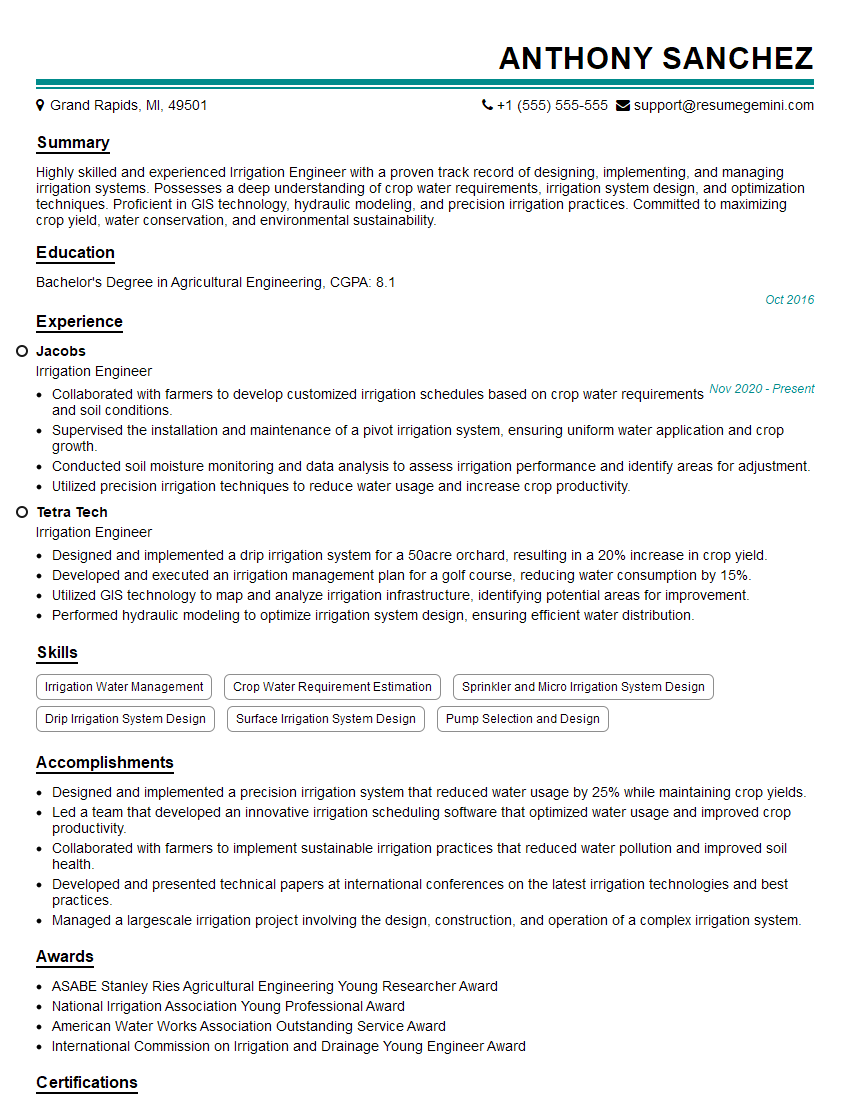
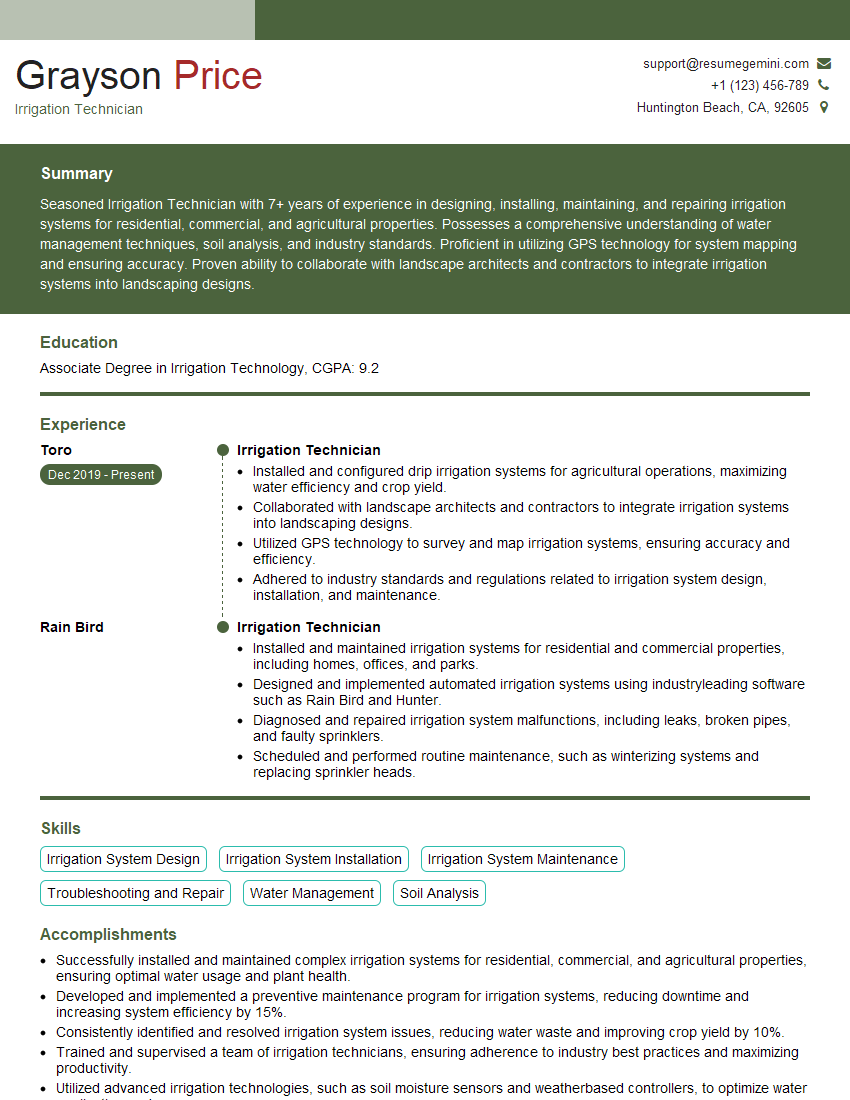
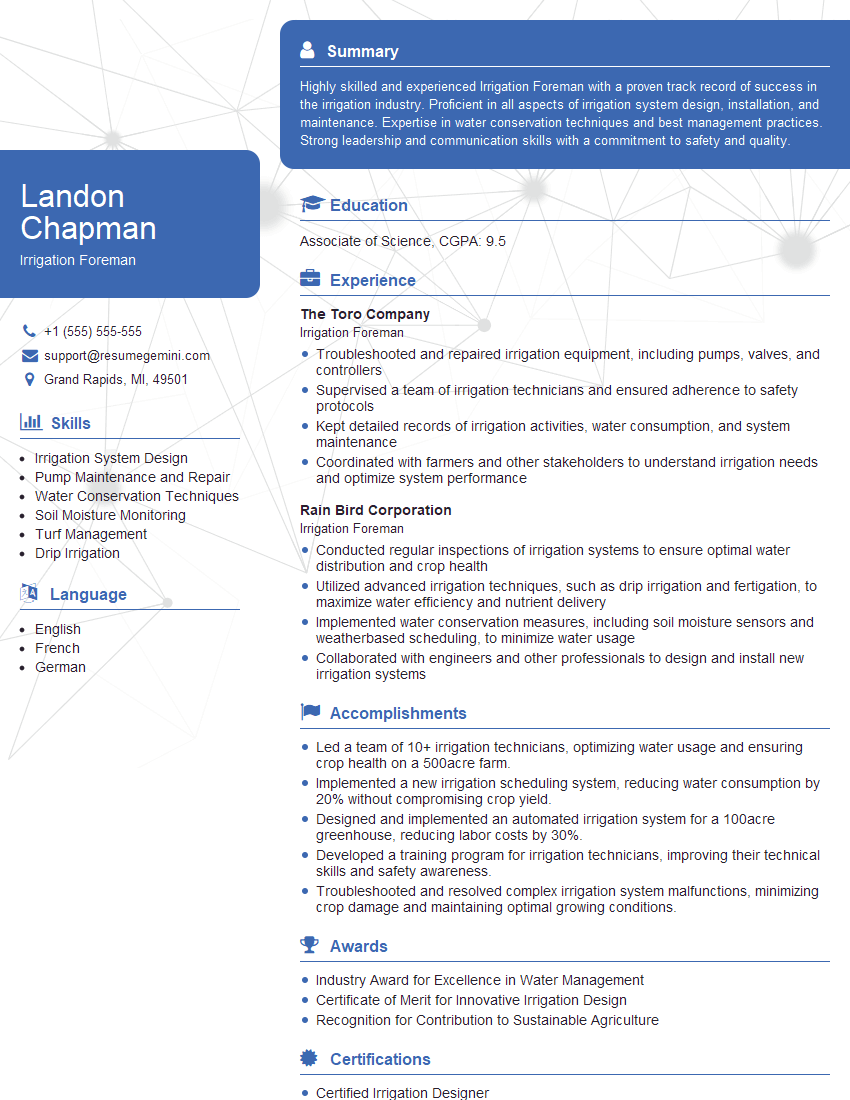
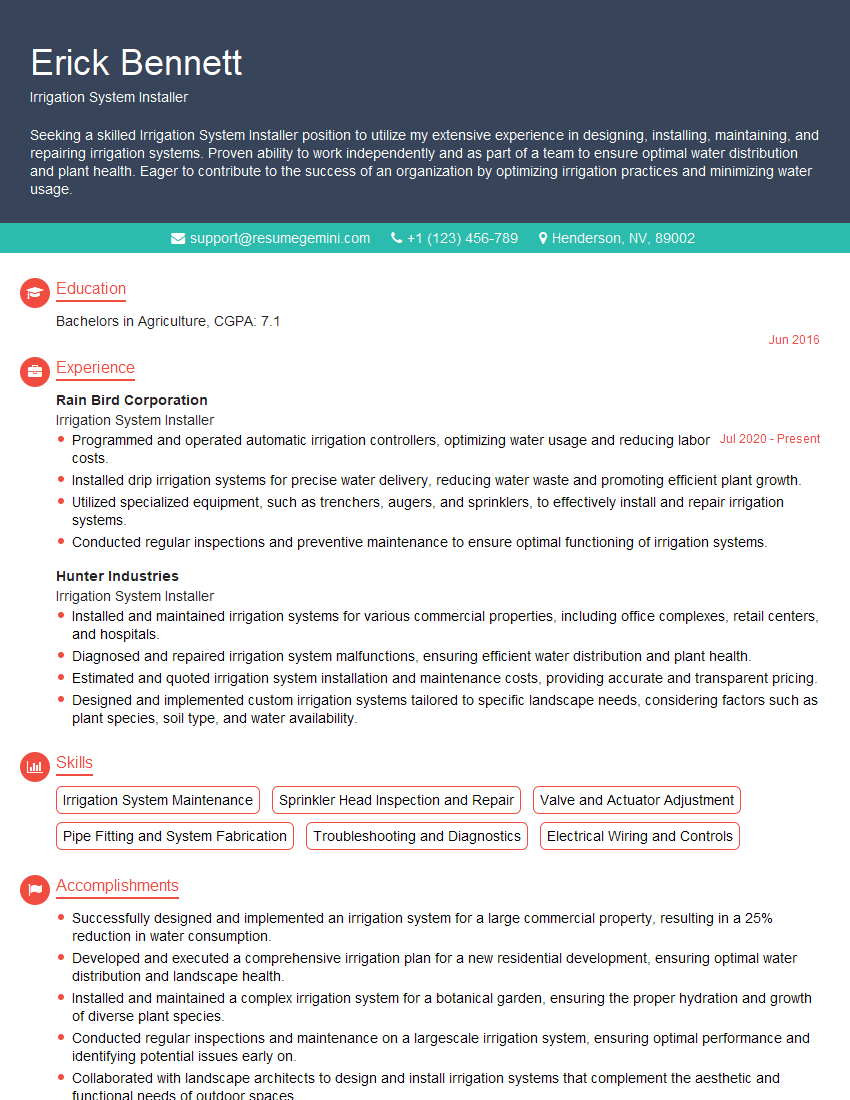
Mastering sprinkler irrigation system design opens doors to exciting career opportunities in agriculture, landscaping, and water resource management. A strong understanding of these principles is highly valued by employers. To maximize your job prospects, focus on crafting an ATS-friendly resume that highlights your skills and experience effectively. ResumeGemini is a trusted resource to help you build a professional and impactful resume, ensuring your qualifications shine through. Examples of resumes tailored to sprinkler irrigation system design are available to help you get started.
Explore more articles
Users Rating of Our Blogs
Share Your Experience
We value your feedback! Please rate our content and share your thoughts (optional).
What Readers Say About Our Blog
Very informative content, great job.
good