Interviews are more than just a Q&A session—they’re a chance to prove your worth. This blog dives into essential Stability and Loading Calculations interview questions and expert tips to help you align your answers with what hiring managers are looking for. Start preparing to shine!
Questions Asked in Stability and Loading Calculations Interview
Q 1. Explain the difference between static and dynamic loading.
The key difference between static and dynamic loading lies in how the load is applied. Static loading involves a gradual application of a load that remains constant over time, allowing the structure to reach equilibrium. Think of a building supporting its own weight – that’s a static load. The structure responds predictably to these sustained forces. In contrast, dynamic loading involves loads that change rapidly in magnitude and/or direction. Earthquakes, wind gusts, or vehicle impacts are prime examples. These rapidly changing forces can create significant inertia and resonance effects, demanding a different analytical approach to ensure stability.
Imagine a book resting on a table (static) versus a book being dropped onto the table (dynamic). The table reacts differently to the sudden impact compared to the steady weight of the book simply sitting there.
Q 2. Describe various methods for determining the center of gravity.
Determining the center of gravity (CG) is crucial for stability calculations. Several methods exist, depending on the object’s complexity:
- Simple Shapes: For regular shapes like rectangles or cubes, the CG is easily calculated using geometric principles. For example, a rectangular plate’s CG lies at the intersection of its diagonals.
- Composite Bodies: Complex objects can be divided into simpler shapes. The CG of each component is found, and then a weighted average is calculated based on the components’ weight and CG location. This involves summing the moments of each component’s weight about a reference axis and dividing by the total weight.
- Experimental Methods: For irregularly shaped objects, suspending the object from two different points can pinpoint the CG. The intersection of the plumb lines (vertical lines drawn from suspension points) indicates the CG. This is a practical and readily available technique.
- Software-Based Methods: Advanced 3D modeling software packages like CAD programs can accurately compute the CG based on a digital model of the structure.
Finding the CG ensures proper load distribution and prevents structural instability due to unbalanced forces. For example, when designing a crane, a precise CG calculation is vital to prevent tipping.
Q 3. How do you account for wind loads in structural design?
Wind loads are significant dynamic forces that must be considered in structural design. They vary based on the wind speed, building height, shape, and geographical location. The process involves several steps:
- Wind Speed Determination: Building codes and meteorological data provide wind speed information for specific regions, typically given as a maximum or a design wind speed.
- Pressure Calculation: The wind speed is then used to calculate the pressure exerted on the structure’s surfaces using aerodynamic equations and empirical formulas. This pressure varies across the structure’s surfaces due to its geometry.
- Force Calculation: The wind pressure is converted into force by multiplying it with the affected surface area. This will consider the shape and orientation of the structure.
- Load Combinations: Finally, the wind loads are combined with other loads (dead loads, live loads) to obtain the worst-case scenario for structural performance during a wind event. This ensures safety during strong winds.
Ignoring wind loads can have catastrophic consequences, like the collapse of poorly designed structures during storms. Proper analysis requires specialized software and expertise in wind engineering.
Q 4. Explain the concept of factor of safety and its application.
The factor of safety (FOS) is a crucial concept that accounts for uncertainties in material properties, load estimations, and analytical methods. It’s a ratio that represents how much stronger a structure needs to be compared to the anticipated load. The formula is:
FOS = Ultimate Strength / Allowable Stress
or
FOS = Ultimate Load / Design Load
Where:
- Ultimate strength/load represents the maximum load a member or structure can withstand before failure.
- Allowable stress/design load is the maximum load permitted under normal operating conditions.
A higher FOS provides greater safety but might lead to an overly conservative and costly design. The appropriate FOS depends on the structure’s importance, material properties, and risk tolerance. For instance, a bridge might have a higher FOS than a small residential building due to the higher potential consequences of failure.
Q 5. What are the common failure modes in structural components under loading?
Structural components can fail under loading in various ways:
- Yielding: The material undergoes permanent deformation exceeding its elastic limit. This is often visible as bending or buckling.
- Fracture: The material breaks completely, often due to excessive tensile stress or brittle failure.
- Buckling: A slender member under compression bends or collapses, especially if the length is large compared to the cross-sectional dimension.
- Fatigue: Repeated cyclical loading causes cracks to develop and propagate, eventually leading to failure, even if the stress is below the yield strength.
- Creep: Slow, permanent deformation under sustained stress, typically at elevated temperatures.
Understanding these failure modes is essential to select appropriate materials, design safe geometries, and ensure the long-term durability of the structure.
Q 6. Describe different types of structural supports and their influence on stability.
Structural supports significantly influence stability. Different types exist, each affecting the structure’s behavior:
- Pin Support: This support allows rotation but restricts translation in all directions. Think of a hinge.
- Roller Support: This support restricts translation in one direction but allows rotation and translation in the other directions. It’s like a wheel on a track.
- Fixed Support: This support prevents both rotation and translation in all directions. A firmly anchored column is an example.
The type of support dictates the reactions (forces and moments) at the support points, directly impacting the overall stability of the structure. A well-chosen support system ensures that the structure can withstand the applied loads without excessive deflections or collapse. For example, a cantilever beam (fixed at one end) will behave differently compared to a simply supported beam (supported at both ends).
Q 7. Explain the principles of moment of inertia and its significance in stability calculations.
The moment of inertia (I) is a geometric property that describes a cross-section’s resistance to bending. It’s crucial in stability calculations as it indicates how easily a structural member will bend under a given load. A larger moment of inertia implies greater resistance to bending. The formula depends on the shape of the cross-section (e.g., rectangular, circular, I-beam). For example, for a rectangular cross-section, I = (b*h^3)/12 where ‘b’ is the width and ‘h’ is the height.
In stability analysis, a higher moment of inertia translates to increased stiffness and resistance to buckling or deflection. This is why I-beams are commonly used in buildings; their shape maximizes the moment of inertia for a given amount of material, making them efficient in resisting bending. Structural engineers use moment of inertia extensively in beam design, column design, and other structural components to determine deflection and stability under various loads.
Q 8. How do you analyze the stability of a retaining wall?
Analyzing the stability of a retaining wall involves assessing its resistance to overturning, sliding, and bearing capacity failure. Think of it like this: the wall is holding back a large amount of soil, and we need to ensure it won’t tip over, slip, or crush its foundation.
- Overturning: We calculate the moments (rotational forces) caused by the soil pressure acting on the wall and compare them to the resisting moment provided by the wall’s weight and any other stabilizing forces. If the resisting moment is significantly greater, the wall is stable against overturning. This involves creating a free body diagram and calculating the resultant moment.
- Sliding: We check if the frictional forces between the wall and the foundation are sufficient to resist the horizontal forces from the soil pressure. This involves calculating the factor of safety against sliding, which is the ratio of resisting forces to driving forces. A factor of safety greater than 1.5 is generally considered acceptable.
- Bearing Capacity: We ensure the pressure exerted by the wall on the foundation soil does not exceed the soil’s bearing capacity. This requires understanding the soil’s properties and using appropriate bearing capacity equations. Excessive pressure can lead to foundation settlement or failure.
Software like GeoStudio or specialized geotechnical analysis programs are commonly used for these calculations, incorporating soil properties and wall geometry for accurate predictions. A thorough analysis often includes considering various loading scenarios and potential uncertainties in soil parameters.
Q 9. How do you account for seismic loads in structural analysis?
Seismic loads are accounted for in structural analysis by applying equivalent static forces or dynamic analysis. Imagine an earthquake shaking a building – we need to make sure the structure can withstand these forces.
- Equivalent Static Method: This simplified approach applies a lateral force to the structure, proportional to its mass and the design ground acceleration. Building codes specify these factors based on the site’s seismic zone. This method is suitable for simpler structures.
- Dynamic Analysis: This more sophisticated method involves using time-history analysis or response spectrum analysis to simulate the structure’s response to seismic ground motion. This accounts for the structure’s dynamic properties, including its natural frequencies and damping. It’s essential for complex or critical structures.
In either method, the seismic forces are then combined with other loads (dead load, live load, wind load, etc.) to determine the maximum stresses and deflections in the structure. Software like ETABS or SAP2000 are widely used for this type of analysis, incorporating appropriate seismic design codes.
Q 10. Explain the use of finite element analysis (FEA) in stability and loading calculations.
Finite Element Analysis (FEA) is a powerful numerical method used to analyze complex structures under various load conditions. It divides the structure into smaller elements, allowing for detailed stress and displacement calculations. Think of it like dividing a puzzle into smaller, easier-to-handle pieces.
In stability and loading calculations, FEA is used to:
- Model complex geometries: FEA can handle irregular shapes and intricate details that would be difficult to analyze using simpler methods.
- Account for material nonlinearities: FEA can model materials with non-linear behavior, such as soil or concrete under high stress, providing more realistic results.
- Simulate various loading scenarios: FEA allows for the simulation of different load combinations and sequences, giving a comprehensive picture of structural behavior.
- Determine stress and displacement distributions: FEA provides detailed information on stress and displacement throughout the structure, enabling engineers to identify potential weak points.
For example, FEA can be used to analyze the stability of a slope considering complex soil stratigraphy and variable loading conditions, or to evaluate the stress distribution in a retaining wall subjected to seismic loading.
Q 11. What are the limitations of FEA in stability analysis?
While FEA is a powerful tool, it has limitations:
- Mesh dependency: The accuracy of FEA results depends on the mesh quality (how the structure is divided into elements). A poorly designed mesh can lead to inaccurate results. It requires careful mesh refinement in critical areas.
- Material model accuracy: The accuracy of the FEA results is directly related to the accuracy of the material models used. Simplified material models may not capture the actual behavior of the materials under complex loading conditions.
- Computational cost: FEA analysis, especially for large and complex structures, can be computationally expensive and time-consuming.
- Boundary conditions: Accurate representation of boundary conditions is crucial for reliable results. Incorrect boundary conditions can significantly affect the outcome of the analysis.
- Interpretation of results: Interpreting the voluminous data produced by FEA requires expertise and a good understanding of structural mechanics. Incorrect interpretation can lead to wrong conclusions.
It’s crucial to remember that FEA is a tool; its output is only as good as the input data and the engineer’s understanding of the underlying principles.
Q 12. How do you verify the accuracy of your stability calculations?
Verifying the accuracy of stability calculations involves a multi-pronged approach:
- Independent Verification: Have another engineer review the calculations and methodology. A fresh pair of eyes can often catch errors or overlooked aspects.
- Comparison with Simplified Methods: Compare FEA results with simplified hand calculations or established empirical methods. Significant discrepancies warrant further investigation.
- Sensitivity Analysis: Vary input parameters (e.g., soil properties, load magnitudes) to assess the sensitivity of the results. This helps to understand the uncertainty associated with the analysis.
- Code Compliance: Ensure the calculations comply with relevant building codes and standards. These codes provide guidelines for acceptable levels of safety.
- Instrumentation and Monitoring: For critical structures, consider installing instrumentation (e.g., inclinometers, strain gauges) to monitor actual behavior and compare it with predicted values.
It’s important to document all assumptions, methods, and results thoroughly. This ensures transparency and allows for future review and potential adjustments.
Q 13. Describe different methods for load combination according to relevant building codes.
Load combination methods vary based on building codes (e.g., ASCE 7, Eurocode). The goal is to determine the most critical load combination that produces the highest stresses or deflections in the structure. Think of it like figuring out the worst-case scenario.
Common methods include:
- Load Factors: Each load type (dead load, live load, wind load, snow load, seismic load, etc.) is multiplied by a load factor, reflecting its variability and potential for exceeding the design value. These factors are specified in building codes.
- Combination Equations: Building codes provide specific equations for combining the factored loads. These equations often consider various load combinations and their probabilities of occurrence.
- Envelope Approach: The maximum stresses or deflections are obtained from multiple load combinations, creating an envelope of maximum effects. This approach is useful when many load combinations are considered.
For example, a typical load combination might look like: 1.4D + 1.6L (where D is dead load and L is live load). This means the dead load is multiplied by 1.4 and the live load by 1.6, and these factored loads are added to determine the critical combination. The exact values of the load factors and combination equations depend on the specific code and the type of structure.
Q 14. Explain the concept of buckling and its influence on structural stability.
Buckling is a sudden and significant sideways deflection of a slender structural member under compressive load. Imagine a straw – if you push on it hard enough, it will suddenly bend and collapse. This is buckling.
Buckling significantly affects structural stability because it can lead to a catastrophic failure at a load level much lower than the material’s ultimate compressive strength. The slenderness of the member (length-to-thickness ratio) plays a crucial role; longer and thinner members are more susceptible to buckling.
Factors influencing buckling include:
- Material Properties: The elastic modulus and yield strength of the material influence the buckling load.
- Geometry: The length, cross-sectional shape, and support conditions of the member affect its buckling resistance.
- Load Type: The type of load (axial, eccentric, or lateral) influences the buckling behavior.
To prevent buckling, engineers use various techniques, including:
- Increased cross-sectional area: This increases the member’s stiffness and resistance to buckling.
- Using bracing or lateral supports: This prevents the member from deflecting sideways.
- Using materials with high yield strength: This increases the member’s capacity to resist compressive loads before buckling.
Buckling analysis is crucial for ensuring the stability of columns, beams under compression, and other slender structural elements. Software such as FEA programs can be employed to predict the buckling load and assess the structural stability under compressive forces.
Q 15. How do you determine the allowable stresses for different materials?
Determining allowable stresses for different materials involves considering several factors. It’s not a single number, but rather a process that depends heavily on the material’s properties, the loading conditions, and the desired safety margin.
Firstly, we consult material property datasheets. These provide key information like yield strength (the stress at which a material begins to deform plastically), ultimate tensile strength (the maximum stress a material can withstand before failure), and fatigue strength (the stress a material can withstand under repeated loading cycles). The allowable stress is typically a fraction of these values. This fraction is determined by the safety factor (explained further in the next question).
For example, a structural steel might have a yield strength of 250 MPa. Using a safety factor of 2, the allowable stress would be 125 MPa. This means we design the structure so that the calculated stress in any member never exceeds 125 MPa.
Beyond yield strength, other factors affect allowable stress. These include:
- Temperature: Higher temperatures generally reduce material strength.
- Corrosion: Corrosion weakens the material, reducing its allowable stress.
- Material Defects: Internal flaws can significantly reduce the material’s strength.
- Loading Type: Allowable stresses for static loading are different than for cyclic or dynamic loading.
Different building codes and standards (like ASCE 7 or Eurocodes) provide specific allowable stresses for different materials and situations, often expressed in tables or formulas.
Career Expert Tips:
- Ace those interviews! Prepare effectively by reviewing the Top 50 Most Common Interview Questions on ResumeGemini.
- Navigate your job search with confidence! Explore a wide range of Career Tips on ResumeGemini. Learn about common challenges and recommendations to overcome them.
- Craft the perfect resume! Master the Art of Resume Writing with ResumeGemini’s guide. Showcase your unique qualifications and achievements effectively.
- Don’t miss out on holiday savings! Build your dream resume with ResumeGemini’s ATS optimized templates.
Q 16. What are the safety factors commonly used in structural design?
Safety factors are crucial in structural design to account for uncertainties and variations in material properties, loading conditions, and analytical models. They act as a buffer, ensuring the structure can withstand loads greater than initially anticipated. Commonly used safety factors vary depending on the application, the material, the consequences of failure, and the governing building codes.
Several factors influence the selection of a safety factor:
- Consequences of Failure: A structure with potential for catastrophic failure (like a bridge) would require a higher safety factor than a less critical structure (like a small shed).
- Material Properties: The variability in material strength from one batch to another necessitates a safety factor.
- Loading Uncertainties: Live loads are often estimated, so a safety factor accounts for potential overloads.
- Analysis Limitations: Simplifying assumptions in structural analysis require additional safety margins.
Typical safety factors range from 1.5 to 4. A factor of 2 is often used for common structural members under static loading conditions, while higher factors might be used for dynamic loads, fatigue situations, or materials with high variability in strength.
Imagine designing a chair. A safety factor of 2 would mean that the chair must be able to withstand twice the anticipated weight before failing. This accounts for a heavier person sitting on it than initially calculated, for example.
Q 17. Explain your experience using relevant software for stability and loading analysis (e.g., ANSYS, ABAQUS).
I have extensive experience using finite element analysis (FEA) software like ANSYS and ABAQUS for stability and loading analysis. These tools allow for detailed modeling of complex structures and loading scenarios, providing far greater insight than hand calculations alone.
In my previous role, I used ANSYS to analyze the structural integrity of a large industrial crane. I created a detailed 3D model of the crane structure, including all major components. I then applied various loading scenarios including dead load (the weight of the crane itself), live load (the weight of the lifted object), and wind loads. ANSYS helped me determine stress levels, displacements, and stability of the crane under these loads, ensuring it met all safety requirements.
With ABAQUS, I’ve worked on projects involving nonlinear material behavior and contact problems. For instance, I modeled soil-structure interaction for a retaining wall, accounting for the nonlinear behavior of the soil using appropriate constitutive models. The software allowed me to accurately predict the wall’s performance under various loading and soil conditions.
My proficiency extends to pre-processing (creating models and meshes), solving the FEA equations, and post-processing (interpreting results and generating reports). I am comfortable with different element types, boundary conditions, and material models within these software packages. This allows me to select the optimal methods for specific analysis needs.
Q 18. How do you handle uncertainties and variations in material properties during analysis?
Handling uncertainties and variations in material properties during analysis requires a robust approach involving statistical methods and conservative design practices. We cannot expect precise material properties, so we account for the inherent variability.
Common methods include:
- Using statistical distributions: Instead of using a single value for material properties, we use statistical distributions (like normal or lognormal distributions) reflecting the range of possible values. FEA software often integrates such methods.
- Partial safety factors: Building codes often incorporate partial safety factors applied to both loads and resistances (material properties) to account for uncertainties. These factors are different from overall safety factors discussed earlier.
- Monte Carlo Simulation: This probabilistic method involves running numerous simulations with varied material properties and loads drawn from their respective probability distributions. The results reveal a probability distribution of structural responses, helping to assess the risk of failure.
- Sensitivity analysis: This involves determining which material properties have the largest effect on the structural response. This allows us to focus on improving the precision of measurements for the most influential properties.
For example, if the yield strength of steel is specified as having a mean of 250 MPa and a standard deviation of 10 MPa, I would not just use 250 MPa in my calculations. Instead, I might use a lower value from the distribution or use Monte Carlo simulation to assess the effect of variability.
Q 19. Explain your experience with different loading scenarios like dead load, live load, snow load etc.
I have substantial experience in handling various loading scenarios encountered in structural design. Each load type requires a different approach and consideration.
- Dead Load: This refers to the self-weight of the structure (structural members, finishes, etc.). It is relatively constant and easily calculated. I typically model this directly in my FEA software, defining the material density and geometry of each component.
- Live Load: These are variable loads like occupancy loads (people, furniture), equipment loads, and traffic loads. Building codes specify minimum live loads for different structures and occupancies. I ensure that my models correctly incorporate these loads, considering potential overload scenarios.
- Snow Load: This is the weight of accumulated snow on the roof. The magnitude depends on location, climate, and roof geometry. I use local building codes and meteorological data to determine appropriate snow loads. In simulations, I would model this as a uniformly distributed load or more sophisticated load patterns depending on the roof geometry.
- Wind Load: These are dynamic loads causing significant stresses. I utilize wind load calculations based on appropriate building codes (ASCE 7-16 in the US, for example) using the calculated pressure coefficients on the surfaces of the structure. This often involves more complex FEA to capture the dynamic effects.
- Seismic Load: This accounts for earthquake effects. Seismic loads are dynamic and require specialized analysis using dynamic FEA techniques. It also involves considerations of soil-structure interaction.
In many projects, I consider load combinations – multiple loads acting simultaneously – as prescribed by relevant building codes to ensure the structure’s safety under the most critical loading conditions.
Q 20. Describe your experience in interpreting and applying relevant building codes and standards.
Interpreting and applying building codes and standards is fundamental to my work. My experience spans various codes and standards, including ASCE 7 (Minimum Design Loads and Associated Criteria for Buildings and Other Structures), Eurocodes, and local building codes. I understand the complexities involved in navigating these regulations.
My approach involves:
- Identifying the applicable codes: This is the first step, as different codes apply to different locations, building types, and materials.
- Understanding the code requirements: I meticulously review the relevant sections to determine the required load combinations, allowable stresses, design methods, and safety factors.
- Applying the code to the analysis: I implement the code requirements in my structural analysis, using appropriate software and hand calculations where necessary.
- Documentation: I carefully document my interpretations and applications of the code, ensuring that my analysis is transparent and justifiable.
For example, when designing a high-rise building, I might need to apply provisions from ASCE 7 for wind load, seismic load, and snow load. I would then use these loads in combination with dead loads and live loads within my FEA model.
I always stay updated with revisions and amendments to the codes to ensure compliance with current standards.
Q 21. How do you assess the stability of a structure subjected to both static and dynamic loads simultaneously?
Assessing the stability of a structure under combined static and dynamic loads is a challenging but essential aspect of structural engineering. The approach involves specialized techniques that go beyond simple static analysis.
Here’s a breakdown of the process:
- Modal Analysis: This determines the natural frequencies and mode shapes of the structure. This information is critical to understand how the structure will respond to dynamic excitation (like wind or earthquakes).
- Dynamic Analysis: This technique accounts for the time-varying nature of dynamic loads. Methods include time-history analysis (which considers the actual time variation of the load) and response spectrum analysis (which simplifies the problem but provides valuable insights). I would select the appropriate method based on the specific dynamic loading scenario.
- Combination of Static and Dynamic Effects: The effects of static and dynamic loads are often combined. The static loads might significantly alter the structure’s dynamic properties, potentially increasing its vulnerability to dynamic loading. The combination method is often governed by design codes.
- Nonlinear Analysis: If the structure experiences large deformations or material nonlinearities under combined loading, nonlinear dynamic analysis is necessary. This requires advanced FEA techniques.
Imagine a tall building experiencing both constant dead load and fluctuating wind loads. A simple static analysis of the dead load alone would not capture the building’s response to wind gusts. Modal and dynamic analyses are required to predict displacements and stresses under these combined loading conditions. If there are significant deformations or material nonlinearities, a nonlinear dynamic analysis might be necessary.
Q 22. Explain the principles of hydrostatic pressure and its impact on submerged structures.
Hydrostatic pressure is the pressure exerted by a fluid at rest due to gravity. Imagine a column of water; the weight of the water above a point creates pressure at that point. This pressure increases linearly with depth, meaning the deeper you go, the higher the pressure. For submerged structures, this pressure acts on all surfaces in contact with the fluid, attempting to crush them. The force on a submerged surface is calculated by integrating the pressure over the surface area.
For example, a dam experiences immense hydrostatic pressure from the reservoir behind it. The pressure is highest at the base of the dam and decreases towards the surface. Design engineers must account for this pressure to ensure the dam’s stability. A poorly designed dam could fail under the immense forces of hydrostatic pressure, leading to catastrophic consequences. The design must incorporate factors like material strength, geometry, and appropriate safety factors to withstand this pressure.
Another example is an underwater pipeline. Hydrostatic pressure affects its structural integrity. The pipeline needs to be strong enough to withstand the external pressure, preventing collapse. The pipe’s diameter, wall thickness, and material properties are carefully chosen to maintain its integrity at the operational depth.
Q 23. How do you perform a stability assessment for a tall building against wind loading?
Assessing the stability of a tall building against wind loading is a complex process involving structural analysis. It starts with determining the wind forces acting on the building. This involves considering factors like wind speed, building height, shape, and surrounding terrain. We utilize wind tunnel testing or sophisticated computational fluid dynamics (CFD) simulations to model wind pressure distribution accurately.
Next, a structural model of the building is created, often using finite element analysis (FEA) software. This model represents the building’s structural members, materials, and connections. We apply the calculated wind loads to the model and analyze the resulting stresses and deflections. This helps us understand how the building responds to the wind and identify potential weak points. The analysis also involves checking for compliance with building codes and safety standards, which often prescribe allowable stresses and deflections.
Finally, we incorporate measures to enhance the building’s stability. This might involve adding bracing systems, increasing the size or strength of structural elements, or optimizing the building’s shape to minimize wind loads. The design must ensure the building remains stable under both normal and extreme wind conditions, preventing collapse or significant damage. Regular inspection and maintenance are also crucial for maintaining long-term structural integrity.
Q 24. Explain your experience with soil-structure interaction and its effect on stability.
Soil-structure interaction (SSI) refers to the interaction between a structure and the soil it rests on. It’s not just about the foundation supporting the load; the soil’s stiffness, damping, and yielding characteristics significantly affect the structure’s response to loading, particularly dynamic events like earthquakes. Ignoring SSI can lead to inaccurate estimations of structural performance.
My experience includes analyzing the impact of SSI on building foundations, bridges, and retaining walls. For instance, when designing a bridge, we consider the soil’s stiffness and the bridge’s stiffness as a coupled system. A very stiff bridge on very soft soil can lead to excessive settlements and potentially failure, while a flexible bridge on stiff soil might experience excessive vibrations. We use sophisticated soil models within FEA to represent the soil behavior realistically and predict the structure’s response under various load scenarios.
I’ve used various methods to analyze SSI, including substructure methods and direct methods. Substructure methods involve modeling the structure and soil separately, then combining the results. Direct methods model the soil and structure as a single system. The choice of method depends on the complexity of the problem and the level of detail required.
Q 25. What are the key considerations for designing a stable foundation system?
Designing a stable foundation system necessitates careful consideration of several key aspects. First, a thorough site investigation is essential to understand the soil conditions. This involves geotechnical testing to determine the soil’s bearing capacity, shear strength, and settlement characteristics. The type of soil (e.g., clay, sand, rock) greatly influences foundation design.
Second, the foundation type must be selected based on the soil conditions and the structural loads. Options include shallow foundations (e.g., footings, rafts) for strong, shallow soils and deep foundations (e.g., piles, caissons) for weak or deep soils or large loads. The foundation must have sufficient bearing capacity to support the structure without excessive settlement or failure.
Third, proper detailing and construction are paramount. The foundation must be designed to resist various loads, including dead loads (weight of the structure), live loads (occupancy, equipment), and environmental loads (wind, seismic). Accurate construction techniques are crucial for ensuring the foundation’s integrity and performance. Overlooking any of these elements can lead to foundation failures, causing structural damage and potentially endangering lives. Detailed drawings, specifications, and rigorous quality control during construction are vital to prevent such scenarios.
Q 26. Describe your approach to resolving discrepancies between analytical and experimental results.
Discrepancies between analytical and experimental results are common in engineering. My approach to resolving them is systematic and involves a thorough investigation into the potential sources of error. First, I scrutinize the analytical model to identify any simplifications or assumptions that might have led to inaccuracies. This includes reviewing the material properties, boundary conditions, and the numerical techniques used in the analysis.
Second, I examine the experimental setup and procedures to identify potential sources of error. This includes considering the accuracy of measurement instruments, the quality of materials used, and the control of environmental factors. For example, variations in temperature or humidity can affect the test results. Comparing analytical and experimental procedures is a very useful part of the reconciliation process.
Third, if the discrepancies persist after investigating the analytical and experimental aspects, I may need to refine the analytical model or repeat the experiments with improved methodology. This iterative process continues until acceptable agreement is reached between analytical predictions and experimental results. If large discrepancies remain, further investigation is required to understand the reasons for the inconsistencies.
Q 27. How do you communicate complex stability and loading calculations to a non-technical audience?
Communicating complex stability and loading calculations to a non-technical audience requires clear, concise, and visual communication. I avoid jargon and use analogies to explain technical concepts in simple terms. For instance, when explaining wind loads, I might compare them to the force of the wind pushing against a sail. Visual aids like diagrams, charts, and animations are crucial to improve understanding.
I emphasize the importance of the calculations in ensuring safety and functionality. Instead of focusing on the technical details, I highlight the consequences of not performing these calculations correctly. For example, a failure in structural stability can lead to building collapse or bridge failure. The consequences are real and understandable even to a non-technical audience.
I often start with the big picture, explaining the overall goal of the analysis—to ensure a structure is safe and stable. I then break down the complex calculations into smaller, more manageable parts, explaining each part in simple terms before moving on to the next. Active listening and engaging in a conversation, rather than simply delivering a presentation, are also vital for effectively communicating the information.
Q 28. Describe a challenging stability problem you have solved and how you approached it.
One challenging stability problem involved the rehabilitation of a historic bridge with significant foundation settlement. Initial assessments suggested replacing the entire bridge, a costly and disruptive solution. However, I proposed a less invasive approach using innovative ground improvement techniques. This involved injecting grout into the soil beneath the foundation to increase its bearing capacity and reduce settlement.
The challenge was in determining the optimal grout injection parameters and predicting the resulting improvement in soil behavior. We used numerical modeling, incorporating advanced soil models to simulate the grout injection process and predict the soil’s response. The model considered the soil’s non-linear behavior and the complex interaction between the grout, soil, and foundation. This enabled us to optimize the injection parameters to achieve the desired improvement in bearing capacity.
Following the ground improvement, we monitored the bridge’s performance using advanced monitoring techniques, including inclinometers and settlement gauges. This allowed for real-time assessment of the bridge’s stability and ensured the effectiveness of the ground improvement measures. The project successfully rehabilitated the bridge at a fraction of the cost of replacement while preserving its historical integrity. This highlighted the effectiveness of combining numerical modeling, innovative ground improvement techniques, and thorough monitoring in solving complex stability problems.
Key Topics to Learn for Stability and Loading Calculations Interview
- Static and Dynamic Loads: Understanding the difference between static and dynamic loads and their impact on structural stability. Practical application: Analyzing the load bearing capacity of a bridge under different traffic conditions.
- Stress and Strain Analysis: Mastering the concepts of stress, strain, and their relationship to material properties. Practical application: Determining the stress distribution in a pressure vessel.
- Factor of Safety and Design Codes: Understanding the importance of factor of safety and applying relevant design codes (e.g., AISC, Eurocode) to ensure structural integrity. Practical application: Designing a building to withstand seismic activity.
- Finite Element Analysis (FEA): Familiarity with FEA principles and its application in solving complex stability and loading problems. Practical application: Simulating the behavior of a complex structure under various load scenarios.
- Buckling and Stability Criteria: Understanding the concept of buckling and applying relevant criteria to prevent structural failure. Practical application: Designing slender columns to prevent buckling.
- Load Combinations and Load Paths: Mastering the principles of load combination and tracing load paths through a structure. Practical application: Analyzing the load distribution in a multi-story building.
- Material Properties and Behavior: Deep understanding of different material properties (e.g., yield strength, modulus of elasticity) and their influence on structural behavior. Practical application: Selecting appropriate materials for specific structural applications.
Next Steps
Mastering Stability and Loading Calculations is crucial for advancing your career in engineering and related fields. A strong understanding of these principles is highly sought after by employers and opens doors to exciting opportunities and higher earning potential. To maximize your job prospects, create a compelling and ATS-friendly resume that highlights your skills and experience. ResumeGemini is a trusted resource that can help you build a professional and impactful resume. Examples of resumes tailored to showcasing expertise in Stability and Loading Calculations are available to guide you. Take the next step towards your dream career today!
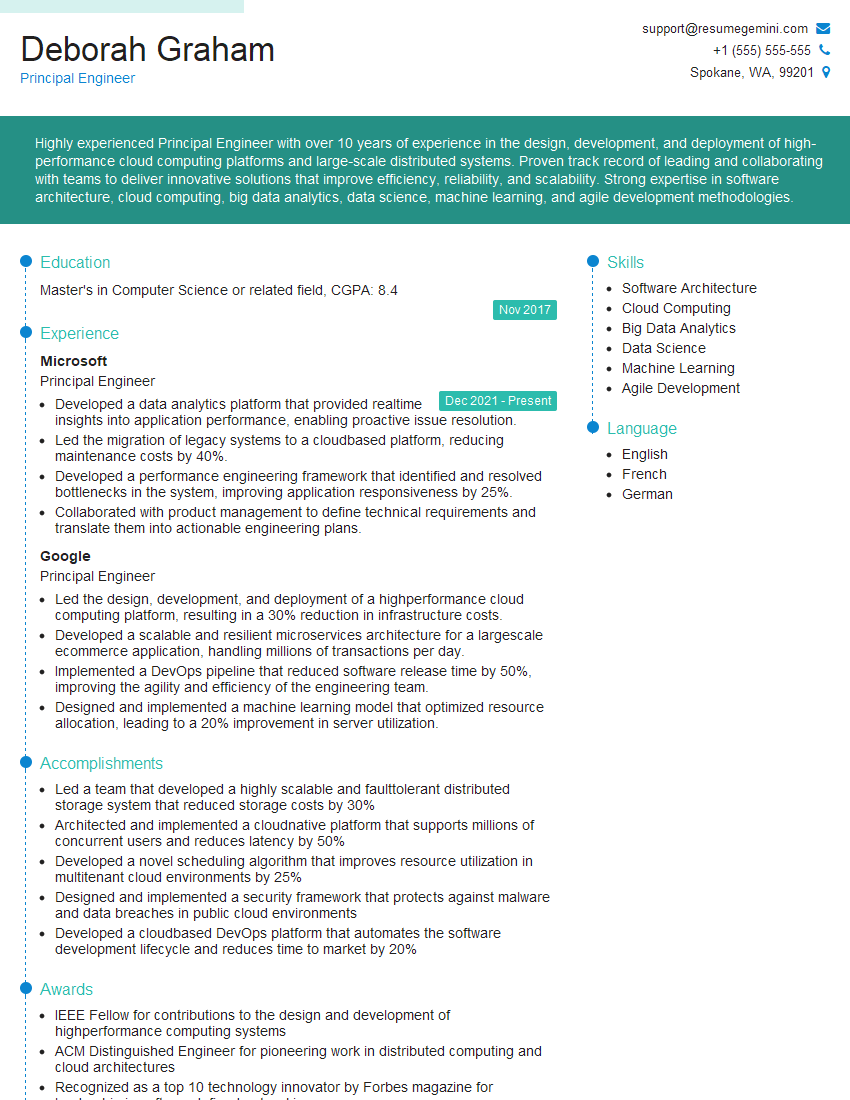
Principal Engineer Resume Sample

Project Engineer Resume Sample
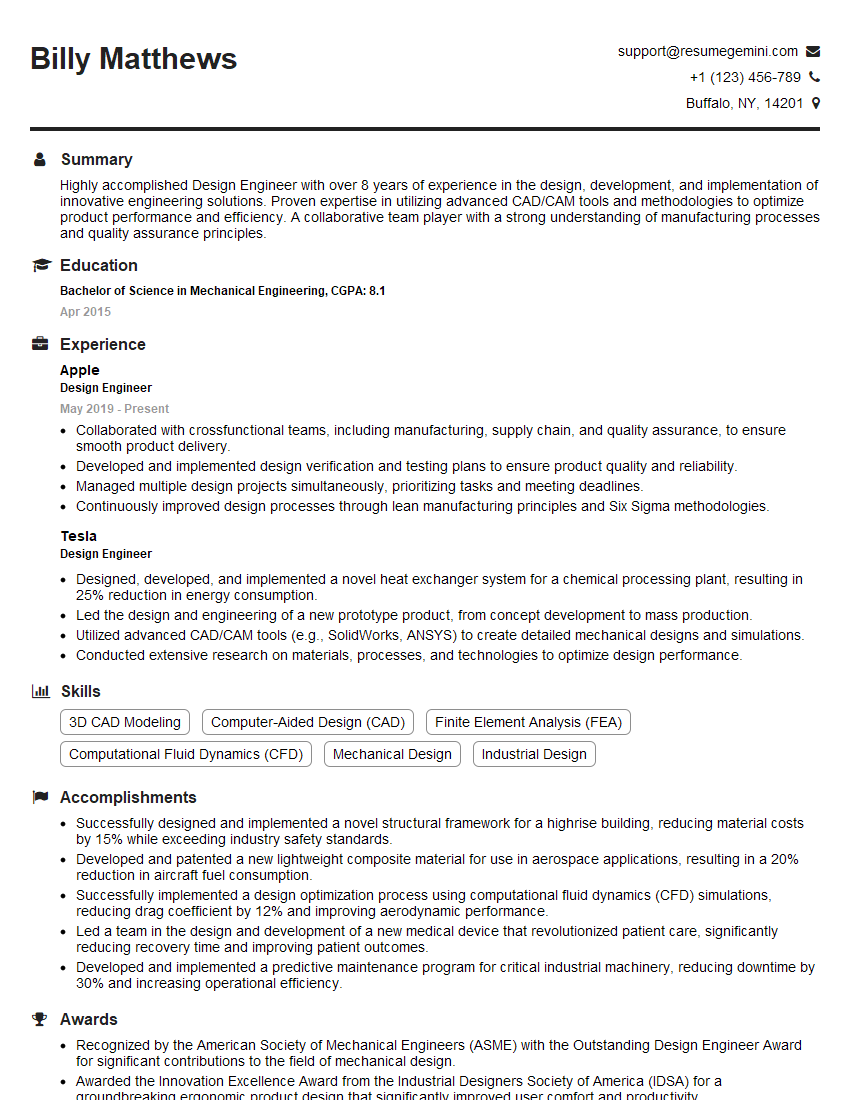
Design Engineer Resume Sample

Aerospace Engineer Resume Sample

Research Engineer Resume Sample

Civil Engineer Resume Sample
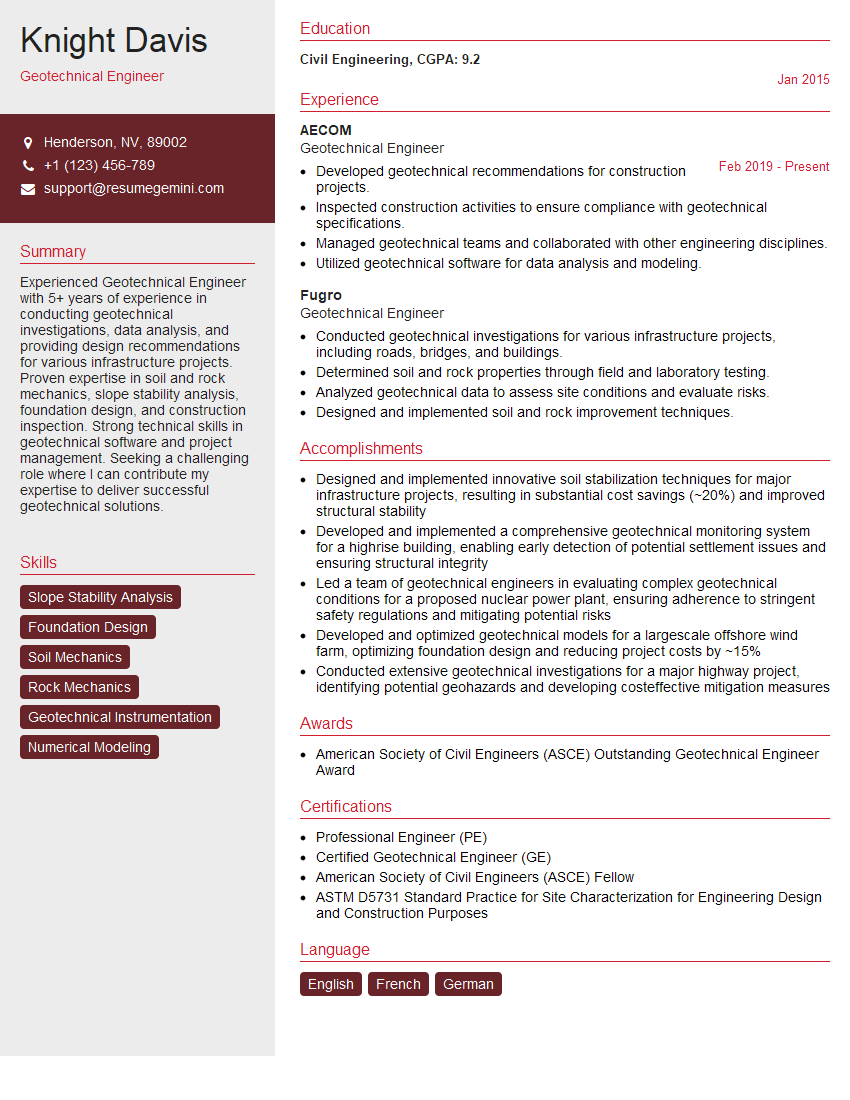
Geotechnical Engineer Resume Sample
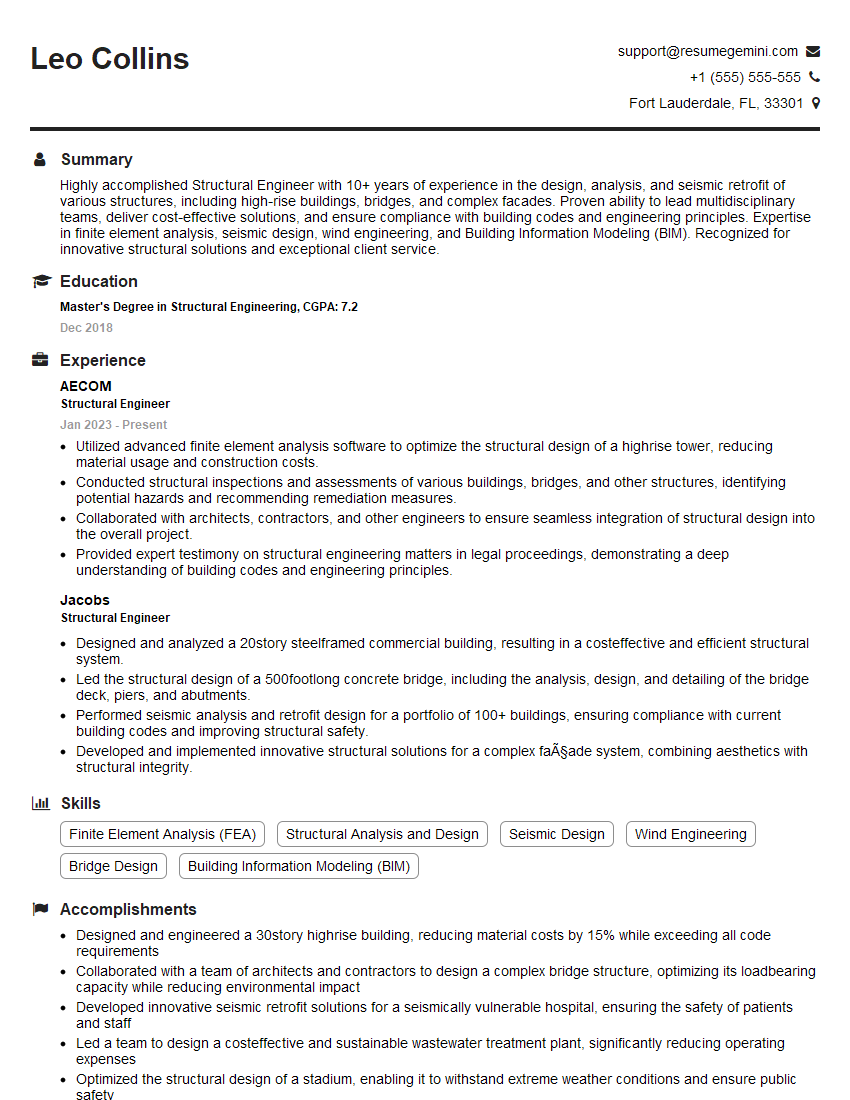
Structural Engineer Resume Sample
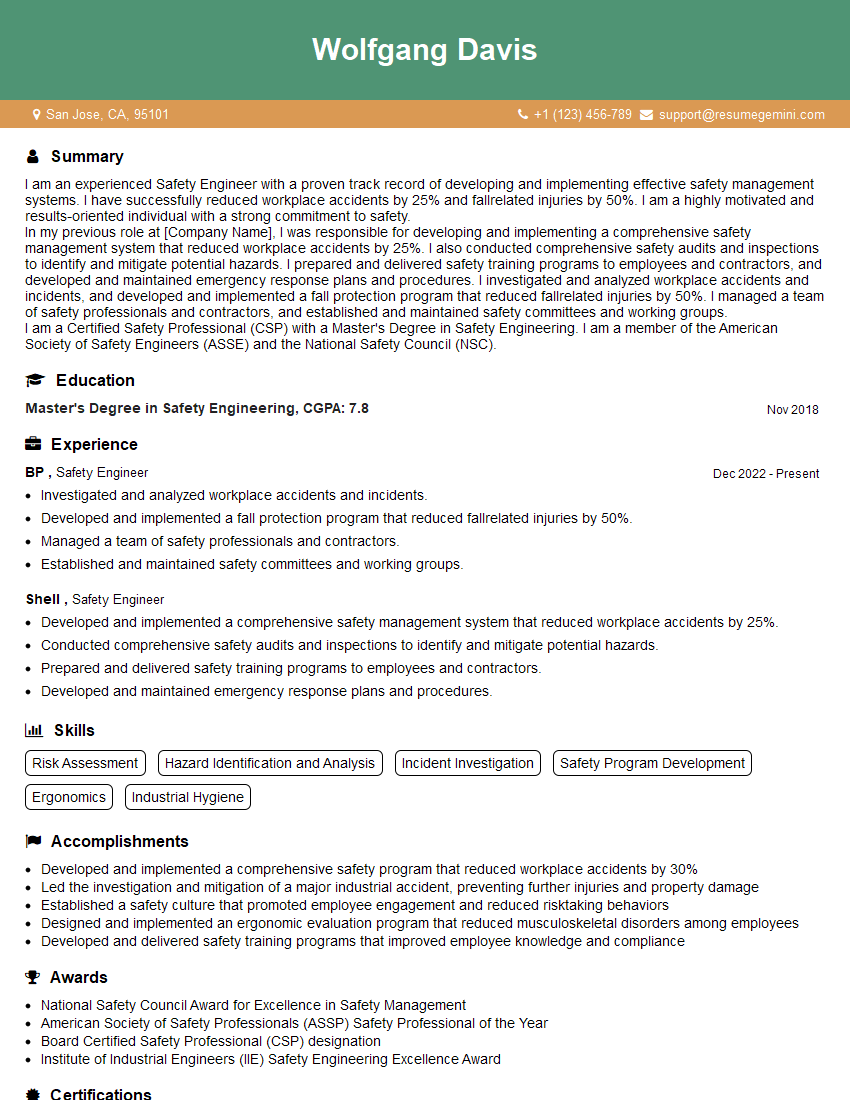
Safety Engineer Resume Sample
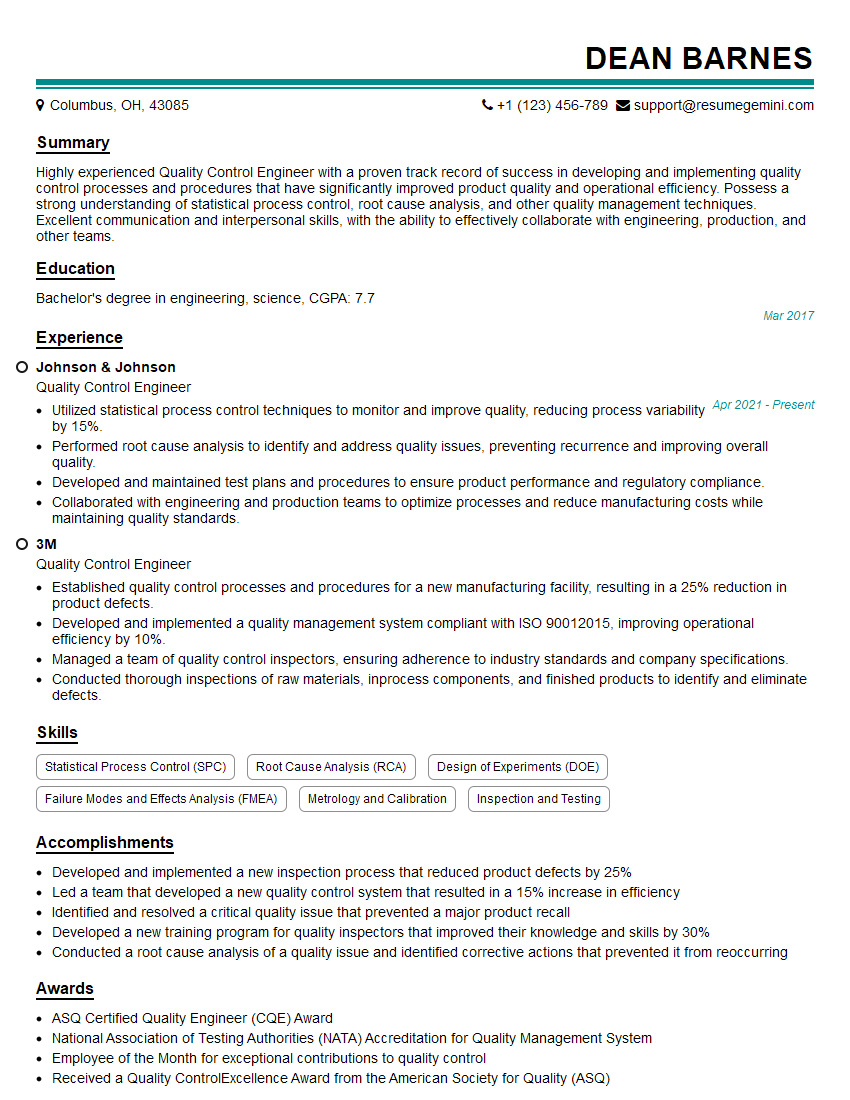
Quality Control Engineer Resume Sample

Naval Architect Resume Sample
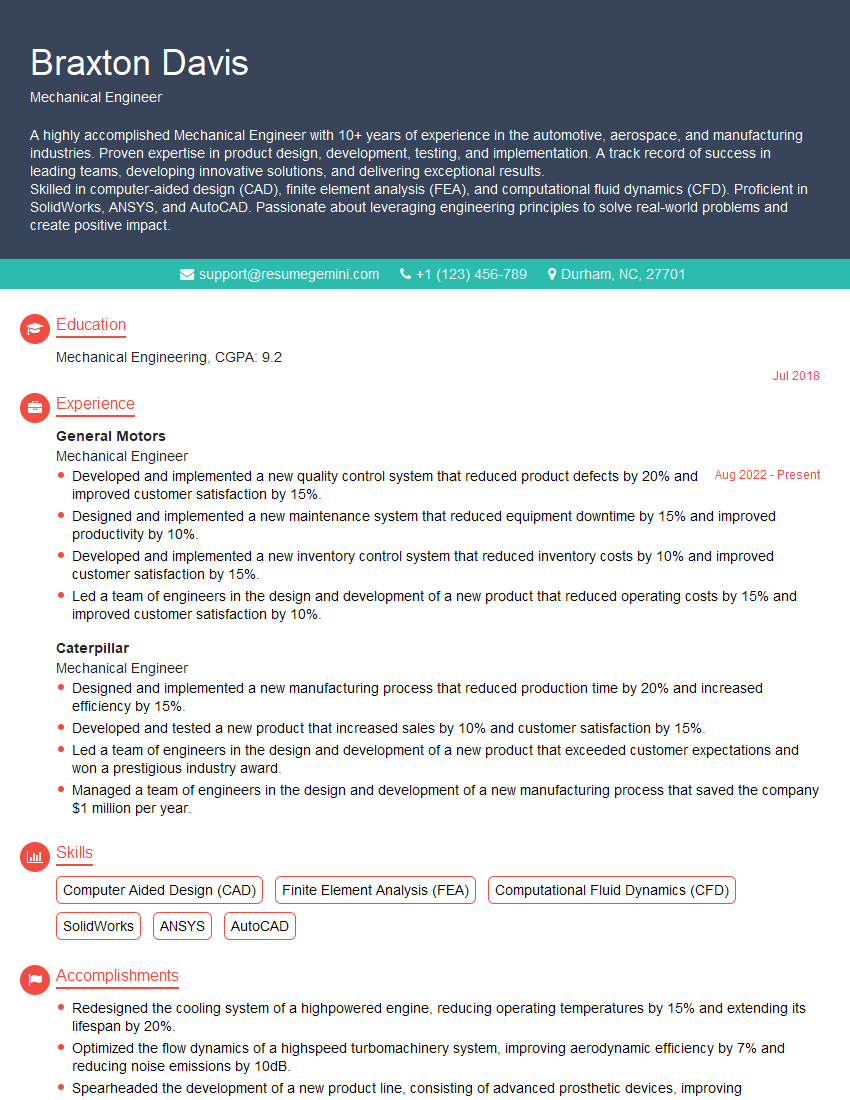
Mechanical Engineer Resume Sample
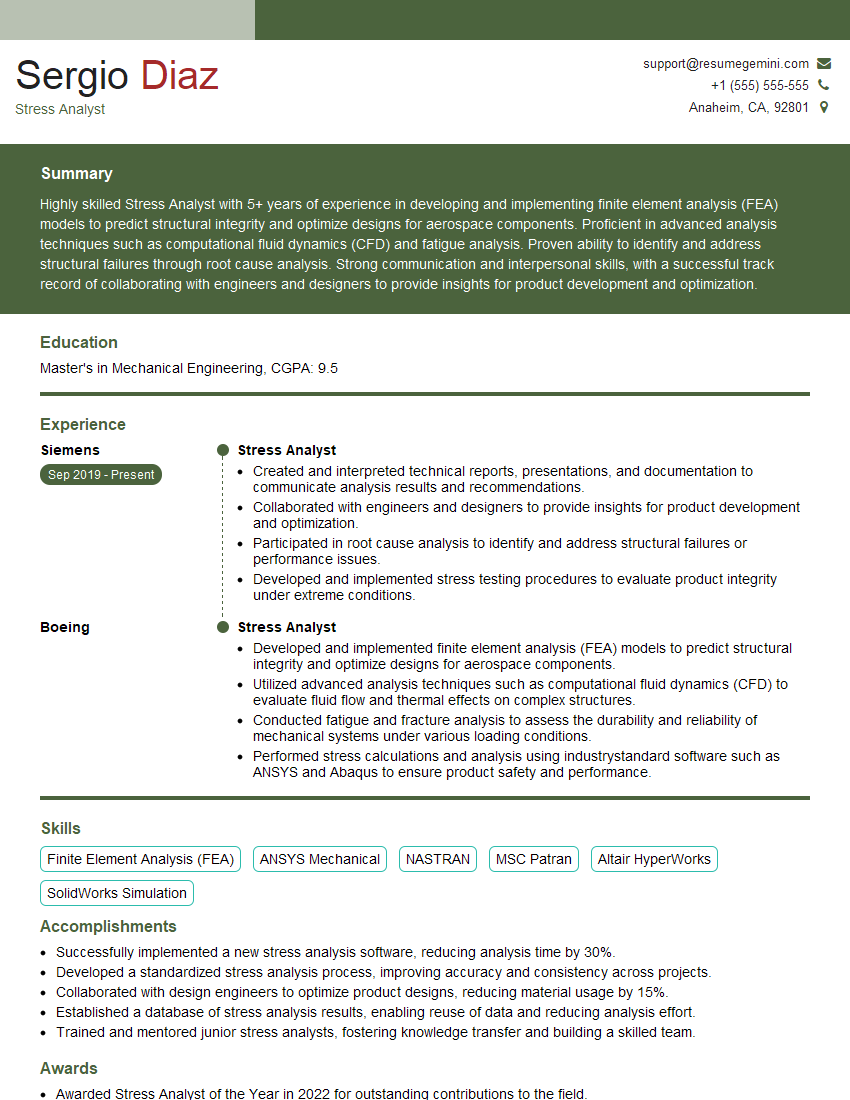
Stress Analyst Resume Sample

Engineering Consultant Resume Sample
Explore more articles
Users Rating of Our Blogs
Share Your Experience
We value your feedback! Please rate our content and share your thoughts (optional).
What Readers Say About Our Blog
Very informative content, great job.
good