Are you ready to stand out in your next interview? Understanding and preparing for Stained Glass interview questions is a game-changer. In this blog, we’ve compiled key questions and expert advice to help you showcase your skills with confidence and precision. Let’s get started on your journey to acing the interview.
Questions Asked in Stained Glass Interview
Q 1. Describe your experience with different glass types used in stained glass (e.g., cathedral glass, antique glass).
My experience with various glass types is extensive, encompassing both modern and antique varieties. Cathedral glass, for example, is a widely used type known for its rich, translucent colors and slightly textured surface. It’s a great choice for achieving a classic, traditional stained-glass look. I frequently use it in projects requiring a specific color saturation, like deep blues or rubies. Antique glass, on the other hand, offers a unique charm. Its age often imparts subtle iridescence and variations in color, adding character and depth to the piece. Sourcing and working with antique glass requires careful handling and consideration of its fragility. I’ve also worked extensively with opalescent glass, which offers a milky, diffused light, perfect for softer, more ethereal pieces. Finally, I’ve incorporated art glass, known for its intricate patterns and vibrant colors, to create more contemporary and eye-catching effects. Each glass type presents unique challenges and opportunities, demanding a tailored approach in cutting, grinding, and foiling techniques.
Q 2. Explain your process for creating a stained glass design from concept to completion.
Creating a stained glass piece is a multi-stage process. It begins with the design phase, where I translate the client’s vision (or my own artistic concept) into a full-scale drawing. This includes careful consideration of color palettes, line weights, and the overall composition. Next, I create a full-scale cartoon, usually on translucent paper, transferring the design onto it precisely. This cartoon serves as a template for cutting the glass. The glass cutting itself is meticulous, demanding precision and patience. Once the pieces are cut, I grind and smooth the edges, ensuring a perfect fit. Then comes the foiling process, meticulously applying copper foil strips to the edges of each glass piece, creating a sealed perimeter for soldering. Finally, the pieces are soldered together according to the cartoon, followed by cleaning and patination for the desired finish. The entire process is a careful balance of artistry and craftsmanship.
Q 3. How do you choose the appropriate lead or solder for a specific project?
The choice of lead or solder hinges on several factors, primarily the project’s scale and style. For smaller projects or those requiring intricate detailing, solder is often preferred for its finer lines and cleaner look. Lead came, on the other hand, is better suited for larger projects due to its strength and stability. It offers a more traditional, robust feel. The gauge (thickness) of both lead and solder also needs careful consideration – thicker gauges are used for larger, heavier pieces, ensuring structural integrity. Furthermore, the type of patina applied to the lead or solder can significantly alter the finished look, ranging from antique black to bright metallic finishes. The choice is a balance between aesthetics, structural needs, and the overall desired artistic effect.
Q 4. What are the different techniques for cutting and grinding glass for stained glass?
Cutting glass for stained glass involves using a glass cutter to score the surface, followed by carefully snapping the glass along the score line. Different types of cutters exist, each with its advantages. Oil-fed cutters, for example, provide smoother cuts. Grinding involves using various tools to smooth and shape the edges of the glass pieces. This is crucial for creating a clean, safe, and aesthetically pleasing finished product. Grinding wheels, both manual and motorized, are essential tools, offering different levels of coarseness for various stages of refinement. A crucial aspect is to avoid overheating the glass during grinding, as this can cause cracking or damage. This delicate process demands precision and patience to ensure perfect joins.
Q 5. Explain your understanding of foiling techniques in stained glass.
Foiling is a critical step in stained glass construction. It involves applying thin strips of copper foil to the edges of each glass piece, creating a watertight seal for soldering. This is done using a special foiling tool that presses the foil tightly onto the glass, ensuring an even seal. Proper foiling technique is essential; inconsistencies can lead to leaks or structural weaknesses. After foiling, the excess foil is carefully trimmed away, creating a neat, clean edge. The quality of the foil itself plays a significant role. High-quality copper foil adheres better and is more resistant to corrosion over time. This stage is crucial for the longevity and structural integrity of the final piece.
Q 6. Describe your experience with various glass fusing methods.
My experience with glass fusing spans various methods, including kiln-fusing and slumping. Kiln-fusing involves stacking glass pieces in a kiln and heating them to a temperature where they soften and melt together. This technique allows for creating seamless, fused pieces. I’ve utilized different kiln schedules, modifying the firing temperature and duration to achieve unique effects, from smooth, flat surfaces to more textured, organic forms. Slumping is another method where pre-cut glass pieces are placed on a mold within a kiln. The heat causes the glass to slump and conform to the mold’s shape, creating three-dimensional forms. I often combine both techniques to create complex sculptural pieces. Understanding the different glass types and their behavior in the kiln is essential for successful fusing.
Q 7. How do you ensure the structural integrity of a large stained glass panel?
Ensuring the structural integrity of a large stained-glass panel requires careful planning and execution. I utilize reinforced lead came or armatures for larger projects, providing extra support and strength. The design itself plays a crucial role; a well-planned design distributes weight evenly, minimizing stress points. Furthermore, the choice of glass also impacts structural integrity; thicker glass naturally offers more strength. I often incorporate reinforcement techniques such as adding internal supports or using stronger soldering techniques, depending on the specific needs of the project. Regular inspection and maintenance after installation are equally important to prevent damage over time. For particularly large commissions, consultation with structural engineers may be necessary.
Q 8. Explain your knowledge of different patina techniques for enhancing the look of lead lines.
Patina is a crucial element in enhancing the aesthetic appeal of stained glass, especially the lead lines. It’s essentially a thin layer of metallic coating applied to the lead cames (the strips of lead holding the glass) to change their color and protect them from oxidation. Different techniques produce varied results, adding depth and visual interest.
- Chemical Patinas: These involve using chemical solutions, often containing sulfur or other compounds, to react with the lead, creating a range of colors such as black, brown, dark gray, or even verdigris (a greenish-blue). The process involves carefully cleaning the lead, applying the solution, and then monitoring the reaction to achieve the desired shade. Over-application can lead to undesirable results, requiring removal and re-application. For example, applying a liver of sulfur solution gives a deep, dark patina.
- Mechanical Patinas: This involves physically altering the lead’s surface to achieve a desired effect. Techniques such as brushing or sanding can create subtle textural variations, and in some cases, enhance the natural oxidation process of the lead to create a patina. This method is less precise in color control compared to chemical techniques.
- Heat Patination: This method involves heating the lead, which promotes oxidation, subtly changing the lead’s color. This is a more subtle method compared to chemical patination.
The choice of technique depends on the desired aesthetic, the age and type of lead, and the overall design of the piece. I often experiment with different techniques on sample pieces before applying them to a project to ensure the best outcome.
Q 9. How do you repair damaged stained glass?
Repairing damaged stained glass requires meticulous attention to detail and a combination of techniques. The approach varies depending on the extent of the damage.
- Cracked Glass: Small cracks can often be stabilized with epoxy resin carefully applied to the back of the glass. Larger cracks may require replacing the damaged piece, carefully matching the color and texture of the original glass. This involves removing the old piece, cutting a new piece to the exact dimensions, and re-leading it into place.
- Damaged Lead Came: Damaged lead can be repaired by carefully removing the damaged section and replacing it with new lead. The existing glass must be carefully preserved. This needs precise soldering skills to ensure a seamless repair and prevent further damage.
- Missing Pieces: If parts are missing, finding replacement glass can be challenging, requiring careful matching of color and texture. Often, antique glass has unique characteristics that are difficult to replicate exactly. For very large missing sections, custom glass needs to be produced.
In all cases, proper cleaning and preparation of the surface is crucial to ensure a strong and long-lasting repair. Using the correct adhesives and soldering techniques is critical to avoid further damage to the artwork.
Q 10. Describe your experience with the restoration of antique stained glass.
Restoring antique stained glass is a complex and rewarding process that requires specialized knowledge and skills. It combines art, history, and conservation principles. I’ve been involved in several projects restoring antique windows, focusing on preserving the integrity of the original piece while addressing structural and aesthetic concerns.
- Assessment and Documentation: The initial stage involves a thorough assessment of the condition of the glass, identifying areas of damage and deterioration. This is accompanied by detailed photography and documentation.
- Cleaning and Stabilization: Gentle cleaning is essential to remove dirt and debris without damaging the glass. This often involves careful cleaning of the lead cames as well. Techniques may include vacuuming and specialist cleaning solvents.
- Repair and Reconstruction: This stage addresses the damage identified in the assessment phase. Repairs can involve replacing cracked or broken glass, repairing lead cames, and addressing any structural issues such as weak framing.
- Re-leading and Patination: Where lead cames need to be replaced, this stage involves replacing them while maintaining the original design. The new lead is then patinated to match existing lead, creating visual continuity.
One particularly challenging project involved the restoration of a 19th-century church window where the glass was severely cracked and many lead cames were broken. We painstakingly restored it over several months, using historical techniques and materials to ensure its longevity.
Q 11. What safety precautions do you take when working with glass and tools?
Safety is paramount when working with stained glass. The sharp edges and fragile nature of the glass, along with the use of potentially hazardous tools, require careful attention to safety protocols.
- Eye Protection: Safety glasses are essential at all times to protect against flying debris during cutting and grinding.
- Hand Protection: Gloves are recommended to prevent cuts and abrasions.
- Cutting Tools: Glass cutters and grinders should be used with caution, following manufacturer’s instructions carefully. Always cut away from your body.
- Lead Soldering: Proper ventilation is crucial when soldering lead, as lead fumes can be toxic. Respiratory protection, such as a dust mask, should be used. Appropriate heat-resistant gloves are also needed.
- Work Area: A clean and organized work area is crucial to prevent accidents. Using a cutting mat helps protect the work surface and provides a stable base.
I always ensure I follow these protocols and further adapt my approach based on the specific task and the tools being used. Safety training and ongoing awareness are crucial to minimize risks.
Q 12. How do you handle client consultations and design revisions?
Client consultations are crucial for understanding their vision and expectations. It begins with a discussion of the client’s needs and preferences regarding design, style, colors, and budget. This often involves viewing examples of previous work and discussing potential designs.
- Initial Consultation: I listen carefully to the client’s ideas, ask clarifying questions, and suggest options based on my expertise. I take detailed notes and photos to ensure I capture all the necessary information.
- Design Development: Once the initial concept is agreed upon, I develop detailed design sketches and renderings. These are reviewed with the client and refined to ensure accuracy and meet their expectations.
- Revisions and Feedback: I encourage client feedback at each stage of the design process and make revisions as needed. I provide clear and timely responses, ensuring the client is actively involved and satisfied with the design progression.
- Project Management: Clear communication and regular updates keep the client informed about the project’s progress, including timelines and potential issues.
One project involved a client who initially had a very vague idea. Through several consultations and design revisions, we collaborated on a design that exceeded their expectations, showcasing the importance of effective communication and collaborative design.
Q 13. Describe your experience with different types of stained glass patterns.
My experience encompasses a wide range of stained glass patterns, from traditional geometric designs to more complex floral and figurative compositions.
- Geometric Patterns: These often utilize repeating shapes and lines, creating a sense of order and harmony. Examples include grids, tessellations, and abstract forms.
- Floral Patterns: These designs feature various flowers, leaves, and other botanical elements, often incorporating realistic or stylized representations. This style evokes beauty and elegance.
- Figurative Patterns: These patterns incorporate figures of people, animals, or religious icons. They are generally complex designs requiring a high level of skill and precision.
- Abstract Patterns: These designs move away from realistic representations and focus on shapes, colors, and textures to create visually engaging compositions.
- Medieval and Gothic: These styles showcase intricate designs, often featuring religious themes and vibrant colours, representing rich history.
I find the variety and challenge of each pattern incredibly rewarding. Each design presents unique challenges in cutting, leading, and assembly, requiring a diverse skill set to deliver a high-quality result.
Q 14. What software do you use for designing and creating patterns?
While traditional methods are still heavily employed in stained glass design, digital tools enhance the design process significantly. I use a combination of software tailored to the different stages of design and pattern creation.
- Adobe Illustrator: This vector-based software is excellent for creating precise outlines, shapes, and patterns. I use it to create initial sketches, refine designs, and generate cutting templates.
- AutoCAD: For complex projects requiring precise measurements and technical drawings, I use AutoCAD to ensure accuracy and compatibility with architectural designs.
- Specialized Stained Glass Design Software: Some software packages are specifically designed for stained glass, aiding in pattern creation, lead line generation and glass cutting optimization. These can automate aspects of the design process.
I typically begin with sketching ideas on paper, which helps solidify the initial design before transferring them into digital formats. The digital tools allow me to experiment with color combinations and make revisions easily before committing to the physical cutting and assembly of the stained glass.
Q 15. How do you manage your time and resources effectively on a project?
Effective time and resource management is crucial in stained glass artistry. It’s less about rigid schedules and more about a flexible, iterative approach. I begin by meticulously reviewing the design, breaking it down into manageable phases. This involves creating a detailed list of materials – from the specific types of glass and their quantities to the necessary tools and consumables like solder and fluxes. I then estimate the time required for each phase: design refinement, glass cutting, lead work, soldering, and finishing. This breakdown allows me to create a realistic timeline. I utilize project management software to track progress, set milestones, and adjust the schedule as needed. For example, if a particular glass order is delayed, I might focus on other aspects of the project during the waiting period, ensuring efficient resource allocation. I also factor in buffer time for unexpected challenges – a broken piece of glass, a needed tool repair, etc. This proactive approach prevents delays and ensures I deliver projects on time and within budget.
Career Expert Tips:
- Ace those interviews! Prepare effectively by reviewing the Top 50 Most Common Interview Questions on ResumeGemini.
- Navigate your job search with confidence! Explore a wide range of Career Tips on ResumeGemini. Learn about common challenges and recommendations to overcome them.
- Craft the perfect resume! Master the Art of Resume Writing with ResumeGemini’s guide. Showcase your unique qualifications and achievements effectively.
- Don’t miss out on holiday savings! Build your dream resume with ResumeGemini’s ATS optimized templates.
Q 16. How do you price your work or estimate project costs?
Pricing my work involves a multi-faceted approach. Firstly, I calculate the direct costs: the cost of glass (which can vary greatly depending on the type, color, and thickness), lead came, solder, and other materials. Secondly, I factor in my labor costs, which are calculated based on my hourly rate multiplied by the estimated time for each phase of the project. This hourly rate considers my experience, skill level, and the complexity of the design. Lastly, and perhaps most importantly, I incorporate a profit margin that reflects the market value of my artwork, considering similar works by other artists, the complexity of the design, and my reputation. For example, a simple geometric design using readily available glass will be priced differently than an intricate, historically inspired piece requiring specialized glass and extensive lead work. Sometimes, I offer a range of pricing options to clients to accommodate different budgets, perhaps offering alternative glass choices to keep costs down. I believe in open communication about pricing, so clients understand every element that goes into the final cost.
Q 17. Describe a time you had to troubleshoot a problem during the fabrication process.
During the creation of a large church window depicting a vibrant sunset, I encountered a significant problem. I had meticulously chosen and cut several pieces of dichroic glass to capture the subtle color shifts of the setting sun. However, during the soldering process, several of these pieces cracked due to uneven heating. I immediately stopped work and investigated the cause. After careful analysis, I realized I’d inadvertently used a solder with a melting point slightly too high for the specific dichroic glass. I corrected this by switching to a lower temperature solder, using a more controlled heating technique with a lower wattage iron, and applying flux more strategically. It was a costly mistake in terms of wasted glass, but it allowed me to refine my process and learn a valuable lesson about compatibility between different materials. The final piece was successfully completed, and the sunset scene was beautifully rendered. This experience emphasized the importance of constant attention to detail and the willingness to adapt techniques as needed.
Q 18. What are your techniques for cleaning and maintaining stained glass?
Cleaning and maintaining stained glass is vital for preserving its beauty and longevity. Regular dusting with a soft brush or microfiber cloth is essential to remove dust and dirt. For more thorough cleaning, a solution of lukewarm water and mild dish soap can be used. Apply this solution gently with a soft sponge, avoiding harsh scrubbing. Rinse thoroughly with clean water and dry gently with a soft, lint-free cloth. Never use abrasive cleaners or harsh chemicals, as these can scratch or damage the glass surface and lead came. Avoid using excessive pressure when cleaning, especially around the delicate lead lines. Periodically inspecting the piece for loose or damaged leading is essential. Any loose solder should be carefully re-soldered by a professional if necessary. Protecting the stained glass from extreme temperature fluctuations, direct sunlight, and harsh weather conditions is crucial for preventing cracking or discoloration. For outdoor installations, consideration of UV protective coatings might be necessary. Proper care ensures the piece retains its brilliance for generations.
Q 19. How familiar are you with historical styles of stained glass?
My familiarity with historical stained-glass styles is extensive. I have a deep understanding of styles ranging from the early Romanesque period, with its rich, bold colors and simple geometric patterns, to the Gothic period’s intricate tracery and vibrant figurative scenes. I am equally versed in the Renaissance, with its emphasis on realism and perspective, the Victorian era’s revival of Gothic styles and the Arts and Crafts Movement’s focus on handcrafted beauty. I’ve studied the work of renowned artists and studios throughout history, including those from the workshops of Chartres Cathedral, the famous workshops of the 13th and 14th centuries in the Rhine, and the influences of William Morris. My understanding extends beyond simple visual aesthetics, encompassing the evolution of techniques, the types of glass used in different eras (such as the development of flashed glass and the later introduction of colored glass), and the social and cultural contexts that shaped these artistic expressions. This knowledge allows me to accurately reproduce historical styles or draw inspiration from them for contemporary designs.
Q 20. Explain your understanding of the properties of different types of glass and how this influences your design choices.
Understanding glass properties is fundamental to my design choices. Different types of glass affect color saturation, light transmission, and overall aesthetic. For example,
- Clear Glass: Provides a clean, bright base, suitable for highlighting other colors.
- Opaque Glass: Creates bold colors and shapes, often used for strong visual accents.
- Flashed Glass: A clear glass base coated with a thin layer of colored glass, allowing for subtle color variations and dramatic light effects. This is crucial in creating the illusion of depth and luminosity in designs.
- Streaky Glass: Contains subtle variations in color throughout, lending a more organic feel.
- Dichroic Glass: Coated with metallic oxides that create intense, iridescent colors that shift with the angle of light. Ideal for adding a modern or mystical touch.
Q 21. What are the advantages and disadvantages of different glass cutting techniques?
Various glass cutting techniques exist, each with its advantages and disadvantages.
- Hand Cutting with a Glass Cutter: A traditional method, offering precise control and allowing for intricate designs. It demands considerable skill and practice to achieve clean cuts consistently, and it can be time-consuming for larger projects.
- Using a Glass Cutting Wheel: Offers faster cutting, particularly for straight lines, but can be less precise than hand cutting.
- Using a Diamond-Tipped Saw: Useful for cutting thick glass and intricate curves. However, specialized equipment and technical expertise are required.
- Waterjet Cutting: Offers high precision and speed, especially for complex shapes. This is a more advanced technique utilizing a high pressure water jet to cut the glass, providing efficient work, but it also usually increases the cost of the process significantly.
Q 22. How do you ensure the accuracy of your cutting and grinding to maintain design integrity?
Accuracy in cutting and grinding glass is paramount to maintaining the design integrity of a stained-glass piece. Think of it like building with incredibly delicate, colorful LEGOs – any inaccuracy will be immediately obvious. I achieve this precision through a combination of meticulous planning and skilled execution.
Precise Pattern Transfer: I start by carefully transferring the design onto the glass using a variety of methods, including oil-based markers or adhesive vinyl patterns, ensuring perfect alignment.
Specialized Tools: I utilize high-quality glass cutters, employing a firm, consistent hand to score the glass precisely along the marked lines. This requires years of practice to develop the feel for the right pressure and angle.
Careful Grinding and Shaping: After cutting, I use various grinding tools – from coarse to fine grit – to refine the edges, removing any imperfections and ensuring a smooth, clean fit between pieces. This is where patience and attention to detail are crucial. I often use a running water system to prevent overheating and maintain a crisp cut.
Regular Tool Maintenance: Keeping my tools sharp and properly calibrated is essential. A dull cutter, for instance, will lead to jagged cuts, compromising the overall quality.
For example, when working on a complex floral design with many intricate petals, I might use a combination of a glass scoring wheel and running pliers, making numerous small cuts before carefully grinding each petal to the precise shape and size. The result is a stunning, seamlessly integrated piece.
Q 23. Describe your experience working with different types of lead came.
My experience with lead came spans various types, each possessing unique characteristics that influence both the aesthetic and structural integrity of the finished piece. The choice of came depends heavily on the design, desired style, and the overall budget.
Traditional Lead Came: This is the classic choice, offering strength and a distinct, visually prominent profile. I have extensive experience working with different weights of lead, understanding how thickness impacts the stability and weight of the finished piece. The patina – the color and texture of the lead – also plays a crucial role in the aesthetic.
Zinc Came: This is a softer and more malleable alternative to lead, resulting in a cleaner, less prominent profile. It’s ideal for delicate designs where a more subtle framework is preferred. Zinc is also often preferred for its less toxic nature.
Copper Foil: Although not technically lead came, copper foil is a popular method for creating stained glass. It involves wrapping copper foil around the glass pieces before soldering. This method lends itself to more contemporary designs, allowing for greater flexibility and a more intricate joinery.
I’ve successfully employed all these types of came in various projects, adapting my techniques as needed. For instance, in a large church window, the strength and durability of traditional lead came would be paramount, while in a smaller, more artistic piece, zinc or copper foil might be more suitable.
Q 24. What tools and equipment are essential for stained glass work?
The tools and equipment necessary for stained-glass work range from basic hand tools to more specialized machinery. A well-equipped studio is essential for efficient and safe work.
Glass Cutter: A must-have for scoring and breaking glass accurately.
Grinding Wheels: Various grits for smoothing and shaping the cut edges of the glass.
Running Pliers: To cleanly snap glass along the score line.
Grozing Pliers: To remove small pieces of glass during grinding.
Glass Cutter Oil: Lubricates the cutter for cleaner cuts.
Soldering Iron: For joining the glass pieces with lead or solder.
Flux: A cleaning agent that aids the soldering process.
Solder: The metal used to join the lead came together.
Safety Glasses: Absolutely essential for protecting eyes from flying glass fragments.
Kiln (for some techniques): For fusing or slumping glass, resulting in unique textures and shapes.
Beyond these basic tools, other specialized equipment might include a glass saw, pattern cutting tools, and various types of clamps.
Q 25. How do you maintain your tools and equipment to ensure optimal performance?
Maintaining tools and equipment is crucial for both safety and the quality of the work. Neglecting this can lead to accidents or substandard results. My maintenance routine includes:
Regular Cleaning: After each use, I clean my tools, removing glass fragments and residue. This prevents build-up that could dull or damage the tools.
Sharpness: I regularly sharpen my glass cutters using a specialized sharpening stone. A sharp cutter makes a clean cut, crucial for the integrity of the piece.
Grinding Wheel Maintenance: I check my grinding wheels regularly for wear and replace them when necessary. Worn wheels can be inefficient and produce uneven results.
Soldering Iron Care: I keep the tip of my soldering iron clean and tinned, ensuring smooth soldering and preventing oxidation.
Storage: I store my tools in a designated area, protecting them from damage and moisture.
This routine ensures optimal performance and extends the lifespan of my tools, ultimately saving me time and money in the long run.
Q 26. How do you work within a team or collaboratively on stained glass projects?
Collaboration is key in many stained-glass projects, especially large-scale ones. Effective teamwork requires clear communication, defined roles, and a shared vision. My approach involves:
Detailed Planning: We meticulously plan the project, dividing tasks based on individual skills and expertise. This could involve assigning certain individuals to cutting, grinding, soldering, or leading the design process.
Open Communication: Regular check-ins are critical to ensure everyone is on the same page and that any problems are addressed promptly. This includes open dialogue regarding challenges and potential solutions.
Respectful Collaboration: I foster an environment of mutual respect and collaboration, valuing each team member’s input and contributions.
Clear Roles & Responsibilities: We establish clear roles and responsibilities from the outset, avoiding confusion and overlap.
For example, on a recent cathedral window project, our team comprised designers, cutters, grinders, and lead installers. Each member brought their unique skills, and our collaborative effort resulted in a stunning piece of art that would have been impossible for a single person to create.
Q 27. Describe your experience with kiln firing techniques for glass.
Kiln firing techniques offer exciting possibilities for manipulating glass, allowing for effects impossible to achieve through traditional methods. My experience includes:
Fusing: This involves stacking multiple pieces of glass in a kiln and firing them at high temperatures until they melt and fuse together, creating a seamless, integrated piece. I often use fusing for creating background textures or unique color blends.
Slumping: This involves shaping softened glass in a mold within a kiln. It’s perfect for creating curved or three-dimensional pieces like bowls or decorative elements.
Kiln-Forming: This allows the creation of more complex shapes and designs by manipulating the glass within a kiln at high temperatures.
Controlling the temperature and firing schedule is critical in all these techniques. I use precise temperature control and carefully monitor the firing process to achieve the desired results. For example, I might use a slow cooling cycle to prevent cracking during slumping.
Q 28. What is your approach to problem-solving when faced with unexpected challenges during a stained glass project?
Unexpected challenges are inevitable in stained glass work. My approach to problem-solving focuses on careful observation, analysis, and creative solutions.
Identify the Problem: The first step is to clearly define the issue. Is it a design flaw, a broken piece, or a technical difficulty?
Analyze the Cause: What led to the problem? Was it a mistake in cutting, a faulty piece of glass, or an unforeseen reaction during firing?
Develop Solutions: Brainstorm potential solutions, considering the feasibility, cost, and impact on the overall design. This might involve replacing a damaged piece, modifying a design element, or adapting a technique.
Implement & Evaluate: Implement the chosen solution, carefully monitoring the process. Evaluate the effectiveness of the solution and make adjustments if necessary. Sometimes, it involves going back to earlier steps, like re-cutting a piece.
For example, if a piece of glass cracks during the grinding process, I assess the extent of the damage. A minor crack might be repaired using resin, while a significant crack would necessitate replacing the piece entirely.
Key Topics to Learn for Your Stained Glass Interview
- Design Principles: Understanding color theory, composition, and the principles of light and shadow as they relate to stained glass design. Consider exploring historical influences and stylistic variations.
- Glass Selection and Properties: Knowing the different types of glass (e.g., opalescent, cathedral, textured), their properties, and how to select appropriate glass for different effects and projects. This includes understanding how light interacts with various glass types.
- Cutting and Shaping Techniques: Familiarity with various glass cutting methods (e.g., oil-based scoring, diamond wheels) and techniques for shaping and grinding glass to precise dimensions. Be prepared to discuss safety procedures.
- Foiling and Leading Methods: Understanding the process of applying foil and lead came to join pieces of glass, including different foil types and leading techniques. Discuss the importance of precise and clean application for structural integrity and aesthetic appeal.
- Soldering and Patina Application: Knowledge of soldering techniques to create strong and durable joints. Understanding different patina applications for aesthetic finishing and protection.
- Project Planning and Estimation: Ability to interpret designs, estimate material costs, and plan project timelines effectively. Consider discussing experience with client communication and project management.
- Troubleshooting and Problem Solving: Experience identifying and resolving common issues encountered during the stained glass creation process, such as cracked glass, uneven soldering, or lead came problems.
- Restoration and Repair: If applicable to your experience, be ready to discuss techniques and approaches to restoring or repairing existing stained glass pieces.
Next Steps
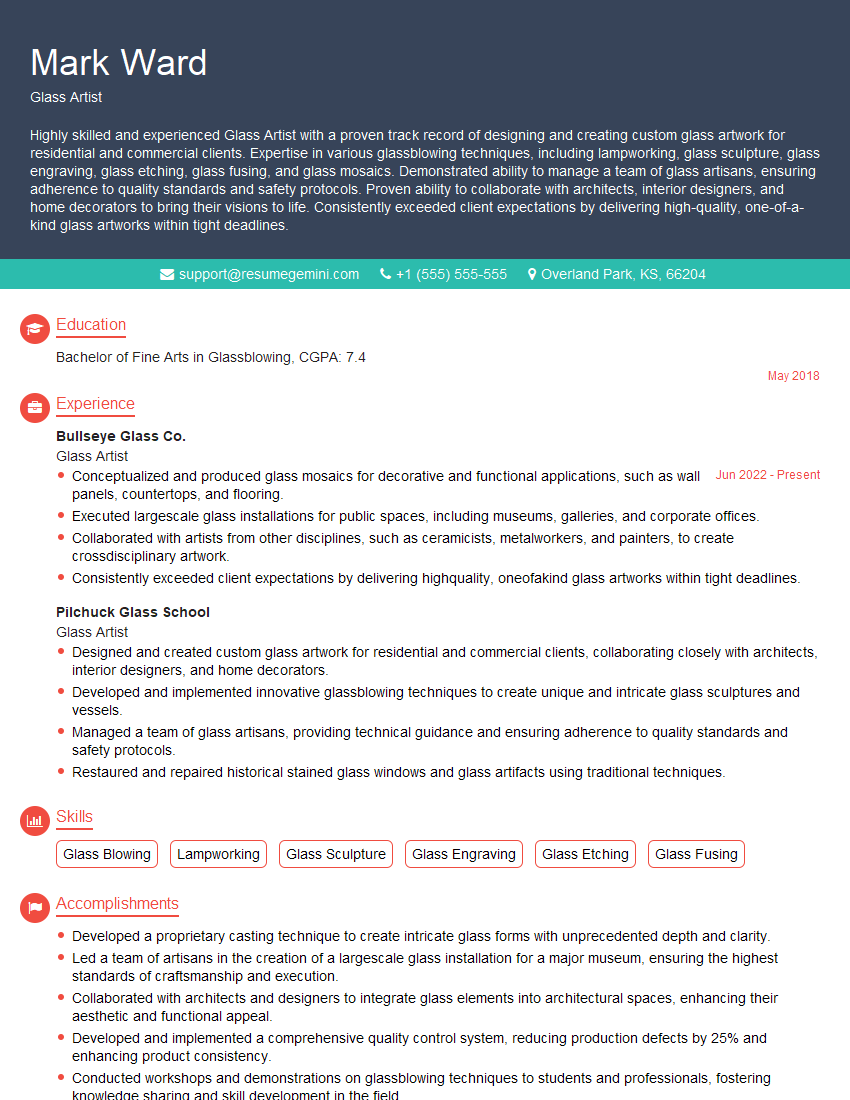
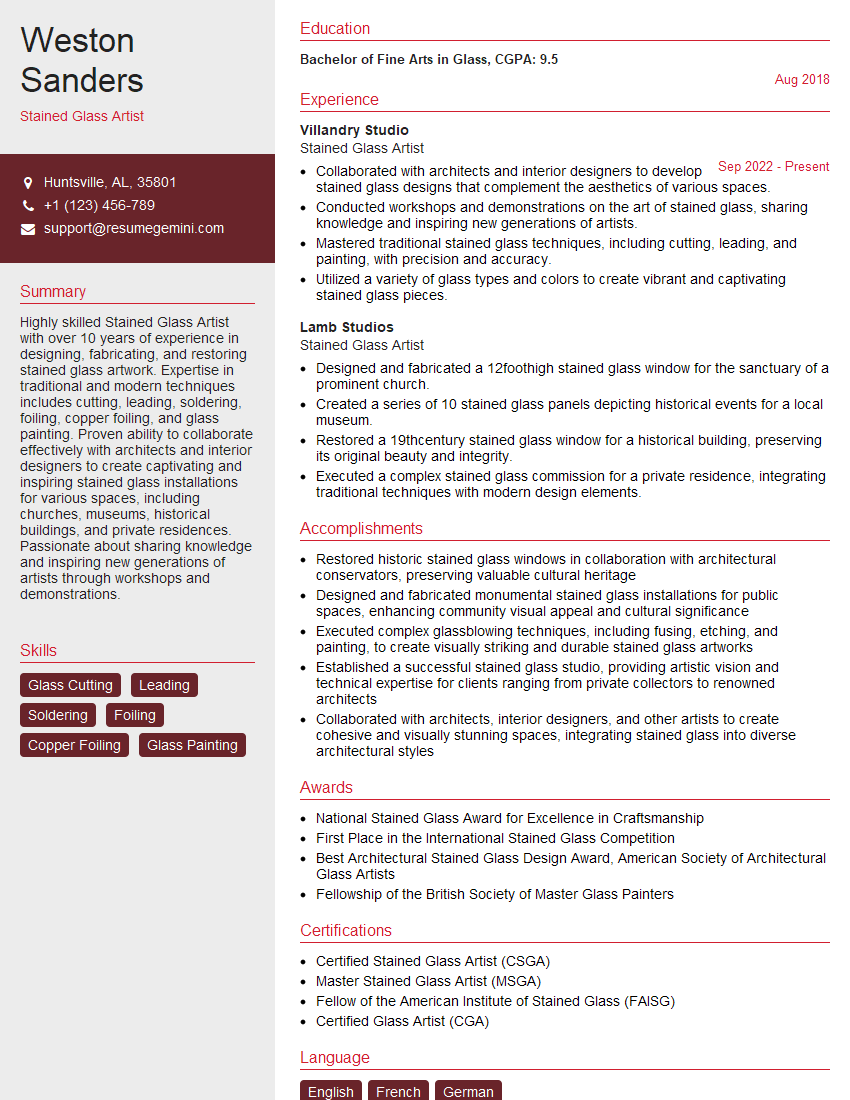
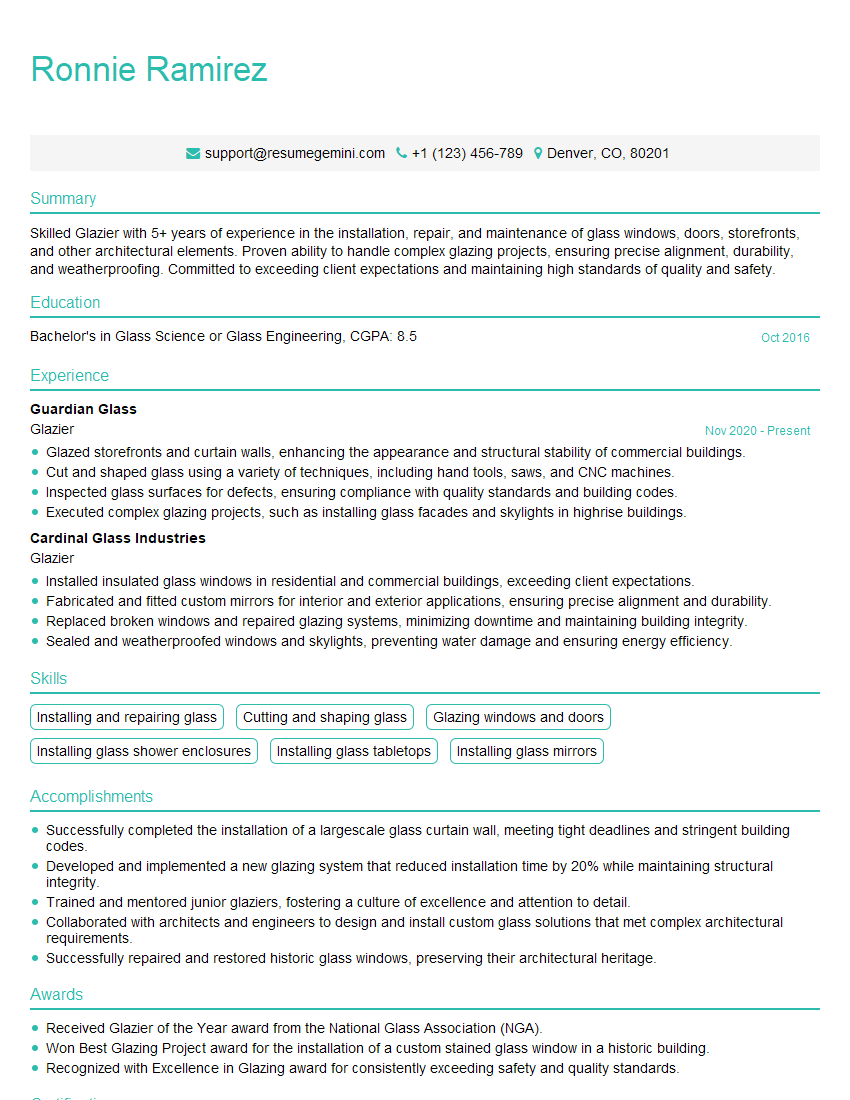
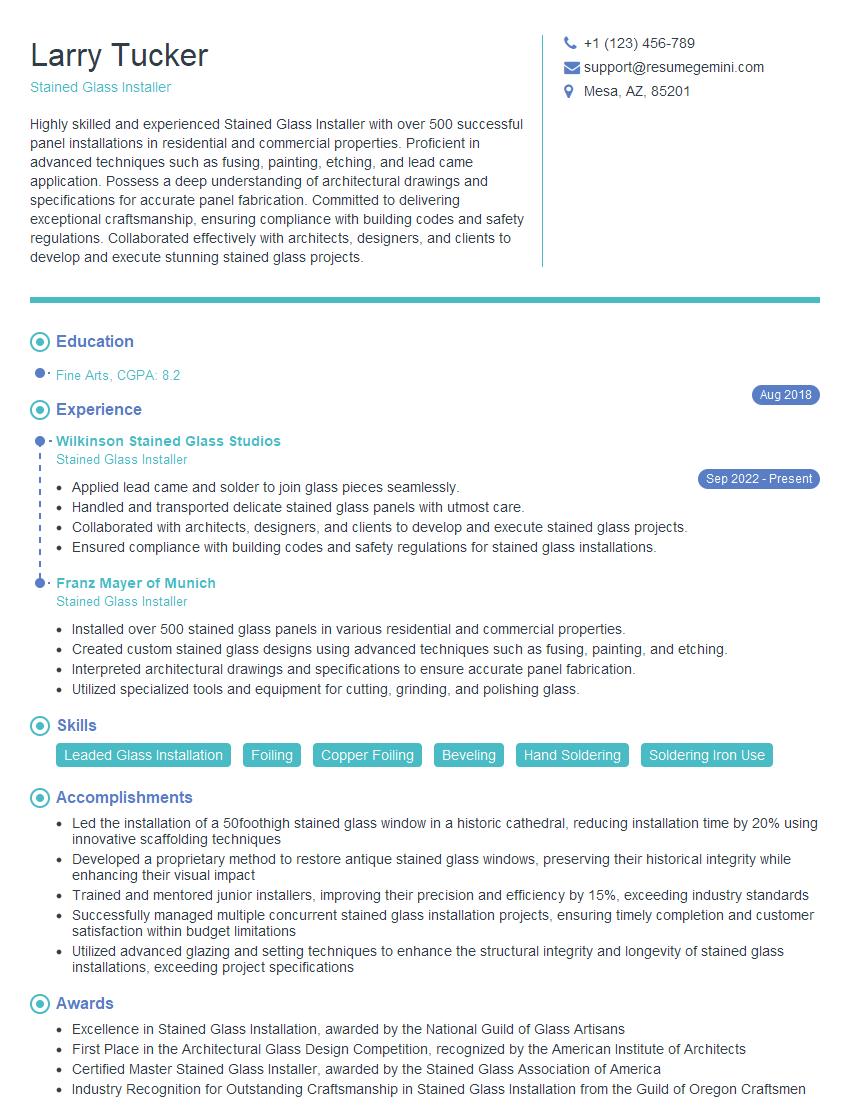
Mastering the art of stained glass opens doors to a fulfilling and creative career. To maximize your job prospects, invest time in creating a strong, ATS-friendly resume that highlights your skills and experience. ResumeGemini is a trusted resource that can help you build a professional and impactful resume, ensuring your application stands out. Examples of resumes tailored to the stained glass industry are available to guide you.
Explore more articles
Users Rating of Our Blogs
Share Your Experience
We value your feedback! Please rate our content and share your thoughts (optional).
What Readers Say About Our Blog
Very informative content, great job.
good