Feeling uncertain about what to expect in your upcoming interview? We’ve got you covered! This blog highlights the most important Stamped Concrete interview questions and provides actionable advice to help you stand out as the ideal candidate. Let’s pave the way for your success.
Questions Asked in Stamped Concrete Interview
Q 1. Describe your experience with various stamped concrete patterns and textures.
My experience with stamped concrete patterns and textures spans over a decade, encompassing a wide array of designs. I’ve worked with everything from classic brick and cobblestone patterns to more intricate designs mimicking natural stone, slate, and even wood planks. The key is understanding the interplay between the stamp’s design and the concrete’s properties to achieve a realistic and durable final product. For instance, a deep, textured slate pattern requires a different concrete mix and stamping technique compared to a simpler, smoother brick pattern. I’ve personally overseen projects featuring hundreds of square feet of various stamped patterns, and I pride myself on adapting my techniques to achieve the client’s specific vision, whether it’s a rustic farmhouse look or a sleek, modern aesthetic.
- Classic Patterns: Brick, cobblestone, flagstone – These are popular choices due to their versatility and timeless appeal.
- Ashlar Patterns: These imitate large, irregular stone blocks, lending a sophisticated and elegant look.
- Wood Grain Patterns: Advanced techniques allow for realistic wood grain replication, adding a unique texture and visual appeal.
Understanding the nuances of each pattern, including its scale, depth, and complexity, is crucial for a successful outcome. I regularly consult pattern catalogs and collaborate with clients to choose the most appropriate pattern for their project’s style and functionality.
Q 2. Explain the process of preparing a concrete surface for stamping.
Preparing the concrete surface for stamping is a critical step that directly impacts the final product’s quality and longevity. It’s all about creating a smooth, level, and consistent base for the stamps to adhere to. Think of it like preparing a canvas for a painting – a flawed base will result in a flawed final piece.
- Formwork and Subgrade Preparation: This involves creating a solid, level sub-base, typically compacted gravel or crushed stone, to ensure proper drainage and prevent settling. Formwork, which creates the boundaries of your concrete area, is equally important for maintaining straight lines and preventing concrete spillage.
- Concrete Pouring and Screeding: Once the formwork is in place, we pour the concrete, ensuring a consistent depth and even distribution. Screeding involves using a long, straight edge to level the surface, removing any high spots or low spots. This step is crucial for a flat surface.
- Floating and Bull-floating: After screeding, we use a float to further smooth the surface, removing any large irregularities. A bull float (a larger version of the float) is then used to create a more consistent, uniform surface texture.
- Troweling: The final surface preparation step is troweling, which imparts the initial surface finish before stamping. The choice of troweling technique affects the final texture of the stamped surface.
Each of these steps must be executed precisely to create the ideal base for stamping. Any inconsistencies at this stage will be amplified after stamping, leading to an uneven, unprofessional look.
Q 3. What are the different types of release agents used in stamped concrete?
Release agents are essential in stamped concrete to prevent the stamps from adhering to the freshly poured concrete. Without a release agent, the stamps would become stuck and damage the concrete, and the pattern wouldn’t come off cleanly. Several types of release agents exist, each with its own properties and advantages:
- Powdered Release Agents: These are typically composed of fine powders like dry cement or specialized polymer-based powders. They are applied evenly across the concrete surface before stamping. They are generally easy to apply but require a careful, even distribution to avoid blotchy areas.
- Liquid Release Agents: These come in various formulations and are applied using spray bottles or other applicators. Liquid agents generally provide better coverage than powder but can be slightly more expensive and require more precise application to ensure even coverage and prevent pooling.
- Spray-on Release Agents: These are pre-mixed and applied via an aerosol can for easy, even coverage. They often offer the best combination of ease of use and even distribution. However, this often comes at a higher cost.
The choice of release agent depends on several factors, including the specific concrete mix, the desired pattern, the ambient temperature, and personal preference. I typically experiment with different release agents on a small test area before committing to a large-scale project to ensure optimal results.
Q 4. How do you ensure proper color consistency in stamped concrete?
Maintaining consistent color is paramount in stamped concrete for a professional and visually appealing outcome. Inconsistent coloring is a common issue that can significantly impact the final product’s aesthetic appeal. Imagine a patio where the color varies wildly; it just wouldn’t look right. To achieve uniform color, I follow a meticulous process:
- Consistent Concrete Mix: Starting with a consistent concrete mix is the first step. Using pre-mixed bags ensures consistency in color and properties, while manually mixing requires strict adherence to the proportions to ensure uniformity.
- Even Color Hardener Application: Color hardeners are integrated into the concrete before stamping. Careful, even distribution is key. Using a consistent troweling method will assist in this. I often use two people to ensure even distribution across a larger surface area.
- Controlled Release Agent Application: Uneven application of the release agent can affect color absorption, potentially leading to inconsistent shades. Consistent application is essential, as previously mentioned.
- Proper Stamping Technique: Consistent pressure and movement while stamping prevent uneven color penetration.
- Sealer Application: A high-quality sealant protects the color and ensures long-lasting vibrancy. Proper sealant application is essential for protecting and maintaining consistent color.
Experience plays a crucial role here. Knowing how much color hardener to use, how to apply it efficiently, and how to avoid common pitfalls like streaking or blotchiness comes from years of practice and attention to detail.
Q 5. Describe your experience with different concrete mixes and their applications.
My experience encompasses a wide range of concrete mixes, each tailored to specific applications and project requirements. The choice of mix significantly influences the final product’s strength, durability, workability, and even its aesthetic qualities.
- Standard Mix: This is suitable for many applications but might require adjustments for specific needs. It’s essential to consider factors like weather, expected traffic, and the stamping process itself. A standard mix is a good starting point but lacks some of the higher-end features of other mixes.
- High-Strength Mix: Used for high-traffic areas or applications requiring exceptional durability, like driveways or commercial spaces. This mix is denser and stronger, better equipped to resist cracking and wear but can be slightly less workable.
- Fiber-Reinforced Mix: Incorporating fibers improves the concrete’s resistance to cracking, crucial for stamped concrete which is susceptible to cracking due to the stamping process itself. Fiber-reinforced mixes provide additional strength and durability, offering a longer lifespan for the finished product.
Understanding the properties of different mixes allows me to optimize the concrete’s performance for each project. For example, a high-strength mix is ideal for a driveway that experiences heavy traffic, while a standard mix may be sufficient for a walkway. I always take into account local conditions and anticipated usage when selecting a concrete mix.
Q 6. What are the common problems encountered during stamped concrete installation, and how do you address them?
Several common problems can arise during stamped concrete installation. Addressing them promptly and effectively is crucial for a successful outcome. Think of it like troubleshooting – identifying the problem quickly and applying the right solution.
- Cracking: This can result from improper subgrade preparation, insufficient curing, or rapid drying. Addressing this involves using a fiber-reinforced mix, ensuring proper curing, and using control joints to manage shrinkage.
- Uneven Coloring: Inconsistent application of color hardener or release agent is the most common culprit. The solution involves meticulous application of both color hardener and release agent along with ensuring proper mixing of the concrete.
- Poor Stamp Impression: This can stem from insufficient concrete consolidation, improper timing, or using a damaged stamp. A fix involves using appropriate vibration equipment, paying close attention to timing and ensuring the stamps are in good condition.
- Dusting: This occurs when the concrete surface becomes powdery. It’s often due to improper curing or insufficient cement content. Careful curing and appropriate mix design are essential for preventing this issue.
My approach involves preventative measures alongside proactive solutions. Regular inspection during the process, coupled with appropriate corrective actions as needed, ensures a high-quality end product.
Q 7. Explain the importance of proper curing in stamped concrete.
Proper curing is absolutely vital for the long-term durability and appearance of stamped concrete. Imagine leaving a freshly baked cake out in the sun – it would dry out and crack. The same principle applies to concrete. Curing is the process of keeping the concrete moist to allow it to properly hydrate and gain strength. Without proper curing, the concrete can crack, dust, and lose its color vibrancy.
Effective curing involves several key steps:
- Immediate Surface Protection: Covering the freshly laid concrete prevents rapid water evaporation, which is crucial for maintaining moisture levels during initial curing.
- Consistent Moisture Retention: Regularly watering the surface, or using curing compounds, keeps the concrete moist for an extended period. The exact duration depends on the weather conditions and the type of concrete used.
- Protection from Extreme Temperatures: Shielding the concrete from direct sunlight and extreme temperatures prevents premature drying and cracking. This often involves using shade covers or temporary barriers.
- Appropriate Curing Time: Allowing sufficient curing time (typically several days to weeks) is crucial for optimal strength development. The duration is heavily dependent on weather conditions and chosen curing methods.
I emphasize proper curing protocols throughout every project to ensure the stamped concrete achieves its full strength potential and maintains its aesthetic appeal for years to come. It’s an investment that pays off handsomely in the long run.
Q 8. How do you calculate the amount of concrete needed for a project?
Calculating the amount of concrete needed for a stamped concrete project is crucial for efficient project management and cost control. It involves a few key steps. First, accurately measure the area to be covered. This might involve breaking down complex shapes into simpler geometric figures like rectangles and triangles. Then, determine the desired thickness of the concrete pour. This usually ranges from 4 to 6 inches for stamped concrete, depending on the application and intended load-bearing requirements.
Next, convert your measurements to cubic yards, as concrete is typically ordered in cubic yards. The formula for volume is length x width x height (in yards). Let’s say you’re pouring a patio that measures 10 feet by 15 feet and you need a 4-inch thick slab. First convert feet to yards (divide by 3): length = 3.33 yards, width = 5 yards, height = 0.11 yards (4 inches / 36 inches per yard). Your calculation would be 3.33 yards * 5 yards * 0.11 yards ≈ 1.83 cubic yards. Always add a small percentage (5-10%) to account for waste and spillage.
For irregular shapes, you might need to break the area into smaller, manageable sections and calculate the volume of each section individually. Remember to always double-check your measurements and calculations to avoid under- or over-ordering concrete. Over-ordering means wasted material and money, while under-ordering can delay the project significantly.
Q 9. Describe your experience with different types of sealers and their application.
Sealers are critical for protecting stamped concrete from the elements and maintaining its aesthetic appeal. I’ve worked extensively with various types, each with its pros and cons. Acrylic sealers are popular due to their ease of application, relatively low cost, and good protection against UV damage. However, they might not offer the highest level of durability, requiring more frequent reapplication. Epoxy sealers offer superior durability and protection but are more expensive and require more precise application techniques. They’re excellent for high-traffic areas or harsh climates.
I’ve also used polyurethane sealers, which provide a good balance between durability and cost. They offer excellent stain resistance and water repellency. The application process usually involves thorough cleaning of the concrete surface, ensuring it’s dry, and then applying the sealer evenly using a roller, sprayer, or brush, according to the manufacturer’s instructions. Multiple coats are often necessary for optimal protection. The type of sealer I choose always depends on the client’s budget, the location, and the expected level of wear and tear. For example, I’d recommend an epoxy sealer for a pool deck, while an acrylic sealer might suffice for a less-used patio.
Q 10. What are the safety precautions you take during stamped concrete installation?
Safety is paramount in stamped concrete installation. This begins with proper personal protective equipment (PPE), including safety glasses, gloves, respirators (especially when working with sealers or concrete dust), and steel-toe boots. We always establish a secure worksite, ensuring the area is free of hazards and clearly marked to prevent accidents. Proper lifting techniques are emphasized to prevent back injuries when handling heavy materials like concrete bags or stamping tools. We use caution when operating power equipment and make sure the equipment is properly maintained and in good working order.
We also adhere strictly to OSHA guidelines regarding concrete work, especially when working with chemical sealers. This includes providing adequate ventilation, ensuring proper disposal of waste materials, and understanding the Material Safety Data Sheets (MSDS) for all products used. Pre-pouring site preparation includes checking for underground utilities and ensuring proper drainage to prevent water damage to the finished project.
Q 11. How do you handle unexpected issues or changes during a project?
Handling unexpected issues is part and parcel of this job. One time, during a large commercial project, we encountered unforeseen underground utilities not indicated on the blueprints. The solution was to immediately halt work, contact the utility companies, and revise the plan accordingly, adding extra time and coordinating with the client. This required clear communication and transparency with the client to manage their expectations. Another example involved unexpected weather changes during the pouring process. Having contingency plans in place for such eventualities is key. This might involve tarping the concrete or postponing the work until favorable weather conditions return.
Open communication is crucial. Whether it’s a change in materials, a delay, or an unexpected problem, keeping the client informed and involved ensures that solutions are found collaboratively. A detailed project plan, with built-in flexibility, helps to adapt to changing circumstances. We always prioritize quality over speed, ensuring that the finished product meets the highest standards, even when faced with challenges.
Q 12. What is your experience with using power tools and equipment for concrete work?
I have extensive experience with a wide range of power tools and equipment commonly used in concrete work. This includes concrete saws, grinders, power trowels, and various types of mixers. I am proficient in operating concrete vibrators to eliminate air pockets and ensure a strong, durable slab. I’m also skilled in using various types of surface preparation tools including shot blasters, diamond grinders and scarifiers to prepare the substrate prior to installing the stamped concrete.
Regular maintenance and safety checks are a top priority. We only use equipment that is in excellent working condition, and I regularly undergo training to stay updated on safe operating procedures. Understanding the capabilities and limitations of each tool is crucial to ensure both safety and efficiency. For instance, knowing the correct blade to use for a particular concrete cutting job prevents damage to the equipment and ensures a clean, accurate cut.
Q 13. Describe your experience with reading and interpreting blueprints and plans.
Reading and interpreting blueprints and plans is a fundamental skill. I can easily decipher architectural drawings, understand grading requirements, and identify key details such as dimensions, materials specifications, and desired finishes. I’m comfortable working with both digital blueprints and traditional paper plans. I understand how to identify potential conflicts and inconsistencies in the plans before work begins to avoid costly mistakes and delays. I’ve worked on projects from relatively simple residential patios to complex commercial structures, requiring careful interpretation of detailed architectural and engineering plans.
My experience extends to communicating effectively with architects and engineers to clarify any ambiguities or inconsistencies in the plans. For example, understanding the symbols and notations used on a blueprint to represent different concrete types or finishes is critical for accurate execution of the project. I always verify measurements on-site to ensure the plans accurately reflect the actual dimensions of the area to be paved.
Q 14. How do you ensure the longevity and durability of a stamped concrete project?
Ensuring the longevity and durability of a stamped concrete project requires attention to detail throughout the entire process, starting with proper site preparation. This includes ensuring a stable, well-compacted base to prevent settling and cracking. The concrete mix itself must be of high quality and correctly proportioned to meet the project’s specific requirements. Proper curing is also crucial; keeping the concrete moist for an adequate period helps it to gain strength and durability.
Choosing the right sealer is critical, as mentioned previously. Regular maintenance, including cleaning and resealing as needed, will extend the life of the stamped concrete. Addressing minor cracks or repairs promptly can prevent larger, more expensive problems later on. Finally, advising clients on proper care, including techniques for snow and ice removal, helps to preserve the investment and prevent damage. For instance, using a non-metallic snow shovel avoids chipping or scratching the surface. By following these steps, we aim for a stamped concrete project that not only looks beautiful but also stands the test of time.
Q 15. What are your preferred methods for cleaning and maintaining stamped concrete surfaces?
Maintaining stamped concrete involves regular cleaning and preventative measures to prolong its beauty and lifespan. Think of it like caring for a fine piece of furniture – consistent attention prevents major issues.
Regular Sweeping/Blowing: The simplest and most effective method. Regularly remove loose debris like leaves, dirt, and sand to prevent abrasion and staining. I recommend doing this at least weekly, or more frequently in high-traffic areas.
Washing: Use a mild detergent and a soft-bristled brush or broom for regular washing. Avoid harsh chemicals or pressure washers, as these can damage the sealant and the surface texture. I often recommend a solution of mild dish soap and water, applied with a long-handled scrub brush. Always rinse thoroughly afterward.
Sealing: This is crucial. A high-quality sealant protects the concrete from staining, weathering, and deterioration. The frequency of resealing depends on the sealant type and the climate, but generally, every 2-3 years is a good rule of thumb. I always advise using a sealant specifically designed for stamped concrete.
Stain Removal: Act quickly on spills. For oil stains, I recommend using a commercial degreaser followed by thorough washing and rinsing. For other stains, a specialized concrete cleaner might be necessary. Always test any cleaner in an inconspicuous area first.
Career Expert Tips:
- Ace those interviews! Prepare effectively by reviewing the Top 50 Most Common Interview Questions on ResumeGemini.
- Navigate your job search with confidence! Explore a wide range of Career Tips on ResumeGemini. Learn about common challenges and recommendations to overcome them.
- Craft the perfect resume! Master the Art of Resume Writing with ResumeGemini’s guide. Showcase your unique qualifications and achievements effectively.
- Don’t miss out on holiday savings! Build your dream resume with ResumeGemini’s ATS optimized templates.
Q 16. Describe your experience with working within budget constraints.
Budget management is a core skill in our industry. I’ve consistently delivered high-quality stamped concrete projects while adhering to, and sometimes even exceeding, client budget expectations. My approach involves a multi-step process:
Detailed Estimating: I meticulously analyze project specifications, including material costs, labor hours, equipment rentals, and potential unforeseen expenses. I use project management software to track costs in real-time.
Value Engineering: When necessary, I work closely with clients to identify cost-effective alternatives without compromising the project’s aesthetic appeal or structural integrity. For example, suggesting a slightly less expensive, but equally durable, sealant.
Efficient Resource Allocation: I optimize material usage and labor deployment to minimize waste and maximize efficiency. Careful planning ensures we don’t over-order materials and that our crew works productively.
Transparent Communication: Open communication with clients throughout the project allows for proactive adjustments and prevents cost overruns. I provide regular updates and explain any unexpected cost fluctuations.
For example, on a recent residential project with a tight budget, I successfully incorporated recycled aggregates into the concrete mix, resulting in significant cost savings without affecting the final product’s quality.
Q 17. What is your experience with working in different weather conditions?
Weather conditions significantly impact stamped concrete installation. Experience has taught me the importance of adapting my methods to ensure successful project completion regardless of the elements.
Temperature Control: Extreme temperatures can affect the concrete’s curing process. In hot weather, I use techniques like curing compounds and misting to prevent rapid drying and cracking. In cold weather, I use insulated forms and may incorporate admixtures into the concrete mix to accelerate the curing process.
Moisture Management: Rain can delay or disrupt the project schedule. I always have contingency plans in place, including protective coverings for the freshly poured concrete and scheduling flexibility.
Wind Protection: Strong winds can accelerate evaporation, causing surface cracking. I might use windbreaks or adjust the pouring schedule to mitigate this risk.
Safety Precautions: Working in adverse weather requires extra safety measures. This includes appropriate protective gear for my team and careful consideration of potential hazards like slippery surfaces.
I recall one project where we faced unexpected torrential rain. Our proactive approach, including quickly covering the poured concrete and re-scheduling the following day, saved the project and avoided costly rework.
Q 18. How do you manage a team and delegate tasks effectively?
Effective team management is vital for delivering high-quality stamped concrete projects on time and within budget. My approach centers on clear communication, delegation, and fostering a collaborative environment.
Clear Roles and Responsibilities: I clearly define each team member’s role and responsibilities, ensuring everyone understands their contributions to the project’s overall success. I use task management software to track progress and deadlines.
Delegation Based on Skills: I delegate tasks based on individual team members’ skills and experience. This optimizes productivity and ensures high-quality workmanship.
Open Communication: I maintain open lines of communication, encouraging feedback and addressing concerns promptly. Regular team meetings help keep everyone informed and aligned.
Mentorship and Training: I invest in the professional development of my team by providing ongoing training and mentorship opportunities, fostering skill enhancement and team cohesion.
For instance, on a large commercial project, I successfully delegated tasks to specialized sub-teams, each responsible for their area of expertise (formwork, pouring, stamping, sealing). This ensured efficiency and a high level of quality in each phase.
Q 19. What is your troubleshooting experience with issues like cracking or discoloration in stamped concrete?
Troubleshooting cracking or discoloration in stamped concrete requires a systematic approach to identify the root cause and implement appropriate solutions.
Cracking: Cracks can result from various factors, including improper concrete mix design, insufficient curing, inadequate base preparation, or excessive shrinkage. Diagnosis involves assessing the crack’s pattern, depth, and location. Solutions range from simple crack filling for superficial cracks to more extensive repairs for deeper, structural issues. In some cases, it may necessitate replacing the affected section.
Discoloration: Discoloration can stem from staining, efflorescence (salt deposits), or improper sealant application. Identifying the cause guides the remediation strategy. For stains, specialized cleaners might be needed. Efflorescence often requires washing with clean water and sometimes the use of a chemical cleaner. Sealant issues may need resealing or a complete sealant removal and reapplication.
For example, I recently encountered a project with significant cracking, which turned out to be due to inadequate compaction of the base material. Correcting the base and then applying a crack-resistant sealant resolved the issue.
Q 20. Describe your experience with different types of concrete stamping mats and tools.
My experience encompasses a wide range of concrete stamping mats and tools. The choice depends largely on the desired pattern and the project’s scale. I’m proficient with various types, including:
Traditional Rubber Mats: These provide versatile options for creating a wide variety of patterns, from brick and cobblestone to more intricate designs. I have experience with different levels of detailing and texture offered by various brands and manufacturers.
Polyurethane Mats: These are more durable and offer longer lifespan than rubber mats, although they are often more costly. They are ideal for high-traffic areas and maintain their sharpness longer.
Ashlar/Stone Mats: These are perfect for replicating natural stone textures and appearances.
Custom-Designed Mats: I also have experience working with clients who require unique or bespoke designs, often collaborating with specialized mat manufacturers to create truly unique textures.
Tools: Beyond mats, I’m adept at utilizing various tools, such as texturing tools, edging tools, and release agents, to achieve specific looks and ensure flawless execution.
The selection of tools and mats is always tailored to the specific project requirements, considering the desired aesthetic, budget, and environmental conditions.
Q 21. How do you ensure the proper depth and thickness of the concrete pour?
Achieving the proper depth and thickness of the concrete pour is critical for both the aesthetic and structural integrity of the stamped concrete. Inaccuracy can lead to cracking, uneven surfaces, and premature deterioration.
Formwork: Precise formwork is essential. I use accurate measurements and leveling techniques to create consistent forms that define the desired depth and thickness. The forms are carefully inspected and adjusted to ensure they are plumb and level.
Concrete Mix Design: The concrete mix design is tailored to the project’s specific requirements, considering factors like the desired slump (consistency), strength, and workability. A correct mix ensures consistent thickness throughout the pour.
Pouring Techniques: Consistent pouring techniques, including careful placement and distribution of concrete, are crucial to avoid variations in thickness. I often use techniques like screeding and bull floating to ensure a level and even surface.
Monitoring and Adjustment: Throughout the pouring process, I regularly monitor the concrete depth to ensure consistency. Any variations are corrected immediately by adding or removing concrete as needed. The use of laser levels can aid this process significantly.
Post-Pouring Inspection: After the concrete is poured and finished, a final inspection is carried out to verify the consistency of depth and thickness before stamping begins.
For example, on a recent project, we used laser levels to ensure a consistent 4-inch depth across a large patio area. This precision prevented any unevenness and contributed to the flawless final product.
Q 22. What is your experience with different types of concrete pigments and colorants?
My experience with concrete pigments and colorants is extensive, encompassing a wide range of options to achieve diverse aesthetic effects. I’m proficient in using both integral pigments, which are mixed directly into the concrete mix before pouring, and powder pigments, which are sprinkled onto the surface before stamping. Integral pigments offer a more consistent, deeper color throughout the concrete, ideal for solid-color applications. Powder pigments, on the other hand, provide more versatility for creating patterns and textures, as they can be layered or blended for unique effects. I’ve worked with various brands, comparing their colorfastness, lightfastness, and overall performance under different weather conditions. For example, I’ve found that certain oxide-based pigments offer superior longevity and resistance to fading compared to some organic dyes. This understanding allows me to recommend and use the most appropriate pigment for a given project and budget, ensuring the client gets the desired look that will last.
Beyond basic colors, I have experience working with specialized colorants, such as metallic powders, to create unique finishes. For example, I’ve used metallic powders to achieve a subtle shimmer or to mimic the look of natural stone. The selection of colorants also depends on the desired surface finish: for a smooth finish, integral pigments are preferred; for a textured finish, powder pigments are more suitable.
Q 23. Explain your process for achieving specific design elements in stamped concrete.
Achieving specific design elements in stamped concrete is a multi-step process that demands precision and attention to detail. It starts with careful planning and design, working closely with the client to understand their vision and translate it into a workable plan. This includes selecting the appropriate stamps, choosing the right color scheme, and determining the desired texture. Once the design is finalized, the process involves preparing the concrete base, ensuring it is level and smooth. This is crucial for the final result. Next, the colored concrete is poured and leveled, usually using a bull float to achieve a consistent surface.
The stamping process itself requires skill and experience. The stamps are carefully pressed into the concrete, ensuring even pressure distribution to avoid uneven impressions. I use a variety of techniques, such as brooming, texturing, and release agents, to ensure that the stamps are removed cleanly and the concrete sets correctly. After stamping, I use specialized tools to create additional details, like joints, cracks, and other design elements. Finally, sealing the stamped concrete is crucial for protection and longevity. I typically use high-quality sealers that enhance the colors and provide long-term protection against weathering and staining. For instance, for a client wanting a cobblestone look, I use specific cobblestone stamps and employ a release agent to prevent sticking. Then, I carefully create joints between the ‘stones’ using a jointer tool for realism.
Q 24. How do you handle customer requests and manage expectations?
Managing customer requests and expectations is paramount to project success. I begin by actively listening to their vision, asking clarifying questions to fully understand their needs and preferences. I present them with realistic options, discussing the feasibility of their requests, potential limitations, and the cost implications. Transparency is key; I clearly explain the entire process, from design to completion, including potential challenges and solutions. I provide detailed proposals with clear pricing and timelines. Regular communication is crucial throughout the project; I provide updates on progress and promptly address any concerns.
When dealing with unexpected issues or changes, I handle them professionally and collaboratively. I explain any necessary adjustments, suggesting alternatives when needed, ensuring the client is informed and comfortable with any modifications. For example, if a client wants a design element that proves impractical, I’ll offer alternatives that achieve a similar aesthetic while being more feasible. This proactive and transparent approach helps manage expectations and fosters a positive working relationship, resulting in client satisfaction.
Q 25. Describe your experience with using different types of concrete saws and cutting tools.
My experience with concrete saws and cutting tools is extensive. I’m proficient in operating various types of saws, including wet saws, dry saws, and hand-held saws, each suited for specific tasks. Wet saws are essential for precise cuts in thicker concrete slabs, minimizing dust and maximizing cut quality. Dry saws, while generating more dust, are useful for quick cuts in thinner sections or when working in areas where water usage is restricted. I’m also skilled in using various cutting tools, including diamond blades of varying sizes and grit, to achieve specific cuts and finishes. Safety is my top priority; I always adhere to strict safety protocols, including using appropriate personal protective equipment (PPE) and ensuring the work area is secure.
For example, when cutting control joints to prevent cracking, I use a wet saw with a diamond blade designed for concrete cutting. This ensures a clean, precise cut, minimizing the risk of chipping or damaging the surrounding concrete. The choice of saw and blade depends greatly on the concrete’s thickness, the desired cut depth, and the overall project requirements.
Q 26. What is your experience with repair and restoration of stamped concrete?
Repair and restoration of stamped concrete are crucial aspects of my work. Damage can occur due to various factors, such as weathering, cracking, staining, or simply wear and tear. My repair process starts with a thorough assessment of the damage, determining the cause and extent of the problem. Minor repairs, such as small cracks or chips, can often be addressed with patching compounds, meticulously matched to the existing concrete color and texture. For larger repairs or areas with significant damage, I might need to remove the damaged section and replace it with new concrete, ensuring seamless integration with the surrounding area.
For example, repairing a cracked section involves carefully cleaning the crack, applying a suitable epoxy-based patching compound, and then carefully texturing and coloring the repair to match the original surface. The process demands patience and a keen eye for detail to ensure the repair is virtually invisible. Ultimately, resealing the repaired area is necessary to protect it from further damage and maintain the integrity of the entire surface. The choice of repair method always considers the extent of damage and the overall aesthetic goals.
Q 27. How do you maintain a clean and organized worksite?
Maintaining a clean and organized worksite is essential for both safety and efficiency. Before starting any work, I plan the layout, designating specific areas for materials, tools, and waste disposal. I use clear, labeled containers for different materials and tools to prevent mix-ups. I regularly clear debris and dispose of waste properly, following all local environmental regulations. During the project, tools are cleaned and stored appropriately after each use, and materials are kept organized to streamline the workflow. This disciplined approach prevents accidents, saves time, and ensures a professional presentation.
For example, I use designated wheelbarrows for different concrete mixes, keeping them clearly labeled to avoid contamination. At the end of each workday, the site is thoroughly cleaned, with all leftover materials properly stored and waste disposed of. This organized approach creates a safe and efficient work environment, contributing to a high-quality outcome and positive client experience.
Q 28. Describe your experience with estimating project costs and timelines.
Accurate cost and timeline estimations are critical for successful project management. My estimation process begins with a thorough understanding of the project scope, including size, design complexity, materials required, and labor involved. I use a combination of experience-based estimations and detailed cost breakdowns to arrive at a realistic budget. This includes considering factors such as material costs, labor rates, equipment rental, permits, and contingency for unforeseen circumstances. I use specialized software to assist with estimations, ensuring accuracy and facilitating clear communication with clients.
For timelines, I break down the project into smaller, manageable tasks, assigning realistic durations to each. This allows for a clear visualization of the workflow and identification of potential bottlenecks. I factor in weather conditions and other potential delays, building in buffer time to accommodate unforeseen challenges. Regular monitoring and adjustments are made throughout the project to maintain the timeline. Providing realistic estimations and adhering to them builds trust and ensures client satisfaction. This also includes offering different pricing options to accommodate varying budgets. For example, using alternative, yet effective, materials might reduce cost without compromising quality significantly.
Key Topics to Learn for Your Stamped Concrete Interview
- Design & Planning: Understanding client needs, creating accurate estimates, selecting appropriate patterns and colors, and preparing detailed project plans.
- Material Selection & Preparation: Knowledge of different concrete mixes, additives, release agents, stains, and sealers; understanding their properties and applications.
- Formwork & Placement: Proper techniques for creating and securing formwork, accurately pouring and finishing concrete, ensuring consistent thickness and level surfaces.
- Stamping Techniques: Mastering various stamping methods, achieving desired textures and patterns, addressing common issues like uneven stamping or air pockets.
- Coloring & Sealing: Applying stains and sealers effectively, achieving desired color and protecting the finished concrete surface from damage and weathering.
- Troubleshooting & Problem Solving: Identifying and resolving common issues such as cracking, staining inconsistencies, and surface imperfections; understanding preventative measures.
- Safety Procedures & Regulations: Adherence to safety protocols for handling materials, operating equipment, and working at heights; awareness of relevant industry regulations.
- Tools & Equipment: Familiarity with various tools and equipment used in stamped concrete, including power tools, hand tools, and finishing equipment.
- Project Management & Budgeting: Managing project timelines, resources, and budgets effectively; understanding cost estimations and profit margins.
Next Steps: Level Up Your Career with Stamped Concrete Expertise
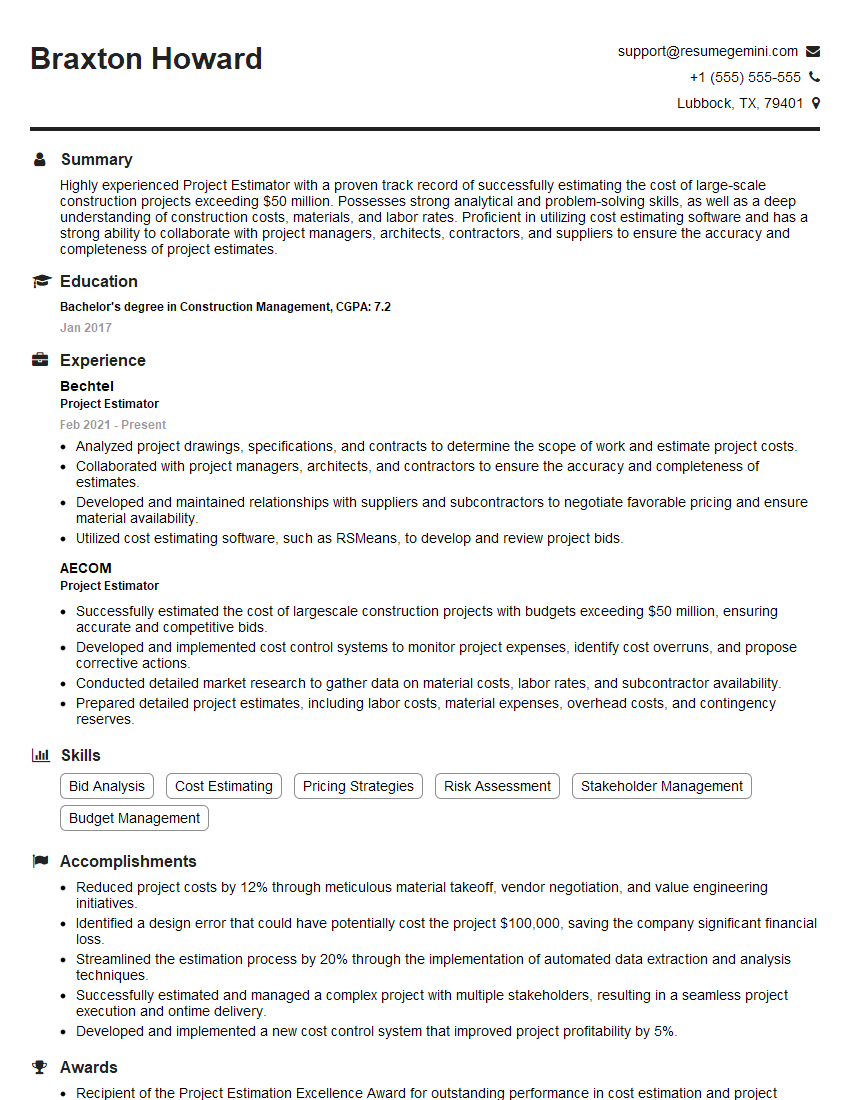
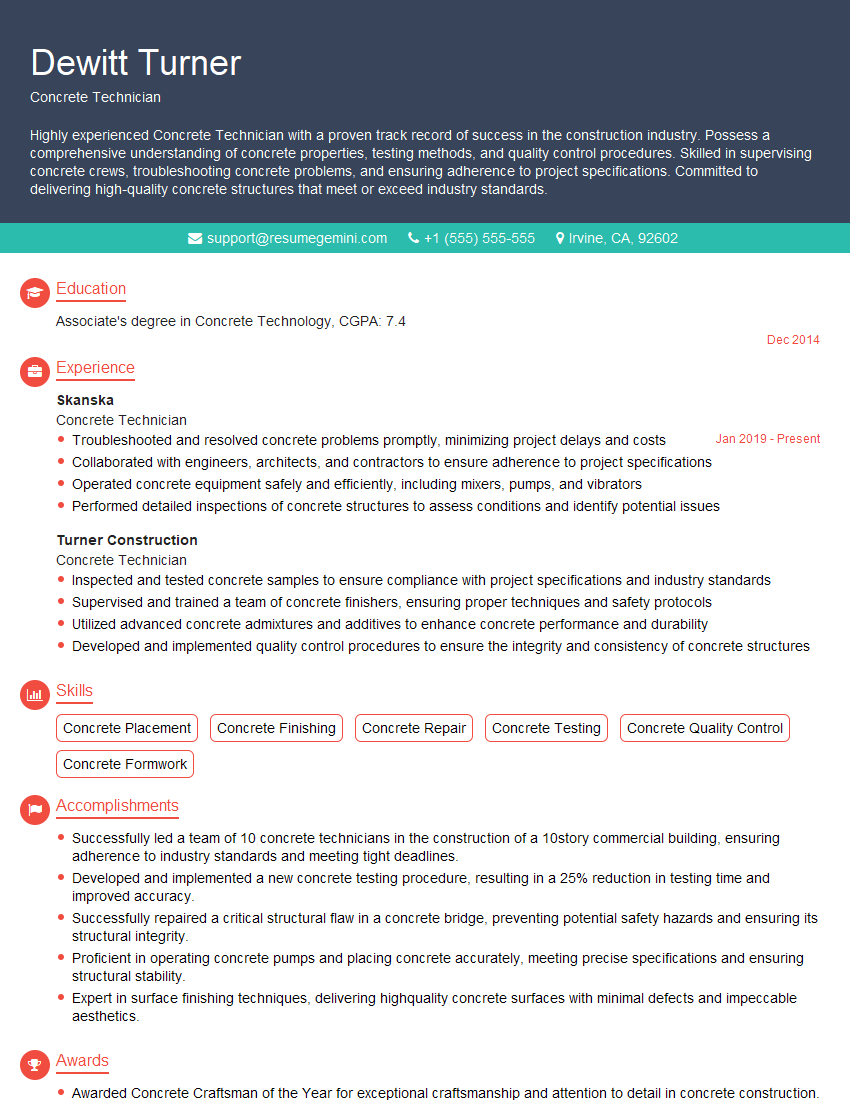
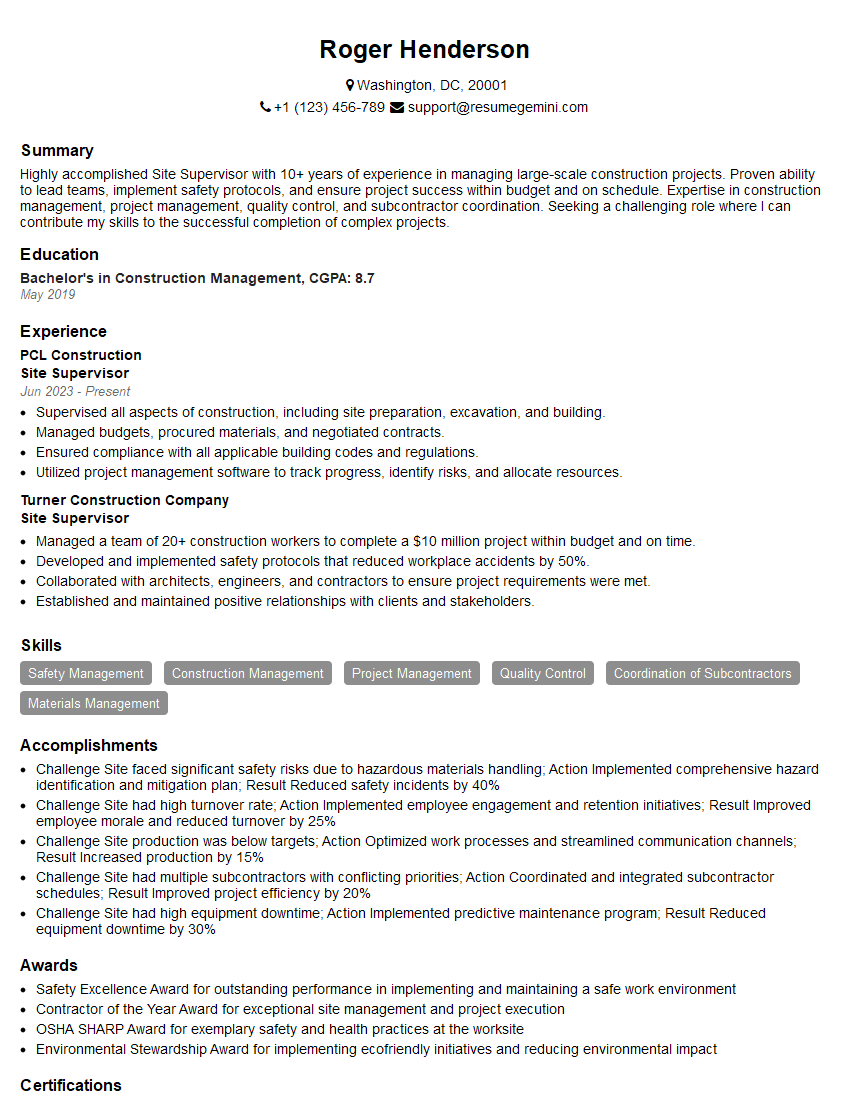
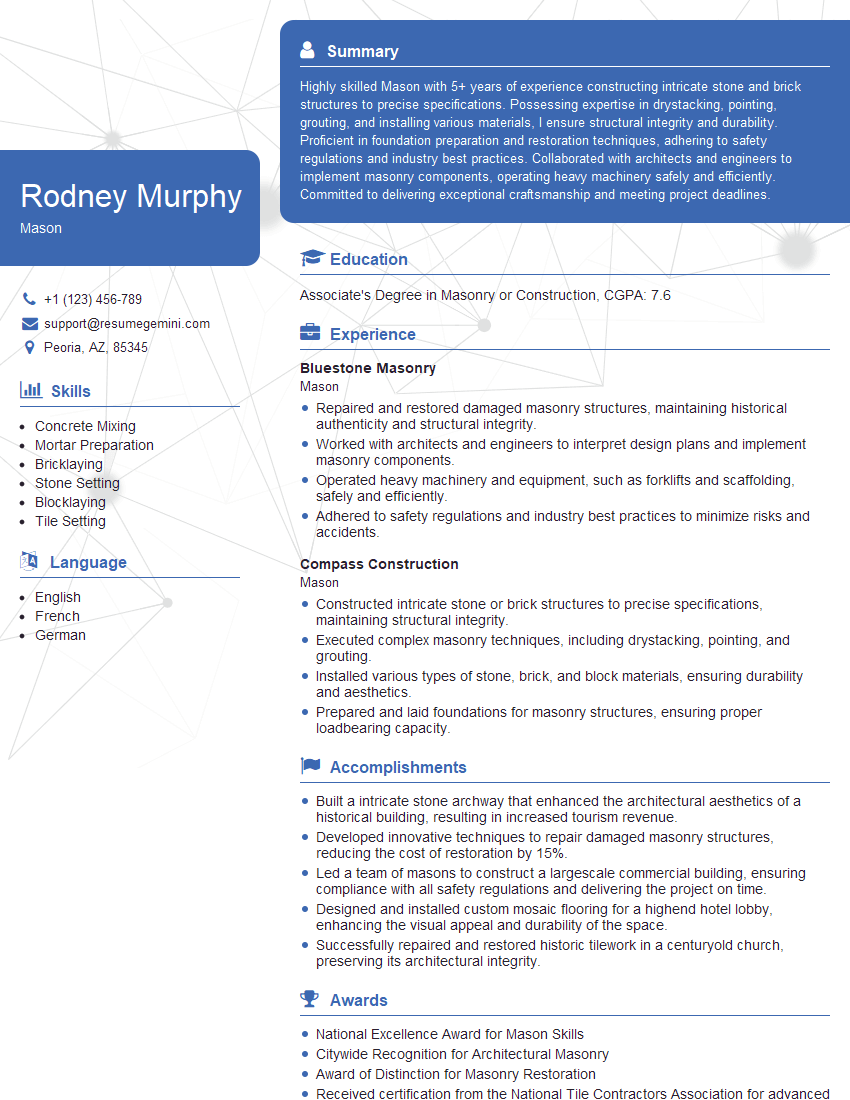
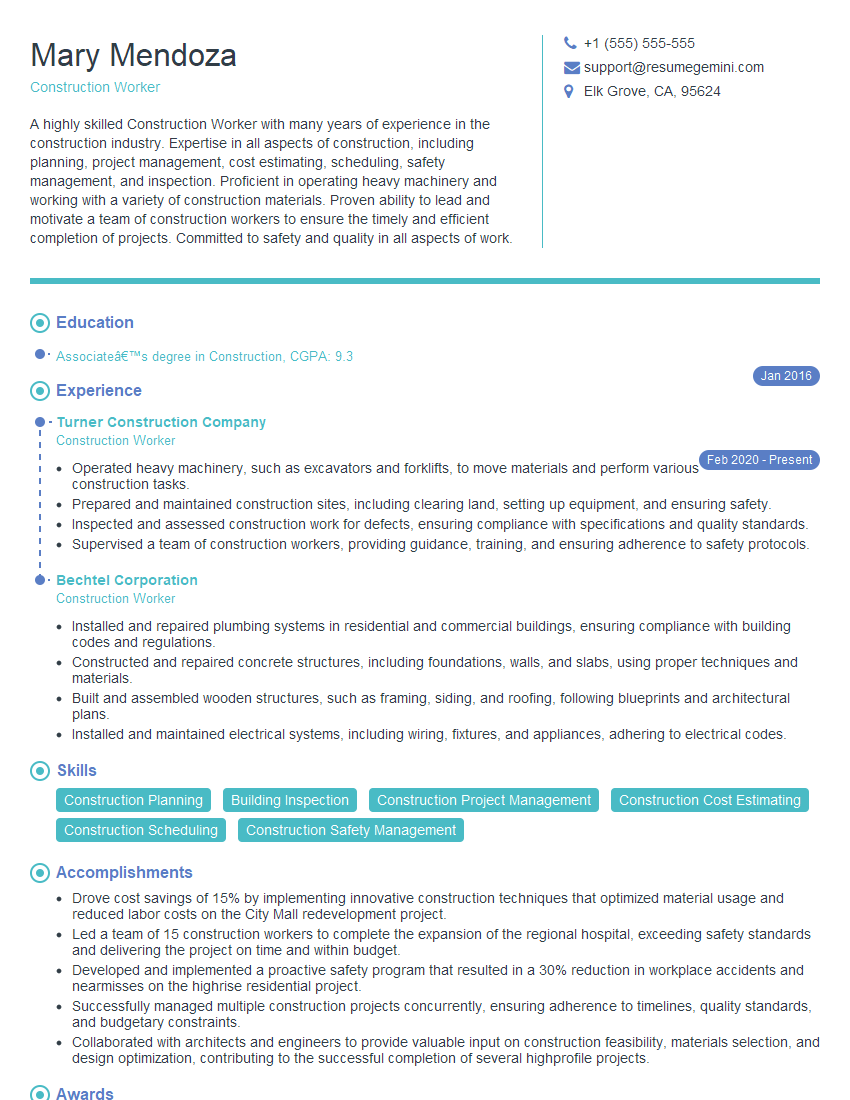
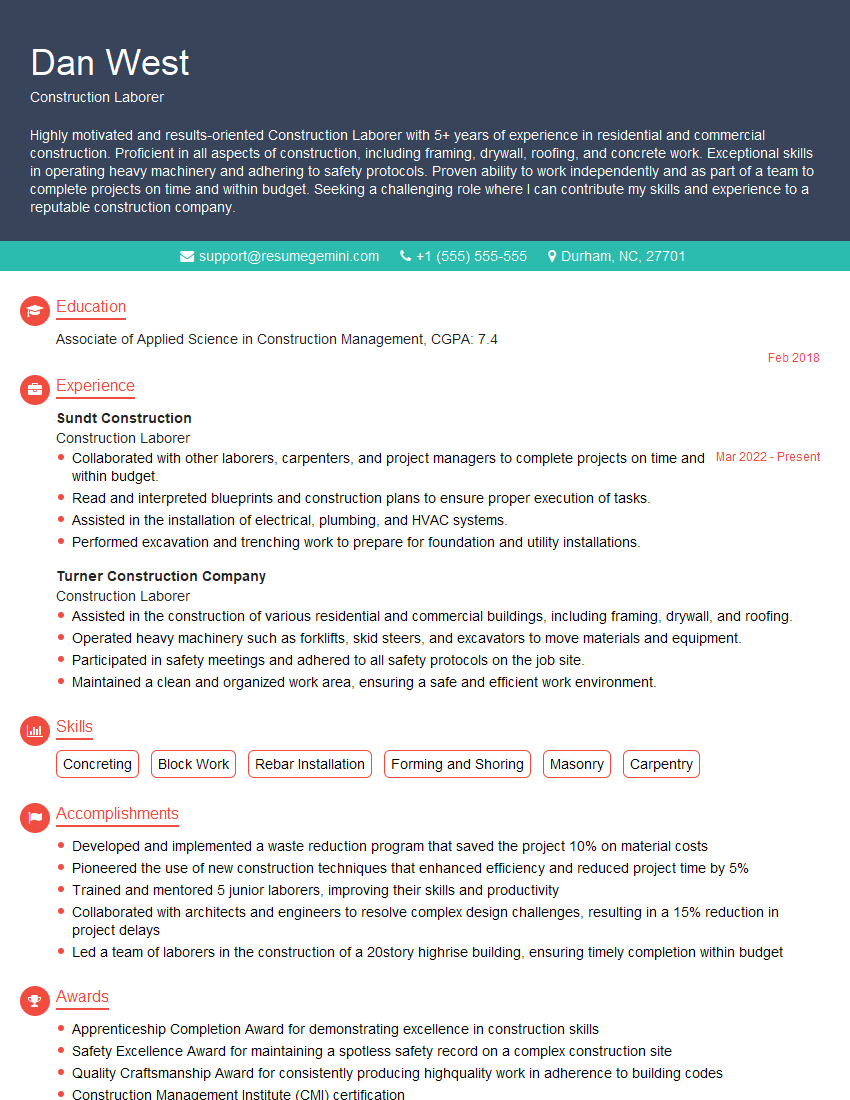
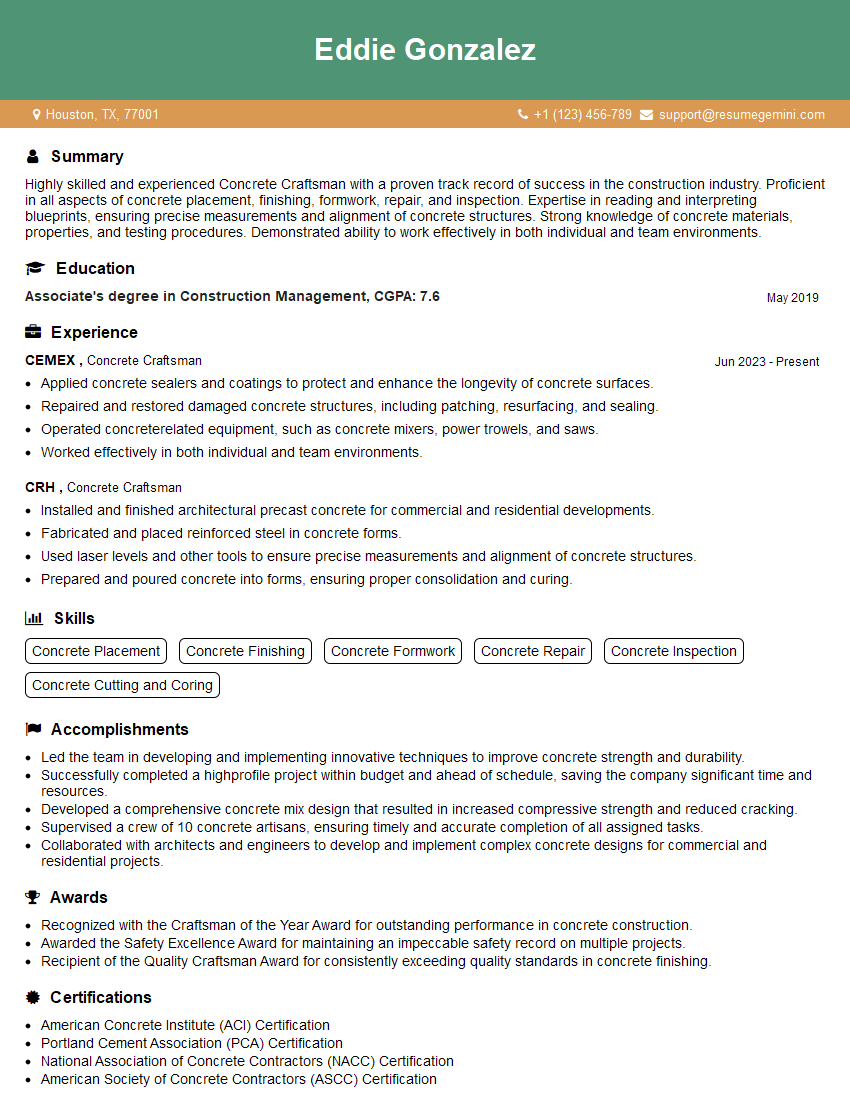
Mastering the art of stamped concrete opens doors to rewarding and diverse career opportunities. To make the most of your skills and experience, creating a strong, ATS-friendly resume is crucial. This ensures your application stands out and gets noticed by potential employers. ResumeGemini is a trusted resource to help you build a professional and impactful resume tailored to the specific demands of the stamped concrete industry. We even provide examples of resumes crafted specifically for stamped concrete professionals to guide you. Take the next step in your career journey and craft a winning resume today!

Explore more articles
Users Rating of Our Blogs
Share Your Experience
We value your feedback! Please rate our content and share your thoughts (optional).
What Readers Say About Our Blog
Very informative content, great job.
good