Every successful interview starts with knowing what to expect. In this blog, we’ll take you through the top Stamping Operation interview questions, breaking them down with expert tips to help you deliver impactful answers. Step into your next interview fully prepared and ready to succeed.
Questions Asked in Stamping Operation Interview
Q 1. Explain the different types of stamping processes.
Stamping, or pressworking, encompasses a variety of processes used to form sheet metal into desired shapes. These processes are primarily categorized by the type of tooling and the resulting deformation of the metal. Here are some key types:
- Blanking: This cuts out a shape from a sheet of metal. Think of it like using a cookie cutter – you’re creating a blank shape for further processing. This is a fundamental process in many stamping operations.
- Punching: Similar to blanking, but it creates a hole or several holes in the sheet rather than separating a complete shape.
- Bending: This process deforms the sheet metal along a straight line to create a bend, often at a specific angle. Think of folding a piece of paper.
- Embossing/Coining: These processes create raised or indented designs on the metal surface. Embossing raises the design, while coining creates a sharp, deeply impressed image. Think of the raised designs on coins or the textured surface of some car parts.
- Drawing: This pulls the sheet metal into a cup or other three-dimensional shape using a die. Imagine using a plunger to create a cavity in clay – that’s similar to drawing a metal sheet into a cup shape. Deep drawing forms complex shapes requiring significant metal deformation.
- Progressive Die Stamping: This combines multiple stamping operations (like blanking, punching, bending) into a single die. The sheet metal moves through multiple stations in the die, with each station performing a different operation. This offers high efficiency and precision.
The choice of stamping process depends on factors such as the part geometry, material properties, desired tolerances, and production volume.
Q 2. Describe your experience with progressive die stamping.
I have extensive experience with progressive die stamping, having worked on several projects involving high-volume production of intricate parts. Progressive dies are exceptionally efficient for mass production due to their ability to combine numerous operations into a single pass.
In one project, we designed a progressive die to manufacture a complex automotive part that required blanking, piercing, forming, and embossing. The initial design phase involved rigorous finite element analysis (FEA) simulations to predict metal flow and stress distribution, ensuring optimal die design and minimizing defects. During the die tryout phase, we closely monitored dimensional accuracy and surface finish, making iterative adjustments to optimize the process. Through meticulous planning and execution, we achieved a production rate of over 100 parts per minute with exceptional quality and consistent tolerances.
My expertise extends to die maintenance and troubleshooting. I’m proficient in identifying and resolving issues such as die wear, breakage, or misalignment, thereby ensuring continuous and efficient production.
Q 3. What are the common defects found in stamped parts, and how are they prevented?
Common defects in stamped parts can significantly impact product quality and functionality. Here are some frequently encountered defects and their prevention strategies:
- Fractures/Cracks: These are caused by excessive stress during the stamping process. Prevention involves optimizing die design, using appropriate materials, and controlling stamping parameters (speed, pressure).
- Wrinkles/Folds: These occur due to uneven metal flow and insufficient tension. Strategies include properly designed blank holders, optimal blank geometry, and controlled lubrication.
- Tears/Burrs: Sharp edges on tooling can cause tears, while burrs result from metal shearing. Careful tool design with proper radii and sharp edges is crucial, along with proper clearance between punch and die.
- Dimensional inaccuracies: These result from variations in press force, die wear, or material properties. Regular tool maintenance and precise control of stamping parameters are vital, alongside the use of statistical process control (SPC).
- Surface imperfections: Scratches, dents, and other surface defects can arise from poor tool maintenance or handling. Regular inspections and proper lubrication are crucial here.
Preventative measures often involve proactive tool maintenance, careful material selection, precise process parameter control, and regular quality checks throughout the production process. Implementing a robust quality control system is vital for minimizing defects.
Q 4. How do you ensure the quality of stamped parts?
Ensuring the quality of stamped parts is a multi-faceted process involving meticulous attention to detail at every stage. Key aspects include:
- Raw Material Inspection: Verifying the chemical composition, thickness, and surface finish of the incoming sheet metal is a critical first step. This ensures consistency in the final product.
- Die Design and Maintenance: A well-designed die is fundamental. Regular inspection, maintenance, and timely replacement of worn components are crucial for maintaining dimensional accuracy and surface finish.
- Process Parameter Control: Consistent control of stamping parameters like speed, pressure, and lubrication is crucial for consistent part quality. This often involves utilizing automated systems for precise control and monitoring.
- In-Process Inspection: Regular sampling and inspection during the stamping process (e.g., using Statistical Process Control charts) allow for early detection and correction of any deviations from specifications.
- Final Inspection: A thorough final inspection of the stamped parts is essential to ensure they meet all specified requirements concerning dimensions, surface finish, and functionality. This may involve dimensional gauging, visual inspection, and possibly destructive or non-destructive testing.
Implementing a robust quality management system, including documented procedures and training, is essential for achieving consistent and high-quality results.
Q 5. Explain your understanding of die tryout and its importance.
Die tryout is a critical phase in stamping production where the newly designed or repaired die is tested to ensure it meets the specifications. It’s essentially a dress rehearsal before full-scale production. The importance lies in identifying and rectifying potential problems early on, minimizing costly rework, production delays, and scrap.
The process typically involves several steps: initial testing with scrap material to check die functionality, fine-tuning adjustments based on initial results, then running a small batch of parts to evaluate dimensions and surface finish, and finally performing rigorous testing using various quality control methods to ensure the parts are within tolerances. If issues are discovered, adjustments and modifications are made to the die until optimal performance is achieved. A thorough tryout minimizes surprises and maximizes efficiency during full production runs.
Imagine building a house – the tryout is akin to the final inspection before you move in. Finding problems during tryout is much cheaper and easier than finding them after you’ve already built hundreds of units.
Q 6. How do you troubleshoot issues with a stamping press?
Troubleshooting a stamping press involves a systematic approach to pinpoint the root cause of the problem. It often begins with a careful examination of the press itself and the stamping process.
Steps involved:
- Safety First: Always ensure the press is locked out and tagged out before attempting any troubleshooting.
- Identify the Problem: What is the exact issue? (e.g., inconsistent part quality, press malfunction, die failure).
- Gather Information: Review machine logs, operator feedback, and quality control reports to understand the context of the problem.
- Visual Inspection: Carefully inspect the press, dies, and tooling for any signs of damage, wear, or misalignment.
- Check Press Controls: Verify the proper functioning of press controls, such as the hydraulic system, clutch, and brake.
- Test Die Operation: If the issue seems related to the die, check for proper alignment, wear, or damage to the punch and die components.
- Analyze the Process: Evaluate stamping parameters (pressure, speed, lubrication) to rule out any process-related issues.
- Implement Corrective Actions: Based on the root cause analysis, implement the necessary corrective actions, such as die repair or replacement, adjustments to the press controls, or material changes.
Troubleshooting a stamping press requires a solid understanding of mechanical systems and press operation, coupled with experience in identifying and solving various process-related problems. A methodical approach is key.
Q 7. Describe your experience with different types of stamping presses.
My experience encompasses various types of stamping presses, each suited to specific applications based on their capacity and capabilities.
- Mechanical Presses: These are widely used for their simplicity and versatility. I’ve worked extensively with crank presses and eccentric presses, particularly in medium-volume production environments. They’re reliable but might lack the speed and precision of newer technologies.
- Hydraulic Presses: These offer precise force control and are suited for forming complex shapes requiring high tonnage. I have experience with hydraulic presses used for deep drawing operations. Their variable speed and pressure control provide flexibility, but their maintenance can be more complex.
- Servo Presses: These offer high precision and efficiency due to their ability to precisely control speed and pressure. Servo presses reduce energy consumption and produce consistent part quality, making them ideal for high-precision applications and high-volume production runs. I have worked extensively with servo presses, often in highly automated production lines.
- Pneumatic Presses: While less common in high-volume production, I’ve encountered pneumatic presses for specific applications requiring relatively low tonnage and quick operation cycles. They are often used for light-duty work or prototyping.
The choice of press type depends on factors such as production volume, part complexity, required force, speed, and precision. Selecting the appropriate press is crucial for achieving optimal production efficiency and part quality.
Q 8. What are your safety protocols when working with stamping equipment?
Safety is paramount in stamping operations. My safety protocols are comprehensive and begin with a thorough understanding of the specific machine’s lockout/tagout (LOTO) procedure. This ensures the machine is completely de-energized before any maintenance or repair work. I always wear appropriate personal protective equipment (PPE), including safety glasses, hearing protection, steel-toed boots, and cut-resistant gloves, tailored to the specific task. Before starting any operation, I conduct a pre-operational inspection of the press, dies, and materials to identify potential hazards such as loose parts, damaged tooling, or material defects. Regular cleaning and lubrication of the equipment are also key to preventing malfunctions and accidents. Furthermore, I strictly adhere to the company’s safety regulations and participate actively in safety training programs. For example, during a recent job involving a high-speed press, I insisted on implementing a light curtain safety system in addition to the standard safety guards, significantly reducing the risk of accidental injuries.
Beyond individual actions, I proactively contribute to a safe work environment by reporting any unsafe conditions immediately to my supervisor. I also actively participate in safety meetings and contribute to identifying and resolving potential hazards before they cause incidents. Think of it like a layered safety approach – personal precautions, machine safeguards, and a company-wide commitment to safety.
Q 9. What is your experience with tooling maintenance and repair?
Tooling maintenance and repair are critical to maintaining efficient and safe stamping operations. My experience encompasses preventative maintenance, including regular lubrication, cleaning, and inspection of dies and other tooling components. I’m proficient in identifying and addressing wear and tear, such as sharpening punches and dies, repairing cracks or broken components, and replacing worn-out parts. I have experience working with various types of tooling materials, including high-speed steel (HSS), carbide, and powder metallurgy. I am also familiar with different die repair techniques such as welding, grinding, and EDM (Electrical Discharge Machining).
For instance, during a project involving a progressive die, I noticed slight wear on the piercing punches, which was causing dimensional inconsistencies in the final product. I used a precision grinder to carefully sharpen the punches, resolving the issue and preventing further defects. Proper documentation of all maintenance and repair activities is crucial, and I meticulously maintain records for traceability and analysis. This includes documenting the type of repair, materials used, and the date and time of service, allowing for future trend analysis and predictive maintenance.
Q 10. How do you calculate the production rate for a stamping operation?
Calculating the production rate for a stamping operation involves several factors. The basic formula is:
Production Rate = (Number of parts per stroke) * (Strokes per minute) * (Available operating time)
Number of parts per stroke: This depends on the die design; a progressive die might produce multiple parts per stroke, whereas a single-station die produces one part per stroke. For example, a progressive die producing three parts per stroke will have a higher production rate than a single-station die making one part per stroke.
Strokes per minute (SPM): This is determined by the press capacity and the specific job requirements. A faster press allows for higher SPM, directly increasing production rate.
Available operating time: This accounts for downtime, such as setup, maintenance, and operator breaks. For instance, eight hours of scheduled production may translate to less actual production time due to these factors. Calculating the actual available time is essential for realistic production rate estimations.
Beyond the basic formula, it’s crucial to consider factors like material handling, scrap rate, and machine efficiency. A higher scrap rate will reduce the effective production rate. A well-maintained machine will have higher efficiency, resulting in a better production rate. Therefore, efficient material handling techniques, quality control measures, and effective maintenance planning are all critical for maximizing production rates.
Q 11. Explain your experience with different types of stamping materials.
I have extensive experience working with a wide range of stamping materials, including low-carbon steel, high-carbon steel, stainless steel, aluminum, and various alloys. Each material presents unique challenges and considerations in terms of formability, strength, and surface finish. Low-carbon steel is commonly used for its affordability and good formability, but it may require specific surface treatments for corrosion resistance. Stainless steel, while offering superior corrosion resistance, is harder to form and requires more robust tooling. Aluminum is lightweight and readily formable but can be prone to tearing if not handled correctly. The selection of the material greatly impacts the die design and the stamping process parameters.
For example, when working with thin gauge stainless steel, I adjusted the press speed and die geometry to prevent tearing and wrinkling during the forming process. Similarly, working with high-strength steel required a more robust die design and potentially higher tonnage presses. Understanding the material properties is crucial in selecting the appropriate tooling and process parameters to achieve optimal results and avoid defects.
Q 12. How do you manage material flow in a stamping operation?
Efficient material flow is critical to maximizing productivity and minimizing waste in a stamping operation. My approach involves a combination of strategies, including implementing a well-defined material handling system, using appropriate storage techniques, and optimizing material flow paths. This includes utilizing conveyors, automated guided vehicles (AGVs), or other automated systems to transport materials efficiently between different stages of the stamping process. Proper identification and traceability of materials using barcodes or RFID tags also helps to streamline the flow and prevent mix-ups.
For example, in a previous role, I implemented a Kanban system to manage the flow of coils between the stamping presses and the coil storage area. This just-in-time system ensured that materials were available when needed, minimizing storage space and reducing lead times. In addition to physical flow, I also ensure efficient inventory management to minimize waste and optimize storage space. This includes regular inventory checks and the use of inventory management software to track material usage and order new supplies as needed. The goal is a smooth, continuous flow of materials, minimizing delays and maximizing efficiency.
Q 13. What is your experience with statistical process control (SPC) in stamping?
Statistical Process Control (SPC) is a critical tool for maintaining consistent quality in stamping operations. My experience includes using control charts (e.g., X-bar and R charts) to monitor key process parameters such as thickness, dimensions, and surface finish. By tracking these parameters, I can identify trends and variations that indicate potential problems before they lead to significant defects. This allows for timely corrective action, reducing waste and ensuring product quality. I am also proficient in using various SPC software packages to analyze data and generate reports.
For example, in a project involving the production of automotive parts, I used control charts to monitor the thickness of stamped components. When I noticed a pattern of increasing variation, I investigated the cause and discovered a problem with the press’s tonnage control. Addressing this issue brought the process back under control and ensured the parts met specifications. Using SPC enables data-driven decision-making, improving process consistency and reducing defects.
Q 14. Describe your experience with implementing lean manufacturing principles in stamping.
Lean manufacturing principles are integral to optimizing stamping operations. My experience includes implementing various lean techniques, such as 5S (Sort, Set in Order, Shine, Standardize, Sustain), value stream mapping, and Kaizen events. 5S creates a cleaner, more organized workspace, improving efficiency and safety. Value stream mapping helps to identify and eliminate waste in the production process. Kaizen events involve teams working together to identify and implement incremental improvements. This continuous improvement philosophy is vital in stamping to enhance efficiency, reduce costs, and improve overall quality.
In one project, I facilitated a Kaizen event focused on reducing setup times for a stamping press. The team identified and eliminated several bottlenecks, resulting in a 30% reduction in setup time. These types of improvements, however small, have a significant cumulative impact on efficiency and profitability. By consistently applying lean principles and promoting a culture of continuous improvement, we can significantly enhance the overall efficiency and competitiveness of the stamping operation.
Q 15. What is your experience with automation in stamping operations?
My experience with automation in stamping operations spans over a decade, encompassing various levels from simple automated feed systems to fully integrated robotic cells. I’ve worked with several automation technologies, including robotic arms for part handling, automated press feeds, and sophisticated monitoring systems for real-time data collection and predictive maintenance. For instance, in a previous role, we implemented a robotic system to handle hot-stamped parts, significantly improving throughput and reducing the risk of operator injury. The project involved careful consideration of cycle times, robot reach, and part orientation to ensure seamless integration with the existing press line. This wasn’t just about installing robots; it involved optimizing the entire production line for maximum efficiency. We saw a 25% increase in production and a 15% reduction in scrap after implementation.
Another significant experience involved implementing a vision system for quality control. This automated inspection system drastically reduced the number of defective parts going unnoticed, leading to significant cost savings. We were able to pinpoint the exact source of defects much faster, which minimized production downtime related to quality issues.
Career Expert Tips:
- Ace those interviews! Prepare effectively by reviewing the Top 50 Most Common Interview Questions on ResumeGemini.
- Navigate your job search with confidence! Explore a wide range of Career Tips on ResumeGemini. Learn about common challenges and recommendations to overcome them.
- Craft the perfect resume! Master the Art of Resume Writing with ResumeGemini’s guide. Showcase your unique qualifications and achievements effectively.
- Don’t miss out on holiday savings! Build your dream resume with ResumeGemini’s ATS optimized templates.
Q 16. How do you interpret stamping process specifications?
Interpreting stamping process specifications requires a meticulous approach. It’s not just about reading the numbers; it’s about understanding the underlying engineering principles. I start by thoroughly reviewing the drawings, which provide critical information such as material specifications, tolerances, and part geometry. Next, I analyze the process parameters, including blank size, press tonnage, die design, and speed. Understanding the interaction of these factors is crucial to predicting the outcome and identifying potential issues. For example, if the material specification indicates a high strength steel, I would need to adjust the press tonnage and die design accordingly to avoid breakage or wrinkling. Similarly, tight tolerances require precise control over the stamping process, potentially necessitating adjustments to die clearances and lubrication.
I often use FEA (Finite Element Analysis) simulations to validate my interpretations and optimize the process parameters for specific requirements. This helps to predict potential problems early on and avoid costly rework. Think of it like planning a complex recipe: understanding each ingredient and how they interact is key to getting the desired result.
Q 17. What is your experience with designing or modifying stamping dies?
My experience in die design and modification involves both practical application and theoretical knowledge. I’m proficient in using CAD software such as SolidWorks and AutoCAD to create and modify die designs. I’ve been involved in numerous projects, from designing new dies for innovative parts to troubleshooting and improving existing dies to increase efficiency or quality. A recent project involved redesigning a progressive die to reduce the number of stamping stations, which lowered the overall cost and increased production speed. This required a thorough understanding of material flow, die-stripping mechanisms, and the interplay between different die components. We improved the existing design through iterative simulations and testing, leading to a 10% reduction in production time and a noticeable decrease in scrap rate.
The process often includes collaboration with toolmakers and engineers to ensure manufacturability and optimal performance. I’m familiar with various die types, including progressive dies, transfer dies, and single-stage dies, and the design considerations specific to each. My approach involves understanding the strengths and limitations of each type and choosing the most suitable design based on the project’s requirements and constraints.
Q 18. How do you handle unexpected downtime in a stamping operation?
Handling unexpected downtime in a stamping operation requires a systematic and proactive approach. My first step is always to ensure operator safety and prevent further damage. Once the immediate threat is addressed, I initiate a structured troubleshooting process. This typically involves a detailed investigation to identify the root cause of the problem, which might range from a simple die malfunction to a more complex electrical fault. I use a combination of visual inspection, data analysis from monitoring systems, and my expertise in stamping processes to pinpoint the culprit.
For example, if a press is down due to a suspected hydraulic leak, I would inspect the hydraulic lines, check fluid levels, and potentially consult with a hydraulic specialist. A structured approach – whether it’s a checklist, a flowchart, or a more formal root cause analysis (RCA) methodology – is essential to identifying the problem effectively. Following the RCA, the appropriate corrective action is implemented, and preventative measures are put in place to reduce the likelihood of recurrence. It’s not enough to fix the immediate problem; we need to prevent it from happening again. Effective communication with maintenance, operations, and management throughout the process is vital for efficient resolution and minimal disruption.
Q 19. Describe your experience with different types of stamping lubricants.
My experience with stamping lubricants encompasses a wide range of products, each suited to different materials and processes. I’m familiar with both oil-based and water-based lubricants, each with its own advantages and disadvantages. Oil-based lubricants often provide superior lubrication and surface finish, especially for high-strength steels, but they can create environmental concerns and require more rigorous cleaning. Water-based lubricants are more environmentally friendly and easier to clean, but they may not be suitable for all applications, such as high-temperature stamping.
The selection of a lubricant depends on several factors, including material type, press speed, and required surface finish. For instance, a high-speed stamping operation might require a lubricant with low viscosity to minimize friction and prevent build-up. Conversely, a low-speed operation with a requirement for a high-quality surface finish might benefit from a higher-viscosity lubricant. I’ve also worked with specialized lubricants designed for specific materials, such as aluminum or stainless steel, to optimize performance and minimize defects.
Furthermore, I’m experienced in evaluating lubricant performance and identifying potential problems, like lubricant degradation or incorrect application, which can lead to defects or equipment damage.
Q 20. How do you ensure the proper handling and storage of stamping dies?
Proper handling and storage of stamping dies is crucial for their longevity and performance. This begins with careful handling during transportation and installation. Dies should be moved using appropriate lifting equipment and secured to prevent damage. Once installed, regular inspection for wear and tear is vital.
Storage is equally important. Dies should be stored in a clean, dry, and controlled environment to prevent corrosion and damage. They should be properly lubricated and protected from dust and debris. We typically use specialized storage containers or racks designed to support the weight and prevent damage. Proper documentation, including detailed drawings and maintenance records, is essential to ensure that dies are correctly identified, maintained, and used. A well-organized storage system is critical for efficient retrieval and use. Think of it as a library for your tooling – each item properly labeled and catalogued for easy access and accountability. This not only protects the dies but also streamlines the production process.
Q 21. What is your experience with root cause analysis in stamping?
Root cause analysis (RCA) is integral to my approach to problem-solving in stamping operations. When faced with a recurring defect or equipment malfunction, I employ a systematic methodology to identify the underlying cause rather than just treating the symptoms. I commonly use techniques like the 5 Whys, fishbone diagrams, and fault tree analysis to systematically investigate the problem.
For instance, if we are experiencing excessive die wear, we wouldn’t just replace the die; instead, we would investigate the root cause. We might use the 5 Whys to drill down: Why is the die wearing out? Because of excessive friction. Why is there excessive friction? Because of insufficient lubrication. Why is there insufficient lubrication? Because the lubrication system isn’t functioning correctly. Why isn’t the lubrication system functioning correctly? Because of a faulty pump. Identifying the faulty pump as the root cause allows for a targeted solution, preventing the problem from recurring. Effective RCA involves data collection, analysis, and a thorough understanding of the stamping process itself. By addressing the root cause, we can prevent future problems and improve overall efficiency and quality.
Q 22. Explain your understanding of different press controls.
Press controls in stamping operations are crucial for safety and efficient production. They range from simple mechanical controls to sophisticated automated systems. Think of them as the ‘brain’ of the stamping press, dictating the entire process.
- Mechanical Controls: These are the most basic, often involving hand levers, foot pedals, or push buttons to initiate and control the press cycle. They’re typically found on older or simpler presses but require a high level of operator skill and vigilance.
- Electrical Controls: These utilize programmable logic controllers (PLCs) and other electronic components for more precise control. PLCs allow for automated sequences, adjustable speeds, and safety interlocks, significantly improving efficiency and safety. An example would be a system that automatically stops the press if a safety sensor detects an obstruction.
- Hydraulic Controls: Hydraulic systems provide smooth and powerful control of the press ram, particularly useful for large and complex stamping operations. They offer precise control over pressure and speed, allowing for delicate forming processes.
- CNC (Computer Numerical Control) Controls: The most advanced, CNC controls allow for fully automated operation with pre-programmed sequences and precise control of all parameters, including press speed, pressure, and die position. They’re essential for high-volume, high-precision stamping applications. Think of creating intricate car body parts – CNC control ensures consistency.
My experience encompasses all these control types, from troubleshooting simple mechanical failures to programming complex CNC sequences for intricate parts.
Q 23. How do you manage scrap and waste in stamping operations?
Scrap and waste management is paramount in stamping, impacting both profitability and environmental responsibility. It’s not just about cleaning up; it’s about proactive strategies to minimize waste from the outset.
- Die Design Optimization: Efficient die design minimizes material waste by optimizing blank size and minimizing scrap generation. This is where CAD/CAM expertise comes in.
- Material Selection: Choosing appropriate material thickness and properties reduces defects and rework, directly impacting scrap volume.
- Process Monitoring & Control: Regular monitoring of the stamping process helps identify and correct issues before they lead to significant scrap generation. This includes analyzing press parameters, die wear, and material flow.
- Scrap Sorting and Recycling: Implementing a system for sorting and recycling scrap materials recovers valuable resources and reduces environmental impact. For instance, separating different metal types allows for efficient recycling.
- Data Analysis: Tracking scrap rates, identifying root causes, and implementing corrective actions through data analysis is crucial for continuous improvement.
In my previous role, I implemented a scrap reduction program that utilized data analysis to pinpoint the source of defects, resulting in a 15% reduction in scrap within six months.
Q 24. What is your experience with different types of stamping coatings?
Stamping coatings protect the stamped parts from corrosion, enhance their appearance, or improve their functionality. I have extensive experience with various types:
- Zinc Coatings (Galvanizing): Offers excellent corrosion protection, commonly used in automotive and construction applications. This is a common and cost-effective solution for general corrosion resistance.
- Zinc-Nickel Coatings: Provides superior corrosion resistance compared to zinc alone, often preferred for harsh environments. Its improved properties come at a slightly higher cost.
- Paint Coatings: Offer a wide range of colors and finishes for aesthetic purposes or added protection. This allows for customization and branding opportunities.
- Powder Coatings: Durable and environmentally friendly, applied electrostatically and cured in an oven. They offer excellent scratch resistance and are often used for outdoor applications.
- Chromate Conversion Coatings: These thin coatings enhance corrosion resistance and provide a base for paint adhesion. They are used as a pretreatment step in many applications, particularly where corrosion is a major concern.
My experience includes selecting the appropriate coating based on the application requirements, managing the coating process, and ensuring the coating meets specified quality standards.
Q 25. How do you maintain accurate production records?
Accurate production records are essential for tracking productivity, identifying areas for improvement, and ensuring compliance. We use a combination of methods:
- Production Counters/Sensors: Directly connected to the stamping press, these devices automatically record the number of parts produced.
- Manufacturing Execution System (MES): A sophisticated software system integrates data from various sources, including production counters, quality control systems, and maintenance logs, to provide a comprehensive overview of production performance.
- Manual Data Entry: While less efficient, manual recording is sometimes necessary for special circumstances, such as tracking scrap or rework. It’s crucial to ensure data consistency and accuracy through regular auditing.
- Spreadsheet Software (Excel, Google Sheets): Provides a user-friendly platform for data analysis, tracking key performance indicators (KPIs), and generating reports.
- Database Systems: These manage large datasets and facilitate reporting and analysis for comprehensive production data management.
I’m proficient in using all these methods to maintain up-to-date, accurate production records and generate reports for management.
Q 26. Describe your experience with using CAD/CAM software in stamping.
CAD/CAM software is indispensable in modern stamping operations. It allows for the design and simulation of stamping dies, significantly reducing lead times and improving die performance.
- CAD (Computer-Aided Design): Used to create 3D models of stamping dies and parts, ensuring accurate dimensions and proper functionality. Software like SolidWorks or AutoCAD are commonly used.
- CAM (Computer-Aided Manufacturing): Generates CNC programs for machining die components, optimizing toolpaths and reducing machining time. Software such as Mastercam or FeatureCAM provides these capabilities.
- Die Simulation Software: Simulates the stamping process, predicting potential problems such as wrinkling, tearing, or earing, allowing for design improvements before physical die construction. Software such as PAM-STAMP or AutoForm are employed here.
My experience includes using CAD/CAM software to design and optimize stamping dies, reducing lead time, and improving the quality of stamped parts. For instance, I once used simulation software to identify a potential tearing issue in a design, preventing costly rework after the die was built.
Q 27. What are your experience with preventative maintenance in stamping?
Preventative maintenance is vital for ensuring the longevity and reliability of stamping equipment, minimizing downtime, and maximizing production efficiency. Think of it as regular check-ups for your press, preventing major problems down the line.
- Regular Inspections: Scheduled inspections of all press components, including hydraulic systems, electrical controls, and mechanical linkages, identify potential problems before they escalate.
- Lubrication: Regular lubrication of moving parts is crucial to reduce wear and friction, extending the life of the press.
- Component Replacement: Replacing worn-out or damaged components proactively prevents unexpected failures and minimizes downtime.
- Calibration: Regular calibration of press controls and sensors ensures accurate operation and consistent part quality.
- Data-Driven Maintenance: Using data from press sensors and other monitoring systems to predict potential failures and schedule maintenance proactively. For example, monitoring vibration levels can indicate bearing wear.
I have implemented and managed preventative maintenance programs, resulting in a significant reduction in unplanned downtime and improved press reliability.
Q 28. How do you ensure compliance with safety regulations in a stamping operation?
Safety is paramount in stamping operations, where heavy machinery and high-speed processes pose significant risks. Compliance with safety regulations is non-negotiable.
- Lockout/Tagout Procedures: Strict adherence to lockout/tagout procedures ensures that machinery is properly de-energized before maintenance or repair to prevent accidental activation.
- Personal Protective Equipment (PPE): Requiring and enforcing the use of appropriate PPE, such as safety glasses, hearing protection, and steel-toed shoes, protects workers from potential hazards.
- Machine Guarding: Ensuring that all machinery is equipped with appropriate guards to prevent access to hazardous areas during operation. This minimizes the risk of accidental injury.
- Emergency Stop Systems: Implementing readily accessible and functional emergency stop buttons throughout the work area ensures quick response to unexpected situations.
- Regular Safety Training: Providing regular safety training to all personnel, including updates on new procedures and regulations, is crucial for maintaining a safe work environment.
- Compliance Audits: Conducting regular safety audits and inspections ensures adherence to regulations and identifies areas needing improvement.
In all my previous roles, I actively participated in developing and implementing safety programs, ensuring compliance with OSHA and other relevant regulations, and fostering a strong safety culture within the team.
Key Topics to Learn for Stamping Operation Interview
- Die Design and Selection: Understanding different die types (progressive, compound, etc.), material selection criteria, and the impact on part quality and production efficiency.
- Press Operation and Maintenance: Knowledge of various press types (mechanical, hydraulic, servo), safety procedures, preventative maintenance, and troubleshooting common press malfunctions.
- Material Handling and Feeding: Familiarity with coil handling, feeding mechanisms (straighteners, uncoilers), and their impact on part consistency and production speed. Understanding issues like material defects and their influence on the stamping process.
- Stamping Process Parameters: Understanding the relationship between press tonnage, speed, die design, and material properties to achieve optimal part quality and minimize defects. This includes knowledge of variables like blank holding force and lubrication.
- Quality Control and Inspection: Understanding quality control methods, defect identification (e.g., cracks, burrs, wrinkles), and the implementation of statistical process control (SPC) techniques.
- Safety Regulations and Practices: Demonstrating knowledge of relevant safety standards (OSHA, etc.) and safe work practices within a stamping operation environment, including lockout/tagout procedures and personal protective equipment (PPE).
- Automation and Robotics in Stamping: Familiarity with automated stamping processes, robotic integration, and the advantages and challenges associated with automation in a stamping environment.
- Problem-Solving and Root Cause Analysis: Ability to apply problem-solving methodologies (e.g., 5 Whys, fishbone diagrams) to identify and resolve production issues, including die failures and part defects.
Next Steps
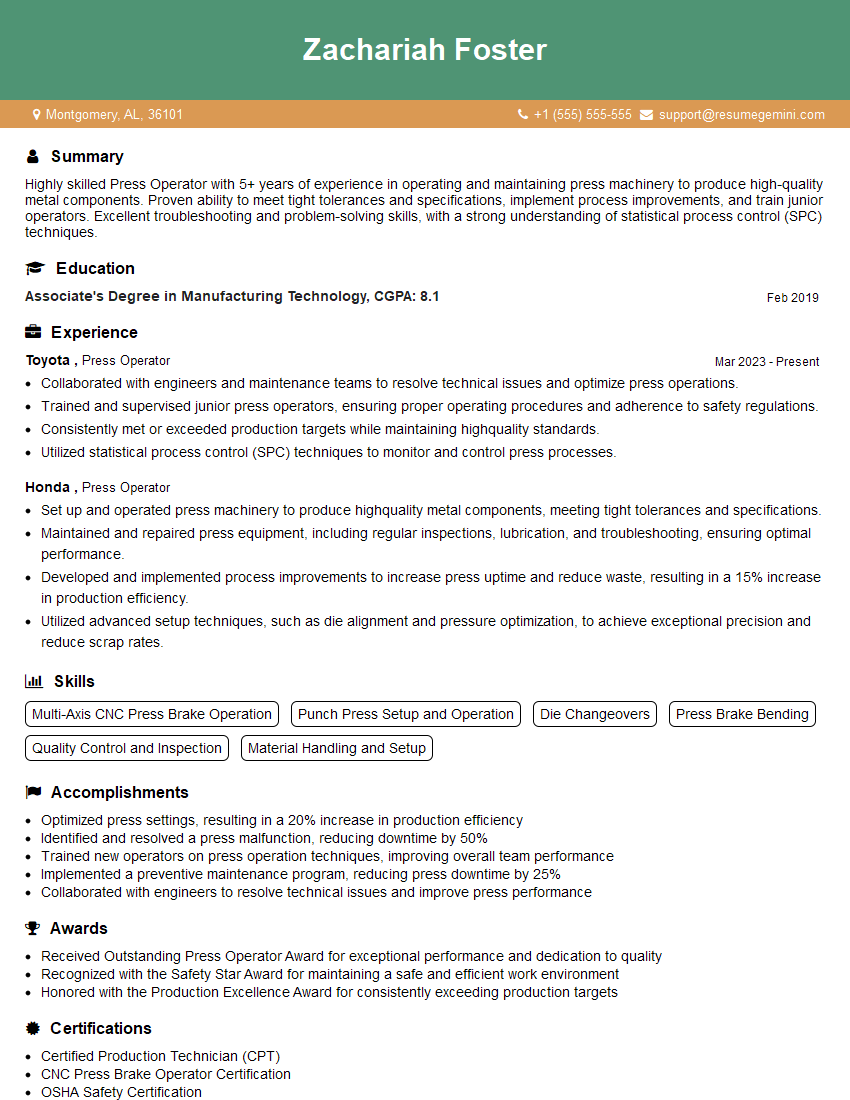
Mastering Stamping Operation principles opens doors to rewarding careers in manufacturing, providing opportunities for advancement and specialization. A strong understanding of these concepts is crucial for success in technical interviews and long-term career growth. To maximize your job prospects, creating an ATS-friendly resume is vital. ResumeGemini is a trusted resource that can help you build a professional and impactful resume, ensuring your qualifications stand out to potential employers. Examples of resumes tailored to the Stamping Operation field are available to guide you.
Explore more articles
Users Rating of Our Blogs
Share Your Experience
We value your feedback! Please rate our content and share your thoughts (optional).
What Readers Say About Our Blog
Very informative content, great job.
good