Are you ready to stand out in your next interview? Understanding and preparing for Static Line Airborne Operations interview questions is a game-changer. In this blog, we’ve compiled key questions and expert advice to help you showcase your skills with confidence and precision. Let’s get started on your journey to acing the interview.
Questions Asked in Static Line Airborne Operations Interview
Q 1. Describe the procedure for a static line parachute deployment.
Static line parachute deployment is a straightforward yet crucial procedure in airborne operations. It relies on a static line – a strong cord connecting the parachute to the aircraft – that automatically deploys the parachute upon exiting the aircraft. The jumper simply exits the aircraft; the static line pulls the parachute’s ripcord, initiating deployment.
The procedure typically involves:
- Exiting the Aircraft: The jumper exits the aircraft, maintaining a specific body posture to avoid entanglement. This often involves a controlled ‘leaning out’ and then ‘pushing away’ from the aircraft.
- Line Clearing: As the jumper exits, they ensure the static line clears the aircraft. Failure to do so can result in serious injury or equipment damage.
- Parachute Deployment: The static line, pulling taut, extracts the main parachute from its container. The parachute will then fill with air and deploy fully, usually within a few seconds.
- Canopy Control: After reaching full deployment, the jumper assumes a stable position and begins to maneuver the canopy as needed to steer towards the designated landing zone.
Imagine it like a simple, highly reliable ‘pull string’ mechanism for a toy – except your toy is a parachute and the stakes are much higher!
Q 2. What are the critical safety checks before a static line jump?
Safety checks before a static line jump are paramount and non-negotiable. A thorough pre-jump checklist ensures both the jumper and their equipment are ready for the jump. This checklist usually includes:
- Parachute Inspection: This is perhaps the most critical check. The jumper meticulously examines their parachute for any damage, wear, or inconsistencies in the canopy, lines, and harness. This involves checking all seams, toggles, and the reserve parachute (if applicable).
- Harness Inspection: The harness must be correctly fitted and fastened, with all straps securely adjusted and free from defects. Any loose straps or malfunctioning hardware can be disastrous.
- Reserve Parachute Check: The reserve parachute, a backup parachute, must be independently checked to ensure that it’s packed correctly and fully functional.
- Static Line Check: The static line is inspected to ensure it is correctly attached to both the parachute and aircraft, free of any tangles or damage.
- Altimeter Check: The jumper confirms their altimeter is functioning correctly to ensure accurate altitude readings during the jump.
- Emergency Procedures Briefing Review: A refresher on emergency procedures and equipment use is vital for any potential issues during the jump.
- Weather Conditions Check: Wind speed and direction, visibility, and precipitation are crucial environmental considerations that directly impact a safe jump.
Skipping even one check can have severe consequences. Think of it as a pre-flight check for an aircraft—comprehensive and thorough to minimize risk.
Q 3. Explain the different types of static line systems.
Static line systems, while primarily focused on reliable parachute deployment, vary slightly depending on the aircraft and operational requirements. Key differences lie in the method of connecting the static line to the aircraft and parachute container.
- Direct Connection Systems: These involve a direct, often simple, connection between the static line and the aircraft’s static line fitting. This is a common and efficient method, especially for smaller aircraft and simpler operations.
- Indirect Connection Systems: These incorporate a mechanism to manage the release of the static line. This might include a system that allows the static line to release slightly before deployment to avoid entanglements with the aircraft.
- Systems with Deployment Bags: Some systems utilize a deployment bag that helps streamline the deployment process, ensuring the parachute deploys smoothly and cleanly. These bags can also help manage the static line during deployment.
The choice of system depends on the aircraft’s design, the type of parachute used, and the specific operational needs. Each system is designed for safety and efficiency, albeit with subtle variations in implementation.
Q 4. What are the emergency procedures in case of a malfunction during a static line jump?
Emergency procedures during a static line jump are critical for mitigating potential hazards. Immediate and decisive action is necessary to address any malfunctions. While specific procedures vary based on the situation and the type of malfunction, general principles include:
- Malfunction Recognition: Immediately identify the type of malfunction: is it a main parachute failure, a reserve parachute malfunction, or an entanglement?
- Reserve Parachute Deployment: If the main parachute fails to deploy, the jumper immediately deploys their reserve parachute using the reserve ripcord. This is trained extensively and should become an automatic reaction in case of failure.
- Cutting Away: If entanglement occurs with the main parachute, or if the parachute malfunctions in a way that it cannot be controlled, the jumper will utilize a cutting tool to sever the main parachute from the harness.
- Emergency Landing Procedures: The jumper will use whatever means they have available – reserve parachute, controlled descent if possible – to safely land in the most suitable area. This requires precise maneuvering and quick decision-making.
- Post-Landing Procedures: After landing, the jumper should signal their position, assess any injuries, and contact emergency services if needed.
Think of it as a structured approach to a critical situation, with clearly defined steps to prioritize safety and survival. Rigorous training makes these responses almost automatic, significantly improving the chances of a safe outcome.
Q 5. How do you handle equipment malfunctions during a static line jump?
Handling equipment malfunctions requires immediate, decisive action based on the type of malfunction. Proper training is crucial. The emphasis is always on safety and minimizing risk.
- Main Parachute Malfunction: Immediate deployment of the reserve parachute is the primary response. Time is critical, and hesitation can be fatal.
- Harness Malfunction: If a major harness malfunction occurs before exiting the aircraft, the jump is aborted. In the unlikely event it happens during deployment, assessment of the damage and possible use of the reserve is immediate and a controlled descent is attempted.
- Static Line Malfunction: If the static line fails to deploy the main parachute, immediate deployment of the reserve parachute is necessary.
- Reserve Parachute Malfunction: If the reserve parachute fails to deploy or malfunctions after deployment, emergency landing techniques such as controlled descent maneuvers must be employed, leveraging any available control on the failed canopy. This relies heavily on the jumper’s training.
Effective training focuses on recognizing different malfunction types, prioritizing quick responses, and utilizing backup systems. It’s like having a layered safety net; if one layer fails, the others are ready to kick in.
Q 6. Describe the role of a Jumpmaster in a static line operation.
The Jumpmaster is the critical safety officer and leader responsible for the overall safety and execution of the static line operation. Their role encompasses several key responsibilities:
- Pre-Jump Briefing: They conduct thorough briefings outlining the jump procedures, emergency procedures, and safety regulations.
- Equipment Inspection Oversight: They oversee the equipment inspection process, ensuring all jumpers have properly inspected their gear and are ready for the jump.
- Jump Execution Control: They control the sequence and timing of the jump, coordinating with the aircraft crew and managing the jumpers’ exits.
- Safety Monitoring: They continuously monitor the jumpers during the jump, observing their deployment and handling any immediate issues or emergencies that arise.
- Post-Jump Debrief: They conduct a post-jump debriefing to review the jump’s success, identify any potential issues, and provide feedback to the jumpers.
The Jumpmaster is essentially the ‘air traffic controller’ and safety lead, ensuring all aspects of the static line operation are executed safely and effectively. Their experience and expertise are vital to minimizing risks.
Q 7. What are the environmental factors that affect static line jumps?
Environmental factors significantly impact static line jumps, potentially creating hazardous conditions. Careful consideration is essential for ensuring safety and success.
- Wind: High winds can create unpredictable canopy drift, making landing challenging and potentially dangerous. Wind speed and direction are carefully monitored to determine suitability for the jump.
- Visibility: Reduced visibility due to fog, rain, or snow can severely hinder the jumper’s ability to navigate and land safely. Jumps are often postponed if visibility is below acceptable standards.
- Temperature: Extreme temperatures can affect both the equipment and the jumper’s performance. Extremely low temperatures can lead to equipment malfunctions, while high temperatures can create heat exhaustion risks.
- Precipitation: Rain or snow can increase the risk of canopy malfunction and affect landing areas. Wet landing areas can lead to slippery conditions.
- Altitude Density: Higher altitudes may lead to slower deployment times and longer descents, requiring different planning and potential adjustments in techniques.
Imagine planning an outdoor event – you would check the weather forecast. Similarly, weather and environmental conditions are a critical input for every static line jump and must be carefully assessed to make sure it is safe to proceed.
Q 8. Explain the importance of pre-jump training and practice.
Pre-jump training and practice are paramount in static line airborne operations. Think of it like learning to ride a bike – you wouldn’t attempt a downhill race without mastering the basics. Thorough training instills the essential skills and muscle memory needed to safely execute a jump, including proper aircraft procedures, parachute deployment techniques, emergency procedures, and safe landing practices. This training reduces the risk of human error, a major factor in airborne incidents. Regular practice builds confidence and proficiency, enabling jumpers to react effectively to unexpected situations, such as equipment malfunctions or wind gusts. The goal is not just to complete the jump, but to do so safely and efficiently, every single time.
For example, extensive ground training on equipment familiarization, emergency procedures, and controlled landings dramatically improves a jumper’s response time in a real-world situation. This translates to a safer and more efficient operation overall.
Q 9. What are the procedures for packing a static line parachute?
Packing a static line parachute is a highly technical and meticulous process that requires rigorous adherence to established procedures. Any deviation can compromise safety. The process typically involves these steps: First, a thorough inspection of the parachute and its components is necessary to check for any damage or wear. Then, the main parachute canopy is carefully laid out and inspected for any snags or tears. Following this, the canopy is folded systematically, often in a specific pattern that minimizes wrinkles and ensures proper airflow during deployment. The lines are then carefully attached and meticulously laid out to prevent tangles. Finally, the packed parachute is carefully secured within its container, ensuring it’s snug and free of any obstructions. The whole process is often documented and checked by experienced riggers to guarantee proper packing.
Improper packing can lead to malfunctions during deployment, resulting in injury or fatality. This is why packing is only carried out by certified and qualified riggers. They are trained to identify and rectify any potential issues that could compromise safety.
Q 10. How do you conduct a pre-jump inspection of a parachute?
A pre-jump inspection is a critical safety check before every jump. It’s like a pilot’s pre-flight check, but for your parachute system. The jumper systematically inspects every component, ensuring everything is in perfect working order. This includes: checking the main parachute for tears or damage, verifying the correct functioning of the reserve parachute system, inspecting all the lines for frays or breaks, and making sure all the release mechanisms operate smoothly. The harness is also carefully examined to detect any damage, wear, and tear. The risers and the static line connection are given special attention to ensure they are properly attached and securely fastened. A failed pre-jump inspection is cause for grounding the jumper and taking the parachute out of service for a thorough investigation and repair before further use.
For example, if a single line is found to be frayed, the entire parachute system is grounded until repairs are completed. This systematic approach ensures the safety and integrity of the entire parachute system before each jump.
Q 11. What are the legal and regulatory requirements for static line operations?
Legal and regulatory requirements for static line operations vary depending on location and governing body, but generally involve stringent safety standards. These often include mandatory training and certification requirements for both jumpers and riggers, regular equipment inspections and maintenance, adherence to strict operating procedures, and detailed documentation of all jumps and inspections. National aviation authorities, along with relevant military and civilian organizations usually define these standards and oversee their enforcement. Jumping without proper certification, operating non-compliant equipment, or violating safety procedures can lead to significant penalties, including fines, suspension, and even criminal charges.
For example, the Federal Aviation Administration (FAA) in the United States, or similar agencies in other countries, will have specific regulations pertaining to airspace usage, parachute deployment altitudes, and emergency procedures that must be followed for any static line operation to be legal and safe.
Q 12. Describe different types of parachute malfunctions and their solutions.
Parachute malfunctions are a serious concern in static line jumping, and understanding them is crucial for safety. Common malfunctions include main parachute canopy malfunctions (e.g., partial or complete collapses), line entanglement (lines becoming twisted or wrapped around the canopy), and reserve parachute deployment issues. Solutions vary depending on the specific malfunction. In the case of a main parachute malfunction, the jumper’s immediate reaction would be to initiate reserve parachute deployment. Line entanglement often requires decisive actions to clear the lines; this training emphasizes quick thinking and problem-solving in high-pressure scenarios. If the reserve parachute fails to deploy correctly, emergency procedures, such as controlled steering techniques towards a safe landing zone, become critical.
Proper training equips jumpers with the knowledge and skills to handle these situations safely and effectively. For instance, understanding how to perform emergency maneuvers is crucial for mitigating the risks associated with various malfunctions.
Q 13. How do you assess and manage risks during static line jumps?
Risk assessment and management are integral to safe static line operations. A comprehensive risk assessment considers various factors, including weather conditions (wind speed, visibility), aircraft performance, jumper experience level, equipment condition, and the landing zone’s suitability. Mitigation strategies may involve delaying jumps in adverse weather, using experienced jumpers for challenging conditions, and choosing landing zones with ample space and minimal obstacles. Continuous monitoring during the operation, including constant communication between the jumpmaster, aircraft pilot, and ground personnel, helps identify and address emerging risks in real-time. A robust emergency response plan, outlining procedures for handling malfunctions and other emergencies, is also a critical element of risk management.
For instance, if high winds are forecast, the operation might be postponed until conditions improve. This proactive approach minimizes the risk of accidents and ensures a safer operational environment.
Q 14. What is the importance of communication during a static line jump?
Communication is the cornerstone of safety during static line jumps. Clear, concise, and timely communication between all parties involved—the jumpmaster, aircraft pilot, ground crew, and jumpers—is essential for a successful and safe operation. This involves using standardized communication protocols, ensuring everyone understands their roles and responsibilities, and promptly reporting any anomalies or potential problems. Effective communication ensures that everyone is aware of the current situation, allowing for quick responses to changing conditions or unexpected events. This can make the difference between a successful and safe jump, and a potentially dangerous situation.
For example, if a jumper experiences a problem during freefall, clear communication with the ground crew ensures a swift and effective response. This coordination is crucial for mitigating risks and ensuring the safety of the jumper.
Q 15. Explain the concept of ‘controlled descent’ in static line operations.
Controlled descent in static line operations refers to the deliberate and skillful management of a parachute’s descent rate and trajectory to ensure a safe and precise landing. It’s not simply about letting the parachute drift; it’s about actively piloting it to the target landing zone (LZ).
This involves understanding factors like wind speed and direction, parachute canopy characteristics, and the jumper’s body position. Experienced jumpers use subtle body movements and steering techniques to influence the parachute’s drift and descent rate. For instance, a slight lean will cause the canopy to turn and move laterally, allowing jumpers to navigate minor wind shifts and aim for a specific landing point within the LZ. Think of it like steering a small boat – subtle adjustments yield significant changes in direction.
Controlled descent is crucial for safety, particularly in crowded LZ situations, or when landing in potentially hazardous areas. Poorly controlled descent can lead to collisions, unexpected landings outside the LZ, or even injuries.
Career Expert Tips:
- Ace those interviews! Prepare effectively by reviewing the Top 50 Most Common Interview Questions on ResumeGemini.
- Navigate your job search with confidence! Explore a wide range of Career Tips on ResumeGemini. Learn about common challenges and recommendations to overcome them.
- Craft the perfect resume! Master the Art of Resume Writing with ResumeGemini’s guide. Showcase your unique qualifications and achievements effectively.
- Don’t miss out on holiday savings! Build your dream resume with ResumeGemini’s ATS optimized templates.
Q 16. Describe the different types of landing zones and their considerations.
Landing zones in static line operations are categorized based on their terrain, size, and surrounding obstacles. Different LZ types demand different levels of skill and caution.
- Flat, Open Fields: These are ideal, providing ample space for safe landings and minimal obstacles. They are the most common type of LZ and offer the greatest margin for error.
- Sloped LZs: These require more precise landing techniques to account for the increased ground speed and potential for uncontrolled slides. Jumpers must adjust their descent and body position to mitigate the impact of the slope.
- Wooded/Obstructed LZs: These present significant hazards, requiring jumpers to maintain superior situational awareness and precise control over their descent to avoid trees, buildings, or other obstructions. They usually require more advanced jumper skills and risk assessments.
- Water LZs: These require specialized training and equipment, including water survival gear. Landing in water carries unique risks, and the precision required is extremely high.
LZ considerations go beyond the terrain. Factors like wind conditions, ground cover (soft vs. hard), and the presence of hazards (e.g., power lines, bodies of water, or obstructions) influence LZ selection and the landing techniques employed.
Q 17. How do you deal with challenging weather conditions during a static line jump?
Challenging weather during a static line jump can pose serious risks. Strong winds, heavy rain, low visibility, and thunderstorms are significant concerns. Safety is paramount and often dictates whether a jump proceeds.
In strong winds, the jump might be delayed or cancelled. High winds can make controlling the parachute extremely difficult, increasing the risk of off-target landings or even collisions with other jumpers. Low visibility reduces situational awareness, increasing the chances of accidents. Heavy rain impairs visibility, reduces traction upon landing, and can weigh down parachutes, affecting handling. Thunderstorms are always grounds for cancellation due to the potential for lightning strikes and extreme downdrafts.
If weather conditions worsen during an operation, the jumpmaster must make the decision to abort the jump for safety reasons. Strict adherence to safety protocols and communication between ground crew and jumpers is vital in such situations. Emergency procedures should be readily available and well-rehearsed.
Q 18. What are the potential consequences of a parachute malfunction?
Parachute malfunctions during static line jumps can have severe consequences, ranging from minor inconveniences to fatalities. The specific consequences depend on the nature of the malfunction and the jumper’s ability to react effectively.
- Partial or Full Canopy Collapse: This can drastically reduce the parachute’s descent rate and control, leading to a hard landing, injuries, or entanglement.
- Line Entanglement: Lines getting tangled can result in reduced maneuverability and control, making a safe landing difficult.
- Main Canopy Failure: A complete failure of the main parachute is a life-threatening situation, relying heavily on the reserve parachute.
- Reserve Parachute Malfunction: Although less common, if both main and reserve parachutes fail, the outcome is often fatal.
Proper training, pre-jump equipment checks, and emergency procedures are critical to mitigate the risks of malfunctions. Jumpers are trained to identify and address malfunctions, deploy their reserve parachutes, and perform emergency landings.
Q 19. How do you conduct a post-jump equipment inspection?
A thorough post-jump equipment inspection is crucial for safety and to identify potential issues that need addressing. This is a systematic process to ensure the equipment remains in top condition.
The inspection typically includes:
- Canopy Check: Inspecting for tears, rips, or other damage to the parachute fabric. Checking stitching and lines.
- Harness Inspection: Checking for wear and tear, loose straps, or damaged buckles on the harness.
- Reserve Parachute Check: Checking the reserve parachute’s deployment mechanism and making sure it’s properly secured.
- Bridle and Lines Inspection: Checking for fraying or damage to the lines that connect the canopy to the harness.
- Deployment Bag Check: Ensuring the bag is intact and functioning correctly.
Any damage or defects found during the inspection must be reported immediately. Damaged equipment needs to be repaired or replaced before the next jump.
Q 20. Describe the procedures for emergency landing.
Emergency landing procedures are essential in static line operations and are emphasized during training. These procedures should be practiced regularly to enhance proficiency under pressure.
The steps generally include:
- Assess the situation: Identify the best possible landing area, considering terrain, obstacles, and wind conditions.
- Prepare for landing: Assume the proper landing position to minimize injury risk.
- Clear the area: If possible, maneuver to avoid collisions with obstacles or other people.
- Execute the landing: Land in a controlled manner, aiming for the safest possible spot.
- Post-landing procedures: After landing, inspect the parachute and equipment, and inform the ground crew of the situation.
The specific emergency landing procedure might vary depending on the type of malfunction or the circumstances, but the goal remains consistent: minimize injury and ensure safety.
Q 21. Explain the role of the ground crew during a static line jump operation.
The ground crew plays a vital role in ensuring the safety and efficiency of a static line jump operation. They are responsible for a wide range of tasks before, during, and after the jump.
Ground crew responsibilities include:
- Pre-jump preparations: Setting up the landing zone, ensuring its safety, and marking the boundaries.
- Aircraft support: Coordinating with pilots to ensure safe aircraft operations.
- Jumper preparation: Inspecting jumper equipment and assisting jumpers into the aircraft.
- Jump monitoring: Observing the jumps, ensuring safe separation between jumpers and reporting any incidents.
- Post-jump recovery: Retrieving parachutes, assisting jumpers, and assessing the condition of equipment.
- Safety and emergency response: Being prepared to respond to any emergencies and providing first aid as needed.
Effective communication and coordination within the ground crew and between the ground crew and aircrew are critical for a safe and successful static line operation.
Q 22. What are the common causes of static line parachute malfunctions?
Static line parachute malfunctions, thankfully rare with proper maintenance and training, stem from several key issues. These can be broadly categorized into parachute system failures and human error during packing and deployment.
- Parachute System Failures: These can include canopy damage (rips, tears, or punctures from previous jumps or storage), line malfunctions (broken or tangled suspension lines), and hardware failures (malfunctioning risers, deployment mechanisms, or bridle components).
- Packing Errors: Improper packing is a leading cause of malfunctions. A poorly packed chute might not deploy correctly, leading to a partial or complete malfunction. This includes incorrect bridle placement, twisted lines, or the main canopy becoming entangled. For example, a main canopy might become wrapped around the reserve.
- Deployment Issues: These can involve the static line itself (snagging, breaking, or failing to properly extract the parachute) or problems with the deployment bag releasing. Even seemingly minor issues like a misaligned bridle can significantly impact deployment.
- Environmental Factors: Although less common, extreme weather conditions like high winds or heavy rain can occasionally contribute to malfunction by affecting the deployment process or the canopy’s performance once open.
Regular inspections, rigorous packing procedures, and well-maintained equipment are crucial in minimizing these risks.
Q 23. How do you maintain and inspect static line parachutes?
Maintaining and inspecting static line parachutes is a meticulous process demanding precision and adherence to strict regulations. It’s not a task to be undertaken lightly; it requires specialized training and certification.
- Pre-Jump Inspection: Before every jump, a thorough visual inspection is mandatory. This checks for any signs of damage, wear, or fraying in the canopy, lines, and hardware. We look for anything unusual, like loose stitching or broken threads.
- Regular Packing and Repacking: Parachutes are repacked according to a strict, standardized procedure, typically after a specified number of jumps or a set timeframe. This involves carefully laying out the canopy, meticulously folding it according to precise guidelines, and securely attaching it to the harness. Each step must be performed flawlessly to ensure correct deployment.
- Periodic Rigging Inspections: These are in-depth inspections carried out by qualified riggers, often every 6 months or a specified number of jumps. The rigger examines every component of the parachute system in detail, looking for any wear or damage requiring repair or replacement. This is crucial for ensuring the ongoing safety and reliability of the equipment.
- Documentation: Meticulous record-keeping is essential. All inspections, repairs, and repacking are carefully documented, including the date, time, and the name of the person performing the task. This ensures a complete history of the parachute system and its maintenance. This is vital for traceability and accident investigations should the need arise.
Think of it like maintaining a high-performance aircraft; consistent and thorough attention to detail is critical for safety and operational success.
Q 24. Describe your experience with different types of static line equipment.
My experience encompasses a range of static line equipment, from the classic round parachutes used in initial training to more advanced ram-air canopies employed in military operations.
- Round Parachutes: These are reliable and simple, making them ideal for training. Their predictable descent rate is crucial for new jumpers to learn control techniques. I’m proficient in their packing, inspection, and deployment procedures.
- Ram-Air Canopies: These provide better maneuverability and a faster descent rate, which is beneficial in operational settings. Working with these canopies requires an advanced understanding of their aerodynamic properties and deployment characteristics. I have experience with various models from different manufacturers.
- Harness Systems: I’m experienced with a variety of harness configurations, both those specifically designed for static line jumps and more general-purpose harnesses. Understanding the different harness designs, their features, and their proper fit and adjustment is crucial to maintaining safety and stability.
- Static Line Systems: My experience includes various static line systems, each with its own specific characteristics and attachment points. Proper attachment and deployment are critical, and ensuring proper functioning is paramount.
This diverse experience allows me to adapt to different equipment, situations, and operational requirements.
Q 25. What are the differences between static line and freefall parachuting?
Static line and freefall parachuting are distinct disciplines with fundamental differences in their deployment and descent phases.
- Deployment: In static line, the parachute automatically opens upon exiting the aircraft via a pre-attached line. In freefall, the jumper manually deploys the parachute after a period of freefall.
- Descent: Static line descents are generally slower and more predictable due to the immediate opening of the parachute. Freefall descents involve a period of uncontrolled falling before parachute deployment.
- Training and Skill Level: Static line training is generally more focused on procedural adherence and equipment familiarity. Freefall training demands greater skills in body positioning, aerial maneuvers, and parachute control.
- Risk Profile: While both methods involve inherent risks, the risk profile differs due to the different deployment mechanics. Static line carries risks associated with equipment malfunction during deployment, whereas freefall introduces risks related to aerial maneuvers and altitude awareness.
Essentially, static line is a simplified, controlled deployment method ideal for training and specific military operations, whereas freefall is a more advanced technique demanding greater skill and control. Think of it like comparing driving an automatic versus a manual transmission vehicle; both get you to your destination but require different skill sets.
Q 26. Explain the importance of teamwork and communication in static line operations.
Teamwork and communication are paramount in static line operations, forming the cornerstone of safety and efficiency. A breakdown in either can have severe consequences.
- Pre-Jump Briefing: Effective communication begins with thorough pre-jump briefings. This ensures that everyone understands the jump plan, procedures, and emergency protocols. This involves clearly communicating weather conditions, aircraft information, and any potential hazards on the landing zone.
- Aircraft Procedures: Precise coordination between the jumpmaster, loadmaster, and aircrew is essential for safe and efficient loading and unloading of jumpers. Clear signals, verbal communication, and adherence to established procedures are crucial. Think of it like an orchestrated dance; every movement must be synchronized to prevent problems.
- Emergency Response: In the event of a malfunction, clear and calm communication between the jumper and ground crew is critical for efficient rescue and recovery. Having pre-determined communication protocols and signals for emergencies are essential.
- Post-Jump Debriefing: Post-jump debriefings are an opportunity to review what went well, identify any areas for improvement, and share lessons learned. This collaborative process enhances the team’s proficiency and safety awareness.
In essence, a successful static line operation is a testament to well-coordinated teamwork built on clear communication and mutual respect among all team members.
Q 27. Describe a time you had to overcome a challenge during a static line jump.
During a military exercise, I experienced a partial malfunction on a night jump. High winds caused the parachute to open slightly off-center, resulting in a significant swing. This placed me on a trajectory that threatened to take me over a nearby obstacle.
My initial reaction was to maintain calm and assess the situation. Using my training, I immediately initiated corrective maneuvers, utilizing controlled steering inputs to adjust the canopy’s drift. Simultaneously, I communicated my situation to the ground crew via radio, providing them with my location and the nature of the malfunction. This enabled them to anticipate my landing and adjust their response accordingly.
The ground crew’s quick response, coupled with my experience and controlled responses, allowed me to execute a safe landing, avoiding the obstacle and minimizing the impact of the malfunction. This incident underscored the importance of both training and clear communication, demonstrating how immediate action and teamwork can avert serious consequences.
Q 28. What are your strengths and weaknesses related to static line operations?
My strengths lie in my meticulous attention to detail, particularly regarding equipment maintenance and safety procedures. I possess a calm demeanor under pressure, which is essential in handling unexpected events. My experience with a variety of static line equipment and operational scenarios allows me to adapt quickly and efficiently to different situations.
A potential area for improvement is expanding my expertise on the latest technological advancements in parachute systems and deployment technology. While I am proficient with current systems, keeping abreast of newer technologies is vital for maintaining my skill set at the forefront of the field. I am actively pursuing training opportunities to address this.
Key Topics to Learn for Static Line Airborne Operations Interview
- Aircraft and Parachute Systems: Understanding aircraft capabilities, parachute types (round, square, ram-air), and their deployment mechanisms is fundamental. This includes knowledge of malfunction procedures and emergency actions.
- Pre-Jump Procedures and Safety Protocols: Mastering the detailed steps involved in pre-jump checks, equipment inspection, and adherence to safety regulations is crucial. This includes practical application of risk assessment and mitigation strategies.
- Jump Procedures and Emergency Actions: Thorough knowledge of proper exit techniques, body positioning in freefall, parachute deployment procedures, and emergency landing procedures is essential. Consider the practical application of these procedures under varying environmental conditions.
- Communication and Teamwork: Effective communication with ground crew and fellow jumpers is critical. Explore the importance of teamwork, situational awareness, and decision-making in a high-pressure environment.
- Regulations and Compliance: Familiarity with relevant safety regulations, legal requirements, and operational guidelines is non-negotiable. This includes understanding the consequences of non-compliance and how to ensure adherence to all regulations.
- Maintenance and Inspection: Understanding basic parachute maintenance, inspection procedures, and identifying potential equipment malfunctions will demonstrate a commitment to safety and operational efficiency. Consider the practical implications of identifying and reporting faulty equipment.
- Meteorological Conditions and Their Impact: Analyzing weather patterns and understanding how wind speed, direction, and visibility affect jump operations is crucial for safe and effective operations. This also includes understanding how to adapt procedures to different weather conditions.
Next Steps
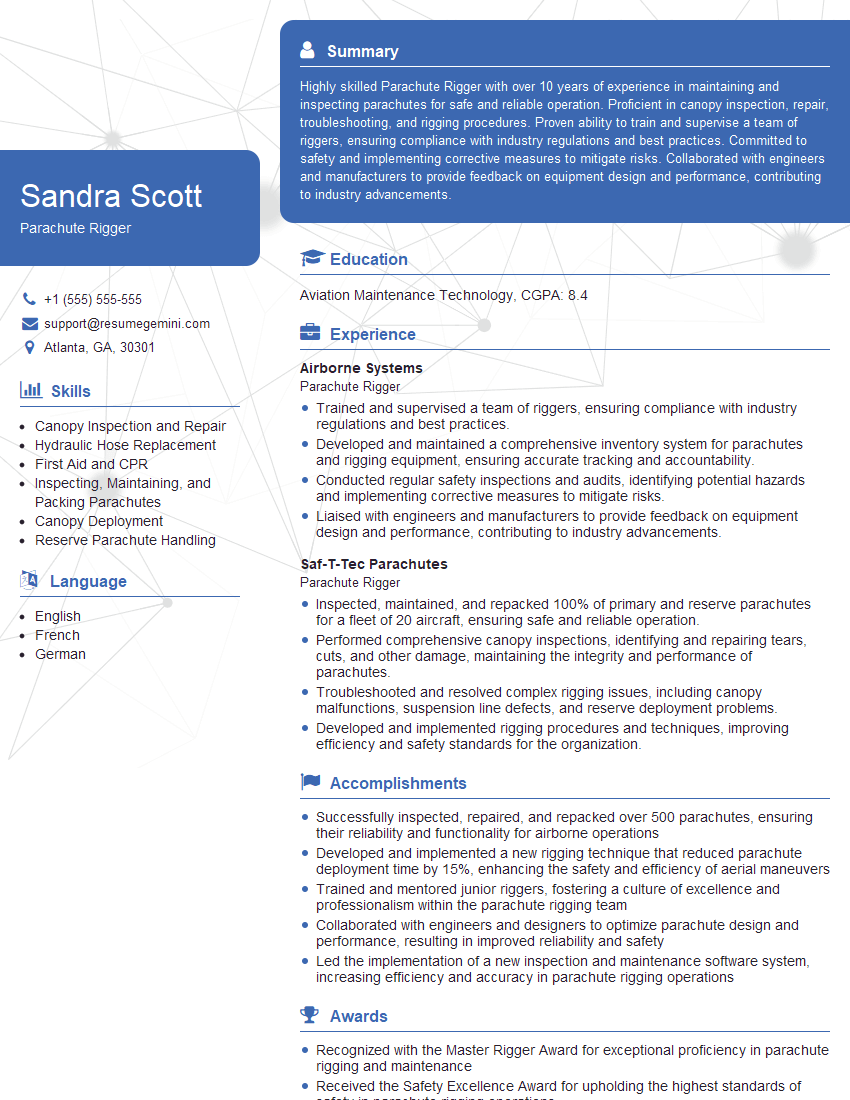
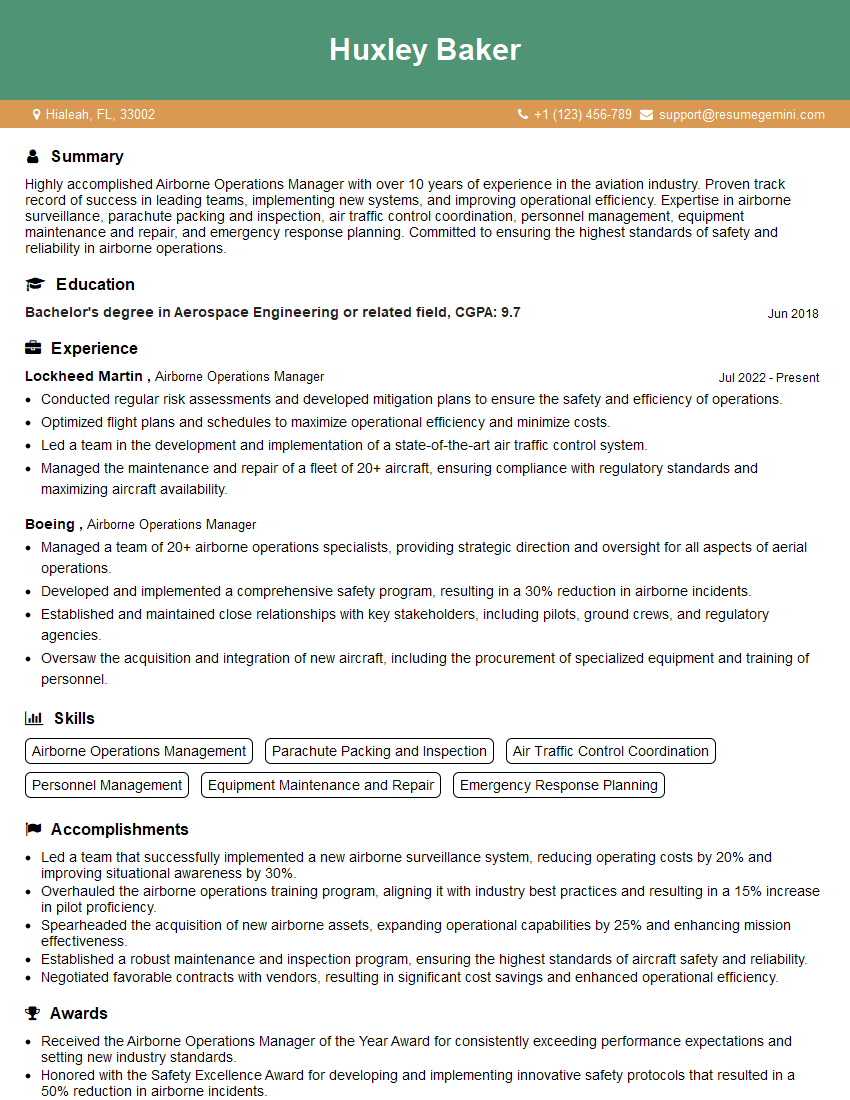
Mastering Static Line Airborne Operations opens doors to exciting and challenging career opportunities, offering significant professional growth and specialized skill development. To maximize your job prospects, crafting an ATS-friendly resume is vital. ResumeGemini is a trusted resource that can help you build a professional and impactful resume, ensuring your skills and experience shine through. Examples of resumes tailored to Static Line Airborne Operations are available to guide you in creating the perfect application. This will significantly increase your chances of securing your dream role.
Explore more articles
Users Rating of Our Blogs
Share Your Experience
We value your feedback! Please rate our content and share your thoughts (optional).
What Readers Say About Our Blog
Very informative content, great job.
good