Are you ready to stand out in your next interview? Understanding and preparing for Stitch Length and Pitch Control interview questions is a game-changer. In this blog, we’ve compiled key questions and expert advice to help you showcase your skills with confidence and precision. Let’s get started on your journey to acing the interview.
Questions Asked in Stitch Length and Pitch Control Interview
Q 1. Explain the relationship between stitch length and fabric type.
The relationship between stitch length and fabric type is crucial for achieving both aesthetic appeal and structural integrity in garments. Think of stitch length as the ‘glue’ holding your fabric together. Different fabrics have varying thicknesses, strengths, and drapability, requiring adjustments to the stitch length to ensure optimal results.
For instance, a delicate silk requires a shorter stitch length (e.g., 1.5-2 mm) to prevent puckering or damage to the delicate fibers. The shorter stitches will provide more stitches per inch, creating a finer seam with less stress on the individual threads. Conversely, a sturdy canvas fabric might tolerate a longer stitch length (e.g., 3-4 mm) due to its thickness and resilience. A longer stitch length in this scenario will be quicker and create a more durable seam without compromising the integrity of the fabric.
In essence, the choice of stitch length depends on the fabric’s weight, weave, and intended use. Lighter, more delicate fabrics need shorter stitch lengths, while heavier, more durable fabrics allow for longer stitch lengths.
Q 2. What factors influence the selection of appropriate stitch length?
Selecting the appropriate stitch length involves considering several key factors. It’s not just about the fabric; the intended function of the seam plays a vital role. The type of seam, the stress it will endure, and the aesthetic desired all influence this decision.
- Fabric type: As discussed previously, delicate fabrics need shorter stitches, while robust fabrics can handle longer ones.
- Seam type: A seam subjected to significant stress, like a main stress point on a pair of trousers, needs a shorter stitch length for increased durability. A decorative seam, on the other hand, might prioritize visual appeal over extreme strength.
- Intended use: A garment intended for everyday wear might utilize a standard stitch length, while a garment requiring exceptional durability, like a work uniform, would call for a shorter stitch length.
- Machine capabilities: Your sewing machine itself has limitations. Consult your manual to understand its optimal stitch length range.
For example, when sewing a shirt’s shoulder seam, where stress is minimal, a slightly longer stitch length could be chosen. However, when stitching a heavy-duty bag’s bottom seam, a shorter stitch length is crucial for robust structural integrity. The goal is balance – durability without unnecessary bulk or visual harshness.
Q 3. Describe the impact of incorrect stitch length on garment durability.
Incorrect stitch length directly impacts garment durability. Too short a stitch length can lead to several issues:
- Increased fabric puckering: The fabric can bunch up, leading to an uneven and unappealing finish.
- Broken needles: The machine might struggle to penetrate the fabric, increasing the risk of needle breakage.
- Increased tension: This can cause stress on the seams, making them prone to bursting under strain.
Conversely, too long a stitch length results in:
- Weak seams: The fewer stitches per inch create a seam susceptible to tearing or coming apart easily, especially in areas of stress.
- Loose, unraveling seams: The threads may pull apart more easily due to insufficient interlock between stitches.
- Reduced garment lifespan: The garment will not withstand the wear and tear it is designed for and may quickly become unusable.
Imagine sewing a pair of jeans with excessively long stitches. The seams would be weak and likely to rip under even moderate pressure during activities such as squatting or bending. This highlights the critical role of stitch length in ensuring the long-term durability of a garment.
Q 4. How does stitch length affect the appearance of a seam?
Stitch length significantly impacts the appearance of a seam. A shorter stitch length creates a neater, more refined seam, often preferred for finer fabrics or visible seams. It results in a denser, less visible stitch line which is ideal for fine details and seams.
A longer stitch length, while potentially offering speed and strength in some situations, results in a more pronounced and visible seam. This can be either a stylistic choice, suitable for certain garments or accents, or undesirable if a more discreet seam is required. For instance, a longer stitch might be used to deliberately create a visible topstitching detail on a garment. The length gives the effect a more casual and less formal look.
The choice depends entirely on the design. For a couture garment, shorter stitches are usually preferred for an impeccable finish; for a more rugged piece, a longer stitch could enhance its character.
Q 5. Explain the concept of stitch pitch and its importance.
Stitch pitch refers to the distance between individual stitches along a seam. Unlike stitch length, which measures the length of a single stitch, stitch pitch focuses on the spacing between stitches. It’s a crucial factor in controlling the evenness and density of stitching. In essence, consistent stitch pitch creates a more uniform and aesthetically pleasing seam, and improves the strength of the stitching and overall fabric quality.
Imagine stitching two pieces of fabric. With consistent stitch pitch, the stitches will be evenly spaced, creating a smooth, strong seam. If the pitch is inconsistent, you’ll have some areas bunched and others spaced wide apart, resulting in a weaker and uneven looking seam. This impacts the quality and durability of the project.
Q 6. What are the different methods for adjusting stitch pitch?
Adjusting stitch pitch involves manipulating several factors on your sewing machine. The primary methods include:
- Feed dog adjustment: The feed dogs on a sewing machine regulate how the fabric is fed through. Adjusting the feed dog pressure can indirectly influence stitch pitch. If the fabric feed is inconsistent, this can cause variations in stitch pitch.
- Stitch length dial: Although primarily affecting stitch length, a slight adjustment to the stitch length dial might subtly influence the stitch pitch. It’s often best to change the stitch length only to correct the pitch.
- Tension adjustment: Proper thread tension is paramount. Incorrect tension can cause skipped stitches or uneven spacing. Balancing the upper and lower thread tensions is critical for consistent pitch.
- Machine maintenance: Regular cleaning and lubrication of your sewing machine are essential. Lint and debris can interfere with the mechanical functions leading to inconsistent stitch pitch.
For example, if your feed dogs are dirty or not calibrated properly, the fabric may move erratically through the machine, producing inconsistent stitch pitch. Cleaning them or calling for a machine service can solve this problem. Alternatively, if your tension is too loose, you can end up with a more uneven stitch pitch.
Q 7. How do you troubleshoot inconsistent stitch pitch on a sewing machine?
Troubleshooting inconsistent stitch pitch requires a systematic approach. Here’s a step-by-step guide:
- Check the thread: Ensure you’re using the correct thread type and weight for your fabric. Broken or knotted threads can cause skipped stitches.
- Inspect the needle: A bent or dull needle is a common culprit. Replace it with a new, sharp needle of the appropriate size for your fabric.
- Clean the machine: Remove lint and debris from the feed dogs, bobbin case, and shuttle area. This often resolves many stitch problems.
- Adjust the tension: Check the upper and lower thread tensions. If they are uneven, adjust them until you achieve consistent stitching.
- Examine the feed dogs: Make sure the feed dogs are moving smoothly and evenly. If they are damaged or malfunctioning, professional service may be needed.
- Test the stitch on a scrap: Before sewing on your actual fabric, test the stitch on a scrap to check for consistency.
- Check the bobbin: Ensure the bobbin is correctly wound and inserted.
- Seek professional help: If the problem persists after all these steps, it’s best to consult a sewing machine technician.
Remember, consistent stitch pitch is a sign of a well-maintained machine and skilled operator. Addressing these points systematically allows you to identify and rectify the cause of inconsistent stitch pitch, resulting in high quality work.
Q 8. What is the ideal stitch length for different types of seams (e.g., straight seams, curved seams)?
Choosing the ideal stitch length depends heavily on the seam type and fabric. Think of stitch length like the glue holding your fabric together – too little, and it’s weak; too much, and it’s messy.
Straight Seams: For straight seams on most fabrics, a stitch length of 2.5mm (or 10 stitches per inch) is a great starting point. This provides a good balance of strength and aesthetic appeal. However, heavier fabrics might benefit from slightly longer stitches to prevent puckering, while finer fabrics might need shorter stitches for better control.
Curved Seams: Curved seams require more flexibility. Shorter stitch lengths (e.g., 2.0mm or even 1.5mm) are often preferable for curved areas as they allow the seam to follow the curve more smoothly, reducing stress points and the risk of breakage. Imagine trying to sew a tight curve with long stitches; it’s like trying to connect widely spaced dots with a straight line—it’s likely to look strained and might break.
Ultimately, experimenting with different lengths on a scrap of fabric is crucial to finding what works best for your specific combination of fabric and seam type.
Q 9. Explain the relationship between stitch length and sewing machine tension.
Stitch length and sewing machine tension are intimately related; they’re like two halves of a carefully balanced equation. Tension controls how tightly the top and bobbin threads are drawn together, while stitch length determines the distance between each stitch. If your tension is too loose, even with a short stitch length, your seam won’t be secure. Conversely, even with perfect tension, a stitch length that’s too long might create a weak seam that easily unravels.
Think of it like building a chain: the individual links (stitches) need to be strong (good tension) and close together (short stitch length, appropriately chosen for the fabric) for the entire chain to be strong and reliable.
Q 10. How does stitch length affect the strength of a seam?
Stitch length directly impacts seam strength. Shorter stitches generally create stronger seams because more stitches are packed into the same area, creating more points of contact between the fabric layers. It’s similar to how a tightly woven fabric is stronger than a loosely woven one. However, excessively short stitches can weaken the fabric itself through excessive piercing.
A longer stitch length, conversely, creates fewer points of connection, resulting in a weaker seam that’s more prone to unraveling. The optimal length is a balance between strength and the fabric’s ability to withstand the stitching process without damage.
Q 11. What are the consequences of using too short or too long a stitch length?
Using an inappropriate stitch length can lead to several problems:
Too Short: Stitches that are too short (less than 1.5mm) can cause the fabric to pucker, break needles more frequently, or even damage the fabric itself due to excessive stress at each stitch point. Imagine repeatedly stabbing a delicate fabric with a needle – that’s what happens with too short of stitches.
Too Long: Conversely, stitches that are too long (over 4mm) create weak seams easily prone to unraveling and are less resistant to stress. They simply don’t provide enough secure connections between the layers of fabric.
The resulting seams are not only visually unappealing but also structurally unsound, potentially leading to garment failure.
Q 12. How do you calculate the appropriate stitch length for a given fabric weight?
There isn’t a single formula for calculating stitch length based on fabric weight, as the ideal length is influenced by factors beyond just weight (such as fabric type, seam type, and desired aesthetic). However, here’s a general guideline:
Lightweight Fabrics (e.g., silk, chiffon): Start with shorter stitch lengths (1.5-2.0mm) for better control and to prevent skipped stitches.
Medium-Weight Fabrics (e.g., cotton, linen): A stitch length of 2.0-2.5mm often works well.
Heavyweight Fabrics (e.g., denim, canvas): Longer stitch lengths (2.5-3.5mm) may be necessary to prevent breakage.
It’s crucial to test on a scrap piece of your specific fabric before sewing the actual garment. Observe how the stitch looks and feels on the fabric; does it cause puckering? Is it strong enough? Does it look neat?
Q 13. Describe the role of stitch length in preventing seam puckering.
Stitch length plays a vital role in preventing seam puckering. Puckering occurs when the fabric gathers unevenly along the seamline, often caused by a mismatch between the stitch length and the fabric’s natural drape or stretch. If your stitches are too short for a stretchy fabric, they will create too much resistance, causing it to pull and pucker. The solution lies in using a longer stitch length or a specialized stitch like a zigzag stitch for stretchy fabrics to better accommodate the fabric’s movement without undue stress.
Conversely, too long a stitch on a non-stretchy material might be too loose and cause the seam to become uneven or show excessive fabric between the stitches.
Q 14. Explain the impact of stitch length on the efficiency of the sewing process.
Stitch length influences sewing efficiency in several ways. Longer stitch lengths significantly reduce sewing time, especially on large projects, since fewer stitches need to be made to cover the same distance. However, as previously mentioned, this comes with the trade-off of potentially weaker seams. Conversely, shorter stitch lengths might take longer, but they often yield stronger and more aesthetically pleasing results.
Therefore, striking a balance between speed and seam quality is key. For production-focused sewing, slightly longer stitch lengths might be preferred, while creating intricate details might require shorter stitch lengths, even if it slows down the process.
Q 15. How does stitch pitch affect the aesthetics of embroidery?
Stitch pitch, the distance between stitches, significantly impacts the aesthetics of embroidery. A consistent, even pitch creates a smooth, professional look. Think of it like building a brick wall – uniform bricks (stitches) make a neat, strong wall, while uneven bricks result in a messy, unstable structure. Too tight a pitch can create a dense, puckered fabric, while too loose a pitch can lead to gaps and a loose, unprofessional appearance. The ideal pitch depends on the thread type, fabric, and desired design, but consistency is key to a high-quality finish.
For example, a finely detailed embroidery design requires a tighter pitch for intricate detail, while a more rustic design might benefit from a looser, more open stitch. The overall texture and visual appeal of the embroidery are directly linked to the consistent or inconsistent application of stitch pitch.
Career Expert Tips:
- Ace those interviews! Prepare effectively by reviewing the Top 50 Most Common Interview Questions on ResumeGemini.
- Navigate your job search with confidence! Explore a wide range of Career Tips on ResumeGemini. Learn about common challenges and recommendations to overcome them.
- Craft the perfect resume! Master the Art of Resume Writing with ResumeGemini’s guide. Showcase your unique qualifications and achievements effectively.
- Don’t miss out on holiday savings! Build your dream resume with ResumeGemini’s ATS optimized templates.
Q 16. What techniques are used to ensure consistent stitch pitch in embroidery?
Maintaining consistent stitch pitch requires a multi-pronged approach. First, proper machine maintenance is crucial. A well-oiled machine with correctly tensioned threads ensures even stitch formation. Secondly, consistent speed is important; rushing leads to inconsistent stitching. Thirdly, choosing the right needle and thread for the fabric prevents skipped stitches or uneven tension. Using a stitch regulator on more advanced machines allows for precise control. Experienced embroiderers also often develop a feel for the machine’s rhythm, allowing them to adjust their speed and tension subtly to maintain consistency.
- Using a stitch regulator: Many modern machines offer this feature, providing programmable control over stitch density.
- Practicing even hand-feeding: If working on a free-motion embroidery machine, a steady, even hand movement is key.
- Regular machine maintenance: Cleaning and lubricating the machine prevents inconsistencies.
Q 17. How do different needle types affect stitch length and pitch?
Different needle types dramatically affect stitch length and pitch. For instance, a sharp needle penetrates the fabric cleanly, enabling consistent stitch formation. A dull or incorrectly sized needle can cause skipped stitches, broken threads, and uneven pitch. The needle size itself also influences the stitch. A finer needle will create a smaller stitch, leading to a tighter pitch, ideal for delicate fabrics and fine details. Conversely, a larger needle will create a larger stitch, suited for heavier fabrics and bolder designs. Needle type (e.g., embroidery needle versus universal needle) also impacts fabric penetration and overall stitch quality.
Imagine sewing with a blunt pencil instead of a sharp needle – the result would be inconsistent and messy. Similarly, a dull needle can create inconsistent stitch length and pitch, affecting the overall aesthetics.
Q 18. What are the maintenance requirements for maintaining consistent stitch length and pitch?
Maintaining consistent stitch length and pitch relies on diligent machine maintenance and user awareness. Regular cleaning of the machine’s feed dogs, bobbin case, and needle area prevents thread build-up and ensures smooth fabric feed. Lubrication, according to the manufacturer’s instructions, reduces friction and prevents mechanical issues that can affect stitch consistency. Inspecting the needle for damage before each project is also crucial, replacing it when necessary. Finally, keeping the tension adjustment knobs clean and functioning correctly is paramount for maintaining thread tension, which directly impacts stitch formation.
Think of it like caring for a car: regular servicing ensures optimal performance. Neglecting maintenance in sewing machines will lead to inconsistent stitch quality.
Q 19. How do you troubleshoot skipped stitches or broken threads related to stitch length or pitch?
Troubleshooting skipped stitches or broken threads often involves investigating the thread tension, needle condition, and fabric type. Skipped stitches usually indicate improper tension; check both the top and bobbin tensions. A broken thread might signal a dull needle, incorrect needle size for the fabric, or excessive tension. Always inspect the needle for bends or damage; a damaged needle is a common culprit. Ensure the thread is correctly threaded through the machine, and if using multiple threads, that they are all properly wound. For complex issues, consider consulting the machine’s manual or seeking professional assistance.
- Check thread tension: Adjust until a balanced tension is achieved.
- Inspect the needle: Replace if bent, dull, or damaged.
- Verify thread path: Ensure the thread is correctly routed through the machine.
Q 20. Describe the process of calibrating a sewing machine for optimal stitch length and pitch.
Calibrating a sewing machine for optimal stitch length and pitch involves adjusting the stitch length dial and tension knobs. Begin with a test fabric and a standard stitch length setting. Sew a sample, examining the stitch length and evenness. Adjust the stitch length dial to achieve the desired length. Then, adjust the upper and lower tension until the stitches are even and balanced on both sides of the fabric; you should not see any puckering or loose stitches. Repeat the process until the stitch is consistent and meets the project’s requirements. Each machine differs; always consult the machine’s manual for precise calibration instructions.
Think of it like fine-tuning a musical instrument; precise adjustments are needed to achieve the perfect sound. Similar precision is needed when calibrating a sewing machine for consistent stitch quality.
Q 21. What are the industry standards for stitch length and pitch in different garment types?
Industry standards for stitch length and pitch vary greatly depending on the garment type and the desired aesthetic. For example, seams on heavy-duty workwear typically require longer stitches for strength and durability, whereas fine lingerie often uses shorter stitches for a delicate, refined finish. There isn’t a universally accepted standard; rather, experienced sewists and pattern designers choose stitch lengths based on the garment’s function, fabric weight, and intended appearance. Often, stitch length is specified in stitches per inch (spi) rather than in millimeters. For instance, a tightly woven fabric might use 18-22 spi for a strong seam, whereas a loosely woven fabric might use 12-16 spi to prevent puckering.
Understanding these variances is crucial for selecting appropriate stitches in professional garment production and achieving high-quality results.
Q 22. How does the type of thread affect the stitch length and pitch?
The type of thread significantly impacts stitch length and pitch. Think of it like this: a thick, bulky thread will naturally create longer stitches and a wider pitch (the distance between rows of stitches) than a fine, thin thread. This is because the thicker thread occupies more space, limiting how close stitches can be placed together.
- Thread Thickness: A heavier thread necessitates a longer stitch length to avoid excessive bulk and potential breakage. A finer thread allows for shorter stitches and a denser fabric.
- Thread Material: Different thread materials (e.g., cotton, polyester, silk) have varying degrees of elasticity and strength. A stretchy thread might allow for shorter stitches without compromising durability, while a brittle thread might require longer stitches to prevent breakage.
- Thread Twist: The twist of the thread also plays a role. A tightly twisted thread might be more resistant to pulling, allowing for shorter stitch lengths, while a loosely twisted thread might require longer stitches for better strength.
For instance, when sewing heavy denim, you’d use a strong, thicker thread and a longer stitch length for durability. In contrast, delicate silk garments require a fine, less twisted thread and shorter stitches to maintain the fabric’s integrity and prevent visible stitching.
Q 23. How does stitch length and pitch affect the cost of production?
Stitch length and pitch directly affect production costs. Shorter stitch lengths and tighter pitches generally result in higher production costs due to increased sewing time and potentially higher thread consumption. Imagine sewing a buttonhole – a denser stitch (shorter length, tighter pitch) requires more time and thread than a looser one.
- Increased Sewing Time: Shorter stitch lengths require more time to complete the same amount of sewing, increasing labor costs.
- Higher Thread Consumption: Tighter pitches naturally lead to higher thread usage, adding to material costs.
- Machine Wear and Tear: Constantly working with finer stitches can increase the wear and tear on sewing machines, increasing maintenance and repair costs.
Manufacturers often balance these factors by optimizing stitch settings for each garment type. A high-end garment might justify the extra cost of finer stitches for a premium aesthetic, while a mass-produced item might opt for longer stitches to maximize speed and minimize cost.
Q 24. Explain the relationship between stitch length and fabric shrinkage.
The relationship between stitch length and fabric shrinkage is complex, but generally, shorter stitch lengths tend to result in less shrinkage than longer stitch lengths. This is because shorter stitches create a denser fabric structure that holds its shape better when washed.
Imagine a tightly woven basket versus a loosely woven one – the tightly woven basket is much more resistant to deformation. Similarly, a fabric with shorter stitches exhibits greater dimensional stability during washing or other processes that might cause shrinkage. Longer stitches allow for more movement and thus greater potential for shrinkage. The type of fabric also plays a significant role; some fabrics inherently shrink more than others regardless of stitch length.
Q 25. How do you measure stitch length and pitch accurately?
Accurate measurement of stitch length and pitch requires specialized tools and techniques. Stitch length is typically measured using a ruler or a measuring gauge, counting the number of stitches within a specific distance. Pitch is measured by counting the number of rows of stitches within a defined area.
- Stitch Length: Measure a section of stitching and divide the total length by the number of stitches.
- Pitch: Measure the distance between two corresponding points on adjacent rows of stitches.
For precise measurements, using a magnifying glass can be beneficial, particularly for very small or densely packed stitches. Digital measuring tools are also available to provide greater accuracy and often assist in the measurement of curves.
Q 26. What are the key differences between different stitch types regarding length and pitch?
Different stitch types exhibit significant variations in stitch length and pitch capabilities. For example:
- Straight Stitch: Highly versatile, allowing for a wide range of stitch lengths and pitches. Often used for seams and general sewing.
- Zigzag Stitch: Uses shorter stitches and is often used for edge finishing or decorative purposes; pitch is determined by the width of the zigzag.
- Overlock Stitch (Serger): Usually shorter stitches with a specific pitch to create a finished edge that prevents fraying. Stitch length and pitch are determined by the machine settings.
- Blind Hem Stitch: Involves very short, almost invisible stitches with specific pitch adjustments to create a clean, almost hidden hem.
Each stitch type’s optimal stitch length and pitch are determined by the fabric type, the desired strength, and the intended aesthetic. A seam requiring high strength might use a longer straight stitch, while a delicate fabric might benefit from a shorter zigzag stitch for edge finishing.
Q 27. How does stitch length affect the drape of a finished garment?
Stitch length profoundly impacts the drape of a finished garment. Shorter stitch lengths result in a firmer, less draping fabric, while longer stitch lengths create a softer, more flowing drape. This is because shorter stitches create a denser, more compact fabric structure which resists movement and folding.
Consider a tightly woven fabric versus a loosely woven one. The tightly woven fabric will hang stiffer, while the loosely woven fabric will have a more relaxed drape. Similarly, a garment sewn with shorter stitches will hang differently compared to one sewn with longer stitches, affecting the overall aesthetic of the garment.
Therefore, selecting the appropriate stitch length is essential when designing garments that require a specific drape. A flowing evening gown, for instance, would benefit from longer stitches, while a tailored suit might require shorter stitches for structure and crispness.
Q 28. Describe a time you had to troubleshoot a problem with stitch length or pitch in a production environment.
During a large-scale production run of women’s blouses, we experienced inconsistent stitch lengths on a particular seam. The resulting garments had varying levels of tension and some even showed stitch breakage. Our initial diagnosis focused on machine maintenance, but the problem persisted.
After systematic troubleshooting, we discovered the issue wasn’t with the machine itself, but with the thread supply. A batch of thread had a slightly thicker diameter than the specified standard. This subtle difference caused the machine to stitch inconsistently, resulting in the varied stitch lengths. We resolved the problem by identifying and replacing the affected thread batch, recalibrating the machines’ stitch settings for the new thread’s characteristics, and implementing stricter quality control checks on future thread deliveries.
This experience highlighted the importance of careful quality control at each step of the production process, from thread selection to machine calibration. A seemingly small variation in thread thickness can have significant consequences on the final product’s quality and consistency.
Key Topics to Learn for Stitch Length and Pitch Control Interview
- Understanding Stitch Length: Defining stitch length, its impact on fabric properties (strength, drape, texture), and the relationship between stitch length and machine settings.
- Pitch Control Mechanisms: Exploring different methods for controlling stitch pitch (e.g., differential feed, stitch regulators), their functionalities, and troubleshooting common issues.
- Practical Applications: Analyzing how stitch length and pitch influence various sewing operations (e.g., seams, topstitching, embroidery), and selecting appropriate settings for different fabric types and project requirements.
- Fabric Selection and its Influence: Understanding how fabric weight, type, and weave affect optimal stitch length and pitch choices for achieving desired results and preventing issues like skipped stitches or breakage.
- Troubleshooting Techniques: Identifying and resolving common problems related to inconsistent stitch length or pitch, including needle selection, tension adjustments, and machine maintenance.
- Advanced Concepts: Exploring specialized techniques like programmed stitch patterns and their implications for stitch length and pitch control in advanced sewing applications.
- Quality Control and Inspection: Understanding the importance of consistent stitch length and pitch in quality control and identifying techniques for evaluating stitch quality and identifying defects.
Next Steps
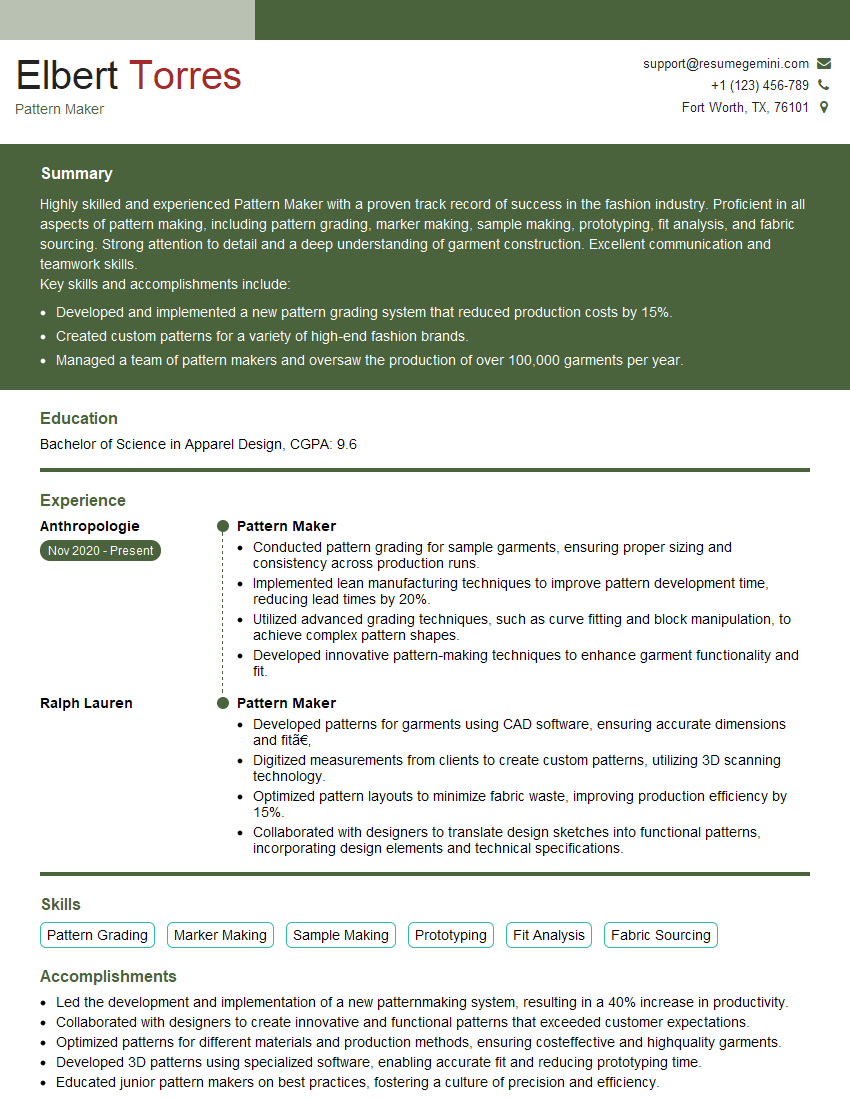
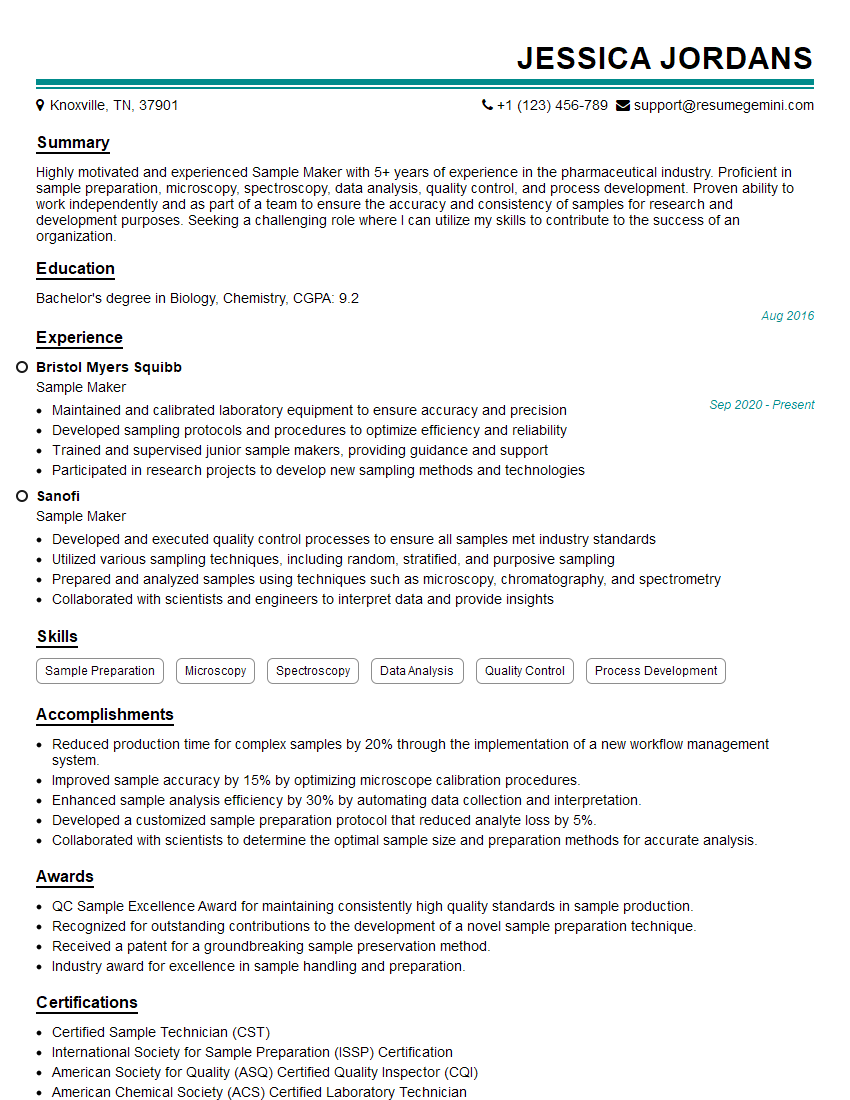
Mastering Stitch Length and Pitch Control is crucial for advancement in many sewing-related fields, demonstrating a strong understanding of fundamental techniques and problem-solving skills. A well-crafted resume is your key to unlocking these opportunities. Building an ATS-friendly resume significantly improves your chances of getting noticed by recruiters. We recommend using ResumeGemini, a trusted resource, to create a professional and impactful resume that highlights your expertise. Examples of resumes tailored to showcasing Stitch Length and Pitch Control expertise are available for your review. Investing time in refining your resume will greatly enhance your job prospects.

Explore more articles
Users Rating of Our Blogs
Share Your Experience
We value your feedback! Please rate our content and share your thoughts (optional).
What Readers Say About Our Blog
Very informative content, great job.
good