The right preparation can turn an interview into an opportunity to showcase your expertise. This guide to Stitching and Seam Finishing Techniques interview questions is your ultimate resource, providing key insights and tips to help you ace your responses and stand out as a top candidate.
Questions Asked in Stitching and Seam Finishing Techniques Interview
Q 1. Explain the difference between a French seam and a serged seam.
Both French seams and serged seams are excellent seam finishes, but they achieve a professional finish through different methods. A French seam encloses all raw edges, resulting in a very clean, durable, and elegant seam perfect for fine fabrics. It involves sewing the seam allowances together with a narrow seam, then pressing them open, and sewing a second seam that encloses the raw edges. Think of it like creating a little ‘tube’ around the seam. This is ideal for sheer fabrics where no raw edges should show.
A serged seam, on the other hand, uses an overlocker (serger) to finish the raw edges simultaneously while stitching the seam. This is a much faster method, creating a professional, neat finish that prevents fraying. Sergers cut and stitch the fabric simultaneously, creating a flat, durable seam suitable for many fabrics, particularly those prone to fraying.
In short: French seams offer superior elegance and durability, but take more time. Serged seams offer speed and a robust finish. The choice depends on the fabric, the garment, and the desired level of finish.
Q 2. What are the benefits of using a blind stitch?
A blind stitch is a marvel of seam finishing, especially for hems. Its primary benefit is its invisibility—the stitches are nearly undetectable from the right side of the garment. This is crucial for achieving a clean, professional look, particularly on hems where visible stitching would be undesirable.
Beyond aesthetics, a blind stitch creates a very strong, durable seam, as the stitches interlock neatly within the seam allowance. This is significantly better than using a simple straight stitch to attach a hem, where the stitches are visible and more likely to break under tension.
In my experience, blind stitches are exceptionally useful for tailored garments, delicate fabrics and when a totally invisible finish is required.
Q 3. Describe your experience with various seam finishes (e.g., Hong Kong finish, overlocking).
I’ve extensive experience with a range of seam finishes. The Hong Kong finish is a luxurious option, involving binding the raw edge of a seam allowance with bias binding fabric. This creates a beautifully finished edge, perfect for high-end garments. It’s particularly suited to curved seams and areas where a clean finish is paramount. It’s a time-consuming technique, but the results are unmatched in terms of elegance and durability.
Overlocking (or serging), as previously mentioned, is a staple in my work. Its speed and efficiency make it a go-to method for most projects, especially those involving woven fabrics. I frequently use it for both seam finishing and preventing fraying. I’m proficient in adjusting the overlocker settings to suit different fabric weights and types.
Other techniques I’m familiar with include zig-zag stitching, pinking, and French seams. My selection of seam finish always depends on factors like fabric type, project requirements, and desired aesthetic.
Q 4. How do you choose the appropriate stitch type for a specific fabric?
Choosing the right stitch type is crucial for success. The fabric’s weight, weave, and fiber content dictate the appropriate stitch. For example, lightweight fabrics like silk or chiffon require delicate stitches to prevent damage; a small, fine stitch length on a sewing machine, or a hand stitch, would be appropriate. Heavier fabrics like denim or canvas, on the other hand, require stronger stitches that can withstand more stress. Here I would opt for a longer stitch length, potentially with reinforcement stitching.
Stretch fabrics need a stitch that allows for give, such as a zig-zag stitch or a stretch stitch offered by many sewing machines. Knits need a stitch that will adapt to the fabric’s expansion, so a serger or a narrow zig-zag stitch is appropriate. Understanding the fabric is key to selecting the right stitch, preventing damage and ensuring a professional result.
Q 5. What are the common causes of skipped stitches and how do you troubleshoot them?
Skipped stitches are a common sewing frustration. Several factors can contribute: a bent or broken needle, incorrect tension settings, improper threading, damaged bobbin, or lint build-up. My troubleshooting process begins with a systematic check.
- Inspect the needle: Bent or dull needles are a primary culprit. Replace immediately.
- Check the tension: Proper tension is vital. Adjust the upper and lower tension settings, testing on a scrap of fabric.
- Examine the bobbin and threading: Ensure the bobbin is correctly wound and inserted, and that the upper thread is correctly threaded through all the guides.
- Clean the machine: Remove lint and dust from the bobbin case and hook area. This prevents interference.
- Test the fabric: Sometimes the fabric itself can interfere with stitching. Try a different fabric type.
By following these steps, I can effectively pinpoint the source of skipped stitches and resolve it.
Q 6. How do you prevent puckering when sewing curved seams?
Puckering on curved seams is a common problem, often caused by the fabric stretching unevenly during sewing. My strategy involves careful preparation and techniques that minimize stress on the fabric.
- Clip curves: Clipping into the seam allowance on curves helps the fabric lie flat without puckering.
- Notch curves: Notching, particularly on concave curves, will help eliminate stress in the seam.
- Use smaller stitch lengths: A smaller stitch length provides better control and prevents stretching.
- Use a walking foot: A walking foot helps feed the fabric evenly through the machine, especially on thick or layered fabrics.
- Ease the fabric: Carefully ease or stretch the fabric slightly as you sew the curve, ensuring a smooth flow of fabric under the needle.
By combining these techniques, one can significantly reduce puckering and obtain a professional-looking curved seam.
Q 7. Describe your experience with different types of sewing machines (industrial vs. domestic).
My experience encompasses both domestic and industrial sewing machines. Domestic sewing machines are versatile and suitable for a wide range of projects, but they generally lack the power and speed of their industrial counterparts. They are ideal for home sewing, alterations, and smaller-scale projects. I am proficient in using various brands and models of domestic machines, performing maintenance and troubleshooting issues.
Industrial sewing machines, on the other hand, are powerful, robust, and built for high-volume production. They offer speed and consistency, vital for large projects or production settings. The industrial machines I have used offer specialized functions such as specialized stitch types and feed mechanisms suited for specific tasks. The experience has given me a deep understanding of the mechanics of sewing machine functionality and maintenance.
While both have their strengths, the choice of machine depends heavily on the project’s scale and requirements.
Q 8. Explain the importance of proper seam allowance.
Proper seam allowance is crucial for achieving well-fitting and durable garments. It’s the distance between the stitching line and the raw edge of the fabric. A consistent seam allowance ensures accurate pattern matching, prevents distortion during construction, and provides enough fabric for seam finishing techniques.
Think of it like the foundation of a house – if it’s not properly laid, the whole structure will be compromised. A standard seam allowance is usually 5/8 inch (1.5cm), but this can vary depending on the garment, fabric, and design. Using a consistent seam allowance is essential for professional results; varying it even slightly can lead to noticeable inconsistencies in the final garment.
For example, a smaller seam allowance might be used for delicate fabrics to minimize bulk, while a larger one might be chosen for heavier fabrics to add strength and durability. Using a seam guide on your sewing machine helps maintain consistency.
Q 9. How do you handle different types of fabric weight when sewing?
Fabric weight significantly impacts sewing techniques. Heavier fabrics like denim require a stronger stitch, a heavier needle, and potentially slower sewing speed to prevent skipped stitches or broken needles. Lighter fabrics, like silk or chiffon, need a finer needle and a gentler touch to avoid damage.
My approach is always to adjust my settings to the specific fabric. For instance, when working with heavy denim, I might use a denim needle and a longer stitch length to accommodate the fabric’s thickness. With lighter fabrics, I’ll opt for a smaller stitch length and a finer needle to create a neat and delicate seam. Properly pressing the seams is also crucial, particularly with heavier fabrics, to ensure a clean finish. Using a tailor’s ham can help distribute the pressure evenly when pressing curved seams.
Q 10. What is your experience with edge finishing techniques like pinking and zig-zagging?
Pinking and zig-zagging are both effective edge finishing techniques that prevent fabric from fraying. Pinking shears create a serrated edge that slows down fraying, while a zig-zag stitch encloses the raw edge with interwoven threads.
I use pinking shears frequently for fabrics that won’t be significantly stressed, such as cottons in home décor projects. For garments where durability is key, I prefer a zig-zag stitch; this offers better protection against unraveling, especially on woven fabrics that tend to fray easily. A serger offers a more professional edge finish, creating a clean, neat seam with excellent durability. The choice of technique depends heavily on the fabric, the project, and the desired aesthetic.
Q 11. Explain your approach to quality control in sewing and seam finishing.
Quality control is paramount in sewing and seam finishing. My approach involves multiple checks throughout the process: Firstly, I meticulously check the pattern pieces before cutting to ensure accuracy. Secondly, I carefully inspect fabric for flaws before starting. Thirdly, I maintain consistent seam allowances and stitch lengths. Finally, I perform a thorough inspection of the completed garment to check for any imperfections like missed stitches, uneven seams, or any other flaw.
I often use a seam ripper to correct minor errors, and pressing at each stage helps to create a professional finish. Quality control isn’t just about finding flaws; it’s also about actively preventing them through careful planning and attention to detail. This systematic approach ensures the final product meets the highest standards. Addressing potential issues early on saves considerable time and effort later.
Q 12. Describe your experience working with different types of needles and threads.
Experience with needles and threads is crucial for success in sewing. Different fabrics require different needle types and thread weights. For example, a sharp needle is best suited for delicate fabrics like silk, while a ballpoint needle is ideal for knits to prevent skipped stitches. Heavyweight fabrics need a heavier needle, while lightweight fabrics use finer needles.
I’ve worked extensively with various threads including cotton, polyester, silk, and rayon. The thread choice depends largely on the fabric and the project’s desired strength and appearance. A good rule of thumb is to match the thread’s weight and fiber type to the fabric. For example, using polyester thread with cotton fabric works well, but using a heavy-duty thread on a delicate silk will result in a visible, heavy seam.
Q 13. How do you identify and repair common sewing machine malfunctions?
Troubleshooting sewing machine malfunctions requires a systematic approach. I begin by identifying the problem. Is the machine not stitching at all? Are the stitches uneven? Is the tension off? I’ll then check the obvious things first: is the needle correctly inserted and is it the right type for the fabric? Is the bobbin correctly wound and inserted? Is the machine properly threaded?
If the problem persists, I will check the tension discs, ensuring they are correctly adjusted. Sometimes, lint build-up can cause problems, so cleaning is often necessary. If I can’t identify the issue, I will consult a sewing machine manual or seek professional help. Experience has taught me that careful observation and a step-by-step approach are key in solving most sewing machine problems.
Q 14. How do you maintain and clean your sewing machine?
Regular maintenance is crucial for keeping my sewing machine in top condition. After each use, I remove any lint or fabric scraps from the bobbin area, feed dogs, and presser foot. I also brush the exterior of the machine to remove dust. I clean the bobbin case and carefully oil the moving parts using sewing machine oil, avoiding any electrical components.
Periodically, I perform a more thorough cleaning, including removing and cleaning the needle plate. This helps keep the machine running smoothly and prevents any potential malfunctions. Following the manufacturer’s recommendations for maintenance ensures the longevity of the machine and produces consistent, high-quality results.
Q 15. What is your experience with different types of interfacing and their applications?
Interfacing is a supporting fabric used to add structure, stability, and body to garments. Choosing the right interfacing is crucial for a professional finish. My experience encompasses a wide range of interfacings, each suited for specific applications.
- Fusible Interfacing: This type bonds to the fabric with heat and pressure. I often use it for collars, cuffs, and button plackets where crispness is needed. For example, a lightweight fusible interfacing works well for a delicate blouse collar, while a heavier weight is ideal for a structured blazer collar.
- Sew-in Interfacing: This type is sewn directly to the garment fabric. I prefer this for areas requiring flexibility and drape, like curved seams or princess seams. It offers excellent support without stiffness. I’ve used sew-in interfacing successfully in delicate silk garments, preventing distortion and adding shape without compromising the fabric’s flow.
- Woven Interfacing: Provides excellent support and structure; often used in tailoring for jackets and coats. The choice depends on the weight of the outer fabric. For a lightweight wool jacket, a lightweight woven interfacing is sufficient, preventing the garment from becoming overly stiff.
- Knit Interfacing: Stretchy interfacing ideal for knit fabrics. I commonly use this for necklines on knit tops or dresses, ensuring a smooth, clean finish without pulling or distorting the knit fabric’s natural stretch.
Selecting the appropriate interfacing requires careful consideration of the garment’s fabric, style, and intended use. The wrong choice can lead to puckering, distortion, or an unsatisfactory finish.
Career Expert Tips:
- Ace those interviews! Prepare effectively by reviewing the Top 50 Most Common Interview Questions on ResumeGemini.
- Navigate your job search with confidence! Explore a wide range of Career Tips on ResumeGemini. Learn about common challenges and recommendations to overcome them.
- Craft the perfect resume! Master the Art of Resume Writing with ResumeGemini’s guide. Showcase your unique qualifications and achievements effectively.
- Don’t miss out on holiday savings! Build your dream resume with ResumeGemini’s ATS optimized templates.
Q 16. How do you determine the correct tension settings for different fabrics and threads?
Correct tension is paramount for even stitching and prevents skipped stitches, broken threads, or puckering. Determining the right tension depends on several factors: the fabric type, thread type, needle size, and stitch length.
My approach is to always test on a scrap of the same fabric before starting the project. I start with the machine’s default tension setting and make sample stitches, adjusting as needed.
- Lightweight, delicate fabrics (silk, chiffon): Require lower tension to prevent breakage and puckering. I might even reduce the pressure foot pressure to avoid pulling the fabric.
- Medium-weight fabrics (cotton, linen): Usually require a medium tension setting.
- Heavyweight fabrics (denim, canvas): Need higher tension to penetrate the fabric and create strong stitches.
- Stretchy fabrics (knits): Require a balanced tension and a ballpoint needle to avoid snagging. I might also use a walking foot for smoother feeding.
Different threads also demand adjustments. Thicker threads need less tension, while finer threads may need more. Regular adjustments are key, even within the same project if the fabric changes in thickness or texture.
Q 17. Explain the importance of pressing and its impact on seam finish.
Pressing is more than just ironing; it’s a crucial step in creating professional-looking garments. It shapes the fabric, sets seams, and enhances the overall finish. Neglecting pressing can lead to uneven seams, puckering, and a generally sloppy look.
The impact on seam finish is significant. Proper pressing opens seams to lie flat, preventing bulk. It creates a crisp, clean edge, especially important for seam finishes like French seams or Hong Kong finishes. Pressing helps maintain the shape of collars, cuffs, and other details.
For example, pressing a seam allowance open before finishing it creates a smooth, flat surface. In contrast, pressing a seam allowance to one side might be desired for a tailored look, but should be done carefully to avoid puckering or creating unwanted bulges.
I always use the appropriate temperature and pressure for the fabric and use a press cloth to prevent scorching. Careful and consistent pressing is a mark of a high-quality garment construction.
Q 18. Describe different methods of topstitching and their applications.
Topstitching is decorative stitching applied parallel to a seam or edge. It adds visual interest and can provide extra durability. Several methods exist:
- Straight Topstitching: Simple, straight stitches used to reinforce seams or add a decorative element. I use this frequently to secure facing edges to collars and lapels or to add a clean finish to hems.
- Decorative Topstitching: Uses decorative stitches, creating a design feature. This can be anything from zigzags to intricate patterns, used often on quilts and clothing details.
- Edgestitching: A narrow topstitch placed very close to the edge of a fabric piece. It creates a polished and clean finish, frequently used on hems, pockets, or facings.
The choice depends on the garment’s style and the desired aesthetic. Straight topstitching on a tailored jacket provides a structured and refined look, while decorative topstitching can add a playful touch to a child’s dress. Correct tension and needle selection remain critical for a neat, even result.
Q 19. How do you handle fabric stretching during the sewing process?
Fabric stretching is a common challenge, especially with stretchy or loosely woven fabrics. Several strategies prevent this:
- Use a walking foot: This foot has feed dogs on both the presser foot and the feed plate, ensuring even feeding and preventing stretching or slippage.
- Use a stabilizer: This can be a lightweight interfacing, a piece of tear-away stabilizer, or even a sheer fabric to add support and prevent stretching.
- Reduce sewing speed: Slowing down allows for more control and prevents the machine from pulling the fabric.
- Pre-wash fabrics: Pre-washing fabrics helps to set any stretch and reduces shrinkage post-construction, minimizing potential alterations.
- Use appropriate needle and thread: Ballpoint needles for knit fabrics prevent snagging and stretching. The right thread type and weight adds strength without excessive tension.
- Seam allowance adjustments: Slightly smaller seam allowances may be needed for stretchy fabrics to reduce fabric strain.
Understanding the fabric’s properties is key. Knowing how much a fabric might stretch helps tailor the sewing method. Experimenting on scraps ensures the chosen methods will work effectively before tackling the main garment.
Q 20. What is your experience with pattern matching and its importance in garment construction?
Pattern matching is the careful alignment of fabric patterns or prints at seams. This is especially crucial for garments with bold patterns or plaids. Ignoring pattern matching can create a visually unappealing garment, even if the construction is perfect.
My experience includes matching various patterns, from simple stripes to complex florals. The complexity of matching depends on the pattern repeat, the seam lines, and the fabric’s drape. For example, matching stripes on a skirt requires paying attention to the stripe direction and ensuring consistent alignment at each seam.
Proper pattern matching elevates the finished garment’s professionalism. It shows attention to detail and creates a visually pleasing, cohesive product. I use techniques like pinning and marking to ensure accurate placement of the pattern before cutting and sewing to ensure seamless alignment across seams.
Q 21. Explain your experience with industrial sewing equipment and safety procedures.
I am proficient in operating various industrial sewing machines, including single-needle, double-needle, and overlock machines. My experience includes working with machines for different applications—from simple straight stitching to more complex decorative or functional stitching.
Safety procedures are paramount. I adhere strictly to all safety protocols, including:
- Proper machine maintenance: Regular cleaning and lubrication of the machine prevent malfunctions and accidents.
- Safe handling of needles and blades: Always using needle and blade guards and disposing of sharps responsibly.
- Appropriate attire: Avoiding loose clothing or jewelry that could get caught in the machinery.
- Machine guards: Ensuring all guards are in place to prevent injuries.
- Emergency shut-off procedures: Knowing the location and operation of emergency stop buttons.
Safety is not just a guideline; it’s a fundamental aspect of my work ethic. I ensure that I and my coworkers maintain a safe work environment.
Q 22. How do you achieve a clean and professional finish on seams?
Achieving a clean, professional seam finish is crucial for garment durability and aesthetics. It involves selecting the appropriate seam finish based on fabric type, garment style, and desired look. The goal is to prevent fraying, enhance strength, and create a neat, invisible seam where possible.
- Serging/Overlocking: This uses a specialized machine to enclose raw edges with a decorative stitch, preventing fraying and adding durability. It’s ideal for knit fabrics and seams that will be visible.
- Zigzag stitch: A simple, versatile method using a standard sewing machine. It prevents fraying, but can be bulky and visible, making it more suitable for seams hidden inside the garment or on heavier fabrics.
- Pinking shears: These shears create a serrated edge that minimizes fraying but are not as effective as stitching methods, particularly on lightweight fabrics. Best used as a temporary solution or for quick finishing.
- French seams: These elegant seams enclose all raw edges, resulting in a very clean and professional finish, but they require more steps and are generally best for lighter-weight fabrics.
- Hong Kong finish: This involves binding the seam allowance with bias binding, providing a clean, luxurious finish often used in high-end garments.
The choice of finish often depends on the fabric. For example, a delicate silk blouse might require a French seam for a high-quality, invisible finish, while a sturdy denim jacket could utilize serging for its durability.
Q 23. What is your understanding of different types of closures (zippers, buttons, hooks)?
Closures are essential for garment functionality and aesthetics. My experience encompasses a wide range of closure types, each with its own strengths and weaknesses:
- Zippers: I’m proficient with various zipper types, including invisible zippers (ideal for sleek designs), center-front zippers (common in jackets and dresses), and separating zippers (used in bags and skirts). I’m experienced in installing zippers smoothly and invisibly, adjusting for different fabric weights and zipper styles.
- Buttons: I can attach buttons using various methods, including shank buttons (which allow for better air circulation and prevent fabric strain) and flat buttons. Understanding button placement and appropriate buttonhole techniques is critical for a secure and visually appealing result.
- Hooks and eyes: These offer a discreet closure option suitable for delicate garments or for reinforcing other closures. I understand the importance of precise placement for effective fastening.
- Snaps: These are quick and easy to attach and are often used for shirts, trousers or other garments needing quick closure. I can install both metal and plastic snaps with precision.
- Velcro: A versatile, easy-to-use closure, particularly useful for children’s clothing and garments needing frequent opening and closing. However, care must be taken to ensure even attachment for longevity.
Selecting the appropriate closure depends on the garment’s design, fabric, and intended use. For example, a formal gown might benefit from a concealed hook-and-eye closure, while a child’s jacket might use Velcro for ease of use.
Q 24. Describe your experience with working with various types of trims and embellishments.
My experience with trims and embellishments is extensive, covering various materials and application techniques. I’ve worked with:
- Lace: Applying lace requires precision and careful handling to avoid stretching or damaging the delicate material. I’m familiar with hand-sewing techniques, as well as machine sewing methods which can be used for some types of lace.
- Ribbons: I can use ribbons for decorative purposes, seam binding, or creating other design elements. I understand how to choose the appropriate ribbon width and material for the desired aesthetic.
- Braids: Similar to ribbon, braids can be used to decorate garments or finish seams. I can expertly attach braid using various hand and machine techniques.
- Appliqué: I have experience creating intricate appliqué designs using different fabrics and stitching techniques, whether machine or hand-stitched. Precision and attention to detail are essential here.
- Beads and sequins: Working with beads and sequins requires patience and skill. I know how to hand-sew these embellishments securely and evenly for a polished look.
The use of trims and embellishments is determined by garment design and overall style. For example, a simple dress could be elegantly accented with lace, while a festive costume might incorporate beads and sequins.
Q 25. How do you measure and adjust seam allowances?
Accurate seam allowance measurement is fundamental to successful garment construction. I use a variety of methods depending on the pattern and fabric:
- Pattern markings: Most patterns clearly indicate seam allowances. I precisely follow these markings when cutting fabric to ensure consistent results.
- Measuring tools: I use accurate measuring tools such as rulers and seam gauges to measure and mark seam allowances. A seam gauge is especially helpful for consistent measurements, particularly when working with smaller allowances.
- Adjusting seam allowances: Adjusting seam allowances might be necessary if fabric shrinks, stretches or needs modification. This requires careful calculation and precise marking to avoid distorting the garment.
- Test Garments: I often construct a test garment (muslin) to check the pattern fit and adjust seam allowances as needed before cutting into the final fabric.
Consistent seam allowances are vital for a well-fitting garment. Incorrect allowances can result in ill-fitting, ill-proportioned garments.
Q 26. Explain your experience with working from technical specifications and patterns.
Working from technical specifications and patterns is a core aspect of my work. My experience involves interpreting intricate pattern pieces, understanding grading charts (adjusting patterns for different sizes), and adhering to detailed instructions. I can confidently read and interpret industry-standard pattern symbols, notations, and specifications.
I understand the importance of accuracy in following the pattern instructions, including seam allowances, notches, and marking points. This ensures the final garment conforms to the designer’s specifications. I’m also proficient in making necessary adjustments or modifications to the pattern, as needed, based on specific requirements or fabric characteristics.
For example, I can successfully work with patterns requiring complex techniques like princess seams, darts, or set-in sleeves, always ensuring a precise and professional finish.
Q 27. How do you handle challenging or complex seam constructions?
Challenging seam constructions require a methodical approach. My strategy involves:
- Careful planning: I thoroughly review the pattern instructions and identify potential difficulties before starting. This might involve researching alternative techniques or consulting reference materials.
- Step-by-step execution: I break down complex seams into smaller, manageable steps. This reduces the chance of errors and makes the process more approachable.
- Testing and adjustments: I may create a sample or test section of the complex seam before working on the main garment. This allows me to identify and correct any issues early on.
- Using appropriate tools and techniques: I select the most suitable tools and techniques for the specific challenge, which might include specialized needles, presser feet, or hand-sewing methods.
- Seeking guidance: If needed, I don’t hesitate to consult relevant resources or seek assistance from experienced colleagues.
For example, constructing a tailored jacket with intricate darts and sleeve settings requires careful attention to detail and precise execution at each step. I approach such challenges by carefully reviewing the pattern instructions, using appropriate tools, and taking my time to ensure accuracy.
Q 28. Describe a time you had to troubleshoot a problem during the sewing process. What was the solution?
During the construction of a silk evening gown, I encountered difficulty with the delicate fabric puckering at the shoulder seams. Initially, I had used a regular stitch length, and the silk’s slippage caused the puckering.
My solution involved:
- Changing stitch length: I switched to a shorter stitch length to better secure the seam, reducing fabric slippage.
- Using a smaller needle: I selected a smaller needle size to minimize holes in the delicate silk.
- Using a gentler pressing technique: I avoided heavy pressing, which could have further distorted the fabric.
- Using a silk-specific pressing method: I pressed the seam on a slightly damp press cloth to prevent any damage to the silk.
By carefully analyzing the problem and systematically implementing these adjustments, I successfully resolved the issue, achieving a clean and professional finish to the shoulder seams of the gown.
Key Topics to Learn for Stitching and Seam Finishing Techniques Interview
- Basic Stitches: Understanding various hand and machine stitches (e.g., running stitch, backstitch, overlock stitch) and their appropriate applications in different fabrics and garment constructions.
- Seam Construction: Mastering different seam types (e.g., French seams, flat-felled seams, Hong Kong seams) and their suitability for various garment styles and fabric weights. Practical application includes analyzing a garment’s construction to identify the seams used and why.
- Seam Finishes: Proficiency in various seam finishing techniques (e.g., serging, pinking, zigzag stitching, bound seams) to prevent fraying and enhance durability. This includes understanding the impact of different finishes on garment drape and aesthetics.
- Fabric Selection & Matching: Knowledge of how fabric type influences stitch selection and seam finish choices. Problem-solving involves determining the best seam and finishing techniques for challenging fabrics (e.g., knits, silks, leathers).
- Equipment & Tools: Familiarity with various sewing machines, sergers, and pressing equipment, and their proper use and maintenance. This also includes understanding the impact of different needle types and thread choices.
- Quality Control & Inspection: Understanding the importance of consistent stitching, accurate seam alignment, and proper finishing to meet industry standards. Problem-solving involves identifying and correcting common stitching and finishing flaws.
- Industry Best Practices: Understanding current trends and techniques in stitching and seam finishing within the apparel industry, including sustainability and efficiency considerations.
Next Steps
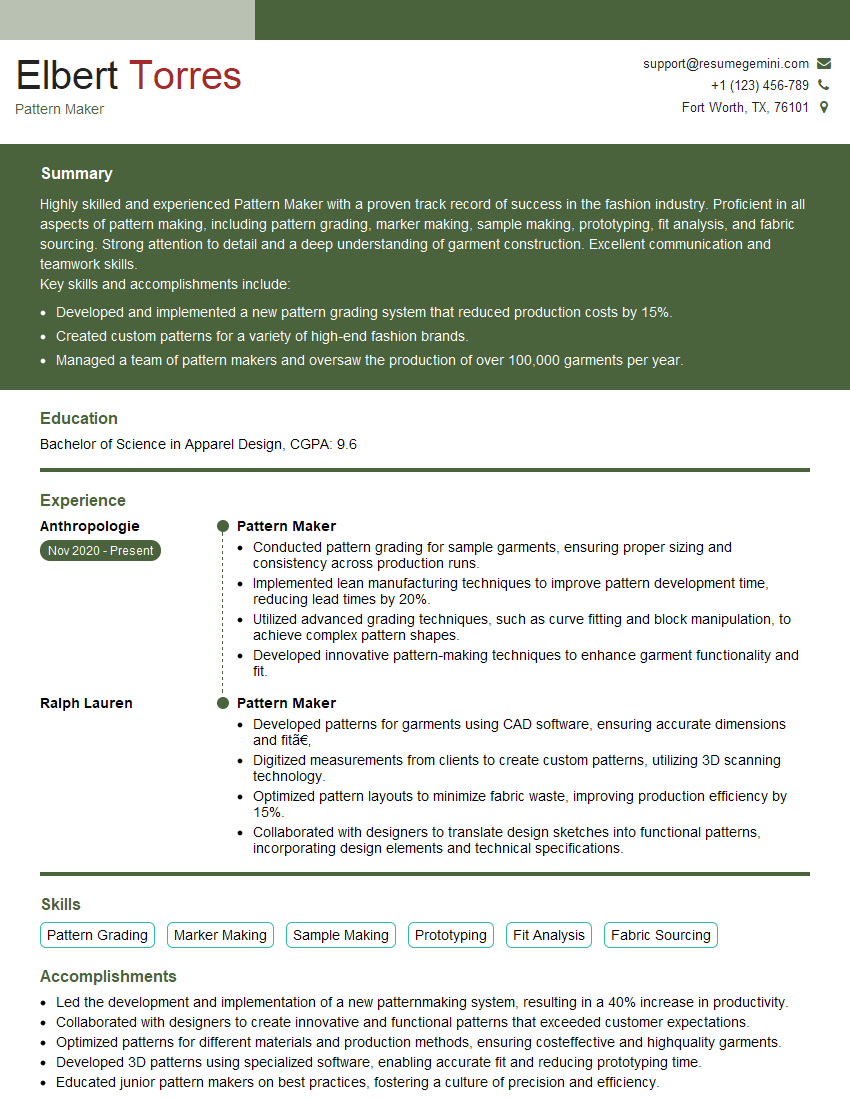
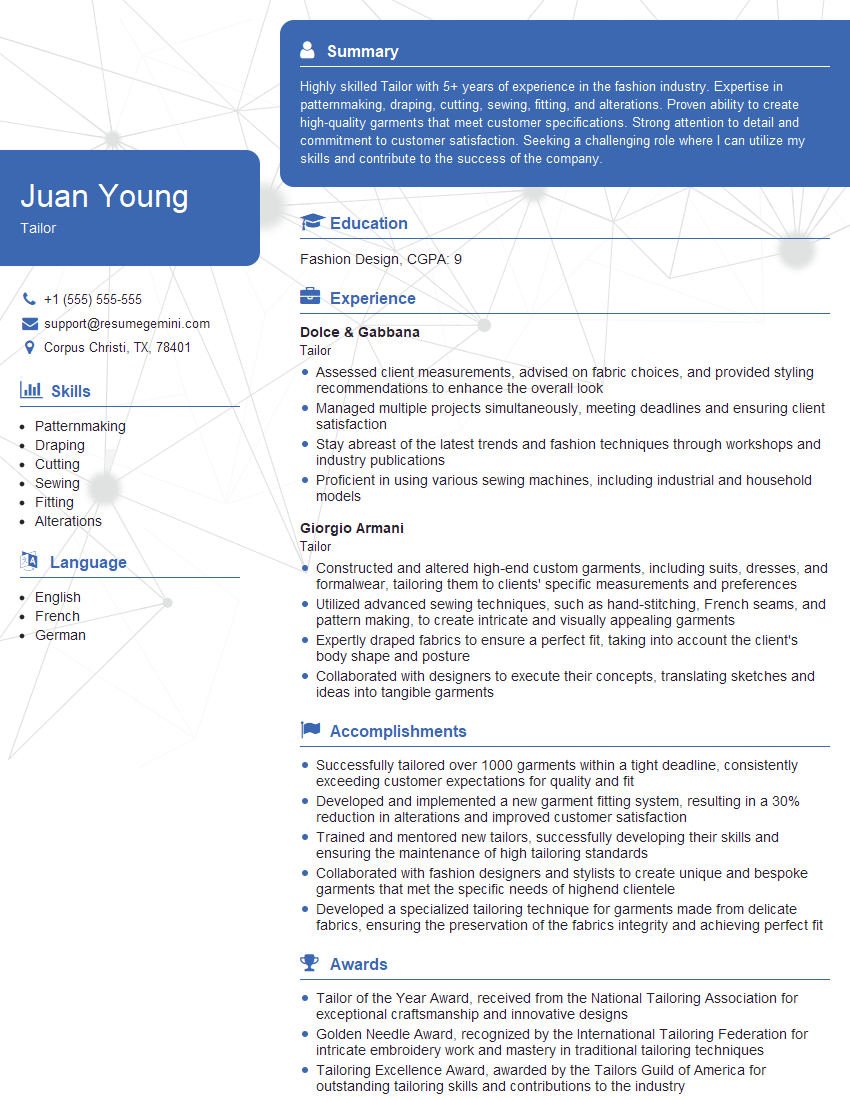
Mastering Stitching and Seam Finishing Techniques is crucial for career advancement in the fashion and apparel industry. A strong understanding of these techniques demonstrates your skills and attention to detail, opening doors to more challenging and rewarding roles. To significantly increase your job prospects, it’s essential to create an ATS-friendly resume that highlights your expertise effectively. ResumeGemini is a trusted resource that can help you build a professional and impactful resume tailored to the specific requirements of your target roles. Examples of resumes tailored to Stitching and Seam Finishing Techniques are available to guide you.






Explore more articles
Users Rating of Our Blogs
Share Your Experience
We value your feedback! Please rate our content and share your thoughts (optional).
What Readers Say About Our Blog
Very informative content, great job.
good