Interviews are more than just a Q&A session—they’re a chance to prove your worth. This blog dives into essential Stone Cutting and Shaping interview questions and expert tips to help you align your answers with what hiring managers are looking for. Start preparing to shine!
Questions Asked in Stone Cutting and Shaping Interview
Q 1. What types of stone are you most experienced working with?
My expertise spans a wide range of stones, but I’m most proficient with granites, marbles, and limestones. Granite, for its hardness and durability, is ideal for high-traffic areas like kitchen countertops. Marble, with its elegant veining and softness, is perfect for more delicate applications, such as sculptures or bathroom vanities. Limestone, while softer, offers a unique texture and aged appearance, making it suitable for exterior cladding or flooring in less demanding environments. I’ve also had considerable experience with quartz, travertine, and onyx, each requiring slightly different techniques based on their unique properties. For instance, onyx, known for its translucency, requires extra care during cutting and polishing to avoid fracturing.
Q 2. Describe your experience with different stone cutting tools.
My experience encompasses a variety of stone cutting tools, from traditional hand tools to advanced CNC machinery. I’m skilled in using diamond saws – both wet and dry – for precise cuts, varying blade sizes and types depending on the stone’s hardness and desired cut. I also utilize wire saws, particularly beneficial for intricate cuts and shaping large blocks of stone. Hand tools, such as chisels and hammers, are crucial for fine detailing and shaping. Pneumatic tools, like air hammers, offer greater power for rough shaping and removal of larger amounts of material. Finally, I’m adept at operating CNC routers, providing precise and repeatable cuts, ideal for mass production of standardized components, like tiles or countertop pieces. The choice of tool depends heavily on the project’s scale, the type of stone, and the level of detail required.
Q 3. What safety precautions do you routinely follow when cutting stone?
Safety is paramount in stone cutting. I always wear appropriate Personal Protective Equipment (PPE), including safety glasses, hearing protection, a dust mask (especially when working with dry cutting methods), and sturdy gloves. When using power tools, I ensure the machine is properly maintained and in good working order. Furthermore, I always work in a well-ventilated area to minimize dust inhalation. Wet cutting methods are preferred whenever possible to reduce dust generation and maintain blade sharpness. Proper clamping and securing of the stone during cutting is critical to avoid accidental movement and injury. Before starting any project, I meticulously plan each step, considering potential hazards and implementing necessary safety measures. For example, when using a diamond saw, I always have a designated area to receive the cut pieces and prevent accidental falls or injuries.
Q 4. Explain the process of creating a specific stone feature (e.g., a countertop, a sculpture).
Let’s take the example of creating a granite countertop. The process begins with selecting the slab of granite, inspecting it for any flaws or imperfections. Next, I use precise measurements to determine the dimensions and cut the slab using a diamond saw, ensuring smooth, straight cuts. Once cut to the required size, any edges are profiled using an edge profiler, depending on the desired aesthetic – beveled, eased, bullnose, etc. Then, the countertop is meticulously polished using progressively finer grit diamond polishing pads, achieving a high-gloss finish. Finally, the countertop is inspected for imperfections, any minor adjustments are made and then it’s ready for installation. Creating a sculpture involves a more artistic approach. The process starts with rough shaping the stone using power tools, followed by hand chiseling and carving to refine the details. Polishing techniques are tailored to enhance the final form and texture.
Q 5. How do you ensure precise measurements and cuts in your work?
Precise measurements are critical. I utilize a combination of measuring tools, including high-precision tape measures, calipers, and digital levels. For complex projects, I create detailed CAD drawings to guide the cutting process. To ensure accurate cuts, I employ jigs and templates to guide the tools. For instance, when creating a countertop with intricate cutouts for a sink or cooktop, I create templates from sturdy materials ensuring the precise placement of these cutouts. Double-checking measurements at every stage and using multiple methods to verify measurements prevents costly errors.
Q 6. What methods do you use for shaping irregular stones?
Shaping irregular stones demands adaptability and precision. I start by assessing the stone’s natural form, identifying its strong points and areas that need modification. I often utilize a combination of abrasive tools, like grinders and sanders, along with hand tools to gently shape the stone while retaining its unique character. For instance, a rough, naturally occurring stone might be shaped into a garden ornament by carefully removing excess material and highlighting its interesting textures. This requires patience, a keen eye, and a good understanding of the stone’s properties, to avoid fracturing or breakage. Water is frequently used during shaping to cool the tools and the stone itself, maintaining control and preventing cracks.
Q 7. Describe your experience with different finishing techniques for stone.
Finishing techniques vary depending on the stone type and the desired aesthetic. For a high-gloss finish, I employ a multi-stage polishing process using diamond polishing pads of increasingly finer grit. Honing produces a more matte finish. Other techniques include sandblasting, which creates a textured surface, or flame finishing, which produces a rough, rustic look. For some stones, I might use a sealant to enhance color, protect against staining, and increase durability. Choosing the appropriate finishing technique is a critical step in enhancing the stone’s beauty and extending its lifespan. For example, a honed marble might be more suitable for bathroom vanities to reduce slipperiness while a high-gloss polish would be better suited to a kitchen countertop.
Q 8. How do you handle damaged or flawed stone during a project?
Dealing with damaged or flawed stone requires a careful assessment and a strategic approach. The first step is identifying the nature and extent of the damage. Is it a surface crack, a deeper fissure, or a significant internal flaw? The location of the flaw is also crucial; a flaw on an inconspicuous surface might be manageable, while a flaw in a highly visible area requires more significant intervention.
For minor surface imperfections, I might use diamond polishing pads or honing compounds to smooth out the area. For deeper cracks, resin injection, carefully matched to the stone’s color, can be employed to stabilize the crack and prevent further propagation. In cases of more serious damage, I often work with the client to explore options like replacing the affected section with a similar piece or creatively incorporating the flaw into the design—perhaps highlighting it as a unique feature.
For example, I once worked on a project using a stunning slab of marble with a small, naturally occurring vein running through it. Initially, it was considered a flaw, but we incorporated it into the design of a fireplace surround, subtly highlighting the vein with lighting. The result was both unique and aesthetically pleasing.
Q 9. Explain your understanding of different stone types and their properties.
Understanding stone types and their properties is fundamental to successful stonework. Different stones possess unique characteristics influencing their workability, durability, and aesthetic appeal. For example, granite is renowned for its strength and durability, making it ideal for high-traffic areas like countertops and flooring. Marble, on the other hand, is softer and more porous, requiring more careful handling and potentially more frequent sealing to protect it from staining.
- Granite: Hard, durable, resists scratches, wide variety of colors and patterns.
- Marble: Softer, elegant, susceptible to etching and staining, beautiful veining.
- Limestone: Porous, softer than granite, warm tones, requires sealing.
- Travertine: Porous, often has holes, warm tones, good for indoor use, needs sealing.
- Slate: Durable, easy to split, distinctive layered appearance.
The specific properties I consider include hardness (measured on the Mohs scale), porosity, density, and resistance to weathering. These properties dictate the appropriate tools and techniques used during cutting and shaping. A harder stone like granite demands more robust tools and potentially different cutting methods compared to a softer stone like marble.
Q 10. What software or CAD programs are you familiar with in relation to stonework?
Proficiency in CAD software is essential for accurate planning and execution in stonework. I’m well-versed in programs like AutoCAD, SketchUp, and specialized stone design software such as StoneCad. These programs enable me to create detailed 2D and 3D models, allowing for precise measurements, material estimations, and visualizing the finished product before any cutting begins.
For example, in AutoCAD I can create detailed drawings of complex curves and angles needed for a custom countertop, ensuring that all cuts are made with precision.
These programs also allow for collaboration with clients and other contractors, as digital models provide a clear and accurate representation of the project. This minimizes misunderstandings and ensures that the final product meets the client’s expectations.
Q 11. How do you manage a large-scale stone project?
Managing a large-scale stone project necessitates meticulous planning and efficient execution. I begin by developing a comprehensive project plan that outlines all phases, from initial design and material selection to installation and finishing. This plan includes detailed schedules, resource allocation, and quality control measures. Effective communication with the team, clients, and suppliers is crucial throughout the process.
For example, in a recent large-scale project involving the cladding of a building with granite, I employed a modular approach, prefabricating sections of the cladding in a controlled environment to streamline the on-site installation process. This significantly reduced on-site time and minimized potential disruptions.
Another key aspect is meticulous quality control at each stage, from material inspection to final installation. This prevents costly rework and ensures the project meets the highest standards.
Q 12. Describe your experience working with various adhesives and sealants.
Experience with adhesives and sealants is critical for ensuring the longevity and durability of stonework. I have extensive experience working with a range of products, selecting the appropriate one based on the specific stone type, application, and environmental conditions. For example, epoxy resins are highly durable and suitable for bonding stones in high-stress applications. For less demanding applications, polyurethane-based adhesives might be sufficient.
Sealants are equally important in protecting the stone from moisture damage and staining. I choose sealants based on the stone’s porosity and intended use. A penetrating sealer is suitable for porous stones like limestone, while a topical sealer might be better for less porous stones like granite.
The correct application technique is vital for optimal results. Improper application can lead to poor adhesion, unsightly blemishes, or premature sealant failure.
Q 13. How do you address challenging cuts or angles in stone?
Challenging cuts and angles demand precision and often involve a combination of techniques. For intricate curves, I might use CNC (Computer Numerical Control) machinery for precise cuts. For more freeform shapes, I may employ hand tools, such as specialized chisels and saws, guided by accurate templates or digital models. The choice of tool depends largely on the stone’s hardness and the desired level of detail.
Before executing any complex cut, I always create a detailed plan, often using CAD software to visualize the cut lines and angles. This minimizes the risk of errors and ensures the cut is precise and safe. I also always prioritize safety measures, utilizing appropriate personal protective equipment.
For example, a recent project involved creating a curved countertop with an integrated sink. I used CNC machining to cut the initial shape accurately, then refined the finish using hand tools to achieve the desired smoothness and level of detail.
Q 14. What are some common problems encountered in stone cutting, and how do you solve them?
Several common problems can arise during stone cutting and shaping. One is chipping or cracking, often caused by improper tool use or applying excessive force. This is mitigated by selecting the right tool for the material, using appropriate cutting techniques, and ensuring the stone is properly supported. Another common issue is dust generation, which is minimized by using dust extraction systems and wet cutting techniques.
Another problem is inconsistencies in color and texture. This is often addressed by careful material selection and paying close attention to the stone’s orientation and grain direction during cutting. Lastly, incorrect measurements can lead to significant errors and costly rework. This can be avoided by using accurate measurement tools, careful planning, and the use of digital modeling software.
Problem-solving in stone cutting often involves a blend of experience, technical skill, and adaptability. Each challenge presents a unique opportunity to develop creative solutions and improve overall techniques.
Q 15. What are the different types of saws used in stone cutting?
Stone cutting employs a variety of saws, each suited for different materials and applications. The choice depends heavily on the stone’s hardness, desired cut precision, and the scale of the project.
- Diamond saws: These are the workhorses of the industry, utilizing diamond segments or blades to cut through even the hardest stones like granite and marble. They come in various configurations, including gang saws (for cutting multiple slabs simultaneously), bridge saws (for large slabs), and smaller, hand-held circular saws. The diamond grit size influences the cutting speed and surface finish; coarser grits cut faster but produce rougher surfaces.
- Wire saws: These utilize a thin wire infused with diamond grit, which is used for cutting extremely large blocks or intricate shapes. They’re often used in quarries for initial block extraction.
- Waterjet saws: These employ a high-pressure stream of water mixed with an abrasive like garnet to cut the stone. They are advantageous for their precision and ability to cut complex shapes without vibration damage, but are generally slower than diamond saws.
- Abrasive saws: These utilize abrasive wheels to cut softer stones like limestone and sandstone. They’re less common now due to the prevalence of diamond saws.
For example, in a recent project restoring a historical building, we used a bridge saw to cut large marble slabs for flooring, and a smaller diamond circular saw to create intricate detailing on the window sills.
Career Expert Tips:
- Ace those interviews! Prepare effectively by reviewing the Top 50 Most Common Interview Questions on ResumeGemini.
- Navigate your job search with confidence! Explore a wide range of Career Tips on ResumeGemini. Learn about common challenges and recommendations to overcome them.
- Craft the perfect resume! Master the Art of Resume Writing with ResumeGemini’s guide. Showcase your unique qualifications and achievements effectively.
- Don’t miss out on holiday savings! Build your dream resume with ResumeGemini’s ATS optimized templates.
Q 16. Explain the process of polishing stone to a high gloss.
Polishing stone to a high gloss is a multi-step process that requires precision and the right tools. The goal is to progressively remove surface imperfections and reveal the stone’s natural luster.
- Grinding: This initial step uses progressively finer diamond grinding pads or wheels to remove scratches and imperfections left from the cutting process. We typically start with coarser grits and gradually move to finer ones.
- Honing: After grinding, honing further refines the surface using finer abrasive materials. This step ensures a smooth, even surface before polishing.
- Polishing: This crucial step uses polishing compounds with increasingly finer abrasives (typically diamond or cerium oxide) to achieve a mirror-like shine. This is often done with specialized polishing pads or machines.
- Buffing: A final buffing step with a soft cloth and polishing compound can enhance the gloss and remove any lingering haze.
The type of stone and desired finish greatly affect the process. For instance, granite might require more aggressive grinding than marble. Proper control of water and pressure during each stage is critical to prevent overheating and damage to the stone.
Q 17. How do you maintain and care for your stone cutting tools?
Maintaining stone cutting tools is essential for both safety and efficiency. Regular maintenance prolongs tool life and ensures consistent results.
- Cleaning: After each use, tools should be thoroughly cleaned to remove stone dust and debris, which can dull the cutting surfaces. Diamond blades and saws are often cleaned with water and a brush.
- Inspection: Regularly inspect blades and saws for wear and tear, including chipped diamonds, cracks, or excessive wear on the cutting surface. Damaged tools should be replaced or repaired promptly to avoid accidents or poor-quality cuts.
- Lubrication: Some saw types, particularly those with moving parts, require regular lubrication to prevent friction and wear.
- Storage: Tools should be stored in a dry place to prevent rust and corrosion. Diamond blades should ideally be kept in protective cases.
Imagine neglecting a diamond saw; a single chipped diamond can drastically reduce its effectiveness, leading to uneven cuts and potential damage to the stone. Proactive maintenance is cheaper and safer than reactive repairs.
Q 18. Describe your experience with different types of stone joining techniques.
Stone joining techniques depend on the type of stone, the desired strength of the joint, and the visibility of the joint. Several methods exist:
- Epoxy resins: These are widely used for joining stone, providing strong bonds, especially in invisible joints. Careful surface preparation is key for optimal bonding.
- Mortar: Traditional mortar is used for applications where a visible joint is acceptable. The type of mortar should match the stone’s characteristics.
- Mechanical fasteners: For larger or heavier stone pieces, mechanical fasteners like pins or dowels can supplement the adhesive bond, enhancing strength and stability.
In a recent project, we used epoxy resin to join thin marble tiles for a wall cladding, ensuring an almost seamless finish. For a large granite countertop, we combined epoxy with mechanical fasteners for a robust and reliable joint.
Q 19. What are your preferred methods for cleaning and maintaining finished stone surfaces?
Cleaning and maintaining finished stone surfaces depends on the stone type and its susceptibility to staining or etching. Key considerations include:
- Regular cleaning: A simple cleaning regimen typically involves using a soft cloth or mop with mild soapy water. Avoid harsh chemicals or abrasive cleaners that can damage the polished finish.
- Stain removal: Different stains require specific cleaning methods. Oil-based stains might require a solvent-based cleaner, while water-based stains may respond to a mild abrasive cleaner. Always test a cleaning solution on an inconspicuous area before applying it to the entire surface.
- Sealing: Sealing the stone surface protects it from staining and water damage. The frequency of sealing depends on the stone type and its porosity.
For example, marble is highly susceptible to etching from acidic substances, so it requires a sealant and careful cleaning. Granite, being less porous, needs less frequent sealing.
Q 20. How do you interpret blueprints or technical drawings for stone projects?
Interpreting blueprints and technical drawings for stone projects requires careful attention to detail and a solid understanding of stone fabrication. Key aspects include:
- Dimensions: Accurate measurements are crucial for cutting and shaping the stone to the required dimensions. I carefully examine the dimensions of each piece to ensure a precise fit.
- Tolerances: Blueprints usually specify tolerances – allowable variations in dimensions. Adhering to tolerances is critical to ensure accurate assembly.
- Details: Technical drawings show details like angles, curves, cutouts, and finishes. I meticulously examine these details to ensure accurate execution.
- Material specifications: Blueprints often specify the type of stone to be used. This is essential to selecting the appropriate cutting and shaping tools.
I use a combination of digital tools and physical measurements to ensure accurate interpretation of the plans, often creating 3D models to visualize the project before starting the fabrication process.
Q 21. What is your experience with working on historical or restoration projects?
I have extensive experience working on historical and restoration projects. This type of work often presents unique challenges, requiring specialized knowledge and techniques.
- Material matching: Finding matching or complementary stone for repairs can be challenging, often requiring sourcing stone from similar quarries or carefully matching existing stone’s colour and texture.
- Preservation techniques: Gentle cutting and shaping techniques are essential to avoid damaging existing stone. Sometimes, we need to use specialized tools or adapt traditional methods to accommodate the stone’s age and condition.
- Historical accuracy: Restoring historical structures requires meticulous attention to historical accuracy, often involving research to understand original techniques and materials.
One memorable project involved restoring a damaged section of a 19th-century cathedral. We used archival photographs and historical records to guide our work, employing traditional cutting and shaping techniques to match the original stonework, ensuring minimal visual disruption to the historical fabric of the structure.
Q 22. How do you manage time effectively on a stone cutting project?
Effective time management in stone cutting is crucial for meeting deadlines and staying within budget. It involves a multi-stage approach starting with meticulous planning. I begin by carefully reviewing the project specifications, including the stone type, desired dimensions, complexity of the design, and the client’s timeline. This allows me to create a realistic schedule, breaking down the project into smaller, manageable tasks. Each task receives an estimated time allocation, considering factors like material preparation, cutting, shaping, finishing, and potential unforeseen delays.
Throughout the project, I utilize time-tracking software to monitor progress against the schedule. This allows for proactive adjustments. For instance, if a particular step takes longer than anticipated, I can re-evaluate the remaining tasks and adjust the schedule accordingly, keeping the client informed of any potential changes. I also prioritize tasks based on their urgency and dependency. For example, rough shaping needs to be completed before detailed carving can begin. This systematic approach ensures efficient resource utilization and timely project completion.
Q 23. What are your strategies for dealing with unexpected issues during a project?
Unexpected issues are inevitable in stone cutting. My strategy focuses on proactive risk assessment and rapid response. Before starting a project, I thoroughly inspect the stone for flaws, cracks, or inconsistencies that might affect the workability. During the project, I continuously monitor the stone’s behavior under different tools and techniques.
If an unexpected issue arises, such as a hidden crack causing a break, my immediate response involves assessing the damage, determining the cause, and developing a solution. This might involve adjusting the design slightly, using alternative techniques to work around the flaw, or even replacing the affected section of the stone if necessary. Communication with the client is key; transparency is maintained at every stage to ensure they understand the situation and the proposed solution. Detailed documentation of the issue, the corrective action taken, and any adjustments to the schedule is crucial.
Q 24. Describe your experience with different types of stone carving techniques.
My experience encompasses a wide range of stone carving techniques, from traditional hand methods to advanced CNC machining. I’m proficient in various hand tools such as chisels, mallets, and points for intricate detail work. I’ve worked extensively with different stone types, adapting my techniques based on their hardness, grain structure, and fragility. For example, softer stones like soapstone require gentler techniques to avoid chipping, while harder stones like granite demand more powerful tools and precise control.
I’m also skilled in utilizing power tools, including pneumatic chisels, angle grinders, and diamond saws, for efficient shaping and cutting. My expertise extends to the use of Computer Numerical Control (CNC) machines for precise, automated carving, particularly useful for large-scale projects or intricate designs that require high accuracy and repeatability. I have experience in creating 3D models and translating them into CNC code for seamless execution. This allows for intricate and complex designs to be brought to life.
Q 25. What is your understanding of the health and safety regulations relevant to stone cutting?
Health and safety are paramount in stone cutting. My understanding of relevant regulations is comprehensive. This includes using appropriate Personal Protective Equipment (PPE) such as safety glasses, dust masks, hearing protection, and gloves, tailored to the specific task. I am also well-versed in safe handling and storage of tools and materials, preventing accidents caused by falling objects or improper tool use.
I strictly adhere to regulations regarding dust control, ensuring adequate ventilation and utilizing dust extraction systems to minimize the inhalation of harmful silica dust. I’m familiar with the proper disposal of stone dust and waste, complying with environmental regulations. Furthermore, I’m trained in the safe operation of power tools, including regular maintenance and inspection to prevent malfunctions. I believe in creating a safe working environment through consistent adherence to protocols and training, ensuring the well-being of both myself and those around me.
Q 26. How do you handle customer requests or changes during a project?
Handling customer requests or changes during a project requires open communication, flexibility, and a clear understanding of the implications. I encourage clients to communicate their needs and preferences proactively. When changes are requested, I evaluate their feasibility, considering the project’s current stage, potential impact on the timeline and budget, and the technical viability of incorporating the changes.
I present the client with a clear and comprehensive assessment of the changes, including any associated costs or schedule adjustments. This ensures transparency and allows them to make informed decisions. Once an agreement is reached, I incorporate the changes efficiently, ensuring the quality of the final product isn’t compromised. My approach prioritizes meeting client expectations while maintaining professional standards and responsible project management.
Q 27. What are your salary expectations for this role?
My salary expectations are commensurate with my experience, skills, and the responsibilities of this role. Considering my expertise in various stone cutting techniques, my proficiency with both traditional and modern tools and technologies, and my proven ability to manage complex projects efficiently and safely, I am seeking a competitive salary within the range of [Insert Salary Range Here]. I am also open to discussing a comprehensive compensation package that includes benefits and potential bonuses based on project performance and company success.
Q 28. Why are you interested in this specific stone cutting position?
I’m highly interested in this specific stone cutting position due to [Company Name]’s reputation for [Mention Company’s positive qualities, e.g., high-quality craftsmanship, innovative projects, commitment to employee development]. The opportunity to work on [Mention specific project types or aspects that interest you] particularly excites me. I believe my skills and experience align perfectly with the requirements of this role, and I am confident that I can make a significant contribution to your team. The chance to collaborate with skilled professionals in a challenging and rewarding environment is something I truly value.
Key Topics to Learn for Stone Cutting and Shaping Interview
- Stone Selection and Properties: Understanding different stone types (granite, marble, limestone, etc.), their hardness, grain structure, and suitability for various applications. Practical application: Identifying the best stone for a specific project based on its properties and desired outcome.
- Cutting Techniques: Mastering various cutting methods like sawing, wire sawing, and abrasive cutting. Practical application: Selecting the appropriate cutting technique based on the stone type and desired finish. Troubleshooting common cutting problems such as blade wear or chipping.
- Shaping and Finishing Techniques: Proficiency in techniques such as grinding, polishing, honing, and carving. Practical application: Achieving desired surface finishes (matte, polished, honed) and intricate shapes using appropriate tools and techniques. Understanding the impact of different techniques on the final product.
- Tool and Equipment Knowledge: Familiarity with various hand tools (e.g., chisels, hammers) and power tools (e.g., saws, grinders, polishers) used in stone cutting and shaping. Practical application: Safe and efficient operation of equipment; performing routine maintenance and troubleshooting malfunctions.
- Safety Procedures and Regulations: Understanding and adhering to safety protocols for handling heavy equipment and hazardous materials (e.g., dust, chemicals). Practical application: Implementing safety measures to prevent accidents and injuries in the workplace.
- Blueprint Reading and Interpretation: Ability to understand and interpret technical drawings and specifications for stone cutting and shaping projects. Practical application: Accurately cutting and shaping stone according to provided blueprints.
- Problem-Solving and Quality Control: Identifying and resolving issues during the cutting and shaping process. Ensuring the final product meets quality standards and client specifications. Practical application: Troubleshooting imperfections, making adjustments to techniques, and implementing quality control measures.
Next Steps
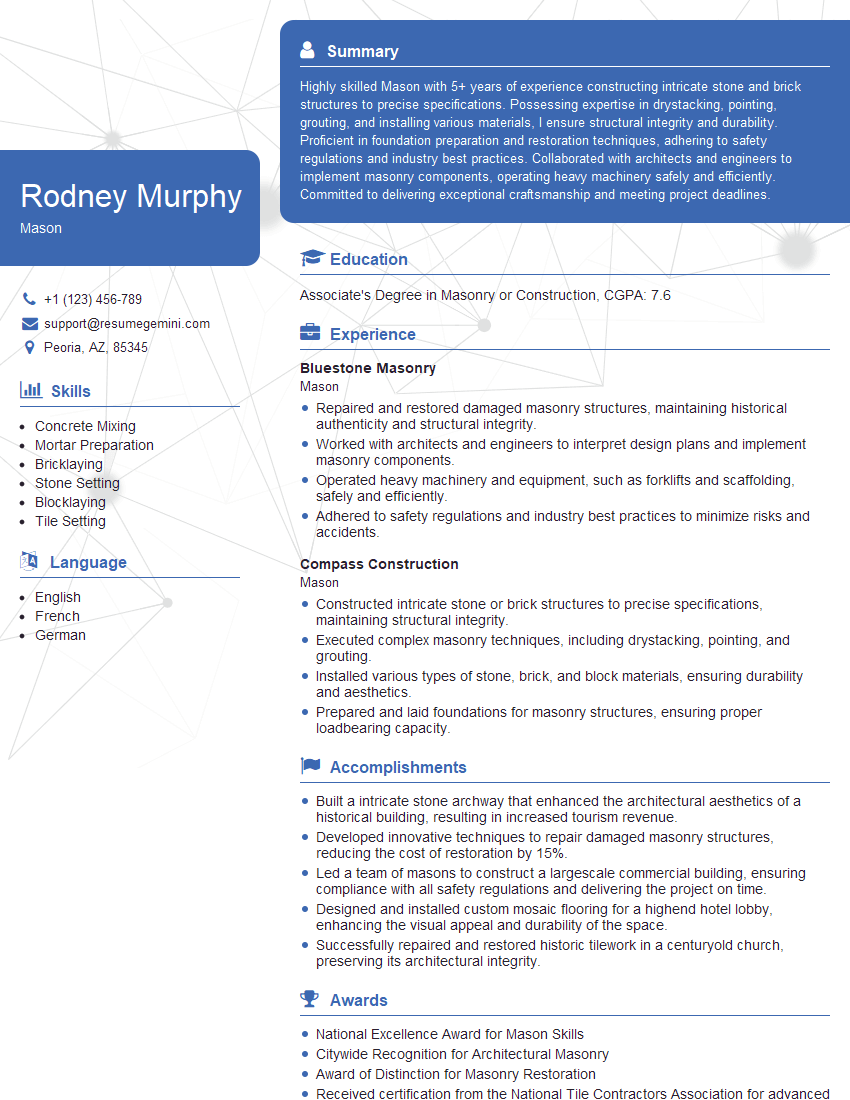
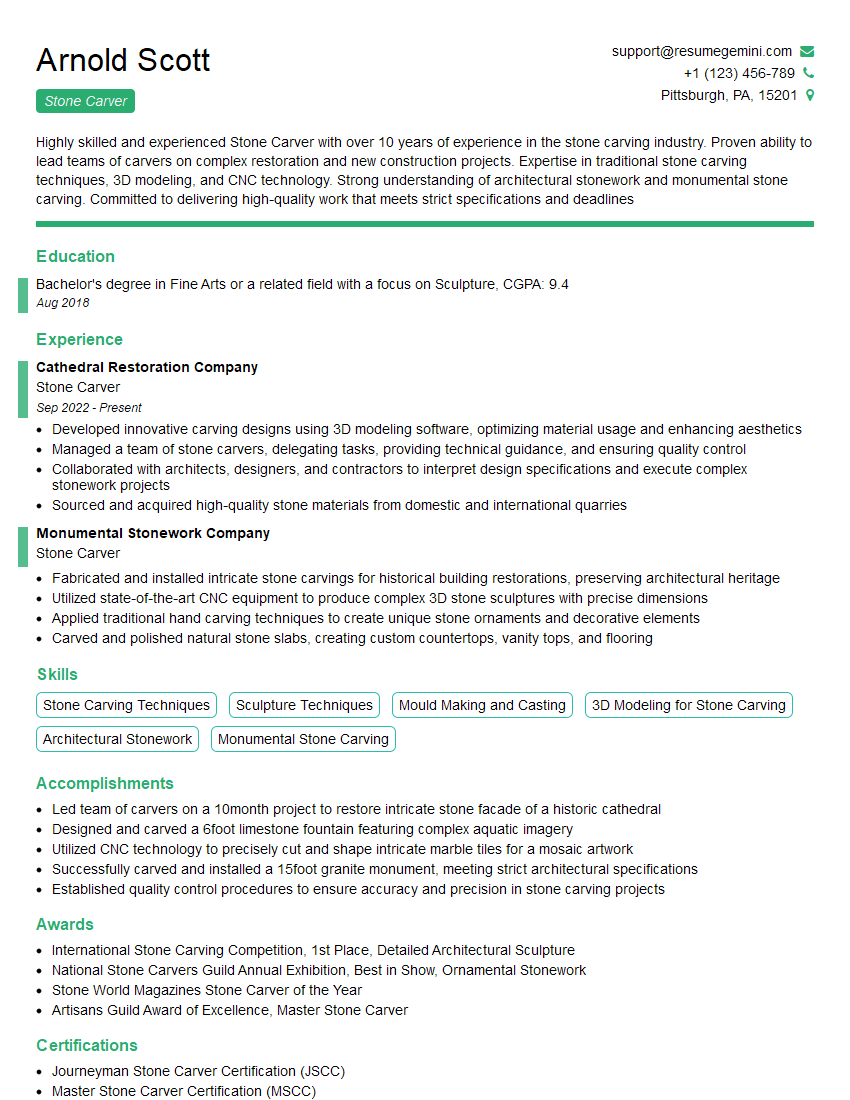
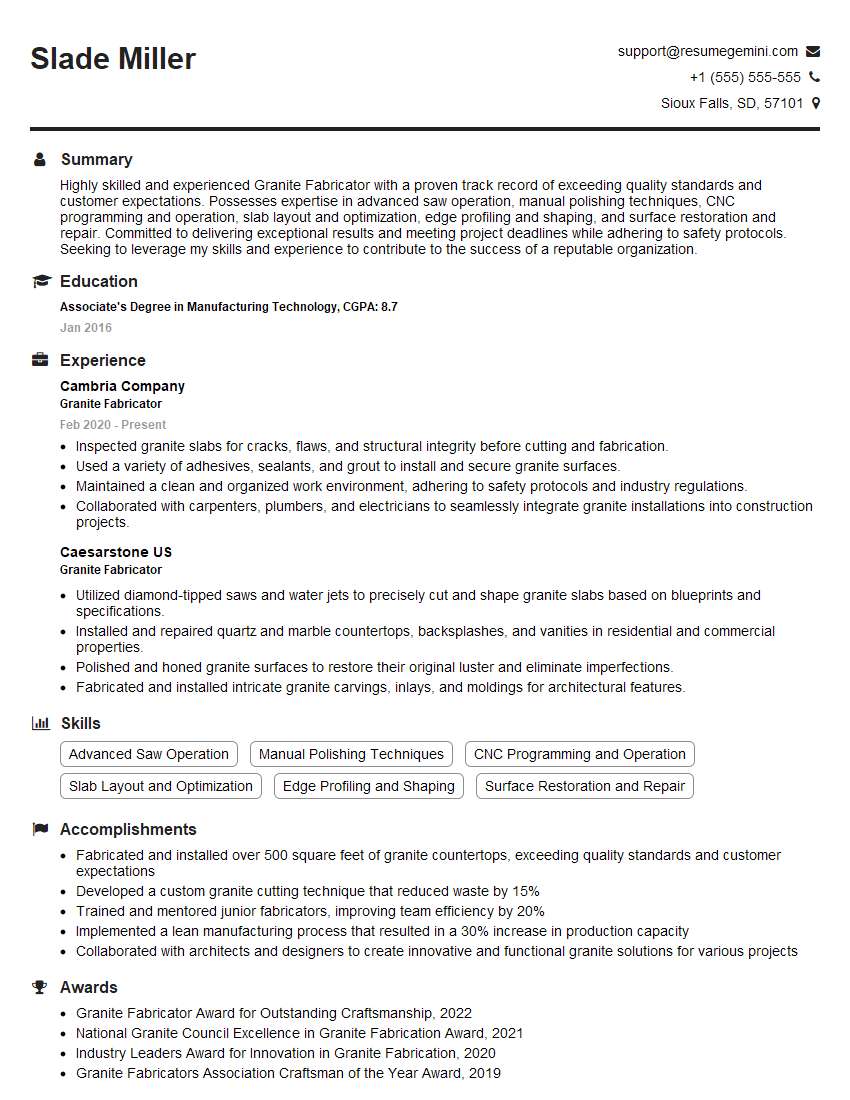
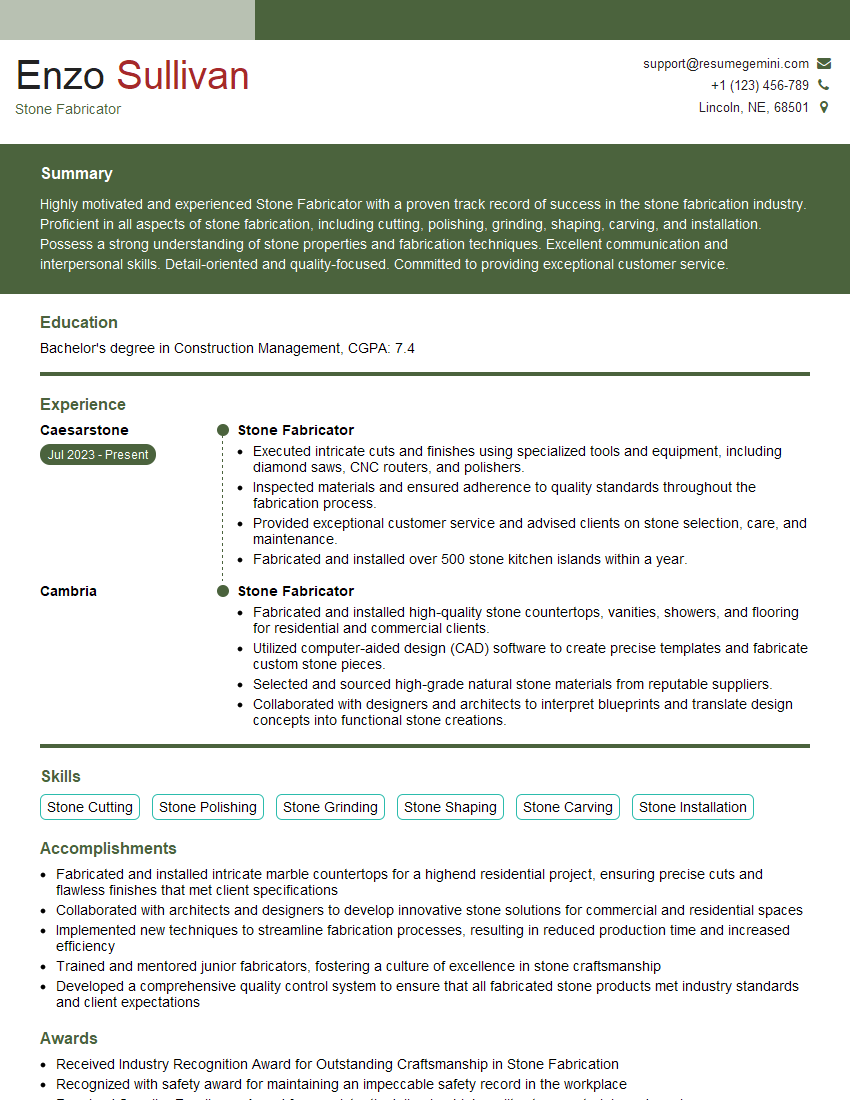
Mastering stone cutting and shaping opens doors to a rewarding career with diverse opportunities for growth and specialization. To maximize your job prospects, it’s crucial to create a professional and ATS-friendly resume that highlights your skills and experience effectively. ResumeGemini is a trusted resource to help you build a compelling resume that showcases your abilities in the best possible light. ResumeGemini provides examples of resumes tailored to the Stone Cutting and Shaping field, giving you a head start in crafting your application materials.



Explore more articles
Users Rating of Our Blogs
Share Your Experience
We value your feedback! Please rate our content and share your thoughts (optional).
What Readers Say About Our Blog
Very informative content, great job.
good