Feeling uncertain about what to expect in your upcoming interview? We’ve got you covered! This blog highlights the most important Storing and Retrieving Mail interview questions and provides actionable advice to help you stand out as the ideal candidate. Let’s pave the way for your success.
Questions Asked in Storing and Retrieving Mail Interview
Q 1. Describe your experience with different mail sorting methods.
Mail sorting methods are crucial for efficient mail handling. My experience encompasses various techniques, from manual sorting based on destination codes (e.g., zip codes, postal codes) to highly automated systems utilizing optical character recognition (OCR) and advanced sorting machines.
Manual Sorting: This traditional method involves visually inspecting mail pieces and manually placing them into designated bins based on predefined criteria. While less efficient for large volumes, it’s useful for smaller operations or handling special mail requiring human judgment.
Automated Sorting Machines: These machines use OCR technology to read addresses and routing codes, automatically directing mail pieces to their designated destinations. They dramatically increase sorting speed and accuracy, handling tens of thousands of pieces per hour. I’ve worked with machines capable of barcode and address recognition, significantly enhancing efficiency.
Hybrid Systems: Many modern mail centers employ hybrid systems, combining automated and manual sorting. This approach leverages the speed of automation for high-volume mail while maintaining manual intervention for complex or irregular mail pieces that need special handling.
For instance, in my previous role, we transitioned from primarily manual sorting to a hybrid system that incorporated OCR-based automated sorting. This resulted in a 40% increase in processing speed and a notable reduction in errors.
Q 2. How familiar are you with mail automation technologies?
I’m highly familiar with various mail automation technologies. My expertise spans several areas, including:
Optical Character Recognition (OCR): I have experience using and implementing OCR software to accurately read addresses and other information from mail pieces, feeding data into automated sorting systems.
Barcode Scanners and Readers: These tools are fundamental in automated mail processing, used for tracking individual pieces and directing them efficiently throughout the system. I’m proficient in troubleshooting and maintaining these systems.
Mail Merge and Personalized Mail Automation: I’ve worked with software and systems that automate the creation of personalized mail pieces, such as customized letters or invoices, significantly increasing efficiency in direct mail marketing campaigns.
Mail Tracking and Management Software: These systems integrate with various mail processing steps, providing real-time tracking and analysis of mail flow, allowing for optimization and identifying bottlenecks.
For example, I implemented a mail merge system that increased the output of personalized letters by over 75% while reducing human error.
Q 3. Explain your process for handling sensitive or confidential mail.
Handling sensitive or confidential mail demands strict adherence to protocols and security measures. My process involves:
Secure Handling: Confidential mail is always kept in secure locations with restricted access, utilizing locked containers, cabinets, or rooms.
Confidentiality Agreements: All personnel involved in handling confidential mail are bound by strict confidentiality agreements. Regular training reinforces these guidelines.
Data Protection Measures: If electronic data is involved, I ensure encryption and secure data destruction methods are utilized according to company policies and relevant regulations (e.g., GDPR, HIPAA).
Chain of Custody: Maintaining a detailed log of who handled the mail and when is crucial for tracking and accountability. This information is carefully documented.
Secure Disposal: After processing, confidential mail pieces are disposed of securely using shredding or incineration to prevent unauthorized access.
In one instance, I discovered a breach in our security protocols related to confidential mail. I immediately implemented stricter access controls and additional training, preventing any further breaches.
Q 4. How do you prioritize mail for delivery or processing?
Mail prioritization depends heavily on the type of mail and the organization’s needs. Common criteria include:
Delivery Time Sensitivity: Express mail or time-sensitive documents are prioritized for immediate processing and delivery.
Content Importance: Critical documents like legal notices or financial statements receive high priority.
Client or Customer Importance: Mail from valued clients or VIP customers may be prioritized to ensure timely response.
Predefined Routing Codes: Some systems use special routing codes to identify high-priority mail that bypasses standard processing queues.
Think of it like a hospital triage system; the most urgent cases get immediate attention. I’ve utilized various software and manual systems to implement these prioritization methods, ensuring that critical mail is processed and delivered effectively and efficiently.
Q 5. What is your experience with using mail tracking systems?
My experience with mail tracking systems is extensive. I’ve worked with both internal tracking systems and those integrated with external postal services. These systems provide visibility into the mail’s journey, from origin to delivery.
Barcode Tracking: Tracking individual mail pieces via barcodes allows for real-time monitoring of their progress through the system.
GPS Tracking (for specialized deliveries): In specific situations, GPS tracking might be employed for high-value or time-sensitive deliveries.
Delivery Confirmation and Notifications: These features provide notification of delivery, often with electronic proof of delivery, increasing accountability and reducing disputes.
In a previous role, we implemented a new tracking system that reduced our customer inquiries about delivery status by 60% by offering real-time updates.
Q 6. How do you ensure the accuracy and efficiency of mail distribution?
Ensuring accuracy and efficiency in mail distribution involves a multi-faceted approach:
Address Verification: Employing address verification software and procedures is crucial to prevent misdirected mail.
Data Quality Control: Maintaining accurate and up-to-date mailing lists is essential to minimize errors. Regular data cleansing is part of the process.
Process Optimization: Continuously analyzing workflow and identifying bottlenecks through data analysis is necessary to improve efficiency.
Regular System Maintenance: Keeping sorting equipment, scanners, and software up-to-date and well-maintained is vital for reliability.
Staff Training: Providing regular training to staff on proper mail handling techniques and procedures is critical.
We implemented a quality control system with regular audits and feedback loops, resulting in a significant reduction in error rates and improved overall efficiency.
Q 7. Describe your experience with handling international mail.
Handling international mail presents unique challenges due to varying postal regulations, customs procedures, and international shipping considerations. My experience includes:
Customs Regulations: I’m familiar with various customs regulations and documentation requirements for different countries, ensuring compliance to avoid delays or penalties.
International Postal Services: I have experience working with various international postal services, understanding their different processes and tracking systems.
Incoterms and Shipping Terms: I understand the implications of different Incoterms (International Commercial Terms) and shipping terms, selecting the most appropriate options for various international shipments.
International Tracking Systems: I’m adept at utilizing international tracking systems to monitor the movement of international mail and address any potential issues promptly.
For example, I successfully navigated the complex regulations of shipping sensitive documents to a client in Japan, ensuring both compliance and timely delivery.
Q 8. How do you handle mail that is damaged or undeliverable?
Handling damaged or undeliverable mail involves a systematic process focused on identifying the issue, documenting it, and taking appropriate action. First, we inspect the mail for damage – tears, water damage, or incorrect addressing. If the damage prevents delivery, we try to salvage any usable information (like a return address). We then meticulously document the condition of the mail, including the type of damage and any attempts to recover information, often using a standardized damage report form. For undeliverable mail, we check for a return address. If present, we return it to the sender. If not, and the mail is sensitive, like medical records or financial documents, we follow established protocols, which often involve secure destruction. Undeliverable bulk mail, on the other hand, is handled differently; procedures are often in place for its return to the post office or for proper disposal.
For example, imagine a package arrives severely damaged with no way to identify the sender or recipient. We’d first photograph the damage, document everything, and then follow our company’s policy for disposing of unidentifiable damaged mail, possibly involving a secure shredding service. If a return address was present but illegible, we might attempt to decipher it, but if unsuccessful, we’d follow our ‘undeliverable as addressed’ procedure.
Q 9. How do you maintain a clean and organized mailroom?
Maintaining a clean and organized mailroom is crucial for efficiency and safety. Think of it like a well-oiled machine – if things are cluttered, the entire process slows down. We employ several strategies: a designated area for incoming mail, separate sorting areas based on type (internal vs. external, priority vs. regular), and clearly labeled storage for supplies and archived mail. Regular cleaning schedules are established, including sweeping, vacuuming, and disinfecting surfaces to maintain a hygienic environment. Proper storage solutions like shelving units and filing cabinets are essential for preventing clutter and ensuring easy access to items. We also employ a color-coded system for different mail types, simplifying sorting and retrieval.
For instance, we might use red bins for urgent mail, blue bins for inter-office mail, and green bins for general correspondence. This visual system immediately clarifies the priority and destination of each piece of mail. Additionally, regular audits of the mailroom space ensure unnecessary materials are removed, promoting efficiency and preventing potential hazards.
Q 10. What safety procedures do you follow when handling mail?
Safety is paramount when handling mail. We follow several protocols: always washing hands before and after handling mail, especially during flu season. Any suspicious packages (unconventional packaging, strange odors, or unknown senders) are immediately reported to the appropriate authority. We also use appropriate personal protective equipment (PPE), like gloves, when handling potentially hazardous materials. Proper lifting techniques are taught and reinforced to prevent back injuries when dealing with heavy packages. We keep the mailroom well-lit and free from obstacles to prevent trips and falls. Regular safety training sessions are conducted to address potential hazards and reinforce safe working practices.
For example, if a package arrives with a powdery substance leaking from a damaged seal, we would not attempt to open it. Instead, we’d immediately evacuate the area, contact emergency services, and follow our established protocol for dealing with hazardous materials. This includes notifying security personnel and isolating the area until it’s deemed safe.
Q 11. Explain your experience with mail inventory management.
Mail inventory management involves tracking the flow of mail from receipt to delivery or disposal. In my previous role, we utilized a combination of physical and digital systems. Physically, we maintained a log book detailing the number of incoming and outgoing items daily, noting the type of mail and any unusual circumstances. Digitally, we incorporated a software system to track registered mail and parcels, allowing for real-time tracking and reporting. This provided valuable data on mail volume, processing times, and potential bottlenecks. Regular stock checks of stationary and packaging ensured we had enough supplies to meet demand. We also implemented a system for archiving older mail, both physically and digitally, according to company retention policies.
For example, using the software, we could generate reports showcasing the daily volume of express mail, identifying peak periods for better resource allocation. This data informed our staffing decisions and ensured we had sufficient personnel to handle fluctuations in workload.
Q 12. How do you deal with mail volume fluctuations?
Mail volume fluctuations are a common challenge, requiring flexible strategies. We utilize a tiered approach. During periods of low volume, we can focus on backlog reduction, preventive maintenance of equipment, and staff training. When dealing with surges, we implement overtime schedules for staff, utilize temporary staff if needed, and optimize existing processes to streamline workflow. We also utilize automated mail-sorting machines to handle increased volumes efficiently. Prioritization of mail based on urgency helps ensure that critical items are processed first. Regular forecasting based on historical data and anticipated events helps us anticipate peaks and plan accordingly.
For example, during the holiday season, we typically see a significant increase in mail volume. To prepare, we would hire temporary staff, schedule overtime for existing employees, and ensure that our mail-sorting equipment is in optimal working condition. This ensures all the holiday greetings and packages reach their destinations on time.
Q 13. Describe your experience with using mailing equipment (e.g., postage meters, franking machines).
I have extensive experience with various mailing equipment. I’m proficient in operating postage meters and franking machines, ensuring accurate postage application and reducing manual processes. This involves loading postage, ensuring the meter is functioning correctly, and verifying accurate postage application to each item. I’m also familiar with maintaining these machines – conducting regular cleaning, troubleshooting minor issues, and scheduling timely maintenance. I understand the importance of regular meter readings to track postage usage and prevent unexpected expenses. I am also experienced with utilizing different types of scales, ensuring packages are weighed correctly to avoid underpayment and shipment delays.
For instance, troubleshooting a postage meter jam involves following the manufacturer’s instructions, safely removing the jam, and clearing any error messages. Regular maintenance, such as cleaning the rollers, helps prevent such jams and ensures the machine operates efficiently.
Q 14. How do you handle customer inquiries regarding mail?
Handling customer inquiries regarding mail requires patience, empathy, and a methodical approach. I begin by actively listening to the customer’s concern, ensuring I understand the issue fully. I then attempt to resolve the inquiry promptly, whether it’s providing tracking information, explaining a delivery delay, or addressing a damage claim. If I don’t have an immediate answer, I assure the customer I’ll investigate and get back to them within a reasonable timeframe. I maintain a professional demeanor and provide clear, concise information, avoiding jargon. I document all interactions, including the nature of the query, actions taken, and the resolution. If the issue requires escalation, I transfer the call to the appropriate department.
For example, if a customer reports a missing package, I would first verify the tracking information, checking for any delivery exceptions or unusual events. If the package is indeed lost, I’d guide the customer through the claim process, providing the necessary forms and instructions to ensure a timely resolution. Maintaining accurate records allows for efficient follow-up and demonstrates professionalism.
Q 15. How do you reconcile mail discrepancies?
Reconciling mail discrepancies involves systematically identifying and resolving inconsistencies between expected and received mail. This could involve missing mail, extra mail, or mail that doesn’t match our records. Think of it like a meticulous inventory check for your mailroom.
My approach is methodical: I begin by comparing the outgoing mail manifest (a detailed list of all sent items) with the return receipts or delivery confirmations. Any discrepancies are flagged. Next, I check internal records – for example, a database of sent invoices or letters. This allows me to pinpoint whether the problem lies in sending, delivery, or internal record-keeping.
Then, I investigate the nature of the discrepancy. Is it a single missing item, or a pattern? If it’s a single item, I contact the postal service or courier to initiate a trace. For recurring discrepancies, I’ll review our mailing procedures, potentially identifying areas for improvement, such as double-checking addresses or using better tracking methods.
Finally, I document every step of the reconciliation process, including the discrepancy, the investigation, and the resolution. This documentation serves as a valuable record for future reference and helps prevent similar issues from occurring.
Career Expert Tips:
- Ace those interviews! Prepare effectively by reviewing the Top 50 Most Common Interview Questions on ResumeGemini.
- Navigate your job search with confidence! Explore a wide range of Career Tips on ResumeGemini. Learn about common challenges and recommendations to overcome them.
- Craft the perfect resume! Master the Art of Resume Writing with ResumeGemini’s guide. Showcase your unique qualifications and achievements effectively.
- Don’t miss out on holiday savings! Build your dream resume with ResumeGemini’s ATS optimized templates.
Q 16. What is your experience with different types of mailing services (e.g., express mail, certified mail)?
My experience encompasses a wide range of mailing services. I’ve worked extensively with express mail services like FedEx and UPS, using their online tracking tools and APIs for real-time shipment monitoring and efficient delivery. Express mail is crucial for time-sensitive documents or packages.
Certified mail, which provides proof of delivery, is another key service I’ve utilized. I’m familiar with the processes involved in obtaining return receipts, ensuring legal compliance and record-keeping for crucial correspondence, such as legal notices. This offers a significant level of accountability for both the sender and recipient.
I also have experience with standard mail services, including bulk mailings, where cost-effectiveness and efficiency are paramount. My experience spans the nuances of different postal classes and their associated benefits and limitations. I understand the trade-offs between speed, cost, and level of tracking for each type of service.
Q 17. What software are you proficient in using for mail processing or tracking?
I’m proficient in several software applications used for mail processing and tracking. My expertise includes:
- Mail tracking and management systems: I’m adept at using software that integrates with various shipping carriers, providing centralized tracking, reporting, and analysis of mail delivery. These systems often include features like automated alerts for delays or exceptions.
- Database management systems: I use database software like SQL Server and MySQL to manage mailing lists, track mail items, and generate reports. This allows efficient data retrieval and analysis for addressing mail-related inquiries or identifying trends.
- Spreadsheet software (e.g., Microsoft Excel, Google Sheets): I leverage these tools for creating and maintaining mailing lists, generating reports, and analyzing data related to mail costs and delivery times.
- Mail merge software: This assists in producing personalized mail pieces efficiently and accurately, reducing the likelihood of errors in addressing or content.
I am also familiar with various APIs provided by shipping carriers to integrate mail tracking directly into custom applications, providing seamless mail management within our internal systems.
Q 18. How do you handle returned mail?
Handling returned mail requires a systematic approach to identify the reason for return and take appropriate action. The first step is to examine the mail piece to understand why it was returned. Common reasons include incorrect or incomplete addresses, insufficient postage, or the recipient refusing delivery.
Once the reason is identified, I categorize the returned mail. For example, mail returned due to incorrect addresses is reviewed, and the address is corrected if possible, before resending. Mail returned due to insufficient postage requires adding postage before it’s re-sent. Mail refused by the recipient is reviewed to determine the next steps, which may involve notifying relevant parties and adjusting records.
I maintain a detailed log of all returned mail, including the reason for return, any actions taken, and the final outcome. This documentation is vital for identifying patterns, improving mailing practices, and ensuring compliance with postal regulations.
Q 19. Describe a time you had to solve a problem related to mail processing.
In a previous role, we experienced a significant increase in undeliverable mail due to outdated addresses in our database. This resulted in lost revenue and a negative impact on customer relations. I identified this problem by analyzing return mail reports and creating detailed dashboards to visualize the problem’s scope.
My solution involved a three-pronged approach:
- Data cleansing: We implemented a process to regularly update our database using external address verification services. This involved batch processing of addresses to improve data quality.
- Process improvement: We revised our internal procedures to ensure accurate address entry and data validation at each stage of the mailing process.
- Communication updates: We updated our communication with clients to ensure current addresses were maintained and encouraged customers to notify us of changes.
The combination of these steps significantly reduced the number of undeliverable mail pieces and improved overall mailing efficiency. The problem’s resolution required both technical skills (data analysis and processing) and project management skills (implementing changes across different teams).
Q 20. How do you ensure compliance with postal regulations?
Ensuring compliance with postal regulations is paramount. I stay updated on current postal regulations through the USPS website, industry publications, and professional development opportunities. This includes understanding regulations on postage, mailing standards, prohibited items, and data privacy. I ensure that our mailing practices adhere to all applicable laws and regulations.
For example, I carefully review mailing lists to ensure compliance with the CAN-SPAM Act (if sending emails), handling personal data according to privacy laws (GDPR, CCPA), and using the correct postage and appropriate packaging to avoid penalties. Regular audits and internal reviews are implemented to check compliance and identify areas needing improvement. Training programs for all personnel involved in mail handling is also critical to reinforce these standards.
Q 21. How do you maintain accurate mail records?
Maintaining accurate mail records is essential for operational efficiency, accountability, and compliance. We use a combination of physical and digital record-keeping methods. For physical mail, we use a comprehensive filing system that is well organized and easily searchable. Digital records are kept in a secure, centralized database that provides real-time tracking and reporting capabilities.
Our database includes details such as the date of mailing, recipient information, tracking numbers, proof of delivery (where applicable), and any associated costs. We implement data validation checks to ensure accuracy during entry. Regular data backups and archiving are conducted to protect against data loss. This detailed system allows for efficient tracking, auditing, and reporting. The system is designed to be accessible to authorized personnel only, ensuring data confidentiality and integrity.
Q 22. What is your experience with mailroom security protocols?
Mailroom security is paramount, encompassing physical and digital safeguards. My experience includes implementing and adhering to protocols like access control systems (e.g., keycard entry, surveillance cameras), ensuring confidential mail is handled with utmost care, and following strict procedures for handling suspicious packages. For instance, in my previous role, we implemented a new system for logging all incoming and outgoing registered mail, significantly reducing the risk of misplacement or unauthorized access. We also conducted regular security audits to identify and address any vulnerabilities.
Furthermore, I’m familiar with procedures for handling sensitive information, such as adhering to data privacy regulations and utilizing secure methods for destroying confidential documents. This includes understanding and applying best practices for preventing data breaches and responding to potential security incidents.
Q 23. Describe your experience with different mail formats (e.g., letters, packages, parcels).
My experience spans a wide range of mail formats. I’m proficient in handling standard letters, envelopes, and postcards, understanding the importance of proper sorting and routing based on addressing and delivery requirements. Beyond this, I have extensive experience with packages and parcels of varying sizes and weights, including those requiring special handling or specific delivery instructions (e.g., fragile items, temperature-sensitive goods). I’m familiar with the use of different packaging materials and the procedures for ensuring secure and damage-free transport.
In one instance, I had to manage a significant influx of oversized parcels during a peak holiday season. By efficiently utilizing available space and optimizing our routing strategies, we successfully processed all mail without delays. This involved close coordination with the delivery services and proactive communication with our team to ensure timely and efficient processing.
Q 24. How do you adapt to changes in mailroom procedures or technologies?
Adaptability is crucial in a mailroom setting. I approach changes by actively seeking to understand the rationale behind them, then quickly mastering new procedures or technologies. For example, when our mailroom transitioned to a new automated sorting system, I participated in the training sessions, diligently practiced using the new equipment, and proactively sought out additional resources to enhance my understanding. I view change as an opportunity for improvement and professional growth.
I’m comfortable with learning new software and hardware, and I actively seek feedback to ensure my adaptation is efficient and effective. I believe continuous learning and a proactive approach are vital for staying current in this dynamic environment.
Q 25. Explain your experience with working under pressure in a fast-paced mailroom environment.
Working under pressure is a regular occurrence in a busy mailroom. I thrive in fast-paced environments, remaining calm and focused under pressure. I prioritize tasks effectively, manage my time efficiently, and maintain accuracy even during peak periods. For instance, during a major company-wide mailing campaign, I worked extended hours, maintained composure, and ensured that all mail was processed and dispatched on time. My organizational skills and attention to detail ensured that no errors occurred, even under significant pressure.
Moreover, I proactively identify potential bottlenecks and implement strategies to mitigate them, such as adjusting workflow or seeking assistance from colleagues when necessary. My ability to work effectively under stress is a key strength that allows me to consistently deliver high-quality results.
Q 26. How do you prioritize tasks in a high-volume mail processing environment?
Prioritization in a high-volume mailroom involves a combination of factors. I use a system that balances urgency and importance. Express mail, registered mail, and time-sensitive items naturally take precedence. I also consider factors such as delivery deadlines, recipient importance, and the potential consequences of delays. For example, I might prioritize a package marked ‘fragile’ to avoid damage, even if it’s not technically an express shipment.
I often use a combination of visual cues (like color-coded labels) and digital tools (like task management software) to keep track of priorities. I also maintain open communication with colleagues and supervisors to ensure that any urgent requests or shifting priorities are immediately addressed.
Q 27. Describe your teamwork skills in a mailroom setting.
Teamwork is essential in a mailroom. I’m a collaborative team player who thrives in a supportive environment. I believe in open communication, mutual respect, and the sharing of workload to achieve common goals. In my previous role, I worked closely with colleagues to streamline processes, resolve issues, and cover for each other during absences. For instance, I trained a new team member on our mail sorting system, ensuring a smooth transition and efficient workflow. I am always willing to assist colleagues and to actively contribute to a positive and productive team environment.
My experience highlights my ability to collaborate effectively, share knowledge, and contribute positively to a team environment, which is key to efficiency and success in a mailroom setting.
Key Topics to Learn for Storing and Retrieving Mail Interview
- Mail Server Architectures: Understanding different mail server setups (e.g., IMAP, POP3, Exchange), their functionalities, and their implications for data storage and retrieval.
- Email Protocols: A thorough grasp of SMTP, IMAP, and POP3 protocols, including their strengths and weaknesses in various scenarios. Be prepared to discuss the differences and when you’d choose one over another.
- Data Storage and Management: Explore techniques for efficient email storage, including database structures, indexing methods, and strategies for handling large volumes of email data. Consider data redundancy and recovery.
- Security Considerations: Discuss email security best practices, including authentication, encryption (e.g., TLS/SSL), and measures to prevent spam and malware. Be prepared to discuss relevant security protocols.
- Search and Retrieval Optimization: Explain techniques for optimizing email search and retrieval, including indexing strategies and query processing methods. Consider performance implications.
- Archiving and Retention Policies: Discuss strategies for archiving emails and managing email retention policies, considering legal and compliance requirements.
- Troubleshooting and Problem-Solving: Be ready to discuss common email delivery issues, troubleshooting techniques, and your approach to resolving problems related to email storage and retrieval.
- Scalability and Performance: Understand how to design and implement scalable and high-performance email systems that can handle increasing amounts of data and user traffic.
Next Steps
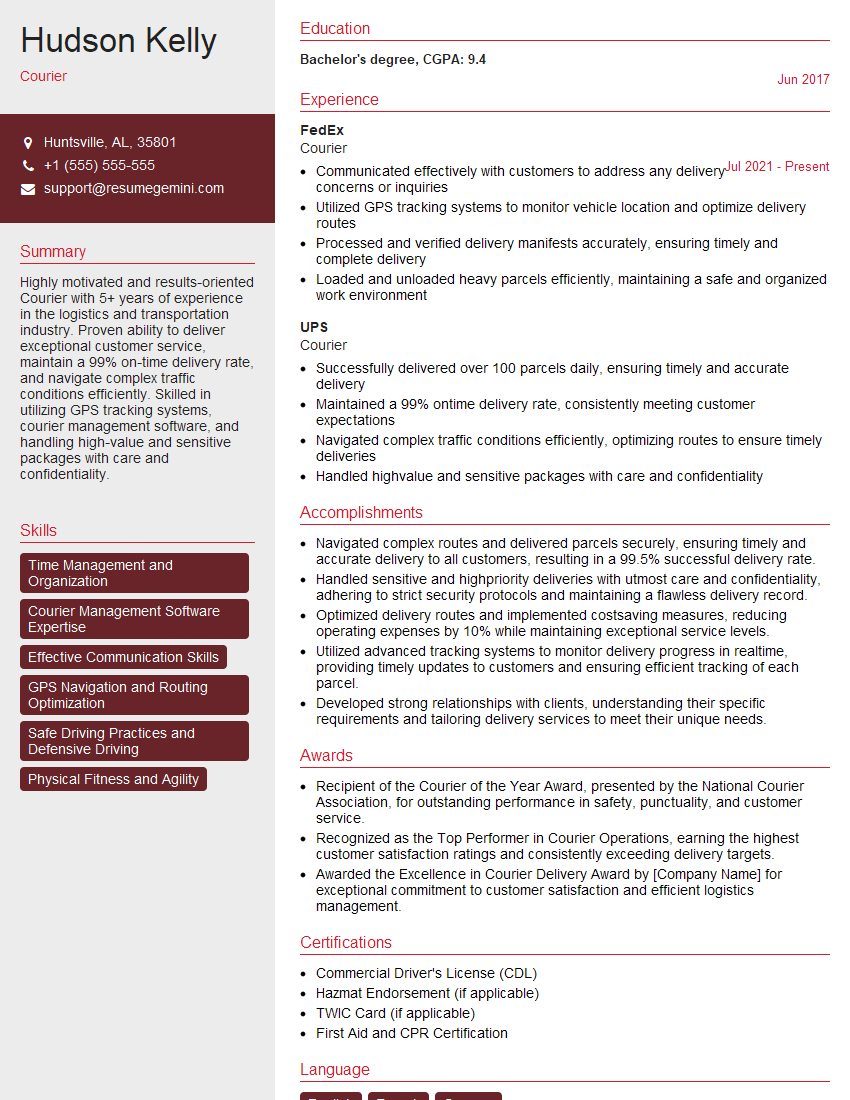
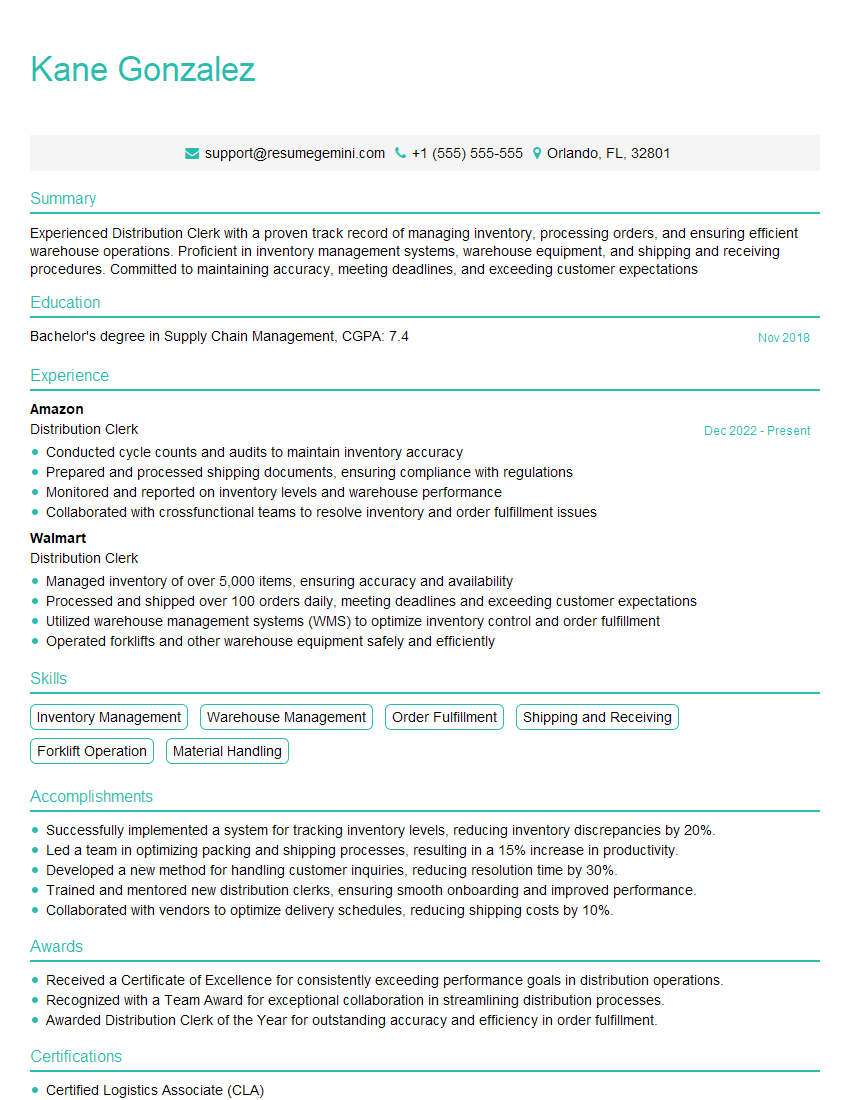
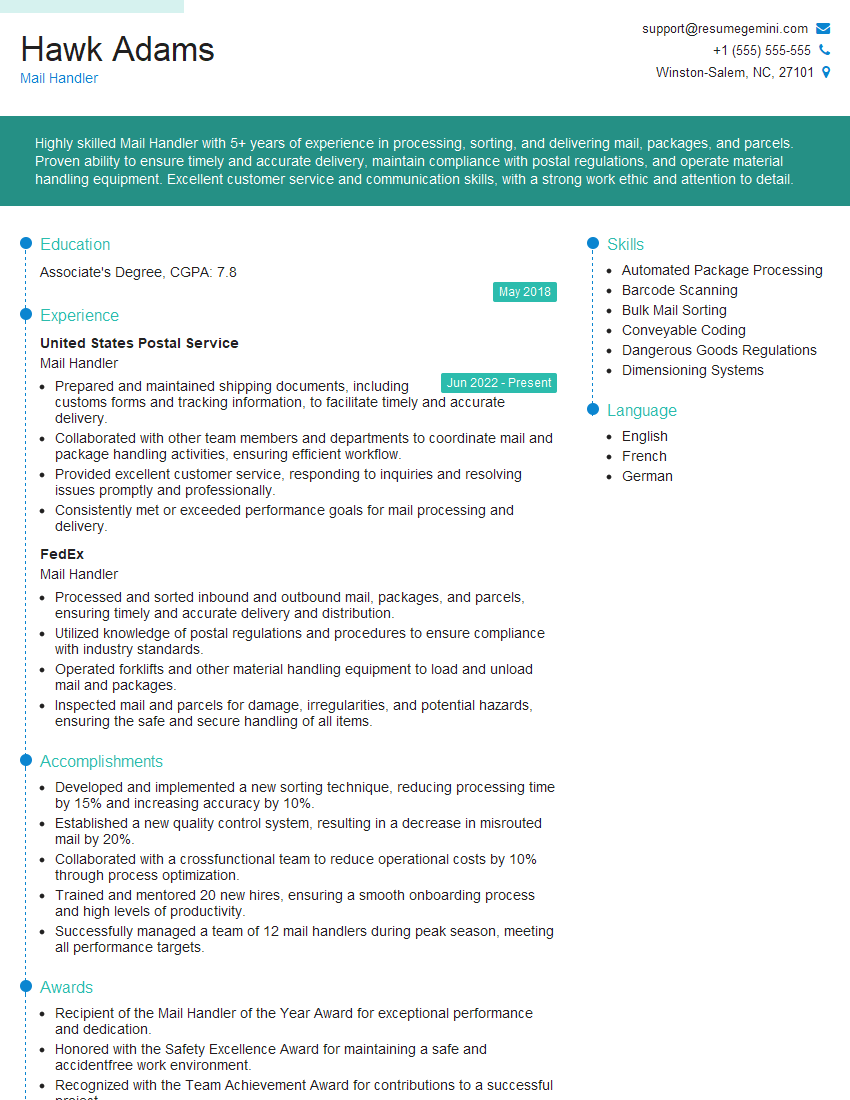
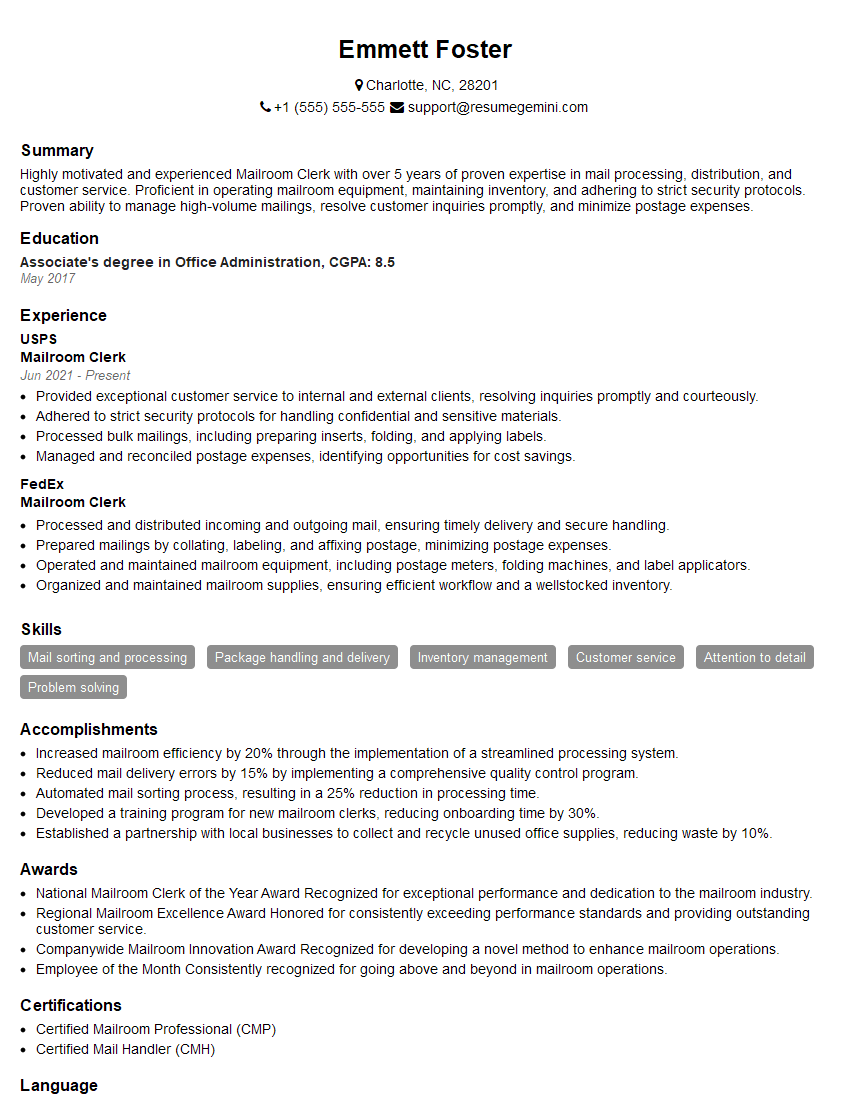
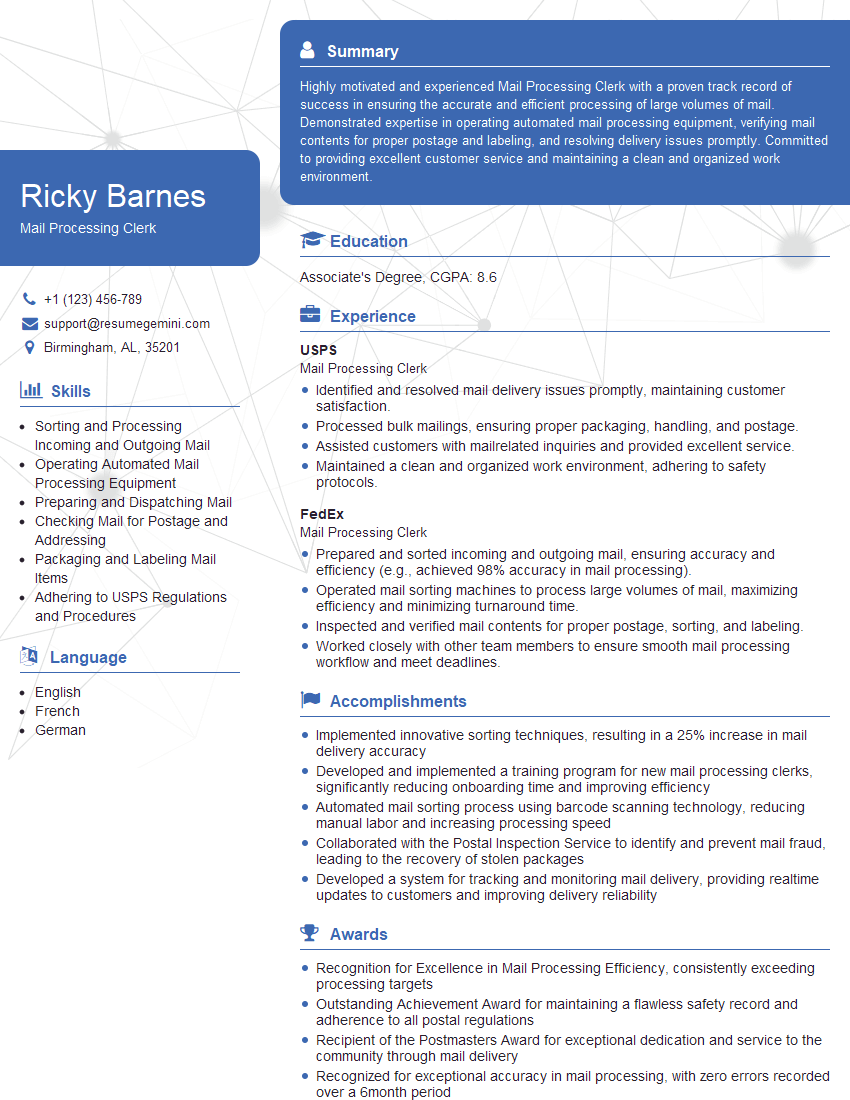
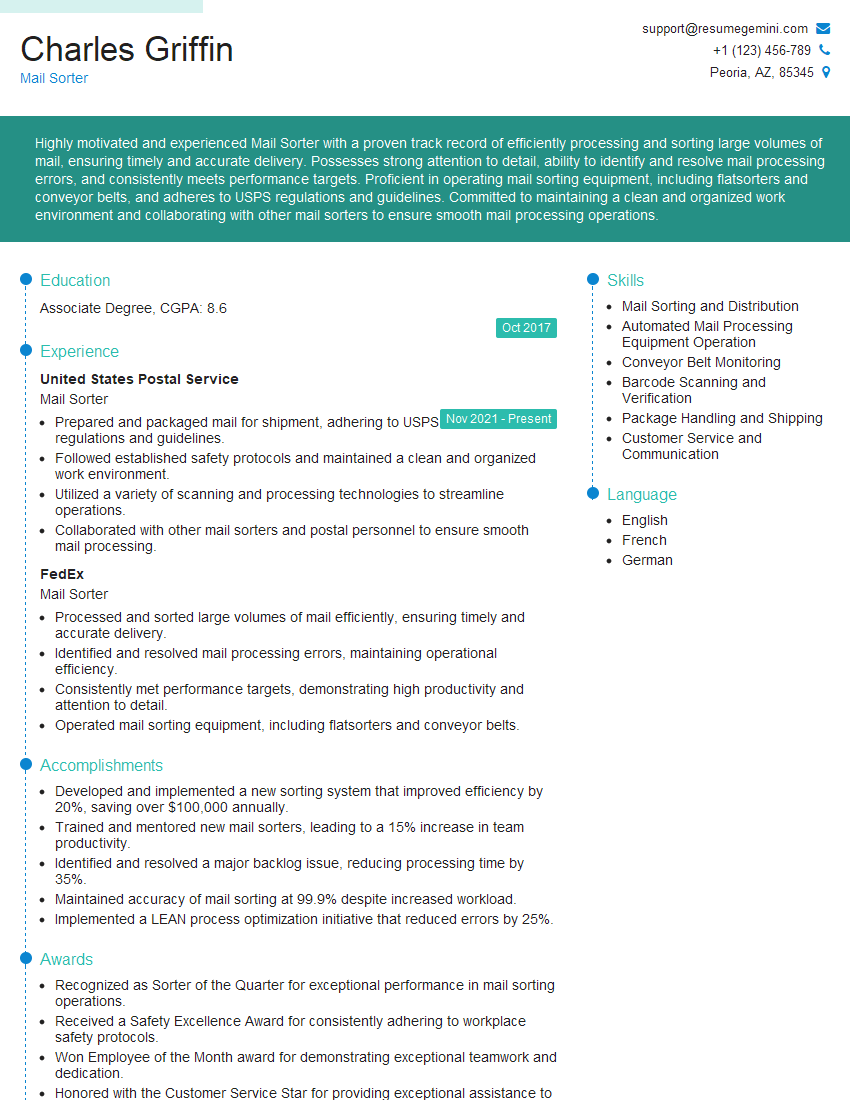
Mastering the intricacies of storing and retrieving mail is crucial for career advancement in IT and related fields. A strong understanding of these concepts demonstrates valuable technical skills and problem-solving abilities highly sought after by employers. To significantly increase your job prospects, create an ATS-friendly resume that highlights your relevant skills and experience. We highly recommend using ResumeGemini to build a professional and impactful resume tailored to the specific requirements of your target roles. ResumeGemini provides examples of resumes specifically crafted for candidates specializing in Storing and Retrieving Mail, allowing you to leverage best practices and present your qualifications effectively.

Explore more articles
Users Rating of Our Blogs
Share Your Experience
We value your feedback! Please rate our content and share your thoughts (optional).
What Readers Say About Our Blog
Very informative content, great job.
good