Unlock your full potential by mastering the most common Strength and Conditioning Principles interview questions. This blog offers a deep dive into the critical topics, ensuring you’re not only prepared to answer but to excel. With these insights, you’ll approach your interview with clarity and confidence.
Questions Asked in Strength and Conditioning Principles Interview
Q 1. Explain the difference between strength and power.
While both strength and power involve the exertion of force, they differ significantly in the time component. Strength is the maximal force a muscle or muscle group can produce in a single contraction. Think of a weightlifter performing a one-rep max squat. They are demonstrating maximal strength. Power, on the other hand, is the rate at which work is done; it’s the combination of force and speed. A powerlifter performing a clean and jerk, showcasing explosive force over a short period, is a great example of power. In essence, strength is about how much you can lift, while power is about how quickly you can lift it.
Consider a scenario with two athletes: Athlete A can squat 400lbs but takes a long time to lift it. Athlete B can squat 350lbs but lifts it explosively. Athlete A demonstrates more strength, while Athlete B demonstrates more power. Many sports demand both, but some, like Olympic weightlifting, heavily emphasize power, while others, such as strongman competitions, prioritize maximal strength.
Q 2. Describe the SAID principle and its application in training.
The SAID principle, or Specific Adaptation to Imposed Demands, is a fundamental concept in training. It essentially states that the body adapts specifically to the type of stress placed upon it. If you train for endurance, you’ll get better at endurance. If you train for strength, you’ll get stronger. The adaptations are highly specific to the training stimulus.
For example, if a basketball player only practices shooting free throws, they’ll become exceptionally skilled at free throws, but their overall game might not improve significantly. Similarly, a weightlifter focusing solely on bench press will get stronger at bench pressing, but might not see similar gains in other compound lifts like squats or deadlifts. To apply SAID effectively, training programs need to be carefully designed to target the specific demands of the athlete’s sport or activity. This involves considering the type of muscle contractions, movement patterns, energy systems, and training intensity required for optimal performance.
Q 3. What are the key components of a comprehensive warm-up?
A comprehensive warm-up is crucial for injury prevention and performance enhancement. It typically involves three phases:
- General Warm-up: This phase aims to increase blood flow and elevate core body temperature. Activities include light cardio, such as jogging or cycling, for 5-10 minutes.
- Specific Warm-up: This phase involves dynamic movements that mimic the movements of the subsequent training session. Examples include arm circles, leg swings, torso twists, and dynamic stretches. This prepares the muscles and joints for the specific demands of the workout (5-10 minutes).
- Activation/Skill-Specific Warm-up: This final phase focuses on activating the specific muscle groups that will be heavily engaged in the workout and practicing the movement patterns of the exercises to be performed. This might include light weight exercises or bodyweight movements related to the main lift. (2-5 minutes)
A well-structured warm-up primes the body and mind for optimal performance, reduces the risk of injury, and improves the quality of the training session.
Q 4. Explain the concept of periodization in strength and conditioning.
Periodization is the strategic manipulation of training variables (volume, intensity, frequency, and exercise selection) over time to optimize performance and minimize the risk of overtraining. It’s like a carefully planned journey, not a sprint. The training is divided into cycles (macrocycles, mesocycles, and microcycles) each with specific goals. A macrocycle might be a year-long training plan leading up to a major competition. Within that, you have mesocycles, which are smaller training blocks, possibly 4-8 weeks each, focusing on specific aspects of training (e.g., strength, power, endurance). Finally, microcycles are weekly training plans, typically lasting 7 days.
A common periodization model is linear periodization, where volume and intensity gradually increase over time. Another popular model is undulating periodization, where intensity and volume are varied within a week or a few weeks. The choice of periodization model depends on the athlete’s goals, experience, and training history.
Q 5. What are the different types of muscle contractions and their applications?
There are three main types of muscle contractions:
- Isometric: Muscle tension is generated without a change in muscle length. Think of holding a plank or pushing against an immovable object. This type of contraction is useful for improving strength and stability.
- Concentric: Muscle shortens as it generates force. This is the phase of a bicep curl where you lift the weight. Concentric contractions are crucial for building muscle mass and improving power.
- Eccentric: Muscle lengthens as it generates force. This is the lowering phase of a bicep curl. Eccentric contractions are vital for strength development and are often associated with muscle soreness.
Training programs often integrate all three contraction types to promote balanced muscle development and functional strength.
Q 6. How do you assess an athlete’s readiness for training?
Assessing an athlete’s readiness for training involves a multi-faceted approach, considering physical and mental aspects. This involves:
- Medical History: Reviewing any pre-existing conditions, injuries, or illnesses that could affect their training.
- Physical Assessment: Evaluating their movement patterns, flexibility, and muscle imbalances through tests like functional movement screens.
- Performance Testing: Assessing their current strength, power, and endurance levels through various assessments. This helps establish a baseline and track progress.
- Psychological Assessment: Evaluating their sleep quality, stress levels, motivation and overall mental wellbeing which has a significant impact on training outcomes and injury risk.
- Monitoring Training Load: Regularly monitoring their training volume and intensity to adjust their plan accordingly and avoid overtraining.
A holistic approach that considers both the physical and psychological aspects is vital to ensure the athlete trains safely and effectively while reducing the risk of injury and burnout.
Q 7. Explain the importance of progressive overload in strength training.
Progressive overload is the gradual increase in training demands over time to stimulate continued adaptation and improvement. This means continually challenging the body by increasing the weight, reps, sets, or difficulty of exercises. It is a core principle of strength training. Without it, the body reaches a plateau, and progress stalls. Imagine trying to build bigger biceps by curling the same 5lb dumbbells every day—you won’t see much change.
Progressive overload can be achieved in numerous ways: increasing the weight lifted, performing more repetitions or sets, reducing rest periods, changing exercise variations, or incorporating more advanced training techniques like drop sets or supersets. It’s crucial to adjust the overload gradually to allow the body adequate time for recovery and adaptation. Ignoring the principles of progressive overload and recovery can lead to overtraining, injury, and burnout.
Q 8. Describe different training methods for improving muscular strength.
Improving muscular strength relies on various training methods, each targeting different aspects of strength development. These methods can be broadly categorized into:
- Resistance Training: This is the cornerstone of strength building. It involves using weights, resistance bands, or bodyweight to challenge muscles. Different methods exist within resistance training:
- Isometric Training: Involves holding a static contraction against a resistance (e.g., holding a plank). This improves strength at a specific joint angle.
- Isotonic Training: Involves moving a weight through a range of motion (e.g., bicep curls). This enhances strength throughout the entire range of motion. This further breaks down into concentric (muscle shortening) and eccentric (muscle lengthening) contractions, both crucial for optimal strength gains.
- Plyometric Training: Uses explosive movements to develop power (e.g., box jumps). This is less focused on pure strength but contributes significantly to overall athletic performance.
- Isokinetic Training: Utilizes specialized equipment that controls the speed of movement throughout the range of motion (e.g., isokinetic dynamometer). This provides precise control and feedback, but isn’t usually accessible outside of specialized training facilities.
- Calisthenics: Bodyweight exercises that can be adapted for different strength levels. Examples include push-ups, pull-ups, squats, and lunges.
The choice of method depends on the individual’s goals, experience level, and available equipment. A well-rounded program often incorporates a combination of these methods.
Q 9. What are the key considerations for designing a training program for a beginner?
Designing a program for beginners requires careful consideration to prevent injury and foster a positive training experience. Key elements include:
- Proper Assessment: Begin with a thorough assessment of the individual’s current fitness level, any prior injuries, and training experience. This might involve movement screens to identify any mobility limitations.
- Gradual Progression: Start with a low volume (sets and reps) and intensity (weight or resistance). Gradually increase these variables over time to avoid overtraining and injury. Think of it like building a house; you need a solid foundation before you can add more stories.
- Focus on Proper Form: Prioritize proper technique over lifting heavy weights. Learning correct form from a qualified coach or through instructional videos is crucial. Poor form can lead to injury and limit effectiveness.
- Balanced Program: Include exercises that work all major muscle groups to promote balanced strength development and prevent imbalances. This means incorporating both upper and lower body exercises, as well as exercises that target anterior, posterior, and lateral muscle groups.
- Adequate Rest and Recovery: Schedule sufficient rest days between workouts to allow for muscle repair and recovery. This is often overlooked but is vital for progress.
- Variety: Incorporate a variety of exercises to prevent boredom and plateaus. The body adapts, so changing stimulus is key.
A sample beginner program might consist of full-body workouts twice a week, focusing on compound movements such as squats, presses, rows, and deadlifts, with lighter weights and higher repetitions.
Q 10. How do you address imbalances in muscular strength and flexibility?
Addressing muscle imbalances requires a multi-faceted approach targeting both strength and flexibility. It often involves identifying the source of the imbalance through assessment.
- Strength Training: Focus on strengthening the weaker muscle groups to bring them closer to the strength of their counterparts. This might involve performing more sets and reps for the weaker muscle group, or using unilateral exercises (exercises performed on one side of the body at a time) to highlight and correct any side-to-side differences.
- Flexibility and Mobility Work: Address any limitations in flexibility and mobility that may contribute to the imbalance. This could involve static stretching (holding a stretch), dynamic stretching (moving through a range of motion), or self-myofascial release (using tools like foam rollers to release tension in muscles).
- Proprioceptive Training: Exercises that challenge balance and coordination (e.g., single-leg squats, balance board exercises). This helps improve neuromuscular control and coordination, especially important for injury prevention and functional strength.
- Targeted Stretching: For instance, if someone has tight hip flexors leading to anterior pelvic tilt, stretches focusing on the hip flexors and strengthening the glutes would be prescribed.
Regular monitoring and reassessment are key to ensuring the imbalance is corrected. It’s often a gradual process, requiring patience and consistency.
Q 11. Explain the role of nutrition in strength and conditioning.
Nutrition plays a pivotal role in strength and conditioning. It provides the building blocks for muscle growth and repair, fuels training sessions, and supports overall recovery. Key nutritional considerations include:
- Sufficient Protein Intake: Protein is essential for muscle protein synthesis, the process of building and repairing muscle tissue. A daily protein intake of 1.6-2.2 grams per kilogram of body weight is generally recommended for strength athletes.
- Carbohydrate Intake: Carbohydrates are the primary energy source for high-intensity exercise. Adequate carbohydrate intake ensures sufficient energy for workouts and replenishes glycogen stores (stored energy) after training.
- Healthy Fats: Fats play a role in hormone production and overall health. Include healthy fats from sources like avocados, nuts, and olive oil.
- Hydration: Dehydration can significantly impair performance and recovery. Consume plenty of water throughout the day, especially before, during, and after training.
- Micronutrients: Vitamins and minerals are crucial for various bodily functions, including muscle function and recovery. A balanced diet rich in fruits and vegetables ensures adequate intake of these micronutrients.
Timing of nutrient intake also matters. Consuming protein and carbohydrates after training aids in muscle recovery and glycogen replenishment. Consulting a registered dietitian or sports nutritionist can provide personalized guidance based on individual needs and goals.
Q 12. What are the common signs and symptoms of overtraining?
Overtraining is a state of excessive training that leads to a decrease in performance and increased risk of injury. Recognizing the signs is crucial for preventing long-term issues. Common signs and symptoms include:
- Decreased Performance: Noticeably weaker lifts, slower times, decreased endurance, and difficulty completing workouts.
- Increased Fatigue and Exhaustion: Persistent tiredness, even after adequate rest. Feeling constantly sluggish and lacking motivation.
- Muscle Soreness and Stiffness: While some muscle soreness is normal after training, persistent and excessive soreness is a red flag.
- Loss of Motivation and Interest: A significant decrease in enjoyment of training, coupled with feelings of apathy.
- Sleep Disturbances: Difficulty falling asleep, frequent waking during the night, and unrefreshing sleep.
- Irritability and Mood Swings: Increased emotional reactivity and mood swings, often linked to hormonal imbalances.
- Increased Risk of Injury: The body becomes more susceptible to injuries due to fatigue and weakened tissues.
- Persistent Pain: Pain that doesn’t subside with rest or over-the-counter pain relief.
If you experience several of these symptoms, it’s essential to reduce training volume and intensity, prioritize rest and recovery, and consult with a healthcare professional or certified strength and conditioning coach.
Q 13. How do you monitor and evaluate an athlete’s progress?
Monitoring and evaluating an athlete’s progress requires a multifaceted approach combining objective and subjective measures. This ensures a comprehensive understanding of their development.
- Strength Testing: Regularly assess strength using 1-rep max (1RM) tests for key lifts (e.g., squat, bench press, deadlift) or submaximal testing. Track progress over time to monitor improvements.
- Performance-Based Assessments: Measure performance in sport-specific tasks. For example, a basketball player’s progress might be evaluated through sprint tests, vertical jump height, and agility drills.
- Body Composition Analysis: Monitor changes in body weight, body fat percentage, and lean muscle mass using methods such as skinfold calipers, bioelectrical impedance analysis (BIA), or DEXA scans.
- Subjective Feedback: Gather feedback from the athlete regarding their perceived exertion, mood, sleep quality, and overall feelings about their training. This subjective data complements the objective data.
- Training Logs and Data Analysis: Maintain detailed training logs to track workouts, sets, reps, weight used, and rest periods. Analyze this data to identify patterns and make informed adjustments to the program.
Regular progress evaluations (e.g., every 4-6 weeks) allow for timely adjustments to the training program to optimize results. This might involve modifying exercises, adjusting training volume and intensity, or addressing any identified imbalances.
Q 14. Explain the importance of proper recovery strategies.
Proper recovery strategies are crucial for optimizing performance, preventing overtraining, and promoting long-term health. Recovery is not just about rest; it’s an active process that involves various strategies.
- Sleep: Aim for 7-9 hours of quality sleep per night. Sleep is when the body repairs and rebuilds tissues.
- Nutrition: Consume a balanced diet rich in protein, carbohydrates, and healthy fats, especially after training. This replenishes energy stores and provides the building blocks for muscle repair.
- Hydration: Drink plenty of water throughout the day to maintain optimal hydration levels. Dehydration can impede recovery.
- Active Recovery: Engage in light activities such as walking, swimming, or cycling on rest days to promote blood flow and reduce muscle soreness. This doesn’t mean intense workouts; think low-impact, gentle movement.
- Stress Management: Manage stress through techniques such as meditation, yoga, or spending time in nature. Chronic stress can negatively impact recovery and performance.
- Massage and Self-Myofascial Release: Massage therapy and the use of foam rollers can help reduce muscle soreness and improve flexibility.
- Time Off: Incorporate planned periods of reduced training volume or complete rest (deload weeks) periodically to allow the body to fully recover and prevent overtraining. Think of it as giving your body a chance to ‘reboot’.
A holistic approach to recovery that incorporates these strategies is vital for maximizing results and minimizing the risk of injury. The recovery process is just as important as the training itself.
Q 15. Describe different methods for improving cardiovascular fitness.
Improving cardiovascular fitness involves enhancing the heart’s and lungs’ ability to deliver oxygen to working muscles. This is achieved through various methods focusing on sustained elevated heart rate.
- Continuous Training: This involves sustained exercise at a moderate intensity for a prolonged period, like jogging for 30 minutes. It’s great for building a base level of fitness.
- Interval Training: This alternates between high-intensity bursts and periods of rest or lower intensity. For example, sprinting for 400m followed by a 400m jog, repeated several times. It’s highly effective for improving both cardiovascular fitness and speed.
- Circuit Training: This involves a series of exercises performed one after another with minimal rest, often involving a mix of cardiovascular and strength training. Think a circuit of burpees, jumping jacks, and squats.
- High-Intensity Interval Training (HIIT): This is a more intense form of interval training with shorter work intervals and shorter recovery periods. For example, 30 seconds of all-out cycling followed by 30 seconds of rest, repeated for 10-20 minutes. It’s very time-efficient but can be more demanding.
The best method depends on individual fitness levels, goals, and preferences. A well-rounded approach often incorporates a combination of these techniques.
Career Expert Tips:
- Ace those interviews! Prepare effectively by reviewing the Top 50 Most Common Interview Questions on ResumeGemini.
- Navigate your job search with confidence! Explore a wide range of Career Tips on ResumeGemini. Learn about common challenges and recommendations to overcome them.
- Craft the perfect resume! Master the Art of Resume Writing with ResumeGemini’s guide. Showcase your unique qualifications and achievements effectively.
- Don’t miss out on holiday savings! Build your dream resume with ResumeGemini’s ATS optimized templates.
Q 16. What are the risks and benefits of using different types of training equipment?
Different training equipment offers unique benefits and risks. Careful consideration is crucial for safety and effectiveness.
- Free Weights (dumbbells, barbells): Benefits: Develops functional strength, improves balance and coordination. Risks: Higher risk of injury if proper form isn’t maintained, requires more technical skill.
- Machines: Benefits: Generally safer, easier to learn, isolate specific muscle groups. Risks: Can limit range of motion, may not translate well to real-world movements.
- Resistance Bands: Benefits: Versatile, portable, inexpensive, provide variable resistance. Risks: Can snap if overstretched, may not provide sufficient resistance for advanced lifters.
- Bodyweight Training: Benefits: Accessible, no equipment needed, improves body awareness. Risks: Limited resistance progression, may not be suitable for all exercises or fitness levels.
The choice depends on the athlete’s experience, goals, and available resources. A balanced program often integrates various equipment types to maximize benefits and minimize risks. Proper instruction and supervision are essential, especially with free weights.
Q 17. How do you adapt training programs for athletes with injuries?
Adapting training programs for injured athletes requires careful consideration of the injury’s nature and severity. The primary goal is to maintain fitness while avoiding further injury.
The process involves:
- Assessment: Thoroughly assess the injury, including its location, severity, and limitations. This often involves consultation with medical professionals.
- Modification: Modify exercises to avoid stressing the injured area. This might involve substituting exercises, reducing weight, using different equipment, or altering the range of motion. For example, if someone has a knee injury, we might replace squats with leg presses.
- Progression: Gradually increase the intensity and volume of the program as the athlete recovers. This is a crucial step to prevent setbacks and ensure a safe return to full training.
- Monitoring: Closely monitor the athlete’s progress and adjust the program as needed. Listen to the athlete’s feedback and be prepared to modify the plan.
For instance, an athlete with a hamstring strain might begin with low-impact activities like cycling or swimming, gradually progressing to light strength training exercises focusing on the opposing muscle groups (quadriceps) before returning to running.
Q 18. Explain the principles of plyometrics and their application.
Plyometrics are exercises that use explosive movements to develop power. They involve a rapid stretch-shortening cycle (SSC), where a muscle is quickly stretched before being forcefully contracted.
Principles of Plyometrics:
- Stretch-Shortening Cycle (SSC): The key to plyometrics. The eccentric (lengthening) phase stores elastic energy which is released during the concentric (shortening) phase, resulting in a more powerful contraction.
- Speed and Power: The focus is on explosive movements, not endurance. Exercises should be performed quickly and powerfully.
- Specificity: Plyometrics should be specific to the sport or activity. A basketball player would focus on different plyometric exercises than a long-distance runner.
- Progression: Start with easier exercises and gradually increase the intensity and complexity as the athlete improves. This prevents injuries.
Applications: Plyometrics are used to improve vertical jump height, sprinting speed, and agility. Examples include box jumps, depth jumps, and medicine ball throws. Proper technique and conditioning are essential to avoid injuries.
Q 19. How do you incorporate flexibility and mobility exercises into a training program?
Flexibility and mobility exercises are crucial for injury prevention, improved performance, and enhanced recovery. They should be incorporated into a training program systematically.
Incorporation Strategies:
- Warm-up: Begin each training session with dynamic stretching, such as arm circles, leg swings, and torso twists. This prepares the muscles for activity.
- Cool-down: Finish each session with static stretching, holding each stretch for 20-30 seconds. This helps improve flexibility and reduce muscle soreness.
- Dedicated Sessions: Schedule specific days for flexibility and mobility training, focusing on areas that need improvement. This could involve yoga, Pilates, or foam rolling.
- Integration: Incorporate mobility exercises between sets of strength training. This helps maintain range of motion and prevents stiffness.
The frequency and type of flexibility and mobility exercises should be tailored to the individual’s needs and goals. For example, a runner might focus on hamstring and hip flexibility, while a weightlifter might emphasize shoulder and thoracic spine mobility.
Q 20. What is your experience with different testing methods to assess strength and conditioning?
Assessing strength and conditioning involves various testing methods, each providing unique insights. My experience encompasses a range of approaches.
- Strength Testing: 1-Rep Max (1RM) testing for major lifts (squat, bench press, deadlift) provides a measure of maximal strength. Submaximal testing (using percentages of 1RM) is safer and can assess strength at different intensities. Isometric strength testing (e.g., handgrip dynamometry) measures static strength.
- Power Testing: Vertical jump tests (e.g., countermovement jump, drop jump) assess lower body power. Medicine ball throws and power clean tests provide information on upper body and overall power.
- Endurance Testing: Tests such as the Yo-Yo intermittent recovery test assess cardiovascular endurance. Time trials or repetitions at a given intensity can measure muscular endurance.
- Agility and Speed Testing: T-tests and cone drills assess agility, while sprint tests measure speed.
- Flexibility and Mobility Testing: Sit-and-reach tests and goniometry measure flexibility, while range of motion assessments evaluate joint mobility.
The choice of test depends on the specific goals and the athlete’s characteristics. It is crucial to ensure proper testing procedures and interpret the results in the context of the athlete’s individual factors.
Q 21. How do you design a training program to improve speed and agility?
Designing a training program to improve speed and agility requires a multifaceted approach.
Key components include:
- Speed Training: This focuses on developing maximal speed through sprint training. It involves short, high-intensity sprints with adequate rest periods. Progression involves gradually increasing sprint distance and reducing rest intervals.
- Agility Training: This focuses on improving the ability to change direction quickly and efficiently. Drills include cone drills, ladder drills, and shuttle runs. Focus should be on proper technique and quick footwork.
- Strength and Power Training: Strength training builds the foundation for speed and agility. Focus on exercises that develop lower body strength and power (e.g., squats, deadlifts, plyometrics).
- Flexibility and Mobility Training: Maintaining optimal flexibility and mobility is crucial for efficient movement and injury prevention. Incorporate dynamic stretching before training and static stretching afterward.
- Proper Technique: Emphasis on proper sprinting and agility technique is paramount. A biomechanical analysis can help identify areas for improvement.
The program should be progressively overloaded, meaning the intensity or volume gradually increases over time. Adequate rest and recovery are also essential for preventing overtraining and injury.
Q 22. What is your approach to working with different age groups and athletic abilities?
My approach to working with different age groups and athletic abilities centers on individualized program design. I understand that a high school athlete’s needs differ significantly from those of a seasoned professional or a senior citizen engaging in fitness. I begin by conducting a thorough needs analysis, considering factors such as age, training experience, current fitness level, specific sport (if applicable), injury history, and any underlying health conditions. This assessment informs the selection of appropriate exercises, training intensities, volumes, and rest periods.
For example, with younger athletes, I prioritize foundational movement patterns and focus on building a strong base of strength and conditioning while carefully managing training volume to prevent overuse injuries. Older adults might benefit from exercises focused on maintaining bone density, improving balance, and increasing functional strength, often with lower intensity and higher repetitions. Elite athletes, on the other hand, will undergo a more rigorous and specialized program tailored to their specific sport demands, potentially incorporating periodization models for optimal performance.
Ultimately, my goal is to create safe, effective, and motivating programs that align with the individual’s goals and capabilities, regardless of their age or athletic background. Regular monitoring and adjustments based on the athlete’s progress are crucial to ensuring ongoing success.
Q 23. Describe your experience with different types of resistance training.
My experience encompasses a broad range of resistance training methods. I’m proficient in using free weights (barbells, dumbbells), weight machines, resistance bands, bodyweight exercises, and plyometrics. The choice of method depends on the individual athlete’s needs, goals, and available resources.
- Free weights: Offer unparalleled versatility and improve neuromuscular control and balance.
- Weight machines: Provide a safer, more controlled environment, ideal for beginners or those rehabilitating from injuries.
- Resistance bands: Excellent for increasing resistance throughout the range of motion, and highly portable.
- Bodyweight exercises: Cost-effective and accessible, particularly useful for building foundational strength and improving body awareness.
- Plyometrics: Focus on power development through explosive movements; crucial for sports requiring quick bursts of speed and agility.
I integrate various methods within a training program to optimize results and prevent plateaus. For instance, I might combine free weight compound movements (like squats and deadlifts) with machine exercises for isolation work (targeting specific muscle groups) and plyometrics for power development. The specific mix depends heavily on the athlete’s individual training goals and progress.
Q 24. How do you ensure the safety of athletes during training?
Ensuring athlete safety is paramount. My approach is multi-faceted:
- Thorough Assessment: I conduct detailed medical history reviews and physical assessments to identify any pre-existing conditions or risk factors.
- Proper Warm-up and Cool-down: Every training session includes dynamic warm-ups to prepare the body for exercise and static stretches during the cool-down to aid recovery and reduce muscle soreness.
- Emphasis on Proper Technique: I rigorously teach and monitor proper exercise form to minimize the risk of injuries. This often involves individualized instruction, demonstrations, and video analysis.
- Progressive Overload: I carefully increase training intensity and volume gradually, allowing the body to adapt and prevent overload injuries.
- Adequate Rest and Recovery: I incorporate rest days and periods of active recovery into the training plan, allowing the body to repair and rebuild.
- Emergency Preparedness: I’m trained in first aid and CPR and ensure a safe training environment with readily available emergency equipment.
- Communication: Open communication with the athlete is essential. They should feel comfortable reporting any pain, discomfort, or unusual sensations immediately.
By consistently applying these safety measures, I strive to create a training environment where athletes can improve their fitness without jeopardizing their health.
Q 25. Explain the importance of proper exercise technique.
Proper exercise technique is crucial for maximizing results and minimizing injury risk. Correct form ensures that the target muscles are effectively engaged, while minimizing stress on joints and connective tissues.
For example, performing a squat with poor form, such as rounding the back, can put excessive strain on the spine, leading to potential injury. Conversely, correct form involves maintaining a neutral spine, engaging the core muscles, and controlling the movement throughout the entire range of motion. This allows for greater strength gains and minimizes the risk of injury.
I use a variety of methods to ensure proper technique, including:
- Demonstration and verbal cues: I demonstrate the correct form and provide verbal instructions to guide the athlete.
- Mirror work: Using mirrors allows athletes to visually check their form.
- Video analysis: Recording the athletes’ movements and reviewing the footage provides valuable feedback.
- Progressive loading: Starting with lighter weights and gradually increasing the load as the athlete’s form improves.
Consistent attention to technique is a cornerstone of a successful and safe strength and conditioning program.
Q 26. How do you motivate athletes to adhere to their training programs?
Motivating athletes to adhere to their training programs requires a multifaceted approach:
- Setting realistic goals: Collaboratively setting achievable and measurable goals increases commitment and provides tangible progress markers.
- Positive reinforcement: Celebrating successes, no matter how small, builds confidence and motivation.
- Varied programming: Preventing boredom is key; incorporating diverse exercises and training methods keeps the program engaging.
- Accountability and support: Regular check-ins and open communication create a sense of accountability and provide support when needed.
- Education: Explaining the rationale behind the program empowers athletes and increases buy-in.
- Building a positive training environment: Fostering camaraderie and a supportive atmosphere motivates athletes to attend training sessions and work towards common goals.
I find that building a strong rapport with athletes, understanding their individual needs and motivations, and providing personalized support are critical factors in achieving long-term adherence.
Q 27. Describe your experience using technology (e.g., wearable sensors, software) in strength and conditioning.
I have significant experience integrating technology into strength and conditioning programs. Wearable sensors like GPS trackers, heart rate monitors, and accelerometers provide objective data on training load, movement mechanics, and recovery. This data helps to optimize training plans, ensuring that athletes are challenged appropriately while minimizing the risk of overtraining or injury.
Software platforms allow for efficient data tracking, analysis, and program design. For instance, I use software to track athletes’ progress, adjust training parameters based on their responses, and create individualized training plans. Some software allows for remote monitoring of athletes’ progress, facilitating communication and support, even when working with athletes remotely.
For example, using GPS data, I can analyze an athlete’s training load during a running session, assessing variables like distance, speed, and acceleration to ensure a safe and effective intensity. Heart rate data helps in monitoring the cardiovascular response to training and tailoring the program to avoid overtraining. Software can analyze this data to provide detailed reports and allow for informed decision-making.
Q 28. How would you address a situation where an athlete refuses to follow the training program?
If an athlete refuses to follow the training program, my approach is to first understand the reason behind their reluctance. Open and honest communication is key. I would engage them in a conversation to understand their concerns and address any potential barriers to compliance. This might involve:
- Identifying underlying issues: Are they experiencing pain or discomfort? Are the training goals unclear? Is there a lack of confidence in their ability to succeed? Is there a personal conflict interfering with their commitment?
- Re-evaluating the program: It may be necessary to adjust the training plan based on the athlete’s feedback and progress. This could involve modifying exercises, adjusting the intensity or volume, or creating a more flexible schedule.
- Setting new, collaborative goals: Collaborating on achievable goals increases the athlete’s commitment to the process.
- Providing extra support: Increased support and guidance from a coach, team, or mentor can boost adherence.
- Finding alternatives: If the athlete remains resistant, exploring alternative approaches to training or physical activity may be necessary.
Ultimately, finding common ground and focusing on the athlete’s needs and motivations is crucial in addressing non-compliance. It’s essential to ensure that the training program is aligned with their goals and capabilities, promoting a positive and supportive training experience.
Key Topics to Learn for Strength and Conditioning Principles Interview
- Program Design: Understanding the principles of periodization, including macrocycles, mesocycles, and microcycles. This includes applying different training methods (linear, undulating, block) to achieve specific goals.
- Exercise Selection & Technique: Knowing how to select appropriate exercises based on client goals and limitations, emphasizing proper form and technique to maximize results and minimize injury risk. Consider practical application in various populations (e.g., athletes, older adults).
- Energy Systems & Metabolic Conditioning: Grasping the role of different energy systems (phosphagen, glycolytic, oxidative) in various training modalities and how to design programs targeting specific energy systems for optimal performance enhancement.
- Strength Training Principles: A strong understanding of progressive overload, specificity, individualization, variation, and the SAID principle (Specific Adaptation to Imposed Demands).
- Assessment & Evaluation: Comprehending various methods for assessing strength, power, endurance, flexibility, and body composition. This includes understanding the limitations and application of different tests and how to interpret results for program adjustments.
- Recovery & Regeneration: Familiarizing yourself with active and passive recovery strategies, including nutrition, sleep, and the importance of rest and recovery in program design to prevent overtraining and optimize adaptation.
- Injury Prevention & Rehabilitation: Knowledge of common injuries in different sports and activities, and understanding basic rehabilitation principles to minimize injury risk and aid recovery.
- Nutrition & Supplementation: Understanding the role of nutrition in supporting training adaptations and the ethical considerations of supplementation within Strength and Conditioning.
- Motor Learning & Skill Acquisition: Understanding the principles of motor learning, including stages of learning, feedback mechanisms, and how to effectively coach clients to improve technique and performance.
Next Steps
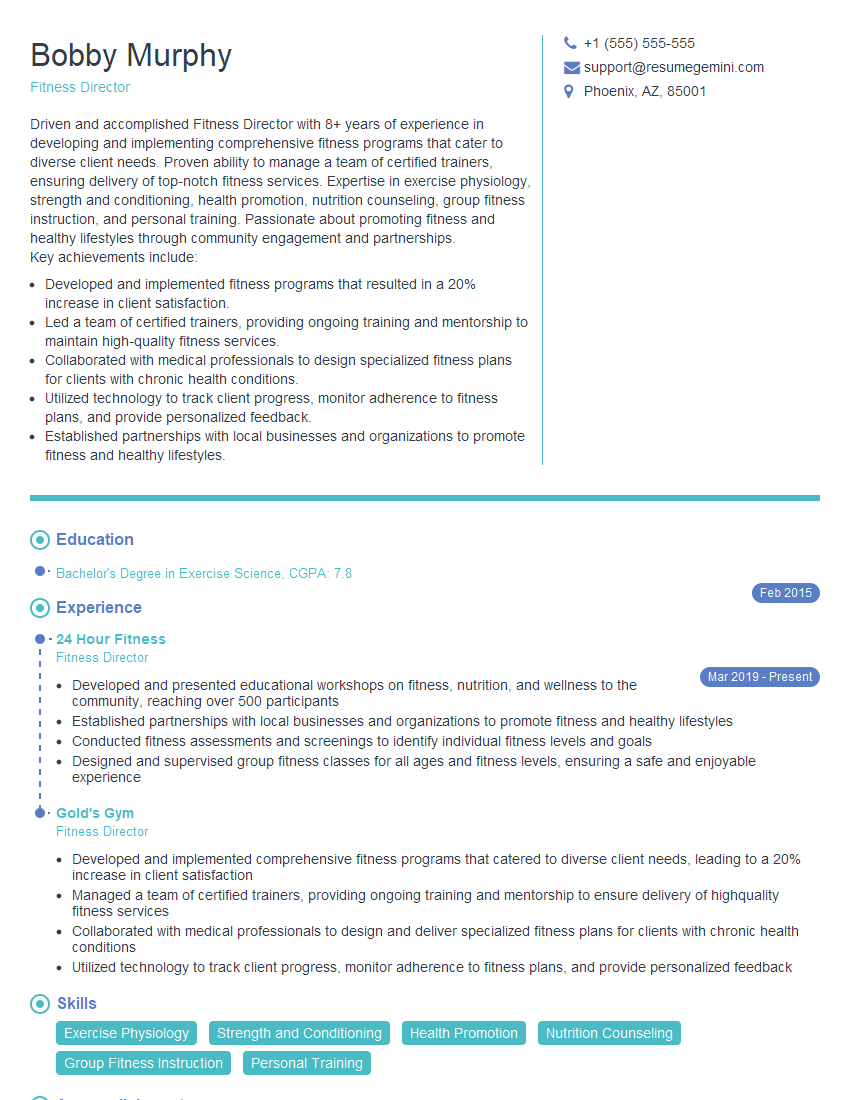
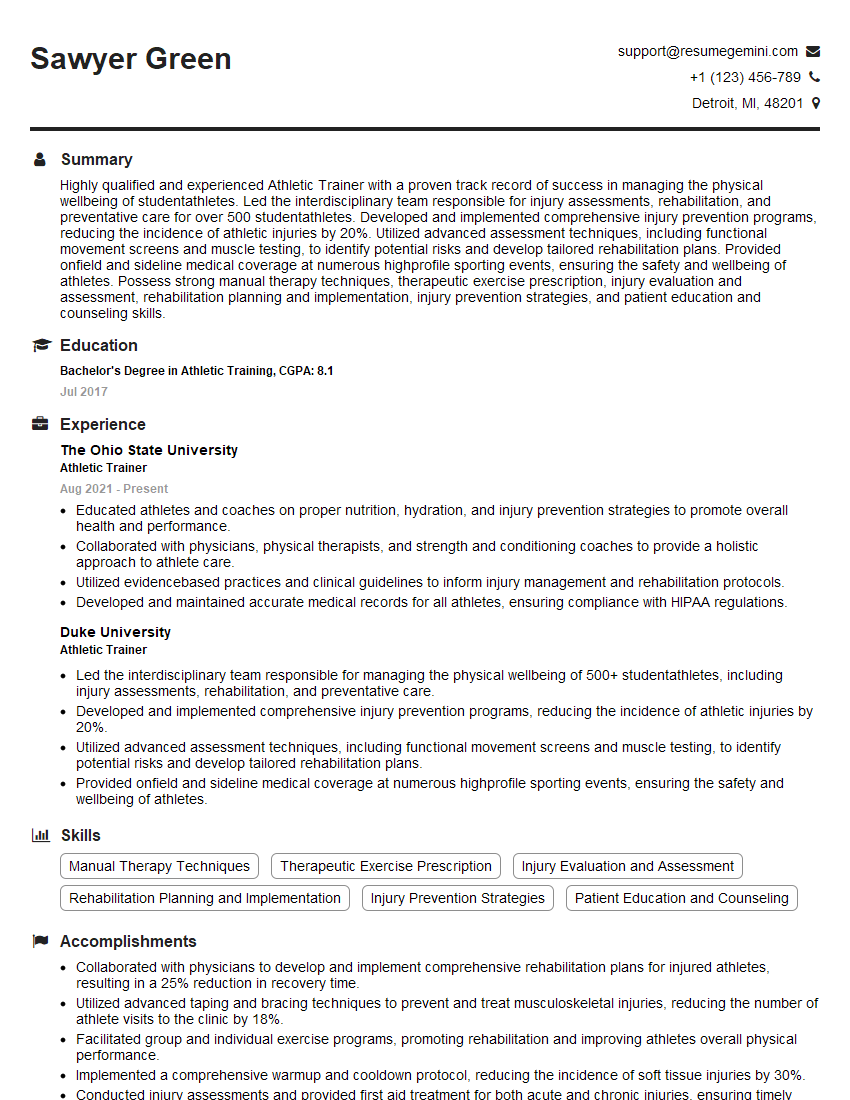
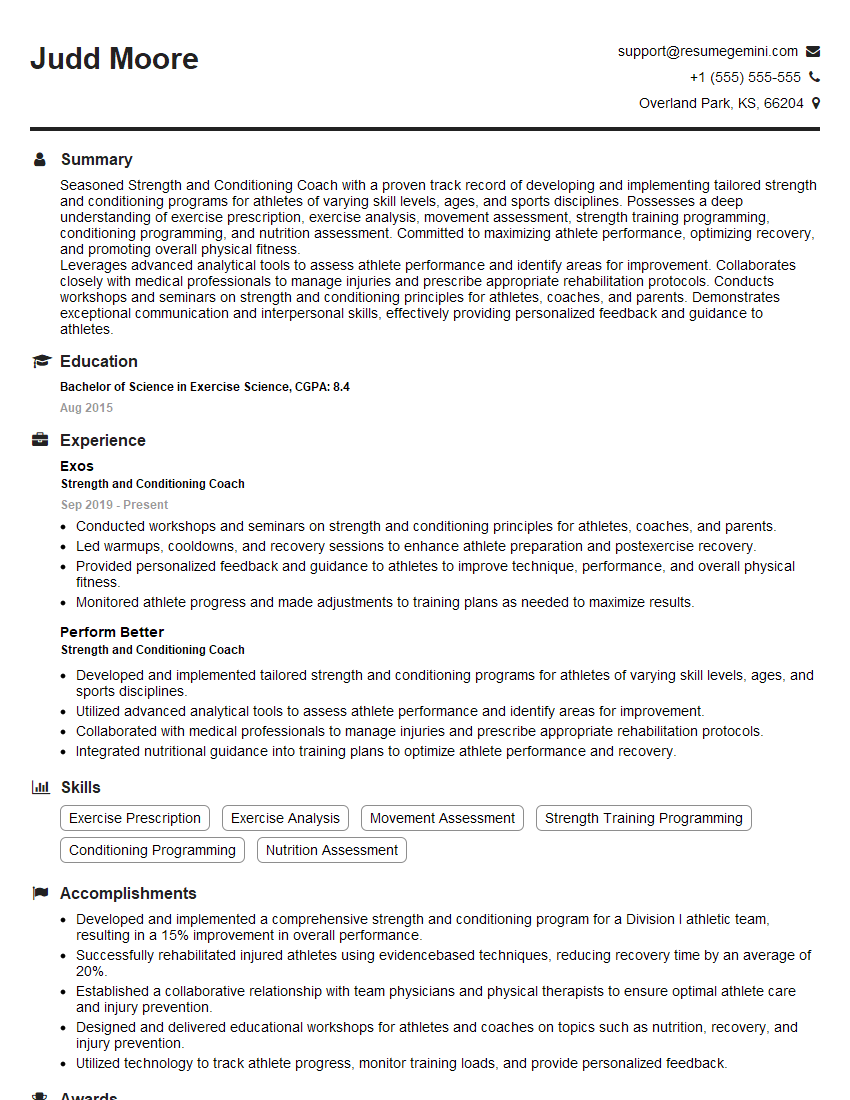
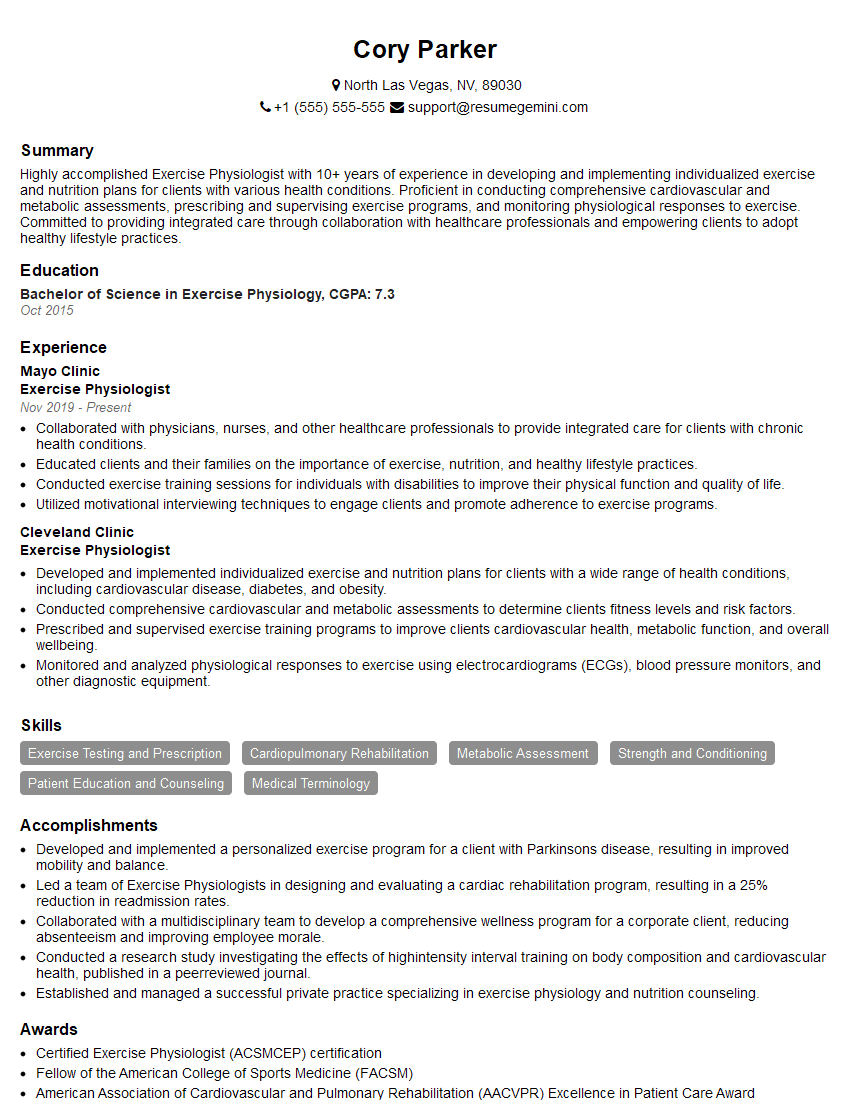
Mastering Strength and Conditioning Principles is crucial for career advancement in this dynamic field. A strong understanding of these principles allows you to design effective and safe programs, making you a highly sought-after professional. To maximize your job prospects, create an ATS-friendly resume that highlights your skills and experience effectively. ResumeGemini is a trusted resource that can help you build a professional resume tailored to the Strength and Conditioning industry. Examples of resumes tailored to Strength and Conditioning Principles are available – leverage them to showcase your expertise and secure your dream role.

Explore more articles
Users Rating of Our Blogs
Share Your Experience
We value your feedback! Please rate our content and share your thoughts (optional).
What Readers Say About Our Blog
good