The thought of an interview can be nerve-wracking, but the right preparation can make all the difference. Explore this comprehensive guide to Strength Training Programming interview questions and gain the confidence you need to showcase your abilities and secure the role.
Questions Asked in Strength Training Programming Interview
Q 1. Explain the principles of periodization in strength training.
Periodization in strength training is like a well-planned journey, not a sprint. It’s a systematic approach to structuring training programs over a specific period, typically a year, to maximize athletic performance and minimize risk of injury. It involves manipulating training variables like volume (sets and reps), intensity (weight lifted), and frequency (training sessions per week) across different phases. This planned variation prevents plateaus and optimizes gains.
Imagine building a house. You wouldn’t build the roof before the foundation. Similarly, periodization strategically cycles through different training phases, starting with a base phase focused on building a strong foundation of general fitness, moving towards a hypertrophy phase focused on muscle growth, then a strength phase to increase maximal force production, and finally a peak phase for competition or a specific performance goal. Each phase serves a specific purpose and contributes to the overall goal.
- Macrocycle: The entire training year.
- Mesocycle: Sub-periods within a macrocycle (e.g., 4-month blocks focusing on different training goals).
- Microcycle: Weekly or bi-weekly training blocks with specific training plans.
Q 2. Describe the difference between linear and non-linear periodization.
Linear periodization is like climbing a staircase – a gradual, consistent increase in training load over time. You steadily increase weight, sets, or reps each week or mesocycle, leading to a peak in performance at the end. This approach is ideal for beginners who are building a base level of fitness. Conversely, non-linear periodization is more like a mountain range with peaks and valleys – it incorporates variations in training load from week to week, allowing for periods of higher intensity followed by periods of lower intensity for recovery and adaptation. This helps manage fatigue and avoids overtraining, making it better suited for intermediate and advanced lifters.
Example: A linear periodization program for bench press might increase the weight by 2.5kg every week. A non-linear program might have a week of high intensity (heavy weight, low reps), followed by a week of lower intensity (moderate weight, higher reps), then another week of high intensity, and so on, ensuring a balance between stress and recovery.
Q 3. What are the key considerations when designing a strength training program for a novice lifter?
Designing a strength program for a novice requires a focus on proper technique, gradual progression, and injury prevention. It’s crucial to begin with foundational movements and establish a solid base of strength and conditioning before progressing to more advanced exercises. Prioritizing proper form over lifting heavy weights is paramount. The program should emphasize compound movements (movements that work multiple muscle groups simultaneously) such as squats, deadlifts, bench presses, overhead presses, and rows, building a strong base of functional strength. Frequent rest and recovery are crucial for allowing the body to adapt.
- Start slow and prioritize technique: Focus on mastering the movements before increasing weight or volume.
- Use a full-body routine: Allows for more frequent training and promotes overall strength gains.
- Emphasize proper warm-ups and cool-downs: Prevents injuries and improves recovery.
- Include sufficient rest and recovery: Allow the body time to adapt and rebuild.
- Focus on consistency and adherence: Results take time and consistency is key.
Q 4. How would you assess a client’s current fitness level before designing a program?
Assessing a client’s fitness level involves a multi-faceted approach. It’s important to gather information through multiple channels to get a holistic picture. A detailed health history questionnaire is a great starting point. This helps identify any pre-existing conditions or limitations that may influence the program design. A physical assessment is then crucial: observing posture, range of motion, and movement patterns can reveal weaknesses or imbalances. Then comes functional movement screening – assessing their ability to perform basic movements like squats, lunges, and push-ups – to evaluate their overall fitness. Finally, a baseline strength test, using simple assessments such as bodyweight exercises, or if appropriate, weightlifting assessment with progressively heavier weights, allows for a quantitative measure of their current strength capabilities. The combination of these assessments provides a solid understanding of the client’s current fitness level, allowing for a tailored and safe program.
Q 5. What are some common training errors you see and how would you correct them?
Common training errors include using poor form, neglecting warm-ups and cool-downs, training too intensely without adequate rest, and failing to progressively overload. Poor form can lead to injury and limit gains. Insufficient warm-up can increase risk of injury. Overtraining leads to burnout, plateaus, and injury. Failure to progressively overload prevents strength gains.
Corrections: I address these by demonstrating and cueing proper form, emphasizing the importance of warm-ups and cool-downs, creating personalized training plans with appropriate rest periods and incorporating progressive overload principles using various techniques (incrementally increasing weight, sets, reps, or decreasing rest periods). I would also regularly check in with the client to ensure the program is appropriate and to address any concerns or questions they may have. Education and clear communication are vital in correcting these errors and fostering long-term success.
Q 6. Explain the concept of progressive overload and how it applies to strength training.
Progressive overload is the cornerstone of strength training. It’s the gradual increase in training demands over time to continually challenge the body and stimulate adaptations. This could involve increasing the weight lifted, the number of repetitions performed, the number of sets completed, or decreasing rest time between sets. The key is to consistently challenge the muscles beyond their current capabilities, forcing them to adapt and become stronger.
Example: If a client can bench press 100lbs for 8 reps, progressive overload might involve increasing the weight to 105lbs next week, maintaining 8 reps, or increasing the reps to 10 while maintaining the 100lbs weight. Progressive overload is not always about adding weight; it’s about consistently pushing the body beyond its comfort zone in a safe and controlled manner.
Q 7. Describe different training methodologies (e.g., hypertrophy, strength, power).
Different training methodologies target specific adaptations. Hypertrophy training focuses on muscle growth, using moderate weight and higher repetitions (8-12 reps per set) to induce muscle damage and subsequent growth. Strength training focuses on increasing maximal force production, using heavier weight and lower repetitions (1-5 reps per set). Power training emphasizes the speed of movement, using moderate weight and explosive movements (1-3 reps per set).
The choice of methodology depends on the client’s goals and training experience. A beginner might start with a focus on hypertrophy to build a solid muscle base before progressing to strength or power training. It’s important to note that these methodologies are not mutually exclusive and can be combined within a periodization program to achieve a more comprehensive training effect.
Q 8. How do you program for different muscle groups and training frequencies?
Programming for different muscle groups and training frequencies involves strategically distributing training volume and intensity across various muscle groups throughout the week. This optimization maximizes muscle growth and minimizes injury risk by allowing adequate recovery time.
For example, a common approach is a push-pull-legs split. ‘Push’ days focus on chest, shoulders, and triceps; ‘pull’ days target back and biceps; and ‘leg’ days concentrate on quads, hamstrings, and calves. This allows for sufficient rest before re-training the same muscle groups.
Training frequency depends on individual factors like training experience, recovery capacity, and program goals. A beginner might benefit from a full-body workout 2-3 times a week, while an advanced lifter might utilize a higher frequency, training each muscle group 2-3 times per week with strategically lower volume on some days.
- Higher Frequency (e.g., 4-6 days/week): Suitable for experienced lifters, this allows for more frequent stimulus to specific muscle groups, promoting faster adaptation.
- Lower Frequency (e.g., 2-3 days/week): Suitable for beginners or those with limited recovery capacity, allowing ample time for muscle repair and growth.
Program design should consider the principle of periodization, cycling training volume and intensity over time to prevent plateaus and optimize progress. For example, a strength phase might prioritize lower reps with heavier weight, whereas a hypertrophy phase might focus on higher reps with moderate weight.
Q 9. Explain the importance of rest and recovery in strength training.
Rest and recovery are crucial for strength gains. During training, muscle fibers experience microscopic damage. Rest allows for repair and growth, leading to increased strength and muscle mass. Insufficient rest leads to overtraining, characterized by fatigue, decreased performance, and increased injury risk.
Think of it like this: Imagine a blacksmith hammering a piece of metal. Each strike strengthens the metal, but if the blacksmith hammers continuously without pausing, the metal might break. Rest allows the ‘metal’ (your muscles) to cool down, rebuild, and become stronger.
Rest and recovery encompasses several elements:
- Sleep: Aim for 7-9 hours of quality sleep per night for optimal muscle recovery.
- Nutrition: A balanced diet rich in protein, carbohydrates, and healthy fats fuels muscle repair and growth. (See question 6 for more detail).
- Active Recovery: Light activities like walking or stretching promote blood flow and reduce muscle soreness.
- Training De-loads: Periodically reducing training volume allows your body to catch up and prevents overtraining. This might involve decreasing the weight lifted, number of sets, or frequency of workouts.
Ignoring rest and recovery can sabotage strength gains, leading to plateaus, injury, and burnout. Prioritizing rest is just as important as the workouts themselves.
Q 10. How do you adapt training programs for individuals with injuries or limitations?
Adapting programs for individuals with injuries or limitations requires careful consideration of their specific condition. Collaboration with medical professionals (physical therapists, doctors) is essential. The goal is to maintain strength and fitness while avoiding further injury.
Here’s a structured approach:
- Assessment: Thoroughly evaluate the individual’s injury, limitations, and current fitness level.
- Modification: Adjust exercises to avoid stress on the injured area. This could involve replacing exercises, modifying range of motion, or using alternative equipment (e.g., resistance bands instead of free weights).
- Progression: Gradually increase the intensity and volume of exercises as the individual recovers and tolerance improves. This is a slow, cautious process to prevent setbacks.
- Communication: Maintain open communication with the client, regularly monitoring their progress and adjusting the program based on feedback. Pain is a significant indicator that adjustments are needed.
Example: A client with a knee injury might replace squats with leg presses, focusing on lighter weights and controlled movements. We might substitute pull-ups with lat pulldowns using a seated machine which reduces stress on the knees.
Remember, safety is paramount. It’s better to err on the side of caution and progress slowly than to risk re-injury or hinder recovery.
Q 11. What are the key benefits of incorporating plyometrics into a strength training program?
Plyometrics, or jump training, involves explosive movements that utilize the stretch-shortening cycle to generate power. Incorporating plyometrics into a strength training program offers several key benefits:
- Increased Power Output: Plyometrics improve the ability to generate force rapidly, essential for athletic performance and functional strength.
- Enhanced Neuromuscular Efficiency: They improve the communication between the nervous system and muscles, resulting in more efficient muscle activation.
- Improved Speed and Agility: Plyometrics contribute to faster movement and improved agility, valuable for sports and daily activities.
- Increased Bone Density: The high-impact nature of plyometrics can help improve bone density, reducing the risk of osteoporosis.
Examples of plyometric exercises: Box jumps, depth jumps, clap push-ups, medicine ball throws.
Important considerations: Plyometrics are high-impact, so proper technique is crucial to prevent injuries. Beginners should start with low-impact variations and gradually progress to more challenging exercises. They should also be incorporated strategically within a program, not daily.
Q 12. How do you incorporate flexibility and mobility exercises into a strength training program?
Flexibility and mobility exercises are critical components of a well-rounded strength training program. They enhance range of motion, improve posture, reduce injury risk, and contribute to overall athletic performance. These exercises should be incorporated strategically throughout the program.
Flexibility exercises (static stretches) are held for a prolonged period (e.g., 15-30 seconds) to improve muscle length. Mobility exercises (dynamic stretches) involve active movement through a range of motion. Both are important.
Incorporation strategies:
- Warm-up: Begin each workout with dynamic mobility exercises specific to the movements planned for that session (e.g., arm circles before shoulder press).
- Cool-down: End each workout with static stretches to improve muscle length and promote relaxation (e.g., hamstring stretch after squats).
- Dedicated sessions: Incorporate separate sessions focusing on flexibility and mobility, especially for those with limitations in range of motion.
- Throughout the week: Incorporate stretching and mobility work on rest days to enhance overall flexibility and recovery.
Examples: Dynamic warm-up might include leg swings, torso twists, and arm circles. Static cool-down might include hamstring stretches, quad stretches, and triceps stretches. A dedicated mobility session could include yoga or foam rolling.
Q 13. Explain the role of nutrition in strength training.
Nutrition plays a pivotal role in successful strength training. It provides the fuel and building blocks for muscle growth, repair, and recovery. A balanced diet is essential for optimal results.
Key nutritional considerations:
- Sufficient Protein Intake: Protein is crucial for muscle protein synthesis (muscle growth). Aim for 1.6-2.2 grams of protein per kilogram of body weight daily.
- Adequate Carbohydrate Intake: Carbohydrates provide energy for workouts and replenish glycogen stores. Prioritize complex carbohydrates over simple sugars.
- Healthy Fats: Healthy fats are essential for hormone production and overall health. Include sources like avocados, nuts, and olive oil.
- Hydration: Dehydration impairs performance and recovery. Drink plenty of water throughout the day, especially before, during, and after workouts.
- Micronutrients: Vitamins and minerals support various bodily functions and overall well-being. A varied diet typically provides sufficient micronutrients.
Example: A strength training client might benefit from incorporating a post-workout protein shake with fruit to replenish glycogen and promote muscle repair. A balanced diet including lean meats, vegetables, and complex carbs is crucial throughout the day.
Q 14. How do you monitor and track a client’s progress and make adjustments to their program?
Monitoring and tracking a client’s progress is crucial for adapting their program effectively. This involves collecting data, analyzing results, and making informed adjustments.
Methods for tracking progress:
- Record Keeping: Meticulously track workout details including weight lifted, reps, sets, and perceived exertion. This provides a quantitative measure of progress.
- Regular Assessments: Periodically assess strength using 1-rep max tests or other relevant assessments. This provides an objective measure of strength gains.
- Body Composition Measurements: Track body weight and body fat percentage to monitor changes in body composition.
- Client Feedback: Regularly communicate with the client to gauge their progress, identify any challenges, and assess their overall satisfaction with the program.
- Progress Photos and Videos: Use visual documentation to track physical changes and identify areas for improvement in form.
Adjustments to the program: Based on the collected data, adjustments may involve:
- Increasing weight or reps: If the client is consistently exceeding their planned goals, progression is needed.
- Decreasing weight or reps: If the client is struggling, a reduction in intensity or volume might be necessary.
- Modifying exercises: Adjustments may be needed to target specific muscle groups more effectively or to address any imbalances.
- Adjusting training frequency: The frequency might be adjusted based on recovery capacity and progress.
Regular communication and data-driven adjustments are essential for optimizing results and ensuring the program remains safe and effective.
Q 15. Discuss the importance of proper exercise form and technique.
Proper exercise form and technique are paramount in strength training for several reasons. They are the foundation of safe and effective training, maximizing results while minimizing the risk of injury. Improper form can lead to muscle imbalances, joint pain, and even serious injuries like tears or strains.
- Injury Prevention: Correct form ensures that the target muscles are engaged effectively, distributing the load appropriately and reducing stress on joints and ligaments. Imagine trying to lift a heavy box with poor posture – you’re more likely to strain your back! Similarly, incorrect form during a squat could strain your knees.
- Muscle Activation: Optimal technique ensures that the intended muscle groups are actively working, leading to greater muscle hypertrophy (growth) and strength gains. If your form is off during a bench press, you might be relying on your shoulders instead of your chest, hindering chest development.
- Performance Enhancement: Good form allows you to lift heavier weights safely and efficiently, leading to faster progress. Think of a skilled athlete – their movement is fluid and precise, maximizing power and minimizing wasted energy.
- Consistency and Habit Formation: Mastering proper form allows for consistent execution across workouts, building confidence and allowing you to progressively overload (gradually increasing the weight or resistance) over time.
In my practice, I meticulously demonstrate and correct form, using mirrors and verbal cues. I often record clients performing exercises to identify areas for improvement. I always prioritize quality over quantity. A few repetitions with perfect form are far more beneficial than many with poor form.
Career Expert Tips:
- Ace those interviews! Prepare effectively by reviewing the Top 50 Most Common Interview Questions on ResumeGemini.
- Navigate your job search with confidence! Explore a wide range of Career Tips on ResumeGemini. Learn about common challenges and recommendations to overcome them.
- Craft the perfect resume! Master the Art of Resume Writing with ResumeGemini’s guide. Showcase your unique qualifications and achievements effectively.
- Don’t miss out on holiday savings! Build your dream resume with ResumeGemini’s ATS optimized templates.
Q 16. What are the safety precautions for strength training?
Safety is my top priority. Strength training, while incredibly beneficial, does carry inherent risks if not conducted safely. My safety precautions include:
- Thorough Warm-up: Every session begins with dynamic stretching to prepare the muscles and joints for the workout.
- Proper Spotting: For exercises with a significant risk of injury (like bench press or squats), spotting is essential, ensuring a safety net if the client struggles.
- Progressive Overload: We gradually increase weight, reps, or sets to challenge the body without overstressing it. Rapid increases in weight can lead to injury.
- Controlled Movements: Clients are instructed to perform each repetition slowly and with control, avoiding jerky movements that can lead to strains or tears.
- Proper Breathing Techniques: Correct breathing is vital to stabilize the body during lifts and prevent injury. Exhale during the exertion phase and inhale during the recovery.
- Equipment Checks: Before each session, I carefully check all equipment for any signs of damage or wear and tear.
- Client Education: I thoroughly educate clients about the risks and benefits of each exercise, emphasizing the importance of listening to their body and stopping if they feel any pain.
- Emergency Procedures: I ensure that I am familiar with and prepared for emergency procedures, including first aid and contacting medical professionals if needed.
I create a safe and supportive environment where clients feel comfortable voicing concerns or limitations.
Q 17. What are your preferred methods for assessing client progress?
Assessing client progress is crucial for adapting programs and maintaining motivation. I utilize a multi-faceted approach:
- Strength Assessments: Tracking the amount of weight lifted, the number of repetitions completed, and the number of sets performed over time. For example, tracking their 1-rep max on a squat.
- Body Composition Measurements: Using tools like calipers or bioelectrical impedance analysis (BIA) to monitor changes in body fat percentage and lean muscle mass.
- Circumference Measurements: Tracking changes in muscle girth to assess muscle growth.
- Performance-Based Metrics: Assessing improvements in speed, power, and endurance related to specific movements. For example, timing a client’s sprint or measuring their vertical jump height.
- Subjective Feedback: Regularly discussing the client’s perceived exertion, any pain or discomfort, and their overall feelings about their progress. I encourage open communication and value their insights.
The combination of objective data and subjective feedback provides a comprehensive understanding of a client’s progress, allowing for informed adjustments to their training program.
Q 18. How do you handle client non-compliance or lack of motivation?
Non-compliance and lack of motivation can stem from various factors, and addressing them requires a personalized approach. I first try to understand the root cause through open communication:
- Identify the Barriers: Is it time constraints, lack of understanding, feeling overwhelmed, or something else? A conversation can uncover the reason.
- Re-evaluate the Program: Sometimes, the program itself might be too demanding or not aligned with the client’s goals. Adjusting the intensity, frequency, or exercises can help.
- Set Realistic Goals: Overly ambitious goals can lead to discouragement. We work together to set smaller, achievable goals that build momentum and confidence.
- Boost Motivation: Finding ways to make the program enjoyable and sustainable is key. This might involve incorporating variety, working with a training partner, setting rewards, or finding other motivational techniques.
- Provide Support and Accountability: Regular check-ins, positive reinforcement, and offering support demonstrate my commitment to their success. A strong coach-client relationship is invaluable.
- Address Underlying Issues: In some cases, non-compliance may reflect deeper issues like stress, depression, or health problems that need professional attention. I would work with the client to identify and refer them to appropriate resources.
My goal is to build a collaborative relationship where clients are empowered and motivated to achieve their fitness goals.
Q 19. Describe your experience with different types of strength training equipment.
My experience encompasses a broad range of strength training equipment, including:
- Free Weights: Barbells, dumbbells, kettlebells – I’m highly proficient in using these for a wide variety of exercises, emphasizing proper form and safety. Free weights provide a greater challenge to balance and coordination, leading to functional strength.
- Resistance Machines: These offer guided movements, making them suitable for beginners or for isolating specific muscle groups. While beneficial, they might limit the range of motion compared to free weights.
- Cable Machines: These provide consistent tension throughout the range of motion, which is helpful for building strength and muscle mass.
- Bodyweight Training: Utilizing one’s own body weight for resistance (push-ups, pull-ups, squats, etc.) is an excellent way to build strength and requires no additional equipment.
- Specialized Equipment: I’m also familiar with various specialized equipment, such as resistance bands, medicine balls, and suspension trainers. These tools allow for variations in training and cater to specific needs.
I select equipment based on the client’s goals, experience level, and any physical limitations. I believe in utilizing a diverse range of equipment to create comprehensive and engaging training programs.
Q 20. Explain the difference between concentric and eccentric muscle contractions.
Concentric and eccentric contractions are two phases of a single muscle action. They represent the shortening and lengthening of the muscle, respectively.
- Concentric Contraction: This occurs when the muscle shortens while generating force to overcome resistance. Think of the upward phase of a bicep curl – your biceps shorten as you lift the weight.
- Eccentric Contraction: This occurs when the muscle lengthens while generating force to control movement. In the bicep curl, this is the lowering phase – your biceps are lengthening as you slowly lower the weight. Controlling the lowering phase is crucial for injury prevention.
Both phases are important for muscle growth and strength development. Eccentric contractions, often considered more crucial for hypertrophy, are often the source of muscle soreness (DOMS).
Q 21. How do you design programs for different age groups (e.g., youth, adult, senior)?
Designing programs for different age groups requires careful consideration of physiological differences and developmental stages:
- Youth (Pre-pubescent & Adolescent): Focus on foundational movement skills, proper technique, and building a base level of fitness. Emphasis on fun activities, varied exercises, and avoiding excessive stress on growing bones and joints. Avoid heavy weight training until puberty has progressed significantly.
- Adults (Young Adult to Middle Age): Focus on strength building, hypertrophy, and improving overall fitness. Program design can be more individualized based on specific goals (e.g., strength gains, weight loss, endurance). Exercise selection and intensity will vary to accommodate their level of fitness.
- Seniors (65+): Priority is given to maintaining functional strength, balance, and flexibility to improve daily living activities and prevent falls. Exercise selection should focus on low-impact movements, incorporating balance exercises and resistance training with lighter weights. Careful attention to proper form and the avoidance of high-intensity exercises is crucial.
Adapting exercises and intensities for each age group ensures safety, maximizes results, and caters to the unique needs and capabilities of each individual. I always consult with clients about any pre-existing conditions or limitations and tailor the program accordingly.
Q 22. Describe your experience with creating individualized training plans.
Creating individualized training plans is the cornerstone of effective strength training. It’s not a one-size-fits-all approach; instead, it requires a deep understanding of the client’s goals, current fitness level, training experience, any limitations or injuries, and even their personality and lifestyle.
My process begins with a thorough assessment, including detailed questionnaires about their health history, current activity levels, dietary habits, and their desired outcomes (e.g., muscle gain, strength increase, improved athletic performance). I then conduct a physical assessment, evaluating their movement patterns, flexibility, and current strength levels through various tests such as 1RM assessments or bodyweight exercises. Based on this information, I tailor a program that’s challenging yet safe and sustainable.
For example, a client aiming for increased strength might receive a program focusing on compound movements (like squats, deadlifts, bench press) with a lower rep range (e.g., 3-5 reps) and heavier weights, while a client focused on hypertrophy (muscle growth) might perform higher-rep ranges (8-12 reps) with moderate weights. This program also considers progressive overload, gradually increasing the weight, reps, or sets over time to continuously challenge the muscles and promote growth.
I regularly monitor progress, adjusting the program based on the client’s feedback, adherence, and observed improvements. This continuous feedback loop ensures the program remains effective and safe throughout.
Q 23. Explain your experience with different training splits (e.g., upper/lower, push/pull/legs).
Different training splits cater to various needs and goals. The choice depends largely on the client’s training experience, recovery capacity, and time commitment.
- Upper/Lower Split: This popular split trains the upper body one day and the lower body the next, allowing for sufficient rest for each muscle group. It’s great for beginners and those with limited training time, promoting muscle recovery and minimizing fatigue.
- Push/Pull/Legs Split: This split further categorizes exercises by movement patterns. ‘Push’ days focus on chest, shoulders, and triceps; ‘Pull’ days target the back and biceps; and ‘Legs’ days focus on lower body exercises. This structure helps avoid overtraining individual muscles by evenly distributing training volume.
- Full-Body Split: This involves training all muscle groups in a single session, usually beneficial for beginners building a base level of fitness or individuals with limited training frequency.
- Bro Split: This split trains each muscle group on a dedicated day (e.g., chest day, back day, leg day, etc.). It’s more suited for advanced lifters with considerable training experience and significant recovery ability, allowing for high training volume per muscle group.
I choose the appropriate split considering the client’s individual circumstances and always prioritize proper rest and recovery to prevent overtraining. The best split isn’t a fixed formula; it’s a flexible tool adapted to the needs of each client.
Q 24. How do you manage client expectations regarding results?
Managing client expectations is crucial for long-term adherence and a positive training experience. It’s important to be realistic and transparent from the start.
I emphasize that strength training is a journey, not a race. Results take time and consistent effort. I explain the factors influencing progress—genetics, diet, sleep, stress levels, and training consistency—and that the rate of progress can vary significantly between individuals. I set realistic, measurable goals and track progress regularly, celebrating milestones along the way. For example, instead of promising a specific weight loss number, I focus on building strength and improving body composition. Regular check-ins and open communication help adjust expectations and keep the client motivated. A client might initially expect rapid weight loss, but after understanding the complex interplay of factors involved, they adjust their expectations to focus on sustainable lifestyle changes.
I also focus on celebrating non-scale victories – improved mood, increased energy levels, better sleep, and increased confidence. This helps clients see the broader benefits of strength training, even if the initial metrics aren’t changing as quickly as anticipated.
Q 25. What are the ethical considerations in strength training programming?
Ethical considerations in strength training programming are paramount. Prioritizing client safety and well-being is my foremost concern. This includes:
- Proper Assessment and Screening: Thoroughly assessing the client’s medical history, fitness level, and limitations to prevent injury.
- Informed Consent: Ensuring the client understands the risks and benefits of the program before they begin.
- Competence and Continuing Education: Staying updated on the latest research and best practices in strength training and injury prevention.
- Avoiding Harmful Practices: Never promoting or condoning unsafe or potentially harmful training techniques (e.g., extreme dieting, neglecting proper form).
- Confidentiality: Maintaining client confidentiality and respecting their privacy.
- Professional Boundaries: Maintaining appropriate professional boundaries and avoiding dual relationships.
For instance, if a client expresses discomfort during an exercise, I immediately adjust the program, providing modifications or alternatives. I prioritize their safety over pushing them to reach a specific goal.
Q 26. Explain your understanding of various assessment methods (e.g., 1RM testing, body composition analysis).
Accurate assessments are the foundation of effective programming.
- 1RM Testing: This involves determining the maximum weight a client can lift for one repetition with good form. It’s a reliable measure of strength but should be conducted cautiously and under supervision, especially with inexperienced lifters.
- Body Composition Analysis: This assesses the proportion of fat mass and lean mass in the body. Methods include skinfold calipers, bioelectrical impedance analysis (BIA), and DEXA scans. While each method has limitations, they can provide valuable insights into body composition changes over time.
- Movement Assessments: Observing a client’s movement patterns during basic exercises can identify muscle imbalances, limitations in range of motion, and potential compensations that might lead to injury. This is crucial for adjusting the program and preventing injuries.
- Functional Fitness Assessments: Tests like the push-up test, sit-up test, and vertical jump test can provide a broader picture of the client’s overall fitness level and functional capabilities.
The choice of assessment methods depends on the client’s goals and fitness level. For example, a beginner might only require bodyweight assessments and movement screens, while an advanced lifter may benefit from 1RM testing for precise strength monitoring. I always carefully consider the potential risks and limitations of each method.
Q 27. How do you integrate strength training into a broader fitness program?
Strength training is a vital component of a comprehensive fitness program, but it shouldn’t exist in isolation. A well-rounded program integrates strength training with other important elements:
- Cardiovascular Training: Improves cardiovascular health, burns calories, and enhances overall fitness.
- Flexibility and Mobility Work: Enhances range of motion, reduces injury risk, and improves overall body function. This might include yoga, Pilates, or dynamic stretching.
- Nutrition: A balanced diet supports muscle growth, recovery, and overall health, directly impacting strength training outcomes.
- Rest and Recovery: Adequate sleep, stress management, and recovery strategies are crucial for optimizing muscle growth and preventing overtraining.
I incorporate strength training into a broader fitness program by carefully scheduling sessions to optimize recovery and prevent fatigue. For instance, a client might have strength training sessions on Mondays, Wednesdays, and Fridays, while incorporating cardiovascular training on Tuesdays and Thursdays. Rest days allow for proper recovery. The balance depends on the individual’s goals and current fitness level. The client’s nutritional plan complements their training to help them achieve their strength and overall fitness goals.
Q 28. What are your professional development goals related to strength training?
My professional development is a continuous process. I aim to stay at the forefront of the field by:
- Continuing Education: Regularly attending workshops, seminars, and conferences focused on strength and conditioning, exercise science, and related fields.
- Certifications and Specializations: Pursuing advanced certifications in strength and conditioning to expand my knowledge and expertise.
- Research and Reading: Staying updated on the latest scientific literature and research in exercise physiology and strength training.
- Mentorship and Collaboration: Seeking mentorship from experienced professionals and collaborating with colleagues to share knowledge and best practices.
- Practical Application and Case Studies: Continuously refining my programming techniques based on practical experience and detailed analysis of client progress and responses to various training methodologies.
My ultimate goal is to become a highly skilled and respected strength and conditioning professional, providing safe, effective, and personalized training programs that empower my clients to achieve their fitness goals.
Key Topics to Learn for Strength Training Programming Interview
- Program Design Principles: Understand the fundamentals of periodization, including linear, non-linear, and block periodization. Consider the practical application of these models to different athlete populations and training goals.
- Exercise Selection & Variation: Master the selection of exercises based on biomechanics, training goals, and individual client needs. Explore different exercise variations and their impact on muscle activation and training stimulus.
- Training Load & Progression: Learn how to effectively manipulate training variables like volume, intensity, frequency, and rest to optimize strength gains and prevent overtraining. Be prepared to discuss practical methods for load progression and de-loading strategies.
- Needs Analysis & Individualization: Understand the importance of conducting thorough needs analyses to identify individual strengths, weaknesses, and limitations. Discuss methods for adapting programs to meet specific client needs and goals.
- Program Evaluation & Adjustment: Develop skills in assessing program effectiveness through various methods (e.g., strength testing, performance monitoring). Be ready to discuss strategies for adapting programs based on client progress and response.
- Safety & Injury Prevention: Demonstrate a thorough understanding of proper exercise technique and risk management strategies to minimize the risk of injury. Be able to explain common injury mechanisms and preventative measures.
- Recovery & Regeneration: Discuss the importance of adequate recovery and strategies to optimize it, including sleep, nutrition, and active recovery methods. Understand the impact of recovery on training adaptations.
- Strength Training for Specific Populations: Explore the adaptations needed when programming for specific populations such as beginners, advanced athletes, older adults, or individuals with injuries or limitations.
Next Steps
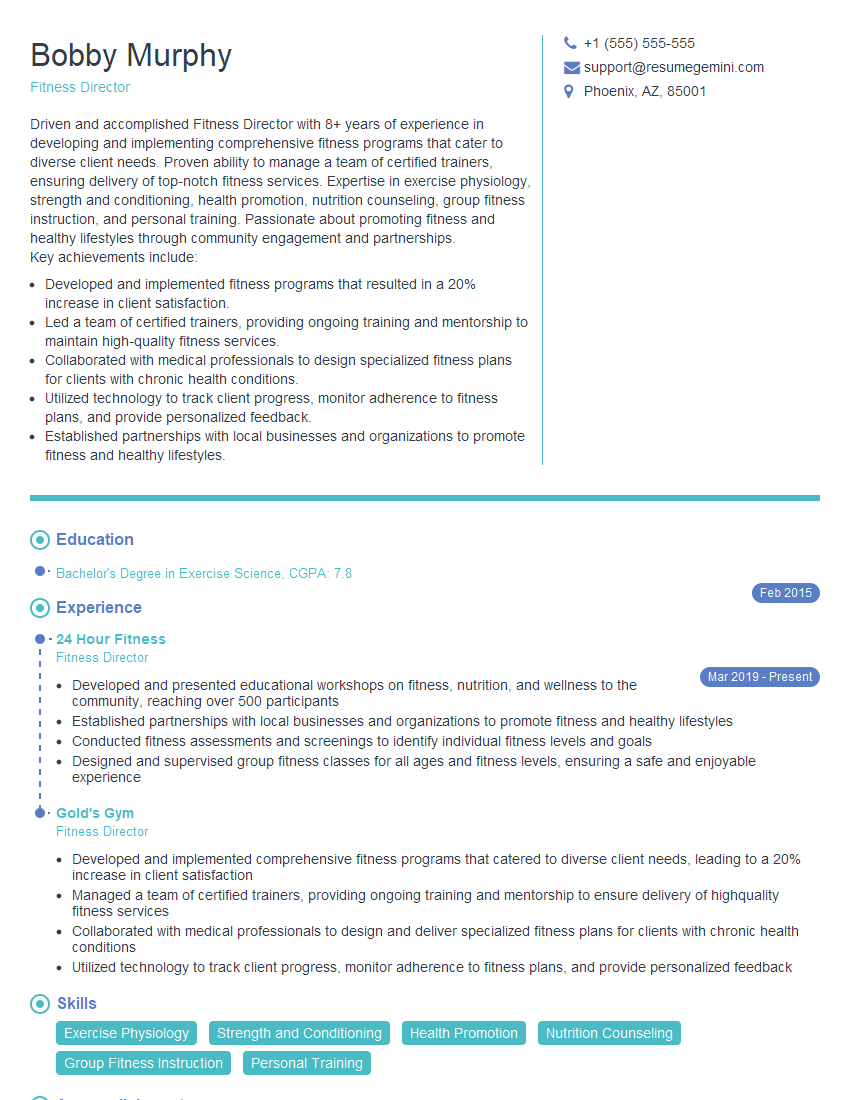
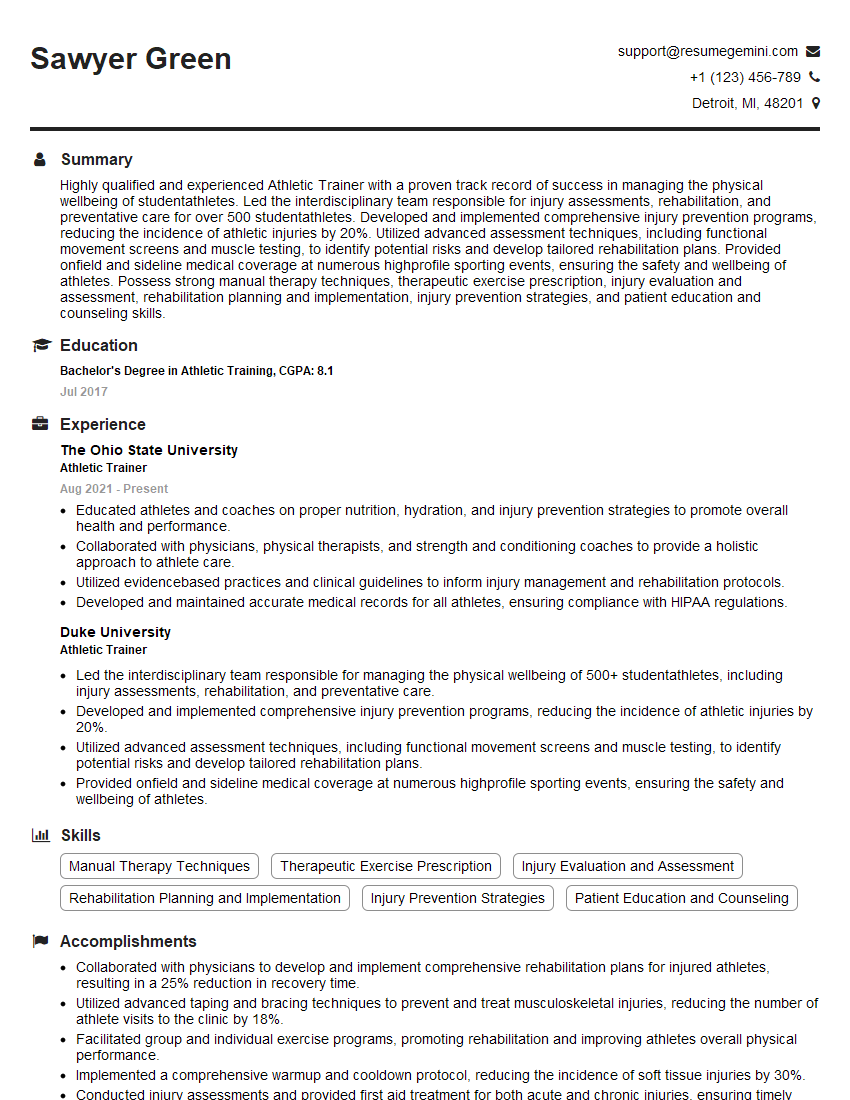
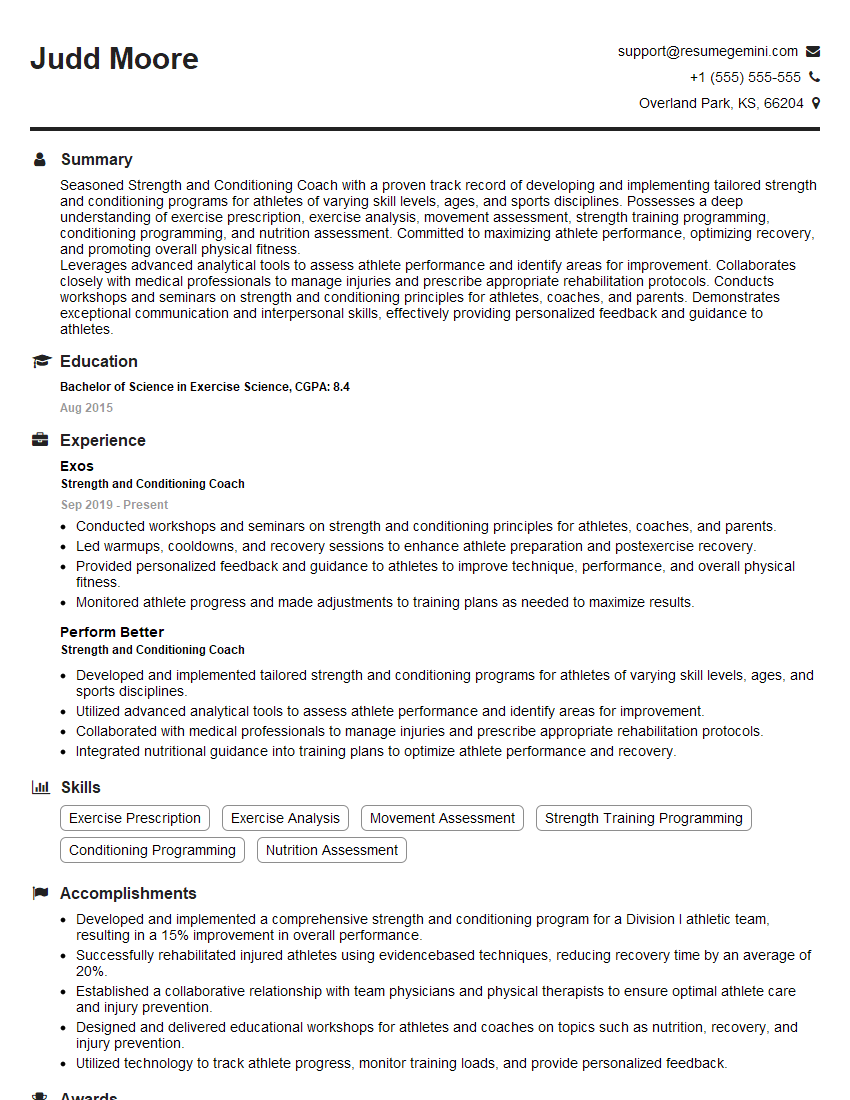
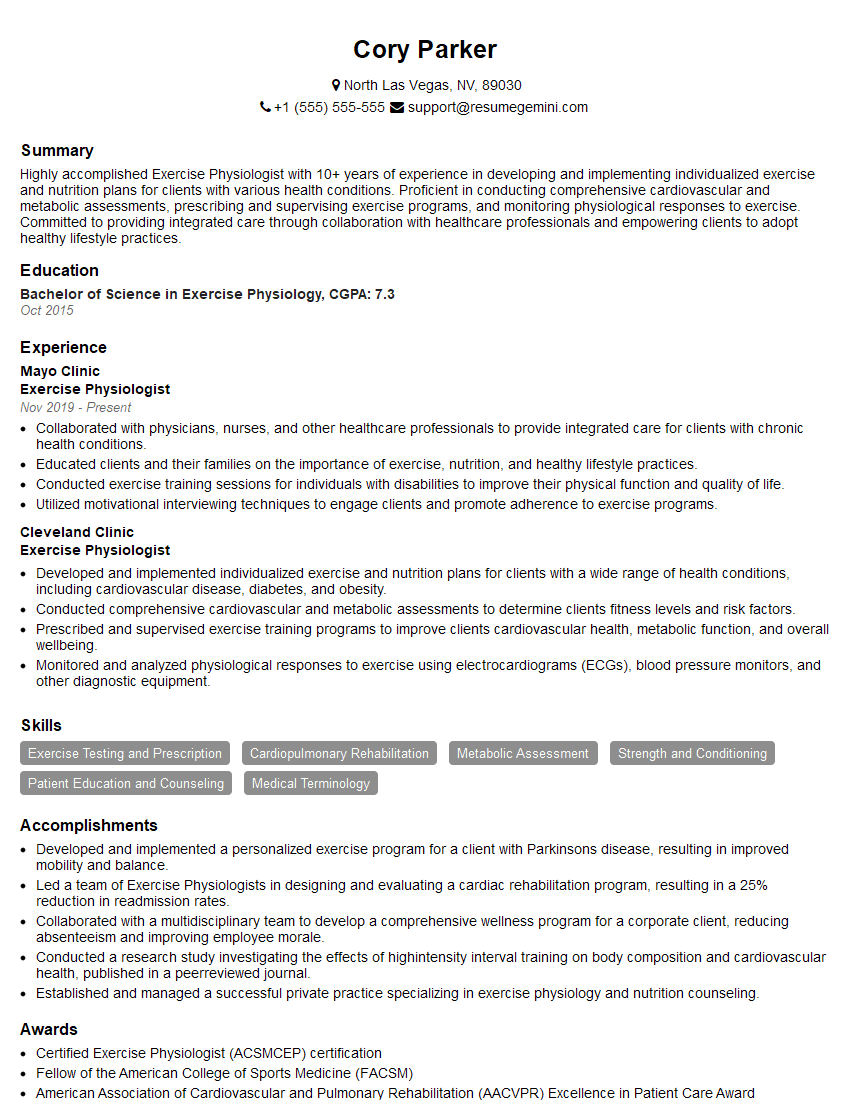
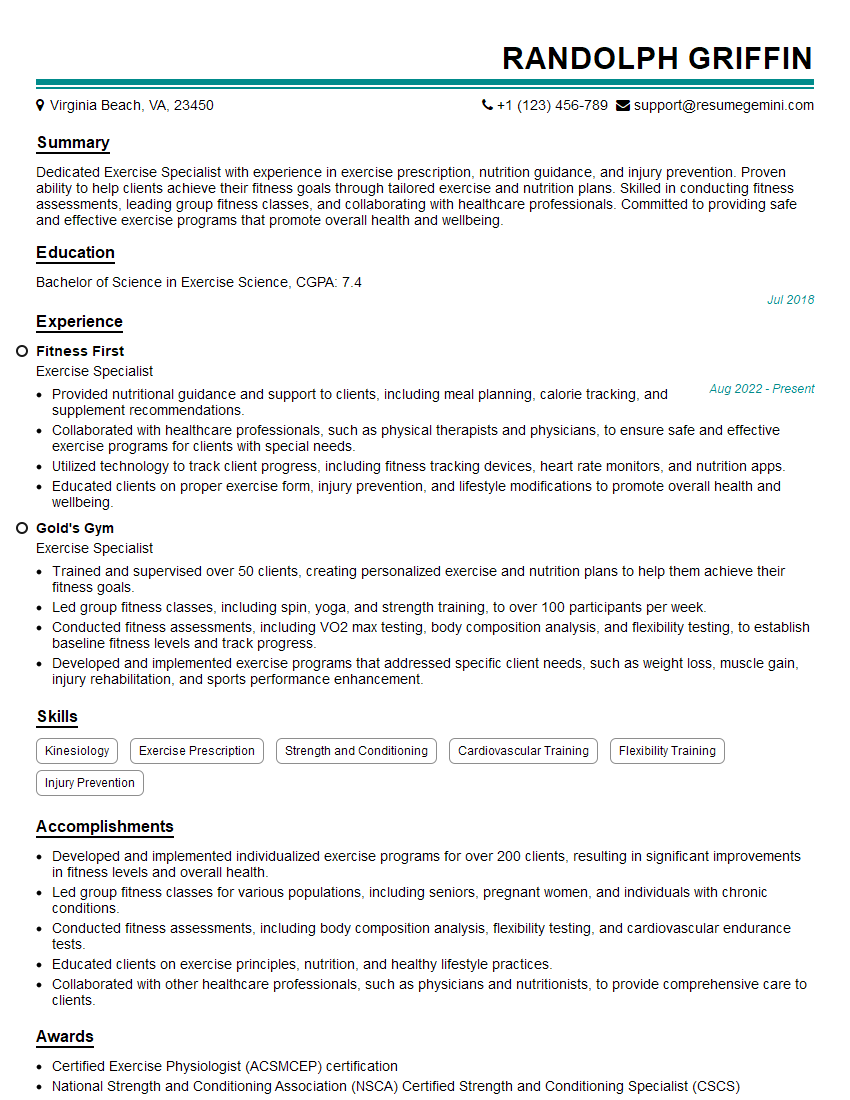
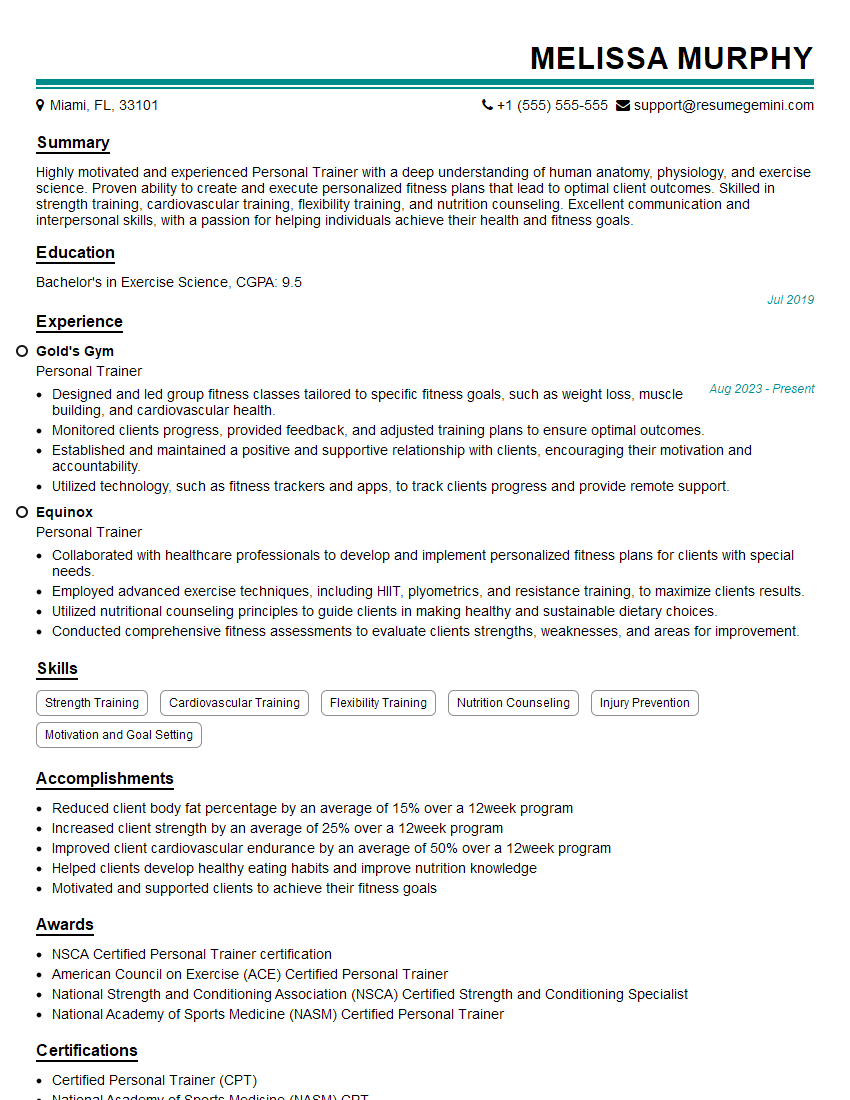
Mastering Strength Training Programming is crucial for career advancement in fitness and sports science. A strong understanding of these principles will significantly enhance your job prospects and allow you to design effective and safe training programs. To increase your chances of landing your dream role, create an ATS-friendly resume that showcases your skills and experience effectively. ResumeGemini is a trusted resource that can help you build a professional and impactful resume. They even provide examples of resumes tailored specifically to Strength Training Programming, ensuring your application stands out from the competition.


Explore more articles
Users Rating of Our Blogs
Share Your Experience
We value your feedback! Please rate our content and share your thoughts (optional).
What Readers Say About Our Blog
Very informative content, great job.
good