Unlock your full potential by mastering the most common Strong Knowledge of Marine Safety Regulations interview questions. This blog offers a deep dive into the critical topics, ensuring you’re not only prepared to answer but to excel. With these insights, you’ll approach your interview with clarity and confidence.
Questions Asked in Strong Knowledge of Marine Safety Regulations Interview
Q 1. Explain the purpose and key provisions of the SOLAS Convention.
The International Convention for the Safety of Life at Sea (SOLAS) is the cornerstone of maritime safety. Its primary purpose is to establish minimum safety standards for merchant ships to prevent loss of life and protect the marine environment. Think of it as the global rulebook for ship safety. Key provisions cover a wide range of aspects, including:
- Hull integrity: Requirements for structural strength and watertight integrity to prevent sinking.
- Fire protection: Detailed regulations on fire detection, suppression systems, and escape routes.
- Life-saving appliances: Mandatory carriage of lifeboats, life rafts, life jackets, and other survival equipment, ensuring enough for everyone onboard.
- Radio communications: Regulations on the installation and operation of Global Maritime Distress and Safety System (GMDSS) equipment for emergency communication.
- Safety management systems (SMS): Mandating a structured approach to managing safety risks onboard ships.
- Cargo handling and security: Measures to prevent dangerous goods incidents and ensure safe loading and unloading operations.
For example, SOLAS regulations dictate the number and type of lifeboats required based on a vessel’s size and passenger capacity. Failure to comply with SOLAS can lead to detention of the vessel by Port State Control authorities.
Q 2. Describe the International Ship and Port Facility Security (ISPS) Code and its implementation.
The International Ship and Port Facility Security (ISPS) Code is a crucial supplement to SOLAS, focusing specifically on maritime security. It aims to protect ships and port facilities from acts of terrorism and other security threats. Imagine it as the security protocol layer on top of the broader safety rules.
Implementation involves:
- Ship Security Assessments (SSAs): Ships undergo assessments to identify vulnerabilities and establish security plans.
- Designated Security Duties (DSDs): Crew members are assigned specific security responsibilities.
- Security levels: Ships and port facilities operate under different security levels (1, 2, 3) depending on the threat level, with level 3 being the highest (e.g., during a terrorist attack).
- Port Facility Security Plans (PFSPs): Port authorities develop comprehensive plans to address security risks within their facilities.
- Ship Security Plans (SSPs): Every ship must have a detailed SSP outlining security procedures and responsibilities.
For instance, a ship entering a port under level 3 will have much stricter access control and potentially more security personnel onboard. A breach of ISPS can lead to serious consequences, including detention and fines.
Q 3. What are the main responsibilities of a Designated Person Ashore (DPA)?
The Designated Person Ashore (DPA) is a crucial role in ensuring maritime security. They are the company’s onshore representative responsible for overseeing the implementation and maintenance of the company’s ship and port facility security plans. Think of them as the central point of contact for all security matters onshore.
Their key responsibilities include:
- Overseeing the development and implementation of SSPs and ensuring compliance
- Liaison with port authorities and other relevant organizations on security issues.
- Providing security training and awareness to personnel
- Conducting internal audits and ensuring company-wide adherence to ISPS Code requirements.
- Responding to security incidents and coordinating with relevant authorities.
A DPA’s effectiveness directly impacts the safety and security of the company’s fleet and operations. Failure to adequately fulfill the DPA’s role can have severe legal and operational repercussions.
Q 4. How do you conduct a risk assessment for a marine operation?
A marine operation risk assessment systematically identifies hazards and evaluates the associated risks. It’s a structured approach to proactively minimize potential problems. We use a systematic process, often involving a Hazard and Operability study (HAZOP) or a similar methodology.
The steps typically involve:
- Identifying hazards: This includes potential sources of danger like equipment failure, weather conditions, human error, and environmental factors.
- Analyzing risks: Assessing the likelihood and severity of each hazard. This often involves considering the consequences (e.g., injury, environmental damage, financial losses) and assigning risk levels.
- Evaluating existing controls: Determining the effectiveness of existing safety measures in mitigating identified risks.
- Developing control measures: Implementing new or enhancing existing control measures such as engineering controls (equipment upgrades), administrative controls (improved procedures), and personal protective equipment (PPE).
- Monitoring and review: Regularly reviewing the effectiveness of implemented controls and updating the risk assessment as needed.
For example, a risk assessment for a barge tow operation might identify hazards like strong currents, vessel collisions, and equipment malfunction. Controls could include using tugboats with sufficient power, employing experienced crews, and regular equipment inspections.
Q 5. Explain the procedures for handling a marine casualty or emergency.
Handling marine casualties and emergencies requires a swift and coordinated response. The procedures follow a structured approach, often outlined in company emergency response plans.
Key steps include:
- Immediate action: Prioritizing the safety of personnel and minimizing environmental damage.
- Notification: Promptly informing relevant authorities (coast guard, port authorities, etc.).
- Containment: Taking steps to contain the spread of pollution or the escalation of the emergency.
- Investigation: Conducting a thorough investigation to determine the cause of the incident and prevent future occurrences (following the ISM Code).
- Reporting: Submitting comprehensive reports to regulatory bodies as required.
- Salvage and recovery: If necessary, organizing salvage operations and recovering damaged equipment or cargo.
Imagine a collision at sea. The immediate actions include activating the GMDSS to signal distress, deploying life-saving equipment, and attempting to control the damage. Subsequent steps involve contacting authorities, containing any oil spills, and launching an investigation.
Q 6. Describe your experience with Port State Control inspections.
I have extensive experience with Port State Control (PSC) inspections. These are inspections carried out by a coastal state on foreign-flagged vessels within their ports to verify compliance with international and national maritime regulations. They’re crucial for maintaining safety and environmental protection standards.
My experience includes:
- Preparation for inspections: Ensuring all relevant documentation, certificates, and records are readily available and compliant.
- Cooperation with inspectors: Facilitating access to the vessel and providing complete cooperation with the inspection team.
- Addressing deficiencies: Working to rectify any deficiencies identified during the inspection.
- Following up on any corrective actions: Ensuring all necessary repairs or adjustments are made promptly.
I’ve witnessed firsthand how PSC inspections can help identify critical safety issues that might otherwise go unnoticed. A positive inspection demonstrates a strong commitment to safety and efficiency, while deficiencies can lead to detention and significant financial penalties.
Q 7. What are the key elements of a Safety Management System (SMS)?
A Safety Management System (SMS) is a structured, systematic approach to managing safety risks throughout an organization. It’s a proactive framework designed to minimize hazards and prevent accidents. Think of it as the company’s internal safety roadmap.
Key elements of a robust SMS include:
- Safety policy: A clearly defined statement of the company’s commitment to safety.
- Risk assessment: A systematic process for identifying hazards and assessing risks.
- Safety procedures: Detailed instructions for safe working practices and emergency response.
- Training and competency: Programs to ensure employees have the necessary skills and knowledge.
- Internal audits: Regular assessments to evaluate the effectiveness of the SMS.
- Management review: Regular meetings to review performance and identify areas for improvement.
- Accident/incident investigation: Thorough investigations of accidents to identify root causes and prevent recurrence.
- Emergency preparedness: Plans and procedures to handle emergencies effectively.
An effective SMS is not merely a set of documents, but a living system constantly adapting to changing circumstances and operational challenges. It is fundamental to preventing accidents and ensuring a safe working environment.
Q 8. How do you ensure compliance with MARPOL regulations?
Ensuring MARPOL (International Convention for the Prevention of Pollution from Ships) compliance is a multifaceted process requiring a proactive and diligent approach. It begins with a thorough understanding of the specific annexes relevant to the vessel’s operation – Annex I (oil pollution), Annex II (noxious liquid substances), Annex III (harmful substances carried as cargo), Annex IV (sewage), Annex V (garbage), and Annex VI (air pollution).
Compliance starts with establishing a robust Oil Record Book (ORB) and Garbage Record Book (GRB), meticulously documenting all discharges and waste management activities. Regular inspections of equipment like oily water separators, incinerators, and sewage treatment plants are crucial. We must ensure these systems are functioning correctly and meet MARPOL standards. Crew training is paramount – every member needs to understand their role in preventing pollution. This includes understanding procedures for handling oil spills, garbage disposal, and the discharge of other pollutants. Regular drills and simulations reinforce these procedures. Finally, we must maintain comprehensive documentation, readily available for audits by port state control officers. Failure to comply can lead to significant fines, detention of the vessel, and reputational damage.
For instance, on a previous vessel, I implemented a new system for tracking garbage disposal, using a digital log to replace the paper record book. This significantly improved efficiency and reduced the risk of errors and non-compliance.
Q 9. Explain the different types of marine pollution and their prevention.
Marine pollution encompasses various forms, each requiring specific prevention strategies.
- Oil Pollution: This is a major concern, stemming from accidental spills, operational discharges, and bilge water. Prevention involves regular maintenance of equipment, proper handling procedures, and the use of oil spill response plans.
- Chemical Pollution: Noxious liquid substances (NLS) and other harmful chemicals pose significant risks. Prevention focuses on the safe carriage of cargo, adherence to the International Maritime Dangerous Goods (IMDG) Code, and proper handling and disposal procedures. This includes robust contingency plans for spills.
- Sewage Pollution: Untreated sewage can contaminate marine environments. Prevention requires effective sewage treatment plants, proper maintenance, and adherence to discharge regulations.
- Garbage Pollution: Plastic waste, food scraps, and other garbage significantly impact marine life. Prevention involves proper waste segregation, responsible disposal, and compliance with MARPOL Annex V.
- Air Pollution: Exhaust gases from ships contribute to air pollution. Prevention involves adhering to Annex VI of MARPOL, which regulates emissions of sulfur oxides (SOx), nitrogen oxides (NOx), and other pollutants. This includes using low-sulfur fuels and employing emission control technologies.
Prevention strategies are always evolving with new technologies and regulations. It’s crucial to stay updated and adapt best practices. For example, the use of bio-degradable cleaning agents and improved waste segregation techniques reduces the overall environmental impact significantly.
Q 10. Describe your experience with fire prevention and firefighting at sea.
Fire prevention and firefighting at sea is a critical aspect of safety. My experience includes extensive training in fire prevention measures, including regular inspections of fire-fighting equipment, and ensuring that all crew members are fully trained and certified in fire prevention and fighting. This involved conducting regular fire drills, practicing emergency response plans, and familiarising myself with the ship’s fire detection and suppression systems. I have personally overseen the maintenance of fire extinguishers, sprinkler systems, and fire pumps. This ensures they are in full working order and meet standards.
On one occasion, I was part of the team that successfully tackled a small fire in the engine room. Our quick response, which was facilitated by our regular training and preparedness, limited the extent of the damage and prevented a much more serious incident. Understanding the ship’s structural features, and the layout of compartments and escape routes, is essential for effective firefighting. This knowledge allows us to fight fires strategically and manage evacuations efficiently. The use of fixed fire fighting systems, like CO2 flooding or sprinkler systems, require regular inspections and knowledge to ensure their effectiveness.
Q 11. What are the requirements for life-saving appliances on board a vessel?
Life-saving appliances are essential for ensuring the safety of crew and passengers in emergency situations. Requirements vary based on the vessel’s size, type, and the number of persons on board, but generally include:
- Lifeboats: Sufficient number of lifeboats to accommodate everyone on board, regularly inspected and maintained, equipped with necessary survival equipment.
- Life rafts: Additional means of survival for smaller vessels or as supplementary lifesaving apparatus.
- Life jackets: Enough life jackets for everyone, regularly inspected and in good condition.
- Buoyant apparatus: Other flotation devices, such as life buoys with self-activating lights.
- EPIRB (Emergency Position Indicating Radio Beacon): Automatically transmits distress signals when activated.
- SART (Search and Rescue Transponder): A radar transponder for quicker detection by rescuers.
- Fire extinguishers: Various types to combat different types of fires.
- Rescue boats: Smaller, faster boats used for rescue operations in proximity to the vessel.
Regular maintenance and drills are essential to ensure that all life-saving appliances function correctly in an emergency situation. For example, thorough inspections of lifeboats, checking for any damage and ensuring all equipment like the radio and survival supplies are in place are crucial. Regular drills help crew members familiarise themselves with the location and use of these appliances, and practice the embarkation procedures.
Q 12. Explain the process of conducting a stability assessment for a vessel.
A stability assessment determines a vessel’s ability to remain upright and afloat under various loading conditions. It’s crucial for safe operation. The process involves calculating the vessel’s:
- Displacement: The weight of the vessel and its cargo.
- Center of gravity (CG): The vertical position of the vessel’s center of mass.
- Center of buoyancy (CB): The centroid of the underwater volume of the hull.
- Metacentric height (GM): A measure of the vessel’s initial stability – a larger GM indicates greater stability.
These calculations are done using various methods, including hydrostatic calculations. Software packages simplify the process by providing comprehensive stability calculations based on input data such as vessel dimensions, cargo weight, and tank contents. The assessment involves considering various loading scenarios – for example, full cargo, partial cargo, and ballast conditions – to determine the range of conditions where the vessel remains stable. The results are usually presented in a stability booklet, which contains crucial information on the safe operating limits of the vessel. Inadequate stability assessments can lead to capsizing, which can have severe consequences. Therefore, ensuring a thorough and accurate stability assessment is paramount.
Q 13. Describe your knowledge of the STCW Convention and its impact on seafarer training.
The STCW (Standards of Training, Certification and Watchkeeping) Convention sets the minimum standards for training, certification, and watchkeeping for seafarers. It has had a profound impact on the quality and safety of seafarer training globally. The convention mandates specific training requirements for various seafarer roles, ensuring competency in areas such as navigation, communication, safety procedures, and emergency response.
My experience reflects the impact of the STCW Convention on seafarer training. I’ve witnessed improvements in the quality of training programs, the introduction of standardized training curricula, and more robust assessment procedures. The convention mandates regular updates to training programs to keep pace with advancements in technology and best practices. The implementation of STCW standards ensures that seafarers possess the necessary competence to operate vessels safely and protect the marine environment. This includes familiarisation with up-to-date regulations like MARPOL, and knowledge of effective emergency procedures. These standards promote higher levels of professionalism and expertise within the maritime industry and enhance safety at sea.
Q 14. How do you ensure the safe handling of dangerous goods onboard a vessel?
Safe handling of dangerous goods onboard a vessel requires strict adherence to the IMDG Code (International Maritime Dangerous Goods Code). This involves a multi-layered approach. First, proper documentation is critical – ensuring accurate declaration of dangerous goods before loading and maintenance of a detailed cargo manifest. Second, segregation is vital. Dangerous goods are classified based on their hazards and must be stowed according to specific requirements to prevent interactions and accidental release. Third, specialized handling equipment is necessary. Training is a key component. All personnel involved in the handling of dangerous goods must receive adequate training in procedures, hazards, emergency response, and the use of personal protective equipment. Finally, regular inspections are key. The stowage area and packaging must be inspected regularly for any damage or leakage. The entire process is governed by detailed regulations and requires strict compliance to mitigate risk. Failure to adhere to proper procedures can result in fires, explosions, or harmful releases endangering personnel and the environment.
For example, I’ve been involved in the planning and execution of loading and discharge operations for various types of dangerous goods, including chemicals and flammable materials. Proper documentation, careful segregation, and effective communication ensured all operations went smoothly and within regulations.
Q 15. Explain the principles of human factors in marine safety.
Human factors in marine safety encompass the understanding of how human capabilities, limitations, and behaviors influence safety outcomes at sea. It’s about recognizing that people aren’t perfect machines; they experience fatigue, stress, and make errors. Effective marine safety requires designing systems and procedures that account for these inherent human characteristics.
- Error prevention: This involves designing workspaces and processes to minimize the likelihood of human error. For example, standardizing procedures, using checklists, and implementing clear visual cues can reduce mistakes.
- Workload management: Overburdening crew members leads to errors and reduced situational awareness. Proper crew scheduling, automation where appropriate, and effective communication are crucial for workload management.
- Decision-making: Providing crews with the right information, tools, and training improves decision-making under pressure. This involves understanding cognitive biases and implementing strategies to mitigate their effects.
- Teamwork and communication: Effective communication and teamwork are vital for safe operations. Regular training in communication techniques and crisis management improves coordination and response times in emergencies.
For example, the design of a bridge incorporating ergonomic principles, such as easy-to-reach controls and clear instrument displays, directly improves human performance and reduces the chances of accidents.
Career Expert Tips:
- Ace those interviews! Prepare effectively by reviewing the Top 50 Most Common Interview Questions on ResumeGemini.
- Navigate your job search with confidence! Explore a wide range of Career Tips on ResumeGemini. Learn about common challenges and recommendations to overcome them.
- Craft the perfect resume! Master the Art of Resume Writing with ResumeGemini’s guide. Showcase your unique qualifications and achievements effectively.
- Don’t miss out on holiday savings! Build your dream resume with ResumeGemini’s ATS optimized templates.
Q 16. Describe your experience with emergency response planning and drills.
Throughout my career, I’ve been extensively involved in emergency response planning and drills, both onboard vessels and in port facilities. This includes developing and implementing emergency response plans, conducting regular drills, and participating in incident investigations.
My experience includes:
- Developing and updating shipboard emergency plans compliant with SOLAS (Safety of Life at Sea) regulations, incorporating specific hazards related to cargo type and operational area.
- Conducting various drills, including fire, man overboard, abandon ship, and medical emergencies, focusing on crew familiarity with procedures and equipment.
- Leading post-drill debriefings to identify areas for improvement and reinforce best practices. This includes analyzing crew performance and identifying any systemic issues.
- Participating in external emergency response exercises with port authorities and other stakeholders, enhancing coordination and interoperability.
One memorable example involved an abandon ship drill where a critical communication failure was identified during the exercise. This led to a revision of the plan and subsequent training emphasizing the importance of redundant communication channels.
Q 17. How do you investigate and report marine accidents?
Marine accident investigation follows a systematic process aimed at determining the causes of the incident, preventing recurrence, and learning valuable lessons for improved safety. This often involves the application of various investigative techniques such as the ‘5 Whys’ method to drill down to root causes.
My experience involves:
- Gathering evidence: This includes collecting data from various sources, such as voyage data recorders (VDRs), CCTV footage, witness statements, and physical evidence from the vessel.
- Analyzing evidence: Data is meticulously analyzed to identify contributing factors, focusing on human error, technical failures, and environmental conditions.
- Identifying causal factors: The investigation pinpoints the root causes of the accident, going beyond immediate causes to identify underlying systemic issues.
- Reporting findings: A comprehensive report is prepared detailing the findings, causal factors, and recommendations for preventing similar incidents. This might include modifications to procedures, design changes, or enhanced training.
For instance, investigating a collision might require reviewing the navigational records, assessing the crew’s watchkeeping procedures, analyzing environmental factors like visibility, and examining the vessels’ structural integrity.
Q 18. What are your strategies for improving safety culture onboard a vessel?
Improving safety culture is a continuous process requiring a multi-faceted approach, focused on fostering a proactive environment where safety is everyone’s responsibility. It requires leadership commitment, and the active participation of everyone onboard.
- Leadership commitment: Leaders must actively champion safety, modeling safe behavior, and allocating resources to safety initiatives.
- Open communication: Establishing a culture where crew members feel comfortable reporting hazards and near-miss incidents without fear of reprisal.
- Proactive hazard identification: Regular safety meetings, risk assessments, and hazard identification processes are essential for identifying and addressing potential problems before they escalate.
- Training and competency: Ensuring all crew members receive appropriate training and are competent to perform their duties safely. This includes refresher training on safety procedures and emergency response.
- Incentivization: Recognizing and rewarding safe behavior, and addressing unsafe actions promptly and fairly.
An example of this would be implementing a suggestion box where crew can confidentially report safety concerns, leading to changes in procedures or equipment.
Q 19. Describe your experience with using various marine safety equipment.
My experience encompasses the practical application of a wide range of marine safety equipment, from basic PPE to sophisticated navigational systems and life-saving appliances.
- Life-saving appliances: Extensive experience with lifeboats, life rafts, life jackets, and other life-saving equipment, including their regular inspections, maintenance, and drills.
- Firefighting equipment: Proficient in the use of fire extinguishers, fire hoses, and other fire-fighting equipment, participating in regular fire drills and training.
- Navigation equipment: Familiar with the operation and maintenance of various navigational tools, such as GPS, radar, and electronic charts.
- Personal Protective Equipment (PPE): Consistent use and enforcement of PPE, including life jackets, immersion suits, safety helmets, and eye protection.
- Communication equipment: Experience with VHF radios, GMDSS (Global Maritime Distress and Safety System) equipment, and other communication devices.
One practical example involves the timely and efficient use of a life raft during a man overboard situation, which ensured the safe rescue of the crew member.
Q 20. Explain the role of the International Maritime Organization (IMO).
The International Maritime Organization (IMO) is a specialized agency of the United Nations responsible for improving maritime safety and security, preventing marine pollution, and facilitating international cooperation in shipping matters. They set international standards, guidelines, and regulations that aim to harmonize maritime practices worldwide.
Key roles of the IMO include:
- Developing international maritime regulations: The IMO develops and amends international conventions, codes, and resolutions that are adopted by member states and implemented globally. Examples include SOLAS (Safety of Life at Sea), MARPOL (International Convention for the Prevention of Pollution from Ships), and the STCW Convention (Standards of Training, Certification and Watchkeeping for Seafarers).
- Facilitating cooperation: The IMO provides a platform for member states to cooperate on maritime issues, sharing information and coordinating actions to improve safety and environmental protection.
- Technical assistance: The IMO provides technical assistance to developing countries to help them implement international standards and improve their maritime capabilities.
- Promoting research and development: The IMO supports research and development in various areas of maritime safety and environmental protection.
The IMO’s impact is significant, as its regulations ensure a consistent level of safety and environmental protection across the global shipping industry.
Q 21. What are the requirements for personal protective equipment (PPE) in a marine environment?
Personal Protective Equipment (PPE) requirements in a marine environment are crucial for protecting seafarers from various hazards. These requirements are often dictated by national regulations, supplemented by company-specific safety policies, and aligned with international standards like those from the IMO.
Common PPE requirements include:
- Life Jackets: Mandatory for all personnel onboard, appropriate for the type of vessel and conditions.
- Immersion suits or survival suits: Required in cold water environments to protect against hypothermia.
- Safety Helmets: Necessary for workers involved in tasks with potential head injuries, such as working at heights or in confined spaces.
- Safety footwear: Protective footwear to prevent foot injuries from slipping, sharp objects, or heavy objects.
- Eye protection: Safety glasses or goggles to protect against flying debris, chemicals, or UV radiation.
- Hearing protection: Ear plugs or muffs for workers exposed to high noise levels.
- Gloves: Appropriate gloves to protect against cuts, abrasions, chemicals, or extreme temperatures.
- Respiratory protection: When working with hazardous substances or in confined spaces requiring respiratory protection.
The specific PPE requirements depend on the task being undertaken, the environment, and the potential hazards involved. Regular inspections and maintenance of the PPE are essential to guarantee its effectiveness.
Q 22. How do you ensure effective communication during a marine emergency?
Effective communication during a marine emergency is paramount. It’s the backbone of a successful rescue and prevents further incidents. Think of it as a well-orchestrated symphony – every instrument (crew member, rescue team, shore-based support) needs to play in harmony.
Designated Communication Channels: We establish clear, pre-determined communication channels using VHF radio, satellite phones, or even dedicated emergency signaling devices. This avoids confusion and ensures everyone knows where to get updates and report information.
Clear and Concise Messaging: During emergencies, time is critical. Messages should be succinct, using standardized terminology (like the GMDSS – Global Maritime Distress and Safety System – protocols). For example, instead of saying ‘The boat is sinking!’, we’d use a distress call following GMDSS protocols.
Regular Communication Drills: Regular drills are key. Practicing emergency communications scenarios ensures familiarity and competence. This is like rehearsing a play before opening night – you need to be prepared for any unexpected cue.
Maintaining Communication Logs: Detailed records of all communications are vital for post-incident analysis and investigations, helping us learn from past events and improve future responses. Think of it as a detective’s notebook, providing a detailed timeline of the events.
Multilingual Capabilities: In diverse crew situations, ensuring multilingual communication capabilities is essential. Having translators readily available or crew who can communicate across languages is crucial for avoiding misunderstandings.
Q 23. What are your experience and skills in conducting marine safety audits?
I have extensive experience conducting marine safety audits, encompassing both internal audits for vessel operators and external audits for regulatory bodies. My expertise covers all aspects of safety management systems (SMS) compliance, from risk assessment to emergency preparedness.
Methodology: My approach is systematic and thorough. It involves reviewing documentation, conducting on-site inspections, interviewing personnel, and evaluating compliance with relevant regulations (SOLAS, MARPOL, ISM Code). I use checklists to ensure a consistent evaluation across all vessels.
Identifying Gaps: My strength lies in identifying gaps in procedures and practices. For instance, I once uncovered a missing emergency drill log that had implications for crew training and certification. This highlighted the need for stricter record-keeping procedures.
Providing Recommendations: I don’t just highlight problems; I also provide tailored recommendations for improvement. This may involve revising safety procedures, upgrading equipment, or providing enhanced training programs. The goal is to improve safety, not just to point out flaws.
Reporting: My reports are clear, concise, and action-oriented. They include a detailed assessment of identified deficiencies, their potential impact, and specific corrective actions needed. This allows clients to take immediate steps to improve their safety standards.
Q 24. Explain the concept of ‘due diligence’ within the context of maritime law and safety.
‘Due diligence’ in maritime law and safety refers to the proactive measures taken by vessel owners and operators to prevent accidents and ensure compliance with regulations. It’s not just about reacting to problems, but actively working to avoid them in the first place.
Proactive Maintenance: Regular maintenance and inspections of equipment are a core component. This involves adhering to scheduled servicing, using qualified personnel, and keeping detailed records. Neglecting this is a failure of due diligence and can lead to serious consequences.
Crew Competency: Ensuring that all crew members are properly trained and qualified is critical. This includes providing adequate training, assessing their skills regularly, and ensuring they understand their responsibilities. A poorly trained crew represents a major risk.
Risk Assessment: Identifying potential hazards and implementing mitigation strategies is essential. This goes beyond simple checklists; it involves a detailed understanding of the vessel, its operational environment, and potential threats. Thorough risk assessments minimize accidents.
Compliance with Regulations: Adhering to all relevant international and national regulations is a fundamental aspect. This means staying updated on amendments, adapting procedures to meet new standards, and ensuring all documentation is in order. Compliance is an ongoing process.
Legal Ramifications: Failure to exercise due diligence can lead to legal repercussions, including hefty fines, vessel detention, and even criminal charges, depending on the severity and consequences of any accident.
Q 25. Describe your knowledge of various types of marine navigation equipment and their safe operation.
My knowledge of marine navigation equipment spans a wide range, from traditional instruments to the latest integrated systems. Understanding their safe operation is crucial for ensuring navigational safety and preventing accidents.
Traditional Navigation: I’m proficient with charts, compasses, sextants (though their use is declining), and traditional methods. Understanding these fundamentals is essential for backup and situational awareness, even in modern vessels.
Electronic Chart Display and Information Systems (ECDIS): I have in-depth experience with ECDIS, understanding its functionality, limitations, and proper usage. This includes chart updates, backup systems, and the importance of manual plotting as a cross-check.
Global Positioning System (GPS): I understand the principles of GPS navigation, its potential errors, and how to mitigate them through differential GPS or other augmentation systems. GPS is a cornerstone of modern navigation, but reliance on a single system is dangerous.
Radar: I’m well-versed in radar operation and interpretation, including understanding different radar types, interpreting targets, and using radar for collision avoidance. Understanding radar’s limitations is also vital.
Automatic Identification System (AIS): I understand the functionality and limitations of AIS, including its use for collision avoidance, tracking, and search and rescue operations. AIS helps create situational awareness but cannot be completely relied upon.
Integrated Navigation Systems: Modern vessels often utilize integrated bridge systems. I am familiar with various systems and understand how they work together, emphasizing redundancy and backup systems to avoid single points of failure.
Q 26. What are some common causes of marine accidents and how can they be prevented?
Marine accidents have numerous causes, often stemming from a combination of factors rather than single incidents. Preventing them requires a multi-layered approach.
Human Error: This is a major contributing factor. Fatigue, poor judgment, inadequate training, and lack of communication can lead to serious mistakes. Prevention involves comprehensive training, fatigue management strategies, and robust safety procedures.
Equipment Failure: Malfunctioning equipment, inadequate maintenance, or lack of redundancy can lead to accidents. Preventing this requires a rigorous maintenance program, regular inspections, and the use of reliable equipment.
Adverse Weather Conditions: Storms, fog, and strong currents pose significant risks. Prevention involves careful weather forecasting, route planning, and appropriate vessel preparations.
Collision: Collisions with other vessels or objects are a common cause of accidents. Prevention involves effective navigation, proper lookout procedures, and using navigational aids like radar and AIS.
Grounding: Running aground can cause significant damage. Prevention relies on accurate navigation, proper charting, and understanding the limitations of navigational equipment.
Fire: Fires are a significant hazard on vessels. Prevention involves strict fire safety procedures, regular inspections of fire-fighting equipment, and crew training in fire prevention and suppression.
Prevention strategies involve a combination of robust safety management systems, thorough training, regular inspections, and a strong safety culture onboard.
Q 27. Explain your experience with developing and implementing safety procedures.
I have extensive experience in developing and implementing safety procedures, drawing on my knowledge of regulations and best practices. My approach is iterative, involving consultation with stakeholders and continuous improvement based on lessons learned.
Needs Assessment: I begin by conducting a thorough assessment to identify specific safety needs, considering the vessel type, operating environment, and crew characteristics.
Procedure Development: I then work to develop clear, concise, and easy-to-understand procedures that comply with relevant regulations and incorporate best practices. These are often illustrated with diagrams or flowcharts.
Crew Training: Effective implementation requires comprehensive crew training. This involves hands-on exercises, simulations, and regular drills to ensure all personnel understand and can follow the procedures.
Regular Review and Update: Safety procedures are not static; they need regular review and updating to reflect changes in regulations, technology, or operating environments. Post-incident analysis plays a key role in this process.
Example: In a previous role, I developed a new emergency response plan for a fleet of tankers, incorporating lessons learned from past incidents. This included revised procedures for dealing with oil spills, improved communication protocols, and enhanced crew training.
Q 28. How would you handle a situation where a crew member refuses to follow safety protocols?
A crew member refusing to follow safety protocols is a serious situation requiring a measured response. The approach should prioritize safety while addressing the underlying issue.
Immediate Action: The first step involves addressing the immediate safety concern. If the refusal puts the vessel or crew at risk, immediate intervention is necessary. This might involve temporarily relieving the crew member of their duties.
Understanding the Reason: It’s crucial to understand why the crew member refused to comply. This may involve a calm discussion to explore any concerns, misunderstandings, or training gaps.
Documentation: All incidents must be documented, including the refusal, the steps taken, and the outcome. This record is important for any subsequent investigation or disciplinary action.
Disciplinary Action: Depending on the severity and context of the refusal, disciplinary action may be necessary. This could range from verbal warnings to suspension, depending on company policy and the seriousness of the breach.
Reinforcement of Training: Regardless of the reason for the refusal, it’s important to reinforce training and reiterate the importance of following safety protocols. This might involve additional training or refresher courses.
Addressing Underlying Issues: If there are underlying issues contributing to the refusal (e.g., fatigue, stress, bullying), addressing these is crucial to prevent recurrence. This may involve counseling, changes to work schedules, or addressing any workplace issues.
Key Topics to Learn for Strong Knowledge of Marine Safety Regulations Interview
- SOLAS Convention & Amendments: Understand the key regulations, their practical application on vessels, and recent amendments affecting your specific area of expertise. Consider focusing on specific chapters relevant to your experience (e.g., Life-saving appliances, fire protection, cargo safety).
- International Maritime Organization (IMO) Codes: Demonstrate familiarity with relevant codes like the International Code for Ships’ Security (ISPS Code), the International Ship and Port Facility Security (ISPS) Code, and the MARPOL Convention. Be prepared to discuss practical implementation and enforcement.
- Vessel Stability and Trim: Understand the principles of vessel stability and how to assess and manage stability risks. Be ready to discuss practical scenarios involving cargo loading, ballasting, and weather conditions.
- Navigation Safety: Discuss your knowledge of collision regulations (COLREGs), navigational aids, electronic chart display and information systems (ECDIS), and voyage planning best practices. Be prepared to address potential safety hazards related to navigation.
- Emergency Procedures and Response: Showcase your understanding of emergency response plans, including fire fighting, abandon ship drills, and search and rescue procedures. Highlight your experience with emergency equipment and communication systems.
- Port State Control (PSC): Familiarize yourself with the role and functions of Port State Control inspections and how to ensure vessel compliance with international regulations. Discuss practical aspects of PSC inspections and deficiency rectification.
- Risk Assessment and Management: Demonstrate understanding of hazard identification, risk assessment techniques, and mitigation strategies within a marine environment. Be ready to discuss specific examples from your experience.
- Relevant Legislation (National and Regional): Depending on your target job location, familiarize yourself with any national or regional legislation that supplements international regulations. This shows attention to detail and local compliance awareness.
Next Steps
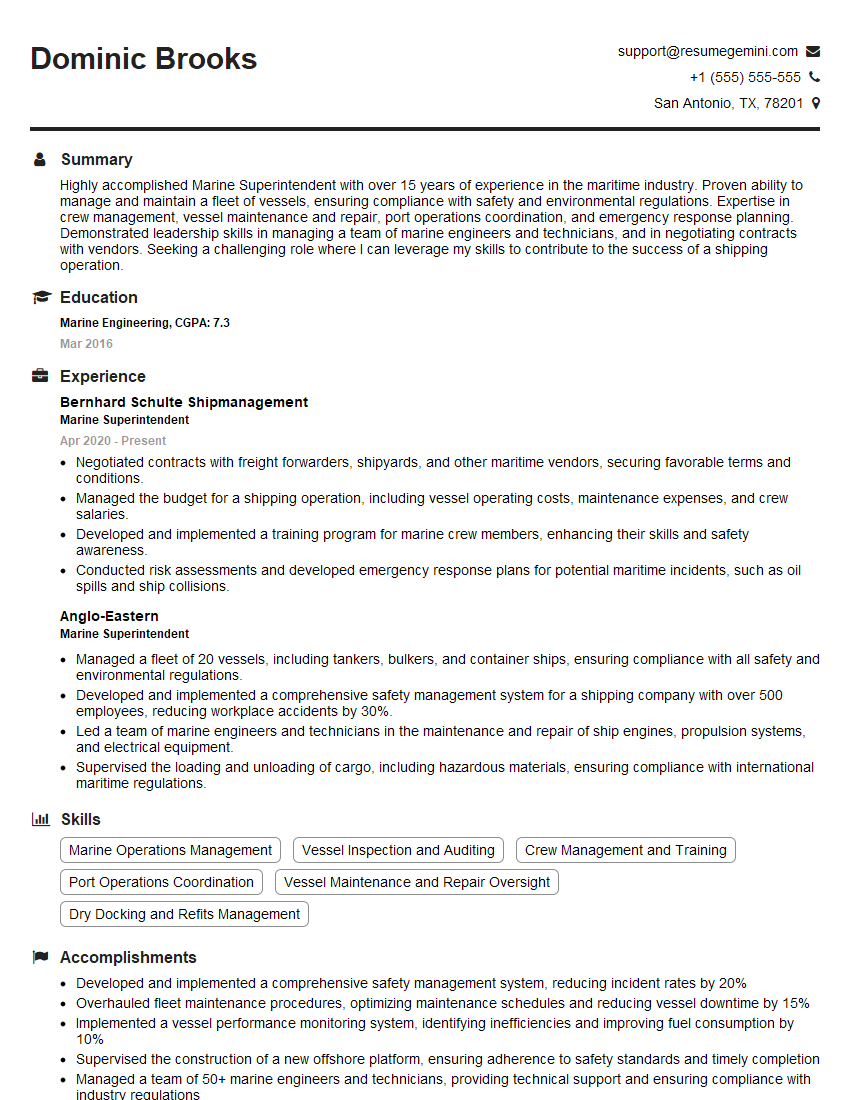
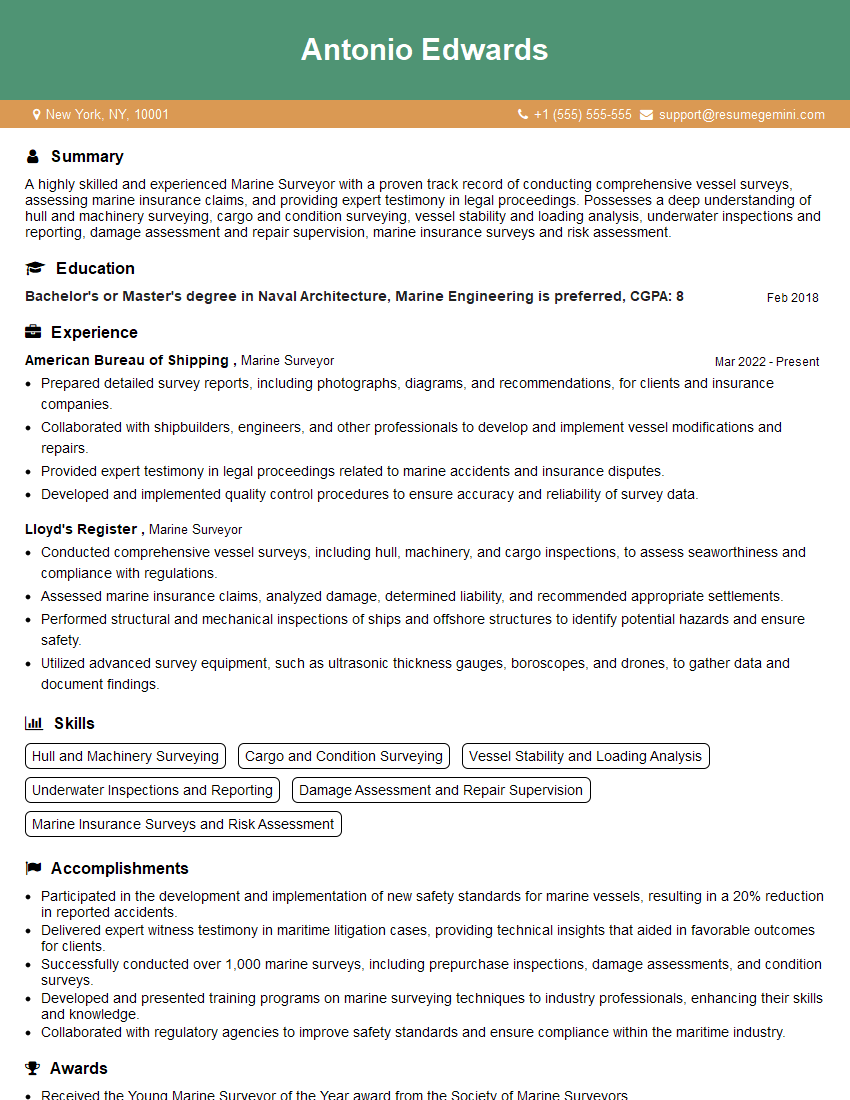
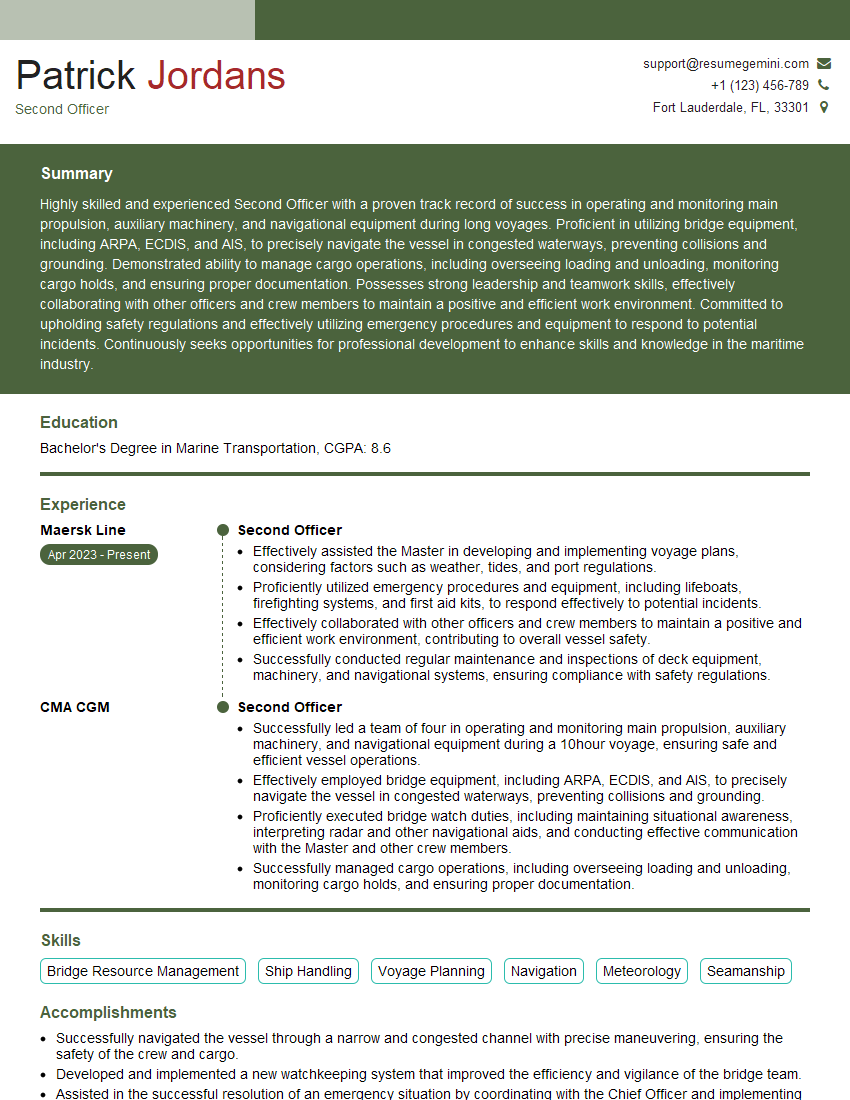
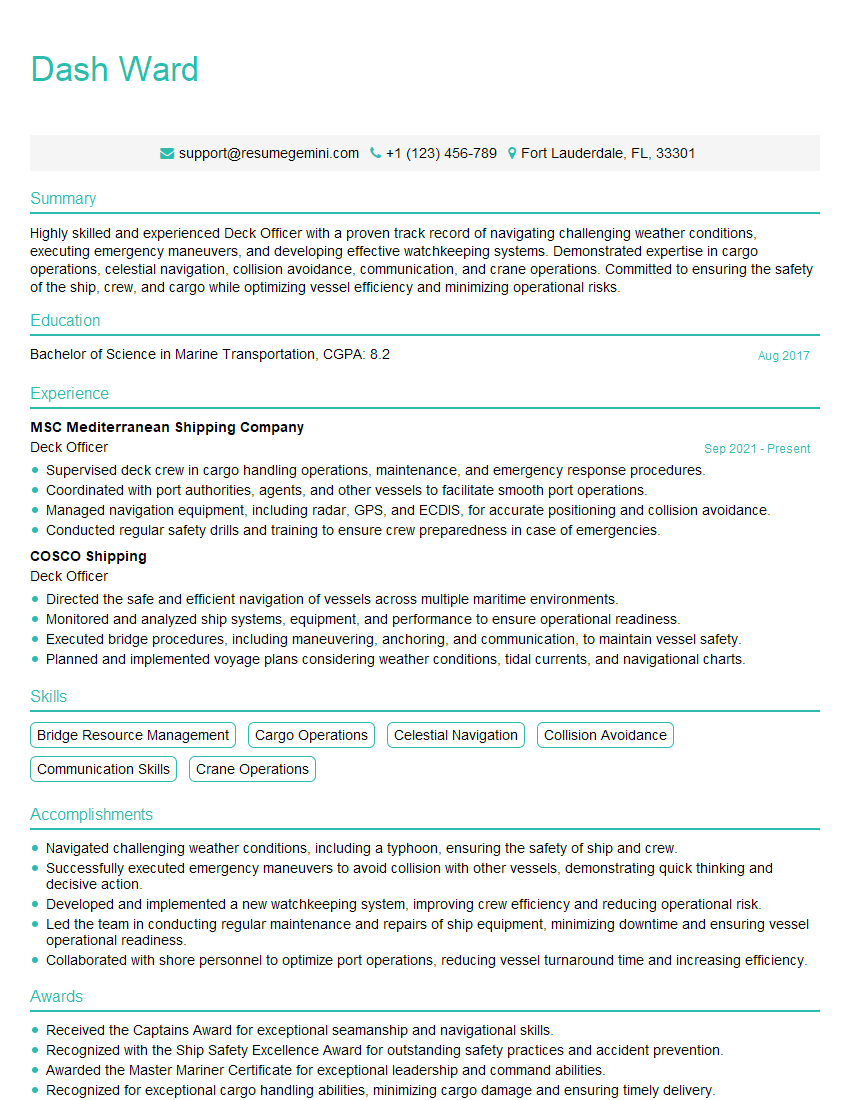
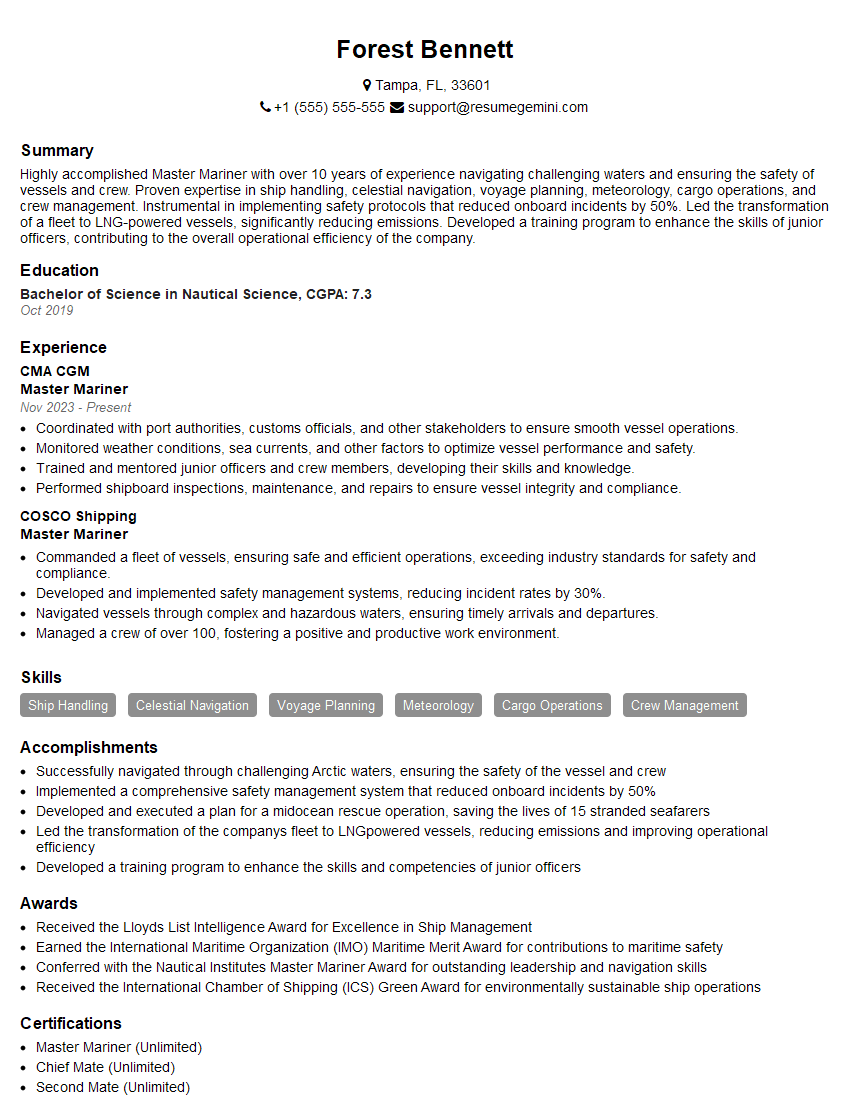
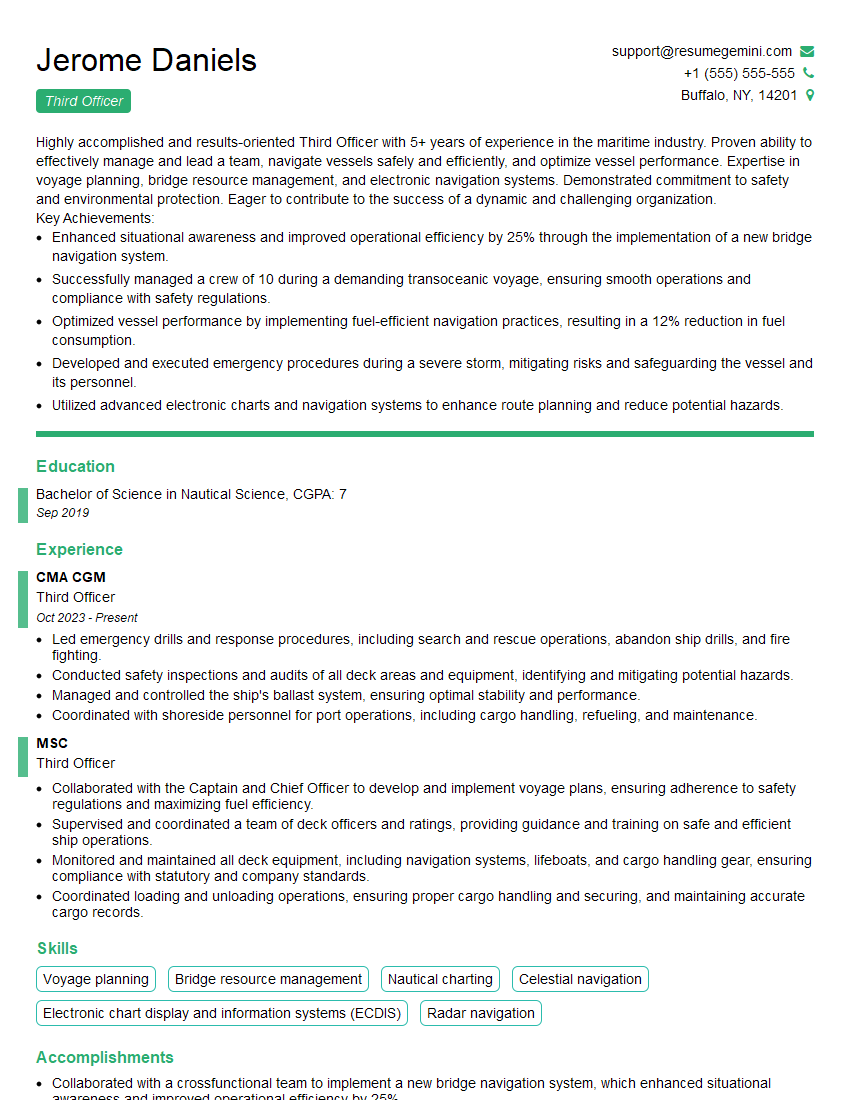
Mastering marine safety regulations is crucial for career advancement in this field. A strong understanding opens doors to higher-level positions, greater responsibility, and improved earning potential. To significantly boost your job prospects, invest time in creating an ATS-friendly resume that effectively highlights your skills and experience. ResumeGemini is a trusted resource that can help you build a professional and impactful resume, ensuring your application gets noticed by recruiters. Examples of resumes tailored to showcasing strong knowledge of marine safety regulations are available within ResumeGemini to help you get started.
Explore more articles
Users Rating of Our Blogs
Share Your Experience
We value your feedback! Please rate our content and share your thoughts (optional).
What Readers Say About Our Blog
Very informative content, great job.
good