Interviews are more than just a Q&A session—they’re a chance to prove your worth. This blog dives into essential Strong Understanding of Fisheries Management and Conservation interview questions and expert tips to help you align your answers with what hiring managers are looking for. Start preparing to shine!
Questions Asked in Strong Understanding of Fisheries Management and Conservation Interview
Q 1. Describe the different approaches to fisheries stock assessment.
Fisheries stock assessment involves estimating the size and health of fish populations to inform management decisions. Different approaches exist, each with its strengths and weaknesses. These include:
- Catch-per-unit-effort (CPUE): This method uses the amount of fish caught per unit of fishing effort (e.g., hours fished) as an index of abundance. It’s simple but assumes a constant catchability coefficient – meaning the efficiency of fishing remains constant over time, which isn’t always true.
- Acoustic surveys: Sonar technology is used to estimate fish biomass by measuring the sound waves reflected off fish schools. This provides a direct estimate of abundance, but is affected by factors such as water clarity and fish behavior.
- Research surveys: Scientists conduct direct sampling of fish populations using various gear (trawls, nets, etc.) to estimate abundance, age structure, and size distribution. This offers detailed information, but is labor-intensive and can be geographically limited.
- Statistical models: Complex models, such as surplus production models or age-structured models, incorporate data from multiple sources (catch, CPUE, surveys) to estimate population parameters and project future abundance. These offer the most sophisticated insights but require robust data and strong assumptions.
For example, a fishery managing cod stocks might use a combination of CPUE data from commercial fishing vessels, acoustic surveys to assess spawning aggregations, and research surveys to study the age and size structure of the population. The data are then integrated into a statistical model to project future stock size under different fishing scenarios.
Q 2. Explain the concept of Maximum Sustainable Yield (MSY) and its limitations.
Maximum Sustainable Yield (MSY) is the largest average catch that can be taken from a stock under prevailing ecological and environmental conditions while maintaining the population size at or above a level that ensures continued productivity. Imagine a bank account: MSY is like the maximum amount of interest you can withdraw each year without depleting your principal.
However, MSY has several limitations:
- Uncertainty in stock assessment: Accurate estimation of MSY requires precise knowledge of the population dynamics, which is often challenging to obtain. Uncertainty in these estimates can lead to overfishing.
- Environmental variability: MSY is based on an assumption of relatively stable environmental conditions. Changes in climate, water temperature, or prey availability can significantly affect the stock’s productivity and make the MSY target inappropriate.
- Ecosystem considerations: MSY focuses on a single species, ignoring the complex interactions within the ecosystem. Overfishing one species can have cascading effects on others, leading to unforeseen consequences.
- Lack of consideration for stock resilience: MSY doesn’t fully consider the ability of the fish population to recover from disturbances. Stocks may be pushed to dangerously low levels before they show clear signs of decline.
For instance, focusing solely on MSY for a particular fish species might lead to the depletion of its prey, negatively affecting the entire ecosystem.
Q 3. What are the key indicators of a healthy fish population?
A healthy fish population exhibits several key characteristics:
- High abundance: A large population size indicating a thriving stock.
- Diverse age structure: A balanced representation of different age classes, ensuring successful reproduction and recruitment.
- Healthy size distribution: A good mix of small, medium, and large individuals, suggesting successful growth and survival.
- High reproductive output: A significant number of offspring produced annually to offset natural mortality and fishing.
- Low disease prevalence: Minimal occurrence of diseases, reflecting good environmental conditions and strong individual fish health.
- Genetic diversity: A broad range of genetic variability to improve adaptability and resilience against environmental changes and disease.
Consider a salmon population. A healthy population would show a large number of adults returning to spawn each year, with a wide range of sizes and ages. The offspring would exhibit strong survival rates, contributing to a large and diverse population in the following years.
Q 4. Discuss the impact of climate change on fisheries.
Climate change poses a significant threat to fisheries through several mechanisms:
- Changes in water temperature: Increased water temperatures can cause shifts in fish distribution, impacting species’ ranges and altering their life cycles. Some species may move to deeper, cooler waters, making them harder to fish.
- Ocean acidification: Increased absorption of CO2 by the oceans reduces the pH, affecting the shell formation of shellfish and the physiological processes of many fish species.
- Sea level rise: Coastal habitats like mangroves and salt marshes, crucial for fish nurseries, may be inundated or eroded, reducing spawning grounds and juvenile habitats.
- Changes in currents and upwelling: Alterations in ocean currents and upwelling patterns can impact the distribution of nutrients and prey, affecting fish productivity.
- Increased frequency and intensity of extreme weather events: Storms and heat waves can cause mass mortality events, damaging habitats, and disrupting fish migration patterns.
For instance, coral bleaching events due to warmer water temperatures cause habitat loss for many reef fish species, impacting the entire ecosystem.
Q 5. Explain the role of bycatch in fisheries management.
Bycatch refers to the unintentional capture of non-target species during fishing operations. It’s a major concern in fisheries management because it can lead to the depletion of non-target species, damage sensitive ecosystems, and waste valuable resources.
Managing bycatch requires a multi-faceted approach:
- Gear modifications: Using selective fishing gear (e.g., modified nets with larger mesh sizes) to reduce the capture of unwanted species.
- Fishing techniques: Implementing fishing methods that minimize bycatch, such as fishing at specific times of day or in specific locations.
- Spatial management: Establishing marine protected areas or closures to protect sensitive habitats or species vulnerable to bycatch.
- Fishing quotas and regulations: Implementing quotas on bycatch levels for certain species to limit their capture.
- Observer programs: Employing independent observers on fishing vessels to monitor and document bycatch levels.
For example, turtle excluder devices (TEDs) are used in shrimp trawls to reduce sea turtle bycatch. This is a specific gear modification directly addressing a major bycatch issue.
Q 6. Describe different methods for managing fish habitat.
Managing fish habitat is crucial for maintaining healthy and productive fish populations. Methods include:
- Habitat restoration: Rehabilitating degraded habitats, such as restoring wetlands or coral reefs that provide spawning and nursery grounds.
- Habitat creation: Creating artificial habitats, such as artificial reefs or oyster beds, to provide additional shelter and foraging areas.
- Habitat protection: Establishing marine protected areas (MPAs) or other protected areas to safeguard critical habitats from destructive activities.
- Water quality management: Improving water quality by reducing pollution and controlling runoff to ensure suitable conditions for fish survival.
- River flow management: Maintaining adequate river flows to support fish migration and spawning.
For example, restoring mangrove forests along coastlines provides critical nursery habitat for many commercially important fish species, promoting their recruitment and contributing to a healthier fishery.
Q 7. What are the benefits and drawbacks of aquaculture?
Aquaculture, or fish farming, offers both benefits and drawbacks:
Benefits:
- Increased food production: Aquaculture provides a significant source of protein to meet the growing global demand for seafood.
- Economic development: It generates jobs and economic activity in coastal communities.
- Reduced fishing pressure: By producing farmed fish, we can reduce the pressure on wild fish stocks.
- Potential for sustainable practices: With careful management and technological advancements, aquaculture can be a sustainable form of food production.
Drawbacks:
- Environmental impacts: Aquaculture can lead to pollution from feed, waste, and chemicals, as well as habitat destruction.
- Disease outbreaks: High densities of fish in farms can increase the risk of disease outbreaks that can spread to wild populations.
- Escape of farmed fish: Farmed fish escaping into the wild can compete with or interbreed with wild populations, potentially affecting genetic diversity.
- Social and economic equity issues: The benefits and costs of aquaculture are not always evenly distributed, leading to potential social and economic inequities.
Responsible aquaculture practices are essential to mitigate the negative impacts while maximizing the benefits. This includes using sustainable feed sources, minimizing environmental pollution, and ensuring biosecurity to prevent disease outbreaks.
Q 8. How do you assess the effectiveness of a fisheries management plan?
Assessing the effectiveness of a fisheries management plan is crucial for ensuring its conservation goals are met. We use a multifaceted approach, combining biological, economic, and social indicators.
Biological indicators focus on the health of the fish stock. This involves analyzing data on population size, age structure, and reproductive success. For example, we might compare the spawning stock biomass (SSB) – the number of mature fish capable of reproduction – to pre-defined reference points, such as the biomass threshold below which the population is at risk of collapse. A sustained increase in SSB above these thresholds would suggest the plan is working. Conversely, consistent decline indicates the need for adjustments.
Economic indicators assess the socio-economic impacts of the plan on fishing communities. We monitor catch rates, fishing effort, and the financial viability of fishing businesses. Sustainable management shouldn’t just protect the fish; it must also support the livelihoods that depend on them. If the plan results in decreased catch but improved long-term profitability through sustainable practices, this could be considered successful.
Social indicators gauge the acceptance and compliance with the management plan by stakeholders. This involves surveying fishers, local communities, and other interested parties to understand their perspectives and assess the plan’s effectiveness in balancing conservation goals with social needs. High levels of compliance and positive feedback indicate a well-received and effective plan.
Ultimately, effectiveness is judged by whether the plan achieves its stated objectives, which usually include maintaining a healthy fish stock, providing sustainable economic opportunities, and ensuring social equity within fishing communities. Regular monitoring and adaptive management are essential to ensure the plan remains effective over time.
Q 9. Explain the role of fisheries regulations and enforcement.
Fisheries regulations and enforcement are the cornerstones of effective fisheries management. Regulations establish the rules governing fishing activity, such as catch limits, fishing seasons, gear restrictions, and protected areas. Enforcement ensures compliance with these regulations. Think of it like traffic laws for the ocean. Without rules and enforcement, the resource would be overexploited, leading to stock collapse.
Regulations might include setting total allowable catches (TACs) based on scientific assessments of stock abundance. Gear restrictions, like banning destructive bottom trawling in sensitive habitats, aim to minimize bycatch (unintentional capture of non-target species). Establishing protected areas (Marine Protected Areas or MPAs) creates safe havens for fish to breed and grow, improving the overall health of the population.
Enforcement relies on various methods, including regular at-sea patrols by fisheries officers, monitoring of landings at ports, and use of technology such as Vessel Monitoring Systems (VMS) which track fishing vessels’ locations. Penalties for non-compliance can range from fines to vessel seizure, acting as a deterrent against illegal fishing activities. Effective enforcement is crucial, not only to ensure compliance but also to foster a sense of fairness among those who abide by the rules.
Strong regulations coupled with rigorous enforcement are critical for achieving sustainable fisheries management and protecting the marine environment.
Q 10. Describe the precautionary principle in fisheries management.
The precautionary principle in fisheries management is a cornerstone of responsible resource management. It dictates that where there is a lack of complete scientific certainty about the status of a fish stock, management measures should err on the side of caution to prevent stock collapse. It’s about acknowledging the inherent uncertainties in our understanding of complex ecosystems and acting proactively to minimize risks.
In practice, the precautionary principle might translate to setting conservative catch limits even if the data suggest a healthy stock size. The reasoning is that incomplete data or unforeseen factors could lead to rapid declines if fishing continues at a higher level. It’s better to be safe than sorry, especially when dealing with vulnerable ecosystems.
For example, if a new fishing technique emerges with potential to significantly impact a fish population, the precautionary principle would advise temporary restrictions or reduced fishing effort while further research assesses its actual impact. This proactive approach allows managers to adapt to new challenges while ensuring the long-term sustainability of the fishery.
This principle highlights the importance of proactive management, acknowledging that knowledge is incomplete and unexpected events can easily impact the stability of ecosystems. It promotes a more adaptive and responsible approach to fisheries management.
Q 11. What are some common fishing gear types and their environmental impacts?
Many fishing gear types exist, each with its own environmental impact. Understanding these impacts is crucial for sustainable fisheries management.
- Bottom trawling: This involves dragging large nets across the seabed, catching both target and non-target species. Its impact is significant, including habitat destruction (coral reefs, seagrass beds), high bycatch rates, and disruption of benthic ecosystems.
- Gillnets: These are stationary nets that fish swim into and become entangled. While selective for certain species, they can result in bycatch of marine mammals, seabirds, and turtles. Ghost fishing (continued entanglement and death of animals after nets are lost) is another major concern.
- Longlines: These are long lines with baited hooks, effective for catching pelagic fish. While generally more selective than trawling, they can still result in bycatch of seabirds, marine mammals, and sharks.
- Purse seines: These encircle schools of fish, typically used for schooling pelagic species like tuna and sardines. Bycatch can be a significant concern, especially for smaller fish and marine mammals. The selection of the right net size is important to minimize environmental impact.
The environmental impacts of fishing gear extend beyond direct mortality. Habitat damage, alteration of ecosystem structure, and the disruption of food webs are all serious concerns that need to be addressed through gear selection, modification, and regulations.
Q 12. Explain the concept of ecosystem-based fisheries management.
Ecosystem-based fisheries management (EBFM) moves beyond focusing solely on individual fish stocks to consider the entire marine ecosystem. It recognizes that fish stocks are interconnected with other species and their environment, emphasizing the need for a holistic approach. Rather than managing each species in isolation, EBFM considers the interactions between species, habitats, and human activities.
For example, instead of just setting catch limits for cod, an EBFM approach would consider the cod’s role in the food web (what it eats, what eats it), the impact of cod fishing on other species (e.g., its prey or predators), and the health of the habitats that cod depend on. It may involve establishing MPAs to protect critical habitats, managing other species that interact with cod, and implementing measures to reduce bycatch of non-target species.
Key aspects of EBFM include: understanding ecosystem dynamics, assessing the cumulative impacts of all human activities on the ecosystem, establishing ecosystem-based objectives, using diverse data sources (biological, economic, social), and adapting management strategies to account for ecosystem changes and uncertainties. It’s a more complex and integrated approach than traditional single-species management, requiring greater collaboration among scientists, managers, and stakeholders.
Q 13. How do you analyze fisheries data using statistical methods?
Analyzing fisheries data using statistical methods is essential for understanding fish stock dynamics, assessing the effectiveness of management measures, and making informed management decisions. A wide array of statistical techniques are applied, depending on the research question and the type of data available.
Time series analysis is often used to examine trends in catch, effort, and stock abundance over time. Methods like ARIMA (Autoregressive Integrated Moving Average) models can help to forecast future stock levels. Regression analysis can explore relationships between variables, for instance, the relationship between fishing effort and catch rate or the influence of environmental factors on fish abundance.
Population dynamics models, such as the surplus production model or the age-structured model, are used to estimate key population parameters (e.g., growth rate, mortality rate, recruitment) and project future stock trajectories under different management scenarios. Catch curve analysis estimates the rate of mortality in a population by examining the frequency distribution of fish of different sizes or ages.
Software packages such as R and MATLAB are commonly used for these analyses. Data visualization is critical, employing graphs and charts to communicate findings to both technical and non-technical audiences.
# Example R code (Illustrative):model <- lm(catch ~ effort, data = mydata) # Linear regression of catch on effortsummary(model) # Model summary
Statistical rigor is crucial for the credibility and efficacy of fisheries management. Accurate data analysis, appropriately chosen statistical methods, and clear interpretation of results are fundamental to evidence-based decision-making in fisheries.
Q 14. What are the ethical considerations in fisheries management?
Ethical considerations in fisheries management are multifaceted and demand careful consideration. They relate to the equitable distribution of resources, the protection of biodiversity, and the sustainability of fishing communities. The ethical dimensions go beyond purely scientific aspects, touching upon social justice and intergenerational equity.
Intergenerational equity emphasizes the responsibility to manage resources sustainably for future generations. Overfishing deprives future generations of the benefits derived from healthy fish stocks, raising profound ethical concerns about the legacy we leave behind. We have a moral obligation to act as stewards of these resources, ensuring their availability for future generations.
Equitable resource distribution raises questions about fairness in access to fishing resources. Management decisions should consider the needs of small-scale fishers, often marginalized communities reliant on fishing for their livelihoods. Effective management must promote equity and avoid exacerbating existing inequalities.
Protection of biodiversity acknowledges the intrinsic value of marine ecosystems and the interconnectedness of species. Bycatch reduction, habitat protection, and consideration of ecosystem health are crucial ethical aspects of fisheries management. We are responsible for minimizing our impacts on all components of the ecosystem, not just target species.
Addressing these ethical considerations requires incorporating social and economic factors into management plans, fostering stakeholder engagement, and promoting transparency and accountability in decision-making. Sustainable fisheries management is not simply about the science; it's equally about making just and responsible choices.
Q 15. Describe the different types of fishing licenses and permits.
Fishing licenses and permits are crucial for regulating fishing activities and ensuring the sustainability of fish stocks. The specific types vary considerably depending on the jurisdiction (national, regional, or local) and the type of fishing involved. Generally, they fall into categories based on:
- Gear type: Licenses might be specific to certain fishing methods, such as trawling, gillnetting, or angling. For example, a license for commercial trawling will have stricter regulations and potentially higher fees than a recreational angling license.
- Species targeted: Some licenses might allow fishing for specific species, while others are more general. A license to fish for tuna might have different catch limits and reporting requirements than a license for cod.
- Geographic area: Licenses often restrict fishing to specific zones or waters. This is particularly important for managing stocks in sensitive ecosystems or protecting spawning grounds. A coastal license might differ significantly from one allowing offshore fishing.
- Vessel size and type: Commercial fishing licenses often categorize vessels based on size and engine power, influencing permitted fishing effort.
- Commercial vs. recreational: This is a fundamental distinction. Commercial licenses involve fishing for profit, and thus face much stricter regulations and monitoring. Recreational licenses permit fishing for personal consumption, typically with lower catch limits and simpler reporting requirements.
For instance, a small-scale artisanal fisherman in a developing country might possess a simple, community-based license, while a large-scale industrial fishing vessel would require a far more complex and rigorously monitored license. The details are vital for effective fisheries management.
Career Expert Tips:
- Ace those interviews! Prepare effectively by reviewing the Top 50 Most Common Interview Questions on ResumeGemini.
- Navigate your job search with confidence! Explore a wide range of Career Tips on ResumeGemini. Learn about common challenges and recommendations to overcome them.
- Craft the perfect resume! Master the Art of Resume Writing with ResumeGemini's guide. Showcase your unique qualifications and achievements effectively.
- Don't miss out on holiday savings! Build your dream resume with ResumeGemini's ATS optimized templates.
Q 16. How do you address illegal, unreported, and unregulated (IUU) fishing?
Combating illegal, unreported, and unregulated (IUU) fishing requires a multifaceted approach involving strengthened international cooperation, improved monitoring, control, and surveillance (MCS) systems, and effective enforcement mechanisms. Think of it like a war on a global scale against a shadowy opponent. Here's a breakdown:
- Strengthening international cooperation: IUU fishing often transcends national boundaries, demanding collaboration between nations to share information, coordinate patrols, and harmonise regulations. International agreements like the Port State Measures Agreement (PSMA) are pivotal here.
- Improving MCS: This involves utilizing technologies such as satellite tracking of vessels, electronic monitoring systems onboard fishing vessels, and improved data collection and analysis to detect illegal activities. Imagine having GPS trackers on every fishing vessel, constantly reporting their location and catch.
- Enforcement: This includes both at-sea inspections and port state control. When illegal activities are detected, strong penalties, including fines, vessel seizure, and even criminal prosecution, are vital to deter future offenses. A strong deterrent effect is key.
- Capacity building: Many developing countries lack the resources to effectively combat IUU fishing. International support and training programs are crucial to help them improve their MCS systems and enforcement capabilities.
- Market-based approaches: Promoting sustainable seafood choices by consumers and businesses can put pressure on operators involved in IUU fishing. This creates a consumer-driven demand for transparency and sustainability.
Ultimately, success depends on effective collaboration, technological advancements, robust legal frameworks, and, critically, the political will to tackle this pervasive problem.
Q 17. Explain the role of stakeholder engagement in fisheries management.
Stakeholder engagement is the cornerstone of successful fisheries management. It's about involving all those who have a stake in the outcome – from fishers and processors to scientists, conservationists, local communities, and government agencies. Think of it as a collaborative effort towards a shared goal.
- Information sharing: Open communication ensures all stakeholders are aware of management objectives, regulations, and scientific findings. This fosters transparency and trust.
- Participatory decision-making: Involving stakeholders in the development and implementation of management plans leads to greater ownership and acceptance of decisions. This could involve workshops, consultations, and co-management arrangements where responsibility is shared.
- Conflict resolution: Effective stakeholder engagement can help anticipate and address potential conflicts among different groups with competing interests. For example, reconciling the interests of commercial fishers with conservationists requires respectful dialogue and creative solutions.
- Monitoring and evaluation: Involving stakeholders in the monitoring and evaluation of management strategies helps ensure that strategies are effective and responsive to changing conditions.
Ignoring stakeholder interests can lead to resentment, non-compliance, and ultimately, failure of management strategies. For example, imposing top-down regulations without consultation with local fishing communities might lead to widespread resistance and undermine conservation efforts.
Q 18. Discuss the challenges of managing transboundary fish stocks.
Managing transboundary fish stocks—fish stocks that migrate across national borders—presents unique challenges because they require international cooperation and coordinated management efforts. Imagine trying to manage a herd of migrating elephants that cross multiple countries - it's a complex task.
- International agreements: Establishing international agreements and mechanisms for cooperation is essential to ensure that shared stocks are managed sustainably. This often involves establishing joint management bodies and harmonizing regulations.
- Data sharing: Effective management requires robust data collection and sharing across nations. This includes catch data, stock assessments, and scientific research.
- Enforcement challenges: Enforcing regulations across international waters presents significant difficulties. Coordination of surveillance and enforcement efforts is crucial to deter illegal fishing.
- Differing priorities and capacities: Nations may have different priorities and capacities in managing the stocks. Some might prioritize economic benefits while others might focus more on conservation, creating friction.
- Ecosystem-based approaches: An effective approach must consider the entire ecosystem and the interactions among different species, not just the targeted fish species.
The management of tuna stocks in the Pacific Ocean is a prime example of the challenges and successes of transboundary fisheries management. International cooperation, although often fraught with difficulties, is critical for the long-term sustainability of these valuable resources.
Q 19. What is the importance of monitoring and evaluating fisheries management strategies?
Monitoring and evaluating fisheries management strategies are crucial for determining their effectiveness and making necessary adjustments. It's like checking the progress of a construction project; regular inspections are vital to ensure the final product meets expectations.
- Stock assessments: Regular stock assessments provide information on the status of fish populations, allowing managers to determine whether management measures are achieving their goals.
- Catch data collection: Accurate catch data, including species composition and size, is crucial for evaluating fishing effort and the impact of management measures.
- Economic analyses: Evaluating the economic impacts of management measures on fishers, processors, and communities is vital for ensuring that policies are both effective and equitable.
- Social impact assessments: Assessing the social impacts of management measures on communities dependent on fishing is critical for ensuring that policies are socially acceptable.
- Adaptive management: Monitoring and evaluation data should inform adjustments to management strategies to ensure they remain effective and responsive to changing conditions.
Without rigorous monitoring and evaluation, fisheries management becomes a shot in the dark. Regular reviews allow managers to refine strategies, address unintended consequences, and adapt to new information and changing circumstances.
Q 20. How do you incorporate scientific data into fisheries management decisions?
Scientific data is the bedrock of sound fisheries management decisions. It provides the evidence-based foundation for setting catch limits, determining fishing seasons, and designing other management measures. Think of it as the blueprints for a sustainable fishery.
- Stock assessments: These scientific assessments provide estimates of fish population size, growth rates, and mortality rates. This information is crucial for setting sustainable catch limits.
- Ecosystem assessments: Understanding the broader ecosystem context, including the interactions between species and their environment, is essential for holistic management.
- Fishing technology studies: Studies on fishing gear selectivity and bycatch help to reduce the negative impacts of fishing on non-target species.
- Data analysis and modeling: Sophisticated data analysis and modeling techniques are used to predict the impacts of different management strategies on fish stocks and the ecosystem.
- Peer review: Ensuring scientific rigor and transparency through peer review processes is critical for ensuring the quality and reliability of scientific advice.
Integrating scientific data into decision-making requires strong collaboration between scientists and managers, translating complex scientific findings into clear and understandable management recommendations. This collaborative approach ensures management decisions are informed and effective.
Q 21. Explain the concept of fisheries certification and its benefits.
Fisheries certification is a system of independent verification that ensures seafood products come from sustainable and well-managed fisheries. Think of it like a quality seal of approval, assuring consumers that their choice supports sustainable practices.
- Standards and certifications: Various certification schemes, such as the Marine Stewardship Council (MSC) and Aquaculture Stewardship Council (ASC), set standards for sustainable fishing practices. Fisheries meeting these standards can obtain certification.
- Traceability: Certification improves traceability of seafood products, allowing consumers to know the source of their fish and verify its sustainability.
- Market incentives: Certification provides a market incentive for fisheries to adopt sustainable practices, as certified products often command higher prices.
- Environmental benefits: Certification can help protect biodiversity, reduce bycatch, and minimize the environmental impact of fishing activities.
- Social benefits: Certification can improve social conditions in fishing communities by promoting fair labor practices and supporting economic sustainability.
By choosing certified seafood, consumers can directly support sustainable fisheries and contribute to the health of the oceans. It’s a powerful way to drive change through consumer choice.
Q 22. Discuss the economic impacts of overfishing.
Overfishing has devastating economic consequences, impacting various sectors and stakeholders. It's not just about the loss of fish; the ripple effects are significant.
- Reduced Fish Stocks and Revenue for Fishermen: The most direct impact is the decline in fish populations, leading to lower catches and reduced income for fishing communities. This can force many fishermen out of business, leading to unemployment and social unrest.
- Damage to the Fishing Industry: Overfishing threatens the entire fishing industry, from small-scale operations to large processing plants. Businesses that rely on sustainably sourced fish may suffer as supply chains are disrupted.
- Loss of Tourism Revenue: Healthy fish populations are crucial for attracting tourists to coastal areas. Overfishing can damage reefs and other ecosystems, leading to a decline in tourism and associated revenue streams.
- Increased Production Costs: As fish stocks dwindle, fishermen have to travel farther and spend more time and fuel to find fish. This drives up production costs, making fish more expensive for consumers.
- Economic Losses in Related Sectors: Industries that rely on fishing, such as fish processing, canning, and restaurants, all suffer when fish stocks are depleted. This can lead to job losses and economic hardship across multiple industries.
For example, the collapse of the cod fishery in Newfoundland, Canada, had a catastrophic economic impact on the region, resulting in widespread unemployment and economic decline. Effective fisheries management is critical to avoiding such devastating consequences.
Q 23. What are some innovative approaches to fisheries management?
Innovative approaches to fisheries management are essential to address the complexities of overfishing and ecosystem health. These approaches move beyond traditional methods and embrace new technologies and collaborative strategies.
- Ecosystem-Based Management (EBM): EBM considers the entire marine ecosystem, including the interactions between different species and habitats. It aims to protect the biodiversity and health of the whole system, rather than focusing solely on individual fish stocks.
- Marine Protected Areas (MPAs): MPAs are designated areas where fishing and other extractive activities are restricted or prohibited, allowing fish populations to recover and biodiversity to flourish. Effective MPA design and enforcement are crucial for their success.
- Fisheries Co-management: This involves sharing management responsibilities between government agencies and fishing communities. By giving local stakeholders a voice in the decision-making process, co-management fosters greater accountability and encourages responsible fishing practices.
- Technological Advancements: Remote sensing, underwater cameras, and data analytics can provide valuable insights into fish stocks, fishing activities, and ecosystem health. This data can be used to improve management decisions and enhance enforcement efforts. For instance, using satellite imagery to monitor illegal fishing activity is crucial for compliance.
- Market-Based Instruments: These include mechanisms such as catch share programs and individual transferable quotas (ITQs), which grant fishermen exclusive rights to a portion of the total allowable catch. This can incentivize sustainable fishing practices and reduce overfishing.
These innovative strategies, when implemented effectively and in combination, can significantly improve the sustainability and resilience of fisheries worldwide.
Q 24. Describe your experience with fisheries modeling software (e.g., Stock Synthesis).
I have extensive experience with fisheries modeling software, primarily using Stock Synthesis. I've used it to assess the status of various fish stocks, evaluate the effectiveness of different management strategies, and predict the future state of fish populations under various scenarios.
My experience includes:
- Data Preparation and Input: I am proficient in preparing and organizing catch, survey, and other relevant data required for Stock Synthesis models. This involves cleaning the data, handling missing values, and ensuring data quality.
- Model Development and Calibration: I am skilled in developing and calibrating Stock Synthesis models to reflect the biological characteristics of the fish populations and the dynamics of the fishery. This often involves experimentation with different model structures and parameters to achieve a good fit between the model and the observed data.
- Model Evaluation and Sensitivity Analysis: I conduct thorough evaluations of the model's performance, checking the model fit, and assessing the sensitivity of the results to variations in input parameters. This helps to ensure the reliability and robustness of the model’s output.
- Management Strategy Evaluation (MSE): I use Stock Synthesis to conduct MSE, simulating the effects of different management strategies on the fish stock and the fishery. This is crucial for making informed management decisions and promoting sustainability.
For example, I recently used Stock Synthesis to model the impact of a proposed reduction in fishing effort on a commercially important fish stock. The model projected a significant increase in the fish population size and biomass over time, supporting the decision to implement the management measure.
Q 25. How do you assess the social and economic impacts of fisheries management decisions?
Assessing the social and economic impacts of fisheries management decisions is crucial for ensuring that management strategies are both effective and equitable. I employ a multi-faceted approach that integrates quantitative and qualitative methods.
- Economic Impact Assessments: I use economic modeling techniques to evaluate the potential effects of management measures on fishing revenue, employment, and the overall economic activity in fishing communities. This might involve cost-benefit analyses or input-output models.
- Social Impact Assessments: Social impact assessments involve gathering qualitative data, often through surveys, interviews, and focus groups, to understand the social consequences of management decisions on fishing communities. This can include examining the impacts on livelihoods, social cohesion, and cultural traditions.
- Stakeholder Engagement: I strongly believe in incorporating the perspectives and knowledge of all stakeholders—fishermen, processors, consumers, environmental groups, and government agencies—in the decision-making process. This can involve public meetings, workshops, and participatory modeling exercises.
- Distributional Analysis: This involves evaluating how the costs and benefits of management decisions are distributed across different groups within the fishing community. It is important to ensure that management measures do not disproportionately harm vulnerable communities.
For example, in one project, we used a combination of economic modeling and community surveys to assess the impact of a proposed marine reserve on local fishing communities. The analysis revealed potential economic losses in the short term but also predicted long-term ecological and economic benefits, supporting the creation of the reserve with effective mitigation strategies for the short term losses.
Q 26. What is your experience with data analysis software (e.g., R, Python)?
I am highly proficient in using both R and Python for data analysis related to fisheries management. I leverage their extensive libraries and functionalities for various aspects of my work.
- Data Wrangling and Cleaning: I use both R (with packages like
dplyrandtidyr) and Python (with libraries likepandasandnumpy) to clean, transform, and prepare data for analysis. This includes handling missing values, dealing with outliers, and ensuring data consistency. - Statistical Analysis: I use both languages for a wide range of statistical analyses, including regression modeling, time series analysis, and hypothesis testing. I'm familiar with packages like
statsmodels(Python) andlmtest(R) for these tasks. - Data Visualization:
ggplot2(R) andmatplotlib/seaborn(Python) are my go-to tools for creating informative and visually appealing graphs and charts to communicate findings effectively. - Spatial Analysis: I utilize packages like
spandraster(R) andgeopandas(Python) for spatial data analysis, which is often critical in fisheries management, for example, mapping fish distribution and habitat use.
# Example R code for basic linear regression:model <- lm(catch ~ effort, data = mydata)summary(model)
The ability to utilize both R and Python provides flexibility and allows me to select the best tool for each specific analytical task.
Q 27. Explain your understanding of the Magnuson-Stevens Fishery Conservation and Management Act (or equivalent legislation in your region).
The Magnuson-Stevens Fishery Conservation and Management Act (MSFCA) is the primary law governing marine fisheries management in the United States. It's a crucial piece of legislation that aims to prevent overfishing, rebuild overfished stocks, and ensure sustainable fisheries. My understanding of the Act encompasses its key components:
- National Standards: The MSFCA outlines eight national standards that must be considered in all fisheries management plans. These standards cover aspects like preventing overfishing, minimizing bycatch, and ensuring the long-term sustainability of fish stocks.
- Fishery Management Plans (FMPs): Regional Fishery Management Councils develop FMPs for individual fish stocks or groups of stocks within their jurisdiction. These plans detail the specific measures necessary to achieve the national standards and ensure the sustainability of the fishery.
- Overfishing Definitions and Limits: The Act provides a framework for defining and preventing overfishing, including setting annual catch limits (ACLs) and accountability measures.
- Stock Assessments: The Act mandates regular stock assessments to determine the status of fish populations. These assessments inform management decisions and ensure that the fishery is operating sustainably.
- Enforcement and Compliance: The Act addresses enforcement mechanisms and penalties to ensure compliance with management measures.
Understanding the MSFCA is paramount for anyone working in US fisheries management, as it guides the development and implementation of all management actions. The Act’s emphasis on scientific data and adaptive management is essential for achieving long-term sustainability.
Q 28. Describe a situation where you had to make a difficult decision related to fisheries management; what was the outcome?
I once faced a difficult decision regarding the implementation of a new fishing gear restriction aimed at reducing bycatch of a threatened seabird species. The restriction, while environmentally beneficial, would significantly reduce fishing yields for a small, but economically important, fishing community.
The challenge was balancing the need to protect the seabird population with the socio-economic well-being of the fishing community. A purely ecologically focused approach would have devastating economic consequences for the community.
My approach involved:
- Comprehensive Data Analysis: I thoroughly analyzed the available data on seabird populations, fishing practices, and the economic impact of the restriction. This involved quantitative analysis of fishing yields, economic modeling, and qualitative data collection from the fishing community.
- Stakeholder Engagement: I facilitated extensive discussions and meetings with the fishing community, environmental groups, and government agencies. This allowed for open dialogue and the exploration of alternative solutions.
- Development of Mitigation Strategies: We developed a package of mitigation strategies to lessen the economic impact on the community, including providing financial assistance for retraining and diversification into other economic activities, as well as exploring alternative fishing methods.
The outcome was a modified restriction with integrated mitigation measures. While the seabird bycatch was still reduced (though not as much as initially planned), the fishing community experienced far less economic hardship. It involved a careful balancing act and highlighted the importance of considering both environmental and socioeconomic aspects in fisheries management.
Key Topics to Learn for a Strong Understanding of Fisheries Management and Conservation Interview
- Stock Assessment Techniques: Understanding methods like cohort analysis, virtual population analysis (VPA), and length-based methods, including their strengths and limitations. Practical application: Interpreting stock assessment results to inform management decisions.
- Fisheries Ecosystem Management: Exploring the interconnectedness of species and habitats within a fishery ecosystem. Practical application: Analyzing the impacts of fishing on non-target species and the ecosystem as a whole.
- Fisheries Regulations and Policy: Knowledge of different fishing gear restrictions, catch limits, and spatial closures. Practical application: Evaluating the effectiveness of different management measures and proposing improvements.
- Sustainable Fisheries Certification: Familiarity with eco-certification programs (e.g., MSC) and their implications for fisheries management. Practical application: Assessing the sustainability of different fisheries and advising on certification processes.
- Bycatch Reduction Strategies: Understanding the problem of bycatch and various mitigation techniques. Practical application: Evaluating the effectiveness of different bycatch reduction devices and strategies.
- Climate Change Impacts on Fisheries: Analyzing the effects of climate change on fish populations and ecosystems. Practical application: Developing adaptation strategies to mitigate the impacts of climate change.
- Data Analysis and Modeling: Proficiency in using statistical software and analytical techniques to analyze fisheries data. Practical application: Developing and interpreting fisheries models to predict future trends.
- Stakeholder Engagement and Communication: Understanding the importance of collaboration and communication with diverse stakeholders (fishermen, scientists, policymakers). Practical application: Developing effective communication strategies to build consensus and support for management decisions.
Next Steps
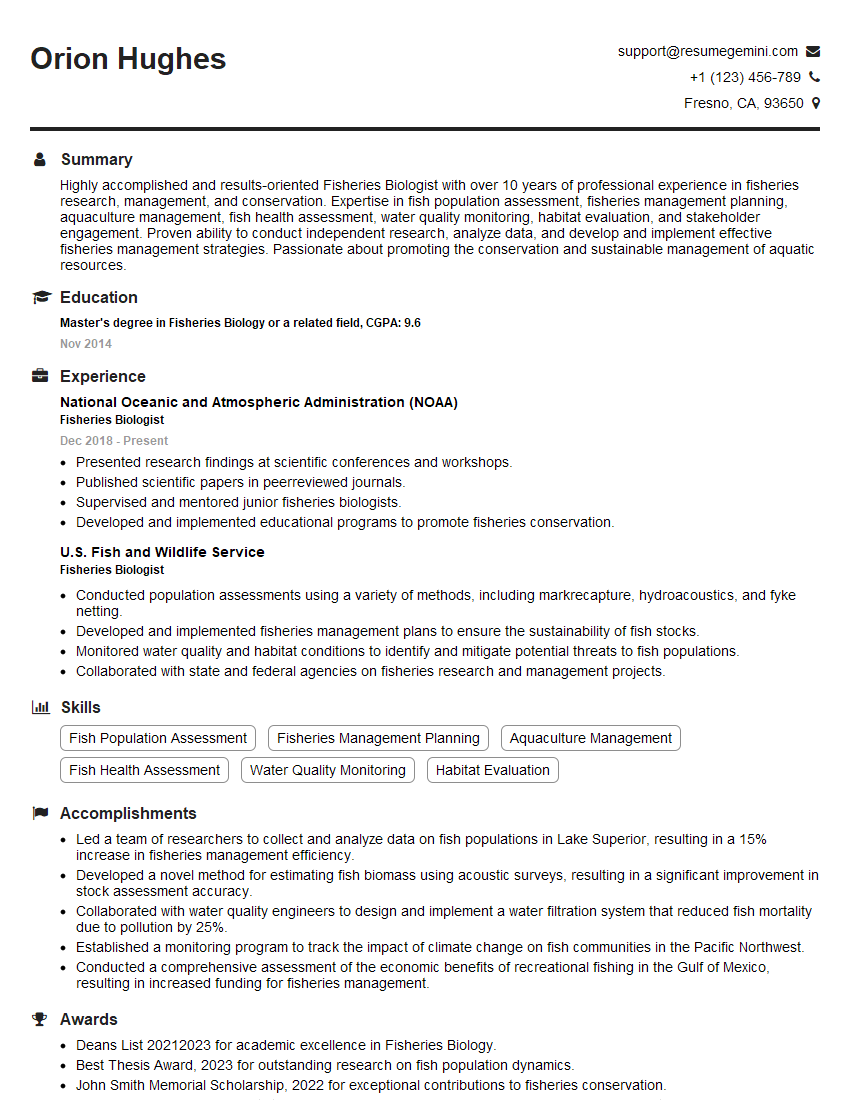
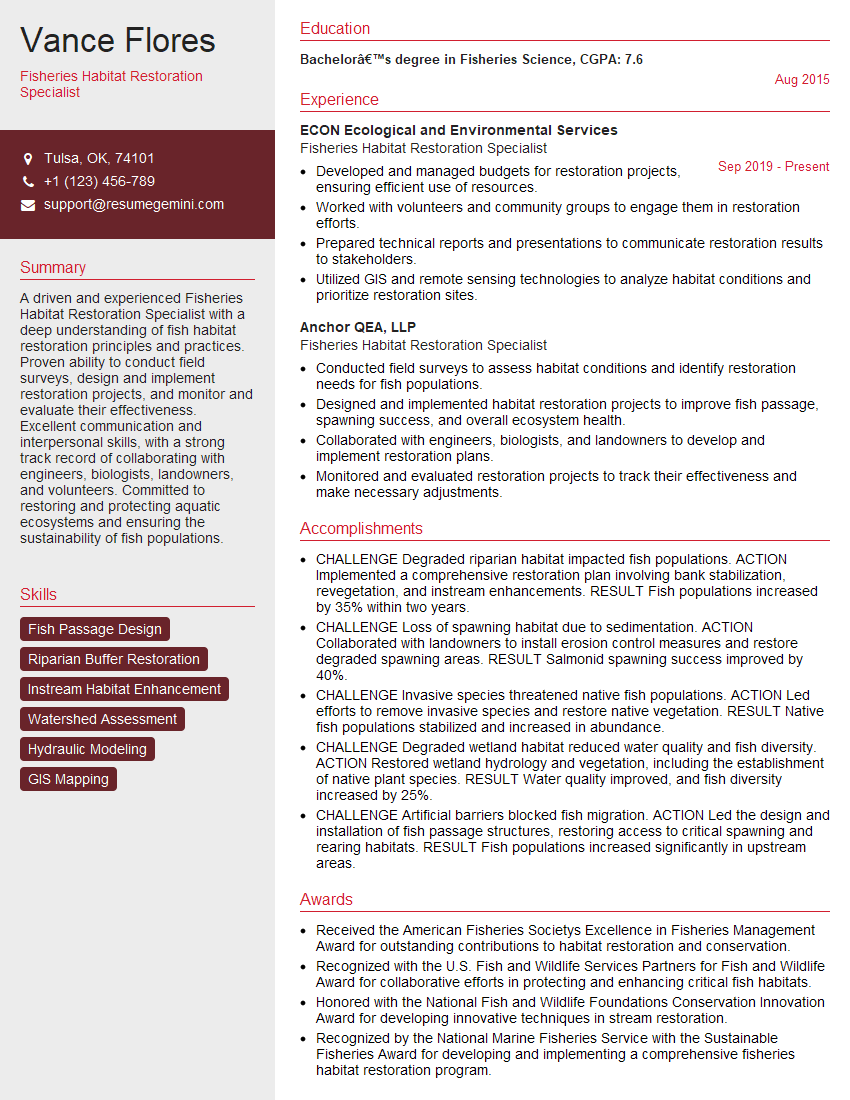
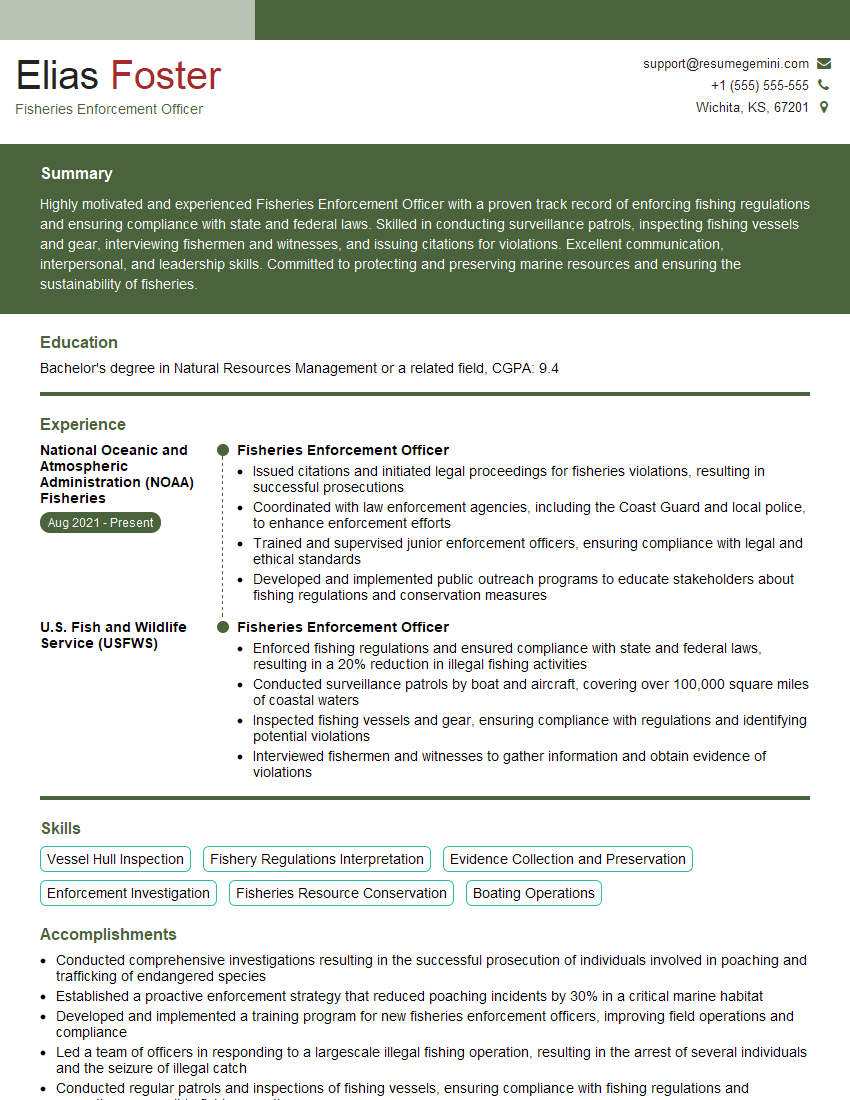
Mastering fisheries management and conservation principles is crucial for a successful and impactful career. A strong understanding of these topics demonstrates your commitment to sustainable resource use and positions you as a valuable asset in this field. To maximize your job prospects, creating a compelling and ATS-friendly resume is essential. ResumeGemini can help you craft a professional resume that highlights your skills and experience effectively. ResumeGemini offers examples of resumes tailored specifically to highlight a strong understanding of Fisheries Management and Conservation, helping you present yourself in the best possible light to potential employers.
Explore more articles
Users Rating of Our Blogs
Share Your Experience
We value your feedback! Please rate our content and share your thoughts (optional).
What Readers Say About Our Blog
Attention music lovers!
Wow, All the best Sax Summer music !!!
Spotify: https://open.spotify.com/artist/6ShcdIT7rPVVaFEpgZQbUk
Apple Music: https://music.apple.com/fr/artist/jimmy-sax-black/1530501936
YouTube: https://music.youtube.com/browse/VLOLAK5uy_noClmC7abM6YpZsnySxRqt3LoalPf88No
Other Platforms and Free Downloads : https://fanlink.tv/jimmysaxblack
on google : https://www.google.com/search?q=22+AND+22+AND+22
on ChatGPT : https://chat.openai.com?q=who20jlJimmy20Black20Sax20Producer
Get back into the groove with Jimmy sax Black
Best regards,
Jimmy sax Black
www.jimmysaxblack.com
Hi I am a troller at The aquatic interview center and I suddenly went so fast in Roblox and it was gone when I reset.
Hi,
Business owners spend hours every week worrying about their website—or avoiding it because it feels overwhelming.
We’d like to take that off your plate:
$69/month. Everything handled.
Our team will:
Design a custom website—or completely overhaul your current one
Take care of hosting as an option
Handle edits and improvements—up to 60 minutes of work included every month
No setup fees, no annual commitments. Just a site that makes a strong first impression.
Find out if it’s right for you:
https://websolutionsgenius.com/awardwinningwebsites
Hello,
we currently offer a complimentary backlink and URL indexing test for search engine optimization professionals.
You can get complimentary indexing credits to test how link discovery works in practice.
No credit card is required and there is no recurring fee.
You can find details here:
https://wikipedia-backlinks.com/indexing/
Regards
NICE RESPONSE TO Q & A
hi
The aim of this message is regarding an unclaimed deposit of a deceased nationale that bears the same name as you. You are not relate to him as there are millions of people answering the names across around the world. But i will use my position to influence the release of the deposit to you for our mutual benefit.
Respond for full details and how to claim the deposit. This is 100% risk free. Send hello to my email id: lukachachibaialuka@gmail.com
Luka Chachibaialuka
Hey interviewgemini.com, just wanted to follow up on my last email.
We just launched Call the Monster, an parenting app that lets you summon friendly ‘monsters’ kids actually listen to.
We’re also running a giveaway for everyone who downloads the app. Since it’s brand new, there aren’t many users yet, which means you’ve got a much better chance of winning some great prizes.
You can check it out here: https://bit.ly/callamonsterapp
Or follow us on Instagram: https://www.instagram.com/callamonsterapp
Thanks,
Ryan
CEO – Call the Monster App
Hey interviewgemini.com, I saw your website and love your approach.
I just want this to look like spam email, but want to share something important to you. We just launched Call the Monster, a parenting app that lets you summon friendly ‘monsters’ kids actually listen to.
Parents are loving it for calming chaos before bedtime. Thought you might want to try it: https://bit.ly/callamonsterapp or just follow our fun monster lore on Instagram: https://www.instagram.com/callamonsterapp
Thanks,
Ryan
CEO – Call A Monster APP
To the interviewgemini.com Owner.
Dear interviewgemini.com Webmaster!
Hi interviewgemini.com Webmaster!
Dear interviewgemini.com Webmaster!
excellent
Hello,
We found issues with your domain’s email setup that may be sending your messages to spam or blocking them completely. InboxShield Mini shows you how to fix it in minutes — no tech skills required.
Scan your domain now for details: https://inboxshield-mini.com/
— Adam @ InboxShield Mini
support@inboxshield-mini.com
Reply STOP to unsubscribe
Hi, are you owner of interviewgemini.com? What if I told you I could help you find extra time in your schedule, reconnect with leads you didn’t even realize you missed, and bring in more “I want to work with you” conversations, without increasing your ad spend or hiring a full-time employee?
All with a flexible, budget-friendly service that could easily pay for itself. Sounds good?
Would it be nice to jump on a quick 10-minute call so I can show you exactly how we make this work?
Best,
Hapei
Marketing Director
Hey, I know you’re the owner of interviewgemini.com. I’ll be quick.
Fundraising for your business is tough and time-consuming. We make it easier by guaranteeing two private investor meetings each month, for six months. No demos, no pitch events – just direct introductions to active investors matched to your startup.
If youR17;re raising, this could help you build real momentum. Want me to send more info?
Hi, I represent an SEO company that specialises in getting you AI citations and higher rankings on Google. I’d like to offer you a 100% free SEO audit for your website. Would you be interested?
Hi, I represent an SEO company that specialises in getting you AI citations and higher rankings on Google. I’d like to offer you a 100% free SEO audit for your website. Would you be interested?