The thought of an interview can be nerve-wracking, but the right preparation can make all the difference. Explore this comprehensive guide to Stunt Rigging interview questions and gain the confidence you need to showcase your abilities and secure the role.
Questions Asked in Stunt Rigging Interview
Q 1. Describe your experience with different types of rigging hardware (e.g., wire rope, shackles, slings).
My experience with rigging hardware is extensive, encompassing years of hands-on work with a wide variety of materials. Wire rope, for instance, is a staple; I’m proficient in selecting the correct diameter and construction (e.g., 6×19, 6×37) based on the load and application. Understanding the different wire rope constructions is critical – a 6×19 is more flexible but slightly weaker than a 6×37. I’ve worked extensively with different types of slings, from polyester and nylon webbing slings for lighter loads to specialized steel wire rope slings for heavy lifts. I’m equally familiar with shackles – bow shackles for quick connections, D-shackles for more robust applications, and the crucial importance of correctly inspecting them for damage before every use. Furthermore, I understand the importance of using the correct hardware for each job, considering factors such as corrosion resistance, material strength, and wear and tear.
For example, on a recent film shoot involving a high-speed car stunt, we used high-tensile strength wire rope with specialized swaged fittings to ensure there was no weak point in the system. The choice of hardware was crucial for the success and, most importantly, the safety of the stunt.
Q 2. Explain the process of calculating safe working loads for rigging equipment.
Calculating safe working loads (SWL) is paramount in stunt rigging. It’s not just about looking at a manufacturer’s label; it’s about understanding the factors that affect the actual load a piece of equipment can safely handle. We always start with the manufacturer’s SWL, which is usually expressed as a percentage of the breaking strength. However, this is just a starting point. We then apply derating factors to account for environmental conditions (e.g., temperature, corrosion), the type of load (static versus dynamic), and the number of load points in a system. Each derating factor reduces the SWL.
For example, if a wire rope has a manufacturer’s SWL of 10,000 lbs, but we anticipate significant dynamic loading during a stunt, we might derate it by 50%, reducing the usable SWL to 5,000 lbs to provide a substantial safety margin. We meticulously document all calculations and derating factors. This documentation is crucial for auditing and insurance purposes. It’s a crucial step in risk mitigation.
Q 3. What are the different types of knots used in stunt rigging and their applications?
Many knots are used in stunt rigging, each with specific applications. The bowline is a classic choice for its strength and ease of untying, perfect for making a loop that won’t slip. I frequently use it for securing a performer’s harness to a safety line. The figure eight knot is another vital knot; its simple yet reliable nature makes it perfect for creating a secure loop at the end of a rope, often used for attaching a carabiner. The clove hitch is incredibly versatile – I use it for attaching ropes to different points, and its ability to adjust easily is handy for fine-tuning rigging setups. We almost never use knots that aren’t specifically designed for load-bearing applications and carefully inspect each knot for proper formation and security before putting it under tension.
It’s important to remember that the strength of a knot depends not only on the knot itself but also on the quality of the rope and the way it’s tied. Improper tying significantly reduces strength, so proper training and practice are vital.
Q 4. How do you ensure the safety of stunt performers during rigging operations?
Safety is the absolute top priority in stunt rigging. We employ a multi-layered approach. First, we use only properly inspected and certified equipment. Second, we create detailed rigging plans that are thoroughly reviewed by the entire rigging crew. These plans include contingency plans to address potential failures. Third, we use redundant safety systems whenever possible. If a primary system fails, backup systems are in place. This often involves multiple safety lines, harnesses, and backup rigging points. Fourth, before each stunt, the performer participates in a thorough rehearsal to ensure they understand the procedure and the equipment, and we hold a final safety briefing. Finally, we maintain constant communication between the performer and the rigging crew throughout the entire stunt. Open lines of communication are paramount in ensuring everything goes smoothly.
For instance, in a recent wire-work stunt, we used two independent wire systems with separate attachment points, ensuring that even if one system failed, the performer would remain safely secured.
Q 5. What are the common hazards associated with stunt rigging and how do you mitigate them?
Stunt rigging carries inherent hazards. These include falls from height, equipment failure, entanglement, and electrical hazards. We mitigate these risks through several measures. We use fall arrest systems, ensuring they are regularly inspected and maintained. We conduct thorough equipment inspections before each use, checking for wear and tear, corrosion, or damage. To avoid entanglement, we carefully plan rigging layouts, ensuring ropes and wires are routed safely and avoiding creating potential snag points. When working near power lines, we employ qualified electricians to ensure safe distances and power isolation. We implement strict procedures for working at heights, including the use of harnesses, safety lines, and proper communication protocols. Furthermore, regular safety training and drills for the entire crew are part of standard procedure.
A recent incident involved a potential entanglement hazard. By carefully rerouting a cable and adding protective padding, we effectively eliminated the risk without compromising the stunt’s integrity.
Q 6. Describe your experience with different rigging systems (e.g., counterweight systems, motorized systems).
My experience encompasses a variety of rigging systems. Counterweight systems are common for controlled descents or ascents. I understand how to calculate the necessary counterweight to ensure smooth and safe operation, considering factors like friction and dynamic loads. Motorized systems, such as winches and electric hoists, offer more precise control and are often used for complex stunts requiring precise movement. I’m proficient in operating and maintaining various types of winches, understanding the importance of safety brakes, load limits, and regular inspections. I’ve also worked with more specialized systems, like those used for aerial stunts and high-speed cable work, requiring specific knowledge of high-tensile materials and dynamic loading calculations.
For example, in a scene requiring a controlled fall from a height, we used a counterweight system to ensure a smooth and safe descent for the performer. The system had redundant safety brakes and was rigorously tested before use.
Q 7. Explain your understanding of OSHA regulations regarding rigging.
My understanding of OSHA regulations regarding rigging is comprehensive. I’m well-versed in OSHA 1926 Subpart CC, which covers cranes and derricks in construction, and the relevant sections pertaining to rigging equipment and procedures. I know the importance of complying with requirements for inspections, training, and safe operating procedures. This includes the proper use of personal protective equipment (PPE), such as hard hats, safety harnesses, and eye protection. I understand the regulations concerning load limits, the proper use of signaling systems, and emergency procedures. We meticulously document all rigging activities, ensuring compliance with OSHA record-keeping requirements. Regular training and updates on OSHA regulations are integral to my professional practice.
Non-compliance with OSHA regulations can lead to severe penalties and, more importantly, compromise worker safety. My commitment to safety is unwavering, and strict adherence to OSHA guidelines is fundamental to my work.
Q 8. How do you inspect rigging equipment for wear and tear?
Rigging equipment inspection is paramount for safety. It’s not just a visual check; it’s a meticulous process involving multiple steps. I always begin with a visual inspection, looking for any obvious signs of damage like fraying, cuts, abrasions, or corrosion on ropes, cables, and hardware. I then check for any signs of deformation or bending in shackles, hooks, and other metal components. Next, I carefully examine each piece for signs of wear and tear that might not be immediately visible. This includes checking for internal wire breakage in steel cables (using a specialized cable tester), examining the stitching on slings for damage or loose threads, and inspecting any load-bearing hardware for cracks or weakness. Finally, I always check the equipment’s certification and ensure it’s within its rated load limits and hasn’t exceeded its inspection period. Think of it like this: you wouldn’t drive a car without regular maintenance; rigging equipment is the same—regular, thorough checks are crucial for preventing accidents.
- Visual inspection for obvious damage
- Check for deformation or bending in metal components
- Use specialized tools (cable testers) to check for hidden damage
- Verify certification and load limits
Q 9. What is your experience with rigging for different types of stunts (e.g., falls, flips, explosions)?
My experience encompasses a wide range of stunt rigging, from simple falls to complex, multi-faceted stunts. For falls, I’ve worked with everything from basic safety harnesses and deceleration devices to more sophisticated systems involving counterweights and multiple rigging points to control the performer’s descent. Flips often involve complex pulley systems and specialized harnesses ensuring controlled rotation and safe landing. Explosions require meticulous planning and execution to ensure that the rigging holds up under the shockwave and debris. This involves using robust materials, redundant safety systems, and strategic placement of the rigging to mitigate risks. I always use different materials and methods according to the environment and stunt. On one occasion, for example, we used a combination of high-tensile steel cables, heavy-duty chains, and specialized shock absorbers to safely rig a car for a controlled explosion. The planning and execution involved careful calculations, multiple safety checks and close collaboration between the stunt coordinator and the special effects team.
Q 10. Describe your experience with troubleshooting rigging problems on set.
Troubleshooting on set requires quick thinking and a systematic approach. My experience has taught me to systematically eliminate variables. For example, if a pulley system isn’t functioning correctly, I would first check for any obvious mechanical issues such as jammed pulleys or frayed cables. Then I’d methodically inspect each component, checking for proper alignment, lubrication, and load distribution. If the problem persists, I utilize diagnostic tools and utilize the knowledge of other crew members to help. Good communication is essential; clearly identifying the problem, outlining the steps taken to diagnose it and then finding the solution is crucial for a safe and efficient outcome. For example, on a recent shoot, a sudden malfunction in a complex wire system led to a temporary delay. By calmly assessing the situation and collaborating with the electrical team, we quickly identified a faulty connection that was addressed and the stunt was successfully completed after a short delay.
Q 11. How do you communicate effectively with stunt performers and other crew members?
Clear, concise, and respectful communication is critical in stunt rigging. Before any stunt, I thoroughly brief the performers, explaining the rigging system, the procedures, and the safety protocols. I use clear, non-technical language when explaining complex concepts to the performers, ensuring they understand their role and responsibilities. I also maintain open communication with other crew members, ensuring everyone is aware of the rigging plan, potential hazards, and any changes that need to be made. Regular check-ins and feedback sessions with the stunt coordinator, camera operators and other relevant team members help to maintain a coordinated and safe working environment. Building trust and rapport with the performers and crew is just as important as the technical skills. I aim to create an environment where everyone feels safe to raise concerns and contribute to a successful and accident-free production. Clear communication is the key to prevent misunderstandings and ensure that the stunt goes off without a hitch.
Q 12. Explain your understanding of load distribution and center of gravity in rigging.
Understanding load distribution and center of gravity is fundamental to safe rigging. Load distribution refers to how weight is spread across the rigging system. An uneven distribution can cause excessive stress on certain points, leading to failure. Center of gravity is the point where the weight of an object is concentrated. In rigging, this is crucial, as it affects the stability and balance of the system. For example, if you are rigging a heavy object, it’s important to distribute the weight evenly across multiple points to prevent any single point from being overloaded. If the center of gravity isn’t considered, the object may become unstable and potentially cause an accident. We employ sophisticated calculations, using engineering principles and software where necessary to ensure correct weight distribution and stability and avoid overload.
Q 13. What is your experience with rigging in different environments (e.g., indoor, outdoor, water)?
My experience spans diverse environments. Indoor rigging often involves working within confined spaces, requiring careful planning and the use of specialized equipment to ensure safe operations. Outdoor rigging presents unique challenges due to weather conditions like wind and rain. This requires selecting appropriate materials that can withstand the elements and incorporating safety measures to account for environmental factors. Water rigging is extremely specialized, needing equipment designed for underwater use and an understanding of buoyancy and water pressure. I have had experience in all these environments, carefully adapting my techniques and equipment selection to match the specific conditions. A recent project involved rigging a scene on a lake, necessitating the use of waterproof materials and specialized floats to support the rigging system.
Q 14. How do you create a safe and efficient rigging plan?
Creating a safe and efficient rigging plan involves a multi-step process. First, I conduct a thorough risk assessment, identifying potential hazards and developing mitigation strategies. Next, I select appropriate equipment based on the weight, dimensions and type of stunt being performed. Then, I develop detailed rigging diagrams and calculations, ensuring that the system is structurally sound and capable of handling the expected loads. This includes specifying the type and strength of ropes, cables, and hardware. A crucial step is performing multiple safety checks, both during the design phase and before each use. Finally, detailed communication and coordination with the entire crew is vital, including thorough briefings and safety instructions to everyone involved. A well-planned rigging system is the foundation for a successful and safe stunt, minimizing the risks and ensuring a smooth production.
Q 15. Describe your experience with using specialized rigging software or design tools.
My experience with specialized rigging software encompasses a wide range of applications, from initial design and load calculations to on-site monitoring and adjustments. I’m proficient in programs like Vectorworks and Autodesk Revit for creating detailed rigging plans, incorporating 3D models of the set and equipment to ensure accurate weight distribution and safe clearances. For complex simulations, I utilize Strand Light to analyze lighting rigs and ensure structural stability under various load conditions. These tools allow for precise calculations of forces, stresses, and angles, minimizing risk and maximizing efficiency. For example, during a recent film shoot involving a complex crane shot, I used Vectorworks to model the entire setup, including the crane, counterweights, and the camera rig. This allowed me to identify potential weak points and optimize the design before even setting foot on the set, saving valuable time and resources.
Furthermore, I regularly use specialized software for calculating cable tensions and determining safe working loads, ensuring that all components are within their specified limits. This helps prevent equipment failure and ensures the safety of the crew and talent.
Career Expert Tips:
- Ace those interviews! Prepare effectively by reviewing the Top 50 Most Common Interview Questions on ResumeGemini.
- Navigate your job search with confidence! Explore a wide range of Career Tips on ResumeGemini. Learn about common challenges and recommendations to overcome them.
- Craft the perfect resume! Master the Art of Resume Writing with ResumeGemini’s guide. Showcase your unique qualifications and achievements effectively.
- Don’t miss out on holiday savings! Build your dream resume with ResumeGemini’s ATS optimized templates.
Q 16. Explain your understanding of different types of anchors and their applications.
Anchors are the critical foundation of any rigging system. Their selection depends entirely on the specific application and load requirements. Think of them as the roots of a tree – they need to be strong and securely anchored to withstand the stress placed upon them.
- Steel I-beams: These are frequently used in studios and on larger film sets as extremely strong and versatile anchor points for heavy rigging. They’re often embedded in the structure itself or secured to strong points within the environment. They offer high load bearing capacity.
- Ground anchors: For outdoor applications, we utilize ground anchors like helical piles or deadmen. These are buried deeply into the ground and provide secure anchoring even in less stable soil conditions. The choice depends on the soil type and the load’s magnitude. Helical piles are especially effective in rocky or hard ground.
- Structural elements: Many times, existing structural elements of a building are ideal anchor points. These might include reinforced concrete columns, strong beams, or even purpose-built load bearing brackets. Rigorous inspection is key to ensure these points can safely handle the loads imposed by the rig.
- Chain and shackles: These are used to connect the load to the anchor points. Different grades of chain and shackles are available, with higher grades offering increased strength and safety factors. It’s crucial to ensure appropriate load ratings are met and components are regularly inspected for wear and tear.
Selecting the wrong type of anchor can lead to catastrophic failure. For example, using a lightweight anchor for a heavy load could result in a collapse. Therefore, careful assessment of the load, the environment, and the anchor’s capabilities is crucial.
Q 17. How do you ensure the structural integrity of rigging points?
Ensuring the structural integrity of rigging points is paramount to safety. It’s not enough to simply identify a point; we need to verify its capability to handle the stresses placed on it. This involves a multi-step process:
- Inspection: A thorough visual inspection is always the first step. We look for cracks, corrosion, deformation, or any signs of damage in the anchor point and its supporting structure. This includes checking for any previous repairs or modifications that might compromise its structural integrity.
- Load Calculations: Detailed calculations are performed to determine the forces acting on the rigging point under various scenarios. These calculations consider factors such as load weight, cable angles, wind effects, and dynamic loads. Software tools are invaluable here.
- Material Testing (if necessary): In some cases, we might need to perform material testing to verify the strength of the anchor point. This could involve non-destructive testing methods like ultrasonic testing to detect internal flaws.
- Redundancy: We often incorporate redundancy in our designs. This means having backup systems or multiple anchor points to distribute the load and ensure that a single point failure won’t cause a complete collapse. We might use multiple steel beams connected to spread the force.
- Documentation: All inspections, calculations, and testing results are meticulously documented, creating a comprehensive record that can be reviewed and audited.
Think of it like building a bridge – we don’t just guess at the strength of the foundation, we use engineering principles and testing to guarantee its stability. Rigging safety follows the same rigorous approach.
Q 18. What is your experience with emergency procedures in case of rigging failure?
Emergency procedures are an integral part of any rigging operation. We never assume everything will go perfectly; preparedness is key. My experience includes developing and implementing comprehensive emergency plans tailored to each specific rigging project. These plans address potential failure scenarios and outline clear steps for immediate action.
- Emergency Communication: Clear communication channels are established to ensure quick dissemination of information to all crew members in case of an emergency. This includes pre-determined emergency contact lists and designated communication protocols. Radio communication is often vital.
- Evacuation Plans: Evacuation routes and assembly points are clearly marked and explained to all crew members. Emergency drills are conducted to ensure everyone understands the plan. The quickest routes are crucial.
- Fail-safe Mechanisms: Wherever possible, we incorporate fail-safe mechanisms into the rigging design. These could involve backup systems or safety lines that can prevent catastrophic failure. Redundancy is crucial.
- First Aid and Emergency Response: We always have a well-stocked first aid kit on-site and ensure access to emergency medical services. Crew members are trained in basic first aid and CPR.
- Post-Incident Analysis: After any incident, regardless of its severity, a thorough post-incident analysis is conducted to determine the cause, identify areas for improvement, and prevent similar incidents in the future.
A real-world example involves a recent situation where a cable showed signs of unusual wear. Our pre-planned emergency procedure was immediately activated. The area was cleared, the damaged cable replaced with a new one, and we then resumed work only after a thorough safety check. Thorough planning and training saved us from potential disaster.
Q 19. Describe your experience with working at heights and using fall protection equipment.
Working at heights is an inherent part of stunt rigging. Safety is never compromised. I have extensive experience working at significant heights and utilizing various fall protection equipment. Safety is my top priority.
- Harness Selection: The type of harness used depends on the specific task and environment. Full-body harnesses provide the most comprehensive protection. We always use harnesses that meet or exceed industry safety standards.
- Anchor Points: When working at heights, secure anchor points are crucial. These are independently inspected and tested for their load-bearing capacity. Using inadequate anchor points is unthinkable.
- Fall Arrest Systems: We utilize various fall arrest systems, such as self-retracting lifelines (SRLs), shock-absorbing lanyards, and anchor points, depending on the specific situation. These systems are regularly inspected and maintained to ensure they function correctly.
- Rescue Plans: Rescue plans are developed for all high-altitude work, outlining procedures for rescuing someone in case of a fall. These plans involve specialized equipment and trained personnel.
- Regular Training: Regular training and refresher courses are crucial to maintain proficiency in the use of fall protection equipment and to stay up-to-date on best practices. Certification is maintained.
For instance, during a recent stunt involving a high fall, we used a combination of full-body harnesses, SRLs anchored to a strong structural beam, and a comprehensive rescue plan. The entire operation was closely monitored by a dedicated safety officer.
Q 20. How do you handle unexpected situations or changes in rigging plans?
Handling unexpected situations requires adaptability and a strong problem-solving approach. Rigging plans are rarely set in stone. Flexibility is paramount. My process involves:
- Assessment: Quickly assess the situation, identifying the nature of the change and its potential impact on the rigging plan. What has changed? What are the potential risks?
- Communication: Communicate the change to all relevant personnel. This ensures everyone is aware of the situation and can adjust their actions accordingly. Transparency is crucial.
- Risk Mitigation: Develop a plan to mitigate the risks associated with the change. This might involve modifying the rigging plan, using alternative equipment, or implementing additional safety measures. Prioritize safety.
- Consultation: Consult with relevant experts, such as engineers or other rigging specialists, if necessary. This ensures that any changes made are safe and compliant with industry standards. A second opinion can be valuable.
- Documentation: Document all changes made to the rigging plan, including the reasons for the changes and any additional safety measures implemented. This helps maintain a complete record of the project.
For example, on a recent shoot, unforeseen structural changes to the set required a significant alteration of the planned rigging configuration. By employing a systematic approach—assessment, communication, mitigation, consultation, and documentation—we successfully adapted the rigging plan to maintain safety and continue filming without delay.
Q 21. Explain your experience with different types of lifting equipment (e.g., cranes, winches).
My experience with different types of lifting equipment is extensive. I’m proficient in operating and supervising the safe use of cranes, winches, and other lifting mechanisms. Understanding their capabilities and limitations is critical.
- Cranes: I’m experienced with various types of cranes, including tower cranes, mobile cranes, and jib cranes. I understand the importance of load charts, proper rigging techniques, and communication with crane operators to ensure safe and efficient lifts. This includes understanding the crane’s capacity and ensuring it is correctly positioned and counterweighted. Safety is always the top priority.
- Winches: Winches are frequently used for smaller lifts and controlled movements. I understand how to select the correct winch for the job based on its lifting capacity and speed. This also involves understanding the importance of proper anchoring and cable management to prevent accidents.
- Chain hoists and come-alongs: These are commonly used for lighter lifts and are vital in setting up other equipment. I understand their limitations and only use them for appropriately sized loads. Regular inspection is crucial.
- Load monitoring: Irrespective of the lifting device, I always use load monitoring devices to ensure the load remains within safe limits. This prevents overloading and ensures the equipment functions as intended.
On a recent project, a heavy set piece needed to be carefully positioned. Using a combination of a mobile crane and a system of winches to provide precise control, we successfully completed the lift without incident. Precise planning and execution with this combined approach made the process far safer and more efficient.
Q 22. How do you maintain accurate records and documentation for rigging operations?
Maintaining meticulous records is paramount in stunt rigging, where safety is non-negotiable. We use a multi-layered approach. First, every rigging plan is meticulously documented, including detailed schematics, weight calculations, material specifications, and safety protocols. This often involves creating detailed CAD drawings and spreadsheets outlining every component and its load-bearing capacity. Second, we maintain a comprehensive log of all inspections, including pre-rig inspections, daily inspections, and post-rig inspections. This log includes photographs, checklists, and the signatures of those involved. Third, any modifications or unplanned changes to the rig are immediately documented in a change log, with justifications and the approval of the relevant safety personnel. Finally, we use digital project management software to centralize all documentation, ensuring that all stakeholders have access to the most up-to-date information, facilitating seamless collaboration and accountability. For example, in a recent wire-work sequence, a change in the stunt’s trajectory necessitated a recalculation of the wire tension. This was instantly recorded in our system, along with photos of the modified rig setup and the signed-off approval from the safety coordinator.
Q 23. What is your experience with the pre-production process for stunt rigging?
Pre-production for stunt rigging is where the foundation of safety and success is laid. It begins with a thorough review of the script and storyboard, identifying all potential rigging requirements. Then comes the crucial risk assessment, carefully analyzing each stunt for potential hazards and developing mitigation strategies. This involves discussions with the stunt coordinator, director, and special effects team to determine the feasibility and refine the technical aspects. We then create detailed rigging plans, including specifications for hardware, calculations for load-bearing capabilities, and detailed safety protocols. This phase also incorporates creating detailed CAD models, allowing visualization and problem-solving before physical implementation. The process is iterative; constant communication ensures all aspects of the rigging are aligned with safety standards and creative vision. For instance, in a recent project involving a high-fall sequence, the pre-production phase involved extensive simulations and wind tunnel testing to ensure the safety and accuracy of the planned rigging system.
Q 24. Describe your understanding of the physics involved in stunt rigging.
Stunt rigging fundamentally relies on a deep understanding of physics, specifically mechanics and dynamics. We need to account for forces like tension, compression, shear, and torque on various rigging components. For instance, understanding center of gravity is critical when rigging a stuntman on a wire; any imbalance can lead to uncontrolled swinging or rotation. We also constantly consider Newton’s laws of motion: inertia, acceleration, and reaction forces. Calculating the appropriate tension in a wire to safely decelerate a falling stunt person is a perfect example; we use equations to determine the required breaking strength, safety factor, and deceleration rate. We need to incorporate factors like friction, air resistance, and elasticity of materials into our calculations. Accurate calculations prevent equipment failure and ensure the safety of the stunt performer. Think of a complex pulley system—understanding how forces are distributed across the system is essential to avoid breakage or uncontrolled movement.
Q 25. How do you ensure compliance with all relevant safety regulations?
Compliance with safety regulations is paramount, and it’s ingrained in every aspect of my work. We adhere to all relevant industry standards, including those set by organizations like OSHA (in the US) or equivalent bodies in other jurisdictions. This means meticulous adherence to weight limits, regular inspections, proper use of safety equipment (harnesses, lanyards, etc.), and maintaining detailed records of all inspections and maintenance. Pre-rig and post-rig safety checks are mandatory, and all personnel involved are thoroughly briefed on safety procedures. We also ensure all our equipment is certified and regularly inspected to ensure its proper functioning. Every aspect of the rigging is thoroughly reviewed to eliminate potential risks. If any potential hazard is detected, a risk assessment is performed and mitigation strategies are implemented. For example, a daily check of the rigging system might involve testing the strength of the wire using a load-testing device. Any deviation from the set parameters would immediately result in further analysis and corrective action.
Q 26. Explain your experience with collaborating with other departments (e.g., special effects, stunts).
Collaboration is the cornerstone of successful stunt rigging. We work closely with stunt coordinators to understand the stunt requirements and translate them into safe and effective rigging solutions. We coordinate extensively with the special effects team to ensure that any pyrotechnics, explosions, or other special effects don’t compromise the structural integrity of the rig. The director’s vision guides us; we make sure the rigging supports the aesthetic requirements of the shot without compromising safety. Open communication is key, and we often hold regular meetings to ensure everyone is on the same page. For example, during a car-jump sequence, we collaborated with the special effects team to ensure the pyrotechnics were set off after the car had landed safely. This coordination ensures seamless integration of various departments and prioritizes the overall safety of the production.
Q 27. What are your strengths and weaknesses as a stunt rigger?
My strengths lie in my meticulous attention to detail, a thorough understanding of physics, and my ability to solve problems creatively under pressure. My experience with various rigging techniques and equipment allows me to find practical solutions to complex problems. I also pride myself on clear and effective communication, crucial for a collaborative environment. An area I’m actively working on is expanding my knowledge of the latest software for 3D modeling and simulation. While I am proficient in using existing tools, mastering the latest technology will allow for even more accurate and efficient planning and problem-solving.
Q 28. What are your salary expectations?
My salary expectations are commensurate with my experience and expertise in the field of stunt rigging. I’m open to discussing a competitive compensation package that reflects the market rate for a qualified and experienced professional in my field. I’m confident that my skills and experience will contribute significantly to your production’s success and safety.
Key Topics to Learn for Your Stunt Rigging Interview
- Safety Regulations and Procedures: Understanding and applying relevant safety regulations, including OSHA standards and industry best practices, is paramount. Be prepared to discuss specific examples of how you ensure a safe work environment.
- Rigging Hardware and Equipment: Demonstrate a thorough knowledge of different types of rigging hardware (e.g., cables, shackles, pulleys, winches), their applications, and limitations. Be ready to discuss load calculations and weight distribution.
- Knots and Splices: Mastering various knots and splicing techniques is crucial. Practice explaining their strengths, weaknesses, and appropriate uses in different rigging scenarios.
- Mechanical Advantage and Force Calculations: Understanding the principles of mechanical advantage and being able to perform calculations related to force, tension, and leverage is essential for safe and effective rigging.
- Practical Rigging Techniques: Be prepared to discuss your experience with different rigging setups, such as high-falls, counterweights, and specialized rigging for specific stunts. Focus on problem-solving approaches and adapting techniques to unique challenges.
- Troubleshooting and Problem-Solving: Interviewers will assess your ability to identify and resolve issues on the spot. Prepare examples showcasing your critical thinking and practical problem-solving skills in challenging rigging situations.
- Communication and Teamwork: Highlight your experience collaborating with other crew members (e.g., stunt performers, directors, safety officers). Effective communication is vital in this high-pressure environment.
Next Steps
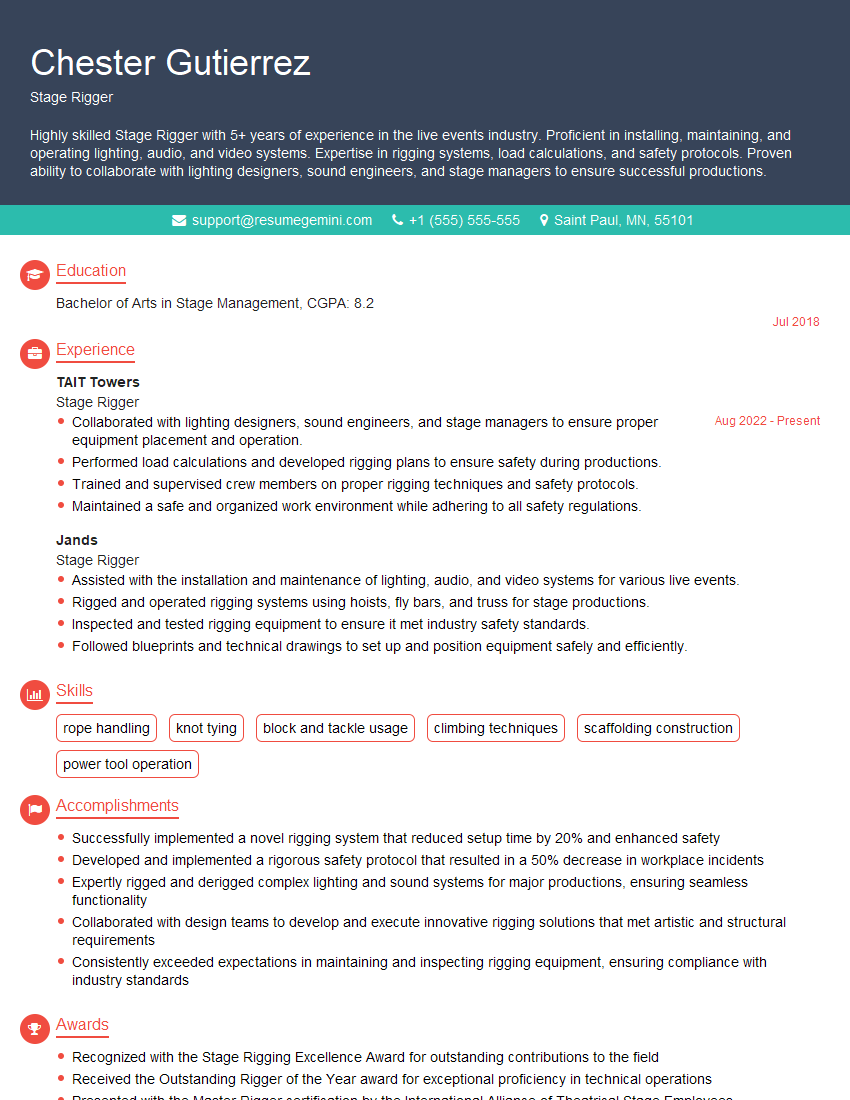
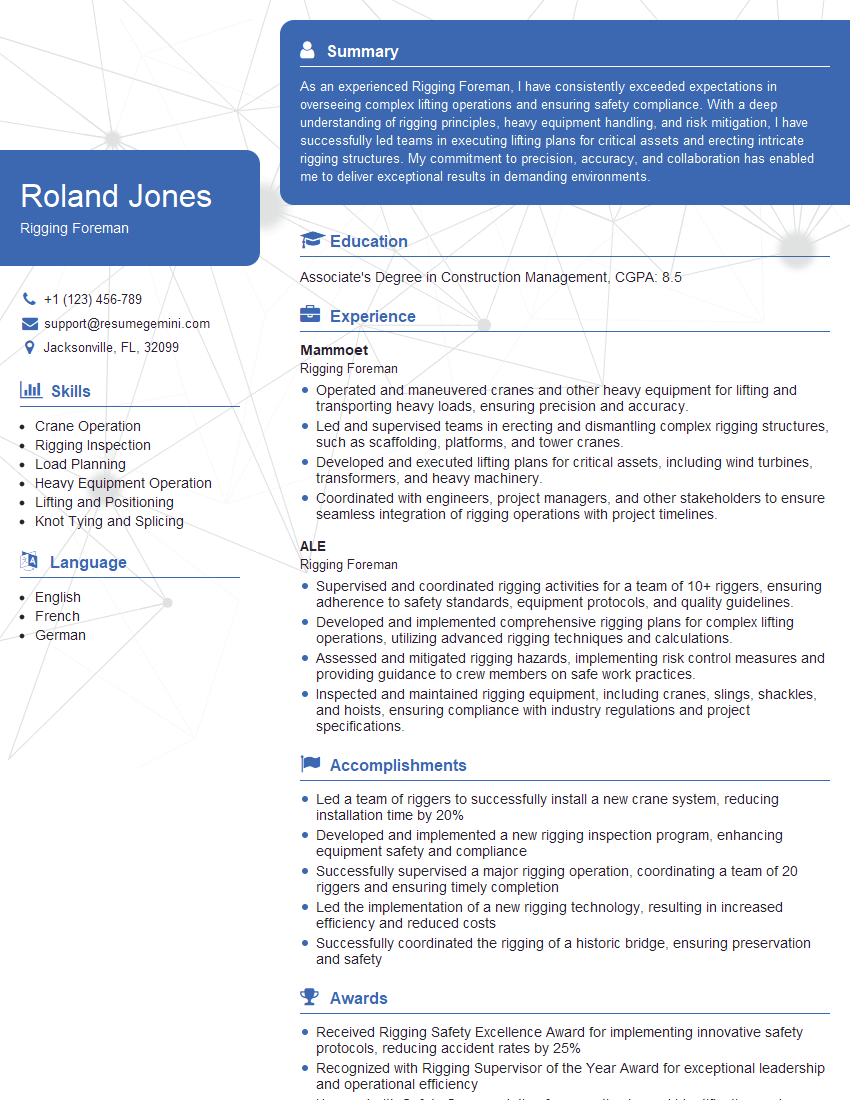
Mastering stunt rigging is a key to unlocking exciting career opportunities and advancing in this dynamic field. A strong resume is your first step towards securing your dream role. Creating an ATS-friendly resume is crucial for maximizing your job prospects. Use ResumeGemini to build a professional and impactful resume that highlights your skills and experience effectively. ResumeGemini provides examples of resumes tailored specifically to the Stunt Rigging industry, giving you a head start in crafting a compelling application.
Explore more articles
Users Rating of Our Blogs
Share Your Experience
We value your feedback! Please rate our content and share your thoughts (optional).
What Readers Say About Our Blog
Very informative content, great job.
good