Preparation is the key to success in any interview. In this post, we’ll explore crucial Subdivision Development interview questions and equip you with strategies to craft impactful answers. Whether you’re a beginner or a pro, these tips will elevate your preparation.
Questions Asked in Subdivision Development Interview
Q 1. Explain the process of obtaining necessary permits for subdivision development.
Obtaining permits for subdivision development is a complex, multi-step process that varies by location but generally involves several key stages. Think of it like assembling a detailed puzzle – each piece (permit) is crucial for the final picture (completed subdivision).
- Preliminary Planning & Application: This initial phase involves conducting a thorough site analysis, preparing preliminary plans, and submitting an application to the relevant planning authority. This might include pre-application meetings to discuss the project’s feasibility and address potential issues early on.
- Zoning and Land Use Permits: These permits ensure the proposed subdivision complies with local zoning regulations concerning density, lot sizes, building setbacks, and allowed land uses. For instance, a residential zone might have restrictions on commercial development.
- Environmental Permits: Depending on the site’s characteristics, permits might be needed to address environmental concerns such as wetland protection, endangered species habitat, or stormwater management. These often require detailed environmental impact assessments.
- Engineering Approvals: Approval of engineering plans is essential, covering aspects like roads, utilities (water, sewer, electricity, gas), drainage, and other infrastructure. These plans must meet all relevant codes and standards.
- Building Permits (for individual lots): Once the subdivision is approved, individual building permits are required for the construction of houses or other structures on the newly created lots.
- Final Approvals and Recordation: After all construction is completed and inspections are passed, final approvals are obtained, and the subdivision plat is recorded with the local registrar of deeds, making it legally recognized.
For example, in one project, we encountered delays in obtaining a stormwater management permit due to unexpectedly high groundwater levels. Addressing this required a revised drainage plan and additional engineering analysis, demonstrating the importance of thorough upfront planning and flexibility in tackling unforeseen challenges.
Q 2. Describe your experience with site analysis and feasibility studies for subdivisions.
Site analysis and feasibility studies are the cornerstone of any successful subdivision project. It’s like examining the foundation of a house before building – you need to understand its strength and stability. My experience involves a systematic approach that incorporates:
- Topographic Surveys and Mapping: This provides detailed information about the land’s elevation, slope, and drainage patterns, crucial for planning roads and utilities.
- Soil Analysis: Understanding soil conditions is essential for determining foundation requirements, drainage solutions, and potential environmental concerns. Poor soil conditions can significantly impact costs and feasibility.
- Environmental Assessments: These assess potential impacts on flora, fauna, and water resources. We often employ environmental consultants to conduct thorough assessments and mitigate any potential risks, ensuring compliance with all regulations.
- Utility Assessments: Assessing the availability and capacity of existing utilities (water, sewer, electricity, gas) is essential. This may involve negotiations with utility companies and planning for extensions or upgrades.
- Market Analysis: Understanding market demand for housing in the area, potential buyer demographics, and pricing strategies is critical for financial feasibility.
- Regulatory Review: This involves reviewing all applicable zoning regulations, building codes, and environmental regulations to determine compliance and potential constraints.
In a recent project, a thorough soil analysis revealed unstable soil conditions in a portion of the site. This necessitated a redesign of the road layout and foundation designs, adding to the project cost, highlighting the importance of comprehensive site analysis in avoiding costly changes later.
Q 3. How do you manage budgets and timelines in subdivision projects?
Budget and timeline management in subdivision development requires a proactive and meticulous approach. It’s a bit like orchestrating a symphony – each instrument (task) needs to play in harmony and in time. We employ several strategies:
- Detailed Budgeting: This involves breaking down the project into individual tasks with associated cost estimates, factoring in contingencies for unforeseen expenses. We use project management software to track costs and identify potential overruns early on.
- Critical Path Method (CPM): This scheduling technique helps identify the sequence of tasks that determine the project’s overall duration, allowing us to focus on critical activities and manage potential delays effectively.
- Regular Monitoring and Reporting: We track progress against the budget and schedule through regular meetings, progress reports, and cost tracking. This enables early identification and mitigation of issues.
- Value Engineering: Exploring alternative designs and construction methods to achieve cost savings without compromising quality is a key aspect. For example, exploring different road paving materials can lead to significant cost reductions.
- Risk Management: Identifying and assessing potential risks (e.g., permitting delays, material cost increases, labor shortages) and developing contingency plans are critical. This minimizes the impact of unexpected events.
For instance, in one project, we proactively identified a potential delay in utility connections. By engaging with the utility company early and developing a contingency plan (e.g., using temporary power), we prevented a significant delay in the overall project timeline.
Q 4. What are the key considerations for infrastructure planning in a new subdivision?
Infrastructure planning in a new subdivision is essential for its long-term viability and livability. It’s like designing the circulatory system of a body – it needs to be efficient and reliable. Key considerations include:
- Road Design: This involves creating a safe and efficient road network, considering traffic flow, emergency access, pedestrian walkways, and bicycle lanes. Local regulations will dictate road standards and design requirements.
- Water and Sewer Systems: Providing adequate water supply and wastewater disposal is crucial. This may involve connecting to existing infrastructure or developing new systems. Careful sizing of pipes and pumps is crucial to avoid future problems.
- Stormwater Management: Efficient management of stormwater runoff is vital to prevent flooding and erosion. This may involve the use of retention ponds, swales, and other measures. Environmental regulations heavily influence these design choices.
- Electricity and Gas Distribution: Reliable power and gas supply are essential. This involves coordination with utility companies to ensure adequate capacity and connections to individual lots.
- Communication Infrastructure: Provision of communication services (internet, cable TV) is increasingly important. This often involves working with telecommunication providers to install necessary infrastructure.
- Public Spaces and Amenities: Incorporating parks, playgrounds, and other public spaces enhances the quality of life within the subdivision. These spaces contribute to property values and attract residents.
In a recent project, we designed a sustainable stormwater management system that incorporated bioswales and rain gardens, reducing runoff and improving water quality. This not only satisfied environmental regulations but also contributed to a more aesthetically pleasing and environmentally friendly community.
Q 5. Explain your understanding of zoning regulations and their impact on subdivision design.
Zoning regulations are the legal rules that govern land use and development. They are like the blueprint for a city, dictating what can be built where. Understanding and complying with these regulations is paramount. Their impact on subdivision design is significant because they influence:
- Lot Sizes and Density: Regulations often specify minimum lot sizes and maximum density (number of units per acre), influencing the number of lots that can be created.
- Building Setbacks: These regulations define the minimum distance between buildings and property lines, affecting building placement and overall layout.
- Building Height and Size: Restrictions on building height and size influence the design of houses and other structures.
- Allowed Land Uses: Zoning regulations specify allowed land uses (residential, commercial, industrial), ensuring compatibility within the community.
- Parking Requirements: Regulations often specify minimum parking requirements for residential and commercial developments.
- Aesthetic Considerations: Some zoning regulations address architectural styles, landscaping, and other aesthetic aspects, ensuring visual harmony within the community.
For example, a project we undertook in a historic district had strict design guidelines concerning building facades and landscaping. We had to adapt our design to meet these regulations, resulting in a subdivision that complemented the character of the neighborhood.
Q 6. How do you handle environmental concerns and regulations during subdivision development?
Environmental concerns and regulations are increasingly important in subdivision development. It’s about being responsible stewards of the environment while building. Our approach involves:
- Environmental Site Assessment (ESA): A thorough ESA identifies potential environmental hazards, such as contaminated soil, wetlands, or endangered species habitat. This is critical for planning and mitigation.
- Wetland Delineation and Protection: Identifying and protecting wetlands is often a key concern. Regulations may prohibit development within wetlands or require mitigation measures.
- Stormwater Management Plans: Plans must demonstrate how stormwater runoff will be managed to prevent pollution and flooding. This often requires measures like retention ponds or infiltration basins.
- Endangered Species Protection: If endangered species are present, mitigation measures must be implemented to avoid habitat destruction. This might involve relocation of species or habitat restoration.
- Erosion and Sediment Control: Measures to prevent erosion and sedimentation during construction are crucial to protect water quality. This often involves the use of silt fences and other erosion control measures.
- Compliance with Environmental Regulations: We must ensure full compliance with all relevant environmental laws and regulations, often obtaining permits from multiple agencies.
In one project, the discovery of a small wetland during the ESA required a redesign of the road system to avoid impacting the wetland. While this added to the project cost, it was essential for environmental compliance and avoiding potential legal issues.
Q 7. Describe your experience with public consultations and stakeholder engagement in subdivision projects.
Public consultations and stakeholder engagement are crucial for successful subdivision development. It’s all about building consensus and fostering community support. Our approach involves:
- Early Public Outreach: We begin engaging the community early in the planning process through public meetings, informational sessions, and online forums.
- Open Communication: We maintain open and transparent communication throughout the project, addressing community concerns and providing updates regularly.
- Seeking Feedback and Input: We actively solicit feedback and input from residents, local businesses, and other stakeholders. This allows us to incorporate their views into the design and planning process.
- Addressing Concerns: We address community concerns proactively, exploring solutions and compromises that balance different interests.
- Collaboration with Local Officials: Close collaboration with local planning officials and other relevant agencies ensures compliance with regulations and fosters a positive working relationship.
- Post-Development Engagement: We continue engaging with the community after development is complete, addressing any lingering issues and fostering a sense of community ownership.
In a recent project, early engagement with residents helped us identify concerns about traffic flow. We modified the road design to address these concerns, resulting in increased community support and a smoother approval process.
Q 8. How do you mitigate risks associated with soil conditions and geological surveys?
Mitigating risks associated with soil conditions and geological surveys is paramount in subdivision development. Ignoring these factors can lead to significant cost overruns, delays, and even structural failures. My approach is multifaceted and begins long before any earth is moved.
Thorough Site Investigation: We commission detailed geotechnical investigations. This involves drilling boreholes to analyze soil composition, bearing capacity, and potential issues like expansive clays or unstable bedrock. The reports generated guide foundation design and inform construction methodologies. For example, if we discover expansive clay, we’ll specify specialized foundations like piers or deep footings to prevent future settling and cracking.
Environmental Assessments: We conduct Phase I and, if necessary, Phase II environmental site assessments to identify potential contamination. This is crucial for regulatory compliance and protecting the health of future residents. Identifying and remediating contamination upfront prevents costly delays and legal challenges later on.
Contingency Planning: Based on the geotechnical and environmental reports, we develop a comprehensive contingency plan. This includes budgeting for unexpected soil conditions, such as potential remediation costs or adjustments to foundation designs. We treat this not as a ‘worst-case scenario’ but as a realistic expectation of potential variances from the ideal conditions.
Expert Consultation: We regularly engage with experienced geotechnical engineers and environmental consultants throughout the process. Their expertise ensures we’re making informed decisions based on the most up-to-date information and best practices.
By proactively addressing potential soil and geological challenges, we significantly reduce project risks and ensure a solid foundation – literally and figuratively – for a successful development.
Q 9. What are your strategies for ensuring the successful marketing and sales of subdivision lots?
Successfully marketing and selling subdivision lots requires a strategic approach that blends effective marketing with a deep understanding of the target market. We don’t just sell land; we sell a lifestyle.
Market Research: We conduct thorough market research to identify our ideal buyer profile. This includes analyzing demographics, income levels, and lifestyle preferences in the area. This informs our marketing message and ensures we’re targeting the right audience.
Strategic Pricing: Pricing is critical. We analyze comparable sales data to determine a competitive yet profitable price point. We consider lot size, location, views, and amenities when setting prices.
Targeted Marketing: We use a multi-channel marketing strategy to reach potential buyers. This includes online advertising, social media campaigns, print advertising in relevant publications, and partnerships with local real estate agents.
Compelling Visuals: High-quality photography, videography, and virtual tours are essential. We showcase the beauty of the land, the amenities, and the overall lifestyle the subdivision offers.
Community Building: We often host events and open houses to create excitement and generate buzz around the subdivision. This allows potential buyers to experience the community firsthand.
Strong Sales Team: We engage a team of experienced real estate professionals who are knowledgeable about the property and are skilled at building relationships with buyers.
For example, in a recent project targeting young families, we focused on marketing the proximity to good schools and parks, emphasizing the sense of community the subdivision would foster. This resonated strongly with our target audience and resulted in a rapid sell-out.
Q 10. Explain your process for selecting contractors and subcontractors for subdivision projects.
Selecting the right contractors and subcontractors is crucial for the success of any subdivision project. Our process is rigorous and focuses on identifying reliable, experienced, and qualified firms.
Pre-qualification: We establish a pre-qualification process that requires potential contractors to submit their safety records, insurance certificates, bonding information, and relevant project experience. This helps eliminate firms that don’t meet our minimum standards.
Bid Evaluation: We solicit bids from pre-qualified contractors, evaluating them based on price, experience, schedule, and safety records. We don’t always choose the lowest bidder; instead, we focus on finding the best value for the price.
Reference Checks: We conduct thorough reference checks, contacting previous clients of the shortlisted contractors to assess their performance and reliability.
Contract Negotiation: We carefully negotiate contracts that clearly define the scope of work, payment schedules, and timelines. We use standard industry contracts with appropriate addendums to address project specifics.
Ongoing Monitoring: We closely monitor contractor performance throughout the project, conducting regular site visits and meetings to ensure that work is progressing as planned and to address any issues that may arise.
This methodical approach ensures we work with contractors who are capable, dependable, and committed to delivering high-quality work that meets our standards and the needs of the project.
Q 11. How do you manage conflicts between different stakeholders in a subdivision project?
Conflict resolution is an inherent aspect of large-scale projects like subdivision development, involving numerous stakeholders with diverse interests. My approach emphasizes proactive communication and collaboration.
Clear Communication Channels: We establish clear and consistent communication channels from the outset. This often involves regular meetings with all stakeholders, including homeowners associations, contractors, engineers, and government agencies.
Early Dispute Resolution: We encourage early identification and resolution of conflicts through open dialogue and negotiation. We aim to address issues before they escalate into major disputes.
Mediation/Arbitration: If negotiations fail, we are prepared to utilize mediation or arbitration services to resolve disputes in a fair and efficient manner. This ensures that disputes are resolved without resorting to expensive and time-consuming litigation.
Collaborative Problem Solving: We foster a collaborative problem-solving approach, where stakeholders work together to find mutually acceptable solutions. We believe that a win-win outcome is best for everyone involved.
Documentation: Meticulous documentation of all communication, agreements, and decisions is essential to prevent misunderstandings and provide a clear record in case of future disputes.
For instance, if a homeowner disagrees with a design element, we facilitate a meeting between the homeowner, the architect, and the relevant contractor to discuss alternative solutions that meet both the homeowner’s needs and the project’s overall objectives.
Q 12. Describe your experience with cost estimation and value engineering in subdivision development.
Accurate cost estimation and value engineering are vital for controlling costs and maximizing return on investment in subdivision development. My experience encompasses both detailed cost estimating and creative value engineering techniques.
Detailed Cost Estimation: We use sophisticated cost-estimating software and methodologies to develop accurate project budgets. This includes detailed breakdowns of labor, materials, equipment, and permits. We use historical data, market prices, and expert input to develop realistic estimates. We also factor in contingency reserves to account for unforeseen events.
Value Engineering: Once the initial cost estimate is complete, we conduct a value engineering exercise to identify areas where costs can be reduced without sacrificing quality or functionality. This might involve exploring alternative materials, construction methods, or design features. For example, we might explore using less expensive but equally effective materials without compromising the structural integrity of the project.
Life Cycle Cost Analysis: We consider not only initial costs but also the long-term costs of ownership. This helps us make informed decisions that minimize ongoing maintenance and utility expenses. For instance, we might consider using energy-efficient appliances and materials to reduce future utility costs for homeowners.
Regular Monitoring and Control: Throughout the project lifecycle, we monitor actual costs against the budget, identifying variances and implementing corrective actions as needed. We hold regular cost review meetings with the project team to make any necessary adjustments.
By carefully managing costs and employing value engineering, we deliver projects that are both financially viable and meet high-quality standards.
Q 13. How do you ensure compliance with building codes and safety regulations during construction?
Ensuring compliance with building codes and safety regulations is non-negotiable. Our commitment to safety and regulatory compliance is deeply ingrained in our process.
Early Engagement with Authorities: We engage with relevant building departments and regulatory agencies early in the design phase to ensure that our plans meet all applicable codes and regulations. We obtain necessary permits and approvals before commencing any construction activities.
Qualified Professionals: We employ qualified engineers, architects, and inspectors who are knowledgeable about local building codes and safety standards. We rely on their expertise to ensure that our designs and construction methods comply with all regulations.
Regular Inspections: We conduct regular site inspections throughout the construction process. These inspections are carried out by both our internal staff and independent inspectors to ensure that work is being performed to the required standards and in compliance with relevant codes.
Safety Training: We provide comprehensive safety training to all contractors and subcontractors. We emphasize the importance of safety and provide the necessary resources and equipment to minimize risks on the jobsite.
Documentation: We meticulously document all aspects of the compliance process, maintaining accurate records of permits, inspections, and safety procedures. This documentation provides a comprehensive audit trail and supports our commitment to regulatory compliance.
Failing to adhere to building codes and safety regulations can result in costly delays, fines, and legal issues. Our proactive approach ensures that our projects are completed safely and in compliance with all relevant regulations.
Q 14. What are your strategies for managing project changes and unforeseen circumstances?
Managing project changes and unforeseen circumstances is an inevitable part of subdivision development. Our approach combines proactive planning with flexible adaptation.
Comprehensive Project Management Plan: We develop a detailed project management plan that outlines the project scope, timeline, budget, and risk mitigation strategies. This plan serves as a roadmap for the project and helps us anticipate potential challenges.
Change Management Process: We establish a formal change management process to evaluate and approve any changes to the original plan. This process involves documenting the proposed change, assessing its impact on the project schedule, budget, and quality, and obtaining the necessary approvals before implementing the change.
Contingency Planning: We develop contingency plans to address potential unforeseen circumstances such as material shortages, inclement weather, or unexpected site conditions. These plans outline the actions we will take to mitigate the impact of these events.
Regular Monitoring and Reporting: We closely monitor project progress and identify any potential deviations from the plan early on. Regular reporting keeps stakeholders informed and allows us to address issues proactively.
Flexible Adaptation: While adhering to the overall project plan, we remain flexible and adaptable to unforeseen circumstances. We are prepared to adjust our plans as needed to ensure that the project is completed successfully.
For example, if unexpected bedrock is encountered during excavation, our contingency plan would activate, engaging with a geotechnical engineer to assess the situation, adjust the foundation design, and secure the necessary permits, all while mitigating delays to the overall project timeline.
Q 15. Explain your experience with quality control and inspection procedures in subdivision projects.
Quality control and inspection in subdivision development are paramount to ensuring the project meets the required standards, satisfies building codes, and protects the investment. My approach involves a multi-layered system, beginning with thorough planning and specification development. This includes defining clear quality standards for each phase – from earthworks and infrastructure to final landscaping.
During construction, I implement regular inspections, leveraging checklists and documented procedures. These inspections cover aspects like grading accuracy, utility installation compliance, and adherence to approved building plans. I utilize digital tools like drone photography and 3D modeling for comprehensive site monitoring. This allows for early detection of issues and facilitates proactive problem-solving. For example, a timely drone inspection might reveal a drainage problem before it escalates into a significant cost overrun. Furthermore, I ensure all subcontractors involved understand and comply with the project’s quality standards. Finally, independent third-party inspections are conducted at key milestones to verify compliance and offer an unbiased perspective. This rigorous system minimizes defects, protects client interests, and promotes overall project success.
Career Expert Tips:
- Ace those interviews! Prepare effectively by reviewing the Top 50 Most Common Interview Questions on ResumeGemini.
- Navigate your job search with confidence! Explore a wide range of Career Tips on ResumeGemini. Learn about common challenges and recommendations to overcome them.
- Craft the perfect resume! Master the Art of Resume Writing with ResumeGemini’s guide. Showcase your unique qualifications and achievements effectively.
- Don’t miss out on holiday savings! Build your dream resume with ResumeGemini’s ATS optimized templates.
Q 16. How do you measure the success of a subdivision development project?
Measuring the success of a subdivision development project goes beyond simply completing it on time and within budget. True success encompasses multiple dimensions:
- Financial Performance: This includes achieving the projected return on investment (ROI) and selling units at or above market value. A successful project will demonstrate strong financial health throughout and after completion.
- Client Satisfaction: Happy homeowners and satisfied clients are crucial indicators of success. We achieve this through effective communication, addressing concerns promptly, and ensuring the final product meets or exceeds their expectations.
- Community Impact: A successful subdivision positively contributes to the surrounding community. This includes creating a desirable living environment, maintaining property values, and adhering to local planning and zoning regulations.
- Environmental Sustainability: Increasingly, successful developments incorporate environmentally friendly practices, such as water conservation measures, energy-efficient designs, and preserving green spaces.
- Legal and Regulatory Compliance: Strict adherence to all applicable laws and regulations throughout the project lifecycle is paramount for long-term success and avoids costly legal battles.
By analyzing these metrics, we obtain a holistic view of the project’s overall success and identify areas for improvement in future undertakings.
Q 17. What software and tools are you proficient in using for subdivision planning and design?
I am proficient in various software and tools integral to subdivision planning and design. My expertise encompasses:
- AutoCAD: For precise drafting, design development, and creating detailed site plans.
- Civil 3D: For advanced 3D modeling, surface analysis, and infrastructure design, including roadways, utilities, and drainage systems.
- GIS Software (ArcGIS): To analyze geographic data, assess site suitability, and integrate the subdivision into the broader context of the surrounding area.
- Project Management Software (MS Project, Primavera P6): For scheduling, budgeting, resource allocation, and tracking progress.
- Rendering and Visualization Software (SketchUp, Lumion): To create compelling visuals that aid client communication and marketing efforts.
Beyond these software applications, I have experience using surveying equipment (Total Stations, GPS), construction management software, and various analytical tools for cost estimation and risk assessment.
Q 18. Describe your experience with preparing and presenting project reports to clients and stakeholders.
Preparing and presenting project reports is a crucial aspect of my role. I strive to provide clear, concise, and visually appealing reports that are easily understandable by clients and stakeholders, regardless of their technical background. My approach involves:
- Regular Progress Reports: These reports provide updates on schedule, budget, and key milestones achieved. They often include photographs and charts illustrating progress visually.
- Milestone Reports: More detailed reports summarizing achievements at significant project phases (e.g., completion of infrastructure, obtaining permits). These reports may include technical details, addressing any issues encountered.
- Financial Reports: Detailed reports outlining project costs, revenue projections, and overall financial performance. These often include variance analysis to explain deviations from the budget.
- Final Reports: Comprehensive documentation summarizing the entire project, highlighting successes, lessons learned, and recommendations for future projects.
My presentation style is interactive and focuses on clear communication, using visuals and data to illustrate key points. I tailor my communication to the audience, ensuring the report’s complexity matches their understanding of the project. I also welcome feedback and questions to foster open communication and build trust.
Q 19. How do you handle project delays and cost overruns?
Project delays and cost overruns are inevitable challenges in large-scale developments. My strategy for mitigating these involves proactive risk management and a collaborative problem-solving approach.
Proactive Measures: Detailed planning, including contingency plans for potential disruptions, is key. This includes robust scheduling, thorough cost estimations, and risk assessment. Regular monitoring and early identification of potential issues are essential.
Reactive Measures: When delays or overruns occur, I initiate a thorough investigation to identify root causes. This may involve meetings with subcontractors, reviewing plans, and analyzing the impact on the overall schedule and budget. I then work collaboratively with the client, stakeholders, and the project team to develop and implement solutions, which might include adjusting the schedule, optimizing resources, or negotiating with subcontractors. Open communication is vital in maintaining transparency and preserving stakeholder trust during challenging times. For example, if unexpected soil conditions cause delays, we’d promptly inform the client, analyze the impact, and present revised timelines and budgets. Transparent communication throughout the process helps mitigate negative consequences.
Q 20. What are your strategies for maintaining positive relationships with local government agencies?
Maintaining positive relationships with local government agencies is critical for smooth project execution. My strategy revolves around:
- Proactive Communication: Regular communication with relevant agencies is crucial from the initial planning stages. This ensures early identification and resolution of potential regulatory concerns.
- Compliance and Transparency: Strict adherence to all local regulations and permitting requirements is paramount. Maintaining transparency in our project plans and progress ensures a high level of trust.
- Collaboration and Engagement: Active participation in community meetings and open dialogue with government officials creates an environment of mutual understanding and cooperation.
- Building Relationships: Developing strong professional relationships with key individuals within local government fosters a collaborative environment and helps resolve issues quickly and efficiently. This often involves building long-term, positive associations, even extending beyond a single project.
By demonstrating a commitment to collaboration and adherence to regulations, we ensure a positive and productive working relationship with local government agencies, ultimately facilitating a more efficient and successful project outcome.
Q 21. Explain your understanding of sustainable development principles and their application in subdivision design.
Sustainable development principles are integral to my approach to subdivision design. It’s about creating communities that minimize environmental impact while ensuring the long-term well-being of residents. This involves:
- Energy Efficiency: Incorporating energy-efficient building designs, utilizing renewable energy sources (solar panels), and promoting the use of energy-efficient appliances.
- Water Conservation: Implementing water-wise landscaping, utilizing efficient irrigation systems, and incorporating rainwater harvesting techniques.
- Waste Management: Implementing effective waste management strategies during construction and promoting recycling programs within the community.
- Preservation of Green Spaces: Protecting existing natural habitats, incorporating green infrastructure (parks, greenways), and minimizing the development’s impact on natural ecosystems.
- Sustainable Materials: Utilizing environmentally friendly building materials with low embodied carbon and sourcing materials locally to reduce transportation emissions.
By incorporating these principles, we create more environmentally responsible subdivisions that are not only attractive and functional but also contribute to a healthier and more sustainable future. For instance, selecting native plant species for landscaping reduces water consumption and supports local biodiversity, making the development more environmentally friendly.
Q 22. How do you incorporate community feedback into the subdivision design process?
Incorporating community feedback is crucial for creating a successful and desirable subdivision. It’s not just about ticking a box; it’s about building a community that residents truly love. We employ a multi-pronged approach. This starts with early and frequent public consultations – town hall meetings, online surveys, and focus groups – to gather input on everything from desired amenities (parks, playgrounds, community centers) to architectural styles and traffic flow. We then analyze this feedback, prioritizing recurring themes and concerns. For example, if consistent feedback highlights a need for more green spaces, we adjust the design to incorporate larger parks or green corridors. We also actively seek feedback from local stakeholders, like environmental groups and neighborhood associations, to address any potential impacts on the surrounding area. This collaborative process not only leads to a more appealing subdivision, but also fosters a strong sense of ownership and buy-in from future residents.
For instance, in a recent project, community feedback highlighted a strong preference for a walkable neighborhood with interconnected pathways and proximity to local shops. We incorporated this by designing a network of pedestrian-friendly streets and strategically placing commercial areas within easy walking distance of residential areas.
Q 23. Describe your experience with the different phases of subdivision development from conceptual design to final completion.
My experience spans all phases of subdivision development, from initial concept to final handover. It’s a complex, multi-stage process that requires meticulous planning and execution. The conceptual design phase involves site analysis, market research, and the creation of preliminary plans. This is where we determine the overall layout, density, and mix of housing types. The next phase involves detailed design, where we refine the plans, addressing engineering, environmental, and regulatory requirements. This includes things like utility planning, road design, and stormwater management. The permitting phase is critical, involving numerous applications and approvals from various agencies. Construction is a major undertaking, requiring close supervision and coordination with contractors. Finally, the final completion phase involves landscaping, inspections, and the handover of completed lots or homes to buyers or owners associations.
For example, in one project, we faced challenges with a complex site that included a steep slope. During the detailed design phase, we implemented innovative solutions, such as retaining walls and terraced lots, to not only overcome the terrain challenges but also enhance the aesthetic appeal of the subdivision.
Q 24. What is your approach to managing the environmental impact of a subdivision project?
Minimizing environmental impact is paramount. We adopt a proactive approach from day one, integrating sustainable practices throughout the entire development process. This starts with a thorough environmental impact assessment, identifying potential risks and devising mitigation strategies. We explore ways to conserve natural resources, such as using low-impact development techniques to manage stormwater runoff and preserving existing trees whenever possible. We also prioritize the use of sustainable building materials and energy-efficient designs. For example, we might incorporate permeable pavements to reduce stormwater runoff, install green roofs to improve insulation and reduce the urban heat island effect, and plant native vegetation to support local ecosystems.
In a recent project, we partnered with an environmental consultant to develop a comprehensive plan for habitat preservation and restoration, which resulted in the protection of a significant wetland area and the creation of new wildlife corridors.
Q 25. How do you ensure the long-term viability and sustainability of a subdivision community?
Ensuring long-term viability and sustainability goes beyond just building houses; it’s about creating a thriving community. We focus on several key strategies. Firstly, we promote community engagement by establishing homeowner associations or similar structures that facilitate ongoing maintenance and community events. Secondly, we design resilient infrastructure, ensuring that utilities and roadways are built to withstand future challenges. Thirdly, we incorporate sustainable design principles in both the housing and common areas, minimizing environmental impacts and promoting energy efficiency. Lastly, we focus on creating diverse and flexible housing options to adapt to changing demographic trends and needs.
For example, we designed a subdivision with a community garden, shared workspace, and recreational facilities to foster a sense of community and provide amenities that enhance residents’ quality of life and encourage long-term engagement.
Q 26. What are some common challenges faced in subdivision development and how have you overcome them?
Subdivision development presents various challenges. Permitting delays are a common hurdle; navigating complex regulations and securing approvals can be time-consuming. Unexpected site conditions, such as unstable soil or the discovery of historical artifacts, can also cause significant disruptions and cost overruns. Managing budgets and timelines effectively is crucial. We tackle these challenges through proactive planning, thorough due diligence, and strong communication with all stakeholders. For instance, we engage with regulatory agencies early in the process to address potential concerns, and we build contingency plans to handle unforeseen site conditions. We use project management software to monitor progress, manage resources, and ensure timely completion.
In one project, we faced unexpected delays due to a lengthy permitting process. We responded by proactively engaging with regulatory agencies, providing detailed information, and clarifying any outstanding questions to streamline the approval process.
Q 27. Describe your experience working with different types of land and terrain in subdivision development.
I have extensive experience working with diverse land and terrain types. From flat, easily developable land to challenging sites with steep slopes, wetlands, or rocky outcrops, each presents unique opportunities and challenges. My approach involves a detailed site analysis to understand the existing conditions and identify potential constraints. We then tailor the design to the specific characteristics of the site, using innovative engineering solutions to overcome challenges and leverage opportunities. For example, on a site with a steep slope, we might incorporate terraced lots to create buildable areas while minimizing earthwork and preserving the natural topography. In areas with wetlands, we prioritize preservation and incorporate sustainable stormwater management strategies to protect these valuable ecosystems.
In one project, a significant portion of the site was prone to flooding. We employed a combination of natural and engineered solutions, including bioswales and detention ponds, to manage stormwater effectively and create a safe and resilient community.
Q 28. How do you utilize data analytics and market research to inform subdivision planning decisions?
Data analytics and market research are indispensable in informing subdivision planning decisions. We utilize various data sources, including demographic data, housing market trends, and consumer preferences, to gain a comprehensive understanding of the target market and the demand for housing in the area. This information helps us determine the optimal housing mix, pricing strategies, and amenities to attract potential buyers. We use sophisticated analytical tools to model different scenarios and assess the financial feasibility of the project. For example, we might analyze demographic data to understand the age distribution, income levels, and household sizes of the population in the area, enabling us to design a subdivision that caters specifically to the needs and preferences of the target market.
In a recent project, market research revealed a high demand for energy-efficient homes. We responded by incorporating sustainable design features into the project, which not only appealed to environmentally conscious buyers but also reduced operating costs for residents.
Key Topics to Learn for Subdivision Development Interview
- Land Acquisition and Due Diligence: Understanding the process of identifying, evaluating, and acquiring suitable land parcels for subdivision development, including legal and environmental considerations.
- Site Planning and Design: Applying principles of urban planning and design to create efficient and attractive residential layouts, considering factors like lot sizes, street design, and open spaces. This includes practical application of zoning regulations and building codes.
- Infrastructure Development: Knowledge of the planning, design, and construction of essential infrastructure elements such as roads, utilities (water, sewer, electricity, gas), and stormwater management systems.
- Financial Analysis and Budgeting: Developing realistic project budgets, assessing financial feasibility, and understanding sources of funding for subdivision development projects. This includes understanding Return on Investment (ROI) and risk assessment.
- Permitting and Regulatory Compliance: Navigating the complex process of obtaining necessary permits and approvals from local, regional, and state authorities, ensuring compliance with all relevant regulations.
- Marketing and Sales Strategies: Understanding the process of marketing and selling residential lots to potential homebuyers, including market analysis and pricing strategies.
- Project Management and Risk Mitigation: Managing all aspects of the subdivision development process, from initial planning to final completion, and effectively mitigating potential risks and challenges.
- Environmental Impact Assessment and Mitigation: Understanding environmental regulations and conducting assessments to minimize the project’s environmental footprint. This includes practical applications of sustainable building practices.
- Contract Negotiation and Management: Negotiating and managing contracts with various stakeholders, including land sellers, contractors, and utility companies.
Next Steps
Mastering Subdivision Development opens doors to exciting career opportunities and significant professional growth within the real estate and construction industries. A strong understanding of these key areas will significantly enhance your interview performance and showcase your expertise. To maximize your job prospects, create an ATS-friendly resume that highlights your skills and experience effectively. ResumeGemini is a trusted resource that can help you build a professional resume tailored to the specific requirements of Subdivision Development roles. Examples of resumes tailored to this field are available to guide you.
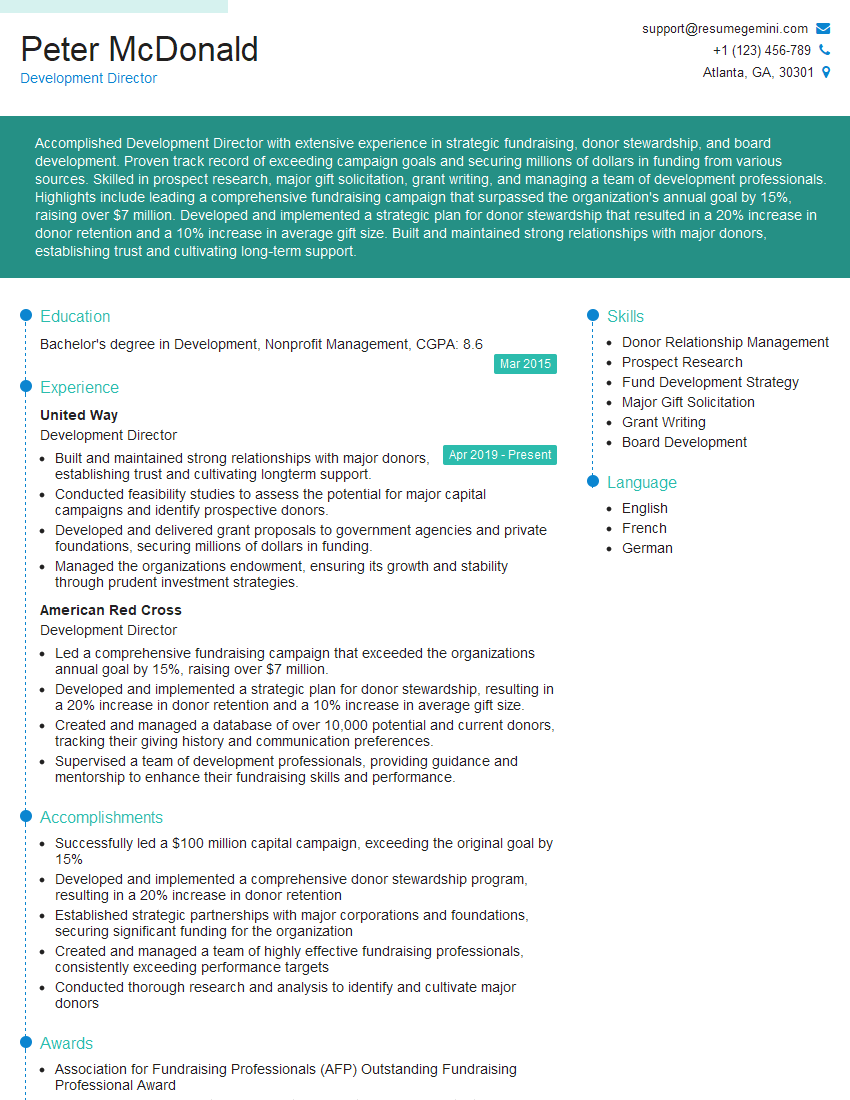
Development Director Resume Sample
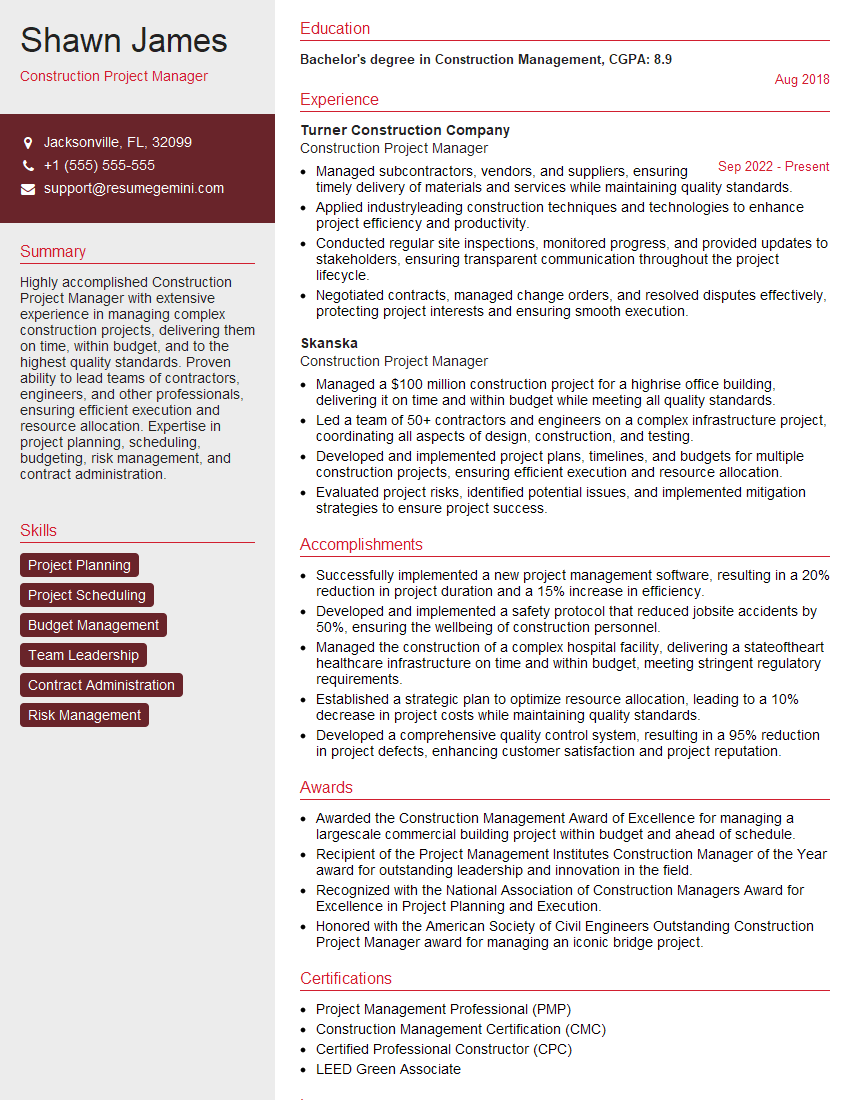
Construction Project Manager Resume Sample

Construction Superintendent Resume Sample
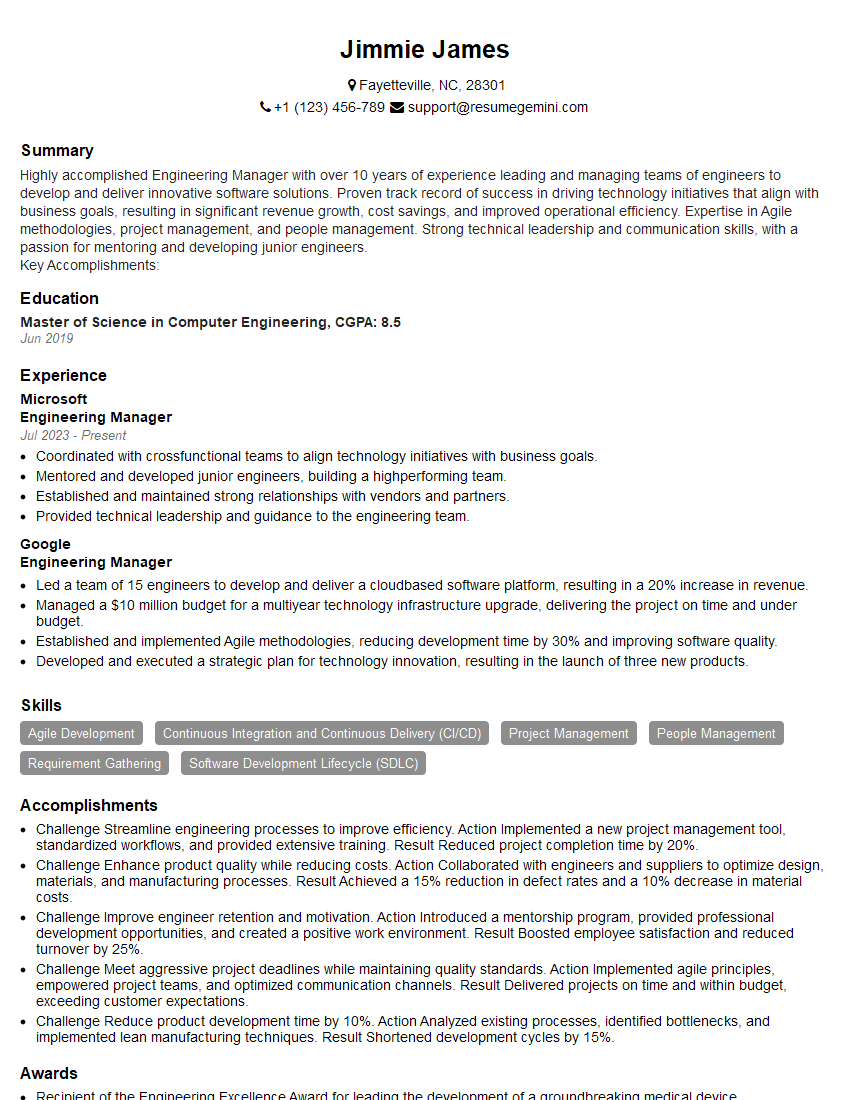
Engineering Manager Resume Sample
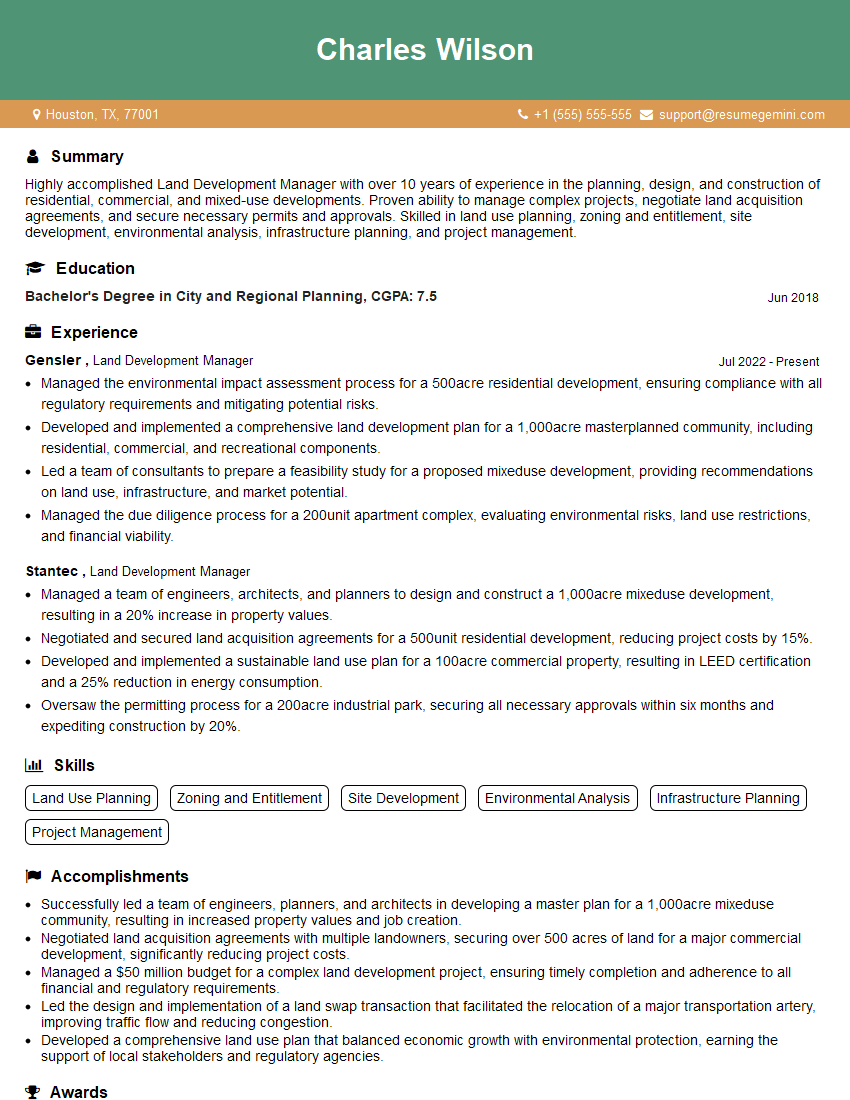
Land Development Manager Resume Sample
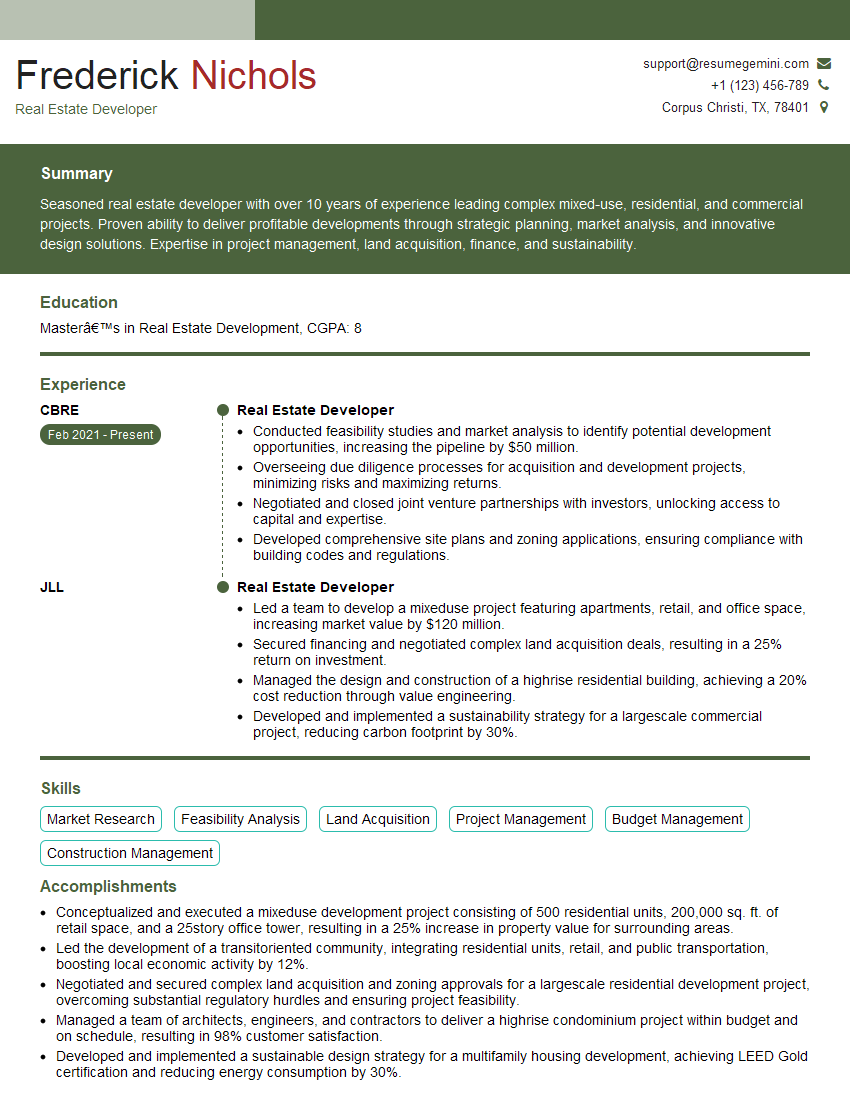
Real Estate Developer Resume Sample
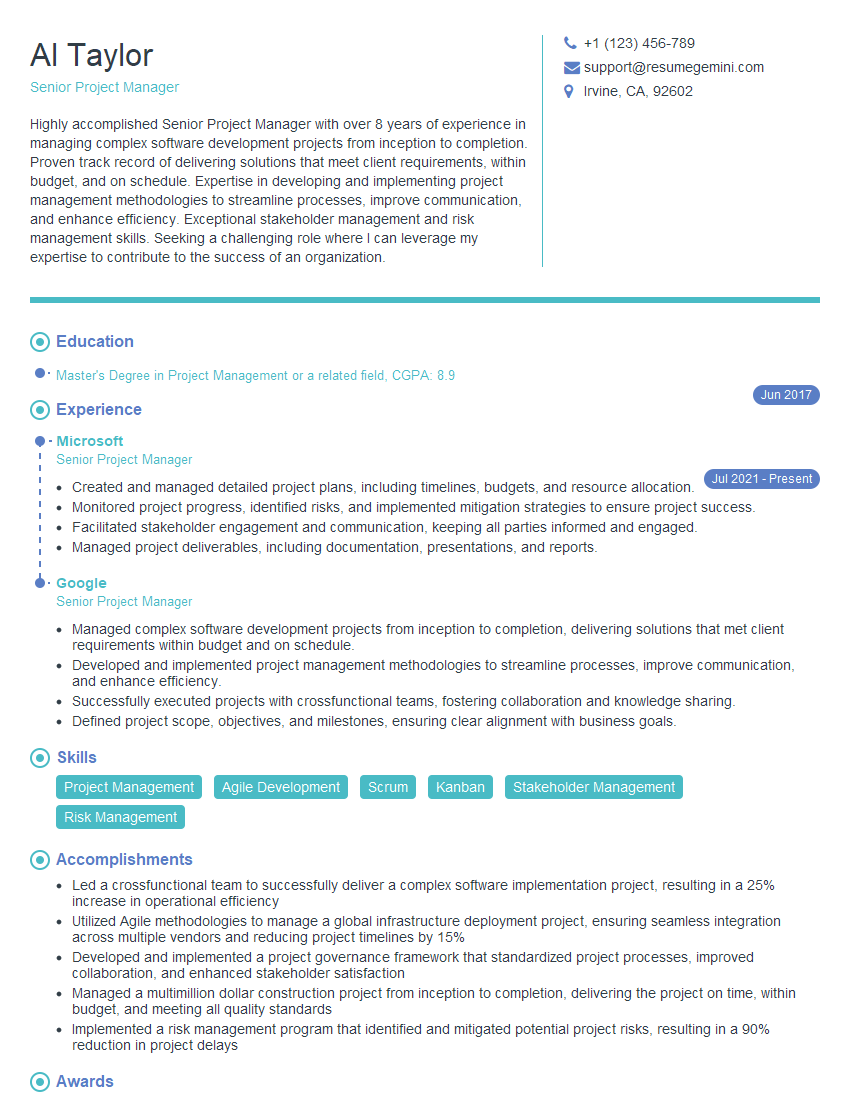
Senior Project Manager Resume Sample
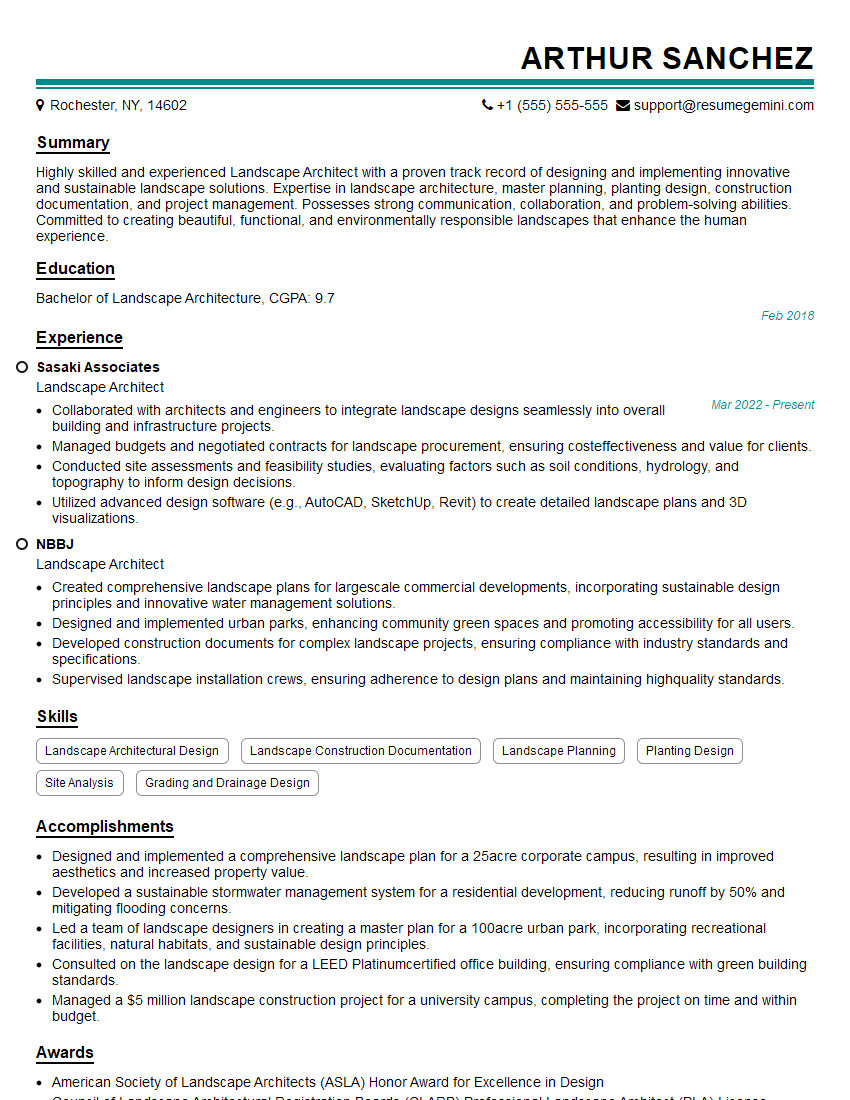
Landscape Architect Resume Sample
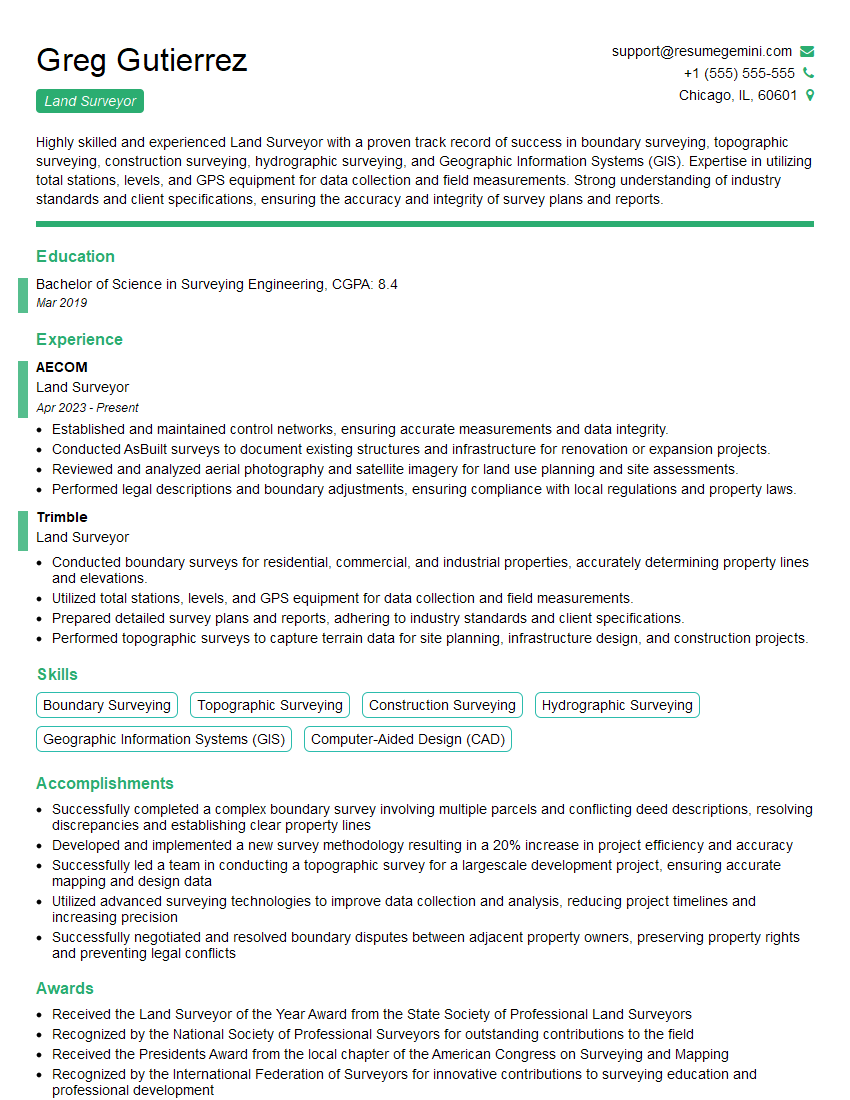
Land Surveyor Resume Sample

Planning Manager Resume Sample
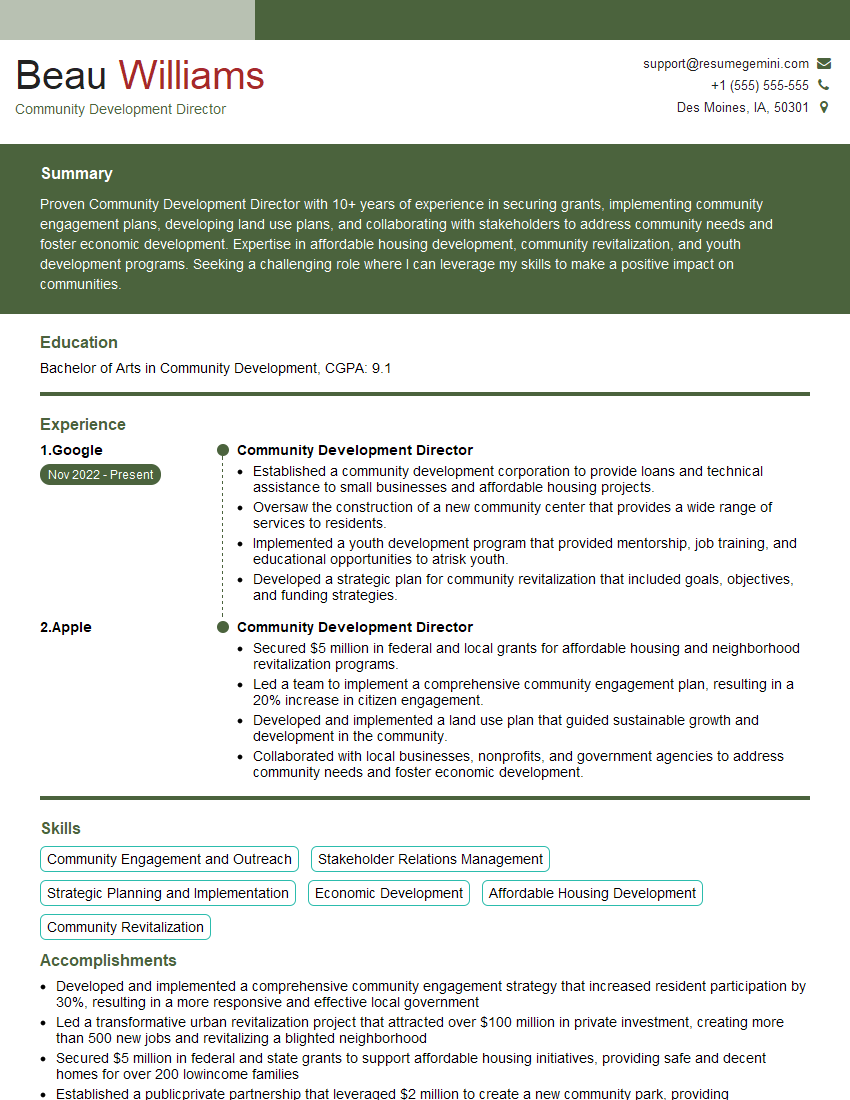
Community Development Director Resume Sample
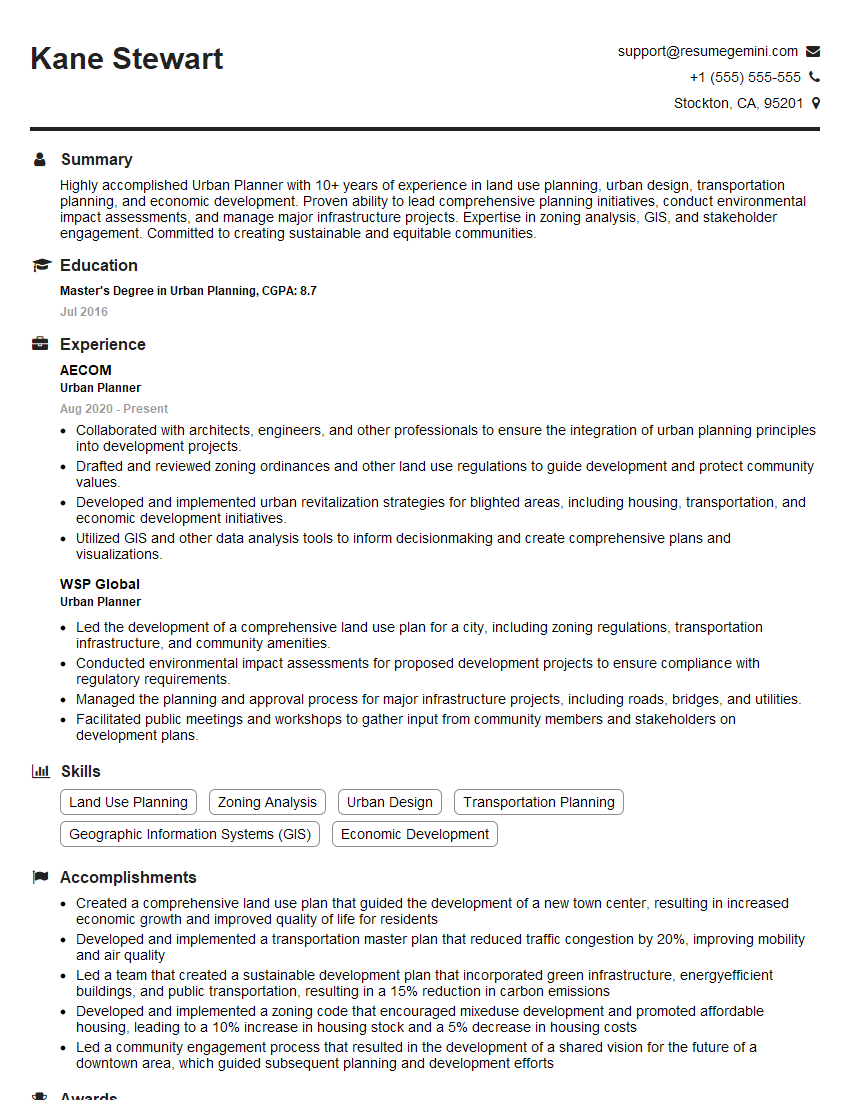
Urban Planner Resume Sample
Explore more articles
Users Rating of Our Blogs
Share Your Experience
We value your feedback! Please rate our content and share your thoughts (optional).
What Readers Say About Our Blog
Very informative content, great job.
good