Are you ready to stand out in your next interview? Understanding and preparing for Surveillance and Tracking Techniques interview questions is a game-changer. In this blog, we’ve compiled key questions and expert advice to help you showcase your skills with confidence and precision. Let’s get started on your journey to acing the interview.
Questions Asked in Surveillance and Tracking Techniques Interview
Q 1. Explain the difference between active and passive surveillance.
Active and passive surveillance differ fundamentally in how they gather information. Active surveillance involves directly interacting with the subject or their environment to obtain data. Think of it like asking someone a question directly – you’re actively seeking a response. Passive surveillance, on the other hand, observes the subject without direct interaction, like watching someone from a distance without them knowing. It’s akin to observing wildlife from a hidden observation point.
- Active Surveillance: Examples include using radar to track a vehicle’s location, deploying undercover agents, or using radio frequency identification (RFID) tags to track assets. This approach is often more intrusive but can yield more specific, real-time information.
- Passive Surveillance: Examples include using CCTV cameras to monitor activity in a public space, analyzing social media posts for information, or collecting publicly available data like flight manifests. This method is generally less intrusive but might require more time and analysis to extract meaningful intelligence.
The choice between active and passive surveillance depends heavily on the context, legal constraints, and the nature of the information sought. In sensitive situations, passive methods are generally preferred to minimize risks of compromise or legal ramifications.
Q 2. Describe your experience with various surveillance technologies (CCTV, GPS, etc.).
My experience spans a wide range of surveillance technologies. I’ve extensively worked with CCTV systems, from designing network architectures for large-scale deployments to analyzing footage for investigative purposes. This includes experience with both analog and IP-based cameras, incorporating analytics such as facial recognition and object detection. I’m also proficient in GPS tracking technologies, including real-time location tracking, historical route reconstruction, and geofencing – creating virtual boundaries that trigger alerts when crossed. Furthermore, I’ve worked with other technologies, such as audio surveillance, utilizing acoustic sensors and analyzing sound patterns, and more recently with drone-based surveillance, understanding their limitations and effective deployment strategies.
For instance, during a project investigating supply chain theft, we combined CCTV footage with GPS data from delivery trucks to pinpoint the exact location and timing of the theft, leading to a successful recovery of stolen goods. This highlights the power of integrating multiple technologies for a comprehensive solution.
Q 3. How do you ensure compliance with legal and ethical regulations in surveillance operations?
Compliance with legal and ethical regulations is paramount in surveillance operations. My approach is rooted in a strong understanding of relevant laws – including privacy acts, data protection regulations, and local ordinances – coupled with a strict adherence to ethical guidelines. Before undertaking any surveillance activity, I thoroughly assess its legality and ethical implications. This includes obtaining necessary warrants or consents, implementing data minimization strategies, and ensuring data security to protect sensitive information.
- Data Minimization: We only collect data that is strictly necessary and relevant to the investigation, avoiding excessive or unnecessary data collection.
- Data Security: Strict protocols are in place to protect surveillance data from unauthorized access, loss, or modification. This includes encryption, access controls, and regular security audits.
- Transparency and Accountability: All surveillance activities are documented, including the rationale, methods used, and data retention policies. This ensures transparency and accountability.
Regular training on relevant legislation and ethical considerations is vital for all team members involved in surveillance operations. We use a risk-based approach to assess potential risks and implement appropriate safeguards. For instance, using anonymization techniques when publicly disseminating data from surveillance.
Q 4. What are the limitations of GPS tracking?
While GPS tracking is a powerful tool, it does have limitations. The accuracy of GPS signals can be affected by several factors:
- Signal Obstruction: Tall buildings, dense foliage, or even weather conditions can weaken or block GPS signals, leading to inaccurate location data or complete signal loss.
- Multipath Errors: Signals can bounce off surfaces before reaching the receiver, resulting in inaccurate position readings.
- Atmospheric Conditions: Ionospheric disturbances can introduce errors in GPS measurements.
- Spoofing and Jamming: Malicious actors can deliberately interfere with GPS signals by spoofing (sending false signals) or jamming (blocking signals), rendering the system ineffective.
- Indoor Limitations: GPS signals generally don’t penetrate buildings effectively, limiting its usefulness in indoor environments. Alternative technologies like Wi-Fi positioning or Bluetooth beacons are often needed.
Understanding these limitations is crucial for accurate interpretation of GPS data. In practical applications, we often use multiple positioning technologies or triangulation methods to compensate for these limitations and improve overall accuracy and reliability.
Q 5. Explain your understanding of OSINT (Open-Source Intelligence) gathering.
OSINT, or Open-Source Intelligence, refers to the collection and analysis of publicly available information to support intelligence gathering. It encompasses a wide range of sources, including social media platforms, news articles, government websites, academic publications, and commercial databases. My experience in OSINT involves identifying relevant information from these diverse sources, verifying its authenticity, and then integrating it with other intelligence to create a comprehensive picture. This often requires sophisticated techniques to filter noise, identify patterns, and draw inferences from seemingly disparate pieces of information.
For example, I once used OSINT to investigate the activities of an online fraud ring. By analyzing social media profiles, forum posts, and online marketplaces, we were able to identify key members of the group, their methods, and their targets.
Effective OSINT gathering requires a combination of technical skills (like web scraping and data mining) and analytical abilities to interpret and contextualize the gathered data. The key is to be systematic, organized, and aware of the potential for misinformation or bias within open sources.
Q 6. How would you handle a situation where surveillance equipment malfunctions?
Equipment malfunction in surveillance operations necessitates a swift and systematic response. My approach involves these steps:
- Identify and Assess the Malfunction: The first step is to pinpoint the problem – is it a camera failure, a network outage, or a software glitch? The severity and impact of the malfunction need to be assessed.
- Implement Contingency Plans: We always have backup systems and procedures in place to minimize disruption. This might involve switching to a redundant camera system, using alternative data sources, or deploying temporary solutions.
- Conduct Troubleshooting and Repairs: Depending on the nature of the problem, troubleshooting may involve software updates, hardware replacements, or calling in technical support. Timely repairs are crucial to minimize data loss and operational downtime.
- Document the Incident: A detailed record of the malfunction, troubleshooting steps, and corrective actions taken is maintained for future reference and improvement of our systems.
- Review and Improve Procedures: After resolving the issue, a thorough review is undertaken to identify potential weaknesses in the system and implement measures to prevent similar incidents in the future.
A well-maintained system and robust contingency planning significantly mitigate the impact of equipment malfunctions. The goal is to minimize downtime and ensure the continued effectiveness of the surveillance operation.
Q 7. Describe your experience with data analysis and interpretation from surveillance data.
Data analysis and interpretation from surveillance data is a crucial part of my work. It involves extracting meaningful insights from large volumes of data collected through various methods. This process typically involves several stages:
- Data Cleaning and Preprocessing: This crucial initial step involves removing noise, correcting errors, and transforming data into a suitable format for analysis.
- Data Exploration and Visualization: We use various techniques to visualize the data and identify patterns or anomalies. This might involve creating timelines, maps, or using statistical tools.
- Pattern Recognition and Anomaly Detection: Identifying unusual activities or deviations from established patterns is essential. This often involves employing machine learning algorithms or statistical modeling.
- Correlation Analysis: Establishing connections between different data points is critical. For example, linking CCTV footage with GPS data to reconstruct events.
- Report Generation and Presentation: The findings of the analysis are presented in clear and concise reports, often incorporating visual aids to enhance understanding.
For instance, in one case, by analyzing CCTV footage and correlating it with timing data from access control systems, we were able to identify a pattern of unauthorized entry into a secure facility, leading to the apprehension of the perpetrator.
The ability to analyze surveillance data effectively requires a strong understanding of statistical methods, data visualization techniques, and potentially programming skills to work with large datasets and implement custom analysis tools.
Q 8. How do you prioritize different surveillance targets or objectives?
Prioritizing surveillance targets and objectives requires a structured approach, balancing the potential threat level against available resources. I typically employ a risk assessment matrix, considering factors like the target’s potential for harm, their current activity level, and the feasibility of surveillance. For instance, a target suspected of imminent violence would naturally take precedence over someone suspected of a less urgent crime. The matrix weighs these factors to assign a priority score to each target. This allows me to allocate resources effectively, ensuring that high-priority targets receive the necessary attention and personnel while lower-priority targets are monitored with less intensive methods.
- Threat Level: This assesses the potential harm the target could inflict. A high-threat target might be someone with a history of violence or access to weapons.
- Activity Level: This considers how actively the target is pursuing their objectives. A target actively planning a crime requires more immediate attention than a target who is inactive.
- Feasibility: This evaluates the practical challenges of surveillance. A target who is highly mobile and well-protected would be more difficult to surveil than one who is less cautious.
This system allows for dynamic adjustments based on new information, allowing for optimal use of resources and ensuring that the most pressing security concerns are addressed first.
Q 9. What are the key elements of a successful surveillance plan?
A successful surveillance plan hinges on several key elements. It starts with a clear definition of objectives – what information are we trying to obtain, and what actions will validate our suspicions? Then, we need comprehensive target profiling, understanding their routines, associates, and technological capabilities. Next comes the selection of appropriate surveillance techniques; this will depend on the target, location, and legal constraints. Consideration must be given to the equipment needed, the personnel assigned (their skill sets and training), and contingency plans for unexpected events, such as counter-surveillance or changes in target behavior. Finally, rigorous data management is vital for evidence preservation and reporting, while adherence to ethical and legal guidelines is paramount.
- Clear Objectives: What specific information is needed?
- Target Profiling: Understanding the target’s habits and associates.
- Technique Selection: Choosing appropriate methods based on the situation.
- Resource Allocation: Equipment, personnel, and contingency planning.
- Data Management: Secure storage, handling, and reporting of evidence.
- Legal and Ethical Compliance: Adherence to all relevant laws and regulations.
Q 10. Explain your experience with different types of surveillance cameras and their capabilities.
My experience encompasses a wide array of surveillance cameras, each with unique strengths and weaknesses. I’ve worked extensively with analog CCTV systems, which provide a reliable and cost-effective solution for basic surveillance but have limitations in resolution and remote access capabilities. More recently, I’ve become proficient with IP cameras, which offer high-definition video, remote viewing, and integration with advanced analytics such as facial recognition and license plate readers. I’ve also utilized thermal imaging cameras, especially effective in low-light conditions or for detecting concealed objects or individuals. PTZ (Pan-Tilt-Zoom) cameras provide remote control over camera direction and zoom, offering great flexibility, while body-worn cameras provide a first-person perspective useful in specific investigations. The selection of camera type is always dictated by the specific needs of the surveillance operation and available budget.
For example, in a high-security facility, a network of IP cameras with advanced analytics would be preferred. Conversely, in a residential setting, a simpler analog system might suffice. Understanding these nuances is crucial for successful surveillance operations.
Q 11. How do you maintain the confidentiality and integrity of surveillance data?
Maintaining confidentiality and integrity of surveillance data is paramount. This involves implementing robust security measures at every stage, from data acquisition to storage and retrieval. Firstly, access to surveillance systems is strictly controlled with role-based permissions. Encryption of data both during transmission and storage is essential. Data is typically stored on secure servers with redundant backups to prevent data loss. Regular system audits and penetration testing help identify vulnerabilities. Furthermore, adherence to data privacy regulations is crucial, ensuring that data is only accessed and used for legitimate purposes and that individual rights are respected. This involves implementing strict protocols for data retention and disposal, ensuring data is securely deleted after its operational lifespan.
For instance, using strong passwords, employing encryption protocols like AES-256, and following strict access control lists are all key components of maintaining data integrity and confidentiality.
Q 12. Describe your experience with network surveillance techniques.
Network surveillance techniques are essential in today’s interconnected world. My experience includes utilizing network monitoring tools to identify suspicious activity on a network, such as unauthorized access attempts or data exfiltration. This involves analyzing network traffic patterns, identifying anomalies, and correlating events to build a comprehensive picture of network activity. I’m proficient in using tools like intrusion detection systems (IDS) and intrusion prevention systems (IPS) to detect and mitigate threats. Furthermore, I understand the principles of network forensics, allowing me to extract and analyze data from network devices to reconstruct events and identify perpetrators. Packet analysis allows for detailed examination of individual network packets, helping to identify malicious activity or compromised devices.
A specific example involves using network flow analysis to detect unusual amounts of data transferred to an external IP address which could signify data exfiltration.
Q 13. What are the challenges of using social media data for surveillance?
Using social media data for surveillance presents several challenges. The sheer volume of data is overwhelming, requiring sophisticated tools and techniques for analysis. Data veracity is a significant concern – information on social media can be easily fabricated or manipulated. Context is often missing, making it difficult to accurately interpret information. Privacy concerns are paramount, necessitating careful consideration of legal and ethical boundaries. Finally, social media platforms constantly evolve, requiring continuous adaptation of surveillance techniques. For example, a subject might use a VPN or anonymizing tools to obscure their online activity, making traditional tracking methods ineffective.
Overcoming these challenges necessitates employing sophisticated data analytics techniques, employing fact-checking methodologies, and respecting legal and ethical constraints.
Q 14. How do you handle real-time surveillance situations?
Real-time surveillance demands rapid decision-making and adaptability. I approach such situations with a structured methodology: First, a clear understanding of the immediate threat is established. Then, available resources are assessed and prioritized. Communication is paramount, ensuring coordinated efforts among the surveillance team and other relevant parties. The surveillance plan must be adaptable to changing circumstances. Continuous monitoring of the situation is vital, constantly assessing effectiveness and adjusting the plan accordingly. If necessary, escalation procedures are followed to alert appropriate authorities or seek backup.
Imagine a situation involving a hostage situation. Real-time surveillance would be crucial in providing information to law enforcement, allowing them to make informed decisions on how to approach the situation safely and effectively.
Q 15. What is your experience with facial recognition technology?
Facial recognition technology is a biometric identification method that uses digital image processing techniques to match a person’s facial features to a database. My experience spans various aspects, from implementing and configuring commercial systems like those from NEC and FacePhi to developing custom solutions using open-source libraries like OpenCV. This includes working with both 2D and 3D facial recognition systems, understanding their strengths and limitations in diverse lighting conditions and image qualities. I’ve been involved in projects ranging from access control in high-security facilities to assisting law enforcement in identifying suspects. For instance, in one project, we optimized a facial recognition system for a large-scale public event, reducing false positives by 15% through careful image preprocessing and algorithm tuning.
I’m also familiar with the ethical concerns surrounding facial recognition, including bias in algorithms and privacy implications. This awareness is crucial for designing and deploying responsible surveillance systems.
Career Expert Tips:
- Ace those interviews! Prepare effectively by reviewing the Top 50 Most Common Interview Questions on ResumeGemini.
- Navigate your job search with confidence! Explore a wide range of Career Tips on ResumeGemini. Learn about common challenges and recommendations to overcome them.
- Craft the perfect resume! Master the Art of Resume Writing with ResumeGemini’s guide. Showcase your unique qualifications and achievements effectively.
- Don’t miss out on holiday savings! Build your dream resume with ResumeGemini’s ATS optimized templates.
Q 16. Explain your understanding of video analytics and its application in surveillance.
Video analytics involves using software to analyze video feeds from surveillance cameras in real-time or post-event. This goes beyond simply recording video; it allows for automated detection and response to events like intrusion detection, loitering, crowd management, and even facial recognition. In practical terms, this might involve setting up alerts triggered by unusual activity or identifying individuals based on pre-defined criteria.
For example, I’ve used video analytics to create automated alerts for suspicious behavior in a retail environment, flagging unusual movements or lingering near specific areas. Another project involved integrating video analytics with access control systems, automatically unlocking doors based on verified identity from facial recognition integrated with the video stream. The application of video analytics significantly increases efficiency and reduces the workload of human operators while simultaneously enhancing security. The specific analytics applied depends on the context; some common techniques include object detection (people, vehicles), object tracking, and behavior analysis.
Q 17. Describe your experience with forensic analysis of surveillance data.
Forensic analysis of surveillance data involves meticulously examining video and audio recordings to extract information relevant to an investigation. This requires a deep understanding of video and audio compression techniques, image processing, and digital forensics. My experience involves using specialized software to enhance video quality (e.g., reducing noise, sharpening images), analyzing metadata to verify authenticity, and reconstructing events from fragmented or low-quality footage.
A particular challenge I faced involved recovering data from a corrupted hard drive containing crucial security footage. Using data recovery tools and meticulous analysis, I was able to restore a significant portion of the video, enabling the successful resolution of the case. The process involved careful handling of the evidence to maintain its integrity and avoid any potential contamination.
Q 18. How do you assess the risks and vulnerabilities associated with surveillance systems?
Assessing risks and vulnerabilities in surveillance systems is crucial for ensuring their effectiveness and security. This involves identifying potential points of failure, such as vulnerabilities in network infrastructure, hardware malfunctions, or unauthorized access. I use a multi-layered approach, encompassing physical security, network security, and data security.
- Physical Security: This includes assessing the physical protection of cameras, servers, and network equipment, considering factors like environmental conditions and potential for tampering.
- Network Security: This involves analyzing network configurations, firewalls, intrusion detection systems, and access control mechanisms to prevent unauthorized access and data breaches. Regular penetration testing is essential here.
- Data Security: This focuses on protecting stored video data from unauthorized access, loss, or corruption. This includes measures like data encryption, access control lists, and regular data backups.
For instance, in a recent project, I identified a vulnerability in the network configuration that allowed external access to surveillance cameras. Addressing this vulnerability involved implementing a robust VPN and strengthening firewall rules to secure the system.
Q 19. Explain your experience with implementing security measures for surveillance systems.
Implementing security measures for surveillance systems requires a holistic approach. I focus on several key areas:
- Access Control: Implementing strong password policies, multi-factor authentication, and role-based access control to limit access to sensitive data and systems.
- Network Security: Employing firewalls, intrusion detection/prevention systems, and regular security audits to protect against cyber threats.
- Data Encryption: Encrypting all video data both in transit and at rest to protect against unauthorized access.
- Regular Updates and Patching: Keeping all software and firmware up-to-date to mitigate known vulnerabilities.
- Intrusion Detection: Implementing systems to detect and respond to physical tampering or unauthorized access to surveillance equipment.
For example, in one project I implemented end-to-end encryption for a surveillance system deployed in a sensitive location, ensuring that even if the network was compromised, the video data would remain secure. Furthermore, regular penetration testing helps identify vulnerabilities before malicious actors can exploit them.
Q 20. What are the ethical considerations of using surveillance technologies?
The ethical considerations of using surveillance technologies are multifaceted and demand careful consideration. Key concerns include:
- Privacy: Surveillance systems must respect individual privacy rights, adhering to relevant laws and regulations. Data minimization and purpose limitation are essential – only collect data necessary for a specific purpose.
- Bias and Discrimination: Algorithms used in surveillance technologies can perpetuate existing biases, leading to discriminatory outcomes. It’s critical to ensure fairness and avoid discriminatory practices.
- Transparency and Accountability: Individuals should be aware of when and how they are being monitored. There needs to be transparency in the purpose and use of surveillance data, along with mechanisms for accountability and redress in case of misuse.
- Mass Surveillance: The potential for widespread surveillance raises concerns about the erosion of civil liberties. There’s a need for careful consideration of the balance between security and freedom.
Responsible use of surveillance technology requires careful consideration of these ethical dimensions, emphasizing transparency, accountability, and respect for individual rights. Any system deployment should undergo a thorough ethical review.
Q 21. How do you maintain situational awareness during surveillance operations?
Maintaining situational awareness during surveillance operations requires a combination of technical skills and strategic thinking. It’s not just about passively monitoring screens; it involves actively analyzing information from multiple sources and proactively anticipating events.
This involves using tools like video management systems (VMS) to effectively manage multiple camera feeds, using map interfaces to visually understand locations, and actively analyzing data for patterns and anomalies. I employ a structured approach, breaking down the surveillance area into zones, assigning priorities, and coordinating with other personnel as needed. For example, during a large event, I might use heat maps generated from crowd density analysis to anticipate potential bottlenecks or security risks. Regularly reviewing recorded footage and conducting post-event analysis are also crucial for continuous improvement and identifying areas for enhanced situational awareness.
Q 22. Describe your experience with different types of tracking devices and their applications.
My experience encompasses a wide range of tracking devices, each with specific strengths and applications. For instance, GPS trackers are invaluable for locating assets or individuals, offering real-time positioning data. I’ve used these extensively in logistics, ensuring timely delivery of goods and in personal safety applications. Then there are RFID (Radio-Frequency Identification) tags, perfect for inventory management and access control. I’ve worked on projects using these to track high-value items within secure facilities. Cellular trackers provide location data even without direct GPS signals, proving useful in challenging environments. Finally, video surveillance systems, though not strictly ‘tracking’ devices in the same sense, provide crucial tracking data via object recognition and movement analysis. I’ve been instrumental in using CCTV footage to reconstruct events and identify suspects.
- GPS Trackers: Real-time location, asset tracking, fleet management.
- RFID Tags: Inventory management, access control, anti-theft measures.
- Cellular Trackers: Location data even without GPS, enhanced coverage.
- Video Surveillance Systems: Event reconstruction, suspect identification, behavior analysis.
Q 23. How do you handle unexpected events or complications during surveillance?
Unexpected events are commonplace in surveillance. My approach is methodical and focuses on adaptation and mitigation. For example, if a planned surveillance operation is compromised due to unforeseen circumstances, like a sudden change in the subject’s routine or equipment malfunction, I immediately initiate contingency plans. This involves evaluating alternative surveillance methods, such as deploying additional resources or adjusting the surveillance timeline. I also prioritize communication. Maintaining constant contact with the team ensures everyone is aware of the changing situation and can contribute to finding solutions. In a recent case, a planned covert operation was disrupted due to unexpected road closures. We quickly switched to remote surveillance using long-range cameras and drones, successfully completing the operation.
Data loss is another complication. We implement robust data backup and redundancy measures, regularly testing our systems to ensure data integrity and rapid recovery in case of failure. This includes utilizing cloud-based storage with multiple points of access and data replication.
Q 24. Explain your understanding of data encryption and its role in securing surveillance data.
Data encryption is paramount in securing surveillance data. It’s the process of transforming readable data into an unreadable format, protecting it from unauthorized access. We use strong encryption algorithms, such as AES (Advanced Encryption Standard), to safeguard sensitive information. This ensures that even if data is intercepted, it remains inaccessible without the correct decryption key. Furthermore, we employ end-to-end encryption where possible, meaning only authorized users with appropriate credentials can access the data. This protection extends to data at rest and data in transit. For example, all video feeds are encrypted before storage and during transmission to the central monitoring station.
The role of encryption goes beyond simple confidentiality; it’s crucial for maintaining legal and ethical compliance. Data encryption ensures we adhere to privacy regulations and protect the rights of individuals whose data is being collected.
Q 25. How do you ensure the accuracy and reliability of surveillance data?
Ensuring data accuracy and reliability is a critical aspect of our work. This starts with using calibrated and regularly maintained equipment. We meticulously document all aspects of the surveillance process, including equipment settings, environmental conditions, and any potential biases. Calibration ensures the accuracy of measurements and readings. Regular maintenance prevents malfunctions and data corruption. We also use multiple data sources wherever possible, triangulating information to improve accuracy and identify potential errors. For instance, in a missing person case, we would compare GPS data from a mobile phone with video evidence and witness testimonies to build a comprehensive and reliable picture of the events.
Quality control protocols, including regular internal audits and peer reviews, help identify and correct errors or inconsistencies in the data. This systematic approach ensures high data integrity and reliability, leading to more accurate and reliable conclusions.
Q 26. Describe your experience working with different surveillance software and platforms.
My experience spans various surveillance software and platforms, from open-source solutions to sophisticated commercial packages. I’m proficient in using video management systems (VMS) like Milestone XProtect and Genetec Security Center for managing and analyzing video feeds. These platforms offer powerful features for video recording, storage, and analysis, including video analytics for object detection, facial recognition, and movement tracking. I’ve also worked extensively with various data analytics platforms to process and interpret large surveillance datasets. For example, I utilized a specific platform to analyze patterns of movement in a crowded public space to identify potential security threats.
Choosing the right platform depends on the specific requirements of each project. Factors such as scalability, integration with other systems, and the specific analytical tools offered are key considerations.
Q 27. How do you interpret and analyze complex surveillance data sets?
Interpreting and analyzing complex surveillance datasets requires a systematic approach. It starts with data cleaning and preparation, removing noise and inconsistencies to ensure data quality. Then, I employ various analytical techniques depending on the nature of the data and the investigative goals. This might involve using statistical methods to identify patterns or anomalies, applying machine learning algorithms for predictive analysis, or utilizing visualization tools to identify correlations and trends in the data. For instance, I might use heatmaps to visualize the movement of individuals in a specific area or timeline analysis to identify unusual activity patterns.
In one investigation, we used data mining techniques on a large CCTV dataset to identify a specific individual’s movements throughout the city, leading to their successful apprehension.
Q 28. What is your approach to investigating suspicious activity based on surveillance data?
Investigating suspicious activity begins with careful examination of the surveillance data, looking for anomalies, unusual patterns, or behaviors that deviate from the norm. This often involves combining different data sources, such as video footage, GPS tracking data, and sensor data, to build a complete picture of the events. Once potential anomalies are identified, I use a structured investigative approach to gather additional information and corroborate findings. This involves verifying information from multiple independent sources, and considering contextual information, such as weather conditions or time of day. For example, if video footage shows someone lingering near a secured area late at night, I would cross-reference that with access logs and other relevant data to determine whether the activity was indeed suspicious.
My approach is methodical and evidence-based, ensuring that any conclusions drawn are supported by solid evidence and rigorous analysis.
Key Topics to Learn for Surveillance and Tracking Techniques Interview
- Network Surveillance: Understanding network protocols, packet analysis, intrusion detection systems (IDS), and security information and event management (SIEM) systems. Practical application: Analyzing network traffic to identify suspicious activities.
- Digital Forensics: Data recovery, evidence acquisition, and analysis techniques. Practical application: Investigating cybercrimes and recovering deleted data.
- Physical Surveillance Techniques: Covert observation methods, counter-surveillance techniques, and legal and ethical considerations. Practical application: Planning and executing physical surveillance operations while adhering to legal boundaries.
- Data Analytics and Pattern Recognition: Utilizing statistical methods and machine learning algorithms to identify trends and anomalies in surveillance data. Practical application: Predicting potential threats based on historical data analysis.
- Geolocation and Tracking: Understanding GPS technology, cell tower triangulation, and other geolocation methods. Practical application: Tracking assets or individuals using various technologies.
- Open Source Intelligence (OSINT): Gathering information from publicly available sources to support investigations. Practical application: Utilizing online resources to build comprehensive profiles for individuals or organizations.
- Privacy and Ethical Considerations: Understanding legal frameworks and ethical guidelines related to surveillance and data privacy. Practical application: Evaluating the ethical implications of different surveillance techniques.
- Countermeasures and Evasion Techniques: Understanding how adversaries might attempt to evade surveillance and the countermeasures used to mitigate these attempts. Practical application: Developing robust and resilient surveillance systems.
Next Steps
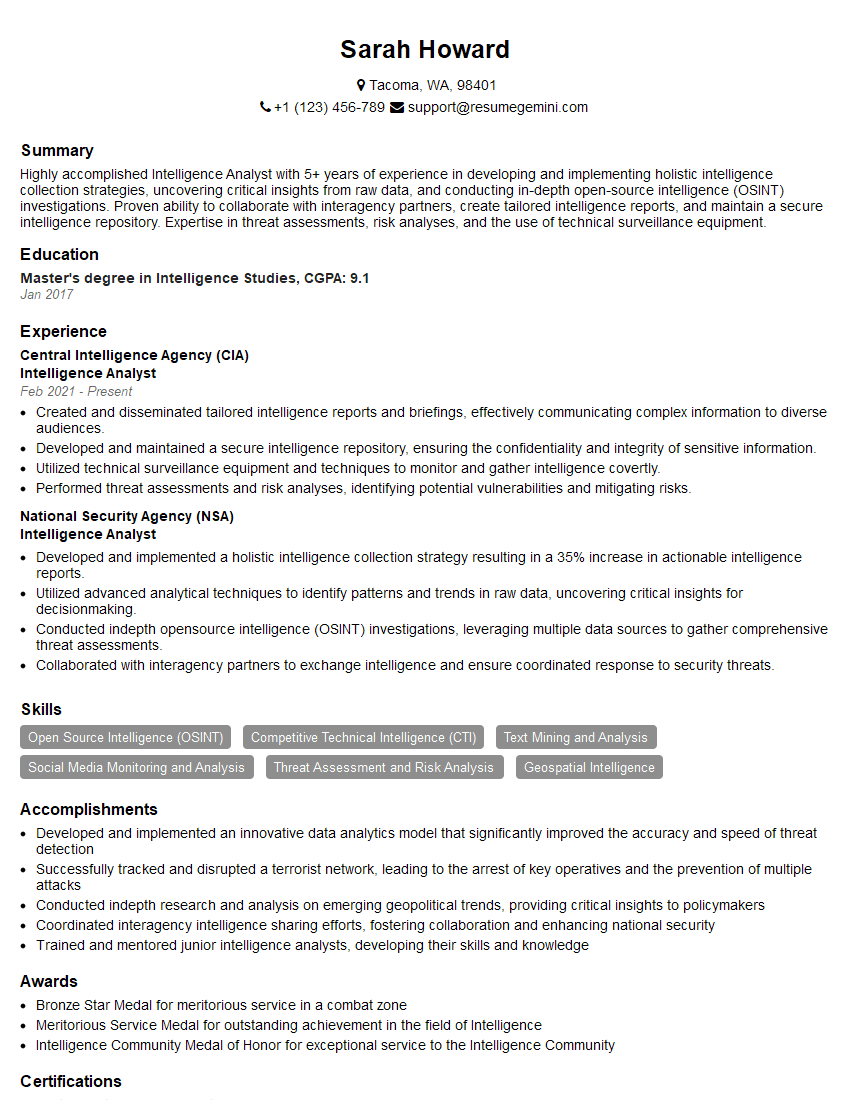
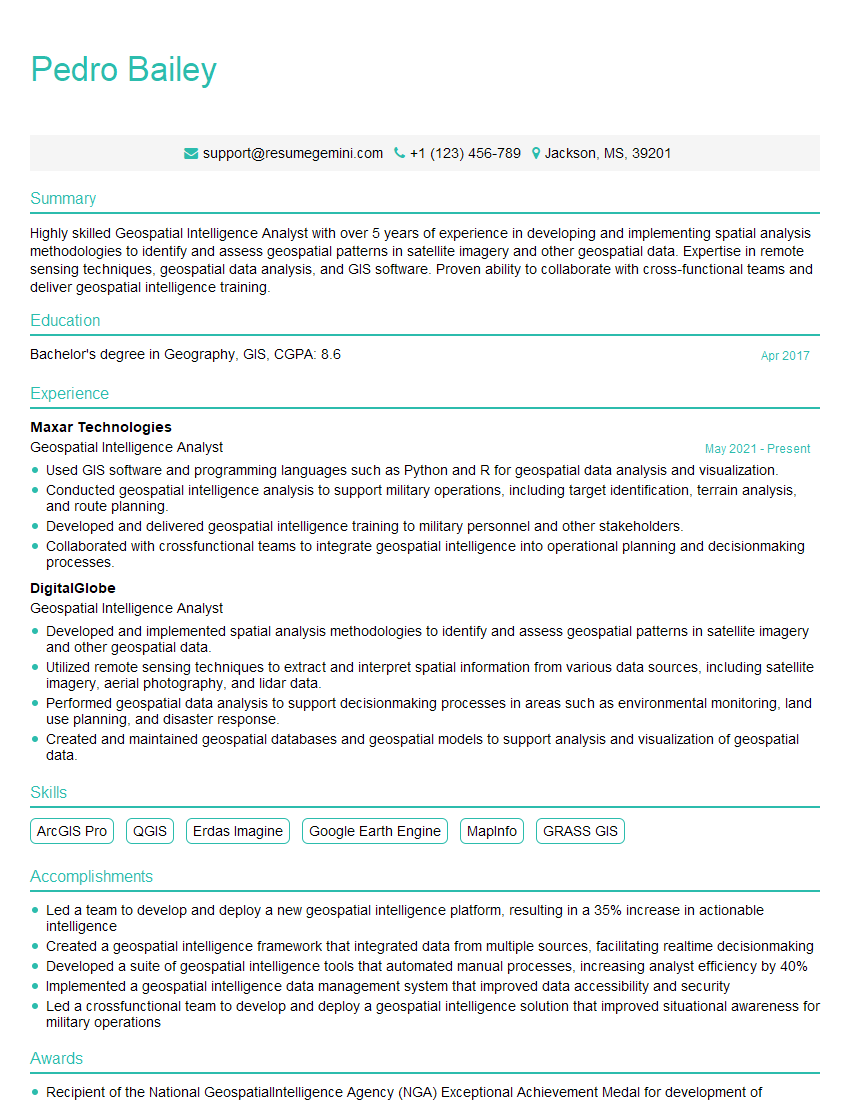
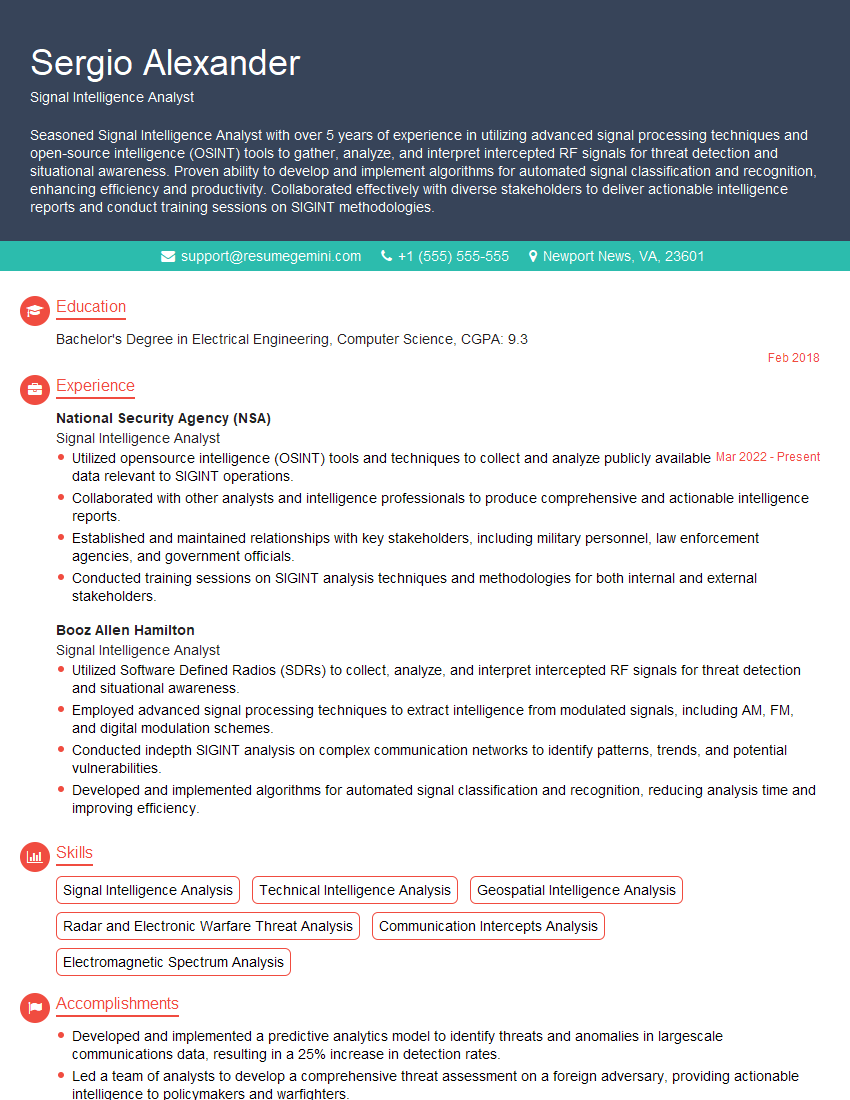
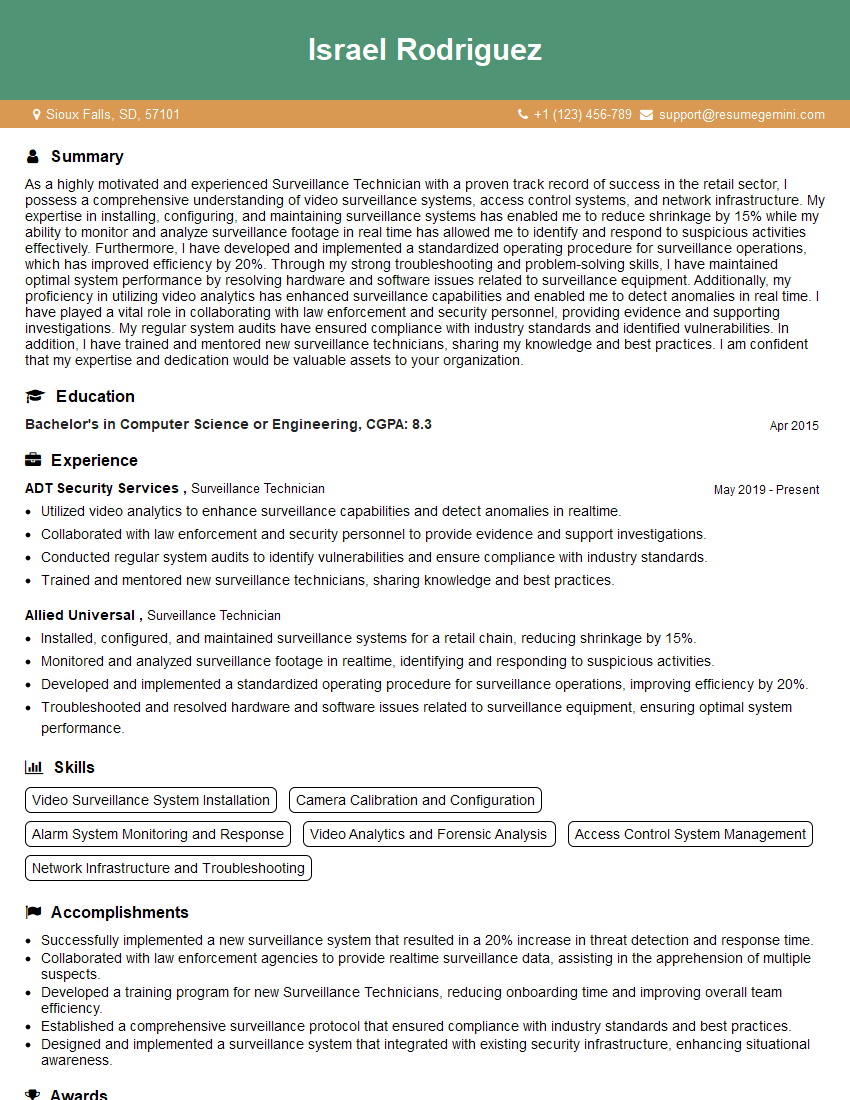
Mastering Surveillance and Tracking Techniques opens doors to exciting and impactful careers in cybersecurity, law enforcement, and private intelligence. To maximize your job prospects, a well-crafted, ATS-friendly resume is crucial. ResumeGemini can help you build a professional and compelling resume that showcases your skills and experience effectively. ResumeGemini offers examples of resumes tailored to Surveillance and Tracking Techniques to guide you in creating a standout application. Invest the time to create a powerful resume – it’s your first impression and a key to unlocking your career potential.

Explore more articles
Users Rating of Our Blogs
Share Your Experience
We value your feedback! Please rate our content and share your thoughts (optional).
What Readers Say About Our Blog
Very informative content, great job.
good