Feeling uncertain about what to expect in your upcoming interview? We’ve got you covered! This blog highlights the most important Survival Training and Wilderness Experience interview questions and provides actionable advice to help you stand out as the ideal candidate. Let’s pave the way for your success.
Questions Asked in Survival Training and Wilderness Experience Interview
Q 1. Describe your experience in wilderness first aid and emergency response procedures.
Wilderness first aid and emergency response are paramount in survival situations. My training encompasses a wide range of skills, from assessing and treating traumatic injuries like fractures and lacerations to managing medical conditions such as hypothermia and dehydration. I’m certified in Wilderness First Responder (WFR) and have extensive experience applying these skills in remote settings. This includes stabilizing patients, providing immediate care, and making critical decisions about evacuation or in-situ treatment, always prioritizing patient safety and well-being. For example, during a recent expedition in the Rockies, I treated a hiker with a severely sprained ankle, improvising a splint from branches and padding, before safely evacuating them to a lower altitude for further medical attention.
My approach emphasizes a systematic assessment using the SAMPLE mnemonic (Symptoms, Allergies, Medications, Past medical history, Last meal, Events leading to the incident), followed by a thorough head-to-toe examination. I’m proficient in various emergency procedures including CPR, the use of AEDs, and wound management techniques using sterile materials or improvised methods when necessary. Understanding limitations is crucial, and I always strive to make informed decisions based on the resources available and the severity of the situation.
Q 2. Explain your approach to risk assessment and mitigation in outdoor settings.
Risk assessment and mitigation in the outdoors is a proactive, multi-stage process. It starts with thorough pre-trip planning, which involves studying maps, weather forecasts, and potential hazards specific to the area. I use a systematic approach, considering factors such as terrain, weather conditions, wildlife encounters, and personal limitations. For instance, before leading a group on a multi-day hike, I would carefully examine the route for potential dangers like river crossings, steep inclines, or areas susceptible to landslides. Each potential risk is then evaluated according to its likelihood and potential severity.
Mitigation strategies follow the assessment. These strategies are implemented to minimize or eliminate identified risks. This might involve selecting alternative routes, carrying appropriate safety equipment (e.g., rope, first-aid kit, satellite communication device), educating participants about potential hazards, and establishing clear communication protocols. Regular monitoring during the trip is crucial – consistently checking weather updates, evaluating changing conditions, and adapting plans as needed. A recent example involves adjusting our planned ascent route due to unexpected snowfall, opting for a safer, albeit longer, alternative.
Q 3. What are the key elements of a comprehensive survival kit, and why?
A comprehensive survival kit should be tailored to the specific environment and anticipated duration of the trip, but several key elements remain constant. The ‘Rule of Threes’ – you can survive three minutes without air, three hours without shelter, three days without water, and three weeks without food – guides the kit’s composition.
- Shelter: A lightweight tarp or emergency blanket provides protection from the elements.
- Water procurement and purification: Water bottle, water filter or purification tablets are crucial.
- Fire starting: Waterproof matches, lighter, fire steel, and tinder are essential for warmth, cooking, and signaling.
- First-aid kit: A comprehensive kit addressing common injuries and ailments.
- Knife or multi-tool: A versatile tool for various tasks.
- Navigation: Map, compass, GPS device (with extra batteries).
- Signaling: Whistle, mirror, and bright-colored clothing to attract attention.
- Food: High-energy, non-perishable food items.
- Additional items (dependent on location and season): Headlamp/flashlight, extra clothing, sun protection, insect repellent.
Each item is chosen for its weight-to-utility ratio, emphasizing versatility and reliability. The kit should be regularly checked and replenished to ensure its effectiveness.
Q 4. How would you build a fire in various weather conditions using different methods?
Fire-starting is a fundamental survival skill that varies significantly with weather conditions. The key is to create a ‘fire triangle’ – fuel, oxygen, and heat.
Methods:
- Hand drill: This ancient method involves rotating a stick against a wooden base to create friction and embers. It’s most effective in dry conditions.
- Bow drill: A more efficient variation of the hand drill using a bow to increase rotational speed.
- Matches/lighter: The most reliable methods, especially in challenging conditions. Using tinder bundles – small, easily ignited materials like dry grass, birch bark or cotton – is crucial.
- Fire steel: A ferrocerium rod that creates sparks when struck against a hard surface. Requires practice and dry tinder.
Weather considerations: In wet conditions, finding dry tinder becomes paramount. Protecting the fire from wind and rain is essential through building a windbreak or using a makeshift shelter. In cold conditions, maintaining a sufficient fuel supply and possibly using a larger fire to overcome heat loss are vital. Adapting techniques and choosing the most appropriate method based on available resources and weather is key.
Q 5. Describe your experience in navigation using map and compass, and GPS.
Navigation using map, compass, and GPS is crucial for safe and efficient travel in the wilderness. I’m experienced in all three methods, understanding their strengths and limitations. A map and compass offer a reliable, self-sufficient way to navigate, independent of technology. I’m proficient in orienting a map, taking bearings, and using pace counting to determine distance.
GPS devices offer precise location data and route planning capabilities. However, they rely on batteries and satellite signals, which can be unreliable in certain areas. Knowing how to use a map and compass as a backup is vital. I often use a combination of these tools, relying on the GPS for initial route planning and waypoint setting, while using the map and compass for verification and backup navigation, especially in areas with poor satellite reception. For example, during a recent navigation exercise, a sudden storm interfered with the GPS signal. I was able to seamlessly transition to map and compass navigation and maintain our route without incident.
Q 6. Explain your knowledge of shelter building techniques for different environments.
Shelter building is crucial for survival, protecting against the elements and providing a safe space. The type of shelter depends heavily on the environment and available materials.
- Debris hut: A lean-to structure built using branches and leaves, offering protection from wind and rain. Effective in forested areas.
- Snow cave: In snowy environments, a snow cave provides excellent insulation and protection from wind and cold. Requires specific knowledge and snow conditions.
- Tarp shelter: A versatile option using a tarp and poles or trees for support. Adaptable to various environments.
- Natural shelters: Utilizing existing rock overhangs or caves to minimize construction time and effort.
The construction process involves considering drainage to prevent water buildup and ensuring adequate insulation against cold or heat. In each case, prioritizing safety and stability is essential. I’ve had extensive practical experience building various shelters in different environments, adapting techniques and materials according to circumstances. For instance, in a desert setting, I prioritized shade and ventilation over complete enclosure.
Q 7. How would you purify water in a wilderness setting?
Water purification is critical in a wilderness setting to prevent waterborne illnesses. Boiling water for at least one minute is the most reliable method, killing most harmful bacteria and viruses. However, it requires a fire source and fuel.
Alternative methods:
- Water filter: A mechanical filter removes sediment, bacteria, and protozoa. Choose a filter with a pore size small enough to remove pathogens.
- Water purification tablets: Chemical tablets containing iodine or chlorine disinfect water, killing bacteria and viruses. Follow the instructions carefully, as some require a waiting period for full effectiveness.
- Solar disinfection (SODIS): Leaving clear plastic water bottles in direct sunlight for at least six hours kills most microorganisms. This method is effective in sunny conditions.
The choice of method depends on the available resources and the level of risk you’re willing to accept. In situations with limited resources, a combination of methods (e.g., filtering followed by boiling) may be preferable. I always encourage thorough assessment of water sources for any visual signs of contamination before purifying.
Q 8. What are the common signs and symptoms of hypothermia and hyperthermia, and how would you treat them?
Hypothermia and hyperthermia represent opposite ends of the thermoregulation spectrum. Hypothermia is dangerously low body temperature, while hyperthermia signifies dangerously high body temperature. Both are serious and can be fatal if not addressed promptly.
Hypothermia: Common signs include shivering (initially), confusion, slurred speech, drowsiness, fumbling hands, loss of coordination, and ultimately, unconsciousness. Treatment involves immediately getting the individual out of the cold, removing wet clothing, providing warm, dry layers, and seeking immediate medical attention. In a wilderness setting, this might involve building a makeshift shelter, using body heat to warm the person (skin-to-skin contact if possible and appropriate), and providing warm fluids (if conscious and able to swallow). Avoid rubbing extremities, as this can damage tissues.
Hyperthermia: Symptoms range from heat rash and cramps to heat exhaustion (heavy sweating, weakness, dizziness) and heat stroke (high body temperature, confusion, seizures, loss of consciousness). Treatment for heat exhaustion involves moving the person to a cool place, providing fluids (electrolyte drinks are ideal), and encouraging rest. For heat stroke, which is a life-threatening emergency, immediate medical attention is crucial. Cooling measures include immersing the person in cool water (if available and safe), applying cool compresses to the neck, armpits, and groin, and fanning the person to increase evaporative cooling.
Q 9. Describe your experience in identifying edible and poisonous plants.
Identifying edible and poisonous plants requires extensive knowledge, experience, and caution. I’ve spent years studying botany, participating in guided foraging expeditions, and working alongside experienced herbalists. I wouldn’t rely solely on field guides, because identification can be tricky and mistakes can be fatal.
My approach emphasizes careful observation – noting leaf shape, arrangement, stem structure, flower type, and overall plant habit. I always cross-reference multiple identification resources and, crucially, I adhere to the ‘when in doubt, throw it out’ rule. If I’m unsure about a plant’s edibility, I avoid it completely. I’ve encountered several instances where plants superficially resembled edible counterparts but were actually poisonous. For example, I learned to distinguish between the edible wild onion and the highly poisonous death camas, which share similar appearance but differ significantly in bulb and leaf characteristics. Proper training and continuous learning are essential for safe foraging.
Q 10. Explain your understanding of Leave No Trace principles.
Leave No Trace (LNT) principles are a set of ethical guidelines for minimizing human impact on the natural environment. They’re crucial for preserving wilderness areas for future generations. The seven principles are:
- Plan ahead and prepare: Know the area, pack appropriately, and make reservations when necessary.
- Travel and camp on durable surfaces: Stay on established trails and campsites to avoid damaging vegetation.
- Dispose of waste properly: Pack out everything you pack in – even waste like toilet paper.
- Leave what you find: Don’t remove rocks, plants, or artifacts.
- Minimize campfire impacts: Use existing fire rings or stoves; avoid building large fires.
- Respect wildlife: Observe animals from a distance, do not feed them.
- Be considerate of other visitors: Keep noise levels down, yield to others on trails.
I always incorporate LNT principles into my expeditions, teaching participants to understand their impact and practice responsible recreation.
Q 11. How would you handle a conflict or emergency situation within a group in the wilderness?
Conflict resolution in a wilderness setting demands a calm, decisive approach that prioritizes safety and group cohesion. My strategy involves:
- Assess the situation: Determine the nature and severity of the conflict, identifying the root cause and involved parties.
- Mediate calmly: Create a safe space for individuals to express their concerns without escalating the situation. Active listening is key.
- Facilitate compromise: Help parties find mutually acceptable solutions. Sometimes, this may involve separating individuals temporarily to de-escalate tensions.
- Prioritize safety: If the conflict involves a threat to safety or physical harm, immediate intervention is necessary. This might involve separating individuals, establishing clear boundaries, or contacting emergency services if appropriate.
- Document the event: If the conflict involves serious issues or legal ramifications, a record of the event is important.
For example, I once had to mediate a dispute between two group members who disagreed on route selection. By listening to both sides, I helped them find common ground, ultimately selecting a route that incorporated elements both valued.
Q 12. Describe your experience in leading and managing outdoor expeditions.
I have extensive experience leading and managing various outdoor expeditions, ranging from short day hikes to multi-week wilderness treks. My leadership style is participative and collaborative, emphasizing teamwork, risk management, and environmental stewardship. I’ve led groups of diverse skill levels and backgrounds, tailoring expeditions to meet individual needs and capabilities. My experience includes:
- Developing detailed itineraries and contingency plans.
- Managing logistics, including gear procurement, transportation, and food preparation.
- Providing training and instruction in various outdoor skills, such as navigation, first aid, and wilderness survival.
- Ensuring the safety and well-being of all participants through constant monitoring and risk assessment.
- Building team cohesion and fostering a positive group dynamic.
I’ve learned that effective leadership in the wilderness relies on clear communication, adaptability, and the ability to make quick, informed decisions under pressure.
Q 13. What is your experience with different types of knots and their applications?
Knot tying is fundamental to wilderness survival and expedition management. I’m proficient in a wide range of knots, each with specific applications. For example:
- Bowline: A strong, reliable loop that won’t slip, ideal for attaching a rope to a fixed object.
- Clove Hitch: Quick and easy, used for attaching a rope to a post or ring.
- Figure Eight: A stopper knot to prevent a rope from running through a system.
- Prusik Knot: Used for ascending or descending a rope.
- Sheet Bend: For joining two ropes of different diameters.
Understanding the strengths and limitations of each knot is crucial. Improper knot tying can lead to equipment failure and potentially dangerous situations. I regularly practice and teach knot-tying techniques to ensure participants have the skills to handle various situations safely and effectively.
Q 14. Explain your understanding of wildlife awareness and safety.
Wildlife awareness and safety are paramount in wilderness environments. It’s about understanding animal behavior, habitat, and potential interactions to minimize risks. My approach involves:
- Respecting wildlife’s space: Maintaining a safe distance from animals and avoiding disturbing their natural habitats.
- Educating participants about local wildlife: Identifying potentially dangerous species and teaching safe interaction strategies.
- Storing food properly: Using bear canisters or hanging food to prevent attracting animals to campsites.
- Being aware of surroundings: Scanning the environment for signs of animal activity, such as tracks, scat, or sounds.
- Knowing what to do in encounters: Having a plan of action for encounters with aggressive or defensive animals, which might include seeking refuge or using bear spray.
I’ve witnessed firsthand the importance of these strategies. For example, I once had a group encounter with a mother bear and her cubs. By maintaining a calm demeanor, increasing the distance gradually, and never making sudden movements, we managed to avoid any conflict, ensuring the safety of both the bears and the participants.
Q 15. How would you react to an unexpected weather event during an outdoor trip?
My immediate reaction to an unexpected weather event hinges on preparedness and assessment. First, I’d ensure the safety of everyone in my group – moving to shelter if necessary. This might involve finding natural cover like a dense thicket or rock overhang, or utilizing pre-planned emergency shelters. Second, I’d conduct a rapid risk assessment, identifying the specific threat (e.g., flash flood, blizzard, severe thunderstorm). This informs the next steps. For instance, a sudden downpour might necessitate finding higher ground to avoid flash flooding, while a blizzard demands prioritizing warmth and minimizing exposure.
I always carry a detailed weather forecast, but even the best forecasts can be inaccurate. Therefore, I emphasize having contingency plans. This could be having extra layers of clothing, emergency rations, or a satellite communication device for contacting help. The key is proactive planning and a calm, decisive response. For example, during a guided trek in the Rockies, we encountered a sudden, unexpected blizzard. We immediately implemented our pre-planned cold weather protocol: finding shelter behind a large rock formation, rationing our high-energy snacks, and using emergency blankets to retain body heat. We avoided serious injury by acting promptly and decisively.
Career Expert Tips:
- Ace those interviews! Prepare effectively by reviewing the Top 50 Most Common Interview Questions on ResumeGemini.
- Navigate your job search with confidence! Explore a wide range of Career Tips on ResumeGemini. Learn about common challenges and recommendations to overcome them.
- Craft the perfect resume! Master the Art of Resume Writing with ResumeGemini’s guide. Showcase your unique qualifications and achievements effectively.
- Don’t miss out on holiday savings! Build your dream resume with ResumeGemini’s ATS optimized templates.
Q 16. Describe your experience in teaching survival skills to different age groups.
Teaching survival skills to different age groups requires adapting my approach to their developmental stage and learning styles. With children, I use a lot of storytelling and games to make learning fun and engaging. For example, building a mini shelter from natural materials becomes a playful competition. I emphasize basic principles in simple terms, focusing on skills like fire starting (with adult supervision, of course), basic first aid, and identifying edible plants.
Teenagers usually respond well to a more hands-on, challenge-based approach. They enjoy the problem-solving aspects of survival scenarios, like designing a trap for small animals or navigating using a map and compass. Adults often have specific goals – be it for wilderness exploration or disaster preparedness. My training sessions for adults incorporate more advanced techniques and scenarios, like advanced first aid, wilderness navigation, and water purification.
Regardless of the age group, safety is paramount. I always ensure proper supervision and emphasize responsible risk-taking. I tailor the content and difficulty to the group’s capabilities and experience levels.
Q 17. What are your strategies for maintaining group morale and safety during challenging expeditions?
Maintaining group morale and safety during challenging expeditions is crucial. It requires strong leadership, effective communication, and a well-defined plan. First, I emphasize pre-trip planning, ensuring everyone understands the itinerary, potential hazards, and their individual roles and responsibilities. Open communication is vital. I encourage team members to express concerns, share observations, and help make decisions.
During challenging situations, I use positive reinforcement and celebrate small victories to boost morale. When things go wrong (and they often do!), I focus on problem-solving collaboratively. A sense of shared responsibility strengthens the group. For example, during a challenging mountain ascent, a member developed altitude sickness. By working together, we adjusted the pace, shared our resources, and ensured the affected individual received proper care. We reached the summit, not just because we planned well, but because we supported each other.
Safety protocols are strictly enforced. This includes regular equipment checks, ensuring everyone has sufficient supplies, and adhering to established safety procedures. The key is to build trust, promote teamwork, and tackle challenges as a united front.
Q 18. How would you handle a search and rescue situation?
Handling a search and rescue situation requires a methodical approach. My first action is to accurately assess the situation: what resources are available, what is the nature of the emergency, and what is the location of the missing person(s)? I immediately inform the appropriate authorities – park rangers, mountain rescue teams, or emergency services – providing all relevant information.
Next, I would attempt to locate the missing person(s) using my survival and tracking skills, such as following footprints, analyzing terrain, and searching likely routes. However, I would never attempt a rescue without proper training or equipment; safety is my utmost priority. This is where previous training in using GPS devices, two-way radios, and signaling mirrors comes into play. I would also help rescuers by providing information about the environment, weather conditions, and the missing person’s experience and equipment.
Effective communication is vital. I would ensure that I maintain contact with the rescue team and provide regular updates on my progress.
Q 19. What are your skills in animal tracking and identification?
My animal tracking and identification skills are honed through years of field experience and dedicated study. I can identify animal tracks based on their size, shape, gait, and the surrounding environment. For instance, the difference between a coyote and a dog track is subtle but crucial – a dog’s tracks often show a more pronounced ‘toe’ compared to a coyote’s more rounded paw prints.
Beyond tracks, I can identify animals through scat (feces), feeding signs (gnawed branches, disturbed vegetation), and vocalizations. This knowledge is invaluable for understanding wildlife behavior, predicting potential encounters, and assessing the risks associated with specific areas. For instance, I can assess the relative danger presented by signs of bear activity, distinguishing between black bears’ and grizzly bears’ activity based on scat size and claw marks, adjusting my safety measures accordingly.
My expertise extends beyond identification. I understand animal behavior – understanding their territories, feeding habits, and mating patterns aids in minimizing potential conflicts.
Q 20. Explain your experience in using various outdoor tools and equipment.
My experience encompasses a wide range of outdoor tools and equipment, including navigation tools (maps, compass, GPS), survival tools (knives, axes, fire starters), first-aid equipment, shelter construction materials, and water purification systems. I am proficient in using a variety of knives for different tasks, from preparing food to building shelters. I understand the principles of map and compass navigation and can interpret topographical maps to plan routes and assess terrain challenges.
I am skilled in using various fire-starting methods – friction fire, flint and steel, and magnesium fire starters – adapting my technique based on environmental conditions. I am familiar with different water filtration and purification methods, and I understand the importance of selecting the appropriate equipment for different water sources. I also possess practical knowledge of shelter construction, choosing appropriate materials based on the environment and the available resources. I can build various types of shelters, from simple lean-tos to more complex structures.
Regular maintenance and safe handling of all equipment are essential aspects of my training.
Q 21. Describe your experience in adapting to different terrain and environmental conditions.
Adapting to different terrains and environmental conditions is a core skill in survival training. This involves understanding the impact of geography on weather patterns, resource availability, and potential hazards. Navigating mountainous terrain requires different techniques than navigating dense forests or deserts. For instance, in mountainous regions, I’m acutely aware of the risks of altitude sickness, sudden weather changes, and exposure to the elements.
I adjust my strategies based on the available resources. In arid regions, water conservation becomes paramount, requiring a careful approach to hydration and the use of water purification techniques. In humid environments, I’m mindful of the increased risk of insect bites, heat exhaustion, and the challenges of building a fire. In each environment, I utilize appropriate clothing, equipment, and strategies to maintain my safety and ensure the well-being of my group.
My experience allows me to anticipate challenges and develop effective solutions before they become critical problems, ensuring efficient and safe travel across diverse landscapes.
Q 22. What safety measures would you implement for rock climbing or rappelling?
Rock climbing and rappelling demand meticulous safety protocols. The cornerstone is always a thorough risk assessment before any ascent or descent. This includes evaluating the rock face for instability, checking weather conditions, and assessing potential hazards like loose rocks or overhanging branches. Proper equipment is paramount; this means using well-maintained ropes, harnesses, carabiners, and belay devices, inspected before every use. Always double-check every knot and connection. The three-point-of-contact rule (always maintaining three points of contact with the rock face while climbing) is fundamental, ensuring stability and reducing the risk of falls. For rappelling, proper anchor placement is crucial—a robust anchor system is essential to safely support your weight. It is always good practice to use multiple anchors to distribute the load, and ensure they are rated for the weight of all participants involved. Regular communication between the climber and belayer (or rappeller and belayer) is critical. Clear signals and commands are essential to coordinating movements and ensuring safety. Finally, training and experience are essential. Anyone participating in rock climbing or rappelling should have appropriate training and ideally climb with experienced partners.
For example, during a recent guided climb, I noticed a participant improperly attaching their belay device. I immediately corrected the issue, explaining the potential consequences of an incorrect setup. This prevented a potentially dangerous situation. Another instance involved assessing a potentially unstable rock formation; we chose an alternative route to mitigate the risk. Safety is non-negotiable in these activities.
Q 23. Explain your knowledge of different types of shelters and their suitability for various conditions.
Selecting the right shelter depends heavily on the environment and the duration of your stay. Several options exist, each with its strengths and weaknesses. A tarp is lightweight and versatile, offering adaptable protection against rain and wind, but it provides minimal insulation. It’s ideal for warm conditions. A hammock, suspended between trees, is comfortable and provides good ventilation, but it requires trees for setup and offers less protection against rain and cold. A tent offers excellent protection from the elements, including rain, wind, and snow, with various styles (dome, A-frame) providing different levels of space and wind resistance. For colder conditions, a quinzee (a snow shelter) or an ice cave can provide superior insulation, but require specialized knowledge and considerable effort to construct. Finally, a lean-to provides basic shelter using natural materials like branches and leaves, it’s a last resort for emergencies.
During a multi-day trek in the Rockies, we opted for a three-season tent offering robust protection against potential rain and wind. In contrast, during a summer backpacking trip in a dry environment, hammocks proved comfortable and lightweight solutions. The key is to carefully evaluate the specific conditions and the balance between weight, protection, and ease of setup when choosing your shelter.
Q 24. How do you maintain your own fitness and preparedness for outdoor activities?
Maintaining fitness and preparedness for outdoor activities is an ongoing process. My routine includes a combination of cardiovascular exercises such as running and hiking, strength training targeting major muscle groups (legs, core, back), and flexibility training through yoga and stretching. This creates a well-rounded fitness base. I regularly practice specific skills like navigation (map and compass, GPS use), knot tying, and shelter building. I don’t just practice in theory, I actively seek out opportunities to test my skills in real-world scenarios, like navigating unfamiliar trails during solo hikes or building shelters during camping trips. Further, I stay updated on best practices in wilderness survival and first aid through continued education and training courses, ensuring my skills and knowledge remain current. Regular health checkups ensure there are no underlying conditions that could compromise my ability to handle outdoor challenges. Proper nutrition and adequate rest play a key role in ensuring my body is resilient and ready for physical and mental demands.
Q 25. Describe your experience in planning and executing multi-day wilderness trips.
I have extensive experience in planning and executing multi-day wilderness trips, ranging from simple backpacking adventures to more complex expeditions. The planning process begins with defining clear objectives: what are we trying to accomplish? This might be completing a specific route, reaching a certain destination, or focusing on a specific skill development. Next, a thorough route planning is conducted, including research of potential hazards, water sources, campsites, and escape routes. Detailed maps, compass, and GPS are essential, especially for remote locations. Detailed equipment lists are prepared, carefully considering the needs of all participants and anticipated conditions; each item’s weight and necessity is carefully evaluated. Contingency plans must also be included, addressing what to do in case of injury, weather changes, or equipment failure. Effective communication and coordination between team members is practiced before departure. Throughout the trip, regular checks of supplies and equipment are essential; adaptations are made according to prevailing conditions. Post-trip debriefings allow for assessing what went well, areas for improvement, and for refining future trip plans.
For example, a recent expedition in the Boundary Waters Canoe Area Wilderness involved meticulous planning of portages (carrying canoes between lakes), including identifying alternate routes in case of high water levels. We also carried extra food and emergency gear, allowing us to adjust to unexpected weather delays.
Q 26. What are your strategies for preventing and treating injuries in the wilderness?
Preventing injuries in the wilderness starts with proper preparation. This includes ensuring physical fitness, appropriate equipment, and understanding the potential hazards of the environment. Using proper techniques for activities like climbing, hiking, and paddling minimizes the risk of injury. Careful attention to hydration and nutrition maintains energy levels and physical performance, preventing fatigue, which is a major contributor to accidents. When it comes to treating injuries, a wilderness first-aid kit is essential, equipped to manage minor cuts, sprains, blisters, and potential dehydration. Knowing how to use these supplies is crucial; proficiency in basic first-aid and wilderness survival techniques is a necessity. In case of severe injuries or emergencies, communication is key – having a plan in place to contact emergency services is vital. Knowing how to signal for help and providing essential information about location and the nature of the injury can be lifesaving. In any event, always prioritize safety and don’t hesitate to modify plans if the situation warrants it.
For instance, I once treated a twisted ankle using RICE (Rest, Ice, Compression, Elevation) techniques, stabilizing it with a splint made from available materials before successfully navigating the injured person out to safety. This required a recalculation of the trip timeline, showing the importance of adaptability.
Q 27. What is your experience with different types of outdoor cooking methods?
My experience with outdoor cooking methods is broad. I’m proficient in using various stoves, including canister stoves (lightweight, convenient), liquid fuel stoves (more fuel-efficient for extended trips), and even alcohol stoves (simple, minimal weight). These are used for boiling water for meals, drinks, or for melting snow. I am also skilled in campfire cooking techniques—building effective fires even in challenging conditions is essential for cooking. This includes using dutch ovens for stews and baking, cast iron skillets for frying or searing, and simple grilling methods over an open fire. For efficient and safe cooking, I prefer to prepare ingredients in advance (chopping vegetables and pre-measuring ingredients) to minimize prep time in the field. I also understand the importance of using appropriate cookware and utensils suited to the cooking method and terrain. Food safety is a priority. Proper food storage and handling are crucial to prevent spoilage and illness.
Recently, I taught a group of students various campfire cooking techniques, highlighting the importance of fire safety and efficient cooking methods. We prepared a complete meal using only ingredients and utensils we carried into the wilderness, showcasing the possibilities even in remote settings.
Key Topics to Learn for Your Survival Training and Wilderness Experience Interview
- Shelter Construction: Understanding various shelter types (lean-tos, debris huts, etc.), their advantages and disadvantages in different environments, and the practical skills needed for efficient construction.
- Water Procurement and Purification: Exploring methods for finding and purifying water sources, including boiling, filtration, and chemical treatment. Practical application includes assessing water safety and prioritizing water procurement strategies in various scenarios.
- Fire Starting: Mastering different fire-starting techniques (friction, flint and steel, etc.) and understanding the importance of fire for warmth, cooking, and signaling. This also involves knowledge of fire safety and responsible fire management.
- Navigation and Orienteering: Developing skills in map reading, compass use, and celestial navigation. Practical application focuses on planning routes, avoiding hazards, and successfully navigating challenging terrain.
- First Aid and Wilderness Medicine: Gaining proficiency in basic first aid, addressing common wilderness injuries, and understanding limitations in providing medical care in remote settings. This includes recognizing and managing hypothermia, dehydration, and other wilderness-related medical emergencies.
- Wilderness Survival Skills: Understanding the principles of survival, including prioritizing needs (shelter, water, fire, food), and developing problem-solving skills in unexpected situations. This includes adaptability and resourcefulness in unpredictable environments.
- Teamwork and Leadership: Demonstrating understanding of the importance of teamwork in survival situations, including communication, delegation, and conflict resolution. This includes leadership skills in guiding and supporting team members in challenging circumstances.
- Environmental Awareness and Leave No Trace Principles: Understanding the importance of minimizing environmental impact and adhering to Leave No Trace ethics. This demonstrates responsible environmental stewardship and preparedness for sustainable practices in wilderness settings.
Next Steps
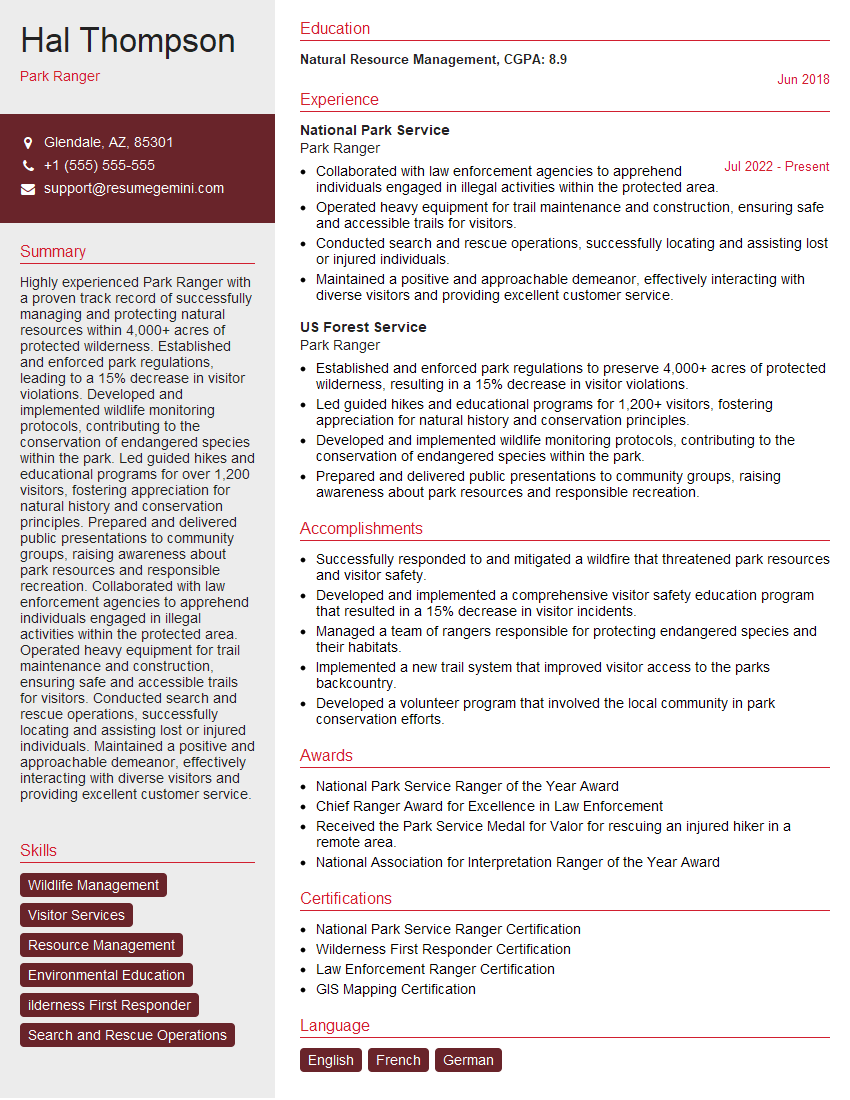
Mastering Survival Training and Wilderness Experience skills significantly enhances your career prospects in various fields, from guiding and instruction to search and rescue and conservation efforts. To increase your chances of landing your dream job, focus on creating an ATS-friendly resume that highlights your unique skills and experience. ResumeGemini is a trusted resource that can help you build a professional and impactful resume tailored to the specific requirements of your target roles. We provide examples of resumes specifically designed for Survival Training and Wilderness Experience professionals to help you showcase your expertise effectively.

Explore more articles
Users Rating of Our Blogs
Share Your Experience
We value your feedback! Please rate our content and share your thoughts (optional).
What Readers Say About Our Blog
Very informative content, great job.
good