Feeling uncertain about what to expect in your upcoming interview? We’ve got you covered! This blog highlights the most important Sustainability and Environmental Conservation interview questions and provides actionable advice to help you stand out as the ideal candidate. Let’s pave the way for your success.
Questions Asked in Sustainability and Environmental Conservation Interview
Q 1. Describe your experience with Life Cycle Assessment (LCA).
Life Cycle Assessment (LCA) is a comprehensive method for evaluating the environmental impacts of a product, process, or service throughout its entire lifespan, from raw material extraction to end-of-life disposal. It’s like creating a detailed environmental footprint for something. I’ve extensively used LCA in my work, particularly for evaluating the sustainability of packaging materials. For example, I led a project comparing the environmental impacts of plastic versus paper packaging for a major food company. We used LCA software to analyze factors such as energy consumption, greenhouse gas emissions, water usage, and waste generation for each option. This allowed us to identify the most environmentally friendly option, considering the entire lifecycle, not just a single stage. The results directly influenced the company’s packaging strategy and significantly reduced their carbon footprint.
My LCA experience involves data collection, impact assessment using various software such as SimaPro and GaBi, and report writing. I am proficient in interpreting LCA results and translating complex data into actionable recommendations for clients. I’ve also conducted numerous sensitivity analyses to understand uncertainties in the data and refine the assessment’s accuracy.
Q 2. Explain the concept of carbon sequestration and its importance.
Carbon sequestration is the process of capturing and storing atmospheric carbon dioxide (CO2). Think of it as nature’s way of locking away carbon, preventing it from contributing to climate change. It’s incredibly important because CO2 is a major greenhouse gas, and increased atmospheric concentrations are causing global warming. Trees, for instance, absorb CO2 during photosynthesis and store it in their biomass (wood, leaves, roots). Similarly, oceans absorb CO2, and soils act as significant carbon sinks. Enhancing carbon sequestration through reforestation, afforestation (planting trees in areas where there were none), and improved soil management are crucial strategies for mitigating climate change.
In a professional context, I’ve worked on projects focusing on carbon sequestration in agricultural lands. We explored the impact of different farming practices on soil carbon storage, demonstrating that sustainable agricultural methods can significantly enhance carbon sequestration while improving soil health and crop yields. We even used remote sensing data to map carbon sequestration potential in different regions, which was crucial for targeted conservation efforts.
Q 3. What are the key principles of circular economy?
The circular economy is an alternative to the traditional linear economy (take-make-dispose), aiming to minimize waste and maximize resource utilization. It’s based on three core principles:
- Design out waste and pollution: This means designing products and processes to minimize waste and pollution from the outset. Think about designing products for durability, repairability, and recyclability.
- Keep products and materials in use: This involves extending the lifespan of products through reuse, repair, refurbishment, and remanufacturing. Examples include leasing instead of buying, sharing schemes, and product-as-a-service models.
- Regenerate natural systems: This emphasizes restoring and regenerating natural resources and ecosystems. It involves promoting biodiversity, restoring degraded lands, and using renewable energy sources.
I’ve applied these principles in several projects, including the development of a closed-loop system for plastic recycling where waste plastic was transformed into new products, effectively reducing plastic waste and reliance on virgin materials. We also implemented a circular economy strategy for a construction company, focusing on the reuse and recycling of construction materials, leading to significant cost savings and environmental benefits.
Q 4. How familiar are you with ISO 14001 environmental management systems?
I am very familiar with ISO 14001, the internationally recognized standard for environmental management systems (EMS). It provides a framework for organizations to systematically manage their environmental impacts. It’s not just about compliance; it’s about continuous improvement. In previous roles, I’ve assisted numerous organizations in implementing and maintaining ISO 14001-compliant EMS, including conducting gap analyses, developing environmental policies and procedures, and performing internal audits. I also have experience leading management review meetings and ensuring continual improvement through data analysis and corrective actions. I understand the importance of environmental aspects, legal compliance, and stakeholder engagement in achieving environmental objectives.
For example, I helped a manufacturing company implement ISO 14001, which resulted in reduced energy consumption, decreased waste generation, and improved overall environmental performance. This not only improved their environmental footprint but also enhanced their corporate social responsibility and provided a competitive advantage.
Q 5. Describe your experience with environmental impact assessments.
Environmental Impact Assessments (EIAs) are systematic studies conducted to predict and evaluate the environmental consequences of proposed projects or developments. My experience includes conducting EIAs for a variety of projects, from infrastructure development (roads, bridges) to industrial projects (factories, mines). This involves identifying potential impacts, assessing their significance, proposing mitigation measures, and preparing comprehensive EIA reports. I’m adept at using various assessment methodologies, including baseline studies, impact prediction modeling, and stakeholder engagement.
For example, I was part of a team that conducted an EIA for a large-scale wind farm project. We assessed potential impacts on birds and bats, noise pollution, and visual impacts, and developed mitigation strategies to minimize adverse effects. The EIA report was crucial in obtaining the necessary permits for the project, ensuring its environmental sustainability.
Q 6. What are the main greenhouse gases and their sources?
The main greenhouse gases are carbon dioxide (CO2), methane (CH4), nitrous oxide (N2O), and fluorinated gases (including hydrofluorocarbons, perfluorocarbons, and sulfur hexafluoride). These gases trap heat in the atmosphere, contributing to global warming.
- CO2: Primarily from burning fossil fuels (coal, oil, natural gas), deforestation, and industrial processes.
- CH4: Released from livestock, rice cultivation, natural gas leaks, and landfills.
- N2O: From agricultural activities (fertilizers), industrial processes, and burning fossil fuels.
- Fluorinated gases: Used in refrigeration, air conditioning, and industrial processes. These are potent greenhouse gases, with much higher global warming potentials than CO2.
Understanding the sources of these gases is vital for developing effective mitigation strategies. For example, shifting to renewable energy sources, adopting sustainable agricultural practices, and improving energy efficiency are crucial steps in reducing greenhouse gas emissions.
Q 7. Explain your understanding of sustainable supply chain management.
Sustainable supply chain management (SSCM) involves managing the flow of goods and services in a way that minimizes environmental and social impacts throughout the entire supply chain. It’s about ensuring that all stages, from raw material sourcing to final product delivery and disposal, are environmentally and socially responsible. This includes considering factors such as resource efficiency, waste reduction, emissions reduction, ethical labor practices, and fair trade.
In my experience, I’ve helped companies implement SSCM strategies by mapping their supply chains, identifying environmental and social hotspots, developing sustainable sourcing policies, and collaborating with suppliers to improve their sustainability performance. This frequently involves using tools like life cycle assessments and material flow analysis to identify areas for improvement. For instance, I assisted a clothing company in implementing a sustainable cotton sourcing program, ensuring that their cotton was sourced from farms that used responsible agricultural practices and avoided harmful pesticides. This project not only reduced environmental impacts but also improved the company’s brand reputation and strengthened relationships with its suppliers.
Q 8. How would you measure the environmental footprint of a product?
Measuring a product’s environmental footprint, often called a Life Cycle Assessment (LCA), involves quantifying its environmental impacts across its entire lifespan. This encompasses everything from raw material extraction and processing to manufacturing, transportation, use, and ultimately, disposal or recycling.
A comprehensive LCA typically considers several key impact categories:
- Greenhouse Gas Emissions (GHG): Measured in CO2e (carbon dioxide equivalent), this assesses the contribution to climate change.
- Water Use: Includes both direct water consumption and indirect water use embedded in the supply chain.
- Energy Consumption: Evaluates the total energy used during the product’s lifecycle, considering both renewable and non-renewable sources.
- Waste Generation: Measures the amount of solid waste, wastewater, and air emissions produced.
- Resource Depletion: Assesses the consumption of finite resources like minerals and fossil fuels.
- Eutrophication Potential: Evaluates the contribution to excessive nutrient enrichment in water bodies.
- Acidification Potential: Measures the contribution to acid rain.
Methods for measuring these impacts range from detailed process-based assessments involving data collection from each stage of the product lifecycle to more simplified approaches using input-output analysis or databases of environmental impact factors. For example, a detailed LCA of a pair of jeans would analyze the cotton farming’s water usage, the energy used in textile manufacturing, the transportation emissions, and the eventual disposal or recycling impact.
Q 9. Describe your experience with renewable energy technologies.
My experience with renewable energy technologies spans several areas. I’ve been involved in projects assessing the feasibility of large-scale solar and wind farms, including site selection, environmental impact assessment, and grid integration studies. This included analyzing the environmental benefits – reduced GHG emissions, for instance – against potential drawbacks, such as land use changes and impacts on wildlife.
Furthermore, I’ve worked on smaller-scale projects focusing on building-integrated photovoltaics (BIPV), where solar panels are integrated into building materials, promoting energy efficiency and reducing reliance on fossil fuels. I’ve also contributed to research on the lifecycle assessment of various renewable energy technologies to understand their full environmental footprints, accounting for manufacturing processes, material sourcing, and end-of-life management.
Finally, I have experience with analyzing the economic viability of renewable energy projects by evaluating factors like capital costs, operational expenses, and revenue streams generated from energy sales or carbon credits.
Q 10. What are some common environmental regulations you’re familiar with?
I’m familiar with a wide range of environmental regulations, both at the national and international levels. Some key examples include:
- Clean Air Act (US): Regulates air emissions from stationary and mobile sources, promoting cleaner air quality.
- Clean Water Act (US): Regulates water pollution from point and non-point sources, aiming to protect water bodies.
- Endangered Species Act (US): Protects endangered and threatened species and their habitats.
- European Union Emissions Trading System (EU ETS): A cap-and-trade system aimed at reducing greenhouse gas emissions.
- Basel Convention: An international treaty regulating the transboundary movement of hazardous wastes.
- Montreal Protocol: An international treaty aimed at phasing out the production and consumption of ozone-depleting substances.
My understanding extends to the intricacies of these regulations, including permitting processes, compliance requirements, and enforcement mechanisms. I’m adept at ensuring projects meet or exceed environmental compliance standards.
Q 11. How would you approach reducing waste in an organization?
Reducing waste in an organization requires a multi-pronged approach focusing on prevention, reduction, reuse, and recycling (the 4Rs). It begins with a thorough waste audit to identify the types and quantities of waste generated, pinpointing the primary sources.
Steps I would take:
- Waste Prevention: Implement strategies to minimize waste generation at the source, such as optimizing production processes, adopting lean manufacturing principles, and improving procurement practices to favor products with minimal packaging.
- Waste Reduction: Focus on reducing the volume of waste through measures like double-sided printing, digital document management, and efficient resource utilization.
- Waste Reuse: Encourage the reuse of materials and resources wherever possible, e.g., repurposing packaging materials or donating used office supplies.
- Waste Recycling: Establish an effective recycling program, clearly labeling bins, and ensuring proper sorting of recyclable materials. Explore options for composting organic waste.
- Employee Engagement: Educate and engage employees through training programs and awareness campaigns to foster a culture of sustainability.
- Data Tracking and Reporting: Monitor waste generation, recycling rates, and other key metrics to track progress and identify areas for improvement.
A successful waste reduction program requires consistent monitoring, data analysis, and continuous improvement.
Q 12. Explain the difference between biodegradable and compostable materials.
While both biodegradable and compostable materials break down naturally, there’s a crucial distinction. ‘Biodegradable’ simply means the material will decompose under specific conditions, but the process may take a long time and might not be suitable for composting.
Biodegradable: A material that decomposes under natural conditions (e.g., sunlight, moisture, microbial activity). However, the decomposition rate and end products vary significantly. Some biodegradable materials may take years to decompose and can leave behind microplastics or other harmful byproducts.
Compostable: A more specific term indicating a material that decomposes in a composting facility under controlled conditions, leaving behind only compost – a nutrient-rich soil amendment. Compostable materials typically break down relatively quickly. This often involves specific certifications to ensure the material meets standards for efficient composting.
Think of it this way: all compostable materials are biodegradable, but not all biodegradable materials are compostable.
Q 13. How do you assess the environmental risks associated with a project?
Assessing environmental risks associated with a project involves a systematic approach that integrates various methods. It’s crucial to identify potential environmental impacts early in the project lifecycle to mitigate risks effectively.
My approach typically includes:
- Scoping: Defining the project’s boundaries and identifying potential environmental receptors (e.g., water bodies, ecosystems, human populations).
- Hazard Identification: Identifying potential environmental hazards associated with the project’s activities, including air and water pollution, habitat disruption, and greenhouse gas emissions.
- Risk Assessment: Evaluating the likelihood and potential severity of each identified hazard. This involves considering factors such as exposure pathways and the vulnerability of affected receptors.
- Risk Management: Developing and implementing measures to reduce or eliminate identified environmental risks. This can involve selecting alternative project designs, implementing pollution control technologies, or creating mitigation plans.
- Monitoring and Evaluation: Implementing an environmental monitoring program to track actual impacts, compare them to predictions, and ensure the effectiveness of mitigation measures.
Utilizing tools like environmental risk assessments (ERAs), Environmental Impact Assessments (EIAs), and GIS mapping enhances this process, providing a robust framework for identifying, evaluating, and managing environmental risks.
Q 14. Describe your experience with environmental data analysis and reporting.
My experience with environmental data analysis and reporting is extensive. I’m proficient in using various statistical software packages (e.g., R, SPSS) and GIS software (e.g., ArcGIS) to analyze environmental datasets. My skills encompass data cleaning, exploratory data analysis, statistical modeling, and visualization.
I’ve worked on numerous projects involving the analysis of environmental monitoring data, including air and water quality data, greenhouse gas emissions data, and biodiversity data. This included creating detailed reports for regulatory agencies, stakeholders, and the public, presenting findings clearly and effectively using charts, graphs, and maps. I am skilled in preparing reports compliant with various environmental regulations and standards.
Furthermore, I have experience developing and implementing environmental management systems (EMS), using data-driven approaches to optimize environmental performance and achieve sustainability goals. I’m familiar with various reporting frameworks like GRI (Global Reporting Initiative) and SDGs (Sustainable Development Goals), ensuring reports align with international best practices.
Q 15. What strategies would you employ to improve energy efficiency?
Improving energy efficiency involves a multifaceted approach focusing on reducing energy consumption and increasing the use of renewable sources. It’s like tightening your home’s insulation – less energy escapes, meaning lower bills and a smaller carbon footprint.
Building Efficiency Retrofits: Implementing energy-efficient building materials, such as high-performance windows and insulation, significantly reduces heating and cooling needs. For instance, upgrading an older building with improved insulation can decrease energy consumption by up to 40%.
Smart Technologies: Utilizing smart thermostats, lighting systems, and appliances allows for automated energy management, optimizing consumption based on occupancy and usage patterns. Imagine a smart thermostat automatically lowering the temperature when you’re away, saving energy and money.
Renewable Energy Integration: Incorporating solar panels, wind turbines, or geothermal systems shifts energy reliance from fossil fuels to cleaner sources, reducing greenhouse gas emissions. A company could offset its carbon footprint significantly by installing solar panels on its roof, thereby generating its own clean energy.
Energy Audits and Monitoring: Regular energy audits pinpoint areas of high energy consumption, providing a roadmap for targeted improvements. Think of it as a health check-up for your building’s energy use, revealing where to focus efforts for maximum impact.
Career Expert Tips:
- Ace those interviews! Prepare effectively by reviewing the Top 50 Most Common Interview Questions on ResumeGemini.
- Navigate your job search with confidence! Explore a wide range of Career Tips on ResumeGemini. Learn about common challenges and recommendations to overcome them.
- Craft the perfect resume! Master the Art of Resume Writing with ResumeGemini’s guide. Showcase your unique qualifications and achievements effectively.
- Don’t miss out on holiday savings! Build your dream resume with ResumeGemini’s ATS optimized templates.
Q 16. How familiar are you with different water conservation techniques?
Water conservation is crucial for sustainable living, encompassing techniques to reduce water usage and protect water resources. It’s like carefully managing your bank account – using water wisely ensures availability for future needs.
Water-Efficient Fixtures: Installing low-flow showerheads, toilets, and faucets drastically cuts down on water consumption without compromising functionality. A low-flow showerhead can reduce water usage by up to 60% compared to a standard one.
Rainwater Harvesting: Collecting rainwater for non-potable uses, such as irrigation or toilet flushing, reduces reliance on municipal water supplies. This is especially beneficial in arid regions and helps to manage stormwater runoff.
Greywater Recycling: Reusing wastewater from showers and sinks for irrigation reduces freshwater demand. This is a simple yet effective way to reduce water waste significantly.
Leak Detection and Repair: Regularly checking for and fixing leaks in pipes and fixtures prevents significant water loss over time. A seemingly small drip can waste gallons of water daily.
Water-Smart Landscaping: Choosing drought-tolerant plants and implementing efficient irrigation systems minimize water consumption in landscaping. Xeriscaping, which uses native plants, is an excellent example of a water-efficient landscaping technique.
Q 17. What is your understanding of biodiversity and its conservation?
Biodiversity refers to the variety of life on Earth at all its levels – from genes to ecosystems. Conserving biodiversity is essential for maintaining ecosystem services, such as clean air and water, pollination, and climate regulation. It’s like a complex tapestry – each thread (species) is important for the overall strength and beauty.
Habitat Protection and Restoration: Protecting existing habitats and restoring degraded ones is crucial for safeguarding biodiversity. Establishing protected areas like national parks and wildlife sanctuaries helps in this.
Sustainable Agriculture and Forestry: Implementing farming and forestry practices that minimize environmental impact helps maintain biodiversity. This includes reducing deforestation, promoting agroforestry, and using sustainable pest control methods.
Combating Invasive Species: Invasive species can outcompete native species and disrupt ecosystems. Control and eradication efforts are crucial for preserving biodiversity.
Species-Specific Conservation Programs: For threatened or endangered species, specific conservation programs like captive breeding or habitat management are needed. For example, programs to protect pandas or California condors are examples of species-specific conservation.
Q 18. How would you develop a sustainability strategy for a company?
Developing a company’s sustainability strategy requires a holistic approach, integrating environmental, social, and economic considerations. It’s like creating a comprehensive roadmap to a more responsible and resilient future.
Materiality Assessment: Identify the company’s most significant environmental and social impacts. This helps to prioritize areas for action.
Set Measurable Goals and Targets: Define specific, measurable, achievable, relevant, and time-bound (SMART) goals for reducing environmental impact and improving social performance. This could include targets for reducing carbon emissions, water consumption, or waste generation.
Implement Sustainability Programs: Develop and implement programs to achieve the set goals. This might include initiatives related to energy efficiency, waste management, sustainable sourcing, and employee engagement.
Measure and Report Progress: Regularly monitor and report on progress towards sustainability goals. Transparency and accountability are key.
Continuous Improvement: Regularly review and refine the sustainability strategy based on performance data and evolving best practices. Sustainability is a journey, not a destination.
Q 19. Explain your experience with stakeholder engagement on environmental issues.
Stakeholder engagement is critical for successful sustainability initiatives. It’s about building consensus and collaboration. In a recent project involving a community impacted by a proposed mining operation, I facilitated workshops and public forums to gather input from local residents, government agencies, and the mining company. Open communication and active listening were key to building trust and finding common ground.
This collaborative approach resulted in a revised mining plan that incorporated community concerns regarding water quality, air pollution, and land use, resulting in a more environmentally and socially responsible project.
Q 20. Describe your experience with environmental monitoring and auditing.
Environmental monitoring and auditing provide data-driven insights into environmental performance. I have extensive experience conducting environmental audits, using tools like ISO 14001 standards. For example, I conducted an audit of a manufacturing plant, assessing compliance with environmental regulations, identifying areas for improvement in waste management, and recommending actions to reduce their carbon footprint. This audit resulted in a 15% reduction in their greenhouse gas emissions within a year.
Environmental monitoring involved regular sampling of air and water to measure pollutant levels. The data collected helped identify potential environmental risks and guided the implementation of corrective measures.
Q 21. What are some of the challenges in implementing sustainability initiatives?
Implementing sustainability initiatives presents numerous challenges. Think of it like climbing a mountain – the path is not always easy.
Cost Barriers: Implementing sustainable technologies and practices can require significant upfront investment. This often presents a major hurdle for businesses, particularly smaller ones.
Lack of Awareness and Commitment: Successful sustainability implementation demands buy-in from all stakeholders. Lack of awareness or commitment can hinder progress.
Measuring and Reporting Challenges: Accurately measuring and reporting on sustainability performance can be complex and resource-intensive.
Regulatory Uncertainty: Evolving regulations and policies can create uncertainty for businesses and make it difficult to plan for the long term.
Balancing Sustainability with Profitability: Finding the right balance between environmental stewardship and financial performance can be a challenge.
Q 22. How would you measure the success of a sustainability program?
Measuring the success of a sustainability program requires a multifaceted approach, going beyond simple checklists. We need to assess its impact across environmental, social, and economic dimensions. A successful program demonstrably reduces its environmental footprint, improves social equity, and enhances long-term economic viability.
- Environmental Impact: This involves tracking key metrics like reduced carbon emissions (measured in tons of CO2e), decreased water consumption (gallons or cubic meters), waste diversion rates (percentage of waste recycled or composted), and improvements in air and water quality. For example, a successful program might show a 20% reduction in greenhouse gas emissions compared to the baseline.
- Social Equity: Success here means considering the program’s impact on local communities. We’d assess factors like improved public health (e.g., reduced exposure to pollutants), increased job creation in green sectors, and enhanced community engagement and participation. A successful initiative might demonstrate increased community involvement in conservation efforts, leading to a significant cleanup of a local waterway.
- Economic Viability: Sustainability isn’t just about environmental protection; it needs to be economically sound. We measure success by tracking cost savings (e.g., reduced energy bills, lower waste disposal costs), increased revenue from eco-friendly products or services, and the overall long-term financial health of the organization. A successful program could showcase a return on investment (ROI) from energy efficiency upgrades, proving its financial feasibility.
- Qualitative Data: It’s important to gather qualitative data as well. This involves conducting surveys, focus groups, and interviews to understand the perspectives of stakeholders and the overall societal impact of the program. For example, positive feedback from employees involved in a waste reduction initiative demonstrates engagement and buy-in.
Ultimately, a successful sustainability program demonstrates continuous improvement and measurable progress across these key areas, leading to a positive and lasting legacy.
Q 23. What are some of the key metrics used to track environmental performance?
Tracking environmental performance requires a robust set of metrics that offer a holistic view. These metrics are often categorized into several key areas:
- Greenhouse Gas Emissions (GHGs): Measured in tons of carbon dioxide equivalent (CO2e), this tracks the organization’s contribution to climate change. Common methods include lifecycle assessments and carbon footprint calculations. Examples include direct emissions from company vehicles and indirect emissions from purchased electricity.
- Energy Consumption: Measured in kilowatt-hours (kWh) or British thermal units (BTUs), this reflects energy efficiency and potential for renewable energy adoption. Tracking energy intensity (energy use per unit of output) is also crucial.
- Water Usage: Measured in gallons or cubic meters, this assesses water conservation efforts. Water intensity (water use per unit of output) is a key indicator.
- Waste Generation and Management: Measured by weight or volume, along with diversion rates (recycling, composting), this highlights waste reduction strategies. Tracking waste-to-energy conversion efficiency can also be relevant.
- Air and Water Quality: Measured through monitoring air and water pollutants (e.g., PM2.5, nitrogen oxides, heavy metals), this indicates the impact of operations on the environment and surrounding communities.
- Biodiversity Indicators: This can involve assessing species richness, habitat quality, or ecosystem services provided by surrounding areas. This metric helps understand the impact on biodiversity.
- Material Usage and Circular Economy Metrics: Tracking the use of sustainable materials, the recycling rate of materials, and the amount of waste diverted from landfills allows for the assessment of circular economy initiatives.
These metrics should be measured regularly, compared to baselines, and reported transparently to stakeholders.
Q 24. Explain your understanding of climate change mitigation and adaptation strategies.
Climate change mitigation and adaptation are two intertwined strategies to address the impacts of climate change. Mitigation focuses on reducing greenhouse gas emissions to slow or prevent further warming, while adaptation focuses on adjusting to the current and unavoidable effects of climate change.
Mitigation Strategies involve transitioning to renewable energy sources (solar, wind, geothermal), improving energy efficiency in buildings and transportation, promoting sustainable land use practices (reforestation, afforestation), adopting carbon capture and storage technologies, and transitioning to low-carbon transportation modes. For example, investing in solar panels on a building is a mitigation strategy, as it reduces reliance on fossil fuel-based electricity.
Adaptation Strategies involve developing drought-resistant crops, building seawalls to protect coastal communities from rising sea levels, implementing early warning systems for extreme weather events, developing water-efficient irrigation systems, and creating resilient infrastructure that can withstand extreme weather conditions. Constructing a resilient water management system that can cope with prolonged droughts is an adaptation strategy.
Both mitigation and adaptation are crucial. Mitigation reduces the severity of future climate impacts, while adaptation helps us manage the consequences we already face. A comprehensive approach requires integrating both strategies for long-term sustainability.
Q 25. Describe your experience with environmental remediation projects.
I have extensive experience in environmental remediation projects, particularly those involving soil and groundwater contamination. My involvement has spanned various phases, from initial site assessments and remediation strategy development to implementation and monitoring.
In one project, I led a team in the remediation of a former industrial site contaminated with heavy metals. This involved conducting thorough site investigations to determine the extent of contamination, developing a remediation plan that included soil excavation and treatment, and implementing a rigorous monitoring program to ensure the effectiveness of the remediation efforts. The project successfully reduced heavy metal concentrations to acceptable levels, allowing for the redevelopment of the site. Another project focused on groundwater remediation using pump-and-treat technology. This required careful planning to minimize environmental disruption and to ensure that the remediation efforts achieved the desired results.
My experience also includes working with regulatory agencies to ensure compliance with environmental regulations and securing necessary permits. I’m proficient in using various remediation technologies and am adept at assessing the technical feasibility and cost-effectiveness of different approaches. Data analysis, risk assessment, and communication with stakeholders are essential components of my work in this area.
Q 26. How familiar are you with different types of pollution and their control measures?
I’m familiar with various types of pollution and their control measures. Pollution can be broadly categorized into air, water, soil, and noise pollution.
- Air Pollution: Sources include industrial emissions, vehicle exhaust, and burning fossil fuels. Control measures include installing emission control devices on industrial facilities, promoting the use of cleaner fuels, improving vehicle emission standards, and implementing air quality monitoring programs.
- Water Pollution: Sources include industrial discharges, agricultural runoff, and sewage. Control measures involve implementing wastewater treatment plants, improving agricultural practices to minimize runoff, regulating industrial discharges, and protecting watersheds.
- Soil Pollution: Sources include industrial waste, pesticides, and improper waste disposal. Control measures include soil remediation techniques (e.g., bioremediation, phytoremediation), proper waste disposal practices, and sustainable agricultural practices.
- Noise Pollution: Sources include traffic, construction, and industrial activities. Control measures include noise barriers, noise reduction technologies, and zoning regulations to restrict noisy activities in residential areas.
The specific control measures implemented will depend on the type, severity, and source of pollution. Often a combination of approaches is necessary. Furthermore, the effectiveness of any control measure is assessed through ongoing monitoring and evaluation.
Q 27. What is your experience with environmental education and outreach programs?
I have significant experience in developing and implementing environmental education and outreach programs. My approach focuses on engaging diverse audiences and tailoring the information to their level of understanding. I believe that effective environmental education is crucial for fostering responsible environmental stewardship.
I’ve developed and delivered workshops, presentations, and educational materials for various groups, including schoolchildren, community members, and industry professionals. These programs have covered topics such as climate change, waste management, water conservation, and biodiversity. I utilize interactive methods such as hands-on activities, field trips, and storytelling to engage participants and enhance knowledge retention.
In one project, I developed a community-based environmental education program that empowered local residents to become active participants in protecting their natural resources. This program included workshops, volunteer cleanup events, and community outreach initiatives. The project successfully increased community awareness and participation in environmental conservation efforts.
Evaluating the effectiveness of environmental education programs is crucial. This can involve pre- and post-program assessments, surveys, and feedback from participants. Continuous improvement based on evaluation data is essential for ensuring the effectiveness and long-term impact of such programs.
Q 28. How would you handle disagreements regarding environmental priorities within a team?
Handling disagreements regarding environmental priorities within a team requires a collaborative and respectful approach. My strategy involves facilitating open communication, active listening, and finding common ground. I believe that fostering a positive and inclusive environment is crucial for successful teamwork.
My approach involves:
- Clearly Defining Objectives: Ensure everyone understands the overall goals and objectives of the project or initiative.
- Open Communication: Encourage open discussion and the expression of different viewpoints. Establish a safe space for expressing concerns and differing opinions.
- Active Listening: Actively listen to understand the perspectives of all team members. Emphasize finding common ground rather than focusing on individual differences.
- Data-Driven Decision Making: Whenever possible, base decisions on objective data and scientific evidence. This helps to remove emotional bias and promotes informed decision-making.
- Prioritization and Trade-off Analysis: Use a transparent and structured process for prioritizing competing objectives. This may involve conducting a cost-benefit analysis or employing other decision-making tools.
- Compromise and Negotiation: Be willing to compromise and negotiate to find solutions that meet the needs of all stakeholders.
- Documentation and Transparency: Document all decisions and rationales clearly and transparently. This ensures accountability and allows for future review.
Ultimately, the goal is to reach a consensus that balances various environmental priorities, aligning with the overall objectives and values of the organization. If consensus cannot be reached, a structured decision-making process, possibly involving higher management, may be necessary.
Key Topics to Learn for Sustainability and Environmental Conservation Interview
- Sustainable Development Goals (SDGs): Understanding the 17 SDGs and their interconnections, and how your work contributes to achieving them.
- Environmental Impact Assessment (EIA): Practical application in project planning and mitigation strategies, including lifecycle assessment and stakeholder engagement.
- Climate Change Mitigation and Adaptation: Exploring strategies for reducing greenhouse gas emissions and building resilience to climate impacts. Consider carbon accounting and renewable energy technologies.
- Circular Economy Principles: Understanding waste reduction, resource efficiency, and the transition to a regenerative economy. Explore practical examples in different sectors.
- Biodiversity Conservation and Ecosystem Services: Knowledge of biodiversity loss drivers, conservation strategies, and the economic value of ecosystem services.
- Environmental Policy and Legislation: Familiarity with relevant national and international environmental regulations and policies, and their practical implications.
- Environmental Management Systems (EMS): Understanding ISO 14001 or similar standards and their implementation in organizations.
- Sustainable Supply Chains: Analyzing and improving the environmental performance of supply chains, from raw material sourcing to end-of-life management.
- Data Analysis and Reporting: Skills in using data to track environmental performance, identify trends, and inform decision-making. This includes understanding key environmental metrics and indicators.
- Stakeholder Engagement and Communication: Effective communication of complex environmental issues to diverse audiences, including building consensus and managing conflict.
Next Steps
Mastering Sustainability and Environmental Conservation is crucial for a thriving career in a rapidly evolving world. Demonstrating a strong understanding of these concepts will significantly enhance your interview performance and open doors to exciting opportunities. Creating an ATS-friendly resume is vital to ensuring your application gets noticed. We strongly recommend using ResumeGemini to build a professional and impactful resume that highlights your skills and experience effectively. ResumeGemini offers examples of resumes tailored to Sustainability and Environmental Conservation to help guide you. Invest time in crafting a compelling resume – it’s your first impression!
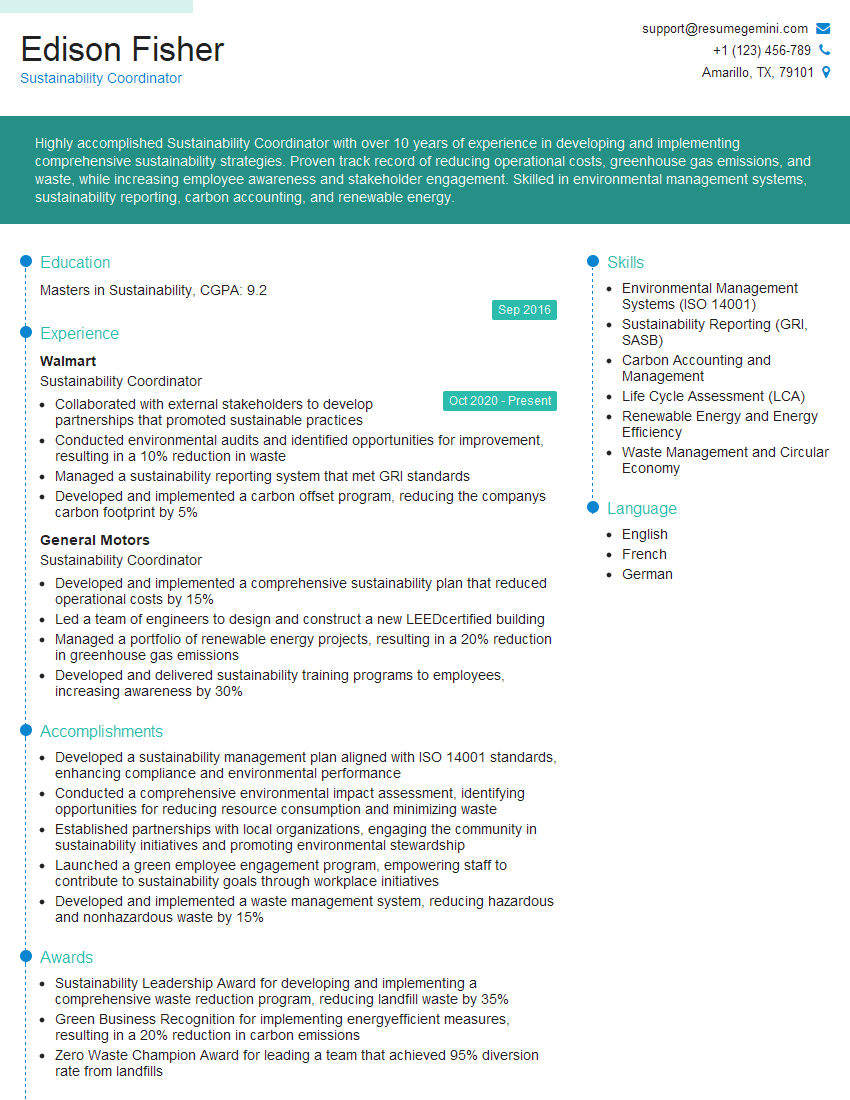
Sustainability Coordinator Resume Sample
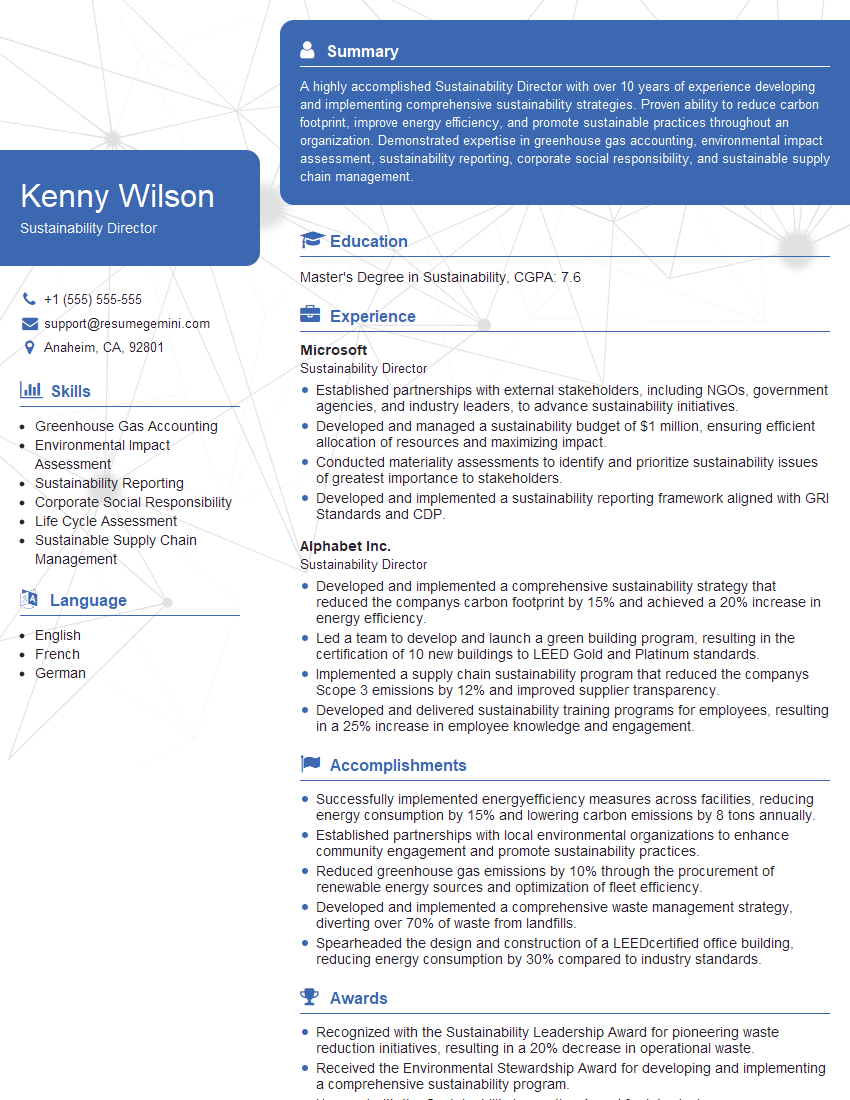
Sustainability Director Resume Sample
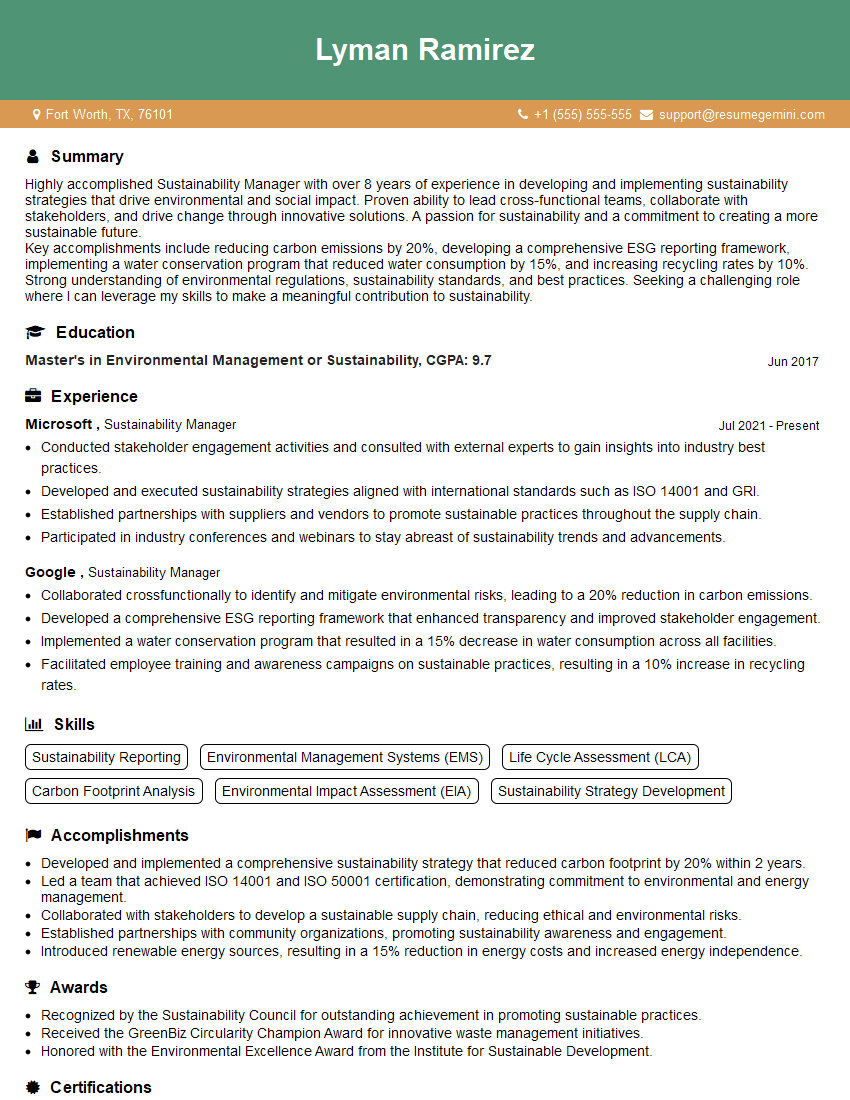
Sustainability Manager Resume Sample
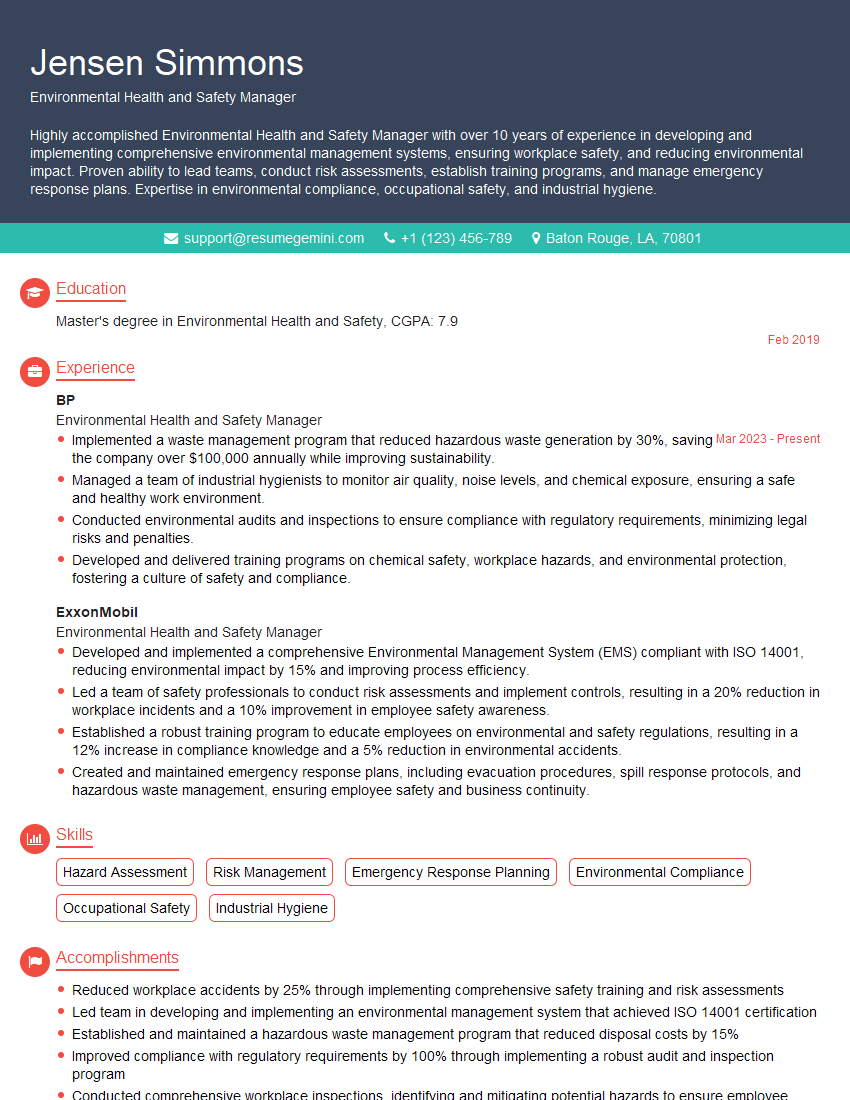
Environmental Health and Safety Manager Resume Sample
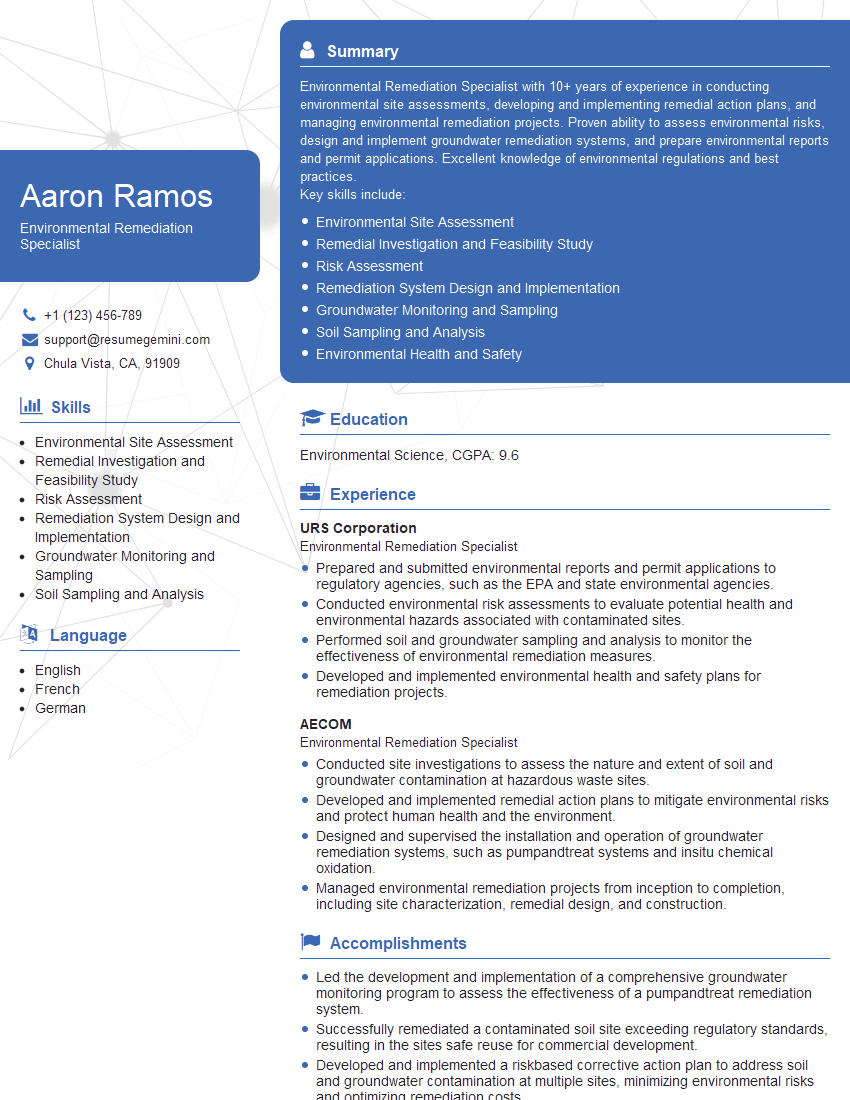
Environmental Remediation Specialist Resume Sample
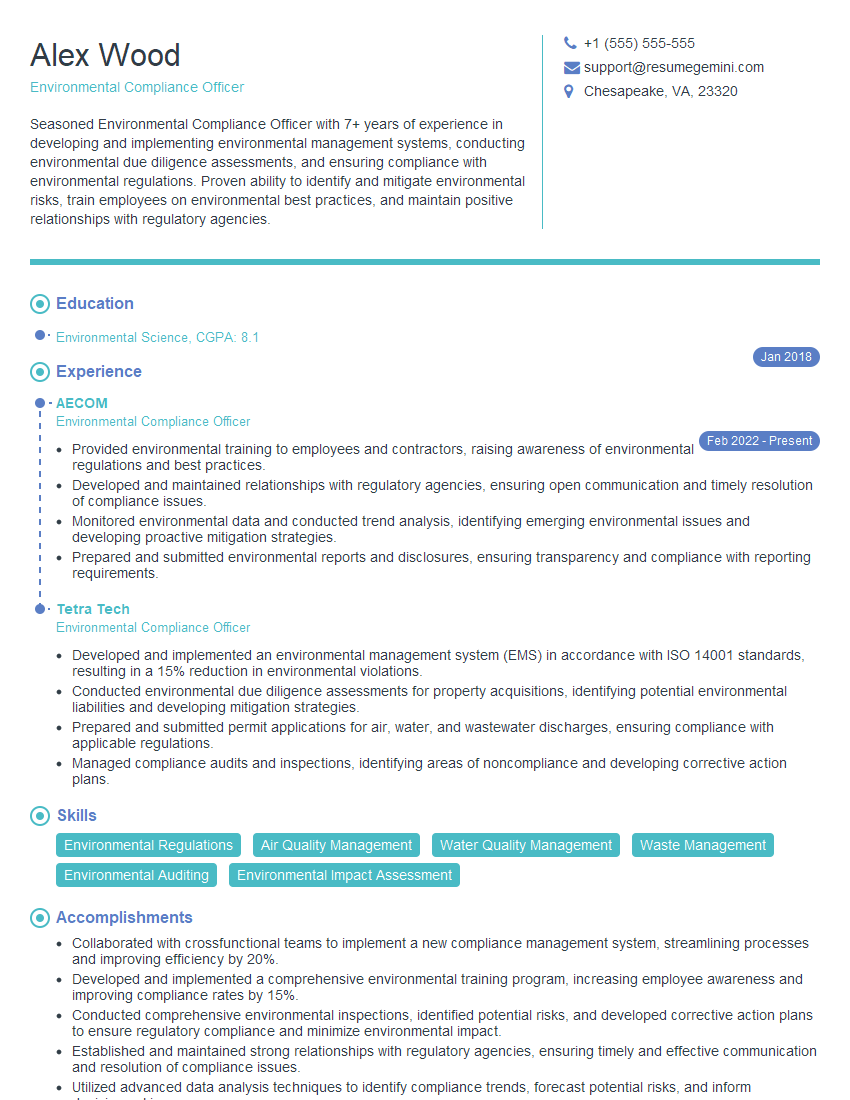
Environmental Compliance Officer Resume Sample
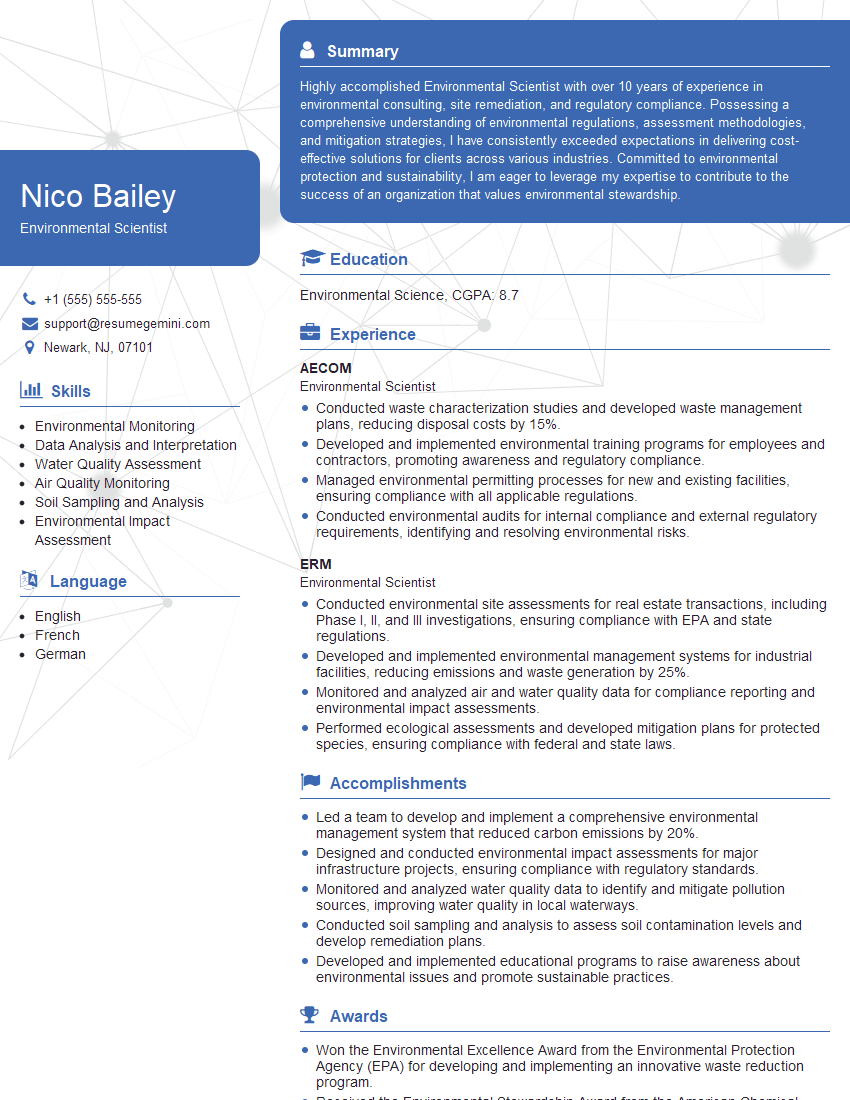
Environmental Scientist Resume Sample
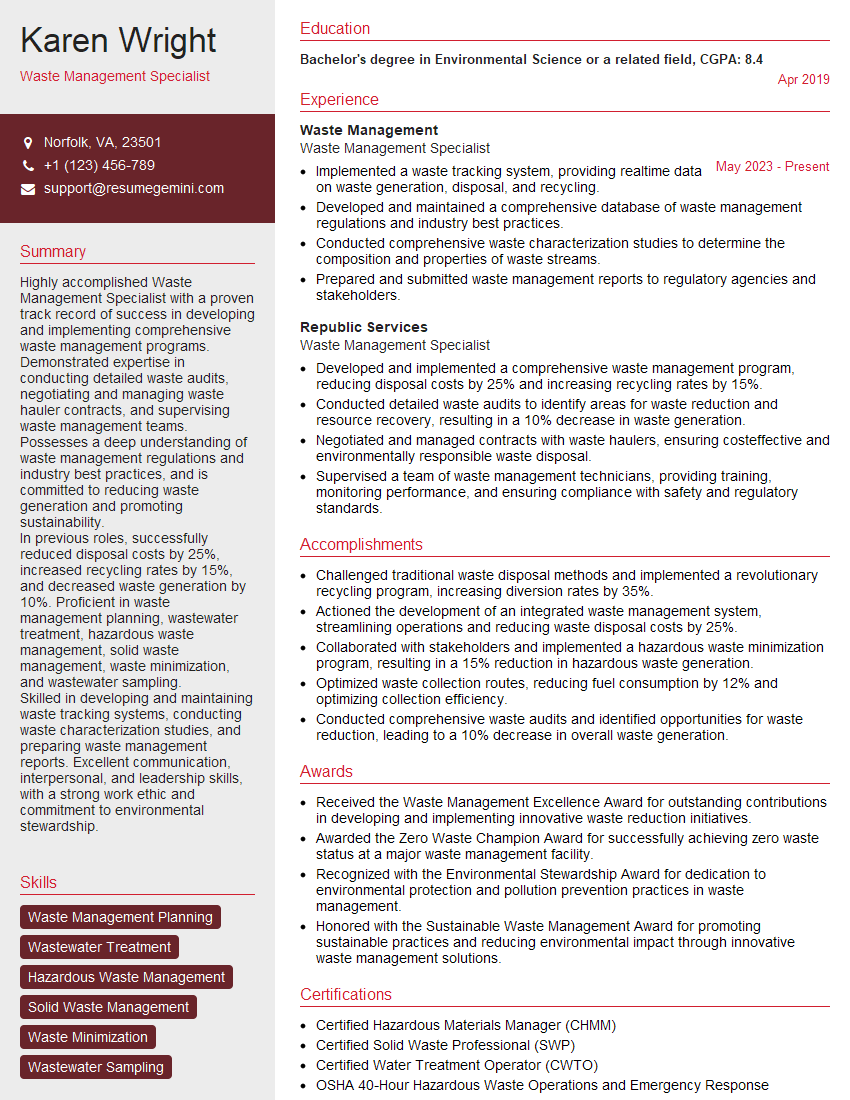
Waste Management Specialist Resume Sample
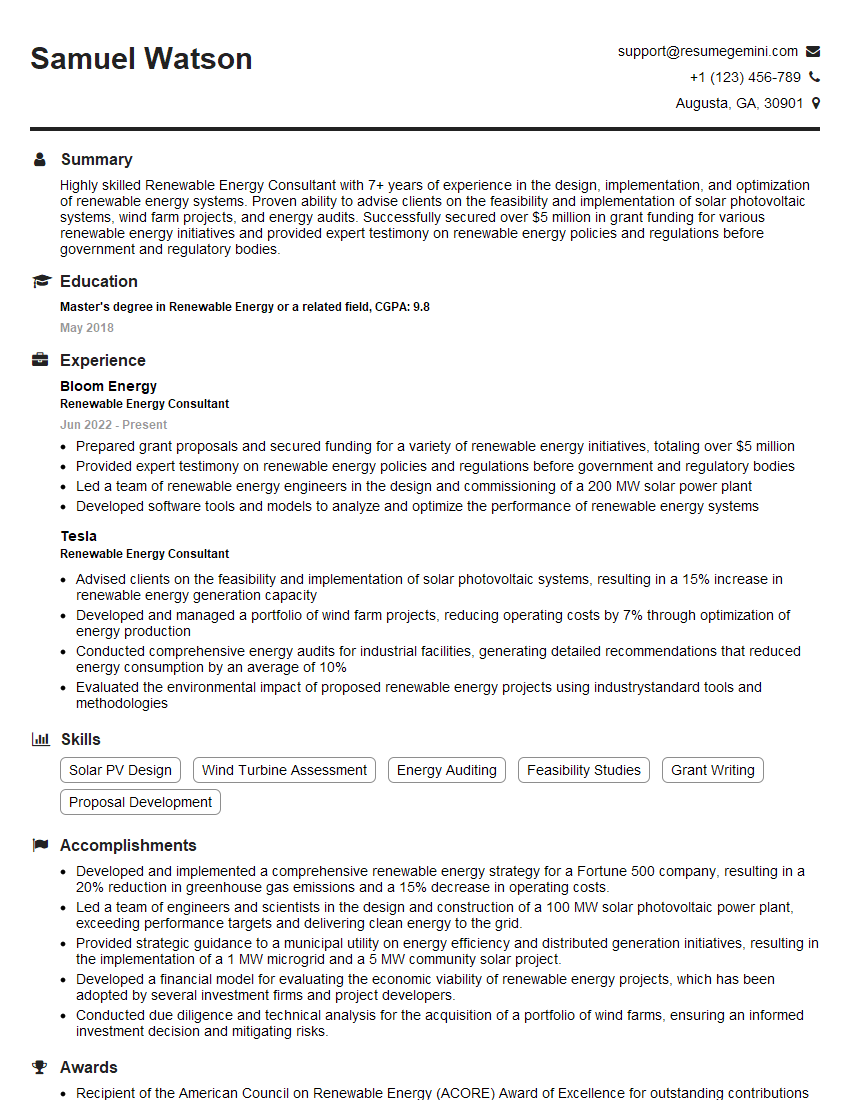
Renewable Energy Consultant Resume Sample
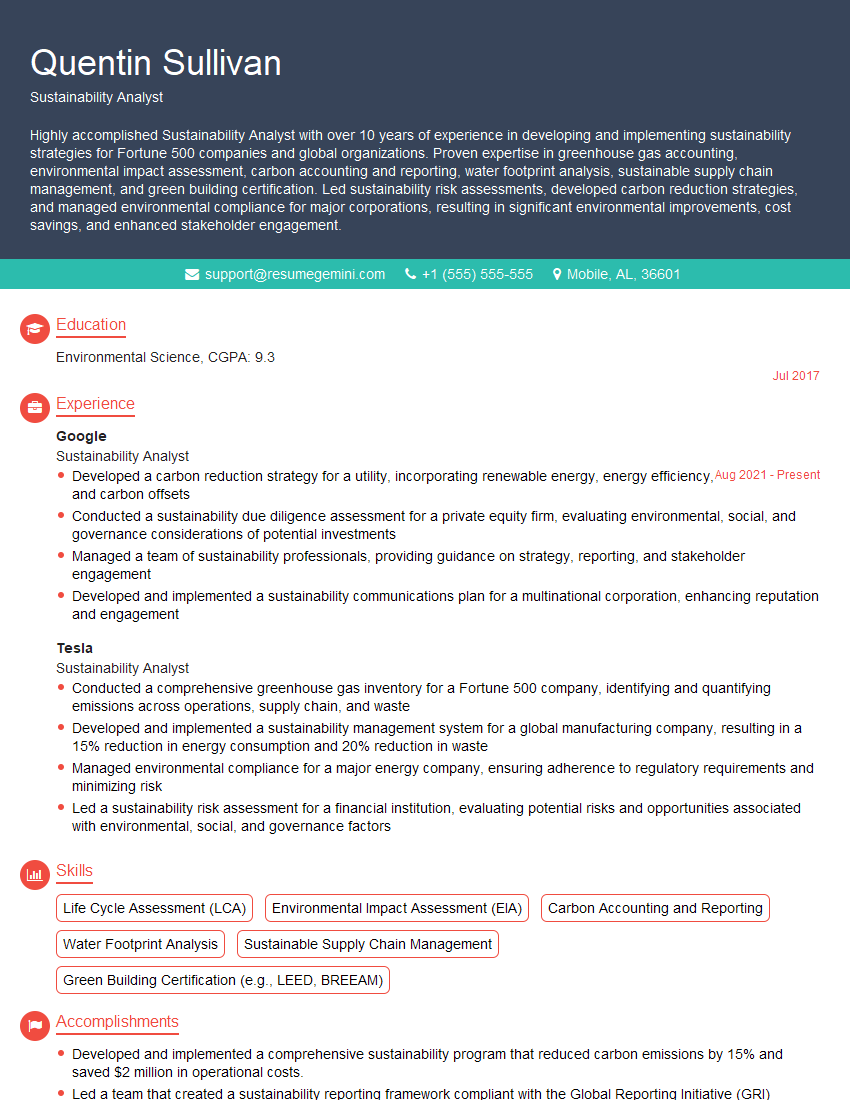
Sustainability Analyst Resume Sample
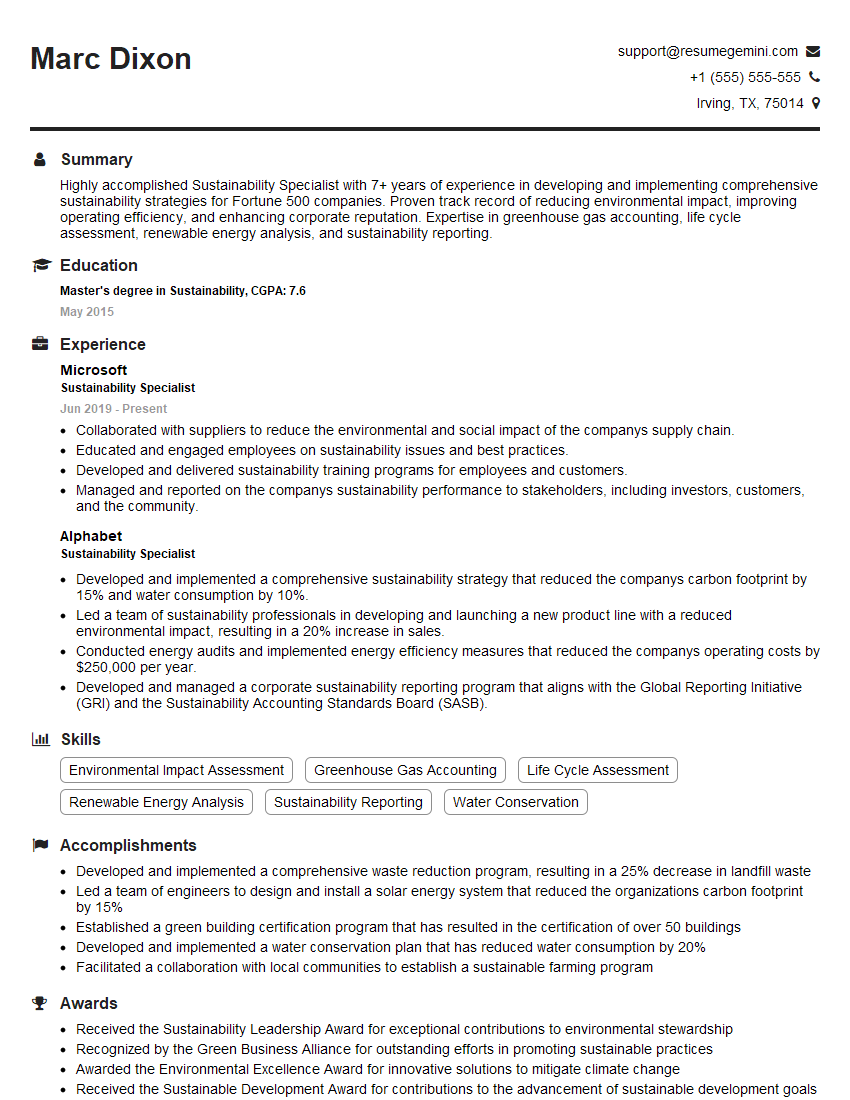
Sustainability Specialist Resume Sample
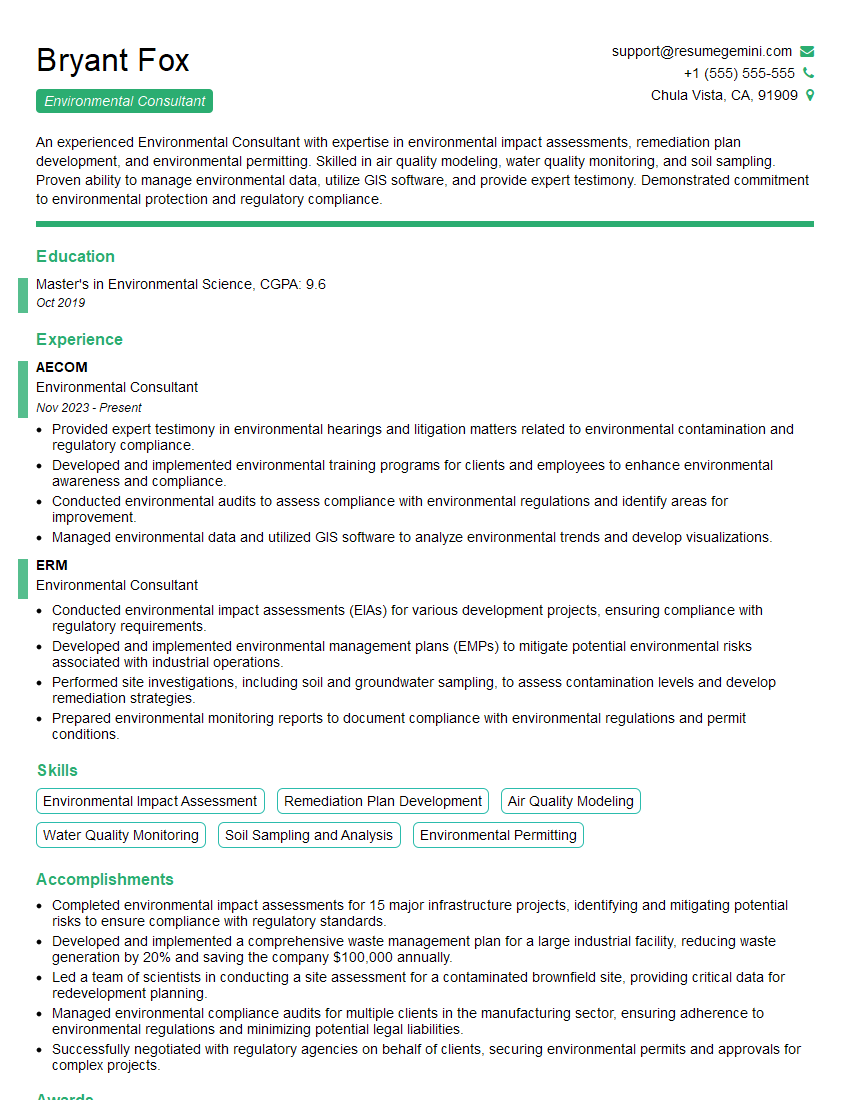
Environmental Consultant Resume Sample
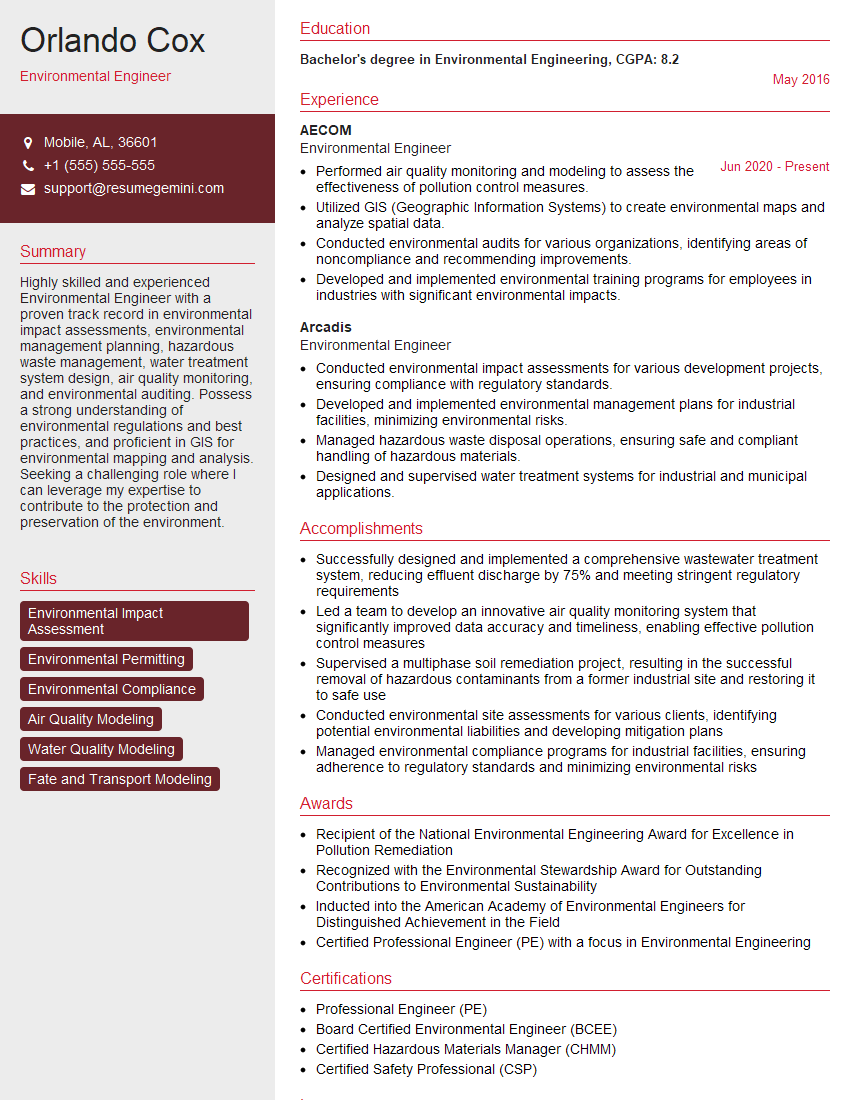
Environmental Engineer Resume Sample
- Sustainability Coordinator
- Sustainability Director
- Sustainability Manager
- Environmental Health and Safety Manager
- Environmental Remediation Specialist
- Environmental Compliance Officer
- Environmental Scientist
- Waste Management Specialist
- Renewable Energy Consultant
- Sustainability Analyst
- Sustainability Specialist
- Environmental Consultant
- Environmental Engineer
Explore more articles
Users Rating of Our Blogs
Share Your Experience
We value your feedback! Please rate our content and share your thoughts (optional).
What Readers Say About Our Blog
Very informative content, great job.
good